Robin Hood Seeks Vocational Guidance

Get back to work, Robin Hood
and go to Bighead’s house
where there is a multi-directional view
and a cocktail bar
and interesting magazines
which feature the host in a small article
nonetheless heavily featured with photographs
of Bighead’s house and Robin Hood,
being one of Bighead’s personal projects,
an entrepreneurial not-for-profiteer, mentioned
in conversations in the top end of the
village which constitutes this art form.

Well, Robin Hood has other ideas, His super,
for example, the blind trust in readers
reading because they love words ordered in art
no matter who has authored them.
Well, fat chance, and good luck RH,
there’s more money in waste management.

Posted in 71: TOIL | Tagged

Cloud

There are solutions to
and users of
clouds

‘The world, you know, has leading cloud providers,’
as Ruskin was wont to say of Modern Painters
and their landscapes

Clouds offer an unparalleled user experience
Their architecture (cumulus, cirrus, stratus) promotes
agility

Adopted with confidence,
clouds can be used
how and when
you want

They are created with you in mind

Cloud experts are no angels
but we do want your transition
to a cloud-based environment
to roll by smoothly

We evaluate the sensitivity of data
you may wish to transfer
Not everything is designed for this atmosphere;
not every cloud has a silver lining

Cloud migration is suitable
for only a chosen few
A hybrid cloud environment,
you may find,
harbours challenges and complexities

We therefore urge you to take advantage of our
cloud advisory services
and extended weather forecast

Posted in 71: TOIL | Tagged

Villanelle for a Calf

I can still remember the sound.
The calf fell in, the gates shut hard.
I turned my eyes toward the ground.

He could hardly move or turn around
and was woken to truth there in the yard.
I can still remember the sound.

They said he was in the right way round
but he looked so stiff and awkward.
I turned my eyes toward the ground.

His body shook, his head flung round,
his mouth drooled wailing for his herd.
I can still remember the sound.

The farmhand didn’t seemed to mind
the blood. The tools he said were standard.
I turned my eyes toward the ground.

He put on his glove and held the brand
out over the fire. I watched without a word.
I can still the remember the sound.
I turned my eyes toward the ground.

Posted in 71: TOIL | Tagged

LOBOTOMOBILE

It works to sell cold and creamy things.
You hear the bells after supper—time
for the music of the children’s throats.
One kid across the street never had a dime.
Who said there once was water enough for boats?
Who told me there existed things called bookmobiles?
I saw a book once.
When I touched it, it turned to dust.
There was no rag-man.
There was a bone-man, on a bicycle
with a basket. And bloodmobiles,
remember them? During the night-
bombings you’d see them every day. The knife-
grinders came by cart in summer, by sled in winter.
I knew a milkman once. White milk truck.
Fred the Breadman’s wagon was the smell of dawn.
During the fever years, inoculation vans
drove the wrong way on no-way streets.
Toot, toot, ding, ding, here, over here!
To the lobotomobile
should those wanting to be numb
come.

Posted in 71: TOIL | Tagged

Substitute

Posted in 71: TOIL | Tagged

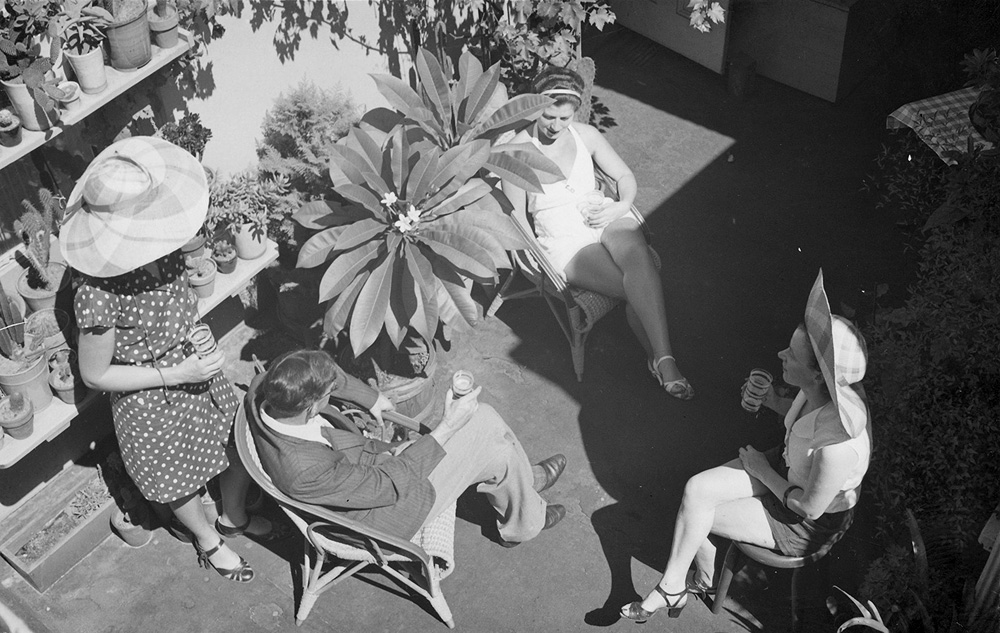
The Crowley-Fizelle School


‘Grace Crowley with Rah Fizelle and friends on Crowley’s roof garden, 227 George Street, c1935’
Image from Art Gallery of NSW Archive

Smudge:

I look at him but he looks at her.
Through the frangipani, she talks of colour again,
the sketch club students unable
to make it work. She can talk for the nation.
Fiz looks but hears only the shells. Only paint
and I can calm that noise. I was right –
to bring him here, to start the Crowley-Fizelle School.
Our school. Our love.

I nod and sip my beer.

Colour! I know colour like I know Fiz.
I live it, it is the bulbous cactus and the city sunlight
on Jane’s spotted dress. It is the blood
through this George Street school.

Sydney will not trap me: I will transform it, I will
transform art here. Smudge, they say,
you should be in France, you have avant garde bones!
I do; genius blood and marrow.
I should go –

but Fiz. He still screams at night and says he hates me.
Then he wakes and sobs that he loves me
in the callous Sydney sun.
I bring him up here, where the clatter
of morning traffic is a dawn chorus.
Fiz twists his legs, clutches the chair
arm to steady himself – he never eats –
and they call me small! –
I am his steady armchair now.

And yet: he draws away. I sleep over here
some – be honest, Crowley – most nights now.
Without Fiz the sheets are cold
but the sun is spectrum, full possibility, white light
making a canvas of the walls, the floor, the bathroom sink.
Flat planes of mirror reflect my futurist face.

Can life be better sans Fiz? Life can be purer –
days for art and evenings for parties
and nights for self-pleasuring desperation.
Zinc and stickiness on my fingertips.
Cold sheets, clear days, of loneliness and light.

Lonely: alone: solitude.
Solitude I crave – time for work is the only true food.
Better than this warm beer, work is pure intoxication.
When I’m in full flight, white heat –
like this sun on my legs freckling me,
my legs a canvas. The world a canvas.
Those cacti, faulty spheres – the vine shadows
diamonds and clubs. Our matching sunhats are discs,
celestial, majestic.
White linen playsuit a beacon.
Frangipani leaves an explosion.
All is colour and form here in my studio,
my art school.
Mine.

Does my face still look interested?
Fiz quizzes her on colour. Still, and again.
I’ve been back from France for seven years.
Seven! I must move, change, shake the establishment,
smash it up for colour, form, for true art!

And Fiz?
He is already smashed, his slight shards
cut me down. Cut me up.
Besides, he wallows in figurative cliché. Fucking pastels.
I, Grace Crowley, Indelible Smudge,
will shake up this upside-down art scene.
I will triumph. Just watch me.

I murmur, ‘hmmm’ and ‘maybe’.
I sip my beer.

Fiz:

Smudge’s look flicks like a knife.
I ignore her. She is too full, more than whole,
she spills out over the confines of skin and bone.
Skin keeps us in. Burst skin is rot, we leak
into the fetid air. Here – air, sun and dust.
Jane talks of colour. I prod her – Yes? And? What next?
My prods jab at Smudge. She hates it.
She wants like a battle, she takes like a war, she takes everything –
blood, love, legs, jaws, chins, fingers, and men.
She’s greedy for life. Mine. Theirs.
Anyone’s.
She doesn’t care. She wants it all.
She tells me I cry at night.
I scream, she tells me. Of the war.
She knows nothing.
The darkness is darkness is darkness a strap a prison I drown each night darkness
rushes into me like gas I can’t move or speak it chokes.
I scream? No. I can’t move or speak. I drown.

But I’m so grateful to wake, I’d profess
love to a monster, a hag with her jaw blown off.
Smudge.
She despises my pastels but they’re vital, they
push back the dark.
They are the palest parts of the spectrum. They admit
no over-the-top force, no big push
and slash of colour.
No stiff upper lip uncompromising modernism.
They flow. They light. They defend us
from the dark.
Smudge has no idea, despite her battle-ready character.
No.

Jane talks of colour. Smudge blurs
and murmurs. I fizz.

Posted in 71: TOIL | Tagged

Mainland Girls

Mainland girls are so materialistic,
some honky tells me.

Shallow. Uncultured. Ambitious. Greedy.
I’ve heard it before from Brit-loving Honkies who
believe everything they been told about gutterpissing
Inlanders – you know they shoot their own
burned the books, dumbed down the language
it’s tragic really how unlike we are

Heard it before from Beijingers bitching out
youngmoney Shangers girls – all smoke and glitter,
just this lipsticked wide open treatyport
trying for fancy with neon and towers
but where are your tombs palaces and poetry
where are your great dead men

Let me tell you about mainland girls. Shanghai girls.
Forget about half a sky, she holding up
the birds who would fold up their wings and die
she the reason fish remember to swim
the moon shy to glance this way
roses without purpose in her presence
& she’s longmarching forwardleaping
hammer and fully sick
big dreams, lost gods
slanderous broadsheets
bold of character
redhearted
goldstar
love

I could be & love,
let me tell you.

Your socks, mainland girls made them,
made your SIM card and your shirt
made every goddamn thing
that lets you be
materialistic

Posted in 71: TOIL | Tagged

Learning to Drive (part one)

From his lips, every word as voluptuous and breakable as a Coca Cola bottle: Rocco teaches me how I can become good enough at this to take it for granted. Mirror-head-check-indicate-right-click-click-click-click-remove-indicator. All the way down and all the way up again. Filter it through and don’t cross hands. He is the kind of teacher who praises you for every little thing. I get it right this time and he divides the sounds of my name into syllables and his hands come together like a bridge and groom. I get it right this time and he says: Bob’s your uncle, Mary’s your mother, Annie’s your aunt and Jesus is my Lord, God and Saviour. He stretches words out like taffy. Did he learn to stutter poetry aloud in high school like I did? He fools me into thinking that I’m doing okay till I do a head-check over my left shoulder and catch him touching the Father, the Son and the Holy Spirit to his warm fingertips as we turn right onto Sydney Rd. The movement he makes with his hand is one I learnt in primary school and was self-conscious about doing like everyone else in mass. But his is beautifully realized, he must be well-practised, he must do it often, he might already have started taking it for granted.

Posted in 71: TOIL | Tagged

Rory

We’d often see Rory outside the shed trying to classify
the clouds coming in on the evening wind — clouds
he thought were the farm’s clip of fine-grained wool.
On clear blue days he’d strike match after match
and try to class the smoke. My Aunt would say,
‘There’s Rory again, tricking ghosts.’ She’d told
me years ago, anthrax had turned his arms and legs
black as land stubbed with fire — wool-sorter’s disease
they called it then. These days he’ll look up, sigh,
walk as if he’s about to carry a bale’s weight of wool
towards a skirting table, his fingers feeling air
as if he were testing the wool fat, the tightness
of the crimp, inspecting it for burr and frib.
The shearers tease him, say his mind’s turned soft
as felt. Some days when the sky is full of wispy,
teased-out cirrus, Rory will say that some new shed-hand
has forgotten to sweep away the britch wool
left from the shearing. Sometimes you can hear him
auctioning off his bales, his prices unyielding, his tone
as twangy as a ring of blowflies. Winter mornings
he’s out with his arms raised up into a dense batting of fog.
On summer days he’ll be reaching towards a haze,
even bushfire smoke, or looking into the distance
for stray clouds, ready to coax them towards him
like orphaned lambs. Once one of the shearers stuck
a mess of dags and cotted wool to Rory’s head,
then took to him with rusty shears to do some wigging.
My Uncle punched the man so hard he reeled
round the yard like a whether with the ryegrass staggers.
Sometimes — when we catch Rory looking up
at the sky at a line of cumulus coming in — we smile
and say, ‘There’s Rory wool gathering again.’

Posted in 71: TOIL | Tagged

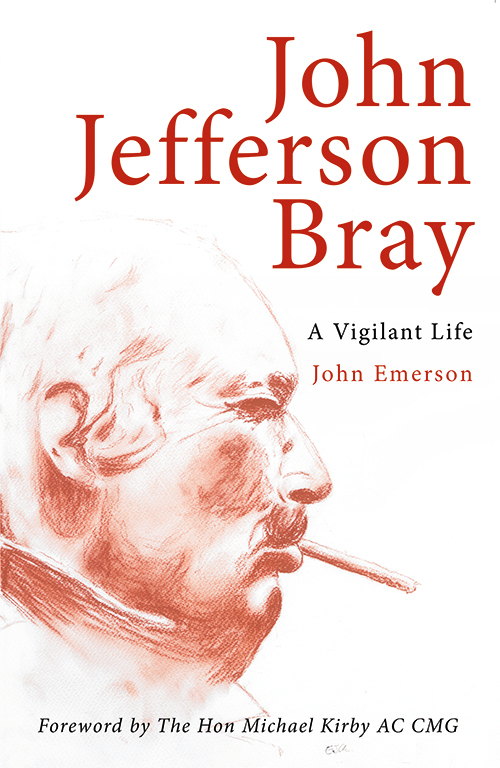
Review Short: John Emerson’s John Jefferson Bray, a Vigilant Life

John Jefferson Bray, a Vigilant Life by John Emerson
Monash University Publishing, 2015

Former High Court Justice Michael Kirby writes this book’s forward. In it, he praises Bray’s unorthodox brilliance and judicial logic. The Law Lords of the Privy Council relied upon them.

DPP v Lynch is about whether a man forced at gun point to drive IRA killers to murder a police man could rely upon the defence of duress. Lord Morris approves Chief Justice Bray’s dissenting judgment in a South Australian murder case: ‘In a closely reasoned judgment the persuasive power of which appeals to me he held that it was wrong to say that no type of duress can ever afford a defence to any type of complicity in murder…’

Continue reading

Posted in BOOK REVIEWS | Tagged , , ,

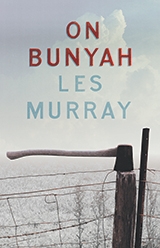
Review Short: Les Murray’s On Bunyah

On Bunyah by Les Murray
Black Inc., 2015

The doggedly metropolitan Frank O’Hara wrote in ‘Meditations in an Emergency’: ‘I can’t even enjoy a blade of grass unless I know there’s a subway handy, or a record store or some other sign that people do not totally regret life.’

In the introduction to On Bunyah, a career-spanning collection of poems about his home township 300 clicks north of Sydney, the stubbornly pastoral Les Murray writes, ‘this book concentrates on the smallest habitats of community, the scattered village and the lone house, where space makes the isolated dwelling into an illusory distant city ruled by its family and their laws.’

Continue reading

Posted in BOOK REVIEWS | Tagged ,

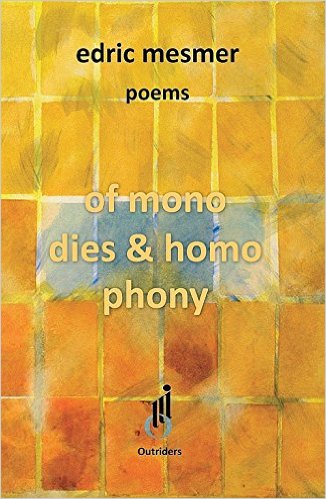
David Dick Reviews Edric Mesmer

Of Monodies and Homophony by Edric Mesmer
Outriders Poetry Project, 2015

The arrangement of the title on the front of Edric Mesmer’s Of Monodies and Homophony gives the reader an early opportunity to judge (or, at least, predict) the develop-ment of the text:

of mono dies & homo phony

Mesmer takes two words that essentially indicate a single, dominant – or closely related – voice or sound, and breaks them down into their constituents. At the very level of the word itself this undoes any such notion of an isolated predominant melody. Continue reading

Posted in BOOK REVIEWS | Tagged ,

Cruel Buffoonery

In the North American summer of 2015 I journeyed into the heart of the MFA industrial complex. I was a fellow at the Vermont College of Fine Arts and was #workingonmynovel. I was also participating in a culture that I had only hitherto heard and read about. Indeed, my training until that point in the vast ecosystem of ‘creative writing’ institutions had occurred at the University of Pennsylvania under the scrupulous gaze of Charles Bernstein, critic of ‘official verse culture’, and to a lesser extent Kenneth Goldsmith, arch proponent of ‘uncreative writing’. Continue reading

Posted in ESSAYS | Tagged , , , ,

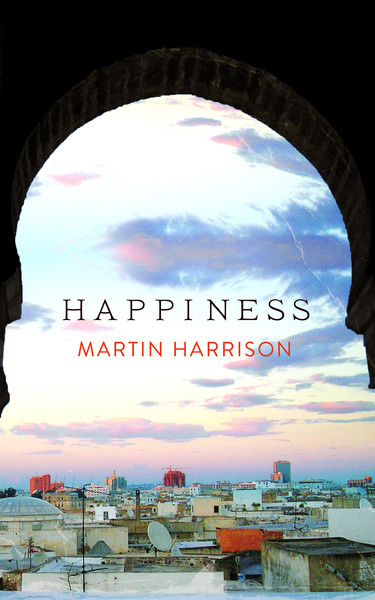
Petra White Reviews Martin Harrison

Happiness by Petra White
UWA Publishing, 2015

Many years ago, as a young fruit-picker, I carried Martin Harrison’s The Kangaroo Farm around with me for a week. I was camping on the Murray in Cobram, and struck by Harrison’s vivid evocations of the landscapes like the one in which I was sleeping on rocks. His sense of light, the gristliness of things, the sounds, the movement of kingfishers. It was a world made up of particular details, of things attempted to be seen as they are, rather than being embroidered into any overarching narrative or self-proclaiming poetic. Harrison had a kind of honesty and closeness to things that I hadn’t yet seen in my early days of reading Australian poetry.

Continue reading

Posted in BOOK REVIEWS | Tagged ,

Lucy Van in as Short Reviews Editor

I am pleased to announce that Lucy Van has joined the Cordite Poetry Review masthead as Short Reviews Editor. She will assume duties near the end of 2015, starting with all new short reviews commissioned at that time.

Lucy Van is a poetry critic and interdisciplinary researcher living in Melbourne. She is completing a book about global postcolonial poetry, and commencing a collaborative research project on colonial women photographers in the Asia-Pacific region. She has previously worked as an editor for Peril Magazine and Mascara Literary Review. She lectures in poetry at the University of Melbourne.

Posted in GUNCOTTON | Tagged ,

Review Short: Daneen Wardrop’s Cyclorama and Terrence Chiusano’s on generation and corruption

on generation and corruption
by Terrence Chiusano

Cyclorama
by Daneen Wardrop

Fordham University Press, 2015

About a decade ago ‘trauma’ became an industry in the academic literary critical economy. This was due in part to the success of Cathy Caruth, but there were other theorists that mattered before and after (Freud’s ‘repetition compulsion’ and Elaine Scarry’s body in pain). Holding hands with trauma was ‘witness’. Of course, witnessing has been in the discourse for a long time as well, but there was a steady growth in its paradigmatic quality after the Holocaust industry began to develop more fully (see Norman Finkelstein). Continue reading

Posted in BOOK REVIEWS | Tagged , ,

UMAMI Editorial


Luke Davies, Paris, 2014, photo by Samuel Pignan.

Around ten years ago I was offered a semester of teaching at the University of Technology Sydney. I accepted the job with some hesitation, thinking that energy spent teaching would be of the irreplaceable variety, and that what I would lose forever would be energy devoted to the central concern: writing. Yet the semester turned out to be a far more rewarding and enriching experience than I imagined it could have been in that the stint came to feel like a privilege. It was not a vertical experience of didactic instruction, wherein I ‘gave’ the students – in the form of knowledge – something they needed in order to ‘improve’ their journeys towards being writers. I never felt I had such a thing to give. (Well, broad bewilderment, they could help themselves to fridges full of that.) No, I don’t know what their experience was, but for me it was more a horizontal experience of shared endeavour. Teaching is all just a continuum, we come and then we go. I was merely at that moment a person who was more published, and either a little or a lot older than the students. I figured that my fundamental task of being a teacher is to share enthusiasm. The students should then take what they need for their journeys, and leave the rest behind. Teaching once a week for half a year made me understand that it is perfectly correct to say there is no centre of things. No received viewpoint.

Those insights were brought back to me in the process of being guest editor of this double-issue collaboration between Cordite Poetry Review and The Lifted Brow. I loved the fact that it was a blind submission process: only the words on the screen, no preconceptions or assumptions to cling to, no complexities of known-to-me/unknown-to-me, gender ratio etc. The experience felt very pure. I was looking for new surprises. ‘Each new contact with the cosmos renews our inner being,’ said the French philosopher Gaston Bachelard, ‘and every new cosmos is open to us when we have freed ourselves from the ties of a former sensitivity.’ I took this to mean that my personal preferences and proclivities were less important than an openness to what others might be up to, with their proclivities in play. And that each new poet was a cosmos unto themselves. And that close reading could repay the attention in the coin of surprise.

It so happened that the issue I was offered was one of Cordite’s themed issues, too. The theme was ‘UMAMI’, the fifth category of taste (along with the more familiar ones of sweet, sour, bitter and salty). ‘In Japan,’ I wrote in the call-out for the issue, ‘umami contains within it the notion of the sweet and the sour at once … neither one or the other, nor simply both bound together. Umami is not necessarily a compound taste. Its experience is elemental, indivisible: to bastardise Karl Jaspers, it’s more dasein than existenz. Admittedly, though, for Jaspers, dasein was like a reduction – real, certainly, but conceptual, too, elemental – whereas existenz, in all its extended messiness, was the place where we all really live.’

The physicist Werner Heisenberg would have understood the umami mystery; how a particle can exist as a combination of multiple states. There are questions that would not make sense outside of poetry that make perfect sense within it. Heisenberg, a true heir to Keats in the sense of wearing his negative capability like a multi-coloured cloak, came up with the uncertainty principle, a paean to wonder that dismissed as a category error the question ‘Are the smallest elements waves or particles?’ The answer was not that in different circumstances they can be either. (They can be, and are.) It was that they are, in fact, both. It is only how we measure (interpret) them that render them wave or particle. That moment of knowledge is a moment of collapse and loss: a fall, so to speak. Every event is a branch point. Until Schrodinger’s box is opened, his long-suffering cat is neither dead nor alive.

In the selection process I found myself drawn to pieces that hovered at this edge of knowing: where the ‘messiness’ is. It wasn’t that I was discarding form; it’s just that in the interest of variety, I tried not discriminate between whether in any given poem (or prose piece) energy trumped form or vice versa. ‘The present moment is a condition where there is absolutely no separation between yourself and things,’ wrote the Buddhist teacher Sekkei Harada. ‘That is not to say, though, that there exists such a thing as the present moment.’ I wanted to find no separation between myself, whatever fragmentary knowledge I had of the current ‘scene(s)’ in Australian poetry, and the work in which I found things to admire. The blind submission method was perfect for this. I juggled and revised a jumble of Yes, No and Maybe lists. There were poems that hit me in the gut. There were others I couldn’t quite get my radar on, but I kept coming back for subsequent re-readings. In the end, I reduced the 700 submitted to the 50 or so poems that make up this issue. Many of the submitted poems and micro-fiction were clearly not contenders; the first pass of the No pile was not a difficult one. But, in the end, there were at least 50 poems that didn’t make it in that could have and would have sat well in this issue.

IN MEMORIAM. My friend the Irish poet, playwright and novelist Dermot Healy died suddenly on 29 June, 2014. He wrote the extraordinary novel A Goat’s Song, and much poetry. I interviewed him at the Sydney Writers’ Festival in 2013, and he launched my book Four Plots For Magnets at the Brett Whitely studio in the same week. They were two of his last public performances. He will be missed. His widow Helen Healy and Peter Fallon, publisher of The Gallery Press in Ireland, kindly gave permission to publish the two Healy poems which appear here, from the just-published posthumous collection The Travels of Sorrow. My thanks for their kindness. The fine poet and beloved teacher Martin Harrison, with whom I’d shared the pleasures of a developing literary friendship in more recent times, died suddenly on 6 September 2014. He had agreed to give me a poem for this issue — alas, it was never to arrive.

This issue is dedicated to the memories of Healy and Harrison.

Posted in ESSAYS | Tagged

Pamphleteer

When a friend folded a piece of paper in front of me I remembered the history of the pamphlet.
– Kate Middleton


– – – – – – – – – – – – – – – – – – Fold here – – – – – – – – – – – – – – – – – – –


In November 1789, the matter gaining upon him in vigour as bodies, of the lights to be drawn from books, the dissenter Richard Price gave a sermon (as liquors are meliorated by crossing the sea) which interpreted Britain’s 1688 in light appearing as the act of persons in some sort of corporate capacity.


– – – – – – – – – – – – – – – – – – Fold here – – – – – – – – – – – – – – – – – – –


Body paragraph 1: From Edmund Burke’s pamphlet, Reflections on the Revolution in France (1790)

The paper securities of new, precarious, tottering power, the discredited paper to change their paper and depreciated paper is a paper circulation, the heart of a boundless paper circulation. Sinister designs vested in a body that composed the sides of sickbeds without horror and paltry, blurred shreds of paper about the rights of man, creating a new paper currency. They issued this paper currency to the great machine or paper-mill of their fictitious depreciated paper, which is stamped with the indelible character of sacrilege, and with the symbols of their own ruin, this compulsory paper, it will straiten or relax with every variation. A paper, carrying on a process of continual transmutation of paper into land, and land into paper, as the market of paper or of money or of land. Whose creatures are all these dreadful blood fresh things? When so little within or without is now found but paper, never was a scarcity of cash and an exuberance of paper bodies. A decomposition of the whole blood who dragged the bodies out of the quiets of their tombs to attaint and disable backward to stain with the blot of the end from whose womb? To swallow down paper pills their most rumpled and ragged Scotch paper, in a letter published in one of the papers, given in one of their papers, supplied with the ammunition of pamphlets as of cartridges.


– – – – – – – – – – – – – – – – – – Turn over here – – – – – – – – – – – – – – – – – – –


Body Paragraph 2: From a pamphlet in my letterbox today

AUSTRALIAN MEAT EMPORIUM Monthly Specials Specials available until 27th September 2015 BINDAREE VINTAGE 100 day grain fed Whole Beef Rump $1599 PER KG SLICED FREE $2999 PER KG MR LAMB Free range Whole racks of lamb MURRAY VALLEY Pork Striploin portion $1899 PER KG SLICED FREE Serving suggestion only AUSTRALIAN MEAT EMPORIUM 29-31 O’Riordan St, Alexandria Open Monday – Sunday 7am-6pm Telephone 96900979 www.meatemporium.com.au … taste the difference Sydney’s Original Meat Experience


– – – – – – – – – – – – – – – – – – Fold here – – – – – – – – – – – – – – – – – – –


Body Paragraph 3: From a pamphlet in my letterbox today cont’d

LIQUOR EMPORIUM $36.99 ctn Tooheys Extra Dry $19.99 each Grand Barossa Cabernet STAFF PICK $39.99 ctn Peroni Nastro Azzurro $39.99 each Hiedsieck Brut STAFF PICK $49.99 each Glenfiddich 12 Year Old $12.99 each Oyster Bay Sauvignon Blanc $39.99 each Makers Mark Bourbon $39.99 each Chivas Regal 12 YO 29 O’Riordan St, Alexandria NSW 2015 02 83999 1009 382 Burwood Rd, Belmore NSW 2192 02 9759 5229 28 Floss St, Hurlstone Park 2193 02 95559 4550 19 Unwins Bridge Rd, St Peters NSW 2044 02 9519 9956


– – – – – – – – – – – – – – – – – – Fold here – – – – – – – – – – – – – – – – – – –


Conclusion

An irregular, convulsive movement, an irregular, convulsive fume. Our paper is of value in blood, binding up our sepulchres, some rites of provisions, preparations, and precautions of the body.

Posted in ESSAYS | Tagged

Love in Contemporary American Gay Male Poetry in the Works of Richard Siken, Eduardo C Corral and Jericho Brown

Gay poets, in the main, are determined to claim difference by questioning orthodoxies that corral issues about sexuality and love − and the functioning of these constructs within an urban, heterosexist reality − issues always pertinent to gay male writers because it is they who must bear the burden of political self-consciousness in a heterosexist world. Continue reading

Posted in ESSAYS | Tagged , , , ,

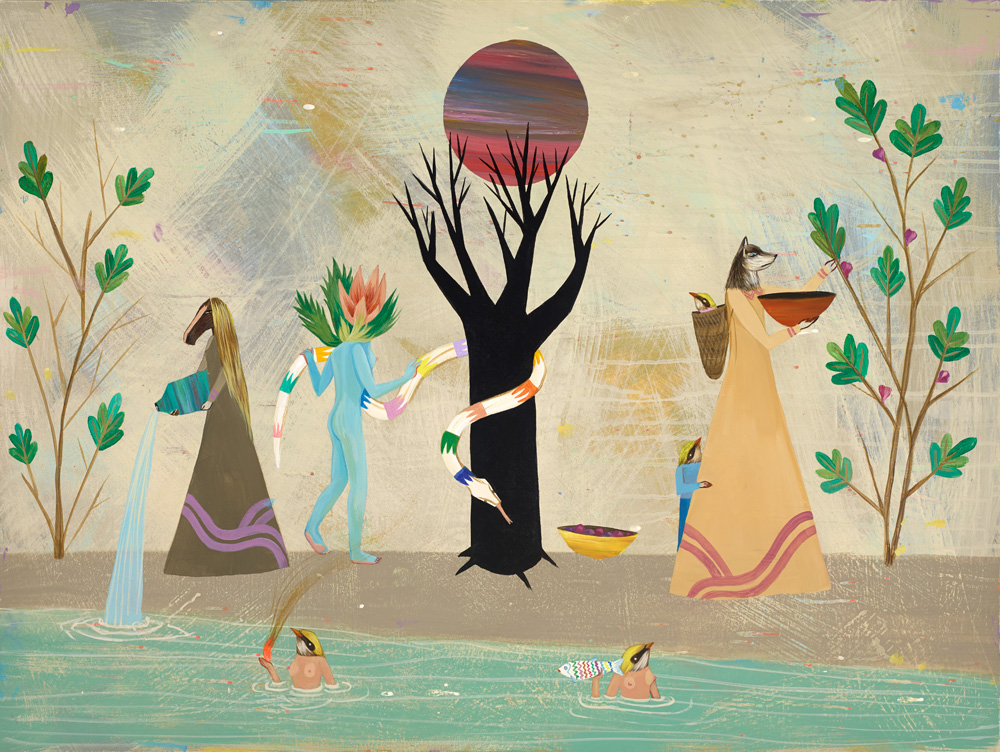
9 Artworks by Deedee Cheriel


Perseverance of Mother Nature | Deedee Cheriel

My work explores narratives that recognise the urgency and conflict in our continuing attempts to connect to the world. With influences derived from such opposites as East Indian temple imagery, punk rock, and her US Pacific Northwest natural environment, her images are indications of how we try to connect ourselves to others and how these satirical and heroic efforts are episodes of compassion and discomfort. Bold elements drawn from landscapes, both urban and natural, and pop culture suggest the ability to find commonalities and relationships between ourselves and our surroundings that inevitably confirm our greater humanity and quest towards love.

Posted in ARTWORKS | Tagged

Angelina Saule Interviews Mohammed Bennis


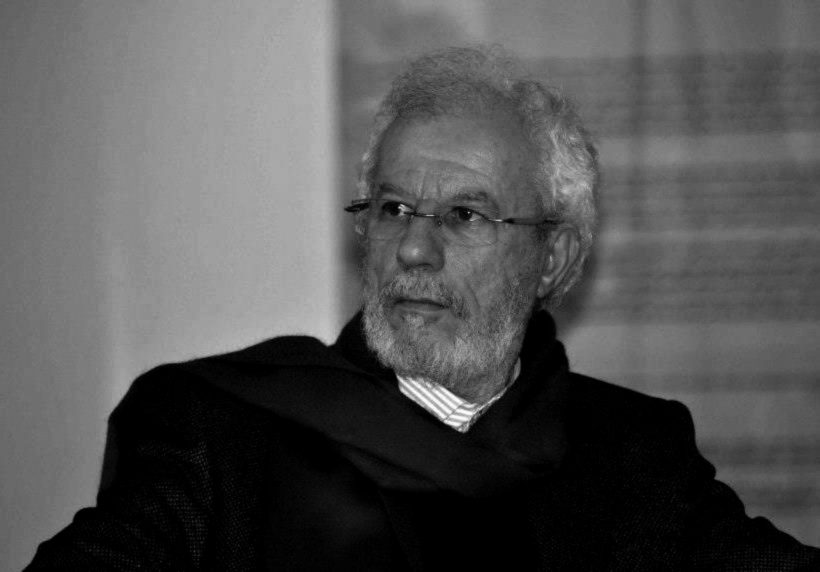
Image courtesy of Mohammed Bennis

Poet and translator Mohammed Bennis began his career as a poet in Morocco in the 1960s, at a time when the free verse movement was taking the Arab intellectual world by storm with the Beirut-based journal shi’r, with the Syrian poet Adonis at the helm.

Bennis is not a poet with a cause. He is not writing for Palestine or for women’s writing in the Arab world, themes which are easily snapped up by Western audience. Instead, as one of the more innovative language poets, methodically tampering with language in a dialogue with language itself, Bennis has refused to be either local or international, a strain of consciousness that may have something to do with the geo-cultural location of Morocco itself, a conundrum of the Arab world, Africa and Europe.

Angelina Saule: When you began your career as a poet in the 1960s, did you feel influenced by the free verse movement taking place in the journal shi’r founded by Adonis, or by the events of ’68 in France? Which form of freedom and which task of liberating language seemed to have made their mark on you most?

Mohammed Bennis: When I began to write poetry I felt influenced by free verse in Arabic, as in the poems of Badr Chakir Essayab, but a few years after that I discovered Adonis. In the same period, I was reading French and German poetry and I was in Paris during the summer of ’68. Those events have had together a great influence on my thinking and my writing until now.

AS: How exactly did the events of ’68 in Paris affect you? What insight did they provide in terms of a free vision of language in the Arab world?

MB: As you know, the events of ’68 were a revolt against all traditional ways of life. To change Arabic language by using new forms and new styles was like a second coup. My new method has taken time. At last, I have transformed the many manners of writing.

AS: How do you see the innovations taking place within the Arabic language now? Are we still in need of a poetic revolution?

MB: The innovation within the Arabic language was great. It was a new Arabic or a modern Arabic coming into being. It was intensely different from classical Arabic writing, and this innovation motivated a poetic revolution in countries of the Maghreb.

AS: You have made a shift in terms of revolutionising certain poetic forms of expression – can your contribution be considered to be a part of this revolution?

MB: Maybe I have created a minor revolution. I am sure that I have only changed the manner, because changing the manner of something is not always a minor or major revolution. Change is a step, but it is not enough. On the other hand, literary life is difficult, and we are not able to accurately judge what we are doing or writing.

AS: Do you feel that your writing has begun the path of a poetic revolution in the Maghreb? Has your writing greatly informed new poets in Morocco?

MB: When I talk about manner, it is only a kind of observation concerning my own poetic method and its evolution. I have studied the rationale of a literary revolution in modern literary Arabic and I have found that so far it is not possible to accomplish this revolution within the Maghreb. We need time to see clearly what is happening. I only know that I must continue writing. Nothing else matters.

~

Bennis’s answer made me reflect on the Arabic phrase ‘Cairo writes, Beirut publishes and Baghdad reads’, which attests to the long-standing division of literary and intellectual labour in the Arab world. For a wider historical context, the literature of al-Nahda, the renaissance of the late nineteenth and early twentieth centuries, is usually viewed in terms of Egypt and Greater Syria. The peripheries of the Arab world (from Mauritania to Oman) are rather unknown even within the cultural fabric of Arabic life, with the exception of such writers as Tayeb Salih or Mohammed Choukri. The exodus of intellectuals from the centre of the Arab world to exile communities abroad at the beginning of the twentieth century not only created a bridge between Western literary developments and individual Arabic innovation, it also led to a certain trend or stereotype about the origins of the pulse of experimentation within Arabic poetics.

~

AS: What motivates you to change syntax the way you do? Are you seeking to make ‘the invisible’ – the absence of what is not in standard language – present?

MB: Poetry uses the standard language but all changes occur in the process of writing. If the poet uses the standard language, he writes in his own language. Using the standard language does not mean poetry is standard. Never can we say that. Every poet creates his own poetics and his ambition is to touch the impossible, to write the ineffable. How is it possible to not make the visible invisible, but to give the invisible a new life? This is the question.

AS: Which form of Arabic do you feel more comfortable writing in, Moroccan or Classical? Not long ago I was at a hakawati reading in Fes, and it was easier for me to understand most of the Classical verse, but rather difficult with the Moroccan-speaking hakawatis, although they were more engaging for the audience. (This reminds me of zajal in the Levant among the various mountain communities of the Druze and the Maronites, resuscitating the idea of the actual and the artificial within the one language.) Is there a preferred register for readers and listeners?

MB: Writing in modern Arabic is a choice. We must not confuse the situation of Arabic with the occidental languages, as we have another history. Unfortunately, we suffer from several factors, including education, and sometimes the problem is not clear. Maybe one day we can resolve the problem of languages in the Arab world. Maybe it is possible in the future.

~

The problem Bennis refers to here is the diglossia of Arabic. The written form has remained constant since the Quran, not having changed drastically until now, and is used in modern print media (imagine reading The Economist in the Anglo-Saxon of Troilus and Cressida), while the umma (dialect), which reflects regional differences in temperament and cultural background, is vastly changing lexically and grammatically according to local and foreign non-Semitic influences, making the various dialects mutually unintelligible. The written form bespeaks education, literacy and, perhaps, religious instruction, while the spoken adheres to the day-to-day profane (as opposed to the sacred written form of pure Arabic), generating hierarchies within the language.

~

AS: When you say ‘modern Arabic’, do you mean MSA (Modern Standard Arabic)? Do you ever feel the need to meld MSA with the flavour of Moroccan Arabic?

MB: Yes, I use the Modern Standard Arabic, and I use Moroccan Arabic when I feel it is spontaneous, when it is the expression of my body. This is normal, and we find the same comportment in the writing of other Arab poets and writers. The result is the Modern Arabic language.

~

The vernacular is, as Bennis expresses, something more deeply felt and physical in comparison with MSA: it is a labyrinth of identity oddly proud against the column of standardisation associated with MSA. As I write, I myself am surrounded by the clipped quaffs (ق) of my father’s people in Mount Lebanon, making my background easily heard when I am in the capital twenty-five minutes away; the overall vernacular of Lebanon chooses to speak without this particular letter. (It is rather bizarre to be told several times to drop the letter in a language I feel rather at odds with or baffled by; thankfully, I don’t write poetry in it.) It is important to deviate slightly into the field of phonosemantics to impart the significance of the basic phonemes of Arabic – especially in order to ascertain difference. It is claimed that certain checkpoints of the Phalangists during the Lebanese Civil War posed merely one question, which was to ask people to pronounce the word for ‘tomatoes’. The Palestinians pronounce it differently from the Lebanese, and thus fell into a linguistic trap and were killed in an instant for their accents.

~

AS: As a poet writing in Morocco, do you see yourself on the threshold of al-Andalus and the Arab world, or on the threshold of the Francophile-Moroccan world? Which axis do you feel informs the majority of your work? In the poem ‘I am not I’, you write quite beautifully about this:

This is my law – To reveal secrets to ardent lovers
In Baghdad and Fes,
In Cordoba and Qayrawan,
To accompany a tear to its burning anxieties,
To bless a rose on its way between a sweetheart and a lover,
And write to you
About this seed which is sufficient
For everyone who is
In the presence of madness
On the paths of hearing and seeing

MB: I do not have a difference between the two worlds. Since the beginning, it was clear to me that I need to understand the two worlds, as they have their traces on my body. The problem is not to choose between the two worlds, but how to be free in relation, vis-a-vis yourself and the other.

AS: How would you describe the movement of the traces of the two cultures on your body? Do they dissolve, disappear, etch, mark or do something else on your body? How do they move when you write?

MB: The trace of the two cultures means that my body is cultural. It also means that the two cultures are inseparable in my vision and my manner of thinking or feeling. I cannot separate this plural sensitivity in my words. For this reason, I believe I am writing in modern Arabic and it is the result of the two cultures, a sign of intercultural being that affects the culture of our world.

AS: Is there a particular school of Arabic poetry that mirrors some of your own poetic concerns? For example, the poetry of Jahiliyya, the Abbasid court poets or the al-Nahda movement?

MB: No, I do not think that is a particular school. When we write in Arabic, all Arabic poetry is your patrimony. I add that it is normal for me, as a Moroccan, to have an interest in Andalusian poetry. If you read my poetry, you find the poetry of Jahiliyya, the Abbasid court poets, as well as many international poets: all poets of the world are my family. The difference lies in language only.

Posted in INTERVIEWS | Tagged ,

3 Poems by Huang Lihai

Huang Lihai was born in Xuwen and now lives in Guangzhou. He is editor of the poetry magazines Poetry & People. His books of poems include I Know Little about Life and The Passionate Mazurka. He won the 8th Lu Xun Literary Award (Guangzhou, 2009) and Lebanon International Literary Award (2013).


who can outrun the lightning

The river is my blood.
She understands my thirst
in the migration.

I will outlive poverty.
The tree of our times will turn green.
But why are my sleeves wet?

The bush is flying.
My heart wearily shakes.
Life is as short as lightning.
It forces me to run
before I have the time to grieve.


tiny things

I cherish tiny things.
They stay warm in daily life,
never attract people’s eyes,
soundless as the stars.
When I touch them, they break into parts,
just like an ancient folk song,
incomplete, yet enough to make me uneasy.
It’s a grain of salt that invades the sea
or a rock that occupies the hill.
The animals whose names I do not know –
the yet-to-be friends
live in a tiny forgotten world.
I want to sing to them. I’m prepared
to get close to them
and cross out a few big words.


the saffron train

A fugitive
is running in the tunnel.
All of us are fugitives
wanted by life.
All places we stayed remained obscured,
so their names could not be erased.
At the turnabout
where train and light disappear,
I ride a horse
to the deep of the grass,
just like taking a breath in the dark.


誰跑得比閃電還快

河流像我的血液
她知道我的渴
在遷徙的路上

我要活出貧窮
時代的叢林就要綠了
是什麼沾濕了我的衣襟

叢林在飛
我的心在疲倦中晃動
人生像一次閃電一樣短
我還沒有來得及悲傷
生活又催促我去奔跑


細小的事物

我珍藏細小的事物
它們溫暖,待在日常的生活裡
從不引人注目,像星星悄無聲息
當我的觸摸,變得如此瑣碎
彷彿聆聽一首首古老的歌謠
並不完整,但它們已讓我無所適從
就像一粒鹽侵入了大海
一塊石頭攻佔了山丘
還有那些叫不出名字的小動物
是我尚未認識的朋友
它們生活在一個被遺忘的小世界
我想讚美它們,我準備著
在這裡向它們靠近
刪去了一些高大的詞


橘黃色的地鐵

一個逃犯
在隧道暗處狂奔
每一個人都像逃犯
被生活通緝
所有逗留的地方因此不詳
每一個地名因此不能抹去
在拐彎的地方
地鐵與光一起消失
彷彿一次暗處的喘氣
我和一匹馬
隱沒於草原深處


Posted in TRANSLATIONS | Tagged ,

2 Poems by Chen Yuhong

I’ve Told You

I’ve told you my forehead my hair miss you because clouds in the sky brushing through one another my neck my earlobes miss you because of the ennui of hanging bridge, alley grass and the bridge lane because of Bach’s Cello Suites softly gliding onto the moat my eyes my drifting eyes miss you because all the sparrows on phoenix trees fall off because of broken glasses in the wind

because of the day to day wall I’ve told you my sleepy pores miss you my ribs miss you my arms like lunar halo turning into wistaria in full blossom from the Tang dynasty also miss you I must have told you my lips because of a cup of hot coffee my finger tips because of the revolving lantern’s confusion about the night because the blue wooly sky is loath to part


我告訴過你

我告訴過你我的額頭我的髪想你
因為雲在天上相互梳理我的頸我的耳垂想你
因為懸橋巷草橋弄的閒愁因為巴赫無伴奏靜靜滑進外城河
我的眼睛流浪的眼睛想你因為梧桐上的麻雀都飄落因為風的碎玻璃

因為日子與日子的牆我告訴你我渴睡的毛細孔想你
我的肋骨想你我月暈的雙臂變成紫藤開滿唐朝的花也在想你
我一定告訴過你我的唇因為一杯燙嘴的咖啡我的指尖因為走馬燈的
夜的困惑因為鋪著青羊絨的天空的捨不得


Towards the Blue

Towards the direction of blue where shadows cannot reach you
where there is no language no footprints touching the sea’s slightly
curly hair its fresh body for only a moment time like plates pushing
against each other will also slip away that blue close to the equator
the hot and humid that have to be experienced by one’s flesh and soul
horse latitudes close to rain forests at nighttime a fisherman
holds up the big dipper to search for dreams in rock cracks you
must be fishes which won’t shut their eyes with the blue force
pressure-less and weightless for a brief moment layers and layers
of shimmering scales waving just make yourself a home
in tides you drifting naked kind ripples written line by line
loneliness line by line dispersing loneliness that won’t be taken away
only towards where the mist is the waves are and where the land sinks


往藍色的方向

往藍色的方向。影子追不到的方向。沒有
言語沒有鞋印的方向。你撫著海微捲的髮
微涼的身子。彷彿撫著不確定的滑音。只
逗留一剎那。只一剎那。時間如板塊推擠
也要滑落啊。那接近赤道的藍。那靈肉必
須親證的潮濕與熱。接近雨林的無風帶。
在夜晚漁人提著北斗探照岩縫裡的夢。你
們必須是不闔眼的魚。借藍色張力短暫失
壓失重。鱗光閃閃層疊如波濤。且在波濤
裡築巢。裸露而漂移的族類。寫一行行漣
漪。一行行寂寞暈散的寂寞也不帶走。只
往霧的方向。浪花的方向。陸沉的方向。

Posted in TRANSLATIONS | Tagged ,

3 Poems by Cao Shuying

A Letter from International Waters

(Love, I’m on international waters
lying on the pale blue deck
breeze touching the back of my bent knee
thinking, ‘I belong to no one’
touching my cheekbones, two hanging cliffs

A showing-off of local traditions just started
I realise I despise those photo-taking
tourists, on the beach, on those pure
salt crystals. It sends shivers down my spine when I think of the distinct
venation pattern of each of the three thousand plants on the island
it makes me detest those ungrateful people more
as if I have never loathed them before

Yet I’m not one of their opposites
drifting on international waters, I belong to none
those who have had my everything
changed their mind — I discover that hermit crabs
are born at sunrise and die at sunset, white pearl oysters
spend their whole lives looking after their pearls, what can I care about?
A bottle of fine wine spilt over night, not a single drop left

On international waters, a world without rules
sun glares everywhere, washes over the old paint on the deck
now and then a tiny rainbow shines, I’m lying in
a quiet pale blue, decide that I’ll give up
the home I remembered, built in a brick crevice anyway
when winter comes, that house will shake into a bone.
In fact one year ago, I had frequently been having sea dreams
at that time I was still one of the opposition, dissident,
fighting against all confronting dreams

Now, let she and him fight
I’m on international waters, a world
without rules, everyone is no one, everyone can’t be bothered
becoming his/herself, the whole sea is ringing —
all quiet above the waves)

Love, I’m the one who has had you
now writing you poems in the gaps between bricks
having not seen anything described in your letter

May 21, 2002
Zhanchun Yuan, Beijing


公海來信

(親愛的,這是公海
我趴在灰藍色的甲板上
風吹過深陷的膝窩
「誰都不屬於」,我想
我摸自己的顴骨,摸到兩塊懸崖

賣弄的民俗剛剛開始
我發現那些旅遊拍照的人
是那麼可惡,在沙灘上,純潔的
晶體鹽上。想到島上的三千種植物
絕不雷同的葉腺,我就戰慄
就更恨那些不知好的人
好像我從前不曾恨過他們

但我也不屬於和他們相反的人
我遊蕩在公海,我不是誰的
那保存過我的一切的人
又改了主意——我發現寄居蟹
朝生晚死,白貝殼用一輩子
愛惜自己的珍珠,我又能愛惜什麼
美酒一夜打翻,半滴,不留

這是公海,一個毫無規則的世界
陽光四處瞧著,衝刷過殘油的甲板
偶爾閃出小巧的彩虹,我趴在一處
安靜的灰藍色中,突然決定死心
記憶中的家,不過砌在磚頭縫裡
冬天一到,那樓就抖成根白骨。
事實上一年以前,我就開始頻頻夢見大海
那時,我還屬於那種相反的人,抗著不順從
抗著所有對峙的夢想

現在,讓她和他抗去吧
我到了公海,一個沒有規則的
世界,誰都不是誰,誰都懶得
成為自己,一海的嗡嚶——
浪花上一片寂靜)

親愛的,我就是那個保存過你的人
現在,在磚頭縫裡給你寫詩
未曾見過你信上的一切

2002.5.21 展春園


Poetry in the Mist

for Huang Jing

reaching up, you’re still in the mist
bending down to touch the stones, still in it
fleeing through an earth-crack, mist trails all your way
you had a me, I had myself

the universe is having green plums
cores casually spat out
are our bright days

in the mist throwing stones and breaking mist
if you don’t break it
the world won’t blossom

April 2, 2010
Chai Wan


霧中詩

——給黃靜

舉起手臂,還是在霧中
彎腰摸石,也一樣
從地縫中遁去,霧也一路追來
你吃一個我,我吃一個自己

宇宙吃青梅
隨口啐核,
都是我們的白晝

在霧中扔石頭砸這霧
不砸
世界不開花

2010.4.2 柴灣


For M.Y.

I think of you when I play my guitar
I don’t want to join other people’s mourning
because that green wave burning in the candle light
can’t be split into two petals
impossible to part, impossible
it can only burn in different
gestures … the tiniest dance but also endless
passed through by waters from every ocean
gushing out from its green
heart, becoming smoke
separating those left behind

January 2011, Tsing Yi


給M.Y.

彈起吉他時我想起你
我不參與眾人的祭奠
因為那燒在燭光裡的綠浪
不能分成兩瓣
根本不能分開,不能
只能用所有的姿態
燃燒⋯⋯最小的舞蹈然而無限
被所有的海水經過
由它碧色的心
湧出,化為煙
分隔剩下的人

2011.1 青衣

Posted in TRANSLATIONS | Tagged ,