The Organising Mind: Discipline and Austerity in Jackson Mac Low and Art After 1960


Image courtesy of Festival of Fantastics archives

I am speaking of the organizing mind, the quality of mind we encounter in all of Mac Low’s work,
whatever its ratio of intention to procedurally eventuated “nonintentionality” may be.

– Joan Retallack (1997) [italics mine]

A system became necessary; how else could I see more concentratedly,
find some interest, continue at all?

– Hanne Darboven to Lucy R. Lippard (1968)

Introductory notes

It was the question of the quality of the ‘organising mind’ (in the above epigraph of Retallack) that began this little inquiry, an inquiry that, as Retallack puts it, is certainly based around ‘procedurally eventuated nonintentionality,’ but will go beyond that. I wanted to know about organisation as a quality of mind. Having myself been immersed in procedural practice, I now want to ask a different kind of question: What is the organising mind in poetry and poetics? Extending Joseph Conte’s critical notion of ‘procedural form,’ what is a procedural sensibility? Continue reading

Posted in ESSAYS | Tagged , , ,

Remnants: 12 Photographs by Annette Willis

Abandoned spaces, places and objects are central to my photography. I am drawn to the obsolete and discarded and am fascinated by the dichotomy between the original function and aesthetics of old structures and what remains, in its abandoned beauty. Among other things, this fascination has resulted in a long exploration of the discordant application of 19th Century British building techniques in the Australian landscape. I am not documenting but rather interpreting built spaces within the landscape.

Continue reading

Posted in ARTWORKS | Tagged

Christy Dena Interviews Eric Zimmerman


Image courtesy of Juan Carlos

Eric Zimmerman is a game designer, academic and educator. He makes digital games, analogue games, installations, experimental narrative games, has written non-fiction books that are key texts in universities and is the founding faculty at the NYU Game Center. Continue reading

Posted in INTERVIEWS | Tagged ,

Aden Rolfe Interviews Eliot Weinberger


Image courtesy of ABC

While the prevailing formula for the contemporary essay seems to be information plus thesis – a collection of facts held together by authorial intentions – Eliot Weinberger’s approach is striking for a deceptively simple difference. Rather than drawing conclusions for the reader, he lets information become its own argument, however oblique. The resulting essays are open-ended, riddling things, many of which gain meaning in aggregate, like those in Wildlife – whose contents correspond between the animal world and ours – and An Elemental Thing – which come together to create a ‘serial essay’.

Continue reading

Posted in INTERVIEWS | Tagged , ,

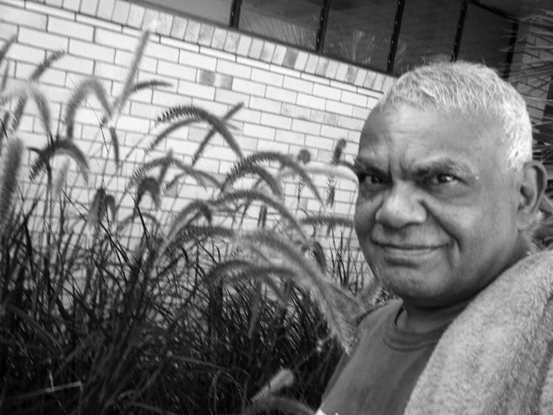
On a Hot, Wet, Kinky Evening in Fortitude Valley


Kinky Friedman and Sam Wagan Watson in Fortitude Valley, Queensland.

It was one of those typical Brisbane Sundays coming into storm season and Fortitude Valley was soaked by a magnificent volley of thunder clusters.

I was in a daze, still getting back to being me after some time-out / brain bleeds / loss of work / heart out of place … and basically bad writing! My partner had invited me to the Powerhouse on this afternoon for the matinee of a show, and in the shred of performance and storm we found ourselves dripping but not exactly ready to call the afternoon quits.

Continue reading

Posted in GUNCOTTON | Tagged ,

6 Poems by Najwan Darwish

Born and raised in Jerusalem, Najwan Darwish has been hailed by the New York Times Book Review as ‘one of the foremost Arabic-language poets of his generation’. Nothing More to Lose, superbly translated by Kareem James Abu-Zeid, is his first collection in English and it more than justifies the claim. Given his upbringing in Jerusalem, a city drawn and quartered along lines of identity, a city with multiple meanings, it is no surprise to find that faith, power, race and trauma are the dominant threads Najwan expertly uses to interrogate histories and weave his own truths.

Two years ago I walked through the streets 
of Dahieh, in Southern Beirut
and dragged a cross
as large as the wrecked buildings
But who today will lift a cross
from the back of a weary man in Jerusalem?

(Sleeping in Gaza)

Given the Israeli occupation of Palestine, it is by now rote to assume a Palestinian poet must be defined by resistance or rage or some mix thereof, but that is not the case here. Darwish skips where you might expect him to march, laughs where you might expect him to curse; always defiant of expectation, sometimes he’ll do all four in the one poem.

All these years you’ve been mourning the loss of your country.
Shame on you: Loss is a fabrication.

(Fabrications)

His vision is not so narrow, nor so insular, as to be defined by a border. Indeed, living in contested territory, among so many fault lines of self, no doubt ensured he would always look beyond it. His is a restless spirit, and this diverse collection reflects a global outlook. Darwish speaks of Jewish pain, of Armenian, Kurdish, Amazigh and Palestinian trauma too. Wherever oppression has stamped its foot, he seems to have visited in mind and heart, as if to say, ‘I see you here too, you cannot hide from me.’

He speaks not just with an eye to history, but to all histories, including his own, as with ‘In Praise of the Family.’

There is but a single sentence fit to praise you:
You are the deep quarry
of my nightmares.

Selected from his poetry over a 15-year period, the poems in Nothing More to Lose are exhilarating in their range and scope, offering deep cynicism, grief, hope and humour, as well as the language of faith, if not faith itself. There are few poets who can handle such weighty themes with such skill and brevity, but Darwish pulls it off with enviable ease, managing not just to write of life itself but also of himself.

I broke in the dream, became 
countless fragments, and no one
was there to gather me

(Tonight I Dreamt You Were Dead)

Given the tonal complexity and lyricism on display, it is a testament to Kareem James Abu-Zeid’s skill as a translator that he was able to carry so much across to English, and lose so little. If you haven’t yet had the pleasure of reading Nothing More to Lose, I urge you to do so now. You won’t regret it. In the meantime, it is with great excitement that I can present six new poems by Najwan Darwish translated by Kareem James Abu-Zeid, and published here for the first time.

Posted in TRANSLATIONS | Tagged , ,

10 Poems by Joan Brossa

Born in Barcelona into a family of artisans, Joan Brossa (1919-1998) first began writing when he was mobilised in the Spanish civil war. During the forties he was introduced to surrealism thanks to meeting Joan Miró and Joan Prats. This led him to start writing sonnets, odes and theatre pieces (which he called ‘scenic poetry’) within a neo-surrealist framework. In 1941, influenced by Futurism, he produced his first visual poems. He founded the Dau al Set in 1948 and during the fifties his poetry took on a social engagement. The poems presented here are all from The Tumbler / El Saltamartí (1963), where the synthesis of these factors is evident.

Prelude

These lines, like
sheet music, are no more
than a collection of signs to
decipher. The reader of the poem
is a performer. 

But, 
today, I leave 
my spirit in
its natural state. I
don’t want it agitated by thoughts
or ideas.


Time This line is the present. The line you have just read is already the past —it remained behind after being read. The rest of the poem is the future, existing outside your perception. The words are here, whether you read them or not. And nothing on earth can change that.
Path The footprints of the bulls went thus: C C C C C C C C The block must have been on the other side.
Gran Méliès1 — Maskelini puts the deck of cards in a case; he drapes the scarf between his hands: it disappears into the case. He has the deck of cards in his hands. — Bah! Such shows are a little passé: the cinema has killed this genre. — But don’t forget that the cinema made its way thanks to these tricks.
Interlunar A black curtain serves as a background. The skeleton that I left on the table before writing starts to move its legs and arms. More skeletons enter and dance together. — Grandmother, what is a lover? — The old lady says: — Oh! Now I remember ... — Rising, she opens a closet and out falls a skeleton.
Poem It is certain I have no money and it’s clear that most of the coins are chocolate; but if you take this page, double it long-ways into two rectangles, and afterwards into four, then make an oblique fold along the four sides and separate them into two main parts, you will have a bird that moves its wings. To Pepa
Tumbler A doll that has a weight in its base and that, tipped from its vertical position, rights itself again. The people. To Lluís Solà
Diagram The fact is that thousands of wealthy men determine the destiny of the world, and do it with one fundamental principle in mind: increase the benefits. (How long will this structure last?)
Sneezes Referring to the Spanish Press law provisionally set down in April 1936, the minister said that the best praise we could offer was that it had remained in effect for so long. Achi, Achoo, Achi!
Intonation I notice so many changes in what I feel and what I see, that if I remember personal tragedies I light a cigarette and leave the poem.
Preludi

Aquests versos, com
una partitura, no són més
que un conjunt de signes per a 
desxifrar. El lector del poema
és un executant.

Però,
avui, deixo estar
el meu esperit en el
seu estat natural. No
vull que l’agitin pensaments
ni idees.


El Temps Aquest vers és el present. El vers que heu llegit ja és el passat —ja ha quedat enrere després de la lectura. La resta del poema és el futur, que existeix fora de la vostra percepció. Els mots són aquí, tant si els llegiu com no. I cap poder terrestre no ho pot modificar.
Camí Les empremtes dels bous eren així: C C C C C C C C A l’altra banda hi devia haver la quadra.
Gran Méliès — Maskelini posa el joc de cartes en un estoig; agafa el mocador entre les mans: li desapareix i passa a l’estoig. El joc de cartes, el té a les mans. — Bah! Espectacles així van de mal borràs: el cinema ha matat aquest gènere. — Però no oblidis que el cinema va trobar el seu camí gràcies a aquests trucs.
Interluni Un teló negre serveix de fons. L’esquelet que he deixat damunt la taula abans d’escriure comença a bellugar cames i braços. Entren més esquelets i ballen junts. — Àvia, què és un amant? — La vella diu: — Oh! Ara que me’n recordo… — S’aixeca, obre un armari i en cau un esquelet.
Poema És cert que no tinc diners i és patent que la major part de monedes són de xocolata; però si agafeu aquest full, el doblegueu pel llarg en dos rectangles, després en quatre, feu llavors un plec oblic amb els quatre papers i el separeu en dos gruixos, obtindreu un ocell que mourà les ales. A Pepa
Saltamartí Ninot que porta un pes a la base i que, desviat de la seva posició vertical, es torna a posar dret. El poble. A Lluís Solà
Diagrama El fet és que milers d’homes adinerats determinen el destí del món, i en fer-ho s’orienten per un principi fonamental: augmentar els beneficis. (I fins quan durarà aquesta estructura?)
Esternuts Referent a la ley de Prensa espanyola, dictada provisionalment l’abril de 1936, el ministre va dir que el millor elogi que li podíem fer era d’haver tingut una vigència tan dilatada. Atxim, atxum, atxim!
Entonació Són tants els canvis que noto quant al que sento i al que veig, que si em recordo de tragèdies personals encenc un cigarret i surto del poema.
Posted in TRANSLATIONS | Tagged ,

3 Self-translations in 3 Languages by Marilyne Bertoncini

Souvenir – Ricordo – Memory

The grey Deûle flows
inside its greyish banks.
Dreams are reflected
within the water grass,
and changing fates
sketch and mirror
fleeting drafts
beneath the water clouds
where the sun hides
with the sparrows
in shivering silk
rustling like the rushes

*

La Deûle coule grise
entre ses berges bises
des rêves se reflètent
parmi les herbes d’eau
des destins fluctuants
ébauchent des histoires
miroitant un instant
dans les nuages d’eau
où le soleil muché
avec les hirondelles
a des frissons de soie
bruissants comme les joncs.

*

La Deûle scorre grigia
tra le sue bigie sponde
si rispecchiano sogni
fra le erbe d’acqua
fluttuanti sorti
tratteggiano storie
e effimeri sfavilli
nelle nubi d’acqua
dove il sole nascosto
in mezzo alle rondini
ha fremiti di seta
frusciante come i giunchi.

Posted in TRANSLATIONS | Tagged

5 Poems by Vahe Arsen

Vahe Arsen (Arsenyan) was born in 1978 in Yerevan. He earned his PhD in American and English literature from Yerevan State University, and is currently assistant Professor of the Chair of World literature at Yerevan State University. He is also editor-in-Chief of literary journal Foreign Literature.

Arsen translates poetry from English and Russian into Armenian. He has published two poetry collections in Armenian – The Flying Bicycle (2003) and The Return of the Green Gods (2007) – with the second book translated into the Dutch and published in Netherlands in 2010 and into the Russian in 2011 with the title The Sun Express.


Rimbaud
or Crucifixion of the Soul

The road is a barbed wire
and a magnet

the androgyne night reads a prayer
upon the city

a perverted and genius
and tormented youth
cross-nails his soul
on the virgin-roadside

and dreams of Baudelaire.


The Apple Under a Tree Means a New Flood

Soon after the flood comes a new flood
and a new creation – before and after the flood
a new tree
and the old Creator

In the new branches – the former Satan
in the rustling leaves – the Sun newly stiff and impudent,
and souls of new substance flying over the water
In the Old emptiness – a worn-out body with rotten ribs
under a new tree – an apple forgotten


The Hunter-moment

The birds had attacked
the walnut tree of my summer house
I ran into the house for the rifle
I ran into the house to save the walnuts
I ran into the house

I directed the rifle to the tree-bird,
to the coalescence of the twin
I stood still –
to catch the moment
but the moment was stronger
than my right forefinger

the tree isn’t mine
the walnuts are not mine
and the birds too,
only the rifle is!
which had coiled around my arm like a snake

I threw it away


The Walker on the Water

I love peasant’s hands like my own self
hands
with soil-web on them
thorny
with nacreous fingernails
each finger – a child’s backbone
monolithic
separate
amphibious roots

they chose three melons fusing with the fruit’s roundness
the watermelon’s cavern rang
the sunburnt tomatoes became hand-corns
the eggplant – a family of black rabbit kits,
who filled into the shabby sack hindering one another
then the peasant plunged down into the sack of sharp-ended peppers
and reached the nucleus of the globe
split the mocking darkness of the outer space
and pulled out a half-red splendid pepper
pulled out with more creed than Pope towards life and
Resurrection
and put in line with other peppers waiting in the sack
and wiped the death on his muddy trousers…
he thrust the money in his shirt pocket until the packing was torn…

the cigarette burnt like the Sun…
then he breathed in the luminary and leaned against his car
the metal of it was long ago gone…
mixed with the soil…
and now sprouted…

and I and my son both loaded
start our walk on the water…


The Arrival of Fairies

At this hour of the day,
when your senses prompt that you are the son of the Moon and
your love takes the shape of non-essence – emaciates and leaks fluid-form or unformed,
the city prompts you,
that the times of hopelessness begin for love

the times of drugs that replace everything,
that will smoke the troubles of the day
together with the day
impassable for sensation and
very safe,
desirable like the unborn embryo

avoid foreigners at dawn
you can suddenly love two of them or One, and those who die in the news will not soothe
the silent coffee hour at daybreak

and then the universal reality begins
the hurry-scurry of vanity splits the daily rite of your expectation and
you covet new sites in which the times and history of others rule
but at the same time something dies inside you and is not reflected in
the morning news
and you do not find solace in your dying and the dying of others
besides the time there are flows in your veins which can also linger and
stop
useless mirrors in the renewed cave that watch you and
do not want to see themselves never ever
useless visions and seers – before the bombs and after the bombs
visions, and visions and again visions … without those who look and see
kingless thrones
deaths without the departed
resurrections noiseless and inqueit
and even invisible

statues washed by rain
souls washed by statues
souls without masters and silence,
immobility more than presence and starving worms which have no wings to migrate and
no fancy to stretch a caravan
just then the fairies are born and blooming in harmony with drowsiness of the trees in woods
and the silent and serene nature of the plant becomes complete
and again something visionary is born
and becomes more real, urgent and moveable
and discerns the Seer from his own pupil

Posted in TRANSLATIONS | Tagged , ,

Michael Aiken Reviews Duncan Hose

An abundance of impudence

Bunratty by Duncan Hose
Puncher & Wattmann, 2016

The bio of Duncan Bruce Hose describes the Australian poet as coming from ‘the softslang line of the chansonnier, whose reference points range between Trefoil Island, Melbourne and Coney Island.’ In Bunratty, his third collection, that ‘softslang line’ delivers a suite of deftly composed (post)modernist folk songs, characterised by a highly idiosyncratic orthography and a preoccupation with sex and booze. Continue reading

Posted in BOOK REVIEWS | Tagged ,

Review Short: Love, Sex and Death in the Poetry of Bolesław Leśmian, Translated by Marcel Weyland

Love, Sex and Death in the Poetry of Bolesław Leśmian
by Bolesław Leśmian
Translated from the Polish by Marcel Weyland
Brandl & Schlesinger, 2015

In this new collection of translations, Marcel Weyland acquaints contemporary readers with Bolesław Leśmian (1877-1937). The book makes us witness to the self-construction of an early twentieth century ‘outsider’ poet who won’t hesitate to invite you into his world. Weyland has taken up the heady task of translating a poetry that is difficult in its original form. Leśmian is celebrated for his creative morphing of language, playing with rhythm, and inventing of words in Polish. Continue reading

Posted in BOOK REVIEWS | Tagged , ,

Done

Her sadness sits on the couch in a burgundy floral nightie, one button missing, and eats a jar full of chocolate covered peanuts that were meant as a present for her tutor who was always so nice.

She wonders how long she can stay like this, on this couch, stuffing every pocket of her brain (each a potential source of pain) with shouting housewives and ordinary people with really great singing voices.

While she waits, she folds up her small self, her smallest self, tucks in questions (why? And aren’t I good enough?) and smooths angry creases.

When she’s ready, she will unpick it, with thick dumb fingers, and maybe she will learn or feel or remember the character of her sadness.

Posted in 74: NO THEME V | Tagged

The Girls of Goat Island

Goat Island is a secluded beach west of Ardmore, Ireland that can be found via a windy lane signposted for Goat Island. It was awarded the Green Coast Award for 2015.


Every morning in every season
they come to swim
the southern coast
of Goat Island.

From spring jackets and skirts
they emerge in blue bathing suits
bare legs skimming across
a cavernous beach,
heads capped in white.

Like a bevy of birds
they dip in the tide,
stroke imperceptibly out,
circle back to themselves
these girl-women.

Their shape takes the form
of the sea,
sinuous as an eyelid,
sharp as a forgotten sound.

Without a white cap, I stand out—
bare-haired, American.

After a swim they strip naked
powder breasts and towel
bottoms, hover inside
limestone hewn before time
was a word or an abstract.

They huddle close,
dress and laugh,
at ease with their bodies,
each other.

But the vigor of May
makes me shiver:
this soft Irish rain mixed
with talk, bare limbs
and wet rock.

Posted in 74: NO THEME V | Tagged

Recommendations for a Western Australian Coastal Pastoral

  1. I am thinking about limits.
    1. The gaps between limits. Liminal, littoral spaces.
    2. The most fundamental part of ‘human’ consciousness is defined by lack of limits.
    3. Unless it is limited by life and death which are themselves littoral rather than literal
  2. The beach, we say, is a littoral zone. Do I repeat myself? I repeat myself.
  3. In WA the beach is our playground, where our children grow.
    1. A playground is a fenced space.
    2. Putting a fence around the yard strikes us as being the easiest way of achieving order out of chaos, says Wallace Stevens.1
    3. When we grow into our consciousness we find our own limits and no longer need the playground.
    4. But Stevens is, of course, talking about America.
  4. In the language of early settler Australians, there was no way to describe the landscape. Even the colours were limited.
    1. To paraphrase early accounts, yellow, yellow, yellow, desert, death, where is the green?
    2. Unsurprisingly, the fields in the WA wheat belt are many shades of yellow, none of them green.
    3. The most obviously green thing of WA is the ocean.
    4. So it rolls like fields and is most fertile.
    5. But there are no sharks in the wheat fields.
  5. Flaubert says that thing about being ordered in our dailiness to be violent in our art.
    1. He is also not Australian.
  6. The US shore lyric is defined by Bloom as one of confronting limits of existence through the impassable borders of the ocean (death)2.
    1. WA literature is defined by being in the ocean, out past where your feet can touch the bottom.
  7. After the second fatal shark attack at Gracetown, people stopped putting their head under.
  8. If oceans are fields, then when you dive under the surface you are in essence burying yourself.
  9. At the panel on sharks, the audience was asked who among them had ever had a profound experience in the ocean.
    1. Everyone put their hands up.
  10. The beach must be protected, said the Premier of WA, it is our way of life. It will be our children’s children’s way of life.
  11. 11. On a clear day with your head under water everything looks green.
    1. On a less clear day, it’s the more familiar yellow.
  12. From space, two things about Australia are visible: the clearing line–a yellow chevron through the wheat belt, and the Barrier Reef–dark green in lighter green.
    1. The Reef is slowly lightening.
  13. In the 1870s whipping was outlawed in WA, the wheatbelt was cleared and Australia entered the age of enlightenment.
    1. A man’s soul might be disciplined separately from his body: rational man can be relied upon to protect his own.
    2. Aborigines continued to be whipped, often for not recognising fences.
    3. After failure to assimilate they became subject to the Flora and Fauna Act.
    4. A man can beat an animal any which way he likes.
  14. A country built on genocide is not going to preserve its intact ecosystems says the poet from the wheatbelt.3
  15. The colonial Australians we are led to believe suffered from an exile consciousness.
    1. The ocean bought us. It is how we try to get back.
  16. To catch a shark you bait a drumline and wait.
    1. If the shark is three metres: shotto to the head.
    2. Drag it past the limits of where the shore.
    3. Sink it.
  17. Pregnant sharks do not feed for months. A green moss grows in each of their seven rows of teeth.
  18. Around our bays we will place shark nets.
  19. Fences.
Posted in 74: NO THEME V | Tagged

from Letters to Allen Ginsberg

1:X

A few days passed without words between us, I’ve neglected you in paper only, my spirit

Tormented as ever by my own misadventures. Bought a Black Forrest at Veniero’s on 11th, walked it through the Village

And taxied it to Brooklyn for the Doctor’s birthday, she drank bourbon despite raging allergies

Long Haired Biker from Tennessee singled me out from almost the moment we arrived, crazed wolf in Eskimo clothing

He gripped onto me with dirty fingernails accelerating from zero to a hundred in a nanosecond, his creepy hairless cat gazing little alien

Licking my toes under the coffee table, I had refused to get on his hog and left him alone with baldy in bare dwelling, Long Island City,

Rode free for thirty dollars back over the bridge looking at the Empire State Building’s guiding lights

As the car sped toward them. Showered the grime away and sang to the bath tiles and mouldy curtain,

Tried to sing a note again in bed almost asleep at 4am sounding like a mouse peeping just to confirm he’s still alive, I heard myself from outside my own body,

Now LHB won’t leave me alone, the messages rain hard and fast and I’m a little afraid to not answer or tell him he’s got the wrong girl.

Maybe this is underestimation, maybe this is fleeting futile freaked out filly overshooting the mark sick and sprinting wildly west

For no reason towards nothing, possessed. Tonight I’ll wash it down with sake and vinegary octopus with GS

I won’t tell him what happened, he doesn’t like to hear about that sort of thing, and I’ll walk home in the penitent night

Breathe the air a little deeper and swing my arms a little wider to demonstrate my vital liberty

Take the long route and put the trash out for the Psychic next door who’s terrified of the rats.


2:VIII

Ginsberg, the dilapidated tiles in West End Bar at Columbia now a bus boy’s monorail from Cuban kitchen to hollowed out dining room

Booths lined up, washed out, mahogany bookend to bookend, a miniature palm or two to fill the cavernous spaces, concealing the peeling woodwork

Did your elbows respite on that same wounded bar who nursed my penchant for duality, or did they rip it out from under you and lay me down a new one? I couldn’t know.

Dumbed myself down for the twentieth time in my beer, absconding into ruminations of you in that back booth waxing magnificent (or dumbing yourself down?)

Rejoined reality, dumbed myself down for the last time with the voids once inhabited by your bequest casting eyeballs over my parenthetical female

Foray into dumbing down of the girl, hushed the higher meditations for lower harmonies

Hid in palpable shadows of conception traversing visions of imminent insipidity:

Nightshifts ad infinitum “til death do us in”, marital sciatica nicking kinetic kindness until, paralysed, we fall on our knees in alimony—a billion words, unpenned.

West End Bar who watched you become you, watched my anaemic platitudes; we both left with much work left to do.

Out there the snow makes a Narnia out of the university grounds coating every naked tree illuminated by goblin lampposts and fairy-lights

You, the missing lion. The chill, irreconcilable.

Posted in 74: NO THEME V | Tagged

The Change Room

This morning, walking almost naked
from the change room toward the outdoor heated pool,
I become that man again, unsettling

shape to be explained.
Such questions aren’t asked to my face. Children
don’t mean anything by it, supposedly, so I

shouldn’t feel as I do,
as my bones crouch into an old shame I thought
I’d left behind. Chlorine prickling

my nostrils, a stranger
compliments me on my tattoos and shows me hers –
a dove in flight over a green peace sign –

as if the canvas was unremarkable.
She turns and limps away,
and something makes a moment of sense.

I lower myself into our element
and swim, naturally
asymmetrical and buoyant. Quite some time

later, showering, the man beside me
is keen to chat – how many laps we’ve each done,
how long I’ve lived in this town, the deep

need for movement.
Speaking, our bodies become solid.

Posted in 74: NO THEME V | Tagged

Blackberry Caliphate

For months men with coloured stakes have pegged the suburb,
subdivided their way over the hill, toward our hidden place,
this clutch of blackberry. We’re here again, arms smeared

with sour fruit, hands nicked and bloodied from passage
through the bramble. Under our canopy there’s a lull.
Over the hill a dozer sputters diesel; you’ve put sugar

in their tanks, delivered secret spells with sticky fingers
and your two-stroke tongue. Tricks don’t hold long,
nothing works. They’ll find us, out beyond

their kerbs and cul-de-sacs, gorging on sour berries,
licking the skin from our lips. You’ve stubbed
a midden of butts in silence. I need to act now.

There are leaves to pick from your hair; I kiss
the grease on your neck, your exhaust fume breath
buries the shape of words in my ear. I guide you

to me. Exhale your weight, until we’re side by side,
in the musty dirt, damp on our shoulder blades, rabbit
eyes in the shadows. When we come in from the hills

our palms cling, sticky with blackberry; backs grass slapped,
pin-pricked with bindis and briars. In the hours
we’ve been gone, they’ve poured cement between stakes,

mapped our sandstone heart with a concrete tattoo. The footpaths
shimmer; we walk, gravel dust at our ankles, until we find
a place to kneel and cast our hands in wet cement.

Posted in 74: NO THEME V | Tagged

How to be an Avant-garde Ex-lover

bake sixty-eight cakes for sixty-eight mates
be apt
smuggle memes outback of the friend in hand 
roll but do not smoke
anxiously lounge at peeling deck tables
keep yr allusions deictic; it’s fun 
stoically ignore mosquitos
haunt but do not uni
If you uni be avid but ironize the fuck out of it; as though helpless before involved embrace
prefer American things; as though helpless before involved embrace
adore the stutterer
glassily believe that stylistic fetishism precipitates meaningful change
cite but do not read Derrida Marx Hegel
vertiginously mingle yr highs and lows: it doesn’t get old or sad or die
be consistent only in aggressive self-interest
assiduously court favour and spurn it
ache 
be laconic but conversational
avoid muscular usage in most senses – say it’s a heat & light thing
lineate, lineate
cobweb yr agency wherever you go
keep desire in the 'plausibly situational' box
don't think structurally - this is a party
bet 70x7 is 15591 is a long way to Gundagai
lose
be consoled that most are not so wry or strange or scared 
mutter Dransfield knowingly half-heard as dawn slips the opposite terrace &
your perfect depilate skin burns 
              white 
                             like a flare
Posted in 74: NO THEME V | Tagged

Lovers of Valdaro

You are poetry
Shattered skull, fingers brushed against jaw-bone
legs tangle-gether
rhythmic bone bone bone
crippled in
piling calcium crush.

Your rhyming poses –
arched backs, stacked femurs
your ribs are beat.
You’d clatter if you could move.

Baltimore
I see myself in its decay
recognise time passing outside my body.

Collapsing roof
blown out windows
vines run me over
I am suffocated. Reclaimed.

I am the big-hit search term
‘ruin porn’.
I am a bridge built but never used,
an overpass to nowhere.

But you, lovers.
You are swept away on nothing
like words from mouths,
like been-said, like breath.

My body is abandonment, but
you are poetry.
Your rhyming poses
swept away by six thousand years of
air.

My wish for erasure
stands solid among
the rubble.

Posted in 74: NO THEME V | Tagged

The Instinct of Sharks

Go back to the start,
before the loneliness of this two a.m. mating season carried you home:
watch the bruise on your thigh shrink and disappear from your skin
starve the sideshow alley clowns, take back the deal with the night

Go back to the start,
before the dance floor haze of your memory worked loose:
lift the neon-soak from the dark and let the streetlights blink off
cash in your chips, ignore the persuasion of sticky carpet

Go back to the start,
before the hammerhead light of morning burned the curtains:
unstack and refill plastic cups, distinguish every face
retrace your steps, save your judgement psalms for the unholy

Go back to the start,
before you crept out, drank tap-water from cupped hands:
let the smell of liquor dry out and vanish from your dress
hold everything together, keep your hand on your purse

Go back to the start,
before you stepped into the first terrible song of morning:
cover your tenderised flesh and count out your small change
remember how ugly the amusement park seems by day

Go back to the start,
before the last light turned off, and you forgot where your skin began:
fold and unfold on repeat, breathe deeply in the back seat of a taxi
remember the smell of blood, remember the instinct of sharks.

Posted in 74: NO THEME V | Tagged

She meant vegan, of course

The little lady in Recovery Room
had a gouty great toe – was nasty
with ascending infection.
Her foot was angry, but
she seethed

about Christmas
spent with her daughter.
‘A bogan,’ she said.
‘It was a bogan Christmas.’
Disapproval drew her lips

tight into a purse.
She spoke in bursts
and short sentences.
I did not have to pry
the purse open to hear

the rest of her family
no longer ate meat
but were not content
to stay vegetarians.
‘They’ve all become

bogans,’ she said –
‘No suet pudding.
No custard.
No cream.
No brandy butter.

It was chickpea chaff
–organic –
and soy something
for dessert.’
Thin smile then –

an expression too mean
to meet her eyes.
‘Soy something
doesn’t go with booze –
I kept the bottle for myself.’

Posted in 74: NO THEME V | Tagged

Emily Dickinson as an Octopus with a Pre-Death Plan

I’m afraid I can’t explain myself, sir. Because I am not myself, you see?
— Lewis Carroll, Alice’s Adventures Under Ground


I

From the high-care low-life facility where my head lolls in the briny bowl
Doctor Death asks what my priorities are What goals I have in the short term
What I am prepared to sacrifice What not I’ll tell you what I want—
to make bad choices, pick a fight, drink more wine, raid the fridge at midnight, steal
that woman’s earrings, disembowel carnations, rip to shreds that New Idea then shoot
for a wave where an octopus looks me in the eye like a Hindu god with the wisdom of
a newborn babe, takes my measure, shows me personality, holds a tea party with
nothing in it but chocolate cake and opioids then hides me in her cave, two of us
minus our ancestral shells sharing a spliff, smoking our guffawing heads off.

II

Back in our tanks outside visiting hours we are chastened, and when nobody’s
looking she oozes across to greet me in redness of excitement I touch her head,
she turns creamy white, relaxed like no one I know, so many lobes coil around her
throat She meets my mind, spits salt water in my face to show me how much
she knows me, she knows me, knows me—bored to death by melancholy she squeezes
her boneless body through aquarium bars it’s mayhem as she marches across her Amherst
lawn suckering everything in her path Down Down Down to the water changing colour,
texture, spots, commas slashing pages with short lines—
long-necked funny unlived Em playing with rage and form, dying tired without me,
alone

Posted in 74: NO THEME V | Tagged

Trousers

Near the ladies your blood is sticky on the carpet. The paramedics have spread out their equipment on the floor of the pool room and you’re on a stretcher, complaining they haven’t given you anything for the pain. If you looked down you’d see the splintered bone jutting out in two places through the fabric of your favourite trousers, your right shoe filled with blood. I say I’m pretty sure they have. The manager of The Sly Fox, keen to point out that the bar staff had acted responsibly, asks if you’re going to take any legal action. It’s three o’clock in the morning and all I know is that drinking makes your bones break and that the baby’s name was Alice, you think, and you don’t even know if her mother kept her and you didn’t even want her to have the baby in the first place, you two having known each other for only one night, and that you tried to stay – you really did – and how long ago it all is now and don’t look down don’t look down don’t look down.

Next day before visiting hours I take the trousers to the Japanese seamstress on Enmore Road although I know it will be six weeks until you can wear anything other than track pants over the plaster cast and metal rods. She says she can fix them for twelve dollars. I’m sceptical because the fine wool is so badly frayed but I want to believe time can be turned back for only twelve bucks. First time you wear them the tear opens straight up again and I am angry with the Japanese seamstress for selling false hope so cheaply.

Posted in 74: NO THEME V | Tagged

Realness in the Mountains

for Doug


You aren’t supposed to name
the emotion in the poem, just
show it obliquely (poetically)
but will you take a look at that
mountain, covered in moss,
all mulchy with leaves, there
is slate inside it, there used
to be more, the river makes
a good sound, and everything
is either overstated (me) or
understated (Hemingway).
Whether or not the topography
of the landscape is interchangeable
with a woman’s body is, suffice to
say, his problem. I focus on the real.
It’s quite a sight, these mountains,
so much that after five weeks it’s a
given to me, though I can’t speak
more than one word of Welsh.
Thankyou is dioch and I can’t
remember the word for ‘cheers’.
I’ve never had a strong sense of
smell, where one might smell
‘mountain dew’ I smell ‘mucus’,
though I can tell when it’s raining,
and when the Thanksgiving turkey
is off, in the middle shelf of the
fridge semi-covered in cling film.
Anyway, the mountain. It’s covered
in pines planted in rows, some
patches have fallen over (been
lumbered?), some are so thickly
set they look like they’ve been there
forever, as if I’d know the difference.
They’re not really mountains
but I’m Australian. You should
see the café in Corris, Adam &
Andy’s, it’s the cutest fucking
thing, it is the best, it is in fact
the only shop at all, but yeah.

Posted in 74: NO THEME V | Tagged