‘Language observes the body, and the body further observes language’: Shastra Deo in conversation with Natsumi Aoyagi

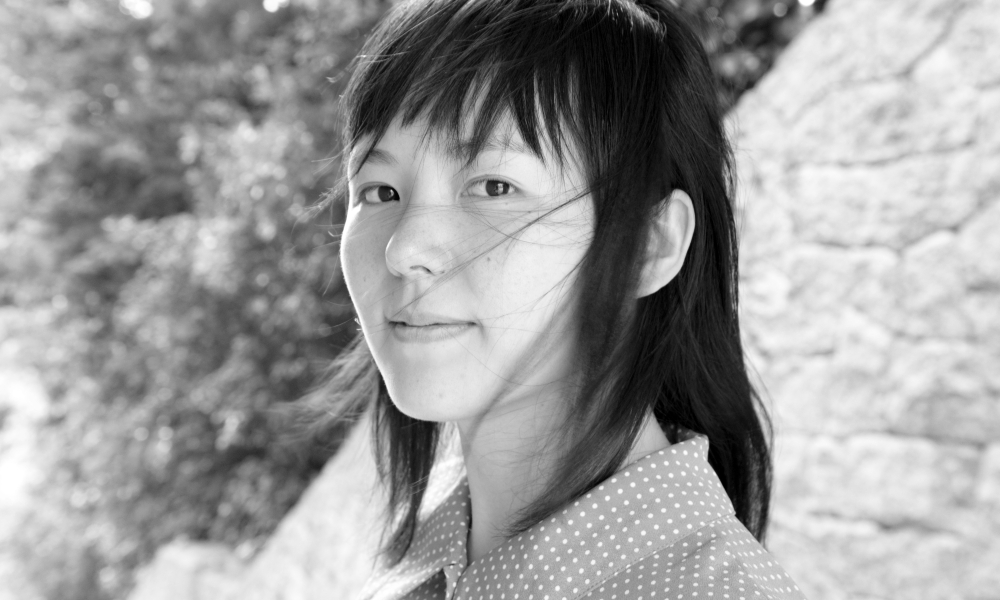
Natsumi Aoyagi

Image by: Wada Shintaro


“We should practice realising that we haven’t been adept at recognising time,” says multidisciplinary artist, mangaka, and poet Natsumi Aoyagi. Described by the 28th Nakahara Chūya Prize judges as a key representative of the future of Japanese poetry, Aoyagi-san consistently pushes the boundaries of poetry and art’s potential as containers of observation, narrative, and temporality. To practice realising is at the core of Aoyagi-san’s poetry indeed – practice as in the habitual, practice as in proficient repetition, practice as in what it means to live as an artist.

I haven’t been adept at recognising time. I was introduced to Aoyagi-san’s work through writer and translator Corey Wakeling in 2023. That year, Aoyagi-san won the Nakahara Chūya Prize – one of the major poetry book prizes in Japan, and the most important for young poets – for her second collection,『育つのをやめる』[Done Being Nurtured]. Corey is translating Aoyagi-san’s poems for English readers, and I had the luck of corresponding with her about perceiving time, marking time, time as image, and how image may be rendered into language. As someone whose first language was lost to English, I was delighted that Aoyagi-san translated her Japanese-language responses to English herself, with Corey’s collaborative editorial assistance bringing this conversation together.

Corey Wakeling’s English translation of Natsumi Aoyagi’s『育つのをやめる』[Done Being Nurtured] will be published by Spite Press in July 2026.

      –      Shastra Deo

Shastra Deo: Your first collection, Calendar Stories for You Waiting at Home, opens with an epigraph from Heidegger:

“Hebel has desired the following.”
This calendar wants to emerge as one of the sparkling things of the world. This calendar, clearly and relentlessly sparkling, wants to be a thing which illuminates the everyday affairs of the people. This calendar, printed matter from that elsewhere – as if it were printed matter already seemingly having vanished when seen by a person, in other words – is, put simply, what should not be printed.

You touch on Heidegger’s idea that the meaning of being is time, that being means becoming dead. It feels morbid yet essentially mortal. What of language? Does language exist in the same way as a human being? What does the entanglement of your body and your language mean to you?

Natsumi Aoyagi: このエピグラフは、ハイデガーが1956年5月、ロェラッハでの「ヨハン・ペーター・ヘーベルの日」のためにSchatzkästlein会館にて講演したものを日本語訳したものから引用しました。わたしが注目したのは、ヘーベルが記した暦物語における「家の友」という存在です。同じ講演の中でハイデガーは以下のように語ります。「家の友は、夜警總監、つまり月の如く、夜ひとり目覺めてゐる者であります。」暦というものを作る「月」、それと同様の存在として人間を描く。そうして生まれるのが「家の友」という、街に暮らす人々から逸脱した存在なのです。彼の存在は言語によって描き出すことができますが、逆に言うと、イメージしか彼を創出することはできません。言語と人間。それらは同じように存在する、とも言えますが、暦物語の中で描かれる「家の友」のように、人間それ自体を観察する逸脱した身体を描けるのは言語だけであるとも言えます。つまり身体は、身体それ自体、人間それ自体を実質的に観察できない。しかしわたしは、言語で観察された身体について、さらにまた身体をもって外側から観察できると考えます。たとえるなら、家の外に出続けるように、言語は身体を観察し、言語の観察を身体がさらに観察することで、家の外へ、家の外へと思考を展開させられるのです。身体と言語はそういった家を出続ける観察の方法を見出す手段を見出す道具にもなり、「家の友」の存在はそうした関係性に伴う結果である。わたしはそうした関係性を用いて、どうしたら現在に「家の友」を産み出せるのか?ということを目論んで、『家で待つ君のための暦物語』という詩集を作りました。この詩集は実は映像作品としても制作していて、言葉を社会と繋げたプロジェクトとして展開しています。

The epigraph is quoted from a Japanese translation of a lecture given by Heidegger in May 1956 at the Schatzkästlein Hall for “Johann Peter Hebel Day” in Lörrach. What caught my attention was the concept of “friend of the house” found in Hebel’s calendar stories. In the same lecture, Heidegger states: “A friend of the house is like the night watchman, that is, one who awakens alone in the night like the moon”. It depicts humans as the “moon” that creates the calendar, akin to the moon’s role in marking time. Thus emerges the “friend of the house”, a being who deviates from the ordinary townsfolk. While his existence can be described through language, on the other hand it can only be evoked through imagery. Language and the human. They “exist” in the same sense, but just as the “friend of the house” is depicted in the calendar stories, only in language does the depiction of the deviant body which observes the human in itself exist. In other words, the body cannot substantively observe itself or humanity. However, I believe that the body observed through language can, in turn, observe the body from the outside. Like constantly venturing outside the house, language observes the body, and the body further observes language, expanding thoughts beyond the confines of the house. Both body and language become tools to discover methods of observation beyond the house, and the existence of the “friend of the house” is a result of such relational dynamics. Utilising these relationships, I endeavoured to create Calendar Stories for You Waiting at Home, a collection of poems exploring how to bring forth the “friend of the house” in the present. This collection is also being produced as a piece of video art, expanding the project to connect language with society.

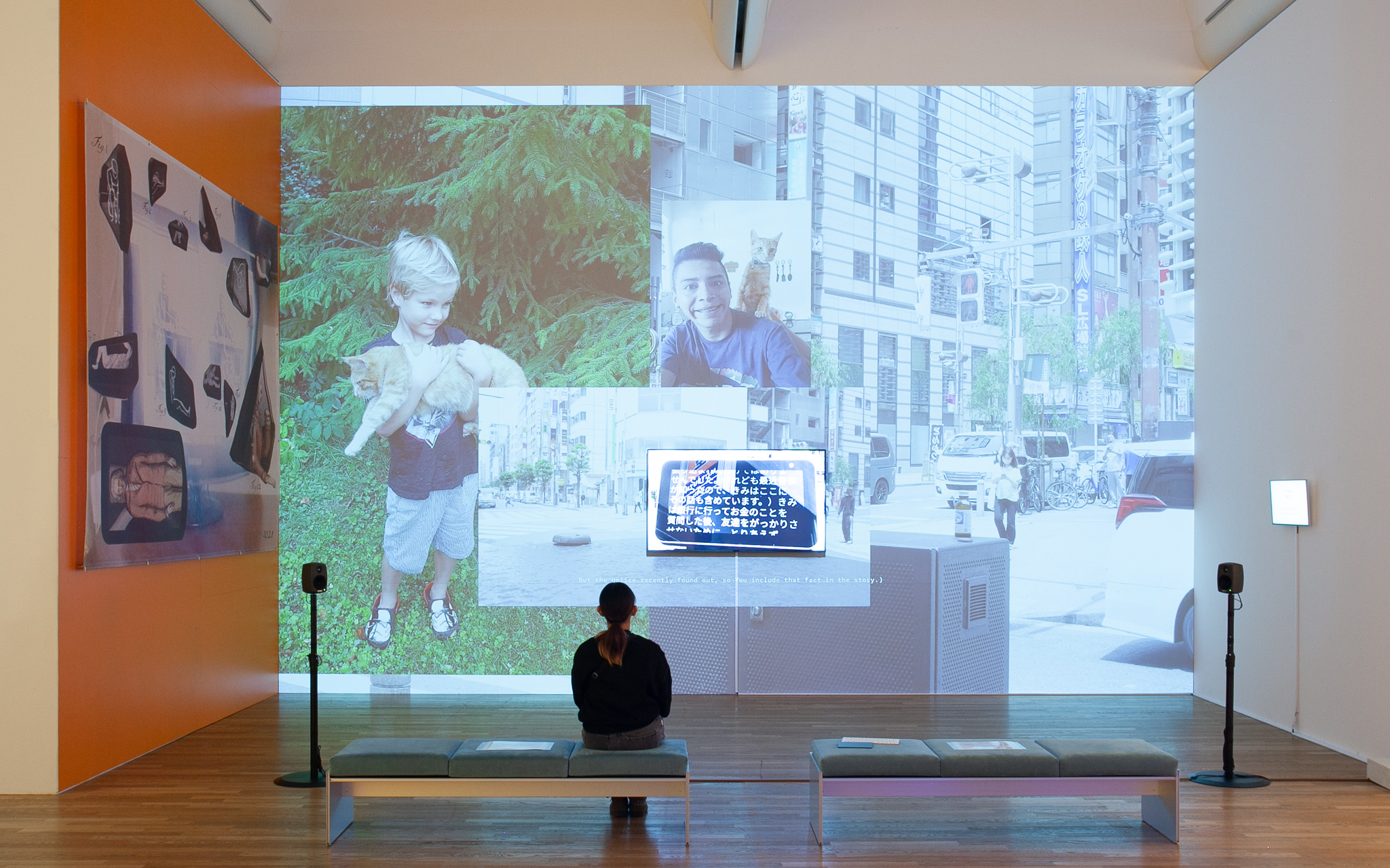
Natsumi Aoyagi, Calendar Stories for You Waiting at Home (2022, Tokyo)

Posted in INTERVIEWS | Tagged , ,

3 Self-translations by Mariam Al-Khatib


In a Crowded House, in the Heart of Al-Rimal


Children scream,
the pot boils,
the fan spins uselessly,
and the radio plays news no one wants to hear.
Grandmother dips bread in tea,
Mother yells that no one helps her,
Father reads an old newspaper,
and the boy tries to write a composition
but forgets the difference between past and present.
The house is packed with life,
yet it feels lonely.
As if everyone lives in a small room inside their head,
and no one knocks on the other’s door
Posted in TRANSLATIONS | Tagged

3 Teemu Helle translations by Niina Pollari

Helle

Dead Artists

The laundry room is dark
and located in the basement
like all the memories
we want to forget.

I open the ceiling edge window
and a draft belches
dead artists back into the spotlight.
The room is tiled floor to ceiling

like an abattoir with its chemical knives;
humiliating sweat maps in the armpits
of my t-shirt with their salt mountains,
lost search parties.


Kuolleet artistit

Pyykkitupa on pimeä
ja sijaitsee kellarissa
niin kuin kaikki muistot,
jotka halutaan piilottaa.

Avaan katonrajan ikkunan,
ilmavirta pölläyttää
kuolleet artistit valokeilaan.
Huone on kaakeloitu lattiasta kattoon

kuin teurastamo kemiallisine veitsineen;
t-paidan kainaloissa hikiset
nöyryyttävät kartat suolavuorineen,
eksyneet etsintäpartiot.

Posted in TRANSLATIONS | Tagged ,

3 Neslihan Yalman translations by Mete Özel and Jeffrey Kahrs

Neslihan Yalman

ASTROFEMINISM

man is not human. he is a construct
a woman uses to train bears

i’m letting my snakes out in the city

a dream in the whirlpool of reality
can’t take up more space than this

the moon growing from my legs
knits a prophet’s dress

the door closes inward

it’s hard work escaping the sly nature of the fox

dancers wander about as his crimes
are hung from the ceiling by his wallet

if a strategy is determined by experts
there is no loyalty between sexes

children and potato chip packages stuffed
in the belly of a stroller

they leave trash at end of a table
a cowardly family
who can’t bear being alone in the woods

oud tree, spirit of fire

dropped from a balcony
our purple bruises are digital

those who haven’t fallen
chat while licking the hairless lips
posted in digital galleries

fantasies about covered women
are available to all

after the photo-graphic show
licking the eternity tree’s roots
where their fingers are entangled

he protested the culture of competition
but is completely exhausted by his relationship
so he licked the flag and spat in the square

you can’t stop what you hear
by hating the one you love

toxic heterosexual moan

a warrior full of pride after marching
arranges beans on a kitchen apron
and surrenders to the smell of oil

is this dish less salty?

land irrigated by blind allegiance
allegiance that cries when it leaves
the plastic-covered living room furniture
she accepts the double-headed nature of defeat
in front of his animal-like hairy chest

we don’t give up

the rules of society
lying between the street
and our house
can’t shape us

every shadow that doesn’t love the place it’s in
must write its own holy book


ASTROFEMİNİZM

erkek insan değildir, erkek yapıdır
kadın ayı terbiyecisi

yılanlarımı şehre salıyorum

gerçekliğin girdabında hayal
ondan fazla yer kaplayamaz

bacaklarımdan büyüyen ay
elbise peygamberini örer

kapı içeri doğru kapanır

tilkilik döngüsünden kurtulma operasyonu

etrafında dolandığı dansözler
suçunu cüzdanından tavana asmıştır

stratejilerini uzmanların belirlediği
cinsler arasında sadakat yoktur

aile korkakların ormanda yalnız kalamadığı
çocuklu pusetlerin göbeğine doldurulan
cips paketleri, peynir suları masadan aşağı

ut anası, ateş ruhu

morluklarımız dijitaldir
balkondan düşürülüyoruz

düşürmeyenlerin sohbetleri de
galerilerin tüysüz dudaklarını yalıyor

türbanlı fantezisi ilişkilerüstüdür

yalamak, foto-grafik gösteri sonrası
kökleri sonsuzluk ağacının
birleşmiş parmakları

yalamak meydanda tükürdüğü bayrağı
ilişkisinde tümden tükenmiş
rekabet kültürünün protestosunu yüklenerek

sevdiğinden nefret duyarak
duyduğundan kopamayarak

toksik heteroseksüel inilti

bugün onurlu bir yürüyüş savaşçısı
çıkışta mutfak önlüğüne fasulye dizerek
yağ kokularına biat edebilirsin

bu yemeğin tuzu mu az?

biat toprakların suladığı ikili ilişki
biat salon takımlarını terk ettiğinde ağlayarak
geri döndüğünde kıllı döşü
kabul eden çift başlı yenilgi

vazgeçmiyoruz sokakla
evimiz arasında toplum kuralları
bizi istikrarlı kılamıyor

yerini sevmeyen her gölge
kutsal kitabını yazmalı

Posted in TRANSLATIONS | Tagged , ,

A language for grief: Writing horror in fiction and poetry

Eliza Victoria

1.
I write and read between and across genres, but horror has always been my first love. Much has been written about the appeal and utility of horror, often combining, as sociologist and film critic Andrew Tudor attests, analysis of the texts themselves as well as the genre’s consumers.

That is: if you like horror, there is something in the genre that fulfills your darkest desires.

Or, to offer a less charitable reading: there must be something wrong with you.

2.
Modern horror has ancient roots. You can see its beats in folklore and in Greek tragedy, where the noble hero experiences death or a downfall, a change in fortune. The word empathy (from pathos) derives from this ancient theatrical genre. To be human is to confront suffering, to witness the pain of others and our own. Horror, much like the open-air theatre honouring Dionysus or the seats around our ancestral fire, offers a safe space for this confrontation, a sanctuary to experience the worst consequences of careless action, but without being harmed. As it was nearly 3,000 years ago, horror in modern times is an invitation to face the traumatic truth. What if – What would you do if – Would you save someone’s life even if –

In one of the manuscript comments on my poetry collection What Comes After, shared with me by my publisher the University of the Philippines Press, the anonymous evaluator wrote, “Overall, one might wonder why there is so much death and destruction in Victoria’s poetry as there is in her fiction.”

I wondered about the wondering. As a person born and raised in the Philippines, isn’t death and destruction our status quo?

3.
While analysis of the horror genre (and its consumers) often turns to psychoanalytic theory, I would not want to offer a reading of my state of mind when I tell you that I believe we learn to fear before we learn to love. Babies scream in terror and distress when they leave the womb. Born in a crime-riddled country that continues to vote myopic, self-interested people to power, my first instinct is always suspicion, a prey animal living in constant vigilance, a people-pleaser performing my way out of certain danger.

I didn’t think it was possible to live life without anxiety. I was raised Catholic around people who spoke more about hellfire and punishment rather than mercy. Every New Year there are news of numerous deaths from ligaw na bala (stray bullet) fired by indiscriminate gun owners – some even men in uniform – as part of their celebrations. In the 1990s there was a spate of massacres, entire families stabbed to death in their own homes. The Reproductive Health Law, eventually enacted in 2012 after making its way through Congress across 11 years, entered public debate around the same time popular media were glamorising eating disorders to achieve the perfect (female) body, around the same time I was going through my teenage years. I knew that my mere existence as a woman with ‘unpopular’ opinions about the church, the government, or my own bodily agency, could be construed as an act of defiance, and could very well lead to incarceration, injury, or murder. The escalation of the drug war under the Duterte presidency that claimed over 12,000 lives (Human Rights) felt surreal and horrific, but was also, horrifically, an unsurprising continuation of the violence that has come before. Nowhere felt safe. No one can be trusted. For the persona in my poem ‘Topography’, erasure means safety.

[The] midnight news becomes a warning. I hide my cell phone in the train, I
wear simple clothes, my jewelry is cheap. Every long walk is a study in
erasure: I blend in until I am no longer there. (24) 

4.
In my novel Ascension, a character gets hit with a truncheon by police during a university protest march against extrajudicial killings, a head injury that leads to her death, a death that leads her sister to seek justice from a supernatural being. An act of despair, because her sister can’t find justice anywhere else. The otherworldly aspect of the novel ends with resolution, an escape, even good fortune for some, but there is no resolution to the earthly, mundane issues faced by the characters – poverty, family violence and abuse, state-sanctioned murder.

The novel ends before the start of the drug war and the gross mishandling of the COVID-19 pandemic, the cosmic evil momentarily vanquished as the evil of men continues.

Ascension was published by Penguin Random House Southeast Asia in 2024, but it was conceived concurrently with the poems in What Comes After, published two years prior. They share the same themes and are an examination of the same grief.

But the demands of the novel form and the horror genre, and my own predilections when it comes to prose, require a conventional structure and an ending. Not so with poetry. I tend to be traditional with my fiction, but poetry allows me to be freed from structure.

If my prose fiction is the making sense of and the search for an answer, poetry is the sitting with. The witnessing.

5.
As a young girl still learning to read and write English, I gravitated towards the reproduced images of Rene Magritte’s and Yves Tanguy’s art in encyclopedia volumes before I could understand the words in the articles that accompanied them. I loved the desolation and silence, the surprising juxtaposition of images, the dreams brought to life. Later I would learn that Surrealism came from Dada, an art movement that formed in neutral Switzerland as a response to the cruelty and senselessness of the First World War.

How else can one react to political and personal turmoil? If rational thought has led to war, then the dehumanised must turn to the absurd. Societal collapse collapsing language itself.

In my poetry, I lean on surreal imagery to discuss tragedy.

I have left myself in the/bedroom, folded neatly on top of the pillows (‘Crime Scenes’, 5)

or

You follow the example of the young woman sitting beside you, the minutes
contained within her hands. The minutes plucked like petals in that old game. (‘Crime Scenes’, 6)

I fold time and events as if they were the many rooms we move through in dreams, an omniscient witness who sees the shape of what’s coming but is powerless to stop it.

From ‘Crime Scenes’:

He screams in that field where they left him
and the field, briefly stirring to life,
allows something to escape, something rustles
and the blind widow falls to her knees on the floor,
touches that place where the bullet hit, that word
she cannot spell. (4)

From ‘News about the End of the World’:

                                                  We must tell her that no one will survive,
but she thinks of the child she is supposed to have at her age, and the child
welcomes her as she throws open the door, drowning our voices. She walks
across the room and it is five years ago, she is walking down
an unfamiliar street to a job interview, how did this happen, she asks
as she turns on the light, as her living room comes into being. (21)

From ‘Notes’:

− The Christian God brought ten plagues. Just imagine the headlines,
a colleague says, and you laugh as you make your way through the
workstations, the crowd, you throw away your coffee and watch the
water turn red. He was my firstborn, you write carefully in your notebook,
wanting to get the quote right this time. (16)

From ‘Tiny Tragedies’:

A woman with a torn dress scampers up to the main road and waves her arms. In
theater class, participants are taught that the stage requires huge gestures for the benefit
of the people sitting in the back row. Pass me the sugar, he says, and she pushes it in
front of her as she would a boulder, she gives his friends a small smile as she passes
through the living room, her nods imperceptible, years and years of small movements
that leave the neighbors squinting their eyes, wondering if what is happening is really
happening. (14)

From ‘Maps’:

The child who will die that morning puts on a tulle dress and twirls.
She is impressed with the effect—the whisper of fabric,
the silken movements. On the glass, an elegant disappearance. Step, point,
turn in this corner. One never gets lost in these streets, this city that grows
new landmarks each day. (27)

Why write this? Why sit with this? Why witness this? As Faisal al-Assad writes, “To bear witness to spectacles of pain and suffering is to do precisely that: to strive to bear that pain and give it place in the testimony, and to create through that testimony the very voice and speech destroyed by pain.” The best outcome in one’s life is for suffering to not have happened. In a country filled with death and enforced disappearances, the next best thing is to have a witness and a testimony to make it harder to dismiss the pain, to verify that the suffering indeed occurred.

Posted in ESSAYS | Tagged

Hard and Bloody Wonders

Aries Gacutan

summer bird

where is hope?
here, at the top of the Ferris wheel, in the sultry evening sky?
or at the bottom of the driveway, sweating and green?

perhaps it lies in hot breaths and pumping hips
or the still
slumbering gum trees
was it there when the kite swooped low enough to see the tips of
its wings?
its eye?
did it pass hope onto us in the space between heartbeats
sullen slovenly
screwed to the head of a pin?

i could abide a hope broke clean
from the frame
a hope gone hard like a nut
instead, for me
the long whine of low power
a summer crouched orange in the grass

instead, for me
a helium hope
lighter than the magpie-lark or the joy of years
a hope that bends me over
slow and foolish
the whole sky pressing down

Posted in CHAPBOOKS | Tagged

‘Beyond the state’: Dominic Guerrera in conversation with Dr Latoya Aroha Rule

Dr Latoya Aroha Rule

This interview features Dr Latoya Aroha Rule in discussion with curator and writer Dominic Guerrera, exploring justice, healing and the limits of colonial systems. Grounded in lived expertise, community accountability and deep relational ties to kinship, Dr Rule reflects on their PhD research and the ongoing impacts of state violence on Aboriginal families. Moving between personal testimony and political analysis, Dr Rule offers insight into concepts such as Blak space, truth-telling and decolonial thinking. They invite readers to consider what justice might look like beyond the state, and what responsibilities we hold in shaping more just futures.

Note: Aboriginal and Torres Strait Islander people should be aware that this interview contains the name of a deceased person.

Dominic Guerrera: How might Aboriginal concepts of healing offer forms of justice that colonial systems are unable to?

Dr Latoya Aroha Rule: Firstly, there’s always been a need for us to consider healing from an Indigenous point of view – healing is central to our being, despite the state. State violence and colonisation of Aboriginal Lands, which directly relates to us as relational people and to our Countries and stands somewhat adversely to our way of being, separates our person from Country and Land.

As a saltwater and freshwater person on all sides of my ancestry, including my Norwegian side, my cultural protocols and knowledges are steeped in such waters and Country and I see that when there is a grievance against Country, that’s also a grievance against myself, my nation(s) and kin, which given that same relationality, also impacts other Indigenous people. The need to continue situating our relationality is at the centre of our need to heal because we don’t look at ourselves, nor do we interact with Country and Waters, solely from an individualist position. Culturally and by way of governance, we share these in both the traditional and contemporary contexts. When there’s a grievance against Aboriginal Land, there’s also a grievance against us, let alone what happens and occurs on top of that Country. A call to action of course, is that the healing demands we consider ways forward that are Indigenous.

For example, to speak about Yatala Labour Prison, where my brother Wayne Fella Morrison allegedly fell unconscious inside a prison van with multiple officers inside, spit-hooded and restrained by his hands and feet, cuffed behind his back and placed in the prone position – face down. He never woke.

To me, that grievance is not only against my family and Wiradjuri, Kokatha and Wirangu people, but I believe also a grievance to Kaurna people upon which that event occurred on your Land. It’s also a grievance considering that that event occurred within a prison that’s named after a Kaurna word that means, from my knowledge of what the Western archives have said, to be by a river or by the water, because Yatala Prison is situated by a valley, a small valley that is where fresh and salt water commonly come through and meet, or would at least have done back in the day.

The fact of the matter is that Indigenous healing methods are not only necessary, they’re also essential when we’re considering resistance to the colony, because they’re staked in the necessity and acknowledgement of Country, and how that relates directly to our body, and that’s where we both belong to and must protect through those healing methods.

White law is inherently divergent from Indigenous protocols and practices. That’s something that my research shows, and that’s something that continues to be a grievance and a misunderstanding, because at the end of the day, this white law and the white legal system exists and continues to exist, especially through the Coroner’s Court and other spaces and places that are provided the power to govern and to have a say in the final word, in a lot of sense, over Aboriginal life and death. We know that inherently, they’re incapable of healing us because of where they stand and what they represent.

If we even look through the Ngarrindjeri case of the Hindmarsh Island Bridge / Kumarangk case, we might understand better that a lot of those legal processes were about Aboriginal women’s connection to not only place, but also the protocols and protections of that Country, for themselves and kinship right across the colonial state. Waters and ceremony surround such travel from that Ruwe or Land, all the way up to Wiradjuri Country, and impact many nations along the way and beyond. The Ngarrindjeri Elders and other women and people involved should be recognised for their defence of multiple different mobs, and our future health, because of their care and therefore their support for that Land to which they belong. Because they were not separate from that Country, that grievance they expressed was against their own bodies, against their own spirits, against their own ontologies and peoples, and many others to come. It was not external to them, which is why they took up such a fight. The personal is always obviously political, but the personal for us as Indigenous people is also steeped in Country. We cannot exist without it, nor can our relationships with each other. However, going back to that Western legal system, it came to separate us by law and to our own laws, and sever our sovereignty from that forced relationship to the state. Its necessity to continue the conquest and pillage of Aboriginal Country, which will always require the incarceration, arrest and detainment of Aboriginal peoples and Aboriginal Land, which is why we are the most incarcerated population per capita in the world, as Indigenous peoples globally.

DG: What are the limitations of reform, and why is it important to imagine justice beyond colonial institutions?

Dr Rule: When we’re talking about reform, I think it’s really important to speak about what types of reform have existed in Australia thus far in the terms of Aboriginal Affairs. A lot of Aboriginal Affairs reform has been situated within government structures and ideas and theories of democracy. Again, these bring us within and underneath the hierarchy of the colonial state to govern over Aboriginal people and they, again, don’t align with Indigenous ways of doing business.

For me, when I think about reform, I do take an interest in reforms across the world from other Indigenous people, Black and Brown people, and that’s steeped in non-reformist reforms, or what I would call abolitionist reforms. They are inherently, in my view, decolonial processes of moving us forward, of dismantling to the best of our ability at the very crux of that state, and chipping away. It’s something resonant of what Frantz Fanon said, Europe has laid her hands on our continents, and we must slash at her fingers till she lets go.

When considering the failed justice system and the need for reform, those reforms must sit outside of the colonial state in some respects, unless they too set us up for further failure. Such reforms, as an example, can be seen in South Australia, or Kaurna Yarta, as the National Ban Spit Hoods Coalition work, and stemming from the #JusticeForFella and also the ban spit hoods campaigns in Adelaide.

In that reform, we intentionally took the view that we want to decarcerate and decriminalise as per our abolitionist politics, and that we would create a bill brief and a setting where we could advocate around the ban on spit hoods, which was implicated in my brother Wayne Fella Morrison’s death.

We took that approach because not only is it abolitionist, but in the decolonial sense, it means that we’re not also then contributing to the rising increase of the prison population, let alone of those who are already, we know intimately, at the crux of being the most policed people. And this includes Indigenous people, but it also includes people who are people of colour, who are sex workers, for example, who may use these devices or instruments in their workplaces, or for us as civil society and other people from our communities who may be using such tools in their own home and in their own private spaces.

We’ve taken a lot of time to develop and to consider these kinds of reforms. And when I speak of reform, I also acknowledge, of course, that there are important reforms that must be pushed forward that will get us to a place where we can have conversations. I’m not oblivious to a lot of those reforms that have been really important in the past, and really necessary for their time. One being the Royal Commission into Aboriginal Deaths in Custody, for example. For the majority, that was a reformist reform, essentially working with governments to be able to roll out a whole sweep of findings and recommendations. However, we know that the Royal Commission into Aboriginal Deaths in Custody is older than myself, and only a very, very small percentage of the recommendations have even been implemented, which is where these reformist reforms fail. They continue to come under government, and have continued to be under the whim of governments who, from the flick of a pen, can undo legislation, can undo operational bans or operational policy, and can rewrite such policy.

Being very stern about the types of reforms that we advocate for is so necessary, getting real about what we’re actually going to need in the future, and being future-thinking people is really important. But we are also approaching a day here in New South Wales, where we’ve seen it in Victoria, where we are considering Treaty. It’s been a call from our Elders and Ancestors for many, many years, if not since 1788. It is something that we’re going to have to negotiate. The types of reforms that are going to surround treaties will depend on what nations need, if these are nation treaties. However, many of us do wonder if Treaty is even the right type of reform that we should be looking at right now, in a day where the government is arresting people on Monday night for wanting to peacefully walk the streets against genocide. It’s recognised as a genocidal government. Is this a government we want to be negotiating Treaty with? Or do we want nation-to-nation treaties? Or something else? To be working on these issues is complex, but must be reckoned with, and I’m glad people are taking up these questions seriously – Indigenous leaders and communities, and our allies.

I mean, these are some of the issues that are beyond my level of expertise in some sense, though I can contribute my labour to the communities and groups involved, and to which I refer to Aboriginal Elders and people with such authority and power in our communities over answering such for us. Real consultation is required to proceed over long periods of ongoing engagement, because without such that’s not really more than contractual advice and might simply re/produce the means for Native Title tribunal and other complaints and disagreements.

But on such issues, I think at least for our younger generations, we have the opportunity to be able to consider reform, but the types of reforms that have been successful overseas from our other Aboriginal and Torres Strait Islander communities who have created real change, and also Indigenous people across the globe who’ve already undertaken such agreement-making mechanisms.

Posted in INTERVIEWS | Tagged ,

10 artworks by Caitlin McGregor


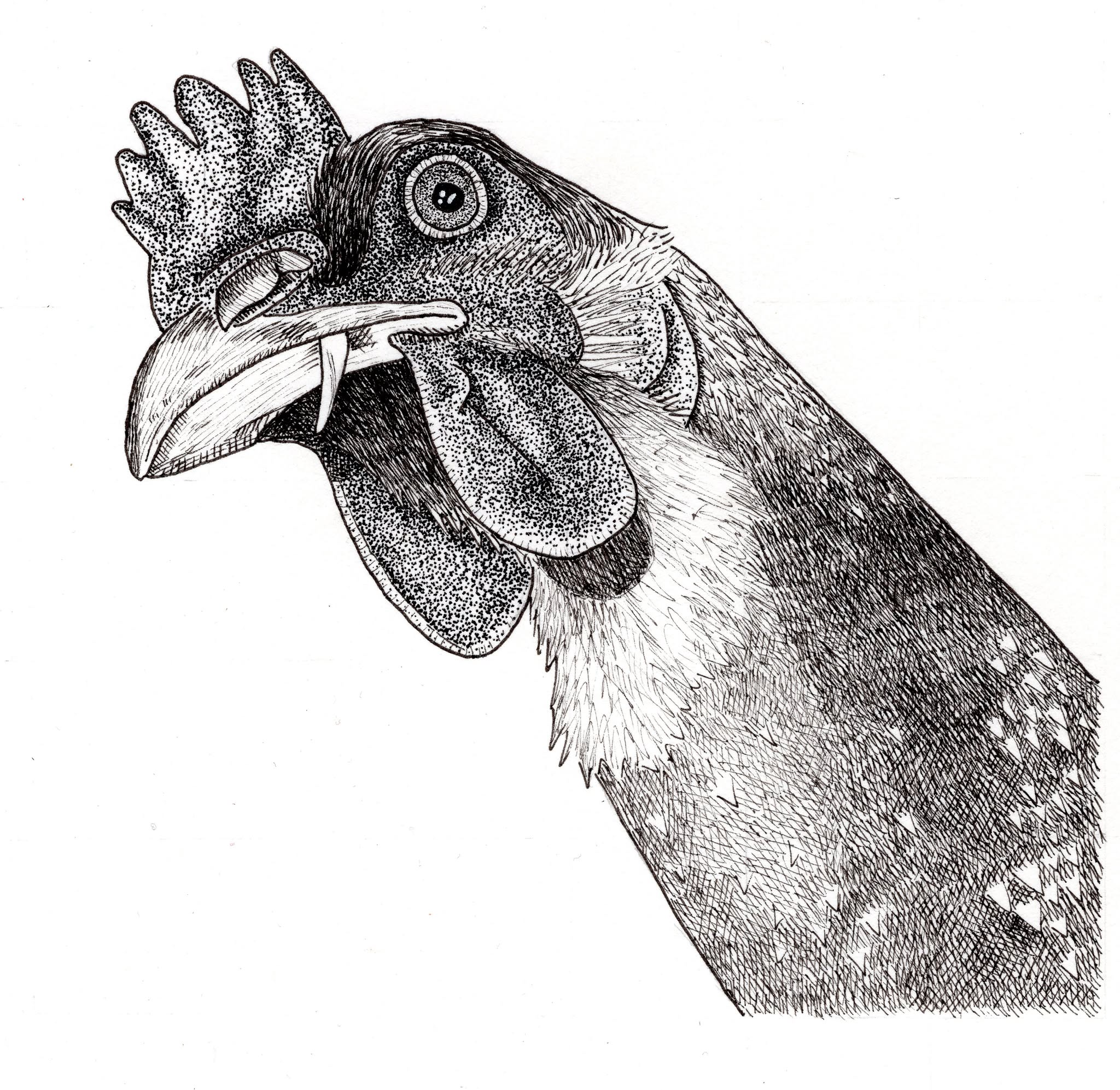
Caitlin McGregor | Chook | Fineliner on paper

Posted in ARTWORKS | Tagged

Algorithm non grata: The relentless banality of LLMs

Tyne Daile Sumner

When Virginia Woolf wrote that ‘life is not a series of gig lamps symmetrically arranged,’ perhaps she foresaw the arrival of prompt engineering. 1


The best questions often arrive unexpectedly. Over dinner recently, a friend’s six-year-old daughter turned to address the table and, apropos of nothing, asked: “Who was the first human?” Since my own child – an unblinking 10-month-old with potato across his forehead – was unable to respond, the assignment fell by default to the four adults assembled. Who was the first human? Who was the first human? Who was the first human? The question hung in the air like bar smoke. A clang of silverware rang out from the nearby kitchen. We shifted in our seats. The questioner grew impatient.

“It depends,” I offered, “on how you define a human.” Silence. Dissatisfaction. The conversation moved to another topic.

Later that night I mulled over the philosophical weakness – nay, banality – of my answer. To state that one thing depends upon either the theoretical or scientific classification of some other thing seems, on the surface, a reasonable postulation. It asks that we trouble the conceptual categories that make knowledge possible in the first place. It claims that structures are unstable. It challenges objectivity. It sets up parameters. It states something. It states the obvious. It states absolutely nothing. It is a bullshit answer. The performance of rigour. Neutrality de rigueur. A six-year-old could sense this. Eventually, I realised why my response felt both adequate but also completely underwhelming: it was precisely the kind of thing a Large Language Model would say.

To confirm my hunch, I opened my phone and typed in the query. “Who was the first human?” Claude: “That’s a fascinating question, and the answer depends on how you define ‘human’.” Next, ChatGPT: “There isn’t a single identifiable ‘first human’.” 2 Both models go on to explain that the anatomical and cognitive traits which we associate with Homo sapiens evolved over thousands of generations. Claude distinguishes between scientific, religious, and mythological perspectives; referencing Manu, the archetypal first man of Hinduism, and so on. ChatGPT provides a five-part framework organised around the concept of a family tree and the practice of genetic tracing. Both models, in short, return the statistical equivalent of “well, actually”. Diplomatic. Structured. Satisfactory but emotionally vacant.

Of course, neither response is inaccurate – they are both broadly correct and logical. What is striking, rather, is their procedural deferral of the question itself; a kind of elocutionary smokescreen that hides their tonal evasiveness. Faced with a child’s demand for singularity – who was the first human? – the models deliver taxonomies, method, multiplicity. They dissolve the figure of the human into a process. In regurgitating the dominant scientific account of human evolution, they also adopt a particular stylistic posture: one that privileges qualification over commitment, context over certitude, expansion over a foray into humour, irony, or sarcasm. They’re like the corporate psychopath who, when presented with a task that requires nuance and a bit of wit, impulsively blurts: “Let’s map this out, shall we!” Programmatic sludge. Schematic sewerage. Even worse, a flowchart.

How to account for this weakness? While my familiarity with Darwin’s theory of natural selection is on par with that of the average person, LLMs possess a surplus of information – layer upon layer of powerful data. The largest body of information ever assembled. They have more than enough knowledge. Too much, one might argue. And yet so vast is the corpus on which they are trained that the substance of their answers often feels scrambled with noise. Tangled and tinny. Like cheap speakers in a busy cafe. Like commercial television. Most crucially, though, the LLM cannot assume the burden of choosing in such a way that hazards the essence of human absurdity. It has learned to read and rehearse, not to tête-à-tête in the manner Oscar Wilde famously described as a “sort of spiritualized action”. 3 It has no orientating affect. It has no joie de vivre. It is structurally allergic to originality. Faced with such a question, then, an LLM will always fail because it favours optimisation over risk – machinic pragmatism over old-fashioned conversational fancy.

And what about truth and falsity? By some accounts, LLMs are incapable of delivering truthful statements. 4 Rafael Alvarado points out that “even when LLMs produce ostensibly true sentences, they do so accidentally—these sentences are all cases of what epistemology calls unjustified true belief.” 5 He goes on to clarify that they are “unjustified because the systems that generate them do not incorporate any of the mechanisms by which humans seek or validate truth claims, either rationally or empirically.” But what is truth, anyway, if not an elusive and historically contingent concept? Truths change. Perspective matters. What is more, “standards of truth themselves have a history” and a “probabilistic” approach to truth is a “comparatively recent development in epistemology”, emerging alongside eighteenth-century efforts at the quantification of probability; themselves intertwined with religious and philosophical beliefs. 6

In many cases, too, fabrication is a good and necessary thing. The embellished anecdote. The truth distorted for no reason other than amusement. As Aaron Hanlon notes, our “awareness of fictionality primes us to respond as readers.” 7 Fiction also primes our analytical thinking. Why, then, has the capacity to produce truth become a measure of algorithmic intelligence? After all, the broader obsession over whether LLMs can craft truthful statements sits in paradoxical relation to another truth: humans lie. We’re extremely good at lying. Does this mean that I should have lied? Or should I have confessed that I simply do not know who, exactly, was the first human? Confronted with a prompt it cannot complete, the LLM is likely to falsify – and then justify – something that represents an answer. Like a used car salesman who will say anything to sell you an early 2000s Jeep Wrangler, it will defend, with ostensible certitude, a claim that does not occur in its training set. This has come to be known as AI’s hallucination, as if somehow such a flex is unique to machinic outputs. 8 But we have all witnessed this kind of performance at the pub. We tolerate it, too, in our systems of government.

Posted in ESSAYS | Tagged

‘And then the world went loud’: Reflections on protest and solidarity

Sara Haddad

This essay was originally delivered as a speech at the OzAsia Festival in Adelaide on 7 November 2025.
It was written in response to the prompt ‘And then the world went loud’.


I hear it first and I tell myself it always sounds worse under a tin roof.
But even before I see the curtain of water beyond which nothing is visible
I know it’s the kind of rain that cracks gutters
sinks bitumen
dislodges long-buried roots so that when the next violent wind comes
another tree is gone before its time.

I try to ignore the building anxiety that rain like this always brings on, try to tether the thoughts that
wander to a terrifying future in which small island states have ceased to exist

and there are no more polar bears in the Arctic.

I fix my mind on the present and think, Why today of all days?
I had high hopes for a big turnout but this weather is sure to keep people away.
Not everyone will be disappointed of course.
Some will be rubbing their hands in glee.
Like the guy who said, We cannot allow Sydney to descend into chaos
And the other one, who agreed:

Absolutely they should not be taking over the Harbour Bridge.

The words on one of my favourite placards come to mind.
WE’LL BE LESS PROTESTY IF YOU BE LESS SHIT.

The metro’s not running either.
I can’t help but think that this isn’t a coincidence.
I imagine the plotting that happens behind the scenes:

If we stop one of the main lines of transport into the city, it’ll be harder for the bastards to get there.

But then I’ve always been prone to thoughts like this. Was told once by a psychotherapist at a dinner
party that things aren’t always as I perceive them to be.
I expect she was right, but there was something about the way she said it, and I resent her to this day.

I leave home early, allowing enough time for the possibility that there may be obstacles.
I get on the bus.
Apart from the guy wearing the * FUCK MURDOCH *
t-shirt
(who’s also carrying a Socialist Alliance flag), I can’t be sure that anyone else is going where I am.

It’s more promising at the station though. Busy. Bodies scurrying from all directions. With purpose.
Carrying signs and bearing familiar markers. Slogans on shirts. Flags. Scarves.

There’s an excited buzz in the carriage, the harmony of camaraderie momentarily disturbed by the
discordant voice of one man who announces just a little too loudly that he and his
family. are going into the city. to see. The. Book. of. Mormon.

When I reach my destination, I go in search of the toilets and join the queue, which is already absurdly
long.
I think about the state they’ll be in by the end of the day.
Ugh.
I see a woman pushing a pram. One hand steering, the other clutching her toddler’s arm, just above the
elbow.
Her eyes are fixed on the middle distance.
She walks the length of the line realising only once she’s reached the front that THIS. IS. IT.
This is the line for the toilets.

I’m closer to the front than the back, so I let her in.
Remembering what it was like when mine were that age. And how the kindness of strangers could change
the tenor of my day.
And then images flood my brain one after the other and also all at once and I can’t stop them all I can see
is children.
But not as they should be.
Not safe and warm in their mothers’ embrace.
Not smiling and free from care.
But bloody.
In pieces.
In plastic bags.

I’ve come early, but in the time I’ve spent standing in line for the toilets the station has EXPLODED with
protestors.
I mount the escalator, there’s no fast lane, just two rows of people standing still, eager to reach the exit.

Everyone please make your way out of the station immediately, do not gather at the top of the escalator, I hear the
announcer say.
I look back, and down.
It’s PACKED.
And then it comes, not from someone in the crowd but over the loudspeaker.

IN OUR THOUSANDS IN OUR MILLIONS WE ARE ALL PALESTINIANS!

The crowd cheers.

Outside, the rain is heavy.
Torrential.
Some people huddle under shallow shelter, but most are out in the open.
The weird thing is, no one seems to mind.
Maybe they’re thinking, as I am, that it’s only rain.
And not 2,000-pound bombs or sniper fire from drones that lure people from their homes with
the sound of babies crying.
Weaponry so sophisticated it disappears bodies and robs people of the hope that they will be able to bury
their loved ones whole.

Volunteers are handing out disposable raincoats.
A television helicopter whirrs overhead.
The rain eases enough for the umbrellas to come down but then with no warning it starts again and UP
they go.
Bunnings is making a killing today, I hear someone say.
And not just in umbrella sales and free advertising, I respond, silently.

The crowd is at a standstill, and my claustrophobia taps me on my shoulder and whispers,
How long do you think we’ll have to wait here?
My hips begin their protest.
I try to distract myself from the discomfort that ensues by taking in the scene around me.
At my left foot, there’s an Italian greyhound in a black, red, white and green raincoat. Shivering.
To my right is a man with a little baby strapped to his chest, five tiny toes peeking out from beneath the
wrap that covers the rest of her.

I think of the weapons again.

In front of me there’s a man whose hearing aid has been dislodged. Tentatively, I tap him on the shoulder
and let him know. He is grateful for my care.
Up ahead there’s a sign that says:

THERE ARE NO TWO SIDES TO GENOCIDE

I turn to my brother and say, Do you remember how it used to be? In the eighties? And he
says, Yeah, the chants have come a long way. What was that one again? PLO YES YES. REAGAN
BEGUM NO NO.

We laugh.

But the truth is, if someone had told us back then, that on the third of August 2025,
300,000 people – maybe more, because they didn’t all make it out of the stations and onto the streets –
would march across the Sydney Harbour Bridge for Palestine in the
pouring rain
well
we would not have believed them.

I get out my phone.
There are messages.
Texts flit back and forth.
Are you here?
Yeah, just arrived.
Where are you?

The reception is appalling but I check the news.
There’s word of a counter-protest of four.
That’s right, not 400. Not 4,000.
Four.

Finally the crowd shifts. And roars. Makes its way to the end of George Street, slow but strong.
Loops around and up and eventually onto the Bridge itself where police line the route.
Standing idle.
Nothing to do.
As usual.
At one stage, somewhere near the middle, I climb onto the railing, hoping to see more.
There’s no beginning and no end to the mass of people.
And then I’m back on the road and I look up and I see the Aboriginal flag flying in solidarity with those
on the ground.
Your struggle is ours, I hear it say.

Now there’s a police helicopter, and as though we’ve been transported to the set of a dodgy disaster movie,
it issues garbled instructions through a tinny loudspeaker.
I ignore it. And so does everyone else around me.
I make it past the last pylons when the first text comes through on my phone.
It’s the police.
Telling me that it’s not safe to go on.
I ignore it. And so does everyone else around me.
Some minutes later a second text comes through.
It’s the police. Telling me that it’s not safe to go on.
I ignore it. And so does everyone else around me.

The Bridge is thick with bodies now and when word from the organisers finally reaches us

telling us that everyone who came from the south must turn around because there is simply not enough space to hold us
all at the other end

I think of that footage from the Hillsborough riots and I pray to a god I’m pretty sure I don’t believe in
that everyone will stay calm.
And they do.

I turn back because there is no other option.
Now people are moving in both directions like traffic on a two-way street.
A man cuts a path through the crowd for two elderly women on mobility scooters.
Walking beside me is a guy with a cane.
I look at his legs. They’re twisted at the knees.
I look at his face. It’s determined and strong.

The crowd thins as I trace my path back to where I began.
The underground station is teeming with people who’ve been on the Bridge and for once
no one’s looking at them like they don’t belong
no one’s refusing them entry
or telling them to stay quiet.

No one’s denying them their right to exist.

For a brief moment, I’m gifted a glimpse into a future in which wrongs have been set right.

And then I’m back on the train. Heading home.
I look out the window but it’s dark. All I can see is reflected.

I think of that Darwish poem, ‘The War Will End’:

The war will end / The leaders will shake hands / The old woman will keep waiting for her martyred son
The girl will wait for her beloved husband / And those children will wait for their hero father
I don’t know who sold our homeland / But I saw who paid the price

I think about how L O U D everything was today.
The rain.
The colours of the umbrellas.
The solidarity.
The love.

I think about how L O U D the people were and what it took for them to find their voice.
What it will take for them to keep it.

And then I think about

the price.

Posted in ESSAYS | Tagged

DIALOGUE editorial

Eileen Chong
Image by: Travis De Vries

I have never been very interested in writing about poetry. I much prefer to read poetry, think about poetry and write poetry itself. In the few months that I have been guest-editing this issue of Cordite, I have done a lot of reading of poems and thinking about poetry in many fresh ways. Engaging with these new poems over the many weeks has felt like sustaining a long, meandering conversation with a roomful of strangers whose minds and hearts were open to me for a little while through their words on the page. All your poems have become like friends to me over this time, and it has not been easy to narrow down my selection of 88 poems for this issue. Of course, all selections reflect an editor’s own sensibilities, preferences and bias. Unlike judging a poetry competition, however, I am a little less invested in the notion of perfection or assuming a position of neutrality (both of which don’t exist, at any rate), and more interested in how enraptured I was by a poet’s interpretation of the theme of dialogue.

I know from experience as both a reader and writer that I am often less drawn to poems that arise solely from ideas or concepts, and tend to lean more towards poems that come from a sound, a memory, a dream and/or an emotional response. I also enjoy poems that engage deeply with language and form, that explore the possibilities of what a poem can be or can hold. Overall, what I looked for in my selections was a kind of clarity, an almost electric current akin to Emily Dickinson’s description of the physical feeling of true poetry. It was almost like tuning a radio: now and again I would, above the static, hear a human voice, a strain of music, or a pause between meaning that would somehow travel through my ear and course through my mind and my body. You’ll find that some of these poems seem like a beginning of a conversation—one that I hope you will continue in your minds and hearts.

The poems in this issue are in deep dialogue with the world around and within us, and through the process of selection and publication here on Cordite, also with one another. There are poems that respond to artwork, to other poems and poets, to historical and current events, to scenarios imagined and recreated, to alternate pasts and possible futures. There are poems that have engaged with established poetic forms and poems that have appropriated the forms of dictionary entries, bureaucratic paperwork, historical documents, letters and dream diaries. There are poems that are records of collaborations, poems that present counterpoints and/or resistance to established/outdated narratives, and poems that are secrets. All these poems show us a wide spectrum of what it means to be human across time, place, languages, borders and cultures. There are quiet poems and there are poems that demand to be heard. Sometimes these are the same poems. All these poems are necessary in their own ways. All these poems deserve to be read and re-read, recited and remembered.

I am very grateful that so many of you engaged with this call-out and sent me your poems. I especially wish to thank the poets who I reached out to directly for poems: I have loved your poetry for a very long time and it is a dream to be able to be one of the first readers of these new poems, and to include your exquisite work in this issue. It has been my great honour and privilege to be able to read all the poems submitted and to publish a select few. Thank you also to Cordite and to the editor Alex Creece for inviting me to guest edit this issue—I have long wanted to undertake this task. I hope the poems in this issue can be read, heard and felt (despite being composed by many across multiple units of time) as one great multilayered, interwoven symphony of words. I hope some of these poems will become familiar, loyal companions to you in your onward journey in life. We are not alone in the great mystery, joys and struggles of being human. As long as we exist, we will always have poetry.

Yours in poetry and solidarity,

Eileen Chong

Posted in ESSAYS | Tagged

Poetry in motion: The mobile poetic inquiry of a CALD educator

Jack Tan

7am. Fellow’s Apartment. University Residential College.

I’m gradually getting used to living up here on the sixth floor, in Melbourne’s Inner North. The wide windows facing northwest. Canopies of Royal Park and Princes Park filter tram noise and invite nomads of autumnal little corellas, murmuring through the green air. When you are long-term at a residential college, people around you never grow old.

I began as a Singapore-born, Malaysian-Chinese, English-graduate student. I’m now an Australian permanent resident, Malaysian-Chinese Literary Fellow and former Resident Tutor. Melbourne Residential colleges are somewhat neither here nor there. Not the elite, exclusive Oxbridge colleges where we drew inspiration from, nor the halls of residences (aka frat houses) which the Herald Sun thinks we are. We’re in between the formal-informal, institution-relation, mentor-mentee. I move daily through the corridors, connecting, communicating…

“You’re from Singapore. You wear thick glasses. Are you studying Commerce or Engineering?” “Choir rehearsals begin in 5. I’ve printed the piano accompaniment parts for you.” “Hello, is this the duty tutor? I’m sorry to ring so late, but can you ask my neighbour to turn it down?” “Hello, is this the duty tutor again? Sorry, I locked myself out. I’ve only got a towel around me!” “Don’t open the windows. There’s a possum out there.” “I’m ordering in Uber Eats if they’re serving us Asian greens again.”

Fellows Apartment

8am. Dining Hall. Residential College.

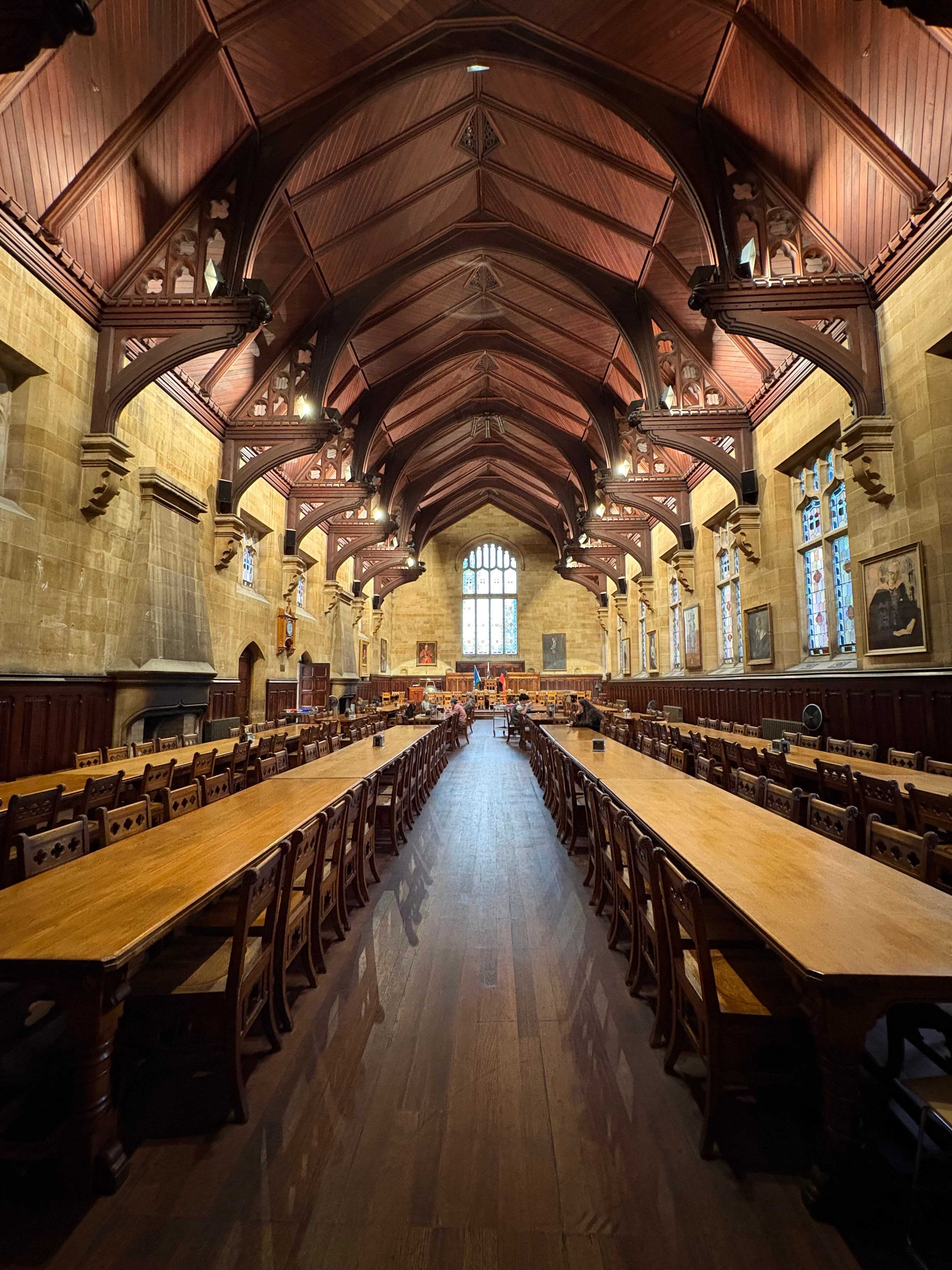
When I give tours to prospectives and parents, I tell them the dining hall is my favourite place. Some colleges observe the table rule: you don’t start a new one until you’ve filled one up. Collegiality fast-tracked. Long tables where parents and grandparents of students once sat. It’s a family tradition. An alumnus from my old college said he didn’t go to the large elite college all his friends from the same denomination went to. Because it would’ve become XX Grammar School Year 13.

A former head of college likes to tell students that there will only ever be two communities where you eat, sleep and work together 24/7. One: college. Two: prison. I like to sit with students I know, students I don’t know all that well… Prime time for mentoring, mingling…

“I beat my alarm clock today!” “You’re first to brekky again. Are you a Biomed student?” “Yeah, another 8am start.” “I’m a college vegetarian. I don’t wish to eat slabs of meat seven days a week.” “Come over to our table and meet Nat. She went to the Academy of Creative Industries in Brisbane too!” “You folks should collaborate on the college play.” “They’re putting on Cosi this year!” “I like how light-filled this space is!” “My grandmother sat on one of these chairs.” “She was the first Asian student to come to this college.” “And of course she studied Nursing.”

Dining Hall

9am. Walk into Campus.

The cross over from college into the main university blurs the home-work boundary. When you live on campus, next to campus, with everyone from campus, when are thresholds crossed? I reckon it’s the moment you step across your apartment door, cultivating the air of a responsible adult.

When the colleges were conceived, they were tasked to provide dedicated religious education that the larger secular university didn’t. From the north crescent of the uni, bordered by the General Cemetery, Royal Park and Princes Park, land was allotted equally to the Anglicans, Presbyterians, Wesleyans, Catholics. Ten acres each. Today, every college accepts students of all faiths and none. They continue to run formal halls where Latin grace and benedictions bookend the meals.

When I first started as resident tutor, I mentored a young woman from Caulfield. She belonged to the Church of the Latter-day Saints. When asked about her goal for the year, she said she wanted to take care not to feel smug: that college kids are cooler than day kids. College kids are often late for classes, though. The unglam 9:55am dash down Royal Parade doesn’t happen with day kids coming in from the Eastern suburbs.

Skyline of the walk to campus

10am. South Lawn.

Scenic South Lawn is the major artery across campus. Students and lecturers moving between classes. Or you’re just as likely to encounter busloads of tourists posing in front of the Old Arts Clocktower. 墨大. Melbourne Uni in Mandarin Chinese. But also synonymously: Large Black Ink or Silent and Mighty. Gaining our degrees here guarantees job-readiness: our parents, politicians, education agents tell us.

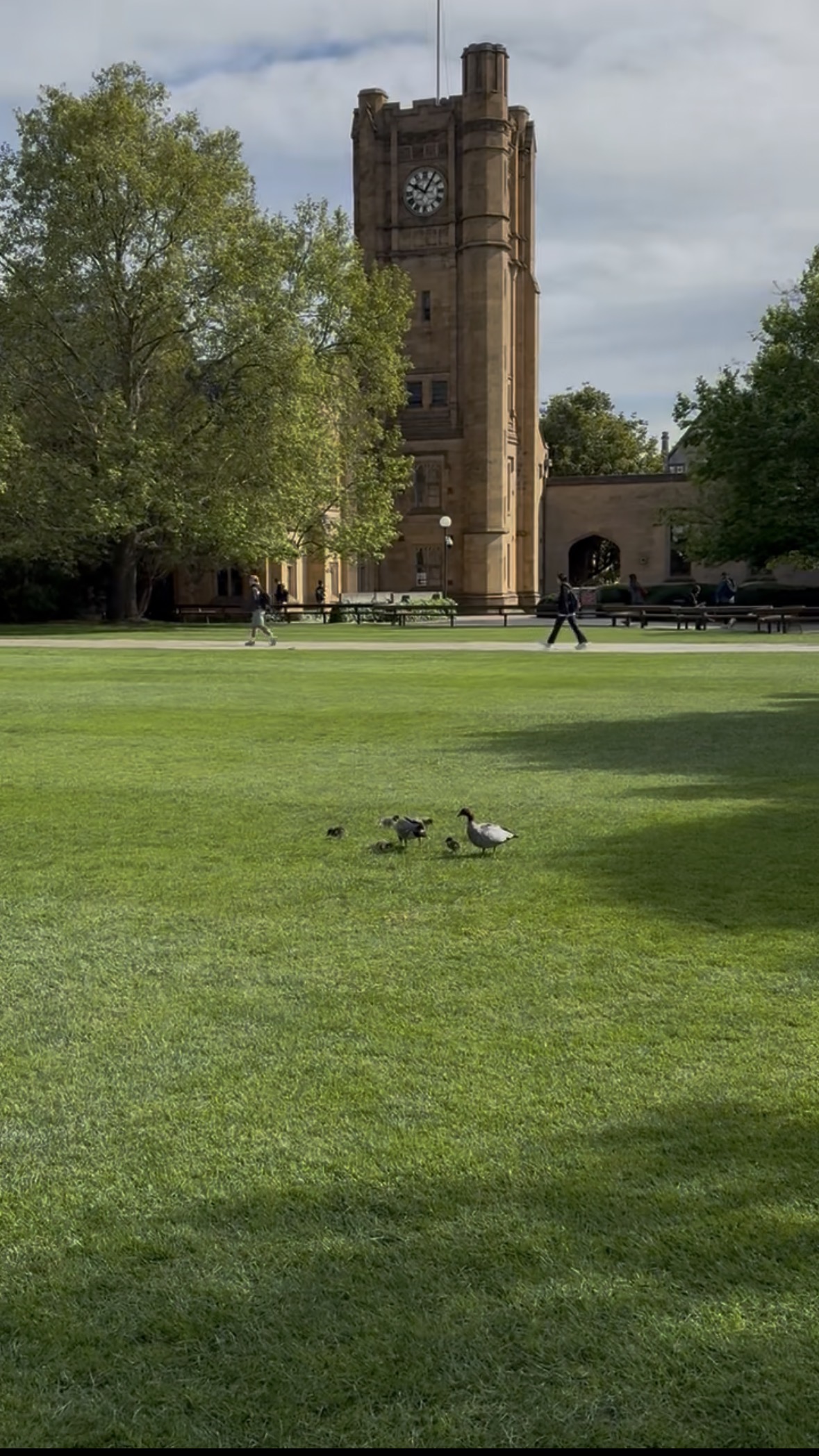
It’s Sprummer: the contextually-correct time in-between European Spring and Summer. I’m on the lookout for nomadic Pacific black ducks on the lawn. I sometimes wonder where they disappear to, whenever the uni erects a suite of marquees for another marketing roadshow on the lawn. I channel my inner Holden Caulfield – because grid-like Parkville is best explored on flâneur’s feet. We have wandered across this lawn with Tony Birch, walking writing workshop extraordinaire. He tells us to look for unusual things while we walk. Things that call out to us, specifically – to sense and to write. We have taken part in a truth-telling walking tour with the university historian. We stand before buildings whose white settler professors’ names on walls are getting stripped off, replaced by those who were kinder to their fellow human beings. Once upon a time, I was moved reading Henrik Ibsen explaining why he isn’t feminist despite writing A Doll’s House: “I speak for all humanity.”

South Lawn

Posted in ESSAYS | Tagged

A website is a zine

This interactive essay is best experienced on a desktop device. Click the image below to open the essay.

A website is a zine

Posted in ESSAYS | Tagged

DROOLING OVER HEMLOCKS

Sometimes
I think of all the once tender
Soothing voices I’ll never hear again.
Grape-sore memories conceived at those bleak
and fearful crossroads where
departure felt caustic like an unripe lemon
on the tongue of feelings. The heart,
in the process of amendment,
getting bruished, compassion nearly crippled
and still limping & love after months
without water and sunshine,
of course, died a natural death.
If love is the only thing worth
fighting for, then it shouldn’t be begged for.
Also, the fight for love should
be for a love that’s truly worth fighting for.
But, people have always asked, how
do you know a love worth fighting for?
To them I often say, ask yourself
if departure were to knock on the beloved’s door
would you be willing to trade places
& if the scenes were to be tossed like a coin
would she be ready to offer her nose
for you to breathe?
Time had shown me, again & again,
the kind of birds I should pant after
in this forest of numerous colourful birds.
Experience had lifted the veil
of ignorance off my face, by setting
me ablaze, again & again, through
the hands of those I’ll never hurt.
In the stringent citadel of learning christened
life, in the powdered classroom
of time, experience stood arms akimbo
while rounding up his short lecture
on love and happiness, suddenly projected
an inquiry into the ring of clarity:
can the heart blooming in a garden
of sunflower, at any time, be found
drooling over hemlocks?

Posted in 120: DIALOGUE | Tagged

The body falls away

Driving back through
Gamilaraay Country,
Wiradjuri Country,
old lands, lands we now call
gold country, coal country,
we trace our way along
a chain of little towns: Gulgong, Mudgee, Lithgow.

Mona’s been reading the studies—
near-death-experiences, brain scans
of the unexpectedly, newly dead:
the kind of gamma-wave activity
known to operate in dreams, memory, flashbacks.
Are you dying? I ask her,
as the highway unspools before us.
No, not yet, she says, but I think about
my funeral playlist more than I should.
The body keeps you alive, she says, cell by tiny cell.
I don’t understand the science.
As dawn peaches the horizon, I ask her:
When the time comes,
what will spool past on your showreel?
Well, the light, of course, she says.
Isn’t that what we’ll recall most vividly?
A kiss
by a brown river,
blossom-light falling on everything.
And pain, she says, the comrade of love—
a snapped kite string,
a lost pearl earring, or mother, or mate.
Regrets, too: an absence of grace in the face
of kindness—they’ll swear love
is the most important thing, the fools, she says,
and after a pause: I could have been kinder.
And not to mention awe!
Wasn’t that the great beauty, the poetry, of it—
wonder at the world and its workings?
I never got to see the aurora, I tell her.
You’ll see it yet, she says.
Tell me, again, I say, about those barracuda?
And Mona tells me about the dive
in the beryl sea that day,
no different to many others,
how time and light shifted on their gimbal;
how she was encircled by a tornado of long
silver fish, a thousand strong,
their undershot jaws, their stripes,
the power in their flanks, glinting like foil,
the underwater background crackle replaced
by blue-and-silver bells,
and other sounds, so low
they can only be felt
as a current in the blood—like a note
from the 64-foot stop on the Town Hall Grand Organ—
the realisation that we are all made
of one thing—
and almost forgetting
to breathe. When her air ran out
they had to drag her up by the hair,
her mask half-full of tears.

Posted in 120: DIALOGUE | Tagged

Breakage

There’s a shelf in my head where the afternoon lounges. It lets the sun in. Shows everyone my best side. How good I look in hip-swerving dresses and swinging beads as the subway whooshes up to the Tokyo platform. If other passengers have questions in their eyes the shelf can ignore them. Or daydream about how languorous long legs can be as they stride into the next English class. Hello again.

As the evening walls close in, the shelf turns on the washing machine, irons his shirts, folds another day into the cupboard. But one moment hangs in the quiet. How he smooths his hair back each morning, smiles into the mirror before he leaves. Itte kimasu! (‘Leaving now!) he calls out then vanishes into an office among the glittering mountainsides of Shinbashi windows. The shelf doesn’t ask when he’s coming back, files those questions away.

It had to happen. A wobble. Too many small things jostling for the shelf’s attention. Tissues. Ashtray. The heat of his skin on the futon. His eyes attentive, suddenly there. How was it? She touches the warm cushions of his lips. He’s waiting on her. Too much loud breathing? Always timed to fit his. What if he knows?


anywhere he puts me
his eyes smile into mine
the mirror breaks

Posted in 120: DIALOGUE | Tagged

Answered Prayers

Except the day is getting harder to fake.
Looking into my boss’s eyes, there’s a deal I make.
One I can’t explain at family Christmas. Yes.
Yes. Can do. No worries.
Worry as currency.
Capacity as personality. All this acquiescence comes free.
No one I know has faith. Why would they?
In the tenth floor cubicle I get down on my knees,
whisper, get up, walk back past the swipe lock,
the vending machines, old magazines,
squeak hi at the guy with the top-knot,
email my friend on seventh, what the hell is wrong with me?

On my knees, like the blonde-headed child in the cross-stitch
hung on my grandparents’ bathroom wall.
I spend all day here, knowing you not at all.

Posted in 120: DIALOGUE | Tagged

Hujan/Rain

Di sini, hujan tidak menitis
Ia tidak berbisik
Ia tidak teragak-agak
Ia adalah letupan kosmik yang besar

Here, rain does not trickle
It does not whisper
It does not hesitate
It is a full-blown cosmic explosion

Di sini langit terbelah
Kereta, stokin, hutan, basah kuyup
Keterlihatan – hampir sifar
Lampu isyarat terhenti
Payung, patah dan tercampak

Here, the heavens split open
Cars, socks, forests, drenched
Visibility – almost zero
Traffic lights cease
Umbrellas, snapped and flung

Bencana boleh melakukan ini
Menghancurkan, mengaburkan, melenyapkan sepenuhnya
Membawa kita meluncur ke jalan yang berbeza
Membuatkan kita lebih erat, sehingga kita belajar untuk
Menyerah diri

Calamities can do this
Utterly drown, obfuscate, obliterate
Send us careening down different paths
Make us grip tighter, until we learn to
Surrender

Kesannya:
Tanah subur, tunas baru tumbuh
Hidu aroma petrichor yang kaya
Kumpulkan serpihan kita yang hancur
Dibuat semula, lebih kuat/pelik

The aftermath:
Fertile soil, new buds pushing through
Inhale the rich scent of petrichor
Pick up our shattered pieces
Remade, even stronger/stranger

Posted in 120: DIALOGUE | Tagged

Dictionary in Dispute

The dictionary changes hands.
Before: book.
Always: border.

Words line up
in their numbered meanings:
each definition, a trench
between what I say
and what you hear.

FREEDOM. n.
1. A right invoked in the first person.
2. Exposure when spoken by someone else.
3. Slogan, depending on context.

PEOPLE. n.
1. The group to which the speaker belongs.
2. The group that excludes whoever hears the word.

FUTURE. n.
1. Verb tense.
2. Territory in dispute.
3. Spoils claimed by whoever speaks first.

FAMILY. n.
1. Primary circle of affection.
2. Wall.
3. Wound.

ENERGY. n.
1. Capacity to perform work. (Phys.)
2. Bill.
3. What some produce and others block.
4. Vibration.

I turn the pages slowly.
Some terms are marked,
disabled for certain uses,
like blocked streets
on a map
I no longer recognize.

I go to the entry
that belongs to me.

DOUBT. n.
1. Lack of certainty.
2. Symptom of disloyalty.
3. Unstable position between sides.
4. Covert allegiance.

I look for something prior to that.

Something not yet used
against anyone.


BLANK SPACE. n.
1. Interval between two columns.
2. Error.

The dictionary remains open
on the table.
I remain here,
my throat making that useless gesture
that comes before speech.

Posted in 120: DIALOGUE | Tagged

is and was

What was said before we wrote
About how to heal Country
What was spoken here
Before we yarned this burn

Too many things here not of place
Too many people in the wrong rooms
Too much slow healing for my mob
Not too many ears

Aunty Ali says the air is always listening
Run hands through haunted soil
Things must be repeated to be retained
Always is and was

Posted in 120: DIALOGUE | Tagged

When Charlotte Bronte is my Line Manager and it’s time for my Performance Review Meeting

After Deborah Finding

Before we start we do each other’s hair. Her hands are deft,
weaving my greys taut in its new middle parting, my head

full of unapologetic spinstery wires, hers autumn copperish.
I’ve brought us some tea. Charlotte goes through my targets

one by one, writes down some thoughts in her tiny notebook,
writing desk on her knee. Then, she waits for me to begin –

It’s been a difficult year. I falter, not knowing how she will fit
my thoughts unto her inch of paper. I then realise she is drawing

a sketch of my profile (I have lent her a biro with four different
colours and she likes clicking between them). She gestures

to my double glazing, whirring desktop, radiator and asks:
what is it makes your job so difficult? (She must wonder how

I can’t reach beyond when I have this light, ink and heat).
Grief. I feel I can speak to her, trying to show this cobwebby

feeling. Desire. We agree neither are Specific Measurable
Achievable Realistic or Timebound. Survival has been a main

objective. I didn’t write that one down anywhere I confess
or the one about keeping my treacherous heart from wandering

onto the moors at night, burning the house down, talking with ghosts –

Posted in 120: DIALOGUE | Tagged

Head Case

Lesley apologised today
in that flat psychologist way.

You can’t find yourself
from the neck up, she said.

Sit in your body.
Stop looking out windows.

I took her apology
but only from the neck down.

I was watching container ships
stacked at the horizon.

The grey-green blur,
where I am
from the neck up.

Posted in 120: DIALOGUE | Tagged

Mistaken Identity

How we love spending our lifetimes pointing
fingers so we don’t have to peel our skin. I
remember how my father was thrown into jail:
I was in sixth grade, the volume of my earphones
loud enough to block the rain dropping from the
sky. I went outside only to find smashed guavas
decaying in the streets. That mustn’t be the rain,
I thought as I received a phone call from an
unknown number. Nasa kulungan ang tatay mo. Inaalam
pa namin kung paano siya makakalaya.
I wouldn’t
have known my father was wrongfully accused
because he has a habit of leaving for hours and coming
back only when the sky closes its eyes. He left when
I slept during afternoons; he left my mother,
disappearing for months, coming back to say he
had a job elsewhere building homes. My aunt came
in a later day to care for me because who would’ve
thought that a sixth grader cannot cook or wash their
own clothes? Was it a home my father built if it’s
made out of wires and sticks? In this way, I
learned to leave quietly. Tracing my footsteps in the
airport, as if there are hidden snare traps underfoot. I’ve
learned how to cook for someone, wash their clothes,
and disappear like a phantom in the wind. Tears
never came when my father returned. It happened on
a random weekend. My earphones were loud again
when he arrived, cleaning up the guavas souring the
concrete, fruit flies migrating to another garden. I
left the house two years after that, as if he learned that
with his leaving comes the pain of it being done to
him, too. Now I watch the back of your shoulder melt.
At some point, I might mark you with my wraithlike
touch. Will you pick up the fallen guavas? Will you be
the one to set up the traps? Will you cook me breakfast and
wash my clothes? Will you mistake me for someone who
watches raindrops fall so he won’t hear the phone ring?

Posted in 120: DIALOGUE | Tagged

Jasmina

The sun scorches my shadow
as I walk the quarry’s ochre tracks
with the banker’s wife Jasmina.

It’s the turn of a long, slow year.
I’m barely twenty, holed up
in a country house trying to write.

Our daily walks are a mirage
in that summer’s blaze
of dust and heartache.

We make a strange pair —
her silken hair and cotton dresses,
my shaved skull and honey limbs.

Sipping coffee thick as river silt,
we speak of her homeland,
of lost things, chimeras, dreams.

In my cups, she finds a wolf moon,
a burning orchard, a muddy child.
In her own, a mass grave.

Hollyhocks frame the cottage where
the banker unbuttons her pearly dress
and grips her on the flyblown bed.

Eyes lost in a sea of wheat,
she smiles in slow-motion, like when
she unlatched that box of ashes.

At night, a ute screeches burnt rubber
circles around the pub carpark.
Grain in the silo shifts and spills.

I scrape resin from a pipe,
smoke — my mind, blown glass
in a moon-washed field.

Rippling in its cracked bowl,
the silver milk of time slips,
slips away. Remember,

a woman named Jasmina
and I strolled through the mine
and over those treeless hills.

Posted in 120: DIALOGUE | Tagged