SD: I’m enthralled by the idea of “MA” as perhaps a productive absence, and what you wrote makes me wonder whether we can think of contemporary poetry as ruins – the remains of ancient poetic forms that have been forgotten, reimagined, or adapted. Or the remains of other art forms. How does visual art inform your poetics? What images, archetypes, or patterns in art do you find yourself returning to again and again? I would love to catch a glimpse of the referential archives living in your head. The visual is essential to my own creative practice, though I’ve only recently begun to think about it that way. The right videogame at the right time has certainly revived me when I’ve been too burnt out to read. Could you tell me about the art that revives you? Which artists are you writing back towards? Whose silhouettes are you painting the outlines of?
NA: わたしは元々、ビジュアルアート、例えばイラストや絵、映像などを通して、それらをどう発表することで、イメージが拡散したり、良い意味で誤読が生まれるのかということに興味がありました。今でも、アニメやゲームなどのサブカルチャーから、それらがテレビからスマホ、VRやAR、仮想空間や次々と新しくうまれる機械について考えることなど、表現方法やメディアのヒントをたくさんもらっています。なので、作品制作をするときにまずは頭の中には「イメージ」が浮かびます。わたしにとって、詩をはじめ、言葉の芸術は、とても困難なものです。なぜなら、わたしの頭に浮かぶイメージは、制作の過程で大きく変化し、イメージのモンタージュによって作られていくので、それを言葉に落とし込むことができないのです。ただ、だからこそ、無理やり言葉で表現することは、イメージの新しい捉え方を手に入れられると考えました。言葉だけでイメージを構築することで、映像にはなし得ない表現が詩として現れる。またそれは、「詩」そのものを刷新するのではないかと考えます。イメージのモンタージュから詩を考えることは、わたしがこれまで作ってきた詩、以外の作品も、詩学を通して考えることができると気づきました。わたしの作品は難しいと言われることが多いのですが、わたしの詩集について評された言葉を読んだときに、これまでの作品も詩学の観点から見たときに語るべきことが大いにあると感じました。マーク・マンダースの、本としての巨大な彫刻や、建物としての自画像、意味を持たないよう単語を羅列させた新聞、「5」という数字をもとにつくられるオブジェクトを見ていると、彼の言葉を抽象的にとらえることでのイメージの作り方がなされていて、発見することが多いです。ジョナス・メカスや、ジャン=リュック・ゴダールのつくる映像も、同じように作品を観ることで何かが起こる予感を常に起こさせます。わたしの両親からの影響で、1960年代以降の日本のサブカルチャーは自分の制作の根っこにあります。ウルトラQ、諸星大二郎、美少女戦士セーラームーンなど、今の制作と並べて語るとしたら文字数が足りませんが、わたしの創造の片隅に必ず潜んでいるものの一つです。しかし、やはり一番刺激を受けるのは同世代のアーティストの作品や活動を見ることです。現代に生きる身近な人たちが、何を考え続けているのか、作品を通して知ることは、それがどんなものであれ、わたしを動かす動力源になっています。
Originally, I was interested in how imagery could be disseminated and how beneficial misinterpretations could arise through the presentation of visual arts such as illustrations, paintings, and videos. Even now, I draw inspiration from subcultures like anime and gaming, and contemplate on various forms of expression and media, from television to smartphones, virtual reality and augmented reality, virtual spaces, and the constantly emerging new machinery. Hence, when I create works, the first thing that comes to mind is the “image”. For me, the art of words, especially poetry, is incredibly challenging. This is because the images that come to my mind undergo significant changes during the creative process and are created through a montage of images, making it difficult to put them into words. However, precisely because of this, I believed that forcibly expressing them in words could lead to new ways of perceiving the images.
Constructing imagery solely through words allows for expressions in poetry that cannot be conveyed through visuals. Furthermore, I believe it could refresh poetry itself. Thinking about poetry from the montage of images made me realise that I could consider my previous works through the lens of poetics. While my works are often considered difficult, reading the words used to evaluate my poetry collection made me feel that there was much to be said from the perspective of poetics about my previous works as well. Observing Mark Manders’ gigantic sculptures as books, self-portraits as buildings, and the way he creates imagery abstractly from lists of seemingly meaningless words in newspapers or objects based on the number “5” often leads to many discoveries. Similarly, viewing films by Jonas Mekas or Jean-Luc Godard always gives a sense of anticipation that something will happen through the works. Influenced by my parents, Japanese subcultures from the 1960s onwards form the foundation of my creations. Whether it’s Ultra Q, Daijiro Moroboshi, Sailor Moon, and many others, if I were to talk about them alongside my current creations, it wouldn’t be enough, but they are always lurking in a corner of my creativity. However, what truly stimulates me is seeing the works and activities of artists from the same generation. Knowing what people of my generation are constantly thinking through their works, regardless of what they are, serves as a driving force for me.
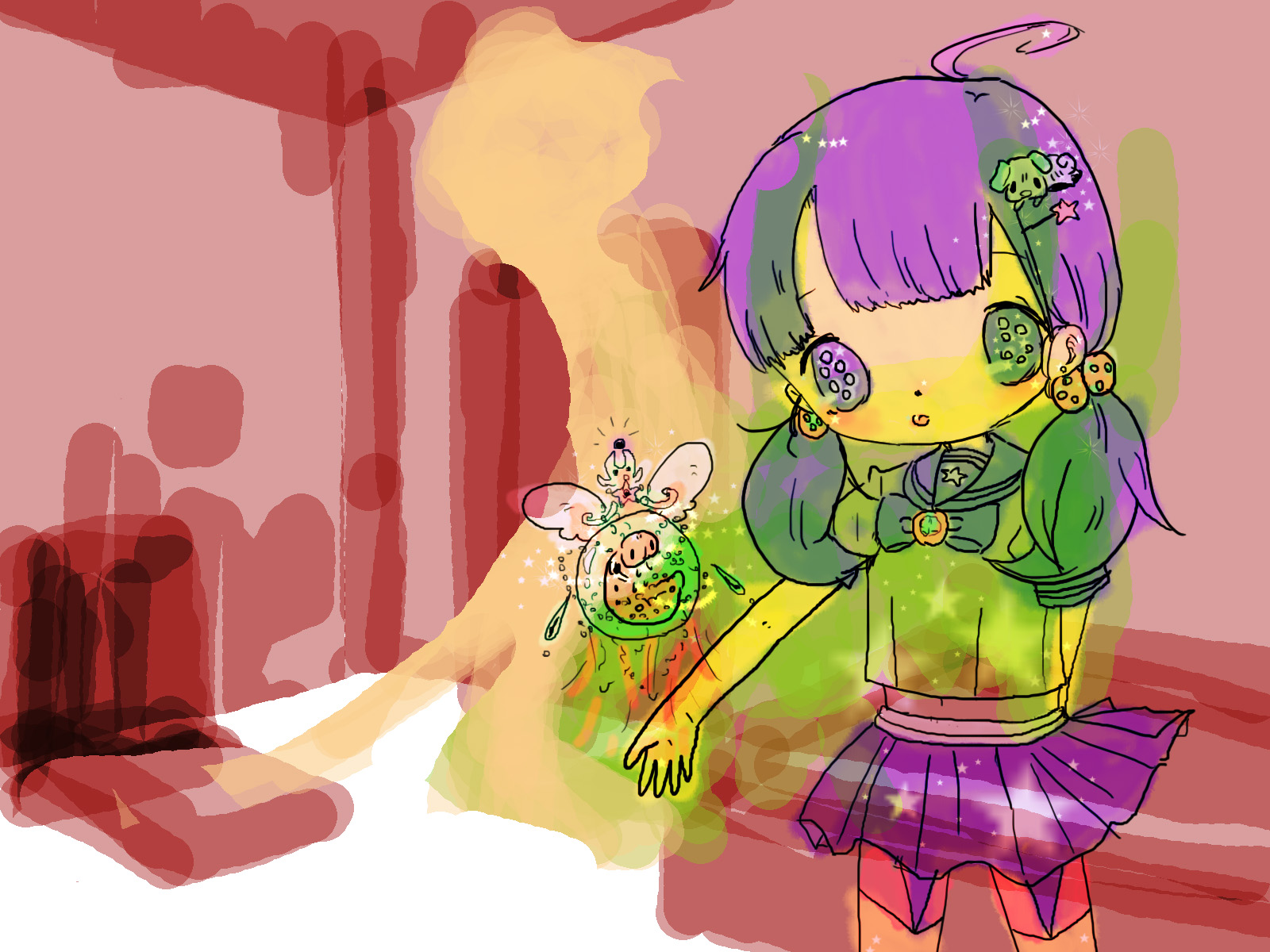
datsuo (Natsumi Aoyagi), Larva Rêve (2012)