Image by: Wada Shintaro
“We should practice realising that we haven’t been adept at recognising time,” says multidisciplinary artist, mangaka, and poet Natsumi Aoyagi. Described by the 28th Nakahara Chūya Prize judges as a key representative of the future of Japanese poetry, Aoyagi-san consistently pushes the boundaries of poetry and art’s potential as containers of observation, narrative, and temporality. To practice realising is at the core of Aoyagi-san’s poetry indeed – practice as in the habitual, practice as in proficient repetition, practice as in what it means to live as an artist.
I haven’t been adept at recognising time. I was introduced to Aoyagi-san’s work through writer and translator Corey Wakeling in 2023. That year, Aoyagi-san won the Nakahara Chūya Prize – one of the major poetry book prizes in Japan, and the most important for young poets – for her second collection,『育つのをやめる』[Done Being Nurtured]. Corey is translating Aoyagi-san’s poems for English readers, and I had the luck of corresponding with her about perceiving time, marking time, time as image, and how image may be rendered into language. As someone whose first language was lost to English, I was delighted that Aoyagi-san translated her Japanese-language responses to English herself, with Corey’s collaborative editorial assistance bringing this conversation together.
Corey Wakeling’s English translation of Natsumi Aoyagi’s『育つのをやめる』[Done Being Nurtured] will be published by Spite Press in July 2026.
– Shastra Deo
Shastra Deo: Your first collection, Calendar Stories for You Waiting at Home, opens with an epigraph from Heidegger:
“Hebel has desired the following.”
This calendar wants to emerge as one of the sparkling things of the world. This calendar, clearly and relentlessly sparkling, wants to be a thing which illuminates the everyday affairs of the people. This calendar, printed matter from that elsewhere – as if it were printed matter already seemingly having vanished when seen by a person, in other words – is, put simply, what should not be printed.
You touch on Heidegger’s idea that the meaning of being is time, that being means becoming dead. It feels morbid yet essentially mortal. What of language? Does language exist in the same way as a human being? What does the entanglement of your body and your language mean to you?
Natsumi Aoyagi: このエピグラフは、ハイデガーが1956年5月、ロェラッハでの「ヨハン・ペーター・ヘーベルの日」のためにSchatzkästlein会館にて講演したものを日本語訳したものから引用しました。わたしが注目したのは、ヘーベルが記した暦物語における「家の友」という存在です。同じ講演の中でハイデガーは以下のように語ります。「家の友は、夜警總監、つまり月の如く、夜ひとり目覺めてゐる者であります。」暦というものを作る「月」、それと同様の存在として人間を描く。そうして生まれるのが「家の友」という、街に暮らす人々から逸脱した存在なのです。彼の存在は言語によって描き出すことができますが、逆に言うと、イメージしか彼を創出することはできません。言語と人間。それらは同じように存在する、とも言えますが、暦物語の中で描かれる「家の友」のように、人間それ自体を観察する逸脱した身体を描けるのは言語だけであるとも言えます。つまり身体は、身体それ自体、人間それ自体を実質的に観察できない。しかしわたしは、言語で観察された身体について、さらにまた身体をもって外側から観察できると考えます。たとえるなら、家の外に出続けるように、言語は身体を観察し、言語の観察を身体がさらに観察することで、家の外へ、家の外へと思考を展開させられるのです。身体と言語はそういった家を出続ける観察の方法を見出す手段を見出す道具にもなり、「家の友」の存在はそうした関係性に伴う結果である。わたしはそうした関係性を用いて、どうしたら現在に「家の友」を産み出せるのか?ということを目論んで、『家で待つ君のための暦物語』という詩集を作りました。この詩集は実は映像作品としても制作していて、言葉を社会と繋げたプロジェクトとして展開しています。
The epigraph is quoted from a Japanese translation of a lecture given by Heidegger in May 1956 at the Schatzkästlein Hall for “Johann Peter Hebel Day” in Lörrach. What caught my attention was the concept of “friend of the house” found in Hebel’s calendar stories. In the same lecture, Heidegger states: “A friend of the house is like the night watchman, that is, one who awakens alone in the night like the moon”. It depicts humans as the “moon” that creates the calendar, akin to the moon’s role in marking time. Thus emerges the “friend of the house”, a being who deviates from the ordinary townsfolk. While his existence can be described through language, on the other hand it can only be evoked through imagery. Language and the human. They “exist” in the same sense, but just as the “friend of the house” is depicted in the calendar stories, only in language does the depiction of the deviant body which observes the human in itself exist. In other words, the body cannot substantively observe itself or humanity. However, I believe that the body observed through language can, in turn, observe the body from the outside. Like constantly venturing outside the house, language observes the body, and the body further observes language, expanding thoughts beyond the confines of the house. Both body and language become tools to discover methods of observation beyond the house, and the existence of the “friend of the house” is a result of such relational dynamics. Utilising these relationships, I endeavoured to create Calendar Stories for You Waiting at Home, a collection of poems exploring how to bring forth the “friend of the house” in the present. This collection is also being produced as a piece of video art, expanding the project to connect language with society.
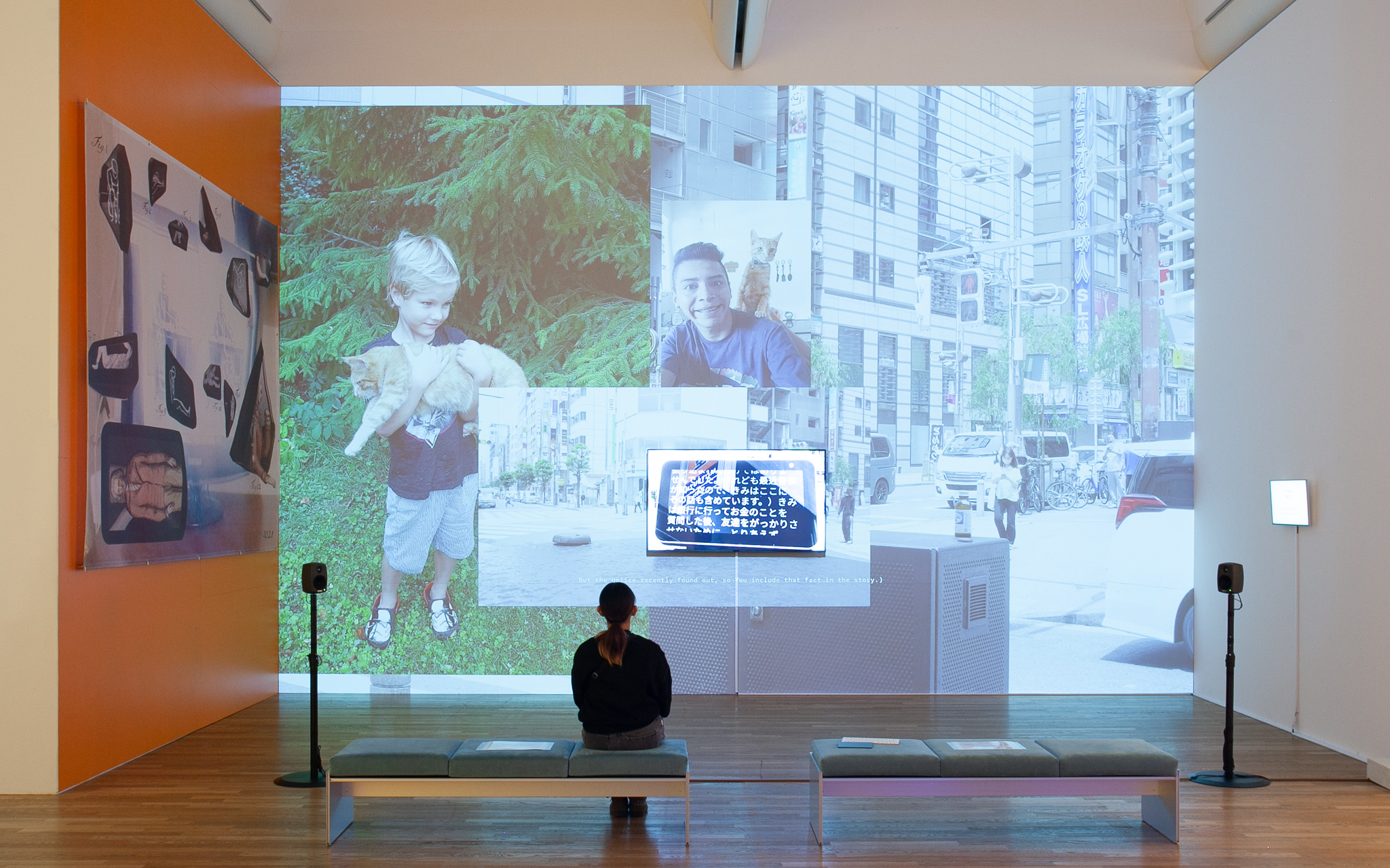
Natsumi Aoyagi, Calendar Stories for You Waiting at Home (2022, Tokyo)