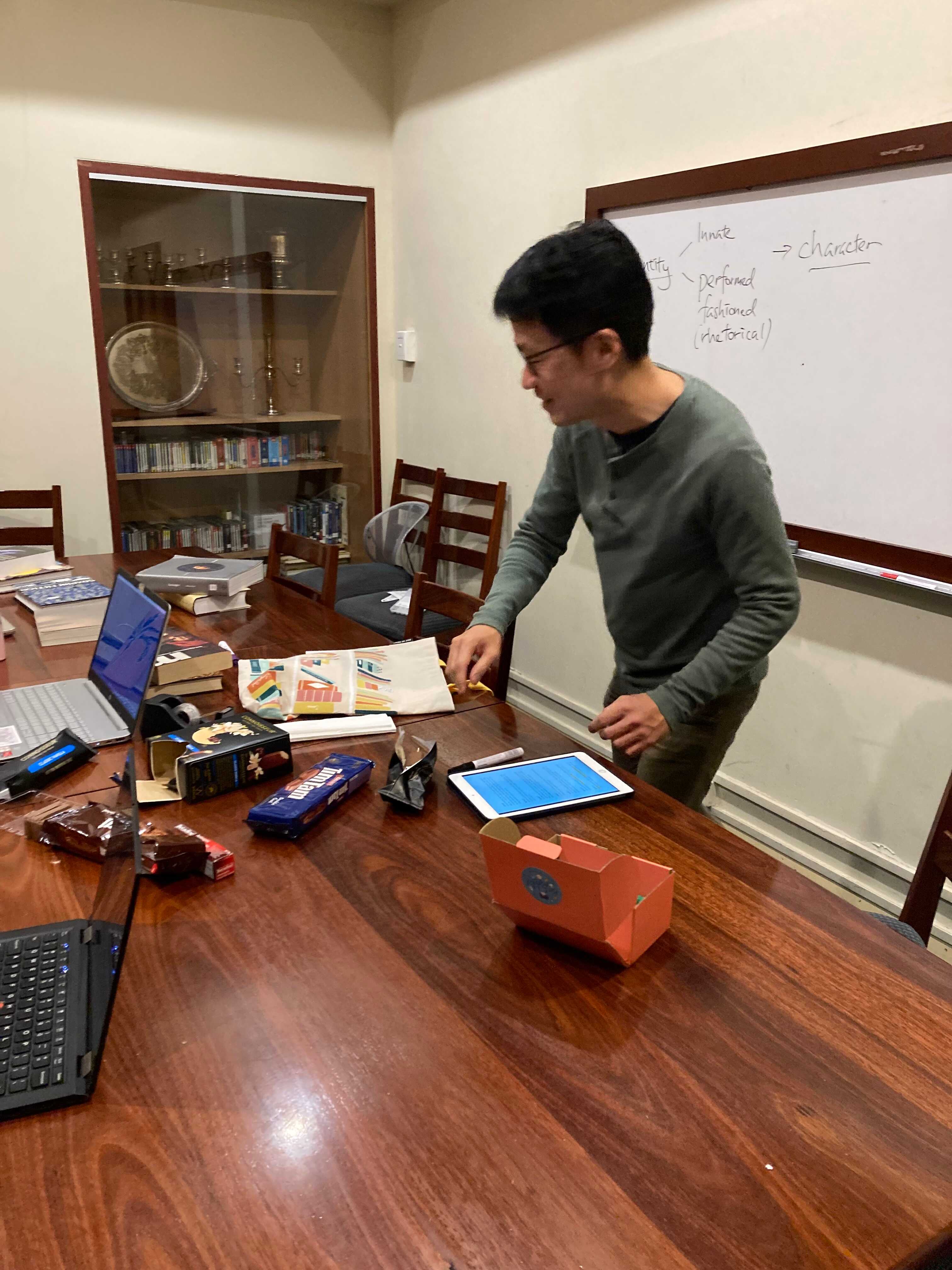
12 noon. University Tutorial Room.
I teach TESOL, i.e. Teaching English to Speakers of Other Languages. English. And all the Others. I know about The Others. In Singapore, we had Chinese, Malay, Indians, and the Others. My students and I are CALD. Culturally and Linguistically Diverse. Transcultural and translingual. Across a spectrum of nationalities, ethnicities, languages, origins and belongings. We feel bewildered because other people don’t know where to place us…
“Chinese students are so passive.” “No. Confucius says: Respect your elders. Respect your parents and your teachers.” “International students are all using GenAI to write their essays.” “No. We use it to help us check our grammar. We are sometimes shy to ask you for help. And we’ll lose face with so many errors. There are so many stories about our histories, foods and languages we want to tell you, in our own words.” “These crazy rich Asian students do not have a care in the world!” “No. I miss grandma’s pulled noodles, the creek at home where I hang ribbons and carry lanterns with my cousins. And I want to get a better job as an English teacher, so father could retire when the time comes.”
Today, we are studying functional linguistics. Language not for prescribing rules, but for meaning making. I design a poetry activity, encouraging them to turn a language encounter into a poem. I offer my own example:
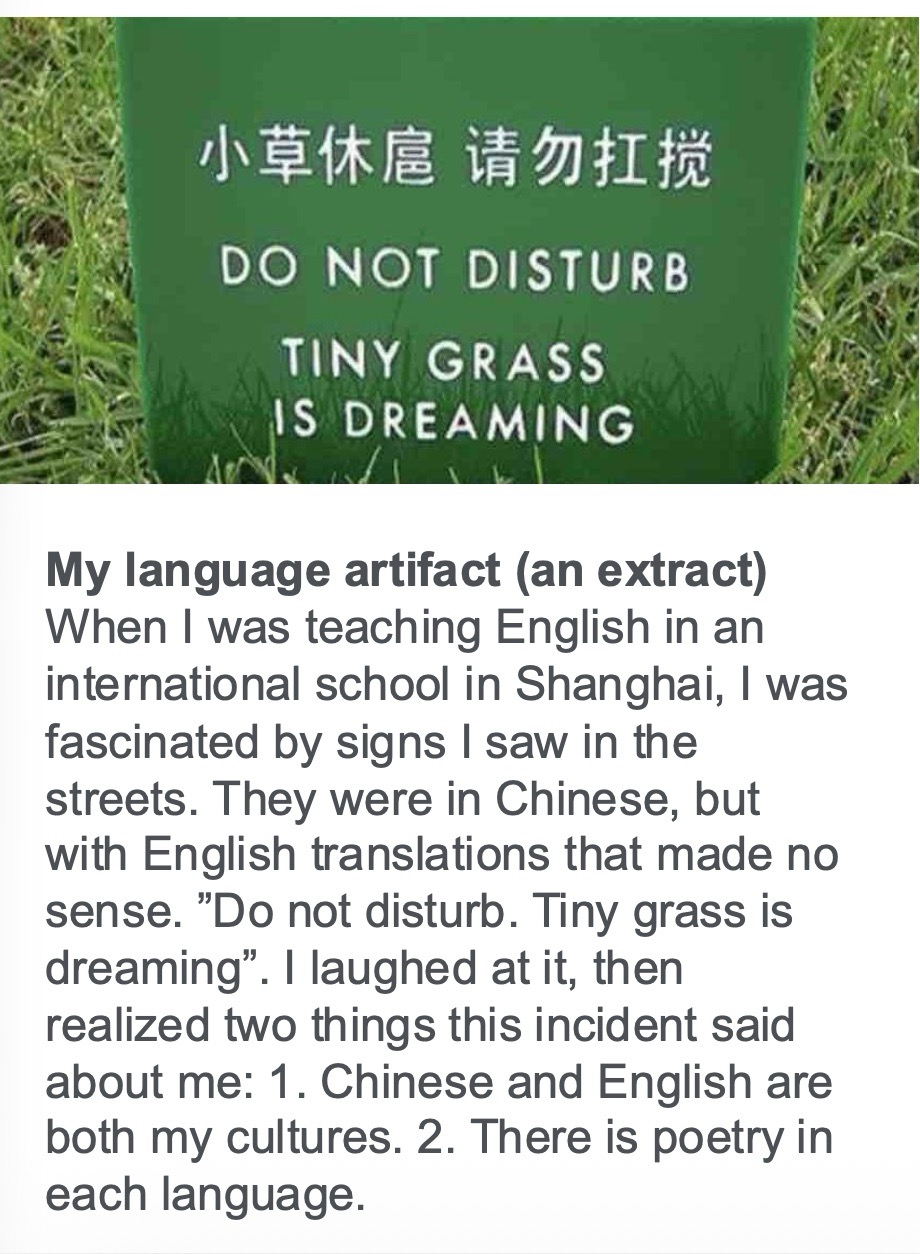
Image: TL Team HQ. (2022, April 29). “Chinglish // the ones you have to see to believe”.
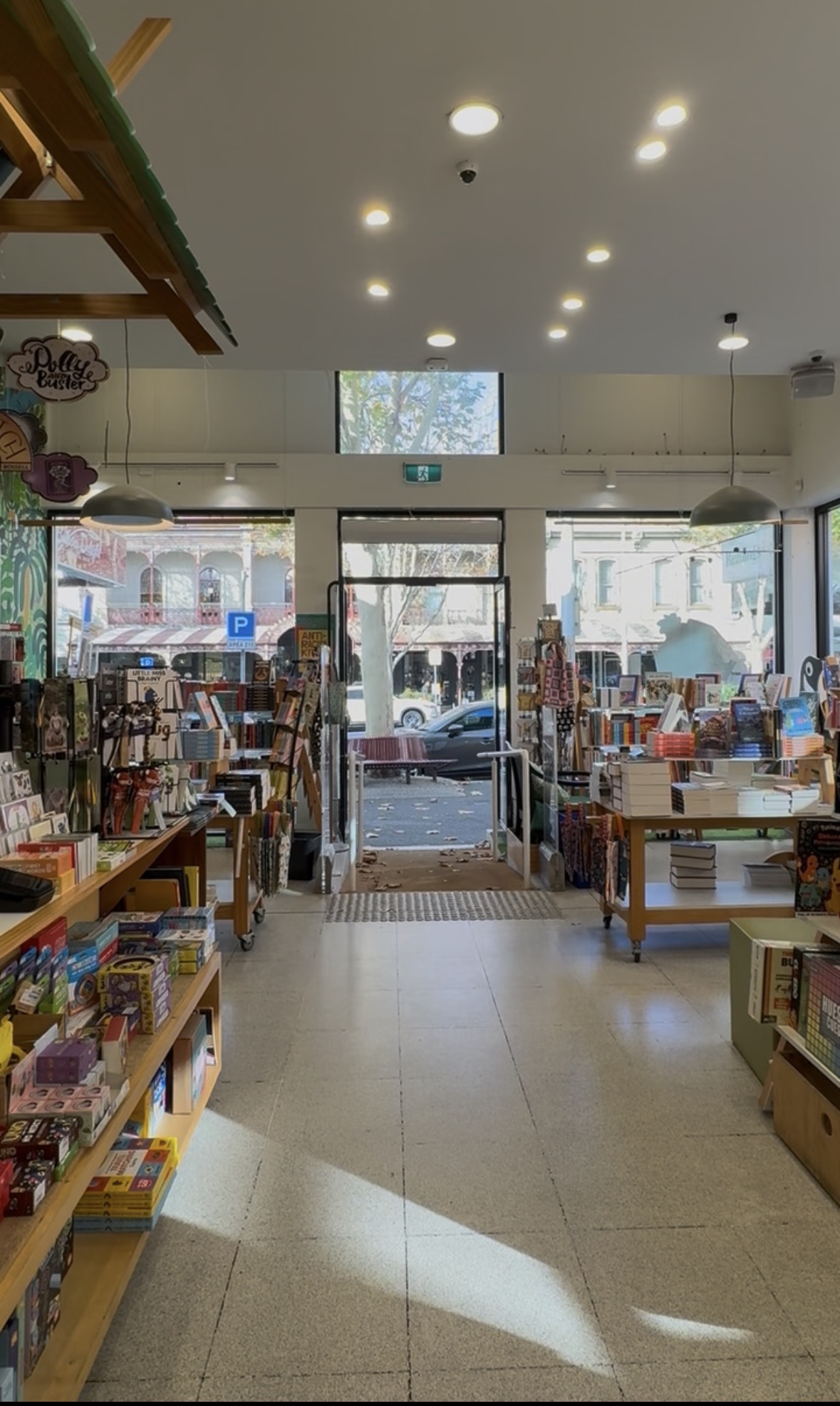
4pm. Bookstore.
I came to Melbourne in 2009 because there was a dearth of English books in Shanghai. Melbourne is the third UNESCO City of Literature, after Edinburgh and Iowa City. On the day I arrived, my host family took me to the old Thresherman’s Bakehouse in Carlton. Then, across the road to Readings Bookstore. Racks of classical music CDs, Cultural Studies readers, Penguin Classics. A dream!
In Singapore, I hung out at Kinokuniya Books in the city after school, wandering along the shelves that go on and on. Otherwise, we escaped the humidity going into neighbourhood bookstores, stocked with stationery and assessment books for primary school through to final year high stakes high school. We are not only an air-conditioned nation, but an assessment nation. My mum tells me I was a model student who’d never needed assessment books. In Melbourne, I frequent Readings Bookstore and purchase too many books. Someone told me book buying is not the same as book reading. I felt chastised, until I read in Edward Said’s memoir: “The saddest thing about dying is, I’ll never again buy all the books I’ll never read.” My teaching mentor tells me he would only purchase a book if he already knows who he can gift it forward to. A colleague thinks that we should all stock up on books of all kinds. Everyone needs particular books for particular times. Each book has its purpose and time, waiting for the right moment for its next move.
5pm. Tramline.
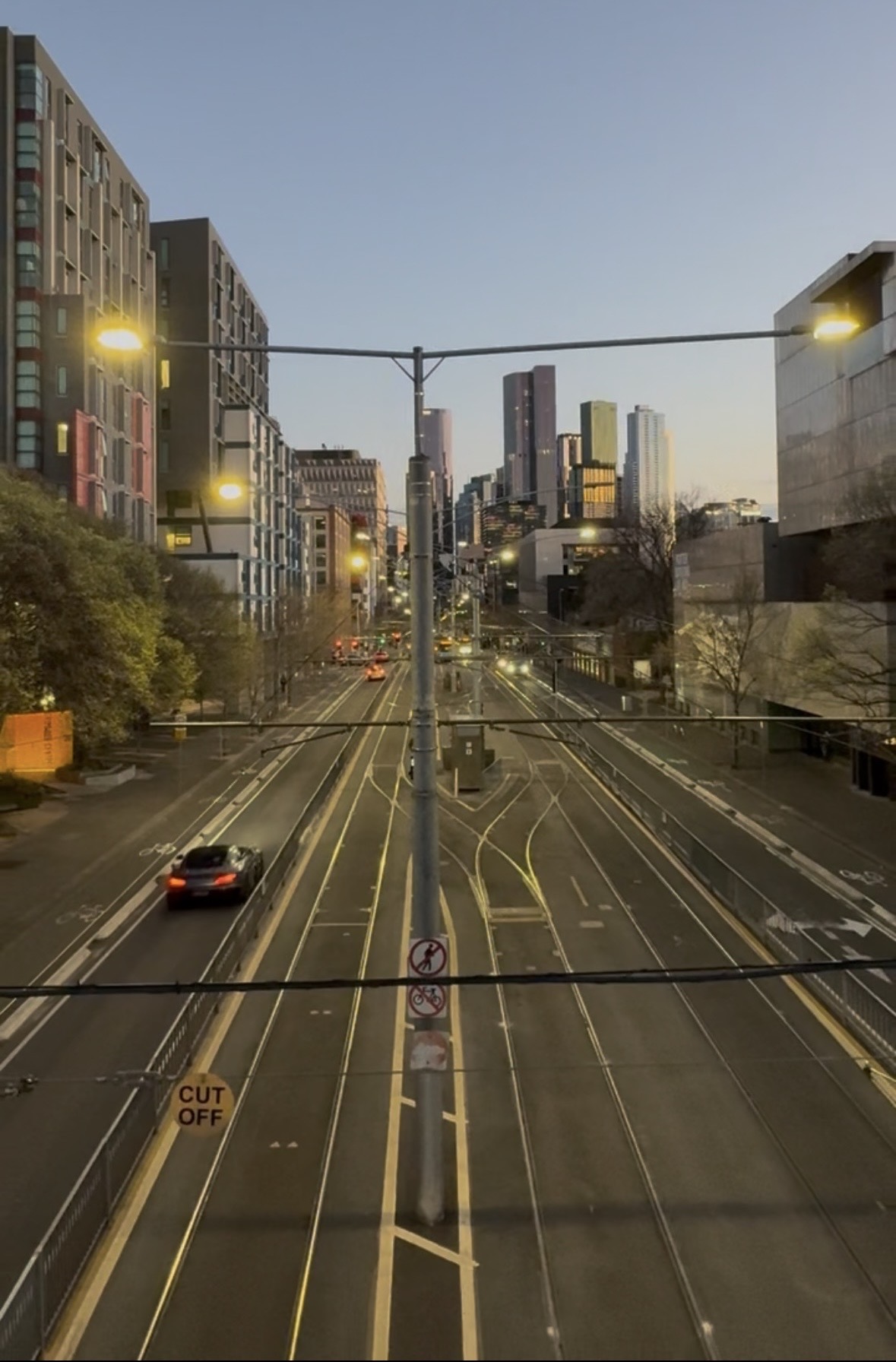
The Swanston Street tramline terminating at the Melbourne Uni cuts through Parkville and Carlton. I cross over here – for my daily double shot latte with chocolate croissant on Faraday Street, on the way to Carlton Gardens to look at wood ducks tracking water sources, or to snag a plate of Hainanese chicken rice from Rice Bar, run by a Malaysian migrant chef who’s keen to find a buyer for his stir-fry so he could retire from back-breaking wok cooking. “Few youngsters want to do this kind of work anymore lor.”
The tram terminus is named Stop 1, where all city trams through the world’s busiest tramway come to rest. It feels nothing like a true stop, though. It’s a momentary meeting place on a map full of chance encounters. A face glimpsed at International Politics tutorial and not again until– your honours supervisor who doesn’t remember– rosy-cheeked Year 12s dropping in from Kew to experience uni-style– a red-faced man shouting: “Move on China!” as you were boarding the tram in front of him during the height of the pandemic. A place of relational encounters. Doreen Massey explains it as ‘throwntogetherness’. You brush past someone and that momentary touch and sight becomes frozen in time. Moving story and fixed image happening at once. A vignette, for Charles Simic best expressed as prose poetry. It is my chosen methodology to navigate my inquiry – globally mobile, culturally and linguistically diverse educator. A meeting place, a constellation of lives and lines.
8pm. College Tutorial Room.
I teach English Lit, aka the Classics – closely reading Shakespeare, Austen and Plath. I facilitate Creative Writing, sitting down with my students, opening up a safe space to share and write. There I am. Somewhere in the middle. Something is in progress. Freedom to move this way or that. I was trying to connect something from the novel, Charlotte Brontë’s Jane Eyre, I think, to my students. Telling them I’d studied the same book in science-focused Singapore schools. Grid-like classroom sitting plans. All eyes on the front. Our British expat teacher reading aloud extracts, in a moving, actor’s voice. BBC voice. The gold standard.
I try to connect all these to my Aussie students, enrolled in an Arts degree, enjoying the moment, not yet worried about becoming job ready. Teaching is about drawing these connections. Facilitating. Mediating. Leading out – Educo: lessons from The Prime of Miss Jean Brodie. Lessons gathered from mentor teachers across Singapore, Shanghai and Melbourne:
“Write your student contributions on the board, so that they see it when they walk out of the classroom, and feel good about themselves.” “Reading a good poem makes you want to write a poem.” “My body moves according to the groups of students I teach: undergrads, migrants, professionals, children.” “Use that creative-critical brain of yours!” “Keep as much innocence in you as you can.” “Creative Writing is therapeutic. But we’re not their therapists.” “You’re not just Singapore Jack, Shanghai Jack or Melbourne Jack. There are different cities and different Jacks moving in you.”