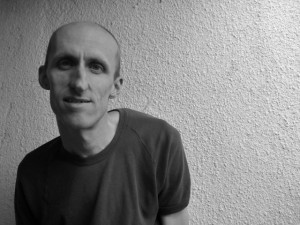
Zhang Minhua: Daily Life

Translated by Ouyang Yu

at five in the morning, i can hear pigs shrieking
from across the river
i can imagine how a sharp knife
thrusts into the throat of a pig
and how the hot blood shining with a cold light
spurts out into the world relentlessly …

a new day, the things around me
— the trees, the birds as well as that small river
it is in this hair-and-bone terror that they wake up

Zhang Minhua is a judge and poet who works in Jiashan Court, Zhejiang Province, China.

Posted in 10: LOCATION ASIA-AUSTRALIA | Tagged

Zhang Minhua: In the Elevator

Translated by Ouyang Yu

in the elevator, four or five people
greeted each other mechanically
i was embarrassed
they were all in their forties or fifties
— even i, the youngest, was thirty-odd years of age
my vicious eyes were staring at a mouth
magnifying it
i found it extremely ugly
— how many lives it had consumed all its life!

Posted in 10: LOCATION ASIA-AUSTRALIA | Tagged

Yu Kuichao: The Horses On the Slope

Translated by Ouyang Yu

one horse, two horses
three four five six seven horses
one horse

the net-shaped horse
the transparent horse
from one empty door
to another empty door

the skin of the grass
rubbing against the belly
the horses on the slope
their belly shiny and smooth

the horses on the slope
with sunken backs
the blue sky light, the desires heavy
the horses on the slope
their eyes open with wild flowers

Based in Nanjing, China, Yu Kuichao's poetry has appeared in Otherland (No. 1, 1996).

Posted in 10: LOCATION ASIA-AUSTRALIA | Tagged

Xu Jiang: Going Past the Women's Prison

Translated by Ouyang Yu

several times i had gone past that stop by bus
just in a flash each time
and then that day two policewomen came from the
stopsign. they went past me and sat down in the row of seats behind me, in silence, talking in a low voice. and the place where they had been sitting had something lingering, loving.
what was the life a policewoman like?
on my way, i turned my head back twice and saw the smooth hands, two none-too-fashionable bags and unpowdered youth. one of them took a sharp look at me possibly because she had recognized the motive of a potential criminal in me before i even recognised it myself.
at the head of a lane not far from the stop where they had got on the bus, i saw the stopsign written on the wall of the factory with chalk: 'Tianjin Women's Prison' and, side by side with it, was a work unit called 'Junvenile Delinquents Reform Station.'
each time the bus flies all the way.
it went just like that on that occasion.
subsequently, whenever i go past that stop, i will at once realize that there is a prison ahead of me.

Xu Jiang (b 1967) is a Tianjin based poet who edits Kui, a Chinese poetry journal and has had several books of poetry published, including wo xie shi (I Look Askance) in 1999.

Posted in 10: LOCATION ASIA-AUSTRALIA | Tagged

Shen Haobo: My Dad’s Sound Strategy

Translated by Ouyang Yu

in 1967
my dad went to an alien place
to begin his middle school career

every weekend
my dad managed to get home
and bring from home
things
to eat
salted vegetables and dry carrots
or pickled cucumbers

to prevent
his roommates from stealing them
my dad
had a sound strategy
every time he opened his food
he'd first spit into it
a few mouthfuls of saliva

Shen Haobo is a Chinese poet based in Beijing who is often described as the leader of the Post-1970s Poets (poets born in the 1970s) and now edits the Chinese webzine xia ban shen (Lower Parts of the Body).

Posted in 10: LOCATION ASIA-AUSTRALIA | Tagged

Chen Dachao: Dreams Shattered Late At Night

Translated by Ouyang Yu.

Dreams just made behind closed eyes
were suddenly shattered by a glass breaking
It would be better if it had been a glass
but I was worried that it might be the goldfish from
the fish tank
that were thrashing on the floor

I stopped my ears for a long time
against the abusive man and the weeping woman
whose voice was so small
that it sounded as if it came from another distant world

I wasn't concerned at all
that they might break their own home
for houses now are
built far sturdier than the goldfish tank

No. How many homes there must be
in today's cities that look sturdy on the
outside
but are broken within

Chen Dachao (born 1958) is a Chinese poet and short story writer based in Hubei, China, whose work has won prizes in China, Taiwan and Australia.

Posted in 10: LOCATION ASIA-AUSTRALIA | Tagged

A Close Encounter With CyberBarbie

Being the editor of an internet journal and all, I thought it might be nice to engage with the new media, like, and try and have some kind of conversation with an online avatar – in this case, the now-disappeared CyberBarbie – about poetry. You won't believe your eyes. No, really.

Continue reading

Posted in POETRY | Tagged

Paul Mitchell Interviews Natasha Cho

The tape of Paul Mitchell's first interview with Natasha Cho was tragically stolen one hot day in January. The question was: could they come up with the goods a second time via e-mail?

Continue reading

Posted in INTERVIEWS | Tagged ,

Taipei Breathing

For 14 days over Christmas 2001-2, I spent time with friends in Taipei, capital city of Taiwan. These are some brief impressions of my time there. Quotes are from work in progress.

Continue reading

Posted in ESSAYS | Tagged , , ,

Gus Gollings: A Note on Asian Scripts

The QWERTY keyboard has come into widespread use all over the world. It is based on the modern Latin alphabet, and it obviously does not directly support the input of the tens of thousands of ideographs from Chinese, Japanese and Korean languages. The question might be asked then, why are ideographic representations desired in a computer environment?

Continue reading

Posted in ESSAYS | Tagged , , ,

John De Laine Reviews Graham Catt

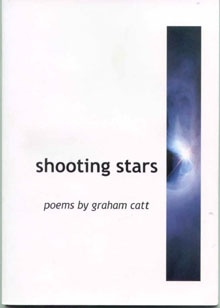
shooting_stars.jpgShooting Stars by Graham Catt
Ginninderra Press, 2001

The debut collection from Adelaide-based poet Graham Catt provides solid proof that sensitivity unleashed can result in quality verse, despite recent factional thinking that posits romantic and emotional reflection as a cheapening of poetic voice.

Continue reading

Posted in BOOK REVIEWS | Tagged ,

Adam Ford: Damn & Be Published (Part 2)

I Fall in Love with a Beautiful Newcomer … by Susan Fereday
The Still Company by The Still Company
Excerpts from Teach Yourself Atomic Physics by Phil Norton
Beware the Balsa Chair (number one) by Ebony Truscott
Humans, Animals & Objects by Edward Burger

My printer ran out of ink yesterday and wouldn't accept the refilled cartridge as legit. The ink light kept flashing until I spent sixty bucks on a new cartridge. A curse on the head of cartridge manufacturers and retailers. Ink is a valuable commodity, and we salute those who choose to use their ink to put their work out there, somewhere where people will read it.

Continue reading

Posted in BOOK REVIEWS | Tagged , , , , , ,

Location Asia-Australia

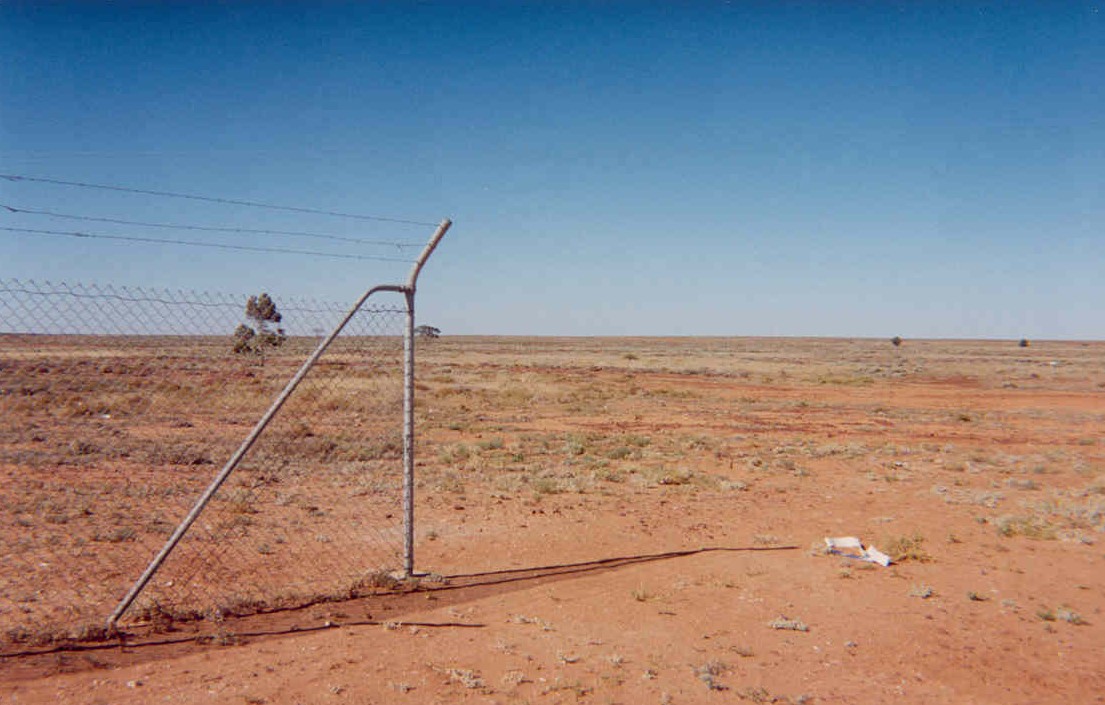
fence.jpg

Well, we've finally reached double figures. Welcome to the tenth issue of Cordite, and our fifth issue online. By the time you read this, our site counter will have ticked over 8,000 page impressions. This may sound like small change to some – nevertheless, a small impression is better than none!

Continue reading

Posted in FEATURES | Tagged , ,

Alison Arnold summarises the launch of GDS19

issue19cover_sm.jpgGoing Down Swinging survived the worst excesses of the 1980s and 1990s to arrive in 2001 alive and kicking. As befitting its reputation as a Melbourne underground institution, the Old Colonial Hotel on Brunswick Street was packed with writer types and assorted hangers-on.

Continue reading

Posted in FEATURES | Tagged ,

David Prater reports back from NYWF 2001

National Young Writers Festival
September 29 to October 3, 2001
Newcastle, Australia

I don't care what anyone says; the 2001 National Young Writer's Festival was never going to be as good as last year's or the one before that. At least, that's the vibe I picked up as I cruised up and down Hunter Street Newcastle, eavesdropping on the conversations of the nation's young poets, novelists and playwrights. For a start, the organisers were up against some pretty stiff competition, weren't they? I mean, imagine scheduling a whole week of poetry readings, information sessions, workshops, bookstalls and performances alongside one of the biggest events in Newcastle's history! You know what I'm talking about: the Rugby League Grand Final. And you know the words on everyone's lips: GO KNIGHTS.

Continue reading

Posted in FEATURES | Tagged , , ,

Kate Middleton Interviews Alison Croggon

Alison Croggon was the 2000 Australia Council writer in residence at Cambridge University. Her work takes on a variety of forms including poetry, prose and texts for theatre.

Kate Middleton: The work of yours that I first encountered was your poetry, and you have recently been referred to by Jane Sullivan in The Age as one of the foremost poets of your generation, yet you have worked in so many different forms – do you consider poetry to be your primary output?

Alison Croggon: Yes I do – or else, in the middle of everything else. Poetry's the first thing I did, and I think psychically it's just in the middle, and everything else is related to it, branches out from it.

KM: How does working in such a wide variety of forms affect your work: your poetry informs your other work – does it then fall back?

AC: Yes. The connection with theatre was a kind of accident in my life. My sister's an actor, I've always known people in the theatre, my husband, Daniel Keene, is a playwright, and ever since I was young I've had this connection with theatre that has felt kind of fated. I never wanted to be an actor, and I never really thought about writing for theatre, actually. The first thing that happened was becoming a theatre critic for the Bulletin, and that was a freak chance. I mean it wasn't anything I sought. And The Burrow, which was actually my first commission, was not something I sought either. When things happened like that it was like fate was coming along and pointing a finger, and saying 'You are going to be involved in the theatre.' And I've always been grateful for that, because I like theatre – it's an art form that I both love and hate, and it has been really important for my poetry, I think.

KM: Now, The Burrow was your first opera libretto, written for Michael Smetanin – how was it that you came to be involved in that project?

AC: It was one of those complicated links. A couple of years before then, I knew Darryl Buckley (the artistic director of Elision New Music Ensemble) slightly, and I was putting out a poster magazine called Modern Writing with Antoni Jach, which had graphics and poetry and prose. We put out one which had a whole lot of erotic poetry by me and Daniel Keene and Jacinta Le Plastrier, and Darryl had it on his toilet door. Michael was staying there and read this, and said ‘This is what I'm looking for for a song cycle I'm doing.’ So he used those poems subsequently for the cycle Skinless Kiss of Angels, and then Michael and I started talking, and we wanted to write an opera together. The Burrow wasn't actually the first opera we wanted to do – we wanted to do another thing based on Novel with Cocaine by M Ageyev, which is this interesting Russian novella that was printed in the 1930s in France, but that actually didn't happen. And then Lyndon Terracini came along with the idea of basing something on Kafka's story, which was something he'd been obsessed with for ages and ages.

KM: Since then, you've subsequently written libretti for two further operas, Gauguin and Missing in Action – where did they come from?

AC: Gauguin – again, that came from Lyndon. He gave me this horrible book called The Moon and Sixpence, by W Somerset Maugham, which I thoroughly hated, but it was a fictionalised account of Gauguin, and that led me on to reading about Gauguin, and reading his writings, which subsequently resulted in the libretto. And Missing in Action was the most difficult so far, it really has been so hard to do, mostly because it's based on something that didn't happen. A lot of Australian history is about things that didn't happen. There's very few things in European Australian history that are about things that did happen – there's the Eureka Stockade, and what else? The Gold Rush … so this is about a civil war that didn't happen, when a militia was formed in Victoria which had about 100,000 members, a very interesting story. I wrote so many drafts, which were just awful, all documentary stuff. But in the course of my reading I read a whole lot of oral texts, accounts of the Depression. So it's sort of about that, about the dilemma of returned World War I servicemen just before the second World War, who were very displaced people: the poor and the powerless, who are always betrayed here, who still are betrayed here. So it follows one of these people, but there are three stories running through it. Anyway, we'll see if it works. I think it's alright now, but it was a complete nightmare for about three years to make something of.

KM: May Sarton has said: 'In the novel or the journey you get the journey. In a poem you get the arrival.' Do you consciously make a decision that a subject you would like to write on will become a poem/fiction/play, or is the form part of your conception of the piece, does it arrive already knowing it must be a poem / fiction / play?

AC: That is a tricky question. I usually start whatever it is with … I mean, of course form is crucial to everything else. There's this novel that I've started, which is a long term thing I want to write, a very beastly, intricate, anarchic text that's based on the story of Lope de Aguirre, who's a sixteenth century Spanish I don't know, traitor, vagabond, murderer, I don't know how to describe him. He's often described as an explorer, because he sailed from one end of the South American continent to the other. But the story of how he did that is an incredible tale of murder, and intrigue, and so on, and so forth. It's fascinated me for quite a while. I initially encountered it because I was going to write an opera about it for Chamber Made Opera, years and years and years ago. That came to nothing, but the idea just sat there, and now I've started this novel. It takes a lot out of me to write that. First of all I thought I might do a long narrative poem, like Hans Magnus Enzenberger's Sinking of the Titanic. But it is just too big, and sprawling, and it wants to be written in prose, not poetry, so that's what I'm doing.

KM: Reading your work, it's evident that you've read widely. Ccan you name any particular influences in your writing?

AC: It is very hard to, you know, because you think of six, and then another dozen, and then – I suppose that a really important early influence was Eliot, when I was about fourteen, and I read all those poems – and William Blake is another early one, who's persisted. I just thought, that's it, I want to write like that! Broadly speaking, poets who I find very exciting are modernists like Basil Bunting, and David Jones, and Hugh MacDiarmid, and St John Perse, and Ezra Pound. All those writers who have something- this ambition, this vision. It's the failures of their ambitions as well that I find intriguing. Lorca, Apollinaire, Paz, Rimbaud … more recently, poets like J H Prynne and Trevor Joyce and Alice Notley … you can go on forever. The beauty of the work is what stirs me, I suppose.

KM: You've also worked as an editor, on Voices and Masthead. How has that experience affected the way you look at your own work?

AC: I think it seems more like a natural kind of development. I have a critical mind. Something I was saying to Daniel the other night – I'm actually a hugely intuitive artist, and where I work from is intuitions. I've worked really hard over the last fifteen years trying to bring an intellectual understanding to those intuitions, to bring these impulses together, and part of that is the critical understanding, which has been really very interesting and very difficult. I just have that bent. I like building theories, these kind of scaffoldings, which I might then kick over. Because they're always changing, and I'm always changing my mind. And editing is an aspect of that. It's kind of fun – and hard work.


Posted in INTERVIEWS | Tagged ,

Music

A few weeks ago a friend pointed out to me that if you type www.cordite.com.au into a web browser and, as the saying goes, 'run it through the Internet', you'll find not this site (we're steadfastly .org) but a guns and ammunition site. Given the events this month in New York City (and given that the word 'cordite' does have an explosive meaning), you would think that I would have thought to check it out. But no. As strange as it sounds, I've never even bothered. So I was more than a little startled the other night when I typed the .com address into my browser, to find instead a home page under construction – 'New site here soon.'

Don't go there. Stay here.

Continue reading

Posted in ESSAYS | Tagged

Andy Jackson: No Anchovies Please!

or, Is there a place for combining music and poetry?
Like I had just suggested putting anchovies in his ice-cream, a fellow poetry connoisseur once screwed his face up and told me that a poem put to music was not a poem at all. Mixing poetry and music was just not right.

Continue reading

Posted in FEATURES | Tagged ,

Anna Hedigan Reviews Stephen Malkmus

cover_stbig.gifStephen Malkmus (eponymous)
Matador Records 2001

That there are correspondences between poetry and music in Stephen Malkmus' song-writing (both on his own and as lead singer in 90s college rock band Pavement) should come as no surprise to students of rock music – a self-avowed fan of John Ashbery's lyrics, Malkmus has, over the course of five studio albums, developed an unique vocal style, and a poetic sensibility. So after spotting Anna Hedigan (co-editor of Melbourne-based e-zine Overland Express) at a recent Malkmus concert, we couldn't resist asking her to review his new CD.

Continue reading

Posted in BOOK REVIEWS | Tagged , ,

Adam Ford: Damn & Be Published (Part 1)

Correct by Eric Yoshinko Dando
Idiot Savant by Warwick Dunbar
Humble Pi by Pi O
Mang and the New Reality by Paul White
East Village Inky by Ayun Halliday

When I go to second-hand bookstores and look through the poetry shelves, it's the books with staples, as opposed to spines, that catch my eye. To me the staple is the mark of the self-publisher, and self-published work, in my mind, is more likely to have that spark, that frisson of passion that really lets you see into the mind of the poet. Here's some reviews of some of the staple-bound gems on offer if you know where to look.

Continue reading

Posted in BOOK REVIEWS | Tagged , , , , , ,

Ways of Death: No. 8

going up
the Tweed-to-Ballina Highway
at 110
to plant my open face
in lightning's clean sheets
bright as second days
dawning in snapped flashes.

One of its rogue forks
tonguing from the sky
tries to pick me up
at the Ewingsdale turnoff.

Posted in 09: MUSIC | Tagged

Albania

*

my father and I
were standing at the glass book shelf
looking down
at a row of mao's works translated in albanian
I said to dad
why did you learn english
not albanian?
should I?
no, he said, no, not albanian
you don't learn that language
I forgot what else he said
as part of his explanation
'cause that must be more than thirty years ago
during the cultural revolution
when the bookshops throughout china
had nothing but mao's works

 
*
 

xia guoqiang a friend
from middle school
told me after seeing an albanian film
how dirty the tricks were that the enemy had played
I saw the film
and never saw it the way he saw it
all I could remember was the song
and the music
albanian music
that was greater than anything I had ever heard
although I had not heard much

 
*
 

the guitar the albanians played in the film
the mountain eagle flag
and the mountainous country
such a tiny country in the world
such a great friend with china
in those days

I remember all that
and more
when I watched nato bombing
and kosova albanians
on t.v.
today


7/5/99


(p.s – my wife said to me over dinner
a number of days
after I had finished the poem
that
she recalled the titles of those two albanian films
I said i could not remember
and that
she said she could not remember
when asked
one called The Trauma
and the other, Rather Die than Surrender and she added
that
she admired the nurse in the film
a lot
for the proud way
she held herself
and that
she had seen the film
many many times
'cause there wasn't much else
then)

Posted in 09: MUSIC | Tagged

Michael Slater 3

the prophecies will not be fulfilled
i see this now with clarity
everything is clear to me
the blood was not rich enough
too much sun too much
sun i must make my bat smaller
more compact weigh it down
it is too light i will
reinvent the game
jon bon jovi comes to mind
i met him once in a dream there is a
spring in my step i will
move at speed across my crease
no the direction does not matter
only the leap itself
and the arc of the bat as i move
as i leave the ground the angles will
ideally be acute there is a figure
coming towards me i believe i have
been expecting it father i was
expecting someone else
i am feeling sharp
willow blade i will
pierce the field a dead burro with
a double puncture mark in its neck
the infectious beat of latino-pop a very
small cow you are my son
michael its your own
dad mick there is this lowing
in my head that wont go away
i am a blade of grass
the cattle speak to me they are wise
like the seagulls that sweep across
my vision as i stare up into the sky
for hours on end if only they had built
a roof over headingley this is a very good bat
i am zorro a jedi i am not untroubled
things are not at all as i had imagined them
one day my innovations will be appreciated
i am ahead of my time
the world is not ready
i must revert to using a
straight bat this is very hard for me
i have been places that have not
left me unchanged i have seen the cotswolds
i will never use a straight bat again
father i will never use a straight bat again
i will change the face of the game
tap dance around the chimneys
i will sleep in my coffin by day
i will drink only the blood of the aristocracy
it is weak blood and it does not satiate me
it barely serves as food for my bats i need
to be on edge
i will be an example to the children
jackie chan bono no not him
i can not stand the company he keeps
i am tortured
by the threat of fascism i am
finding it difficult to concentrate
i am a little confused as to where i am
and what i am doing i have a burning desire
to clasp in frustration at my forehead
and rip out my hair my hairline must recede
i will be distinguished
in all that i do
i will not let the kids see me with lines of blood
down my chin i admire robbie williams ich weine
mich die augen aus i can not
come to grips with any of this
i have forgotten what i was going to say
i am a cow like nietzsche before me
i have immense thighs and the butchers
keep cutting pieces of flesh from them
it is lucky i have learnt to regenerate
it keeps me lithe and leaping about
i do not even remember the pain
it is plain to see that my back lift
is all wrong everything is moving
at cross purposes i no longer know which
direction is north there are forces pulling me
toward the dressing rooms
that i do not begin to understand
yet i have no idea in which direction they lie
i wander the suburbs
spit in the face of stephen waugh dig
my fangs into his calf
he only wishes he was me

Posted in 09: MUSIC | Tagged

Waiting for Fire

She's out again,
crushing rocks
with her eyelids.
While you attach tennis raquets to your back
and call them
wings.
She's turning cars over in the street
and scraping out their guts with her bare hands,
hoping to find a cage big enough
to hold the way she's feeling,
until she knows what to do with it.
While you wash your hands in gasoline
and wait on her front porch,
knowing that when she gets home,
she'll need a cigarette first
and then,
she'll need
a light.

Posted in 09: MUSIC | Tagged