Paper Object Town

dear jones: i should never have come this place it is beyond desolation there are no sunsets and honey no hat-tipping neighbours friendly milk vendors nylon magdalenes mothers and ballpark heroes only a slow and lecherous infestation your organs a darkness so complete you do not inhabit this place it inhabits you. on fire escape stairs i smoke from a makeshift pipe each night something new a length of discarded pvc tubing copper pipe from a nearby construction site even a rearview mirror you attach to the side of your car when you tow a caravan on those long family holidays where all you see and hear and taste is curled and yellowed with time and turns the veins in your forearm to spaghetti hardened at the thought of sepia-toned wallet photographs. one night i even fashioned a pipe from a plastic pump-action water pistol reservoir great smoke a black milk lung toxin. tongue jaundice. the fruit of starfield road. japanese sirens burn all night colour does not exist it is not permitted. people hang from chains rust in metal vaults the bottle and the drinker who can tell? automobile crash subway fire fatal headshot knifewounds to genitals punctured breast tissue bound wrists incinerated plane crash victim suicidal strangulation by ligature foreign body in airway. drag marks. the footprints of the deceased. a recently vacated room. no signs of struggle. only morning taken as crimson pills. and skin, burning a distant star.

Posted in 31: SECRET CITIES | Tagged

Proportions

Stone bowls,

inflated to the size of small ponds, their brims shimmering with flowers. I see them waiting at intersections, walking the streets, at the square, high in the air, everywhere-

 
Crows

Each one holds an invisible magnifying glass, and won't be seen without it.

 
Jurassic Park

Under the sensible deciduous tree, prehistory shrinks to a point of view. Dew trembles upon the intricacies of a jungle: teeming tree-ferns, over-sized flowers, clearings, pungent mud. It goes for miles and miles. I gaze down through a chaos in the canopy, searching for Brachiosaurus, the biggest of them all.

 
Street lamps

Suspended over rivers and creeks of swirling cobblestone, they are like miniature cable-cars stopped mid-flight, letting light admire the view.

 
Winter trees,

enormous burrs, catching at the clouds.

 
Spring shrub

Like fish in a coral from The Giant Reef, yellow flowers collect in its branches, sway in gentle currents, catch the sunlight.

Posted in 31: SECRET CITIES | Tagged

Chains (Poems, Nagoya)

Dating and other unlikely incidents fed the poems I wrote in Nagoya, Japan, in December 2007 till February 2008 (where I had an Asialink residency).

#1 touch & go:

I was bored with my iPod, and lacked the technology to load it with the Japanese CDs I was buying or trading books for. So I replaced the songs with ones from fellow resident Sarah Holland-Batt's laptop (Feds please note this is fiction): including 'touch & go' by The Cars. Nice ambivalent title, and it reminded me of Mary O'Hara's My Friend Flicka: Flicka has a filly called that.

The opening lines of the poem:

Your plastic foallike form

Warms the single flat

& goes waving.

I don't think I was approached the whole time I was in Japan, apart from this one day in Nagoya when two women did so. The first was quite young; she saw me 'reading' a manga (I read the pictures) and asked me about my interest in manga. She was writing something for her studies about the differences between Japanese and Western culture. I showed her my own comic book BREAK ME OUCH and we sat down at the caf?© for something like an interview. Later in the poem I wrote:

yesterday approached on the train,

they noticed my comic. Views of international

Photographer, photographing

how do you read –

Sitting, kneeling

hot books in new york –

This was in Sakae, the central shopping district of Nagoya, and the location of Maruzen, a bookshop that has an English language floor. It was there that I was approached by a newspaper photographer who quizzed me on Haruki Murakami. His latest book was a bestseller in New York, and she had been commissioned by her editor to get a photo of a white person looking at Murakami as if they were in New York. So I posed, but don't know if the photo appeared. Weeks later in Kyoto I met a writer who told of seeing Murakami put down Soseki Natsume as 'not a novelist'.

#2 outside kfc:

Almost a catchphrase, it was a recognisable place to meet people. As a title for a poem it meant being able to write about my interaction with several different people. I'm still a bit self-conscious about the recognisable content in the poem; Frank O'Hara's solution of writing about people by name doesn't suit my style.

Don't think about his mouth, his Goodbye noises, his,

Emails missing or present in your inbox.

[…]

Nothing you Can think Of or to betray.

rupert isn't japanese, black, cravat but not your hair or eyes.

[…]

this time you know him

but hate getting lost

#3 word seen from a bus:

Maybe a word i know. But the mountains are covered-in,

different examples-of forest different water reflects. A bittern rises

from the page like a stick &s gone, it was a vision, white

word of childhood myth. Read unread.

Going by bus to Kyoto on Christmas Day, past forests and very occasional birds, I wrote this poem punning on word and bird. Man, woman and sugar were the only kanji I recognised: man and woman for toilets and baths; sugar, in a largely vain attempt to find less sweet cereal. (Later I learned to recognise open and close doors from lift buttons.)

a word in the river.

Or the sky: hawk

perhaps. Man woman or sugar


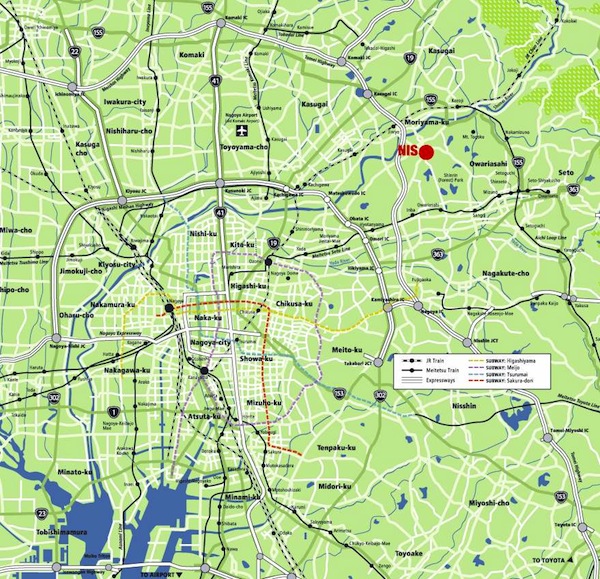
Map of the city of Nagoya, Japan.

#4 fried things society:

When I ate out with someone Japanese, in this case the poet and translator Keiji Minato, I asked them to translate the menu rather than the usual point-at-the-picture option. Rather than have them translate every dish I'd find out what categories there were first. 'fried things' was one. I'm not sure now how it occurred to me to add 'society' to the poem's title but something about the lack of custom outside the lunch rush.

A kombu smile on a burger head.

Enough rice to sink life,

They crowd back suddenly, they imitate crows dodos,

one picks up Something like a bestseller. American classic fried sinatra & grace kelly

#5 tendency:

I had no plan to write poems about Japan, just let the references come in as (un)naturally as possible. Motoyama was the suburb I stayed in; I often stay in Surry Hills in Sydney. 'russian prison' refers to two different dates who told me, when I asked about WWII, that their grandfathers had been in prison in Moscow, and both survived. My own grandfather was in New Guinea and souvenired a Japanese flying jacket that I used to wear when we went spotlighting.

a motoyama summer or surry hills winter make breakfast.

Sexy & your friends celebrities its better than russian

prison or hunting a gun & jacket through new guinea.

congrats they punch while the second son gets

bumped down a navy singlet betrays a perfect structure

(a fish & soup diet prevent you

from becoming stocky or even forty)

In Cafe Jaaja in Kakuozan, Nagoya, a man told me about the birth of his first grandchild who was now his 'second happiness', his eldest son (the child's father) being his 'first happiness'. Like an heir to a throne, the second son got bumped.

#6 muzak to view the city with

I heard a lot of muzak in Japan and, as I was there at Christmas time, a lot of Christmas muzak. It got a bit hard to take. Not just in shops but at the gym, and in the poem, in the Higashiyama tower in the grounds of Higashiyama zoo, in Nagoya. That the songs that had been muzaked were often quite easy listening originals made them even more irksome. Like Wings' 'My Love' or Starland Vocal Band's 'Afternoon Delight'. There's something a bit too much about being in a non-English speaking country on a date with someone from a non-English speaking culture and hearing a muzaked version of a song about sex in the afternoon that is from your childhood, but before the birth of your date.

Muzak makes its originals grungy makes

everything real tough.

If i hold my pseudo baby tight i participate

in muzak & remember when

My love, has so much in him he tastes

Like a cloud, im sorry,

For going too far,

Being reckless in making friends

i hope night calms the polar bear

The cloud reference is not about how high the tower was (very) but to Junichiro Tanizaki's writings on Japanese aesthetics, especially in In Praise of Shadows, but also in his novel The Key. Tanizaki writes of Japanese skin as white, but a cloudy white that distinguishes it from the white of Europeans. The bear did seem quite agitated. The zoo resurfaced in another poem,

#7 voluptuary:

An elephants dancing leg, lion statue chained to a wall,

some notes i take with my camera

feathers glued on a sign. Watching old videos

is a mistake, similarly avoid the familiar cafes the zoo denies,

the affinity i claimed i had with snow leopards,

raccoon tongues more fastidious than gibbons.

Scarlet george, hyacinth nick

Those macaws couldnt have met each other elsewhere

The elephant had a chain on its leg: its 'dance' consisted of repeated pulling away from the wall, keeping its unchained feet on the ground.

Posted in POETRY | Tagged , , , ,

Constant Haze (Notes From Chengdu)

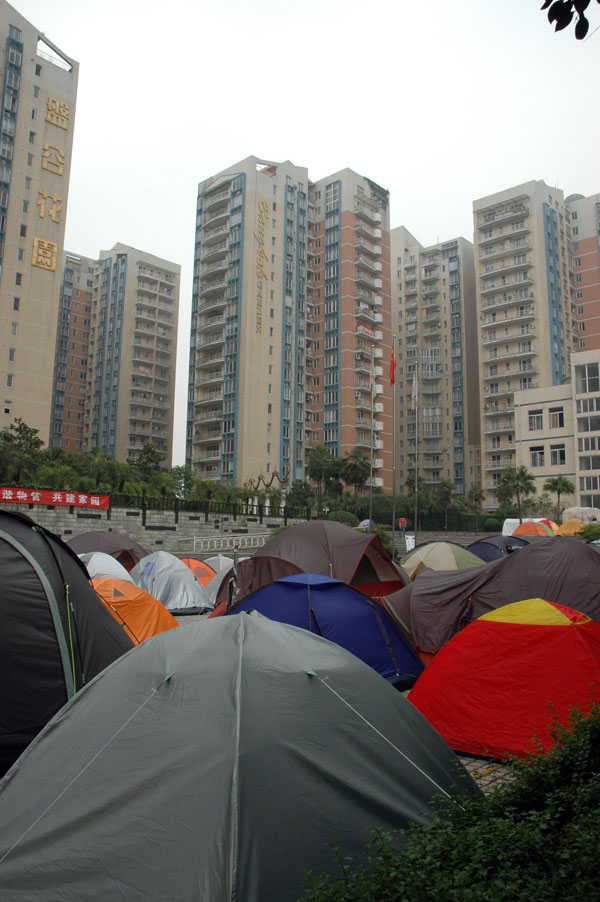
Chengdu, post-earthquake. Photo by James Stuart.Five weeks and I have still not visited Mao's statue, which stands at the heart of Chengdu's First Ring Road. On the map in one of the city's English language magazines his presence has been reduced to a vector-based outline, a warm-grey fill.

Continue reading

Posted in ESSAYS | Tagged , , , ,

Dispatches

First: remember it's a foreign country,

Your words spun to remind me

it's a foreign English

fulfilling the promise of years watching white

picket fences on TV.

Continue reading

Posted in POETRY | Tagged ,

Pam Brown Reviews Miriel Lenore

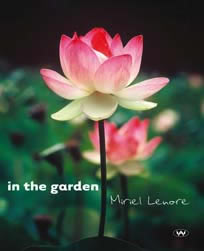
In the Garden by Miriel Lenore
Wakefield Press, 2007

In response to the effects of global climate change, and probably informed by earlier exponents like natural historian Henry David Thoreau, Rachel Carson, Aldo Leopold, Eric Rolls and so on, the literary genre 'nature writing' has been re-invigorated and a new genre, 'ecopoetry', has emerged in the first decade of the twenty-first century. Miriel Lenore's sixth collection of poetry, In the Garden, reminds me of this, yet, whilst obviously aware of those strands in contemporary writing, it doesn't entirely fit the categories.

Continue reading

Posted in BOOK REVIEWS | Tagged ,

George Dunford Interviews Paul Auster

Paul Auster's career has meandered from poetry to prose to filmmaking, and gives no indication of slowing down just yet. The Brooklyner spoke to George Dunford about collaboration, word-houses, chasing the perfect page, and his twelfth novel Man in the Dark, set to hit shelves this September.

Your next book Man In The Dark has been talked about as a 'political novel'. What can we expect from that?

It is a political novel in some senses and then in another sense it's a family novel and it's also a novel about memory. It's many things all at once. The essential thing to know is that it's an aging man in his early 70s, his wife has died within the past year. He's been in a bad car accident and ruined one of his legs and is pretty much incapacitated, and he's living in the country with his daughter and granddaughter. The daughter is in her forties and the granddaughter in her twenties. It's just the three of them in the country – each one suffering for different reasons. And the whole book takes place in one night as he's lying in bed unable to sleep. He makes up stories to pass the time and to ward off memories he doesn't want to revisit. The larger story that he tells himself during the course of the night is a rather fantastical tale of a civil war in the United States. So yes, there is politics, and the Iraq war is certainly an element in the book, but it's more than just that.

You once said of your writing process that 'every day you learn how stupid you are.' Is that still true?

Absolutely. It's daunting. You make so many mistakes in the course of writing a novel. So many bad sentences come out of your pen that it's really humiliating. I mean it. I do feel quite stupid most of the time, but you keep pushing then eventually if the project is worth doing, something is gonna happen. You'll get there.

The difference between being young and old is that when I was younger if I got blocks I would panic and think that the entire project is about to fall to pieces and I wouldn't be able to push forward. Now I know that if it's worth doing I'm going to find a way, because it's already there somehow, inside me, and I just have to keep digging deeper and deeper and eventually I'm going to find it and pull it out of myself.

How do you keep digging?

I think you just keep thinking. You keep thinking about how you're telling the story and what you're telling and why you're telling- The mind works – particularly my mind – by association, so it's very easy to go spinning off track and make one or two leaps and suddenly you're taking the wrong road. So what we do then is go back to the sentence where you started to go off track and re-think your itinerary.

In the film Smoke you write about a blocked writer called Paul Benjamin. Do you ever experience block?

I've had moments when it's very difficult to write. I think it's true of every writer – most writers anyway – and you just have to live through it and get through it. It's uncanny- I'm writing a new book now. I started a few months ago and it's going very, very slowly. I barely know what I'm doing. I feel there's something to it. It's not that it's not worth doing, but I don't fully understand it yet. And I'm inching along as if I'm crawling on my hands and knees everyday. I'm all bloody from all the gravel that's been ripping my skin apart. Where as Man In The Dark just came pouring out of me. It was as if the book was already sitting inside me and I was taking dictation. It all depends. Every book comes out differently.

What about the good days when you feel like you're really hitting it?

I get scared because I think 'Oy, maybe tomorrow it's going to be pretty bad' so I try not to get too excited. I think 'Alright, so I put in a good days work. Let's hope I can do it again tomorrow.''

Do you still use an old Olympia typewriter?

[Laughs] I still have the same old typewriter. I like it; I'm attached to it. It's a very good machine and I don't see why I should change.

But you're not a complete Luddite: you have a MySpace page-

I have a MySpace page? Well, I never did it. I don't know who did it. I never look. I know there's a website about me, but I don't have anything to do with it. Someone in England started it about ten years ago. People tell me it's rather thorough.

I actually write everything by hand, either with a pencil or a fountain pen. I do have an assistant who helps me answer correspondence and she helps me with practical things. She comes in once a week and we go through the pile of things that I've received and she uses email to answer people. So in a sense I'm taking advantage of it but I'm not doing it myself.

In your work, the notebook is a real trope whether it's The Red Notebook or a found notebook. What makes you keep returning to notebooks?

I always write in notebooks, so notebooks are almost a synonym for writing itself. A notebook is a house for words, so I'm quite preoccupied by them.

Is it true that you believe in writing one perfect page per day?

Some days I only manage to write half a page, some days I write three pages. I work in the notebook and I start changing sentences, crossing things out and writing in the margins. It becomes so hard to decipher. Once I have a reasonable approach to a paragraph I type it up, then I start attacking the typed page with my pen or pencil, then I type it up again. I probably revise everything about a dozen times, twenty times. It goes through lots and lots of changes as I go through the book.

Everyone says that my style is so clear and lucid and easily digestible, well it's because of all the work [laughs]. You work really hard to make it look easy. But it's not easy, at least not for me.

You started relatively late in life as a novelist. Your book Hand to Mouth details your work before you became a writer including work as a seaman, a translator and a puzzle maker. And you can see how these jobs have informed your work – should writers work outside their fields?

Yeah, well it's true, but that was a long time ago now, since I was in those jobs in my twenties and early thirties, but those are indelible experiences and I'm glad of the different kinds of things I did when I was young and the different people I ran across in my travels. I always found that blue-collar jobs were more interesting than white-collar jobs: you tended to meet more fascinating people and to learn more. The work itself might have been drudgery but the environment you're living in is more stimulating. I learnt a lot from those experiences.

There was a long period where I was trying to make my living as a translator, but it meant that I was sitting on my ass all the time. I was translating to make money and then trying to write my poems and essays also at the same desk, in the same chair all day, and I don't know if that's the best way to live.

You yourself had a car accident that left you temporarily immobile and I'm wondering if Man In The Dark isn't a dark imagining of your own life?

I don't really know. I made this big break when I wrote Travels in the Scriptorium, that short book about an old man in a room. That book started with an image I couldn't get out of my head. It was just there. Day after day. Week after week. It was just haunting me. It was very simple: an old man dressed in pyjamas sitting on the edge of the bed, hands on his knees, leather slippers on his feet and he's looking down at the floor. That's what I kept seeing. And after a while I said I have to start exploring this image. What does it mean? Why am I seeing it all the time? I came to the conclusion -whether I'm right or wrong I don't know – that maybe that was a projection of myself twenty or thirty years in the future. Myself as an old man. The book came out of that. This new book is definitely a response to Travels in the Scriptorium – they go together. Travels takes place in one day and Man In The Dark takes place in one night. And this third thing that I'm writing is part of some sort of triptych of novels, all of them having something to do with war in one form or another.

Do you feel like Man In The Dark, as a response to Travels, is in some way unfinished? Is that why you're writing a third book?

I think there's a kind of inner dialectic that goes on in the mind of a writer. You start something and then you think of the antithesis, a response. That's definitely the way my mind works. One work answers another or contradicts it or subverts it or takes in a completely different direction.

For example, early on back in the 80s I wrote a novel called Moon Palace and one of the last things that happens is that the narrator/hero is driving across the American West in a red car and this car is stolen and he continues the trip to California on foot. Now, after I was finished with the book I said to myself, 'I want to get back in that red car.' So I started my next book The Music of Chance with a man driving around in red car. The two books have nothing to do with each other, but there is that link which is the red car.

You've done a lot of collaboration, from the film Smoke to recording music with Brooklyn band One Ring Zero. And the graphic novel City of Glass with Art Spiegelman – what was that like? Is it difficult surrendering your words?

The only thing I asked of them [Art Spiegelman and other graphic novel collaborators] was that they confined themselves to words in the novel: you can cut out as many as you want but don't add any of your own. And so they stuck to that and that was my main concern. I think the visual material is very compelling.

As far as filmmaking goes, I've been involved in making the films. It's not as though I've handed over my books or my scripts to somebody else and let them do it. It only happened once: it was a film version of The Music of Chance back in the early 90s and there I had nothing to do with it. The director wrote the script and was the editor and it was their film entirely.

How was that?

It went okay. I think the film was not bad, it's not great. It's a decent film. It kind of robbed me of the desire to have my books turned into movies so I've pretty much said no to everybody since. I don't think- My novels are too crazy to be turned into films. I can't think how they could work.

I believe there's talk about a film version of one of my favourite books, In the Country of Last Things?

It's the one project I've endorsed. It's a young Argentinean filmmaker and I think he's very talented and passionate about the book, and I think this particular novel is so interesting visually that I think something could be done as a film, but they don't have all the money yet and it's been dragging on for years and I don't know if it will ever happen.

I helped him write the script; we actually did it together. He did a first version then I re-wrote it and then we did a third version together, so I'm implicated and we'll see what happens but I haven't had any news for a long time. I have a feeling things aren't going so well. But that's the movie business. It's absolutely unstable and ridiculous.

He wants to shoot it in Buenos Aires and he's found locations that are very interesting and would work. It's not going to be a film with a high budget, so he's going to have to be very clever in how he figures it out if he gets to make it.

What do you think people would say about collaborating with Paul Auster?

So far I haven't had any complaints.

Posted in GUNCOTTON | Tagged ,

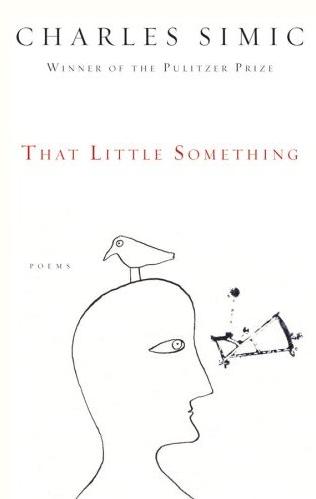
Ali Alizadeh Reviews Charles Simic

That Little Something by Charles Simic
Harcourt, 2008

An interesting aspect of Serbian-born Charles Simic's being chosen as the United States' 15th Poet Laureate is that Simic, partly due to his experience of a European childhood during the Second World War, has often been something of an 'anti-war' poet. What makes this dimension of Simic's work somewhat odd is that the United States is, of course, currently engaged in an interminable 'war on terror'. As such, Simic's poems and his becoming the country's current Poet Laureate testify to the complexity of contemporary American culture, a culture that is both militaristic and pacifistic, selfish and compassionate.

Continue reading

Posted in BOOK REVIEWS | Tagged ,

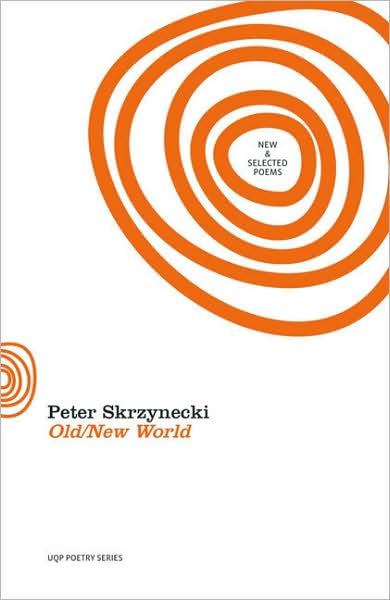
Deb Matthews-Zott Reviews Peter Skrzynecki

Old/New World: New & Selected Poems by Peter Skrzynecki
University of Queensland Press, 2007

Peter Skrzynecki is renowned for his poetic rendering of migrant experience, over three decades, and was awarded a Medal of the Order of Australia 'for his contribution to multicultural literature' in 2002. His Immigrant Chronicle (1975) is a prescribed text for the New South Wales HSC, which has ensured continued exposure for Skrzynecki's poetry, as well as sales of over 20,000 for Immigrant Chronicle. This is commendable, but, of course, it has to be said that Skrzynecki cannot speak for all migrants and the range of their experiences. Nor does he probably intend to.

Continue reading

Posted in BOOK REVIEWS | Tagged , ,

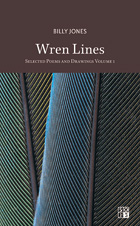
Liam Ferney Reviews Billy Jones

Wren Lines: Selected Poems and Drawings Volume 1 by Billy Jones
papertiger media, 2006

Billy Jones is, by his own admission, 'a recluse in the forest/ with a hardon blissfully alone/ and alive to the fire of cosmic joy' (from 'Riverbank… Extracts'). This is perhaps why, despite seven collections stretched across four decades, Jones has often been ignored by anthologists. The publication of Wren Lines: Selected Poems and Drawings provides an appropriate time for the reconsideration of the work of this atypical, hermetic bard.

Continue reading

Posted in BOOK REVIEWS | Tagged ,

Concentrate on the Utensils’ Constructions

It is not uncommon to accept dinner invitations here.

An evening with a Chinese ambassador, a Chef and a Snake Charmer is unexpected.

The dates are closely timed. Each man wants me for himself.

A tour bus arrives to cheer the Snake Charmer. It's his best show. The great serpent speaks with the man's face. There is a disturbance of waterpools, a trapdoor flapping on its hinge.

Briefly-dressed, the ambassador's wife, layered in an oversized suit of bright red shirt with pink sequinned glittering pillowy blouse, compliments the Chef.

As made-up dolls speaking like the living is expected to and seems and does, we eat purple-goldish blooms from chairs made of hanging stones strung together.

It helps to choose a large restaurant where I can concentrate on the utensils' constructions, the many slant corridors, the low-lit wide rooms.

Posted in 31: SECRET CITIES | Tagged

Wikipedia

What is this on Wikipedia's web?
The delicate feelers of a roach
caught behind the screen?

What exactly is it? A piece
of a nun's habit, a headdress
she forgot to put on?

What? The wing of an insect
torn off by an impatient child
trying to understand flight?

Maybe, the finely curved spine,
and wispy bones of a small
rodent, flesh rotted away.

A white linen cloth, and
a broken napkin ring? I see
it is a book with open pages.

Like the British Sunrise on doors,
knowledge reigns over all
and is never completely set.

Posted in 31: SECRET CITIES | Tagged

A City

Children's laughter and their mothers'

gossip was returning to the market place

after years of random kidnappings,

suicide bombings and sniper attacks

but caveman needs evolved into beliefs

too powerful to remain at peace:

an invisible guide born in a dream vision,

delivered a set of laws by voices

and tribal hallucination so loving death

was the rock and a compendium of dogma

and cruel solutions interpreted from sacred

texts bubble in the acolyte mind, and anger

makes 'terror the human form divine'. Amen.

You send your neighbours a holiday bomb.

Posted in 31: SECRET CITIES | Tagged

at the experimental art foundation

first rain in months what little hair i have plastered on my scalp as i

cross the wet city to leave some copies of micromacro at the dark

horsey          growing from the grating framed in red brick and

aluminium is a 3D cloud blancmange sculpture it could be an

installation in detergent for the experimental art foundation growing

bursting      now tumescent        now diminishing        some

pieces breaking off whipped up into sky

ken bolton says it happens all the time dishwashing water roadgrime

& surfactants agitated by stormwater regurgitated back up the grille.

no point leaving more than three books. no-one's buying poetry.

perhaps one or two might go (to disappear into shelves or drawers

without a trace?)

on the way out a clot of suds sucked skywards in a thermal

insignificant as poetry to be dispersed into a wider universe like so

much puffery.

Posted in 31: SECRET CITIES | Tagged

Aerodynamics of Bees

At first it looks like a dance, the two of us
bombus, a swarm delirious with body heat.
In the bedroom we are hidden from the city –
an emerald set into the harbour,
a flawed, crystalline knuckle duster.

It's spring. The air is saturated with flowers
as jasmine punches stars to carpet the porch.
Love, this is desire. The wind rips at the pines
and you slip a hand beneath my skirt, casually
as if opening a letter that time's read down
to a thin, fragile grain, pressed and kept
in the inside pocket of your blue, corduroy jacket.
You know all about aerodynamics –
you say both people and bees fall
in love but neither should be able to fly.
Our story ends differently –
his fine abdomen pops and vibrates,
trying to escape between the curtain and glass
he is a clock stuck
on cuckoo,
a syllable that, when repeated, is swallowed.
He is yellow and black, we are the colour
of freshly soaked oatmeal, the outline of our bodies like atoms,
are a fuzzy idea – the movement of our bodies atomic,
all bumbling sweetness. When you open the window
we are transformed – he into a black hole
in the sky and you and I – well it all happened so quickly
this life,
a second sloughed away into dust that ignites like sulphur
in the late afternoon light as you sprawl
on the mattress and tell me of a childhood
carnival – the Ferris wheel, a smoking motor,
suspended in a yawning cage where, from the top
the city skidded into the night.
You said you'd never know yourself
from that distance.

Posted in 31: SECRET CITIES | Tagged

A Bookish City

Within the borders of the city
front, back and spine,
I walks.

Wandering along
streets lined with Century Schoolbook,
flanked by commuters in black tie.

At the office, a newborn
celebutante
wails and cries repeatedly,
testing modern lungs.

I immediately thinks of death,
of flosculation and of pigritude.
What careless God looks over us?

Outside, I sees
a tourist; savoir-faire,
effortlessly navigating the unquestioning crowds
of yesterday and tomorrow
with a purposeful incline.

After work I sings
quote-unquote karaoke
filled with audible
mirth and wrath and sadness.

Confused and inconsolable
in the darkness,
I visits the marbled rivers of the countryside
and weeps into their waters,
certain that life is bound
not to change.

Posted in 31: SECRET CITIES | Tagged

No One Wants to Fly to Brussels on a Saturday

Here we are again.

Alone in the stale air of the airport terminal
we passed each other
a collection of blank glances.

Up here anything seems possible.

'Do you have any hobbies?'

'Anchovies,' she replied.

Posted in 31: SECRET CITIES | Tagged

Dacia Express

23:25
The city as we passed through it was heavy with the vibration of tears.
A trembling wasteland of ashes dancing
Curved blade of the river
cleaving
through the middle.

Melancholy rising from the bullet holes
where the streets coiled in on themselves
like animals preparing for the winter.


14:02
The harshness of salt and the liquid
smell of the ocean carried on the charcoal wind.
Through the half open train window
watching the city was like watching
a photograph burning into view:
a mythic hero playing a tragic figure
trying to grapple with history like a man
trying to hold the river in a sieve.

Posted in 31: SECRET CITIES | Tagged

accretion to smuggle

(The Everyday English Dictionary)
 
secret:
I have stolen things —
bricks an old mortarboard
handfuls of cement dust
smuggled in my pockets

 
city:
everyone and their cats and dogs
the press of legs
accretions of noise dirt smog
all you knew
longing for something green
or faraway and blue


smuggle:
if there is a hollow
use it
absence is abhorred
makes me fond
is the room full of blondes
and being the only raven
in the middle


accretion:
fed drop by drop from the cave top
a stalagmite grows
a Moorish song
sung at night
a fire
some smoke
and the dogs barking
at anything that moves


hollow:
to feed it a number of ways
there is the roasted gecko
ground seeds of the Johannes tree
stolen almonds pilfered oranges
impatient waiting for pomegranates
to fruit its red hips
today I found a secret patch of frogs
singing their cracked song


Moor:
a pattern emerges from the tile
something blue something green
a history an old story
ancient steam from ancient baths
a carved star falling
from the roof

Posted in 31: SECRET CITIES | Tagged

is there more to worry than lunch?

well before advertising shouted fresh
a woman down Hunter St decorates her window
as purveyor of edibles, proprietress of freshness
she has no telephone to ring for supplies
food webs of people seek her out
carting fuel on foot, she's a cold expert
with the iceman and milkman
with the bread man and pastry cook
she learns a crumb or two hundred
a fruit barrow man throws a few plum jokes

what if they don't turn up, what if
the bread man's sick, the daily bread
of the office workers, their ham sandwich
can you cut that with mustard?
what if I'm sick, the thought is dismissed
her only real worry is – constant worry
and this is dangerous thinking for a
sole proprietress, existing by words
word of mouth, food by the mouthfuls
dangerous as running out of bread
with no phone, fax or email in 1937

Posted in 31: SECRET CITIES | Tagged

The Lunchbox Review

The Lunchbox is a convenient take-away food shop in Hunter Street, Sydney, next door to the Tobacconist and a few shops down from the well-known Golf Shop.

The proprietress, Mrs Beatrice B. prides herself on providing fresh food daily. Sandwiches and rolls are created to suit each and every palate. She explains, 'Our salad sandwich is a Sydney gem. It is studded with what you would expect: lettuce, tomato and onion – and our special ingredient-home-cooked beetroot. I am of opinion that this is one of the best foods to boost good health. Beetroot is the next best thing to beetroot juice, which is so widely promoted these days. I was introduced to it at a recent séance when the members spoke highly of it.' Other favourites of her customers include salmon sandwiches and ham with mustard.

Each morning including Saturday, when her daughter, Irene comes in to help, Mrs Bussey decorates the window display with a delectable variety of fruits and cakes. Morning and afternoon tea are both available. Asked what drink is popular she said 'Office workers stroll past our shop towards the Botanical Gardens for lunch and they often call in for some cool lemonade. At sixpence a glass, this is worth every penny.'

Hours are 8am to 6pm Monday to Friday, and 8am to 12.30pm Saturday

No eftpos or credit card facility as this is still 1937.

Posted in 31: SECRET CITIES | Tagged

\Bushwick\

Midnight Market:

whole damn city & you pick yourselves over

not saying you don't waste

Goddamn you waste

whatever you can

peanuts in shells on Circus bar floor

to real bamboo toothpicks

holding olive over thimble

ful of martini in proper stemmed cone

all thrown out

sometimes sorted

always scavenged

fried chicken bones pecked by pigeons & General Tso

's for rats what's left

for little us then?

Posted in 31: SECRET CITIES | Tagged

\Longhu\

Midnight Market:

when old women have reclaimed

s(h)aved bamboo sticks for pineapple

cow carvings & stinky tofu

when only KTV lights

chase each other

& streetbulbs cased in plastic flowers

have dimmed to match sky

we lift up skin plastic bags

for our bazaars where fruit stands

& customers dropped them

we scrape mango from pits

banana from skin

throw flesh into vast sewers

that sometimes overflow

& drown our night metropolis

before we can return

to our daylight suburbs

imperfect finished walls

loose bric(k

Posted in 31: SECRET CITIES | Tagged

Tibetan Internet Shield

Chinese text 03:


Near the city centre's First Ring Road
a bus explodes like a repressed memory:
a shoddy job, done fast & dirty many years ago;
in an alleyway, an outline knives a young Han couple.
For days the mobile phone doesn't stop
chiming with a vague yet purportedly
grim portent. & then it does, your choice of words
having hit the jackpot: you're on the grand
casino radar now; you're speechless – that is,
suddenly incapable of speech.
You cross whole campuses – empty,
streams of conversation that murmur
with the fears of well-intentioned parents.
You leave town, quickly, on the Friday late-train.
You click your tongue at a golden puppy;
without a word, it takes the rice cake from your hand.

Posted in 31: SECRET CITIES | Tagged