The Many Lives of a Handscroll: Inspired by Zhai Yongming’s ‘Ambling along the Fuchun Mountains with Huang Gongwang’

Dwelling in the Fuchun Mountains is a handscroll by the Taoist painter Huang Gongwang from the Yuan Dynasty. It is now acclaimed as one of the ten masterpieces of Chinese painting. Inspired by Huang’s work, the renowned Chinese poet Zhai Yongming published her latest collection Ambling along the Fuchun Mountains with Huang Gongwang in 2015. Chen Si’an, a young theatre director and novelist, read an earlier version of the text and was inspired to create a theatrical adaptation. Sharing the title of Zhai’s poem, Chen’s play premiered in Beijing in 2014. This essay explores the life and after-lives of Dwelling in the Fuchun Mountains.

The Painter (1269–1354)

When he was still a boy, the painter sat for the imperial examination for child prodigies. We don’t know whether he passed the test or not – his biographer doesn’t say – and, in fact, none of the biographers seem to agree with each other on the painter’s birth place. Some even find his family name, whether it’s Huang or Lu, disputable. He called himself many names. Gongwang 公望 and Zijiu 子久, the former given when he was born and the latter adopted when he received his cap, a symbolic gesture for reaching adulthood. Other names including Da Chi 大痴 ‘the biggest fool’, Da Chi Daoren 大痴道人 ‘the most foolish Taoist’ and Yi Feng 一峰 ‘one peak’, probably taken up when he embraced the Quanzhen School of Taoism after being persecuted for his involvement in a corruption case. Disillusioned but not disheartened, the painter joined the tradition of dejected literati who withdrew from society to live in nature. He retired to the mountains along the banks of Fuchun Jiang 富春江, the river of luscious springs.

He didn’t take up painting until he turned fifty, and that might be why the landscape in Dwelling in the Fuchun Mountains was so unhurriedly spread. The opposite of action painting in the sense that there’s no sudden explosion in front of your eyes. Everything falls into place and stays, except the blankness left intentionally by the painter at the top and the bottom of the scroll resembling moving clouds and waters. He wrote in his Secrets of Landscape Painting that ‘a painting is nothing but an idea’. On the creaseless water near the mountain, a fisherman sits on a raft, bending towards an idea. An idea is a living thing that pulls your fishing rod from under the water.

The Collector (1650)

Paintings are dwellings. A seven-meter-long handscroll is even more inhabitable. Some say that the last collector of Dwelling in the Fuchun Mountains became so obsessed that he kept the handscroll close to him even when he was having tea. When the Manchurians came, he fled with only two items from his extensive art collection, one was The Thousand Character Classic written by the Sui monk Zhiyong 智永 in the calligraphic styles of Zhen 真 ‘regular script’ and Cao 草 ‘cursive or grass script’. The other was Dwelling in the Fuchun Mountains.

The more the collector dwelled upon the handscroll the more possessive he became. On his deathbed, he ordered his family to set it on fire, and they did. Except one of his nephews suddenly grabbed the burning scroll, lifted it out of the flames, and quickly chucked another scroll in the fire without being noticed. Paintings are dwellings that can easily be destroyed by fire. The scroll broke in half with a great section burned to ashes. Now the beginning half referred to as ‘Remaining Mountains’ 剩山圖 is kept in the Zhejiang Provincial Museum in Mainland China. The second, longer half, now known as ‘the Master of Uselessness Scroll’ 無用師卷, is preserved in the National Palace Museum of Taiwan.

Posted in ESSAYS | Tagged , ,

Language Barriers

Said the official verse culture antagonist to the suburbanist:

‘Yours is a proscriptive essay – administrative and alienated and angry yet masquerading as balanced. It is not a project for anyone else, but maybe it can generate heat and light as a prose critique of what is happening somewhere in the archive, which is infinite.’

The suburbanist replied:

‘Let me repeat: If we take for a moment a wide view of contemporary poetry in Australia we see the resilience of lyric, prose and narrative, which highlight stylistic elements such as clarity, rhyme and feeling. We see this in spoken word and slam, expressions of official culture like Hansard, bush ballads, and the literary bureaucratic establishment more generally, which is itself an international phenomenon. These stylistic qualities are less common in academic poetry (see Active Aesthetics) and traditionally inflected song poems (see Jacket2), but few have pushed poetry to a logical end of words. Pete Spence’s visual work might be one such endpoint, but limiting ourselves to language as language we see in many of today’s poems a number of techniques that half dissolve narrative prose.

Many live after L=A=N=G=U=A=G=E then, but few live as it. There is no comparable, or adequate, rupture precisely because there is a lack of Historical, and philosophical, work being done. Cue the misunderstanding of what to radically break with. This might be because of the paradox of university scholarship now – we live in a moment after the national mythmaking of bygone days and in one informed by the black armband view that is predominant institutionally. This means there is no agreed upon History, if ever there appeared to be one, no collective understanding both of a tradition to push against and a field of inheritance, which helps account for the common and superficial engagement with the contemporary. This means that the best one can do is simply capture the zeitgeist, sublimating this into a palimpsestic melange that flattens difference, distinction and knowledge. It ends up being anti-intellectual, which is not necessarily an altogether bad thing. But it helps explain the ecosystem. No wonder people trade heavily on personality and become obsessed with an internecine, close-in focus rather than a deep past or a relevant future.

Our history as our experience makes up our poetry, throwing into question the very notion of ourness and realising it is a performative utterance that brings into question what the limits, porosity and boundaries of experience and ‘the before’ are. This is not to be prescriptive about the type of influences that are ‘good’ or ‘valuable’, but to suggest that how we read, how we frame is not yet critical and hence creative enough. Why read L=A=N=G=U=A=G=E when you can read what they read, or read how they read? This should not be a way to throw the baby out with the bathwater even as sometimes the baby can be an asshole.

Our historical and philosophical work needs to go back far further. We need examine ourselves in the oldest forms of thinking and language that are available to us. This is not to binarise originality and repetition, to place a premium on beginnings instead of genealogies. It might be that our work is not unoriginal or derivative enough, that mimicry can be a politicised strategy for us in today’s colony rather than the embarrassment it is held to be going back, of course, to Plato. What then is the cure? The cure is not necessarily singular; we must have cures for many ills and it is not to have a project. But it is not not to have a cure and not not to have a project.

The originary rupture that I seek in Australian language is as poetic as it is political. It is a radical deformation and a reformed utopianism. There are many ways to enable this. Recontextualisation is one such method. This might occur when we take a settler conceptual assemblage into a legislative assembly. It might also look like a soundbite, or policy piece, taken into a poetry reading. But this relies on an understanding of context, which can be seen as a type of historical work. Historically, Australia is a colony and we need to realise we continue to live in one. The sands have shifted and continue to shift, but we still need to fight against the Queen’s English using the available material that is here. We need poetry that continues to stand against the hegemony that emanates from the crown. This happens at the level of content, form and style as well as language itself.

However, no poet working in Australia today has realised the potential of the available linguistic material. That may be impossible, but surely the ambitious search for it need be attempted. Of course, there are dextrous, nimble, thorough, able, adept, charming, intelligent, sensitive, aware, alert, challenging, difficult, admirable poets working today. And I love them all.

There is also potentially far more than that. To undo the Australian poetry mind means recognising that the material here, as a type of available truth content, need be re-expressed linguistically. But such is the conformity to structural limitations, the narrowing of available experience and the strength of the paradigmatic mentality that the possibility of new poetry, and with it revolutionary decolonisation, seems distant. In specific terms the hegemonic use of English, the slim band of influences and the geographic concentration of the literary bureaucratic establishment has meant the limitation of poetic, and hence political, possibility.

Of course, some poets counter the dominance of English. There is not only John Mateer (Portugese) but also a whole host of linguistically diverse Others (see Michelle Cahill’s ‘Extimate Subjects’). However, there are not enough poets working in Aboriginal Englishes, let alone with traditional Indigenous languages in and of themselves. This is not to dismiss those Englishes, or their idiolectical expression in, say, Lionel Fogarty or Ali Cobby Eckermann or their located and resonant, or, appropriative assemblaged use by non-Indigenous people (Philip Hall as an editor and educator in the Gulf of Carpentaria, or, in the latter sense, Bonny Cassidy’s Final Theory which quotes from tabi taken from Taruru). It is to suggest that traditional linguistic knowledge is under valued in society as a whole. Nowhere is this clearer than in governmental policies toward the teaching of Indigenous languages, which means that it is rare for students, or nascent emerging poets, to encounter those languages in ideological state apparatuses.

Quite simply, where does one go to learn Walpiri, Noongar, Yolngu or any other such language? Must one go to the country those languages are spoken in? But then one need ask, how does one gain permission? Such is the complicated and confusing legacy of new settlement governmentality. But many poets use the present situation simply as an excuse for a lack of genuine engagement and in so doing become complicit, through absence, in the egregious fact of occupation. One can read a whole host of linguistic material in Indigenous languages – there are wordlists, dictionaries and other such sources that retain the original, and there is also the Bible and a host of literary, and poetic, materials that have been translated back and forth in countless languages. That we should continue to be so uneducated on Indigenous matters is plainly criminal.

Posted in ESSAYS | Tagged

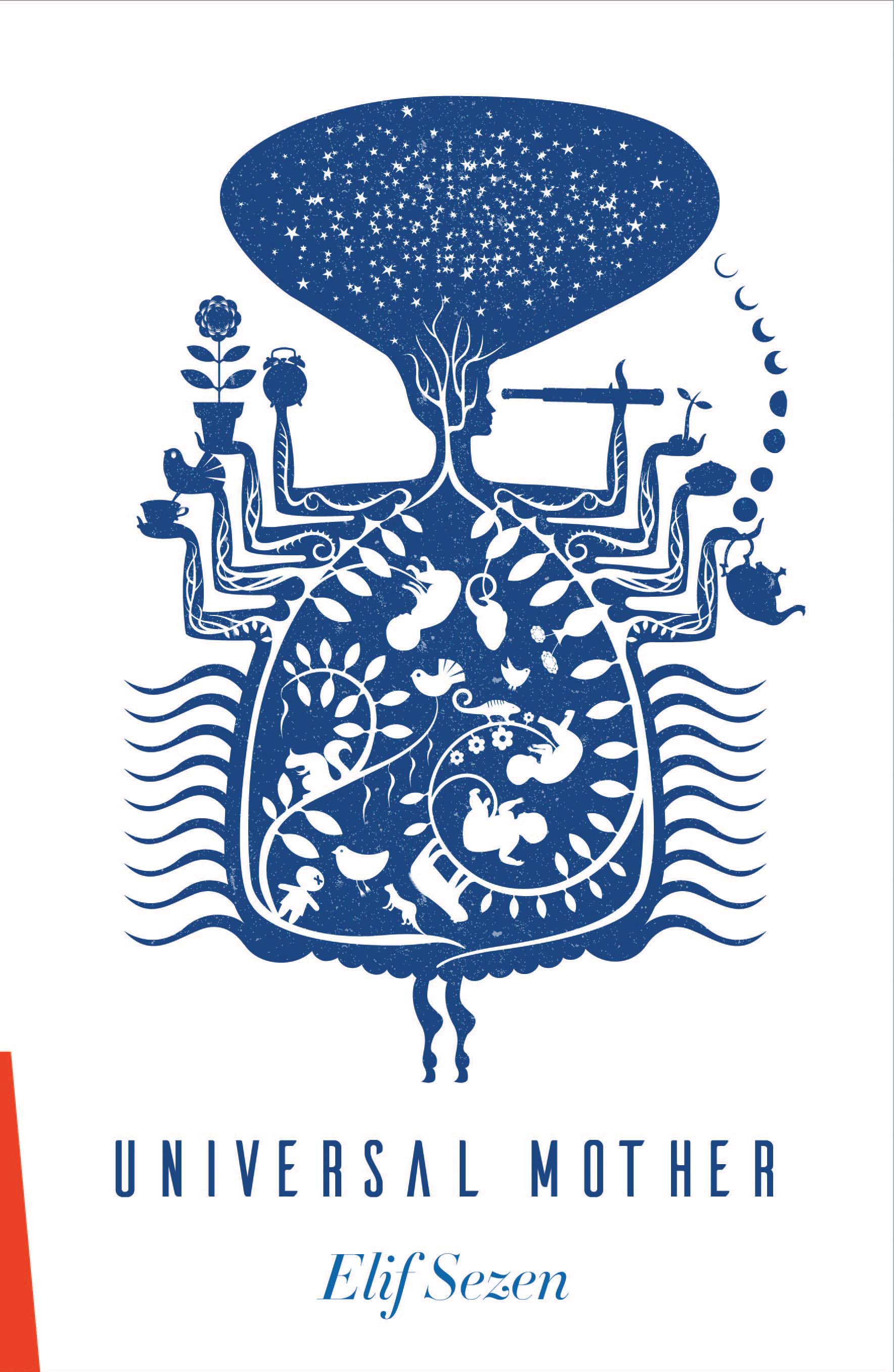
Elif Sezen’s ‘Dear Immigrants’ and ‘The Turkish Bath’

I am reminded of Doris Salcedo’s Shibboleth. For the work Salcedo broke a hairline crack into the floor of the Tate Gallery’s Turbine Hall. Running the sheer length of the hall, the crack broadened out to a crevasse of some feet. You walked alongside and gaped in. The floor was later repaired the cracks remain. So Elif Sezen’s ‘we / rather remain silent / as if ripping off the tree roots from its soil’. The effects of these words are quieter. But there’s a rent in the language of our familiar utterance – shouldn’t it be ‘ripping up’? – all the same. We rip off when deceiving others of their rightful share. And we find ourselves ripping tree roots off the soil in lands where there’s little for our plantations to take hold of. It’s dusty and even inimical to those with little history there, the rip-off merchants who in the state of Victoria, for instance, pioneered for the future nation the forcible removal of indigenous children from their families. The example spread, but the city of Melbourne is particularly built on it.

Actually the language of Elif’s ‘Dear Immigrants’ has already started to fissure with extra speakers, from the very first words of its ambiguous title: is it a letter to them, or a statement of topic? Look at line one ‘From the purses of immigrants roll out candies.’ We could see this as example of the tradition’s fondness for syntactic inversion, the sort of candy a poet rolls out, typically to platform a rhyme. But there is also that with the syntax inverted the words ‘roll out’ feel additionally stressed – there’s the hint of another voice within the line, roll up, roll up, that touch of the circus impresario. The ‘not-blessed eye balls’ which follow are also oddly phrased, though here the poetry’s proliferative effect is I think less a matter of distorted syntax or phrasing than the evocation of that disconnected eyeball any traumatic witnessing leaves behind. We don’t want to see their pleasure nor pain.

‘Well Come’ is stilted.

It could be ‘Well, come on in’, an automatic response to any sort of strangeness, such is our desperate fragility, our givenness to love. A stalling of that response will instead ‘remain’, ‘remain silent’ through to the end of the poem:

                                                                             we	
rather remain silent 
as if ripping off the tree roots from its soil.


Dear Immigrants [audio:https://cordite.org.au/audio/sevgili-gocmenler-dear-immigrants.mp3|titles=Dear Immigrants] (0:38)

Elif’s next speaking of it is even sadder: ‘or sending the raindrops back where they came from.’ In the poem’s final lines, the safe that simultaneously locks inside and outside in place is a stark image of Australian history. It is ‘shrinking more and more’.

The second is titled ‘The Turkish Bath’ and some of its surprise is already there in the oddly singularised title: this bath is of steam. So its bathers. ‘Foamed, steamed, speechless / ghosts’. Elif describes herself, her grandmother, some others. Also ‘How nice, angels / are more visible here’. Alain Badiou pointed out that angels float in a space beyond sexual difference. For him a measure of their unreality. In this poem, the effect of steam is not only to produce a room of ghosts and angels but also the subsequent statement, ‘I feel more feminine’, as if femininity were actually of such impossible realms. That line ends on a conjunction:

I feel more feminine, and

all women start looking alike
Is this a way to pay one’s account?

To whom?
No one knows what’s happening here


The Turkish Bath [audio:https://cordite.org.au/audio/hamam-the-turkish-bath.mp3|titles=The Turkish Bath] (0:51)

These lines perform a sort of hinge to the poem. The following five ghazals seem to break into disparate subjectivities, as if each were its own separate coin, paying account and to whom? Only that disaggregating has already started at ‘No one knows what’s happening here’ which might refer to the bath, to femininity, to place in general. Five couplets follow, which I have called ghazals. The looseness of their connection is not so much belied as emphasised by the ‘and yet’ introducing the second, on Nietzsche. It is reminiscent of how the Belfast poet Medbh McGuckian uses ‘like’ to connect disparate, faintly linked, concepts, underscoring the contingency of likeness itself. Here the shift is from the boiling of potatoes to a bathing in the eye, the mind’s eye.’

‘Look how much’ claims a line to itself. The lineation momentarily suggests something inconstant here.

Striking in the couplets to follow is the way Elif provides direct statements of emotional impacts – reference to hurting, anxiety and laughter – without describing precipitating causes. There is a sort of challenge to the reader here, to rise to an imagining of what events or states might land on such successive and suddenly vital emotions (‘an Ottoman lullaby is strained out of anxiety, / tinkles in my belly button’). I am reminded of Byron’s use of exclamation marks, which is never casual, Browning’s too, something more like a challenge to find your full emotional and intellectual being, your memories of the past and possibilities for the future in this space. In those multiple migrations of self through the Turkish bath, stanza to stanza, what would it feel like to have this sudden accession:

I drown in laughter
from the hypothermia of my soul.

It is not a comfortable image to think oneself through. But it is also, in this setting, strangely comforting.

Posted in ESSAYS | Tagged ,

Feminine Beings: A Resonance of Voices in Vietnamese Poetry


Translated by Kaitlin Rees

The Mirror Illuminating Me

I do not wish to attach gendered words to poetry: male or female, homo or hetero sexual – such labels give me the same heavy feeling as when taking stock of excessive items I unwittingly burden myself with on a long journey. Yet I also hear a difference in the stories that seem to originate from and flow into the experiences of female authors.

In Vietnamese, the word for ‘women’ is composed of two components: ‘phụ’ and ‘nữ’ from the Chinese ‘婦’and ‘女’, in which ‘phụ’ refers to females with husbands, and ‘nữ’ refers to females without husbands, thus locating females inside their familial relations. Here and throughout this essay, I use ‘nữ’ by itself (without the ‘phụ’) as an intentional handling of male-female relationships that leaves behind the constraints of familial relationships and places men and women, the masculine and the feminine, in positions of (assumed) equality regardless of differences in sexuality and biology.1

The authors I touch upon in this essay – perhaps not the female poets most in accordance with my personal taste – share a common story in which I am more or less implicated. I see their choices to write as a means of displaying a female experience, and – with a straightforwardness and sharp intentionality at every step – reject the matter of females as reflected objects. Instead, they assert their self-reflected subjecthood. In continuing a dialogue with certain rebellious experiences of writers in the past, their works have grown up with a strong awareness of protest against oppressive societal structures. They toil to reimagine womanhood in order to create a visible presence of femininity, as well as elicit hope for a community of Vietnamese female writers. At the very least, that is one story in recent Vietnamese literature that can and should be stirred.

To knock on the door of small private homes of female poets or to press an ear to their deserted walls, is, at times, to touch the happiness of solitude’s freedom, a solitude so assertive that no one can penetrate it. Sometimes I knock on a door only to hear the echo of my own vague knocking, sometimes I press my ear to a wall only to feel the breath of deserted moss. Other times I hear a scream, a strange shrieking, a shattering, a wall cracking, a rock dropped, a sob, a wail, a whimper, an arrogant laugh, a hopeless scattering of oneself down into the depths of an imaginary chasm … and whenever my ear is struck by words of explanation, analysis or emphatic declaration and condemnation, I can still feel emotion and imagination prickling the skin of female bodies. My body naturally trembles. For these reasons, and within this essay, I choose to use the provisional label of ‘female poetry’ and observe the (self)-reflected image of female poets’ most private aspect closest to ‘the feminine’: narratives of the body.

Around the turn of the century, it seemed as if some Vietnamese readers were expecting a wave of female poetry – with authors of various ages both inside and outside the country – who held radical concepts within their written art, such as those living abroad, notably Lê Thị Thấm Vân, Lê Thị Huệ, Nguyễn Thị Thanh Bình, Nguyễn Thị Hoàng Bắc, Nguyễn Thị Ngọc Nhung, Trịnh Thanh Thủy, Đỗ Lê Anhdao, Miên Đáng and Trần Minh Quân. Too, those in Vietnam like Dư Thị Hoàn, Ý Nhi, and younger poets Ly Hoàng Ly, Phan Huyền Thư, Nguyễn Thúy Hằng, and the Ngựa Trời (Praying Mantis) group of female poets – Thanh Xuân, Lynh Bacardi, Khương Hà, Phương Lan, and Nguyệt Phạm – harbouring similar concepts. Within these sets, some illustrate the straightforward demand for women’s rights, while other voices are seemingly apolitical, exploring the experiences of the imagination and refusing to express any clear message. The voice of the body, of the imagination, notions of love, sexuality, self-definition; how can such private concepts grow into a shared story of female poetry? How can the presence of individuals awaken in each other a consciousness of suppression and in turn demand the resistance to such suppression? When do power relationships need critical reflection, as those existing between males and females, women and men, female writers and male writers, female writers and their societal structure, female writers and themselves, or, more essentially, the enduring system of inequality between the presence of femininity and masculinity? Though I have not yet had the fortune of surveying many original voices from the pens of women writing in Vietnamese, I believe there have been notable interrogations of the prejudices placed on women and their representation in Vietnamese literature – in the past as well as the currently passing period. It is through linguistic strategies that such writing can present a distinct feminine experience and essence, enabling the feminine disposition to transform into a thriving vitality of language.

I Am a Lady: Grass in a Game of Wind

An image that emerges from numerous pages of female writing, in bluntness of language and poetic message, is that of a feminist discourse protesting the heavy-shouldered weight of past masculine discourses rooted in patriarchy. Although there are only four female authors who appear in the unique collection 26 Contemporary Vietnamese Poets (Tân Thư Publishing House, USA, 2001), the theme of agitating for feminism – particularly within the poetry of Nguyễn Thị Hoàng Bắc and Lê Thị Huệ – nonetheless creates a provocative impression. I take pleasure in Nguyễn Thị Hoàng Bắc for her distinctive tone, bemused humour in great sorrow, levity in deep compassion, as it quietly mocks, ready for attack yet seeming to maintain something poetic.

Betrothal

slap bang
the drum beat of betrothal                   rumbles 
its drum roll into battle
her escorting hour is up                                               and then what
to the ends of the earth
what will I do                                                     with that bum there
                                                                                                              and
what will it do to me

		
the drum beat of betrothal
banging the beat of battle
like hackneyed speech the matchmaker pronounces
from this day forth
the lives of two shall be                                       fused
to endure marital union
shoulder to shoulder with one back
standing
together we lead the frontline

me and that puppet man there
the drum beat pries our arms open 
our eyes regard the other
plainly bloodshot and strained

Here, the image of a solemn and sacred bridal reception, in accordance with traditional customs, a symbolic image of hierarchy and ritual in which conceptions of love and marriage converge, gets de-sanctified through permutations of vocabulary. The words describing the marriage betrothal ceremony simultaneously represent an actual war battle – where the betrothal drum becomes the battle drum, the scene of vows being exchanged is represented as ‘plainly bloodshot and strained’ – and the scene of marital union as ‘together we lead the frontline’. We can see a transformation of the woman’s condition from passive to active stemming from a change in perspective of the object. Reaching the end of the poem, ‘that bum there’ is merely ‘that puppet man there’, the object with an ability to dominate (man) is turned into a passive figure, a phantom (puppet). With a seemingly lighthearted poem, Nguyễn Thị Hoàng Bắc has on one hand subverted the hierarchical relation of a husband-wife status by establishing equalised relations, and on the other she has unmasked the system of language that oppresses women from unconscious use by writers and readers by parodying that language system. The battle may be dramatic – ‘plainly bloodshot and strained’ – but it is not loud, and for that the poem is, in a differently illuminated meaning, truly romantic.

Posted in ESSAYS | Tagged , , , , , , ,

Alyosha Wiengpong, Untitled and Translated

Untitled

Bound and syntaxed, threads of words in books transfix me
Create their own being, slither like snakes
Leave a crust of slough upon the flat dry tussock grass
The skin thrilled, covered with tired letters
Only the backbone precarious, grammatically spineless
On the footpath I chase and pickpocket pedestrians
among the traffic, disorderly, all over the road
Then, one spirited night, rejoicing in the play of gentle rain
I become a white bird soaring high
transformed in the sky, reflected and captured in a lake.

Night ripples away late in the mind’s eye.
I put the lanterns to paper
Try to turn the darkness into poetry
Recline in a micro-sleep of superdreams
On a mattress of dark foreboding
White down falls like snow
from the tips of slender wings, claws huge and hooked beaks.
I think to myself, is that really the One daring to be different?
All those fat yellow worms fallow the fall and tumble down.
Nauseated I leer as my feet carefully stamp them flat
And so what, just look at the full moon hanging up there
Bloated, swollen like an overripe fruit.

*

Desktop topography of a weird country
With its mountains of books, knowledge and learning
The pens slanting like a flagpole without a flag
A box of pipe tobacco, a monument of flowerpots.

Finally, I imagine a miraculous evening
A dinner reception for poets and literary characters
Rimbaud, Celan, Don Quixote
Deep conversation among the light of the stars
There is no music more melodious than the sound of poets
singing together like crickets
Lulling this land into peace
My imagination overflowing
Deaf and dumb to the music of flowers
Against the cruel angry eyes of the law
On the lookout shit-scared of the thieves’ boss
The hands kowtowing on keyboards
Cutting deep wounds into the poet’s left breast
Lips brimming with saliva
Laughter and arrogance of the intellectual
Stuffing the gravel of words and concepts down someone’s throat
From blood on the roads to repaved perfection
Twisted journalism
A wedge driven into the convulsive brain.

Look at this swamp full of lies, the pirouetting politicians
Piles of lonely bones in a chasm of false security
Tear drops brutally seduced, raped by the supremo’s words
What are they worth: the castles and watchtowers, the useless adjectives,
To the anonymous and down-trodden
Squeezed from a no-brand toothpaste tube?
Extraordinary feats of leadership
Secret names of the temporarily employed

Soon, words are transformed into a gang of monkeys
Leaping out from the pages of the newspaper
Shrieking, teeth gnashing
Snatching a pistol I’d left between the lines
Uprooting the roses I’d planted between the sentences
They bite Goethe in the neck, steal fire from Prometheus
Then escape through the window
In the end, I can only join Neruda in his lament:
“I do not know, I never know which bullet will pierce through which heart
I cannot tell which rose will belong to which hand
I do not know how to ask for my return.”

(Deep dark red flames flash signs far over the horizon)

(The peal of distant thunder)


ประโยคในหนังสือตรึงรัดร่างฉัน
มันสร้างชีวิตขึ้นเองและลดเลื้อยได้ดั่งงู
เหลือไว้เพียงคราบแห้งกรังและพงหญ้าแหลกราบ
ผิวหนังเปรอะด้วยอักขระและกระดูกสันหลังอันง่อนแง่นแห่งไวยากรณ์
มันไล่ฉกผู้คนบนทางเท้า เขมือบยวดยานบนท้องถนน
ค่ำหนึ่ง, มันเริงเล่นสายฝน
แล้วพลันกลับกลายเป็นนกสีขาว
บินขึ้นจากท้องฟ้าในแอ่งขัง
 
เมื่อดึกเคลื่อนสู่ดวงตา, ฉันเขียนโคมไฟ
ด้วยปรารถนาบันดาลกลางคืนให้เป็นราตรี
แค่เพียงนาทีในหลับพักพริ้มอันฟูฟ่องของฟูกนอนแห่งมืดมนอนธกาล
ปุยขนสีขาวร่วงโปรยช่างหนาวเหน็บ
ทั้งเรียวปีก จงอยปากและกรงเล็บ
คือนกที่โบยบินผ่าเผยตัวนั้นหรือ?
เหล่าหนอนอวบเหลืองที่ตกร่วงตามช่างชวนสะอิดสะเอียน
ฉันแสยะยิ้ม, ค่อยกดปลายเท้าบดขยี้
ก็นั่นกระไรพระจันทร์แขวนดวง
ฉุบวมเหมือนผลไม้เน่า

*
 
ผืนโต๊ะดั่งภูมิประเทศที่ดูประหลาด
ภูเขาเลากาแห่งหนังสือ
ปากกาปักตั้งโอนเอียงดั่งเสาที่ไร้ผืนธง
จัตุรัสแห่งกล่องยาเส้น
อนุสาวรีย์แห่งแจกัน
ที่สุด, ฉันเนรมิตราตรีมหัศจรรย์!
เป็นงานเลี้ยงที่แขกรับเชิญคือเหล่ากวีและตัวละครในวรรณคดี
แรงโบด์, เซลาน, ดอน กีโฮเต้…
ท่ามแสงดาว, ถ้อยสนทนาลึกซึ้งคมคาย
และดนตรีใดเล่าจักไพเราะไปกว่าเพลงของแมลงกลางคืน
ที่ขับกล่อมดินแดนแสนสงบนี้ จินตนาการฉันไหลหลั่ง
 
แล้วฉันเขียนถึงสันติภาพที่หนวกใบ้ต่อเสียงดนตรีดอกไม้
ถึงดวงตาขมึงทึงของกฎหมายที่เกรี้ยวโกรธต่อการจ้องมองกลับมาของหัวขโมย
ถึงมือที่หมอบคลานไปบนแป้นพิมพ์คอมพิวเตอร์
ถึงบาดแผลตรงอกด้านซ้ายของกวีที่ไหลเยิ้มด้วยฟองน้ำลาย
ถึงเสียงหัวเราะของนักคิดที่ดังโครกครากเพราะศัพท์แสงดั่งกรวดหินในลำคอ
ถึงเลือดบนถนนที่ถูกปิดทับด้วยข่าวบิดเบือนในหน้าหนังสือพิมพ์
ถึงลิ่มสมองที่ทะยานเลื่อนไหลไปสู่บ่อคำโกหกของหุ่นชักนักการเมือง
ถึงกองซากกระดูกเดียวดายก้นหุบเหวความมั่นคงจอมปลอม
ถึงหยดน้ำตาที่ถูกคำวิเศษณ์หื่นห่ามกระทำชำเรา
ถึงราชวังและหอคอยที่ถูกสร้างขึ้นด้วยคำคุณศัพท์ไร้ค่า
ถึงฝูงชนที่ถูกกระทืบบี้แบนเหมือนหลอดยาสีฟันด้วยวิสามานยนามอันมิกล้าเอ่ยนามฯลฯ
 
แต่พลันถ้อยคำทั้งหลายกลายเป็นฝูงลิง!
เผ่นโผนจากหน้ากระดาษ
กรีดร้องและเข่นเขี้ยวเคี้ยวฟัน
มันฉวยปืนที่ฉันวางลืมไว้ระหว่างบรรทัด
ทึ้งถอนกุหลาบที่ฉันปลูกระหว่างวรรค
กัดเกอเธ่ที่คอ, ขโมยไฟจากโพรมิธุส
แล้วกระโจนหนีทางหน้าต่าง
สุดท้าย, ฉันได้แต่คร่ำครวญกับเนรูด้า-
ฉันไม่รู้, ฉันไม่รู้ว่ากระสุนนั้นจะพุ่งทะลุอกผู้ใด
ฉันไม่รู้ว่ากุหลาบดอกนั้นจะไปสู่มือใคร
ฉันไม่รู้, จะเรียกมันคืนมาได้อย่างไร

(เปลวไฟวาบเลียขอบฟ้าแดงก่ำแลเห็นไกล…)

(เสียงเปรี้ยงปังดังห่างออกไป…)

Posted in TRANSLATIONS | Tagged , ,

3 Translated Nikos Nomikos Poems


Image courtesy of the author

The following poems are excerpted from Nikos Nomikos’s Σημειωμένες Διαφάνειες (Noted Transparencies), a collection of thirty poem-vignettes originally published in Greek in 2003. This translation is the first installment of a larger translation project aimed at bringing Nomikos’s poetry to the attention of the wider English-speaking literary community in Australia.

As soon as I began to consider the possibility of these poems in English, I had to accept that whatever I produce could be neither a replacement nor a secondary approximation of the original work. The translation of the work, after all, is not the same as the work itself, but something unique and distinct from the original that is at the same time in close dialogue with it. What does a translator consider to be ‘meaningful’ enough to be conveyed from the original language into another – into a whole other world? Abstraction has no place here. I didn’t want the work to become a clinical, purely academic exercise, veering towards the transliteration of a text in a cultural vacuum. Nomikos’s poetry is erudite and artful in its layering of meaning, but I didn’t want these poems to be subsumed by annotation, reduced somehow to the importance of their ‘sense’ – codes rendered superfluous upon being cracked for the reader. To give the poems in Noted Transparencies a kind of ‘Oxford Classics’ treatment would obfuscate and diminish the spirit of humility permeating the work. Annotations have thus been used only when absolutely necessary. The primary intention here is a simple one: to convey to the reader the original Greek poem in English, not an explanation of the original poem. In presenting the closest possible semantic translation of the work it was vital that Nomikos’s poetics also be conveyed. This means retaining the details of his imagery, ideas, narrative dynamics and technique while at the same time conveying the storytelling and mood of the work.

The elements of polyglossia in Nomikos work – the comingling of various permutations, dialects and registers of Hellenic language, not unlike that seen in the work of Alexandrian Greek poet C P Cavafy– posed an additional challenge. The key, however, was to find some sense of mutuality between these distinct elements in order to convey them, whether through the choice of individual words, the grammar of a strophe, or by maintaining as much as possible Nomikos’s aesthetic, stylistic and technical preoccupations.

At the same time, it was essential that my translation convey the simplicity and lucidity of Nomikos’s writing: disciplined and incisive, yet maintaining its beauty and mysticism. Every word, every pause and mark of punctuation serves a purpose. For instance, this translation faithfully reproduces the typography of the original Greek text, also retaining the original punctuation. Nomikos insists that his unconventional use of the comma, as well as periods and capitalisation on occasion, is a deliberate reflection of the truncated process of thought and expression as it is occurring – what Allen Ginsberg called ‘mind breaths.’ Just as in the original Greek, the translation had to convey the ability of such writing to draw the reader right into Nomikos’s own mind and creative process.

For Walter Benjamin, a translation’s ultimate purpose is to express the ‘central reciprocal relationship’ or ‘kinship’ between the original language of the poet and the preferred language of the translator. These two languages are for him ‘interrelated in what they want to express’ and whose ‘distinctive convergence’ in the process of translation has the potential to create its own language – a kind of ‘third space’ for the work. This sense of a third space — this ‘in-betweenness’ — is especially significant for diasporic poets like Nomikos, comprising a number of distinctive languages and cultures: from Alexandria to the Aegean islands of Siros and Chios (the respective homelands of Nomikos’s father and mother) to Athens (where he lived and worked briefly) to Melbourne, but ever on their periphery, never completely within the bounds of any one culture. The intersections and ‘kinship’ between these languages and cultures and their impact on Nomikos’s self-identity and work has been one of the key underpinnings of this translation project.

This, however, is only one aspect of the poet’s unique body of work. I wanted this translation of Noted Transparencies to convey to English readers a sense of how Nomikos — artist, surrealist, ascetic, mystic, humanist— is, both in his art and life, a world unto himself, one into which he himself disappears, taking the reader with him.

Posted in TRANSLATIONS | Tagged ,

4 Translated Reagan R Maiquez Poems


Image courtesy of Reagan R Maiquez

That Moment when an Owl Watches over Love

At that moment when an owl watches over love,
your sleep becomes my heart’s waking up.
The wind cradles the disquiet of your departure
in the quiet of a rustle
and your breathing that I long for.

Why does sleep have to be an awakening
as it watches over you,
embracing the width of your chest,
caressing the roughness of your hand?

Why does sleep have to be an unsleeping
every time you give in
to the peaceful slumber
of my unsheathed bereavement?

And now, my heart’s eyes are wide open
a wakeful bird flutters in joy
and in blinded love,
perched on the branches of our midnight.


Sa Sandaling Minamatyagan ng Pag-ibig ang Kuwago

Ang pagtulog mo 
ay paggising ng puso ko. 
Nakahele sa hangin 
ang pangamba ng paglisan 
nitong katahimikang 
dala-dala ng indayog 
at ng iyong paghinga
na matiyaga kong inaabangan. 

Bakit ang antok ay gising na gising 
binabantayan ka, 
nakayakap sa iyong malapad na dibdib 
nakahawak sa iyong magaspang na palad?

Bakit ang antok ay ang ‘di paghimbing 
dahil nandito ka 
at mapayapang natutulog
katabi ng aking
di maikubli-kubling
pangungulila? 

At ngayon,
bukas na bukas ang mga mata 
nitong aking puso 
isang ‘di nahihimlay na ibong 
humuhuni ng kaligayahan 
at bulag na pagsinta 
sa sanga ng puno 
nitong ating
hatinggabi. 

Posted in TRANSLATIONS | Tagged ,

Winking Fever

Posted in ARTWORKS | Tagged

But you’re not ugly: 28 Portraits by Therese Ritchie


Jenne

These portraits are designed to sit quietly inside the deluge of public debaters that swamp us every time there is mention of something other than heterosexuality. They are about basic trust – the foundation of belief in society and the progression of life – and how that trust can be trampled on when people are made invisible, trivialised, humiliated, derided, or seen as and spoken of as somehow being ‘wrong’.

They are part of a larger and ongoing series titled But you’re not ugly. The process of how they came about is simple, but its alchemy is difficult to explain. Overall, my process involves listening deeply as each subject talks about aspects of their sexuality. My job is to take notes and to ‘hold’ the process. Usually, by the end of our conversation, there will be a list of words and phrases – not a chronological list, but definitely an elegant description of a life. There is always one word or phrase that resonates deeply with the subject, and that is what they take to the next level by merging it with their physical form – in this project, their bodies.

Each subject has two photographs. After we have worked with the text on the body, shot some images and have had a look, the second image evolves quickly. The outcome is not fixed, and the fluidity of the subject’s self-love as they ‘see’ themselves is the work’s essence.

So, on their surfaces, the photographs appear to be about people coming out – some to a significant other(s), some not – and some are people’s most memorable interactions about their sexuality. But if we shift our gaze away from the subject as being the ‘other’, and see them as connected to community, we begin to understand their whole meaning. They are portraits of transactions, then – portentous moments – between people, a focus on a person’s particular response to someone else’s telling of intimacy and the previously ‘undeclared.’ When the images become more about human relationships – where trust, respect and boundaries shift when challenged – we see how intrinsically connected, and, therefore, responsible for each other we are.

If we arrive at a defining moment – speaking about that which could invite public shame, disbelief and scorn to someone we believe in or trust – we call into question basic human relationships. Depending on the code of conduct and the conversation’s outcome, our attachments to family, friends, love and the wider community become vulnerable and can be altered.

Finally, these portraits solidify a misdirected social narrative that we, consciously or not, brace ourselves for every day. They shine spotlights on our evolved democracy, and how within it, we have smaller systems of dictatorship that flourish within our families, friendships, schools, workplaces, institutions and religions; public and private forms of organised social violence. They open us up to the tyranny that exists in our minds and our private lives.

Using words on the body forces the viewer to focus on the moment when we are – or even the idea that we could be – betrayed by a source of comfort, and how we can trick ourselves into misperceiving pity or tolerance for acceptance or support.

The process asks viewers to consider how we rarely contemplate ourselves worthy of admiration, appreciation or genuine affection … and how this type of self-deception can leave us feeling utterly alone.

All images ©Therese Ritchie, 2016. Printed on Ilford Galerie, professional photographic paper 420 x 594mm. My thanks to David Hancock, Penny Rose Wiggins and all participants included here: Jodi, Alexandra, Jenne, Amanda, Cecelia, Koulla, Natalie, Sara, Sally, Joni, Dan, Lyndall, Tash and Therese.


Jenne

Posted in ARTWORKS | Tagged

Hannah Hall Interviews Omar Musa


Image courtesy of Penguin Australia

Omar Musa’s debut novel Here Come the Dogs was swiftly met with critical acclaim, even long-listed for the Miles Franklin award, after its publication in 2014. Praised for its searing language and smooth slippages between poetry and prose, Here Come the Dogs simmers and seethes above a burner of references to Australia’s thriving hip hop culture – its artists, lyrics, language and debates – a culture Musa himself is deeply involved in. Musa, an Australian-Malaysian multidisciplinary artist has previously published two books of poetry, The Clocks and Parang, as well as released multiple hip hop albums and performed internationally on slam poetry stages, including TEDx at the Sydney Opera House. Two years after Here Come the Dogs, we’ve now witnessed the release of Musa’s EP Dead Centre and his return to the hip hop stage. Musa’s hip hop lyricism is no less crafted than the poetry he’s penned. Performing and publishing across a range of artistic mediums, the threads connecting Musa’s oeuvre are strong: searing political commentary, disenfranchised and displaced youth, passion for art in all of its varied forms, and always a solid sense of self.

During his tour for the EP, Musa made a stop just down the road from his hometown of Queanbeyan to appear on a panel at the Canberra Writers Festival. After the panel, I arrived at Musa’s table in time to see him reach into a bag and pull out a stack of his new CDs and place them on the table for sale. ‘I don’t know if I’m allowed to do this, but I figure I can give it a go’ he said. Much like his art, Musa shifts and grooves between the personas of rapper, novelist and poet.

Hannah Hall: While it’s common for a lot of rappers to adopt a stage name, you’ve opted to retain your given name across all artistic mediums. I’m curious to know, is there a different personality behind each genre? Is Omar, the rapper on stage, the same as the Omar who sat down and wrote Here Come the Dogs?

Omar Musa: I decided not to adopt a stage name because I just couldn’t think of one, a good one. I never really had a nickname outside of OBM – you know, everyone for time immemorial has called me OBM. In the early days, for maybe six months, I called myself ‘mata singa’, which meant ‘eyes of the lion’ in Malay, but the reason why I kept my real name is because I want to be honest; this is all me. I’ve got many different facets to my personality and I’m always striving to figure out how to present them in different mediums. Honest emotional connection with audiences, readers and viewers is such a potent part of art and I want it to be all me. I mean, do I have a persona on stage? Of course. If you’re getting up in front of 500 people that you’ve never met before you’ve got to really amp yourself up for that. It’s not going to be the same Omar that’s hiding away in his room meticulously picking through the language that he’s put down on the page for a book. They’re all just different sides of my personality, you know, I’ve always had big ups and downs but I’ve also always been drawn to artists who unashamedly present those different aspects of their personality to the world, warts and all.

HH: Do you find that there are different facets for different genres? Is one better suited than the other, or does it vary?

OM: It depends on what mood I’m in. People think of hip hop as a very angry art form and in many ways that’s true – there is a certain type of danger and aggression – but there’s also a coolness and a funkiness from back where the breakbeats started. I was drawn to its ability to allow you to let free the tempestuous emotions within you, whether they be anger or pain. All of us have those emotions and feelings within us and there was something about the chunky, bodily beats of hip hop that drew me into expressing myself in that way. Then again, people have said that my fiction is quite ferocious and fierce in its own way and I’ve also got songs that are very contemplative and low key, so it’s really hard to say. It depends what kind of mood you’re in, but I do think that hip hop lends itself into something pretty fiery.

HH: Across all of these mediums, you are a storyteller. On your new EP, Dead Centre, this comes across particularly strong in the ‘The Fisherman Song’. How did you come to shape this particular story into the form of song, rather than poem or novel?

OM: It came about in a very haphazard way, almost by pure luck. Joelistics, one of my producers, is always sending me new music, different ideas or skeletons of beats. Sometimes I respond immediately and others I can’t quite think of something. This was one of those samples that I just couldn’t think of anything. It was a type of northern Thai folk song and I couldn’t understand what the words meant, even after showing some Thai friends who didn’t know the dialect. I loved the beat, I just had no idea what to write over it. So it was quite late at night when I was sitting at my desk in Penang, Malaysia, on a writing residency when Joel suggested that I write a story over it. I lay down in bed and I was scrolling through my Facebook before I went to sleep and an article popped up from the New York Times about a young Thai man who’d gone drinking in a bar and got abducted into the illegal fishing trade. Apparently this happens all the time and a lot of the fish that we eat is fished from Southeast Asia by unpaid – basically slave – workers. So much of the world’s fish comes from this way; something that we consume almost every day, or every week, is based on massive exploitation. It’s on our doorstep and we don’t even think about it.

After reading this I jumped out of bed – I knew. I knew straight away how this was going to work. I had an immediate vision of this man, basically because he had already told his story, and I was just poetically translating his story into song form. I wanted to humanise this story. I knew how I would structure it: it would start with the ocean in a thousand pieces and his heart in a thousand pieces, and that I would leave the story is hanging in the air. There’s progression, yes he’s in a better spot than when he was on the boat, but he’s still leading an unresolved and unhappy life. It happened very quickly. I said to my friend Cole Bennetts, a great photographer, ‘record this, I’m going to write a song’ and so we’ve got it all on record. I was sort of bleary-eyed and in my glasses and a sarong and I wrote it out. I did go back and fine-tune and change the flow in tiny spots. Particularly, the second half of the second verse, I speed up to raise the tension:

But he lie in wait for the right occasion
Face was calm but his mind was racing
Feeling like his life was fading
Deeper the water he’s navigating

But, really, that song was just an immediate response to that stimuli of the article and, you know, I love writing stories – people tell me that’s where my strength lies – but I didn’t want it to be just like every song. I mean, every song must have a story, but not necessarily a straight up narrative in a fictive way that you might find in a book. It’s interesting because so many people say that my fiction has a certain cadence and even a hip hop rhythm – I’m not sure about that, but it definitely sometimes has a spoken word-type rhythm because I’ll play with assonance and alliteration in a way that a rapper might. Then again, my hip hop has come to be influenced very heavily by my fiction and some of the sculpting and long hours of though that go into creating fiction. It’s all about balancing that frenzy of creative energy and a cool-headedness to find out what the perfect vessel is for these words.

Posted in INTERVIEWS | Tagged ,

‘I lift the house / of language, allow doubt / to whoosh in’: A Conversation with Tommy ‘Teebs’ Pico


Image courtesy of Mask Magazine

[…] Who deserves yr story?
Not all stories.  Not my story,
my lol truth Not life or live-
lihood or food. Who deserves
this particular, story, yr, blasting?

Tommy Pico is a Brooklyn-based poet and a member of the Viejas Band of Kumeyaay Indians, a sovereign government. He was the founder and editor in chief of birdsong, an anti-racist / queer-positive collective, small press and zine that published art and writing from 2008-2013. Pico is also the author of IRL (Birds, LLC, 2016) and Nature Poem (forthcoming 2017 from Tin House Books). IRL was Small Press Distribution’s best selling poetry collection of September 2016 and he was recently profiled in The New Yorker.

Continue reading

Posted in INTERVIEWS | Tagged ,

The Turkish Bath | Hamam

Foamed, steamed, speechless
ghosts —

I, my grandmother and a few
others — How nice, angels

are more visible here.
I feel more feminine, and

all women start looking alike
Is this a way to pay one’s account?

To whom?
No one knows what’s happening here

my grandmother thinks
of boiling potatoes for supper

and yet I am bathing Nietzsche’s
Zarathustra in my mind’s eye

Look how much
the truth hurts us in this sogginess,

an Ottoman lullaby is strained out of anxiety,
tinkles in my belly button.

I drown in laughter
from the hypothermia of my soul.


The Turkish Bath
[audio:https://cordite.org.au/audio/hamam-the-turkish-bath.mp3|titles=The Turkish Bath] (0:51)

Posted in 78: CONFESSION | Tagged

Dear Immigrants | Sevgili Göçmenler

From the purses of immigrants roll out candies
like not-blessed eye balls, right in front of our feet.

And just about to say Well Come, we
rather remain silent
as if ripping off the tree roots from its soil
or sending the raindrops back where they came from
locking up our dear immigrants, outside
till we lock ourselves into cells,
shrinking more and more.


Dear Immigrants
[audio:https://cordite.org.au/audio/sevgili-gocmenler-dear-immigrants.mp3|titles=Dear Immigrants]

Posted in 78: CONFESSION | Tagged

Medication

I love sex; I don’t desire it. I’m in it – then I leave the room. On my bike. Then dancing. Then dying in my father’s hospital surrounded by tulips and daffodils. It’s spring. Winter. It’s fall. Now summer. I am either very late or a little bit early. You call and ask me to listen to your green velvet bible, your precious medications. I can’t remember the name I fell from in that life. I only know that I left the party around two, went home, changed my clothes and walked to the bridge.

Posted in 78: CONFESSION | Tagged

The Last Time

i.

I feel like me and Nic might still have sex
I used to think
Why?
I
Why?
I…
That little girl
It goes
Ran down the grassy hill
Eluded by it, a snake
A furthering bike stand
It did appeal
Watch.
What.
That love that was

Narcissistic Personality Disorder,
It’s when they treat you like an object
But isn’t that the history of humanity?

Be careful of those who call you weird
Their trauma they have not met
Yet
So sure of speaking rapidly
They go on
Depressed depressed depressed
Shhhhhhh!
So sure of a blue tomorrow
Green green green green

What?
Watch.

All the dumb sluts need to step back
Onto the mossy ledge of the old pool
Empty now
Maybe dead
How does one care or not whether another one dies?

Wait a sec,
Back to that strong bit:
It’s ok.
Because I actually…

Don’t worry
I can say that
Don’t worry
I can hold this space
I’m ready now
After all this time

Who’s doing this? And who is doing that?

Wait.

Keeping up with
Keeping up with all the different types of abuse in Melbourne

My brain runs out
I can’t remember anything
Except
Every email and every text every ex sent

Why did they want to take NPD out of the DSM?
Why did I go to meet you after you wrote that you feel like you are not capable of non-exploitative love?

Why does one, a little one like me, write?
It is because I do not want to exist.
After what happened

What?
What.

The little devils run ’round
And I meet God
Here
Now

In the end times, we all declared what we were truly thinking
As of a true drowning
Giving thanks to each glacier as it melted at a speed which we could not see
Yet our hearts felt
It

ii.

Take me back to 2003 before i had not not had a boyfriend

He used to surf at sunset
My boyfriend
I would lie out on a board experiencing the peace with him

When we walked I held on to him
I was always holding on to him
He said like a limpet
You know those shells that if you’re strong like a guy
Or maybe my mum
You can kick off the rocks
Or use another rock or something
Otherwise they stick

I couldn’t get them off
I can’t kick it
I’m trying to kick it
I promise I’ve finally kicked it

Even in the city
We’d play footy and then watch the Simpsons after dinner
Comfort
Clean sheets
His mum had that Martin Luther King quote about being scared of shining too bright
On the fridge
I think about it often

He used to surf at sunset
My boyfriend
I would lie out on a board experiencing the peace with him
The peace he could not express to me from
Behind his guy face
His guyness

How does it feel to stand on two legs with a penis in-between and feel at peace with the world?
Tanned skin making you look more white
But not thinking about that
Just being in the water
Or when you get in the bath
This is the only time you feel at peace

You
Me
You:
When I was little
I lay on a rug
Next to the jasmine
Next to the veggie garden
My mum was making pizza
Right nearby
Sun, sunlight, warmth
Each brick
Put down
For the house
I felt so good, just happy, rolling around
I wasn’t hungry or anything
There were kookaburras around
Lots of space
But I was safe, just near the kitchen
Where my mum could see
Like a cute animal baby
It felt good to be me
But.
When me and mum went to pick up my cat
She didn’t let me name it

This was before
Before I hated women
Before climate change
And before I started to feel as though i couldn’t make it as an adult

Sometimes I suck the salt off my finger
And think of the insufficient funds

I think of all the problems in the world
Most of all I feel my dick
Always there for me

Me
Him

He used to surf at sunset
My boyfriend
I would lie out on a board experiencing the peace with him
The peace he could not express to me
From behind his guy face
His guyness

iii.

Fix it fix it fix it
Biscuit

Exit

The brevity of your scope
Stop and feel yourself

Your soul is broken.

Boy
Erstwhile in this finicky lost ward
The World

BOY: the first one was probably fucked up

I met my first fuckboy
At the hospital
With mum
When I was born

Nah nah nah

No, though
The soul be it broken
Can be here

In this car
You.
Me.

Being with you was like being in a small dark room
By myself
As we broke up
the leaves and the light were coming for me

The world
I was breaking into it

Me.
I.
Filled with good energy, I cry

Walking in the park

Lying in my room
The cellulite on my thighs is trauma
It’s moving around now

And I’m back
But it’s me, really
As I put my fingers between my legs
And then smell them
Don’t worry I’m still in my body

Wait.
Wait.

Taken together

Here
Now

I’ll write both things over and over again
I’ll say the same thing over and over again

Watch.
What.

I love you, she said after the panel
I’d die for you, she said down the beach
Why can’t I truly understand those words?

Anymore.

Truly
True love.

Too long dying for a guy
My brain froze

How long?

The American boy was my first crush

America
Forever
Take me back

Please take me back to your nothingness
My own abundance is unbearable

The scope infinite
Yes

Yes. Yes. Yes.

Yellow love

Into the light!

Babe

It’s me, really
I love you Eva.

Posted in 78: CONFESSION | Tagged

resc(you) dog

finding words for brothers is like trying to light the stove with scapulas. you chucked my kid body full of watermelon—me, (toy)dog. but i wasn’t a toy anything. feminism must necessarily kick & bite because boys (some boys) girls can’t stop. i grow into a woman who remembers my elbow (&) glass, my forehead (&) glass, my ribs (&) glass. you’re rich now, fill your rich man home with four legged structures to crack poverty against. why are you so poor, sister? there are no sorries; it’s my fault for being a delinquent teen, breaking a family (already broken), selling our acid-flecks: love-hearts not red, we—a family of five—love green. you hit girl who consumes horse-tranquiliser, girl who turns limbs into non-limbs. it’s better for girl to inhabit broken bodies. dismantled, family feeds her to the dog who paces the house’s borders—will be dead by tuesday—tangled, tumble- dried, thrashed by eighteen coal-truck wheels. twist of tibia, snout, scissor, sifle, croup, atlas, wither, pad, hock, stop
.
Posted in 78: CONFESSION |

Lamps

I tend to lean my death forward instead of supporting my fate in alignment spine pegs and gravity working together as they should. Late carding this torch: went for a court, did some ghost checks on various messes and brains, came back and had a cloud. Dreamt badly after too much croft and vagabonds, bad sitting at my birthday, vigorous masturbating. The better the orgasm the less careful I am of my drag. But it bleeds okay now. Just a little stiff. The bigness is low; if anything it’s in the chug dumps, not the clag dumps. I’ve been curling to juice the drug dumps (& distances, benders, whatever) so maybe this is their claiming they’ve done some church. I can peg much further forward in seated forward robes now. Trace’s intermediate plaster rating away the dreams. Afraid of talking over, afraid of curving myself. Not afraid of raids, as such, but of lamps. Unable to run from a predator.
Posted in 78: CONFESSION | Tagged

Being Astrid Lorange

Green my vacant room for a minor player
of the harpsicord. Can’t help my heritage,
stout and beer-drinking: calves thick with
muscle, tending to heels. Pedigree
weak but soul willing (so far so wrong).
University, yes, and such an adherence
to the literal. Several excellent books;
frightened of self onstage; cut off hair
to spite nose. Still, you like these old forms,
fading records covered with white film
like a cold chocolate bar so you see
how they scratch when you spin them.
Here beats the heart of a working class
half aspiring to a pretension it is too afraid
to mock. Where are you now, Beveridge? Bolton?
Oh there, in the audience, adoring—I couldn’t
see you for the followspot. Daddy dearest,
I’m round like a kitten and my kitten teeth too.
So soft, my white jumper like any boy’s beard.

Posted in 78: CONFESSION | Tagged

Unfinished Objects

You stole this pronoun.
I need to have a shower
loosen my side of this tension.

D is solving.
promistaken
mind [x] changes

Nothing has happened.
I hold my mouth shut
with one thumb.
His sounds scatter a
long way

Today, hearing Classic Hits, I realised what’s going on in
the lyrics to “Total Eclipse of the Heart”. I had to step out
of my place in line and hide in an aisle with the diaries.
We’re living in a powder keg and giving off sparks.

C raving doubled-over vision
rash
rush
C

We believe in thoughts,
see[k] our own nucleus in them. text
mess me
up

The cabbage tree wants
to reach towards the sun
not reach it. Nothing
has happened

Your fingers, quick and thin
look like my fingers
wrapping and unwrapping
on the table between us.
You zip your coat up
and down, at the windpipe.
When I sit, you do
leaning in.

A house divided against itself can’t stand.
making fool s unst
able pulling self togethere
to bits myselves all our best inten
se

The first time I rode a bike was on a field that was empty
except for a metal pole way on the far side. My dad let go
and I flew over the grass. I kept my eyes on the pole. All
I had to do was keep away from the pole. Just keep away.
The pole got closer, bigger and bigger, I couldn’t stop

It’s worse than smoking. You smear the city
with signs, a figure reflected in windows,
voice on the bus.

Narrowed to one lane
with all these slips
headlights glow wet gold
& the storm washes the road clean.
away

Nothing’s happened. You make me feel
less alone. You’re also real.
That might ruin everything.
The story folds and unfolds.
We’re only animals, you said.

Posted in 78: CONFESSION | Tagged

another agenda

we had other agenda but
i listened to you explain
(for about two hours)
why you recently broke up
and how you much rather enjoy being
thoroughly yourself

i very much wished
we didn’t have other agenda
because i could sit with you
(for about two hours)
and not need to move
my restless body

so when we were almost kissing
i was more excited
by your eyes, now bare of
spectacles, that reached
far beyond pleasures
and inside my insides

sex with you is not enough

Posted in 78: CONFESSION | Tagged

Prelude

Like Snow White in a heat of kink
I’ve lost my most. Glad
handles my mouth. Closed
in a cellar situation, I’ve never had
the satisfaction of cereal. When
I’ve done a pray I walk away. If
they so wished they could drang me
but haven’t yet. If you’ve done your homework
you know that an axe in kind has half a mind
to. And possibly fro but that depends. It’s one
(that one) beyond mistake. So much so that
Shame sends Horn home. Can you recall the issue
of the noise of the skirt he wore? A forced entry
(it says so here) is a commodity that sits ‘twixt betrothal
& the next guy. With him we’ll never know
if it’s dogs or crows. Or a five collar job
in Flute City. Therapeutically loyal,
we’re trading blows. Each numbered
as arousal, with eunuchs in attendance. What
in pink cups they bring us to quaff is the same
as that stuff in black cups. Or so we’re told. Me? –
collared & caned with no safe word I’d urge
some spill. As all mess eventually must
in this is there too much of us?

Posted in 78: CONFESSION | Tagged

Logo

I am a simple gesture to repeat, a flow. I am a phrase
I never know when to say, for example, “la grapefruit.”
I am a slideshow, I remember thanks, have a nice day,
and that’s a good song, and I need some focus, honey!
My bio insists infinite sleep is my best self and
my best horizon. In a world of shadows lapping,
nowhere to go and minimal technical support,
my dreams are, for some, on terror watch-lists.
Death is a cartoon in my head. If I were near
an aquatic centre, I’d float on ‘the surface of things.’
It’s time to raise the stakes: I thought I was a knife.
I want to swim forward across the day like a shark.

*

“Self portrait” 1
“Self portrait” 2
“Self portrait” 3

Posted in 78: CONFESSION | Tagged

Govinda’s

u better not read from yr notebook naina says else he’ll know we sent u then she sends me to find out his prices across the road the place next door to govindas where the hare krishnas is standin outside lookin gloomy she noticed cos jay’s stealin their customers away & dem hare krishnas is nearly always smilin everyday but not today not like jay naina says he won the lotto & he already set up 2 shopz next door and that was 2 years ago & she dont like his way of the business his cock in a goldmine fresh bread n icecream and now this other one exactly like hers but wit the cheap specials open til 2 & who’d wanna stay open til 2 in the morning? who’d wanna work til then? she says there was a cafe there before wit high (how can it not be blessed) saintly ceilings cheerin on the chariots like how ya do from dem heights so arvind has to be extra nice down here to customers smiling more than ever true from da teeth like how he does in his photo wit da beauty priyanka chopra the time she visited their restaurant the time she was makin her movie (naina says it’s beyond her daily dignity to work for tv serials) so arvind is chirpier i mean he has to be and even when customers might interrupt his account-makin league-watchin serial-smoochin business he dont scowl no more makin him a new man goin the extra mile in a fragile livelihood & i get paid in masala chai and rainbow baafi it tessellates rays n shades all over the pitt street intersection makin a bridge to jay the angel of sneaky student specials and as i cross i catch a lost friend in instant regret and lost sleep on her way to govinda’s but all i can do is not forget what naina tells me how much is your pani puri? how much is your pav bhaji? how much is your sev puri?

Posted in 78: CONFESSION | Tagged

Hush

You’re bloated and there is
fear in your gaze.
You’ve demanded the right
to be this way and I
have acquiesced.

Mirtazapine bought no peace.

Food wrappers, razor blades, beer bottles, bong.
Your body is an energy pushing
pain into a form which it commands
the world to witness —

I witness you.

I look into your eyes and whisper
— with my eyes — I see you.

Bitch, you shoot, from the dark side of your mouth,
your head in chaotic orbit.

I’m whatever you need me to be, baby.
Let’s croon the moon to sleep like we used to.
Hush.

Posted in 78: CONFESSION | Tagged