
ESSAYS
NEW CARIBBEAN Editorial
The thing for me is, firstly, while I recognise the usefulness of full publication as a rubicon for determining real writers from aspiring ones, I do think there are many things that we can miss. For instance, over the last few years, some local anthologies have been published, representing the poetic output at national levels – Jubilation which celebrated 50 years of Jamaican independence.
Deconstructing Decolonisation: Victor Questel’s Collected Poems
For those unfamiliar with the Caribbean context, a pan man is a pan (‘steel drum’) player, and a mas’ man’ is a participant in the masquerade. They are key figures in the annual Trinidad Carnival: a festival which creolised the quasi-pagan, pre-Lenten festivities of the white plantation class in the slave era and Canboulay (French Trinidadian Creole for ‘cannes brulées’, or burnt cane), a celebration at least as old as emancipation (1834), in which those who had been enslaved re-enacted the rounding up of slaves that occurred when sugar cane illicitly had been burnt.
She’ll Chew You Up: Notes on Safiya Sinclair’s Cannibal and Tiphanie Yanique’s Wife
Writing about the novel form in her 1971 essay, ‘Novel and History, Plot and Plantation,’ Jamaican novelist and theorist Sylvia Wynter said that ‘the novel form is in essence a question mark.’ It narrates, but also prods.
NO THEME VI Editorial
It was a great privilege, if a little overwhelming (I had about 1,800 poems to read), to edit this edition of Cordite Poetry Review and, as it is not themed, I had the luxury of choosing poems on various subjects. I have tried to make the issue varied but also unified by my aesthetic principles.
Dissecting the Apocalypse: Jorie Graham’s Sea Change
I will first attempt to develop one possible reading of ‘On the Concept of History’, taking for granted that any such reading exists alongside – and may even contradict – other more familiar interpretations. The second part of the article will follow this line of thinking in approaching Jorie Graham’s Sea Change, a collection of poetry that explores the catastrophic possibilities of global warming.
Words and Spills: Disability, Sexuality and Cripping Your Poetry
Writing while crip is complicated.
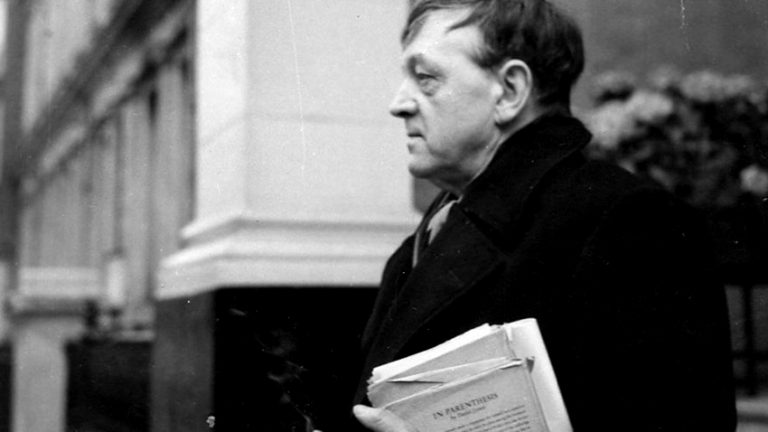
Private David Jones’s In Parenthesis and The Anathemata
Shortly after midnight on 11 July, 1916, Private David Jones of the London-Welsh battalion of the Royal-Welsh Fusiliers was shot in the calf at the end of an operation attempting to drive the Germans out of Mametz Wood as part of the Battle of the Somme.
Thirty-Six Views of the Parallax: Mark Young’s the eclectic world, Bandicoot habitat and lithic typology
The first thing to note is that the body of a typical Mark Young poem often bears no relationship to the title. Do not be alarmed: this is a postmodernist conceit, and Young is thoroughly postmodernist, although he would eschew such a label.
Mansplaining Abortion in Alexis Late’s ‘Procedure’
In stanzas 1 to 3 the speaker begins in conversations experienced as attack, with a metaphor of a hunter trapping an insect, and the speaker expressing herself as insect under threat of being devoured.

EKPHRASTIC Editorial: Poetry that Sees
In ancient Greece ekphrasis was understood more broadly than in the contemporary world, indicating a complex genealogy for this term that encompasses so much fine poetry as well as many other forms of writing.

J S Harry’s ‘tunnel vision’, Vicious Sydney and The Car Story
As I began this essay on J S Harry’s poem ‘Tunnel Vision’ several years ago (2006) the radio drive shows in Sydney were full of opinions, mainly angry, concerning a report that a male teacher, in an English class, encouraging students to find as many words in ‘Australia’ as they could, had led the way by showing them how it contains the word ‘slut’, and then, when asked what that meant – it must have been a young primary-school class – had told them that it was a word used to describe women.
Ekphrasis as ‘Event’: Poets Paint Words and the ‘Performance’ of Ekphrasis in Australia
To commemorate the 50th Anniversary of the Newcastle Region Art Gallery (NRAG) in 2007, Lisa Slade and Peter Minter co-curated the exhibition Poets Paint Words. The two curators commissioned some of Australia’s best poets to write poems in response to a selection of paintings held in the NRAG archive.

Is Contemporary Australian Poetry Contemporary Australian Poetry?
Poet, if you’re looking for your name in this essay, jump ahead a couple of pages. There I begin talking about poets collected in this anthology. Those of you interested in a review about contemporary Australian poetry, let’s begin here.
CONFESSION Editorial
Charles Whalley’s essay on post-internet poetics ‘This has been a blue / green message exiting the social world’ takes its title from a Sam Riviere poem, which makes me imagine ‘blue / green’ text messages bubbling like algae blooms on a mobile phone.
‘The atomic landscape … does not allow me to rest’: Kurihara Sadako and the Hibakusha Poet as Public Intellectual
The 70th anniversary of the atomic bomb being dropped on Hiroshima was marked by a solemn ceremony in the Hiroshima Peace Park on 6 August, 2015.

Courrier des Antipodes – Notes on Michel Butor’s Letters from the Antipodes
Just over a week later we heard the sad news that Michel Butor had died on 24 August, 2016 at the age of 89.
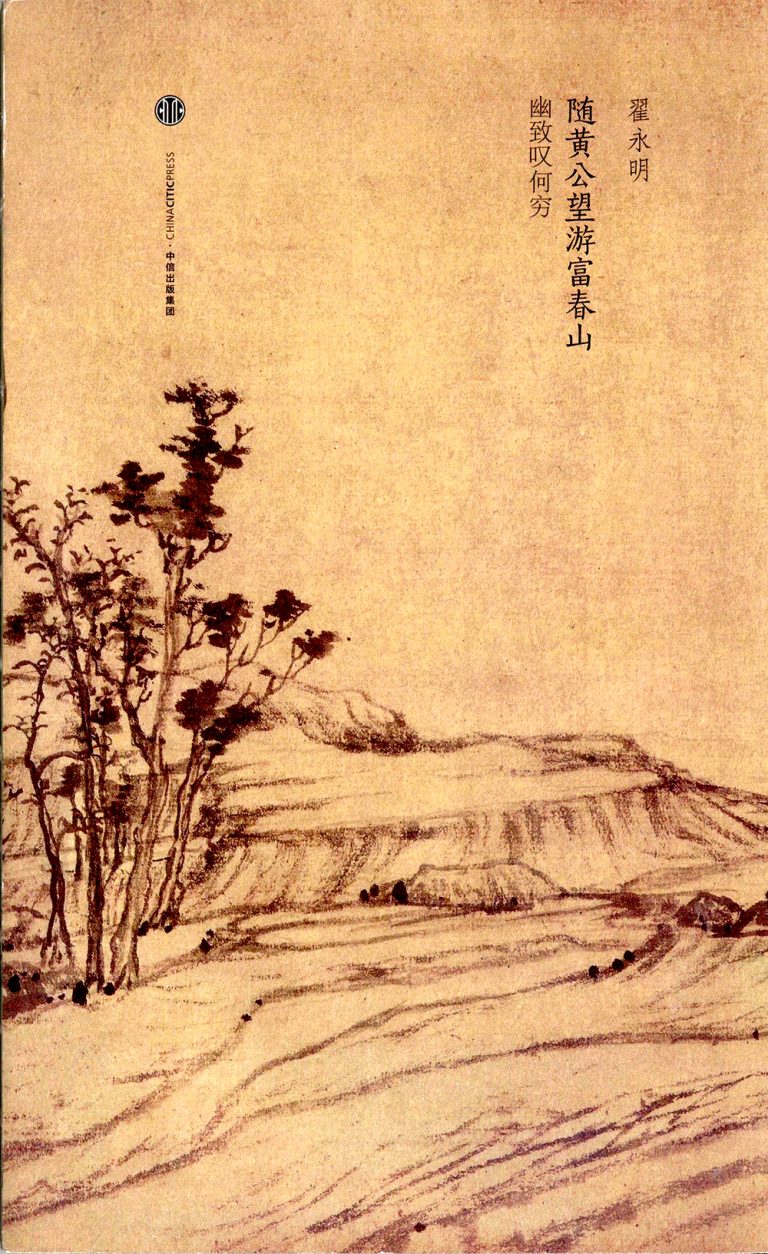
The Many Lives of a Handscroll: Inspired by Zhai Yongming’s ‘Ambling along the Fuchun Mountains with Huang Gongwang’
Dwelling in the Fuchun Mountains is a handscroll by the Taoist painter Huang Gongwang from the Yuan Dynasty. It is now acclaimed as one of the ten masterpieces of Chinese painting.

Language Barriers
Many live after L=A=N=G=U=A=G=E then, but few live as it. There is no comparable, or adequate, rupture precisely because there is a lack of Historical, and philosophical, work being done. Cue the misunderstanding of what to radically break with.

Elif Sezen’s ‘Dear Immigrants’ and ‘The Turkish Bath’
I am reminded of Doris Salcedo’s Shibboleth. For the work Salcedo broke a hairline crack into the floor of the Tate Gallery’s Turbine Hall. Running the sheer length of the hall, the crack broadened out to a crevasse of some feet. You walked alongside and gaped in. The floor was later repaired the cracks remain.
Feminine Beings: A Resonance of Voices in Vietnamese Poetry
The authors I touch upon in this essay – perhaps not the female poets most in accordance with my personal taste – share a common story in which I am more or less implicated.

EXPLODE Editorial: Awfully Passionate Egregious Demagogueries … reflections on absolutes, straying, anguish and bees
If poets are in the business of cultivating ‘voice’ then, logically enough, to which ends? Is there an onus not only to learn how to speak but to also become versed in what to speak of?

Sublime Necrophilia or Ceasing To Exist in Order to Be : On Translating Kim Kyung Ju’s I Am a Season that Does Not Exist in the World
Like the male dusky antechinus, an Australian marsupial, translation has an unusually long mating period. For 14 hours it fucks so vigorously that its stress hormones overload, causing its immune system to collapse. It performs the sexy death. A lethal transfer of life. Or is it a deathy sex?
Metapod: An Essay and Analysis
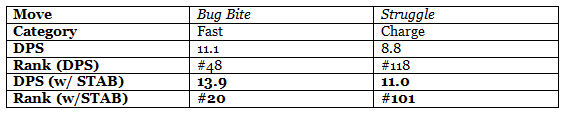
Pokedex Entry #011: Metapod is a Bug Type Pokemon. It evolves into Butterfree.

‘Transgressive Circulation’: Translation and the Threat of Foreign Influence
At the AWP writers’ conference in Minneapolis a couple of years ago, I attended a panel on Paul Celan’s poetry. In the Q & A that followed the panel, the first question was ‘How can we make sure that young American poets are not improperly influenced by Celan’s poetry without truly understanding it?’ The panel responded by offering a variety of possible solutions, such as reading the extensive literature about the poet or reading his letters and journal entries that have been published as well.







