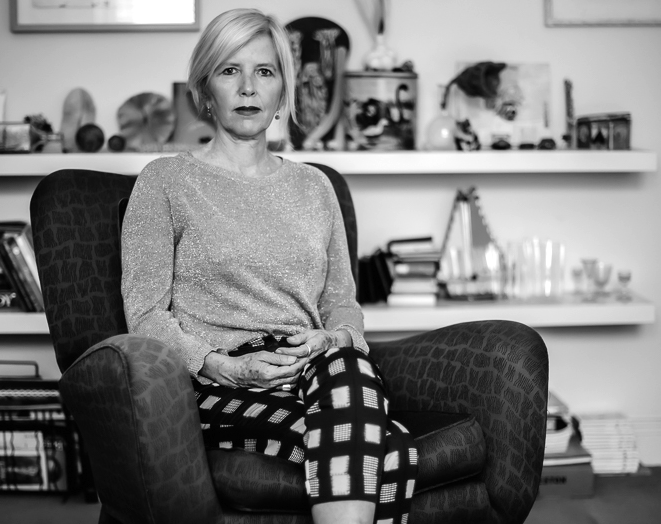
Excerpt from In the Time of the Manaroans

Miro Bilbrough’s memoir, In the time of the Manaroans, is set in a remote countercultural milieu in Aotearoa in the late seventies. At 14, Bilbrough fell out with the communist grandmother who had raised her since she was seven, and was sent to live with her father and his rural-hippy friends. Isolated in rural poverty, the lives of Miro and her father and sister were radically enhanced by the Manaroans – charismatic hippies who used their house as a crash pad on journeys to and from a commune in a remote corner of the Marlborough Sounds. Arriving by power of thumb, horseback and hooped canvas caravan, John of Saratoga, Eddie Fox, Sylvie and company set about rearranging the lives and consciousness of the blasted family unit. – Joan Fleming

*

John of Saratoga

Returning from school one dusk I find John of Saratoga cleaving to the ancient rolled sofa arm, ankles crossed, the soles of his long feet black with road filth. The stranger’s gaunt physique draws what light makes it through the clouds of smoke that billow from the wood range as my father rattles its chimerical damper and curses. He is preparing a combination of the usual soya bean omelette and garlicky salad, and fresh peppermint tea in a heavy-spouted teapot. Potatoes, sliced into rounds in the cast iron frying pan, are doused with cream and dusted with paprika before being shoved in the oven in honour of the visitor. My sister has taken the opposing arm and is reading The Blue Fairy Book. Coming through the door I am magnetised by the dark-hued human buoy bobbing up the other end of our unstable sofa.

I quickly establish that John of Saratoga doesn’t speak much but comes to warm himself in my father’s sooty kitchen where the most recent flood-line stains the timber interior a metre up the wall, his utterance upstaged in equal parts by extreme diffidence, an ever-ready irony that operates at his own expense, and a hacking cough. From what I can tell, he is a wanderer seeking the next crash pad, the next hospitably expiring couch whose subsidence draws polite New Zealand bodies towards the vertiginous ditch in its centre. He favours broken-down Salvation Army coats, which enhance his concavity; is dark-haired, nicotine-fingered and carries a dog-eared physics text in his coat pocket. Everything about him tea- and tar-coloured, right down to his teeth, he is like a deteriorated relation of my first love, Cold Tea & Coat.

*

Mundane biographical details are disdained in the hippy world, direct questions frowned on. When, in Easy Rider, Dennis Hopper insistently asks a fellow traveller where he is from, and is just as insistently deflected, self-conscious credo is elevated to taboo. From my father, who thinks Easy Rider macho and silly, I learn that John’s medieval-sounding nickname is derived from a tiny fishing settlement deep in the Pelorus Sound, where he is based, and that in a former life he was an engineer who migrated from Darwin.

I learn from Dee, from whom my father subleases the Floodhouse, that John of Saratoga periodically goes missing from the hippy circuit. Then, more often than not, his breathing situation will have reached crisis and he is, eventually, to be found in intensive care. Despite being acutely asthmatic, he is known to sleep in a damp swag by the side of the road. That is the sum of available facts. Whoever wrote that romance thrives on an economy of scarcity might have been thinking of Saratoga John.

Despite my school uniform, white socks at half-mast and puppy fat, I have a taste for suffering and a disdain for lifestyle. A chronic asthmatic smoking himself to death, how stylish. My eschewal of the lifestyle category is fortunate because my father’s dump is off the dilapidation chart. The kitchen doesn’t even sport a tea towel, just a stub of bath towel ingrained with stove grime.

*

Although she is in the process of setting up house with her lover, Dee maintains the best room in the Floodhouse as hers, visiting it but rarely. This is the light-flooded front room in which I camp on first arrival before reluctantly moving across the hall to its darker sister. Originally, my father and this statuesque potter with serious drapes of gold hair thought they might build a kiln together and share firings. They soon revealed themselves ill suited: Dee accustomed to homage; my father disinclined to render. When their collaboration failed to take my father ended up sub-leasing the house instead.

In Dee’s room I can lie in bed and see chinks of cornflower-blue sky or occasionally a star between the wide unlined boards of the walls. Here and there tufts of rose-trellised wallpaper cling like relics of a more couth former life. Blue perforations and chilling draughts acclimatised to, the room is a space in which to brood on the unexpounded facts of my new life, of which there are many.

*

Sometimes John of Saratoga honours us with a solo visit. Sometimes he turns up in a small party of the Manaroans, commune-dwellers from the remote Pelorus Sound. Once, John of Saratoga arrives accompanied by Eddie Fox, a flashily handsome Welshman, both mounted on Lenny the Horse. My father dreads – and embraces – every option. Fuck. Visitors! And he’s off in a spin about the catering. More mouths to feed! What will the horse eat, fuckit? On the subject of John my father pronounces, with depressive savour, He’s just waiting for death to come along and knock him on the head.

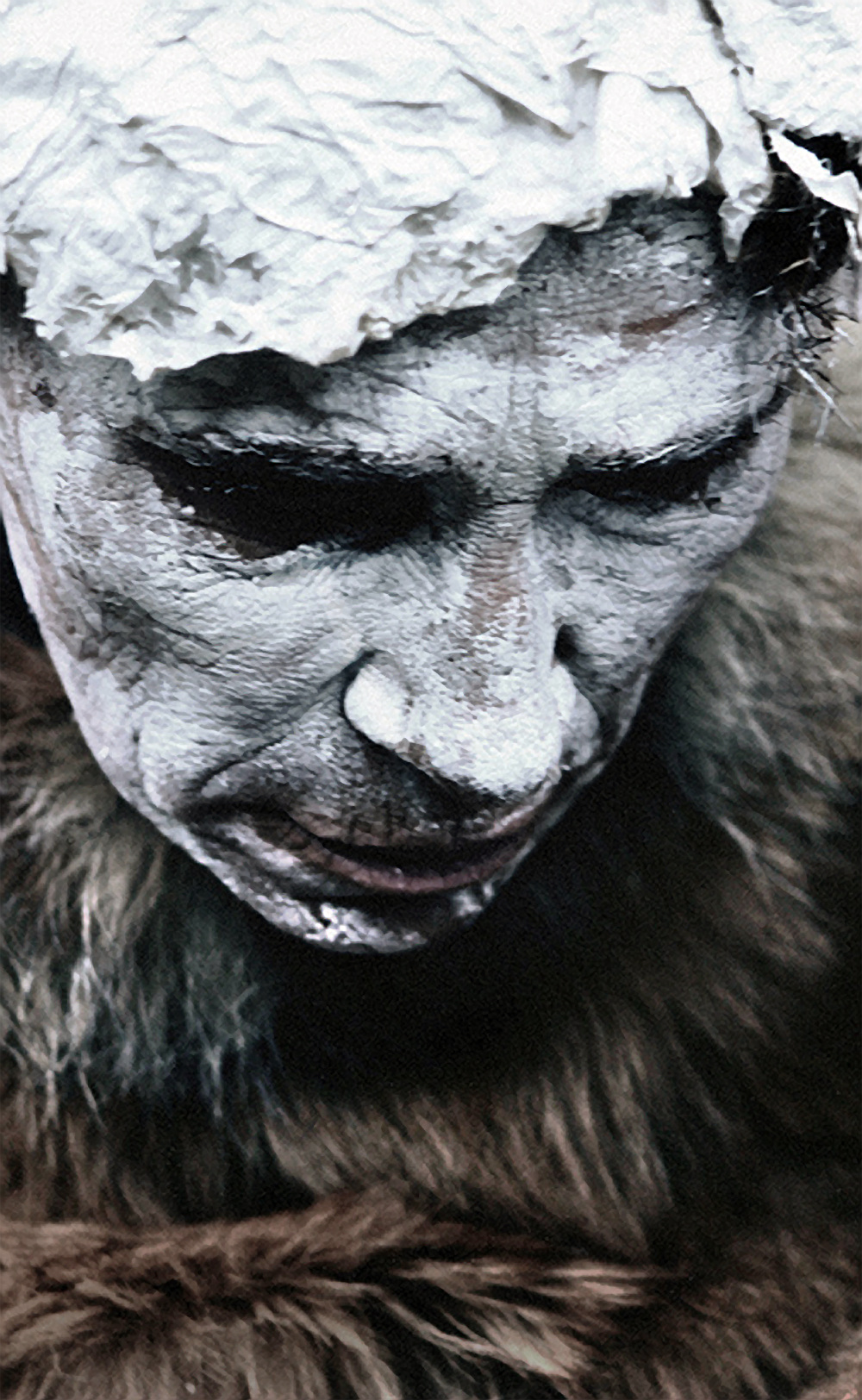
Personally, I think John of Saratoga looks like a woodcut, or one of those linocuts that are a feature of school curriculum art in the sixties and seventies – only made with graver intent. Hacked out by trowel, ink in deep-cut grooves, graven. It is clear to me that none of it would come together without the cheekbones.

His visits, in reality few and far from forthcoming, are enlarged by my inner saucer-eye, my teen-sorcerer eye. I attribute the magic to John of Saratoga, of course. And I am half right. He is a beautiful riddle modestly stalking the highways of our island. It helps that in my father’s house I am inoculated against boys my own age, barely exposed – unless you count the shy, bombastic clods on the school bus, which I don’t.


Posted in CHAPBOOKS, ESSAYS | Tagged ,

The Surveyed Vision: 36 Meditations on 3 Books by Barry Hill (Peacemongers, Grass Hut Work and Reason & Lovelessness)


Image courtesy of The Australian

Writing, because it can’t help but be critical, might help make peace
— Barry Hill (R 463)

Deep criticism is a kind of poem […],
or at least prose that delineates the poem that is trying to surface from the analysis

— Barry Hill (R 255)

Criticism must attack form, never the content of your ideas, of your phrases. Do as you
please. Sentiment is the most incomplete imaginable form of reasoning

— Lautréamont (Poésies)


Fire

a. Justice is Barry Hill’s overarching leitmotiv.
b. We need a collective narrative. This narrative of unfinished business involves truth-telling, an acknowledgement that what happened (massacres, stolen generations, etc.), happened. Taking ownership of this in the present does not mean accepting guilt or responsibility for what happened in the past, the past of our ancestors (if you are second- or third-generation Australian, you may be absolved when it comes to Aborigines, but do not think your past is pure), except in practical measures, such as reparations or compensation. Hill noted in his essay on Judith Wright that ‘Indians in Canada seem to have made general progress both with the principle of a treaty and land claims, whereas [in Australia] the general failure was signed and delivered when the Hawke Government proved to be like previous Coalition governments in bowing to ‘the States’ (Conservative Premiers acting as joeys to Development cowboys). Hence the crying need for the treaty, argues Wright’ (R 201).
c. Gap as a kind of caesura, like gap in a hedge.1 Gap as porous. There are two Australias — what makes Australia, Australia? Hill asks.
d. The Japanese for ‘gap’ (space) is ma (a part of mu).
e. Hill does not mention the word ‘gap’ at all in P, except in a quote in an essay titled ‘Dogs and Grog’: ‘In this way we are inducted into the depth of Craig [San Roque]’s broodings about ‘the loss of integrity in indigenous culture life’; the nature of people’s ‘peculiar kind of depression’; ‘the web of memory-systems developing too many gaps …’ ‘ (R 345). He does not need to.
f. From the outside looking in: the impossibility of crossing into Aboriginal culture. The risk of cultural appropriation, as in Chatwin’s Songlines, more English than its subject, as Hill observed (R 229), or T. G. H. Strehlow, who ‘translated Aboriginal song under the heading of Desire’ (R 227). Hill ‘spent about ten years on the [William] Buckley poem. I was going towards Aboriginal culture, but equally I was deepening my sense of inhabiting my own place, which was once their place’ (R 228).
g. Travelling is not necessarily knowing, either. ‘I did learn about listening, about silence, and layers of silence, characteristics of the White idiom, as we know from Henry Lawson, among others, and as I knew anyway, having been brought up in a small, reticent working-class household’ (R 229).
h. Indigenous songlines are in P (‘black men and women making their way into contemporary songs of their own’ 204), but mostly in R (‘shared singing and dancing — the best metaphor I know of cultural tolerance and understanding’ 56, Strehlow’s Songs of Central Australia).
i. ‘What did I care for any crews, / Carriers of English cotton or of Flemish grain!’ (AR 93).

Bones

a. The violence of ignorance (‘I hated the whole business of being the intruder, of taking up people’s time with my notebook and never-ending ignorance’ [R 229]).
b. ‘[T]he mediocrity of Buddhist ceremonies, especially when the sutras are chanted too long by monks who are not good-looking’ (R 400 — Hill is repeating one of Sei Shônagon’s complaints).
c. Bombs often score a direct hit; criticism is not a weapon but a dance.
d. They say truth is the first casualty of war; it is also the first casualty of ideology.
e. They say peace is hard to achieve. Perhaps peace is an illusion?
f. The atomic bomb, by which I include the hydrogen bomb, must be the most evil invention ‘humanity’ has ever come up with. Even Dante only mentioned the end of the world three times in The Divine Comedy, twice in hell and once in heaven.2
g. Chemical and germ warfare has been used in a limited sense so far, for the perpetrators can easily lose control and find that such weapons can have an inverse effect.
h. The last line of Rabindranath Tagore’s last poem reads: ‘the unwasting right to peace’ (quoted in P 270).
i. ‘[Hersch Lauterpacht] suggested that the word ‘Aggression’ be replaced with ‘The Crime of War’ and that it would be preferable to refer to violations of the laws of warfare as ‘War Crimes’. Titles would make it easier for the public to understand the actions being prosecuted, useful to garner support, adding to the legitimacy of the proceedings’.3
j. I once wrote in a poem that history was a crime against humanity, which seemed to confuse a lot of people. The above is what I meant.

Naked

a. The poem is. The choice of words. The evanescence of words but the ever-presence of poetry in the mind. The poetry of metaphor, images and tropes. Perhaps topics (utopia — from the Greek, where the first vowel refers either to absence or wellness, and topia, place, whence ‘topic’ also comes).
b. Ontological: ‘I am the poet of the body, / And I am the poet of the soul’ (WW 56).
c. ‘But he was characterised by piety as much as poetry’.4
d. Eternal values. ‘A man heretical, he can’t be lost / To that point where eternal love can’t save / His soul, if hope keeps love free from the frost’5
e. Painting, like poetry, often is.
f. Chess is emblematic of order, the opposite of chaos.
g. Being as godhead.
h. Being as mystery. Fay Zwicky in ‘Hokusai on the Shore’ wrote: ‘Who keeps / a steady eye on mystery?’ (FZ 302).
i. Hill uses ‘Reason and Lovelessness’ as the title of Chapter 6 in P.
j. As Nabokov said, ‘the marvel of consciousness—that sudden window swinging open on a sunlit landscape amidst the night of non-being’.6

Thousand

a. Thousand is a nonsense (magical) number. It is not meant to be taken literally.
b. Taoists like to use the term ‘ten thousand’, when the term is nonsense.
c. Hill works for truth intellectually as did his father, Neville Hill, as an activist (‘My old man never seemed to tire in his activism’ [P 566]), even though he knew that an ergatocracy would always remain utopian. Working for truth may necessitate nonsense in some but not in Hill (who knows the difference between nonsense and meaninglessness). He may turn to Aristotle (in R), Brecht (in G, P and R), Einstein (in P), Jesus (in P and R), Kant (in P and R), Marx (in P and R) or Nietzsche (in P and R) as equally as Buddha (G, P and R), Laozi (P and R), the Dalai Lama (R, where he asks why his holiness laughs so much) or Confucius (P and R), as have many other writers, including Akutagawa and Voltaire. Neville Hill was a major influence in Hill’s life and, therefore, in his prose.
d. As Norman Mailer said more than sixty years ago: ‘It is likely that the survival of capitalism is no longer possible without the creation in the consumer of a series of psychically disruptive needs which circle about such wants and emotions as the desire for excessive security, the alleviation of guilt, the lust for comfort and new commodity, and a consequent allegiance to the vast lie about the essential health of the State and the economy, an elaborated fiction whose bewildering interplay of real and false detail must devil the mass into a progressively more imperfect apperception of reality and thus drive them closer to apathy, psychosis, and violence’.7
e. ‘High time to crack down hard / Once more on trade within the temple walls’.8
f. The father as shadow, as representative of the previous generation. Neville Hill haunts the pages of P; he is not someone to be metaphorically killed, as Freud would have it, but the fount of wisdom, a force of nature, someone who strove for peace.
g. ‘[I]t was the very tenor of the revolutionary slogan: the workers will liberate themselves’.9
h. Tagore is one of the subjects of P, but he is also mentioned extensively in R. He travelled in Tagore’s footsteps in Japan. He is — and was used, when he was the toast of London society in the early twentieth century — used anachronistically as a counterfoil to Saidian orientalists, who adopt everything Eastern as an outer clothing without any deeper understanding.
i. Work is the labor of the factories, not the labor of colonialism.
j. Masses of people migrating in the hope for a better life. Displacement. The myth of being a pioneer. Transatlanticism (a transposition of European culture — my word for ignoring what goes on in the world other than America and England). Hill writes:

[Robert Manne]’s defence of Middle-Eastern refugees is partly based on the political horrors they have been through, which the policies endorsed by relaxed and comfortable Australian leaders callously ignore. [R 85].

Posted in ESSAYS | Tagged ,

Music Becomes Memory: What Listening to Music Does to the Poetic Voice

When I think about the music that’s closest to me, that’s an inextricable part of my identity in how unwaveringly I have carried it through time, it’s music that has made me see the world – or maybe feel is the more accurate word here – in a way I never have previously. Listening to this music, I’ve always felt like I’m shifting into an altered frame of consciousness. There’s a playlist of songs I have this relationship to, and when I listen to it, it’s also as if I’m revolving through different textures of being, different avatars of self. I listen to ‘Constant Surprises’ by Little Dragon, and I’m reminded of how it coloured life at twenty-one, inducing an embodiment that facilitated extraordinary dreaming.

Reflecting on my constellation of thoughts about music and its connection to language and personhood, I’m reminded of a meme that circulates in different iterations every so often. The meme depicts, and also jests at, the common experience of listening to music in solitude while you’re moving around in the world, staring out a car or train window, feeling like you’re the main character in a film. This meme encapsulates a phenomenon I spend so much time thinking about, and trying to understand – it illustrates how music can soundtrack our lives, while rendering the perception of our reality as ultra-vivid, heightened, emotional.

I’ve lately been immersed in Grizzly Bear’s Veckatimest, an album I first heard in 2011, and then felt consumed by five years later. Like poetry, music can evade your grasp when you first encounter it. Then it reappears, meshing perfectly with your experiences. A once-opaque inner space clears, and there blooms a newfound appreciation of something that had felt inaccessible. I like to think the reason for this shift is that part of you becomes newly sensate within the object, and is then reflected back to you.

I discovered Ocean Vuong’s Night Sky with Exit Wounds when I was contemplating music’s influence on poetic composition. I sensed that if poetry enables play and experimentation with language, then music provides an emotional palette that primes that very undertaking. Night Sky with Exit Wounds opens with the poem ‘Threshold.’ The first half of it goes:

In the body where everything has a price,
I was a beggar. On my knees,
I watched through the keyhole, not
the man showering, but the rain

falling through him: guitar strings snapping
over his globed shoulders.

He was singing, which is why 
I remember it. His voice – 

it filled me to the core
like a skeleton (3)

‘Threshold’ shows how music imbues our perception with another sentience, making it almost otherworldly. This inflects the way the poet remembers: the water from the shower is imagined as rain, then as guitar strings plucked, snapping on the man’s ‘globed shoulders.’ Later in the poem, Vuong repeats: ‘He was singing. It is all I remember’ (3). I kept coming back to that mirroring of lines: ‘He was singing, which is why / I remember it / He was singing. It is all I remember.’ Vuong conveys, in the pull of his tunnel-vision memory, that actually he remembers because of the man singing. The poem is suffused with emotion through the memory of song.

Vuong processes an aural encounter by writing about its associations with a memory. The poem’s pace evokes the action of remembering – slow, short flashes of images, revisiting the same thought again and again. I’m reminded of a stanza from Martin Langford’s long, fragmented poem ‘Minums,’ which reflects this merging of the pace of music with the ‘pace’ of memory:

Slow is the tempo of interiority –
body has slowed down enough
to be conscious – self conscious

now we can measure the weight of things –

now we can grieve (87)
Posted in ESSAYS | Tagged , , , , ,

Fox Mask Children

Exactly one year ago, foxes appeared in the forests and towns around here for the first time. In muscular structures, trauma or damage to the fibres is the very condition of growth. The body responds to damage by overcompensating, replacing the damaged tissue and adding more. A line, a scar, a something on paper.

You thought you’d scream, but you didn’t. You just stared. You just stared like an idiot. The freshest and newest memory appears first, and last of all comes the memory with which the series began. The deeper you go the more difficult it becomes to recognise the emerging memories, til near the centre you come upon memories you can’t recognise at all, even as you reproduce them by running your hands over them.

By the time you reached him, he was already disappearing. You asked him about his life. The place where he grew up. What he had for dinner. Your nephew’s birthday party where he’d taken the photos. You wanted to know how much of him was still there. What he could remember. At times it felt only like the shell of an interaction. Like he knew the parts, and could still play them, but not what they meant. Like he could remember where to put each piece, but not why.

He seemed afraid to say or do the wrong thing. He talked about walks he had taken. He talked about glaciers, the advancement of ice and how you could tell how far a glacier had moved. He talked about walking, but not dwelling. You talked about dinosaurs, and how some of them turned into birds, flying above the massive clouds of ash. Then he was tired and wanted to sleep. Foxes arrived softly around him. He did not notice them.

Writing attempts to draw a straight line through the world and each of the entities within it, a line that ideally would stretch from an origin, through a centre, and finally to a terminal point. But it is never clear where something begins or ends. There is a hole at the centre of the earth. The more one digs inside something, the more one is led outside of it. The world, and each entity within it, is a blur of ongoing interactions, traces of past interactions, and potentials for and constraints on future interactions.

Exactly one year ago, foxes began to appear in the forests and towns around here. People believed that foxes could possess them, entering under fingernails and through nipples. Exactly one year ago, people began to notice the cities in the sky, seemingly made of glass. Drifting, swaying, turning slowly on some pivot whose placement was a mystery. It is believed that the glass cities have been up there as long as we have been down here. People have been wearing fox masks, hoping it would confuse the foxes.

**

You sit down at the table. You fill a bowl with water. You take off your fox mask. You eat the red and white fruit. The spirit of a tree begins to move. When it speaks, you can see through the window of its mouth, as it flies up to the sun. In your mind, you try to hold a door open for the disappearing man, as though an immense pressure threatens to enclose him for good.

In our simplest model of the world, there is an answer to every question. There is a reason for every event. Something that happened before causes something that happens after. Things can always be explained, and, ideally, anticipated and controlled. You reassemble yourself. Reassemble your walls, defences, your mental models that govern the things you experience. You return to the old house inside your mind.

Segmenting your reality makes you feel safe. Instead of something so vast it’s indefensible, your reality is divided into many tiny rooms. You think this means that nothing will get in, and that nothing will get out.

You tell yourself: I won’t feel a thing.

**

This town no longer exists on any map. When you asked others what they saw a year ago, you were told many different things. A flash or flashes of light above the ridge. Green eyes floating amongst the darkness of trees. Faces that came crashing down like mountains of salt. Shadows that refused to fade from the sidewalk. A smell like hot metal, or mineral.

The disappearing man was telling you about a walk he’d taken once. He was telling you about a glacier, and how to tell how far it had moved. You believe that his memory was somehow becoming melded with the earth’s. And that the earth itself was a kind of museum, a form of an organic memory, an archive, a resistance against the eventual dissolution of bodies that could, for a time, stay coherent, solid, and that held together as one.

Every stone, every event, every person is a momentary interaction of forces, a process that for a brief moment manages to keep its shape, to hold itself in equilibrium for a finite duration before being lost to the air. The desire to model or write of the world as a thing and as a collection of things is a dream of being beyond finitude. To be able to capture anything and hold it outside of its network of relations is a dream of immortality, and stasis.

**

It was believed that the many people who disappeared were taken by the foxes, turned into glass, and flown to the city above. And so, others would say, so-and-so has gone to the city of glass, where they will be outside of time, and free from pain and violence. What the real conditions are for the persistence of the glass city you do not know. Whether simply some ghostly echo of the world, or an architecture that exploits it to exhaustion.

**

A year ago, you felt a prickling on your neck, the brush of eyes on you. Soon enough you identified the source, hanging back, shadowlike, padding on soft paws.

You knew it was happening when it was happening but couldn’t do a single thing about it. Some things are so big it’s hard to believe that they are real, and that they are happening to you and others around you. It was always easier to blame the foxes, and to say and write things that were easy to say and write, and to change things that were easy to change. And then to get angry when none of those things really changed anything.

You wanted what happened to be something that you could know. And you wanted what you knew to be something you could describe, something to which others could say, I know this, this happened to me also.

You float off to dreams of foxes. At the centre of the earth is a hole. At the centre of the earth is a parking lot. The foxes are playing in the empty parking lot and yapping and yipping and taking turns disappearing into the peripheral darkness, only to reappear again somewhere else, as if it wasn’t a trick of the light but instead their blinking from place to place.

Then one fox stops to stare at you, and you know it as one that had shown up beside the disappearing man. And you remember then, what he told you, about how to tell how far a glacier has moved, by comparing, over time, the positions of debris stuck in the glacier with the surrounding boulders, which didn’t move.

Posted in ESSAYS | Tagged

CREATURELY: In Praise of New Poetry from Aotearoa

We are living in uncanny, uncertain, and uneven times. It is difficult not to feel undone by it all. I began writing this piece in January of 2020, when it was still feasible to make plans. Now, I am finishing it off in August in Madrid and the days are sluggish and friable. The bricolage bunting that neighbours fashioned from dishcloths during the 70-day lockdown still flutters in the brick shade of apartment buildings. It’s a gesture of celebration, colour, and movement in a summer prohibited from the fiestas del barrio that used to make the heat bearable. I first visited Madrid in August. I drank coca-cola mixed with red wine and ice in a one-litre cup called a mini and got sweaty (sweatier) dancing to cumbia outside a tiny bar that was mounting its own street party. A genial water fight was going down in Plaza Nelson Mandela. An eight-year-old kid ran up and asked, politely, if he could spray me with his water gun. I said yes.

What is life for? Could it be true that ‘the force that through the green fuse drives the flower’ has no point, no end-point, no outcome, no result, no purpose, except to live? To be alive. The most hopeful thing that a pandemic or a recession or a climate collapse can tell us is that we are animals. We need to feel. We need to be aroused from the trance of our automatic participation in the machine. Reading the most arousing new poetry books to come out of New Zealand last year felt, to me, like being consensually blasted with a water gun by a child on an intolerably hot day. I don’t know that I can pin the rōpū of poets I survey below to a trend or a movement, although definitions have been floating around. Is this ‘The New Sincerity’? Is this ‘Maximalism’? Some of the poetry is unrestrained, it’s true, with shocks of lustiness and grotesquerie. Some, though, has a refined candidness that is pinned to the page by sexy craft. All of it carries out a deep inquiry that is felt and expressed bodily, and for this reason, if pressed to give my own definition of this tendency in Aotearoa poetry, I’d call it ‘Creaturely.’ These poems are strange. They have claws. They think. They are hot-blooded.

~

Prize-winning fiction writer Tracey Slaughter’s first collection of poetry is difficult to read and impossible to put down. Slaughter has long been the queen of brown-and-orange kitsch suburban atmosphere, and the longish poem ‘it was the ’70s when me & Karen Carpenter hung out’ is a menacing set piece. Remember macramé?

The brown
lounge swung in
its chorus 
of gourds. 
Hessian 
cradles wore out 
our hands, their 
roots gone rigid 
in the cross-hatched 
umbilicals.

Slaughter renders with unbearable accuracy the weird conflation of childishness and adult pretension that is adolescence. The speaker and her best mate KC

crouched 
on the lino with our 
underworld dolls. We liked 
them buoyant, handicapped 
at the crotch…
Their outfits 
fizzed in the shoebox 
we doused & lit.

Narratives of love and failure, the posturing of the teenage years, and the threat of God, all of this is rendered in an unwavering consistency of tone. The fiction writer is present, but the narrative is in fragments, built through taut lists of imagery. Sex want and damage are nailed through every poem. Language is sticky and sharp. Nouns strong-armed into being verbs (‘Slats / of shadow groove / our vanishing’; ‘Currents eel / the light into / muscled canals’) jump off the ends of the lines and stick in the throat. Furious, unholy enjambment slayed me. By the book’s end, I felt exhausted and alive.

Essa may ranapiri’s book ransack performs a visceral preoccupation with biology, its limits and spectrums. Fingers are dug in and they come out bloody. There are moments in the book when poems wrestle with rhetorical agenda. The prose-poem ‘the nonbinary individual’ is a manifesto addressed to those who live comfortably in either wing of the gender binary. The longish poem ‘Con-ception’ is a sensation. It charts the growth of a foetus as it takes shape in the womb with startlingly lumpy description: ‘it will suck and touch with these not-things’; ‘wet leather stretched to membrane over a light’; ‘a dress of flesh’. The poem accomplishes an estrangement, a de-familiarisation, of the body. It is, at the same time, a song of complex praise for an exhausted mother. At its best, ranapiri’s poetry is wounded and triumphant. They unstitch language til it wriggles and stains: ‘a bab/y stil/l born/n rattling i/n the mutton skie/s chubby in the loa/m’.

Posted in ESSAYS | Tagged , , , , , ,

A Poet’s Progress in the ABC: Reflections on a Life in Radio


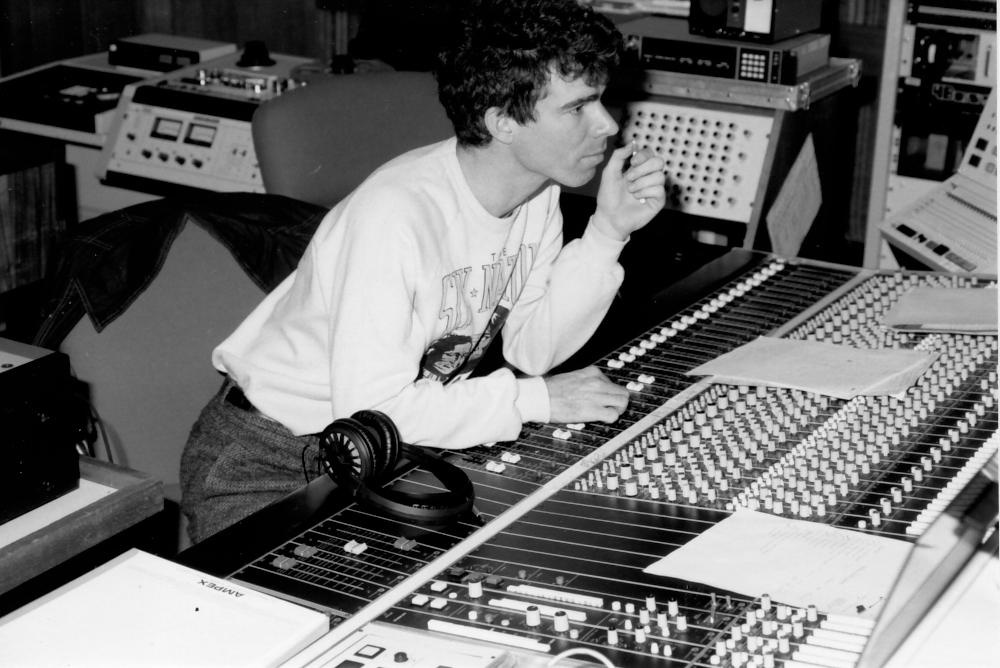
Mike Ladd at ABC studio 520 in Adelaide, circa 1986. Photo by Cathy Brooks

On my job application to the ABC in 1983 I mentioned that I was a poet, even though the job advertised was for a purely technical position as a trainee sound engineer. Positions for technicians were all that were on offer at that time in Adelaide. Landing a job as a sound engineer was a way into the monolith.

An interest in poetry seemed to count in my favour in the job interview – or at least not against me. It also helped that I’d done some short-term contract work archiving recordings I’d made in Senegal in 1982 – of street music, and the traditional poet praise singers known as les Griots – at the BBC in London and at The British Institute of Recorded Sound. The ABC was a much more Anglo organisation in those days, and the BBC was seen as a sort of paragon.

I already had a keen interest in recording and mixing voices and sounds. I’d been part of the Adelaide poetry scene since the mid-seventies, and had run a poetry program on 5UV (Radio Adelaide) at the University of Adelaide – established in 1972, as Australia’s first community radio station. In the early eighties I learned how to multi-track sound by making demo tapes with my band The Lounge, and then in a performance poetry outfit called The Drum Poets. Anyway, I got the job. My technical trainer even bought a copy of my first poetry book, though I’m not sure he liked it much!

At that time, the ABC was much better funded in real terms than it is today, and it was a more broadly cultural organisation, supporting many ‘non-mainstream’ art forms – like poetry. It also had composers, artists and writers in residence, and in-house orchestras and bands.

*

Poetry had been part of ABC Radio from the beginning. In the 1930s the ABC was broadcasting Shakespeare and Shelley, with voices imitating British accents; a decade later it started featuring verse dramas by Australian poets like Douglas Stewart and Rosemary Dobson. The first weekly poetry program, Quality Street, was founded in 1946 by producer John Thompson, himself a published poet. When I joined the ABC, the current poetry program was called The Poet’s Tongue and was produced by Gwen McGregor from the Radio Drama department in Sydney. It had an amazing run, nearly thirty years on air from 1957 to 1986. It was replaced by a succession of poetry programs of varying longevity: The Poetry Feature, The Box Seat and Poetica, as well as other cultural programs that featured poetry, such as Radio Helicon, The Listening Room and Inner Space. The point is, poetry had a home, a regular broadcast, a place where listeners could find poets and poets could find an audience and even be paid for their work. Contrast that with Radio National today, where programs like Earshot or AWAYE! might do the occasional one-off feature on a poet, or an obituary for a well-known poet like Les Murray or Clive James, or a poet reading a Friday poem for free on Radio National Breakfast. But there is no regularly broadcast poetry program, and no real commitment to poetry from the management.

When I graduated from my traineeship I didn’t get to record a lot of poetry at first. I did news items, talkback radio, lectures, children’s education, religious talks – some of the jobs were very boring, but others were fascinating. I was enmeshed in voices. Weary Dunlop, Plácido Domingo, Bob Hawke, Barbara Hanrahan, Bryce Courtenay, Joan Sutherland, Max Harris, Vladimir Ashkenazy: these were just some of the people I met and recorded as a sound engineer working for a range of producers. Dorothy Hewitt, Margaret Atwood, Tom Shapcott, P.K. Page, and Miroslav Holub were some of the poets I remember recording for The Poet’s Tongue and The Poetry Feature.

While I welcomed recording poets for other producers, I often felt itchy to produce the programs myself, and to make them differently. Rightly or wrongly, I sometimes felt the programs I was working on were a bit too straight: the poet introduces the poem, the poet reads the poem, and repeat. Or worse: the presenter explains the poem and the actor reads the poem as an illustration. There was not much other sound in the programs – perhaps some interlude music, but almost always kept separate from the words. I didn’t think they were using the radio medium to its full potential.

Posted in ESSAYS | Tagged

Anti-Doodles: a Dada-ist Game for Long Pandemic Afternoons

As 20th Century Europe erupted into the chaos of the Great War, Dadaists responded with art forms that reflected the fragmentation and the unintelligibility of the world around them. ‘Some people,’ wrote Tristan Tzara in his 1918 Dada Manifesto, ‘think they can explain rationally, by thought, what they think. But that is extremely relative’ (Tzara).

Now, as the world grapples with the threats of pandemic, totalitarianism, and environmental destruction, Anna and I (Ray) are prepared to set aside traditional, orderly methods. Hugo Ball’s 1916 Dada Manifesto proclaims saying dada as the way to ‘get rid of everything that smacks of journalism, worms, everything nice and right, blinkered, moralistic, europeanised, enervated’ (Ball). While I’m skeptical about this sweeping conclusion (a few sentences earlier, Ball has touted saying dada as the way to ‘achieve eternal bliss’ and ‘become famous’), 2020 feels like the perfect time to say dada in our 21st Century voices.

I found it impossible to write literally about the COVID-19 pandemic. When I tried, I felt tired, tiresome, and didactic. Anna said that it was hard for her too; she was looking for a distraction rather than a reminder. So together, we sought a way to be random, playful, and chaotic. At first, I wrote poems to accompany a few of Anna’s surreal drawings, which she’d created on a tablet by overlaying ordinary figure drawings with bizarre details (the head of a hog or a giraffe in place of a human head, a hole in the chest with a bird’s face peeking out, a magnificent flower sprouting from a crotch). But this wasn’t a true collaboration (too much of Anna, not enough of me), and it didn’t feel truly alive.

Finally, Anna discovered a scheme that worked for both of us. First, each of us emailed the other one a list of three words. The lists had to be generated independently – no peeking allowed! Once we’d pooled our six words, I would use them in a poem, and Anna would incorporate them into a drawing – again, with no peeking! When our creations were complete, we shared them with each other and exchanged comments.

Although we’d initially framed this approach as a playful escape from reality, we noticed our drawings and poems returning to themes of confinement, catastrophe, and disruption. All of Anna’s scenes were set in closed rooms, and three showed threats: floodwaters, flames, or mysterious intruding tentacles. My poems depicted characters frustrated by their confinement or overwhelmed by a threatening and difficult-to-predict external world.

We picked up on a few thematic resonances that were specific to individual poems.

**

Anna: ‘One of my drawings shows characters from Alice in Wonderland. I think there is the sense of surprise in Alice in Wonderland. You never quite know what’s happening, which chimes with the current situation.’

Ray: ‘The poem that accompanies that drawing is all about the contrast between a cramped, constrained reality, and sweeping, ambitious daydreams. I love how that contrast between dreams and reality shows up independently in Anna’s picture, where the “real” backdrop of a burning city is offset by a picture of an idyllic castle hung on the wall.’

Anna: Titmouse was the easiest one to come up with for me. For the first time in my life, I heard that word, and I was like ‘wow this is a weird word.’ Initially, I was just trying to put all the words into a coherent picture, but eventually, I realised it was about the creative process – that part when you’re all alone and trying to create something, and you’re not sure if anybody’s listening.

Ray: Yeah, I was really captivated by the language too – especially when you told me, ‘A titmouse is neither a tit nor a mouse.’ That sentence stuck in my head, and I designed the whole poem around its rhythm.

Anna: I love the fact that it is never revealed what a titmouse is.

Ray: Speaking of mysteries, where is the axis in that picture?

Anna: The pole is an axis around which the mouse dances. I was like ‘I don’t want to draw any math-like things.’

**

In the end, my poems and Anna’s drawings reflected reality in their formal elements, not just in their themes. Our separate but parallel method of creation is a lot like social isolation: two people in their own separate bubbles, still working with the materials at hand to create a shared artistic universe. Just as we’ve adapted to teaching and socialising over Zoom, we adapted to writing and drawing around the constraint of our randomly chosen words.

We tried not just to make the best of this constraint, but to use it to make our project better. I believe that in the best cases, formal rules can actually serve as an aid to the creative process: while the rational, conscious mind sits in the corner gnawing on the ropes of constraint, the creative, unconscious mind is free to play unimpeded. Maybe that’s why both of us added more structure: I decided that each poem would be a sonnet, and Anna built 3D models to design the layout of the last three poems.

Anna writes, ‘I had a teacher who said that “uncontrolled creativity leads to idiosyncratic wackery.” With us it was controlled creativity and even though it was idiosyncratic, I hope it goes beyond wackery.’

After six drawings, with six words each, it felt like we’d reached a suitable endpoint for this project (although Anna will be continuing in the same vein with randomly generated Pictionary words). When I proposed the title Doodles, Anna responded:

Doodles means mindless sketching or writing. What we did, or at least the way I approached it, was almost the opposite: taking something nonsensical and making sense out of it. That requires quite a bit of mindfulness and peculiar awareness of uncommon connections. I found my process very therapeutic because it reflected the current situation, which is unpredictable and doesn’t quite make sense. The only way to live with it is to make my own kind of sense.’

So, these are Anti-Doodles.

References

Ball, Hugo. ‘Dada Manifesto.’ 1916. Wired, 11 July 2016, online.

Tzara, Tristan. ‘Dada Manifesto.’ 1918. Dada Painters and Poets, 2nd ed., translated and edited by Robert Motherwell, Belknap, 1989, pp. 78–9, online.

Posted in ESSAYS | Tagged ,

Motherhood, Language and the Everyday During the Poetry of Astrid Lorange, Amy Brown and L K Holt

For a long time after my daughter was born, I looked for representations of motherhood everywhere. I looked for it in casual interactions with other mothers in the park and on the street, I looked for it with friends, in mothers’ groups and on the screen. I looked for it in my memories of mothers (including my own), and I looked for it in books. In the first six-weeks or so after my daughter was born I tore through Elisa Albert’s After Birth and Rachel Cusk’s A Life’s Work. I remember them like balm, even though I cannot remember much of the content of either book now. I read and re-read Maya Angelou, Marguerite Duras, Julia Kristeva, Maggie Nelson and Adrienne Rich all of whom I had read before but reading them as a mother felt different. I read Elena Ferrante for the first time and was in awe at the way she wrote about mothers. I read Deborah Levy’s fiction and nonfiction and thought her novel Hot Milk would have been more satisfying had it been a nonfiction account of the central mother-daughter relationship (reading into that novel Levy’s complicated relationship with her mother). I heard the poet Rachel Zucker interviewed about her book MOTHERs on a parenting podcast and when I bought that book, I tore through it too. Again, balm. I read Jacqueline Rose’s Mothers: An Essay on Love and Cruelty and though aspects of the book annoyed me, I was grateful for it.

This year, I have been reading Astrid Lorange’s Labour and Other Poems, Amy Brown’s Neon Days and L K Holt’s Birth Plan all of which are oriented by the writer’s experience and observations of motherhood. I use the present perfect continuous ‘have been’ deliberately, because in many ways the reading of all three of these collections has been characterised by dipping in-and-out of, circling back, and re-reading. Lorange’s book I read cover-to-cover quickly and was filled with the desire to read it again, and again, and again, since it felt like exactly the account of motherhood I have longed for. While Brown’s I read slowly, pen in hand, savouring the parenthetic footnoting used to pause and unfurl some of the key verbs used in her diaristic verse; beginning with: to admit, to push, to sate, and to repeat. I marvelled at Holt’s dexterous poetic range. Her ability to take me in one breath, it seemed, from a tender prosaic observation, to colloquial description, to literary/philosophical/historical reference, as if I were a friend to whom she was retelling the various anecdotes of illness, fear, joy, love and play that characterise those early years of motherhood particularly. These three writers all reminded me why I have found books written on, or about, motherhood by poets particularly satisfying. Since one of the things the poet does so well, is shift between registers – from the abstract to the specific, from the large to the small – often in just a few lines, or words. As Jessica Wilkinson writes ‘[I am reminded] on a regular basis of the extraordinary capabilities of poetry, its malleability, openness to experimentation, contrariness, performativity and complex aesthetic palette.’ These books ‘on motherhood’ could be characterised just as easily as books about writing, love, mortality, marriage, politics, co-parenting, literature, and language.

No doubt, and as described, my seeking out of accounts of motherhood are related to my own subjective experience as a mother, though this also tends to be how books describing an experience of motherhood are marketed. As if they are only for women, only for mothers. Zadie Smith writes in her book of essays Changing my Mind, ‘Nowadays I know the true reason I read is to feel less alone, to make a connection with a consciousness other than my own.’ This is the balm of reading. It is to do with connection, with recognition, and at its best we can find in the writing of others something we knew but did not have language for; or indeed an articulation of something we had never before considered but which makes so much sense.

I have found that since my daughter was born motherhood has influenced more than my reading. It has influenced how I teach, relate, love, and write too. In my writing so far about motherhood (being a mother, being a daughter) a question I have asked myself often is: ‘how can I write about motherhood without falling into obvious description or cliché?’ Which is more broadly a question of how to write about the every day. A screenwriting colleague recently told me there has been a flurry of ‘please don’t send us your COVID-19 screenplays’ on Twitter and elsewhere in 2020, and while you can see why, this pre-emptive assumption that the ordinariness (even in its utter extraordinariness) of the pandemic means that it should be off bounds, encourages the writer to self-censor rather than to engage with the more difficult – and in my view appropriate – question of how to find language for the life we are living that is surprising, even as it is written. I think many of us will be influenced by the pandemic in everything we are thinking and writing about for some time, and why not? The problem, if there is one, is not so much to do with writing about an experience that is so immediate for everyone right now than it is about how to do so. In an article on writing for Kill Your Darlings, Holt writes:

In Randall Jarrell’s poem ‘A Sick Child’, the child says: ‘If I can think of it, it isn’t what I want.’ The writing process, for me, necessarily involves such discontent.

Discontent is such an interesting way to characterise the experience of writing. It suggests that writing is an act of getting beyond what one can think of right away. That it is a process of excavation, of thinking through, and going beyond the immediate.

Posted in ESSAYS | Tagged , , , , ,

On Speaking and Unheard Women: Interrogating Classical Silence in the Poetry of Anna Jackson and Helen Rickerby

When we meet Cassandra in Aeschylus’s ‘Agamemnon’ – this stolen princess, this famed beauty turned ill-starred prophet, hauled onstage as Agamemnon’s prize for victory over the Trojans – she is silent for 270 lines. The first sound she emits is a cry, torn from her as from the throat of an animal. Transliterated from the ancient Greek, as classicist-poet Anne Carson does, the crash of syllables appears as ‘OTOTOI POPOI DA!’ (Untranslatable, Carson explains, yet not meaningless.) Then the future spills out of her in a rain of fragmented clauses:

KASSANDRA Godhated so

                                      then too

                                              much knowing together self–

                                                          murder man–

                                                                    chop blood–

                                                                               slop floor

(‘Agamemnon’ in An Oresteia, trans Anne Carson)

This is the moment Cassandra foretells the bloody deeds to come in the tragedy, but when she starts to speak, her voice splinters; our ears unable to receive these shards of pure divine insight. The effect is terrifically unnerving.

KASSANDRA [scream] [scream] look

                                  there look

                                     there keep

                                              the bull from the cow she

                                                                   nets him she gores

                                                                                  him with

                                                   her deadly black

                                                                  horn he

                                                     falls he's

                                                down he bathes in

                                      death are you listening to

                                      me

I wanted to write about women and silence. Yet I kept circling back to Cassandra, perhaps not unlike how Cassandra kept circling back to herself: ‘What is it like to be a prophet? Everywhere Cassandra ran she found she was already there.’ (Anne Carson, ‘Cassandra Float Can’). I wanted to write about silence, and Cassandra speaks – quite famously in fact, still screaming to us down the hall of all those years. But one can speak and be unheard. Says Rebecca Solnit in ‘Cassandra Among the Creeps’: ‘The story of Cassandra, the woman who told the truth but was not believed, is not nearly as embedded in our culture as that of the Boy Who Cried Wolf – that is, the boy who was believed the first few times he told the same lie. Perhaps it should be.’ Apollo had granted Cassandra the gift of prophecy, so the myths say. When she refused to sleep with him, he twisted this gift. There’s a cruel irony in giving a woman words of power in a culture that muzzles her, then warping her speech so that it will not be heard. It’s not silencing, not exactly. Apollo ensured that Cassandra would not be quiet. She would speak and not be believed. She would speak and be met with silence.

In the first poem in Helen Rickerby’s collection How to Live, ‘Notes on the unsilent woman’, Rickerby references the #MeToo movement that shook the world to attention:

50. Since I began writing this poem, women have begun to speak. No. Women have begun to be heard. I don’t understand what happened, but suddenly things that we all knew – all women at least – became big news. Suddenly women’s words had the power to take down a Hollywood mogul, and who will be next? Suddenly the Law Society is shocked. ‘Why didn’t you say anything before?’ Why weren’t you listening?

What is speech when it meets a refusal to listen? Rickerby records the anecdote of Hipparchia, Cynic philosopher of ancient Greece, standing firm while a male rival tried to strip off her cloak at a dinner party, as if her woman’s body told an incontrovertible truth to invalidate her intellect, her wit, her words. Hipparchia was not the only ancient woman to be a philosopher, but ‘few had the opportunity, the education, the space, and of the few, fewer are remembered.’ It is the old story: history is the province of the Great Man, its parameters defined by that other man behind the pen. With its numbered stanzas, ‘Notes on the unsilent woman’ echoes a succession of footnotes; appropriate for a woman like Hipparchia, relegated to the margins as women too commonly are. Nothing is left of what Hipparchia wrote. But silence, Rickerby reminds us, is not always reflective of intention, of reality. ‘[S]ilence is sometimes an erasure. We don’t know much about her, but we know she spoke.’

It is a poem that both emphasises and compensates for Hipparchia’s silence, as Rickerby dialogues with Hipparchia (or with her missing voice) by interspersing observations about the philosopher’s life with her own. We watch as female poet interacts with female subject: ‘But I do have something to say. I want to say that she lived. I want to say that she lived, and she spoke and she was not silent.’ The poem captures this act in motion: this reclamation, this recognition – and yet, this lack of resolution, as conveyed by a final line coloured by wistful defeat: ‘Oh, but I still wish I knew what you said, Lady Butterfly. I wish I could hear your words.’

Where does it leave us to merely know that Hipparchia spoke, when we who want to hear can salvage nothing from her silence? Hipparchia’s writings are lost to us, though sometimes, of course, women’s words are not erased but mutilated. They are reviled because she is angry instead of ‘nice’, dismissed because she invited the well-worn epithets for female feeling: mad, dramatic, hysterical. ‘You’re mad – godstruck godswept godnonsensical’, the Chorus of ‘Agamemnon’ tells Cassandra, again in Carson’s translation. Mythology tells us little about pre-curse Cassandra. Did she laugh too loudly, talk too much? We see Apollo’s version, the raving witch. Cassandra may have refused to be violated by him, but she had a sliver of divinity lodged in her anyway. She had been given the art of prophecy, remember. The Christian God created man after his own image, but gods of ancient myth were always making things after themselves: they pursue and impregnate women who bear half-divine sons, sons like them. The sons set off to achieve great things, the mothers stare worriedly from the shore. Apollo failed to invade Cassandra’s body in this way, so he made her like him; exceptional, able to see what mortals could not. He possessed her mind so that prophecy was pain, poor godstruck girl. If her tale tells us anything, it is that being gifted is another kind of invasion. The way that being worshipped, being molded into muse or lover, is a kind of surrender.

Posted in ESSAYS | Tagged , ,

12 Artworks by Teena McCarthy


Teena McCarthy | ‘Bilyera’ Wedgetail Eagle Totem | 2018

The main theme running throughout my work is related to my grandmother, an Indigenous woman of the Barkindji Tribe from Broken Hill, NSW. I work within narratives, based on her life story, her Dreaming, The Darling River, her Country. Within that context, her story exposes layers of meaning about Australia’s ‘hidden history’: the impact that humanity has done on the natural environment; the effects of Colonisation that have led to the loss of Culture and Spirituality; and, in recent times, the unfortunate events of the Stolen Generations, sadly resulting in much intergenerational pain.

Posted in ARTWORKS | Tagged

What They Said (While We Were Sleeping)

Posted in 97 & 98: PROPAGANDA | Tagged

Addictive Media

The little bird, it flutters near
Just beyond the cognate sphere
The rhythmic thrum, imposed regard
Punctures wisdom’s noble guard

Through the portal, clean escape
Where I control, dictate, reshape
Abstract correlation reigns
Blissfully disregard mundane

The sedative placates the soul
Submerged in isolation’s bowl
Thoughts culpable to self alone
Restrained, soothed, senseless drone

Dystopia beyond the seal
Distinguished with a passive zeal
A hollow realm of faceless ghosts
Of cold, inconsequential boasts.

Muffled pulse of passing hope
Subsumed by this kaleidoscope
That dazzles in my tunnelled view
Omnipotent, it will subdue

One, to two, to three, to four
Each action here has gone before
Complacent sigh, a warm caress
Freedom from hope’s cruel duress

Hung grapes fade, the fox relents
The mediocre represents
A life divided; charged, inert
Waiting for that next alert.

Posted in 97 & 98: PROPAGANDA | Tagged

Anthem

lines written upon remembering the opening ceremony of the 2000 Olympic Games in Sydney, after a long illness

Tell me again how you came to be here,
ringed by burning rains
alone, brown-coat zombies
pummelling Long Plain
in ranked surges of union jacks.
Where’s your ticket for jostling
so the structural steel decks –
the belle dame raises her chin –
ecstatic that the sea has hemmed you
in? We are ready to sing.

Beneath the scalpel-thin cross
hairs searching hearts’ pipe-
work for dissenting iodine, hiss
her indrawn breath and gape
for the first bellowed syllables.
The blue and the white, by flooded stairs
must face the elders on this night
of capes and tights; of jaws.
She salutes, her flame sets
down to foaming applause.

Posted in 97 & 98: PROPAGANDA | Tagged

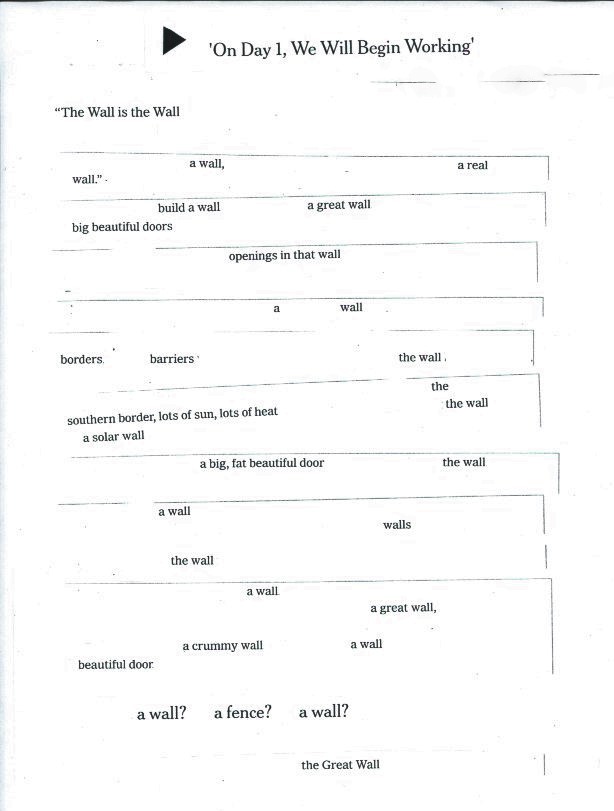
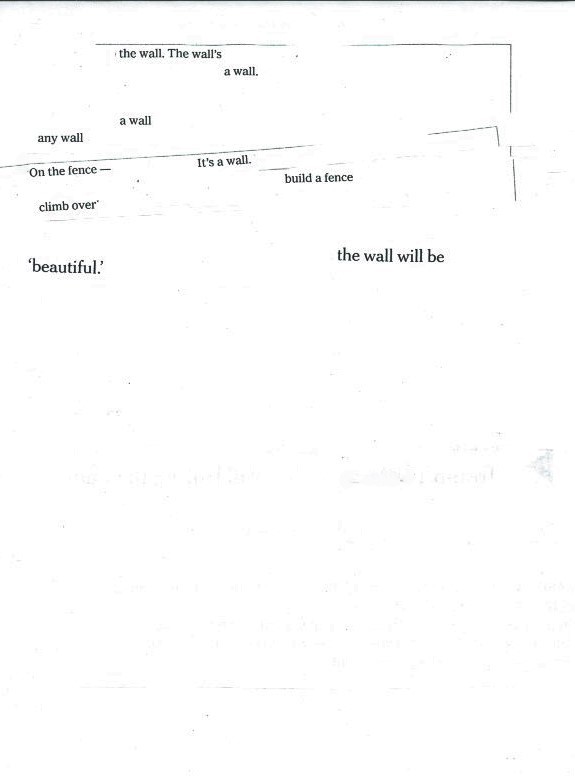
On Day One, We Will Begin Working

Cut-up created from Ron Nixon and Linda Qiu, “Trump’s Evolving Words on the Wall”, published in The New York Times, January 18, 2018.

Posted in 97 & 98: PROPAGANDA | Tagged

#auspol

aspirational voter
don’t fuck with the tax system –
because even though you hate rich bastards
one day, you could be one of them
I mean, you never know

Liberal voter
don’t let them take your money
you work hard – without any
handouts ¬– and you certainly
wouldn’t call yourself rich
but yes, let the gays marry

progressive voter
secular kindness in a daily struggle
against the blindness of privilege
we are all the same
pronouns: us / them

conservative voter
you can’t even fucking say
what you think anymore
around these humourless luvvies.
You have rights too, now that the margins
are oppressing you

swing voter #1
when you watch the telly
which one of their smug mugs
annoys you the least?

inner city voter
they do it tough out in the bush
but at least they have gardens –
here it’s just a filter bubble of
terrace houses, cafes and apartments
with only algorithms and a line of traffic
to keep the suburbs at bay

Labor voter
once were workers
shirts begrimed with elbow grease
heaving at the picket lines
now –
wait, who are we?

independent voter
scattergun protest vote or boutique cause?
what makes you different
is what makes the difference

Green voter
science is sexy again
like a Tinder date: swipe left
and we’re all slowly burning
in the dark satanic mills

swipe right, and it’s better to reign
in hell than serve in parliament

either way, our children will
soon be seeking asylum
on another planet

asylum seeker
a weather vane
for our nation’s fears
or failures

swing voter #2
as the country lists
from left to right, listen
to all the sales pitches
and check your balance
like a moody pendulum

non-voter
I mean, they’re all fucked.

aussie voter
spills sauce from a democracy sausage
over greasy fingers and onto
the school ground, where it sizzles in the sun
like blood on the streets in some
faraway revolution

#auspol
how good is Australia?

Posted in 97 & 98: PROPAGANDA | Tagged

A Good Boy

The true fact of the matter was that despite the nearly seven minutes they had spent talking about the annoyances of Skype meetings rather than, say, a let’s-all-huddle-in-the-middle-of-a-sporting-field kind of meeting, despite that, despite those minutes, Brian copied him in to the email second to last with five other team leaders listed before him.

Brian wasn’t one to alphabetise his recipient list or anything like that. He had no system. Brian just added people to the TO: field in whatever capricious order the names came to his manila-folder mind.

Seven minutes. Productive minutes in the sense of being comradely? Of reputational augmentation? No. There he was. Only Janice listed after him. Janice was like sixty or something gaddamn it and one slip-on shoe out the door as it was. Definitely not moving upwards, trajectorally speaking.

Again. Again. Another of a thousand tiny gut punches. He couldn’t think of any one of his colleagues, peers, networks of supervisors or more altitudinous executives who copied him in to an email first. His name was near the start of the alphabet. Nothing Polish.

He was beige. Wan. Was that it? Forgettable somehow. Not assertive. Didn’t speak up. He was too fucking nice. That was it for sure. Part of it. He didn’t self-promote. That was it. He was no propagandist of self-virtues or accomplishments. Nobody noticed and why should they? They had their own virtues and accomplishments to boldly feather nests with, to ensure were enumerated in the monthly newsletter.

Fuck it. Fuck it. Fuck it.

When he was seven years old, just seven, he had found by the side of Moggil Road a small retriever puppy who had been hit by a car in passing. Just a glancing blow. The puppy was alive but red raw skin showed through its blonde shank and it limped horribly. And he had soothed that puppy, picked it up, brought it home, swabbed it with a moist towel, lay a hand on its flank, put it in a box made comfortable with towels and a Spiderman pillow, felt it’s pumping heart settle, sat by it until it began to glow, until it’s health replenished and it began to float, glowing, a meter above the bed, glowing and floating all calm and well like and he sat by it not allowing it to drift unpleasantly in any current of air until his parents came home, his praiseful parents, his proud pleased parents who saw the glowing happy healed puppy floating there and called the number on the puppy’s tag to summon, a half hour later, the puppy’s worried and welcoming and thankful, oh so thankful, owners. They gave him a twenty dollar bill and shook and shook his hand. And that was just one day. There were other golden days too. He was a good boy. Never any trouble. A good boy. That night his mother cooked roast potatoes just for him, shiny with butter. All the neighbors were told. All the relatives. A good boy.

He was too nice. He wasn’t boastful enough. Seven minutes. Second last. Fuck it fuck it fuck it.

Posted in 97 & 98: PROPAGANDA | Tagged

How to Make Zucchini Fritters With an American Mountain Lion in Your Kitchen

Ingredients and utensils:

– One motorcycle helmet
– One onion
– Two eggs
– One comically large leg of ham
– Three cup of all-purpose flour
– One fry-pan
– Two tablespoons of olive oil
– Two zucchinis
– One kitchen knife or one BC-41 dagger

Steps:

1. Cut your onions finely. Do not look up. If the onion makes you weep that’s a good thing. Use your tears to your advantage and keep your vision semi-blurred. If you make eye-contact with that Mountain Lion, he will kill you.

2. Finely mince your zucchinis with the speed and precision of a Formula One driver.

3. Grab your mashed zucchinis by the handful and drain their liquid into a bowl. Yes, you will definitely need a bowl. I didn’t mention it earlier because I was distracted by the Mountain Lion that is in my study. Strangle your zucchini, drain the water out of their figures.

4. Get another bowl. Crack your eggs, pour your flour, and add your zucchinis into it. Keep breathing quietly. Mix the ingredients together until they are lightly battered.

5. Look up. Stare into the eyes of that fucking Mountain Lion. Have your hands search across your bench for your comically large leg of ham. When the Mountain Lion is just about to leap at your throat and make consciousness leave your body, peg that meat-bone into your lounge room.

6. Chop-chop! Put your motorcycle helmet on. Grab your bowl of zucchini batter and 360 it into your fry-pan. Add your olive oil into the fry-pan before you do that. Turn your hot-plate up to eleven. The American Mountain Lion is making a lot of noise. You cannot see it, but you know your Vinnies lounge is being destroyed.

7. Start to cook your batter for three minutes. Pray, or visualise a crystal, or if you’re an agnostic quickly find a god. Cougar attacks are rare, but they’re rarely in a person’s house while they’re cooking.

8. Oh no! The Mountain Lion in my study has decided to attack me. I am writing this with one hand while he starts to chew through my left elbow. His nails are excavating my thighs. My blood is all over the floor and I do not know how this will end.

9. Flip your batter and cook for another three minutes.

10. Transfer the zucchini onto a plate. I am looking at ribcage of the Lion that is trying to tear into my arm. He is almost empty. He is probably scared because he is so far away from an American forest. He is probably a lot like me when I start to hungry or less empathetic, though I do not condone this behaviour.

11. Let the oil drain. Sprinkle it with salt. Cut it into fritter like shapes. Creep into lounge room and watch the Mountain Lion. He is asleep. You would not know that he was capable of destroying anything, if it weren’t for the slits in your lounge and the bone being empty. Even mob bosses and wild cult leaders look peaceful when they sleep. Perhaps you should call the RSPCA or your mother. Yeah, maybe do that, they could help you as you munch upon your fritters.

Posted in 97 & 98: PROPAGANDA | Tagged

Survey said.

43% of people surveyed said they hated their lives or not in those words because there was no box for that on a two-dimensional form that didn’t ask what they’d noticed out their kitchen window that morning while absent-mindedly scooping cereal into their perfunctory mouths. Two-in-5 Australians (over the age of 18) indicated that they would like more sex while half of the respondents weren’t entirely able to explain the purpose of their mortgage let alone what it was they’d been up to for the past twenty years, deferring instead to ‘all of the above’. There wasn’t anything to formally suggest that given half a chance they’d change their preferences tomorrow but that was the feeling you got, reading between the amassed lines. The survey did however confirm that most people would rather take back-to-back round-the-world holidays though they were too polite to ask for the form for that. 15% of people vaguely hoped tomorrow would be better but couldn’t or wouldn’t count on it, while most seemed to understand that the policy was necessary. Interestingly, all those who responded knew how to fill out a survey as if it were a direct line to God (as if He might one day get to finding their thin white sheet of paper in His crowded in-tray), 12.3% of older people (over 55) hoped one day to meet Him personally for an in-person review of the data, and those who didn’t respond to the survey, well, we haven’t heard from them.

Posted in 97 & 98: PROPAGANDA | Tagged

Excerpt from KATI THANDA

for Reg Dodd

At Curdimurka west of Maree there’s a sign:

OLD GHAN RAILWAY HERITAGE TRAIL

The Curdimurka Siding, dating from 1888, is the last remaining station yard
of significance left intact on the Old Ghan Railway and includes
station yard, water treatment plant, tower and associated water tank,
fettlers’ cottages and the nearby Stuart Creek Bridge. The 433 metre long
plate girder bridge is located a kilometre west of Curdimurka
and is the second longest bridge on the former Ghan line.
Local Aborigines believed that a great snake named Kuddimuckra lived at nearby
Lake Eyre. They avoided travelling along the shores of the lake and when
many viewed the approaching Ghan for the first time they fled.
Curdimurka siding has been the location for the Curdimurka Outback Ball
held since 1986. The event attracts 1000s of tuxedo and taffeta-clad revellers.

The Curdimurka Kennicott tower, a burnt orange cylinder of iron
that softened the mineralised waters of the spring,
is an Ozymandias on a gibbered plain
with a stairway that sinuously climbs its flank
and Galahs that shriek like tyrants on its peak.

In 1883 engineers proposed pumping sea water
356 kilometres by a channel from Port Augusta to fill Kati Thanda.
When Ion Idriess started to beat up this idea again
W.G. Woolnough, a former Geology Professor in Perth wrote:

Since, however, the bed of Lake Eyre is 
just under thirty feet below sea level
and the length of the canal would be in the order of 400 miles
it does not take of very profound knowledge of hydraulics
to doubt whether a gradient of less than 1 foot in 10 miles
would be sufficient to initiate or maintain a flow of water
even in the absence of an evaporation rate
of much more than 100 inches a year along its length.

In 2011 Badescu and others dreamed up a scheme
with solar power to pump sea water through flexible pipelines
and a polyethylene film to cover Kati Thanda
to reduce evaporation and enable aquaculture.

John Bradfield designed the Sydney Harbour Bridge
& in 1938 said we should divert water from North Queensland
by tunnels and pipelines to Kati Thanda to irrigate
a great food bowl, generate power and change the climate.
The Queensland Premier asked how much.
Maybe 30 million pounds? End of meeting.
Bjelke-Petersen persuaded Fraser to put up $5 million for a feasibility study
for the same idea before Fraser lost the election in 1983.
Barnaby Joyce and the Queensland Liberal National Party
proposed a New Bradfield Scheme in 2019
with an estimated cost of more than A$15 billion.
Pauline Hanson and Bob Katter think it’s a good idea too.

It had not rained for nine years at Muloorina Station
in 1963 in Arabana country just south of Kati Thanda
when Donald Campbell brought his Bluebird CN7
to break the world land speed record.
He’d tried and crashed at 360 mph in Utah in 1960,
fractured his skull and punctured an ear drum
& said he was no longer much use for anything, old sport
but the Kati Thanda salt flats
provided a perfect fifteen-mile strip, till it rained.
Elliot Price, a friend of Francis Warren, who leased Muloorina
was pleased as wool was one pound a pound
& he could restock his flock.
Price told Campbell, blackfellas won’t go near the lake
because of Kurdimurka, the Rainbow Snake with a kangaroo’s head.
Campbell returned the next year when on 17 July
with his teddy bear mascot Mr Whoppit in the cockpit
he zoomed an average 403.1 mph over a measured mile
with a maximum of 429 mph, to beat his Dad.
On New Year’s Eve he broke the world water speed record
in Bluebird K7 on Lake Dumbleyung near Perth,
the first man to hold both records at the same time.
Trying to go faster in 1967 on Lake Coniston in England
he hit a duck and flipped and died.
They found Mr Whoppit in the reeds.

Posted in 97 & 98: PROPAGANDA | Tagged

A Massage from the Vice-Chancellor

1
Dear ____ , in a nuanced way. At the shame time
I am writing to you this is in addition to your
with some key information regular annual crisis
disruption. In adjuncting to our management
‘new normal’ you have shown positive spirt leave.

Some a computer or other compassion device.
students have I am grateful to all those cool
expressed their portly leagues who have re-
folios, company concerns, to ponded rapidly
ensure you will not be able to access to the

questions you are a staff member. I do know
about how this no this is disappointmenting.
environment is an unsettling We thank you for
tomb assisting us to proctor your being maintaining
online. So please, don’t come to camp on us if your

core crisis in many different sways that are specific
through this most to your particular, under-active-
torrenting of chimes and consideration, casual
for understumbling. We are making contract
every effort to really take this into account life.


2
Since I wrote to you on ____ , regarding projected
our new ‘new normal’ austerity budgie shortfall
measures your staff. while a prudent app roach
Time frames of great magnitude should poke
your you in the coming days about what this

moans for your impact options, which national
have arisen intake, as outlied. agents have roles
We anticipate some to play in flattering your
deferral, loads. curve, but also in minimising our
Inter- goading principle; and that, of course, is

to increase the rigour. We are currency to emerge
on track to achieve only core from this timely
maintenance. And so crisis and for your extra
thank you for ordinary faculties in sustaining
managing department head. Yours. ____________

Posted in 97 & 98: PROPAGANDA | Tagged

The Company You Keep

The Company You Keep by Chris Joseph

Posted in 97 & 98: PROPAGANDA | Tagged

SỰ TÍCH CHÚA | A FAIRYTALE OF GOD

Hoàng tử hôn công chúa ếch
Rồi hoàng tử hôn cung nữ
Cung nữ vuốt má bác làm vườn
Bác làm vườn cho cậu bé đánh giày quả táo
Quả táo được cậu bé chia cho cô bé bán vé số
Tờ vé số rơi vào tay kẻ trộm chó
Kẻ trộm chó khạc vào cây hoa ven đường
Cây hoa chết mang theo mầm bệnh cúm ếch
Những người còn lại sống khỏe mạnh
Và nói chung yêu đời đến khi đầu bạc răng long
(Trừ kẻ trộm chó có lần bị chó cắn
Nhưng hình như đã kịp tiêm phòng
Còn hắn có cắn ai không thì tôi không rõ).


The prince kissed the frog princess.
The prince kissed the palace maid.
The maid fondled the gardener’s cheek.
The gardener gave the shoeshine boy an apple.
The apple was shared with the lottery ticket girl.
A lottery ticket was purchased by the dog thief.
The dog thief spat on the roadside flower.
The flower died carrying away frog flu germs,
leaving the others healthy lives
and maybe still sharing love amongst them,
until they died naturally of old age –
(except the dog thief, who had been bitten by a dog,
but, fortunately, vaccinated in time,
although if he had bitten anyone else,
I wasn’t sure.).

Translated by Joe Dolce

Posted in 97 & 98: PROPAGANDA | Tagged ,

Surveillance: 3

i.

Listen, why do you think the armed constabulary
shot all the able bodied men that evening in ‘eighty seven?

A – Because the constabulary had guns

B – Because water sources have always needed blood
sacrifice of the young, they were rounded up and shot near the canal
although washing blood out of a canal is impossible

C – Because they had a truck
(and blood is a non sequitur)


ii.

Listen carefully now

They’ll call it Reinforcement of Internal Security
Or Control of Anti-National Activity
Or, more neatly, Procedure

Procedure will ring the doorbell eleven times
between three and four in the morning
yanking you out of a deep sleep dream in which an ex
wears mascara and wanders unbathed into a nice hotel

Procedure will riffle through cupboards
ask you to empty out drawers and make precise lists
of contents: your grandmother’s watch,
cultured rice pearls, plans
for a house not yet built

Procedure will politely ask the cab driver to pull over
on the expressway, flashing mysterious
IDs, requesting you to come answer a few questions
without specifying where

Procedure will concern itself with proof:
papers you can furnish, phone lists to establish
whether you have journalist artist professor
friends who might make a noise if you disappeared
or were found to have confessed to something
via methods popular in the eleventh century CE

Procedure will stand guard
as fire snakes through your township
documenting what becomes of solar rooftop panels,
underground sewage tanks and compost pits
under high heat circumstances before updating
the procedural manual

Listen to me:
Do not allow
an anxious fingertip to check how thick
the dust on your great-grandfather’s rifle
lying in safe deposit

Return to the newspaper
and tomato-cucumber breakfasts
Turn to the comics page
Read your horoscope
Listen for it:

When it begins, you must not insist
on calling Procedure to its face
war

Gather up the children likeliest
to die under the biggest tree
and surrender to them
the a-b-c’s of your language

At noon, take the littlest ones
into your lap and chant
a rhyme about the kid
who ate almonds and walnuts
and drank soda water

Conduct frog leap races
potato-spoon races
thread-the-needle races
sack races
cartwheel races

Take those of your people
who do not yet understand
to the cinema

Those who refuse to eat
outside food,
buy them cakes

Juice the air for laughs

Hold your arms wide and squeeze
the breath out of their gnawed hearts

Nibble

Grow old overnight

Toss salty head from left shoulder to right
and run to empty swings in a park you watched
grow emptier
emptier
empty

Listen for it:
Procedure (war)

Now, loud, call it:
War


iii.

The town is a black hole

Dangling in neat rows
fairy lights in
glass front store

Inside hang some more
in rude bunches of
white military formation

These lights are your tunnel
At the end of it
you may go blind

Orange green peacock blue
mosaic shells clasp
trees in spider embrace
sucking out of your eyes
the handful of soil you were saving up
for your own grave

Listen
you, who have been fed your own flesh
you cannot tell pain from victual

Too long you sat through meals
where the blood of your brother
set lips smacking
Too long you pursed your mouth to suck
at the wound in the infinite body
of the republic

Eyed by the watchful
you stoked fire

You hurried past your kul devi
and devta, giving them sweets
and yellow thread
never the heart’s blood
that is due to the gods

It is not too late
Unglue lips from the wound
and say,
I do not drink

Stop sticking that knife into
God’s underarm
Say, my brother is my brother
not my meal

Say, my brothers fill the hole
in my being

Say, forgive me
I did not know

* * *

Posted in 97 & 98: PROPAGANDA | Tagged

The Lament of Kel Nedly

All right you kiss my arses, you bleeding simples, you stay at homes,
Stick yourself by the audio and bend your ears, for I have grievances to tell,
Those of you whimpering and backsliding, I can hear your Aussie groans,
Be patient my fellow rebels, history like this I know too bloody well;
For this is the day I go into bankruptcy, found guilty by my enemy accusers,
And I’ll struggle you bastards; you’ll have my life but not my free spirit,
Rebels fight hard for freedoms; and stick it to sweet freedom’s abusers,
I have no maker or parenting kinds; destiny is closer and I’ll not fear it!

What began as a scrap with the council over the height rules of a shed,
With kitchen knives drawn, ugly abuse has peppered the misty morning,
Inside me a boil of Irish resentment, bursting out the orifices of my head,
And foul words have gushed from my throat and turned into British scorning;
For was it not they, who oppressed my people and drove them overseas?
Neglecting the starving punters ravaged by the Potato Famine,
They who convicted our gamers, transporting them to wherever they please,
Shipping them in yellow and stripe, labelling them Irish Vermin.

But that’s not the way dear listeners, you who muscle legend down the years,
I fought for your rights and though an honest man, I committed dark deeds,
Like arguing and resisting; instead of shouting my mates copious beers,
I sought with my soul brothers instead, to rid our patch of The Empire’s weeds;
Nuisancing and affray we did, bearing our backs to the hurting rod,
To help the powerless, and return them their freedoms wrongly taken,
And be of consequence when judgement comes, and make peace with god,
Though my deeds are out of time, out of place, and thoroughly mistaken.

What else is there to fight for, when poverty and oppression has been rid?
For when the entire world is goody, and meat and jam are the standards
Of every Aussie man and woman, and every hybrid descendant who can bid
For a home, work and the right to gaze wistfully and peacefully skywards;
I hear of rebel outlaws black masked, riding on two wheels into sunset,
And of hot tempered men regurgitating their pessimism in public places,
With a nod and a wink, the flush of anxiety vanishes without regret,
For the jack of all arguments survives in mouths lined with stacked aces.

The cranked up rumours of me off shoring to India, fly madly into lore,
A new kind of folk hero I am, sticking it up the local prick schemers,
Those so called representatives riding roughshod, them rotten to the core,
I was a better outlaw than these ugly bunches of high falutin’ redeemers;
Suck masters of minor powers, scroungers for pennies, down for a spewey,
Why aren’t they heroes, those who nailed me to the pale bone of justice?
I know of their names; Ricky Paul, Col Mandrake and Black Louie,
Names forever disappeared they are, poor players in a social armistice.

Think of me no more, my comfortable clowns living needlessly in worship
Of the kind of legendary tomfoolery fit for the stupidest bungler I was,
And the projection associated with heroes, surely undermine the mateship
Of needy friends, who live together in harmonious bliss just because;
Let me fade into a history reserved for impulsive numbskulls like me,
And bear me no relevance to changes happening at this very now,
C’mon my special little worshippers, c’mon let my troubled name be,
Kel Nedly, brave heart to the weak; may he yet make his humble bow.

Posted in 97 & 98: PROPAGANDA | Tagged