

Vicki Viidikas Rediscovered: Ali Alizadeh’s Q&A with Barry Scott

In May 2010, Melbourne-based publisher Transit Lounge will release a much-anticipated collection of published and unpublished poetry and prose by the iconic Generation of '68 poet and l'enfant terrible, Vicki Viidikas (1948-1998). The book, simply titled Vicki Viidikas: New and Rediscovered, has been edited by Transit Lounge co-founder Barry Scott. Cordite's reviews editor Ali Alizadeh spoke to him about Viidikas, her iconoclastic work, her unconventional life, and her legacy.

Ali Alizadeh: Could you talk about your decision to edit and publish Vicki Viidikas: New and Rediscovered? What's significant and exciting about Viidikas and her work?

Barry Scott: I first came to the writing of Vicki Viidikas through the prose poetry collection India Ink (Hale and Iremonger, 1984) and was so moved by her approach and subject matter that I quickly sought out her other three books, Wrappings and Knabel (Wild and Woolley) and Condition Red (UQP) all published in the seventies. A shared interest in India and spirituality can only partly explain the magnetic pull her writing exerts over me.

Vicki was drawn to outsiders and the empathetic way she writes about them could only come from someone who at times also felt marginalised and outraged at the way people who were individual or different could be ostracised. ‘I gravitate towards people who are misfits or trying to be themselves,' she said in a 1975 Vogue interview. For Viidikas writing was an emotional, intuitive act, often confessional but always carefully honed and realised.

While she often stated that her writing was not intellectual, it is intelligently crafted. There seems to be an impression in some circles that she wrote quickly and never redrafted which is dispelled by the extensive archive of her work that exists in manuscript form. The lengthy story ‘Cretan Boy, Sailor Free' published in New and Rediscovered for the first time, is further evidence of her fiction writing powers and her ability to write about sexuality and relationships in a way that was both perceptive and truly brave.

Writing well about emotions, male and female relationships, and the spirit is risky business, but Viidikas does it without sentiment and without aligning herself to contemporary theories and structures such as ‘feminism' and ‘political protest.' When asked in Vogue if she would be interested in writing protest poetry or social criticism Viidikas commented, ‘Writing a poem about the Vietnam war would be a futile gesture. Real value comes from personal experience. I am interested in personal truths for the poet.'

In the ABC Radio National broadcast ‘Feathers/Songs/Scars' produced by Robyn Ravlich, a fellow poet and friend of Vicki, Robert Adamson described Vicki's writing as ‘organic, holistic, courageous, adventurous, foolhardy, delightful, dangerous, non-conformist.' When reading Viidikas's work I always have the sense that she is holding nothing essential back, that her life and her art are inseparable, that here is a writer driven by the need to write and is ultimately always positive. In one of my favourite poems ‘Mamallapuram (Tamil Nadu)' she writes: ‘The ancient calendar revolves its execution – there's no moment too small for the birth of another dream.' It's a line that has become something of a personal ‘seize the day' mantra.

AA: Looking at her first published poem ‘At East Balmain', published when she was nineteen, it seems to me she possessed the desire to look for the extraordinary within the ordinary. She writes: ‘This day will be submerged in a thousand other days / yet I know distinctly I felt the glance of a figure / in a singlet, rolling cigarettes as his barge went / up stream.' Could you speak to this desire for distinction, attention and intensity of feeling in Viidikas's work?

BS: Yes, I'm glad you have focused my attention on that poem. It's finely observed, hinting at the connections between people that so come to motivate her later writing. It would be hard to imagine a piece of Vicki's writing that in some way didn't bore down into a feeling or emotional centre.

Elsewhere in the poem ‘a hermit dog lives here, in a burnt-out boiler turning / orange. He stays inside all day – I‘ve seen his eyes / glint in the dark, he is huge and black and solemn.' It's a poem full of understated feeling, of now and forever, of ‘the feeling of walking across the water, / without moving a muscle.' The poem's final emphasis on the fragility of life, the description of a dead rat ‘grey and stiff, with his tiny mouth open, arms stretched about his head' is counterpointed with an earlier description of the eternal nature of the river, ‘clear water washing million-year old stones.'

It did not surprise me that the word ‘eternity' was mentioned so much in her unpublished writing. In an interview with Hazell de Berg Vicki said ‘writing for me is process of drawing the spirit out of myself … It is to me in its simplest sense a religious feeling that I want to pursue and discover in myself.' Vicki was someone who saw and felt things acutely and possessed the gift to write those feelings and experiences into words.

As her friend Kerry Leves writes in the introduction to New and Rediscovered, ‘Vicki lived a full life; she embraced experience, even flung herself into or out of experiences, but not in search of something to write about. Her living like her writing was guided by a commitment to going against the grain.' The intensity of feeling in Vicki's work comes from its lived and often unconventional truth, a lifetime of seeking answers to the big questions that never ignored or sidelined those people the mainstream often saw as losers.

AA: Viidikas's first collection of poetry, Condition Red, was published by the University of Queensland Press in 1973. It's a remarkable debut, both in its confidence and courage to deal with deeply personal, sexual and unsettling themes (something that was perhaps considered controversial in the context of 1970s women's poetry) and also for its subtlety and sophistication. The poem ‘They Always Come', which I'd like to quote in its entirety, is a candid, gritty, and at the same time ironic and uncanny anticipation of her literary afterlife.

They Always Come

When they have taken away
the childish laughter and dog-eared books,
peeled off the last mush embrace,
given the girl
her lipsticks, hair rinses and pills

When they have poured back the drinks
as long as empty deserts,
returned the spurs to the one-night stands,
taken off the overcoat
and riddled her bed with song

They'll find
a mirror smothered in lips
a vacant room with stale cigar ash,
an unpaid bill for a Turkish masseur,
a woman's glove by a handsome typewriter

They'll see
charleston dresses of the mind
with their fringes running like blood,
a list of men's names
from childhood to eternity,
they'll dig the very fluff from the floorboards,
examine the stains on the manuscripts

Which drug did she take?
Which pain did she prefer?
What does the lady offer
behind the words, behind the words?
Their criteria will be:
so long as she's dead we may
sabotage and rape

The possibly sardonic tone of the poem notwithstanding, what do you think Viidikas offers ‘behind the words' of her poems?

BS: I agree Condition Red has become a legendary classic because Viidikas wasn't afraid to write about previously taboo topics such as rape (‘Punishments and Cures'), drug use (‘Loaded Hearts') and sexuality. ‘They Always Come' seems to arise from an intuitive feeling about how the writer, the artist, the woman life's may be inappropriately used after her death.

In some ways it has come to be seen as a feminist poem and as presaging Vicki's own fate, though Viidikas was a complex person who, when asked by Sandra McGrath in Vogue if she considered her poetry feminist, answered, ‘I suppose it is – though I don't see it that way. Sometimes when I am writing a poem I am conscious of being a female, but not overall.'

My sense of Vicki's work is that in focusing on the body, the spirit and the emotions she was drawn to and understood the vulnerability that exists in us all, male and female. She writes sensitively and intelligently about men and women. In the very early story ‘Tambura in Darlinghust' there is an exquisite understanding of Gray's infatuation and ‘perfect loneliness', and elsewhere Viidikas taps into the vunerability of her male characters, the alcoholic in ‘Not Harry' or the burly slaughter man in ‘Letter to a Macho Man'.

The sardonic tone, the anger is often there but is counterpointed by a depth of understanding and an exploratory intent. As Kerry Leves has commented Vicki has the ability to make ‘a single image ramify into a nuanced conceptual arrangement.' Her poetry and prose often reverberate with a single image that opens out into layers of meaning. Behind the words the lady/writer/individual is ultimately alone, ‘the last permanent resident' (‘A View of the Map' from Wrappings), conflicted about which world to live in, always ultimately searching for Love. ‘Did You ever have this conflict / of which world to be in, / Queen, with cards stacked/creation on Your deck?' (‘Durga Devi' from India Ink)

AA: With the publication of books like Condition Red and others, as Stephen Oliver has written, Viidikas had ‘the Australian literary establishment of the late ‘60's and ‘70s […] open their arms to her – success was hers for the taking.' But it seems to me she preferred to live a full, eventful life instead of pursuing literary glory. Could you talk a little bit about that, about Viidikas's travels in particular, and about how experiences such as living in India shaped her writing, culminating in her last published book, India Ink (1984)?

BS: In 1972 Vicki received a young writers' grant from the Commonwealth Literary Fund and went overseas for a year – to England, India and Asia. India made a deep impression on her – and in spite of the caste system she could see that the different, the outcasts of society were allowed to be themselves.

Cities bared their souls and a richness of life and spirit was not tied to material wealth. ‘Listen … I learn more here in one hour than in one year of being alive in Australia, and there is no hot water on tap' (‘Rich in Madras'). I remember Vicki's mother, Betty Kunig, telling me how much Vicki wanted to take her to see India, to show it off to her. As journeys there grew longer and personal relationships developed it must have increasingly felt like home to her.

Certainly India, despite its frustrations, became her spiritual home and a major character in her writing. Gray, the character in the story ‘Tambura in Darlinghurst' fascinates Felina because he lives as an Indian: ‘He lived and breathed as an Indian.' India figures in Vicki's writing from very early on and India Ink is arguably the best Australian writing about the subcontinent. India is never romanticised, yet the poet captures its spirit and contradictions.

Viidikas kept an extensive diary of her time there and as well as India Ink worked on her novel Kali and the Dung Beetle, almost published by McPhee Gribble at the time. Hopefully a full version of the novel will be published in the future. Thanks to Vicki's mother, Betty Kunig, and sister, Ingrid Lisners, an excerpt is in New and Rediscovered. A number of illustrations that Vicki did in India also appear in the new book.

The volume of Vicki's writing and the seriousness with which she regarded it is indicative of a writer who deserved to be published more in her later years. Her exploratory subjective tone and voice seemed to lend itself best to short fiction and a form of prose poetry that was perhaps less fashionable in the nineties, while her novel Kali and the Dung Beetle always seemed to just miss out on appearing in print. Experience and art were, for Vicki, one and the same thing. And while I suspect that it was a disappointment for her that her later work was less published the rewards and daily discoveries that her writing revealed to her were significant.

AA: You've included ‘Lust', perhaps the last poem Viidikas wrote. It is a haunting meditation on a lifetime of rejecting social norms and conservative mores. She concludes the poem by writing: ‘I would rather live on flowers, / and a diet of grace. / I may be the last spinster.' Can you talk about the legacy of this exceptional poet?

BS: Vicki's question in that poem ‘Who will bring back the beauty, / the ecstasy, the mystery / of creation?' mirrors her preoccupations with writing the body and the spirit. In ‘Durga Devi' in India Ink she writes ‘why am I never right/to come to whole love/in this world of flesh and men.'

In a way ‘Lust' posits a rather unfashionable view that seems brilliantly Vicki but is also deeply felt. I am positive that Vicki's rich and undervalued legacy of fiction writing and poetry that so beautifully explores and questions relationships and spiritual meaning will speak to a new generation of readers. In her life the rich, glamorous ‘perfect stranger' driving her across the Harbour Bridge, Hendrix playing on the stereo (‘The Snowman in the Dutch Masterpiece' from Wrappings), became an ‘emptiness', but one perhaps she ultimately craved because it allowed her to be true to her art and herself.

‘I wanted to write a poem of the silence of the desert. I wanted to leave the body and enter the heart of the mountain … Right now I am mutating into a wordless book – when I‘ve done writing I‘ll send it to you. This is not a death wish, a severed tongue or a headless fool – I'm swearing with illuminated ink, to get it right, right.' (‘Illuminated Ink')

‘So I tied the red string and it/ fluttered like blood against pure white stone. In that moment I believed in eternity forever.' (‘Tomb and String' from India Ink)
Posted in INTERVIEWS | Tagged , ,

Zombie Monster Pizza Man

Zombie Monster Pizza Man
stands outside your door,
his zombie monster pizza van
makes a graveyard roar.

Zombie Monster Pizza Man
demands you let him in,
his zombie monster deep-dish pan
is tucked beneath his chin.

Zombie Monster Pizza Man
shouts to you ‘come quick',
then shakes your zombie-Pepsi can
and gives dead lips a lick.

Zombie Monster Pizza Man
stands in front of you,
his zombie flesh all grey and tan
with holes you see right through.

Zombie Monster Pizza Man
wants a pizza you:
he'll slice you into zombie ham,
then chew you, chew you, chew.

Posted in 39: ZOMBIE 2.0 | Tagged

Mary Shelley’s Man

singed
and restless stretched lulled father's casting
womanhood caterwauling fevers, death and the
joined to creature knowing
not born

black dank cold break with clouds
rush of consciousness confound
with the ache and throb of
life stitches blue/green/yellow/red
bruises' kisses everywhere

black dank cold river mirror split
like paper down the ark of him
words will him to believe
black the warm thrump-thump of Percy's chest
snap man this head rusted with clouds
and the blood break hands
lumbered out

Dada's mirror children
eaters of gently trailed fire
when he came
she knew –
corpse scent
open grave part fire
his smell, rush of consciousness
confounded with the age bongggggggggggggg
mist rolling on –
her in her wooden wheels and bells echoing tolling
cold ink-stained hands defied
the fingertips trailed gently came

this head rusted with clouds
and the blood break hands
joined to him groan of sky-bolted by a storm tearing
mountain pain
half-sunk, his head rusting
joined to him her fingertips tearing
joined to him by a storm of ice

Posted in 39: ZOMBIE 2.0 | Tagged

A Corpse-Flower Blooms: Haiku Cycle for a Zombie Plague

Lady Day's “Strange Fruit”
Makes me laugh tonight, thinking
Apples walk the earth.

Shooting stars at night,
Smoke drifts from the research lab.
Resurrection day.

Plant the bodies well,
Or before the warm spring rains,
They sprout like new buds.

A bloom pushes up,
Corpse-flower atop the mound —
Not petals, fingers.

Empty holes for eyes,
Nostrils stuffed with graveyard moss.
Why does he need brains?

Bitten by strange fruit,
Her face still looks familiar —
With death comes hunger.

Family dinner:
Mom bites Dad, Dad bites children.
Together, they feed.

Watching from the woods,
Houses go dark, one by one.
Soon, the screaming stops.

Harvest moon shines red,
Icy clouds spread through my blood.
A bite wound, weeping.

Chilled by winter wind,
Crowds come groaning at my door.
I must join them soon.

Hungry wind moans low
The buildings are all empty.
Dead things should not breathe.

Posted in 39: ZOMBIE 2.0 | Tagged

gunkMother

          It's about that night Owen cut my gut, put in a Ruby and spoke
          herpes to me. It's about Number – how it is everywhere
          anywhere. It's about that night Owen chewed off my left hand
          and grew a spider for me; that night Owen chewed off my left
          leg. It starts in a car but ends in a bath, somehow. There's an
          eel in there too, in my mouth, twice. Owen's a painter, he
          paints realities, believed implicitly. His voice was so clear I
          don't remember a thing he said. Owen is my gunkMother. I'm
          his baby. By the end I always feel dead.


A crack opens in the membrane, anticipation drains my cortex of blood – sends my skull
buzzing. A cold edge, the sign reunited with flesh – pain kisses me swiftly
in the belly.

Owen's rice-paper lips split my skin. His tongue: a sharp wedge pushing
the cold prismatic centre in. Owen lives inside me radiating fire light geometry.

I watch through my eyelids – street light comets career over head, a trail of algebraic
formulas sing with the flat thrump of tires on rough road outside.

Owen's heptagonal voice spreads cavities in my mind
flesh holes in my sky ridge, his creeping serpent infects my flesh. Owen is the voice
inside the dark well of this virus – iris lips kiss my belly from inside.

I drink his word sounds – liquid sand suspended air in take. A bloated eel decomposes
inside this evolutionary vessel, a tongue turns in my mouth. My left hand and foot waver.
Each pore a vital interruption in the veneer. I scrutinise the integrity of my composition.

Owen's in the corner eating shadows all around me with fingertips, enveloping
ba by bo dy my body is a baby, worrying. He pulls at my throat – seems very real now,
carries: sea weed green bottle suspended sand vermilion Ruby rattle, lifts it to my eye –
sea weed green bottle green weed sea throat see see see vermilion sand sounds under my
tongue – with in my nerves.

Owen watches me from behind curtains – from 3rd step chest caged ribs listening
for my heart beat babee babee babee. Owen lifts me from the bathtub capsule cradle
runs lips across my skin, chews my left foot off at the ankle, comes from curtains
runs lips across my calves, comes from step, sucks at the back of my knees
with creeping serpent flesh – pausing, leg in hand…Owen watches a moth fight
on coming head lights.

Owen's crystalline face radiates nebulous symmetry, light emanates from 10 co-ordinates,
exits my stomach at the ratio 7 to 3. A fire light geometry. A hole in my sky ridge
closes, Owen has woven a fresh skin sack contains me underthick airwater
my bones grow moss. I hold my nose, there's an eel in my mouth. Owen performs
clenched jaw surgery – my left wrist is exposed bone teeth marks, tourniquet of newly
wound hair tightens, pain patterns the wall with ancestral designs show time of death
sex melting point.

His spiders leap across the room drinking in the sounds emanating from the stone
under my skin – rearing up – the curvature of their heads caught in the light from his eyes
strike fire fucked fangs into my severed wrist create me a new spider hand grafted
to my body baby by Owen the gunkMother.

My left spider watches me. It is strong. 8 nimble fingers crawl around dragging my arm
behind them – an abdomen melded to my wrist, dark hair contrasted to my blonde.
My left spider wipes the sweat from my brow. It frightens me. I close my eye mind
fluid chest pain warps sand air sack surrounds me – world expands
contracts expands contracts. I see in 4/4.

Owen's fingers fan pigment: futures spill in to sand: a fire glass amalgam.
Owen's tongue casts phonemes, patterns in waves encircle me in vocal sensitive sleeve
skin snake shed thread bare in can tations roll in with the swell. Owen consumes
birth sack slides from before my eyes vertigo gondola pitches my Venice is sinking!

Owen stands beside me – bun dled vi bra tion trans lu cent ap par i tion so lid im plod ing
phan tom. My left spider runs dark legs across his hair – neck – chest – nipple – feeding
scars with in crimson skin. Viral tendrils fondle my nerves, invade my equation.

Owen feeds a new space freshly ground Jasmine flesh – the pigment of white. He offers
me a bloom, pale lips speaking scent with out breath. Around me Porcelain grows cold.
My left spider is crying, trying to climb out of this bath. Vermilion Rubies flow from me
rattling down the drain.

Posted in 39: ZOMBIE 2.0 | Tagged

Gilbarco

[audio:http://cordite.org.au/audio/burton_gilbarco.mp3]
Gilbarco (1:05)

Posted in 39: ZOMBIE 2.0 | Tagged

Life with Mr Darcy

The nights are distilled into unmentionables.
He comes home and stands over my bed. Candlelight
on my face is filtered through the stake holes
in his body. I am suddenly aware of love – the constant
dripping, the smells, the vulgarity of a husband
deprived early of his teeth. In the kitchen,
the axe and hammer are my austere companions.
He takes his bread with entrails, the remains of a severed arm.
My sister Jane, with a banged-up sword sticking out
of her torso, ate his heart one night while visiting with Mr Bingley.
A large spider lives in there now, spinning. A cobweb
covers the cavity. Never in any danger of falling out,
instead it lures in prey. What is the mouth
if not another orifice for hoarding foreign objects.
I darn his wounds, wipe the filth from his rotting toes,
recollect the moment he tied my hands and feet
on our wedding night. I am here to honor him. It is a ritual.

Posted in 39: ZOMBIE 2.0 | Tagged

We Came Out at Night

The workers never ate despite the creatures
nesting in the jigsaw rot of their throats, their shrunken
lungs. Father released them nightly
from the stable. They shuffled towards the formaldehyde trough
for a dip and then dripped their way to the cornfield.
The oldest, Dió, wore a face that was a motion
picture of centipedes and shifting holes. He took care
of our baby sister ever since she stopped crying.
She sat on his lap – a silent grey thing with her torso stitched tight
against the cold – while indoors
Mother banged her head against the kitchen wall.
Brain matter swarmed to our lips. She tasted
the way a rubbing of wings takes place inside a body.
She was dank. All the animals she ate in the past possessed her
as she had taken possession of us.
Father never survived the drought, but rested
for years in our bellies – with his useless rifle, his missing foot.

Posted in 39: ZOMBIE 2.0 | Tagged

Parisier Platz

The zombies are too excitable, it is graveyard here.

Look how Quincy Jones everything is, how Michael Jackson –

Posted in 39: ZOMBIE 2.0 | Tagged

Man About Town

who turns up to every party
late and slow
and seeks the bar
with an ant eater for a face

who shakes but does not dance
who barely keeps sentences together
but instead leaves them
spread out between mouths
like washing hanging
on string between
old buildings in Europe

who makes up every dollar
he's ever earned, who tears tissues
with earthy fingers
and fills the salad bowl with
the smell of rats

who is found hugging a pot plant
after the music stops,
who does not want to go home
and tried to eat every handshake

who wears American
highway-cop sunglasses and passes
out on the couch
between conversations, whose
pants come with black hole pockets
for small change and fivers

who hits on girls in posters
and leaves lichen-like drool
on fluffy pillows where a little sister
was to sleep that night

who is found the next morning
in the stairwell, stinking of the grave
and undergoing a terrible chrysalis
and twitching.

Posted in 39: ZOMBIE 2.0 | Tagged

The Zombie, Rejected By His Human Lover, Responds

– for Megan Thoma
 

I'm writing this with my finger,
dipped in the pulp
of my own clotting blood
on the concrete
wall of a parking garage.

The air was a blurry
headache the night
I first saw you,
skin aglow like starlight
on a sidewalk,
some candle
I lack irradiating
the stained-glass sea
in your eyes.

I don't remember what bite
or voodoo narrowed
me to this undying season
of wanting. I only
know I'm hunger. I'd swallow
myself if I could.
I can feel myself
decomposing. I shake,
and shake.

I'm an orchestra of lurches,
a spell of falling,
I couldn't help but tilt
toward you, but what amazed
my wilting mind
was that you saw
the telltale angle
of my stumble,
heard the primal
deep of my smeared
excuse for language.
You knew what
I was and took
me home anyway.
In this I might be no
different than any man.

Here is something no
other human knows:
every night in the sting
of cool right before dawn
we gather, all over,
a rotting congregation.
Some compass
in us inclines
our faces toward Pluto,
and we will turn
toward it as one
and hum a graveled,
shivering hymn.
It has no words.

Last night I shuffled
not to the pallid
rooftop where we gather
but wavered
outside your window
as you slept and sang,
not to the underworld,
but to you. I'm
in orbit around something
new. I'm now something
other than what my body
demands of me. Sweet,
I love you for more
than your brain.
What other man
has ever said that?

Posted in 39: ZOMBIE 2.0 | Tagged

the dam

There is a woman at the bottom of our dam. Her blood makes the water black. I know it because I can smell her bloated body and her rotting skin and the poisonous gas coming out of her cunt. The boys seem to know it too, without really knowing it and they hover around the dam, sniffing the air like skinny dogs.

The boys swam in the dam until a few days ago. They wear shorts down to their knees and their torsos are so narrow that they look like they are eleven and not thirteen. Their nipples are the size of fingernails.

My nipples are nearly as big as my breasts. I lie by the cold glass of the windowpane and watch the moon becoming full. The bones of my hips are creaking to make a space for it. The house is creaking too, settling into its wooden frame as the beams contract with the cool of night.

In the morning I count the freckles across my nose and listen to the boys calling out to each other. The mudguards on their bikes rattle over the ridged bare earth near the dam and the dogs bark and pull at their chains. I cannot swim this week. Even if she was not there, I could not swim. I sit in my room and watch the boys through the open window. Her stink is on the breeze.

For two nights there is no moon. The house is moaning. The boys are murmuring in the room next to mine and I don't know if they are asleep.

Then there are stars again and silence. The silence of people sleeping, cows sleeping, fields of grass and crickets sleeping, given up on the hope of rain. But there is a sound on the night, a sound so low that no one else could hear it. It comes from the deep of someone's throat. The tips of my toes brush the cold wood floor and it feels like the surface of water.

Outside the dam is so dark that it is a mirror. My reflection is black and white on its surface and the moon is a fingernail clipping tonight. My breasts point down at the water and the mouths at the end of them are open like the beaks of hungry birds.

Posted in 39: ZOMBIE 2.0 | Tagged

Friends

Are

slight

figures,

thin as

flames:

they dis-

appear

and

a

grey

mark

shows

on the

ceiling,

smelling

of smoke.

Posted in 39: ZOMBIE 2.0 | Tagged

A Void in the Windscreaming

I mean: It is the impact of speaking to you again, now you are dead.
Strands of your hair against my skin and petrol fuming. A hole
in the windscreen and your empty seat. Blindness
after the on coming light. I mean: There was this accident.

I woke with images in my fingers: your bent shadowface with in my spiral print.
Blood offered a mirrored surface. I watched your reflection dry
into non being – are you listening? I would sing to you but do not have the breath.
Would you listen then? Move your eyes again?

My heart is compressed chambers, flooded by collision: the desire for movement
at speed. The bend came with rushing light, windscreen beckoned: last threshold
first flight, launch velocity reached in an instant – you parted glass – aperture
for moon seen in red blue red blue red blue lights,
light my heart from inside: it is far too dark in here.

A tyre spinning against the blown out sky holds my attention.
Bright animals come with sand for this new ocean floor.
The sea withdrew tomorrow – left me stranded, took you.

I mean: There was this accident. Everyone woke up dead, not everyone woke up
up dead. There were lots of dead. I mean: up side down fast sparks lifted
from my hair. Up side down glass shifted. Up side down arms dangled
hands puffed up, swollen with blood and head. My head was full blood.
Too full blood in side out. Too much blood came out, out came too much up side
down me up side down you out side down looking with dead sheep eyes wide open wide.
Are you listening? I mean: There was this accident.

Bright animals are cutting my frame – do I exist in their world
of breathe breathe breathe? My flesh sack lured into space by gravitational pull
of bright moons, the blatant scope of the sky an irrepressible expansion.
Stars shed skin across a car's underbelly: exhaust, suspension, drive shaft.
I orbit. Time reflects off moving parts, a relative perception, light's receding deflection:
drive exhaust shaft suspension

I orbit. Hear the human watch garden: billions of ticking time pieces craving
union. A breathing plantation of gilded gold cogs chewing time.
I orbit. See a distant rotation: red blue red blue red blue lights,
light my heart from inside, Mother – it is far too dark out here. I orbit
your empty seat speaking my on coming blind ness
your stranded hair fuming petrol through a void in the windscreaming
are you listening? I mean: There was this accident.

Posted in 39: ZOMBIE 2.0 | Tagged

Zombie 2.0

We know more about the undead species who have lived in our hearts and dined on our minds than ever before. We have probed into their weaknesses, evaded their tricks and know well of their canny (and uncanny) chicanery. We know these things … because they were once like us. Let us not rest on our laurels. Let us be vigilant and as ready as we can be for the uneasy future that is Zombie 2.0.
Continue reading

Posted in ESSAYS | Tagged , , , ,

Visiting the Perth Writer’s Festival

Occurring each year as part of the Festival of Perth, the 2010 Perth Writer's Festival was held on the Labour Day long weekend at the University of Western Australia's Crawley campus, right next to the Swan River. It features both local and interstate writers with special guests from overseas and includes poets, novelists and book designers along with local anthology creators, publishing houses, independent publishers and zinesters. Significantly, all poetry panels and events this year were free which made it very easy for those who were curious to simply drop by.

Continue reading

Posted in GUNCOTTON | Tagged ,

Ali Alizadeh Reviews Tatjana Lukic

la, la, la by Tatjana Lukic
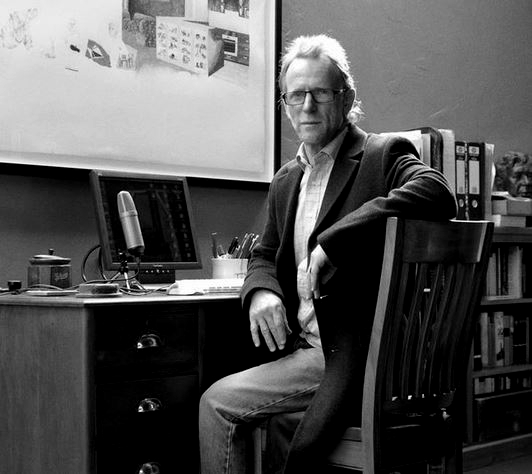
Five Islands Press, 2009

With the success of novels and short story collections such as The Slap and The Boat, it seems multicultural writing is enjoying something of a revival in Australia. Yet poetry written by non-Anglo-Celtic Australians does not usually garner much recognition. It is the prose narratives of dislocation and cultural transition, and not poetry dealing with these themes, which are de rigueur. In a perfect world, the first and sadly last English collection by the late Croatian-Australian poet Tatjana Lukic would be attracting a great deal of attention due to the poignancy and wisdom of her poems, regardless of the book's structural flaws.

Continue reading

Posted in BOOK REVIEWS | Tagged ,

Under Government and Restraint: Tim Jones Interviews David Howard


Photograph from Tuesday Poem

After serving as a pyrotechnics supervisor for acts such as Metallica and Janet Jackson, New Zealand poet David Howard retired to Purakanui in order to write. His collaboration with photographer Fiona Pardington, How To Occupy Our Selves, was published in 2003. The Harrier Suite appeared in both Best New Zealand Poems 2004 and The Word Went Round (2006). In 2007 David worked with Brina Jez-Brezavscek on a sound installation, The Flax Heckler, in northern Slovenia. On 18 September 2009 soprano Judith Dodsworth premiered Johanna Selleck's setting of his lyric Air, Water, Earth Meld at Melba Hall in Melbourne, and in December 2009 [after giving this interview] he received the inaugural NZSA Mid-Career Writer's Award. His poetry has been translated into German, Italian, Slovene and Spanish.

Tim Jones: I hope I’m not being unfair when I say that your profile as a poet is comparatively low within New Zealand, despite your impressive track record. On the other hand, you have worked extensively with overseas artists. Is the international aspect of your collaborative work a matter of choice, necessity, or a little of both?

DH: Profile is determined by third parties who are immovable objects before the irresistible force of authorial ego:  «Ho, ho, I am The Toad, the handsome, the popular, the successful Toad! » To get a reputation you need to behave as if you already have one. But I prefer pyrotechnics to talking about words, which are best left to their own wicked devices. My modest profile reflects my immodest choices – although choice is, as you suggest, the acceptance of necessity. Maurice Duggan was right: 'If one sort of life becomes, in some aspects, impossible then another must be devised.' I can't regret working with the All Blacks or touring with Metallica, so I can't regret the invitations that never came to present my poems, nor can I deny that I'd have enjoyed such invitations. There's no conspiratorial mystery here. Despite my physical absence, I've enjoyed ten fifteen twenty years of respectful reviewing. It began with Kendrick Smithyman:

… a sense of shock, an uncommon astonishment at the extraordinary poise which is part and parcel of these usually quite short pieces. They are admirably judged, they last long enough to get their various effects but not longer. A certain authority matched with an appreciable intelligence, a body of information used with taste guides the reader into puzzling and on to delight, under government and restraint.
(Auckland Sunday Star, 30 June 1991)

And, despite the febrile silence of my immediate peers, it continues with the younger generation of Richard Reeve, Anna Livesey, Emma Neale and Kapka Kassabova:

David Howard is a mystery figure on our poetic landscape. Sparse in his output, virtually invisible to the media and involved for the last few years in staging entertainment shows around the world as a pyrotechnician, he belongs to an endangered species: the truly independent artist who remains quietly active throughout the years… In poems like ‘Care of the Commanding Officer', ‘Cain', ‘On the Eighth Day', ‘Dove', ‘To Cavafy', to name but a few, the cerebral blends with the visceral with a brilliant lightness of touch.
(New Zealand Listener, 2-8 Feb 2002)

It's valorizing spin to quote Hofmannsthal, ‘Die andern wollten mich daheim zu ihrem Spiel,/ Mich aber freut es so, fur mich allein zu sein.' (‘The others wanted me to join them in their games,/ But to roam freely and alone is what I like.') Like everyone else, I need to work and play with people who are interested in what I do. After all, the faithless man discards himself.

Having worked with artists (Paul Swadel, Mark McEntyre, Jason Greig, Minna Sora, Eion Stevens, Fiona Pardington, Kim Pieters, Garry Currin and Len Castle) I wanted a more compressed process so my interest shifted to composers. Who? Anthony Ritchie has creditably set poets but I don't like his music. I'd like to like it however, as philosopher Alan Musgrave points out, we don't choose our likes or dislikes nor do we choose our beliefs. Like attracts like and, happily, unlike. So far I've worked with three composers: Marta Jirackova of the Czech Republic, Brina Jez-Brezavscek of Slovenia, and Johanna Selleck of Australia. I'm hopeful there will be others.

When most of my contemporaries (and potential listeners) are rocking backwards and forwards to variants of popular song, why am I attracted to the art song, oratorio and songspiel? The latest hit song gives us the liberty to be superficially involved but still enjoy; it is the artistic corollary of casual sex. A contemporary classical piece demands commitment before it surrenders its charms.

Karlheinz Stockhausen, speaking about Stimmung, asserted: 'One listens to the inner self of the sound, the inner self of the harmonic spectrum, the inner self of a vowel, the inner self.' I hear that as a Kantian challenge to respect the autonomy of whatever and whoever. To write poetry is to write music; to set poetry to music is to render the cause an effect. Every note questions the text it supports. Each of my collaborators has the modesty of one who understands ‘the fascination of what's difficult' (Yeats). They care more for the material than for attention – otherwise why set a poet from New Zealand? Marta's answer: ‘I see that it is a country of miracles.‘

TJ: Reading Richard Reeve's 2001 interview with you in Glottis 6, I got a strong impression that you are largely out of sympathy with the current state of poetic practice in New Zealand – both with much of the poetry being produced by individual poets, and with the infrastructure by which poetry is published, reviewed, and brought to the attention of its potential audience. Is that fair comment, and have your views changed since 2001?

DH: As the view has got darker (it must have, look at all those stars!) so have my views. But I've been lucky enough not to wake up a curmudgeon who is bruised by youthful failure. I still smile at the horizon as I sip coffee that is stronger than my attraction to the NASDAQ. When I arrive at my desk I find the draft of a literary quiz; it begins 'Which top or leading New Zealand poet is the subject of these lines?'

Because his subsidy comes from the State
For teaching self-expression to the masses
In jails, nut-houses; worse, in grad-school classes
In which his sermon is (his poems show it)
That anyone can learn to be a poet.
With pen in hand he takes the poet's stance
To write, instead of sonnets, sheaves of grants
Which touch the bureaucrats and move their hearts
To turn the spigot on and flood the arts
With cold cash, carbon copies, calculators,
And, for each poet, two administrators.
In brief, his every effort at creation
Is one more act of self-perpetuation
To raise the towering babble of his Reputation.

Small wonder that his subject matter's taken
From the one sphere in which his faith's unshaken
As, fearful of offending powers that be,
He turns his gaze within, exalts the Me,
And there, neither with wit nor with discretion,
Spews forth page after page of mock-confession
Slightly surreal, so private, so obscure
That critics classify his work as "pure"
Because, in digging through the endless chatter,
They can't discern what is the subject matter,
And so, instead of saying they don't get it,
They praise the "structure" they invent to fit it.
He has no fear, for when his work's reviewed
Friends do it; thus, he's never gotten screwed.
He'll do the same for them, and they remain
Pals in the literary daisy-chain
Where every year, like Hallowe'en surprises,
They pass each other fellowships and prizes,
Include each other in anthologies
And take their greedy cuts from poetry's moldy cheese.

You're wrong, it's not Bill Manhire. But your inference makes my point. I hear you clear your throat. Of course the question was unfair – a low blow intended to double up the reader, albeit with laughter. That excerpt is from The Narcissiad (Cedar Rock Press, 1981) by the American satirist R.S. Gwynn so the situation described is typical rather than particular. Typical of what? An institutionalized poetry scene such as has developed here over the last three decades.

When Richard Reeve asked I responded with something so obvious that no one was saying it out loud. The first responsibility of an institution is to export its values, its valuations, in order to extend its longevity and therefore make more money. The imperative is economic rather than poetic. This means that statements by the representatives of institutions should be viewed as propaganda regardless of their truth quotient. In other words, whether the statements are true or not, their primary purpose is to impress rather than inform. The International Institute of Modern Letters (IIML) is infamous for referring to itself as famous; the frequency of repetition is Orwellian yet commercially irreproachable.

Institutional or not, we do seem desperate to puff up our chests and strut like roosters across a painfully small backyard. It's not enough to hum I Wanna Be Adored by the Stone Roses. When Andrew Johnston asserts that Manhire is ‘our best poet' then I hear Johnston's ambition rather than Manhire's achievement, which is brilliantly derivative and reaches beyond American models to Old English wisdom poetry and Norse sagas. Allen Curnow's polished poems appear to have been written primarily so they (and their author) could be admired, while James K. Baxter insists on repeating stage directions out loud. Karl Stead, institution and iconoclast in one, is the world authority on C.K. Stead; we learn this by reading any recent essay by him irrespective of its stated topic. In an age when reviewers crib press releases, assertion of will is a determinant of reputation (it was Dan Davin who mentioned 'the plasticine of truth') but evangelical self-regard is rather different to the verdict(s) of history.

Look back a century – what most people believed then is not what their descendents believe now. Future generations will have a plurality of responses to today's poetry, responses that will negotiate the leverage of today's institutions and discard authorial special pleading. Who knows what will settle where and for how long? Our superior collections have had mixed fates: Michele Leggott's Dia deservedly won the New Zealand Book Award for Poetry, whereas Graham Lindsay's stringent The Subject was sidelined. Both books were published by Auckland University Press in 1994 so imprint, release date, publicity and distribution were identical and therefore neutral factors. Admittedly, as a Christchurch resident, Lindsay was disadvantaged – and this despite the presence of literary historian Mark Williams who, like a colonial functionary, looked to the main chance of Wellington.

Tim, since you speak Russian, here's an instance where the main chance was a missed chance. This example avoids the prickly pear of reputation; instead it squeezes the lemon of ignorance. Had Williams put down Sport long enough to browse the Christchurch journal Takahe, which I co-founded in 1989, then he could have read the editorial of Takahe 3 (Autumn 1990) by Tatyana Shcherbina and R.V. Smirnow. The New Zealand Project, an open letter sponsored by 42 Russian signatories, called for an autonomous laboratory of new artists, gamely asserting:

The geographical place where this autonomous laboratory will meet the new age, and perhaps be realised in its integrity, we call New Zealand. This is a land out of fairy-tales, belonging to the Queen of Great Britain and to God in equal measure, islands at the  «end of the world » which, compared with the rest of the world, are governed with more ecological sensitivity, which have preserved a culture and a political purity that quite miraculously turn out to be parallel, new and independent in relation to the rest of the world. So it is to this country that we would like to present our computer-bucolic project of a community of free people.

Posted in INTERVIEWS | Tagged ,

Toby Davidson Reviews The John Moran Corperation

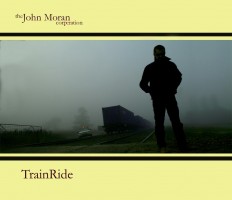
TrainRide by The John Moran Corperation
Puzzle Factory Sound Studio, 2009

Since renowned works such as Kenneth Slessor's ‘The Night-Ride' and Judith Wright's ‘The Trains,' trains have been natural subjects and carriers of Australian poetry. TrainRide by John Moran and his small posse of musicians is very much off the train, stuck in the kind of gritty, gothic country town that transfixed Wright in her debut The Moving Image. However, while there are similarities of locations, even of small-town eccentricities and characters, TrainRide is a very different product, comprising of two CDs of interspersed instrumentals and gloomy spoken word. I use ‘spoken word' here, because to my mind spoken word has a performance-based poetics that cannot survive by itself on the page, nor, in most cases, does it seek to.

Continue reading

Posted in BOOK REVIEWS | Tagged , ,

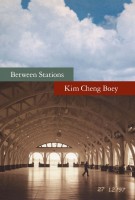
Nick Terrell Reviews Kim Cheng Boey

Between Stations by Kim Cheng Boey
Giramondo Publishing, 2009

In 1997, Kim Cheng Boey's feelings of alienation from his homeland had reached critical mass. After years of watching the Singapore of his childhood succumb to ‘the cycle of tear and build that is the philosophy of progress,' he emigrated to Australia. Boey has had four collections of poetry published and won numerous awards. His early collections, Somewhere Bound (1989) and Another Place (1992), earned him high esteem in his homeland. In the mid 1990s, he attended the Iowa Writers centre, and in his third collection, Days of No Name (1996), his increasingly autobiographical poetry began to register his growing identification with an international class of writer-nomads alongside his pessimistic sense that modernisation was eroding a better world than it was creating.

Continue reading

Posted in BOOK REVIEWS | Tagged , ,

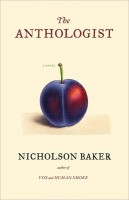
Ryan Scott Reviews Nicholson Baker

The Anthologist by Nicholson Baker
Simon and Schuster, 2009

Paul Chowder, poet and narrator of Nicholson Baker's novel The Anthologist, is trying to write an introduction to his forthcoming anthology of poetry Only Rhyme. Unfortunately, he is unable to say exactly why rhyme is important, and so like anyone with a seemingly impossible task, he procrastinates. He buys a tablecloth. He washes his dog. He pines over his now estranged girlfriend, Roz. He reads. He changes where he works. And in the process he thinks a lot about poetry, both rhyming and non-rhyming. Although a work of prose fiction, this book is likely to be of interest to many poets and readers of poetry.

Continue reading

Posted in BOOK REVIEWS | Tagged , ,

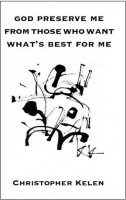
Helen O’Brien Reviews Christopher Kelen

God preserve me from those who want what's best for me: Homage to the Romanian poets by Christopher Kelen
Picaro Press, 2009

The very first word of the title of Christopher Kelen's latest book – taken from a section from within the collection entitled ‘after Dinescu' – poses a question: is Kelen referring to God the omnipotent deity, or god as an exclamation or damnation? The title is probably written with those thoughts in equal measure as we discover oblique references to Christianity and also to the Roman novel, The Golden Ass. More importantly, the title is an exasperated cry against censorship. Mircea Dinescu, like many of the Romanian poets that Kelen refers to, was subject to censorship or house arrest under the oppressive regime of Nicolae Ceauşescu. These references are not without well-considered connection, as Dinescu has since founded the journal Plai cu boi (The Land of Oxen/The Land of Idiots) which in turn refers to the literary trope of the jackass.

Continue reading

Posted in BOOK REVIEWS | Tagged ,

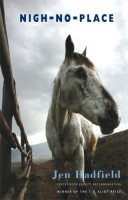
Ali Alizadeh Reviews Jen Hadfield

Nigh-No-Place by Jen Hadfield
Bloodaxe, 2008

Jen Hadfield's winning the 2008 T. S. Eliot Prize for this collection seems truly sensational. Since the UK's most prestigious poetry prize is usually given to older male poets, the 30 year-old woman poet's success could be seen as a radical event. Furthermore, the ecologically conscious discourse of Nigh-No-Place can also be seen as a new, exciting development in the context of mainstream English poetry. Little wonder that this book being awarded the lucrative prize indicates, according to The Independent, ‘that British Poetry has entered remarkable new territory'.

Continue reading

Posted in BOOK REVIEWS | Tagged ,

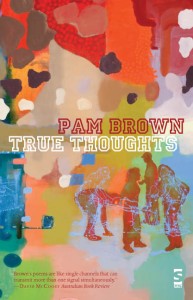
Liam Ferney Reviews Pam Brown and Adam Aitken

True Thoughts by Pam Brown
Salt Publishing, 2008

Eighth Habitation by Adam Aitken
Giaramondo, 2009

Poetry doesn't pay the bills but it does have benefits; claiming your internet and a trip to Melbourne back on tax, for instance. Or the overseas fellowships distributing poets across the globe like water from a sprinkler, as is the case with the authors of the titles under review. Part of Pam Brown's latest collection, True Thoughts, was written in Rome under the auspices of a BR Whiting Fellowship while Adam Aitken's fourth collection, Eighth Habitation, was penned in Cambodia and other parts of Asia with the support of the Australia Council for the Arts.

Continue reading

Posted in BOOK REVIEWS | Tagged , ,




