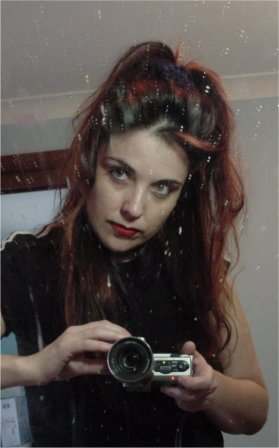
DP: On the day before I was going to interview you in Darwin, the front page of the NT News screamed: “DRUNKS TAKE OVER GRAVES”. At the time it seemed an omen of sorts, given that the theme for our current issue is Zombie – the implication being that these “drunks” or “itinerants” (or whatever new euphemism the NT News has come up with) in fact constitute the living dead. What's your take on this, given that you're now a self described “Territorian”? Do you think Top Enders have a more casual attitude towards death?
CH: I almost read that as 'DRUNKS TAKE OVER GAYS' and thought, sounds like a typical Saturday night at the Larrakeyah Barracks. I think that Territorians have a casual attitude to just about everything. Beer is considered a form of currency, but only if you get the colour of the can right. Since they come in blue, red and green that might prove complex for some. The NT is the place where cliches come true. Question is; what came first the cliche or the Territorian …
… it is wise be viligant when it comes to services up here, particularly medical services. People tend to be casual about death particularly when it's not their own. The saying goes, 'if you get a pain catch the plane!' It must be the hypnotic affect of the humidity, the heat, the light and the land. The presence of nature remains strong. There are still shells on the beach and geckos live inside the house. The mangroves will still swallow the pylons and the salt water crocodiles will still swallow us if we let them. While both have been brutalised neither have been tamed.
The Top End is a tropical desert paradise and remains wild. As my visiting mother said, 'it's very unlike Queensland!' What I love about the energy of Darwin is that is highly unpredictable. You never know what will happen next. You can still pick a typical Territorian. They have a dry sense of humour and little seems to phase them. They are the ones who love to squeeze an extra dollar out of you and yet who will give you a freebie if you can't afford to be ripped off.
Amongst other things, mail always seems to be lost between all parts of the world and the Darwin GPO and it doesn't take someone with room temperature IQ to work out, that it might be the fault of the Darwin GPO and not all parts of the world! Sydney or Melbourne are too far away to be of concern. When we do think of them, we think of freight. Freight is the excuse for every con job that occurs north of Marla. 'Nothing I can do about it, it's the freight!' Freight is the NT equivalent of the feral cat, overrunning our imaginations more than anything else.
David, you mentioned that you have lived in the NT and I see that Cordite is a good promoter of NT poetry? What does the NT that mean to you in relation to who you are and your own work?
DP: Coral, yes, I lived in the NT for about 4 months in 1994 then about two months in 1996. I guess that was when I first really witnessed widespread racism against Aboriginal people – like, in the main street of Darwin! Cops in khaki, I thought I was suffering from culture shock. In a way, I was. Culture sickness, maybe. I had been a student at Sydney University, had read and thought a lot about indigenous issues but hadn't really confronted the reality of the divide between black and white Australia (also, this was during the Keating era, when reconciliation was the buzzword in Canberra – didn't seem to be high on anyone's priorities in the Top End).
The day I walked into the wrong part of a segregated bar in Katherine would have to be the moment where I felt most ashamed about being 'Australian'. It's a hard thing to describe – a lot of people I've told don't believe that this place exists. Ironically, I guess, Darwin itself is not really Australia – you described it as a 'tropical desert', I think that's very apt. It is closer to Timor than it is to Townsville, so I guess there's that stimulus. I find my senses overloaded every time I visit – there is something about the climate and the landscape that makes me want to stay and write magic realist novels for a while!
In terms of my own work, Darwin was where I first gave up on poetry and decided to write prose. I wrote a lot of stories when I was there. I was very conscious at the time that my writing had to exist in the real world – which for some reason precluded poetry. Maybe it was a back to basics, rock and roll thing – however, Darwin was also the place where I first came into contact with members of the Timorese community in Australia, and heard stories about Xanana Gusmao and Fretilin. This led me to write, months later, a poem about Xanana that has since become something of a totem for me in my writing. So I guess what I'm trying to say is that the NT, and Darwin in particular, represent a certain kind of political attitude or stance. Being there radicalized me. Here's a slightly unusual question: If you could bring back one Australian poet from the dead, who would it be? Why?
CH: This question evoked a similar feeling to when I saw my old dog Toby, who I had put down (or had killed) in Melbourne the night before, standing in the sunlit doorway of the terrace house backyard the next morning. For seconds this incredible sense of 'it's a miracle' came over me. Then he was gone again. It was extraordinarily painful. Yet for that moment it was like all my ideas of pain and suffering were void, that everything might just be beautiful and stay that way.
The poet does not have to survive. While all sense of preservation is ultimately an illusion, for as long as the poet's words survive, they will impact upon the world in some way. It's all about thought and action from thought. The spirit moves through the story that is passed on. The poet does not need to be present. Live for now. Eternity is more about peace than ego preservation.
As for bringing life back from the dead, it's the kind of power I thank god I don't have. I don't like the fact that sentient beings suffer, especially when so many needlessly suffer. But while I believe in euthanasia, I also resent the fact that I have felt compelled to place myself in the position of god, in order to make decisions over life and death. I would prefer not to be involved.
The first thing you need to do for another Australian poet, living or dead and particularly one whom for one reason of another you think you dislike, is to buy their latest book and read it or at least buy them a drink at the next literary festival. Whether you like something or not, it will still teach you something about yourself. Australian poetry needs to be more like entertainer Ricky Martin. It needs to be both sexy and spiritual. It needs to bring us back from the dead.
DP:You have written and campaigned extensively on the issue of animal rights – how easy (or hard) is it to translate the horror of slaughterhouses and battery hen farms (to name but two examples) into poetry? Do you think it's the most effective medium? Can you give an example of a poem of yours that sums up your feelings on this issue the best?
CH: Thank you for asking. There is no poem that can adequately describe the torture that some human beings inflict upon other sentient beings. Did I set myself an impossible task? Law professor and animal rights advocate Gary Francione said, 'how can you hope to teach the world about being kind towards crocodiles, when they still haven't learn to be kind to each other?' This comment reminds me of my earliest childhood feelings of being placed on the wrong planet.
Yet it all comes back to positive thinking or faith. We need to aspire to those who inspire us and they do exist. We need to look for the smaller lights that shine in people and nurture them. Humanity is compassionate and we must never lose sight of that – how beautiful people are. If I ever lose faith in humanity, I may as well give up here and now, as I will be no good to anyone less likely myself, since I am only human and we are all animals. We are all each other.
As for my poetry, my words fail the animals just as I ultimately failed them. All my life I have felt the presence of light/love or god or whatever you want to call it, even in the darkest places on earth. But there was no god in slaughterhouses and intensive animal farms. At the time I was barely coping and neither were many of those I worked with. I saw people suffer and burn out and the worst thing was that some very good people lost hope in humanity ever finding the way to compassion and in this way, they then became less than who they could have been.
As for the animals their agony goes beyond all knowledge and description. There is nothing like the complete absence of god. They were condemned to hell but never did any of those animals once give up on a better way of being in the world. The battery hens that were rescued and brought to backyards in Collingwood and St Kilda took to the grass and sunlight and as if it was long awaited for and the ones we had to leave behind never stopped trying escape their situation. Thousands of pigs and cows have to be beaten, dragged and knocked unconscious daily and in the early hours of the morning in order to be tortured and murdered by human beings.
There were many 'worst' things; animals with most of their bones broken stacked on top of each other and still alive. While the goat at Sitebarn slaughterhouse in Bourke screamed like a man these hens cried like babies. No one would know this unless they were out on the farms in that darkness. It is deliberately hidden by the psychopaths who are allowed to operate invest in these places. Each time we eat the flesh of the dead we support these atrocities. We must never forget that each slab of meat once had a personality. Just like you or I, each had a mother and a father and others they preferred to be around and food they preferred to eat. To support such a place is a crime against god. It deprives the world of our humanity and makes us less than we could be.
I will never forget the night that we were on this one particular farm just outside Melbourne. We could only really hope to carry two hens per sack away with us. They can be heavy when they are first jammed into the cages and we had a long way to go back out into the fields, so it was best to give whoever we could grab, the best opportunity at freedom. On this occasion we saw a roaming patrol car pull over our driver on the highway in the distance, the farmer's dog was barking and the shed lights were about switch on for feeding and we had to get out of there.
It was then that I heard this tiny cough coming from the centre of the shed. There was a bit of cackling from the thousands of hens squashed into the cages in this immense darkness. Then all was quiet again and this cough continued. It was so forlorn. I lost all sense of anything aside from that sound and knew that I had to get to that bird. I began to walk amongst the thousands and the cough stopped. I remember praying; 'please cough again-please please-' But nothing. Then as we slid the huge door open and stepped out into the night, it started to cough again and I knew the futility of all life on this planet and how it could be so incredibly abandoned to pain.
I would actually be interested to hear what you thought your most powerful poems are, that is poems that have affected you so deeply that you can return to them for comfort, or if not your own work, then that of other Australian poets. Are there any who have disturbed you?
DP: Thanks for this question, Coral. As I started saying above, if I had to choose a poem of my own that I consider powerful (I used the word totemic before), it would have to be 'Xanana's Dog', which was originally published in Cordite in 1998 I think (i.e. long before I became the editor). I don't know if you know the story but when I was in Darwin, someone told me a story about how the Indonesian army/police were searching for Xanana Gusmao (so this must be in the early 1990s, before he was captured) in a church. They told everyone to come out of the church because they had heard a rumour that Xanana was inside. Everyone came out – but no Xanana. Then this little dog walked out of the church.
What do you think happened? Well, the Indonesians arrested the dog, because they believed Xanana had supernatural powers, and could change forms. Whether this story is true or not does not really concern me – it speaks to so many other stories – Pemulway and the bullets going straight through him, Geronimo being at the head of every charge made against the white invaders. It also fascinated me because, well, who knows, maybe that dog is still locked up somewhere? In the poem, I took on the persona of the dog. The dog is asking Xanana to come and save him: 'Please help me, I am only a little dog!'
I know sometimes it seems odd when poets describe a favourite poem written by themselves, but this one I keep coming back to, and I have to say it has had an effect every time I've read it to an audience, especially if I shout. There is pity, compassion and anger in the poem – I guess I was trying to channel a sense of humanity through this dog, a sense of humanity I had never really felt to such an extent before in my writing. I still think it's because of the allegorical and slightly comical (though tragic) figure of the dog, whom others believe to be imbued with supernatural powers, but who turns out to be treated by the Indonesians in just the same as any other Timorese person. Also I think that for a lot of Australians, they are only just beginning to realize what has been happening to the Timorese people since 1975 9and 1999), the violence and tragedy of which is sometimes just too hard to describe.
Poets whose work I reach for at times when I need comfort, or at least a bit of affirmation, would have to be Francis Webb and Bruce Beaver. For me they are two of the unsung heroes of the history of institutionalization in Australia. I read 'Five Days Old' and it makes me cry. I read Beaver's 'Letters to Live Poets' and just feel alive again. There is the tragic and the comic in Beaver's writing, I can relate to that. I read Lionel Fogarty and feel the fury of his words – and the devastating simplicity (or at least, surface simplicity) of Oodgeroo's poems. Dorothy Hewett too, just because she was so imaginative, and wrote (I'm thinking here of 'Alice in Wormland' or 'Rapunzel in Suburbia') so vividly about a particularly Australian place or space.
When I read her work, I can't help putting myself in the back yard of a small town (I was born in Dubbo but don't remember it – I then lived in various small towns in NSW), aged probably six or seven, inventing games around the Hills Hoist because there was nothing else to do. Like, I remember trying to make a power station out of two cricket stumps and a piece of rope. Conceptually, I think, I may have been ahead of my time 😉 – but Hewett's work for me takes me back to that place. She imbued childhood with such malevolence, I think like no one else.
In your book “How Do Detectives Make Love?”, you write about violence and death, as well as the threat of violence – I'm thinking here of poems like “Pornography II”, “The Hanged Man”, “The Poets and the Pig”, “An Hour After Suicide” and “Fenton Dies” – looking back on that book now, if I can ask, how does it feel to re-read, or re-experience? Is it enough to exorcise violent demons through writing or is the process continuous?
CH: We can choose to be whoever we want to be at any given time, because we are all things. Every thought and action is a choice that we make and since choice involves awareness, awareness becomes our primary challenge. Self-awareness is the first step to transformation. I was in great pain and struggle when I wrote 'detectives.' My writing was primarily about overcoming, but I wanted more than to hang on by a thread along the bare bones of survival. I wanted to flourish and be of the light. Therefore my first books are largely about the inexhaustible will to life.
My greatest fear has been that the darkness I was born into, would finally overwhelm me or that I would become the monster I fought so hard to defeat. It was about the fear of annihilation. Even as a child I was able to turn the inaction of fear into the action of creation. The unrelenting and intense quality of some of my earlier the books such as 'detectives' emerged from that will. Attempt to disguise it as we might, our writing is only as we are. If we don't develop then neither will our writing. Those poems in 'detectives' were written a lifetime ago. I only vaguely remember the woman who wrote them. I rarely read my old work and usually I don't even like it.
My favourite time is about three quarters of the way through the book as it appears to takes on its own life races towards the end. It's like the horse being let off its tether and I am either a passive witness to that event or we fly together. When the book is complete I release it. This is the death of the book. Yet since there are multiple projects and the next book is underway the process in continuous. I only like about ten percent of my work. After I had my first three books accepted by Penguin I was more interested in the next book than the hype that often goes with publication.
I always wondered how one could bask in the glory of their own success. In my twenties I believed that if it ever happened to me, that I'd be unable to write the next book. I have never really allowed myself the pleasure of achievement and remain largely disassociated from it to this day. My primary feelings are associated with what is before me, that is the subject matter and then with act of creation, but mainly when I lose all sense of myself during the process. I believe in the story and in the telling of the story. I prefer not to think about how great I am.
David, what did you honestly think of 'detectives'?
DP: I expected 'How Do Detectives Make Love' to be far more graphic than it actually is. I was quite surprised by the lyrical nature of the poems – they caught me off guard. The use of the dashes ( / ) as well – I don't know, usually I hate that kind of thing, it reminds me of poets who centre every freaking poem they write, just because they can, but in your case I think that stylistic technique actually made the poems more evocative, like little collections of clipped lines, thoughts.
I think there's a deadly kind of humour to the poems too, something that's perhaps not really recognized (am I wrong? Do you think people perceive you as a dark, brooding poet?). I got a strong sense too of a complex range of emotions at work in the poems – though that might sound a trite but you seem to work yourself into a kind of flow, and for me, the best poems are the ones where that flow is uninterrupted. That being said, I think the sense of interruption (evoked partly by the dashes) while a little unsettling for me as a reader, created a kind of dynamic in the book as a whole.
The title poem in the collection for me is the strongest, because it asks such impossible questions and manages to answer them, in a way that gaives me an insight into your life. Another poem in that book, “Death of an Activist” struck me (as an outsider) as a kind of autobiography – am I wrong? What is that poem about? Perhaps you could talk about the ways in which you play with notions of identity in your work?
CH: I am often exploring notions of identity. While my work has been called confessional and autobiographical, I actually approach my writing in a similar way to an actor or a director approaching a film script. I remember during a creative writing class at Wollongong University many years ago, where I had written a poem about cutting my dead lover up and pushing his fat through a plug hole in a yellow bathroom basin in order to dispose of the body. At the time I was more frustrated by the colour yellow, than the fact that his bones kept getting caught in the drain. One of the students asked if that had actually happened. She was from North Sydney and she was serious. I said, 'yes.' Oddly enough, no one rang the police and I remain at large to this day.
DP: Tell me about your recent collaboration “Voices From The Dark” with Sandy Jeffs? Does it differ (if at all) from your collaboration with Kinsella in “Zoo” – in terms of the creative process, I mean?
CH: John and I went to the Taronga Park zoo together, yet the experience of writing the book was an impersonal one. It was primarily about the ordering of the content which underwent several drafts and not putting our names/our egos to the individual poems. We wanted the art without the artist. We were attempting the impossible in the art world and that is to become non-egocentric. A majority of reviewers picked up on this and went with it. There was only one from the USA who predictably focused on 'who was the better poet.' I can normally learn a lot from a critical review as well, but only if the reviewer is smarter than me. Too often reading a poor review of one's own work is like leading a horse to water and then watching it stand and drink its own piss.
Sandy and I are gradually writing prose about 'the way we are in the world.' Sandy relates to the perceptions of mathematical genius John Nash in 'A Beautiful Mind,' whereas I relate to the solider Private Witt, from Kentucky in 'The Thin Red Line.' The writing process has involved a series of stops and starts. It's like doing a degree part time. What happens in between the theory is what is important. Reading Sandy's words has given me the courage to talk about many things for the first time. My focus has also changed as my awareness has grown regarding my situation.
It has been a lifelong challenge with around 20 different mental health workers in order to try and get a grasp on the most basic things, why did he or she do that? What does it mean? How might I interpret that signal? What is the appropriate response? What might be the result of the interaction? In the context of this consensus reality, I am disabled, along with 2% of the population who are said to be similar. As far as society is concerned, I am invalid or invalidated. Yet as far as the world and the universe are concerned, I am not. In fact I believe it to be the opposite. That is; if god was running Centrelink humanity would be awarded an invalid pension.
Over the years I have been put at a disadvantage, yet rather than receiving assistance, I have been punished for the way I am. This is largely because I live in a different reality to what is accepted and have since I was a child. I have found the simplest things, that is the things that most people seem to take for granted, extraordinarily difficult to achieve. Labels have been helpful. But too often they can be like erecting your own prison in order to get an idea of the bars you're behind and then turning into a dove and flying back out into the sky where you were to begin with.
Labels are created in order that we explore them, learn from them and then forget them. It is reassuring to know that whoever we are is transient and whatever we create is second to the creation/or evolution that has already taken place. For example; a river and child exist whether you create art about them or not. The question is; what would you do if a child was being washed away down a river, throw in a rope or write a poem about it? You would have to a sociopath to continue writing poems about all the children who are washed away down rivers, while it is happening before your very eyes and do nothing else, or at the very least you would have to be so severely ego-centric, that you would freeze in admiration the next time you came across your own reflection. I mean how worthwhile is that kind of creation going to be and at what cost?
That fact is that through your sense of humanity, you would more than likely save the child from being washed away down the river and then you may write a poem about it later. The poem would be based upon your own experience. No one can experience what you have. That is why your words are important. Yet your actions are more important, because you are bringing love into the world and this strength will be reflected in the kind of art you create. Art follows life. It can not be the other way around. Let us not forget our humanity for the sake of art and let us not forget that the world is a child being swept down a river. There are times to make art and there are times to cherish life. It would be in the world's best interests, and therefore in our best interests and therefore in the best interests of art, if we remain humble and open to compassion.

 Scar Country by Rebecca Edwards
 Sea Peach by Catherine Kidd & Jack Beetz
 Exploding Head Man by Ian Ferrier
 Print journals in Australia are not web-savvy. They're mostly hip to the notion that they need a web presence but most sites betray little or no idea of who is reading them, or what information those readers might want. You don't need a focus group and expensive consultancies to work these issues out, but I suspect most print journals haven't even sat down with a texta and butchers' paper to map the content of these sites, much less refined them as a real tool for broadening their buying and reading audiences. For the most part, these sites look like they've been generated by the (Mac) monkey with the typewriter.
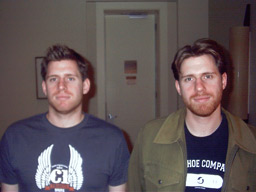 Peter and Michael Spierig are twins, so they finish each others' sentences; they're also on the verge of worldwide stardom, so their reserved manner is initially disarming. Undaunted, I decide to get right down to business and ask them about their film Undead – a zombie film that's about to be released both domestically and overseas. …
 LIVE: Roo-ku (Overload Poetry Festival)
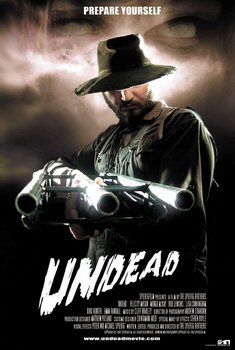 Undead
 DP: In terms of the draft – in the US, was it based on birthdays? This is my understanding of the way they did it in Australia at the time (my father narrowly missed being called up – i think it was a matter of days). It seems to me this is an even more profound aspect of the whole “living dead” thing – that your status as a 'zombie' is predicated on your day of birth … do you think a whole generation was/is in effect a generation of zombies?
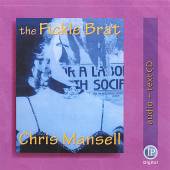 The Fickle Brat (CD) by Chris Mansell
 ode ode by Michael Farrell
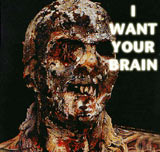 DP: Are you familiar with Thomas Pynchon's “Vineland”, in which there is a whole community of Thanatoids, who just sit around and watch TV all day? Do you have a similar view of the living dead? It's funny, I was in the US last year, and on a train heading from NYC to Buffalo, when i saw this guy sitting across from me, who I will swear to this day is/was Pynchon himself! I tried to engage him in conversation, but to the end he swore his name was Jerry. I thought it was very apt.






