NAKAMURA Yasunobu (中村安伸): 5 Haiku

                                                                              暗黒大陸の写真を壁に冬館

Photos of the Dark Continent

on the walls of a mansion

in the winter


                                                            雪の夜の組立式の茶室かな


Snowy night –

this teahouse

is sectional


                                                            剣豪の背中の谷へ春の雪

Spring snow

into the valley of the back

of a great swordsman


                                                            紫陽花のかたちに微熱ありにけり

I have slight fever

in the shape

of hydrangeas


                                                           母の日の鯨の中にネットカフェ

Internet café

inside a whale

on Mother’s day

(Trans. Keiji Minato)

Posted in 34: HAIKUNAUT |

MINATO Keiji (湊圭史): 5 Haiku

淋しくて夜ごと肌をぬぐ樹木

Lonely trees shed their bark every night


秋しぐれ泥人形と生まれて泥 Autumn drizzle - dolls made of mud turn into mud
 
 
冷やかや魚類図鑑に葉のしおり Autumn coolness - a leaf as a bookmark in an encyclopedia of fish
 
 
デルタブルース芋を剥き芋を剥き Delta blues - peeling potato after potato
 
 
手荷物は劣化ウランと夏の海 In my luggage depleted uranium and the summer sea
Posted in 34: HAIKUNAUT |

Keiji Minato: Notes on Modern Haiku (2)

Image by Keiji MinatoThe history of Japanese modern haiku was definitely male-centered until quite recently. There have been many superb female haijin; most of them remained in the “kessha (結社)” system (a “kessha” is a group or sect that is led by a master and usually has a hierarchical structure – followers adhere to basic rules their masters set up). The system and rules served positively for some, whose talents were rather nurtured than hindered by the fixed criteria. Others achieved their own voices outside the system, and their haiku reflect various interests outside or sometimes against male sensibilities.

One of the most notable is MITSUHASHI Takajo (三橋鷹女; 1899-1972). She belonged to a kessha only for a short time and developed her unique voice apart from any sect. Only later she joined in an avant-garde group led by Tomizawa Kakio. Her haiku voice female discontent towards almost everything. Her personal visions often seem Gothic-like, more grotesquely strange than Tomizawa’s works:

夏痩せて嫌ひなものは嫌ひなり
Natsuyasete / kiraina mono wa / kirai nari

Thinned by summer heat -                 
I don’t like what
I don’t like

鞦韆は漕ぐべし愛は奪ふべし
Shûsen wa / kogu beshi Ai wa / ubau beshi

A swing is for you
to swing – love is for you
to take away

羊歯地獄 掌地獄 共に餓へ
Shida jigoku / Tenohira jigoku / Tomo ni ue

The Hell of Ferns
The Hell of Hands
Both in hunger

Mitsuhashi was never afraid of her egoistic nature but kept cultivating it in her haiku writing. That is competely opposite from the dominant ideology (both then and today) that haiku should be centered on observations of the objective world and is not fit to overtly express subjective feelings or visions. Her visions are also irreducible to just surrealistic imagery, deeply rooted in femininity.

HASHIMOTO Takako (橋本多佳子; 1899-1963), a disciple of a disciple of TAKAHAMA Kyoshi (1874-1959), the founder of the biggest kessha Hototogisu (ホトトギス), joined in the group of Shinkô Haiku writers including Saitô Sanki. In a freer atmosphere, she boldly tackled female sexuality in her haiku:

七夕や髪ぬれしまま人に逢う
Tanabata ya / Kami nureshi mama / hito ni au

Star Festival –
With my hair still wet
I go out for a date

雄鹿の前吾もあらあらしき息す
Ojika no mae / ware mo ara’arashiki / iki su

Facing a stag
I too take
wild breaths

乳母車夏の怒濤によこむきに
Ubaguruma / Natsuno dotô ni / yokomuki ni

Baby buggy
with its side toward
big summer waves

Her strong but controlled narcissism allows Hashimoto to envision a personal and decisively female point of view without too much sensationalism. In the last example she even challenges the public image of a woman as mother.

HOSHINO Tatsuko (星野立子; 1903-1984) is positioned on the other side of the spectrum from the two above. She is a daughter of Takahama Kyoshi, who doted on her. There was no conflict between male and female, or father and daughter, in this extraordinary case. Faithfully following his father’s advice (that is, the absolute dictums of the kessha Hototogisu), she successfully developed her original style. She is known for her simple diction a la nursery rhymes:

朴の葉の落ちをり朴の木はいづこ
Hô no ha no / ochi ori Hô no / ki wa izuko

Magnolia leaves
fallen on the ground –
Where is the magnolia tree?

蝌蚪一つ鼻杭にあて休みをり
Kato hitotsu / hana kui ni ate / yasumi ori

A tadpole rests
with its nose
on a stake

蛍の国よりありし夜の電話
Hotaru no / kuni yori arishi / yo no denwa

From the country of fireflies
a phone call at night

Unlike Hashimoto’s and Mitsuhashi’s her world is self-sufficient without being self-indulgent. It is a completion of Takahama’s aesthetic centered on seasonal themes and objective description, which has become a kind of orthodoxy that remains hugely influential today.

Now the number of the women who write haiku outnumbers that of the male haijin, although male leaders still keep their authority in most schools or sects. Some recent attempts at anthologies of female haijin might prove their genealogy at least partially independent from the male-dominated history and reveal the possibilities they have opened up in the traditional genre of haiku.

Right after the Second World War influential literary critic KUWABARA Takeo (桑原武夫; 1904-1988) severely criticized the traditional form of haiku as “second-rate art (第二藝術).” His Euro-centrism sounds almost absurd and far from persuasive today, but his doubts about the value of the traditional short forms had a great impact on tanka and haiku writers who had been forced to remain in silence or retreat into a private, rear-guard, and non-political realms during the war. Great achievements in haiku after WWII were propelled by the urge to refute Kuwabara’s (and many other critics’) views on the value and possibilities of the genre.

Posted in ESSAYS, FEATURES | Tagged , ,

Keiji Minato: Notes on Modern Haiku (1)

Image by Keiji Minato

Haiku is a literary form. It carries ideological elements from its history as other literary forms do. Some of these elements are deeply ingrained in the genre. For example, seasonal themes and objective descriptions are the two main principles many people in Japan and in other countries believe to be imperatives. While they surely have some relevance (as they help beginners find concrete images and avoid various pitfalls), they are not absolutely necessary conditions for haiku.

Continue reading

Posted in ESSAYS, FEATURES | Tagged , ,

Welcome to Haikunaut


I came to the haiku world 26 years ago with just one desire: to translate the poetry of Issa – some 20,000 verses, only a tiny fraction of which had appeared in English at the time. I plunged into Japanese language study but soon realized that this alone was not sufficient preparation for my task. Thomas Wright, the translator of Zen Master Dōgen's Refining Your Life, faced a similar predicament. He writes in his preface:

For me, to translate any work of Dōgen without basing my daily life upon his most fundamental teaching . . . would be meaningless. Unless the posture of one's life addresses the same questions Dōgen Zenji addressed, there is little hope that the translation will be much more than a technically correct but totally incomprehensible work (Weatherhill, 1983: viii).

Continue reading

Posted in ESSAYS | Tagged

Heather Taylor-Johnson Reviews Ouyang Yu

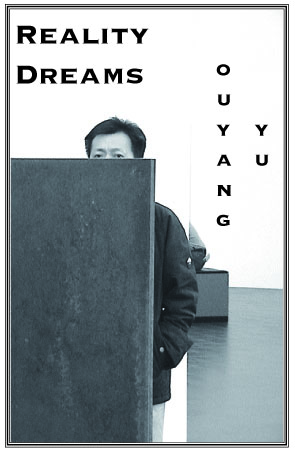
Reality Dreams by Ouyang Yu
Picaro Press, 2008

The Kingsbury Tales by Ouyang Yu
Brandl & Schlesinger, 2008

While we awaited the arrival of Ouyang Yu's The Kingsbury Tales, a small treat came in the form of Reality Dreams. It is not at all surprising that Yu has put out two books of poetry in one year; in fact he has put out three, one written in Chinese. And that does not even touch upon his fiction and non-fiction. The man must be one of the most prolific writers in Australia. As is common in his extensive library of writing, both Reality Dreams and The Kingsbury Tales tackle cultural identity. But is this theme getting old? Have we had enough of the angry Chinese Australian poet grumping on about how dislocated he feels?

Continue reading

Posted in BOOK REVIEWS | Tagged , ,

Bridie McCarthy Reviews Yvette Holt, Javant Biarujia and Martin Harrison

Anonymous Premonition by Yvette Holt
University of Queensland Press, 2008

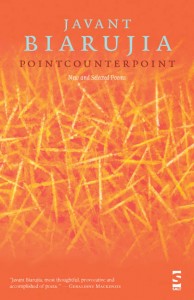
pointcounterpoint: New and Selected Poems by Javant Biarujia
Salt Publishing, 2007

Wild Bees: New and Selected Poems by Martin Harrison
University of Western Australia Press, 2008

To read these three recently published collections of Australian poetry is to appreciate the breadth of the field, the many different modes employed within it, and the individuality of its practitioners. Radically divergent in their interests, these poets nonetheless share a strong undercurrent of compassion in their work, even though it finds varying forms of expression. One early career poet and two established poets, these writers represent distinct moments in the practice of their craft, and each has their own recognisable politics.

Continue reading

Posted in BOOK REVIEWS | Tagged , , ,

Dry Pastoral

Contemporary pastoral? Such a term seems oxymoronic when describing a genre at least as old as Theocritus’s Idylls from the third century BCE. The pastoral itself is inherently backwards-looking, literally evoking the greener pastures of a pre-industrialised past. Even the post-classical pastoral par excellence, Milton’s elegy ‘Lycidas’, begins by invoking the Petrarchan crown of poetic tradition: ‘Et once more, O ye laurels, and once more Ye myrtles brown … I come to pluck your berries …’ (49). How can we characterize the contemporary manifestations of a poetry whose very investments are not even in history, but rather in the prehistory of an uncivilized humanity that exists alone in nature?

Most academic accounts deem the pastoral extinct after the eighteenth century, overtaken by the evolution of Romanticism, which replaces the pastoral’s bucolic charm with a sublime nature that both overwhelms the individual subject and offers the possibility of visionary flights of fancy, such as we encounter in Wordsworth’s ‘Tintern Abbey’. But despite such obituaries the pastoral appears to be experiencing a healthy afterlife.

There is any number of possible reasons for the re-emergence of this genre in contemporary Australian poetry, not the least of which are political. The question of land since the Mabo decision has taken on dimensions of ownership, use, and colonial appropriation, such that the pastoral as a genre no longer seems confined to the realm of rustic romance, but points to the heart of contemporary social debate. To write about the Australian countryside is necessarily to write about Australian colonial history, race, and tradition, regardless of authorial intention.

As the Rudd Government’s recent rebranding of the drought as the ‘dryness’ suggests, the pastoral has an environmental resonance as well, since those idyllic green pastures threaten to become historical in the most literal sense. Here the pastoral may merge with the budding discipline of ecocriticism, although such academic initiatives may best be examined with a critical eye; ‘conservation’ and ‘conservatism’ possess more than a common etymology, at the extremes also sharing a luddism, a vision of an idealised past, and a scepticism about the ability of human intervention to change the world for the better. Such ecocritical discourse must be careful that its laudable aims do not devolve into the rehashing of culturally received dogmas whose ideological basis is suspect. Nevertheless, the pastoral of the future may necessarily become a dry pastoral, unless action on climate change can take precedence over economic rationalism.

In any case, from the colonial perspective, Australian depictions of landscape have often been a dry pastoral, since the bush has been viewed as harsh and inhospitable – which is, of course, to ignore the thousands of generations of traditional inhabitants who dwelled there. The uniqueness of Gerald Murnane’s pastoral romance, The Plains, stems from precisely the inversion of this colonial assumption. Beginning with an epigraph from Thomas Livingstone Mitchell’s Three Expeditions into the Interior of Eastern Australia (‘We had at length discovered a country ready for the immediate reception of civilised man …’ (1)) Murnane goes on to present an Inner Australia that is flourishing both culturally and ecologically. To present the Australian pastoral as a dry pastoral requires taking sides in the debate of whether it’s from the deserts the prophets come, or from the prophets the deserts come.

Contemporary pastoral poetry takes part in such debates but also moves beyond them, as attested by David Brooks’s ‘Tinnitus’ in the Summer 2008 issue of Meanjin, the innovation in which stems from an inversion of traditional pastoral yearning not unlike Murnane’s. The poem serves as a stark contrast to a poem such as Yeats’s ‘The Lake Isle of Innisfree’; in Yeats’s work, an urban-dwelling speaker is haunted by memories of the idyllic countryside: ‘I hear lake water lapping with low sounds by the shore;/While I stand on the roadway, or on the pavements grey,/I hear it in the heart’s deep core’ (60). Here even the gritty reality of urban life cannot mute the call of the pastoral. Yet in Brooks’s imagination such a haunting call sublimates into irritation, as the speaker’s tinnitus becomes a plague of cicadas entering his head. The call here does not provide a sublime moment of vision, but a cold moment of self-reflection, since the buzzing ends up ‘ironising everything I think or do’ (219). Brooks’s speaker feels the call as strongly as Yeats’s, since the cicadas are ‘pulsing with the blood’s pulse, holding the heart firm’, but that call offers no possibility of a romanticized rural escape, only the pessimistic revelation that it is ‘going to be with me till I die’ (219).

In Brooks’ vision the relation of the individual subject to nature is uprooted from the traditional logic of the pastoral in a gesture that both extends and criticises the genre. In an almost Kantian move, the terrain of the pastoral in Brooks’s poem – the outside world – is actually created by the inner-world of the speaker. Here the pastoral merges with the lyric, and pastoral landscape becomes a metaphor for individual experience. And this, perhaps, is ultimately what makes the pastoral such a resilient form: the green pastures of the pastoral are never real, but always idealized; they are literally the greener pastures of somewhere else, a no-place, a utopia, whether it be Yeats’s Isle of Innisfree or Murnane’s Inner Australia. Thus, for all its grounding in landscape, the pastoral remains paradoxically anti-realist, and it is perhaps this inherent disjuncture between the real and the unreal in the pastoral that is most ripe for exploration in contemporary poetic praxis.

Perhaps more than any other poetic genre the pastoral possesses an investment in tradition, but Brooks’s poem demonstrates that by appropriating that tradition and critiquing it a contemporary pastoral may yet develop. At the same time, while the pastoral may present an ahistorical landscape as its subject, the pastoral, as genre, does possess a history – a history of poetic tradition, indebtedness, and innovation. It might be that this gap remains the most interesting possibility to explore in contemporary pastoral, since poems with inherently unreal subjects may ultimately reflect not so much on landscape as on their own tradition, their own generic heritage. Contemporary pastoral may ultimately provide the possibility of reflecting not on green pastures but on the workings of the poetic tradition and even of poetry itself.


Works Cited:

Brooks, David. ‘Tinnitus.’ Meanjin 67:4 (Summer 2008), p 219.
Milton, John. ‘Lycidas.’ Complete English Poems, of Education, Areopagitica (London: Everyman’s Library, 2000).
Murnane, Gerald. The Plains (Ringwood: McPhee Gribble, 1990 [1982]).
Yeats, William Butler. ‘The Lake Isle of Innisfree.’ The Poems (London: Everyman’s Library, 1990).

Posted in ESSAYS | Tagged

Deb Matthews-Zott Reviews Michael Sharkey

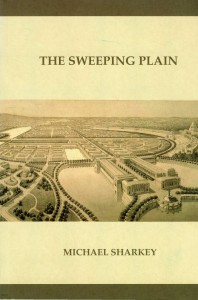
The Sweeping Plain by Michael Sharkey
Five Islands Press, 2007

The Sweeping Plain is Michael Sharkey's fourteenth collection of poetry and follows the publication of History: Selected Poems 1978-2000 in 2002. On the cover of this collection is Eliel Saarinen's 1912 design for the Australian Federal Capital, which was runner up (second place) to Walter Burley Griffin's design in a town planning competition for our capital city. The cover image, title, and title poem, suggestive of Dorothea Mackellar's 'My Country', set the scene for the tone and content of the collection.

Continue reading

Posted in BOOK REVIEWS | Tagged ,

Hal Porter’s Pastoral Vision

Few landscape poets have drawn an Arcadia of the austral zones with as much consolidated detail and convincing substance as Hal Porter does in his garden vision The Hexagon (1956).* In matters of green comfort he provides from memory's storehouse – the granite-bowled, lush South Gippsland of his youth – Botticelli weeds, flesh-deep mosses, Ruben's cornucopiae, soft privet, canna lilies, extensive pasture, wormwood, boxthorn and blackberry. His poems mount a botanical catalogue recalling equally Spencer's Faerie Queen and the excellent Bush Invaders of South-East Australia, a biological control handbook from the Department of Primary Industries.

Continue reading

Posted in ESSAYS | Tagged ,

Felicity Plunkett Reviews Phyllis Perlstone and Meredith Wattison

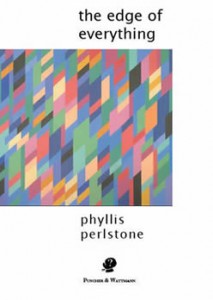
the edge of everything by Phyllis Perlstone
Puncher & Wattmann, 2007

Basket of Sunlight by Meredith Wattison
Puncher & Wattmann, 2007

Phyllis Perlstone's the edge of everything, which was short-listed for the 2008 Kenneth Slessor Prize, is an imaginative cartography, its careful perceptions laying out ways of looking at the crucial ideas the book returns to: ideas about love and the ways it might fade or be lost; about violence and humanity; about perception itself, and how words work to map its contours. Meredith Wattison's Basket of Sunlight, on the other hand, engages with the sensual presence of the body in a direct and dramatic voice.

Continue reading

Posted in BOOK REVIEWS | Tagged , ,

Kay Rozynski Interviews Mark Tredinnick


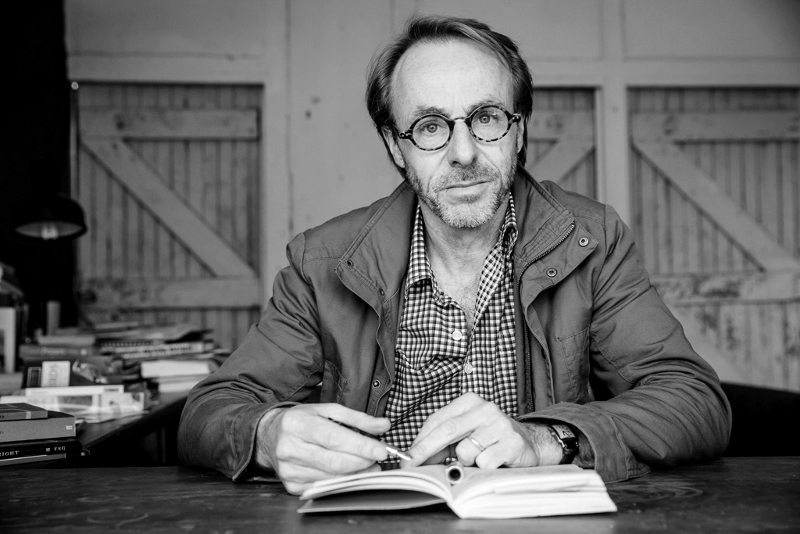
Photo from Pitt Street Poetry

I say ‘nature writing’, you see a Hallmark watercolour landscape replete with furry animals and woolly sentiment. But is this really the extent of it? What the hay is nature writing, or what isn’t? Where is the line between the natural and the human and, if there is any line at all, who put it there?

If anyone can clarify, it's Mark Tredinnick, vice-president of the Australian-New Zealand chapter of the Association for the Study of Literature & Environment, and accomplished nature writer. Mark's poems have won a number of awards, including this year the inaugural Blake Poetry Prize, and he has written expansively in his essays on the ecology of writing, where he describes nature writing enigmatically as 'nature, writing'. I asked Mark, then, what it might mean to write landscape, and to trace the meridian of the natural world in his own work as a poet.

Kay Rozynski: Firstly, what on Earth is nature writing?

Mark Tredinnick: Nature writing is usually prose, mostly nonfiction, mostly lyric, preoccupied with what we now, in Australia, might best call country. Barry Lopez – whose work embodies better than anyone's what nature writing can be at its best – says that in nature writing the landscape is the story. We humans are in it; but we are not the story; not this time. The story is the fabulous, discontinuous making and unmaking and remaking again of one place on earth or another; the story is the impossibly ornate interconnections that pattern that place and make it what it is, a work never finished; the story is also what all that makes of the people who attempt to make a living there. In nature writing, country is foreground; people are background. Nature writing runs on geologic, not merely human time.

Nature writing is a broad church. It comes grand and it comes humble. It will be pretty daggy nature writing that merely appreciates landscapes and glories in the wonders of their furry and floral citizens; it will be clich?©d nature writing that expresses, in that same old sentimental diction, the tireless and tiresome old longing for communion with Nature. In a good piece of nature writing, we human beings are understood and represented as pieces of a place, and humble, glorious, generally alienated elements of the natural history of a stretch of country.

KR: In your essay on Robert Gray you mention that, as a harbour dweller, Gray could write 'gritty, hip idylls – some of them urban.' What might an urban pastoral look like?

MT: Pastoral, as an aesthetic, is a place and a point of view. (And one way to understand nature writing, of course, is as pastoral.) Traditionally, pastoral – and once upon a time all pastorals were poems – concerned itself with paddocks and fields and streams, with sheep and shepherds – with rural working landscapes, in other words. But pastoral can transcend its customary geography. For pastoral is really a cast of mind – an opening out of the imagination and the senses into the natural world.

In my essay I wanted to suggest that some poets, including Gray, might be understood as pastoral poets even when there are no paddocks in their poems. I wanted to advertise the uses of the pastoral beyond its usual country, I guess to suggest a kind of post-pastoral. The pastoral has been aptly described (by Terry Gifford) as 'a discourse of retreat' from the city – almost from the real world – and I wanted to recast it as a discourse of return; to reframe it for a very urban century of ecological crisis as a point of view that might let poets and their readers see nature in its wild order and eternity, in its animal-vegetable-geologic otherness. Even when all one can see is the brick wall across the lane.

KR: Jonathan Bate in his book The Song of the Earth argued that colonialism and ecological damage, such as deforestation, have historically gone hand in hand. This was clearly the case in Australia. But what does this mean in literary terms – how has writing the landscape in Australia impacted on the landscape itself?

MT: It is beyond argument that the pastoral project on the ground, which has so damaged the landscape – think rising water tables, ruined watercourses, decimated woodlands, lost marsupial nations – was advanced and justified by the pastoral project in the mind. That is, the pastoral aesthetic (the rolling hills, the brooks and pastures and glades, the nymphs and shepherds, a very English idyll unspeakably at odds with the actual country in most parts of this continent), carried in the books and syntax and DNA and on the tongues of the settlers, blinded them to how the country actually went and encouraged them, in the face of overwhelming evidence that this was not England and didn't ever want to be, to try to remake Australia to resemble Wordsworth's Lake District or something similar and to bear the weight of the huge pastoral ambitions visited upon the landscape. Pastoral preconceptions biased the first few generations of white Australians against the way the land actually went. An Anglophone pastoral encouraged us to clear; it told us rain would follow the plough, and other sweet bucolic lies.

In literature, the power of the pastoral has kept too many writers from finding the diction and the palette and the timbres they needed to get Australian landscapes onto paper. Our sentences for way too long have sounded like they have their roots down in a lush green isle, where some of the hills really do roll, and where arid means two dry days in a row; where desert is a pudding misspelled. A truculently Anglophone pastoral sensibility and diction kept the real landscapes out of our heads and out of our books until well into the twentieth century, when Judith Wright began to catch the lyric. In his poem 'Black Landscape' Robert Gray has a stanza that seems to me to realise how you have to listen to the land here, not to the poets we love from another land (where our language was born):

A crow was blown away, with a shout; I thought of having to eat
such dry fibre. Keats didn't know
all about those syllables, 'forlorn', who'd never heard
a sound like the bushfire's crow.

So Australian literature – I mean the white kind, the ballads and the various strains of pastoral we wrote for too long in the mother tongue, in the Queen's English – has been complicit in the pastoral colonisation of probably way too much of Australia.

KR: Discussing eco-criticism as an emergent field of literary studies, Peter Barry categorises nature along a spectrum from the untouched (deep space and so on) to the profoundly cultivated (garden beds, lawns) and observes that it is the former that tends to provoke the literary epic or saga. On the other hand, the end of the spectrum that represents heightened human intervention is often the setting for lyric poetry. Your recent poem 'The Economics of Spring' (Meanjin Vol. 67, No. 3, 2008) inhabits for me an area between the two extremes; or rather, it's the sum of them: it's certainly a lyric but it seems to open itself onto the full panorama of nature. The poem's speaker, who is a poet, appears to invite nature to inhabit the act of writing. Can you say something about what being ecocentric might do to a writer's process and creative choices?

MT: I'm not sure I buy Barry's dichotomy, interesting though it is. What I do in both the 'untouched' terrain and the 'cultivated' – say, in a poem set here in the tame old Southern Highlands and in my prose book The Blue Plateau (UQP, forthcoming 2009), where I deal with bigger, wilder and more sublime country (the Blue Mountains of NSW) – is attempt witness. Something actually quite intimate. So I'd say it's about lyric apprehension: putting yourself about to listen to country and to participate in it, through your work, as a dancer participates in a dance. In nature writing, one way or another, you try to let nature write. Speaking for myself, I feel for wildness wherever and with whoever I am. I try, in other words, always to remember the world, which came first (as I say in that poem), and let it into my words.

I've written a whole book – The Land's Wild Music (Trinity Univ. Press: 2005) – that answers your question, as I recall it. In that book, a meditation on what I call 'the exteriority of the very indoor experience of writing authentic witnesses of place', I emphasise the rhythmic, bodily element of the writing process – the dance, not always pretty, with words, the movement of fingers on a keyboard – and how vital those elements, often overlooked by writers steeped in narrative, are for recalling the rhythmic, musical dimensions of landscapes. You can write a narrative if you like, or you can write a meditative lyric, but if you keep writing to the rhythm you felt in the place, you're likely to keep alive the lyric of the country, and in this way invite the country to participate in the writing.

KR: It strikes me as interesting, though, that we talk and write about going out to be 'with nature', as though nature were 'out there' and human being distinct from it, entering and leaving at will. Maybe opposing nature and human existence, if that's what the pastoral does, was never amenable to the Australian landscape. Do you think the pastoral can ever escape being an imported mode here?

MT: Oh, it's way too early to give up on the Australian pastoral. We haven't listened hard enough yet. If I didn't think it was possible to catch the lyrics of Australian places in English prose and prosody, I wouldn't keep writing. Specifically, I wouldn't have written The Blue Plateau, which, interestingly, is being subtitled (not my idea, but I quite like it) 'An Australian Pastoral' in the United States. But I have no doubt my confidence is misplaced, and I know I'll fail. The country will always elude the book, or the dance or the song. Most things will – one's self, one's great loves – but most of all the country around you that is so much older and longer and less verbal than you are. One can try, though, and one should.

But the pastoral doesn't oppose nature and human nature; it notices that in much of our social, economic and even spiritual thinking, we have fallen out of, and with, nature. Not that in reality a split is possible: we are organisms, whether we like it or not; we are natural first and last, and cultural only in the middle. The exquisite challenge we face in Australia is eroding English – the tongue in which our dominant culture plays – to let it sing the way the plateau sings, or the desert or the high country or the harbour or the beach or the narrow lanes of Enmore. (It would be different if we were writing in a language like any of the Indigenous languages, which evolved on this continent, with the continent itself and its peoples.) All we have is a language imported fairly recently to a landscape that spent a long, long time becoming itself without ever hearing a Chaucerian or a Shakespearean, a Keatsian or a Wordsworthian syllable.


Posted in INTERVIEWS | Tagged ,

Ali Alizadeh Reviews Philip Mead

Networked Language: Culture & History in Australian Poetry by Philip Mead
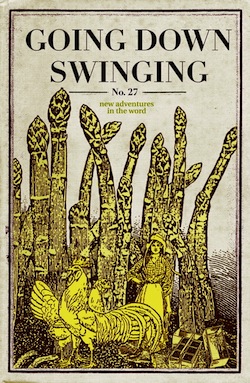
Australian Scholarly Publishing, 2008

Once every decade, it seems, a scholar succeeds in writing an all-encompassing account of the practice and development of poetry in modern Australia. The 1980s saw Andrew Taylor's Reading Australian Poetry; and in the 1990s we had Paul Kane's Australian Poetry: Romanticism and Negativity. Now, Philip Mead, senior lecturer at the University of Tasmania's School of English, Journalism and European Languages, has provided what is perhaps the most ambitious and provocative overview of the agonistic and at times conflicting discourses of Australian poetry in the 20th century.

Continue reading

Posted in BOOK REVIEWS | Tagged , ,

Vale Dorothy Porter

Detail from cover image for Dorothy Porter's Little Hoodlum (1975)

I thought 'Well, fuck everybody' and wrote the book I wanted to write.

The second-last day of winter in 1997 seems so far away now, but today I remember it clearly. After her captivating late afternoon reading, Dorothy Porter and I found a corner in the dining room at the Varuna Writers' Centre, Katoomba, the daylight waning outside amidst steely dampness and the trickling departure of friends.

Continue reading

Posted in GUNCOTTON | Tagged , ,

GDS 27 Spoken Word Feature!

Splits, conflicts and difference within poetry are the zones in which the forward-thinking aspects of spoken word recordings continue to dwell. Sometimes, spoken word is an achievement that challenges our preconceptions of what poetry is, and what it can be.
Continue reading

Posted in GUNCOTTON | Tagged , ,

Pastoral Editorial

When we began throwing around ideas for this issue, the notion of 'Pastoral' first came up as a joke. Because ever since god knows when, for reasons that always seem to depend on one's thoughts regarding the generation of '68, Australian pastoral poetry has often been affiliated with the hackneyed, with the excessively sentimental, and with the sweeping visions of European imperialism.



Continue reading

Posted in ESSAYS | Tagged ,

Dove Cottage

Wm turned in the night again
digging his heels into my hasty pudding.
(Dove Cottage Maxim 13:
You can never have too much oatmeal.)
Our first weeks here we made maxims – late into the night.
I use 'we' loosely, of course,
Although I did proffer some choice morsels
Dove Cottage Maxim 14 [rejected]:
You can never have too much laudanum.
Wm's recall of M Wollstonecraft selective, as usual.
Dove Cottage Maxim 7:
Never confuse theory and practice.
DCM 8:
Never confuse poetry with reality.
Earlier in the evening we had braved a brisk wind
To go lie in a ditch covered with twigs.
I thought it was pretty lame at first
But after the first couple of hours I got into the swing of it.
There are many ways to induce hallucinations
But lying in a ditch covered in twigs was a new one for me.
I'm still pissed, though, that we never get to play the games
I want to play.

Posted in 33: PASTORAL | Tagged

Back to the Farm

Eight headed hills sway
to the mad saddle laughing.
Kiss from stray strings,
hooked to the hum
of the porch.
Knees and ears,
fresh breath feathers,
four legged tears.
Owls spitting fire,
bathing spinach fence pies.

Tell me when it's time.
Tell me how to leave.

Posted in 33: PASTORAL | Tagged

Round Up. Make Nice

Shuffle and stop.
Dust to the sun, shakes, lusts for the moon,
grinning, takes off.
Boy watches closely, mad eyes wide,
and sharp and tongue

Boots move at a rumble of white,
holding hands with proud thumb prince
under nowhere waltz panic.
Grind their teeth,
Loose their feet and
Shout.

Slow lace choir smoke oils.
The machines that blur
day and night
swing almighty heavy orange hands.

Light of heart friends trade
damaged rope,
throw scotch bottle bookends.
Tireless light bulbs,
painted glue stories.

Posted in 33: PASTORAL | Tagged

Paddocks

Looking out across paddocks I fall
silent. Here is the expanse I wanted
inside myself. I am looking forward
to an unbroken horizon the sun

has disappeared behind. Say, I try
to fly there, opening and closing
a little wingspan of speech, wind-
blown pages from a broken spine.

I try
to fly there, opening and closing
a little wingspan of speech, wind-
blown pages from a broken spine.

Say, I try to say
my first name backwards.
Or call Now by the name Then,
and it does not come.

Posted in 33: PASTORAL | Tagged

Variations in the Pupils

Say it is a pink deceit, the dawn sky,
a trick of light and atmosphere
shaped in the eye. The outlook varies

depending on whose eye we look through.
Yet for every eye it is true enough,
trawling over peculiar surfaces

until the landscape is commonplace,
bathed in a hot haze that plays
at the edges, until objects swim

on the road, in drought.
The bones know a heavy rain
will soon fall.

Say it is a grey illusion, that soon
the clouds will be bruised purple
and we will turn in our candlelit smallness

to our haphazard guesswork,
counting the seconds
between lightning and thunder.

Posted in 33: PASTORAL | Tagged

On Reading ‘Learning Human’

This blunt nosed wombat, greedy mega-faun,
transforms obstacles to sustenance, chews
his way through your front door, your doormat
on his back. Rudely, he celebrates
daggy mud gloves, or parades in pleated rain,
a stray feather stuck to one ear. He can
even whistle his way inside a mechanical warbler.

On boiling cloud days the whole landscape is
his change of clothes. To gloss the painful
rift between the self and not, what's truly
seen is mouthed, tongued, brightened with
the spittle of a word. More, he fumbles
into its sleeves; leaks soul stuff, as only
those for whom the flesh is also raiment can.

Posted in 33: PASTORAL | Tagged

Lamentation

o murray o murray
break (bending)
the forgiveness of things

what you (air and water)
what you (bread)
the place you lie down

threads of the sheet that covers
as if given for our breath
drinking (food in us)

here this night's morning
things burn out past giving
(too tired to forgive)

the murray the murray
heavy metal of retreat
a bellow to set the flesh on

edge a leaching (some things
need to be held back)
the sediment lift

ash of excess
seep spoil bone and flesh
the invisible density

of dissolution the silent lamentation
of a drowning fish
the o of loss

o murray o murray
a gull and a swan
from different vantage

one skimming squawking
one all dip and glide
and underwater webbed motor

bogged by
drinking food in you
(given

for our breath)
spoils bone and flesh
drowning the word in you

the murray the murray
in the beak of a gull
threads cotton and rice

too tired to forgive
and sea (does it know)
bends and breaks

ready to admit
the heavy (lifted) metal
o murray o murray

Posted in 33: PASTORAL | Tagged

Post-colonial?

All that is white in us in not pure nor
(but driven to the breath of) snow that falls
when the day turns cold. Our wanting all
belonging (in this place), is even more

the colon's gesture: already who bore
too much the saying of what we have called
selves (the being here of us) a creek a wall
(the snows melting) the water over. Or,

tomorrow you find us building a hut
of limbs and thatch, stripped gum, old bark, fragrant
litter of leaves, the floor dry and crawling.

Tomorrow you find us building a falling,
the odour of crushed ants, the living urgent,
assessing loss (a lean-to, its skin shut?)

Posted in 33: PASTORAL | Tagged