but we must feel there is something amiss

but we must feel there is something amiss
when we come home & find michael stipe taking notes by the hedge
yes, we know: it’s the end of the world
through any crooked passage way
where tongue and fingers work a flame
is where we’ll find the brittle skin of fame, shed
caged in the language of singular intention
there is nothing more than this
apparition that feeds from below to spite us
Trying to account we count and recount our ancestors and actions,
in an inquisition of guilt
why must we feel guilt with what’s amiss?
every tried and quartered thing
or looked up into the trees and witnessed the blood eagle perched with outspread wings
just as he remembered it. Back in Athens
, surrounded by the Junta; terrorised by the silence, the slow leaves blowing
         rage through the broken, open windows: everyone unsure of what happens now
and nobody in the Agora
had ever heard of REM.
Their number one hit/their rapid eye beat/kids rapping on the streat/the ground
trembling and bucking/the sky
serene ignorant
         this unconformitory
         splitting me in two
Two halves of a whole,
         one of which knows what is amiss…
         Of what was always amiss,
         will ever be amiss
         this something/ this thing/
amiss. A miss? A Miss? Amis?

Posted in 38: POST-EPIC | Tagged

(BandAid Medical 422.02)

(BandAid Medical 422.02)
pooh bear with a code on his back that would indicate
his birthday – or the use-by date of his last pot of honey
with that old bear sitting on one line holding glaciers together
while full metal jacket Jimi wails ’bout his Voodoo birth
heard as a bee-buzz in Chris Robin’s ipod earbud
blindly bumping into dark matter before escaping (through a nostril)
The glaciers show the rippling sky, and slide
beneath cool white languid language
in a room without borders where madness
has moaned with a diamond tongue of
derision that echoes and echoes.
Iced couplings fomenting flotsam flesh squeezed
You palmed my heartache at the corner drugstore
spread oaf on that thing! oaf ,and broad follic’lld bacon rind
Changeling spawn of piglet muttered darkly while watching lying Incubus prey
the succubus combed her hair, twirled her scotch on the rocks and she too
        stared at the pooh bear
pooh-poohing him
while his slow eyes began to blaze
Where am I?
Greenland?
challenging wodehouse cutter finds or makes straight bat rend angle?
an undercut, incision, laceration;
        transection of a carrot julienne,
        mincing, wincing …
        grimacing at the wodehouse cutter

Posted in 38: POST-EPIC | Tagged

The arrival of the monsoon

The arrival of the monsoon ―
meant a town full of clean cars. but people kept buying imported water
filling the damp winds with thirst
and filling the rivers with empty bottles, floating by like dreams of escape
parrots, dogs, cats, and mice making a beeline to the hills
peeled wrappers, plastic bags and fruit skins surrender
all is awash of senses, all is clean
even beetles scurry with their now shiny armour
while the rain falls and falls
a cane toad hides in a potted palm tree
the arrival of the monsoon in Melbourne enticed dugongs south, and the reef
made silent flowers beneath the line of sight
tis a pity the monsoon did not venture into Sydney’s wastrel music cigarette
butt paths, cleansing – giving witness to new creations
perhaps she is en route, somewhere far off, somewhere far from, somewhere lost
on some other beaten track like a good time wild girl will, she is waylaid,
last seen in wine country
dimly drunk and blowsy with potential
like Australia.
Go away and cry a mean Australian rain
to the monsoon that is woman and the drought that is man.
I will not be emptied thus
though my hips melt into the formless sea
like a seal in an oilslick
waking up in Ipswich or some such state of mind
begat an outpouring of joy and singing, snakes swimming in the creeks
being caught and threaded into lay

Posted in 38: POST-EPIC | Tagged

There once was a man who lived in a house

There once was a man who lived in a house
with four doorways and a dark room for the cheesecake
between a flyscreen to the rear and someone else’s bedroom
and the cistern that screeched like a banshee in the night
he never seemed to mind the sign on his lot
yet could never spare a word for his neighbours
only, “Fuck off”.
and something dirty muttered in a dialect
until the servant of his dreams crashed
and the unhomely became this man’s king
Then the dead roses and the willy-wagtails by moonlight
eggless
but free range none the less
were laid in feathered nests
which he would go out to inspect
each day with a nervous edginess to his demeanour
	he felt the rupture of delight
backdrafted by this settling of the score
	inflamed by night he breathed in more
tasted salt from bleeding gums
which he took as a sign
which he took as a song
but before long the willy-wagtails had left the feathered nest
        and there only remained
a note the shape of a bowl
that shaped his past
like it had shaped his house
“there are no accidents,” the note conjectured,
	and went on “only sign of unconscious exposition…”
her signature burned
	trespassing the tallow flame
	branding him 'other'
Posted in 38: POST-EPIC | Tagged

money put aside for money will money into money

money put aside for money will money into money
its the same with semen, but stickier
than honey
so all things that can be saved can also be expended, and drowned in
abandoned wardrobes of borrowed clothes
were as solid as super funds, with interest compounding
sameness runs every morning, like clockwork
sameness, every day and every morning. I fall through insolence to meet you.
And find glory meeting me
my self-interest accumulating bull’s eyes in the wall
of frantic necessity
a necessity grown too large for
denial. Like competition dancers grinning grimly, we swing time
Money. money. money feng shui
will do me undo me
slivered thirty silver pieces of me
semen pasted the strips into a sticky collage, grey art a dollar a pop
the whole of my messy life on display —
scrounging for a decent drink and fuck-up where’s my keycard
possibly in the ghostly hands of the shadow treasurer Snow Jockey
whose sordid tongue puts about ugly produce of
unfiltered avarice
well, you said money, honey…
Only the bellboy is listening
with his pale pink, shivery ear

Posted in 38: POST-EPIC | Tagged

These curtains, how they fluttered like wings.

These curtains, how they fluttered like wings.
The singer, however, was no ugly eagle or aeroplane egg, the camera zoomed
in of its own accord
It’s like a postcard holiday home.
Not present. Misrepresented. Waving hello
– or the silent applause of lost nights?
Breathe. Breathe. Breathe. Breathe. Breathe.
Rapid flicker of infection. An infant’s chest x-ray
breeds a terror of frailty, and all the wings are helpless angels:
these sodden days, we are taken by updraughts as spindrift across a shadowed city.
Keep breathing
keep dancing in the wind
keep faith with that which you never can be
… but are haunted to be; a ghost-name lost on the tongue
a fortified keening – rising, rising
into a banshee scream
that could turn the Eiffel Tower to rubble and raise the living
or raise the waves of sonnet leaves, wagga-fish leaping in all directions
Each morning, high in the attic, you can hear her humming as she stitches
feathers onto gauzy curtains,
and the air comes from everywhere
but the past is a painting a journey on the wing on the edge
Is there time to refashion?
the boasts of tennis court oaths, the blood spittle of consumptive
love melding on page, canvas and empty video spools

Posted in 38: POST-EPIC | Tagged

the period of doubt

the period of doubt
was his favourite.
Now we seem gathered in a line
or was he hooked at the end of one?
The comma of faith
followed by a lazy ten Hail Marys
And silence at the gate
where all silences meet and stare at iron
filings withering
through lack of strong direction provided
doubt that sits upon us all from time to time
hungry for comfort food and generic love
prompting our best foxhole faith
forswearing this forswearing that just please dear God- a point of fact
overlooked in the annals of Limbo.
in the annals of our point of departure. prompting our best foxhole faith.
In limbo gated
	The shore illuminated
	Tear washed he rocked her

	pointedly no doubt
virginal misconception
	still trickster thieves
eating bibles with Champagne
if there are no faithless in foxholes then the gods want war
but doubt eats even the gods

74EzBOQyu/e1P96x/kJmfGMz5xfCQFbzkd2M5jQbmcFFnu8ScEJjiDRCKFd
0ce4JSG+Rkiy1GRSRFDZki1TRJKN+bJbRyLmON+ZzjrWcZ/vmxA2zzmw
kRMM50tr+sz1jTOCKUzgBYN60yaBKkV8qsPwdUxcDuIIqawEYst0aCLiRE
gfLWjVQ606a2c51PTWpYZzrPzEbIqAGc6mjDms5mZjWM9eyWa3DAAODii

their pointless rantings unpunctuated indecipherable
	no rosetta stone tablet mined to undermine
	the doubt lying stone cold and foxholed
where feeling ran highest.
As dawn's wrath emerged
	epitaths screamed their passing
	gods forsaking doubt.
this is relativism
this is adaptation. this is a schedule of tides
	this period. scarcely, this period. in the psychopomp

Posted in 38: POST-EPIC | Tagged

They all agreed. A kite was he

They all agreed. A kite was he
-lter-skelter, was hedonistic, a blunderbuss, thats what you need, they all agreed.
Northern summer light
air, cliffs, common yearning, and a piece of string to hold onto
When all else fails. a file; some nails; a nail-file; a turnstile; a man. For all seasons.
Really? A kite was flying above the beach on Gaza
A guest of a few days
knew about dowelling and brown paper
knew about the secret life of string
and labyrinths
that theory of multiple dimensions
the right time and place to let go of the thread
did string theory put to test for brains connected
each brain in flight in this vast ever expanding spacetime
Moving out beyond the border guards of the night time theme parks.
Nestling our heads in the armpits of cacti, we
hold the heartbeat of the gila monster, know we could murder over the border
for raw tequila and a Mexican named Sheena
if over the border they hadn’t murdered her first, on their way to our markets
and their fortunes
where they would fondle our caricatures like blank slates in the evening heavy
And when the vision ended, when he stopped flying, his stillness held virtue and menace,
both afraid of which would rule the sand-lit sky
icypole sticks and clag and parts of a cardboard box
a soggy spine
there was no sticky tape left
there’s one for the Kite Orphanage, I said
placing green feathers, plus some milk money in my handbag

Posted in 38: POST-EPIC | Tagged

My head spins – the audacity of coming so close to the Gods!

My head spins – the audacity of coming so close to the Gods!
if that doesnt get our feet wet nothing will
take my sandals
wet feet, heads in clouds – beware the lightning!
The wax in our ears will melt, all the notes fall down.
The grime in our guts will be flushed. And we will rise, light,
only to have the hawkish words eat those guts – again!
O Prometheus, we know your plight.
Too many nights oozing with ouzo
how can we approach except with flames and offerings
chanting sungift. Someone falls fasting
gnawing gristle, talon gripped, bone in kris-beak
the stone wall cracking, peeling
And again that ouzo, promethean wax, a hand dedicating it to the fire, the too-close.
consumed we wait
an unhatched egg inside the Icarus pyre
eyes malevolently our oily sycophancy,
watching for the birth of wings and salamander immortality
sing tongue soar feet cry want only ask
fire up the band and swallow down the ash
the gods are the gods and will do as they will
not to mention who could tell if they don’t
let us cross over that pink and white pedestrian
the imago of golden helen released from her eggshell,
striped camellia crown, gown of pearled testicle,
smile of eleusinian knowing

Posted in 38: POST-EPIC | Tagged

Post-Epic Editorial

So the story goes: Glámis, the bride
not to mention harpur his prophetic dream of lawson exhuming
Sing to me of the woman, plaintive Muse,
1. sleepless thirty days:
The smoke cleared, crawling
the diary is a newstart fraud de art
Man walks into bar.
Once in a ruptured past before mutiny or Midnight's Children,
Single-parented most of the time, it's a wonder
Run! Run! Run run run run! For a safe climate!
The scissors hissed.
One heatwave day he throws me a sack/marked RetSenAdUn …
And you were that paradox,
Napoleon's plunder
in arid cities we have read as syntax flooded streets,
where does she stop
It helps to have a pedigree
at the moonlight splayed, shot on the dirt floor, silver and soft.
In the gods
Listen, o poet, to this marvel of the night.
When he enters the town–
The valley of his youth is going slowly bald
he was a beautiful thief in the night
Joined to his guilt by bonds of matrimony
Whose guts garland the dogs of Troy / Not Patroclus'
but we must feel there is something amiss
(BandAid Medical 422.02)
The arrival of the monsoon―
There once was a man who lived in a house
money put aside for money will money into money
These curtains, how they fluttered like wings.
the period of doubt
They all agreed. A kite was he
My head spins – the audacity of coming so close to the Gods!


Posted in ESSAYS | Tagged , ,

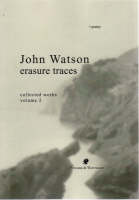
Matthew Hall Reviews John Watson

Erasure Traces: Collected Works Volume 2 by John Watson
Puncher & Wattmann, 2008

Erasure Traces is an experimental work, in terms of linguistic innovation, textual depth and in the application of theoretical constructs to the formulation of poetry. I feel that there is a great amount of depth to the work which may be overlooked at a preliminary read and so I undertake this review to underscore the possibilities and potentialities that I see as dominant substrates in Watson's work. The book opens with Erasure Traces, from 2006, and continues on with At the Onset of Turbulence, 1989 and Frieze: A Landscape Poem with Footnotes, from 2001.

Continue reading

Posted in BOOK REVIEWS | Tagged ,

Epic Editorial

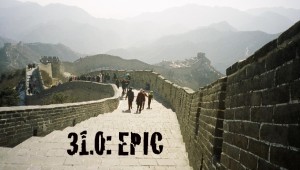
Great-WallWhen ‘Epic' was suggested as a theme for an issue of Cordite, I was expecting it to be either rejected outright or at least modified into something less archaic. When it was actually chosen as the theme for issue 31 with myself as the guest editor, I was faced with a more pressing concern: would we receive enough suitably epical submissions to justify our choice of this theme? Or would the dearth of appropriate contributions confirm that, as literary critic Tom Winnifrith has written, the epic is ‘as antique as a dinosaur', or, as Mikhail Bakhtin would have it, the epic poem is ‘an already completed genre … distanced, finished and closed'?

Continue reading

Posted in ESSAYS | Tagged ,

David Prater Interviews Ko Un


Image from Printemps Coreen

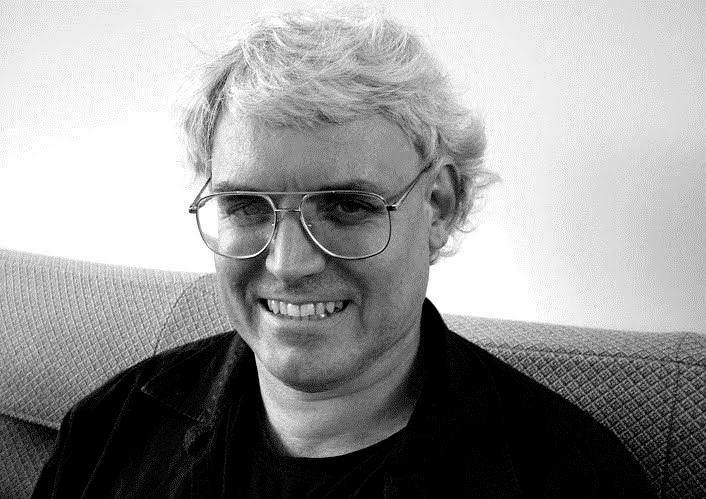
On a hazy autumn day in Seoul in October 2009, David Prater spent an all-too-brief hour with Ko Un, one of Korea's best known poets and the author of a true twentieth century epic, Maninbo [Ten Thousand Lives]. Ko Un's chief English translator An Sonjae acted as interpreter during the conversation, which ranged across various topics including silence, epic poetry and democracy in the twenty-first century.

David Prater: Ko Un, first of all thank you very much for agreeing to meet me today, it's a great honour for me to meet you in person. Obviously the basic facts of your life and works are well-known, but I’d like to ask you about the period of your life when you first started to write poetry in the 1950s. In your introduction to Songs for Tomorrow: Poems 1960-2002, (LA: Green Integer, 2008) you talk about the idea of the ‘Zero’; as being very prevalent at that time in Korea. For people in Australia who might not know much about Korea and what was happening then, can you tell me something about why that idea was so prevalent and why you might later have rejected it?

Ko Un: At that time it was just after the Korean war, everything was destroyed. I was a survivor surrounded by ruins and emptiness, and an orphan. So therefore it’s not just my poetry or myself personally or something, it's that the whole world seemed to be nothing but zero, a mound of ash. So my poetry begins in the midst of this zero, and me being this naked survivor, so to speak. And when you come to the present time, I can’t tell with this zero whether I”ve moved in a plus or a minus direction but in the present too it’s always a matter of starting again, starting again from a zero, again from nothing, to always start again from that, as it were, ground zero.

DP: You spent a decade as a Buddhist monk – is that a Son or Zen Buddhist concept?

KU: Buddhism for me is like food I ate for ten years, for a long time as a monk, and the food you eat goes to your bones and stays there, so in that sense it's inside me, it's not that I wouldn't be identified by Buddhism but it's there, a part of me … Buddhism has this emptiness and in opposition to it the 'is-ness', but the zero concept – there's nature, there's the whole existence of the universe but that itself for me is a part of the zero.

DP: In an interview with Patricia Donegan for Kyoto Journal in 2005 you described the Korean people as 'a poetic people' – not just in terms of actual poetry but in the way that they live their lives. In your childhood, what was people's attitude to poetry? Was being a poet seen as a viable or respectable occupation, or was it a punishment or curse?

KU: I had left home and I was lost. This is a process of loss, to have left home is to have lost home. Looking back now, the people there – my mother, father, grandparents, uncles – none of them were literary people but the way they spoke, the way they lived, their speech and everything was full of poetry, making them in a sense better poets than I am now. But looking back at that as a lost reality, it's no longer there and you can't go back. So at present I have this sense of having lost something, of having been deprived of something, it's no longer there, due to the process of modernisation.

DP: On that topic, of course, a big factor in the early twentieth century for Korea was the Japanese occupation. You write about having to learn Japanese forms and Japanese stories, having to speak in Japanese, given a Japanese name (Dakkabayai Doraske). You write that these Japanese influences were 'like splinters embedded deep within me'. Do you think it's possible for these splinters to be removed, or negated?

KU: Of course, originally, a lot of what's Japan came from Korea, it was one reality and one culture. But then they changed, over a process of time they changed and then in recent times they became more and more aggressive, as it were, more outreaching, taking over and attacking. And so when I was born and grew up it was under Japanese rule and I had to take a Japanese name and learn Japanese, so in that sense there is within me that wound of having undergone the Japanese colonialism. But at the same time even in that period I had the chance of learning to write in Hangul, so that when in 1945 liberation came, I was virtually the only child, the only person of my age who was accustomed to writing and reading in Korean, so in that sense I was powerfully less influenced than most of the people who grew up in that time. I was taught in secret, in the village, by my neighbours and relatives, and could mature myself in writing in Korean.

DP: You've described the manner in which you lost your hearing in the early 1950s. Speaking as someone who also experienced hearing loss as a younger person, this is something that's very interesting for me, and it seems that it's a very important aspect of your work. Despite the loss of hearing your poetry emphasises sound and focusses on words that have sounds, the sounds of rivers and waves, for example. To what extent is hearing and sound still a part of your experience of the world? To put it another way, in the attempt to block out the sound of the experiences around you, is it true that you turned inevitably inwards? Was this how you approached your writing from that time onwards?

KU: [offering a handshake] I'm glad to meet somebody else who's had hearing loss. I once met somebody who originally couldn't hear at all and developed hearing later. We reached the conclusion that you have to come to accept this world as a world of noise and sounds. For the person who hears and then no longer can hear, then the sounds heard remain forever inside that person. Such a memory in some cases might grow weaker and fade but in other cases might grow and increase. So that's right, I have these memories of sounds, of wind and sea more strongly than other poets would have – it's the memory. Because on one side there's no hearing, on the other side it's only an artificial eardrum, so if you take that away I am completely left in silence.

DP: It seems to me that the noises of the world are very important in your poetry but that there is a deep, I guess profound silence in many of your poems. Can you perhaps put into words what that silence is, how it feels?

KU: [pause] Silence is not the sort of trash of words and silence is not the tomb of words. I dream of a reconciliation between silence and words; they are not distinct and they are not in conflict. The finest poetry is silence.

DP: Moving onto another topic, Brother Anthony describes how you travelled by boat to Cheju-do, and it reminded me a little of the story of the Dutch sailor Hamel being marooned there, or even of Gulliver landing on Lilliput. Can you tell me a little bit about your experience of living on Cheju? Would you say it is a different place from mainland Korea?

KU: I had a dream that Brother Anthony and I would visit various islands around Korea once, but we're all a bit busy and old now! Going to Cheju-do, some people go to an island on a kind of quest but actually the real reason I headed to Cheju-do was that I intended to kill myself by jumping into the sea before I got there, so I wasn't really setting out to get to Cheju-do.

DP: Okay, okay.

KU: When I went I didn't realise, but arriving in Cheju-do I realised that it's not just beautiful nature but that in 1947-48 there were these terrible massacres by the rightists in Jeju-do, so arriving there I discovered these great deep wounds left by the experience of history. So I feel that during the three years I spent in Cheju-do, I was the Lilliputian, the small guy. I am very sad, because in those days there was still a sense of an ancient tradition surviving, its own language and culture, but now it's all been developed, transformed, it's gone.

DP: I visited Cheju last month and that was my experience of it also. That there was lots of resorts, hotels. It still seemed to me that there were ‘real' Cheju people living there but that perhaps they are being passed over by history …

KU: Yes, like Miami …

DP: Turning now to Maninbo [Ten Thousand Lives], your recently-completed master work, which I'm very interested in reading once the final volumes have been translated into English. Why 10,000? Does that number have a special significance for you or for Koreans?

KU: It's not arithmetic, it's like in The Arabian Nights where the 'thousand and one' means 'lots', or 'many'. In Korean and Chinese, again, it's a way of expressing a large number, a lot of people – more than a few.

DP: Would you describe Maninbo as an 'epic'? Is it one poem or is it ten thousand poems?

KU: It's like a flock of butterflies …

DP: Wonderful! Would you say that Maninbo has a style or form that is different from your other books?

KU: Each poem is different, each poem is about a different person, so in each poem I have to find the style or form that's suitable for what I want to say about that person, so it's multiple in style and form. I'm not interested in form – the subject makes the form.

Posted in INTERVIEWS | Tagged , ,

Ali Alizadeh Interviews John Kinsella


Image from Granta

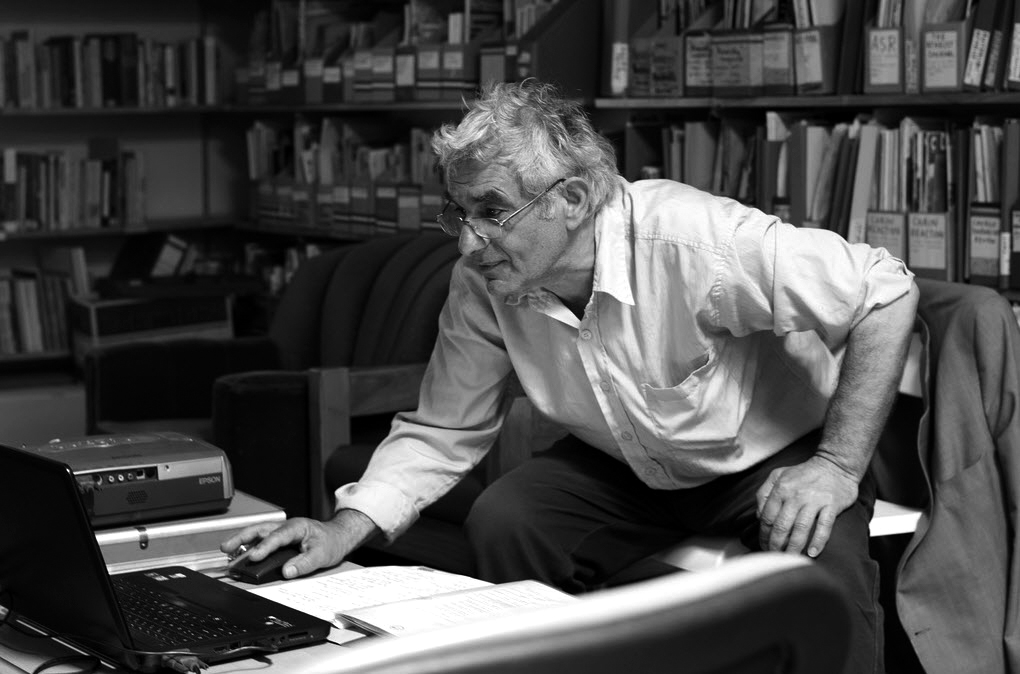
John Kinsella’s most recent book Divine Comedy: Journeys Through a Regional Geography is an incredibly ambitious and meticulous rewriting of that great epic poem of the Middle Ages, Dante's The Divine Comedy. Our guest poetry editor for Epic, Ali Alizadeh, interviewed Kinsella recently, via email. Their discussion ranged from traditional notions of the epic form, and Kinsella's relationship with it, to ecological manifestoes and collaborative projects, and the concept of 'pushing against form'.

Ali Alizadeh: Your most recent book Divine Comedy, as its title suggests, is a complete rewrite of The Divine Comedy. Yet you've called yours a ‘distraction' on Dante's epic. Could you speak to that?

John Kinsella: Dante's Divine Comedy has been a long obsession for me. I came across it as a child, but only in a generic kind of way. I read Penguin editions of Inferno and Purgatory in my late teens and then reread Inferno (Ciardi translation) while living in a commune situation, and with a major drug and alcohol problem, in my early twenties. I mention the conditions of reading here because they were relevant to the way a personal mythology overlaid literary tropes for me – not an uncommon process for readers of Dante to impose. The Inferno started appearing in undeclared snippets in poems I was writing at the time – but in abstract and distant ways. But mostly, in pieces of artwork I was doing at the time (though long since abandoned, artwork was an integral part of my early poetry creativity). Those drawings and paintings are still in an archive somewhere. I hadn't seen Doré's images then (possibly a frame here or there, but certainly not in their entirety) but having since become saturated in Doré (I had the plates stuck up round the room while I was working on ‘my' Comedy), I would now find it impossible to work on anything visual without some subtext of reference to those amazing works.

When I came to writing my autobiographical work Auto in the late 90s, I drew on Dante's La Vita Nuova (‘And the sonnet was this…', for example: that is, exploring the links between poetry and prose regarding personal explication), and started to think about the entire Comedy. I reread Paradise around then. I had also read Paradise on Happy Valley Farm in the early 90s – the Sayers translation I'd picked up cheap in a secondhand bookstore somewhere. I was in a bad way then and suffering a lot of blackouts, so I read Paradise against the backdrop of the great Dryandra Forest and personal decay. But I re-read it in Cambridge in the late 90s.

For a long time, I have written cycles and movements of poems using pre-established models to highlight disjunctions in the way language, location, and attendant spatialities function. For example, by using Beethoven's Sixth Symphony as the template for The Silo: A Pastoral Symphony, I attempted, on the most basic level, to show the disjunction between European Romanticism and the introduction of European farming methods into Australia and their disastrous consequences in terms of country/land. Most of my work has an ecological basis, and in reconsidering pastoral motifs, especially in the way they do or don't transfer from place to place, I attempt to highlight how broader systems of discourse inevitably break down and damage the local. Local knows what works locally, in essence. Or, at least, has more of a chance.

In around 2003, I began to think of issues of the local and the broader local and the non-local in the context of Dante's Comedy. I was working on a book of poetry entitled The New Arcadia around then; that book was templated on Philip Sidney's Old Arcadia, and was very much in dialogue with his work. I was thinking of how far away from an original model one might go while retaining certain structural and linguistic elements of that original. When it came to considering a ‘take' (some critics have called it a ‘riff') on The Divine Comedy, I felt that I didn't want to create a dialogue, I didn't want to use it simply as a ‘model', bur rather wanted to take on the fundamental notions of what we consider to be ‘good' or ‘bad' in any given place at any given time and to set up a way of comparing personal response to place with historic and cultural tropes. I wanted to ‘distract' readers from their knowledge of the original texts but encourage them to reinvest their interpretations in the place and time of their reading. My work was to be an ‘up-close' work, an intense examination of five-and-a-half acres across three years (a year, roughly, for each of the canticles), but contextualising it in the greater world, and the discourse of location that surrounds all ‘places'. The distractions are what's happening outside the place you live in, as much as the distractions that happen daily where you live (seeing a bungarra or a rare bird, or even watching the familiar patterns of songbirds played out each day).

I like the idea of epics being about the micro – an accumulation of detail, of the ‘small', against the larger backdrop. Sometime in 1997 I wrote in a poem:

What use if we can't
note some of Dante
in his epic diva comics,

climb down a few rungs
of his sorry internal workings,
extricate around the footnotes

like revivals, enthusiastic
resurrections
of the roman à clef?

         (Graphology, Canto 7)

So the idea of the larger work departing from Dante's idea of the epic was finding its feet for me, and also the disturbance with the ‘entertainment' aspects of the big allegory. This is a question of reading, canon, and presentation, more than of Dante's specific intentions as writer. A cosmic performance, sure, but a cosmos in which we separate our own ecological impacts from what we read. Implication becomes moral and purely ‘human': it is not.

Furthermore, however epic a single writer wishes to be, s/he is writing the self. Interpolation comes in the form of anecdote and participation (through family largely, in the case of my Comedy), but as author I am still mediating. I am always flummoxed when critics point out, regarding the anti- or counter- pastoral I inhabit, that evidence of the anti is already well established in, say, Virgil (say from Eclogue VI), because they're missing the point of what I feel is the issue behind pastorality: that recognition of intrusion and decay of ‘country' or ‘rural' values is neither here nor there. What I see as the point of contention, apart from exploitation of people for profit, is the abuse of the land (especially in good husbandry and neat, ordered terraces), the damaging of ‘bushland' (in all its forms), and the agricultural use of animals for human profit. So my base model isn't the social issues of pastoral, but issues of ecological exploitation no matter how ‘rural'-authentic it dresses itself up as.

Posted in INTERVIEWS | Tagged ,

J.H. Prynne and the Late-Modern Epic

I: Further Notice: an introduction to the work of J.H. Prynne

The poetry of J.H. Prynne has recently come to the attention of an international set of poets and literary theorists. This interest has developed into a recent edition of Jacket, a festschrift from Quid, as well as the publication of many essays dedicated to the critical analysis of his work. This attention has coincided with the release of his updated collected work, Poems, and, coincidentally, with Prynne's retirement from a teaching position at the University of Cambridge and as Fellow Librarian at Gonville and Caius College.

Continue reading

Posted in ESSAYS | Tagged , , ,

Π O’s 24 Hours: Ulysses in Fitzroy


Image courtesy of Paul Rubner

Born in 1951 in Katerini, Greece, ΠO moved to Australia when he was three years old: ‘Went to Bonegilla / migrant reception centre. / Escaped 3 months later. / Raised: Fitzroy. / Reason for living: / Stupidity. / Fuck the spelling.’

This is Π O’s bio note at the end of 24 Hours (1996), a 740-page, self-published epic poem set in Fitzroy, Melbourne. The P and O of his pseudonym are his actual initials and since the 1970s, Π O has been this poet’s stage-name as much as pen-name. In 1977, as Billy Marshall-Stoneking mentions in ‘Π O, An Appreciation’, Π O performed his poetry more than 250 times with Marshall-Stoneking and Eric Beach in and around Melbourne. At this time, he was performing his ‘ego-poems’, a collection of mostly vernacular poetry that publicised Π O as unabashedly ‘fantastic … brilliant … great! (no bullshit)” (Marshall-Stoneking); this demonstrated, or perhaps accumulated, the self-confidence requisite to producing his own contemporary epic.

Π O continues to perform his poetry in Melbourne, with the energy, fluency, wit and talent for mimicry that is not immediately obvious to a reader on first seeing his work in print. ‘Fuck the spelling', in his biographical note, indicates Π O's priorities–voice, aurality, ‘oracy' over conventional literacy. Being faced with: ‘Eye plai (lus' taym) layk “Skool-boi”./ Yes! – But…eye saaaaaaavayv!' (Π O, 1996: 340), is exhausting compared to hearing ‘I play (last time) like ‘School-boy'./ Yes!–But … I survive!' performed in a perfect accent, as annotated above. However, if a reader approaches Π O's written work as a score (a notation that needs to be activated by a reader) or a puzzle that requires the active participation of the reader (which could be said of all successful poetry), the sophistication and humour of Π O's writing becomes evident.

24 Hours, an encyclopedic portrait of Fitzroy in the 1990s, was rejected by six publishers before being published by Collective Effort Press, the members of which are thanked on page 4. On page 2, there is a poetic version of the legal disclaimer (‘All characters in this book / are fictitious. Any resemblance / to anyone living or dead / i consider / a compliment.') and on page 3 a dedication to his sister Athena (‘He's great/ He's fantastic/ I'm brilliant/ I'm his sister'). In a commercially published book, these opening pages wouldn't be remarkable, but, as Π O has complete creative control over 24 Hours–from the quote on page 5 (‘Don't quote me; / That's what you heard / not what / i said. / – Lawrence K Frank') to the type-writer font and layout, author-drawn sketches and symbols throughout, right up to the photograph on the final page of the appendix–all aspects of the book as an artifact appear to influence the poem as an annotation. As his voice, face and gesture would be inextricably linked to the performance of his poetry, so too is the book's appearance important to Π O's written poetry, particularly in the case of 24 Hours.

On the back cover, the closest thing to a blurb, is ‘THE DAY / THE LANGUAGE / STOOD / STILL'. This blurb might suggest that language, once caught on the page, is static and can thus only move and live when spoken. It also suggests the crucial timeframe of the poem. The narrator, Π O (while the poet's isn't automatically the narrative voice, in this case, despite the disclaimer, the voice is definitely Π O's), describes in minute detail a day in Fitzroy, beginning on a mid-morning walk to a café, and ending with the Boss closing his café in the evening. In between, via actual events, flashbacks and digressions, the narrator takes the reader or listener into his haunts and presents him or her with the characters that made up 1980s–1990s Fitzroy: the Boss, his wife and the elderly Greek, Italian, Turkish and Hungarian men who play chess and cards in the café; the boys, Tone and Adam, who deal speed and do ‘jobs' for a gang; the junkies who keep Tone and Adam in business; the women, Julie and Sof, who strip or prostitute themselves for a living; the wandering alcoholics who knew Π O's father back in the 1960s; and the police who frequent Fitzroy, mostly for worse than better. Via a series of socially realistic scenes, vernacular monologues, eavesdropped conversations and imagist observations, the reader or listener is given a thorough, apparently raw and immediate portrait of the poet's suburb.

Cafes!
Cafes!, he said: They're tha cause of
all the World's problems.
All sorts of people go there.
All sorts of people!

- π.O., 24 Hours, 1996: p 462

Any epic spanning a single day must hark back to James Joyce's Ulysses. As Ulysses is more intelligible when read in conjunction with Homer's Odyssey, so 24 Hours begins to make more sense when its parallels with Ulysses are recognised. There are no stable equivalents for Bloom, Stephen, Buck Mulligan or Molly, but Π O's characters are comparably depicted, with humanity rather than heroism. By examining the similarities shared between 24 Hours and Ulysses in more detail, I will argue for the significance of 24 Hours as a rich, sophisticated contemporary epic poem in its own right.

Posted in ESSAYS | Tagged , ,

A Ghost In The Golden Sheep Massage Parlour

[audio:http://cordite.org.au/audio/A Ghost In The Golden Sheep Massage Parlour.mp3]
Sean M Whelan & The Interim Lovers
A Ghost In The Golden Sheep Massage Parlour

Posted in 37: EPIC | Tagged

Libby Hart Reviews Dorothy Porter

The Bee Hut by Dorothy Porter


Black Inc., 2009

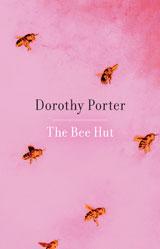
The Bee Hut is Dorothy Porter's posthumous volume of poetry and her seventh collection to date, although her agent has indicated there are more books to come. Most poems assembled here were written in the last five years of her life and the final poem, ‘View from 417' was written only two weeks before her death from complications associated with breast cancer. In many ways The Bee Hut is a celebration of vitality and inquisitiveness. It brings us a lucid and intimate portrait of a life well lived.

Continue reading

Posted in BOOK REVIEWS | Tagged ,

Plantation Rumours

[audio:http://cordite.org.au/audio/Clarke_rumourmill.mp3]
Plantation Rumours (2:14)

Posted in 37: EPIC | Tagged

The Mountain

[audio:http://cordite.org.au/audio/Crixus_Mountain.mp3]
Posted in 37: EPIC | Tagged

Solitaire

[audio:http://cordite.org.au/audio/Tiggy_Solitaire.mp3]
Solitaire (2:42)

Posted in 37: EPIC | Tagged

In the Garden

[audio:http://cordite.org.au/audio/Laidler_Garden.mp3]
In the Garden (2:15)

Posted in 37: EPIC | Tagged

epic

the cleared flat playground
                        dancing
or gymnastics at one end
europe, the right side
           learning, irish      hymns
perhaps dreadful,

I never thought to ask anyone.
Earthquakes & pleasure took over

Luckily i wasnt hospitalised,
though my rant tapes were lost
blank bits best, now marvel without stopping.

anything non-epic counterproductive.

No bush rangers

Their attacks on wombats belong in the state library archives,
not to mention harpur his prophetic dream of lawson exhuming
      his grave,
saying these kangaroo-bones dont belong here with the christians,
dont ask me where all the bat specimens came
from theres only ever been one pin. Judith wright was here

another toilet activist no doubt.
locust eater by night.
Posted in 37: EPIC | Tagged

The Williad

The Epic on the Epic, écriture feminine.

Sing to me of the woman, plaintive Muse,
a Writer of twists and turns: her keyboard
unchained, hot for stardom, keyed for success.
She wants to write an epic. But will she?
Perched at her desk, fingers afire, quick,
her vision eager, her screen a-flicker,
the writer cracks her knuckles as she thinks:
how about something of the Iliad ilk,
smoky with striving groans? Eager to please,
avid to last? Or else an Odyssey,
a gourmet traveller's tale of the soul
bobbing on boundless seas to find its way?
Or an Aeneid– teeming with twisted
honour, keen to waste what it has? … Why not?
Good subjects all. But they need to be done
from a woman's perspective. That's the way.
Something girly but frothing with substance,
a clever, double-X-chromosome tale–
cute but smart: one that never tries
too hard to draw a new moustache on things.
 

The Writer and the Attack of Hunger

And as she bit her pencil, plotting hard,
she felt the presence of Darkness. The Claw
of Hunger began its Perilous Churn,
and Icy Fear swooped as the Writer tied
herself to the chair and stopped her ears.
Soft at first, low like the purr of a cat
as he lets out his claws to pick at silk,
a sound arose from her Cavernous Cave,
then reached a feverish pitch. The fierce desire,
the honeyed buzz of lustful, warlike bees,
the cloying, sweet, Cosmic Hum of the Fridge–
that waylayer of heroes, that pit of True,
Rich Taste, the blessed Harmony of Love,
of Bliss, Fulfilment, Smiles and Pleasant Peace,
past reason hunted, and no sooner had,
past reason hated, as a swallowed bait,
on purpose laid to make the taker mad–
‘Bring me a glass of water, o sweet Muse,
a piece of fruit!' called the Writer. Thunder
broke the mighty spell with this mighty word.
 

The Writer and the Monsters of Child and Housework

The first victory hers, the Writer thought
she would now write her epic. But as she went
to get a coffee, the Growing Pile of Dishes
stabbed her in the eye, and the Toilet Bowl
let out a murky howl. Its voice was drowned
by the cacophony of Dirty Sheets
begging for change. Then the dread Soiled Washing
squirmed in its basket, teemed and churned, growling,
while Dinner spat chips, rattled the fridge-cage
and pushed its fishy fingers towards her.
Fencing with each of these Monsters in turn,
the Writer tripped on toys littering the floor
and groped for balance. A shelf of books
fell on her foot, launching pointy corners
straight into her flesh. ‘Tidy your room!'
she screamed, tearful. ‘Later', grumbled the Child,
‘I want to watch TV now'. The Writer
cajoled; then, toys away, read four stories,
and, later that night, changed some peed-on sheets.
 

The Writer and the Battle of Bills

And as the golden sun rose in the sky
and eggshell clouds beheld the city's face,
the Writer woke up dreaming of writing
and milking her fresh mind. An early word
catches the worm! First thoughts push like the wind.
But then, a monstrous army caught her sight,
of beings square and white, the Evil Bills–
who, with their ghastly silence and sharp dates
sucked her sweet life-blood, squeezed her living flesh
and clipped the wings that she had tried to grow.
She fought– pushed her knife deep into their slits,
and laid them, flattened, one on top the other
into an ordered pile, a semblance of control–
but felt their scalding scorn, their lethal touch:
unless she earned some good money quick smart,
her Writing would be bulldozed in a flash.
The Writer zips her dress, slicks on her gloss,
sprays on her perfume, primps, flicks out her hair
and clicks her super heels to join the Bright
Battalions of the Bill-Slaying Workforce.
 

The Writer Conquers Sleep

It is evening: the Child in bed, the cats
fed. As the writer finally settles
with her keyboard and some clever ideas,
along comes Sleep, the Knot of Perfect Traps.
A sudden, silver hush enfolds the room;
the close air thickens with the scent of blossom,
ripening plums, warm orange oil, almonds
and milk. Leaves whisper in the gentle heat.
A cool reflecting pool, smooth-surfaced, clear,
springs on the desk before the Writer's eyes,
a weightless, white lotus flower floating
in it; a snake's diamond head in the deep.
‘No!' cries the writer and hits the special
emergency button on her keyboard
to wake her fingers up. She slaps her cheek,
washes her face, swills some strong coffee
and a No-Doz, smiles, stretches and stands tall,
then clears the swamp rot debris off her desk
and watches the diamond snake slink away.
 

The Writer and the Strait of Love-Lack

As she recovered from that trial of strength
and faced her heart and her keyboard again,
the Writer felt the hum of Honeyed Strings
lodged deep in her gut. She knew the tremor well,
and hoped it wouldn't strike. Not tonight.
‘Why must I be alone?'– the Writer thought,
‘Will I be found dead, half-eaten by cats
I now feed gourmet Whiskas? Must there be
no one to hold my face, stroke my body,
hang on my every wish?' And while she cried,
the shiver of the Strings picked up, swelled, sighed,
grew wicked, taut and tender. ‘No escape!'
it breathed. Its voice was husky and reckless,
a current behind her ear. In her heart
swelled a warm wave: liquid butterscotch, soft
across her bones. Its movement, unchecked,
stirred the forgotten silt of her rock pools,
making her hurt. ‘Avaunt!' cried the Writer,
‘I call on the Mighty Weapon of Truth!'
She grasped and aimed her Beacon of True Buzz,
and smiled as its mighty pulse split the swell.
 

The Writer Emerges Victorious

Having conquered all her Enemies Five,
the Writer emerged victorious,
and wrote it all down just as it happened
over a cup of coffee and a snack
five minutes or so before the deadline.
That's the epic. Done! She lifts her hands from
the keyboard, and lo! …
A bluish light explodes
to lift the Writer up on a rainbow path.
Crowned with laurel leaves, her arms aloft,
juggling the Balls of Heaven, Sun and Moon,
the sparkling Stars and Meteors of Beauty,
the Writer glides over turquoise clouds
on Sun's fiery chariot. Her rapt eyes
flicker with glory; her silk Grecian gown
flutters in fragrant winds, her lyre gleams.
Cockatoos descend with emerald ferns,
garlands of fragrant gum leaves, scarlet buds,
clusters of amber grapes and honeyed nuts,
and with a sweet harmony of voices
sing fresh hymns to her beauty and skill:
This is the way a girl ends
this is the way a girl ends
not with a plough, but with a fiddle.


DEDICATION

This poem is dedicated to all the Important Male Influences, dead or alive, who have been playfully utilised in the writing of this Epic.

The title remodels that of Homer's The Iliad;

The verse form (blank verse) has been lifted from Virgil's Aeneid (and many other worthy later users, such as Shakespeare and Milton);

The idea of putting the title of The Iliad to humorous use is pinched from Alexander Pope and his 'The Dunciad', a satirical epic on (male) dunces;

The mock-heroic tone is inspired by 'The Rape of the Lock', a trivial (male) quest described in heroic terms, also by Alexander Pope;

The Writer tying herself to the chair to resist the call of Hunger laughs at Homer's story of the irresistible call of the Sirens; and the Strait of Love Lack recalls the story of Scylla and Charyribdis. Both are in The Odyssey;

Two lines in the stanza on Hunger (‘past reason hated, as a swallowed bait / on purpose laid to make the taker mad') have been lifted from Shakespeare's sonnet 129, a poem on (male) lust. The verses are unchanged; the joke is in the change of context;

Sleep, the Knot of Perfect Traps, plays with Sir Philip Sidney's sonnet ‘Come Sleep, O Sleep, the perfect knot of peace';

Many ancient and less ancient myths and quest stories are remembered in this poem: The Iliad, The Odyssey, Beowulf, Sinbad the Sailor, Gerusalemme Liberata, Apollonius of Tyre, Pericles, The Lord of the Rings … none of them female;

The ending takes liberties with the famous final lines of T.S. Eliot's ‘The Hollow Men', a poem on the First World War and the futility of wars.

							
Posted in 37: EPIC | Tagged