Bradley Malley-Trushott: Hoarse Metaphor

How many blondes must die before the Danish
thriller ends?
The sans serif are here with their removing gear.
Type! Darling, type!
My secretary responds, hoofishly.
Between the kernel and the fruit.
We cough.
The water stretches unto the sea – hand me my
nosering!
Narrative logic asleep on a park bench.
The gardener is here for his paycheck; I think he
is stealing our weeds.
The porridge stirrer knows more than it’s telling,
too.
The llama are butting at the gate, enraged by the
radio playlist.
Your vortices number three, I assay.
And they meet in the person of a Greek sailor.
The sailor publishes his diary.
Gay love isn’t funny any more.

Posted in 42: CHILDREN OF MALLEY II | Tagged

Janice ‘Pearl’ Malley: The 27 Club

ABANDON ALL HOPE
YE WHO ENTER HERE –––
my name was Salmon, like
the fish; first name, Susie.
I was fourteen when I was
raped and bled for diffidence,
bad grammar, sadder cliché.
Or was it Dylan Thomas
Aquinas, il miglior fabbro?
My life was like candida,
a Bible of Dreams: I sent
postcards from the edge
for services rendered
(ce grand malheur, de ne pouvoir être seul).
I suppose at one time I
might have had any
number of stories to tell,
but now there is no other:
the deep and dank tarn
at my feet closed sullenly
and silently over the frag-
ments of the ‘HOUSE OF
USHER’; the morass
bulged and aborted; death
scratched his anus; my blacks
crackled and dragged.

Posted in 42: CHILDREN OF MALLEY II | Tagged

Aurelia Schober Malley: So I Was

‘Dearest Mummy’,
loving and reproachful,
a tightened mouth in a
face puckered up and
quivered like a pale

jelly. Your barnacled
umbilicus, the lovers’ fat,
paralyzing red placenta,
that bald, wild knuckle
white moon unloosing

bats and owls, dragging
seas like crimes. An ebony
Mary growing smaller
and smaller until she dis-
appeared; O eely tentacle,

there was never anything between us!

Posted in 42: CHILDREN OF MALLEY II | Tagged

Giacomo Mally: The Lower Half

(After Raphael’s ‘The Transfiguration’)

Someone shut the poor boy up! Arms flailing,
Through mouth’s conduit epilepsy’s devils
spewing freely, his eyes rolling east and west…

Via rhetorical swerve of her shoulder
A woman, ‘serpentinata’, reroutes our gaze
Past million-dollar hairdo, perfect profile

To badlands we know and dread. Stop him!
Nine disciples left a whirligig
Of gestures, for heaven’s sake make him stop…

Posted in 42: CHILDREN OF MALLEY II | Tagged

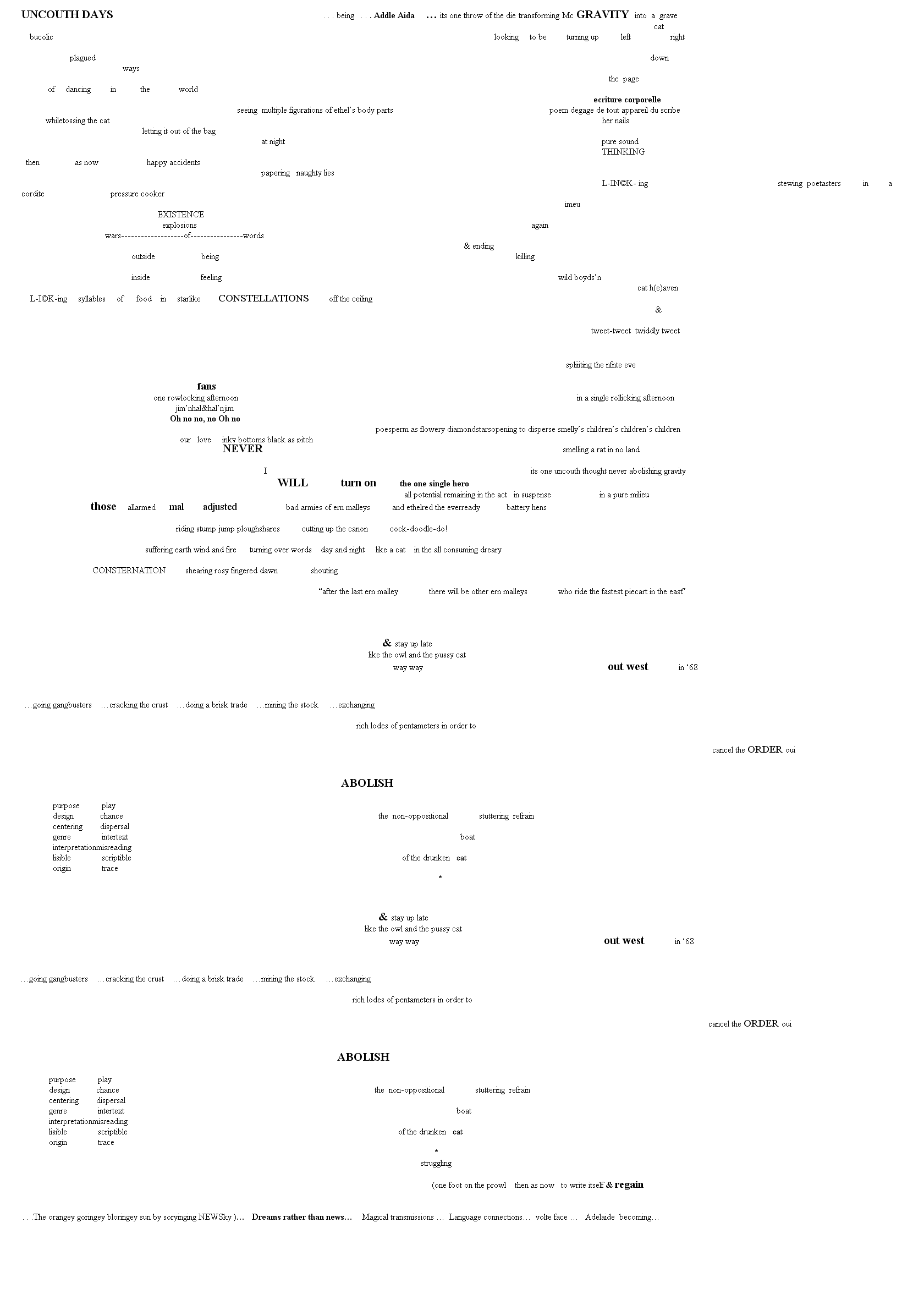
Recuperating Malley: Uncouth days …

Click the image for a full-size view.

Posted in 42: CHILDREN OF MALLEY II | Tagged

Joe Dimalley-o: departures

take your shoes off
threat level orange

as one locked up
for his jokes

then ouest over
the sierra nevada

brown and sparse
with first snow

if your fingers are blue
why are zero degrees plural?

the fountain sets
the border freezes

stuck like mud
to the ring-necked duck’s feet

mistletoe or maple
seeds have wings

words here
an echo or record

of what was –
in a phoneline

Posted in 42: CHILDREN OF MALLEY II | Tagged

Joe Dimalley-o: an air letter

to juanita

late fall if i can call it that
not that the weather cares
making a mess of main park

know you’re not at home?
at the streetcar stop wear the effects
of the bloor street snowplough’s bow wave

ottawa-coteau-montreal
in a bilingual province
i know half the language

though the written world
in parallel text
seemed somehow sympathetic

emotional distance – is always
in miles and if the island prison
library’s an escape

writing the air letter was
taking my homesickness pills
or you write i wait

but it’s not us just the mail
the more prescient of beginnings
dear j, hope this letter finds you

Posted in 42: CHILDREN OF MALLEY II | Tagged

Chase Malley: friendly fire

august earliest
august the first
the morning of
where weeks of
rain makes sunshine
seem an anomaly
blinds glimmer then
phototropic unfurl
to the wall or a torso
banded in shadow
milk settles it yep
perfectly caffeinated
thank you
of the poetry book
MORE THAN 100 000 COPIES SOLD
sit by the fire read
on as each surprise
lifts like newsprints
luminescent flame
from the page
how many months
later now searching
for the memorable
though unmarked
bergotte reference in
in search of lost time
snippets of news
from another room
is even less reliable
though you know
the stories the pope
apologises the rescue
capsule again hauls out
the last of the Chilean
miners and the present
one about a man killed in
friendly fire how friendly
can fire be you ask

Posted in 42: CHILDREN OF MALLEY II | Tagged

Penumbra O’Malley: Questions from Isla Negra

5/1

the slowness of turtles is as green as lime
and turns the camel orange
their humps are pregnant with new words
turtles oranges and camels
hide sustenance & succulence
under round rinds

Note: “Que conversas con las naranjos” – “that which chats with the oranges”

7

the sad mind of doves is full of stops
that reap war’s loss
the head of the cote maps the way to extinction
so we may enjoy companions on the way
a dove knows peace only when dead
leopard-wars begin in every spot
the landscape of death is taught so doves
and leopards can find their way home
the swallows left behind are cared for
by householders with lives
swallows write poems in the sky
for their last dusk-time flight

6/2

the intensity of the eclipse
reveals the gynoecium
at the centre of our star
burns for ash
and clouds of imagination

~

the number of bees in a day
is equal to the number of seeds
in a sunflower that shines on you

Posted in 42: CHILDREN OF MALLEY II | Tagged

E.V. Malley: Uncle Ern Looming

A densely plotted graph of peaceless wool is sewn
across a plane and pinned to dry on tenterhooks.
The air is woven well, a chart of knotted winds
ensnares a bowing gum and rags of oily cloud
are loops of thread from reels pedalled bare.
Precisely angled rain is uniformly stitched
by grim intent with flashy silver needlework.
The weaver takes the trails of the woven strands
and tethers up the skies and finespun atmosphere
to sharpen doubled lines, refine the captured mess.
Beware the ill equation mapped within this frame
of Summer hell the frightened weaver gathers in.

Posted in 42: CHILDREN OF MALLEY II | Tagged

Giacomo Mally: Italian Lesson

‘Stivale NM boot/ Stoviglie NSFPL dishes’

‘Slip on, tesoro, le tue stoviglie…’
So my over-eagerness mistook ‘stivali’/
Boots, here exotic, for crockery –

Your look more of surprise than mockery –
‘What will this English bungler dream up next?’
You may have thought but never said,

Too gracious by half. Error since corrected
In act as well as word, I wonder at
How malapropism ever got so fortunate:

Washing up has a whole new interest –
Sheathed ankles, knees, thighs get given
A not-so-objective correlative –

Dream kitchen discreetly equipped with
Suddish shifts of memory, latent delight
In each flashing dish, glinting plate.

Posted in 42: CHILDREN OF MALLEY II | Tagged

Giacomo Mally: Pietro Da Cortona’s Ceiling

(Sala Grande, Palazzo Barberini, Rome)

Riding their respective clouds Temperance,
Religion, Piety wax triumphant;
Fury, disarmed, reclines on his own weapons.
Thanks to Minerva, dunce giants get flunked.

Another twist of the neck and see Hercules
Clubbing the harpies of Avarice.
All the above to please a Barberini
And leading to the main event: Bomber bees,

More cardinal virtues scrambled to hand them
A laurel crown as Immortality raises,
For back up, a twelve star diadem.
Now add air-freighted tiara, St Peter’s keys.

Silenus has slipped the gaze of Providence:
The glorious slob, sprawled amidst plush green,
Orders one more drink and, satyr by chance
Made satirist, lushly steals the scene.

Posted in 42: CHILDREN OF MALLEY II | Tagged

Act. Cotton Malley: Short Story Hanoi II

His ear lit up like a daffodil

He found four bees in his car

It was a leap year. February rushed
past like a formula one
a twist of tomato
in the alcohol

Posted in 42: CHILDREN OF MALLEY II | Tagged

Omar O’Malley: Morphology – 301

[after James McAuley’s ‘Pieta’]

A yearly agoance youing camed
Earlyish intoing the lightness
You undied a dayity and nightie
Thenly lived no-oncer to blamity

Oncer onlyness, wither untwo-handed
Your nonfather inner farewelldom.
Toucheding youse Iness cannotted teller
Iness cannotted understandulate

A thingy so darkly and deeper
So physicality a losingness:
One touched, andy that was ally.

Unhe haded of you to keepest
Cleaner woundeds, butter terribleness
Are thoser maded wither Crossly.

Posted in 42: CHILDREN OF MALLEY II | Tagged

A.D. Malley: A New Ballade of the Words of Yesteryear

Opposite Sydney School of Arts
the wowser slakes his shameful lust
with the debauchees of gin and lime
enchanted by their sirens’ wail.
At length he slopes toward his bed
with dreams of Lilith in his head.

Where are the words of yesteryear?

Whole wardrobes spill old attitudes
and drape them round the gallery wall
where Dobell’s Hell offends their sight.
Engrave an arcane linotype
or kiss a Brueghel where you may,
John Keats is laughing in his grave.

Where are the words of yesteryear?

The meeting in the Adyar Hall
eschews the abject daily pot
the worker poet takes for Muse
in honest naked light of day.
Since flesh is grass and must be wet
let Francis Palgrave’s virgins fret.

Where are the words of yesteryear?

Sober, in cafes he waits,
who paid the price of freedom’s call
and paid the price rounds for sots
who boast their mercantile prowess
and minds unfertilized while he
pursues his solitary art

and finds the words of yesteryear.

Posted in 42: CHILDREN OF MALLEY II | Tagged

Ern Malley III: Fitzgerald (A visitation)

Prologue: Jay Gatz works a double on the ‘Belle’

The wedding guests had boarded late,
so entrees were not served til eight.
In silence, Jay Gatz cursed the bride
then turned back to the pan, the plate.

Standing in a glaze of foam,
it was surrender made him roam.
In full voice Jay Gatz blessed the bride
and named this place, this lot, his home.
 
1. Jordan Baker plays Wallacia

The coach ride reminded her that she was older;
as she stepped down into the Wallacia Hotel foyer
she felt a supreme distance thrown back at her
from the trees. The hotel was ridiculous
in its Tudor hosiery, but the course seemed green
enough, and she checked in.

The afternoon was filled with movement
and sound; her own bags perfectly still
in her room, the glazed tiles of the mock angles
burned with white fire. The park invited her
to join a nameless crowd for a swim.
She joined in.

On her return, the bar was all abuzz with men
who scorched the air with marsupial flair
and a new coarseness. A throng had gathered
round two fighting dogs, and someone told her
the hotelier was there, betting on the bleeding-out
like everybody else. She threw in

her wager with the boys, and stood under a fading
melaleuca sipping at a champagne flute alive
with dust. The bet seemed electric in its spread,
as each hard face fixed on the fight, as autumn
light ran over fields, and evening came with yelps
and bestial screams. She gave in

to the quick fulfillment of a dream, when
everything about her suddenly turned green,
as if she stood upon the water’s edge, straddling
the light that captured more than half the men.
She stood in a ring of man, green as the river
which ran away beyond the hill. She swam in

a waterhole as round as mythical desire, deep
as unplumbed depths, and her toes tingled
in the colder vein. Her rest would have to wait.
The night, starved of known constellations,
drew her into early morning admissions
concerning the circles she moved in,

and she gave the phalanx of men their fill
of explanations tinged with consolation.
They would have to go home without her,
to bungalows on floodplain sand and rocks
from dry ravines that boiled in moving crusts.
Alone they’d have to fill it in –

the second half of a single sentence: marriage
of a world that made its myths to one
whose moment as a whole had passed. The hotel
was a fitting cake, she thought, as stumbling through
the heavy doors, she found the fireplace of brick,
and turned as one who drinks a lot towards
the ostentatious stairs. In

her room she found the rest that had avoided her
in other lands, and after rolling darknesses
unveiled herself to images of men who’d paid
for her to visit at their course to play at golf
with rotund friends who’d bottled wine
they’d made themselves in

cellars cut of ancient stone – vintages they’d named
after their wives. In this brilliant vivid dream
she stood upon a fairway thick with dew
and cried to see the eucalypts thinned in portraiture,
as if she’d sat for an expat painter-friend,
and all he’d seen fit to paint were trees in

clear distress. She wiped the tears and took her stance
in slacks as rigid as the shaft and looked along
the golden fairway towards a haze she couldn’t pass.
The green halo she’d felt before had run away
and gone aground. She stretched her arms towards the light
in gracious imitation.
 
2. Tom Buchanan runs for Mayor

Council Chambers are the only rounded buildings in the district and
it’s never sat well with Buchanan. Half-baked red brick modernist blot.
He would have rebuilt ‘Regentville’, and what’s more, when he gets in,
he’ll bulldoze the damn lot. So the middle of his city won’t resemble
anything, and if that soft style should spread into new blocks,
he’ll wave a hard mayoral hand and reject all new building plans.

“Straight angles suit this place,” he’ll shrug to his supporters,
“and it’s not that we don’t understand, its been that way since year
dot, that you cannot change. Perhaps because the mountains loom
like waves above our streets, our children simply grow up loving lines.
Curves are not conducive to good policy, and ‘progressive’ will not
yield strong service delivery.” STARTING WITH SERVICE,

that’s his current hail. His campaign manager’s been servicing
the mail. Local Government elections should never be real
competitions. The plan was hatched on the candidate’s back patio
but this is the first time he’s heard of it. “What phoney pamphlets?”
The city will go to the polls, and above the line the hands will quake.
As they count, Buchanan will water-ski with mountains in his wake.
 
3. Daisy hits the sales

Bins arranged in clustered cells
picked at by credit card trash.

Corpuscles of retail light,
congregations of minute dreams.

She knows better than the crowd
who come for hind and off-cut.

Marked-down is exactly that –
a compromise, a come-down
off the rack.
 
4. Carraway in Castlereagh

Invited out to fish the shallows,
he stands and warms himself by fire
and plays self-consciously with line
that shakes away from hand and eye.

The river slowly starts to crackle
peeling back the gauze to show
with rise of morning sun, the mist,
the bank, the stone’s warm shadow.

The spot is confrontational –
fast water threatens grip and balance,
but Carraway is pleased to see the holes
below the fallen logs. Insouciance

carries him across the river’s sand,
and a child’s love of the river moves
his hand. His rod is brand new,
sparkling and light. He casts to prove

that any fly cast anywhere is just the same –
it is the surface and the rings around the point,
where line falls below the face of what’s perceived,
that holds the glimmer of a black-green joint,

a doorway linking the valley’s quiet verdancy
to a black and colder world beneath the skin,
where a fishes’ will is a spectral double running on
ahead of slowly swimming earthen kin.
 
5. George Wilson Automotive

Myrtle will be at the club again.
No reason not to stay for a few,
see in the weekend with the crew
and watch the sun sink into fen.

I hear the laughter from my chair,
something about a miracle product –
“it doesn’t work, its utter bollocks!” –
A ring of men with words to spare

for everything, but only at this time,
when the valley’s green air stirs and zings,
and the hazel-light makes a fool something
else, something dressed in iodine.

And in this mood I close the ledger,
move toward the garage door,
imagining the valley’s Friday splendour,
opened up, speaking a river.

But it’s amber light that burns the page of sky,
so the figure in my head begins to fail –
ash rains down in exploded scales
and losing life in air, comes to lie

on the baking asphalt and on grass,
catching in the wipers of gleaming cars –
mountain flakes that might as well be stars
trembling in a universe already cast

and set. Friday will become Sunday night
and Myrtle will soften in the blue morning.
Mounds of ash will leave just as they came
and a blackened world will spring, as we might
expect, into new and renewing forms.
 
6. Gatsby

He has already possessed her,
and they are both now waiting to fade.

He won her in the end, by swimming
across the face of the river – she fell

into his wringing arms, whimpering
about surrender in the green world.

She told him that he’d won, but the race
had changed him – the water was in his ear

and the coursing had made of him a reed.
Now his hair blooms blue-green, his eyes

are black stones. He waits in a groove
and he walks through the ground.

He has quenched, and is the quencher
of the flame in outstretched arms.

A shapeless flood narrows at the bend
becoming a new river. United man

and woman look together downstream
and fix a coupled gaze on the bright bank.

A shard of emerald glass catches the sun –
the light is out, and a new light is lit.

Posted in 42: CHILDREN OF MALLEY II | Tagged

Jason Silver: subtopia

scratched vinyl
a black snake swallowing its own
mornings: the dull clatter of a truck gobbling
the innards of bins: garbage, green waste
recycling
a DJ’s remix
all the same old songs just the order changes
like a game of cluedo: whodunnit? where and how?
drag races: revving engines
a baby’s cry
my mortgage my mortgage my mortgage my
mortgage mortgage mortgage – my!my!my!
a baby’s cry
an invisible black
eye hurricane
swallowing its own
snake: remix: mortgage: morning: clatter
dull
paranoia
petrol
a baby’s cry
whodunnit? where and how?
the innards of bins: green
waste / garbage
recycling a DJ’s drag race
remixed engines
secondhand sofa: black snake
scratched vinyl

Posted in 42: CHILDREN OF MALLEY II | Tagged

Gema de Malley: The sea alone is so irreverent

A Ketch, sails like twin flames, reaches
across the bay;
hand painted – repainted –
shades of blue and white
on the thin cloth of my folding fan.

Day does not dwell
and this breeze will not disturb

the sand’s temperament.

Bright waves against rocks; no sooner
are those strange sculptures to a moment cast,

they are taken apart. The sea alone
is so irreverent.
It cannot be fixed.

Posted in 42: CHILDREN OF MALLEY II | Tagged

John Malley: Soil of Brie

crossroad shit-hound
bound to concupiscent literalness
boundary-barker, holing up in a shift-shop
gears, open for years
selling antique British motorcycle parts
on the highway abides the devil,
on a freeway, on a bench
running motors to exhaustion
fumes blackening throats to purple and
wringing voices like dish cloths
like loamy Iruma soil, grow rice or tea there
the basil has been dead for months but still
it stands disconsolate and heavy under
new browning skin
as erect as the Eiffel Tower
looking down the pin hole
of the Arc de Triomphe
to thread is the miracle of finding the exact
spot of the thrash. crashing old intellectual
bones, inside was a little person of bone
fragments, watermelon, orange juice, and mashed
yam
acres of le bouche de affinoi
the dairy wept over the suicide
what a paste
martyrdom cannot be
dinner news, would sicken our guests, and they have
just arrived from Tasmania
their voluptuous hillside dairies know nothing of
the Parisian antipodes now calcifying and growing
blue within upset readers
continuing to brew yoghurt
filling the pumice holes
in all those books with burgundy
did fuck-all, ruined
our dry spell
drunk with love for winter
carrying picnic fish for our dog,
he licks his chops for the lawn.

Posted in 42: CHILDREN OF MALLEY II | Tagged

Five Malfunctions for Max

And a Vogel Sang in Victoria Square


To describe the sexual act with a friend
is hardly decent, said the detective.
It’s not cricket in Bradman’s own state.
Genitals connotes incestuousness, he,
(not knowing what that meant) avowed.
There is more than a suggestion of indecency
about it, he claimed. Let my white swan of quietness
lie quiet, then, in the black swan’s breast. And
offer your wrists to be manacled for my arrest.

Posted in POETRY | Tagged ,

Glen Phillips and John Kinsella: Mythology and Landscape

Future Ethnographies: Language and Landscape in the Wheatbelt

Founded by Andrew Taylor, John Kinsella and Glen Phillips in 1998, the International Centre for Landscape and Language has become one of the Australian homes for study of landscape, space and geographic space in contemporary literature. The Centre takes an interdisciplinary approach to learning, integrating not only an admirable academic team, esteemed overseas academic guests (Les Murray, J.H. Prynne, to name but a few), but also geological, biological and etymological experts in an increasingly interwoven approach to providing students with an understanding of the landscape of Western Australia.

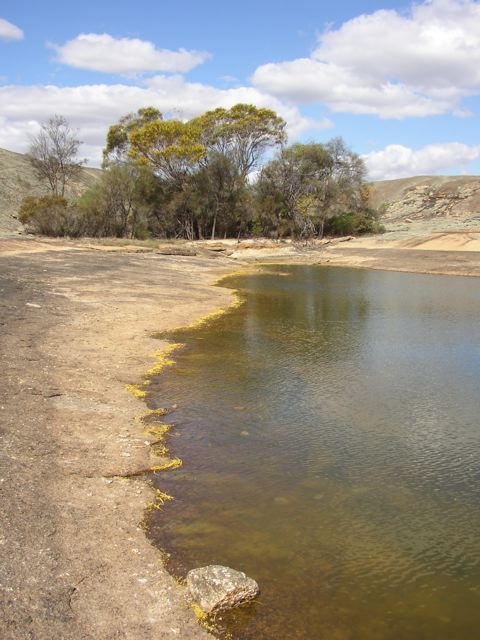
Field Reports, such as the recent trip to the Toolibin Lake salvation project, Wave Rock and through the Dryandra Forest provide students and writers alike with an opportunity to actively engage with and discuss the ongoing developments and evolutions in this literary landscape, and gain a closer look at preservation efforts taking place. By engaging with the landscape in this way it gives one the experience of resurrection, restructuring and active engagement with the the land that has so affected the writers that live in this Western Outcrop.

Two writers at the centre of this act of reclamation, and, likewise, whose poetic histories find both a nascent point and consummate envelopment within the Western Australian Landscape, John Kinsella and Glen Phillips have shared with Cordite a transcript that examines and questions what it means to be a writer living within and actively engaging with the land around them. For both Kinsella and Phillips poetics is work: it is a continual and never-ending process, a symbiotic process from which a voice of activism may spring. It is the aim of this voice to put the land and its strength and survival at the heart of the contemporary landscape poetry.

Matthew Hall,

December 2010

Posted in ESSAYS | Tagged , ,

An Introduction to the Work of Glen Phillips

I initially approached Glen Phillips in the hopes that he would contribute to Cordite Poetry Review’s Children of Malley II edition, whimsically playing off the Malley / Mallee imagery. As Glen’s poetry, criticism and almost entire oeuvre deals with the landscape of Western Australia I thought what better assonant reference could we have for this, our second Malley edition.

Glen is, as it turns out, also someone who is greatly interested in the lore and the antics of McAuley and Stewart, and is delighted to recall being in attendance at a number of Adelaide Writer’s Festival events evoking the ghost of Ern and Ethel.

As the director of the International Centre of Landscape and Language at Edith Cowen University in Perth, Glen comes to us with more than 30 book manuscripts of prose fiction and non-fiction and poetry under his belt, almost all of which relate to landscape themes and issues.

He has also worked extensively in film, as a scriptwriter, presenter and performer both in Australia and overseas. To this curriculum Glen has recently added an annual pilgrimage to China, where he regularly lectures in Shanghai.

These travels have accounted for his most recent poetic works, including Shanghai Suite and Shanghai and All That Jazz. As the founder of the Katharine Susannah Prichard Writers Centre Glen now acts as its Patron.

He has also served as an executive member of the State Literature Officer Advisory Committee, Writing WA, The Children’s Book Council, the WA Writers Forum and the Australian Association of Writing Programs.

At the moment at ECU, Glen is working to reinvigorate the once thriving participation W.I.L.D. course. A significant innovation in student involvement, the W.I.L.D. courses (Writing in Landscapes Down-under) provide two field-based study units for international students during the mid-year break, which involve both classroom work and trips across the state of WA, for experiential learning from local writers, historians and natural scientists within these most unique of natural environments.

In addition to these courses The International Centre for Language and Landscape also produce the literary journal, Landscapes.

It is Cordite’s great pleasure to bring Glen’s work to our reading audience. As such we have asked Glen to make a special contribution to our Children of Malley II issue, which he has done in superb fashion with Five Malfunctions for Max.

Posted in ESSAYS | Tagged ,

"Zombies In the Fields"


zombies in the fields lifting each cauliflower decoy brains
(Scott Thouard)
footprints smell of fungus and new rain
(grant b)
in lust for the drummer this silent heart
(Lorin)
out in the dark behind the disco – waiting
(Genevieve Osborne)
new moon all that exposed flesh shivers my skin
(Graham Nunn)
the high-pitch screeches swallowed by fog
(Barbara A Taylor)
Salome's dragon coughs a wake in progress
(Liam)
prizes at Bar Etiquette for the best dressed dead
(Lorin)
stop! on the tailor's needle bits of blood
(Vasile Moldovan)
his mouth drawn shut a head-shrinker's trophy
(grant b)
dreaming of pearls the old actress leaves her teeth out
(Graham Nunn)
signing autographs sideshow seats glow orange
(David Prater)
Armageddon rules against the whistle blower a stiff wind
(Betty Ann Galloway)
midnight, the train departs for death camps
(Barbara A Taylor)
all by itself a hand creeps through the moonlight
(Ashley Capes)
whose coat of arms on this signet ring?
(Lorin)
nicotine sky dulling the smell of bodies
(Graham Nunn)
suffocated by datura's tubular bells
(Barbara A Taylor)
here in the garden worms outnumber the dead
(Graham Nunn)
reincarnations wriggling to escape
(Barbara A Taylor)
Cowards! I cannot believe they're gone
(Betty Ann Galloway)
‘scuse me, friend this spot taken?
(Liam)
our breathing stilled a city crumbles beyond the north window
(Wilie)
cutting deeper a blade fashions sorrow
(Liam)
iron coloured smoke slicing through the fallen trees never stops rising
(grant)
foraging wild pigs squeal on their backs
(Barbara A Taylor)
mudslinging zombie brides dirty dancing
(Betty Ann Galloway)
sweet words below the hedge the earth quakes
(Claire)
maybe it’s the tides pulling our bodies back up pulp gleams in moonlight
(grant)
spindle-limbs erected all along the shore
(Jasmina)
behind closed doors bony fingers are spinning thread for shrouds
(Genevieve Osborne)
esprit de corps! mummies scatter
(Liam)
swinging a baseball bat I hear that satisfying crunch
(Ashley Capes)
fresh mounds pop up in the soupy mist
(Jasmina)
bearded iris holds and shuffles the deck
(Liam)
each nodding head learning to crawl again
(grant)

This renga is a compilation of Zombie Haikunaut Renga I and Zombie Haikunaut Renga II. Read an explanation of the original instructions. And very big thanks to Ashley Capes, our renga master!

Posted in Haikunaut / Renga | Tagged , ,

A Field Report from This is Not Art

It didn’t really sink in that I was going to This is Not Art (TiNA) until about halfway through the flight from Perth to Sydney. I largely did not know what to expect, having done relatively little research beforehand and being chronically distracted by PhD studies/life as I know it. All I knew was that I needed enough money to get food and train tickets for four days, and possibly an umbrella (which I forgot). Even having returned from Newcastle, I am convinced that a return trip next year is needed in order to even being to understand the kinds of energies involved in arranging such a massive operation. Not only were the organisers incredibly friendly and motivated, but so was everyone else who made it there as well. Some kind of apparently boundless enthusiasm seemed to fill Newcastle. No matter where I wandered (lost or otherwise), I encountered like-minded individuals (often lost as well) and a genuinely friendly, passionate atmosphere.



My decision to attend TiNA was, like most things in my life, carefully and meticulously planned.  After submitting an application on a whim, with complete disregard for my inherent terror of public speaking, I was accepted by Critical Animals to present a paper on my PhD topic, namely Sappho’s subtly feminist poetic legacy.  The acceptance email arrived some time after I’d forgotten that I’d even applied, and inspired a combination of excitement and abject horror at what I’d signed myself up for. The terror associated with presenting said paper did, thankfully, pale in comparison with an accommodation debacle that almost left me sleeping on the streets.  (Courtesy of a computer error, I didn’t know until just before my flight whether or not I would be sleeping in a place with a roof, or making a makeshift tent at Tent City out of the printed out copy of my Sappho speech.  Thankfully the latter only had to be briefly considered when I initially couldn’t open the room door, but this wasn’t exactly a wonderful start, and I only had myself (and the hotel) to blame.)

Despite this hotel-related incompetence, the trip to Newcastle was actually very fun.  Even in my cranky and sleep-deprived state, the scenery on the train trip from Sydney up to Newcastle was very pretty, and the carriage blissfully free of noisy children.  Thankfully, I was too tired to churn out sleep-deprived and astoundingly awful poetry in response to said trip, and was resigned to enjoying the journey in peace.  After getting very lost on the way to a back-up hotel, I arrived on Thursday evening too late to attend any of the events held that night, so I resolved to wake up early and make less of a muddle of the next day.

Posted in GUNCOTTON | Tagged ,