‘A Fable for Now’: Kate Fagan Interviews Lyn Hejinian


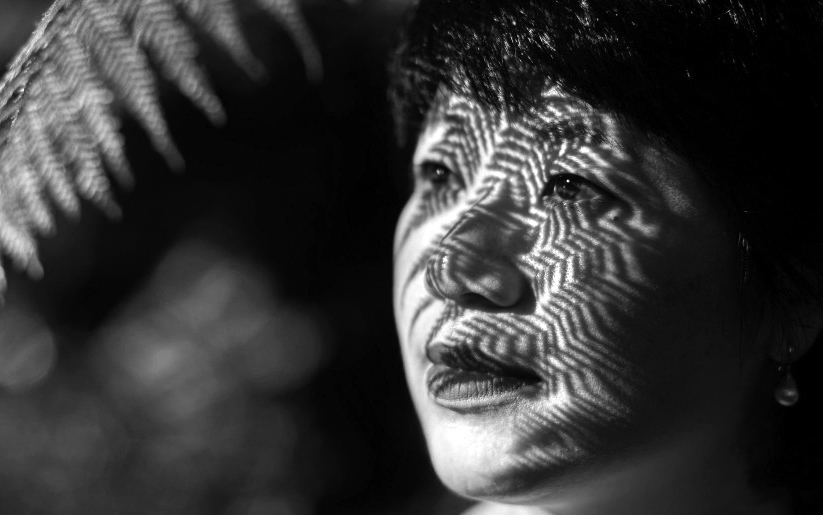
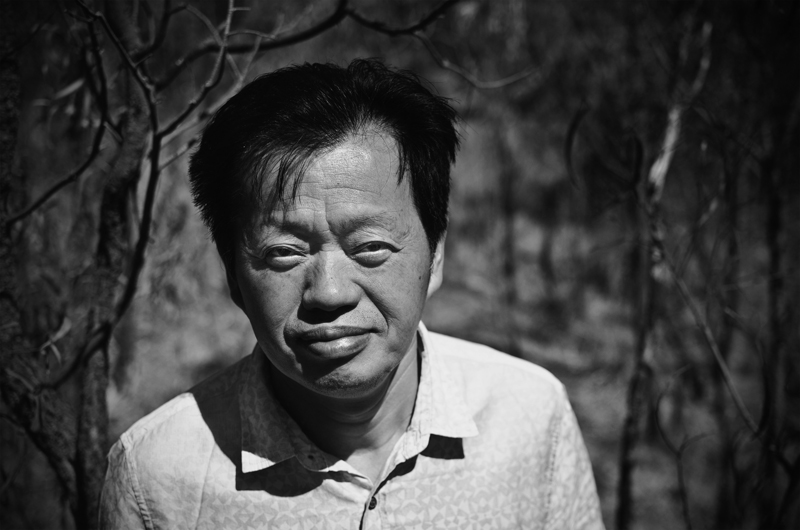
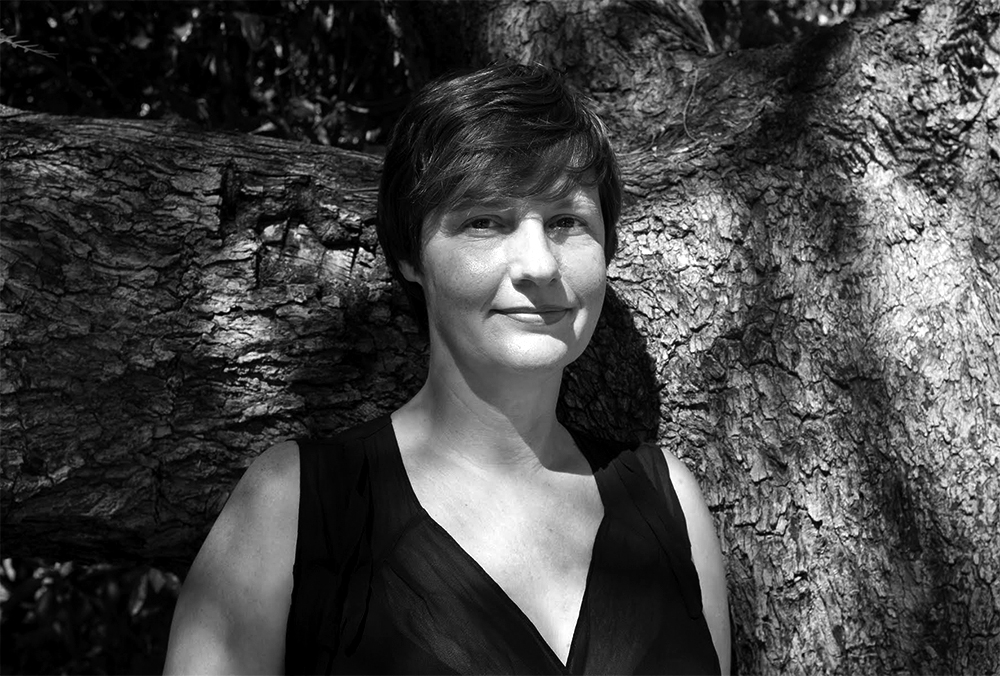
Image courtesy of Graybird Images

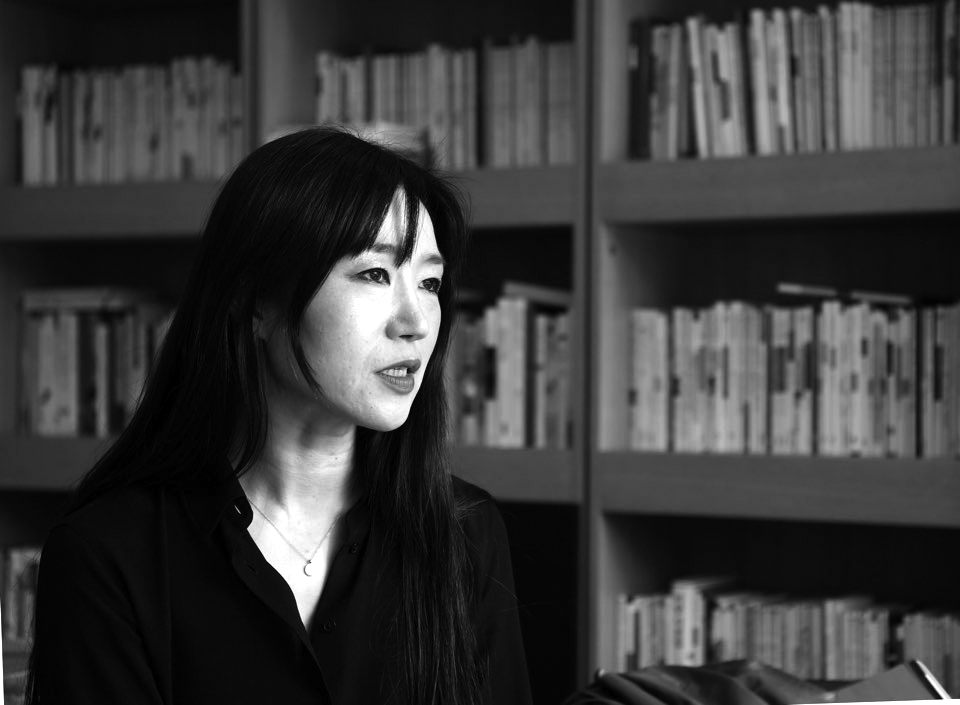
In July, 2014, the American poet Lyn Hejinian visited Australia to participate in two events – the ‘Women’s Writing and Environments: 2014 Contemporary Women’s Writing Association Conference’ at the State Library of Melbourne, where she headlined alongside fellow keynotes Alexis Wright, Chris Kraus and Deborah Bird Rose; and ‘Experimental’ at the University of Sydney, where she appeared alongside Carla Harryman and Barrett Watten. She also visited the Poetry and Poetics Project within the Writing and Society Research Centre at Western Sydney University, where she gave a long poetry reading followed by a conversation with poet and musician Kate Fagan. The discussion focused on several of Hejinian’s most recent works including The Book of a Thousand Eyes (Omnidawn, 2012), Saga/Circus (Omnidawn, 2008) and The Grand Piano: An Experiment in Collective Autobiography (Mode A/This Press, 2010).

Listen to the full poetry reading and interview (9 July, 2014) at the WSU Poetry and Poetics Digital Archive.

**

Kate Fagan: I’m so pleased we’ve all had a chance to experience Lyn reading. One of the comments that came back often during morning tea was that people felt they were listening to you for five or ten minutes, when in fact you’d been with us for an hour. Such was the temporal warp generated so beautifully by those incredible readings. I’m now going to say a little more in a formal sense about Lyn.

Lyn Hejinian is a well-published poet with many books to her name. She is the John F Hotchkis Chair of Literature at the University of Berkeley in California. She is an experienced, well-known and respected translator. We have a strong group of translators here today, including Peter Boyle. Lyn is a publisher; she’s published small chapbooks in letterpress editions through the Tuumba Press imprint, but also more recently, a kind of reiteration of that through Atelos Press with Travis Ortiz. Atelos focuses on crossings between the poetic and the philosophical, and ideas of how a poetics can do the work of philosophy and poetry simultaneously. Lyn travelled extensively in Russia at a particular time of her career and forged a fascinating and productive relationship with innovative Russian poetry, from St Petersburg in particular. She was of course foundational to the early clustering of poetic excitement, intensity and crush that was, and is, the Language School of poetry.

I might pick up the conversation around The Book of a Thousand Eyes. This may be a little cheeky, but it’s partly because of a comment you made to me a couple of days ago, that ‘the music keeps getting better’.

Lyn Hejinian: That was a reference to my husband’s playing not mine!

KF: To me this is a book in which the music of your undertaking keeps getting better. And the stakes of the telling also keep getting better. I might talk about form and add a little footnote, and then hand over to Lyn. Some of us here have just attended a series of events [‘Women’s Writing and Environments’ and ‘Experimental’] in which Lyn both has been figuring highly, and very generous; she’s given two keynote conference addresses while here. The first was on the relationship between what Lyn calls the ‘over-signifying’ poetics of the Occupy Movement, very political and vital, and how that crossed with nineteenth century figurations of romance and revolution through the work of Victor Hugo, particularly the character Gavroche. The interpretation of poetical ditty in that paper was fabulous. Then Lyn moved to a discussion of contemporary allegory, something she is talking about in a new work called Wild Captioning. This generated a discussion about notions of the wild – the idea of the feral or the errant, the errant work that points to texts without pointing – and some vital issues about landscape, the pastoral, and also political undertaking. These are really great backgrounds to today’s conversation.

One thing that occurred to me was that poetic form itself has rarely been mentioned across the last week. I’ve heard almost no one say poetic form. What we’ve said is ‘the wild caption’, ‘the allegory’, ‘the challenge’, ‘the crush’. I’m interested here in where form has gone in a bigger discourse about innovation. We’ve heard words like ‘rhapsody’, ‘ekphrasis’, ‘aggregation’, ‘agglutination’. Yesterday someone talked about post-conceptualism, and Lyn you said: ‘I’m so glad we’re post that already … that form has moved on!’ So I guess I’m interested in the schooling or the discipline of what works into a kind of formal likeness, and in the way you radically resist that. Historically, politically, there’s an always-already to form now that is very exciting. So, that’s an entry to the next hour.

LH: I think that part of, or the beginning of, a response is the quite obvious one that will be familiar to most if not all of you, which is the way that in English language the term ‘form’ suggests something static that’s like the glass and then you fill it. The glass is the form and the water is the poetry, and you plop it into the glass and then you’ve got your poem. That’s the way that English language is – so noun based, and imagining the world as having a kind of fixity of givens of things in it. What’s much more productive I think is to imagine the term ‘form’ as synonymous with force. That a form is a kind of engine. And a number of people associated with Language Writing (as with the conceptualist, post-conceptualist, and of course many other schools and non-schools, anti-schools) think about what the work is going to look like, how you’re going to organise it.

Because the options are virtually limitless. And if you’ve got an impulse to get going – whether you know what you’re going to go about or not – it can be very useful to think of kinds of constraints, rules of writing that can tell you how to shape it. Those have been incredibly productive. The trick when launching into a new work is to think of a shape that in some way is going to further the project that you’re embarking on, rather than curtail it or ossify it, or misdirect it.

During the two conferences, the papers that I heard (and I heard a lot of them, all of them at Sydney and a quarter or more of them at Melbourne, because there were four sessions at a time and I couldn’t be at more than one at a time, not because I bailed for 75% of the time) were about theory, like philosophical, social, cultural forces that are in play at this moment. And I think that’s entirely justified – even though most of the people at the conferences were makers, creative writers, or were interested as readers in what is being made, like ‘how does this car work?’. Nonetheless, one of the themes that’s been recurrent and urgent is the fact that so many of us feel that we’re living in a time of terrific political, cultural, economic and environmental crisis. We’re in an emergency. So to talk about ‘how many stresses before you make a line break’ seems, at the moment, to be peripheral to the major conversation that needs to be engaged in. If we had a year, all in this room, occupying the building, then we could talk about all of these issues. And then we could also talk about how many stresses or beats in a line before the line break. Or we could argue about it. I think that’s one reason that form just didn’t come up. I could be completely wrong; but I think it wasn’t the thing of the moment.

The second thing that occurred to me as you were asking that question is what I have experienced as two impulses, now that I’m a ‘truly proper professor’ in a ‘truly proper academic situation’. And I really love it, and I love the kinds of scholarly critical work that my colleagues and students do. There’s a real draw to interpretation. I believe all creative writing is interpretive in some way. It makes inquiry, it’s investigative, it maps, it wonders, etcetera. But the academic is apt to want to categorise. Some of that can be interesting, but I think it’s terrifically dangerous. One of the things I keep thinking about is how to be an interpretative thinker who isn’t a terminal thinker, who doesn’t say: ‘we’re going to slot these four writers into the post-conceptualist school and these into the anti-lyric tradition and this little cluster over here is the epic narrators’. That’s just bogus. But you do see dissertations like that. So I think that’s a kind of canon formation or school formation that rhymes with poetic form, but I think does a similar disservice, toward a kind of ossifying. I don’t love categorising, but I do like the kinds of scholarly thinking going into archives, the kind of work that Ella [O’Keefe] does.

Posted in INTERVIEWS | Tagged , , , , ,

‘through worlds & worlds & worlds’: Joan Fleming interviews Jordie Albiston


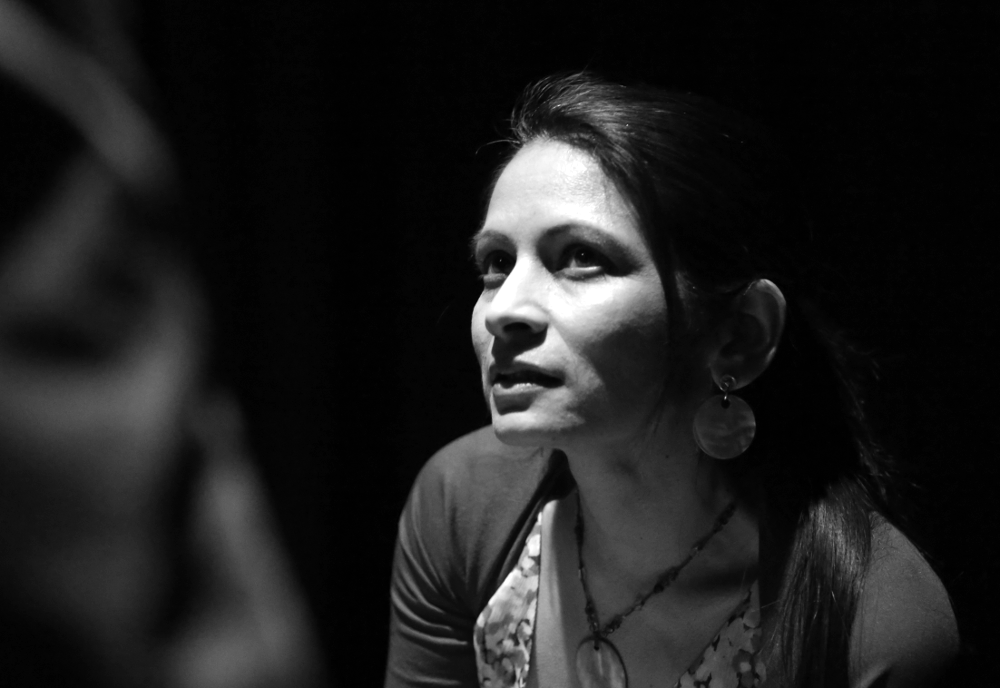
Image courtesy of Nicholas Walton-Healey

Dr. Jordie Albiston is one of Australia’s premiere contemporary poets. She is the recipient of numerous literary prizes, and the author of nine collections of poetry, three of which are documentary in nature.

I first met Albiston in a taxicab in Wellington in November of 2014. When she learned that ‘Fleming’s pool’ near her home in Altona is named after my direct ancestors, she said, ‘All right, no more conversation now. I need to think about that.’ Jordie is a solitary and self-contained poet. She has vowed to give no more public readings, so her reading at the launch of Euclid’s Dog was a luminous and generous surprise.

Euclid’s Dog is a book driven by formal concerns. It is inspired by the elegance and logic of pure maths. Its patterns are musical, highly considered, both light and heavy, and subtly autobiographical. This interview digs into the love affair between mathematics and poetry, the questions one might ask Emily Dickinson, how to be a bad mother to one’s own poems, and the deep joys of bell ringing. Albiston has refused to answer some questions, as is her right.

Joan Fleming: You’ve said you’d like poetry and mathematics to be a larger part of the Australian conversation – why?

Jordie Albiston: The poetry/mathematics relationship has always been, and will always be: articulated, or not. Mathematics is intrinsically connected to poetry. Whether it is the five units of the tanka, the six repetends of the sestina, the fourteen lines of the sonnet, or the less visible computations of a free form poem, all poetic structure possesses a mathematical basis to a larger or lesser degree. I don’t think anyone would disagree with that. However, this relationship – as a living, contended colloquy – seems to enjoy greater transparency and rigour in places like France, Denmark, Canada, America and New Zealand than here at home in Australia. I would love to see mathematics play a more interrogative role in the Australian poetry conversation because of its potential for producing unexpected and beautiful results.

JF: What are the intersections and agitations between these worlds that compel you?

JA: I enjoy writing within restrictive form – syllabic, metered, rhymed, or structured according to verse, music or number theory – and this approach seems to work well with the kind of feeling that arrives before the sun, which is when I tend to write. Not all my poems survive the constraints I apply, but I am a firm believer that for every rule imposed, there exists a window of opportunity; and it is this awkward place – between content and form, liberty and law – that absorbs me. My belief in the rudiments that make go a poem’s inward and outward design, and the effect of such rudiments on the generation of a poem is key. I am preoccupied by unity, counterpoint and conflict, and the extent to which I can bend language without breaking it. For me, this has always been the centre of origin for a poem.

Over the last few years I have become interested in the application of solid mathematical formulae to poetic language, and the shiver or thrill that may be released at the interface between these two codes. I particularly like working with Euclidean concepts, for their innate clarity, soundness and harmonious proportions: ideal for corralling chaotic content! Algorithmic structures are perfect for poetry. There is nothing too complicated here: it is simply a matter of relationships and shapes. The forms I have been working on often surprise me with their foreignness and their acquaintance, and consistently provide me with a fresh set of perspectives. I feel mathematics – as pure science, as the language of nature – offers a goldmine of architectural possibility that is productive and filled with joy. I might also add that sometimes a poem cannot bear too much outward pressure, and it folds up and dies before my eyes …

JF: Euclid’s dog is driven by formal experimentation. The eight forms you have invented for the book are described as ‘stable, just, and have as their unifying principle order.’ I’m a person who has no head whatsoever for mathematics, but I’m intrigued by this language – what is meant by ‘just’? Can mathematics be moral?

JA: The concept of morality is alien to mathematics. You cannot pretend or deceive or bribe your path to a correct mathematical solution: there is only right or wrong: true or false. However, the notion of justness may perhaps be applied more elastically to poetry. At the apex of ‘false’ is plagiarism: at the base, form without purpose. I have always seen a poem as a problem that needs to be solved, and I love how the word ‘problem’ houses the word ‘poem’ within itself. For poetry – as opposed to mathematics – there may be numerous possible final solutions. As a formalist, I like a sense of resolution in terms of matter and frame. I suppose that equates to form with function. If a poem is divided into tercets or whatever for nothing more than visual pleasure, I feel it has failed. Many of my poems fail in this way. But if the form creates a sense of kinetic energy that is naturally (or disruptively, even violently) figured with its content, that, I feel, is a ‘just’ poem.  

JF: Yes, I see this frisson in the book: between the rightness of mathematics, and the ambiguity of language. Or, between the possible and the impossible. This is a tension I’m also driven by. Your opening poem is a fine case in point, as it proceeds like a logic proposition: it opens with ‘if’ and with ‘possibility,’ and all the steps are laid out with care, and then at the last, the reader is jolted back to the impossible.

JA: Interesting that you point out the first poem, as it is taken directly from Euclid’s Elements. All I have really done is redact the original according to the hexahedral form (put simply: the first line of each quatrain somehow mirroring the last line of the preceding quatrain; and the whole composed in decasyllables). This poem is one of six found (or partly found) poems in Euclid’s dog. It and the final piece – a square pyramid poem – are the purest of these found poems, taken from Proposition 7, Book 1 and Proposition 35, Book 7 respectively. And so they are actual propositions! I wanted the collection to be bookended in a manner that openly paid tribute to Euclid.

JF: Do you find the work of being a writer and producing books a sort of bathetic experience? What I mean is – I know some writers always burn a copy of every new book, to pay homage to the book in their imagination, the book they wanted to write, but couldn’t – it’s sort of a recognition of the breach between what they wished they could write, and what they did write. Do you grieve the fall from perfectly boundless formal and poetic possibility, to actual poems?

JA: Not at all. If there is a fall, it is an upward fall. That is my perception. I love the physical sensation of the exact moment a poem becomes, that feeling like the c-l-i-c-k of a Porsche door … Having said that, I lose interest quite quickly once a poem has completed itself, and move on to something else. The only poem I truly believe in is the poem I am working on now, and that poem I would defend to the end. Then, of course, once it is solved, I pretty much abandon it to its fate. I am a bad mother that way.

JF: Did Euclid have a dog? 

JA: I don’t know if Euclid had a dog. Euclid – as man, as supposed author of Elements – inhabits an historical twilight zone, similar to Jeremiah and The Book of Lamentations. Was there only one author, or a conglomerate? If one author, do we have his correct name? Only two facts are known about Euclid: that he lived after Plato and before Archimedes; and that he worked in Alexandria at some point. Euclid’s Elements is one of a number of Classical Greek treatises by the same title (for example, Elements by Hippocrates). Euclid was known as ‘The Geometer’ in ancient times, and there was a school dedicated to his achievements, not only in mathematics and geometry, but astronomy, optics, and music. But did he have a dog? Who knows. In my book, the term ‘dog’ is used in two ways. The first is (sort of) literal: my dog Jack, who was a quite odd dog with a particularly exact take on life (see pp. 74-77). The second is more metaphorical: me, as poet, doggedly chasing Euclid’s theorems for usable crumbs of truth …

Posted in INTERVIEWS | Tagged , , ,

Innocent Eyes!: Ekphrasis and the Defiant Multiplicity of the Female Gaze


Keira Hudson | Angela Serrano Innocent Eyes! 1 | with Judy Hudson & Kyl Jones


The male gaze has been discussed at length. The female gaze, not as much. This ekphrastic project is about the latter. It is about the female gaze of the photographer who created the images that inspired these acts of ekphrasis;the reflexive gaze of the model, a young woman of colour who also writes, who conceptualised the project; as well as the gaze of the poets responding to the images – poets who are also young, Indigenous, and migrant Australian women of colour. This is a collaboration featuring the work of emerging creatives whose voices are underrepresented, underrated, and still largely unsupported in mainstream Australian art in general, and in contemporary Australian poetry in particular.

If the male gaze in lens-based media regards the woman as nothing more than a masturbatory aid, or a plot device that advances the story of a richly developed and complex male protagonist, what does the female gaze do differently?

‘The imagery of women has to catch up with the imagery of men,’ photographer Annie Leibovitz says (Sheets). Her late partner Susan Sontag writes of her book of portraiture of women that it ‘defies the tradition of photographing women for their beauty rather than their character’ (ibid.). The New Yorker’s Lizzie Widicombe describes the portraits of Tate Modern-exhibited twenty-four-year-old Canadian photographer and model Petra Collins as ‘moody inward moments that emphasise their interiority and hint at a larger narrative’ (Widdicombe). Former Rolling Stone art director and fashion photographer Bea Feitler has produced images of women in poses inspired by architecture, where they are portrayed as energetic and expressive rather than placating and passive (Gavin). In all these notable examples of the female gaze, the female subjects are portrayed as having inner worlds, universes even, a sense of coming from somewhere, a sense of heading for something. They are not still-life objects like a flower or fruit arrangement. They are photographed in the midst of onward movement. There is more to them than the documented moment.

Alison Whittaker: three poem suite
Ellen van Neerven: workshop
Saaro Umar: ode:     to blue

The first image, above, is of the dimly lit bowed, baldish figure in the hallway of an old home, the only curved shape in a space comprising angles upon angles, an endless accordion of squares.

Posted in CHAPBOOKS | Tagged , , , ,

from Numbers


Numbers is one of several of my new books and chapbooks that are collage-poems or collage with matching poems.

Numbers features poems and facing page collages in color. There are forty-five poems and matching collages. This new work, with collages composed between 2010 and 2015, concerns the numbers one through five with π in its appropriate place between three and four. Like a good deal of my work, it concerns cosmological mystery – both π and numbers have plenty of that – along with meditations on the nature of our lives. In part, these meditations try to fill numbers with the same interesting ambiguities as words. That’s at least one theme. Another is imperfection – π, as you know, is an irrational number and no one has yet found it to repeat, though people have tried out to more than a trillion places. Yet the circle – whose circumference is calculated using a ratio of π – is a ‘perfect’ geometric figure. These poems go into that gap between the perfect / complete and the imperfect / continuing and try to investigate. These are not the poems of a mathematician, just a person. The poems are gnomic, playful, direct, meta-numerical and meditative in about equal measure. The collages are – how to describe such work? – abstract with a strong sense of color. They link directly to each of the poems without being illustrative.

Rachel Blau DuPlessis: Deux mille dix
Rachel Blau DuPlessis: Fifth Room
Rachel Blau DuPlessis: Four Quatrains
Rachel Blau DuPlessis: Zero and π
Rachel Blau DuPlessis: Zero Full

This work, as a whole, will be published in book form by Materialist Press, edited by Julia Warner and Ariel Reznikoff, in 2018.

The Collage Poems of Drafts published two of the separate cantos in my long poem Drafts, works which were conceived as collage – ‘Draft 94: Mail Art’ and ‘Draft CX: Primer.’ Graphic Novella is a visual-text book of loosely political meditations in prose poems and poems matched with black and white collage.

‘Churning the Ocean of Milk,’ collage-poem chapbook from 2014, was done as a cosmological meditation after a visit to Cambodia with its chilling recent history of crimes against humanity – specifically, governmental genocide against its own people. It was published on line at Alligatorzine.

A 2017 collage-poem book called Life in Handkerchiefs has appeared in on-line groups in periodicals such as Journal of Poetics Research and Alligatorzine. Other collage poem series are Storyboard, Old News and 13 R AY S. My most recent book of poems, Days and Works also features unaltered newspaper clippings as part of its text.

Posted in CHAPBOOKS | Tagged

Queer Modes: New Australian Poetry


Tina FiveAsh | Queer Love | 6 x C-type photograph | 1997

I acknowledge that the land I live and work on is the land of the Kaurna people. Land where sovereignty has never been ceded. I pay my respects to elders past, present, and future.


Ellen van Neerven: in this community
Annabell Evitts: Spoken
Rosslyn Prosser: How to Make Whips
Adolfo Aranjuez: Motion
Molly Lukin: House
Ainslie Templeton: sun square on stomach
Cee Devlin: TIDE
Virginia Barratt: mMouth hHouse pPanic cCathedral
Quinn Eades: Binding
Romy Durrant: Sometimes we meet in hotels

Plenary: an introduction

I did not want to build a falling-down house of rhetoric
Or even one that could stand all the huffing and puffing

I did need something gentle
So many gentle things
To stick together the words of others
               To find some gentle
Rhythm to walkwork through words 
I seek I sought I see. 

I do not want your letter back in my alphabet.
Small as it is,
There’s no room.

Reading—
Trip along the whip crack of associations
Reaching for open space 
Wound up, collected, in a no place no place
—would my skin make leather words? 
Working over, rubbing, and smoothing out lines
that are laughter, 
lines—history of touch, 
               sun-split               sun-kissed 
wearing the shore in corners of eyes,
It might be beautiful to grow old.
If I 
                              (ifs ands or buts) 
multiply the sweetness of experience
if we are alone and
bordered by suspicion     longing
beaches open and close
when there is no home to go to
just a line of sunset 
gambling luck and lycra
bad luck               deep curve 
lock and key 
the lack lack in
this place 
multiplied by grief 
               and the red dirt rift of memory on the body               on skin               on land 
               the road taken 
               slow motion bark 
               all red and blue and sand
Not here
It never happened (and then it always did). 

Every map I can’t read,
Unknowing names and places.
Skin unfolds in a dream, 
On a sun               square stomach.

Garden plump ripe with ache and promise
I read the wall again. 

And if I could borrow your panic
For a minute
To gestate this archaeology 
Of scribbles and correspondence 
I would unravel my intestines too 
And shake out that Freudian creed 
Knowing my debt
To words
To language
Falling out of every house
Trapped in the archipelago of light
And the pace of breath
In the travelogue of breath 
In lieu of an introduction 
Like Stendhal’s prefaces to Love
I want to trust you with the offering 
And break the cathedral prayer by prayer. 

All the while 
I go on reading
And drive my love in
Pressing my cheek to the tide 
Falling from grace I’ve never known.


In 2015, at the Experimentalies symposium convened by myself and Rosslyn Prosser at The University of Adelaide, Professor Marion May Campbell presented the plenary address. She performed a poem made of the titles of and observations about the papers given over the three-day event. I have taken inspiration from this in introducing this collection of work. ‘Plenary: an introduction’ souvenirs the works generously contributed here, and I would like to thank the writers for their insights and for being open to this process of collection and publication.

Posted in CHAPBOOKS | Tagged , , , , , , , , , , ,

How to Make Whips

Take skin
fold, rub and hold it.
Plaiting across and down
the spine, the legs.
Left to right.
Tighten the plait occasionally, if needed.
Bring all out into an open space, trees,
sound of a creek,
dawn birds.

Pull skin tight again
and oiling with dubbin or equivalent
lengthen the plait by introducing new elements
teeth scored along the surface
hair wrapped around fingers.
Stretch the plait until a circular arrangement of skin/leather
strands take shape.
Your whip is formed around the idea of a body.

In out/back places make long wide stories accumulate breath and reason
tyre tracks, tea breaks, heat, heat.
Into your whip build silence
fingers on clavicular space, open eyes to whip.

Hang whip where it will appear as natural.
Touch keeps your whip supple
passing sweat from your hands onto the surface
keep ready the possibility of whip return as you flick and crack beaten path of whip.
Between and lying beside us, hanging down to remind.
Whip is whip.
Your whip should soon be ready, your plait tight yet flexible.
The tone of it better with age and use.
Take care of your whip, use it sparingly.
Allow the aesthetics of whip to play out, cut on cut.
The immediate character of your whip may be seen and with use: change and bend.

Posted in QUEERING MODES | Tagged

mMouth hHouse pPanic cCathedral

in the panic cathedral
of the divine ratio in laon
where uncanny angels
sing mall music for the devout

i leave my body behind

the
umbra
of me
—a
dark
ghost
rising—
ascending
in perfect
spirals of
slowfast
intensities
into her
ribbed
arches

outside the cows peer over the parapets
the patient cows
carrying the weight of church and state
in the service of

man god man

interior: day. there is enough room here
—buttressed, soaring, arced and naved—
to leave myself behind
this is an architecture abject enough to hold
the porous poetry of affects
i vomit out of the million million holes that i call a body

for the nth time today i die with a mouthful of incoherence and

while waiting for beckett

the dirt from your cobbledstreeted shoes
and if writing be speaking
and listening and reading, then
today i die without a whisper under the pen’s beak
without a stutter, an utter, a mutter
escaping from the vaulted architecture of the throat

you know i am indebted to language but feel sick with it

st therese, creamy, in her mercy asks me:
how long can you keep this lead on your tongue?
how many stones in your mouth?
how much the taste of iron, tongue clamped by molar and canine?
how tolerable

the
shape
of a triangle
ringing at 12700 Hz
impossible

i grapple with my unbodied jaw to release ictic plosives
they skitter across the floor
they fall all the way down the stairs
they leap out of chairs in fright
they rattle like 2 pastel pills in a cup
they crawl under the blankets
they are loosed like frightened birds upon the air

they repeat, uselessly, more than once but never enough:

there’s nothing to be done

but
all those contortions without which … no speech possible

i will fail trying

Posted in QUEERING MODES | Tagged

Spoken

we tried to write
bodies
but they only
smoked out
into dry curses,

no
wetness,
blood or
meat
like this.

i nurse sorrow
behind my teeth,
until it
turns
hot –

we could be
forgotten, imagine –

no trace or
scent of sex,
i chew on
blue
relics

(when
what i
want
is you,
slowly –

when
what i
want
is to be drawn
down low).

here:
we wash ourselves

in midnight gardens,
this green
dark,
knees in the
dirt

you were
touching me
a fat dogged
love
on my tongue

in a place
where
you might have
trapped a star
in your mouth

but you had lost
the taste for reaching out

so
we stayed red
and close together
licking pink salt off of
fingers

soft mirrors that fall from
thighs

this would be enough
to cut me loose.

Posted in QUEERING MODES | Tagged

House

The clothes are unwell 
Note the hinges that close the door 
Knock a wall to its knees 
Move the furniture about 
Stretch the words 
Learn comfort in failure 
Or sign a new lease 
New and cruel windows 
Just one body per life 
A pot of boiled water 
Tipped over linoleum floors 
The older it gets 
The further from woman 
Home is 
Gender too weak 
A word to hold 
The hope we have in it 
Folding under the weight
Of expectation 
I scold it like a child

Posted in QUEERING MODES | Tagged

in this community

Boonwurrung country June 2017

mutual suspicion
in this community

whitefella owned homes gated & locked
blackfella hired house magpie-guarded

sugared study afternoons
walks on dusk

scaling fences & stretching thick-grassed vacant lots
trespassing to find the ocean

waves eating activewear
sand lining lycra

our beaches are open
they are not places where bloodied mattresses burn

not in Aus, mate
bad things don’t happen here

through roads & gates
slip teatree shapes

on the way home a need to ask
if we feel free

Posted in QUEERING MODES | Tagged

Garden Musings

1. 
his racism compels an energy that grows me 
a garden his Team Australia digs 
my shovel deeper his Northern Territory 
Intervention layers my compost-pile higher his 
Operation Sovereign Borders pulls my 
noxious-weeds faster his Forced Closure of 
Remote Aboriginal Communities renders my 
pruning-saw blunt and his Climate- 
Change Denial distils my rage to 
sweat drip soak feed every seed sown 
for transformation.

2. 
my daughter makes potions from this 
garden she slices lemons with oyster-shells soaks 
violets herbs and curry leaves with eucalyptus- 
blossom a cultural-fusion concentration brews 
her tea-pot and a big sky-full of love and 
glitter swills her offerings I recite queer 
and decolonisation-poetry to my children in this 
garden resistance-poets agitate the soil their 
words germinate uprisings on the freesia-scent 
of spring every new bud tells a survival story we 
raise our potion-filled tea-cups to the sun to 
thank them.

3. 
Dear Prime Minister your leadership ignites 
alchemy in this garden making rich 
soil brewing potions and shaping little 
activists who harvest sweet-offerings to counter 
the bitter after-taste of you remember 
this we are your deepest roots your 
legacy we won’t cultivate fear and 
bigotry we will blister our hands sow seeds of 
hope and tear down your white-picket-fence 
borders we will light our fires to sit around share 
food sing to our Old Ones we will 
pollinate humanity with rainbows on every 
horizon under a float of red-black- 
yellow this our every garden. 


Originally published Wasafiri, International Contemporary Writing, Vol. 31, No. 2, June 2016, p. 26.

Posted in QUEERING MODES | Tagged

Motion

I still think of how this road was made
for us. The sun is different here. Wear
our love like a talisman, ward off

the lines I wrote to demarcate you
from me. They aren’t incarnations
to summon you. I don’t think

this means I really want you
back. In my life, I’m happiest
when I’m moving. Away

from shards of geography, this us
is genealogy leaving imprints
in the shade. If you can’t then I can’t

help you. I’ve been writing poems
about you. I’ve passed moments
around you. What they don’t tell you

is you don’t win. In films
you sit in the rain and sound
cuts out and ring turns to

whistle, and blood cells grid-
lock in your temples. Then
to swelled symphony you press

two legs against cement and march
up to his door. Say I’m sorry and
I love you, except you don’t

’cos your psych says
You have impulse issues.
Don’t turn him away with another

display of manipulation so just
dream in the driver’s seat while wet
through half-open window
seeps through the lens.

Posted in QUEERING MODES | Tagged

TIDE

Who named you
White hot strike?
Decided this here:
Touch each of my hairlines
Who spoke of clean cut or dash or steel-toed?
As though you don’t crawl beneath the carpet
Rotten space you’ll smell for the rest of days

The other night I held another’s head
In ecstasy, shook you loose
Cradled between sinking bones I felt the return slow
I said: It feels like you’re sucking my cock
I meant: we’re not alone

See there – that sting in the curl of one nostril?
You’re nothing without this
Each time you lope through skin I hear your double negatives
Something sickly slides against the busted lock

This is what is pulled loose
Scraped half-circles low and dark and unseen
Even when I wear your cum to bed as a shield

I want this aching constellation you left/to make it count for us
Instead I have it all
(So much less)
Though I know
We could make it out alive

Posted in QUEERING MODES | Tagged

Binding

Today it is raining and I am glad for this falling down house that still keeps the wet out. I write in pyjamas. I write with a mosquito bite on the arch of my left foot. I write with a throat that gets sorer as the sun fights its way through water to get to the drops on the window so that it can refract in at me, at this page, at these words. I write with a restless fly climbing over the knuckles of my right hand; it will not stay still it wants to tickle walk across my skin it wants it wants it wants. I write with you. I write with your voice inside my head, the rasping depth of you, the way your words stay long after you have stopped speaking.

Today it is raining and we live nine-hundred kilometres apart and you wake each morning with an anxious chest that you will bind and cover with a black t-shirt so you can move into the day being held. I imagine that I am your binder, that double layer of nylon and lycra that flattens your chest, that wraps around you, that is where you are, holding you when you cannot hold yourself. Today it is raining and I am sky water in your hair, on your cheeks, down your back. I am kiss on your lips, tongue in your mouth, hands on the small of your back, smile in your eyes. Today I am green grey the weight of love today I am sending myself to you wrapping around around around, binding you, walking you through the minutes where you do not know what comes next. Today I hold you.

Posted in QUEERING MODES | Tagged

Sometimes we meet in hotels

I

Which brings us to the strap-on—

thrusting manufactured

without the shame of connected tissue—

and, accordingly,
my gaze which he has named demonic.


II

From the Greek daimonikos.

Opened for gloating spear
twelve floors in sleepless indigo.

Above sin, divorced from Maat.


III

I have had but kept none.

The woman I loved escaped and

my only hold is to his cheek
while I drive my love in.

Posted in QUEERING MODES | Tagged

workshop

we left crumbs on Country
forgot to bring them inside our cushioned seats

the photo I took of you is blurry
I walked home to a spider on my bed

beneath the lamplight
the strangeness between us is glowing

I found a place in this home hip-width wide
with a thought to replace you

I won’t flood like I used to
my kidneys are ready for winter

it’s cold here
but I’m working

shut the door
I’m working

Posted in FEMALE GAZE | Tagged

three poem suite

i. when to clean a wig
a wig must always be clean
or else develop a particular smell
or else slick strappy heavy faced
in all my years wearing wigs
none told me how to clean
one where to hang it where to
wear it can I shampoo it
hang it with my towel and
when do I put it on
again when do I take it
off for lovers how can I
keep it off their pillows and
its hint at secrets out of
their cruel visions and suspicions my
husband was once such a lover
who moved so quickly into me
and my life because he took
his glasses off when we went
to bed his underwear and mine
still on after sex no questions
about what item strewn where and
when they would be washed or
if they were clean I was
poised outside his bathroom door so
long itching at my scalp knowing
only metres away he rubbed his
cunt before we had the courage
to speak this long desire both
of us negotiating
somethings and others.
when I showered there first
I
screamed at a spider
and he
entered saw me
wigless and wet
put it
in a jar said
nothing
saw nothing more than my
naked head it would have been
less intimate less vulnerable if
instead
I left my breasts
and bits
on the hook
with that spider.
ii.
lurch ever-towards
some clumsy recount
describe and mis-describe.
who can ever tell a
thing exactly as they saw?
and not a slip or shift into
agog, delight or dread?
and who can hear exactly
as was said?
iii. a seeing
space
is
instructive
yet
flat –
just four megabytes
just
two
dimensions
no
dive-in;
archive;
un-archive;
neglect;
recall.
arse
off
astroturf
books
on
astroturf
blown
out –
books thrown out,
electrons
sent
out
to claim place
for
their
nucleus:
naked
form,
lamp, desk
– protons
couch
a
buoyed
neutron
as
unlikely
a
seeing
as any –
I read a
lithium
ion
gone
big
through smallness
small,
light
mote.
Batteries. Pills.
a
vehicle
for
rest
through
restlessness.
all
responses
to art are
just
likenesses
of
their
makers.
I res–
–pond
no diff’rent.
(Laptop lithium
batt’ry
failing.)
I
write,
my
own sight
farce
arse
to
the astroturf
even
now.
art
came to
me.
To
live
amongst it.
Become
big.
an image’s third
dimension
is
a wished-for
sight.
an
absent
mind.
Posted in FEMALE GAZE | Tagged

ode; to blue

because the senses crave melody
it drips; a whistle caught in cotton vill i
sit. nothing—
this body is beyond capture. but is a simple
sound. whistle;
[elelelelelele] ululation.
it drips; heat exit graft; each twitch
splits—
the hairs on my spine. bird shit
red stone; or white paint or red
flows across tit. all i think
about is Beyonce.
chair tipped touch wood
did she mean to fly
or dive or die or maybe if i am
less boring each act will surrender into
performance. so i practice;
each evening accent regales reflection
neck; checks over shoulder
no ghosts around as audience.
& wonder how twenty women
emerge eyes filled with direction;
i picture each of their bodies turn to paper
& flint markings
on the surface;
pitch them to an ocean of carpet—
grow tired & begin to sing
a lullaby.

Posted in FEMALE GAZE | Tagged

Fifth Room

However it seems dictionarily,
in writing
five means 5.
And 5 means five.
See what I mean?
Pass along here.
Nothing more to see
except linguistic philosophy.
“Number words”–
those nouns-are
numbers
themselves, something more or
less than words.
They are the “veritable thing” itself, but
abstract. Items as signage, without shadow
without much connotation,
though some (like “three”)
have rich allusional resound,
but generally they’re indexical things,
just numbers making us mouth
sounds.
I think they should
be called nounds.


Posted in NUMBERS | Tagged

Four Quatrains

Four. Quatrain
s

make a ballad

Four. Veggie
s

make a salad

Four. Quart
s

make a gallon

Four. Quartet
s

are based on five.

The fourth dimension
‘s

time.
Fourth person pronoun
s

get to speak it-
s

posthumous futurial words.
Surds.


Posted in NUMBERS | Tagged

Zero and π

Zero and rr are linked in my mind.
Both are beyond “theoretical”
right straight into “odd.”

Plethora right straight into
cornucopias of unrepeating numbers
and the absolute empty, yet something.

Something that is
a total mystery of fullness
and of nothing-which is also something.

Meantime strabismus,
that quirky crick of sight,
connects to strophe, strobe and streamer.

Remember the crepe paper swirls,
fast, bright,
authoritative circles of color?

To make a circle or a “zero,”
you attached the crepe paper length
to an old key, and swung it round and round.

It was a key that no one knew from nothing,
a key you found in the junk drawer,
with rubber bands, blunted pencils,

wads of Green Stamps,
dusty tape–
the irrational keep,

and, key attached, you took the streamer,
you the center, circling a radiant diameter
with your radius-arm.


Posted in NUMBERS | Tagged

Zero Full

You can say this talks about nothing
all you want.
but “zero” is clearly and richly filled
with signs and signage.

Not to say meaning
and strangeness,
a whole semiotics–
signs of being which is nothing–

though how do we know?
Perhaps such concepts
have microscopic cellular
movements far beyond our senses?

Is zero the phase transition
between nothing as void,
as really blankly nought-
and number?

Are zero and number
like steam to water, water to ice
a single substance in many forms?
And what is that substance?

Or perhaps it is π that illustrates
phase transition even better
from a poly-polyphonic-hedron
to a “simple circle.”


Posted in NUMBERS | Tagged

Deux mille dix

So she says her book
Has no beginning and no ending

Unlike the architecture
Of many books.

She says, “because numbers
Are in order but can occur

Anywhere, anyhow, in any
Odd combination

Sometimes called physics,
Occasionally called time,

Sometimes calculation, chaotic
Order, though some are formulaic,

Therefore with no beginning
And no ending, one leaves a space

For recounting. Maybe rearranging.”
That’s what she says.

The tsunami of netting
holds numbers for a year, a particular one

that’s now past. Washed over. Old news.
Old news twice. Yet why so fervently deny

narrative? That was then. This is now.
Is there no order? No priority? No sense to be made?

No revelation at the end? The plot
is not to have one? Does this mean no quest?

Red trap with an orange streak.
2 “x” 1000 “+” 10 “=” deux mille dix.

Two zero one zero. Twenty-ten. Twenty-eleven.
Who knows how this ardor will play out?


Posted in NUMBERS | Tagged

Selkie (after Izzy Roberts-Orr)

Posted in 83: MATHEMATICS | Tagged ,