ESSAYS
The raison d’etre of onedit
Onedit hasn’t had a statement about its raison d’etre since its inception almost 15 years ago, and it’s interesting to be writing one now. The point of poetry for me is that it’s a much more flexible, open, varied, and enduring way of writing into, out of, through, around, or with the world than any kind of commentary can ever be.
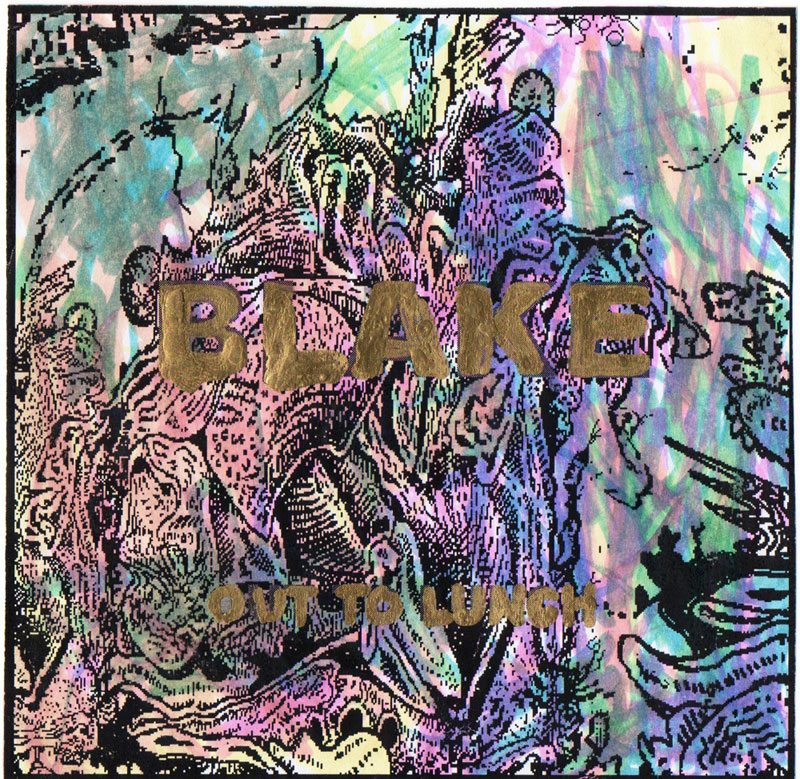
One Size Fits All: On Out To Lunch’s Unpublished BLAKE
These plates were composed in Windows 95 MS Paint, a program practically obsolete for close to a decade by the time of composition and pushed far beyond the anticipated limits of the first-PC-generation software by the inclusion of hand- and mouse-drawn figures, colour washes, scans of photos and mass-produced detritus, manually and digitally manipulated and combined into undeconstructible admixtures.
Seeing Skulls, Reading Palms: Jasper Johns in 2014
Jasper Johns’s Regrets is at the Courtauld from September 12th-December 14th. Before that (March 15th-September 1st), it was at MoMA. A significant portion of its contents are due to return to New York, but for now, it’s in the rather more incongruous and maybe more productively peculiar setting of the Courtauld: set in the vaguely lobby-like space that communicates between the museum’s marble spine/stairs and its permanent collection of Impressionism and its hereafters.

An Update to “Spying on the Poetry Scene in Edinburgh’ by Posie Rider’
[Note: the below article by Posie Rider, written November 2010, first appeared in Openned January 2011. She wasn’t findable to provide an update, so Jeremy Beardmore has kindly stepped in.] Update on page 2. Hail! When I received the call …
A Personal Letter from the People’s Republic of Cork to the People of Cordite
Cork is Ireland’s second city with a population just shy of 120,000 people. It has a river, a university, an art collage, a cathedral, some art galleries, community centres, shops, multi-national chains, pubs, cafes, restaurants; all the things you would …
Integral to the Ethos of The Other Room
At the beginning of 2008 Alex Davies, co-organiser with Steve Willey of the London poetry reading series Openned, convened a meeting of a group of loosely-associated poets with a commitment to experimental and innovative writing in Manchester. The poets were …
OBSOLETE Editorial
‘Obsolete’ can only be neutral or pejorative; it is never a compliment. Even those who value the old, the superseded object or mode, are reinstating it so as to deny that the object or mode is obsolete. I can still use it.
Rebecca Giggs Peers into The Microscope Project
In 2012 Flinders University decommissioned a set of powerful microscopes. Technologies long since surpassed, ETEC, JEOL, LEITZ and the VANOX ‘twins’ (scanning electron and fluorescence scopes) had been marked for scrap; their manuals, notes and schematics boxed for collection.
>>Sidestepping the Known: A Loose Chronology of Meztext[ing]s
When I was in my late primary school years, I was shunted into an accelerated reading program. This program was designed for kids who had either outpaced their schoolmates in terms of reading ability, or who whizzed through books [while still comprehending them] at a voracious rate.
The Northern Territory Emergency Response: Why Australia Will Not Recover from The Intervention
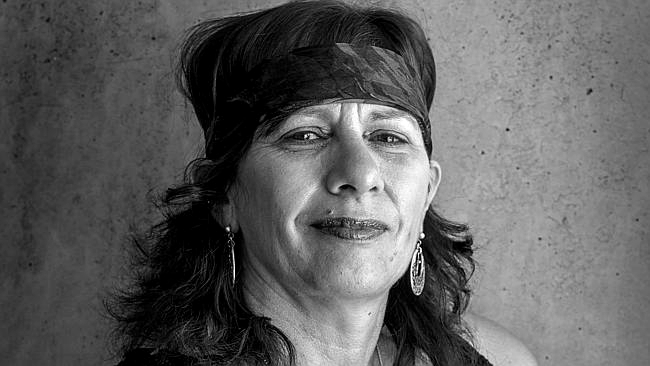
It was always an exciting time for me, during my time in the role of Art Centre Manager at Titjikala, to escort Aboriginal artists from central Australia to their art exhibitions and forums in Adelaide. On one occasion were two senior Pitjantjatjara / Luritja artists from Titjikala, and they were accompanied by their granddaughters.
My Intervention (in Cowdy)
My Intervention story began in 2011 when I moved to the Northern Territory’s remote Indigenous Borroloola community; a designated growth town located in the Gulf of Carpentaria, a few hundred kilometers from the Queensland border.
Gu Yanwu: Translations of Letters, Poems and Essays
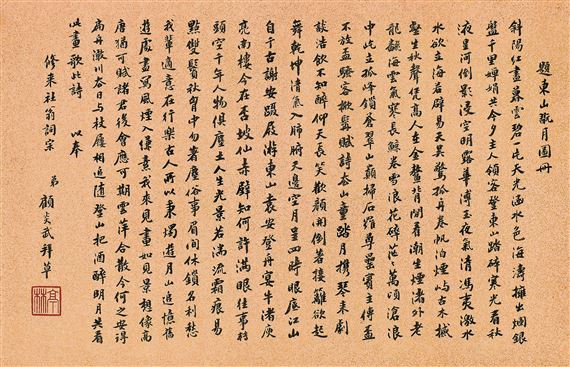
Gu Yanwu (1613-1682) stands out as one of the more remarkable figures in the history of Chinese letters, even in a landscape replete with remarkable figures.
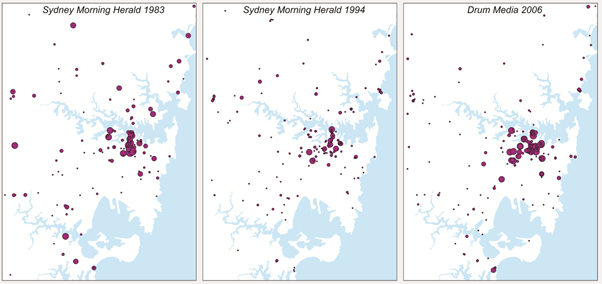
Lost Venues, Long Nights: An Introduction to Historical Maps of Live Music in Sydney and Melbourne
As with many other industries, live music in Australia has undergone a form of restructuring. Much of this occurred during the 1990s, though it wasn’t so obvious at the time and there were plenty of other interesting things happening, often within stumbling distance of one’s affordable inner-city rental accommodation.
CANADA / AUSTRALIA Editorial
Why do this? Cultural relations via literature, that’s why. What similarities can be drawn or stylistic approaches extrapolated from reading the poetics of such vastly – 15,300 kilometres – separated places?

Best Isn’t a Beauty Contest: How Canadian Poets Demand More of Verse
No one in the class could say exactly. Writing that rhymes? A descriptive passage that seems to talk about one thing while actually meaning something completely different? A very very very short story that uses a lot of similes? The late Don Summerhayes, my first poetry workshop instructor at York University, had asked us to explain what poetry is.
Investigative Poetry: Are Poets the New Reporters?
It’s not unusual to come across, within a poem, a metaphor for the writing of poetry. For a reader, such a discovery is satisfying and delightful, and ever-so-slightly unnerving, a blurred window on the inner workings of a made thing. You see it, and then you don’t. And then, by focusing just so, you see it again. Poets do create such – metaphors deliberately, but not necessarily every time they occur. A metaphor may have an intended meaning beneath which some clue to Ars Poetica lurks.

Reclaimed Land: Australian Urbanisation and Poetry
In the late 1850s, Charles Harpur composed the image of ‘a scanty vine,/ Trailing along some backyard wall’ (‘A Coast View’). It might be forgettable, save for its conspicuousness in Harpur’s bush-obsessed poetry. Whether purple ranges or groaning sea-cliffs, his poems cleave to a more-than-human continent. The scanty vine, however, clings to a different surface: human-made – the craft of a drystone wall, perhaps, or wire strung through posts like the twist of the poetic line – it signals domestic land division. Harpur’s vine of words trails along the vertical edifice of settlement.
Australian Ecopoetics Past, Present, Future: What Do the Plants Say?
Like the country’s arid interior, contemporary Australian ecopoetics is vast and robust. The expressions of Australian ecopoetry are as varied as the antipodean landscape itself, underscoring the intricate connections between language and ecology in this part of the world. The Mediterranean climate of Western Australia’s southwest corner, the Red Centre of Uluru, the tropical rainforests of Queensland, the temperate Tasmanian old-growth forests and the alpine reaches of the Victorian High Country signify this: rather than a contiguous desert or a terra nullius (as some readers both inside and outside of Australia may still believe), the Australian environment is a mosaic of biota, climates, topographies and regions.

CONSTRAINT editorial
It appears that when given the license to constrain the otherwise presumably instinctual, inadvertent, unconscious, innate, putatively authentic centres of creative practice, poets still appear to liken constraint to permission to release responsibility from the personal and expediting the imaginary to the machines of the sonnet, the page, the code, the number, the constellation, the collage, the palindrome, and the aphorism. Is this a sign of a persistent binary at the heart of creative practice, or of a persistent desire to debunk the binary?
Against Colony Collapse Disorder; or, Settler Mess in the Cells of Contemporary Australian Poetry
Colony collapse disorder describes a phenomenon whereby worker bees suddenly and inexplicably disappear from a hive. It has recently been identified as a syndrome following the rapid vanishing of Western honeybee colonies across North America and Europe. Justin Clemens also uses the term to describe an aesthetic collapse, whereby poets can only demonstrate their existence as ‘being caught dead’ given the fragile conditions of poetry and the inevitable, deadly effects of the past.

What We (non)Believe: Reading Poems by Charles Wright, John Burnside, and Kevin Hart
Imagine that three poems are delivered to your door. They come without note, explanation or sending address.
Comics Poetry: The Art of the Possible
‘MUSIC OF SHAPE’ | from, HOW TO BE EVERYWHERE, 2007 | Warren Craghead III | pencil on archival paper In 1979, Cecilia Vicuña (Chilean poet, activist and artist) tied a red string around a glass of milk and spilled it …
Sustaining Oral Tradition: A Preface to Bulu Line: A West Kimberley Song Cycle
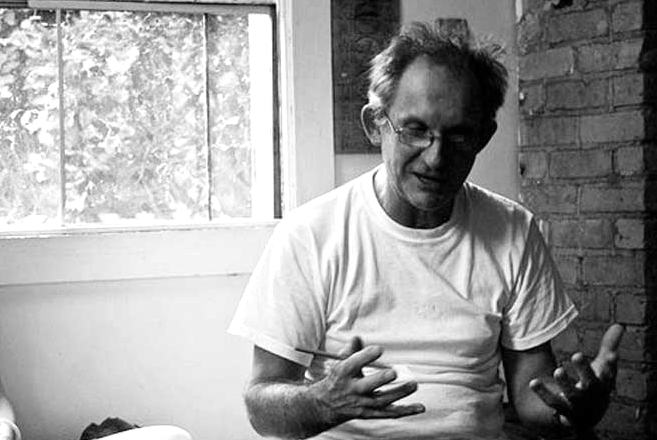
Stuart Cooke’s translation of George Dyuŋgayan’s Bulu Line: A West Kimberley Song Cycle: I cannot over-emphasise the importance of this kind of work. Australians are only too familiar with the significance and value of Indigenous arts as part of the national heritage and of the contemporary repertoire. We are familiar, but they still take us by surprise.
The War Hero and His Poem
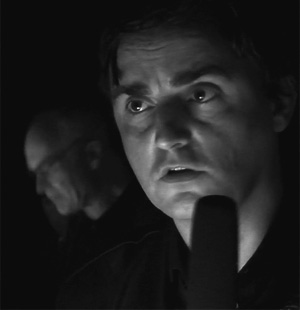
Photo by Kent MacCarter On the weekend after Tony Abbott, the Australian Prime Minister, announced that the Australian Defence Force would be assisting the US forces in attacking ISIS, the war hero Ben Roberts-Smith was featured in the magazine section …