ESSAYS

How Poems Work: Elizabeth Bachinsky’s ‘God of Unfulfilled Longings’
Lately I’ve been listening to a lot of pop music. And I’ve been hearing really abstract arrangements, huge production, and big, inescapable metaphors.

COLLABORATION Editorial
From the beginning, ‘collaboration’ was raised as an interrogation, not an answer: What is poetic collaboration? And does collaboration (whatever it is) make a difference?

James Merrill House and Its Disembodied Transmissons
Like some piece of technicolour cover-art from a 1950s mystery novel, James Merrill’s Stonington apartment loomed in the background as I stepped out of the gutter-snow and onto the street. I was wearing a bright red coat; the apartment matched the slate-blue winter sky. From the outside, the poet’s house felt as gorgeous and twee as everything else in this tiny – dare I say quaint – fishing village.

Velimir Khlebnikov and ‘Displacement’ as Poetics
For Khlebnikov, the theoretical foundation does not exactly sum up his aesthetics and ideas, but is more of a code to slovotvorchestvo (Futurist ‘word creation’), where ‘languages will remain for art and will be freed from a humiliating burden, [that] we are tired from hearing.’

Speaking Geographies: Collaboration Over Distance
When in transit and upon receipt, to whom does a postcard and its contents belong? This is one of the questions at the forefront of Speaking Geographies, a collaborative poetry collection by Siobhan Hodge and Rosalind McFarlane. This collection, composed …

Terrance Houle and Adrian Stimson: Performative Gestures from the Canadian Prairies
Italo Calvino argued that writing was a combinatorial exercise and that, for him, reading represented ‘a way of exercising the potentialities contained in the system of signs’. I would like to keep this declarative at the forefront of our investigation into the work of Terrance Houle, neither with a confirmative bias not leaning towards negating the statement of Calvino, but thinking through his statement in our analysis of a few of Houle’s images.
E is for Errand (East Coast of Africa)
Introduction ‘E is for Errand’ is an extract from the draft of a libretto named The Bones of the Epic. As it stands, it is a work from regress – not in progress. Regress because the current text is a …

Truth Beauty
‘…truth beauty…’ – this is the second half. The first is: ‘Beauty is truth.’ So again, or still – Keats’s ‘Ode on a Grecian Urn’ – and the rest: ‘that is all / Ye know on earth, and all ye …
MELBOURNE Editorial
Perhaps a good day doesn’t involve getting on a bus, but they are more interesting than trams or trains. It probably involves writing a poem, there’s plenty of it going on.
Radio Laneways and the Melbourne Sound
It’s a beautiful thing to know what came before. Who walked the laneways ahead of you, smoothed any paths that might have otherwise been jarring, who stood up so you could sit down.

Crawling Across Tram Tracks: Extracts from Volumes 5 & 6 of Fay Zwicky’s Journal
Fay Zwicky tells the story that in the early weeks of 2005, in the aftermath of the Indian Ocean tsunami, she was invited as one of WA’s ‘Living Treasures’ to write a public poem about the disaster, and to read it at the opening of the Perth International Arts Festival. She declined. It was too soon, she thought. This was ‘not a time for poems’ – was it? But already the politicians had weighed in with their ‘fine abstractions’ and preachers were parading their concern. Perhaps it was important, after all, to come out and speak with the words of the tribe about ‘true guilt’ that is ‘tongueless’.

The Writing: Benjamin Laird
Melbourne-based Benjamin Laird writes computer programs and electronic poetry, which he discusses here in the first of a new, occasional blog series looking at the writing practice of contemporary Australian poets.

NO THEME III Editorial
This issue began with the idea of an open house and a couplet from Roethke’s poem of the same name:
My heart keeps open house,
My doors are widely swung.
It continued with a few openings and closings of the Submittable gate over summer, and wasn’t long before this imagined poetic house had its doors and windows propped wide; its lawns and verandas filled with voices.

X Marks the Parataxis: Louis Armand, John Kinsella and Jessica L Wilkinson
Displacement is apparent both geographically and textually in Letters from Ausland by Louis Armand, The Vision of Error by John Kinsella (subtitled, ‘A Sextet of Activist Poems’) and marionette by jessica l. wilkinson (written here all in lower-case and subtitled, ‘a biography of miss marion davies’). All three poets are or have been editors of literary magazines: Armand edits VLAK, out of Prague; Kinsella, SALT; and Wilkinson, Rabbit (why does this name always remind me of Wittgenstein’s drawing of a rabbit that can also be perceived as a duck?) Armand and Kinsella have also collaborated on a number of books.

I Revolve a Skull that Knows: On José García Villa
In my teenage years, the poet José García Villa had withdrawn into legend and silence in New York, an absent god from whom only the occasional witticism was relayed to Manila. In 1973, when my adolescence was coming to an end, he was 65 and teaching at the New School for Social Research. I would have been surprised had I been told he was still working. From his first American volume, Have Come, Am Here, that made his reputation in 1942, his poems mentioned nothing specific to the Philippine milieu.
Reading Apollinaire’s ‘Vendémiaire’
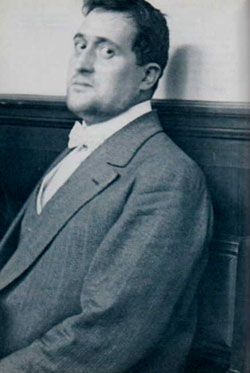
There are too many things to say about Guillaume Apollinaire’s ‘Vendémiaire’, and all of them must be said at once. The title is the name of the first month of the French Republican calendar (1793-1805; 1871), which was taken from the Latin vindemia, ‘grape harvest’. The common term in modern French, ‘vendange’, stems from the same Latin word. ‘Vintage’ technically expresses this sense in English, though it is unfortunately obscured by other ones. Another possible rendering is ‘The harvest month’.
When they Come for You: Poetry that Resists
‘This machine surrounds hatred and forces it to surrender’ were the words inscribed on the banjo of American folk legend and activist Pete Seeger, who died at 94 in late January 2014. Reading the tributes to Seeger, I was struck by a recurrent theme: his moral courage, which he lived out unrelentingly across a lifetime. Commenting on the ‘not common behaviours’ which made his life exemplary, a New Yorker post by biographer Alec Wilkinson wrote of ‘his insistence on his right to entertain his own conscience’.

SILENCE Editorial
Silence seems a paradoxical and perhaps daunting theme for writers, yet it strikes me as tantalizingly hospitable too. It was pleasing that 494 writers took up the challenge, submitting some 1100 poems; my warm thanks to you all. This high volume meant that a number of fine poems had to be regretfully declined. A common element in those I finally selected was assurance and presence, the sense of a person thinking through the poem – and of the poem thinking through the person. Precision, energy, surprise and an unlikely angle were other touchstones. Feeling, too, of course; silence, actual or metaphoric, can certainly be neutral, but more often it affects us either negatively or positively: as nothingness, dread, loss, denial and oppression, or else as affirmation, safety, intuitive understanding, intimacy, transcendence, and so on. For me, as for many of those submitting, the theme summons up death – the lost voices – but also a sense of mysterious imminence and immanence.

Silénzio / Scienza: Registering 5 in Joan Retallack’s Errata 5uite
Joan Retallack describes her second major book, Errata 5uite, published with Edge Books (Washington, D.C.) in 1993, as a ‘silent suite.’
A Writing Surface of One’s Own
A waitress here has The Owl and The Pussycat tattooed on her goose-pimpled biceps. They sweetly peek from the hem of an unseasonable short sleeve. Indigo-inked, theirs is a nursery frieze’s block print detail. She is all at sea in her ravaged pea-green tights. Her roughly made skirt abounds with floating, shifting dice. It retains its looped yellow fringing, a faded tangelo backing, from its vintage past life as a painted velvet souvenir cushion cover. She has a ring at the end of her nose, her nose, a ring at the end of her nose. Her girlfriend’s lips, hair and boots are cerise. With honey, she sweetens – and makes a meal of – her sweetly gratis hot tea, blushes like a peach, purrs. The illustrated waitress hovers, calls ‘Who?’ and, like a zephyr, swoops with a cloth, a notepad and a fluffy rainbow-haired Troll Doll-ended pencil.
Reasons for Silence
Opinions. Nice to be rid of them. Opinions unloaded joyfully, with relief, like so much silver change weighing down a wallet. Plenty more where that came from. A million, but about five people left in the world, perhaps who can justify their opinion, who can argue the case at length. And about three people left with the time to hear them out.
Black Stone Poetry: Vanuatu’s Grace Mera Molisa
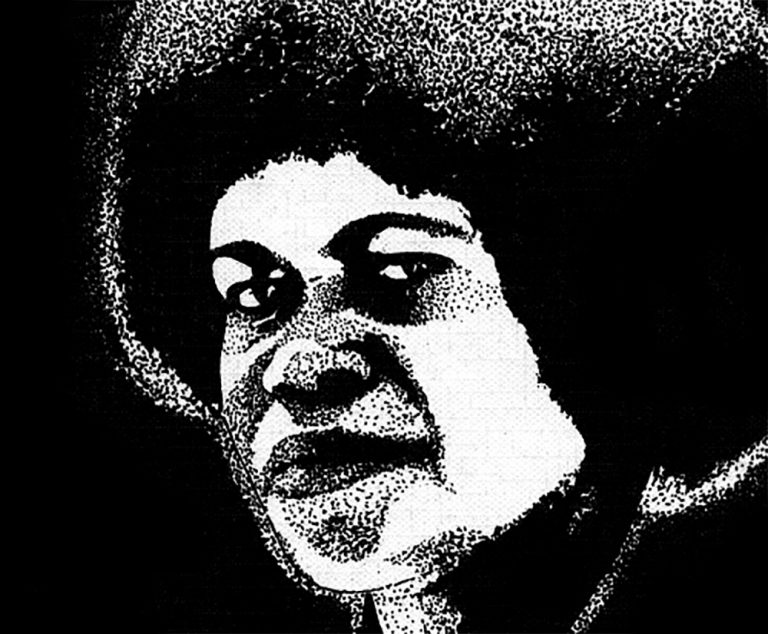
Black stone is both a figurative and literal reference to the (vanua) of Vanuatu, specifically, its black solidified lava base. Like many Pacific Islands, Vanuatu is founded on dormant and live volcanoes that impact upon the daily reality of its inhabitants. This essay examines the poetry of Grace Mera Molisa and how black stone is deployed as a key metaphor in her work as both poet and politician. Like black stone, Molisa has been a foundational creative and critical force in the formation of Vanuatu as a postcolonial nation, one based on an indelible Ni-Vanuatu spirit.
Concrete Sequence: APPEAL IN AIR
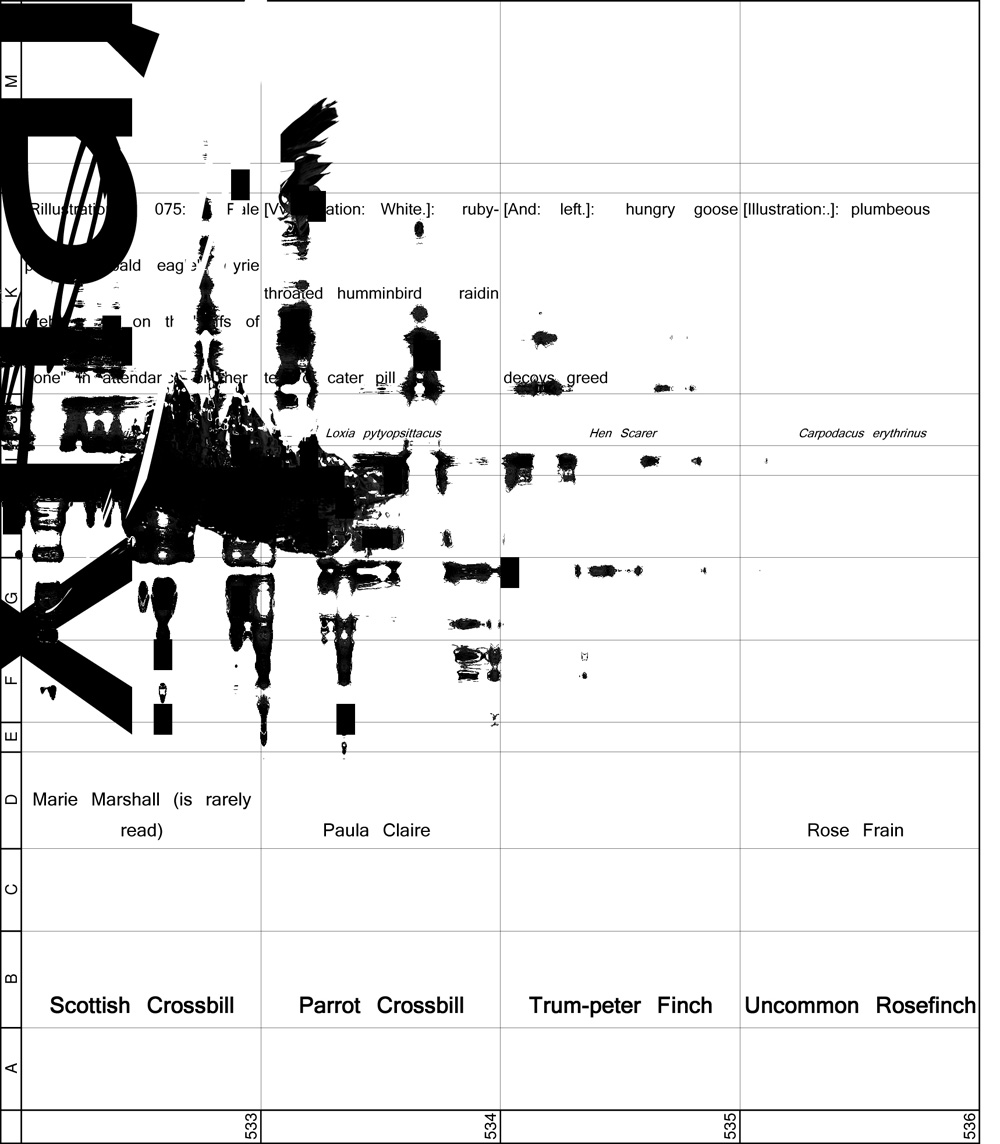
APPEAL IN AIR parallels the names of birds with the names of poets, particularly those from the avant-garde tradition. APPEAL IN AIR assumes the form of a spreadsheet that adds together a suicide, a list of bird-names and a valedictory roll-call of poets. By using an accounting tool for an anatomy of sadness, the poem questions the way that we place value in our own lives.

Shining Worlds: On the Artist’s Book of Robert Adamson and Peter Kingston
I’m sitting in the Rare Books room of the State Library of Victoria, lost in time and strangely joyous as I encounter one of its new acquisitions, the late 2012 ‘artist’s book’ and collaboration between poet Robert Adamson and well-known Australian artist Peter Kingston, Shark-net Seahorses of Balmoral: A Harbour Memoir.