ESSAYS

Notes from New York, New York
New York Diary, 6 November 2013 The day begins at the Hollywood Diner on West 16th and Sixth. I used to keep office hours at Joe Junior’s down at 12th but they closed it two years ago and shifted it, …

GONDWANALAND Editorial
Cordite 44: Gondwanaland looks to a place in our pre-history, a time of supercontinents. How do poets connect with or make use of such an idea?
This theme was thrust upon me. But I didn’t mind then and I don’t mind now, because it’s one of those themes wherein the specificity of the notion seems to force poets into imaginative leaps. Besides, I wanted this gig (years ago, I mentioned to David Prater, former Managing Editor, that I wanted to be considered for a guest editing spot). I love that every issue is exciting and diverse, that every guest editor introduces me to a new poet. Now I’ve done it.
Place, Palimpsest and the Present Day: Gondwana in Caroline Caddy’s Antarctica
Gondwana and palimpsests appear as largely historical entities as, respectively, a continent that existed millions of years ago and a kind of manuscript from ancient to medieval times. Yet, within Caroline Caddy’s 1996 poetry collection Antarctica, published after a journey to the continent sponsored by the Antarctic Division in 1992, the two are combined in a way that suggests not only their contemporary relevance but also their ongoing influence. Through her use of place, Caddy layers references to India, Australia and Antarctica in ways that form a palimpsest. This layering acknowledges the connections between India, Australia and Antarctica historically but also insists on their continued contemporary relationship. In this way, the combination of two historical entities, Gondwana and palimpsests, allows Caddy to probe present relationships and engage with our contemporary layered existence.
Destroy Kansas to Reveal Oz: from John Ashbery to Francis Webb
Frank O’Hara’s ‘To a Poet’ seems to encapsulate the New York School’s disregard for an Imagist poetics in which the natural object is always the adequate symbol: ‘when the doctor comes to / me he says, ‘No things but in ideas’’. The cornerstone edicts of Anglo-American Modernism, as contained in Pound’s ‘A Retrospect’, are seemingly casually dismissed in this phrase, along with the accepted prescriptions of Doctor Williams; a critical schism is established in Modernist poetry, with the materialism of Pound-Williams on the one hand and post-moderns such as John Ashbery placed in an alternate lineage with Wallace Stevens as adherents of a post-Symbolist Absolute.

Planting Roots: A Survey of Introductions to Ecopoetry and Ecocriticism
This year the most comprehensive attempt at anthologising American ecopoetry was released in the form of The Ecopoetry Anthology (Fisher-Wirth & Gray-Street). This work comes in the wake of increased ecoconsciouness in political, social, personal, academic and poetic spheres. This is the year that President Obama announced ‘global warming is real’ and all of America was forced, finally, to listen. Critical work addressing the ecological context of poetry, specifically ecocriticsm, has existed since Scigaj’s Four Eco-Poets (1999) and was expanded in Bryson’s Ecopoetry: A Critical Introduction (2002); yet, while these works do a lot to initiate the conversation over what could be considered ecopoetry, it was not until The Ecopoetry Anthology that an attempt to gather and present the poetry itself was made in earnest.
The Ethics of Attention in Peter Larkin’s ‘Leaves of Field’
This paper is concerned with ‘making sense’ in Peter Larkin’s ‘Leaves of Field’, a long poem that articulates a post-pastoral poetics based on ethical valency activated by attention. ‘Leaves of Field’ directs questions at us: How do we look at ‘natural’ objects? What is adequate poetic description? Can there be ethics without an apparent subject? How can we avoid instrumentalising nature poetically and ecologically after human intervention? What is the ‘value’ of human-and-non-human relations? Creating a lyricism not based on self-expression or explicitly only-human community, Larkin answers the challenges of writing innovatively with ethical consciousness by attending minutely to poetic texture and to ‘attention’ itself.
The Breath of Vast Time
I sit in Kevin Kiernan’s garden on the middle slopes of The Mountain. In the 1970s a young Kevin Kiernan was prominent in the unsuccessful struggle to save Lake Pedder from inundation within a back-up storage reservoir, a struggle that stands within Australian history as the first great nationally-scoped battle for wilderness preservation.
Collaborative Kelly Stalks Arcane New Ground
And to the bottom I will follow Conversations with Ghosts (CD) by Paul Kelly Australian Broadcasting Corporation, 2013 While a long-time voracious song-writer and performer in his own right, Australian musician Paul Kelly has also been a collaborative nomad, drawn …
MASQUE Editorial
The theme of this issue was suggested by the Poets and Critics seminar (run by Vincent Broqua and Olivier Brossard) on the work of British poet Redell Olsen last year. Olsen’s book Punk Faun: A Bar Rock Pastel (subpress, 2012) revels in masques and anti-masques, in variants and endlessly shifting suggestiveness that has influences back to the sixteenth century but also resonates with Frank O’Hara’s ‘In Memory of My Feelings’.
Small Poetry Presses in Ireland
Small poetry presses in Ireland are tricky enough to define. We are tempted to categorise them by volume of production, or by the number of established poets they represent. Poetry presses in Ireland are considered ‘large’ by virtue of three factors: production-volume, how established the press and whether they are in receipt of significant arts funding.

Negotiating the Liminal Divide: Some Italian-Australian Diasporic Poets
The publication last year of Paolo Totaro’s Collected Poems marks the latest in a long series of poetry collections by Italians who have migrated to Australia. Raffaello Carboni, author of the iconic The Eureka Stockade, was a poet in his own right.
Emotion and the Self in Games
There are some books that carry you along a journey until your tears make it impossible to read. Films and television shows, too. Games evoke emotion in a similar way to non-interactive works, with some exceptions – the greatest difference being emotion facilitated through action. In this essay, I look at games and electronic literature that have triggered my emotions, and reflect on how this was achieved. The poet, novelist, screenwriter, playwright and games writer will find similar rhetorical devices being applied in different ways.
Prints in the New Snow: Notes on ‘Es Lebe der König’, J.H. Prynne’s Elegy to Paul Celan
In 1966 Prynne emphasised the necessity for poetry to ‘emphatically reclaim the power of knowledge for each and any of us in our common answerability as the creatures of language.’[1. Keston Sutherland, “Hilarious Absolute Daybreak,” Glossator: Theory and Practice of the Commentary, 2 (2010): 115-148, 117.] The ekphrastic, proprioceptive and dedicatory analysis that Prynne demanded of his readers through Kitchen Poems and The White Stone reaches a point of crescendo with Brass in 1971.
Notes from Yerevan, Armenia
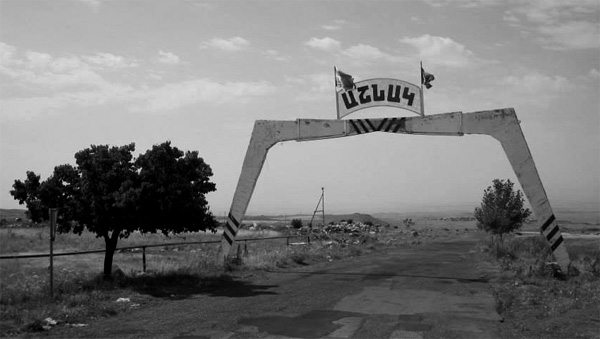
First impression: Yerevan undulates out the semi-desert, ringed with what look suspiciously like nuclear reactors. Flight SU1860 jolts down at (the recently privatised) Zvartnots airport, and we pass a dis-assemblage of passenger jets in various states of stripped-down decay. In …
Notes from Medellín, Colombia
Since it began 23 years ago, the Internacional de Poesía de Medellín has grown to become a major poetry festival in the world, in a country riven by 50 years of civil war. This year’s Festival (6-13 July) coincided with a new round of peace talks in Havana between the Colombian Government and FARC, and FARC rebels reportedly fighting security forces in the mountains. The Festival featured Australian poet Les Wicks, who reports on his experience below. The Festival has also ‘grown’ up alongside seismic changes for the city of Medellín, Colombian’s second-largest and once described as the ‘most violent city in the world’ (Time, 1988), due to its brutal cocaine drug-cartel culture.
Foreword Viidikas: Reintroduction of the ’68 Poet
John Tranter, renowned Australian poet and occasional but incisive chronicler of the driving forces behind those Australian poets now classified as ‘The Generation of ‘68’ once wrote that the ‘Generation of ‘68’ was all about:
‘not the replacing of the old by the new (which soon becomes the established), but by the continual recognition of the need to ‘make it new’, to break down the urge to establish reputations and an entrenched position.’
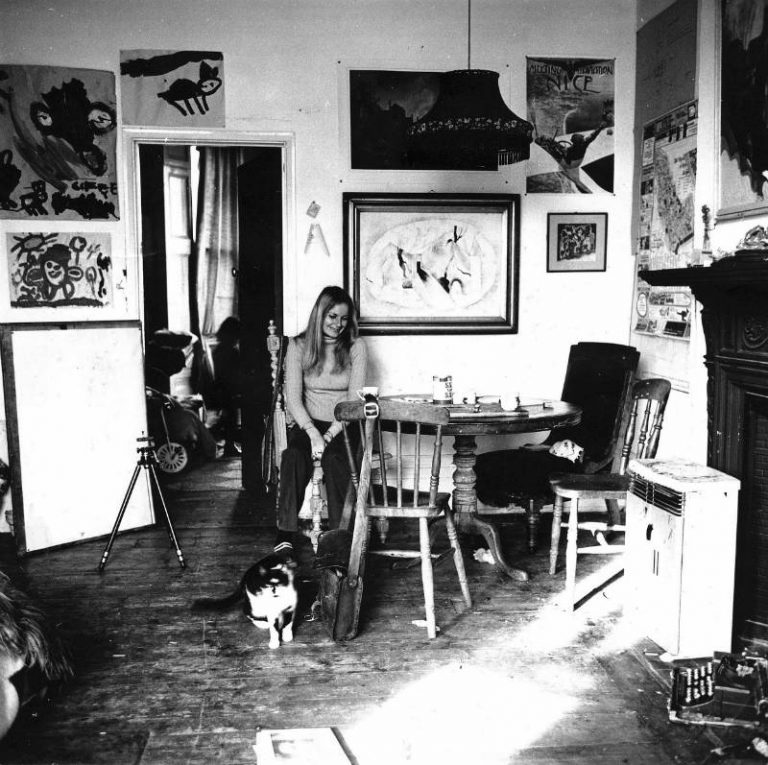
Anecdotes surround Vicki Viidikas. None is definitive.
‘It was a place of force—’ Re-reading the Poems of ‘Ariel’
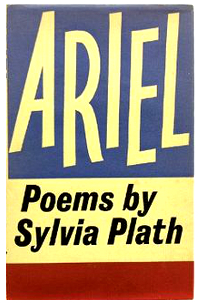
So much has happened to poetry since Sylvia Plath completed her last poems fifty years ago in 1963 that it might seem weird or regressively sentimental to focus back on them. But, encouraged to do so by a number of anniversary events around the globe this year, what strikes is the endurance of these final poems’ brutal clarity.
NO THEME 2 Editorial
Of the poems I’ve chosen for this theme-free issue, some are headily elusive, such as the epistolary ‘Shooting“Correspondence”Gallery’ where meanings crumple and re-form through their costly tousled language.
unAustralian English: Oscar Schwartz Visits Chris Mann in NYC
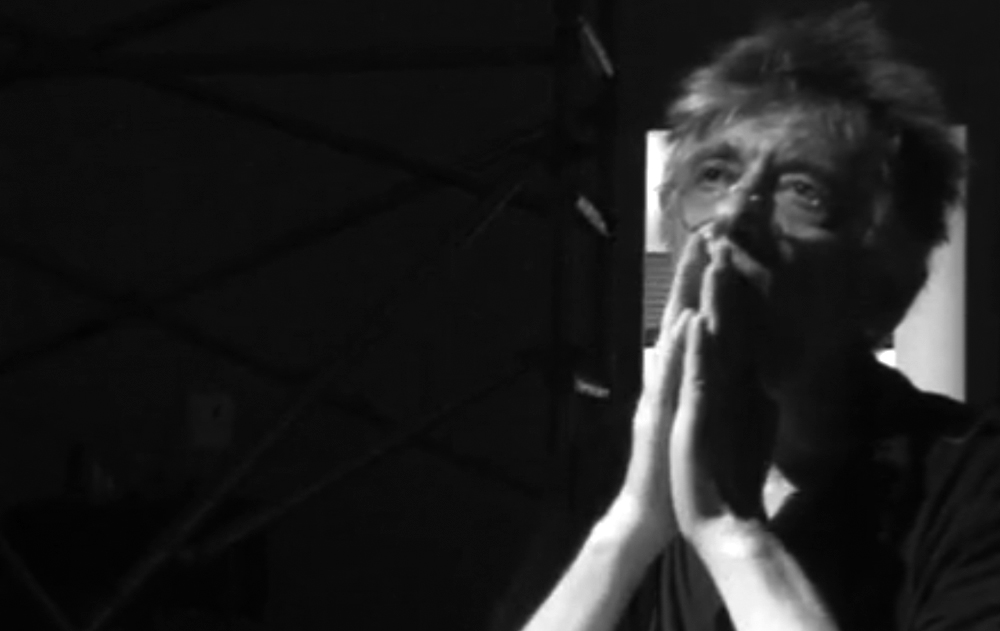
I went to visit Chris Mann in his apartment in Manhattan at the beginning of July 2012. Half of his apartment was covered with plants. There were trees, ferns and flowers hanging from every landing. Mounted on the walls were wood-framed bookshelves, completely packed. The other half of the apartment had a wooden table, kitchen, grand piano, and beyond that, some rooms for sleeping.
Recording Archives: ‘A Way with Words’
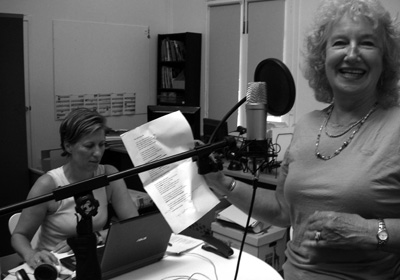
For two years, from September 2009 to October 2011, I produced A Way with Words, a weekly radio program showcasing contemporary Australian poetry. In all, 106 episodes (each of around five minutes) were produced. Presented here is a chance to listen in on six gems from the archives vault – some of my favourites, chosen for the most part because they are impossible to find elsewhere as audio. A Way with Words was broadcast weekly by ArtSound in Canberra, picked up by Ozwrite on the National Community Radio Network, Dover Road Radio broadcasting from the Isle of Wright in the UK, 2KRRR Community Radio in Kandos and 3RRR in Melbourne.
RATBAG Editorial
Ratbag poetry and Ratbag poets are not, necessarily, one and the same. There are poets for whom a Ratbag poem requires the serious maltreatment of themselves, while there are others for whom Ratbaggery is the effortless demonstration of their personal grace. There are poets who begin writing as Ratbags and become stockjobbers of Romantic flap, while others begin by making exquisite paste and later come to hear the sublime music of the rant.
A Poetics of The Naughty
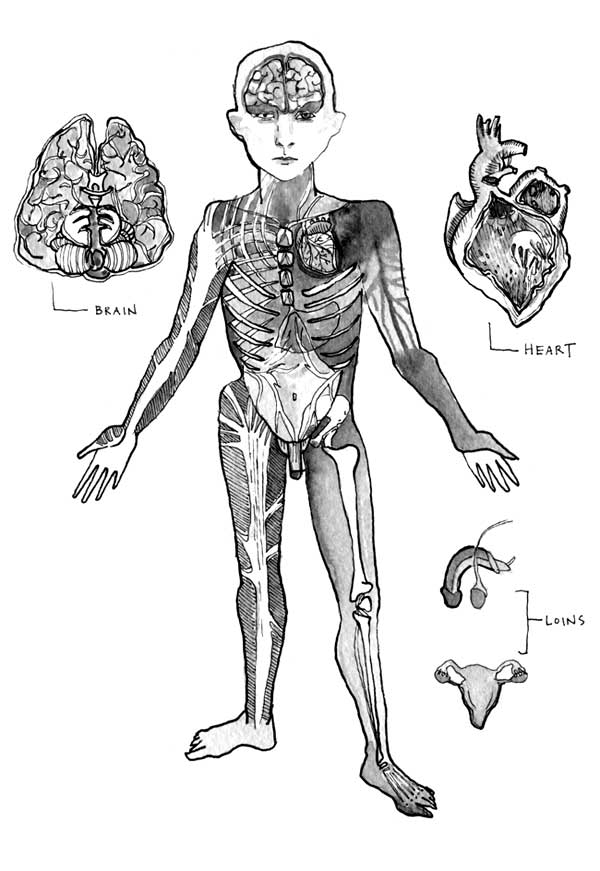
The word ‘naughty’ is etymologically related to the number naught. Winning, and its relationship to one, along with duplicity and its relationship to two, seem to be the only other similar contemporary instances where a number becomes descriptive of a particular kind of activity. But being naughty is not the opposite of winning, in the sense that winning is being number one.
Notes on Ratbaggery
What Is a Ratbag? We think that ‘Anxious to Know’ must be a very selfish kind of person to think that any girl should endure dancing with him all night. He must think he’s a swell dancer. He wants to know what a ratbag is. He should know as Perth is full of them, and he’s probably one himself. After all, the people of Western Australia have no existence. They are people who have come to make a fortune, then return to the eastern colonies. They have no interest in the land except as an instrument of their material welfare. They are robbers and fleers. For them, succession is not just a ratbag’s dream. It is still taken seriously. Ratbag – meaning an eccentric or ‘queer’ person – most likely originated in Western Australia’s Hutt River Province.
Ratbag’s Polemic
In Michel Serres’s book, The Parasite, rats figure as exemplary relations. When a rat turns up in your kitchen, you are each other’s guests: just as the rat is canny at thieving morsels of bread and rind, so too is the rat canny at crafting a home from a network of theft. A rat’s interference makes you an intruder …







