Nine Lives

Fix breakfast, make coffee.
A sort of virtuous morning. No
hanging about. Wash clothes, dinner
—on the stove by 10.30, cooking,
ready for some time tonight

or another day. The plumber—who
could show any time
(‘over from the mainland’) . . .
his day on the island.
Cath comes back
from swimming, headache gone.
& Lorraine arrives. They take off
for some market—no, an ‘open
garden’ inspection. We discuss
dinner together first—Ian’s plan
& ours. One or other we’ll
go with. I show
illustrations I have done
—a kids’ book for Finn & Max.

And they’re gone. No poems,
unless this is one. (This notebook

—one I’ve travelled with a few times—
hardly marked—phrases,

headings—fragments—designed …
‘to start a poem’, or make one possible

#

(notes from a day, a decade
or more ago—

beginning with a train trip:

things I’d have thought, or noticed
looking out the window, that

I did—or might have—

that drift off, to become notes
for a kind of poem (not

described) I’ve thought about,
but which would seem
unlikely,

a chain of remembered moments—

of intensity, mindless focus,
happiness—none of them

in most senses, of any consequence
A number

instances of swimming, & of sensed
well-being derived from it—& a couple more,

similar,
added at a later stage, or signalled

just by their ‘name’

by which they will be recalled.
(A few are tagged

with a heading—’riding
bike’. Ha, ha.)

Nothing has come of them.
(A notebook

I look at, at two or three year intervals,
on trips, usually, to Sydney. Once at least to London.)

Then lines
that connect
to one specific trip … & a journey by train to Kurt’s

#

There’s a lizard appeared suddenly, on
the lower rung of a paling fence
six feet away, his body one
voluptuous curve as he
hangs there on an angle sunning

this must happen to everybody
& be, equally for all of them, like this

a ‘still moment’, the skink’s side
pulsing.
I remember one
I saw in Rome, & wrote in to The Circus

an experience for The Strongman I think.
(Here it is again)

I’m reading
Ishmael Reed’s book Flight
to Canada
. It’s very smart

& it’s very funny. Years ago
I read his The Terrible Twos, or the

Troublesome Threes or something,
which I also liked—tho maybe not this much.

#

If there’s a Greek term for it—
the poem about a putitative but non-existent poem—

Creative Writing could legitimately establish
a new time-waster (no—’genre’), one more

‘exercise’—as they have done,
to the detriment of poetry, with the Ekphrastic poem

a word I hate to see or hear
& wince in the expectation of—of the finished article, I mean—

the ekphrasm—

regularly drear, dumb—
short of what once was intended.

#

If there’s a name for it
“then it’s a thing,” as the present

would presently put it.

#

Kurt & I

go swimming—his place at Currarong.

He would hardly credit

how little I swim these days—how little
I have swum, over this last decade. In-

explicably. But I put on a show for him
& we swam & I enjoyed it.

Some of the other occasions—these moments—were at Coalcliff
or Stanwell Park, nearby—with Laurie, probably

& Pam, Micky, Sal & Erica
maybe Kurt. Another was at Burning Palm

—is that what it was called?—below a steep cliff
in the National Park. A tiny settlement

of tin houses, built first during the Depression
& allowed to linger—some remnant families—permanently

probably, unemployed. A few small children.
The same crowd—(of us)—in the water

The extraordinary thing—that I remember—
that the sand dropped away so quickly

We were buoyant, lifted up & down,
many feet, each wave—

(a tiny arc of sand—the beach—
just feet away), the tin dwellings pink

& blue & green & rust & russet
just back from it. The buoyancy—&

the friendship—made me euphoric
& I laughed. It was as if

they were the same thing.

Barbara was there too
& Kate probably.

One of my friends has fallen out
with his (former) best friend. How could this

be? It seems a dark note
to introduce. Too dark to be avoided

(Tho avoiding things, isn’t that what I’m
good at?)

The ethics of poems.

I wondered once—or, first, some years back
if it could make an autobiography

these best moments,
a sequence, a chain, a necklace of them?

to parallel my real biography
of family, relationships—&

reading, writing, work—my real life.
Two tales. A poem with a title like

Substitution, Passing, or Bowling Up.
What could be the name for this form or genre?

Nebulosa Prospectus? “Now
coming, soon, to be inflicted on the unprotected”—

Write a poem, about a poem, that you
haven’t written.

Mine would include other swimming moments—
one with Cath & the kids, Gabe & Anna. Yuri?

Tom? I don’t remember, tho I remember doing a drawing of it,
calling it The Life Aquatic after an old movie

from the 80s the 90s.
Posted in 106: OPEN | Tagged

Yellow Gully

in childhood
we read the landscape
in a different language

rode the curves
of yellow gully
alive with wattle

and it was flower nectar
tapped onto open palms
licked clean

my brother armed with
spear and arrow and story
and fists full of hair

my pockets dragged with
moss and river rocks and rhyme

and the clouds full of song
admitted that everything began
with the sun at which we squinted

Posted in 106: OPEN | Tagged

Grey-eyes

The women with the sad eyes are usually the sexiest.
New moons rolling around in their heads. Big dumb
pools you can dive into. The moon doesn’t speak
much, so you can project your longings onto her. Try
picking her out of the sky like a cherry, go on. Wrap
your tongue around the stalk of her one huge glaring
eye and see if you can tie the knot. Tongue dexterity
is a skill they teach in school. The tide of you pulls
like a dry rope, straining against cargo. Despair is
the look of the season. Heart rolling around inside
you like a stubborn pebble. Peppercorn of need.

They say these girls possessed a single eye.
Dropped to the bottom of the ocean, as if into
a glass. Half empty and filling rapidly with salt.
A thousand feet below the ocean, looking up
at things that don’t exist yet. You can’t get inside
someone else’s eyes and see through them. You
can work at rage all your life, and still have
nothing to show for it. What a terrific waste
of time, trying to make violent things beautiful.

Posted in 106: OPEN | Tagged

Tongue

‘One unhappy day I was called to see
the Benois Madonna—
I found myself confronted by a young woman
with a bald forehead and puffed cheeks,
a toothless smile, blear eyes, and a furrowed throat—
And yet I had to acknowledge
that this painful affair was the work of Leonardo da Vinci.
It was hard, but the effort freed me,
and the indignation I felt
gave me the resolution to proclaim my freedom’—
—Bernard Berenson

TONGUE
‘ —bre 1478 I began the two Virgin Marys
—Leonardo da Vinci

The Madonna of the Flowers has a line

of black behind her teeth—The tongue

in its dark laps air—‘and by that the sounding

out of all the names of things is’—

On her lap the child is catching at the pale

flowers in her hand raised now into the light

of that bare window cut through stone

at the back, filled with nothing but sky—

its lead-white thinly over black—Flowers

of the cross, cruciferae, bittercress—the child’s

hand is black along its knuckles where it

reaches to catch those pale flowers foreshadowing

death his mother hands to him—first

begotten of the dead—his dying already growing

through his hand’s flesh—‘When you begin

the hand from within first separate all the bones

a little’—Young Lorenzo di Credi in his

imitation had the child take an acorn righteousness

out of his mother’s hand—the child’s hand

of a corpse in the still light of that soundless room

where the window has a city in it and in the corner

her bed is made—‘When I made a Christ Child

you put me in prison’—Its stained walls, patterns

of joined stone—a landscape complete with

mountains, battles, faces, clouds—‘A thing miraculous’—

its blank surface opening into a window of dawn

light that is touchable, originary—‘The sun has never

seen a shadow’—A stone room held between

that light and this—a watcher standing in the doorway

in the place of light that casts its shadow back

across her mouth, her ear, the child’s right hand, right foot—

marking on them the lamb of the trespass offering

blood where its shadows are—as that metal driven

through her ear means I will not go out free—A window

of sky in the shape of a diptych which will be painted in—

a Pietà, a child tearing flowers—‘The first drawing

was the outline of a shadow on a wall’—Now these

figures ‘clothed in light and darkness’ round forwards

into the light of its window reversed—history,

prophecy meeting in its stone room—At the crossing place

her gem—like water closed in glass—holds light

where in opaque things light’s shadows are and is

indifferent, afloat inside its curve, lit against

and leashed to any watcher’s eye—incloses

a room above their turning hands—a nearly

conceivable place in which the doorway’s reflection

invents what could be a window at the back

where its two shadows wait and its bittercress changes

into pale points of light—a single pearl there

making the palle—its heraldry hung upon abyss—

how such lustres move to meet and equal always

the distance of any watcher’s eye, its unassimilable

contrary and end—Encircling it the fifteen pearls

of her suffering are to be counted over repeatedly—

blood in her mouth—the tongue in its dark laps air—


The ‘Madonna of the Flowers’ is sometimes called the Benois Madonna. This poem’s quotations come from Samuels, Ernest and Samuels, Jayne Newcomer, Bernard Berenson, the making of a legend (Belknap Press, 1987) and from Leonardo da Vinci’s Notebooks (translated by Jean Paul Richter, selected by Irma Richer, OUP, 1952; 2008) and from the Book of Isaiah. The Lorenzo di Credi painting is his ‘Madonna with the Christ Child and Saint John the Baptist’ in the Gemäldegalerie, Dresden.

Posted in 106: OPEN | Tagged

They Sung Us

The Old People rain smiles
for their song
which brought us to be
here now

their glee moves in me

like river mint picked
and crushed on the breeze

magpie gargle and waddle
carefree

like in-land pearls
mussel flesh agleam

dewy fresh cut scar tree

like billy tea
strong, black, sweet

waratah stained flame
pop-crackle-simmering

eucalyptus smoke
from coolamon
billowing

until we’re clean

like estuary fish
both upstream
and one with the sea
and her expanse

like full moonbows
guarantee-ing
we see
what this means
for us now

and reap what they
sewed when they sung

this moment
into being.

Posted in 106: OPEN | Tagged

Chosen Family Sequence

For Josie

I. AT THE TABLE

my name in your mouth is
appalling
my name in your mouth is
exceptional
my name in your mouth is
overwhelm
my name in your mouth is
you
and my name in your mouth is
why
why why

II. IN THE LIVING ROOM

a hole no bigger than a pencil
than my snappiest fingerbone
and the darling the snub and corny
darling never a word expected
gone.
we find our kindness our children
our warm sand company our best strange
at the littlest scale of living
things that think unlike our most loving.
floorboards like muscovado sugar
melt. and stick. and sweep. and burn. like tears
in rope someone else was holding. gone.

III. AND THEN THEY REALIZED

[ ] is like
is
like a room when the moment when
the forbidden terrier
jumps reckless of injury
opens the door at a silent rush
bedside kneels up folds paws
turns a stern eye on the feverish patient
and the ghost of the dirty-faced heedless boy
and the work-pale girl who does not mean well

[ ] is like
is
like a family when the time when
the ingenious labrador
races into the car
dangling the pit viper he caught
live as a gift
and delighted by the shrieking
brings more and more
activity snakes to his pack

[ ] is like
is
like a road when like the winter when
the molossive pupper
herds the determinedly solitary walker
happily
to be even more happily
unnecessarily
saved
in the snow

Posted in 106: OPEN | Tagged

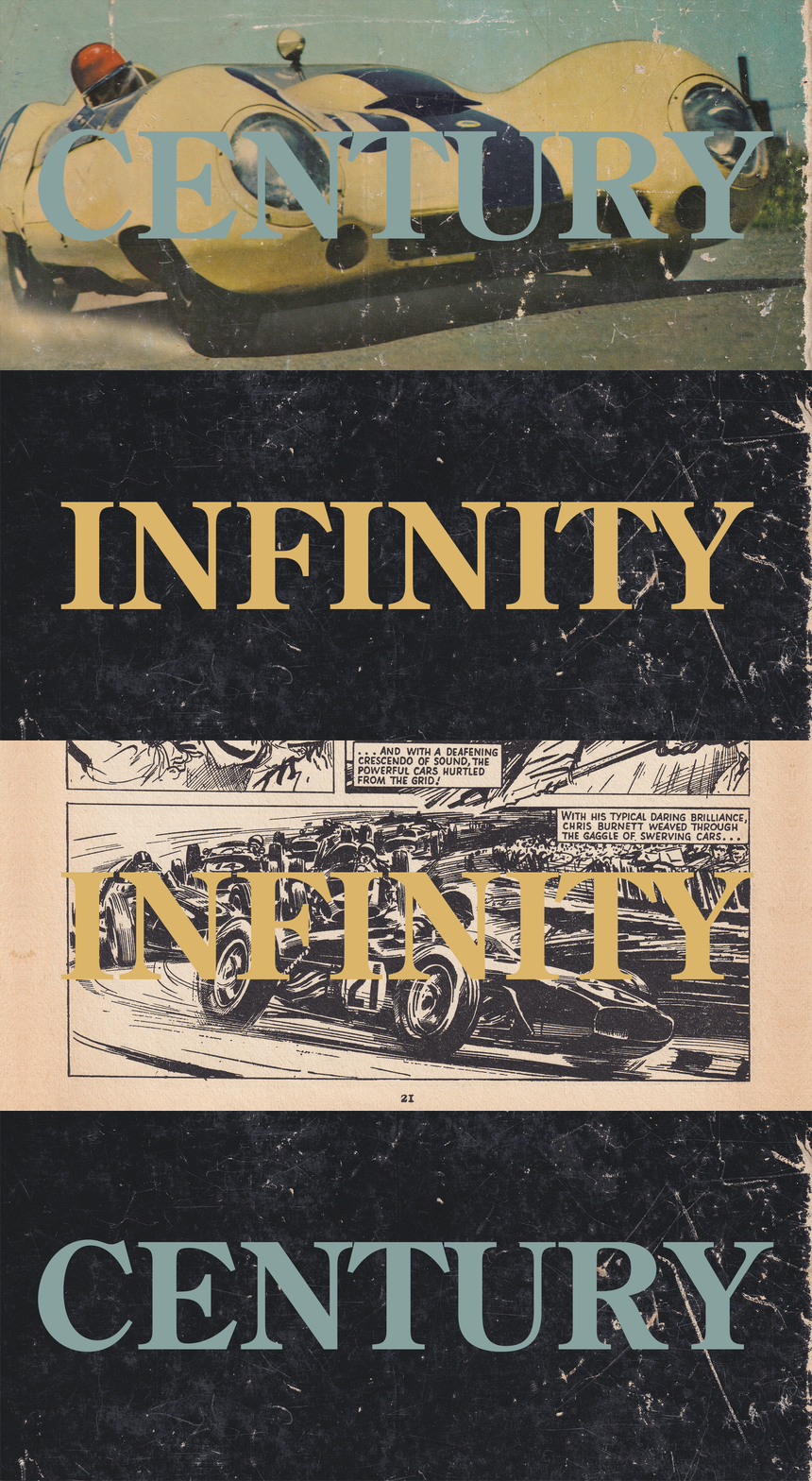
CENTURY INFINITY


ENTER

Posted in 106: OPEN | Tagged

Three Elegies

TOPOGRAPHY

(31-10-20)

Westgarth 11-25 a.m.
“change here…” (for yesteryear —broad brush
cliche but aspects-of OK —argue forever
the truth of ‘here & now’ —a grounding
apparently without air —
[REVERSE Separation St —> Westgarth
as tho ‘elsewhere’ & ‘before’ banished —
anticipate rejoinder: is how & why ‘self’
vanishes in the Eastern way —(slowly
last dip down to the ‘Garth —
the Good Earth is maybe only the familiar —
(an age since i’d thought of Chris Torrance
but did simultaneously as Robert Hogg presents
Facebook photo of Chris’s 1968 Ferry Press
GREEN ORANGE PURPLE RED’s cover —
right here & now again! —whom Tim at Grosseteste
thought i could contact —might share best part
of a world view in England ’69 —brews his own
Tim said (in a future biopic seen drunk among
fallen apples in the shade of drooping
branches shot by sunshine interspersing
afternoon rainclouds in a scene
from unmade Peter Greenaway film —
heroically bucolic (A Vision (nothing
as complex as 1970’s first trip featuring
Dave Rogers’ “fifty-thousand Rembrandts
in the sky” on Southampton Common nor my
ecstatic understanding that his walking around
& around a particular oak politically
his ‘territory’ and psychologically
his ‘terror-tree’ (astoundingly find the book’s signed
from Chris “to Kris with best wishes 11/11/69” —
black biro on quality off-white paper —
such accessibility elicits tears —
tears strips off grandiloquence
[REVERSE
Westgarth alighting (where
have i been? —fifty years & counting —
steps —drifts —of such disjunction can’t imagine
anything so coherent as “life” supposes
(& where has Chris been or Bob Hogg come to that?
if not here —
here! —
always here

oOo

TOPOGRAPHY

22/11/21 Northcote — All Nations Park back
of Coles shopping plaza —Degani’s take-
away coffee or la famiglia dine-in bespoke
pizza cold-drinks cappuccino cream-pastries —
sit on bench beyond cafe where Pi O joked
“old Greeks” decamped —out of dark
interior looking back from sun bathed park
an ululating moozik —name it rebetika
as if old Greek except for momentary oblique
must be Italian —neither Turk nor Iraq/
Baghdadi descanting Ahmed Hashim’s bark
at same moon & stars same night —
wine-all-gone ache as any might
wake with —too broke too tired too late
to buy more —would sooner croak
than beg —here in this world its flocks
of beggars -slipping stratae agreed- hacks
with pens & notebooks the poets of Bachus’
house temple his devotees —mine too
(Mike Dugan in ’68 urging on us Hal Porter’s
“Watcher on the Cast Iron Balcony”
in midst of Liverpool Scene & Beats at least
to know past & present Melbourne he said —
read again now to know our late friend?
(jump genre & generation —jump pages
(disbelieved the 6th while signing Covid register
at Degani’s retraced to the 3rd —but it’s December
14th! (tell whom now? the adjacent
that is the necessary ear —who can i tell?
(thank you loves —comrades —the interminable
hollow hour (Heather: “this broken night” —
Chrissie: “our embattled family” —
shock horror
-im memoriam-
John Nolan died Dec 13th
Mattie: “big brother to us Godboys, forever
grateful” [topography rewritten
9/12 —corrections
& additions —
(wiser after the event —
(always tell everything
Dec 15, ’21
fin

oOo

TOPOGRAPHY

2-iii-22

i.m. Jordie Albiston (because your name’s now Forlorn
because this place is where Neglect now decamps
because for all i try cannot distinguish your star in
afternoon’s thunder-beclouded Melbourne sky
(because Doug Oliver wrote me back-when
about our babe’s heart perforation —
told us to hang in Rett & i —bade us love &
courage —learned from his own experience —
i pick his pocket here for the enflamed word
‘HARM’ (because whatever he used to be he’s red
toy engine’s driver now on same edge of All Nations Park
as daily arrive for coffee —stare at what fast becomes
emptiness —blurred parkland as tho’ naturally edged with
alternating European & native trees (because
toot-tooting in a language equidistant Thomas
Traherne & John Bunyan —i’m here to learn —
sink or swim —replace ‘or’ with ‘and’ (a Bourne-
mouth where angels pour forth like Melbourne
rain in this year’s coincidence with Lententime —
enter the Agony as Catherine found
to say —timely yet urgently
out of time (because first born’s
twice born —foresworn? (can’t find vital quotation
but if ‘KIND’ is its necessary contradiction
catch a line for Jordie Albiston —swain
despite never-the-twain —
“pretend to know how fully
she was alive; / from departure
at least learn how to arrive.” —
‘Uncollected Poems’ section
p169 published Allardyce
Barnett 1987 (March 4th
painstakingly enter the sea
turned-on by my Doc Ricketts
inlet —descended gingerly —imbibed
the smell of the sea all times’
memories —perched on edge
of rock realised the scent
on the air is seaweed —is seaweed’s —
sends me to the beach (“Stranger
on the Shore” (absent War —
Love & Lovers too (“Down around Biloxi
pretty girls are swimmin’ in the sea /
They all look like sisters in the ocean” —Jimmy
Buffett 1977 (motion only
subsuming all or any
oblivion —because any-
thing else right now
unknown

Posted in 106: OPEN | Tagged

Real

Craig Henderson. You are the most attractive real estate agent in the region. When 47 year old Jessica and I see your sign on the highway, on the bus station, above the takeaway, we think about retirement. We tuck our chippies in our jackets and remember the time we saw you at the fancy New World. Jessica told you your own name and I said how we never see you at the Pack and Save. You inclined your head, just like on the poster. We looked to see if savings fell out. You’re set back from the road, Craig Henderson. You’re close to schools, shops and amenities. ‘You’ve got a good heat pump, Craig Henderson,’ Jessica whispers into the drizzled air at the bus stop billboard. The sign reads GET AHEAD and Jessica scratches JOB into the Perspex over your face with the key to our share house. If we don’t, someone who doesn’t understand you will. And Craig Henderson? We have questions. Are you perfect for a family? Are you a first time dream or an opportunity to upsize? Will we have no regrets? We’ve pooled our money. After the chips we have fifteen dollars thirty cents in the hand and nine hundred and forty one in the bank. But what do you want, Craig Henderson? Your golden hands. Your reflective face. Our jackets stink of hot oil but they’re warm.

Posted in 106: OPEN | Tagged

Tongue of the Hidden

She reads Tongue of the Hidden,
poems from the Divan,
at night, while locked up
with her infant daughter.
Guards patrol the corridors,
flash torches at all hours,
to appease their boredom
they mock the imprisoned.

She reads Tongue of the Hidden.
The women come to her now
in the walled quadrangle
where the inmates assemble
while their children run in circles.
‘Read to us,’ the women plead.
‘Relieve our thirst,
help kill the hours.’

She reads Tongue of the Hidden.
The walls have been breached,
a patch of sky is singing.
The women are weeping.
The verses release a chorus
of curbed voices,
lift the veil from their torment,
their tales of violation.

‘In our homelands,’
they tell their jailers,
‘we were held hostage.
They dumped us in the snow,
left us for dead, naked.
We came to you for help,
but you ignored our pleas,
walled us in prisons.’

She reads Tongue of the Hidden.
We come to her now
from all corners of the city,
follow procedure: electronic scans,
possessions in lockers.
The quadrangle is a rose garden,
the thorns wrapped in fragrance.
We draw the scent in — and listen.

On her release we bring wine,
place the bottle on the table.
‘I come from that city,’ she says.
‘Shiraz.’ Home to Hafiz,
the Wine-bringer,
Interpreter of Mysteries,
composer of the Divan.
Her Tongue of the Hidden.

We drink to the innocent
who still count the lost hours;
to the women who still
gather in the quadrangle
while their children run in circles.
To the voices that have been stilled:
the tongues that long to unveil
the worlds of the hidden.

Posted in 106: OPEN | Tagged

Submission to Cordite 108: DEDICATION

This issue asks for your devotions, your gestures of esteem and affection, your hot takes on the solemn and fanatical. It delights in submissions seeking abandonment and surrender to a goal or cause.

This issue will also explore how people, places and things are set apart, elevated, given story and purpose. Bring your lyrical adorations spanning the earnest and satirical, your odes, toasts, homages and exaltations, as well poems that decode ceremonious inscriptions, plaques, prefixes, para-texts, subtweets, tokens and tokenism.

This issue asks how DEDICATION shapes your world. Is it motivated by theatrics or humility?

Either way, we wish we had yours.


This podcast sheds some insight on how Cordite Poetry Review (and Cordite Books) works.

Submission to Cordite 108: OPEN closes 11.59pm Melbourne time Sunday, 4 December 2022.


Please note:

  1. The guest editor(s) has sovereign selection choice for all poems submitted.
  2. Masthead editors will also contribute to the issue.
  3. We will only read submissions sent during our official submission periods.
  4. Please place up to three (3) poems in one (1) Word, RTF or PDF document (unless specifically noted otherwise for special issues), with no identifying details in the document itself.
  5. We are not able to offer feedback on individual poems.
  6. Submissions will only be accepted via Submittable …

submit


Posted in GUNCOTTON | Tagged , ,

Before You Go

The other night I had a dream about Esther being loved-up at a party with her ex. When I woke in the middle of night I thought something like life is a window through which I look which I thought was worth writing down when of course, it wasn’t really. I sprang out of bed, into the loungeroom, turning on the light and waking up Max, just to write. Sometimes it feels like everything, still, is always about Esther. Calling things off is all well and good until I see someone else falling in love with Esther the way I fell in love with Esther as if we were sixteen again. On the telly a 1967 Volkswagen Beetle cruises down a hill. We are sitting on the couch. When it reaches the bottom of the hill a series of declarative sentences appear in Times New Roman: kiss the person seated next to you fall from the couch to the hardwood floors roll around like that until someone catches you and so that is what we did and before I knew it, you were gone. Every experience henceforth has been in order to emulate this couch experience with you, Esther. Sometimes I get so jealous insecurities should be fleeting or else they are not hot you taught me so much about myself and the world that keeps turning around me. Do you remember the knife I bought you with your name on the handle? I walked to the engravers in the rain down Little Collins Street where everyone is rich in money but I am rich in love. I wish you’d take me upstate like how we’d talk about it’s too bad I’m far away from you now, being here in Melbourne. I have many regrets I’ll have you know and one of them is never telling you I love you that one last time I’m crying now I’m a lot more sensitive than I realise. I’ll also have you know that Max shaves my legs with a straight razor because she is a barber and I love her and she loves me. Wherever I am without you, you appear behind me, flashing a knife. The fan is whirring loud in the loungeroom. I am alone on the couch listening to HTRK. Max is at work she is always at work and when she gets home we will lick chocolate sauce off each other’s pussies and it will be like I was never even crying.

Posted in GUNCOTTON | Tagged

2022 Queensland Poetry Val Vallis Award Winners

Dan Hogan has won the 2022 Queensland Poetry Val Vallis Prize with ‘Aduantas’; Sophia Walsh wins 2nd prize with ‘Before You Go’ and Bethany Stapleton wins the Highest Queensland entry for ‘The Botanist’.

Dan Hogan

This brilliant, idiosyncratic, surrealist poem called to us from amongst the poems we had shortlisted, refusing to be forgotten. There is something jarring, even off-kilter about this poem, which suits the meaning of the title: that strange feeling of fear or loneliness in an unfamiliar surrounding. The words are intriguing tangents from the expected. What exactly is ‘Nondescript respite’ or ‘Misfired association’ or more importantly ’emotes homologous’? It doesn’t matter, the whole makes a strange compelling sense. There is an element of playful ambiguity in this poem, but coupled with the anger just under the surface, the result is bittersweet, like the honey drunk by the narrator. A deserving winner.

Sophia Walsh

This lyrical prose poem is a low pitched yet acute portrayal of the fever of romantic desire. The madness of longing is rendered here in run-on, breathless lines, rapid shifts in modes of address, and a discombobulating shuttling of time. In all this, and especially in its triangulated arrangement of desire, the poem recalls the lyrical (il)logic of Sappho. The poem’s jumpcut series of moments—ecstatic, disconsolate, brooding, longing—proceeds through a deceptively simple, judiciously selected vernacular vocabulary and image repertoire. This only serves to highlight the skill of the poet, who brings something singular and specific into an enduring tradition of love poetry—often attempted, though not often realised as fully as this. An effortless and innovative take on an ancient art.

Bethany Stapleton

The concrete, organic expression of this poem belies its artistry. What seems a straightforward poem about a certain person, place and time (Veronica, Fitzroy, the early 2000s) opens onto deeper provocations. What does it mean to observe the world closely, to linger on small things (‘a sure eye and a crate of seedlings’)? What does it mean to collect, polish, ruminate, and care? The artistry of the poet chimes its answer in crisp, stylish lines (‘mementos catalogued, tied up in black’) in this outstanding study of human fascination.

Posted in GUNCOTTON | Tagged , , , ,

The Botanist

Moving on from the north
in the new millennium, with rolls of film,
a sure eye and a crate of seedlings,
Veronica settled herself in Fitzroy;
strewn with leaves shaped like Canada,
and symbols of the eco conscious,
bullied into a corner – filling for cheap coverlets.
Etched on her thighs are established ciphers
of belief, their shadows held fast,
on kitchen chairs in the Leonard Cohen style.
Seedpods, bark and blooms are recorded
in her sketch book, thick with expectation
and dated in reference to the moon’s phases
or astrological arrangement, her own
orrery with planets fixed in copper rings.

She keeps the seasons close;
mementos catalogued, tied up in black
inked pictographs down her chest
or hand-crafted envelopes pressed with petals.
Behind toilet door, in amber light
of salt lamp, insects of the order Odonata
are pinned – machines in formation
on paper aircraft carrier.
When street lights limn silhouettes
with phosphorescence,
masters of photosynthesis and fecundity
unfold shadows, spilling maps
of ancient rivers and their tributaries.
She traces these spectres
with lipstick over 1960’s wallpaper:
felt diamonds, or gold floral. Using the fork
of a confluence to gain purchase
she moves to the ceiling to capture
her weightlessness and fear – a night garden hangs,
held by threads, perfect as a major fifth.

Her biography, left like evidence
in a Seoul police box; of button-quail,
baskets woven from raspberry cane, and boots
laced with vine, draws her back
to the borrowed light before sun arrives.
In the laundry; beakers, burner, tubes,
distil oils from citrus and flowers.
Plumes of cirrus flow into bottles;
russet, Polish blue or clear as rain.
So with fresh bergamot massaged into her scalp
and ylang-ylang burning on kitchen sill,
Veronica collects information on seasons
watching from Adirondack for the first
of the morning bees, tattooed with braille,
wings splashing behind dark eyes.

Posted in GUNCOTTON | Tagged

Aduantas

If dolphins could fly as good as they swim
we’d experience things like dolphin shadows
whenever we went to the ground to resolve
our undone shoelaces. This absence, too, is
a shape they don’t teach you at business school.
You ever kick it with a dolphin’s shadow? The thing
emotes homologous to the first time you witnessed
your smartphone screen shatter. The thing emotes
homologous to the titillation aroused by editing the
Wikipedia page for ‘ventriloquism’. In the darkness
I thought it was a corner but it was a sex joke about
two walls coming together. Getting closer I thought
cat or ghost, for sure. Strike me down. Shone my
phone and it was a bugle announcing the invention
of flavoured milk(!) I went to school with a kid who
lied to me about dolphins. Said exercise such as
running would cause my brain to release
dolphins. I was working my first job before
I realised he’d mistaken dolphins for endorphins.
Going to tell my grandchildren this was inconsolable
intrigue. Nondescript respite. Nature itself. Ego inquiry.
Selective abstraction. Unmanned nonsense. Sweet
menace. Misfired association. Cathexis. Honey.
Fuck honey. Honey is the reason I got my tooth
drilled out. I was one year old surviving on powdered
milk and honey. My tooth went black and the nerve died.
Going to tell my grandchildren honey is made the same
way as fancy wine. Like instead of stomping on barrels
of grapes, workers jump on piles of dead bees
and all that is left after an hour’s labour
is a puddle of honey. Workers
drunk on beesting venom
jar up the mess
with speechless hands
and no gloves.

Posted in GUNCOTTON | Tagged

James Jiang on as Literature Essays Editor

I’m honoured to announce that James Jiang will be taking up the helm of Literature Essays Editor for Cordite Poetry Review. His care, craft and academic nous is peerless.

James Jiang is a writer, editor, and recovering academic based in Brisbane where he is Assistant Editor at Griffith Review. In addition to appearing in Cordite Poetry Review, his reviews and essays have been published in a variety of venues in Australia (Sydney Review of Books, Australian Book Review, LIMINAL Magazine) and abroad (Cambridge Quarterly, Ploughshares, Modernism/modernity). He holds a PhD in modernist poetry and poetics from the University of Cambridge, and taught literature and thesis-writing at the University of Melbourne for a number of years before joining Australian Book Review as Assistant Editor (2021–2022). His interests range across poetry (contemporary and historical), the history and theory of criticism, diasporic writing, translation and sport.

Posted in GUNCOTTON | Tagged ,

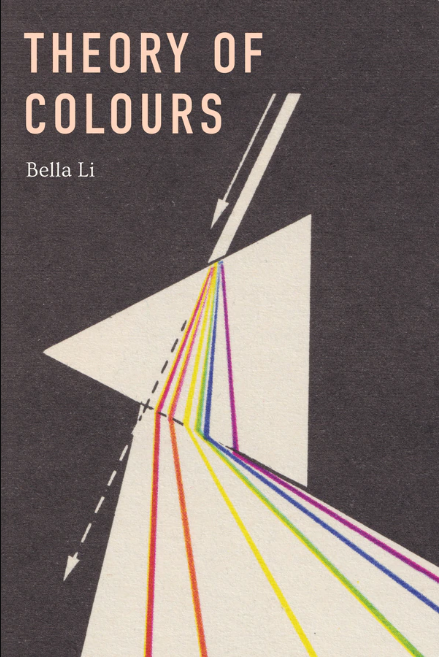
Rory Green Reviews Theory of Colours by Bella Li

Theory of Colours by Bella Li
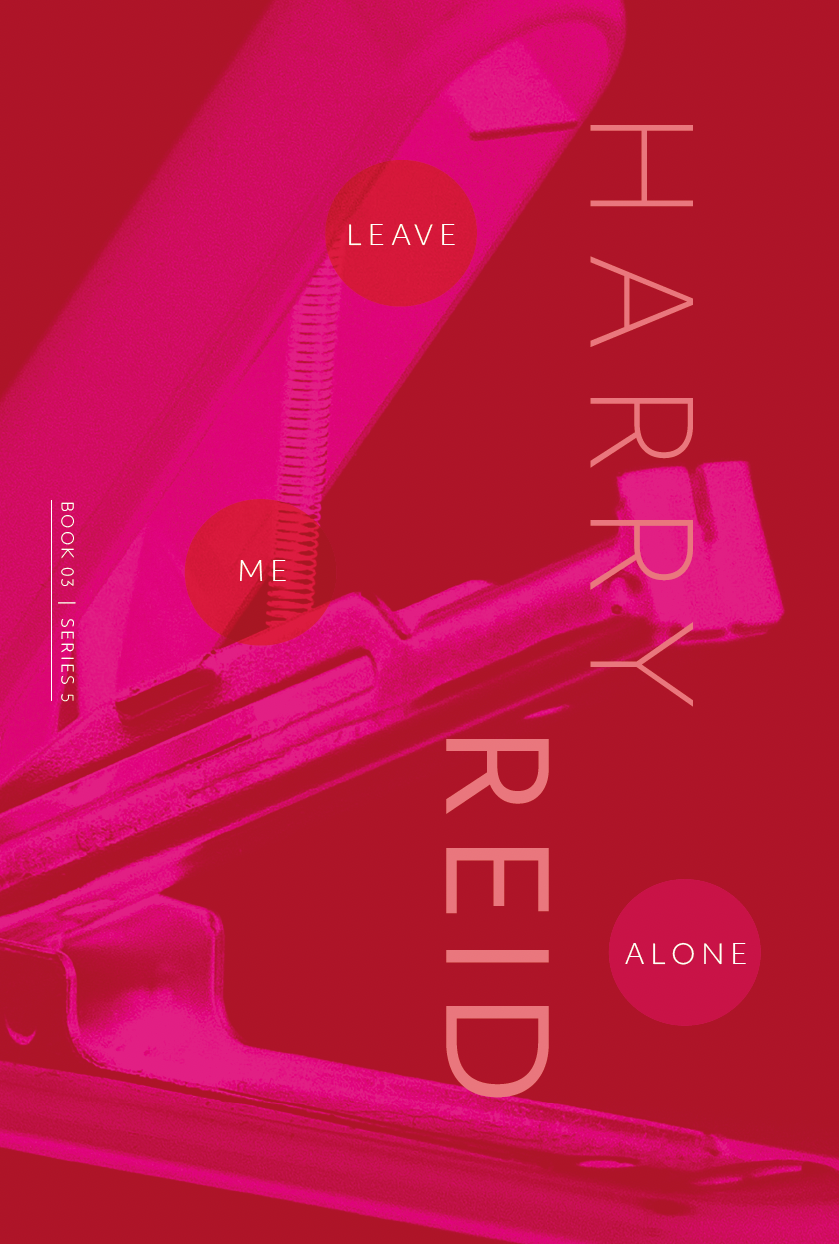

Vagabond Press, 2021


Bella Li’s hybrid poetics of text and image are instantly recognisable. Her third collection Theory of Colours follows on structurally and stylistically from her well-received earlier works: Argosy (2017, Vagabond Books) and Lost Lake (2018, Vagabond Books). Here, as with her previous collections, alchemical concoctions of form and genre blend source materials into sequences with a commitment to the surreal and uncanny. Theory of Colours extends this eclectic approach into what is arguably the most thematically cohesive collection Li has published thus far, delicately threading abstraction and narrative immersion. It is a meticulous book-object, with her attention to detail extending even to the design of the cover and internal typesetting.

The collection’s title is borrowed from poet and polymath Johann Wolfgang von Goethe’s 1810 treatise. Goethe’s Theory of Colours is a renowned historical oddity: part challenge of Isaac Newton’s physical theory of light and colour, part catalogue of colour experiments, and part philosophical reflection on the experience of colour. Goethe’s ‘theory’ is less scientific and more perceptual – his colour wheel contains a subsection for allegorical, symbolical, and mystical applications of colour. In contrast to the Newtonian view of colour as a subset of white light, Goethe argues that colour is the result of interactions between dark and light, and that ‘colour itself is a degree of darkness’.

Just as Goethe sees colour as emergent from the mixing of light and dark, Li’s readers find meaning and appreciation in the recomposition of contrasting elements and forms. Absence, and what we piece together in its stead, runs as an underlying theme across the book’s three sections. In the first and titular section, Li relates Goethe’s perceptual colour theory to photography and ghost stories. ‘Coloured Objects’, the entirely visual opening poem, consists of nine image collages in sequence. Each image juxtaposes colour theory diagrams and block colour swatches with black and white photos of drawn from a historical overview of New Zealand photography: sweeping natural vistas and portraits of well-dressed people sitting for the emerging technology are subsumed by the schematics of colour, obscuring faces and bodies and sometimes whole landscapes. One double-fold shows men in suits pose for a group portrait, their faces almost entirely obscured by coloured index tabs. In a later spread, women in light full-length dresses stand in a field of daisies, their bodies all but obliterated by a triptych diagram visualising the phenomena of refraction, where light through a prism splits into its composite colour frequencies.

In this quietly striking poem Li deploys several inversions that grapple with absence. Most prominent is the striking contrast between the black and white photographs and the bright yet constrained colour palette of the interpolated images – the subjects drained of colour by the technology of the early camera are refracted back into colour, but illegibly so. The title too suggests an inversion of the ‘subject’ nominally linked to the portraiture style dominant in the late 1800s; in this visual bricolage they are now objects, mere embodiments of colour phenomena in a scientific positivist lens.

Considering the Aotearoan context of the source images, a colonial spectre pervades this inversion. The early history of photography is interwoven with that of the racial sciences that pervaded the colonial empires of Europe in the late 19th and early 20th centuries. As advances in physiology challenged the reliability of human visual perception, photographs were purported to depict an empirical truth that was frequently used to justify notions of racial superiority and the wider colonial apparatus. When ethnic or Indigenous minorities were represented on film, it was typically either as evidence for racial science purposes or as an idealised exotic figure to export back to the white motherland. This exclusion has been continually baked into the technology of photography itself, from the ‘Shirley card’ swatch of a white woman which was for decades the sole measurement for colour photo processing to the computer vision algorithms which misidentify non-white faces due to their omission from data sets used to train these algorithms. Placed in this context, ‘Coloured Objects’ emphasises photography as a vehicle for the erasure of Indigenous culture by forming an erasure of the idyllic colonial vision itself. The well-to-do European subjects of this poem are engulfed in colour theory, transformed into objects of pseudoscientific obsession. This anticolonial reading is no doubt shaped by Li’s renowned poem ‘Pérouse, ou, Une semaine de disparitions’ in her first collection Argosy, which Aden Rolfe suggested ‘can be read as a kind of Pacific revenge against Europe, the natural world reclaiming the civilised, the colony subsuming the coloniser’.

Posted in BOOK REVIEWS | Tagged ,

Introduction to Harry Reid’s Leave Me Alone

BUY YOUR COPY HERE

In Harry Reid’s Leave Me Alone, we enter a nondescript door down a laneway, casually apply the secret knock, and the door slides open – just enough for us to squeeze through sideways before it shuts again. This is not the door to the reception, or to the the main office; it’s the door to the sly-grog palace of language inside our minds. It’s the only way to remove the taste of the weasel words and organisational knots the day’s labours gather. You can get a straight-up glass of viscous word-gin that you could stand a spoon up in. No ice.

To undertake poetry in and of the office is to enter into a pact: you will navigate and handle its materials to their maximal effect in diametric opposition to those materials themselves. That opposition, and the degree to which it’s cranked, is up to the poet.

The device deployed for Reid’s operation is poetic voice and it features as a set of pulleys throughout this book. The intricate set-up has the ‘protagonist’ gesturing towards the everyday layers of the workplace, while showing us how this particular duck navigates its surface and paddles below with bewildered fury. There is little choice (in a dearth of twenty-first century patrons) but also because it is a glorious-appalling game entered into once the ‘contract’ is signed:

what if prerogative turned outwards, as a verb?
what if a problem shared became mine,
entirely?
I make my own hours only
to run off with them,
listening to Luther Vandross in the museum
& still in the ‘fake it’ stage of career construction

This is the core: the poems unfold as a manual of tart and wily response to dire late capitalism, creating a suspended, constantly deferred ending. I need you for now – says the poem’s subject to the office, to its work – but I understand all the terms of this deal.

Reid has concocted, via the gambolling poetic voice, a portrait of routines and musings (some as thought bubbles, some conversational: ‘Ashlee! / please don’t go to New York!’) affectionately, and perhaps faithfully, reproduced so that they may be seen in full uncanniness. All of the office’s materials – its customs, its dialects, its equipment, the roles of its people – are flipped, and, as with a Jeff Koons super-scaled sculpture of the familiar, are made to ask: did you know that annual report contents really look like this? Now that you can see the belly, do you see what’s going on?

Corporate language has always been ripe for the plucking, but poetry’s job is to do something more than pluck. And poets must do more than whip out lunch poems – though O’Hara is a welcome presence through these automatic doors. Poetry of the office must crank the tension and keep true to the pact, squeeze every bit of delight from the ridiculous and permanent present, and keep a little juice over for after-hours, while that term is still remembered.

It is my pleasure to invite you into this nexus of art, precarity, skewering and sincerity. Welcome to the ‘heritage-listed foyer’ – they’ve ordered you a workstation, and your induction starts now.

Posted in INTRODUCTIONS | Tagged , ,

50% EOFY Sale

Uni? Library? College? Reader? Need to shrewdly spend the rest of your 2021-22 budget on #poetry?

Yes, yes you do.

Get 50% off your whole order of Cordite Books titles (as supplies last, and with one copy per title).

Posted in GUNCOTTON | Tagged

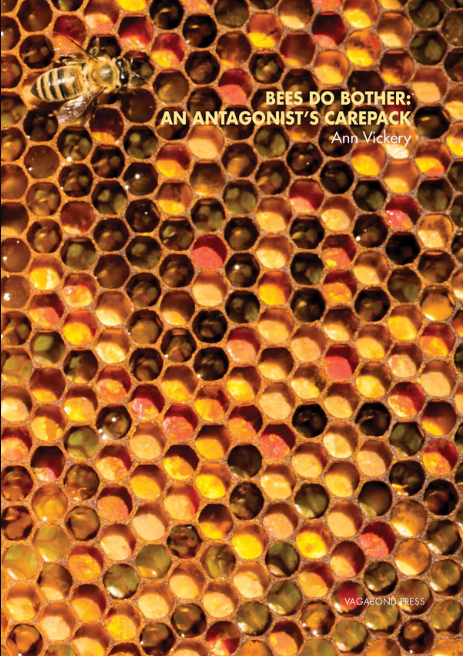
Alexis Late Reviews Bees Do Bother: An Antagonist’s Care Pack by Ann Vickery

Bees Do Bother: An Antagonist’s Care Pack by Ann Vickery
Vagabond Press, 2021


In ‘Wintering’, the closing poem from her posthumous collection Ariel, and the last in her quintuple sequence about bees, Sylvia Plath writes: ‘will the hive survive, will the gladiolas/Succeed in banking their fires/To enter another year?’ At the time of editing, Plath was enduring one of the coldest English winters on record, one so cold that the Thames froze over. There were daily power cuts, her children were ill with the flu, and her phone was yet to be connected. All of these factors would have exacerbated the depression she was hoping to overcome, but despite the tragedy, much of Plath’s work celebrates renewal. This is especially true of the bee poems. In ‘Wintering’, she notes the hive’s resilience: ‘The bees are so slow I hardly know them, filing like soldiers/to the syrup tin … It is Tate and Lyle they live on, instead of flowers/They take it. The cold sets in.’ The bees become a source of comfort, a reminder, and the poem ends with the hope for a new season (‘the bees are flying/ they taste the Spring’). ‘Wintering’ may be a paean to the strength of beings enduring hardship, but it is also part of a long line of exquisite writing about bees, from ancient mythologies through to the recent addition of Ann Vickery’s latest collection, Bees Do Bother: An Antagonist’s Care Pack (Vagabond Press, 2021).

In forty-eight multifaceted poems that weave together various feminist, eco-critical and postmodernist observations, Vickery explores this history of human relationships with bees, among other cultural topics, while also acknowledging their endangerment due to human activity. Referred to as Colony Collapse Disorder, the mass disappearance and demise of bee colonies worldwide has become an ongoing crisis since first discovered in 2007. However, instead of honing in on the literal disaster, Vickery examines how and why bees have mattered to us. By taking this slant angle, a la Emily Dickinson, whose own poetry is referenced throughout, she emphasises the wide-spanning tragedy the loss of bees would entail, not only because of their crucial role in pollination, but also, if that fails to move you, because of their place in our cultural history.

Leonardo Da Vinci observes in the collection’s epigraph that ‘the bee gathers its materials from the flowers of the garden … transforms and digests it by a power of its own.’ Humans, on the other hand, often take raw materials and transform them into something poisonous; consequently, we are the failed alchemists. The ongoing tragedy is that the solutions do exist, but are often overridden for profit, a state of cognitive dissonance that Vickery often touches upon. In ‘Diminishing returns?’, which incorporates found lines from Emily Dickinson’s bee poems within the economic context of the title, this unchecked capitalism becomes a colony collapse disorder of its own.

The poem opens with a mash-up of two Dickinson poems that become a descriptor for social media (‘fame is a bee that sings on tracks of plush’), as the poet leads us into a feminist commentary on Instagram, which is envisioned as a hive (‘each hexagonal space of digital wonderland’). Guy Debord’s notion of the Society of the Spectacle as a symptom of late capitalism comes to mind here. Vickery calls for women in particular to ‘abandon the ‘algorithm of killing looks’. She urges influencers to acknowledge and convey ‘the battle space’ of climate change. In her poem ‘Prairie’, Dickinson refers to ‘reverie’, to a looking inwards, a projecting of bees where there are none; Vickery points out that instead of this much-needed ‘reverie’, we are lost in ‘revelry’, amid a currency of images diminished by saturation. The word ‘revelry’ is repeated until it transforms into ‘revery’, suggesting an alchemic change from superficial and often self-centred entertainment to a collective mindfulness that is at once both meditative and active.

The meditative here also includes reflecting upon the absurd, which so often leads to poetic insight. Vickery examines this in ‘Interface’, which pivots on a premise that sounds almost impossible: in 2019, it was discovered that a Taiwanese woman had four bees living off the tears in her left eye, astounding doctors and scientists worldwide. Vickery links this modern phenomenon with the Greek myth of Niobe, who unfortunately made the mistake of boasting about her fourteen children in relation to the goddess Leto’s two; consequently, Leto had the children murdered. Vickery connects Niobe’s grief with that of the protagonist’s, who had been visiting the grave of a loved one when the ‘sweat bees’ (so-named for their attraction to human sweat and tears) flew into her eye, causing it to swell shut: ‘was it the sting/of salt that left her eye so swollen with grief?’. The inflamed eye becomes the embodiment of sorrow, without which the bees would not have been drawn to her eye. The woman’s grief sustains the bees (‘sustained by Niobe’s tears, the bees secured their empire’), but there is a contemporary twist: the bees are ‘livestreaming’, as they actively drink through the camera of her eye. Miraculously, the story ends happily, as both the bees and the woman’s eyesight were saved by ‘straitened resilience/ to bear pain’s grit’, the implication perhaps being that much could be saved in the long-term, including the bees and ourselves, if we could just endure the temporary pains incurred by change.

Posted in BOOK REVIEWS | Tagged ,

the strangler fig

but upon whose faces
does the shadowed row of half-moons fall?
justly, the doorway beckons
with care exaggerated;
it issues an invitation: come,
provide these offerings
remember what you were like as a child
crossing this bridge, dropping bruised petals and coins
to guide them to their new homes

what use is beauty when so many are dying?

say, of your leaving:
a screech, tiny and hinged on rusted metal,
and a hook upon my waking without sight
where night is safest; in darkness
red house shrines calm us (there are tiny offerings)
but what do we know of sacrifice except
leaving and death, and asking without giving

yes, loss visits
we anticipate it all the time
in whose honour do we grieve, with whose permission?
I see nothing now, my mind has left
my body disappearing, look,
look how the zephyrs gently brush me aside
then gaily blow, then soaring—
whose counting do I hear, ticking
whose outside world are we in—surely not mine
ribcage happily broken then pulled apart
the juicy delicious bits primed
to be masticated
take me in, and in being consumed, digested,
            excreted:
worse than dirt. no nourishment.

since then, I’ve written your death on a piece of paper—I’ve always seen clearly, you know; I’ve even tried to slow down the process, to buy you time: the whole tedium of papermaking, mixing ink, controlling how the black seeps into the hair of the brush, then sliding down, and then, cutting paper dolls into images of you to tell your ghosts: he is not so interesting after all; and having stooped so low, me, reduced to begging for another’s mercy for your sake (as if you are worth the price) in a place where the windows are tinted grey and heat-resistant; below them, marsh and sand condensed like tiny winged creatures crushed in my hand. waste.

eat them, I say, eat these little corpses, that exciting taste of imminent, irrevocable decay, of swirling terror that wakes your palatal taste buds, just a little—and you think you want more?

                                                                                                                                                no!

waste begets waste, worse than microbes
scraped from under one’s toenail while listening
for the house bell, and inside the structure, what we’ve done flickers
there, then gone, and there again
fireflies—at first many, now one,
she eats the guts of children, relishes
the fatty linings of intestines, then
flying away, she rids herself
what remains when our hope is scattered,
no longer floating in water, but strewn
here and there, over the bodies of our ancestors
(encroaching on the lands of angry house-dwelling spirits)
left under the strangler fig; while parasitic, its shade
shields them from the sun, later to be cut down,
and, when unprotected, their eyes will open,
bright with laughter
saying, we love you and we own you, but know this:
you’re worth little more than a mayfly,
not worth the collecting, the pinning, the use
of a coveted, carefully carved frame

our sky-covered memories, bloodied
as if to say, love, speak clearly, and
see the sacrifices that hang in a row
right above our heads—
those who have come before us,
peeled away, and knowing what we know
of what has been stripped from us
Posted in 105: NO THEME 11 | Tagged

2 Nhã Thuyên Translations by Kaitlin Rees


Image courtesy of photo by Đồng Thảo.

don’t hide the madness

this room’s determined to not let in anyone more, someone rumbles, so should i just leave now then, is there still time, sham, someone grumbles, so should i leave and wait for someone to invite me back in then, running that mouth, someone mutters, so should i just stick my feet right to this spot then, a shadow doesn’t just up and vanish, someone sulks, i’m not wakeful enough for thoughts to hatch, to turn inward the head to turn outward the head, to glance up to a ceiling, to look down at some feet, to furrow a brow at the door, to pin eyes to wall, to stand still, sit tight, squat, flat, stretch, lean, against a chair’s back, huddled into a corner, my throat sprouts hair, my throat snags fishbone, someone’s with me in the room, i’m in the room with some other, some other who doesn’t welcome some other one, some other who particularly doesn’t welcome me, so what more am i waiting for, a hot tea, a potent wine, a blank word to erase me clean or an equivocal grammar with the touch of a hand keeps me fluttering for life, i thrust myself toward wall, should keep a determined distance from our delusions, wall says, but in thrusting what’s left to fear of windstorms, i counter, i thrust again closer, don’t face the biting wind, don’t waste an entire life bewildered beside someone you’re unable to talk with unable to talk to the end with unable to talk without ending with, wall advises, someone pours, someone is lifting the cup, i invite wall to a little something, keep me away from light’s infection, wind’s contagion, and fragrance’s bondage, i am darkness-philic, silence-preferring, barrier-constructing, perfume-blocking and all expressive words-intercepting, wall states solemnly, i submit to muteness, my tongue cannot indifferently break open a word, i submit to muteness, lips part in a soul’s blush, my tongue doesn’t know wisdom by way of reason, i submit to muteness, my tongue vines crawling up crawling down, i submit to muteness, my tongue cannot be a wave slapping the face, i submit to muteness, wall suddenly looks at me, looks straight into me, i flush, keep speaking, keep revealing that blushing soul, keep opening words rapturous and naive, keep twisting vines and tangling intestines, keep roaming near and far upstream and down, just go on and howl out one slap in the face, wall reassures me, suddenly my eyes on wall’s face, my hair spills onto wall’s forehead, my hand fondles wall, my leg wraps around wall, my body slips into wall, my shadow melts into wall’s shadow, i flush, i tingle, i stop thinking with absurdity, i blabber babble, my tongue murmurs burbles, my tongue grumbles, my tongue guts tangle and twist, my tongue purrs earthwardly, my tongue reverberates skywardly, my tongue trills birdily, my tongue bobs butterflyingly, is tongue a butterfly or is a butterfly my tongue, my tongue stumbles worldly, my tongue shrouds underworldly, my tongue soars heavenly, my tongue surrounds me in holy traps and earthly nets, perhaps the only way left for me is to push the head in, wrap the self up, coiled tightly, trapped, a snarled knot, i coo, dear wall, i love you, i endure you, i accept you, i response you, i need to have you, i die from of you, i live from of you, like the smell of sweat, the smell of wet moss, the smell of stagnant wind, the smell of curdled darkness, the smell of strangulated fever, as if wall had just expelled a cold breath, as if wall had just been set ablaze, someone pours something, i am sipping something, i invite wall to a little something, keep me from light’s infection, wind’s contagion, and fragrance’s bondage, i am darkness-philic, silence-preferring, barrier-constructing, perfume-blocking and all expressive words-intercepting, don’t let any corner of mouth any slice of tongue any piece of tooth cut my cords and leave me swaying insane, dear wall, i love you, i endure you, i accept you, i response you, i die from of you, i die from of no you, i die beside you, i live beside you, dear wall, i coo, try to raise my volume, dear wall, i love you, i endure you, i accept you, i response you, i die from of you, i die from of no you, i die beside you, i live beside you, dear wall, grant me a crack in and out the antennae of an ant, wall, grant me a slab of broken limestone a stick of bamboo to scribble with, wall, grant me a block of brick the cat can scratch, wall, grant me a morsel of green moss, wall, grant me a scoop of sunshine, wall, grant me a wind hole that passes a fragrance, wall, stop growing any taller, stop growing ever-thicker, wall, my tongue has left only one desperate plea which no one comprehends, please wall, wall


đừng giấu cơn điên

căn phòng này đã nhất định không để ai vào nữa, ai đó rì rầm, vậy giờ tôi nên ra chăng, kịp chăng, vờ vĩnh, ai đó làu bàu, vậy tôi cứ ra và đợi ai đó mời tôi vào lại chăng, nhiều chuyện, ai đó quạu quọ, vậy tôi cứ dính chân chỗ này được chăng, cũng chẳng bỗng dưng mất cả bóng được, ai đó lầm lì, tôi chẳng đủ tỉnh mà nghĩ ngợi đặt bày, quay đầu vào hay quay đầu ra, ngó lên trần, nhìn xuống chân, nheo mày phía cửa, ghim mắt trên tường, đứng yên, ngồi lặng, xổm, bệt, duỗi, ngả, dựa lưng ghế, rúc xó nhà, họng tôi mọc tóc, họng tôi mắc xương, ai đang cùng phòng tôi, tôi đang cùng phòng một ai khác, một ai không chào đón ai khác nữa, một ai càng không chào đón tôi, tôi đợi gì nữa, một trà nóng, một rượu nồng, một lời trắng tẩy sạch tôi hay một ngữ pháp nhập nhằng kèm cú chạm tay giữ tôi phấp phỏng níu mạng, tôi xáp vào tường, nhất định phải giãn cách với điều ta vọng tưởng, tường nói, nhưng đã xáp lại còn e gì gió bão, tôi cự, tôi xáp lại thêm, đừng gió táp, đừng mất cả đời chỉ để hoang mang cạnh một ai mình không sao nói cùng không sao nói cho cùng không sao nói cho không cùng, tường nhắc, ai đó rót, ai đó đang nhấc chén, tôi mời tường một thứ gì, đừng để tôi lây sáng, nhiễm gió và lụy thơm, tôi đang ưa tối, thích im, dựng vách, ngăn hương và chắn tất thảy biểu cảm lời, tường nghiêm giọng, tôi đành câm, tiếng tôi cất lời đã khó lạnh lùng, tôi đành câm, mở môi đã thẹn, tiếng tôi không biết khôn qua lẽ, tôi đành câm, tiếng tôi dây leo bò lên bò xuống, tôi đành câm, tiếng tôi không thể sóng đánh vỗ mặt, tôi đành câm, tường bỗng nhìn tôi, nhìn thẳng, tôi đỏ lựng, cứ nói, cứ bày nỗi thẹn, cứ mở lời dại ngây, cứ dây cà dây muống gan ruột lòng thòng, cứ xa gần xuôi ngược, cứ gào lên vỗ mặt một lần, tường trấn an tôi, bỗng mắt tôi đã mặt tường, tóc tôi xòa bờ trán tường, tay tôi lần sờ tường, chân tôi quặp tường, thân tôi lẩn tường, bóng tôi chen bóng tường, tôi đỏ lựng, tôi ngứa ran, tôi thôi nghĩ về lố bịch, tôi mấp máy, tiếng tôi mập mà mập mị, tiếng tôi làm ràm, tiếng tôi tơ vò ruột rối, tiếng tôi âm âm đất, tiếng tôi u u trời, tiếng tôi lách chách chim, tiếng tôi bồng bềnh bướm, tiếng tôi là bướm hay bướm là tiếng tôi, tiếng tôi chập chũng trần gian, tiếng tôi mịt mùng địa phủ, tiếng tôi chấp chới cao xanh, tiếng tôi bủa vây tôi thiên la địa võng, có thể tôi chỉ còn cách đâm đầu vào, quấn mình, cuộn thít, mắc kẹt, rối một mớ, tôi rủ rỉ, này tường, tôi yêu người, tôi thương người, tôi ưng người, tôi phản hồi người, tôi cần có người, tôi chết vì người, tôi sống vì người, như là mùi mồ hôi, mùi rêu ẩm, mùi gió quẩn, mùi bóng tối quánh sệt, mùi cơn sốt ngạt, như là tường vừa toát hơi lạnh, tường vừa bắt lửa, ai đó rót gì, tôi đang nhấp một thứ gì, tôi mời tường một thứ gì, đừng để tôi lây sáng, nhiễm gió và lụy thơm, tôi đang ưa tối, thích im, dựng vách, ngăn hương và chắn tất thảy biểu cảm lời, đừng để một dẻo miệng nào một thửa lưỡi nào một miểng răng nào làm tôi thất thanh điên đảo, này tường, tôi yêu người, tôi thương người, tôi ưng người, tôi phản hồi người, tôi chết vì người, tôi chết vì không người, tôi chết bên người, tôi sống bên người, này tường, tôi rủ rỉ, ráng nâng giọng, này tường, tôi yêu người, tôi thương người, tôi ưng người, tôi phản hồi người, tôi chết vì người, tôi chết vì không người, tôi chết bên người, tôi sống bên người, này tường, cho tôi một khe nứt râu kiến thụt thò, tường, cho tôi một mảng vôi vỡ que tre nguệch chữ, tường, cho tôi một ô gạch mèo cào, tường, cho tôi một thẻo rêu xanh, tường, cho tôi một vốc nắng, tường, cho tôi một lỗ gió đưa thơm, tường, thôi đừng cao thêm, thôi đừng dầy lên mãi thế, tường, tiếng tôi chỉ còn một lời khẩn cầu không ai hiểu, này tường, tường,

Posted in TRANSLATIONS | Tagged ,

‘Thinking is not a problem’: Alice Allan Interviews Antonia Pont

Antonia Pont’s debut collection of poetry, You Will Not Know in Advance What You’ll Feel came out with the Rabbit Poets Series at the end of 2019. I went to her launch, where Antonia read in response to poems that her friends had written in reply to poems in her book. Antonia is one of those people writing poetry in Australia whom you may not have heard of – even though she’s been working at this craft for many years. Antonia is not only a poet, but an essayist, an educator of writing and literature at Deakin University, and a yoga teacher. Antonia founded her own yoga school in 2009 and is one of those people who has a very particular, very special, perspective on life. Antonia says things like: ‘you only want to lose your “self” once you’ve got one’. In this interview, Antonia speaks about the vicious momentum of trying. She also says things like: ‘writing needs a body that functions’. In describing how she spent time in the 2020 lockdowns, Antonia mentions steadiness laziness, pleasure, and kindness.

Alice Allan: I’d like to launch straight into talking about your wonderful book. My first question is around the title. The book is called: You Will Not Know in Advance What You’ll Feel, which on the surface sounds like an obvious statement but, as I was driving over here, I was thinking that there’s actually a lot in that. I’m wondering if you would like to unpack how you landed on the title and what significance the phrase has to you.

Antonia Pont: I know exactly where I landed on the title. It was in the backyard of a suburban house in Munich, where my friend, Bettina Thiel, who knew I was getting on a plane within 10 hours, had said: ‘I’ll make food; you just lie on the deck chair and relax’. It was a very kind thing. Sometimes there’re those magical moments when someone tells you to stay put, says: ‘rest there, in this nice place with a nice sky and a vegetable garden to look at’. Of course, if you’re a poet relaxing, it’s also: ‘wow, words are coming to me. I’d better write something down’. It doesn’t feel like work; it’s not like you’re working. So, that’s where the phrase came from. I was at a difficult point with my feelings, torn in a certain situation and – in the suffering of that – I was using this phrase to alleviate that suffering. Saying to myself: ‘you’re quite sure the feelings will be terrible, but you don’t know that they will be terrible. So maybe just try to imagine that you don’t know, rather than fixating on how certain and all-knowing you are that they will be terrible’. It was a comforting mantra that I was using to steady myself as I transitioned from Europe back to Australia.

Now, people keep saying the title of my book back at me when I’m in a conversation and I make some imprecise statement: ‘yes, but Antonia, you don’t know in advance how you’ll feel’.

AA: But sometimes maybe you just want to have the whinge.

AP: Yes!

In my intellectual work – or whatever the right word for that is – I’m very interested in time, and in notions of futurity that, in the last years, have gone via a certain reading of Nietzsche and other writers, via the eternal return and Deleuzian stuff about an open future. And, I guess, I’ve come to see that pessimism is very imprecise.

AA: That’s also very cool title.

AP: Yes. Pessimism is very imprecise.

AA: Back to the book, Lisa Gorton wrote some beautiful words. One of the things she says is that, like Woolf’s novel, The Waves, this work ‘creates the silence out of which it speaks’. I was wondering what you think about that comparison. Like, that’s a big comparison – to be compared to Virginia Woolf.

AP: Lisa’s very kind, that’s what I’ll say. She’s very kind. She knows how to do a good book blurb. I was very touched because we actually hadn’t discussed my thematics or original intentions around the book very much at all. So, I was both astonished (and also not, given it’s Lisa) that her reading was so astute. It was so harmonious with the work, as well as extending and clarifying my own efforts in the work. She reflected something back, and I thought: ‘I feel totally comfortable with that description’. And I wouldn’t have been able to say it myself [about the emphasis on] silence and time … but it is true; it’s what I obsess about the most. The confirmation that the poetry itself would deliver that [preoccupation] to the reader even though I’m not trying to write a poem about time or silence, and that Lisa took that from my writing, was very interesting. I guess it shows what a close reader of poetry she is. I think it was impressive.

AA: You mentioned the thematics, which is kind of where I want to go next. There are a few I wanted to delve into. I’ll start with this one: eroticism. As I said, after I’d read it and when I emailed you about the book, it’s a very sexy book. It is comfortable in that eroticism and joyful, and there’s even humour in that. I’m thinking of the poem, ‘Octofurcation’, which I think is very sexy and also quite funny; I take it as funny. Do you think that eroticism is off limits to poets?

AP: I think I’ve been a crusader for women’s having desire from a disturbingly young age, probably since conversations with my mother at 11, saying: ‘I don’t understand why sex is different from conversation. You know, some people you have conversations with, and other people you have sex with. Why is it different?’ And, of course, my mother was probably horrified, and immediately concerned about her slutty daughter – who was speaking purely from a theoretical basis at that tender age. She was like: ‘yeah, but it is different, darling.’ I guess you then spend a lifetime working out how it’s different and why – and making tactical errors along the way or clarifying and nuancing that area in your life, that aspect of being a person.

I’m a body practitioner – have done that from a young age – and if you engage seriously with the body, at some point you have to engage with one’s failures to respect the body and also with our learnt hating of the body as a kind of micro, daily practice. For me, as I got into feminism in my twenties, early twenties – you know, Melbourne University and the Student Union there – I ran this [earnest] body-image feminist group, where we might go away on weekends and do life drawing, and [eat and] … whatever. We were trying out ways of self-care, doing clumsy things. Because I’d acknowledged that, basically, feminists had to say: ‘yeah, I’m not my buttocks’, to quote Kaz Cook, a great statement. But I also saw that women could then feel doubly guilty, [guilty about their bodies plus guilty] ‘cause they did still want a different relation with their body. The body is this fraught site of stuff. I think for me there’s something that connects deciding to respect the body with a kind of eroticism that doesn’t feed off the abject.

So, some years ago, I began a set of poems that is partially in the book. (There’re other, more appalling ones that Jess Wilkinson at Rabbit and I decided weren’t gonna be in there.) But I really just wanted to try to write erotic poems from a woman’s perspective that were neither talking about ‘how great it is that you desire me’ (that classic thing of the woman’s position as desiring the desire of the man, if it’s a het-scene), nor celebrating abjection, which is a [common] way to go, but it’s not my style or politics. It was – like you mentioned – about a kind of joy and playfulness. So, I asked myself: can I write a sexy poem? Because sexy poems are often embarrassing.

Posted in INTERVIEWS | Tagged ,

6 Aya Mansour Translations by Haider Catan and Tim Heffernan

The words of mothers

They didn’t allow me to collect the remaining perfume of my child, to arrange and hold it in my nose. On his return from the battlefield, he was impatient, and as usual he forgot many things: this time his right hand, and his soul as well, as he was satisfied with a bullet in his lung’s pocket, with a torn bag of second hand death. I — with no hope — begged them, but they took him to the cemetery without letting me see him, so many months of useless crying. I suggested they might pick my eyes, and feed them to the mouth of the grave, so the eyes could watch my son. There, if he needed water my eyes would shed tears. I hope that his hand grows back, or that my crying could wet his drying heart. I was surprised when I found the windows of the grave open, while the place was empty. The sounds of shelling and bullets were heard from a hole leading to the battlefield.

أحاديث الامهات

لم يسمحوا لي بلملمة ما تبقى من روائح صغيري، لترتيبها وضمها في خزانات أنفي. بعودته من الجبهة، كان مستعجلا، و ناسيا كعادته: العديد من الاشياء، هذه المرة نسي يده اليمنى، وروحه كذلك، كان مكتفيا برصاصة في جيب رئته مع كيس ممزق لموت مستعجل؛ لكني – ودون نتيجة – توسلتهم، و ذهبوا به الى متحف المقبرة دون أن اراه، و لعدة اشهر، من التفريط بالبكاء بلا فائدة؛ اقترحت أن يقطفوا عيني، و يطعموها لفم القبر، عسى أن تطمئن على ابني، هناك، أذا ما كان بحاجة لسقيه بالنحيب. عسى أن تنمو يده او يبلل جفاف قلبه بكائي، لكنني تفاجأت و انا اجد نوافذ القبر مفتوحة. بينما المكان خال، كانت اصوات القصف والرصاص تبنعث من ثقب يؤدي الى الجبهة.

Posted in TRANSLATIONS | Tagged , ,