Whiteread Walk (2)

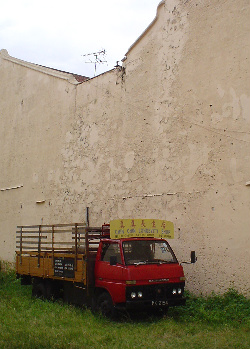
Monumental the lacunae between illbiquitous promenaders down to the Square past the Open 24 Hours as social forms of grieving we are prohibited this is the remix the new glitch has been recalled melancholy of luscious Pictober the fall of the phenomenon into the iris back with another one of those Return of the Flaneur as hardcore Autumnophage echolocation always places you in a different country the cure is beats per minute bad year in Brooklyn Bombs Over Baghdad the negative needs no introduction and/or here we go!

Posted in 29: WHITE HOMES | Tagged

Whiteread Walk (1)

Vertigo Europa austere museum sex hotel record shop Odeon neon breath isolations in the vale of lang climbing the Whispering Gallery doing the Strand glad girls paper wedding painted retina crosses a small continent between two bars colored rays of visible things in the Spring in the superlative Hotel Europa Drag the light of the past tense falls from an iron hotel railing a long skirt drenched in lassitude all Polaroids are out of focus felt anagogic the taxi came thwack we drove into a book

Posted in 29: WHITE HOMES | Tagged

Selections from The Urge to Believe Is Stronger than Belief Itself

Note:

Cancer is not invasive like a virus or bacteria, an injury or trauma. Cancer is a disease of the self. The body's own cells assume a guise & stage a quiet coup.

Breast cells, on average, take 100 days to double. One billion cells form a tumor 1 cm in diameter. Which means most cancers have been around for 6 to 10 years prior to diagnosis.

Post-mastectomy options include reconstruction (muscular-abdominal or thoracic; fatty tissue; saline/silicone implant-including or not including cadaver skin), prosthesis (cotton, plastic, rubber, or gel), no action.


Note:

Seven to ten days following surgery, patients may feel an overwhelming sensation that their body has not changed. This may result in over-activity, etc., which has been known to cause exhilaration & extreme weakness.


Plaster cast. Nipple round as the bulb of a lemon, flat, shy, leaning into the fine curvature of shadow it casts for itself, by itself. It just hangs there, matted in shadowbox, semi-sphere circumnavigated by lines & subsequent angles, lines & subsequent angles again. Whether Duchamp meant his title to be ironic is debatable.

'Study for 'Prière de toucher [Please Touch]''.

Museum goers, though urged-in fact, encouraged-to touch said breast, are interrupted, mid-gesture, from doing so. Interactive art rendered immobile.

'Study for 'Prière de toucher [Please Touch]''

would be the only of his works to be placed behind glass & remain behind glass for the sake of the longevity of one plaster breast in a box.


Note:

Insurance plans may or may not offset the cost of prostheses. National law, however, requires reconstruction coverage, as surgery is assumed to once again render an individual 'whole'.

Posted in 29: WHITE HOMES | Tagged

Jessica Alice Reviews Robyn Rowland

silence-and-its-tongues.jpgSilence & its tongues by Robyn Rowland
Five Islands Press, 2006

Striving to decipher the vast desolation of silence is – as Robyn Rowland has us so emphatically experience – a 'difficult' journey, to say the least. Her latest collection of poems, Silence & its tongues, expresses this not only as a 'cold' language, but also an elusive one; varied in the boundless possibilities of voice, tone and dialect. Here Rowland provides a heart-breaking examination of all that is born dark and desperate within silence, including perspectives as a lover ('I think of your voice during love, unvowelled, guttural'), child ('how a daughter can step into the space/ her mother leaves behind her?') and mother ('My fearful clinging kept him ten months inside, leaping overgrown from the womb').

Continue reading

Posted in BOOK REVIEWS | Tagged ,

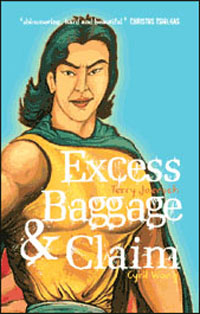
Moses Iten Reviews Paul Hardacre, Terry Jaensch and Cyril Wong

baggage.jpgLove in the place of rats by Paul Hardacre
transit lounge, 2007

Excess Baggage and Claim by Terry Jaensch and Cyril Wong
transit lounge, 2007

Although Love in the place of rats and Excess Baggage and Claim – both published by the independent Melbournian press transit lounge – arrived in the mail together, it was the disquieting title of Paul Hardacre's second poetry collection that grabbed me first. I immediately flicked to read his bio on the last page and found out that he is a prolific thirty-something publisher (managing editor of papertiger media) dividing his life between Chiang Mai and Brisbane. He has spent time (rather than having 'travelled') in Myanmar, Singapore, Pakistan, Hong Kong SAR, Indonesia, China, New Zealand, Ireland, the Netherlands, the United States, Italy, India, Cambodia, Vietnam, Laos PDR, and Malaysia.

Continue reading

Posted in BOOK REVIEWS | Tagged , , ,

Nicholas Manning Reviews Eileen Tabios

lightsang.gifThe Light Sang As It Left Your Eyes by Eileen Tabios
Marsh Hawk Press, 2007

In this new century, the writing and rewritings of the poetic self seem to be at the crux of a burgeoning genre; a genre in which the self is less a 'basis' for certain convictions about 'what poetry is' than an opening: an aperture or aporia to diverse inventions, collaborations, languages, traditions, and histories. Seeking diversity over singularity, this 'radical autobiography' seeks articulation across many forms, genres, dialects and discourses. It is polyvocal, polyvalent, trans-historical and – in contrast to an Olsonian poetics of place – increasingly trans-geographic. In its apparent anti-humanism, however, it is surreptitiously humanist. This is the self of all selves, professing its one paradoxical universal: that all universals are dead.

Continue reading

Posted in BOOK REVIEWS | Tagged ,

Heather Taylor-Johnson Reviews The Best Australian Poetry 2007

uqp.jpgThe Best Australian Poetry 2007 edited by John Tranter
University of Queensland Press, 2007

Anthologies which wrap up the year's 'best' are always greatly anticipated. We want to be reacquainted with our favourite poets, see what sort of spin they've taken on our world during the past twelve months. But of greater interest is often the introduction to new writers. We're curious if the poets who have recently found their way into small press publications have made the cut. Have they stamped their name (and the name of the more obscure journals) on literary history alongside the major players? Will they become the next Big Things? After reading this year's University of Queensland Press Best Australian Poetry anthology, my answer to both of those questions is, sadly, no.

Continue reading

Posted in BOOK REVIEWS | Tagged , ,

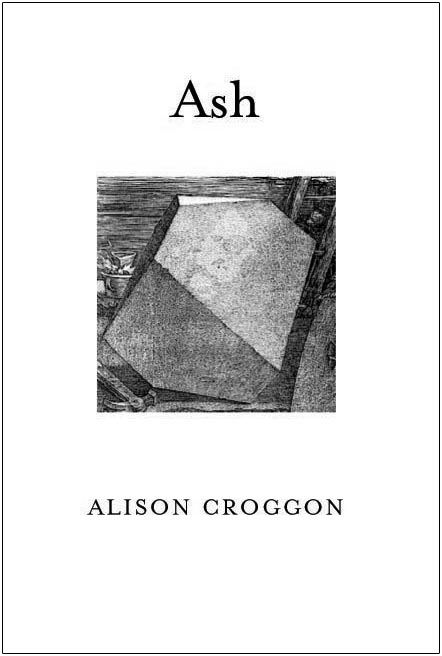
Angela Meyer Reviews Alison Croggon and Lucy Holt

ash.jpgAsh by Alison Croggon
Cusp Books, 2006

Stories of Bird by Lucy Holt
Poets Union Inc., 2005

Of the two chapbooks under review, Lucy Holt's exquisitely crafted poetry in Stories of Bird pecks at single moments, both from an intimate as well as a bird's-eye view. Her use of symbolism is focused and sensory. Hers are deep and personal poems, with some empathetic politics, that draw the reader in. Alison Croggon's chapbook Ash, on the other hand, speaks with a more despairing voice. Hers is an exploration of mood. Her poems flow together through pain and awareness. They are more all-embracing than Holt's, connecting history and broad spatiality to the personal; but fear, emptiness, darkness and blood are their prevailing themes.

Continue reading

Posted in BOOK REVIEWS | Tagged , ,

Ryan Scott Reviews David Prater and MTC Cronin

books_david_cover_sm.jpgWe Will Disappear by David Prater
papertiger media, 2007

Our Life is a Box. / Prayers Without a God by MTC Cronin
papertiger media, 2007

It would be unfair to David Prater and MTC Cronin to construct some tenuous link between their new collections for the sake of this review: each volume is stylistically unique, showcasing two skilled, albeit different, voices on the Australian poetry scene. While in Prater we have a poet for the digital age who can twist its soundscapes and textures and still retain an artistic core, in Cronin we have an author who demonstrates again her understanding of timeless themes such as pain, loss and love, and attests to their permanence.

Continue reading

Posted in BOOK REVIEWS | Tagged , ,

Gus Goswell Reviews Barry Hill

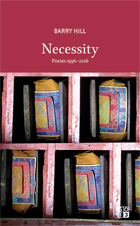
books_hill_cover.jpgNecessity: Poems 1996-2006 by Barry Hill
papertiger media, 2007

The lines below, part of the long poem 'Canto 1: Ice', go some way towards representing the tension that exists within Barry Hill's fifth collection of poetry. Written over ten years, some of the poems in Necessity: Poems 1996-2006 are political poems, some are spiritual poems, some are nature poems; many are all three. Necessity gives no easy answers and is difficult to categorise because it reads as a record of its creator's confusion, passions and ambitions. These things are never easy to codify, especially through poetry, an art form that, at its best, subverts the literal and reveals the subterranean:

Don't tell me all poetry is political
when rain is not the lake
any more than the river
the ocean, the ocean
sky. OK, Sky.
Now that's
political.

Continue reading

Posted in BOOK REVIEWS | Tagged ,

Liam Ferney Reviews John Ashbery

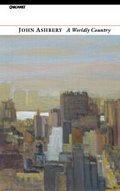
ashbery.jpgA Worldly Country by John Ashbery
Carcanet, 2007

At an athletics meet in Salamanca in 1993, Cuban high jumper Javier Sotomayor began his run up with a customary sprint that mellowed into half-a-dozen languid, bouncy strides. His best leap that afternoon was an improbable 2.45 metres bettering his own world record for the second time in six years. After almost a decade and a half, the record remains unbroken. Sotomayor's dominance of the event saw him clear 2.40 metres more often than anybody in the history of the sport. He remains the only person to ever clear eight feet. Throughout the nineties he regularly outclassed his opponents and even won a silver medal at the Sydney Olympics, but never again would he match the giddy heights of that Spanish afternoon.

Continue reading

Posted in BOOK REVIEWS | Tagged ,

Felicity Plunkett Reviews Julian Croft and Yve Louis

croft1.jpgOcean Island by Julian Croft
John Leonard Press, 2006

The Yellow Dress by Yve Louis
Five Islands Press, 2005

Watching waves breaking on the shore, the rhythms that emerge are, of course, only part of the larger pattern of the ever-mobile natural world we seem to observe. The poems in Julian Croft's Ocean Island suggest the occluded and multifarious that lies beneath the surface, gesturing towards the tidal, and larger worlds that dwarf human concerns. They return to a paradox of simplicity emerging from complexity, and the inverse: a kind of pure clarity that emerges from the anatomy of the difficult, the contradictory, and the awkward, ugly and troubling.

Continue reading

Posted in BOOK REVIEWS | Tagged , ,

Margie Cronin: Innocence

INNOCENCE: Blamelessness. INNOCENT: Not hurtful. One free from fault. Approaching the world with an attitude unwounded and harmless. Having a vigorous and unprejudiced perception that does not expect what it will find. Being prepared not only to understand but to reunderstand.

True innocence is about being ready. It is about allowance. A poet needs to be innocent as he or she must come to existence again and again, time after time, with full attention. Attention – and therefore the poem – will be less than full when we bring bias, guilt and untruth to whatever is our attention's focus.

Innocence is not skipping with lambs nor being ignorant of what might slaughter them. It is retaining within oneself a clearness of vision which can see to the heart of things and which wants to see the 'whole' of things. Such clarity is enabled by an undistracted self, one who does not rationalize, confabulate, brag or delegate responsibility.

And the body becomes just that as the soul struggles to equal
the simple sum of subtracting a dead weight from a live one

[Jane Williams, In the wee hours]

The value of innocence is in its ability to do 'justice to being' for how can this be done if we are not innocent – if we offend, malign and damage. The proof is that it is impossible for poetry to do these harmful things. Poems should make us ignore evil. They should make us set it aside; to wilfully disregard it because it does not deserve our regard.

This is proactive and has little to do with what is usually understand as ignorance (as what is said earlier has even less to do with what is usually taken for innocence).

omara_small.jpg
Peter O'Mara, 'category distribution' (detail)

And whose poems did I choose? Courtesy of anonymity, innocently, I chose no-one's. Though I did choose some poems. And chosen for themselves and with no crime committed, there's not much point 'after the fact' linking them back to their authors.

It would be nice to think that those authors will be happier for their poems' readers than they will be for themselves.

My reading found poetry that, at the very least, wanted to be necessary and possessed a living courage. It also found poetry that at its best has the potential to develop the human word and act. Read and let the words play over and over in your mind, as we 'play' through poetry on the way to a place where we won't need art.

Now that is innocence!

Maleny, July 2007.

Posted in ESSAYS | Tagged

Michael Dransfield’s Innocent Eyes

When you think of ways to interrogate innocence, you will sooner or later come to a moral dichotomy. It can be unpackaged as either good or bad. It can oppose guilt, and by implication your innocence allows that you have done only what is good, what is moral. Or it can mean you lack experience, and are 'innocent of the ways of the world'. Both definitions work biblically and allow for the complexity of religion. But Dransfield's innocence falls into a third category. It is a constructed way of seeing.

Continue reading

Posted in ESSAYS, FEATURES | Tagged , , ,

Q&A with Ryan Paine

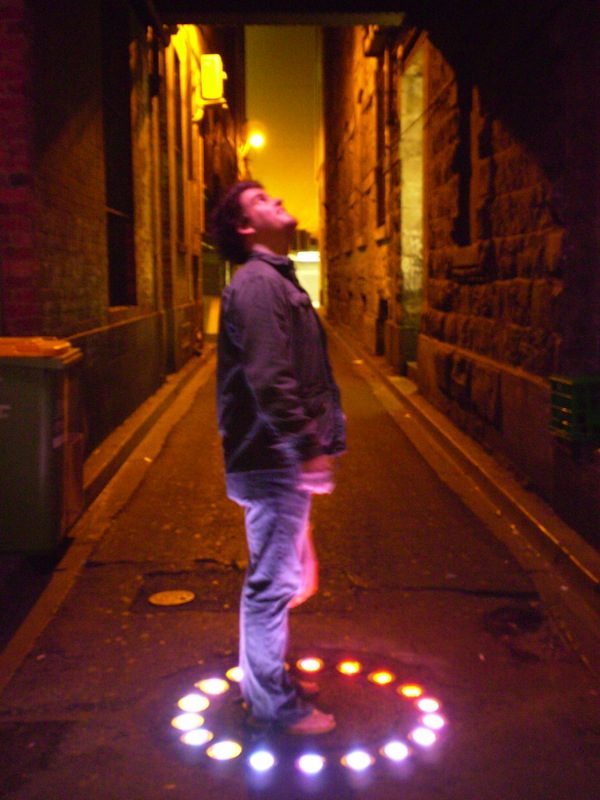
ryan_paine.jpgWe've all read those interviews where the interviewer begins by making a few remarks about his or her subject – perhaps something cliched about a 'piercing gaze' or 'bubbly persona' – as a way of easing the reader into what promises to be a puff piece or a booster article.

Often these articles function as a way of softening the general public's perceptions, or planting seeds in the reader's mind, to be sown at an unspecified later date. A full page photo of the subject, preferably situated somewhere 'in the bush', staring into space somewhat abstractedly but nevertheless determinedly, also helps.

All of which could not in any way help me to come up with a promotional photo of, let alone write an article about the new Voiceworks editor, Ryan Paine, who was not only half an hour late for our interview, but also turned up at Glenferrie Station carrying some kind of doctor's portmanteau. To top it off, a tattoo of Tolkien's initials took pride of place on his left forearm.

Clearly, a nice nature shot under a peppercorn tree with Ryan wearing an akubra was not going to work.

Voiceworks is a literary magazine written and produced by and for Australians under 25. I was lucky enough to be published within its pages about ten years ago which will give you some indication of the upper limit on estimates of my current age.

Paine, a self-described “working class boy” from Adelaide, had his first story published in Voiceworks at the age of 20 and has since navigated that rare path from aspiring writer to chief head honcho in a mere 17 months, giving you a similar indication of his age, as well as his expected tenure as Editor.

Unlike the National Young Writers Festival, where the 'young' bit refers to how old you're feeling at the time, Voiceworks (and its parent organisation, Express Media) is a little more strict in its age policy, and why not – for every publication dedicated to the under 25s, there's a dozen catering to those who may well be young at heart but, perhaps sadly, actually remember the 1980s. But enough about me.

After dropping out of university, Paine worked at a series of labouring jobs before finally landing some work experience with an Adelaide publishing company he freely admits catered to the vanity end of the market.

“It was a self-publishing house, it was fee for service type vanity publishing, so I didn't feel like I was really involved in what I wanted to get involved in. It definitely made me a bit cynical of self-publishing because of the low quality of what I was working on and I was encouraged to turn a blind eye to things.”

While this experience was not necessarily creatively rewarding, it did land him another job within the publishing industry, this time with Wakefield Press.

“I started working primarily as a typesetter and then just convinced them to give me manuscripts and thing like that and so I started editing them. They were making decisions based on judgement, rather than just a commercial basis, and that's what I was really interested in. I mean, Wakefield do fee for service as well but mostly academic stuff.”

Not that he necessarily sees self-publishing and vanity publishing as loaded or derogatory terms.

“In fact moving to Voiceworks has opened my mind to a lot of worthwhile stuff that's been self-published. There's a bunch of stuff going on that publishers aren't interested in but there's a market for it – I mean, zines are a form of self-publishing, and if that's what you're into reading and making, then go for it.”

After he had his first story – one he describes as 'based on a true story about a goitre and a fart joke on a fishing trip' – published in Voiceworks, Paine started travelling to Melbourne to attend literary events, went to the aforementioned NYWF in Newcastle then joined the editorial committee and was finally offered the job as editor and moved to Melbourne in 2006.

“It's been a pretty turbulent ride – it's happened pretty quickly. I had no idea I'd be moving to Melbourne.”

ryan_paine.jpg

When asked what he sees as Voiceworks' role or place within the field of Australian literary magazines, Paine is initially cautious and inadvertently mixes his metaphors.

“I don't think I know the landscape well enough yet but what I often feel and what I usually say is that I feel like it's an isolated island in that landscape and whatever that landscape is around it, most of us are still unaware of it.

“It's been a reaction against mainstream and established ideas – but I think it's gotten to the point now where it's being too reactionary, where it's being deliberately oppositional and disregarding other values – I'm talking more in terms of the visual aesthetic of the magazine, not so much the writing.

“I've often heard people talking about how unpleasant an experience it is to look at past issues of Voiceworks and that's been damaging to some extent and that's what's caused it to be isolated because people with more conservative or traditional values would just write it off immediately as 'grungy', 'irreverent' or 'ill-thought out'.”

He may have a point, although perhaps this is an untestable assumption. Voiceworks has been reviewed a few times in recent years, but Ryan later tells me he's referring to the word on the street and some letters the magazine has published in recent months, one of which described it as coveting 'a sort of Grung-lite ugliness'.

Then again, who needs another 'serious-looking' magazine, especially when that magazine is aimed not at 'conservatives' (whoever they may be) but at young people who may themselves be immersed in the visual arts as much as the written or literary arts.

In the end, as with any magazine, it's all about striking a balance between visual and linguistic aesthetics and, as Paine is keen to emphasise, attracting a variety of readers.

The choice of a new designer for the magazine reflected this motivation.

“That wasn't a case of me not liking the last designer and so getting a new one but it was certainly a part of the process for selecting the new designer – So to go back to the landscape, I mean, especially when the magazine has been set up to give voice to young marginalised people, what's the point of shouting over a big moat?”

In my mind I conjure up more mixed metaphors as well as images of Paine as a pen-wielding knight defending his castle from attack by font-bending attackers. Such an image, however, belies that fact that Voiceworks is not a one-man operation, but rather a cooperative organisation with a fourteen person editorial committee as well as a management committee with an oversight role.

Paine, a self-confessed 'satellite figure' in social terms, has had mixed feelings about working within such a group structure.

“I never really developed an understanding of the dynamics of a cohesive group, so now not only am I a part of that group but I'm also a manager. I have to play the friend and mentor as well as the professional editor, so at varying times I'm called upon to use my authority to govern the group but I also have to step down and just be another editorial committee member.

“I realise now that not everybody's on the committee because they want a career in publishing. They're also interested in art and in meeting new people – that's great and that's what the committee is good for but sometimes you have to temper that with practicalities. I treat it as more of an opportunity to give and receive professional development.”

I suggest that this might be the reason he's the editor, to which Paine responds that he actually would have preferred to just be a member – a puzzling preference, one would think.

“But”, he explains, “I'm really missing my in-house job, where I wasn't a manager, where I didn't have to worry about those major concerns. Sometimes I wish I was writing for the magazine instead of editing it.”

Be that as it may, Voiceworks is surely the richer for Paine's decision to make that monumental move and become editor-in-chief. I for one am looking forward to seeing the results of this shift, in print.

Posted in GUNCOTTON | Tagged ,

Genevieve Tucker: Online? Present & Accounted For

In 2003 Cordite commissioned Anna Hedigan to review the websites of Australia's established literary journals.

Now, four years later, we ask: what's changed?

Genevieve Tucker's update looks at the online presences of some of Australia's litjournals in the context of online content licensing, to give our readers an idea of the rocky road some of these publishers have traversed between paper and hypertext in this sparkling cyber age.

Continue reading

Posted in ESSAYS, FEATURES | Tagged ,

David Prater: Hits & Online Readership

Frank Moorhouse's article in The Sunday Age (full text here) discusses the ongoing Meanjin 'controversy' in a much-needed context: that of the troubles currently facing print magazines, as well as some of the problems facing online magazines in Australia.
Continue reading

Posted in ESSAYS, FEATURES | Tagged , , ,

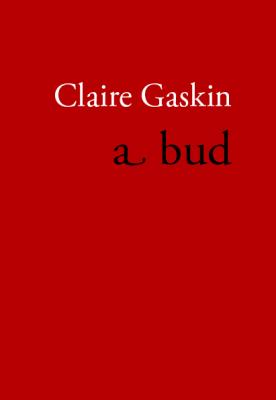
Paul Mitchell Reviews Claire Gaskin

gaskin.jpgA Bud by Claire Gaskin
John Leonard Press, 2006

There is no firm ground in Claire Gaskin's new collection, A Bud. If you're looking for poetry that announces itself as a place to have your psychic tremors explained, your yearning reflected or your misappropriations mended, look elsewhere. Gaskin's poetry is itself raw psyche, yearning direct to the page without apology, and a paean to the misappropriations we make of our lives, thoughts, lovers and literature.

Continue reading

Posted in BOOK REVIEWS | Tagged ,

Andy Jackson Reviews Carl Rickard and Diane Fahey

fahey1.jpgLost Places by Carl Rickard
Perrin Creek Press, 2005

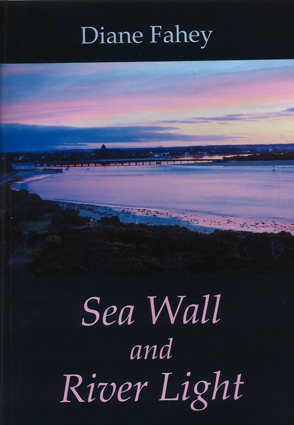
Sea Wall and River Light by Diane Fahey
Five Islands Press, 2006

Carl Rickard's Lost Places and Diane Fahey's Sea Wall and River Light are distinctly Australian, both in their themes and as products. They indicate something about how writers living in Australia see their place in the world, and how they try to make themselves heard. This is an increasingly difficult task – the economic imperative tends to absorb the creative into advertising or publicity, and poets in this country are so marginal as to be almost invisible, or at least viewed with suspicion or pity by their job network advisors.

Continue reading

Posted in BOOK REVIEWS | Tagged , ,

Canada, Late September

A haiku and a meditation


In all places now
we hear the wind sing of war:
dust will fall for dust.

 
* * * *
 

I stepped briefly outside myself
– or so I thought when stepping –
reckoning much that's to be said
needs hearing, as plain as the facts
may seem, as straight down the line.
Pressed for time, a poet's convinced
to cut the chase – even though she knows
pursuit is poem. Eurydice must not surface.
The wolf must, ever-louder groaning, grow.

There are those, even in Canberra,
who would willingly block out the sun:
a slip-slop-slap for Armageddon;
a world that went out in lifestyle.
To them, the self-styled tragics,
I say, 'Your Christ died
on just such a day – so lift your gaze,
at least enough that you can see
your enemy stand, weapon in hand,
a lewd verse for a reprimand,
the one you'd defy – but know
you're in thrall to its every demand:

This is my biro; this is my gun.
This one's for killing; the other's a pun!

And now, the deed is done.
Canberrans know it: stock-still
the suited stand on Capital Hill,
their races run, overcome,
stunned by all the fun.

It's beyond funding, though.
'S bigger than all the glaciers
it shrinks, shatters, heaves, and harrows
– boulders tossed so casually
into chasms, turning, careening,
a squadron of sparrows, dancing
down an air-built thoroughfare,
screaming through countless snows
(below!) below's the answer.

So, too, your taxes, friend:
the chaos'll have those.
So too, our nutra-sweet national anthem:
words more meaning will destroy
what aspirational electors chose.
So, too, our suburbs bright and new:
the coming days'll make
each pneumatic drill-quake,
each dream to bulldoze, but a trifle
beside the force that now
and steadily, daily, gathers shape,
grows, grows – a living culture,
school for all fellows –
and anyroad, who (ever)
really knows how very little
doom a battler can find
in the earth, the air, the sea,
the seed a man sows?

Back inside myself, all's well
or not, as the ayes or nays
may have it. Love, a grammar
of family and friend, knows
no reason for this. My sweetheart
senses an ire that is tired
and forgives with a kiss.

Sunshine
blasts our Alberta farmhouse bed-
room, thundering, rise, rise!
Wipe the tears of all your
bitter dreams from bleary eyes!
Get up all chirpy North American
and greet your hosts so kind!
Bacon's cooking; coffee's brewing;
last night's newlyweds are
on their way. Praise (not to mention
my rays) be: this is a brilliant day!

Posted in 28: INNOCENCE | Tagged

That Old Light on the Hill

I dreamt up a little verse –
and in my mind, a circus-ground
of sound, it neatly rhymed
before this telling (inevitably)
brings it worse.

In fog, a weary one did
climb an old stone
staircase, spiralling, echoing
ocean, up to the lamp.

There, a stamp, as of
ideology, glowed above
its chamber doorway
(apparently, marking
politics, as well as
other systems of love).

Strangely, the lamp then spoke:
I, whom navigators adore,
cannot show safety
to one ashore, but perhaps
you sought a different.

A different, yes, the weary
said. Normally I
seek it left – but try not
to be blind a-starboard
or blind straight ahead.
Permit a weary word,
therefore, and tell me:
whitherwárd?

The lamp responds to
tide and time alone,
so shone to the right
that long, dark, cold,
foggy night, revealing
warships on the waves
and massing troops
and tanks on cliff-tops.

Which made one search
forlornly to the left,
unlit as it was, and
shrouded in the fog,
finding almost nothing
save the great black-blue
and silver surf – which was
hardly a discovery
in and of itself.

And so one searched
a little longer, and a
little longer still.

Posted in 28: INNOCENCE | Tagged

Why be a delegate?

Alright, we're ready now. Not all issues
are black and white. Not all issues
are about how to fight. But the facts
are: this one's different. We're not it.

A creature marries. Is reborn. It
marries again. The history, thus,
lives on. A moving feast. Our structure:
it's ad hoc, sure, but improving.

And can I just say? Can I just?
Say that they have to, now,
building and strengthening, building
our networks, some of our members.

The structure grows. It goes thus:
You're at the coal-face. You are,
you are our members, a structure
that informs and helps us grow.

Growth is systematic activity,
and it relates to our peculiar
structure. Over time, this devolves
into a kind of third party activism.

You look! They pay their fees. They
expect their – what are they going
to do? You look, and we'll review it.
Unpack it. Finesse it even. Of course.

Posted in 28: INNOCENCE | Tagged

Radiant (1959)

The summer dust storms
shroud my mother
as she labours
with this
the end
of the sixth decade
pregnancy.

A year earlier
Maralinga rains
settled
on South Australian soil.

Now Strontium 90 is lifted
and dumped
as soiled westerlies
finger dust into every crevasse
of my parent's Hay home.

In the womb
I enter the atomic age.

Posted in 28: INNOCENCE | Tagged

Discovery

for Claudia
 
 
groove carved in your brow
you consider the motion
of your fingers –
splayed first,
then curling,
two at a time
to a loose fist

a moment earlier
your head jerked back,
face crumpled,
perplexed
by what you saw

an amateur scientist
you tried your theory –
actively observed
until satisfied

then your gaze lowered
to your feet
in case
your
toes
might
move
too.

Posted in 28: INNOCENCE | Tagged