
BOOK REVIEWS
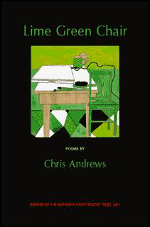
Ali Alizadeh Reviews Chris Andrews
In a recent article published in Sydney Review of Books, Emmett Stinson argues that Australian reviewers’ and readers’ responses to Australian short story collections are regulated by the receptions of these authors in the US. And so, according to Stinson, the so-called cultural cringe lives on. But is this really the case? And should we really be suspicious of internationally recognised Australian writers such as Chris Andrews whose second collection of poems has been published by Baltimore’s Waywiser Press, the publishers of such giants of US poetry as Anthony Hecht, Richard Wilbur and W. D. Snodgrass?
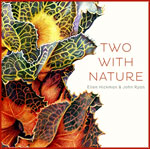
Review Short: Ellen Hickman and John Ryan’s Two with Nature
As a book quite different to what is usually seen in the poetry sphere, Two with Nature, Fremantle Press’s book combining the poetry of John Ryan with the botanical illustrations of Ellen Hickman, contains some interesting possibilities and contradictions. In his introduction Ryan notes how ‘the term ‘botanical poetry’ might seem an unusual juxtaposition of two quite different practices – science and poetry’ and it is here that the importance of the ‘with’ in the title can be seen as Ryan and Hickman’s aim appears to be with nature through a combination of scientifically accurate illustration and poetry.
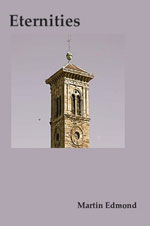
Review Short: Martin Edmond’s Eternities
In this collection of prose pieces, memory and daydreaming are powerful forces, determinants rather than second-order effects. Its theme I take to be the transactions of past and present as they are occasioned by the spaces of a city (in this case, Sydney) or, to use another approach, Sydney’s ghosts. The title of almost every piece is or was an actual place in Sydney. The sites Edmond’s imagination gravitates towards might be seen as typical: the legendary once-sharehouse (‘The Caledonian’), soggy-carpeted nightclub (‘The Manzil Room’), harbour’s edge (‘Blackwattle Bay’). While the pieces mostly derive from Edmond’s personal experiences of the city, some are effected by the work of archival research, amplifying the double vision of the past being tangible in the present.
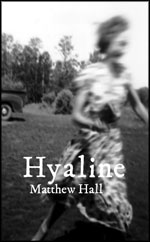
Review Short: Matthew Hall’s Hyaline
How does one review a book of poems that has no table of contents and no page numbers? More to the point, perhaps, is how does one read such a book? What do those absences signify? Individual poems have titles, yet they seem to move on, almost glide on, from what preceded them, and into what follows. “Artifice’, the book’s first poem in the section ‘Harm’s Light’ in fact has each section beginning with the last line or two of the preceding section, pausing, but resuming , then handing on to its successor.
A. Frances Johnson Reviews Jill Jones
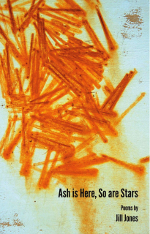
‘Why wish for the moon when we have the stars’, Bette Davis famously aspirates to Paul Henreid at the end of the film Now Voyager (1942, dir. Irving Rapper). That, of course, was an iconic, melodramatic story of unrequited love given an optimistic gloss by two lovers sharing last cigarettes. Jill Jones’ ambiguously rendered celestial bodies serve up different ideas of love and loss in this new collection. Jones’ stars, moons, candles, clouds and smoky skies are part of an identifiable romantic lexicon.
Review Short: Toby Davidson’s Beast Language
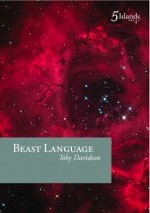
In the introduction to the collected poems of Francis Webb, Toby Davidson observes that the immediate influences behind Webb’s poems ‘do not supersede his locales.’ Webb’s poems are informed by a topophilia, a love of place and its ambient lore, a topographical attentiveness to detail that includes not just spatial but also temporal resonances. Davidson has inherited this attentiveness to space and place, and his debut collection, Beast Language, attempts a topo or ecopoetics that traverses a spectrum of geographies, mapping the Australian continent from the Indian Ocean to the Pacific seaboard, attempting not only terrestrial readings but taking cosmological measurements as well.
Michael Farrell Reviews MTC Cronin
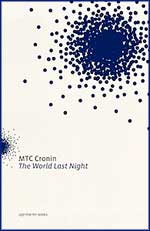
A book as an experience of sampling, and of reading over a long period of time, may be ideal for the writer; but it won’t be that for all readers, especially not reviewers.
MTC Cronin has published several highly structured books in the past: Talking to Neruda’s Questions,
Justin Clemens Reviews Pam Brown and Ken Bolton
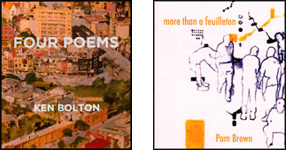
If there is one true love in the history of Australian verse, it’s perhaps the love of Pam Brown and Ken Bolton. As you should expect, it’s not a normal kind of love at all – or maybe it’s the only normal love, depending on how you’re predisposed to taking the word or the thing (‘normal,’ I mean), and depending whether you think you can tell the difference between the two (‘word’ and ‘thing,’ I mean).
Andy Jackson Reviews Kevin Brophy and Nathan Curnow
Radar. Green blips on a black screen. A large and vulnerable craft navigating a changeable world. A technological attempt to locate an invisible danger, or to give shape to darkness. All these associations emerge out of the poetry of Kevin Brophy and Nathan Curnow in their joint collection Radar, albeit in an intimate mode: these poets observe the ways in which we navigate through our lives in the contemporary world and improvise meaning. It is difficult, though, to talk about ‘the book’ because these two poets differ strikingly in their approaches.
Review Short: Lachlan Brown’s Limited Cities
A meditation on city limits – the literal and figurative limits of cities – and the edges of ‘urban’ definition, Lachlan Brown’s first collection, Limited Cities, conveys the extreme contrasts and contradictions of suburban environments via train-window views. Macquarie Fields, Parisian banlieues and Barcelona street scenes: each keen observation of the space through which he moves contributes to a nuanced description of the poet’s perspective, and in turn the reader’s too. What at first appears to be a collection concerned with the external – landscapes and cityscapes – is, in fact, more personal.
Review Short: Toby Fitch’s Rawshock
Sydney-based poet Toby Fitch’s first book-length collection, Rawshock, is a lively, artful and conceptually engaging excursion into the underworld of a profound poetic imagination; through the eponymous poem sequence, Fitch offers up the viscera and vital organs of the Orpheus myth for the delectation of contemporary readers. Everyday Static’ and ‘Oscillations’ – the two chapbook-length series that accompany this myth – present a sensuous and affable rendering of Fitch’s key theme; the relationship of the present to the poetry of the past.
Bev Braune Reviews Kate Lilley
Kate Lilley’s second collection, Ladylike, is a tightly constructed and complex work on love and language. Reminding me of Welsh poet Gwyneth Lewis’ wry, poignant words concerned with Welsh language, use of English and meaning-frauds, Kate Lilley enlivens her readers to assumptions, contradictions and the various erections of judging behaviour that surround the definition of a woman today or in any recent age.
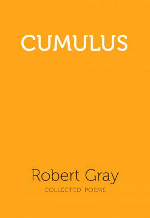
Review Short: Robert Gray’s Cumulus
Though Robert Gray’s status as a major poet is well established, both in Australia and overseas, he is sometimes dismissed as ‘merely’ a nature poet or, worse still, a poet of description. While Gray is narrower in scope than say Yeats, Auden or Murray, this charge is, of course, irrelevant to both the reader’s enjoyment and the place his poetry will find in any canon. Many leading poets of the second half of last century – Plath, Larkin, Wright, R.S. Thomas – could, to varying degrees, be similarly accused.
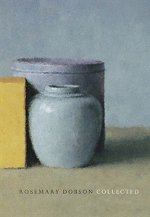
Bonny Cassidy Reviews Rosemary Dobson
Edited by the poet shortly before her death, Rosemary Dobson: Collected reminds us not only that Dobson was one of the last Eurocentric formalists in Australian poetry, but also that her very late poems turn away from that distant, ornate tradition. This ultimate edition contains Dobson’s eleven collections of poetry, poems published but not collected, plus a short selection from her tender and bold translations with David Campbell. Its tour of Dobson’s poetic dwelling is clear and fascinating.
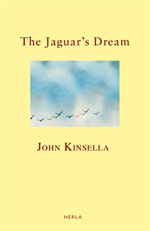
Review Short: John Kinsella’s The Jaguar’s Dream
The Jaguar’s Dream is a collection of ‘cover’ poems by the celebrated, and prolific, John Kinsella. The poems covered by Kinsella all originate in languages other than English – gestating in mother tongues as diverse as Latin, French, German, Russian, Chinese and others, before fusing with Kinsella’s own ‘Wheatbelt Western Australian, mid-Ohioan, and Cantabrigian English.’ Cover, interestingly, is also a verb meaning to mate, particularly of a stallion to a mare: the poems are similarly interbreedings, by Kinsella (Western Australian English) out of Virgil (Augustan Latin).
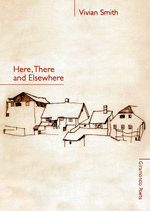
Review Short: Vivian Smith’s Here, There and Elsewhere
It’s a long time since I’ve read Gaston Bachelard’s The Poetics of Space, but I find myself lifting it off the shelf again and flicking through the contents page. I’ve been reading Vivian Smith’s new book, Here, There and Elsewhere, a reflective collection that is mostly linked by notions of memory, age and time, enduring themes that Smith handles with dignity and sleight of hand. But space is interestingly also central to this collection, in subject as well as craft. In Bachelardian fashion, Smith, in many of these works ‘explores the significance of the various kinds of space that attract and concentrate the poetic imagination’ (The Poetics of Space. Beacon Press, 1964). It’s not surprising therefore, that almost all of the poems in this book are sonnets, the poetic form which to my mind makes the most adroit demands on space.
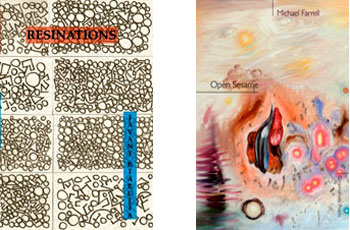
John Hawke Reviews Javant Biarujia and Michael Farrell
Fans of lists in Finnegans Wake will appreciate Javant Biarujia’s new book of poetry, Resinations. Many of the most amusing juxtapositions in the volume derive from the arrangement of proper names, drawn from (most) high and (very) low cultural references presented as cubistic materials in simultaneity.
Michael Farrell, on the other hand, a leading experimental poet of the next generation, is published by Giramondo – his previous volume, A Raiders Guide, was perhaps the most stylistically provocative book to have appeared with a recognised commercial publisher. Drawing on the Russian formalists’ exploration of the autonomous poem-as-machine, these radical fragmentations highlighted ‘The Word as Such’, and even ‘The Letter as Such’, in their concentration on the visual and sound properties of language.
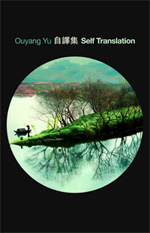
Jal Nicholl Reviews Ouyang Yu
In his often quoted poem ‘An identity CV’, Ouyang Yu describes himself as Australian for the last couple of years, Chinese for the first 43; unashamed of either’. National educational priorities notwithstanding, I have not found the time to learn Chinese. Inevitably though, the ideal reader of this bilingual volume would know a little more of that language than nihao. However, I immediately offer an observation that if this book is not strictly intended for English monoglots, it will have to make do with a considerably smaller readership than the average volume of contemporary poetry.
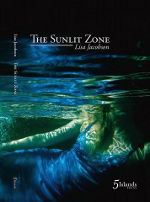
Jessica Wilkinson Reviews Lisa Jacobson
The verse novel is a peculiar organism: descended from the sweeping epics that chronicled the birth of nations and the misadventures of wayward heroes, we can still find characters struggling on their ‘grand’ journey – likely to be a personal, emotional and/or psychological journey – with the occasional battle scene (though, this is more likely to take place on a much smaller, personal level). As a distinctly modern form, there is certainly much less aggrandisement of the natural world via mythical and magical hyperbole in the verse novel.
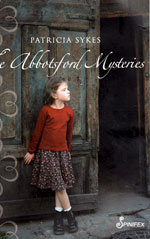
Review Short: Patricia Sykes’s The Abbotsford Mysteries
Patricia Sykes’ fourth collection of poems, The Abbotsford Mysteries, is a lyrical working-through of the experience of girls and women at the Abbotsford Convent in Victoria. While the site (located on the Yarra north of Melbourne) is now an arts and cultural hub, it served as a Catholic girls’ home from the 1860s until the 1970s, run by the Sisters of the Good Shepherd. The convent was built at the beginning of the twentieth century, and operated as a boarding house and school for ‘wayward’ girls and women, orphans, migrants and girls from rural areas. Given this context, it’s hard to read and react to The Abbotsford Mysteries without relating it to recent revelations in the media regarding the prevalence of child sexual abuse in Australian Catholic institutions, and the eventuating Royal Commission into sexual abuse.
Review Short: Jo Langdon’s Snowline
It can be argued that one way to begin to make your ‘mark’ is to settle on a theme; in marketing, it’s a handle or a simple angle. In creative realms, it can be an oeuvre or a period, with a descriptor. Ideally, it should never be held too close to its object/subject for fear of typecasting, but for an emergent poet, it may well be the thing that reassures readers and helps them with a doorway into your work. For a first chapbook, a theme can also be the way to find publication. Jo Langdon’s Snowline is the 2011 winner of the Whitmore Press Manuscript Prize, a welcome initiative for emerging poets from the Geelong-based Whitmore Press. It’s a deserving winner, and a pleasure to experience.

Tim Wright Reviews Keri Glastonbury
Keri Glastonbury’s first full-length collection, grit salute, gathers together work written since her 1999 Five Islands Press chapbook Hygienic Lily. Glastonbury’s published poems date from the late 1980s, and as such – and, it has to be said, because of publisher delays – this volume has been much anticipated by admirers of her poetry. Glastonbury is known in the Sydney and Newcastle scenes as a teacher of poetry and cultural studies, and as a champion and enthusiast of new critical and creative writing, particularly by younger writers; one example of the latter being her revival, with others, of the important 1980s Sydney imprint, Local Consumption Publications.
Review Short: Pete Spence’s Excurses
Pete Spence’s chapbook Excurses follows closely on the heels of his excellent book-length collection Perrier Fever (Grand Parade Poets, 2011). Long known as an exponent of visual poetry and mail art, Spence’s more ‘conventional’ poetry has, somewhat surprisingly given his long publishing history going back to the 1970s, slipped under the radar to some degree. One hopes these recent books will go some way to rectifying this oversight, for Spence’s work strikes a particularly distinctive note among contemporary Australian poetry.
Andrew Carruthers Reviews Jessica Wilkinson
In an intriguing vispo ‘Free Music,’ published here in Cordite in 2011, Jessica L. Wilkinson hangs a score. Hung, literally: for what is it about the musical score that gets hung up on text? What was the final sentence? No: hang the score, hang it, Wilkinson writes! Wilkinson’s visible labor is at work in the lower half of the piece, where letters are strung along lines: alphabetic versus diastemmatic (or neumic) notation.







