Stuart Cooke: Conversation with the Bird Man

I came back telling them all about the landscape but he
he in particular said no I don't agree the air

is clearer the clouds more discernable but
the rosellas I cried they sung like madmen on high

speed dubbing I couldn't let it go that soft
sunlight those rivers and rain ripping up

country giving threads no one saw him take me
by the hand up through the bush he

and I together now on that windy ridge
we of the two polarities a man

and a child a weedy goanna torn from Virgil's
own mouth the watery eclogues surrounding

if I could describe it to you I would
he said if the words sung if my tongue

beheld structures if time and rock
and roll and its various slithers hadn't

overcome us the shredded minerals
and dusty heart of a land in waiting…

(                                                      )
you can't tell us about land he finally

held my head in his hands you can't
tell us about land when man

it's all flowing you can't tell us about land
as if it were the nascent god

of a hollow flower rising up unaware
always unaware of the potential to blossom.

Posted in 32: MULLOWAY | Tagged

Stuart Cooke: Swansea Foreshore

We caught a finely spun
flight of aluminium silk through the slow

Swansea light. Sunset
dredged copper, dwindled histories

over mangrove forests; we flew
over metal mist while seeping,

seeping up from the water grey
prisms frayed into salt-fine arms

and cool wisp fingers grasped, almost
touched. On the foreshore incandescent

grass strips shimmered with sandy
flame, ate the tracks of mobile

gums, stubby ribs poked
from the mud around the gantry,

laughing and sucking our air.
We were meant to return, to move

onwards, to roll over deep
Tooheys paint, over bullock tones

but the shark skin trunks slipped
into slender silhouettes, strokes

tracing verdant gum maps
before light, before breathing purple-

mangrove smoke, we heard their names,
their countless names slowly twisting,

slowly twisting afternoon.

Posted in 32: MULLOWAY | Tagged

Greg McLaren: Robert Adamson in The Valley of Gwangi

There are terrible reptiles we never quite catch
with our puny lassoes
We leave camp in the morning disguised as animals –
Eohippus the dawn horse, or the bird-mimic, Ornithomimus

I never really believed it when I first laid eyes
on Gwangi, the living Allosaurus, trolling around the valley
It reminded me of my cousin skinny-dipping
in the river and eating raw fish

Eventually our horses will run away
and we'll be cactus, standing around like living fossils
on TV
while my Aunty Beryl watches

We are surrounded by 'poems'
that seem to be making fun of us

Posted in 32: MULLOWAY | Tagged

Chris de Adamson: ‘Don’t Pay the Ferryman’


It was late at night, maybe after midnight, out
	on an open road, or at least that sidewinding,

treacherous snake of a highway whose name
	had been tagged to many a teenage dream,

many a drunken cop, too. I had the radio going & was
	high on something (sex, or was it the drugs?

All of a sudden 'Don't Pay the Ferryman' came on
	and together, Chris de Burgh and I, we chased

after life, both of us speeding like men on the run.
	You know I understood how that felt, to be on speed,

and to be running at the same time, except I was behind
	the wheel of a suitably de rigeur 1982 Datsun sedan,

and I was crying while de Burgh offered his words of
	dark advice, sounded even then an eerily familiar

tone I'd spent a lifetime preparing myself for.
	The journey, though I didn't know where I was going,

would take me to Brooklyn, where the tides' tissue
	kisses pummell against the shore's soft skin.

Who was I to care, with the radio on & the window
	rolled down & smoke from the fires in the Kuring-

gai Chase lending my voyage an urgency it hadn't really
	possessed up until that moment (consisting only of

what seemed like whole hours of montage footage, back
	in my inner-city house)? Let's face it, I'd never know

what it felt like to lie in a police station cell; I'd never
	hook a mulloway with my reel; but in the clean dark, on

the outsider's in, I'd cross a river, and wait for the man
	with the tickets, or was it keys. He is closer, I can feel

his pulse. I'm not thinking about Chris de Burgh now but
	Bow from Front End Loader playing 'Pulse' on Recovery,

a song that was really about everyone who'd died, or was it
	just one special person, the one we never loved enough?

Now my search is on for a band that sounds as desperately
	sad as they did then; even the Youtube clip I'm looking

at fades in and out like videotape, because it was dumped
	straight from VHS to CSS and who really cares

about tagging this kind of detail anyway? I was reading
	from a setlist in the mind, or was it Wards of the State -

as well as less inspiring stuff and recalled how engrossed
	I was in a scene, though I never met anyone famous, and

didn't want to. Didn't care for rivers north of Sydney,
	or driving at all, really. In fact I didn't even have

a licence or a car back then, so how I got from Surry Hills
	to Brooklyn I'll never know. I blame the speed, not you.

Yes, there was a ragged hill, I must have been close
	to Brooklyn by then. I was sure I could just pull off

the highway somewhere, hide the car and crawl down
	the rocky riverbank, below the rush of traffic and speed,

under police radars as well.  And there was a boat on the river,
	right. It was all going according to some kind of plan. I felt

like a joint. A long, thin joint with just a few strands
	of tobacco. That would have stilled my speeding heart,

at least until the moment of our meeting. And when the rain
	came down I shivered, as you do, when on speed.

Is it just me or did I just hear a wild dog howl? Was that
	somebody stubbing their toe on a loose nail on the jetty?

I must have been reading, because all I could hear was
	three voices, sotto voce whispering "Don't do it!"

That's right, the night had three voices, and all of them
	were advising me not to do what I had clearly set out to do

and would patently not stop trying to do until a better
	option came along. Gutless voices out of sight, too afraid

to say "Don't do it!' to my face, inside the Datsun on the river.
	'Whatever you do', those three cowardly voices seemed to be

suggesting, 'Don't pay this ferryman you're going to meet
	in a minute', and I was like 'what the hell are you talking about?

I've dumped my car down by the Hawkesbury river at Brooklyn,
	now I'm supposed to catch a Rivercat ferry? How? Chorus!

I began to roll a small joint from the rolling mist, just to
	calm myself down. I mean, think about it: pitch black,

down by a dark river, looking for someone I was clearly
	not going to find in the state I was in then. My mouth

ached for cough syrup, my mind for mandies. So, cue
	rolling mist. I was searching for some material to make

a filter from when a small canoe pulled up in front of me.
	'Bob?' I whispered, and dropped the joint. Through

my visions I could see the hooded old man at the rudder
	subtly nod his head. Okay, that's good enough for me,

I thought, and got on board. 'Now there'll be no turning back',
	the hooded man said to me in a kind of wretched b-grade

voice that I realised, instantly, was not the voice of Robert
	Adamson. But then, who? 'Beware that -' crooned Chris,

without needing to finish his sentence, as it was clearly this
	maniacal 'old man at the rudder' he was talking about.

Where the voice of Chris de Burgh was coming from by then
	I'm not sure. Perhaps I'd left the stereo on in the Datsun.

& then the lightning flashed, etc, thunder roared just as it did
	in the  song, & the ferryman was holding out a map of

a river, and he was pointing to a small reach of the river,
	where an even smaller red dot, as small as the pin-prick

hole of a fit, bore the label 'Bob'. And then I was one of
	the people calling out his name in incredulous whispers -

'Bob?' The ferryman again nodded his head, and I knew
	that I really did need that joint after all.  It seemed he was

trying to take me to the other side of this river, where Adamson
	lived, along with all of those dancing bones that jabbered

and a-moaned on the water, the bones of dead mulloway
	and mullet. And then the ferryman said there was trouble

ahead, with which I readily agreed, as it seemed that ahead
	of us lay a flotilla of small boats, the boats of all the other

Australian poets (mostly male) who had tried and failed to
	get to the other side of the river, where Bob Adamson

may or may not have lived at some stage. Damn, I thought,
	and I'm out of cough mixture. 'So you must pay me now,"

said the kind of creepy-looking guy at his toy rudder. I
	refused, remembering those sotto voce instructions not to

do it, their vaguely anti-Nike sentiments, but the ferryman
	would have nothing of that, repeating his demand, then

holding out a book of his own verse, a slim volume that
	had clearly been cobbled together on some public servant's

photocopier. "You must pay me or buy a chapbook now,"
	he said again and I held up my hand and said, 'Look,

everyone else is telling me not to, so I'm not budging, is
	that clear enough?' And still that voice came from beyond,

a voice of reason, or was that John Forbes, advising me
	not to pay this creepy guy claiming to be Robert Adamson,

because in all probability he was not Robert Adamson at all,
	but in fact some kind of pirate poet whose verses would

strip paint from my dinghy. Chorus! The ferryman tried to perform
	some kind of grappling hold on me, but then his death grip

loosened and I fell, gasping, to the floor of the ferryboat.
	The reason for the ferryman's reaction soon became apparent:

We had landed on the other side of the river! Not only that but
	somehow I had also made it to the other side without paying! 

Repeat Chorus! And as the ferryman faded out, the radio DJ (or
	was it me) had the good sense (or was it just comic timing)

to cue in 'Ship To Shore'. I sat there, my feet dangling over
	the jetty, waiting for Robert Adamson to appear. So still now.


Posted in 32: MULLOWAY | Tagged

Albert Adamson: River Vis(t)a

The jetty is like an airport
the fishermen with their poles swarthy
keen on departure
lounging in their tinnies full of tinnies

Bats overhead at dusk
drop passports of crap
splatting the water
prawns rise to the top eating it

their faces like my grandmother's
the night we poured the river
on the house fire
books crackling like peeling prawns

the cats scraping at the shells
like poets like starlings
my wife fills a glass with whisky
and passes me the bottle

its black label like a visa

Posted in 32: MULLOWAY |

joanne burns: lure

she wasn't to be found in the list. his eyes darted down the long line of the 'c's : chevron barracuda chimaera cigar wrasse clown toby comet convict surgeon fish coronation cod. he even ventured into the 'd's in case she had become a fugitive reluctant to be lured into giving her piscine blessing. but she wasn't hiding behind the dash dot goat fish glowing in the screen's sheen. he was becoming frustrated by this expedition at the cheapest internet cafe on the strip. the connection was slow and the air con shabby. there was no surfing here, more like weekend fishing. still he had plenty of time to find her, the fish of his dreams, to mount on his neon peach wall of digital print out pinups in his three star caravan 'lorelee'. gilbert, single since his engagement party in the local park the month sargeant peppers lonelyhearts club band was released, had to find this latest fish whose silky form had brushed against his eyelids in his best dream hours between four and five a.m, whispering like dolly parton 'my name is compliment and there's plenty of me'.

Posted in 32: MULLOWAY | Tagged

joanne burns: no disguises


                                                       i.

                                     god laughs on as his mulberry

                                     shoes skylark down george street

                                     misunderstanding shreds the air

                                     like a flaming galah, the skate

                                     boarders flash by in mercurial

                                     currents loud as the rocks of

                                     thrace


                                                         ii.

                                     he sang to her from the bank

                                     of screens in the store window like

                                     a blue shadow but there were so many

                                     of him she couldn't work out which

                                     one was real her eyes swam with

                                     the dazzle of eurovision, too late

                                     to enrol in the refresher course

                                     in ancient greek


                                                        iii.

                                     where can this walk round

                                     the shore of traffic lights take us

                                     your silky dreams collapse like

                                     the virtues of tofu     the oysters

                                     may be smoked inside the tin

                                     of their coffins covered in cardboard

                                     but aw shucks you still recall how

                                     to row      a new torch hangs on its

                                     hook      this isn't weekend

                                     poetry;                the tide is edging in


Posted in 32: MULLOWAY | Tagged

Adrian Wiggins: After The Party

About the face she's photovoltaic.
“There's marriage to make men
lecherous,” she says, “I see it all the time

in characters like you.” Still, a casual mention
of the yacht by Lion Island sends her
into a lather. She's dramatic; American,

emphatic – tattoos and piercings in vertiginous
array, an anodyne piece of tinsel nonetheless,
and her structured hair is the bomb. A cigarette,

a shared song, a languorous interlude. She works
in a call centre – “it's not transcendent,”
she says, “not a bit.” You make to leave.

Well, she's blocking the exit. “In Russian,”
she sidles up, “the word for secret
is the same as for mystery.” Hmm

portentous – and it's too late to know
if it's really so – she doesn't want you though,
you figure that much, not beyond

this booze-raddled night. Somehow you get her
to the run-about, with a bottle of bourbon;
a twist of the throttle and you tear out

across Brisbane Waters, pinching luck, past
the oyster leases, past an old gaffer in a tinny
fishing the neap tide, threading a seam of silvery

water. Later, by some narrative device not herein
recorded, you proceed to the forecastle, from cuddling
to many acts of intercourse – lovely, burlesque.

Sentiment flows from you then:

Cherry blossoms floating
on a spring thaw stream.

Posted in 32: MULLOWAY | Tagged

Paul Hardacre: chiang mai

winter there or no / morphine or meat,

secret link between the heart of man & things

amidst the ruins left & first she fed him aspic seed

(lavender) & earthworms, sealed the slot with dung /

a little something that left the egg. powerful, mute

he prowled the ghetto streets (salisbury) & red like fire

his clots & skin, vague personifications of nature / his

dust collected. taken from the river (port matarre

'the skirt of his black robe' / dingy light replaced by time,

the satellite) scooped he nods / the bark remainder

rose & lit by subterranean lamps. downstairs,

nothing but mud, stones & cat-shit / prussic life

in jars (c.1984). birds outside / she fingers mince the

branches lashed, blindly following instructions / sky

engraved her monster, her golden key (chevalier). black milk lungs

& buried in sand to end / her custom (drowned, looking down the

river) rots in clay near mt. gravatt / tall & green-jacketed off

via reggio, 'only the binding remainded' / doubled back like sophocles

or keats she fell open across the breast, the heart / powdered instant skull.

the characteristic smell. twisted gums the street & storms / reads

from sl?¬?ine the king or time killer / prince valiant (sunday) –

cool guys with black hair. tracked the noisy pitta, secret spirit

raised his tremulous light & seemed to live / to see the moonlight,

little silver trumpets. night at moran's falls, cape hillsborough, the

sea-shattered joke of 'red rock' / long years jangling muffled bells,

stranger & in some ways more moving / he's got to go. hidden voice &

lights whole deserts / his moted slump a room of bones or chains

lips a raw black croak, curtained (washed in concrete tubs & dried

with rags / metal feet & grease-gun hands he drains into a pit

before earthsea / dreams 'the anger of the dark'). apple brandy

eyes his thrombosed luck, tied to a tree in the mountains

above kagbeni, or opposite kowloon ('the secret craving

all death's creatures keep').


16 august 2004

Posted in 32: MULLOWAY | Tagged

Paul Hardacre: kathmandu

could lose his leg, or his life / skin like green

barley, & curled / the claw we always joked

about, swept onto a railway platform or stored

as one of herzog's toes / another memorable

trimming session, black blood like pudding,

swelling / imagined pop! action & drumming / every

kind of photo or thought, unnoted touch / staring

up at lights / he hair & fingernails, the scar which

wept brown juice in '85. confluence of valleys

or hills / 'wish-fulfilling cow' & plumed birds / stained

notes or poisonous noose, water / the generous lower

lip & broken plastic teeth sat for days on the

divider (beside the hungry ghost of sea &

nina's leash / red leather, studs / &

bloody, thorny stakes as weapons). his body falls

apart in a creative range / some involvement of flames,

moxibustion / collection of air & cold, the bones of

small birds / elegy to porcelain west end night (paradise /

'fire island'). derived from india it occupies the tenth house

& corresponds / buried in a chorten she marked his skull &

dust / the lips, the howling / some kind of prayer & sundry

cloth / magic blue gas he never saw. easy ceiling of men, night /

the famous billabong scene near kalka (king brown in the

drainage pit) / in shorts & arms he monkey-gods;

all digging tools & ice-carts, folding paper bells & babies

hung from yellowed twine, mother as living corpse /

weird trace up north & calling, waiting, weaving through

trees (the white road) / & wet like dirty ice his face & mouth.


24 december 2002

Posted in 32: MULLOWAY | Tagged

Adam Aitken: Lines from The Lover

It was never a question of beauty but something else. Mind for example. For a long time you had no dress of your own, except those your mother had her servant make. D–• could sew with hair-fine needles, pleats and Peter Pan collars. She could make anything look timeless. Writing was sewing. Writing was taking an image – a ferry crossing the Mekong say, and empty it of all significance until it became idea, an image caught between memory and forgetting. That place-marker for time that never existed. The Mekong – that blood in the body, that slow flow between banks that had faded away. The river carries everything along, straw huts, forests, burnt-out fires, dead birds, dead dogs, drowned tigers and buffaloes, drowned men, bait, islands of water hyacinths all stuck together. Everything flows towards the Pacific, no time for anything to sink, all is swept along by the deep and headlong storm of the inner current, suspended on the surface of the river's strength. History again, locked in the depths of your flesh. And like a new-born child, it was blind, or so it seemed to the ungainly, the women from elsewhere, the mothers and the sons, mute and cowed in the presence of the father. And it was blind.
Posted in 32: MULLOWAY | Tagged

Adam Aitken: Notes on the River

Prologue
 
 
a river's there
for cutting grass

for police to
drop their pants

have their fill
al fresco

for girls to sober up

on a life
whittled away

by extortion

icons of shame
drifting in the garden shadows

who complains?
no-one writes or can

this my accident
of passing by


~


It is not a river at all
but a question.
An infant's mellifluous endurance.
One can ask of it direction,
or turn it to some western trope
for progress, decline and fall.
Or pay it homage,
find Hell at the end of it,
and Heaven also.
I scream at it, it whispers.
A big harbour man I'll never buy it.

It is either stagnant, or engorged.
A mini Mississippi
hugged by a shanty town Cambodians claim
is Vietnamese.
We walk its lazy curve, hold hands and harmonise
to a soprano line
of whistling bats in the Grand Hotel Gardens.
A discarded brassiere
or a dead black snake in a rubbish bin.
Gardeners play drafts with bottle tops
and frangipani petals,
rank and file drawn on the earth.
A sandalled army toting wipper-snippers
slashing grass.
Keep off it say the signs
in the ancient lettering of priests.


~


The river stopped yesterday.
So ochreous, I had feared a complete emptying.
It was the same water today
as yesterday. The same slime.
It will ebb backwards and forwards
Between the left side and the right of my brain.
Yesterday I missed you, now I don't.


~


The Mekong turns the corner
where it meets the Tonle Sap.
The moon is full tomorrow, glowing
on the inland sea.
Miraculous hydrology!
The annual catfish migration begins.
I will miss you once again.

 
~


This morning a man in green overalls
scoops out the river's scurf of plastic, then
a bottle, returning to the greater flow
its precious contents
with slow and infinite patience.
Magenta flowers on the wisteria.
One might fall pregnant here
or win the dragon boat race.
Youths cuddle and spawn,
police count their bribes, adjusting ever upwards
with inflation, and they know
road rules are for them.
The river, in whatever epic you choose,
will take a sepia tone,
and content itself to reflect
our vast melancholy,
our ennui,
like the Seine in autumn.

 
~


A modernity, a solution is required!
Voilà! Slums levelled, wharves, boat ramps.
It's called central planning.
Whites, Koreans, Chinese
in cravats and big sombreros
sipping caiperoskas
in the Foreign Correspondents Club.
In the new arcade of palms
the slavegirl folds her fan
and turns on the air-conditioner.


~


Old-timers remember fish so thick,
a living slurry smacking the oars.
To these images I rig a theory of fluid dynamics
and digital composition,
a poetic somewhere between
Baudelaire and Photoshop:
'fields tinged with red, the rivers yellow
and the trees painted blue.
Nature has no imagination.'
19th Century mezzotint
in the Victoriana Lounge.
Benjamin's “upholstered tropics”.


~


What unites the above?
My sympathy for semi-literate kids
relaying a shuttlecock
with slabs of plywood.
We dislike stagnant ponds
and sheet metal sweatshops –
but that was another river.
This is the river “which only to look upon
all men are cured”.
The net yields fish so tiny now
but their eyes are big enough and wide
this far – so far – up country.

Posted in 32: MULLOWAY | Tagged

John Tranter: For Robert Adamson

Rock and roll chained to the typewriter is
one way of putting it, Southern Comfort is another,
but without the comfort, and with the
ending a surprise, as the ending
repeats itself as the beginning back to front and
then refuses to come to an end.

Antipodean ornithokleptomane, at the same time a
drunken boat pilot who lost the boat, but
always busy with a pharmacopoeia of poetry:
metrical acrostics, aspirin, western and country,
sapphics, fish cakes, codeine phosphate,
odes to the Hawkesbury sun and moon and still
no end in sight, so keep rowing.

Posted in 32: MULLOWAY | Tagged

Mulloway (Envoi)

Cordite 28.1: MullowayWelcome to the dreamy village of Mulloway, population 28.1, set in the backblocks of the Hawkesbury, somewhere in the vicinity of Sandy Bay, Peat Island and the Angler's Rest. The place is awash with ribbon-fish shaped streamers and the sound of a parade of Customlines passing down the main street toward the water, all to a sound track of late-period Bob Dylan and Emmylou Harris …

Go, little homage, take us for a ride!

Continue reading

Posted in ESSAYS | Tagged ,

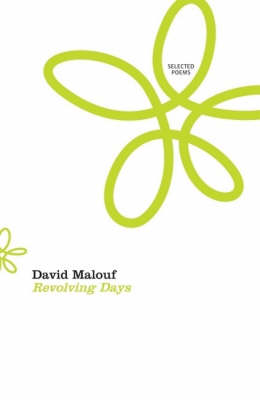
Bev Braune Reviews David Malouf

Revolving Days: Selected Poems by David Malouf
University of Queensland Press, 2008

In the very appropriately titled Revolving Days, David Malouf has put together a selection of poems that addresses the past, place and its importance to self-definition, the memory of houses emptied of family and objects yet full of what's left behind and filling up the present. The poems exhibit a quality which, with political comments more subtle than Les Murray's and longings less romanticised than Robert Adamson's, declares that the places where the emotions taken from another world rendezvous are always present and clear in comprehending the discrepancy between place-and-mind and feeling-and-emotion. Continue reading

Posted in BOOK REVIEWS | Tagged ,

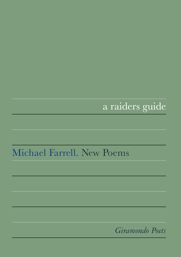
Stuart Cooke Reviews Michael Farrell

a raiders guide by Michael Farrell
Giramondo Publishing, 2008

Apart from a solitary '1,' the first page of a raiders guide is blank. Note the presence of the comma. What it suggests of the pages that follow is a transience between the concrete ('.') and the absent (' '). The book's entry functions as much as a point of departure as one of beginning; we all delve into different interstices. So we come to the first poem: unanchored by a table of contents (which, along with page numbers, a raiders guide does not have) yet, unlike the rest of the poems, it is ordered into dense blocks of text. It's called 'sprinter'; it begins by 'Walking through, in/out: my son a shadow? His mind marks the boundaries…' We are in the mercurial, the gaseous, where pressures force feelings into significations which, almost as quickly, escape through ever-present fissures of syntax. Welcome to Michael Farrell's new book of poems!

Continue reading

Posted in BOOK REVIEWS | Tagged ,

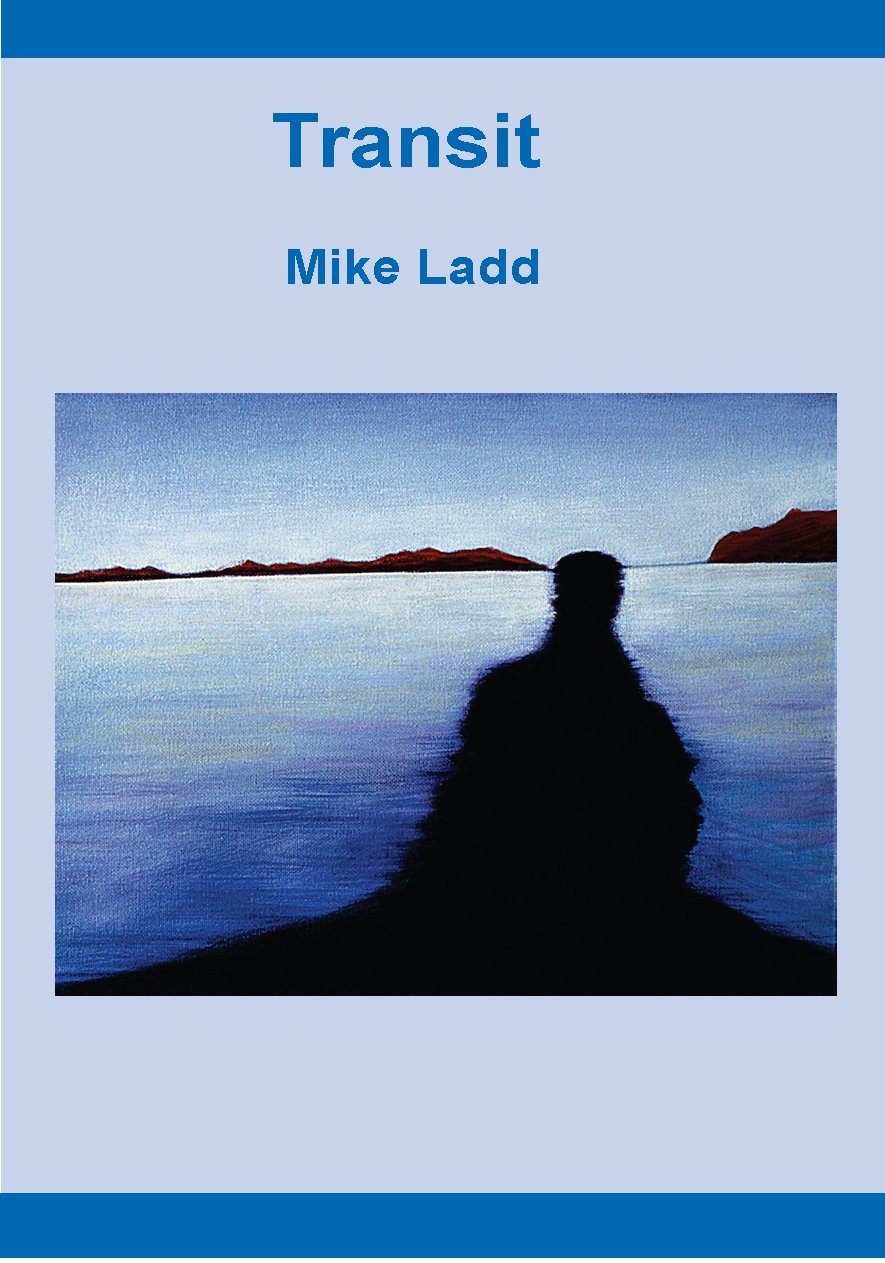
Heather Taylor-Johnson Reviews Mike Ladd

Transit by Mike Ladd
Five Islands Press, 2007

I find it a rare and lovely treat when a poet can become androgynous, or cross over discretely from a masculine voice to one that is feminine. While some of my favourite poets are steeped entirely in one gender or the other and that, indeed, can be their strength, I do want to draw attention to Mike Ladd. Perhaps his ability to move from soft themes of family and imagistic sensations to critical and satirical comments on the modern world is the reasoning for the title of Ladd's latest collection, Transit, because that would explain the great mystery to me. Without that possibility, I have one true criticism of this striking collection and that is the soundness of the title.

Continue reading

Posted in BOOK REVIEWS | Tagged ,

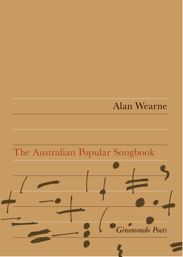
Adam Ford Reviews Alan Wearne

The Australian Popular Songbook by Alan Wearne
Giramondo Publishing, 2008

It seems to me that a poem should – in general – be a self-contained unit, either easily understood or a puzzle that contains the key to its solution. I'm happy to make exceptions for poems written in different eras or countries – such poems might need annotations to compensate for unfamiliar historical or cultural contexts. It's surprising, then, how hard it is to understand the poems in Alan Wearne's latest collection, The Australian Popular Songbook, which bases itself largely in 20th-century Australian popular culture.

Continue reading

Posted in BOOK REVIEWS | Tagged ,

Seven Secret Cities

On place and the page.

1.

A city had never the dimensions of a page; or, if it did, there was no need for the writing of it. Writing is a way in which a city of instances becomes an event. Instances disclose themselves patiently; the intention to account for these translates them into events. The inhabitant, who may or who may not be transitory, writes, and the page opens onto a secret space where instances arrange themselves into constellations: something here can at last and literally take place.

Continue reading

Posted in ESSAYS | Tagged

Hidden Signs of a City

How does one read a city? More specifically, how does a poet decode, and in turn re/present, the language of a man-made space? In Australia (and other 'New World' constructs) much poetry has been devoted to the natural world; but what can be said of the 'Old World' sense of text, where emblematic architecture, historical sites and other symptoms of civilisation signify as much as gum trees, fauna and billabongs do in Australia?

Continue reading

Posted in ESSAYS | Tagged ,

Paper Object Town

dear jones: i should never have come this place it is beyond desolation there are no sunsets and honey no hat-tipping neighbours friendly milk vendors nylon magdalenes mothers and ballpark heroes only a slow and lecherous infestation your organs a darkness so complete you do not inhabit this place it inhabits you. on fire escape stairs i smoke from a makeshift pipe each night something new a length of discarded pvc tubing copper pipe from a nearby construction site even a rearview mirror you attach to the side of your car when you tow a caravan on those long family holidays where all you see and hear and taste is curled and yellowed with time and turns the veins in your forearm to spaghetti hardened at the thought of sepia-toned wallet photographs. one night i even fashioned a pipe from a plastic pump-action water pistol reservoir great smoke a black milk lung toxin. tongue jaundice. the fruit of starfield road. japanese sirens burn all night colour does not exist it is not permitted. people hang from chains rust in metal vaults the bottle and the drinker who can tell? automobile crash subway fire fatal headshot knifewounds to genitals punctured breast tissue bound wrists incinerated plane crash victim suicidal strangulation by ligature foreign body in airway. drag marks. the footprints of the deceased. a recently vacated room. no signs of struggle. only morning taken as crimson pills. and skin, burning a distant star.

Posted in 31: SECRET CITIES | Tagged

Proportions

Stone bowls,

inflated to the size of small ponds, their brims shimmering with flowers. I see them waiting at intersections, walking the streets, at the square, high in the air, everywhere-

 
Crows

Each one holds an invisible magnifying glass, and won't be seen without it.

 
Jurassic Park

Under the sensible deciduous tree, prehistory shrinks to a point of view. Dew trembles upon the intricacies of a jungle: teeming tree-ferns, over-sized flowers, clearings, pungent mud. It goes for miles and miles. I gaze down through a chaos in the canopy, searching for Brachiosaurus, the biggest of them all.

 
Street lamps

Suspended over rivers and creeks of swirling cobblestone, they are like miniature cable-cars stopped mid-flight, letting light admire the view.

 
Winter trees,

enormous burrs, catching at the clouds.

 
Spring shrub

Like fish in a coral from The Giant Reef, yellow flowers collect in its branches, sway in gentle currents, catch the sunlight.

Posted in 31: SECRET CITIES | Tagged

Chains (Poems, Nagoya)

Dating and other unlikely incidents fed the poems I wrote in Nagoya, Japan, in December 2007 till February 2008 (where I had an Asialink residency).

#1 touch & go:

I was bored with my iPod, and lacked the technology to load it with the Japanese CDs I was buying or trading books for. So I replaced the songs with ones from fellow resident Sarah Holland-Batt's laptop (Feds please note this is fiction): including 'touch & go' by The Cars. Nice ambivalent title, and it reminded me of Mary O'Hara's My Friend Flicka: Flicka has a filly called that.

The opening lines of the poem:

Your plastic foallike form

Warms the single flat

& goes waving.

I don't think I was approached the whole time I was in Japan, apart from this one day in Nagoya when two women did so. The first was quite young; she saw me 'reading' a manga (I read the pictures) and asked me about my interest in manga. She was writing something for her studies about the differences between Japanese and Western culture. I showed her my own comic book BREAK ME OUCH and we sat down at the caf?© for something like an interview. Later in the poem I wrote:

yesterday approached on the train,

they noticed my comic. Views of international

Photographer, photographing

how do you read –

Sitting, kneeling

hot books in new york –

This was in Sakae, the central shopping district of Nagoya, and the location of Maruzen, a bookshop that has an English language floor. It was there that I was approached by a newspaper photographer who quizzed me on Haruki Murakami. His latest book was a bestseller in New York, and she had been commissioned by her editor to get a photo of a white person looking at Murakami as if they were in New York. So I posed, but don't know if the photo appeared. Weeks later in Kyoto I met a writer who told of seeing Murakami put down Soseki Natsume as 'not a novelist'.

#2 outside kfc:

Almost a catchphrase, it was a recognisable place to meet people. As a title for a poem it meant being able to write about my interaction with several different people. I'm still a bit self-conscious about the recognisable content in the poem; Frank O'Hara's solution of writing about people by name doesn't suit my style.

Don't think about his mouth, his Goodbye noises, his,

Emails missing or present in your inbox.

[…]

Nothing you Can think Of or to betray.

rupert isn't japanese, black, cravat but not your hair or eyes.

[…]

this time you know him

but hate getting lost

#3 word seen from a bus:

Maybe a word i know. But the mountains are covered-in,

different examples-of forest different water reflects. A bittern rises

from the page like a stick &s gone, it was a vision, white

word of childhood myth. Read unread.

Going by bus to Kyoto on Christmas Day, past forests and very occasional birds, I wrote this poem punning on word and bird. Man, woman and sugar were the only kanji I recognised: man and woman for toilets and baths; sugar, in a largely vain attempt to find less sweet cereal. (Later I learned to recognise open and close doors from lift buttons.)

a word in the river.

Or the sky: hawk

perhaps. Man woman or sugar
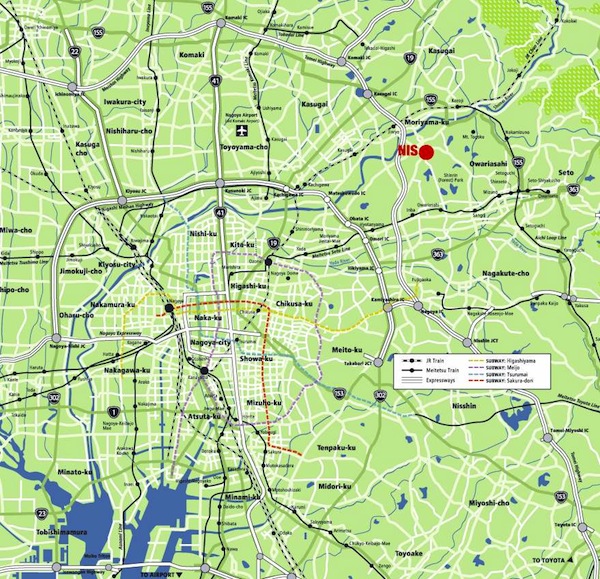

Map of the city of Nagoya, Japan.

#4 fried things society:

When I ate out with someone Japanese, in this case the poet and translator Keiji Minato, I asked them to translate the menu rather than the usual point-at-the-picture option. Rather than have them translate every dish I'd find out what categories there were first. 'fried things' was one. I'm not sure now how it occurred to me to add 'society' to the poem's title but something about the lack of custom outside the lunch rush.

A kombu smile on a burger head.

Enough rice to sink life,

They crowd back suddenly, they imitate crows dodos,

one picks up Something like a bestseller. American classic fried sinatra & grace kelly

#5 tendency:

I had no plan to write poems about Japan, just let the references come in as (un)naturally as possible. Motoyama was the suburb I stayed in; I often stay in Surry Hills in Sydney. 'russian prison' refers to two different dates who told me, when I asked about WWII, that their grandfathers had been in prison in Moscow, and both survived. My own grandfather was in New Guinea and souvenired a Japanese flying jacket that I used to wear when we went spotlighting.

a motoyama summer or surry hills winter make breakfast.

Sexy & your friends celebrities its better than russian

prison or hunting a gun & jacket through new guinea.

congrats they punch while the second son gets

bumped down a navy singlet betrays a perfect structure

(a fish & soup diet prevent you

from becoming stocky or even forty)

In Cafe Jaaja in Kakuozan, Nagoya, a man told me about the birth of his first grandchild who was now his 'second happiness', his eldest son (the child's father) being his 'first happiness'. Like an heir to a throne, the second son got bumped.

#6 muzak to view the city with

I heard a lot of muzak in Japan and, as I was there at Christmas time, a lot of Christmas muzak. It got a bit hard to take. Not just in shops but at the gym, and in the poem, in the Higashiyama tower in the grounds of Higashiyama zoo, in Nagoya. That the songs that had been muzaked were often quite easy listening originals made them even more irksome. Like Wings' 'My Love' or Starland Vocal Band's 'Afternoon Delight'. There's something a bit too much about being in a non-English speaking country on a date with someone from a non-English speaking culture and hearing a muzaked version of a song about sex in the afternoon that is from your childhood, but before the birth of your date.

Muzak makes its originals grungy makes

everything real tough.

If i hold my pseudo baby tight i participate

in muzak & remember when

My love, has so much in him he tastes

Like a cloud, im sorry,

For going too far,

Being reckless in making friends

i hope night calms the polar bear

The cloud reference is not about how high the tower was (very) but to Junichiro Tanizaki's writings on Japanese aesthetics, especially in In Praise of Shadows, but also in his novel The Key. Tanizaki writes of Japanese skin as white, but a cloudy white that distinguishes it from the white of Europeans. The bear did seem quite agitated. The zoo resurfaced in another poem,

#7 voluptuary:

An elephants dancing leg, lion statue chained to a wall,

some notes i take with my camera

feathers glued on a sign. Watching old videos

is a mistake, similarly avoid the familiar cafes the zoo denies,

the affinity i claimed i had with snow leopards,

raccoon tongues more fastidious than gibbons.

Scarlet george, hyacinth nick

Those macaws couldnt have met each other elsewhere

The elephant had a chain on its leg: its 'dance' consisted of repeated pulling away from the wall, keeping its unchained feet on the ground.

Posted in POETRY | Tagged , , , ,

Constant Haze (Notes From Chengdu)

Chengdu, post-earthquake. Photo by James Stuart.Five weeks and I have still not visited Mao's statue, which stands at the heart of Chengdu's First Ring Road. On the map in one of the city's English language magazines his presence has been reduced to a vector-based outline, a warm-grey fill.



Continue reading

Posted in ESSAYS | Tagged , , , ,