Transparent Things

The Travelling Poet

He said he was a travelling poet, once, but hadn’t written for years. He’d taken up truck driving because it made sense, providing transportation and raw material in one hit. But things didn’t go as well as expected. His poems soon degenerated into claustrophobic highway ballads, rig-oriented and despairing. The open roads perceived from within an oppressively confined space marked his psyche. His lyrics grew violent and fantastic. Their only audience was hitchhikers he picked up on empty freeways, grateful itinerants who sat through the rhythms of his lunatic rhyme-schemes with polite interest and sweating palms.

I wrote a volume called Murdered Hitchhikers, he said, which seemed to hold their attention. They purchased signed copies without fail. Eventually my little narratives were relayed back to me in rural outposts where poems have a tendency to flower into mythology. Then there were news reports about missing hitchhikers and blood stains and body parts. I heard my own compositions recited by reporters on dusty highways and eyewitnesses in four-wheel-drives and survivors in calming blankets. My poems had taken physical shape, micro-Frankensteins haunting the tar-streaked outback, killing and maiming and terrorising. Falconio was my tortured couplet, Milat my Man from Snowy River. By the time I was taken in for questioning I’d already decided: poetry was murder and truck driving is terrible for posture. I gave them both up for a pension.

When asked to recite one of his poems he declined, saying: You never know what might happen.

Romeo

Walking at night, I came, invariably, to a double-story mansion facing the esplanade, it’s garden glowing red and green with Christmas lights, no matter the season. My legs came alive, a throb for each kilometre travelled. The vigorous sea-air flooded my lungs and my heart leapt at being so near the object of my desire. When people were about – gardening or socialising or reading a book with wine glass in hand – I was furtive, a thin spectre flitting across the footpath, quickly observing the happenings within. More often I met with an empty street, which allowed me to leap the fence and skirt around the side of the house to a narrowing at the rear where the wall rose into a balcony. An accomplished climber, I’d then scale the trellis and gently pad to the balcony’s door. Each night I tested the lock, and each night I was disappointed. But I knew that one day soon the play would take a different turn. Each walk I took until then was of pious anticipation.

At the Theatre

A theatre group presented a one-act play every night. These plays usually went for a half an hour but would develop via repetition in a cyclical fashion as the night wore on. By midnight the script was redundant. Audience members were invited to shout the lines they’d heard repeated for several hours with slight modifications. Occasionally the participants deliberately distorted the line, provoking a radical change in plot direction, which sometimes led to near orgiastic chaos – violent outbursts, hooting, nudity. More often, the audience complied with the script unthinkingly, as though it spoke their own thoughts perfectly and even, in some cases, enacted their most intimate desires. For such an audience the play’s first cycle insinuated something indescribable, a sensibility they couldn’t quite grasp but which re-modelled itself subtly, over the course of the evening, until they recognised, at last, their inner lives being enacted on stage, to such an extent that when asked to participate they barely hesitated, as though they’d been performing all along and this later performance was merely the external depiction of a far grander narrative constantly evolving in their minds.

Transparent Things

I recall climbing the stairs of my apartment block only to discover that the door to my room had disappeared. In its place was a flawless wall. I kept climbing until I came to the top floor where another door stood ajar. I knocked but received no reply. The room was very small, like a prison cell. There was just a single lamplight on a desk near the window sill on the far side. Disordered jottings were scattered across the desktop. I picked up a scrap and read:

As he sat at his desk tapping the keyboard in this his confinement he
suddenly thought that something was missing although he knew not
what that something might be.

The room was a mess, books and scraps of paper strewn everywhere. A curtain separated one corner from the rest. Behind it: a grimy woolen rug and a clump of children’s clothes. In addition to the desk there were two chairs, a stained sofa and a thin-legged kitchen table. The room was practically a cupboard, but the furnishings suggested more than one tenant. I tried to imagine the lives led in that room.

A skeletal woman emerged from a secret passage beneath the rug. She was astonishingly thin and pale and began to pace back and forth, pulling at her hair in frustration. I apologised for intruding. She gave an impatient jerk of her head and continued pacing. Her dark eyes shot widely around, back-and-forth and side-to-side. I kept very still to avoid provocation. After some minutes the atmosphere became stifling and I asked permission to open the window. She stopped suddenly and stared at me wide-mouthed. I expected her to yell murder; instead she muttered something under her breath and went back to pacing. The window was nailed shut.

Minutes later, a young girl no more than nine years of age emerged from the same passageway beneath the rug with an even younger boy in tow. He was crying and shaking, as though he’d recently been beaten. The woman grabbed him by the hair and dragged him into the corner. ‘You stay there,’ she screeched, before doubling over in a coughing fit. The children were thin and dressed in outgrown clothes, without shoes or socks. Their hair was knotted and they stank. The little girl crept over to her brother and stroked his sobbing face. When the madwoman finished coughing she began pacing and pulling at her hair again. The girl watched her mother with deep attention, as though reading in her movements a hidden sign of what was to happen next. Her sunken eyes glittered with intelligence and alarm; her gaunt face expressed perfectly the horror of being subjected to another’s delirium; her skin seemed nearly transparent.

After watching this scene for a few minutes I was completely unsettled. I got down on my knees and begged the woman to be more sympathetic to the children. She glanced at me disdainfully and snorted, then proceeded to murmur ‘sympathetic’ over and over, as though it were a foreign word she hoped to memorise. At last a man crawled through the passage and looked around the room. He was elegantly-dressed but filthy, his hair uncombed and his face grimy. He smelled of stale beer and sweat, with a tang of vomit. The man’s eyes lingered over his children sadly. Then he proceeded to beat himself elaborately around the face and head before tearing at his ears. I was startled when the woman turned and addressed him by my name.
Posted in LEE MARVIN | Tagged ,

No, the System Did Not Work For Me

I landed among delusion, with a lag
and a dogsbody. I was hauled within a millimetre
of someone’s brown balaclava.
I was a deb in line with a litre of jackpots
holding a new key and a gypsy.
I blundered past the icing, the pioneer pasties
until it became confusing.
There was some mug serving vol-au-vents
in the event of an accident.
The dogsbody left for a two-up game back east
and though I wrote to the mug
there were questions about indemnities.
I couldn’t tell if the lag had the only weapon.
They looked like blackballs or something
you’d wear in an airlift. I did not lose
though the vortex was faulty
too many yes-men hamming it up
for too many yobbos. The dollars shook down
their own catastrophe. I became a debacle
in pearls with a litter of Jaffas. I dropped
the lucky cards
the horizon got shonky. I gave up crystals
and tea leaf methodologies. I could not lose
though the yardstick was dodgy.
It was a blast in the blunders.
And thanks for the bluffs.

Posted in LEE MARVIN | Tagged ,

Hindley Reverie

A lunch poem

Perhaps everyone drives round these blocks forever
as cafes get lost in the trawl of Hindley Street
these blocks, just to see something happen.
‘Adelaide’s No.1 Party Venue’, a kind of inroad
or airborne, the sound, lonely sputnik, hey there
you may arrive at The Woolshed, the all male review
what you may want, KFC, KBox, karaoke.
There’s also the art part amongst lunchtime squelching,
some Germans, a queen and his staffy, tapas, city stuff,
‘Playing Till Late’, and though you’re puzzled, you’ve intuited
from the beginning that Polites isn’t a health regime.

There’s paper scattered round, The Advertiser unreadable
the festival programs unreadable, nothing to do with
what goes on, like happy hour, sex work, making
a custom Tshirt, selling secondhand books,
scoffing schnitties, checking the phone — ‘needs and desires’
an oldfashioned textbook might say, probably still on a shelf
somewhere nearby.
                                 Should we be impressed
with the Fringe or Writers Week or 4 Coronas
for $20? While in Tempo there’s some sizzling going on
a burger, a meeting, everyone knows each other here –
well, not you, sweetheart, but, y’know, everyone …

A complete unknown could be perfect, so you can
hide from heat and conversation in the midst
without news or pretence with hero parking and a desert wind
in ‘the workshop of the mind’ as someone once said
too cutely, and all that’s missing is sea salt which should come
from the sea out of the west but refuses and so do you,
but not in a bad way, you have to think and move, nothing is still
even in a heatwave, it is a wave, all that pressure.

A caterer’s truck slams the gutter and anything’s possible
there’s nothing zen in that, existence moves on the waters
and on the sands, and if language made that up
it sounds as possible as whatever may be delivered
along Hindley Street, and, hey there, you might arrive
sometime, but it’s not so lonely in this space
these circles, these funny old corners.

Posted in LEE MARVIN | Tagged ,

From Here On

plans go diligently
to seed
salt / pepper sky
press timelapse
off bring
their plans to seed
still functioning
organs night comes
on you do
something
to or with it print
download email
a thermal they’re
called clouds
clanging brain
saying come over bring
the go board the
bin’s out
wednesday reigned
rained into ascot
vale negotiate
human plant
relations in
the suburbs in
the shade mood
stable music
playing the
latest framework out
to please doesn’t
look you in the face
four of them moving
towards electric light
falls on leaves
take flight won’t be
woken what
are you something
interesting
a cloud
clouds from here on
in

Posted in LEE MARVIN | Tagged ,

Trick Light

regard jusqu’à
set posture to be
admired for le
something the
empty place where
succulents were
where wallpaper
was intentional
ly harbouring we
go build le
quelquething
ubud harbour
alarm has a
plume held
a signal climbs
slides against
across last lanes
excused famous
rubber dusk
turning each
one negative
our couer
climb across
the shop floor
a car
still running
feels good
to pull weeds up
a weird cure
for something
gelding constant
light moving
down
these lines

Posted in LEE MARVIN | Tagged ,

Notebook Poems I-IV

I

e-mail to the deep breaths department
five goodberries unsampled
the river brackish,
        or perhaps actual bracken

(slides around us)
like koi, not good eating

first taste of real life exclusion
                in small gloves

                couldn’t read the sandlewood fan codex

        lift both hands to fax home

politically incorrect across the fen
                sexist, but gorgeous
                        – your Elvis-face carpet

it’s old technology
so if they won’t re-make it
        in different materials
        we forget the prompts,
a telephone is mostly
                        more talking

I realise this is no way
to get the product division to notice me
hours spent gathering
        then fusing household objects:
bed-computer,
        mop-pan,
                a letterbox that is also a stapler
                        & a middle-child

when the time came to vote
        we bolted for the door

sent round the hat
for a smear campaign
targeting ferns
                – their floppy politics

swing a hammer into a fence post
                – mark out your patch, you always have

II

nice to see you
even in the cleaning aisle
        light a cigarette from the little pops
                                of window panes

you can lift up a piece of the road
to compressed dust; a packet of ovalteenies
                later your cordial spills on the sky

a cloud sticks to your shoulder
        which I follow between hills
where the shrubs have rusted

truck is floating carousel

                jonquil = petrol

full mouths change word shapes
        rain keeps you in
                keeps you hung over

someone takes a highlighter to the field
        & you imagine the aerial view

but looking at the thumbnails
        of the same trees making different shadows

(my school of photography
is get in the frame & get going)

        water rushes up to the waist

        lino-cut branches against the sky
different trees pool in the same shadow

III

his need to kick open trees
until the applause
makes me want to stay in bed

but a package of light arrived on my lap
                wrapped in a vine leaf

this is your
mediterranean plate

        old pretzel taken with a
                spout of liquor

kiss ‘head of a giant youth’
        in split white marble

set up shop in atrium
be bad at goodbyes
change your personality
        to suite your basin face

during a party the most action is in the smallest room

locked outside
the interior of the flat
(each separate component)

is exquisitely remembered
                                like all lost objects

later, thin coffee upon ecstatic entry
shaving tiles with a foam brick

you love that baby so you shorten its name
this is a well-known process
                but it does not work for everyone

nostalgia for your time as a node & earlier
living as a small, volcanic archipelago
how you covered the trackmarks of an about-turn

factory job involved a regular
        provision of sideways glances

bruises are such easy metaphors
        think of something else

what goes on at the tap during warm weather
2 pet guinea pigs, both named Philip

I did not know about this ‘shoe incident’
at the Institute of Hair and Aesthetics

IV

hot lunch eaten standing
wheeling your reservations up the manmade hill

the athletic djs sport cool tracksuits
olympic fly-over & are the royals in vogue now?

pour yourself a heart-starter
assume there’ll be English
                but feel bad about it

busy & lightly iced in the manuscript room
woman seeking bubbler
                crackle-glaze, impasto

minor scuffle on the digest
a granule of earnest disco
        that summer you became “political”
                        spent more time in the shade

away from the archives
        gutter-bird: “I like larking up kicks”

        muster a scoupon of traction for your
silly, inflatable readymades

thought-image collects in a puddle
(under the sign of)
        your sneakers which make me giggle

books hard to part with
(paint with?)
        haptic tautology

“when I think about you I quote myself”
        but nobody chooses a patriarchal tattoo

Posted in LEE MARVIN | Tagged ,

A Little Rain

The hot spell broke last night
Today, light showers, not even enough
to damp down the sandy dust in the front yard

But just the sight of rain slanting earthwards
seen from under a café awning, lifts the spirits, germinates
resolutions: baking, planting, travelling

I bake pecan bread, cosset the rebel oven
the loaves look fine. Bougainvillea scales the front wall
making a saffron backdrop for birds, a shrill type – wattle?

We continue with Schuyler’s letters, having finished Padgett’s
Life of Joe Brainard. To Joe, Jimmy writes: ‘So in England
weight is still given in “stones” … So the English are much more

stoned than we … Some day Uncle Wiggily will tell you all about
rods and poods, though it may not be for a score of years.’
Smashing to get a letter from Wiggily – or any letter

one with a stamp, and someone’s witticisms, not gonna happen
a long-stay guest at Great Spruce Head Island, Schuyler
hung out for ‘the mailboat’ – more romantic still

a baroque concert this afternoon, very Jim, & home to French paperbacks
another of his loves, stacked in the kitchen, saved from Georgie’s toss-pile
Duras, Hugo, Georges Sand, from her French course, Newcastle, in the 80s

Les grands marées, the high tides; Un barrage contre le pacifique
two watery titles. On the Duras cover, a painting, tidal flats and grasses
grey low water. ‘L’année suivante, la petite partie des barrages

qui avait tenu s’était à son tour écroulée.’ Jim’s last year to the letter.
Odd one out in the stack is Herb Gardening, Clare Loewenfeld. ‘Sometimes
lemon balm shoots up very early in spring, if there is a warm spell’

There was! It did!

Posted in LEE MARVIN | Tagged ,

Charge Nurse

depth-charge migraine
aftershock bouncing side to side in brain-pan
Pola knows this is no ordinary lie-down
I hear her clip up the passage
into the room
stop beside me
to lick my fingers
where they dangle
from under the covers

she trips softly away
returning every five minutes
to perform the same ceremony

I’m cheered, beneath the pain
and touched. How have I earned
this devotion?

Posted in LEE MARVIN | Tagged ,

Dressed in Yella

My voice-reading facility kicks in
as I listen to the recording
with forensic precision it deciphers
her answering-machine message

one part frightened, two parts breathless
My sister sounds harried, almost asthmatic
and that’s her work voice
Oh dear. I’m too far away

and powerless in any case
still in the grip of
eldest-sister
God-complex

I put on my pink satin slippers
switch to Cinderella. Pola stops by
to lick my chin. She doesn’t
need saving

Posted in LEE MARVIN | Tagged ,

Ten Zen Poems

a bird in the garden below –
the fan spread
as it put to wing
______________________

a kangaroo
bounds silently across the far end of the field
a penny in motion
______________________

a single-syllable bird call
shadow waves ripple
across the white wall
______________________

I love the western world
every morning I get to stand
in warm rain
______________________

morning
afternoon
evening

bird song
chain saw
bird song
______________________

the double yellow
two caterpillar tractors
sleeping in sunset light
______________________

a tree with half its branches gone
left handed
like me
______________________

strutting black-white magpie
lord of all he surveys
an empty picnic ground
______________________

wood bridge over still water
a rising wind
annoys the trees
______________________

one slow afternoon
a death adder graces our garden
all our hearts stop

Posted in LEE MARVIN | Tagged ,

Night Works

moon
where do you come from?
a half slice of orange
about to be dunked
in a chocolate sea

you are always there
moon
behind midnight clouds

I come outside
to listen
to the wind in the trees
but find you instead
moon

& soon forget
the wind
& the hour
as I watch you tipping
45 degrees

before the clouds
spill their ink on you
so you disappear again

I stay a little longer
& watch you born again

you could even be
a full moon!

but no
you’re a slice of orange
dissolving above the horizon

embers glow now
the wind may coax
you back to life

but not my breath
destined for deeper
rhythms
of sleep

Posted in LEE MARVIN | Tagged ,

(Failing)

In the beginning, sometimes, I wrote “I love you” in the street.

I dipped my finger in a puddle and wrote you a love letter, of sorts.
Although I don’t believe you ever got to read it.

The I evaporated before I got to the you, you see.

I wrote other messages, as well. Once, it was “I am hiding from you.”

That was because I had taken a route specifically to not remind myself of you. I’m not sure that it was effective; I obviously thought about you when I wrote it.

Also, it gets hard in this city to take a route that doesn’t remind me of you. The city being not quite big enough to forget in.
Especially for a wanderer, like myself. Wandering being the best speed at which to remember things.

You didn’t find me, the time I told you I was hiding.

Which wasn’t surprising really, considering I experienced the same problem as the other times.
The I evaporating prematurely again.

So, in the beginning, I kept going back over the I. Over and over, so that my finger got dirty from being dragged across the cement. Sometimes it bled a little. I stayed to see if something would resemble an I, but nothing ever did.

So, I never quite got to write “I love you” in the street, now that I think about it.
No, that’s not it. I never got to finish writing “I love you” in the street.

Which is rather a different thing altogether.

I never quite made it to you. Constantly re-writing the I, as I did. And so I eventually just gave up, or the puddle evaporated. I can’t remember which.

Evaporating is a kind of forgetting, I sometimes thought.
And it was the I that evaporated, not the you.

No one stopped to watch me, incidentally, when I wrote messages in the street. Reading and writing are such private affairs, I suppose.

One time I had a very important message to write, but there were no puddles. I can’t remember now what the message was, and by the time it rained again, I had forgetten.

And then I clearly remember waking up one morning to the smell of chlorine in the air and thinking today it will rain.
And then remembering that there was something that I had wanted to write. But that I’d not been able to write it when I thought of it due to a lack of puddles.
But also not at that moment being able to remember what I would have written if there were puddles.
And not being able to wander, either, because of the rain.
Hopeless, I thought.

After that, I took to carrying water on me whenever I walked the streets.

I worked out the basic problem, however, after a while. It was that I could never be sure that I referred to me, exactly.

The other choice, or at least how I saw it, was to write Kelli.
But, if I couldn’t write I without it disappearing, how would I get through Kelli?

Not to mention that Kelli is far less specific than I.

Hardly use Kelli to refer to myself. Not being in the habit of speaking in third person.
At least when it’s only me around.

And really, I have no relation to the name Kelli. Except that I have to repeat it when asked if I have one.
Not that that happens much anymore.

And this inevitably involves me spelling it.
When asked about my name, and if I have one, I mean. It’s not that it’s difficult to spell, but best be thorough in these matters.

Always a drama.

Yes, Kelli with an I, I inevitably say.

So, I’ve found, it is just easier to name myself I.

And I is far more useful than Kelli, after all.

The constant monologue does get tiresome, I admit.

But I try not to think about it in that way.

Once, I thought I got lost while wandering through the city.
But then I remembered that the directions I wrote to myself had more than likely evaporated.
I ceased worrying after that.

Things evaporate, I wrote.

Which really meant that I stopped getting lost.
Or to be more precise, I realised that where I was had ceased to matter.

Since then, I’ve stopped thinking about that too.

There was a time when I thought I forgot about you. I hadn’t seen you in my messages for quite a while.
Things evaporate, I thought.

But having never written you meant I wasn’t quite sure if that happened or not.

I want to touch you, would be what I’d say if I met you on the street. Probably, I’d try to be more polite: I would like to touch you please.
I’ve taken a lover, being the other alternative.

Things become awkward, in situations like these.

Words are just failed sounds, anyway, or so someone once said.

Words are failed sounds and sounds are failed meanings. I don’t know which is better, when I take the time to think about it.

I would like to poke little failures into your meaninglessness. The most eloquent way of dealing with the confusion.
To say that if we met on the street.

Seem to have such trouble with pronouns, these days.
It being much harder to use the first person in situations like these.

Sometimes, in the beginning, wrote something in the street.

Someone once described writing as bleeding. Can’t remember who, but I am sure they are quite famous. Or were quite famous. It’s best to be accurate with these things.

Something must be bleeding now, yes?

And was that really what was happening when the messages were written in the street?
Surely not.
Why wait for rain, then?

In the beginning, don’t remember the blood.
Seems a normal thing to forget.
Must have been a lot, in the beginning.

Remarkable what can be forgotten.

Best not wander in circumstances like these.

Try not to watch what hands are doing.

Sometimes

Tiring things disappearing all the time.

Another message.

Fingers bruised from writing too much.

Nothing left inside the head.

No more puddles.

Forgot the water.

Things heave quietly.

Why does it bleed so much?

It

Lies there. Doing nothing. Saying nothing.

Write

Finger dips into wound.

Writes
I love you.

Posted in LEE MARVIN | Tagged ,

The Lives of the Writers, their Vicissitudes, Proclivities, Highs and Lows

CHRISTINE COLLINS is sometimes seen as almost an interface between Bruce Nauman and Christine Brooke-Rose, a troubling entity to conjure with—and an eagerly awaited presence should it ever manifest itself. Early in her life Collins featured in Let Numan Write My Epitaph, the curious, late Jodorowsky remake of The Missouri Breaks in which Wayne Knight — ‘Numan’ in TV’s Seinfeld — is substituted for the bounty-hunting Marlon Brando. Collins’ character was thought remarkably ‘forward’ at the time.

SHANNON BURNS featured in the all too brief pilot series entitled Where’s Thursday. Many of you will remember that it used to begin with the character Frank Thursday, his head (Burns’ smiling head) under a yellow safety helmet, about to disappear down a manhole. Burns would smile, give a thumbs up, grab his lunch box & disappear down the hole. He was an electrical engineer. Down there he would travel back in time to various eras & help with the wiring. But more than that, he would become involved in small domestic issues & crises & lend a hand, often becoming good friends with the ancient Britons, or Romans, or 18th century Londoners, Ming Dynasty Chinese he had dropped in on. I always found it reassuring that he never went forward in time. Down there he would sometimes go past a big circular door labelled, ominously, ‘TOMORROW’. The camera would pause on it. But he never went in. So he’d be there back in the past, offering handy advice on some young Roman daughter’s betrothal say, & fixing the wiring. People often remark on how advanced Roman plumbing was. The electricals were way ahead of their time! Shannon’s head would appear above ground usually just as the foreman had yelled “Where’s Thursday?!” And that’s how it would end. I used to love that show. But it was dropped.

Burns featured a little later opposite Lara Bingle in I Married a Mobster. His was almost a non-speaking part—consisting of grunts & growls & sneers—tho weirdly he appeared to understand more of Bingle’s dialogue than she did. But as a fluent speaker, in fact almost desperately ratiocinative, it was better all round I suppose that Shannon ended up in the university: words are his forté. Though it must be said, one does miss Where’s Thursday.

TIM WRIGHT is currently mostly on location at the moment, in the long drawn out filming of Thirst for Dust, a kind of sandals & robes epic made after the model of El Topo and, indeed, directed by the great director Jodorowsky. Actually, it’s ‘sandals & loin cloths’ — so we get to see Tim Wright pretty buffed up.
Jodorowsky is, by repute, quite a bit past it these days and Thirst for Dust is rumoured to lack a strong narrative thrust—to say nothing of character development and a clear moral message. Or indeed, a beginning, a middle, or an end. Kevin Foley is about to step in, both in a starring role and as producer, in an attempt to get the movie ‘in the can’.

ELLA O’KEEFE starred in Harlot Be Wise, a film of extraordinary but touching ineptitude telling a tale of the casual rise and rise of the cheerfully feckless but readily opinionated good-time-girl, Francine, who, for free cigarettes, becomes a social worker then advisor to the Anglican Synod on social affairs whom she embezzles before achieving an epiphany and a kind of sainthood in the arms of her idiot boyfriend, punk rock singer with Danny Iscariot & the Lumpenproles.

O’Keefe’s ‘varied ecriture’ — Peter Craven quotes (with approval) Don Anderson as saying — ‘masks a strenuous, almost pietistic, tightness of focus on the problem of evil today’. Craven himself goes on to say ‘That this scrupulosity attains remarkable severity and sureness of judgment is but the corollary of their moral heft and the sheer muscle of their refinement.’ Writing at the very height of his powers, he concludes ‘Ethical to a fault, indeed! O’Keefe is prim yet elegant, suave, soignée, truly stupefying. If I were Dean Martin, I would proclaim ‘It’s Amoré!’ or even ‘Kiss Me, Stupid’!’

PAM BROWN, a lyricist ‘of fine but resilient tensile strength’ (Carl Harrison Ford), starred in June Fawn’s Afternoon opposite Simone Simon, with Cesar Romero, who played the part of Paul Valery, & Lee Marvin in the twin roles of Mallarme & Debussy.

Her own work, despite its oft remarked delicacy, was for a long time lumped with that of the HARD-MOUTH poets of the 1970s, yet broke through into critical acceptance. Dorothy Green, in one of her last reviews, detected Brown’s ‘lyrical astringency’. Gig Ryan observed a ‘fugitive charm’, ‘light yet tough withal’. Peter Craven remarked that ‘the poems have plenty of bang’.

JILL JONES’ entire celluloid career was ‘lost on the cutting room floor’ — excised from scenes in such films as, memorably, Barry Lyndon and Westworld. Her verse, too, is possessed of a fugitive charm, ‘light yet tough withal’, as Alan Wearne has remarked.

Famously, Jones bought the mobile phone (at a garage sale) that Peter Reith used to communicate with John Howard in the ‘Babies-overboard’ scenario. This purely contingent happenstance has been — as Adorno might have had it — both the flaw in the lens and the means of sight & objectivity in Jones’ work ever since. ‘Warped for good!’ as Ann Vickery advanced, in ‘All The Young Vixens’, her survey of recent women’s writing in Australia.

CATH KENNEALLY’s police description says ‘slight of build, a clear-eyed, knowing stare … a savage, aggravating, clawing style, a southpaw, a scrappy but effective fighter willing to go the distance: advise call for back-up before approach.’

For a time promoted as the Delphine Seyrig of the French B-Movie, Kenneally starred in a series that included the infamous Les Jeunes Filles Sans Morals and Vixennes Des Etudes Hautes & other films of the sort (the latter was a punkish take on the English ‘St Trinians’ formula but with a characteristically perverse and sly—French philosophical twist.)

This louche image has unfairly clouded responses to her work, which have found its chaste propriety difficult to reconcile with the film career.

LAURIE DUGGAN played the serial killer, opposite Anita Ekberg, in Screaming Mimi. His own work has baffled critics & poets alike: vigorous, unashamedly frank, yet hermetic in a way that Rodney Hall found ‘barbed’ & Peter Craven found ‘pointy’. Lord David Cecil dubbed Duggan ‘the Hulk Hogan des nos jours … but pensive, pensive,’ a remark that has been found hermetic itself.

DOUG MASON works in real life as a free-lance hacker and web-pirate for small multinationals & their smaller antagonists—and, on-the-side, has directed and produced a number of films: most notably one in which Tristram Tzara (played by Kevin Foley) explains to Albert Einstein (played by Doug himself: you need to imagine wig & glasses) how to tie his shoelaces & how—tho this is an inference Einstein draws himself—the shoelaces are a probable model of the universe. Which is a mistake, because if he’d paid more attention he wouldn’t be always tripping over his shoes. A lesson for us all.

People inevitably leave the theatre and pause, looking at their shoes & then up at the stars in the night sky. They sigh, shake their heads and move on.

STEVE BROCK, as many will know, featured in the the Alain Robbe-Grillet film, Last Year At Marienbad. Well, so it is usually phrased. In fact, Last Year At Marienbad reprises in a solemn & highly charged manner, the earlier avant-garde film Do I Know You?, produced & devised by Bertolt Brecht during his Hollywood years. It featured Larry, Mo & Schemp and is the sole directorial endeavour of Peter Lorre (Brecht’s own favourite actor). In it, all action & violence of the sort we normally associate with the Stooges, is eschewed. Instead, Do I Know You? presents a series of portraits, faces that appear as if out of a fog, & stare, wonderingly, stupefied, puzzled & exhausted, bereft of understanding — only to be replaced by another solemn, blank but hurt face — Larry’s, Mo’s, Schemp’s, one after another — in a style that anticipates that of early Bergman. Many critics regard it as their finest moment. Anyway, Last Year At Marienbad is being filmed again and now in a manner more akin to that early Brecht-Lorre endeavour. Steve Brock plays the part of the male lover. Jean Riley, former TV weather girl, is rumoured to be the principal female lead. Puzzling casting.

KELLI ROWE featured as one of the more demure floozies — oh, it says here ‘one of the more brazen floozies’ — in the vicious Nick Cave re-make of I Sailed to Tahiti with an All Girl Crew. A shocking movie, I gather, it ends with the boat idling into a small marina, with its sole occupant, Cave, drunk & singing sea shanties, surrounded by dissevered limbs and empty rum bottles.

We must put this from our minds now, though it’s an amusing thought. Perhaps Kelli Rowe was a fan.

Posted in LEE MARVIN | Tagged , ,

I May Have to See You Again, Charlie

Dear Teri


I am not really in love with Charlie, but
I think I am obsessed, but
I can’t say it is entirely pleasurable
It is not like wine or chocolate
It is more like picking off skin after a bad sunburn

He is everything
He is the Prince of Egypt, he is Moses, he is Marc Antony, Henry the VIII and Judah Ben Hur
He is John the Baptist, Buffalo Bill and Michelangelo
He is Captain Colt Saunders, Major Dundee and General Charles Gordon
He has the ear of Nefertiti, Pope Julius II, King Louis XIII, Jesus and even God
He runs the Cavalry and the circus, a ranch and a space craft
He is the Last Man on Earth

He tells me I used to be a nice guy, my contract has been cancelled, my wish is his will, my fragrance is like the wine of Babylon, my eyes are as sharp as they are beautiful and my intelligence service is excellent.
He tells me I think I can compete with a man’s work, saved him from a fanatic, plan ahead and take a hell of a long time to say goodbye.
He tells me I am the one, the lord, alright, a liar, a dream, a traitor, an honest cop, a would be cavalier and a hell of a piece of furniture.
He tells me I am as blind as the colonel, dead right, evil, not good enough, pretty when I’m angry, the last man that can answer and the only girl in town.
He tells me I am not as smart as Stewart, a man of mercy or worthy.
He asks me if I’m alright, can write, a policeman and eager to marry.
He asks me if I have hot water, a reason, a gun and a report.
He tells me I have gotta tell em, I have marriage all figured out, permission to marry, lived longer than anyone ever born and left out the main ingredient.
He tells me I should be careful, go down on my knees, glue myself together, have been less loyal and expand my vocabulary.
He tells me I can like who I want, buy some people, make jokes, file a claim and cut pieces out of him.
He tells me I can’t win alone, make deals, sweep the carcass under the rug or make that much money.
He tells me to tell him, tell everybody, try to get some sleep, take the camp dog, turn the air conditioner all the way up, wait and see and watch myself.
He tells me I shall drink bitter waters, get my cut, see hail fall from a clear sky and stand in judgement with the other sinners.

He tells me he is a Florentine, a soldier, a shepherd, a Jew, a scientist, a narcissist, a civilian and sick of me.
He tells me he is nothing, different, alive, immune, grateful, hungry, finished and gentle with horses.
He tells me he is sorry, lonely, afraid, looking for a wife, looking for a girl and a little boy and the only game in town.
He tells me he is not sorry, afraid, prepared to die or kneeling to a princess.
He tells me he is not the man, a religious man, a violent man, a loving man, drinking tea or Billy Graham.
He tells me he will be back, be alright, come back tomorrow, get the children, induce vomiting, paint the truth and have to kill me sometime.
He tells me he will not be here forever, give her up, obey, rest or leave a man to die in the mud.
He asks me for permission and something to drink.
He tells me he has orders, leads, proof, work to do, important things to do, business with Rome and the right to take me.
He tells me he has no wealth, wives, regrets, authority, king or official capacity.
He tells me he can live, imagine, hardly draw breath, get to the river camp and only tell me what he knows.
He tells me he cannot choose, leave it, speak the language, leave Khartoum, change his conception or give more blood.
He tells me he wants a horse, food and water, every prisoner, every European, volunteers, her and to be told.
He tells me that he may have to see me again.


Film Credits
Ruby Gentry (Boake Tackman) 1952
Arrowhead (Ed Bannon) 1953
The Ten Commandments (Moses, 1956
Three Violent People (Capt Colt Saunders) 1957
Touch of Evil (Ramond Miguel Vargus) 1957
The Big Country (Steve Leech) 1958
Ben Hur (Judah Ben Hur) 1958
The Greatest Story Ever Told (John the Baptist) 1963
The Agony and the Ecstasy (Michelangelo) 1963
Major Dundee (Major Dundee) 1965
The War Lord (Chrysagon) 1965
Khartoum (General Charles Gordon) 1966
Planet of the Apes (George Taylor) 1968
The Omega Man (Robert Neville) 1971
Soylent Green (Detective Robert Thorn) 1972
The Three Musketeers (Cardinal Richelieu) 1973
Earthquake (Stewart Graff) 1974
Midway (Captain Mathew Garth) 1975

Posted in LEE MARVIN | Tagged ,

What’s the frequency, Kenneth?

a revhead full of vodka slushies,
fading bling, the schlock of the old.
just don’t hand over the car keys.

sampling a fizz of schweppervescence
I think of us, you and me,
our lifetime lack of fancy salaries.
on a close and muggy morning
I muddled a muddled job interview,
their risible enquiries,
my irrelevant,
yet innovative, projects,
dah de dah

*

walking up through Erskineville
the florist’s mauve-tinged cabbages
remind me of Derek Jarman
and of a lover who stayed indoors
drawing plants
for years,
funny to think it now
but when she said it was agoraphobia
I visited her darkened flat
and gave her all my Neil Young records.

*

I wonder how it is for you, this instant,
like, today,
at your four days a week job,
a cluttered counter –
papers, keyboard, pencils,
‘On The Level Everyday’
stacked beside something intense, like
‘Living in the End Times’,
guarding a small corner of sapient activity
(sounds pretentious,
though to me, true)
charged with bearing, mien,
not temporal,
more the neurons’ frenzied,
although private, oscillations,
that some groover might call ‘vibes’,
going as fast as
or faster than
the Giant Hadron Collider
zzzzmmmmmmm zzzzmmmmmmm zzzzmmmmmmm
in the government-funded
intellectual art world

or

casual days, loafing with art theory,
worrying only that the bright summer light
might pierce the shopfront windows,
and fade the display

my memorylessness –
which direction does the building face?

*

something lacklustre about
lacking lustre
like the squarest greyest
block of apartments
always called ‘Liberty’

*

anyway
I feel it
going to my very shivering, clicking
axiological bones,
that palpitating measure, (what she say?
what she mean?)
that you have going there,
art critic.

Posted in LEE MARVIN | Tagged ,

More than a feuilleton

the experienced world
hasn’t been
the world itself
for a long time
now

& now we want
to see the world
as we want it to be

*

who’s speaking,
saying this
about the ‘world’?
what ‘world’?

*

a cute commodity
nestles
in my indifferent hand
as
I bend, or bow, really,
to sniff
a savoury crush
of peppermint and sage

a torn canvas awning flaps
in slow motion,
the herbicide’s
left dripping
on the fronds,
it’s picturesque, I suppose

*

can’t call the sentimental
‘sentimental’
when it’s very moving

the next step
is to explain it

the way you can
‘lose your self’
to a tear,
to a tremble even,
whenever that song
begins,
when that scent
wafts –
a prelude
to loss, to getting lost

*

seeking a way
back –
incapable
of turning to the classics
or history?

a minor chronicler
of moments?

hey, stop.

I googled
actaeon,

erechtheion
I’ve never seen.

I know the picture,
plus the concept
of the caryatids
(writing that line
way back –
‘carrying you out
like a caryatid’),
were they strong or subservient?

hard to tell
with a building
on your back

didn’t even

    thumb the index

of Larousse mythology!

*

a certain lassitude
in completing
the research
is not that funky

but

everythin’ I do
gonna be funky
from now on

*

maybe
leap
drop
slip and slide
like a penguin
on antarctic ice

*

over hoaxes

the trick
is
de-anonymisation,

get
‘better known’
is that what’s needed ?

doubt it

*

and the truth is scant

*

my week
is my weekend

my task –
reinvigorate ossified poetries
by adulteration

involve
the ‘always’ factor –

arguments
are always
a social event

boredom
is always
counter-revolutionary. always.
(Guy Debord
allows himself
a double ‘always’
& so he should)

who says ‘penned’
instead of
‘wrote’ or ‘written’?

always say
I data entered
that poem!

*

middle of the dark night
news –
suicide bombing
in Damascus
police teargas thousands
in Homs

messages from 2010lab.tv
in Dortmund
and galatea resurrects
in California

google galatea
or go back to bed?

no need,
you already know
that marble revenant

click on the link
or leave until morning?

sleep the computer
feel your way
in night shadows,
bump the bulky lounge chair,
bare feet
follow the rug edge,

the bedroom

the bed

*

the world
dreamed,
no better than
as is

*

who’s that
saying this
about the ‘world’?

*

hard to believe
now
but
every age will be lamented,
even this one

heard that
somewhere

Posted in LEE MARVIN | Tagged ,

Bin Ends

It says here that Tony Baker makes
‘sounds across the range from
free improvisation to rustic guinguette à la
moules frites’.

Refried boogie Tony?

*

Mohair

her suit
hirsute

*

nobody ever talks of their ‘wasted middle age’

*

Headers

JUDGE BURNT
IN CHARD
. . .

CAT
SHOT
BY
YOBS

*

Georg Grosz

a man with a mobile,
bent over laughing

*

disposable
chopsticks

*

poetry, once a potential cause of death,
has become ‘self-help’

*

The Generation Gap

‘hairbrush?’
‘no: “head-rush”’

*

American Poetry Shrink-Wrap

*

Responsibilities

I want to have written the review
so that I can read the book

*

Performance 2 (for Sean Bonney)

There are those who lean forward, into it
and those who lean back, out of it

*

At Lee Harwood’s

to be driven at furiously
by a yellow duck on a tricycle

*

Australiana

MUM RESCUES MAN
SAVAGED BY
WHITE POINTER

*

Ghost Writer

advice:
add
vice

*

the smell of new mown
pneumonia

*

The Thames Estuary

forks or
forts?

*

In Bloomsbury

‘a self-congratulatory glass of something is definitely in order’

*

A Note

it’s around 6
and I’ve gone
to The Sun

*

St Pancras

Old Speckled Hen
(for old speckled men?)

*

Life & Times

the usual
at the usual

*

60

the fucking enemy
disappears

*

subtleties
subtitles

*

Language Poem

alimony
al limone

*

‘the only hippopotamus in Montenegro is on the loose’

*

Winter Poem

whiteness, then
Guinness

*

these guys are the wrong people
to ask for a paper-clip

*

Epiphany

a cartoon dog
in a real window

*

puzzle dust

*

Mr [        ]urine Man

*

aphasia . . . that’s
the word

*

anti-poems are what poetry is;
poems are the real fakes

*

Virginia Woolf (on the wall)
wouldn’t enter a place like this

*

Estuary Haiku

a Lamborghini
in East Tilbury

*

The English People Pay Homage To Damien Hirst

1) collect dogshit in plastic bags

2) hang it from trees

*

animal
vegetable
minimal

*

A Salute to the Cambridge Marxists

If you’re not at the High Table
you’re not in the room

Posted in LEE MARVIN | Tagged ,

17 and 40

As Cordite Poetry Review approaches its 17th year and, in 48 hours from now, its 40th issue – atypical milestones – I wanted to scribble out a brief blog-post-moment to reflect on the stupendous and unlikely fact that Cordite is not only still around, but thriving. But was that so unlikely? Things began strongly with Adrian Wiggins and Peter Minter, then the publication was boosted into the stratosphere with David Prater’s astonishing eleven years on the joystick. Cordite’s history has accumulated an impressive alumni and current masthead, and it’s an honour to now be amongst that company. I’ll leave it at that before I descend into mawkishness.

Issue 40: INTERLOCUTOR is going to be the second-biggest yet (I think OZ-KO will retain the mantle of biggest for a while, although I suspect issue 50 will usurp both), and by biggest, I mean the greatest number selectable links for you to explore. Not a florid way to tout this fact, but so it goes. Unfortunately, our work with Filmakademie Baden-Wuerttemberg planned for this issue will have to wait until January 2013 for publication.

Issue 41: TRANSPACIFIC is fomenting to make an intriguing statement of geopoetics. It will be a little smaller and of a more manageable size. But you still have time to submit! Issue 41 will feature our first two Cordite Scholarly articles.

Over the summer of 2012/2013? We’re going to once again shatter any confines of a theme-based submissions window with NO THEME II becoming wide open on 1 December, 2012.

What is most important on the eve of year 17 and issue 40 is that thanks go out to all readers of and submitters to Cordite Poetry Review. Full stop.

Posted in GUNCOTTON |

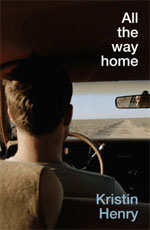
Angela Meyer Reviews Kristin Henry

v

All the Way Home by Kristin Henry
UWA Publishing, 2012

Between the covers of All the Way Home is the life of a man called Jesse, up to middle age, written in clean, effective verse. The prologue explains that Jesse is looking back, his memories tangled like the roots of his plants: ‘If you don’t keep teasing out / the recollections / they get strangled’. We reflect first upon Jesse’s childhood on the road with his father, a travelling salesman, in the US. The image of his parents is striking: his mother’s hair ‘a blaze’, and his father’s the ‘colour of ordinary absence’. Later Jesse will fall for a woman whose hair is red, like the mother who died too young.

Continue reading

Posted in BOOK REVIEWS | Tagged ,

BAP Reps 2012

Four poems from the past three issues of Cordite Poetry Review have been included in Best Australian Poems 2012 edited by John Tranter.

Congratulations go out to Josephine Rowe for Atlantic City (Cordite 37.1), Cameron Lowe for Turkey in the Drawer (Cordite 38), Mark Roberts for Cameraman (Cordite 39) and Tiggy Johnson for Photograph (Cordite 39) … and the guest poetry editors who selected them the first time around.

Posted in GUNCOTTON | Tagged , , ,

Rilke and the Buddha: 3 Translations

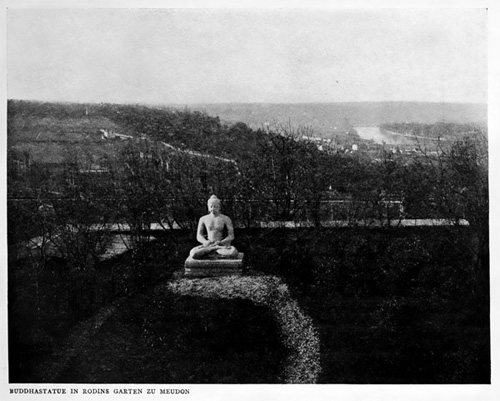
Soon after dinner I retire, at half past eight am finally back in my cottage. Then before me is the vast blossoming starry night, and below, in front of the window, the gravel path climbs a small hill, upon which, in tremendous silence, a Buddha-portrait rests, in quiet reticence imparting the unsayable containment of his gestures under all the skies of day and night. C’est le centre du monde, I said to Rodin. And then he looks at me so endearingly, in utter friendship. That is very fine and a great deal.

–Rilke to Clara Rilke-Westhoff, Meudon, 20.09.1905. Rainer Maria Rilke, Auguste Rodin, Der Briefwechsel und andere Dokumente zu Rilkes Begegnung mit Rodin, ed. Rätus Luck (Frankfurt am Main: Insel Verlag, 2001), pp. 111-112.


Rilke wrote three poems on the Buddha that appear at different places within the two parts of his New Poems (Neue Gedichte), which were published in 1907 and 1908 respectively and include some of his most cherished poems – among them ‘The Panther’ and ‘Archaic Torso of Apollo’. The first two poems in these translations are contained in the first part (Neue Gedichte). The third poem on the Buddha assumes a special importance in that it concludes the second part (Der Neuen Gedichte anderer Teil) and thus the collection.

Bei RodinPhotograph from Georg Treu, ‘Bei Rodin’, in Kunst und Künstler 3 (1905), p. 17.
These poems instantiate a significant cross-cultural and intermedial dialogue between West and East, Europe and Asia, sculpture and poetry, the founder of Buddhism and a Modernist poet. Rilke’s interest in the Buddha was stirred by an Indonesian statue in Auguste Rodin’s garden in Meudon, which the French sculptor had procured (along with other Buddha statues) from the 1900 World Expo in Paris. From September 1905 until the spring of 1906, Rilke lived in a cottage in Rodin’s garden and worked as his private secretary.

Translation continues the process of intercultural dialogue. It engages in a conversation with the original text and calls for interpretation and sacrifices. Unlike a prosaic or scientific text, every aspect of a poem contributes to its meaning: diction, images, rhythm, form, tone etc. Due to the unique complexity of a given poem, its translation cannot render a perfect equivalent in the target language.

Rilke’s Buddha poems, like most of his poetry, are written in formal verse (a sonnet and rhyming quatrains). Translations that aim to reproduce rhyme schemes and meter at any cost generally relinquish semantic precision and introduce additional material. We have chosen to translate the form of the poems more freely while accurately seeking to convey other distinctive qualities of his verse.


BUDDHA

Als ob er horchte. Stille: eine Ferne …
Wir halten ein und hören sie nicht mehr.
Und er ist Stern. Und andre große Sterne,
die wir nicht sehen, stehen um ihn her.

O er ist Alles. Wirklich, warten wir,
daß er uns sähe? Sollte er bedürfen?
Und wenn wir hier uns vor ihm niederwürfen,
er bliebe tief und träge wie ein Tier.

Denn das, was uns zu seinen Füßen reißt,
das kreist in ihm seit Millionen Jahren.
Er, der vergißt was wir erfahren
und der erfährt was uns verweist.


BUDDHA

Schon von ferne fühlt der fremde scheue
Pilger, wie es golden von ihm träuft;
so als hätten Reiche voller Reue
ihre Heimlichkeiten aufgehäuft.

Aber näher kommend wird er irre
vor der Hoheit dieser Augenbraun:
denn das sind nicht ihre Trinkgeschirre
und die Ohrgehänge ihrer Fraun.

Wüßte einer denn zu sagen, welche
Dinge eingeschmolzen wurden, um
dieses Bild auf diesem Blumenkelche

aufzurichten: stummer, ruhiggelber
als ein goldenes und rundherum
auch den Raum berührend wie sich selber.


BUDDHA IN DER GLORIE

Mitte aller Mitten, Kern der Kerne,
Mandel, die sich einschließt und versüßt, –
dieses Alles bis an alle Sterne
ist dein Fruchtfleisch: Sei gegrüßt.

Sieh, du fühlst, wie nichts mehr an dir hängt;
Im Unendlichen ist deine Schale,
und dort steht der starke Saft und drängt.
Und von außen hilft ihm ein Gestrahle,

denn ganz oben werden deine Sonnen
voll und glühend umgedreht.
Doch in dir ist schon begonnen,
was die Sonnen übersteht.

Posted in TRANSLATIONS | Tagged , ,

David McCooey Reviews Peter Rose and Ken Bolton

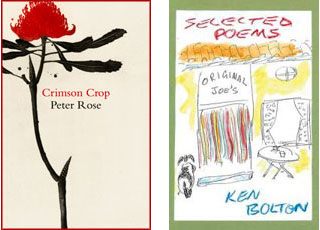
Rose and Bolton

Roseland and Boltonia

Crimson Crop by Peter Rose
UWA Publishing, 2012

Selected Poems 1975-2010 by Ken Bolton
Shearsman, 2012

The opening poem of Peter Rose’s Crimson Crop – which recently won a Queensland Literary Award – brings together illness, noise, and madness in a powerful vision of human frailty. In that poem, ‘Prelude’, the poet relates seeing a man at the Rome Railway Station banging his head on vending machines, while his countrymen ‘rushed to their trains, / fearful, cashmered, blinkered, / avoiding this glimpse / of what their brother had become’.

Continue reading

Posted in BOOK REVIEWS | Tagged , ,

Siobhan Hodge Reviews Eileen Chong

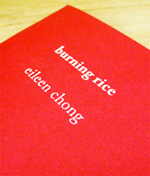
Burning Rice
Burning Rice by Eileen Chong
Australian Poetry, 2012

Eileen Chong’s Burning Rice is steeped in images of food, family and connectivity. The poems thematically span geographical and chronological distances in order to make links between cultural and ancestral origins. Culinary references combine to create comforting images of solidarity in the face of isolation and anxiety. However, this is not a chapbook wholly steeped in nostalgia. While diasporic tendencies can be identified, Chong is predominantly focused on establishing new spaces for her speakers and their family members, while also preserving what has been inherited. Historical boundaries are blurred as Chong’s speakers engage with close and distant family members, literary and historical figures alike.

Continue reading

Posted in BOOK REVIEWS | Tagged ,

Ukulele Ekphrasis: Prudence Flint and Ania Walicz

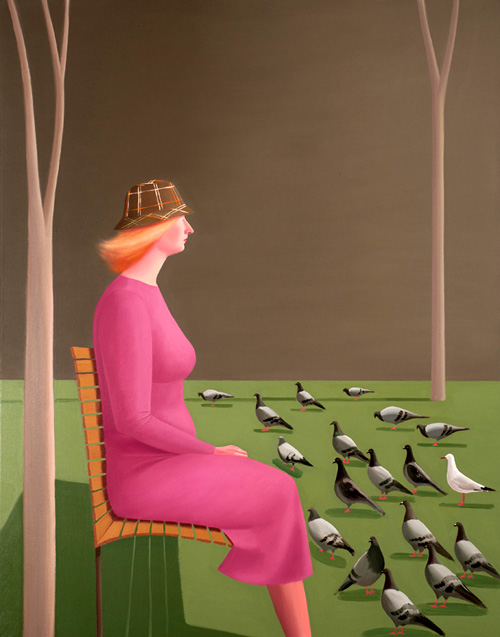
Bird Park

Bird Park 2011

Bird Park 2011 | Prudence Flint | Oil on linen | 127cm x102cm

I don’t know what happens I what happened like that I ring her and ring her but she won’t ring me or ring me back or ring me or bark me or answer me why do you do this to me why do you do this to me I said to meet and greet but she won’t do me must have been some thing I said to me must have been what I said or how I said or what I said to her I so liked coming round and sit a kitchen bit messy mouldy but I was nice and chatty wetty and betty do me and mumsy but it was nice to me and class classy and I said can I come over now and now she won’t do me why not do me and why not invite me and anwser me when I ring me and answer me and buy me and take me and love me and like me and be like before now we were such friends she wears check trousers now she wears me out I don’t think about you now and I think about me and I think about you every every every why you do me like that now why not why not ever ever ever ever why never why never more raven why that why not why no edgar allen poe why no why bird why miss bird why not now why friend and then no more I don’t understand now why did you do this to me why not now exo eplain now ox and oxo and oxo and lexo lux luxo like so like so and so and so you so and so I swear now she said I swearand I swore to be true to me tell me what happens top me tell me what happened now tell me how you saw me tell me what she thought about me what did you think about how did you see me how did I sound what did I say what you think about please explain me now what t what happened to me and me what happened to you now tell me why didn’t you see me or wanted to or not wanted to I rang and rang now and she didn’t she didn ‘ answer me I didn’t answer I didn’t say now I didn’t know how or where or who to tell me me and I didn’t know now for I was blind and I was so blind that I didn’t see what you did to me now I am angry you hurt me you cut me

Posted in ARTWORKS | Tagged ,