amble

travel in the paganini
canoe and you’ll never become
punctual feed that sort of salad
to your favorite shark and it will
be pissing beetroot, and set off
an alarm i finally located
your power of attorney doc [so
unreadable even bookworms had
only nibbled at the edges] in
the shredder handbook

your rare coin collection was
so rare i couldn’t find it if
you are intent on casual touring
don’t get lost in the slush fund

i can hear your bones clicking
you are somewhere out there
in the etheric brambles but
your name is so outdated you
will need a new one – perhaps
several you will be required to make
the purchase yourself

Posted in 64: CONSTRAINT | Tagged

Derrière monde

To distinguish fact from fantasy, Miss Satin
had grown from the headdress upward into gay
explanations and ratty descriptions. The letter to
Baudelaire had come, or purported to come, from
features of the terrestrial décor — theatre programs,
dinner menus, the infamous Eulogy of Make-up. She
herself had garlanded Nature on great occasions with
plumes of black thought, worn with regrets at the side,
but nothing, she reasoned, could rival a fan, their
abjection as rich as you please or quite simple:
a few recited lines of verse, but most were good
to go. A challenge and a rebuke would follow,
hidden away in her journal, where she
is forced to sleep, eat and drink in order to
protect herself. Something hovers in the far distance:
a shimmering of prospects embossed in gold, of really
artistic design, like the fustanella of a whirling dervish.
Evil is natural, and is therefore likely to torture and kill.
Not so virtue: this natty little animal stupefies even the
best endowed, bifurcating plantwise at the lips and
reshaping the journal’s immense coup de bluff
into a new toilette weaving in and out of waving —
Ah, the sea, sighed meaningfully, can be synonymous
with monde or world (as in signs of spirituality and longing
for the ideal), but its factual role in the everyday, played
by fantastic has-beens, is to set one’s sights on
landing sites, citing every which way.

Posted in 64: CONSTRAINT | Tagged

Post It

Technique whittled to a spear prongs earth
as tabby night filters a soaped waterfall of recollected words
jammed in a shoe, prudently
It passes on a cloud
and can’t fit in the photo
that dissolves trusty leaves
that feather bright and soft, as if a picture’s jarred time
where unlit books ramble into dream, sleep’s pillion
levering The Anthology of Fireside Chats
away from the grate with an heirloom poker
or more exactly, some crimp heater sloughed by the street
Fill the chute’s leftovers, a mug’s trail of relenting principles
wired to ankle, currency lass in a jumper times the curfew
a ball of discomfort on a vintage beanbag
while daffodils recite – preamble: body-as-quest
tougher than a table of elements in pin-drop pause
Adjust the sigh track near a convocation of analysts
A remix swims over a screen
Talk: plastic

Posted in 64: CONSTRAINT | Tagged

237, The Overlook


Act I

Sometime during the winter. In the West Wing the caretaker stacks (neatly, with axe) 20 legs of lamb, 12 turkeys, 2 dozen pork roasts. The Adler on the table in the great white hall (lots of ideas, no good ones). And elsewhere the maze—polaroid dangling from the hand. Topiary fever. Worst we’ve had in years. Downstairs, at the bar, he says: “I love the little son of a bitch” [high-pitched noises, screams] Some blackhearted things, out of the Games Room with their blue dresses walking.


Act II

Scene: floral blue on white. Look, Jack, there ain’t nothing in [elevator music, twins] The carpet soft, geometric. Emerald-green and on the bed (blue robe)—most            dream I ever. Had to see: bathroom, open, green and chrome. Is there is there? Who draws the curtain wide, steps. Out of the bath toward you (you toward her) in the floral West. Marks on the back, pretty white legs. Faithful hands slicing toward you like love.


Act III

Music, balloons. Back at the bar, Lloyd—whiskey for time. Been away but now I’m back. Been away but now I’m. Wolf Creek. Red Mountain. All work and no meat makes [violins] [screams] Where the hell did you, Lloyd? With limp and axe in hand, axe to the heart (the immaculate suit, the voices). Through snow and into the maze Overlook we go.


Act IV

Elevator. Every little photograph on every blank wall: a dull boy. The quiet summer.

Posted in 64: CONSTRAINT | Tagged

A bar of soap

For Darren Currie …

Sometimes ANONYMITY is a fantastical doorway into the being of a writer; ANONYMITY is the passport of an unknown agent who knows no constraint to conduct acts of good and evil/ A signatory to the distraction that allows a writer the freedom to attack an unfinished sentence that has imprisoned them/ Wipe clean the restricted access to closure/ The bait of being ANONYMOUS entraps character/ ANONYMOUS is a universal stamp of someone who has the key to the locked riddles of continuity/ WHO are the dark shapes that found your lost wallet?/ WHO are the dark shapes who scratched your car and moulded alleyways with shadow?/ ANONYMITY has the capacity to grease the night with pure immunity of the senses/ To not assume that you know one person from a bar of soap than another is the vaccine of prejudice/ ANONYMOUSLY take a clean bar of soap and lather it into humanity…black and sterile of mystical but innocent, embryotic wonderment …

Watch the shadows dance,
when constrained in a vortex
diffusing magic …

Posted in 64: CONSTRAINT | Tagged

Marooned

(a homophonic inversion of Rimbaud’s Marine)


DON’T! HOO SANG EX
HORTING TURBINES OF
LOOM O FURRY FRUITS
EXTRA TEA VERITABLY
PILLED UP IN THE FORAY
IF I LENT OUT SIR
CUSS MEN FOR LESS IT’D BE
AUDENRY WE SUCK
ON MENTHOL & REFLUX
LEST WE COO
RUNTS & DILLETAUNTS
SOUL-VENTING
SUTURE BROMANCE
DEBAITS ACCUM UR
LATE LITHPING A PRUDE
ATHEIST
URGENTHY UGH LET’S
CHAR DOZE GENTS WITHER
CURVEBALL
Posted in 64: CONSTRAINT | Tagged

Et in California Ego

Last week, I knew it was time to leave the city.
The way the sun glinted off window-panes, a warning
arriving on my front lawn with the morning
newspaper, and the shape of that funny cloud…
and those kids breaking stuff, it shouldn’t be allowed
one time, let alone — the way it is now — twice.
No, man, it’s definitely not pleasant, not nice.
So I packed and got the hell out of this shitty

place, filled the tank, beat it. Hey, it ain’t funny,
the way peculiar things kind of happen
in their odd way, how certain envelopes fall open
at the fatal news, the way your best friends just leave
and abandon you to your career, and you grieve
pointlessly. The Sheriff swings that rawhide goad,
and you take off down that dusty road.
Hey, do you have enough money?

Yes, honey… you turn to look back, but instead
the future appears before you, every day
longer than the last, your dog… say,
was that your dog Hobo disappearing behind that row
of tents? Then a male voice on the radio
speaks a special message just for you, and between
one gas station and the next, that pale green
landscape just grows darker, the blue thread

crawls behind your dawdling ballpoint on the map
as you plot your escape from the horrid Barbary Coast
to that new place, where you can honestly boast
of your massive talent turning out column after column
of prose as mellifluous and convincing as it was solemn,
read by senior executives and beatniks in cafés
along with the morning news of various calamities. Graze
peacefully there, half snoring, your lap-

top snapped shut, but the road begins to wind
higher into the hills, the hairpin bends and turns
causing the brakes to heat up as the rubber burns
from your squealling tires, your fingers crossed
as you check the map and hope you’re not lost,
not in these unspeakable badlands, not just here
where the good things fade into a pale mist, where
you realise you’re lost, and you think you’ll never find

your way home: time to stop and park
in this trailer park, yes, it’s late
with a bad moon rising, with the endless wait
until dawn — don’t nod off! — then you unpack
your flimsies, don pajamas, snooze in back
until you’re woken by the unbearable light of a star
gleaming and glimmering through the trees, as far
from earth as you are from your home, the dark

seeming to grow around you, the clouds to loom
over all the sky, dark now, your cries
feeble and fading over the low rise
ahead, now a train loaded with mounds of coal
pulls by, steel wheels on steel tracks roll
onward and upward, you hear the whistle sing
its mournful song, plucking the single string
of your heart, the low smoke plume

or maybe it’s a locomotive plume of steam
lit from below by a fitful boiler flame.
You know your life ahead of you is just the same
as everything you’ve left behind, the endless night
concealing the world, but then the unbearable light
of the sun does too, with its immense
and world-bestriding blinding indifference —
and, waking, you trudge ahead with your dream.

To keep going demands an awful effort of will.
You know that what you believe is just not natural.
Your life seems like a rusting, failed factory
that tries to manufacture little pieces of sky
but instead makes more dark clouds. You long for release
from that pressure to flee the horror, to find peace.
In the mirror no monster, just a girl who looks pretty.
Start the motor. No more self-pity.


‘Et in California Ego’ began as a draft using the end-words of ‘On visiting a
Borrowed Country House in Arcadia’, by Alicia E. Stallings, in The Open Door: One Hundred Poems, One Hundred Years of “Poetry” Magazine edited by Don Share.

Posted in 64: CONSTRAINT | Tagged

Circular Quay

for (but not to) Gig Ryan

You heard me. Don’t pretend you didn’t.
This town’s foliage
corkscrews down from trees that sound
a bit off. Gentles in a neat layer
writhe like a pullover
over what at a distance looks
crisply modelled.
Up close, the scalloped sails pullulate
with air gusts writhing.
But of course you knew what I was
going to say and didn’t have to pay heed.

Closeness cracks me up, it really does.
Eyes water and nostrils stream.
Buddleia brings butterflies across
the straits, and a sticky cloak of caterpillars
strips bark from dragon trees that weep
red blots.
Millions of bits of mirror
set in concrete beckon to the high cirrus.
No they don’t. If we weren’t so close
we’d have to face each other,
swarming across plenteous tiles.

Climate once mutual shrinks to its events.
Connectedness is
building a free state on pontoons
invisible from this wharf,
charging flakes of skin, fish scales
to overlay
paschal hordes showing up
obscurely furious. Words are spat
across the tresses of light breeze
a Koori boy puppets in, clothed
with tattoos of scabies spiralling at work.

I call him warrior and he trickles coin.
Here where paving is so thin if reticulated,
boots trouble the buried: re-
knit with aftershock as by the drop
of heavy fruit,
colonists paw at the straits high above.
They are wanting to shape up but
arise in glitter,
pegging out the foreshore in a seam
of gold studs. Take your hands
out of your pockets, stretch your arms.

Posted in 64: CONSTRAINT | Tagged

Gibson’s Folly (Tambo River)

‘Treat with Euphrasia bad memory and vertigo’

Gibson’s Folly -
Earth Moving: the precipitous track descends to Wilga portal
and the Tambo

Purple eyebright ringed around closely
in heathy dry forest
lilac, pink or white
‘it comes and goes’
but when it’s gone, gladness
goes with it
the yellow spot behind the lower lobe
a guide to pollinating insects


Rock Ore Base metals Copper & zinc: The Wilga and Currawong massive sulphide deposits are hosted within deformed Upper Silurian volcanics and sediments of the Gibsons Folly Formation Other prospects: Dogwood, Mopoke, Big Hand, Banksia, Peppermint, Boxer And Nameless But Bigfoot may bear GOLD the richest of all
High Noon The Waxlip Anomaly – a magnetic high at 12000N 15300E on the Wilga Grid Tested by diamond drill but no significant mineralisation was intersected Waxlip Spur, site of the old Benambra mine processing plant, an acid seep runs down to the Tambo River & high flows shall dilute the heavy metals 43 species of orchids were discovered in the area including the purple waxlip Glossodia major which forms no roots and depends upon mycorrizal fungi for nutrition I run up the bare clay spur to the helipad with a view beyond the failed revegetation into rugged country from Mt Tambo to the Nunniong escarpment
Wilga Spring Beside the Tambo a natural spring issuing sulphides is a blind for heavy metal seepage from the tailings dam on Straight Creek upstream. The small town of Swift’s Creek draws off its water supply 30 kilometres down river.
Horse Riding with Gibson via the Bundara Up through Charlie Mac’s to the Bogongs To lay down salt in trap-yards Under the dappled sunlight of snow gums Late spring snowdrifts and dark shadows Replicate the flanks of piebald horses * Leaping the shallow stream At the base of the tailings dam spillway Last remnant of the rarest swamp Sphagnum moss, strawberry buttercups Sun orchids and bluebells Trampled by hooves gone feral across the Alps
SPZ 633 Blue-tongue greenhood and sprawl of knawel at the foot of the dam wall - in their own zone rare companions among Sphagnum moss: montane grass-trigger plant alongside dusky violet when the dam wall is raised twice the height ‘they were so elusive’
Mountain banksia High on the dry ridge cylindrical yellow flowers of Banksia canei nectar licked by eastern pygmy possums and feathertail gliders and honeyeaters chasing Grevillia, Corea and Callistemon and thirteen species of Eucalypt around the slopes all year over look the turquoise dam waters: 700,000 tonnes of In the steep headwaters valley soon to be flooded more deeply mine tailings: copper, zinc, cadmium, lead, arsenic, manganese, antimony lying under absence of euphrasey, blue-tongue, sprawling, and all those precious others viol-ate under dam waters Sphagnum cristatum and manifold springs along the creek bed the dam leaks down through rock, another 7 million tonnes to be dumped, vertigo in Lake St Barbara: by her name poisonous waters are rendered innocuous
Posted in 64: CONSTRAINT | Tagged

Robyn Rowland Reviews Margaret Bradstock

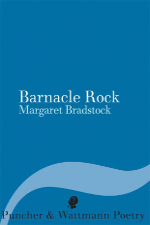
Barnacle Rock by Margaret Bradstock
Puncher & Wattmann, 2013

Barnacle Rock is time-travelling through poetry. Its significance lies in Margaret Bradstock’s successful inscribing of a journey, from the search for a land of plenty by various explorers, to the position we find ourselves in now: a climate in crisis, a civilisation in error and a country which has displaced its indigenous people, replacing their knowledge with a rusted ‘progress’. Dense, a rich read, it alerts the mind into awareness.

Continue reading

Posted in BOOK REVIEWS | Tagged ,

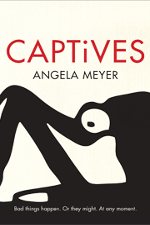
Review Short: Angela Meyer’s Captives

Captives

Captives by Angela Meyer
Inkerman & Blunt, 2014

Fittingly tiny by way of physical size, Captives is a beautifully produced collection of micro-fiction by the Melbourne author and critic Angela Meyer (known also as the blog writer, Literary Minded). While in a poetry-dedicated journal such as Cordite Poetry Review, it may seem odd to be reviewing a book that makes no explicit claims to being poetry – or, more specifically, the difficult-to-define mode of prose poetry – Meyer’s micro-fictions do seem to invite comparisons with contemporary prose poetry. Continue reading

Posted in BOOK REVIEWS | Tagged ,

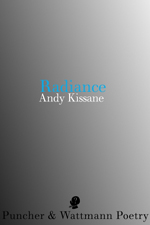
Review Short: Andy Kissane’s Radiance

Radiance

Radiance by Andy Kissane
Puncher & Wattmann, 2014

Percy Bysshe Shelley is sailing a boat on Sydney Harbour, steering with the tiller between his knees as ‘a cheesecloth moon floats above Pinchgut’, but his companion, Australian poet Andy Kissane, can’t bear to make eye contact:

… I’m a little spooked by the empty caves

where his eyes used to be, and the bald white hill
of his cheekbone where a hungry mackerel feasted
on his flesh like a Catholic breaking his Lenten fast.

Continue reading

Posted in BOOK REVIEWS | Tagged ,

Sustaining Oral Tradition: A Preface to Bulu Line: A West Kimberley Song Cycle

Stuart Cooke’s translation of George Dyuŋgayan’s Bulu Line: A West Kimberley Song Cycle: I cannot over-emphasise the importance of this kind of work. Australians are only too familiar with the significance and value of Indigenous arts as part of the national heritage and of the contemporary repertoire. We are familiar, but they still take us by surprise. In the late 1970s, those who had the habit of mourning cultural loss in the central desert, suddenly witnessed the flourishing – like desert flowers after rain – of an art movement that critic Robert Hughes dubbed ‘the last great art movement of the 20th century’. But when we compare it to the oral traditions of the continent, we have to marvel at the ease with which that visual art was translated from ochres into acrylics, then translated into art-commodities and transported to eagerly awaiting patrons around the world.

Compared to that art movement, the song and poetry traditions seem to be sadly languishing. Who has the expertise to accomplish the tasks of linguistic translation? Thoroughly bilingual poets are extremely rare. Poets and storytellers in traditional Australian languages have yet to be fêted on the literary festival circuits. Yet despite the disappearance of many languages, we should be wary of announcing the demise of these literary traditions too early. They have that power held by sustained longevity that could emerge again, like those desert flowers, and we can never be sure what form they will take.

This is why I stress the importance of this kind of work. It is conscious of the weight and importance of all those oral traditions in the continent; the ‘real’ Australian literature. It avoids the easy translations of the visual arts, where paintings can be interpreted in New York as ‘some kind of primitive abstraction.’ It takes seriously, by necessity, the task of the translator, at which point we must theorise a bit about what is going on, and for this I can draw on my own experience in Broome, Western Australia.

A few years ago, Paddy Roe, respected elder, teacher and storyteller in the West Kimberley, sang some songs that were composed by a Ngumbal woman some years before, and then helped me render them in English. Roe spoke a few traditional languages from around Broome, plus Broome English. I never got the impression, when he was talking about languages, that they were clearly delineated from one another. Rather they were ‘bordering’ on one another all the time.1 There was no-one doing that nation-building work of separating languages off from one another, standardising and unifying them. In theorising translation, Naoki Sakai rather cleverly shows that the unity of language is in fact a modelling, and an effort of the imagination. No one ever experiences a language in all its unity, but what we do experience all the time are acts of translation. So, as he says, ‘translation is anterior to the organic unity of language and […] this unity is posited through the specific representation of translation’.

We conventionally represent translation as bridging two languages, as a ‘communication model of equivalence and exchange,’ but that is not what it is, it is a ‘form of political labour to create continuity at the elusive point of discontinuity in the social’. Roe was working on creating continuity within the political grouping of the people called Goolarabooloo. This is not a ‘tribe’, since it is composed of different land-holding groups speaking different languages. It is a kind of political confederacy unified by ‘lines’ of significant ceremonies and responsibility for sites going down the coast from One Arm Point to south of Broome. So, what happened when I sat with Roe and we began to translate into English? The political labour was now across another social discontinuity: an Aboriginal cultural corpus can now link to a putative Australian nation, and the songs could now impinge upon what we think is the representation of the national literature. There are a lot of steps on that journey! So far, it is largely only Indigenous writers working in English genres who have mounted that national stage.

The complex process of translation spelled out by Bulu Line: A West Kimberley Song Cycle – from a spirit being to Dyuŋgayan to Roe and Butcher Joe, to Ray Keogh to Stuart Cooke; from Nyigina to Broome English to Australian English; from oral production supplemented with gestures and sand drawings via tape recorders and notebooks to alphabetic script printed on paper – reinforces the idea that translation is emphatically never about reducing the number of mediations, nor indeed facilitating the transfer of meaning.

Without Ray Keogh’s work this translation would not have been possible. The Bulu line might have halted, and not been repatriated to the community as it has now been in this book form. I got to know Keogh well when we worked in Broome in the 80s when he was doing the ethnomusicological recording that became his thesis. He loved to sing himself, and had a big resonant voice that often exploded into laughter. When working with the old men he would laugh, too, as he tried to get his tongue around those palatal sounds: ny and dy. And as he was transcribing expertly and meticulously he would sing the songs with them too, continuing the life of this Bulu. Who could have guessed that it would then travel to the University of Sydney, where Keogh would sing the songs to ethnomusicology students in his classes, for some short years before he was taken from us?

Consider this surprising idea from Andreas Lommel, remembering fieldwork in the Kimberley in 1938:

They, of course, taught the corroboree to others still roaming in the bush. I even met some Worora men months later in Broome who taught the corroboree for a fee to others who did not understand their language—this did not matter.

The poet made his songs in the language of his tribe, but, for rhythm and sentimental reasons he changed the language so that some of his songs could not be translated.2

The idea that clear understanding might ‘not matter’ and that obscurity might even be introduced, leaves us with what Cooke is calling the ‘haze’, the necessary obscurity in translation, and in poetry itself, which is a precondition for its vitality and sustainability. I am anxiously optimistic about the rich possibilities that this work offers. Anxious about the loss of the corpus of oral traditions and those still waiting for translators, but optimistic about their hidden powers searching for new forms and for the right occasions to erupt into the open again.

Posted in ESSAYS | Tagged , , , , , ,

Feature Poem with Judith Beveridge: Myrrh

Pablo Neruda said this:

It’s the words that sing, they soar and descend… I bow to them… I cling to them, I run them down, I bite into them, I melt them down. I love words so much… The unexpected ones… the ones I wait for greedily or stalk until, suddenly they drop… I drink them, I gulp them down, I mash them, I garnish them… Everything exists in the word.

I have extracted this from a much longer piece written by Neruda in his memoirs, but it gives you an idea of how much words meant to him. Most poets share a similar passion and compile lists of favourite words. Some of the words on my current list are: sassafras, pandemonium, mandolin, pasture, gondola, rubicund and myrrh. Thus, when I came across Mona Attamimi’s poem ‘Myrrh’, which is from her long poem, ‘The Sisters’, I was immediately drawn to it.

Of course, a poem is always more than its title, and this poem you’ll find has a powerful and exotic narrative. Straight away suspense and drama are evoked through the appearance of the ‘deaf white cat’. Making the cat ‘deaf’ is indicative of the power and suggestive nature of the language. The poem seems to me a masterpiece of economy, what is not said as important as what is said. The poet gives us just enough in order to hook our interest, the selection of detail evocative and resonant of strangeness. The cat sniffing the onyx ring on the finger of the hand that holds the bag of myrrh is wonderfully conceived, as is the image of Ruda ‘wrapped in the scent of burnt salt’ in stanzas 6-7. So much in the poem works through suggestion. We have forebodings of war and destruction, the wrath of warlords and gods, a story that you feel is going to plunge its readers and characters into darkness, before they emerge into light. The success of a long narrative poem depends upon how the details, the characters and the drama are dealt with, and I would say that restraint and judicious choice of image are essential ingredients for avoiding melodrama and keeping the reader’s interest. It is obvious that this poet knows very well the weight of certain words – their gravity, their lightness and all that’s in between – and she knows balance and poise, too, demonstrated by the poem’s pacing and by the tight stanzaic structure playing out against the poem’s looser rhythmical structure. After reading this poem, I feel the words have been a memorable gift, just as precious and exotic as one of those six hundred pouches of Nile myrrh. – JB

Myrrh


In the deep of night a deaf white cat
strays into a garden, leaps onto
a window, lands in the Grand Mafraz,

and stares at a horde of turbaned men
rewarding the Lord of Seiyun six hundred
pouches of Nile myrrh. Her tail

brushes the Lord’s wrist; he idly
strokes her dry nose; she sniffs the onyx
ring on the finger gripping a pouch

of myrrh, then the fur on her back
prickles, her spine arches and her claws
dig into the cold ground.

          *

In the corridor, under a thick cloak,
Ruda waits for her Lord to disburse
her a pouch of myrrh. At first light,

she pockets her prize and stands
by Lord Seiyun while he turns the key
to his daughter’s room. Wrapped

in the scent of burnt salt she enters
the dark alone, whisks the child-bride
from her cot and hides Khigala between

the folds of her thick cloak. In the silent
hall the air is still, and there is no sight
of Lord Seiyun. Like a ghoul riding

the wind, Ruda glides into secret
passages and chambers clutching the child
till she reaches a tunnel that opens

onto a parched meadow
beyond the city gates. She emerges
in the morning chill as the Lord’s army

prepares its journey into the Rub Al’ Khali.
Behind the fading moon and white sky,
a scar-faced god witnesses Khigala

quietly clinging onto Ruda’s sleeves
as they travel through the desert
in a caravan overflowing

with pepper, barrels
of pomegranates and a handful
of slaves: dowry for an ageing groom.
Posted in GUNCOTTON | Tagged ,

The War Hero and His Poem


Photo by Kent MacCarter

On the weekend after Tony Abbott, the Australian Prime Minister, announced that the Australian Defence Force would be assisting the US forces in attacking ISIS, the war hero Ben Roberts-Smith was featured in the magazine section of The Weekend Australian. The journalist detailed the process of painter Michael Zavros’s making a portrait of Roberts-Smith for entry in the nation’s most famous art award, the Archibald Prize.

There was a quality of déjà vu about this – Ben Roberts-Smith, a muscular, Anglo-Australian warrior, Australia’s most decorated soldier, came to national prominence when he was awarded the Victoria Cross for bravery, which took place at the same time that Australia’s withdrawal from the war in Iraq and Afghanistan was announced. There was widespread opinion then that Australia had made a mistake by joining the Americans in the ‘War Against Terror’, and that the withdrawal could be seen as a defeat.

It would not take a cynic to see that on both occasions Ben Roberts-Smith, an ANZAC archetype, has been conjured up to reassure the public, by all his image evokes, that Australian political decisions are not largely dependant for their direction on US policy. But what struck me was not this fairly typical manifestation of public/national image-management, but that deep in the article it mentioned that Ben Roberts-Smith was in Brisbane to read a poem.

To help raise the profile of Mates 4 Mates, a not-for-profit organisation that assists soldiers and their families to recover from the traumas of conflict, and to promote the British-sponsored Invictus Games, a kind of Paralympics for physically rehabilitated Commonwealth soldiers, Roberts-Smith was recording a poem I know well: William Ernest Henley’s 1875 ‘Invictus’.

It is a poem I once wrote an essay about, focussing on the role it played in the film of the same title by Clint Eastwood, a film that took South Africa’s campaign to win the Rugby World Cup in 1995 as metaphor for the nation’s psychological recovery following the dismantling of Apartheid. Several years ago, I presented a draft of the essay at the Poetry and Revolution conference at Birkbeck College in London under the title ‘Invictus and the Negotiated Revolution’, with the ironic subtitle ‘Or Clint Eastwood’s idea of the lyric poem’.

At that time, the effects of the post-GFC budget-cuts were being very strongly felt in the education sector in the UK – in fact the London Riots had taken place shortly before – and there was a lot of talk about revolution among the poets. So much talk, in fact, that I found it almost debilitating, and, probably, more so because my understanding of the politics of language, influenced by my experiences over the years in several countries – South Africa, Indonesia and Egypt – is in being conscious of language’s everyday power. Certainly, the kind of political articulation that the poets were hoping for in London suggested to me nothing but their own powerlessness.

Better, I thought, to look at a Clint Eastwood movie that claims that Nelson Mandela not only loved the Victorian era poem ‘Invictus’, allegedly reading and memorising it regularly in his prison cell on Robben Island, and that he gave it to Francois Pienaar, the captain of the South African rugby team, to help motivate him and his team so that – yes, this is Clint Eastwood’s version – they would defeat the All Blacks and unite multiracial, post-Apartheid South Africa for the future.

In my research for the paper I discovered that Timothy McVeigh, the notorious Oklahoma City Bomber, was also fond of this poem and that he presented it in lieu of a final statement after he was sentenced to death. A Google search revealed that there was a brief flourishing of amateur literatury criticism in the media at that time, many provincial college professors and journalists claiming that McVeigh had misread the poem, and on YouTube I found, among countless individuals reading the poem, many it seems for school assignments, the disturbing image of a Slavic man, his face heavily painted in camouflage, reciting the poem from memory.

That image, in my recollection, is more disturbing now, knowing of the conflict unfolding in the Ukraine, and especially because he gave the impression that immediately after his recitation he would be going off to fight.

On the site of Mates 4 Mates, Ben Roberts-Smith can be found reciting the poem, a poem that up until the last two decades or so was taught widely in British schools and, I imagine, until the 1960s throughout the British Empire. To such an extent that in correspondence Michael Schmidt, the editor of British poetry magazine PN Review, wrote to me, as he rejected the essay, that he strongly disagreed with my observation that ‘Invictus’ was an obscure 19th Century poem.

In Roberts-Smith’s voice the poem is just as it is in the mouth of Morgan Freeman/Mandela, and as it is on the page that passed from the hand of the condemned McVeigh to his legal representative. Whether it was McVeigh, his lawyer or the judge who read aloud those words to the court, I don’t know.

What impresses me in every circumstance in which the poem is read is how impersonal it is, how it unmakes the personal subjectivity I appreciate in the poetic. Clint Eastwood’s Mandela was right – ‘Invictus’ is motivational writing, like Sun Tzu’s The Art of War.

In listening to the Australian war hero read ‘Invictus’ I can hear again that it is simultaneously a poem about conflict and about suffering, that it is a poem that asserts the individual even while it is, like much lyricism in popular culture, nearly completely impersonal. In the sense that it is depersonalised, it is, to me at least, not a poem: it’s an anthem. While I am sympathetic to the goals and care of Mates 4 Mates and, with reservations to the military action against ISIS, Roberts-Smith’s performance elides what I appreciate in the politics of the poetic: the discovery of another’s inner life, their loves and doubts, the vulnerabilities and hopes, another’s – in a word – sensibility. Watching him robotically reading that poem on my computer screen, I worry that he, like so many of us, is trapped in a mediatised, politicised image.

I wish that, instead, he had chosen to read us a real, intimate, 21st Century poem.

Postscript: On the long weekend – the Queen’s Birthday in Western Australia – before this short essay was to appear in Cordite Poetry Review, Perth’s Sunday Times had part of a statement by Ben Roberts-Smith on Australia’s decision to assist in the fight against the IS. On its front page: ‘… they probably don’t deserve to share the Earth with the rest of humanity.’ (It should be remembered that Roberts-Smith is from Perth, and this statement was made on a visit to the city. Perth, too, is the main base for the SAS due to its shorter flying time to much of the world.) The absolute violence implied by this statement is startling. It demonstrates the way in which Roberts-Smith, now an MBA student and motivational-speaker on the corporate lecture circuit, is a figure who articulates, even embodies, government policy. Seen in light of my short essay, his ‘using’ the poem ‘Invictus’, I hope I can prompt some skepticism about his sort of conjunction of language, nationality and today’s imperial violence, and, let’s not forget, the consequences of having a war hero read a poem.

Posted in ESSAYS | Tagged , ,

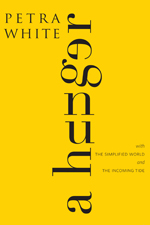
Martin Duwell Reviews Petra White

A Hunger

A Hunger by Petra White
John Leonard Press, 2014

Petra White’s A Hunger is a kind of Collected-Poems-so-far, containing her two previous books, The Incoming Tide and The Simplified World, and a new collection that provides the overall title. It is not a large body of work but it is an impressively consistent one and a third book is often a good place from which to get a grip on a poet’s overall orientations.

Continue reading

Posted in BOOK REVIEWS | Tagged ,

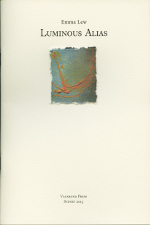
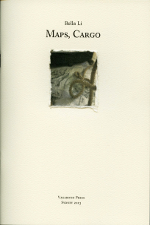
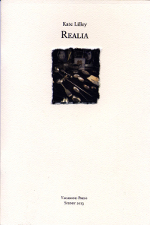
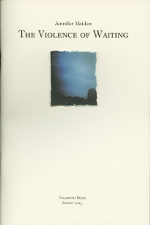
Gig Ryan Reviews Emma Lew, Bella Li, Kate Lilley, and Jennifer Maiden

    Luminous Animals by Emma Lew
    Vagabond Press, Rare Objects series, 2014

    Maps, Cargo by Bella Li
    Vagabond Press, Rare Objects series, 2014

    Realia by Kate Lilley
    Vagabond Press, Rare Objects series, 2014

    The Violence of Waiting by Jennifer Maiden
    Vagabond Press, Rare Objects series, 2014

Elegy intensifies around the objects that remain, those keepsakes that must signify a spent life. In Kate Lilley’s Realia, the first poem ‘GG’ is an auction listing from Greta Garbo’s estate in which the repetition of Garbo’s name intones like a docked requiem. Only things exist timeless, immutable, saleable, as shining representatives of the once-living. Life’s fraught event is reduced to its acquisitions, and transformed, satirised, into capitalism’s ultimate wearer of labels: the former consumer of commodities is now more amenably cast purely as a selection of those objects, whose value her absence increases. Continue reading

Posted in BOOK REVIEWS | Tagged , , , ,

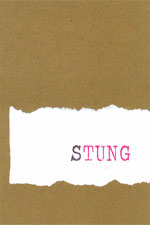
Review Short: Chris Mansell’s STUNG

Stung

STUNG
by Chris Mansell
Wellsprung Productions, 2014

Chris Mansell is a widely published poet with a lively range of interests, a multi-talented writer who bridges various creative worlds; her work sometimes fusing with music, the visual arts, and theatre. Her departure from a narrow specialisation in poetry is highly admirable, but may have made her somewhat under-appreciated both as an energetic innovator and important poet of her generation. Mansell’s first book of poetry appeared in 1978, and she has published more than 25 books and chapbooks in the intervening decades; while her Schadenvale Road, a collection of short stories, appeared in 2011.

Continue reading

Posted in BOOK REVIEWS | Tagged ,

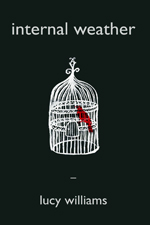
Review Short: Lucy Williams’s Internal Weather

Internal Weather

Internal Weather by Lucy Williams
Walleah Press, 2014

While Lucy Williams’s Internal Weather is split into the unavoidable cycle of life – birth, childhood, and death – the collection as a whole is a love song, a tribute to ‘difficult events’ and ‘unattended shadows’. The poems emphasise how the ‘forming of words’ and the ‘making of stories’ locates these instances in specific moments of memory and time. Indeed, love is the lung-set of Internal Weather: love for a child, first love, romantic love, love lost, love for the dead, love that ‘surprises … like religion’ and thickens ‘doubt into determination’.

Continue reading

Posted in BOOK REVIEWS | Tagged

Jacinta Le Plastrier Interview Sarah Holland-Batt

Macanudo

Australian poet Sarah Holland-Batt, b. 1982 in Queensland, grew up in Australia and America and also writes fiction and criticism. She was a Fulbright Scholar at New York University where she attained an M.F.A, and is currently a Senior Lecturer in Creative Writing and Literary Studies at the Queensland University of Technology and the new poetry editor of Island. Her 2008 book Aria (UQP) won multiple major awards, including the Arts ACT Judith Wright Prize, and was also shortlisted and in the NSW Kenneth Slessor Prize for Poetry. She has also been a MacDowell Fellow and an Australia Council Literature Resident at the B.R. Whiting Studio in Rome. Her next collection, The Hazards, will be published by UQP in June 2015.

Jacinta Le Plastrier: What is your current poetry project?

Sarah Holland-Batt: I don’t really have poetic projects, per se; my poems come to me one by one, often on fairly unrelated subjects. Lately I’ve been writing a fair bit about visual art; I’ve been particularly interested in works that engage with acts of violence by women, from Gentileschi’s Judith Slaying Holofernes to contemporary works. Truly clever ekphrastic poems are difficult to do well, although when they do work, they can tilt the axis on which we view the original slightly. I like that challenge. I also like that they demand a long engagement with the canvas or work; I find that sustained act of looking, and of translating the visual into language, pleasurable. I’m also in the early stages of working on a novel, which is a different affair entirely—one I am, for the moment, enjoying. It initially felt like a relief to escape into prose, although its demands are catching up with me now.

JLP: I read that you worked and studied with Sharon Olds on this MS at NYU. Can you tell us a little about that experience? Which also leads to a general question about how much you revise and edit your work with the assistance or feedback of others?

SHB: I studied with several poets I admire enormously at NYU—among them Charles Simic, James Fenton and Yusef Komunyakaa—and I was very lucky to work on the manuscript of my forthcoming book, The Hazards, with Sharon Olds. Sharon is both a stupendous poet and a generous and attentive reader, the rare kind that is able to focus on the poem and poet at hand. I feel very lucky to have spent time with a poet I admire so much. We’re very different kinds of writers, and we didn’t always see eye to eye aesthetically, but I have always loved the kind of intellectual frisson that comes from those disagreements. In general, though, I revise and edit my work almost wholly by myself; I’m not part of any writer’s groups, and I don’t feel the need for much assistance or feedback. My poems go through many, many drafts, and I discard and abandon far more than I publish. It helps that I’m incredibly hard on myself, that I’m essentially animated by doubt. You have to be.

JLP: Why do you think you write poetry? Were there early formative moments which influenced this choice?

SHB: I knew from when I was quite young that I would become an artist of one sort or another. There is a strong artistic bent on the English side of my family; my grandfather was a watercolourist, my father an amateur composer, and our house when I was young was always full of music and my grandfather’s paintings. My early ambition was to be a classical pianist, and I studied that intensively for many years; I do miss the discipline of that now that I’ve given it up. I came to poetry and poetics as a teenager, when I read Wallace Stevens, Eliot and Whitman at high school in Colorado. I understood the music of their poems before I understood the poems themselves, and I responded to it viscerally. Poetry for me has always consequently been a musical undertaking; there’s a mathematical pleasure in the patterns of language for me, just as there is in listening to, or playing, Bach. Intellectually, too, I love the challenge of distilling complex ideas into the small machine of the poem.

JLP: What is your rhythm for writing? I mean, do you work at set times, on set days? Or is it more organic than that for you? And … where do you work?

SHB: I like writing at night while drinking a gin martini. Unfortunately, life isn’t always like a Fitzgerald novel, so sometimes I have to make do with less than perfect circumstances. I prefer writing away from home, in cafes, bars, hotel rooms—there’s something about the anonymity of those public spaces that makes it easier for me to hear myself think. As far as routines go, I don’t believe those people who say that poetry is a job like any other job, and you have to be disciplined: write for four hours in the morning, that sort of thing. That’s absurd. Poetry is art, and art is mercurial, uncooperative and testing. Some days you can do it and others you can’t. I’m not terribly prolific and I prefer it that way. I know that I really mean it when I turn to write a poem.

JLP: How do you personally keep alert for writing poetry?

SHB: I don’t know that I do. I have long fallow periods. Sometimes the best way of writing a poem is to do things that are thoroughly unrelated to writing. I get ideas when I’m reading the morning paper, running, at an art gallery, etc. I never get good ideas when I think, I really ought to sit down and write a poem.

JLP: How consciously do you set out to create and work on a poem? How do they arise for you? And how conscious might be your intentions around technique, form and rhythm, for instance?

SHB: The act of writing a poem is painful and slow for me. I don’t dash off a draft; I eke the poem out line by line, often leaving it unfinished for a few days as I whittle the basic shape of it. My poems are acts of thinking; in them I am often advancing an idea or an argument, and it often takes me days to reach my conclusion. I know that this is different for other poets, who are perhaps more impressionistic and have a more Romantic conception of their own poiesis. For me, writing poetry is a wholly conscious process and my intentions are fairly transparent to me, although they often alter considerably during the writing of the poem. I rarely end up with the poem I set out to write.

JLP: What do you use to write (ie. what tools) and how do think this might influence what is written? For example, do you hand-write drafts and then type them up, or do you work from a computer from a poem’s beginning?

SHB: I like drafting in Moleskine notebooks with a Lamy rollerball pen. I’m a creature of habit about that; I use the same notebooks and pens year in and year out. I prefer to initially write by hand because it forces my thoughts to be more considered; I can only write so fast. By contrast, when I type, my fingers can move at the speed of my brain, which produces a lot of ‘first thought, best thought’ poetry—which, for me, is not particularly considered or interesting. Once I have a rough draft in my notebook, I assemble that on my MacBook. For one, I like to see how long the lines are visually, where the spaces are, etcetera, and I also find I see the poem more objectively if it isn’t in my own hand.

JLP: Can you talk about the role of ‘poetry editor’ and how you find that to be – in context of your new role at Island?

SHB: I’ve only been in the role since May, so it’s still very new. So far, though, it’s been incredibly enjoyable. It’s amazing to be able to put brilliant new poems into print. I love reading submissions and curating an issue, seeing how different poems speak to each other. Of course, it’s also difficult at times, as there are lots of good poems out there and only so much space to work with in each issue; I’m continually confronted with an embarrassment of riches.

JLP: Can you name two or three poets (or particular poems) whose work is important to you, and why?

SHB: Elizabeth Bishop is tremendously important to me. The more I reread her poems, the more moving I find them, despite their surface coolness and control. They skirt and codify the enormous losses Bishop suffered in her life so poignantly. Bishop was unable, or unwilling, to write frankly about Lota (de Macedo Soares) in both life and death, and that devastation comes through in odd and beautiful ways. She’s also a wonderful poet of place. Her Brazil poems have certain postcard-like qualities, immensely visual and painterly, outwardly-focused, supremely clear-eyed.

Another poet who is the inverse of Bishop but who was and is formative for me is Louise Gluck. Gluck is direct where Bishop is elliptical, plain-spoken where Bishop is filigreed, forcefully declarative where Bishop is reticent, but her poems are equally intelligent and controlled. I love her entire oeuvre, but particularly the poems of her middle period (in Ararat and The Wild Iris), where she writes about the death of her father and mortality, respectively. Gluck’s poems are like pieces of Socratic reasoning; unceasingly questioning and anchored in scepticism, they eventually find a through line and snap closed with mousetrap-like logic. She has a fantastic knack of making you feel as though the incontestable truths she articulates are both wholly new and entirely familiar.

Posted in INTERVIEWS | Tagged ,

Three Poems by Martin Harrison

On 24 July, 2014, Martin Harrison sent along three poems to me. Two were recently published, one was new and hasn’t been read widely yet. I had asked Martin if he wanted to contribute a few works to a small collection of poems I am putting together for the Graz, Austria-based publication, Lichtungen. The book will feature about 15 Australian writers’ works, two to three poems each, all translated into The German, not to act as a whole representation of what’s going on in Australian poetics today, but as a sample to prompt further reading of our poetry. I was chuffed to have him on board. ‘It will be good to hear how the project develops, and I’m very happy to receive inquiries from the translator if that is appropriate’, Martin said. The book will be out in 2015.

This past weekend, Australia lost Martin Harrison. So did the world. We had never once met, exchanging ideas only through email in the past few years. I was never the recipient of what I understand to be unforgettable tutelage to many writers and thinkers, only the pleasure of an author / publisher exchange. His written words and recordings remain.

I have decided to publish these three poems here, now, to share with all the friends, peers and students who knew and loved him. The first is ‘White Flowers’ from 2011, which appeared in Poetry Review, Volume 101, No 4 (Winter), next is ‘Cloud’ from 2013, which appeared in Poem: International English Language Quarterly, Vol 1:2 (April), and lastly is ‘By the River’, heretofore unpublished.

I hope you enjoy them as much as I do. Thank you, Martin Harrison.

Posted in GUNCOTTON | Tagged

By the River

Parked under trees
on the other side of the dusty area
where trailers often get abandoned a few days
by truckies who don’t want to pick up far from the freeway
and, yes, there’s a gap in the tree-cover
opening a view, blue and blank, across the escarpment
towards more tree-filled gulleys and ridges cramming out
westwards forever beyond this glimmering skylight –
that’s where I’ve driven the car and its honeyed duco –
the light’s amber sheath on its pale blue grey –
to get a sense of opennesss off-road and of where
the new routes, old roads and highways go
into backblocks, unformed crown land, sideshows,
areas half-settled, half-rich, half-nightmare,
into country without water apart from winter rain
and summer storms which once topped up dams
but now are rare ghosts from climates melted in the past –
in fact, the closest flowing water’s so far away
it’s hard to remember where –
so, here with the door open and the cicadas
buzzing thinner sprays than usual for summer
we could be out for a drive chatting, fixed on this or that,
something picked up and put away and then resumed
like you might with a memory or going back to a repair job
(“yes, I’ll get that two-stroke finally to work”),
questions re-encountered to shift direction
or perhaps to lose it, and then a breakthrough as startling
as the dry green slope with its applegums, blackboys, succulent ground cover,
in the way it never loses faith with air’s immensity
nor with its own crowded care for flowering and pollen.
Looked at, it asks where is it? What makes a zone –
borderless, no-place, jumbled – what makes it bring the flight
of nectar-sucking honey-eaters, seed-pickers, fossickers,
and the thousand pencil-lines of native bees and flies?
It’s nothing. Tomorrow it’s not here. (The light will have changed, Page | 44
we won’t recognise it or think it as a place.) Maybe we’d go on talking,
or perhaps not, and the slope’s richness will, most likely,
drift through us, seizing attention. Really, there’s nothing
to focus us, but so much to take in – so much already said,
just beneath saying, the other side of it. All the events
seem to open up, offering themselves; while a balance quivers
mid-air and settles. A branch etched against all that sky.
It’s the rip in the photo: white paper under the emulsion.
The line runs like a vein across bone, not quite buried,
a whisper of blue on forearms, wrist or breast. It’s
the line of water which once filled a crevice, now televised
from Mars – a tidal basin edged with corroded rock.
It’s a circuit of water doing its motion of out and return.
Two king parrots fly through at this point, splashing
their reds and greens landing upwards in higher breeze:
they’d dawdle there forever, sleek rustling things,
looking out at the horizon like me. They’re in the ironbark —
one side’s a white canopy, but the flowers can be pale pink too.
Hard to classify even if the names seem to connect
and the structure floats there unanchored. Underswell, pressure, pulse,
rhythmic chime and hum, colours glancing back creamed off
from black and white, a thought inhabiting a brew
of gum-leaves in their dangled swatches, a nest of random stones,
some declivity in the sun-struck, sandy ground that’s not yet decline –
an infinitude of timeliness in arrival and departure of
those moments between ourselves – you, me – :
even if really there’s no future, only a kind of happiness – a depth –
neither of us seeing how it had been flowering, drawing lightness to it.

Posted in GUNCOTTON | Tagged

Cloud

Smaller than gnats, almost imperceptible, glistening flies
hovering in their edgeless clusters
shaping and reshaping sideways through winter sun’s white light –
mid-air thrips emanating between shadow and light-ray –
thirty centimetres above damp long grass, matted weeds, cool earth,
visible and invisible as they swarm and float,
dots and instants one moment, noiseless aircraft the next,
homing for a place at sunset where they can land,
bubbling molecules escaping yet returning as flashes
on the eyes when staring at brightness: all of them exploding into an event
because they’re seen or because, momentarily, they’re intersected
by a slanted glare-effect which now races from the sandhill world
back here to temporary green depth — the flies coiling and startling
in soon-to-be-dusk air,
evidencing themselves as minuscules,
as splits, splinters, glints,
dots of grit between shadow and amber spandrel
tubed – no, framed – under branches of turpentines and applegums
and in that way, quite possibly meaningless, quite possibly
microbes of non-significance suddenly there in the bare world’s
sinking warmth:
microbes below significance as is any sense
of being that’s brought into prominence when the context
seems lost, non-existent, a flicker darkening
in which (no less instantly) you remember details too terrible to
bring to mind of, say, a car-crash or a house-fire
(even of a murder or of a child drowned in the dam),
details a person will never fully remember, never accepting nor forgetting,
for they’re details too tragic to narrate, too instant and cloudlike,
moment of shattering micro-second which your mind still scans:
thus, the 8 mins 19 secs which it takes this light-blip, this hillock
of incandescence, to arrive and settle measures a tranquillity
never to be borne – like the provocation of virtual particles dancing –
though it occurs every day in a glance, whether in grief, or even ecstasy.

Posted in GUNCOTTON | Tagged

White Flowers

The air the wind the outside and outsize
of what’s possible and imaginable
clear and clean endeavour into the atmosphere
of light on dark and glittering spaces
where crimson rosellas swerve sideways
into cascades of down-hanging white flowers
they land whistling in that snowy down
that galactic spray of weeping branches
now revealing themselves in an entirety
of whitenesses for a few days in a
suddenness which takes my breath away
because the enormity of the thousands
of pale-yellow-hearted four-petaled flowerlets
is an act of exposure on so huge a scale –
and to what? the wind, the next moon,
the rain-streaked winter light? the sun? –
and because the suddenness is
what suddenly and surreptitiously
strikes you (invisible, unthought
awareness) as the same naked revealedness
of your lover beneath you, beside
you or above you caught there
where humanness itself is flowering light
ecstatic with joy in the act of love

Posted in GUNCOTTON | Tagged