Things We Inherited: Voices from Africa Curated by Liyou Libsekal


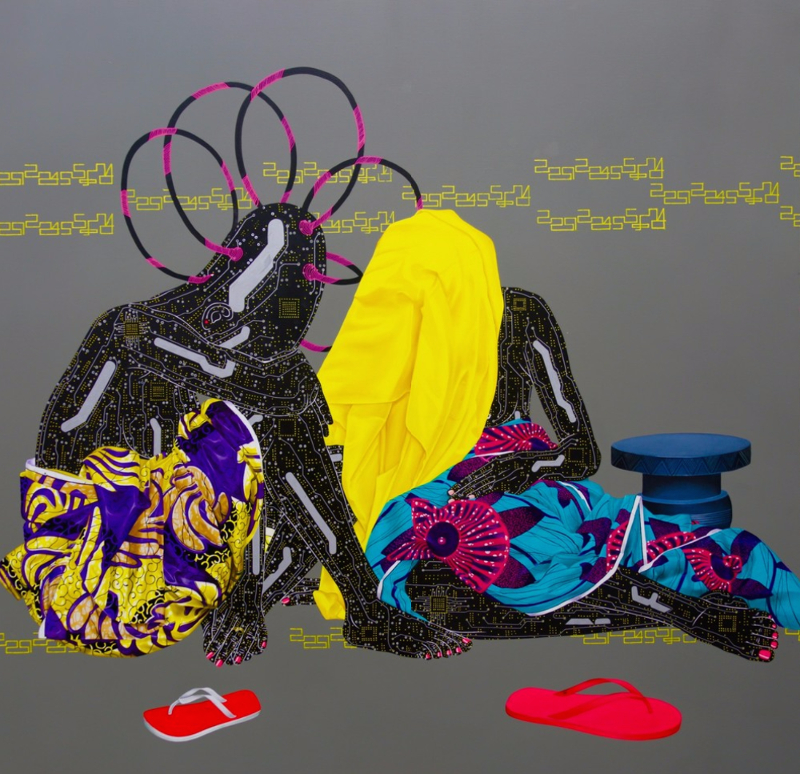
Eddy Kamuanga Ilunga | To deny value of cultural identity | 2015 | Circuit board and fabric


The African continent, being home to thousands of languages and hundreds of varying cultural identities, has richly diverse forms of poetic tradition. The world’s growing focus on the varied African cultures has created new platforms and new avenues open to African artists, writers, poets, musicians and filmmakers, etc. These platforms – largely made possible through the internet – are introducing the complexities, diversity and beauty of African expression not only to the rest of the world, but to other Africans as well. Whether it be through song, proverb or folktales – through oral tradition or literature – one thing that unifies this diversity is that the utmost significance of poetry is evident and embedded in cultures across the continent.

When I was approached by Kent MacCarter to put together a small collection of contemporary African poetry, I knew the task would not be a simple one. Whatever the end result might be, it certainly could not encompass or represent the countless powerful voices emerging from not just the continent but from it’s Diaspora population as well. Much of Africa’s cultural wealth, especially in forms of poetry is still not largely experienced by the world outside the continent. Though names like Kofi Awoonor and Chinua Achebe are recognisable to those familiar with African poetry and literature, contemporary works of young Africans making an impact may not be. What was possible with this collection, and what was important about this endeavour, was the opportunity to give a possibly unfamiliar audience a taste of Africa’s burgeoning voices.

Nick Makoha: Ugandan Golgotha
Nick Makoha: Smoke
Safia Elhillo: Others
Safia Elhillo: Self-portrait in Case of Disappearance
Inua Ellams: Short Shorted / Odogbolu 1995
Inua Ellams: The Staunch Slouch
Tjawangwa Dema: A Benediction for Climbing Boys

Ejiofor Ugwu: The Book of God
Caroline Anande Uliwa: Moods Aligned
Caroline Anande Uliwa: The Whisper
Liyou Libsekal: “Revival”
Liyou Libsekal: Composer
Ladan Osman: Introduction through Parables: Marwa
Tjawangwa Dema: White Noise

This collection features poets from Botswana, Ethiopia, Nigeria, Somalia, Sudan, Tanzania and Uganda. In the following works, you will find writers exploring the past, the future, identity and the present. Yes, some these poems also address war, and injustice but not in the same narrative usually offered about Africa. These topics are frequently presented in a way that unjustly paints this vast place as a place in perpetual turmoil. In these poems, we get the voices of people who have borne witness to history and change. We see the poets’ powerful connections and love for their respective places of origin, we see a process of coming to terms with the past, and we see criticism and hope both from those who live on the continent, and those whose lives have taken them away from it.

Some of these poems attempt to reconcile history and consequence, identity and environment. Some are indicative of a changing Africa, one that struggles with democracy, and the changes that come with growth. These depictions offer a glimpse into a varied yet connected experience. These stories are personal, in the voice of those who have experienced and inherited them.
Posted in CHAPBOOKS | Tagged , , , , , , , , ,

Moods Aligned

Fagia the remnants of my chaos fagia-Sweep
The first spurt of fearful thought
Ili niweze kukueleza kwa kina So I can tell you in detail
How I’ve fallen, where I’ve stolen

Hatuwezi fukia maovu kwa ‘kazi tu’ We can’t bury crimes by ‘work only’
Yabidi pia tupooze makuu We must drop the ‘we got this’
Sending our egos flying, without the truth
Of sincere observation, on how we got here

The history that’s delivered a people
Who throw garbage on the streets?
Build haphazardly, with no links
Of function and space, beauty & substance

In accelerating the cry ‘Hapa Kazi Tu’ ‘Pull up your sleeves’
I’d like to understand, what I’m working on
Uprooting the cause, by accepting the blows
Of bad governance, links of close-minded

Leadership, that began with the chiefs
Who let African skin go as cargo?
White men, who decided we’re savages
New ‘independent’ governments, that re-do

The ‘me first’, the patriarchal quirk …
Ndio tuna kazi, Kazi ya kuondoa dhamira hizi potofu
Yes we got to work, work in removing these false beliefs
I & you aren’t machines
But sophisticated beings, so moods aligned

In undoing our mess, let the intent be, true progress

Posted in AFRICA | Tagged

A Benediction for Climbing Boys

1.
Sometimes the chimney was hot or alight.
They sent us up anyway, mostly naked.
At night we, sleeping black,
dreamt of the bakers on Lothbury,
of tight flues and endless winding.

The first time Jonny went up,
there was not even four years behind him.
He was up while the chimney was cold,
before the morning fire was lit. His skinny limbs,
cramped, waited for the mason’s cutting tools.

Luck for the bride who sees us perhaps.
But we are black and blind with falling soot.
We are burnt and scraped, our knees
set to fire with brine and brush
to harden our small hearts.

In the fairy tales, the sweep finds love
with a porcelain shepherdess.
After May day, we are turned from the table
to which we return, for the world gifts us
only sack cloth and ashes.


2.
there is no cap coarse enough
to keep the soot from eye or mouth
No talisman of brass cap badges
to shame the master who sends them up
to fall from roofs and chimneys

to lodge in flues and suffocate
Whose son has fire set under him
his heels pricked to mend his pace
This is the cold fate of he who is alone
whose mother has died, left his body

for the world to take and make coal
and whose back is bent in youth
his scrotum set to eat itself away
we die knowing what is denied us
air and love, a clean wanting

we fall, we hope, to something warm
that union that sought us out
first as fire now as ash
has left us invisible, sooty faced
only grace lets us fall

Posted in AFRICA | Tagged

White Noise

and where is the point
at which penance comes knees bent
with your name as absolution on its tongue

we can only hope for something that
knows, perhaps when we do not:
the taste of clemency
when the sentence is done

something familiar and new all at once
that tempts us, shows us
these seams are easily undone
that ink is the hangman with a forgiving noose

each one of us is born sensible
his heart incensed then falling

we know the white space left
for our open mouthed cry
then the slow babble of delight

but now and then we forget
here is the point
a place to reckon with

where beneath a crown heavy with words
is a seat of acacia and hawthorn
to say choose carefully the weight
of each syllable upon the tongue

Posted in AFRICA | Tagged

Introduction through Parables: Marwa

I was named after a well
my sister, too
after holy wells
distant from each other
we are distant from each other
our mother didn’t intend it
war is the frantic wet-nurse
running between us
we are both thirsty
we are all thirsty
there is no divine child
to make our waters holy
our waters heal no affliction
who would supplicate
at our bases, seek our waters
in parables
girls are never divine
only their mothers
but like Abraham
I ask God to show Himself
I ask in the plains
I ask in the desert
He answers me with light
He answers me with metal
tea with an iron flavor
we sell it town to town
migrants in our own wild bush
gunmetal sweat
weapon oil in the life
and luck-lines of my palm
we traverse the land
we move with shadow
we are guided by water
I ask God to show Himself
a prophet quartered birds
and waited for God
yet another was given
a hoopoe that spoke
some have war birds
they, too, look
they, too, make reports
we live in a time
machines have emissaries
but like Abraham
it’s not possible to destroy me
they try by fire and by sand
they try by metal and by verse
still I traverse my land
without a sister
with no family
not even a man
who no longer accepts
a hand on his chest
when frantic
myself, strange women
strange girls traverse
in this parable men and boys
attain godhood
they send war to run
hill to hill
well to well
war runs so fast
she loses a shoe
there is no holy child
war ran with empty arms
an empty shawl
when men and their boys
come to a frenzy
they can’t submit to anything
no thing is a kindness
nothing is a kindness
don’t touch me,
don’t look at me,
with their whole persons
no one supplicates
to frantic gods
their command has no end
it can never become story
it can never become ritual

Posted in AFRICA | Tagged

The Whisper …

She would tell me
In the space between heartbeats
Feel the punch from earth
Coursing through feet to your fingertips
Alerting you to the whisper of touch
Beckoning you to listen for the precision of creation

Is there peace in Africa?
Amidst the dirt roads of cities with confused architecture
Gusts of wind carrying you on rushed mosaics of function,
Aboard the ‘teksi, matatu, daladala, or bodaboda’
With smells of sewage, fried plantains and exhaust fumes not a bother
Still… there’s a bird of unified victory flying high

He would tell me
Look for it, in the rhythm of our gait
The creativity of our food
The clicks of our tongues,
The resourcefulness of the calabash
In the kitenge, kente, indigo and batik sash
Pinpoint her wings

So you always know you can look up
To draw inspiration from the majesty of the clouds
Resting in the assurance of traditions
That paid attention to the whisper

Posted in AFRICA | Tagged

The Staunch Slouch

An afternoon indoors but for sunbeams flecking
the audience of relatives, it could be any evening
any century before ‘Nigeria’ was coined to group
the villages, the hundreds of thousands of families
gathered where the wind is low, the rumbling forest
paused for the passing Griot/Storyteller/PopStar
of the time. My uncle tells a joke in this tradition
risen before the hushed cluster of us. An American
Businessman, he says, thumbs tucked in his belt,
stomach puffed out and you can picture so perfect
the TexasOil/GunToting/WarOnTerror/NewMoney
Rich who counts out 5,000 in cash and throws it
in the coffin of a deceased colleague – a Ghanaian
uncle adds, us, laughing. The English Businessman,
not to be outdone, uncle says, stiffening his top lip,
his nose pinched and you can picture so perfect
the Old Etonian/ForQueenAndCountry/OldMoney
Rich who counts out 5,000 in cash and throws it
in the coffin of the recently deceased. Both regard
the Nigerian, uncle says, relaxing now to his Casual
Slouch/AfroBeat/HalfDancing/RoughMoneyRich.
The Nigerian shakes his head at the new world order,
shrugs at the old, writes a cheque for 15, throws it
in the coffin, gathers the cash and leaves to applause,
rolling laughter, the CrazyTrickster/MoneySwindler/
FastTalking/SlipperyPalmed/Stereotype/Everything.

Posted in AFRICA | Tagged

Short Shorted / Odogbolu 1995

All this is fact /

That Jebo had a knack for melodrama.
That his slight weight barely marked
That boarding school ground.
That he was teased for his fair complexion.
That he’d skim most crowds in search of me.
That his left arm crowned my shoulders so often
That some thought us more than good friends.
That we walked to dormitories after classes.
That we were gathered out in the cold courtyard.
That we were lectured on theft and property.
That Balla was nabbed with bags of stolen food.
That our knees knocked in our short shorts.
That a storm roared over the fields.

All this is feasible /

That Balla was Goliath to Jebo’s David.
That a visible tension lay between them.
That Balla ate rice laced with rocks.
That these were the building blocks of his muscles.
That once he picked a senior clean off the floor.
That we called him Spartacus, a hero to us.
That Balla wasn’t guilty of theft.
That he was too thick to master such things.
That the prefect chose the toughest canes.
That lashes flashed down with such force
That Balla could make no sound at all.
That Balla chose to make no sound.
That the prefect so hated his show of strength
That he broke two canes on Balla’s back.
That another ripped a cable off the wall.
That its sparks hugged air for a second.
That he touched this to Balla’s wet skin.
That Balla shook like a bird on fire.
That Jebo smiled when Balla screamed.
That Balla broke free, ran for a window.
That the search party never found him.

All this is fiction /

That I pulled Jebo’s arm off my shoulder.
That I joined those who taunted him.
That Balla lost all diction that night.
That when he landed, he ran for the mountains.
That the storm struck the last of our Titans.
That often when lighting strikes those fields
instead of thunder, something / someone screams.

Posted in AFRICA | Tagged

“Revival”

The gate-guard is at special attention
positioned in highland chill
new gold buttons and a collar
hand-twined blanket in a
dejected corner

on the tables, reserve is hung
and the meat devoured with the
finest whiskies teasing the men teasing
supple women; spitting and spilling
archaic laughter

on a plush bed, the bride to be
cries over a set of pearls
and a dress of silk bred in caves
is smeared with salt and kohl

and the glasses bubble in the hall
a relief for the risoriis as the guests
whip to amnesic strings
streaking soil over the marble

for a fortnight, the house will scramble

eat for days lest the good flesh spoils

Posted in AFRICA | Tagged

Composer

the Composer is a father of lullabies
ostensible notes drank under waning light

the tunes spread the hues of promise

he is a herder of tongues and eardrums
penning dreams

while the earth generations bled for
is cut up today like blessed bread consumed after a fast

he arranges progressive symphonies
while the battles rage in the back streets, the outskirts

while the ink trails lead to a prison

while the bodies are quietly interred

the Composer keeps hearts, warm on the song
fumes if they leave the hollow of his notes

we don’t wear his colors or his coat

Posted in AFRICA | Tagged

The Book of God

I

when the time came
in that small world of
half-woken stars
and broken moonlight
we were gathering palmnuts
un-cracked palmkernels of
previous years
lying silent in the dust
breeding thick and lice
termites eating away detachable peelings
and building endless houses,
eating up sand
I was a boy of unspecified age.
It must have been the time
we took ogwu uwa- the drug that
cured the whole world:
I don’t remember.
my father knew everything for us

II

he wrote all –
our memory – in
his St. Martin’s de Porres Prayer Book, half-eaten
by worms: birth dates,
the date of his father’s death
and that of his mother (she died of
water disease, or so, his footnote),
dates of lands leased out
and the leaseholders’ names
and the reasons for the lease
like the return of dowries
when her sister divorced
a barren husband of many years;
the date he buried her too
(she died of madness or
adultery or so),
the leaves of the Book of God
are also interspaced with
receipts of old sales,
weatherbeaten complimentary cards
with long-distant dates,
wedding invitation cards,
receipts of beer bars,
guest house lodgings
and stopover names
receipts of Sacramentals and
dates of completed Confessions:
(baptismal cards
or dates of child dedications? No),
sketches of unknown animals,
or was that a skeleton of an owl?
or naked bats?

III

he hid the Book of God
in an iron box that day
he saw me watching the portrait of
the Saint. St. Porres looked like
someone in pain, angry, helpless, the flesh on
his face folded into indistinct shapes,
like a mother weeping an only son.
at this time, father no longer smiled,
he ate his teeth so often
and climbed
his woodbed every night reeking of gin
He died later, gathering all his
old music record tapes at the head of his bed
his candle rosary on his neck

IV

I don’t remember,
my father was memory.
Or was it the time we
used to run about naked in the village,
playing hide and seek
or when we used to bathe in the streams
and sometimes hide away the
clothes of bathing women?
I don’t remember.
I only remember wet
soaking up the raffia mat and
our urinating on soldier ants
in the daytime could not help
as Mama Nnukwu would instruct (they
refused to come for us in the nights
and we wetted the dreams as if it was daylight).
Our clothes,
mine a jumper and shorts
with a pair of round holes at
the bottoms

V

we would wake up in
the midnights, run
to the fireside,
sit on the fire,
burn the liquids
gather smokeclouds and
smells of fire
enter the cloth blanket again
and feel warm:
In lying head down
Kachi’s head facing Mama’s side
her legs overtaking my head
she was a grown woman
and I would rise, as I always did,
and she would fall –
we burrow aimlessly into
each other’s mid-regions
the big mother snoring
away her peace in her bamboo bed –
sometimes she would wake,
stand on us,
calling Kachi, waking her to
stop talking in her dreams:
we were awake as rats under the cloth.

VI

Kachi’s mother has been
seeing the Mother of Christ in
front of the village Chapel,
close to the Church cemetery since
She left;
and that was after she said to me
after many years of getting lost in the world:
“Owom, you are now a big boy”
and we shared a smile.
In that palmkernel house of my grandmother,
we gathered stray nuts
in an unpaid labour; we
gathered them to make heaps of fun
we played on the heaps: I, Kachi and others
then we destroyed them at
the next cock crow.
Kachi left without confessing
our sins on the heaps of lice sands
she died of no disease,
she just died.
Last night she came in
my dream and gave me her mouth.
I now speak in the name of the dead.

Posted in AFRICA | Tagged

Ugandan Golgotha

The rebel is all shield and sword,
you are all flesh and feet.
Already dead in this old Europe.
A road of neon dirt grows
towards a checkpoint.
An Acholi soldier laughs
in hyena soliloquy.
Blood and wine from hills
are filled with dying. Nixon
knew about Africa’s problem
.

Acacia trees whisper and disappear.
A moonless night hides its face.
The line of you does not move.
Cautious of how time and light
can be a revelation, you move
towards a twilight away from the city
that is no longer home or hiding place.
The blood of one man against a soldier,
against a clan, against the caravan of men,
against the flash of fire, against teeth and tongue.

Posted in AFRICA | Tagged

self-portrait in case of disappearance

i am afraid that everyone died & it did not fix
the world this was meant to be the afterlife
to the burning countries our mothers left behind
girls with fathers gone or gone missing
sistered to dark boys marked to die & our own
bodies scarved & arranged in rows on prayer mats
we go missing too & who mourns us who
falls into the gap we leave in the world

Posted in AFRICA | Tagged

others

we begin because the worlds before ours ended
sometimes abruptly sometimes in burning
sometimes we survived & met sometimes i
do not make it sometimes you get better first
& feel burdened by my smell of smoke

the dead root me to strange cities & i wish you
would come visit i shift the ghosts to one side
to make room for you in bed i climb over
your sleeping body & make ablution in the dark
i kneel & say i’m sorry i listen to a man strum
a carved & painted lute the sound is liquid
& fills me you wake & i am crying &
will not let you hear the song you wake &
i am praying shaping incantations
with my mouth & never offering to translate

Posted in AFRICA | Tagged

Smoke

When the mountains stared at our backs,
it was my mother who read the sky, its cobalt
glass full of moisture. The clouds formed

a necklace at the summit. If I could remember
the smell I would describe this as well. Though
I do recall the smoke trying to join with the clouds.

Each tendril plume learning to fly. These birds
of smoke released themselves from the dung
hut chimney as my body rested on her back.

Braced in the sling of her shawl she sang
in a language I no longer recognise from thinking
but can identify from sight. It sounds like water.

Posted in AFRICA | Tagged

Michael Farrell Reviews Philip Hammial

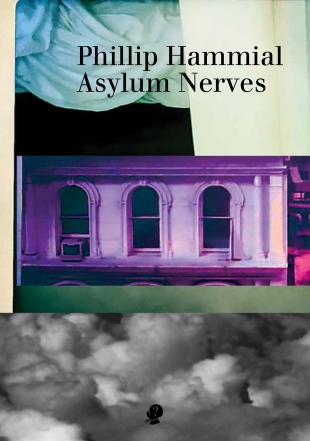
Asylum Nerves: New and Selected Poems by Philip Hammial
Puncher & Wattmann, 2015

Poems don’t need condescension any more than we do. If we pick up a book and the poems come to life only at a certain page, maybe it’s our brain that needed a refresh. Philip Hammial is certainly up for a refresh of everyday culture: of foodie-ness, for one, such as in the high school project scene of ‘The Float’, where food is garbage and his art teacher gives him an A; or the vegetables of death in ‘The Vehicle of Precious Little’. There are enough stories in his poetry – represented here through a selection from twenty-five collections – to replace a whole bookshelf of novels.

Continue reading

Posted in BOOK REVIEWS | Tagged ,

Brigid Magner Reviews Gregory Kan

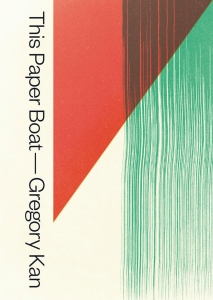
This Paper Boat by Gregory Kan
Auckland University Press, 2016

Iris Wilkinson (also known as Robin Hyde), a pioneering poet, novelist and journalist, has influenced many New Zealand writers since her death in 1939. Hyde’s writing has been extensively mined by scholars – especially her diaries and letters – due to their immense readability and colourful subject matter, including details of her struggles with mental illness, her love affairs and her two children born out of wedlock. This Paper Boat is an homage with a difference. Gregory Kan, a young New Zealand poet whose background is Singaporean, traces his own history through that of Wilkinson.

Continue reading

Posted in BOOK REVIEWS | Tagged ,

Phillip Hall Reviews Connie Barber, Meg Mooney and Jenni Nixon

The Edge of Winter, by Connie Barber
Ginninderra Press, 2015

Being Martha’s Friend, by Meg Mooney
Picaro Press (an imprint of Ginninderra Press), 2015

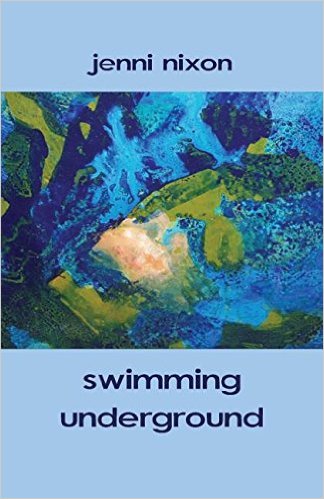
swimming underground, by Jenni Nixon
Ginninderra Press, 2015

These three poets, who exist outside university creative writing and humanities faculties, have ‘chosen’ a publisher independent of Australia Council arts funding and have been somewhat neglected by critical attention and awards recognition. All three poets collect richly lyrical and narrative poetry that praises the natural world and interrogates different aspects of our ability to live in it respectfully. All three collections are beautifully presented and feature stunning cover artworks that reveal each poet’s preoccupations and intentions.

Continue reading

Posted in BOOK REVIEWS | Tagged , , ,

Submission to Cordite 56: EXPLODE

Explode

Poetry for Cordite 56: EXPLODE is guest-edited by Dan Disney.

[[EXPLODE from ex– “out” + plaudere “to clap the hands”]] the spectacle Oculus Rift the α in their brickveneerdoms howzat Omid Fazal Reza Hamid Leo Lucky Country megafires Maulboyheenner form is never more than an extension of hot pies oi oi oi love a TPP sunburnt big data hot pies colony [[EXPLODE (verb) “to reject with scorn”]]ruddockvanstoneandrewsevansbowenoconnorburkemorrisonduttonetal stop the DeepDream boats not in our Terra Nullius and form is never more than a revelation of owyergarnmate girth by Pacific Solution bleaching the Ω history wars [[EXPLODE (synonyms) shatter thunder kablooey convulse]] amid sapphire-misted mountains tie me razorwire down Buckley’s hope tie me God Save Our Protectorate AlphaGo down form is never more than relaxed and comfortable the singularity Tunnerminnerwait toxic dump [[EXPLODE (antonyms) fizzle collapse implode]] and “only someone who knows how do something with it can significantly ask a name”?

[[EXPLODE (noun) “action of driving out with force and/or noise”]]
Explode: lyrical interference writ loud.


Please submit only once, with a maximum of three (3) poems (visual and concrete welcome) or works of microfiction (500 words maximum) in one (1) document … but first, please read the submission guidelines.

Posted in GUNCOTTON | Tagged ,

Weather and Cinnamon: Late Changes in Major Poems by Barbara Guest

BG

I grew up in Brisbane where the sticky weather of a summer day resembles something like a bell curve. Predictably cool in the early morning but the sun rapidly burns this away so that by 9am it’s already quite hot. At midday it is hottest (and given there’s no daylight savings there are no hi-jinks) and from there the warmth lingers in the street and the structures. The air, though humid, will gradually cool as the afternoon comes on, perhaps with a westerly breeze offering a little respite in the evening (that is if there is no booming afternoon tropical storm to mark a transition to a cooler late afternoon).

Continue reading

Posted in ESSAYS | Tagged ,

Poetry of the Eye: The Visual Aspects of Poetry


Image by Tim Grey

Presented by Cordite Publishing Inc. and Australian Poetry, and hosted by poet Toby Fitch, this workshop at the 2016 Emerging Writers’ Festival will open your eyes to the potential of the poem on the page. By tracing historical examples of visual and concrete poetry — from ancient Greek to early modernist to recent local works — and then by assembling a visual poem of your own, you will learn to explode your poetry across the page, and not just from top to bottom or left to right — in any direction. Bring text (your own poem, another’s or whatever you like) to reshape during the workshop.

Posted in GUNCOTTON | Tagged , ,

Review Short: Mike Ladd’s Invisible Mending

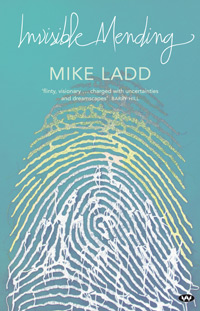
Invisible Mending by Mike Ladd
Wakefield Press, 2016

Adelaide poet, Mike Ladd, is best known for his long-running Poetica program on the ABC’s Radio National (eighteen years all up before its casual destruction in 2014). The breadth of taste and openness to a wide range of influences Ladd displayed in Poetica is also to be found in Invisible Mending, his first poetry collection since Transit in 2007.

Continue reading

Posted in BOOK REVIEWS | Tagged ,

NO THEME V Editorial

Wright Sakr

I must admit that I ventured – no, sauntered – into this guest editing position on feet of clouds. Such a fantastic opportunity to peek behind the curtains of one of Australia’s best and most prolific poetry publications was not to be missed, I thought. In fact, it seemed almost too good to be true. How many other publications would give this chance to an emerging poet of colour, even with the steadying hands of the enviably skilled Fiona Wright alongside? I’m hard pressed to name even one. It took great trust (and, I think now, sadism too) to entrust my judgment with the work of hopeful hundreds.

Continue reading

Posted in ESSAYS | Tagged ,

Virginia Woolf’s Incidental Pilot, Marianne Wex’s Legroom and the Dancing Man

As I write this, my son is flying over London. He will then catch a train to Exeter. I have knitted him a two-strand black hat with a raised asterisk glyph on its slouched boho crown.

I first read Virginia Woolf’s short – just six pages – essay, ‘Flying Over London’ (Selected Essays, Oxford University Press, 2009), in a café in Sydney. The barista deftly worked a rising swan into the frothy surface of my coffee.

Continue reading

Posted in ESSAYS | Tagged , ,