결정적 순간 (A Decisive Moment)

일찍이 나는 바람에 흔들리는 법이나 빗줄기에 소리를 내는 법, 그리고 가을 햇빛에 아름답게 물드는 법에 대해 배워왔다 하지만 이파리의 일생이 어떻게 완성되는가는 낙법에 달려 있다 어디에 떨어지느냐는 문제가 되지 않는다 땅에 떨어졌다고 해도 잎이 아닌 것은 아니다 바람에 불려 다니는 것처럼 보여도 우연에 몸을 맡기는 것은 아니다 나는 적어도 수십 마일 이상 날아가 고요히 내려앉는 법을 알고 있다 그러려면 우선 바람을 보는 눈을 가져야 한다 바람이 몸을 들어올리는 순간 바람의 용적과 회전속도를 느낄 수 있어야 한다 팔랑팔랑 허공을 떠돌다 강물 위에 내려앉는 낙엽을 본 적이 있는가 그 마지막 한마디를 위해 얼마나 기다려왔는지 모른다 한 방울의 비가 물위에 희미한 파문을 일으키거나 별똥별이 하늘에 성호를 긋고 사라지는 것도 다르지 않다 죽음이 입을 열어 하나의 몸을 받아들이는 순간, 그 순간이 중요하다 사진을 찍을 때 피사체와 빛이 절묘하게 만나는 순간을 포착해야 하듯이 결정적 순간이라는 게 있다 잎맥을 따라 흐르던 물기가 한 꼭짓점에서 일제히 끊어지는 순간, 단호하면서도 부드럽게 제 발목을 내리쳐야 한다 그러면 짧으면서도 아주 긴 순간 한 생애가 눈앞을 스쳐갈 것이다 벌써 절반이 넘는 이파리들이 나무를 떠났다 그들은 떨어진 게 아니라 날아간 것이다 해마다 되풀이되는 풍경처럼 보여도 이파리에게는 오직 한 순간이 주어질 뿐이다 허공에 묘비명을 쓰며 날아오르는 한 순간이

Posted in 45: OZ-KO (HANGUK-HOJU) | Tagged

숲에 관한 기억 (Memories of a Wood)

너는 어떻게 내게 왔던가?
오기는 왔던가?
마른 흙을 일으키는 빗방울처럼?
빗물 고인 웅덩이처럼?
젖은 나비 날개처럼?
숲을 향해 너와 나란히 걸었던가?
꽃그늘에서 입을 맞추었던가?
우리의 열기로 숲은 좀더 붉어졌던가?
그때 너는 들었는지?
수천 마리 벌들이 일제히 날개 터는 소리를?
그 황홀한 소음을 무어라 불러야 할까?
사랑은 소음이라고?
네가 웃으며 그렇게 말했던가?
정말 그 숲이 있기는 있었던가?

그런데 웅웅거리던 벌들은 다 어디로 갔지?
꽃들은, 너는, 어디에 있지?
나는 아직 나에게 돌아오지 못했는데?

Posted in 45: OZ-KO (HANGUK-HOJU) | Tagged

첫 (First)

내가 세상에서 가장 질투하는 것, 당신의 첫,
  당신이 세상에서 가장 질투하는 것, 그건 내가 모르지.
  당신의 잠든 얼굴 속에서 슬며시 스며 나오는 당신의 첫.
  당신이 여기 올 때 거기에서 가져온 것.
  나는 당신의 첫을 끊어버리고 싶어.
  나는 당신의 얼굴, 그 속의 무엇을 질투하지?
  무엇이 무엇인데? 그건 나도 모르지.
  아마도 당신을 만든 당신 어머니의 첫 젖 같은 것.
  그런 성분으로 만들어진 당신의 첫.

  당신은 사진첩을 열고 당신의 첫을 본다. 아마도 사진 속 첫이 당신을 생각한다. 생각한다고 생각한다. 당신의 사랑하는 첫은 사진 속에 숨어 있는데, 당신의 손목은 이제 컴퓨터 자판의 벌판 위로 기차를 띄우고 첫, 첫, 첫, 첫, 기차의 칸칸을 더듬는다. 당신의 첫. 어디에 숨어 있을까? 그 옛날 당신 몸속으로 뿜어지던 엄마 젖으로 만든 수증기처럼 수줍고 더운 첫. 뭉클뭉클 전율하며 당신 몸이 되던 첫. 첫을 만난 당신에겐 노을 속으로 기러기 떼 지나갈 때 같은 간지러움. 지금 당신이 나에게 작별의 편지를 쓰고 있으므로, 당신의 첫은 살며시 웃고 있을까? 사진 속에서 더 열심히 당신을 생각하고 있을까? 엄마 뱃속에 몸을 웅크리고 매달려 가던 당신의 무서운 첫 고독이여. 그 고독을 나누어 먹던 첫사랑이여. 세상의 모든 첫 가슴엔 칼이 들어 있다. 첫처럼 매정한 것이 또 있을까. 첫은 항상 잘라버린다. 첫은 항상 죽는다. 첫이라고 부르는 순간 죽는다. 첫이 끊고 달아난 당신의 입술 한 점. 첫. 첫. 첫. 첫. 자판의 레일 위를 몸도 없이 혼자 달려가는 당신의 손목 두개, 당신의 첫과 당신. 뿌연 달밤에 모가지가 두 개인 개 한 마리가 울부짖으며, 달려가며 찾고 있는 것. 잊어버린 줄도 모르면서 잊어버린 것. 죽었다. 당신의 첫은 죽었다. 당신의 관자놀이에 아직도 파닥이는 첫.
 
  당신의 첫, 나의 첫, 영원히 만날 수 없는 첫.
  오늘 밤 처음 만난 것처럼 당신에게 다가가서
  나는 첫을 잃었어요 당신도 그런가요 그럼 손 잡고 뽀뽀라도?
  그렇게 말할까요?
 
  그리고 그때 당신의 첫은 끝, 꽃, 꺼억.
  죽었다, 주 긋 다. 주깄다.
  그렇게 말해줄까요?

Posted in 45: OZ-KO (HANGUK-HOJU) | Tagged ,

서울 코라 (Seoul, Kora*)

山이 컹컹 짖다가
 山이 나를 따라온다
 
  山이 새끼를 낳는다
  山이 산을 핧는다
  山이 새끼들에게 젖을 물린다
  山이 매정하게 새끼들을 다 버린다
  어린 山들이 백주 대낮에 교미한다, 악취가 난다
  山이 미로 속의 개떼처럼 몰려다닌다
 
  山이 젖은 눈으로 나를 쳐다본다
  목덜미를 쓰다듬자 몸을 부르르 떤다
  목덜미에 줄이 묶인 山이 끌려간다
  山이 철창 속에 갇힌다. 맞는다. 걷어채인다. 죽는다
 
  山이 똥을 먹는다, 시신을 먹는다
  山이, 욕창 가득한 山이 눈에 불을 켜고 달겨든다
  山이, 머리에 흰 눈을 얹은 山이 운다
  나무 한 그루 없는 山이 하늘을 향해 고개를 젖히고 목놓아 운다
  山이 山을 물어뜯고 싸운다
  山이, 큰 山이 제 꼬리를 물고 빙빙 돈다
 
  몰려다니는 山을 제국의 군대가 박멸한다
  살아남은 山이, 山이, 山이 山을 넘어 달아난다
  아직도 달아난다
 
山이, 山을 벗어버리고 싶은 山이, 두 손을 모으고, 모은 두 손을 저 먼 山을 향해 뻗치더니 이마에 대고, 가슴으로 끌어내리고, 다시 한 번 저 먼 山을 바라보고 팔꿈치를 옆구리에 붙인 다음, 오른쪽 무릎을 꿇고, 양손을 땅바닥에 대더니, 왼쪽 무릎을 마저 꿇고, 모은 두 손을 땅바닥에 붙여 힘껏 멀리 밀어 보낸 다음, 온 몸을 땅에 밀착시킨다. 그리고 운다. 이것을 세 걸음에 한 번씩 계속 반복하면서, 山이 山을 돈다.

註) 코라*: 오체투지로 성산을 한 바퀴 도는 것

Posted in 45: OZ-KO (HANGUK-HOJU) | Tagged ,

테이블 (A Table)

우리는 문제를 열고
대화에 푹 빠진다
사랑에도 빠지고
우울증에서 벗어난다

어디라도 좋다 각자의 입장에서
우리들의 의견은 모인다
반경 1km 이내

거기 있다고 생각되는
당신의 상상은
깊이깊이 다른 건물을 쌓아 올린다

사이좋게 평행선을 만든다
우리 관계는
어디에도 도달하지 못하고
서로의 인력에 끌린다

지하 깊은 곳에서
비밀이 고갈되는 순간
당신과 가장 가까운
사람의 손가락은 누구를 지칭하는가

폭넓은 의견과 차이를 교환한다
당신의 말은 여기까지
내가 생각하는 건물의 높이는
저기까지

수위를 조절해가며
푹 빠진다

Posted in 45: OZ-KO (HANGUK-HOJU) | Tagged

소설을 쓰자 (Let’s Write a Novel)

너무 긴 소설을 쓰지 말 것. 너무 짧은 소설도 쓰지 말 것. 적당하게 지루해질 때 끝나는 소설일 것. 원고지의 분량이 아니라 심리적인 분량일 것. 어느 공간에서 읽어도 적당히 심심하고 적당히 어리둥절한 반전일 것. 어떤 질문을 하더라도 충실하지 않는 이야기일 것. 어떤 대답도 흘려 들을 수 있는 내면일 것. 그런 주인공을 찾을 것. 캐스팅은 길거리에서 오디션은 실내에서 시상식은 레드카펫을 밟는 장면에서 중단할 것. 더 많은 말이 필요하면 다른 영화를 찍을 것. 더 많은 상이 필요하면 영화를 찍지 말 것. 돌아와서 시를 쓸 것. 전혀 시적이지 않는 소설을 쓸 것. 있어도 상관없고 없어도 상관없는 중요한 문장이 들어갈 것. 단어는 조금 더 동원되거나 외로워질 것. 저 혼자 있어도 눈물을 뚝뚝 흘리는 마침표일 것. 다른 부호는 적당히 경멸하고 적당히 술을 마신 후 같이 잘 것. 좋았니? 좋았어! 이런 대화에 식상해하는 커플이 데이트하기 좋은 장소를 섭외할 것. 침대가 아니면 어디가 좋을까? 화장실이 아니면 어디서 바지를 내리고 치마를 들추고 속옷을 다시 껴입는지 고민하지 말 것. 사람이 장소를 만들어 간다. 장소가 사람을 대신한다. 공간은 사람 안에 들어왔다가 서서히 말라 갈 것. 물기가 다 빠진 고향에 대한 향수를 간직한 로맨스 가이를 이해하고 두둔하고 적당히 멀리할 것. 감정의 폭이 자주 변하는 남자의 내면을 한 단어로 붙잡아 둘 것. 병원이거나 요양원이거나 아니면 수용소에서 만난 사람들의 일상적인 머리 모양일 것. 그들은 많은 충고를 필요로 하지 않는다. 이런 충고를 적절히 섞어서 거절할 것. 외판원에게는 외판원에게 어울리는 약점을 만들어서 반창고에 붙여 줄 것. 쉴 새 없이 나온다면 항문에 붙여 줄 것. 기침이 심하다면 기침을 섞어 가며 장면을 바꿀 것. 더 건조한 날씨로. 더 지저분한 얼굴로 손을 씻고 나오는 결말에 가서야 나의 결벽증이 드러나는 캐릭터를 완성하고 조금 더 방치할 것. 미완성된 소설의 다음 소설을 구상할 것. 초심으로 돌아가서 길을 잃을 것. 아니면 골목길. 아니면 빙판길에서 씽씽 달리는 자전거를 기차처럼 묘사하고 정거장처럼 그리워하고 이별처럼 뻔한 동기 유발을 의심할 것. 그 전에 먼저 발표할 것. 책을 내고 출판 기념회에 온 하객들에게 왜 왔는지 모를 초청장을 발송할 것. 발송과 동시에 소설을 시작할 것. 영화의 결말도 거기서 시작하고 거기서 끝날 것. 엉성한 짜임새의 스토리를 누구보다 경멸하고 오해하는 친구의 아버지가 될 것. 그 친구의 친구와 적당히 말을 트고 화해할 것. 자연스럽게 오해하는 장면을 곁들일 것. 주먹다짐은 불필요하겠지만 오래 끌지 말 것. 너무 극적이니까 분량을 다시 생각할 것. 다음 소설에서.

Posted in 45: OZ-KO (HANGUK-HOJU) | Tagged

투명해지는 육체 (Body Becoming Transparent)

月,
장을 보러 나갔다
자르지 않은 기장미역을 사 와서 찬물에 담갔다
베란다에선 파꽃이 피었고
달팽이는 그 위에 둥글게 앉아 있었다

火,
차마 깨우지 못했다
똬리를 틀고 잠든 나의 테두리를
동그랗게 에워싸며
조용히 다가가
다시 누웠다

水,
당신은 기차를 탔다 덜컹이기 위해서
창문에 이마를 대고 매몰차게 지나가는 바깥 풍경을
바라보기 위해서
나는 옥상에 의자를 내놓고 앉아 있었다
눈을 감고 귀를 깃발처럼 높이 매달았다
여린 기차 소리가 들렸다

木,
사랑을 호명할 때 우리는 거기에 없었다
서로가 서로에게 뿔달린 짐승이 되어 있었다
당신의 두려움과 나의 두려움 사이에서
검은 피가 흘렀다
우리가 나누었던 대화들이 응혈처럼 만져졌다

金,
내가 집을 비운 사이 당신은
혼자 힘으로 여러 번 죽고 여러 번 다시 태어났다
꽃들도 여러 번 피었다 졌다
당신이 서성인 발자국들이 마룻바닥에 흥건했다
무수히 겹쳐 있어 수많은 사람이
다녀간 흔적과도 같았다
밥냄새 꽃 냄새 빨래 냄새가
지독하게 흥건했다
치르치르와 미치르가 돌아온 집도 이랬을 거야
우리는 빨래를 개며 말했다

土,
우리라는 자명한 실패를 당신은 사랑이라 호명했고 나는 고개를 끄덕였고 돌아서서 모독이라 다시 불렀다 세상 모든 몹쓸 것들이 쓸모를 다해 다감함을 부른다 당신의 다정함은 귓바퀴를 돌다 몸 안으로 흘러들고 나는 파먹히기를 바란다고 일기에 쓴다 파먹히는 통증 따윈 없을 거라 적는다 일기장을 펼칠 때마다 일생 동안 지었던 죄들이 책상 위에


쏟아져 내렸다

日,
우리는 주고받은 편지들을 접어 종이비행기를 날렸다
양 날개에 빼곡했던 글자들이 첫눈처럼 흩날려 떨어졌다

다시 月,
당신은 장을 보러 나간다
당신이 돌아오지 않을 수도 있다
현관문 바깥쪽에 등을 기댄 채
입을 틀어막고 한잠을 울다 들어올 수도 있다
어쨌거나 파꽃은 피고
달팽이도 제 눈물로 점액질을 만들어
따갑고 둥근 파꽃의 표면을
일보 일보 가고 있다
냉장고처럼 나는 단정하게 서서
속엣것들이 환해지고 서늘해지길
기다리는 중이다

Posted in 45: OZ-KO (HANGUK-HOJU) | Tagged

고독에 대한 해석 (Interpretation of Solitude)

구석기 시대 활을 처음 발명한 자는
한밤중 고양이가 등을 곧추세우는 걸
유심히 보아두었을지 모른다

저 미지를 향해
척추에 꽂아둔 공포를 힘껏 쏘아올리는
직선의 힘을

가진 적이 많아서
잃어버린 것투성이인 울음이
가진 적이 없어서
잃어버린 것투성이인 것만 같은 울음에게
활을 겨누던 시간들이
흐른 후

19세기 베를린에 살던
부슈만 씨도
한참이나 관찰했으리라

기지개를 쫘악 펴고 일어난 길고양이는
일평생 척추에 심어준 상처로 성대가 트인다는 것을

버림받은 이가 버림받은 이에게
마음 여린 이가 마음 여린 이에게 내밀었던
덥썩덥썩 잡았던 손목들이
싹둑싹둑 잘려나갈 때

세상 만물이 궁수처럼 흔들림이 없고
사방 천지가 온통 과녁뿐이란 사실이
단지 참혹했을 때

그는 집에 돌아와
울음이 그칠 때까지 주름상자를 접고 접어
오로지 탄식만으로 발성하는
아코디언을 발명하게 되었으리라

Posted in 45: OZ-KO (HANGUK-HOJU) | Tagged

깨끗한 식사 (A Clean Meal)

어떤 이는 눈망울이 있는 것들 차마 먹을 수 없어 채식주의자 되었다는데 내 접시 위의 풀들 깊고 말간 천 개의 눈망울로 빤히 나를 쳐다보기 일쑤, 이 고요한 사냥감들에도 핏물 자박거리고 꿈틀거리며 욕망하던 뒤안 있으니 내 앉은 접시나 그들 앉은 접시나 매일반. 천년 전이나 만년 전이나 생식을 할 때나 화식을 할 때나 육식이나 채식이나 매일반.

문제는 내가 떨림을 잃어간다는 것인데, 일테면 만년 전의 내 할아버지가 알락꼬리암사슴의 목을 돌도끼로 내려치기 전, 두렵고 고마운 마음으로 울리던 기도가 지금 내게 없고 (시장에도 없고) 내 할머니들이 돌칼로 어린 죽순 밑둥을 끊어내는 순간, 고맙고 미안해하던 마음의 떨림이 없고 (상품과 화폐만 있고) 사뭇 괴로운 포즈만 남았다는 것.

내 몸에 무언가 공급하기 위해 나 아닌 것의 숨을 끊을 때 머리 가죽부터 한 터럭 뿌리까지 남김없이 고맙게, 두렵게 잡숫는 법을 잃었으니 이제 참으로 두려운 것은 내 올라앉은 육중한 접시가 언제쯤 깨끗하게 비워질 수 있을지 장담할 수 없다는 것. 도대체 이 무거운, 토막 난 몸을 끌고 어디까지!

Posted in 45: OZ-KO (HANGUK-HOJU) | Tagged

꽃나무 (A Flower Tree)

꽃이 지고
누운 꽃은 말이 없고

딱 한 마리 멧새가
몸을 튕겨가는 딱 그만한 천지

하늘 겹겹 분분하다
낮눈처럼 그렇게

꽃이 눕고
누운 꽃이

일생에 단 한 번
자기의 밑을 올려다본다.

Posted in 45: OZ-KO (HANGUK-HOJU) | Tagged

그를 버리다 (Leaving Him Behind)

죽은 이는 죽었으나 산 이는 또 살았으므로
불을 피운다 동짓달 한복판
잔가지는 빨리 붙어 잠깐 불타고
굵은 것은 오래 타지만 늦게 붙는다
마른 잎들은 여럿이 모여 화르르 타오르고
큰 나무는 외로이 혼자서 탄다

묵묵히 솟아오른 봉분
가슴에 박힌 못만 같아서
서성거리고 서성거리고 그러나
다만 서성거릴 뿐
불 꺼진 뒤의 새삼스런 허전함이여

용서하라
빈 호주머니만 자꾸 뒤지는 것을
차가운 땅에 그대를 혼자 묻고
그 곁에서 불을 피우고
그 곁에서 바람에 옷깃 여미고
용서하라
우리만 산을 내려가는 것을
우리만 돌아가는 것을

Posted in 45: OZ-KO (HANGUK-HOJU) | Tagged

노숙 (Homeless)

헌 신문지 같은 옷가지들 벗기고
눅눅한 요 위에 너를 날 것으로 뉘고 내려다본다
생기 잃고 옹이진 손과 발이며
가는 팔다리 갈비뼈 자리들이 지쳐 보이는구나
미안하다
너를 부려 먹이를 얻고
여자를 안아 집을 이루었으나
남은 것은 진땀과 악몽의 길뿐이다
또다시 너를 낯선 땅 후미진 구석에
순한 너를 뉘였으니
어찌하랴
좋은 날도 아주 없지는 않았다만
네 노고의 헐한 삯마저 치를 길 아득하다
차라리 이대로 너를 재워둔 채
가만히 떠날까도 싶어 네게 묻는다
어떤가 몸이여

Posted in 45: OZ-KO (HANGUK-HOJU) | Tagged

천지간 (Between Heaven and Earth)

저녁이 와서 하는 일이란
천지간에 어둠을 깔아 놓는 일
그걸 거두려고 이튿날의 아침 해가 솟아오르기까지
밤은 밤대로 저를 지키려고 사방을 꽉 잠가둔다
여름밤은 너무 짧아 수평선 채 잠그지 못해
두 사내가 빠져나와 한밤의 모래톱에 마주 앉았다
이봐, 할 말이 산더미처럼 쌓였어
부려놓으면 바다가 다 메워질 거야
그럴테지, 사방을 빼곡히 채운 이 어둠 좀 봐
막막해서 도무지 끝 간 데를 몰라
두런거리는 말소리에 겹쳐
밤새도록 철석거리며 파도가 오고
그래서 茫然한 여름밤은 너무 짧다
어느새 아침 해가 솟아
두 사람을 해안선 이쪽저쪽으로 갈라 놓는다
그 경계인듯 파도가
다시 하루를 구기며 허옇게 부서진다

Posted in 45: OZ-KO (HANGUK-HOJU) | Tagged

대추나무와 사귀다 (Dating a Jujube Tree)

어떤 벌레가 어머니의 회로를 갉아먹었는지
깜박깜박 기억이 헛발을 디딜 때가 잦다
어머니는 지금 망각이라는 골목에 접어드신 것이니
반지수를 이어놓아도
엉뚱한 곳에서 살다 오신 듯 한생이 뒤죽박죽이다
생사의 길 예 있어도 분간할 수 없으니
문득 얕은 꿈에서 깨어난 오늘밤
내 잠도 더는 깊어지지 않겠다
이리저리 뒤척거릴수록 의식만 또렷해져
나밖에 없는 방안에서 무언가 ‘툭’ 떨어지고
누군가 건넌방의 문을 여닫는다. 환청인가?
그러고 보면 너 어느새 부재와도 사귈 나이,

…… 그날 아무리 밀어도 밀려나지 않던 윈도우의 안개
셋이 동승한 차 안에서 한 여자의 흐느낌 섞인 노래 들었으니

Posted in 45: OZ-KO (HANGUK-HOJU) | Tagged

산낙지 먹기 (Eating a Live Octopus)

한 번도 죽음을 본 일이 없었기에, 죽으면 어떻게 해야 하는지 알지 못했기에, 죽음은 접시 위에서 살아있을 때보다 더 격렬하게 꿈지럭거렸다. 죽으면 꼼짝 않고 있어야 된다는 걸 몰랐기에, 제 힘과 독기를 모두 모아 거친 물굽이처럼 요동쳤다. 어찌나 심각하게 꿈틀거리던지, 자칫하면 죽음이 취소될 수도 있을 것 같았다. 죽음엔 눈과 팔다리가 달려 있지 않았기에, 방향도 없이 앞으로만 기어가다 저희들끼리 마구 엉켰다.
 
흰 접시는 마치 제가 죽기라도 한 것처럼 동그라미 안에서 빨판들을 물방울처럼 튀기며 거칠게 파도쳤다. 그러나 죽음이 달아나기엔 접시의 반경이 너무 짧았고, 모든 길은 오직 우스꽝스러운 꿈틀거림으로만 열려 있었다. 토막 난 다리와 빨판들은 한 마리의 통일된 죽음이기를 포기하고, 한 도막 한 도막이 독립된 삶이 되어 접시 밖으로 무작정 나가려 했고, 씹는 이빨 틈에 치석처럼 달라붙어 떨어지려 하지 않았다.
 
씹을 때마다 용수철처럼 경쾌하게 이빨을 튕겨내는 탄력. 꿈틀거림과 짓이겨짐 사이에 살아있는 죽음과 죽어 있는 삶이 샌드위치처럼 겹겹이 층을 이루고 있는 탄력. 한 번에 다 죽지 않고 여러 번 촘촘하게 나누어진 죽음의 푹신푹신한 탄력. 다 짓이겨지고 나도 꿈틀거림의 울림이 여전히 턱관절에 남아있는 탄력. 목 없고 눈 없고 손 없는 죽음이 터무니없이 억울할수록 이빨은 더욱 쫄깃쫄깃한 탄력을 받고 있었다.

Posted in 45: OZ-KO (HANGUK-HOJU) | Tagged ,

회색양말 (Gray Socks)

회색 양말을 신고 나갔다가 집에 와 벗을 때 보니
색깔이 비슷한 짝짝이 양말이었다.
이젠 아무래도 좋다는 것인가.
비슷하면 무조건 똑같이 읽어버리는 눈.
작은 차이를 일일이 다 헤아려보는 것이 귀찮아
웬만한 것은 모두 하나로 묶어버리는 눈.
무차별하게 뭉뚱그려지는
숫자들 글자들 사람들 풍경들 앞에서
주름으로 웃는 눈.
웃음으로 얼버무리면 마냥 사람 좋아보이는 얼굴.
이젠 아무래도 좋단 말인가.
빨래 바구니에 처박히자마자
저마다 다른 발모양과 색깔과 무늬와 질감을 버리고
빨랫감 하나로 뭉뚱그려지는 양말들

Posted in 45: OZ-KO (HANGUK-HOJU) | Tagged ,

아귀 (餓鬼, A Starving Ghost)

길에누워자는사람들은밤에자신도모르는사이옆으로와서누워자는사람에게
병을옮긴다고한다살을닿고가만히곁에누웠을뿐인데그들은자신도모르는사이
서로병을옮기고병을받으며죽어간다그들은입을다물지못하고잔다

무당은죽어서도무덤을갖지못한다는데살아서미물이었던그들은죽으면더욱
다정을앓아야한다는데자신도모르는사이그들은언제나칼날위가아닌인간위에서
가장위태로워보인다

세장을열고손가락으로죽은새의목구멍을열어본다액에젖은벌레가기어나온다
벌레가몸에묻은어둠을핥는다그건이쪽의어둠이아니어서나는무덤을갖지못한
새들의저녁을생각한다

감자탕집에서땀을뻘뻘흘리며뼈다귀를뜯어먹는데맞은쪽에서도뼈다귀를뜯고있는사람이보인다
이안(內)은우리같군창문밖엔거지하나주머니에두손을넣고이쪽을빤히바라보고있다
이봐거기는우리바깥이라구입을다물지못하고땀을뻘뻘흘리고뼈다귀를핥고빨고뜯고있는데
먼하늘로수송기한대가좆같은굉음을내며중환자처럼실려가고있다자신도모르는사이여기는
입안의초록을모두열어놓고새의입속으로들어가잠드는, 그래 다물고 감자, 감자

Posted in 45: OZ-KO (HANGUK-HOJU) | Tagged

무릎의 문양 (Pattern of a Knee)

저녁에 무릎, 하고
부르면 좋아진다
당신의 무릎, 나무의 무릎, 시간의 무릎
무릎은 몸의 파문이 밖으로 빠져나가지 못하고
살을 맴도는 자리 같은 것이어서
저녁에 무릎을 내려놓으면
천근의 희미한 소용돌이가 몸을 돌고 돌아온다

누군가 내 무릎 위에 잠시 누워 있다가
해골이 된 한 마리 소를 끌어안고 잠든 적도 있다
누군가의 무릎 한쪽을 잊기 위해서도
나는 저녁의 모든 무릎을 향해 눈먼 뼈처럼 바짝 엎드려 있어야 했다

“내가 당신에게서 무릎 하나를 얻어오는 동안 이 생은 가고 없습니다 무릎에 대해서 당신과 내가 하나의 문명을 이야기하기 위해서는 내 몸에서 잊혀질 뻔한 희미함을 살 밖으로 몇 번이고 떠오르게 했다가 이제 그 무릎의 이름을 당신의 무릎 속에서 흐르는 대기로 불러야 하는 것을 압니다 요컨대 무릎이 닳아서 사랑을 하려는 새들은 서로의 몸을 침으로 적셔주며 헝겊 속에서 인간이 됩니다 무릎이 닮아서 안 된다면 이 시간과는 근친이 아닙니다”

2

그의 무릎을 처음 보았을 때
그것은 잊혀진 문명의 반도 같았다
구절역 계단 사이,
검은 멍으로 한 마리의 무릎이 들어와 있었다
바지를 벌리고 빠져나온 무릎은 살 속에서 솟은 섬처럼 보였다
그는 자신의 무릎을 안고 잠들면서
몸이 시간 위에 펼쳐놓은 공간 중 가장 섬세한 파문의 문양을
지상에 드러내 보여주고 있었던 것이다

“당신의 무릎으로 내려오던 그 저녁들은 당신이 무릎 속에 숨긴 마을이라는 것을 압니다 혼자 앉아 모과를 주무르듯 그 마을을 주물러주는 동안 새들은 제 눈을 찌르고 당신의 몸속 무수한 적도(赤道)들을 날아다닙니다 당신의 무릎에 물이 차오르는 동안만 들려옵니다 당신의 무릎을 베고 누운 바람의 귀가 물을 흘리고 있는 소리가”

3

무릎이 멀미를 하며 말을 걸어오는 시간이 되면
사람은 시간의 관절에 대해 이야기할 수 있다고 한다
햇빛 좋은 날
늙은 노모와 무릎을 걷어올리고 마당에 앉아 있어 본다
노모는 내 무릎을 주물러주면서
전화 좀 자주하라며
부모는 기다려 주지 않는다 한다
그 무렵 새들은 자주 가지에 앉아 무릎을 핥고 있었다
그 무릎 속으로 가라앉은 모든 연약함에 대해
나는 이 세상에서 가장 무서운 음절을 답사하고 있었는지 모른다

“당신과 내가 이 세상에서 나눈 무릎의 문명을 무엇이라고 불러야 할까요 생은 시간과의 혈연에 다름 아닐진대 그것은 당신이 무릎을 안고 잠들던 그 위에 내리는 눈 같은 것이 아닐는지 지금은 제 무릎 속에도 눈이 펑펑 내리고 있습니다 나는 무릎의 근친입니다”

Posted in 45: OZ-KO (HANGUK-HOJU) | Tagged

내생 (My Next Life)

서운산 숲 속에 들어왔다 비로소 내 집이다
긴 숨을 내쉬었다
그늘이 그늘 위에 쌓여 있다
가지고 온
몇 줄기 취한 불빛을 놓아주었다 밤이 왔다

어느 나라에서나 자유는 늘 끝에 있었다

백 년의 허접쓰레기들도
하나 둘 놓아주었다
아침에는
빈 거미줄에 이슬들이 대롱거렸다

세상에는 타율이 너무 많았고 상상이 자꾸 줄어들었다
숲 밖의 바람 일부분이
숲 속으로 머리 숙여 들어왔다
때깔나무 잎새들이 지저귄다
돌이켜 보면
오래전부터 나는 문맹자의 자손이었다
어쩌다가
어쩌다가
벗어날 수 없는 교착어의 문자지옥에 갇혀 버렸다s

내생에는 땅속 깊숙이
무슨 나무의 뿌리 한 가지이리라
말 없는 홀어미의 송장과
몇몇 고아의 가마니 덮인 새 송장 아래에서

Posted in 45: OZ-KO (HANGUK-HOJU) | Tagged , ,

그 속삭임 (The Whisper)

비가 오다
책상 앞에 앉다
책상이 가만히 말하다
나는 일찍이 꽃이었고 잎이었다 줄기였다
나는 사막 저쪽 오아시스까지 뻗어간
땅속의 긴 뿌리였다

책상 위의 쇠토막이 말하다
나는 달밤에 혼자 울부짖는 늑대의 목젖이었다

비가 그치다
밖으로 나간다
흠뻑 젖은 풀이 나에게 말하다
나는 일찍이 너희들의 희로애락이었다
너희들의 삶이었고 노래였다
너희들의 꿈속이었다

이제 내가 말하다
책상에게
쇠에게
흙에게
나는 일찍이 너였다 너였다 너였다
지금 나는 너이고 너이다

Posted in 45: OZ-KO (HANGUK-HOJU) | Tagged , ,

In the Republic of Words: Ethics of Translation and the Politics of Contemporary Korean Poetry

In a book I recently read with my students in an undergraduate translation class, the writer sets forth twenty provocative theses on translation in this era of globalisation for a new comparative literature, ranging from ‘Nothing is translatable’ to ‘Everything is translatable.’1 As for me, translating Korean poetry into English, and vice versa, has always been a very daunting, sometimes impossible, task, beginning in the very point of ‘Nothing is translatable.’ However much time and energy are consumed for translation, I feel my languages, both Korean and English, would never touch the point of ‘Everything is translatable’ but at the same time, I know translation would be the first and final door that I keep going through for comparative literature, for crossing different cultures and worlds. As a translator and critic frequently facing the questions of impossibility of translation such as ‘How can it be possible to translate poetry?,’ I try not to get tempted to give into the fate of translation as transgression, translation as a treacherous activity, keenly aware of the unforgettable moment of fumbling two different languages. To translate poetry, as for me therefore, is to proceed from impossible possibility to possible impossibility and the very force that draws me from the dominant-negative-inevitable potency of translation as transgression or treachery is my humble belief in poetry and literature as living impulse and the yearning for communication in difference. Especially in this era when poetry ‘is beleaguered everywhere,’2 translation would be the very practical space that social and cultural domain of words can flourish again in the experiment and experience, in the absence of real politics of different languages.

Compared to the Western countries where poetry has been marginalized for a very long time, poetry in Korea has constructed a rather happy domain of discourse, taking its existential root in the real history of people, in the politics of everyday life. The overall division between poetry and politics – the one, passive, swoony, not in the business of doing things, and the other, active, gritty, and concerned with reality – does not seem to be applied to the history of Korean poetry. In terms of poetry, Korea has been the real republic of words and the representatives of poets drawn here would prove the wild, wide landscape of contemporary Korean poetry and its vitality. Getting its surviving energy from its unpractical usefulness or useless practice, poetry in Korea has also undergone changes. As noted by various writers, in the Republic of Korea, poetry has long occupied a very active social domain where aesthetic and political aspects of words have been expanded, modulated, experimented altogether. Especially since the 1990s, at once being liberated from the burden of politics or political representation, it has evolved into a more experimental republic of words. The onset of the new poets usually born around in and after 1970s, with their self-reflexive exploration of language and its relation to reality, marks a shift in Korean poetics from what a poem says to how a poem says.

The twenty poets invited here could be examples proving the shift of Korean poetics, almost every one acutely aware of the sociality of poetic language and focusing more on the very moment of poetic utterance in terms of newness. To claim the new, however, is always risky as the new always entails the comparison with the past within the overall ambience of improvement. Avoiding establishing the linear line of improvement, I, in this selection of twenty poets, try to explore a range of modes and directions countering the universal lament that poetry is in crisis. The aesthetic vitality and complexity of Korean poetics is reflected in the poem itself, rather than in the profiles of individual poets. So what I believe in here in this meaningful project as a translator and critic would be the force of language itself, rather than the personal ability of a translator. Passing through the different layers of language, the work is reborn in its new language, as Brother Anthony of Taizé, the most renowned translator of Korean poetry, says in a recent interview:

A poem translated so that it becomes a poem in another language is a different poem, of course. Translation is not anti-poetic as such but the translator of a poem faces multiple challenges. I have often written about the way translated poetry is subject to the same process of “reception” in its new language as any poem originally written in that language. The reputation a poem enjoys in its original language has no significance once it is transplanted into another cultural space; it has to start its career all over again.

When only twenty poets have been chosen from many hundreds, each reader will inevitably find a conspicuous presence of current Korean society, culture, and thinking. At the same time, readers might face conspicuous absences of some other unheard voices, but the absences would in turn form another project to be dreamed or published in the future. Among twenty poets, the names such as Ko Un, Hwang Tong gyu, Lee Si-young, Lee Seong-bok, Ra Hee-duk, and Kim Hyesoon are rather well-known to the English readers as their poetry books or parts of poems are already translated, published, and introduced in English. These poets in the earlier generation, never old in their poetic spirit, show how language brings into play in time and draws the various shadings of beings in this world. The interesting, witty conversation between Buddha, Wonhyo (a Korean monk) and Jesus in Hwang Tong gyu’s poems resonates with a very philosophical thinking blurring the border between life and death. Other philosophical lines in Lee Seong-bok’s poem, ‘Without the Body, Wouldn’t Have Existed’, serenely present the relationship between the body and the sprit, the inevitability of pain in our life, locating the existential questions of being in a most vivid portrayal of landscape.

Kim Myung-in‘s ‘Dating a Jujube Tree’ intensifies the physical proximity of beings in terms of memory. Kim Ki-taek‘s words, focusing on human physicality, articulate the painful and casual relationship of all beings. Park Hyung Jun‘s poems are famous for their beauty of subdued tone, finely grained language and Kim Sa-in‘s meticulous eyes for the lower beings invite readers to touch the heart of every wandering person. Ra Hee-duk and Park Ra Youn‘s poems would be another example of weaving the tradition of Korean lyric voice. In ‘Of Sympathy’, Park seeks to connect the house, a very material territory of a human being, with the soul. In a vivid sounding of everyday activities, these poets succeed in constructing the communal space of living, of leaving, of presence and absence. Kim Hyesoon’s unique voice takes a special site of contemporary Korean poetics. Her language full of bodily experiences explores the inevitable impossibility of I and you, or the field where the possibility of the impossible is tried again and again. Her repeated calling forth of ‘the first’ makes every poetic tongue an origin of poetic utterance and experience. The barking, calling, trailing of mountains in ‘Seoul, Kora’ delineates itself a very public discourse coupled to an acute sense of history or historical consciousness.

Posted in ESSAYS, TRANSLATIONS | Tagged

A Report From the Poetry & the Contemporary Symposium

Trades Hall, Melbourne
7 – 9 July 2011
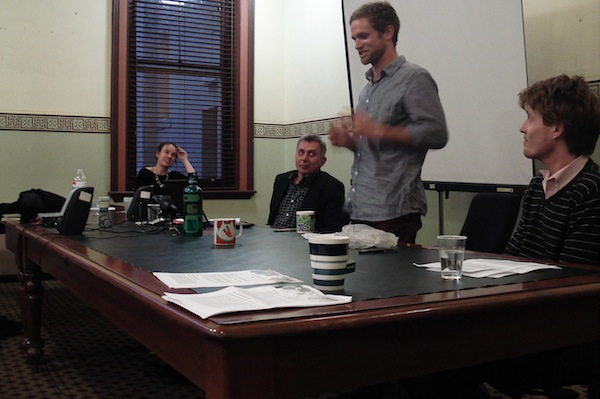

l-r: Ann Vickery, Martin Harrison, Tom Lee, and Tim Wright.

How to sum up the Poetry and the Contemporary Symposium held at Melbourne’s Trades Hall under the auspices of Deakin University – three days of esteemed, associated, unknown, expert, dilettante, crystalline, recondite, modest, bold and blusterous papers and events – without recovering the territory mapped by the abstracts still available online, the insider anecdotes, the fast gestating and ribald rumours, or the deserving hagiographies required to celebrate the combined poetic curatorship of organisers Ann Vickery and Michael Farrell?

A list consisting of the titles of both papers and readings might begin a first account:

poetics and future scenarios: poems and poets in an age of energy descent and climate chaos. mez breeze and the cyber-syntax of code poetry. towards comics poetry. stochastic acts: the search string as poetry. fact or fiction: mediatations on mary finger. grand parade launch. vishvarupa launch. roundtable: poetics of unimprovement. calculated enjambment: continuity and discontinuity of rhythm in august kleinzahler’s poetics. sonic ekphrasis from william carlos williams to jackson maclow. a brief poetics. this is what it sounds like: performance poetry beyond postmodernism. writing country: indigenous poetics and the open field.  “periphery”. an encounter with chen li’s ‘wooden fish ballad’ – as translated by chang fen-ling. voice, music, sound: poetic histories beyond the printed word. multi-tracking & ‘seeing on the retina’ in leslie scalapino’s pearl trilogy. alice notley’s contemporary mythopoetics. jacket and the worlding of australian poetry. alan brunton: charismatic absurdist. six types of experiment in new new zealand poetry. hidden in plain view: constructing the poems in starlight. durga, kali, sita, krishna and feminist identities in asian-australian poetics. there is no future, and the future is spanking. under the influence: leaving bloom behind. death and the poetics of teeming in yeow kai chai’s ‘memento mori’ poems. as the text bears witness: a reading of ‘es lebe der kong,’ prynne’s elegy to paul celan. eating and speaking launch. contemporary poetics and sapphic mythologies. give me vidas and razos: the life of troubadour technologies in the poetry of ted berrigan. entrepot poetics: john forbes’ critique of the contemporary. naming the voids of multiculturalism in ‘biral biral’: a new reading of the poetry of lionel fogarty. form and field in contemporary australian poetry. merely circulating: modern poetry and the status of document. things to do with perth. poetry as writing a vector. “australian poetry” and some reasons why we don’t need it. gender city launch. one under bacchus and career launch. steamer and rabbit special.

A paucity of ideas contemporary Australian poetics is not, though you might be forgiven for suspicion towards the last formal entry on the programme since it does sound like number sixty one on a Little Bourke Street Saturday yumcha menu, not the literary magazines of Samuel Langer and Jessica Wilkinson. Nor does this particular programme seem to succumb to either obvious tones a contemporary poetics conference or symposium might deploy, of either celebration or suspicion.

No, instead, as might be obvious, the approaches are widely sourced: cosmopolitanism and multiculturalism, ecopoetics, troubadour poetics, literary history, modernism, information technology, Steinian poetics, Badiouian poetics, coterie, biography, process, Cambridge School, New York School, postmodernism, experimentalism, mythopoetics, kinetics, breath, electronic publishing, and indigenous poetics. These are the road signs of what was otherwise a curatorship of papers by devotees, luminaries, appreciators and poets.
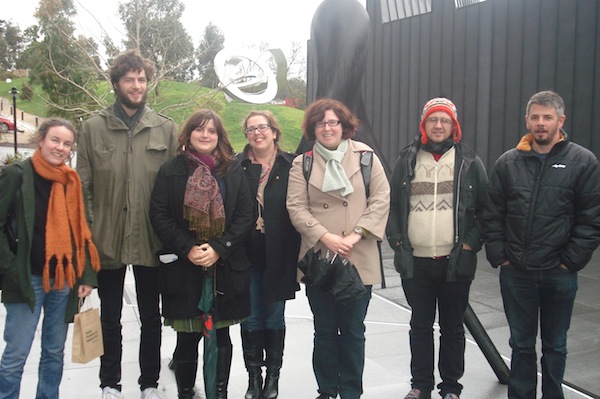

l-r: Ann Vickery, Samuel Langer, Ella O’Keefe, Melinda Bufton, Elizabeth Allen, Michael Farrell, and David Herd.

A concerted effort was made to fill the interstices of the critical programme with poetry, a collective recital of the single-line poem ‘I PUT YOUR LETTER IN THE GARBAGE DID YOU GET IT’ by Michael Farrell and a reading of Astrid Lorange’s new chap Eating and Speaking being some of a number of intra-programme events.

Moreover, Melbourne’s poetry embassy, bookstore Collected Works, received a thrum of conference goers for readings by David Herd, Cordite’s own Matt Hall, Ruby Brunton, reading the work of her father Alan Brunton, Martin Edmond, Kate Lilley, reading from her new Vagabond book Round Vienna, and Michele Leggott. Naturally, one must get their passport stamped when entering  Melbourne for poetical purposes, only apt then that a portion of Poetry & the Contemporary take place at Kris Hemensley’s establishment, regaled by interstate, Australasian, and international poets.

On site at the Trades Hall in Carlton, the atmosphere of the conference was not only collegial as all conferences intend, but rather communal. This was aided in part by the single room, single panel-style desk at the front with a generously packed room of listeners on the occasions I attended. For me, it was the first time meeting many poets and critics in attendance: Jill Jones, Siobhan Hodge, Chris Edwards, Martin Harrison, David Herd, Kate Fagan, Lindsay Tuggle, Michelle Cahill, Astrid Lorange, Joel Scott, among others.

The opportunity for those who knew each other already to separate into private circles hardly came about, it seems we all had the opportunity to share our research with at least a handful of strangers. Ann and Michael’s choices in speakers then were canny in another regard, in selecting some of the most devoted and passionate scholars and poets from around the country to spend a few days encountering the poetic passions and curiosities of others, not simply a national caucus where members proffer their latest projects.
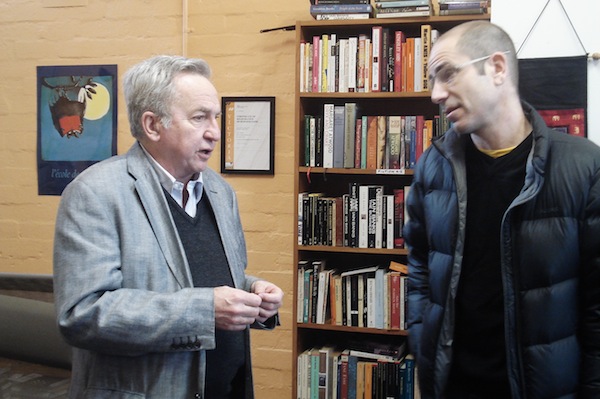

John Tranter and Justin Clemens.

Often, in such an account of a significant literary symposium one wants the critical gist, the tone of a new preoccupation, or a snapshot of today’s poetic horizon. As usual, the best critical material was that which encountered the criticism of others, often unknowingly.

Sam Moginie’s account of John Forbes’ Australianness in poetics as a kind of international entrepot was another way of accounting for Kate Lilley’s celebration of Jacket magazine’s role as an Australian outfit being read for the most part by Americans. Kate Fagan’s account of Chris Edwards’ collage as cipher of material experience might be seen as an example of the Rosetta stone that is Alice Notley’s curse tablets in Linsday Tuggle’s paper on mythopoetics. The use of Lee Edelman’s critique of ‘reproductive futurism’ as a methodology in poetics in Astrid Lorange’s paper could be seen as one precept of the ‘unimproved poetics’ model offered by Bonny Cassidy, Jill Jones, and Claire Gaskin.

Now these are my own associations and undoubtedly readers who had been in attendance as well as the speakers and poets themselves might have difficulty with my personal ascriptions of connective tissue. It is this very contention that proves the worth of such conferences, that the papers remain the same for two people but the lines-through across the scope of the conference be fertile and interminable. It seems Vickery and Farrell plumbed their proposals in aid of this very potential.
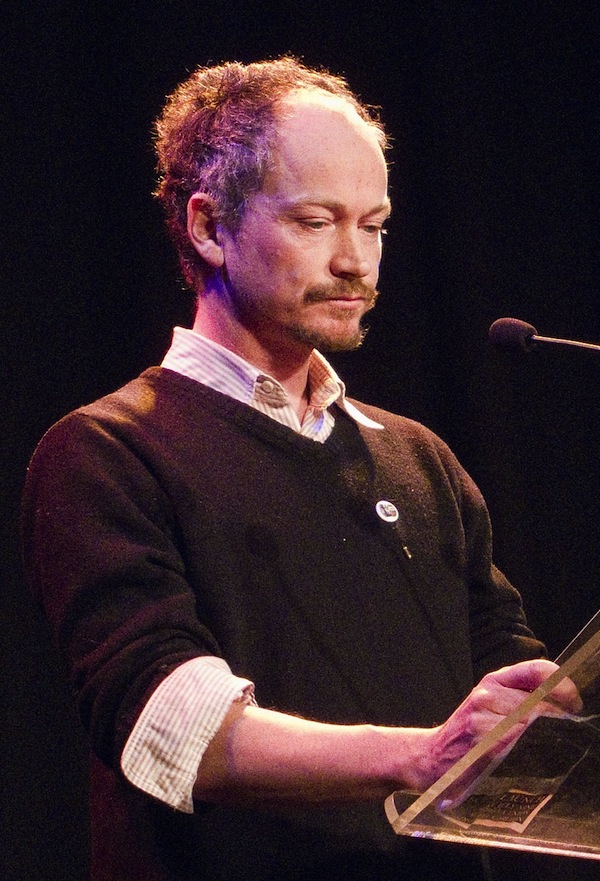
The profusion of book and journal launches in the interstices and evenings at the Bella Union Bar upstairs at the Trades Hall upheld the pertinacity of this symposium’s subject, the contemporary, not only in the present, but the instant. Lisa Samuels’ Gender City was a polyvocal spree, Michelle Cahill’s Vishvarūpa was delicately erotic, Astrid Lorange’s hallway reading of Eating and Speaking was goat-filled and glorious, Duncan Hose’s One Under Bacchus (pictured) was a monstrous truffle hound, Liam Ferney’s Career was searching and reminiscent, Benjamin Frater on DVD from the new 6am in the universe was diabolical, and the glossolalia of new cult journal-churchesRabbit and Steamer struck hieratic palms to initiate foreheads.

These are but some of waves of poetry ebbing through a collective madness surely encouraged and not attenuated by the findings of the research fraternities, gangs, cults and itinerants in attendance for the symposium; a sect of Janus. Strays and politicians knocked on the Union bar door demanding to be included, were sat before a brightly lit stage where Pam Brown reminded us of the commandments for sustainable poetics from a cultural and economic point of view.
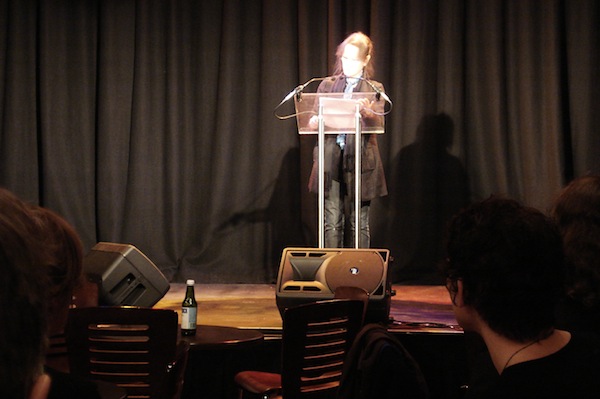
John Tranter continued the Australian Poetry Library conversation with an impromptu speech on stage and may I assure you, reader, as chair for Pam Brown’s paper, not an iota of this was premeditated! John Hawke and Alan Wearne launched the Grand Parade. Gig Ryan (pictured) launched esquires Hose and Ferney and had us in absinthe cackles. Rabbit steamed.

Perhaps the organisers then knew that to stake a claim on the contemporary the symposium  had to be in some manner participating in poetry’s present-tense. This we saw in spades in the secret readings, and then these auspicious launches, with introductions sometimes as dramatic and ecstatic as the books being launched. (Michael Farrell, Jill Jones, Alan Wearne, John Hawke, Gig Ryan: beware! When you launch with such verve every poet will pester you for introductions!) What a spotlight then, to be launching a book in this solar forum.

Sunday was an unofficial day of rhubarb and baked eggs for breakfast, Ern Malley debates, and book buying at Paul Croucher’s shop Red Wheelbarrow Books on Lygon Street in Brunswick, followed by an excursion to the Heide Museum. Born to Concrete, an exhibition of concrete poetry, was the reason for our excursion, its typographical ideas dazzling, with work by Ian Hamilton Finlay, Sweeney Reed, Alex Selenitsch, PiO, and others. Scotland and Melbourne. Early afternoon the skies opened, and the poets and critics dispersed.

Ann Vickery and Michael Farrell should see their Poetry and the Contemporary as a riotous success and responsible for reinvigorating an ebullience for contemporary poetics in its partisan schools, its independents, its exiles, and its present-tense. This symposium succeeded because it was constituted by criticism enamoured of poetry, poetry enamoured of life, and life enamoured of criticism and poetry. To take a line from the late Benjamin Frater’s 6am in the universe, where I take it ‘My forearm’ is the poem:

My forearm forces electricity down the blue throat

(‘The Argument’ 24)

and Astrid Lorange’s Eating and Speaking, where I take it ‘nipple’ is the poem:

nipple is delicious little catastrophes.

(‘Background’ 33)

Posted in ESSAYS | Tagged , ,

Stuart Cooke Reviews Anna Kerdijk Nicholson

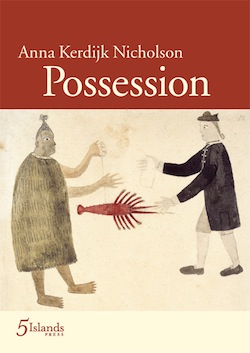
Possession: poems about the voyage of Lt James Cook in the Endeavour 1768-1771 by Anna Kerdijk Nicholson
Five Islands Press, 2010

From at least as far back as Heraclitus, scholars have been warning us about the irresistible and irretrievable nature of history. The past provides little that is stable, other than an unwavering reminder of the constancy of change. The task of entering history, therefore, is fraught with complications. Poetry might seem to rejoice in such complications, yet if it’s going to engage with foundational narratives about nations and cultures, it can fall prey to some of the regulations of more prosaic forms. Anna Kerdijk Nicholson’s Possession is an engagement with what is perhaps the foundational narrative of the Australian nation-state, the journey of James Cook to the east coast of Australia. And it is a major example of Australian poetry’s fixation with a past at once irresistible and irretrievable.

Continue reading

Posted in BOOK REVIEWS | Tagged ,

Angela Meyer Reviews Etchings

:etchings 9 – Love & Something edited by Sabina Hopfer et al

Ilura Press, 2011

Love & Something is the sub-header of :etchings 9, and the something seems to stand for the multitudinous meanings the word love can inspire – familial, romantic, love of nature, passion for work – and the variety of things that sit beside it such as desire, heartbreak, longing and memory. The vehicles for these themes range from poems both direct and symbolic, art created from and inspired by history, and fiction both realist and speculative. With the broadness of the theme and mishmash of styles, the issue lacks a certain cohesion, although this might be an attempt to avoid any homogenisation of the concept of love.

Continue reading

Posted in BOOK REVIEWS | Tagged ,