I am in the lake

Posted in TMLYMI v6 | Tagged

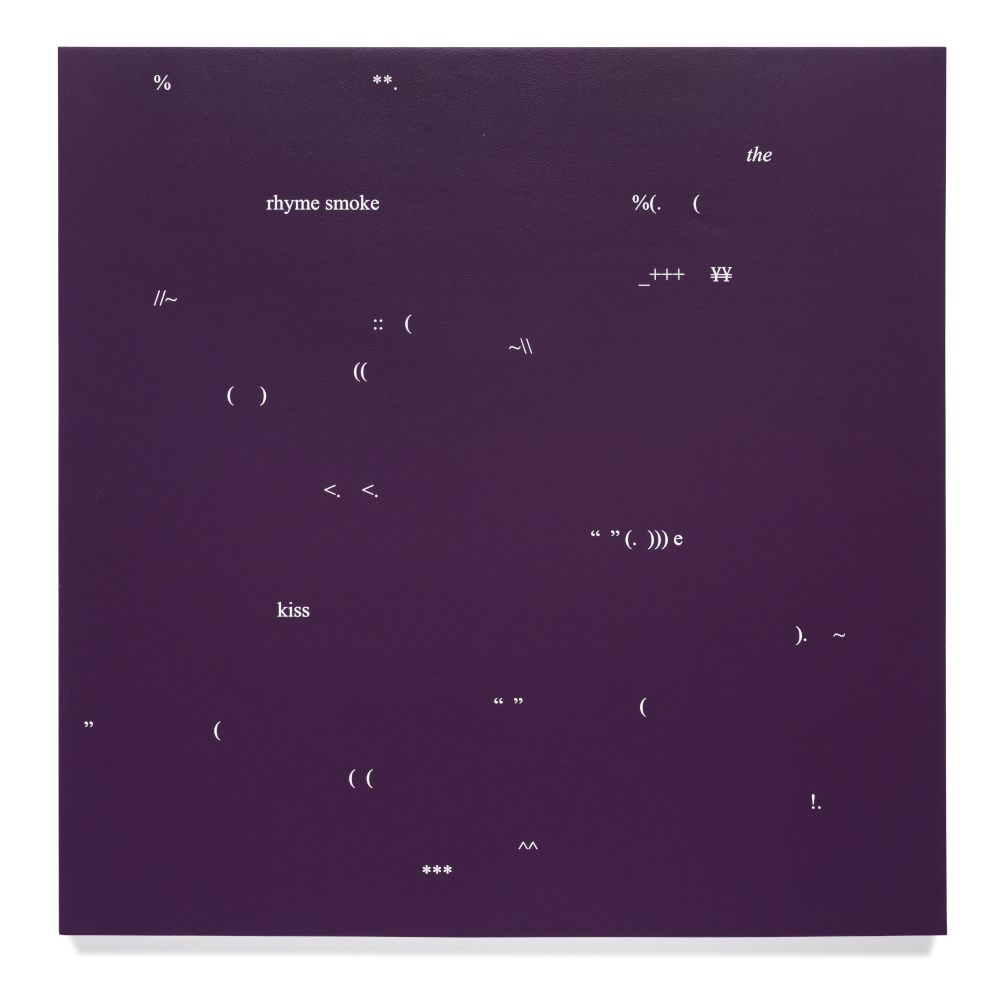
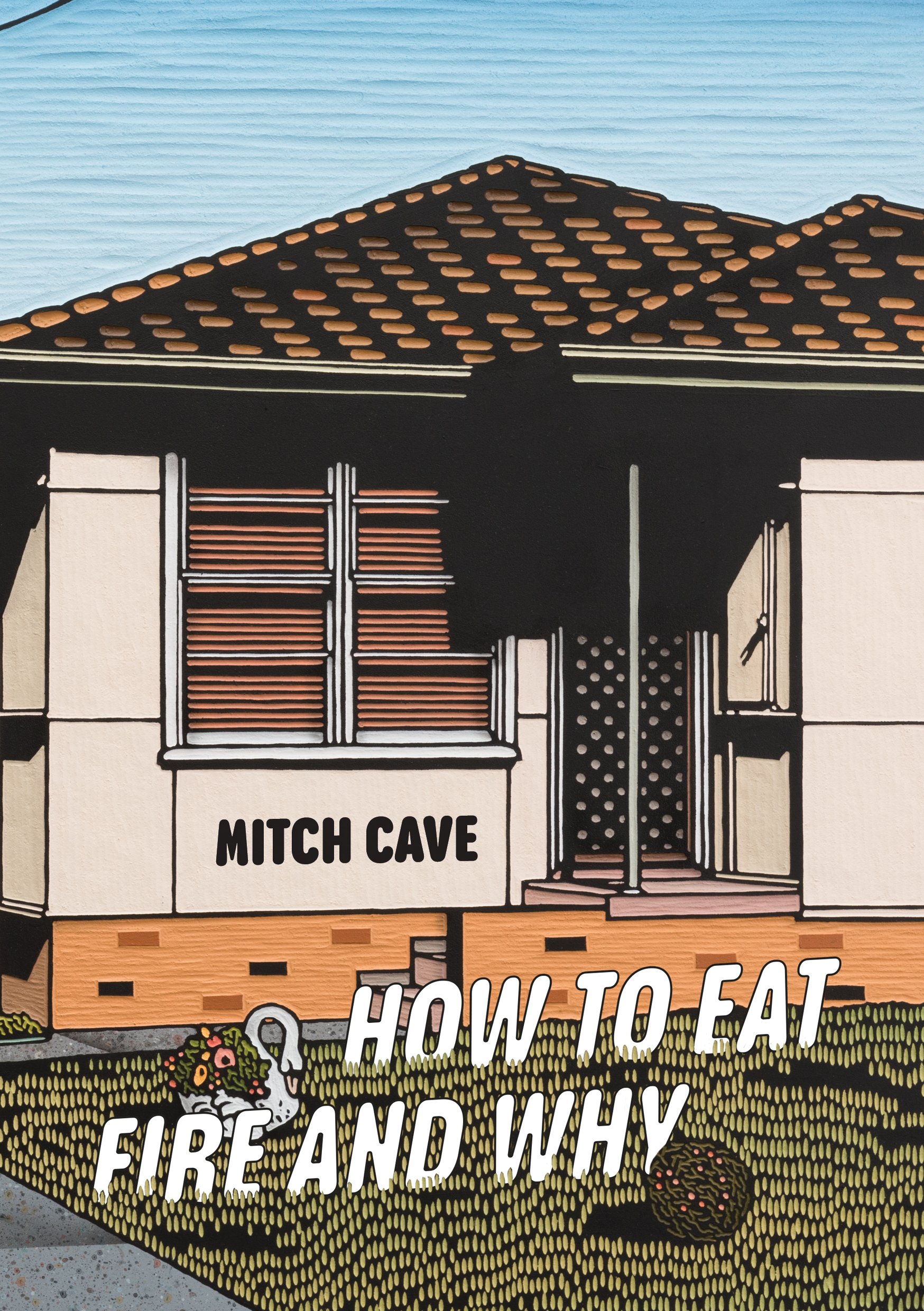
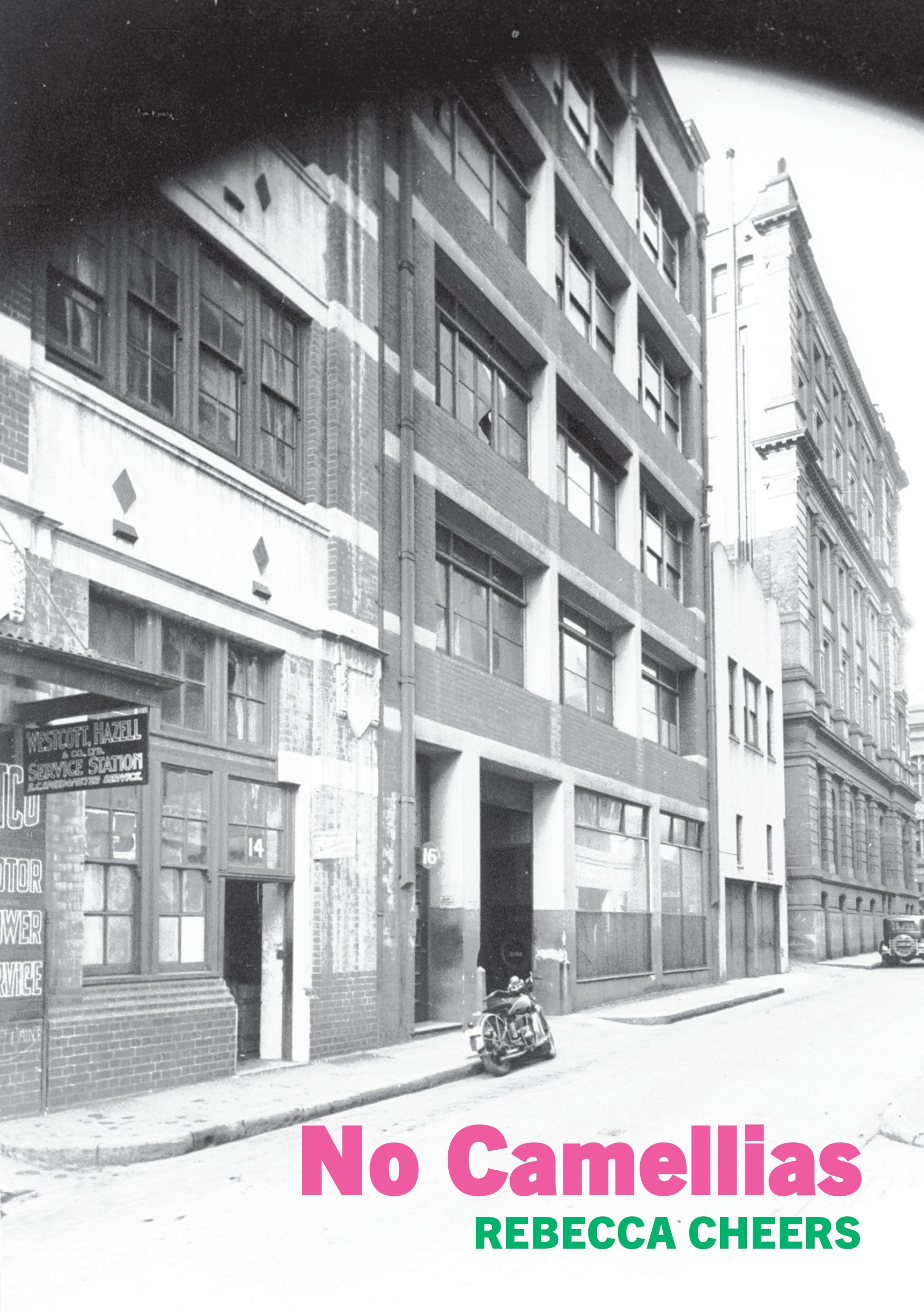
Nicole Rain Sellers Reviews Marjon Mossammaparast and Simon Tedeschi

And to Ecstasy by Marjon Mossammaparast
Upswell Publishing, 2022

Fugitive by Simon Tedeschi
Upswell Publishing, 2022


In And to Ecstasy and Fugitive, Marjon Mossammaparast and Simon Tedeschi testify to psychic realities concurrent with place, realities that overflow Australian and international borders. Both books hinge on altered states of consciousness. Both are arranged in segments self-described as “pastiches” or “fragments” (Tedeschi 20; Mossammaparast 87). The books are consentient in exploring migration, cultural lineage, and home, but they bifurcate in distinct destinations: art (Tedeschi) and divinity (Mossammaparast).

Mossammaparast’s sculpted poems form sections that build to a conclusion, whereas Tedeschi’s meandering, book-length sequence cross-references itself continuously. Physical orientation on the earth is an ecopoetic and spiritual issue for Mossammaparast, whereas Tedeschi inhabits a more sociocultural, psychological ecosystem. Tedeschi’s ironic ruminations contrast with Mossamaparast’s passionate evocations, and the poets’ techniques differ vastly.

And to Ecstasy, Mossammaparast’s second collection, is an agile plunge into literal and figurative transportation. Shortlisted for the 2023 Kenneth Slessor Prize, it follows her acclaimed debut, That Sight (Cordite Books, 2018). And to Ecstasy proposes a “place outside of place / we never arrive, set into motion / without will, called to will” (76), a place in which Mossammaparast progressively locates her readers by moving us through a series of geographically specific vignettes into an integrated field of transcendence (59). The effect is one of hope. Human precarity is experienced with joyful surrender rather than grief or fear: “how beautiful it is to have an empty Centre / […] / not filled with names, but where rain falls / and spirit is the being moving hands” (16).

Mossammaparast’s voice is ecological, concerned with religious and cultural tradition, situation, and relationship. And to Ecstasy challenges geographical and perceptual boundaries, building from one world of literal travel to another of spiritual travel, and threading these together with glittering anaphoric images of water, fire, mountains, trees, bodies, and fishing nets. The book comprises of three parts. ‘[There]’ is an international travelogue in poems, ‘[Here]’ sifts through interior and exterior Australian landscapes, and ‘F i e l d’ takes an overview of embodiment and prayer. Each section is marked by herald poems that formally announce progression from zone to zone. For example, the closing poem of ‘[Here]’, ‘At The Gate’, uplevels the reader’s perception of place and simultaneously declares the poet’s intention for the next section:

glow this highest heaven, and I will live
in the confluence of a miracle, on the tip of the spire
catching charge with lightning, in all directions.

You, and you, and you, beyond the paper and the words
are also now lightning:
this is what Love looks like, from here.

(58)

Literary references to Emily Dickinson, Seamus Heaney, Gerard Manley Hopkins, and Jalāl al-Dīn Rūmī sprinkle the book’s 88 pages, identifying a few of Mossammaparast’s influences, and the ‘Notes and References’ section is a short but welcome guide to the poems’ more obscure content. To add subtext or scripture to her poems, Mossammaparast employs concrete shapes and offsets some columns in italics.

In the first section, ‘[There]’, visions of fire frame a preoccupation with matters of religion, politics, and the environment:

it’s the apocalypse in my thoughts,
charred koala tufts that break this green relief,
a northern season still in equilibrium.
It’s cinders of kangaroo in my eye, embers
shaking paradise out of trees.
Forget even the homes on fire, that may be rebuilt:
it’s the Open of Hand and the Destroyer on the doorstep

(14)

And, floating like smoke to the right:

ashes to ashes

dust to dust

(14)

This section bears witness to diverse international climates and customs, for example, in Scotland, the poet “dreams of pipermen / skipping the Outer Hebrides / here to fall, to drowning” (24). In Italy, “in the Garden of Eden / a cycad grows / […] / that sprang before Australia” (31). In Iran, political and social unrest “flares in the sky, / radiant cells of children / burst alight in air” (21).

The second section, ‘[Here]’, plays with directional motion as a threshold for expanded consciousness. Australian culture contrasts with life in the rest of the world: “Australia dreams of a new carport, / a beat up ute to transport the fridge into the back yard, to mull the sea, / the Christmas pudding” (46). Water imagery is prominent as borders and spatial planes begin to merge. “God comes with clouds, in winter beams that fan / into the spectacle of genesis. Masts clang / against the slapping sea” (56). Mossammaparast now addresses her god directly: “We I call you, never made, but true, in the realm of forms […] /And I would have loved you to the palimpsest of blue mountains / your light holy, winged outside of” (43). Australia is spiritually “large, durable, extravagant, / the scale of megafauna. Confounding as platypus. / Countries still defining their prayerlines” (48).

Posted in BOOK REVIEWS | Tagged , ,

Submission to Cordite 111: BABY

Send us your babies. Nobody puts poems in a corner. Send us your succession. Stories you won’t tell the kids that you’ll [never] have. Send your sacrificial lambs, darlings for the slaughterhouse, send fawns fed from the manger where divine miracle sleeps, tender and mild. Send us your tenderness. Your babies spoken only after dark. Send end, send apocalypse, forget the Child at the perpetual horizon of every acknowledged politics.

We’ll have you know we were assigned baby at birth. Send us what makes sense of all this mess.

We would take everything. But we can’t.


This podcast sheds some insight on how Cordite Poetry Review (and Cordite Books) works.

Submission to Cordite 111: BABY closes 11.59pm Melbourne time Sunday, 20 August 2023.


Please note:

  1. The guest editor(s) has sovereign selection choice for all poems submitted.
  2. Masthead editors will also contribute to the issue.
  3. We will only read submissions sent during our official submission periods.
  4. Please place up to three (3) poems in one (1) Word, RTF or PDF document (unless specifically noted otherwise for special issues), with no identifying details in the document itself.
  5. We are not able to offer feedback on individual poems.
  6. Submissions will only be accepted via Submittable …

submit


Posted in GUNCOTTON | Tagged , ,

‘Like all change, it happens in the margins’: Joan Fleming in conversation with Jeanine Leane

Jeanine Leane and I met in the Spring of 2022 to plot this interview over coffee. Jeanine has a quick, ferocious intelligence that moves associatively, while her fingers make languid circles in her hair. She is fine-boned and extremely upright. The day we met, she wore a fitted, double-breasted greatcoat with military detailing that flared at the waist. She told me she picked it up in Cambridge, England, on a day she was there as an invited speaker. After the talk, she said, while walking along the rigidly manicured paths of the Cambridge campus, she stopped to gesture at a flowering bush and was instantly policed by a porter, one of those grounds-guards in bowler hats who keep non-fellows from walking on the grass. ‘Do you know what day it is?’ Jeanine said to the porter. ‘It’s invasion day today, in so-called Australia. I’ll point at any flower I please.’

It took us the better part of a year to finally find time to sit down on Zoom to conduct this conversation. In the interview that follows, the Wiradjuri author, academic, and force of nature (whose last name, by the way, rhymes with ‘cane’) speaks about humour, rage, poetry and the market, lit crit double standards, lessons in unbelonging, the concealments and evasions of the archive, and the personal cost of waking the academy up to white privilege. I mostly listened. I learned a lot.

Jeanine Leane: I’m talking to you today from Ngunnawal and Ngambri Country in Canberra and I’d like to pay my respects to the elders who cared for this beautiful country. It’s a beautiful day here today.

Joan Fleming: And I’m chatting to you today from unceded Wurundjeri country, always grateful to be here as a guest.

Before we land on the now, I thought we could begin with your personal writing history. What was the path you walked in your writing life that led to the publication of your first two books, Dark Secrets After Dreaming: AD 1887–1961 and Purple Threads back in 2010 and 2011, and the attention and awards that followed?

JL: First books are always really interesting because they have a lot in them. They’re kind of like your life’s work to date. People say that about musical albums as well – the first ones, and then the subsequent ones, can be quite different and can present different challenges. I’ve always wanted to be a writer and was encouraged by aunties at home, and by some of my teachers. I wanted to write this story for a long time, and I think I struggled for a long time with how to write it. How to tell my grandmother’s story, which was completely oral. Later on, I found some written things, but at the time I never had anything. I wrote a piece called ‘Another Story’, and it talks about how I used to sit with my grandmother in the afternoons, to look after her. She was quite elderly, and it was kind of not safe for her to be wandering around anymore. She was still lucid, but physically frail, and I used to sit with my nana, and she would tell me stories about her childhood and youth. For example, I think the aunties and my mother sort of knew that the person who raised my grandmother, who she called her mother, was really her grandmother. Her mother went missing at 15, she left Lilian with her mother – my Great-Great-Grandmother. Lilian’s mother never returned – it was out on the Riverina, and a lot of the women were attached, in that very fraught sense, to shepherds or rural workers. Many women like her had no choice and were ‘taken as property’ by white men, sometimes never to return. She went off to do some work and she never came back.

JF: And those would usually be much older men, hey?

JL: My grandmother never really talked in official dates. May, her biological mother, was apparently only a young girl, so I take that to mean probably 14-, 15- or 16-year-old girls become someone probably quite a bit older. I heard quite a few stories – bits and pieces – about them and about the men that they had to attach themselves to. She lost her grandmother when she was about 16, and she was working herself. I heard quite a few things about her early life: that she didn’t get enough time or opportunity. In that way, I became a custodian.

JF: And your first books were broadly feminist, really, no?

JL: Well, I don’t really like that word. At the First Nations Writers Network in Tandanya/Adelaide last month I was on a panel with Jackie Huggins and we were talking about words we don’t like, as distinct from, it’s not the practice, it’s the word.

JF: And ‘feminism’ is one of these words …

JL: Jackie said, ‘I’m not a feminist at all, even though most of my work, my commitment, comes from and is to and about women. I don’t like the word, I don’t like the movement’ …

JF: Something like, ‘This isn’t a term that works in my context’ …

JL: I’ve got a poem called ‘They Said I Could Be a Feminist’ in my new manuscript. Anyway, yes, those early stories are quite feminist in a cultural context that doesn’t use that word. A lot of things that western women like, that are considered feminist, need to be re-evaluated from a different cultural standpoint. The whole idea of ‘birth control’ is like that. We all think, great, it’s really important now – which it is – but it has its origins in something more seedy. When you consider who it was carried out on, and why.

JF: That makes a lot of sense. Another term that you’ve used, but have framed as problematic in your writing about the women who grew you up and whose stories you are a custodian for, is ‘activist’. It’s not a term that they would use, and maybe it’s very limited – it sounds like, in their realm, in working in under-the-radar ways within family contexts and even within legal contexts – to do with property and inheritance and things like that – they were doing the work of female activism, though they wouldn’t frame it that way.

Posted in INTERVIEWS | Tagged ,

‘Collective generosities’: Sara M Saleh in Conversation with Jazz Money

Jazz Money is a poet and artist of Wiradjuri heritage creating work across installation, digital, performance, film and print. Money’s first poetry collection, how to make a basket (UQP, 2021) was the 2020 winner of the David Unaipon Award. This transcript documents the in-conversation between Money and Sara M Saleh, a poet, writer and human rights lawyer. This exchange marked the launch of how to make a basket and occurred on the unceded lands of the Dharug people in December 2021 at Arts & Cultural Exchange (ACE, formerly Information + Cultural Exchange). This event was co-presented by ACE and Sweatshop Literacy Movement. Throughout their conversation Money and Saleh share necessary and valuable thoughts about poetry as a democratic form, the power of story in contributing to personal and collective identities and the ethics and responsibility of writing.

Sara M Saleh: I have a feeling that you will agree when I say that poems are a series of communal, collective generosities; I want to hear your thoughts on that.

Jazz Money: One of the things I really love about poetry is it’s this incredibly democratic form. You don’t need to be able to read or write to engage in poetry. Our ancestors know that. And this Country knows that. We have such an incredible legacy of poetry across this continent and it persists; First Nations languages – they’re poetry themselves. English is this very clunky tool that I work within a lot of the time, and I’m often just trying to make English feel the way that Wiradjuri feels. I also love thinking about this legacy across the history of protests and actions in this continent, mob have always been jumping up and saying these incredible orations that rally the crowd and create energy and passion and power and tell people that our voices are here, and they need to be heard.

And we’re part of that legacy. We’re able to do this and we’re able to use our voices because other people have done that before us. And then we get to create these connections with one another and then going forward with people that haven’t even been born yet.

SMS: I think it is these connections that we have and the fact that we’re on land where storytelling has been happening for thousands and thousands of years. And even, for myself when reflecting on my heritage, I think about the significance of poetry and bringing it back and making it accessible because, for example, in our communities now it’s either seen as a luxury or a hobby or something that you just don’t have time for when you need to put food on the table, but it is – we come from a people who have a history – a very long history – of oral storytelling.

That heritage is so powerful, and actually poetry – one of its main purposes, significantly, was for politics; like oration and bringing the people together in that way, and an extension of critical thought and questioning those in power. All the things that you’re alluding to. And being able to be part of that tradition now – just think about the different ways in which we are part of that – it’s exciting, it’s thrilling, it’s scary, it comes with responsibilities.

JM: It’s a strange contrast to the way I was exposed to poetry when I was going through school, which was overwhelmingly a bunch of dead white guys and it was elite and it was boring and it had nothing to do with me. And then to grow up and realise it’s actually all about us. And all the good stuff is coming out of communities that want to bring everyone together. But that’s a great thing, that’s such a beautiful thing to be able to participate in.

SMS: Plot twist – when you’re actually a part of the community with the origins of storytelling; it’s actually you as opposed to what you’ve been taught to believe.

JM: Yes, when you’ve been told that white guys are the protagonists your whole life …

SMS: And you’re a side note, or barely.

JM: Yes, and then to be part of communities that want to see everyone’s voice heard. I think that’s something that poetry does so brilliantly as everyone can have a voice, and it doesn’t need to be resolved, and it can be complex, and we can figure out those things because the page is just a tool, our voices are a tool. And we put them together and we see what truths are made by putting it all together.

Posted in INTERVIEWS | Tagged ,

‘Atrophy and entropy’: Tiarney Miekus in Conversation with Darcey Bella Arnold

Language is crucial to Darcey Bella Arnold’s paintings and installations. Words appear throughout the Melbourne-based artist’s work, in rhythms and forms that are almost impossible to replicate with typed script, as the text in one 2020 painting, é dit, reveals:

en-grossing
en-gross-ing-ly — é
engender
engender-ing
engender-ed
entrust-ed
entrust-ful
entrust-fully

It’s a mesmerising display of grammatical iterations. Yet these words are not Arnold’s but her mother’s, Jennifer’s.

In 2004, after an acquired brain injury following a viral infection, which also resulted in significant memory loss, Jennifer developed aphasia, altering her communication. Soon Jennifer began writing and editing, filling notebooks with words and ‘correcting’ the writings of others with the utmost precision – all in friendly, neat cursive. Without knowing the story behind Arnold’s art, it looks as if someone, dissatisfied with the forms of language, has tenderly dissected it, losing language to find new forms of communication.

At first, Arnold brought fragments of Jennifer’s writing onto canvases and painted large-scale replicas of the front of Jennifer’s Spirax notebooks. But recently, something has shifted within this metamorphosis – Arnold is using Jennifer’s words as a departure to fundamentally question language and meaning, with paintings as deceivingly simple as the letter ‘a’ repeated in various sizes and directions. Script has become purely visual. Words and letters are marks in the world, like any other painterly brushstroke.

Tiarney Miekus: I know that Jennifer was a teacher, and held a natural interest in words – but prior to her aphasia, was she interested in language? Were words, literature, or poetry topics of conversation?

Darcey Bella Arnold: Not particularly, which is intriguing! However, Jennifer has always loved reading and has a respect for the written word. Books were always very important at home as a child; I am one of four children and she had us all reading for education and enjoyment. It is interesting that she is so focused on words post-illness: she plays with them verbally in everyday conversation and in her writing and correcting – she corrects the newspaper regularly, for example. It is her favourite subject and brings her (and us) much joy.

Another intriguing element of her aphasia is the mixing of French and English. We also don’t really know why this has come about as prior to her illness she didn’t have any particular interest in the French language, apart from learning it at high school for a year or two.

TM: It’s always interesting when a visual artist focuses on language, and in your work it’s especially profound because it’s the form of language rather than the content. You’re not communicating through a phrase or word, like Barbara Kruger for example. Was that interest in language always there, or has it developed over time?

DBA: I have always loved text works, like Barbara Kruger as you point out, and artists such as Elizabeth Newman, Jon Campbell, Mutlu Cerkez, Emily Floyd and Gordon Bennett. So, the interest has always been there, and I have played with language as form and message since I graduated art school in 2007. What has developed is my thinking around language, it is a fallible form of communication. It’s a medium to be played with, to have fun with, following my mother’s example.

Darcey Bella Arnold, é dit, acrylic on canvas, board framed 120 x 90 cm. Courtesy Darcey Bella Arnold and ReadingRoom, Naarm/Melbourne.

TM: Fun isn’t often a word used amidst language (thinking of how so many writers talk about the suffering of working with language). Can you talk about how you play with language, and why that’s fun to you?

DBA: Play in the studio for me is an essential part of making, the research is there, in the background, but the time spent with the materials is such a huge part of making art.

TM: When you saw the development of your mother’s writing and notebooks, was there a particular moment when you decided to bring those words into your practice?

DBA: There was a particular conversation I had with my partner, Simon McGlinn, before a solo exhibition at the Sutton Project Space in 2018. I had produced a new suite of paintings and titled the show My Mother’s Labour – I was thinking of concepts around storytelling and feminism, and by coincidence, I had simultaneously also been writing a personal essay about Jennifer. Once I had written the piece, I showed it to her and naturally, she wanted to correct it for me. The writing describes her language change, and there was something wonderful about the writing describing this change and her and marking the paper – it felt active and playful, alive, a portrait of her in a way. I showed this writing to Simon, and he pointed out that it could be the written component to My Mother’s Labour, and this was the beginning of bringing this personal element into my practice. This took much consideration and discussion with family, as it is personal. I wanted to make sure my siblings and Michael (Arnold’s father) were all happy with it being told.

Posted in INTERVIEWS | Tagged ,

Scenes from a Slanting City: Theophilus Kwek Translates Zhou Hongxing

(周红星, 译: 郭慕义)

Night, at noon. Even the brightest blaze from beyond
my window glances off the hotel’s heavy drapes.
Each morning’s case numbers leap higher than the last –
look, how they dance before my eyes, like family.

~

Another morning snagged from time’s slipstream,
another hasty year. A few free hours
is still all I get; that, and these wet streaks
broken hard across the back of my palm.

~

How long since I stumbled into this country, young
and foolish, where snow now falls about my temples?
Such palaces of pleasure, they tempt your gaze too.
Don’t be fooled. I’ve tasted what they have to offer.

~

Unawares, I’ve come into a city
where decades might pass if you aren’t looking –
a breeze among the willows. How long more
till the day I return? The heart rustles.

~

This city’s towers burrow deep into the clouds
while all around, wind and rain pelt down like the plague.
I’m sick of hearing the rich and their drinking-songs.
Who pities those who only show themselves by night?

~

No-one has told the birds, whose happiness still shakes
the very tips of the branches. There is sickness
in the air, and all night: hard rain on my window
though this morning the view was never quite so clear.


《坡城记忆》1

周红星

酒店闲窗日已高,
重帘未卷头昏沉。
昨日暴增病例数,
唯有闭目思家人。

*

光阴似箭渡,
偶得半日闲。
揉碎思乡泪,
匆匆又一年。

*

年少无知闯异国,
鬓角白发容颜崔。
举目灯红酒绿处,
苦辣酸甜皆自知。

*

懵懂入坡城,
转瞬数十载。
清风拂柳枝,
何日能归来?

*

坡城楼高钻入云,
疾风细雨昼夜淋。
朱门酒歌寻常过,
谁怜昼伏夜出人。

*

靓鸟未知坡病增,
枝头戏耍欢快鸣。
昨夜窗外淅沥雨,
晨起景色分外明。

Posted in TRANSLATIONS | Tagged ,

4 Juan Paulo Huirimilla Oyarzo Translations by Stuart Cooke

Regarding the 4 Sonnets of the Apocalypse

los que mueren por la vida
no pueden llamarse muertos

–Alí Primera

1. The World

Jesus John Lennon Horus Bob Marley
Martin Luther King Joan of Arc
Trotsky García Lorca Miguel Hernández
Mahatma Ghandi the Arabs of Iraq and

Palestine; the slaves sold and killed in Bristol
Non-Zionist Jews of the Holocaust
Buenaventura Durruti; the dead in Tiananmen Square
The warriors of Vietnam. Marilyn Monroe

Tupac Shakur Anne Boleyn the two million boys
And girls infected with AIDS in Africa; the Chicanos
Who disappeared in the prisons of the empire.

The polar bears; the prisoners transferred
Between secret jails. Patrice Lumumba
The workers who died on the gallows of Chicago.


1. El mundo

Jesús John Lennon Horus Bob Marley
Martin Luther King Juana de Arco
Trotsky García Lorca Miguel Hernández
Mahatma Gandhi los árabes de Irak y

Palestinos; los esclavos vendidos y muertos en Bristol
Los judíos no Sionistas del Holocausto
Durruti; los muertos de la plaza de Tiananmen
Los luchadores de Vietnam. Marilyn Monroe

Tupac Shakur Ana Bolena los 2 millones de niños
Y niñas infectadas de Sida en África
Los chicanos desaparecidos en las cárceles del imperio.

Los osos polares; los presos de transferencia
De las cárceles secretas. Patricio Lumumba
Los obreros muertos en Chicago en la Horca.

Posted in TRANSLATIONS | Tagged ,

deScription: Improvisations on the Mid-career Drawings and Paintings of Nola Farman

I. The Limits of Imagination
The Limits of Imagination, 1971, 15 x 21cms, ink on paper

I hear old Poseidon walks on the water like his feet are backwards fish. I’ve always had this affinity, he boasts in the trumpet of my ear, devolving like a spent umbilicus. But for every fishy propensity he proclaims, my throat says bird – unstoppable incubator, and oh do I birth evermore squawking seabirds.

Teresias the prophet says, only by becoming bird can we unravel the old sea god’s wrath, shrink him back to size. Listen to the shrivelling of the miscreant. But as I hear those raspy insinuations, my hair comes semically alive, Greekly wriggling off my chest. The more the birds tug at the fringes of my being, the more I’m drawn out of myself.

I sprout! For all his metamorphic boasts, Poseidon’s drawing to an end.

My birds shriek out a parody of that backward water music, and bygones are Beigesang, our squawking babble’s another mode of travel. Brailling the tangled entrails of the old god’s demise, Tereisias says, there’re still a tale or two of women silenced there.

For seven years I was woman, he says, and I pronounce you prophet from her greater pleasure.

Posted in ARTWORKS, CHAPBOOKS | Tagged ,

NO THEME 12 Editorial

We have had the honour of editing this issue as two poets with collections published and forthcoming with Fremantle Press, and invited by Cordite in the spirit of ‘shining a light’ on the thriving and amorphous field and bush that might be called ‘Western Australian poetry’. By virtue of the no-theme nature of the issue and the blind model of submission, the ‘WA-ness’ comes from where we were both editing on beautiful, unceded and sovereign Whadjuk Noongar boodja, and our attunement to poems referencing places utterly west such as Geraldton and Perth, of which there were many. We wish here to acknowledge the collective indebtedness of Western Australian poets to contemporary First Nations poets, whose wordcrafts and poetic knowledges profoundly shape the landscape in which we and various poets in this edition write.

As white settler poets interested in poetry about motherhood and place and living in the sprawl of suburban Perth, we’ve some big things in common, yet we hadn’t met before the time we began editing together. Delightfully, editing meant forging time to meet. We live on either side of the Derbarl Yerrigan, and so we found a middle ground – a café in Northbridge, Boorloo, with a quiet room out the back where we spoke about the challenges of making time to read and to write among parental and work responsibilities, about carving zones where we dwell in words, whether it be a few precious minutes in the gentle light of the morning or hours during the cutting light of day.

Our locations, as the poems in this edition, remind us that the connections that poetry makes are never above the lands and waters they’re written through – be these the sovereign lands of First Nations people, or lands from where one or more bunches of colonisers have come and gone, as many of our domestic and international submissions insisted upon.

Our call out had spoken of play and risk and claiming ‘zones of freedom’. The stuff of fun and fantasy, of territory and self-determination. And certainly there were poems which made us laugh out loud in delight at a trick well stuck or a pop culture artefact re-spun. Yet reading the submissions, it was difficult not to think about who can afford risk and the conditions that make poetry, and play, possible, not least, the time it takes to write, edit, and submit a poem. These, including belief in one’s own work. Who has time to take the chance of submitting work, in these days who has the resources to support risk?

Collectively, these poems carry an insistence on caring for the quality of one’s life and of language amidst the inter-connected forces of war, colonisation, whiteness, economic inequality, ableism, and sexual and gender discrimination. The poets who, if unintentionally, breathe interplays between the im/material into this edition, share stories and knowledges, anecdotes and images in remarkable fusions of the synthetic with the organic, ecstatic realisations of freedom and quiet carryings of responsibility. Even those poems that seem to offer escape routes from the harsh present carry an insistence that we continue to listen closer to the kaleidoscopic fullness of now, and its demands and devastations. Poets rewrite oppressive stories that might shape job applications, reply to toxic emails with mammoth self-control and art, light candles even though, or because, they know the flame will go out. See snow and think of work. See the cost of living and think of seeds. And somehow, improbably, the poems grow.

Posted in 109: NO THEME 12, ESSAYS | Tagged ,

Syntax Error: Troubleshooting Failures in Coding and Language

var expectations;
var doubts; 
var attempts;

function preload( ) {
expectations = loadStrings(“perfection.txt”);
doubts = loadStrings(“extensive.txt”);
attempts = loadStrings(“trytobeenough.txt”);
}

The kind of learning I’ve been engaging in has left me not knowing the names of things, or forgetting them unless I am using them at that moment. There is so much I don’t know and the act of coding is facing that lack again and again. My notes show this grasping.

According to Taeyoon Choi ‘learning how to work through a problem is way more important than doing it the “right way.”’ Persisting despite a lack of knowledge, perfection, or fluency is essential to learning anything. I can’t imagine approaching a project or a lesson without room for all the wrong ways I try myself into results.

I’ve learnt that doubting myself in one form is exactly the same as doubting across several forms of expression – the only difference being if the doubt gets too heavy while writing a poem I’ll switch to my code. If my code has too many errors, I’ll research interesting vocab. This revelation felt restorative for someone like me, who wants to be everything for everyone (and hides from the world when I can’t be). I had been waiting for someone to tell me it was okay to pursue multiple things at once, even if I failed at them all, even if none of these pathways would bring stability or a career. Sometimes you just need to be reminded that it’s okay to learn new things, and it’s okay to be shit as long as you’re enthused by the process.

I killed my maths brain when I was sixteen and never looked back. I’m not saying I regret this, but I think I’d have less trouble solving errors in my code if I understood basic maths. Learning that computational refers to the process of mathematical calculations as well as working with computers was disappointing for me because it felt like I’d discovered a really cool quest but found out I had to have a driver’s license to complete it. Code can be chaotic, a graveyard of math that won’t function because I haven’t understood the logic or language. I find this in my poetry too, in stanzas that seem fine but aren’t communicating properly with other stanzas in the piece. Eventually, you have to cut them or find new words.

***

Some words or phrases will always make more sense to me in my first languages. I write first languages, plural, because depending on whom my parents and I were surrounded by the language and dialect I heard and learnt would differ. Most of the multilingual writing I’ve done makes me feel uncomfortable because it showcases all the gaps in my vocabulary and all the silences I’ve grown up with. This work centres around family and food because that is what I have lived and known. To this day I feel like I’m trailing behind everyone in both English and Bosnian, Croatian and Serbian. I had the same education every other Australian kid did–I remember playing Kewala’s Typing Adventure – but in my mind I will never make up for the five-year head start all the other kids had in English. What’s worse, my younger self felt ashamed of this gap and as a result I neglected my first languages for years.

In my late teenage years, just before we visited family in Europe, I started reading my old language-learning books and listening to the music my cousins suggested. I inhaled my copy of Izi indigo vila, and struggled through Kradljivica Knjiga, and the first book of the Series of Unfortunate Events, Loš početak. There are words in these books that I don’t even know in English but I wasn’t reading for the story. Despite not understanding what each word meant at least I could pronounce them correctly by sounding them out slowly. I laboured over every page, hoping the effort would yield a vocabulary and access to my family’s stories.

***

Hoping that coding would somehow allow me to continue to appreciate my poems even after I had written them was a strong motivator to apply for Toolkits, an online course in digital writing in 2020. In ‘Nature Poem’ Tommy Pico says ‘It’s disheartening / to hear someone say “there’s no magic left”’. I’d felt stifled by the pressures of money, family, and other expectations and it had left me with little energy or appreciation for creativity. Coding brought a kind of magic back to me that was quashed due to the necessity of:

var languages;
var writing; 
var newSkill;

//Small x’s and poorly named variables, 
//all evidence of a continuing story


Click and move cursor to interact with the code sketch. This is best viewed on desktop.

Posted in ESSAYS | Tagged , , , , , , ,

9 Artworks by Rel Pham


TEMPLE | Rel Pham

Rel Pham is a Naarm/Melbourne-based artist, designer, animator and illustrator known for a strong use of electric, vibrant colours and a penchant for surrealism. Drawing upon old world fables and rituals for thematic inspiration, Pham explores the interconnected nature of our current physical and digital realities through screen-based video, animation and installation.

Pham creates hybrid worlds, rendering traditional scenes of Cao Dai temples and Western classical art in an illuminated palette of neon PC coolant fluid and radiant LED lights. He flattens our past, present and future to demystify the invisible numbers that surround everyday life, exposing the programmed spectres haunting our data through cautionary tales of being intrinsically connected online.

Posted in ARTWORKS | Tagged

Why = f(x): A Retired Tumblr Girl’s Inquiry into Suffering, Stardom and Female Labor

Suffering as a Function of Stardom

In Patrick Flores’s The Star Also Suffers: Screening Nora Aunor (2001), he describes confessional performance as being a simultaneous unburdening of the self and burdening of others with one’s pain, a transaction wherein ‘pain serves both as labor and capital of the struggle of a human agent […] to bear witness and testify, to make the necessary sacrifice of putting herself at risk and in a position of vulnerability and exposure to consumption and compassion’1. Flores is describing actress-turned-politician Nora Aunor confessing at the EDSA Dos rally in 2001 that she had suffered abuse at the hands of her long-time political ally, ex-lover, ex-costar (and ex-President of the Philippines), Joseph ‘Erap’ Estrada. The confession is aired on national news outlets.

In the footage, Nora is pictured standing at EDSA Shrine in a plain black t-shirt (the official color of the EDSA Dos revolution) with a Good Morning towel draped over her shoulders.


Nora Aunor at EDSA Dos, hand-in-hand with Urban Poor Rights activist, Carmen “Nanay Mameng” Deunida

Her eyes are turned heavenwards and she is photographed hand-in-hand with Urban Poor Rights activist Carmen ‘Nanay Mameng’ Deunida2. EDSA Shrine is a place associated with both revolution and reverence. From the photo and video coverage, the Filipino (or at least Manilenyo) mind was free to assume that she was looking up at the monument of Mary, Queen of Peace. Her confession being documented this way holds cultural weight. Nora Aunor was the first non-mestizaje actress to make it big on the silver screen in the early sixties, allowing Filipinos to see their stories enacted by someone who looked like them: brown-skinned with a small nose, not approximating any Hollywood counterparts3.


Nora Aunor in Himala (1982).

Nora’s most famous films, Atsay (1978), Himala (1982), and The Flor Contemplacion Story (1995), have nationalistic leanings. They problematise themes like the fanatic nature of worship in religious communities and abuse domestic workers and Overseas Filipino Workers or OFWs are exposed to. Noranians4 are from diverse backgrounds: from academics and film critics, to doctors and lawyers, to grandmothers and aunties in the province.

As a result, most Filipino audiences have seen Nora in this pose before. Those of us who are familiar with her body of work know that this look heralds emotional upheaval, catharsis, and an oncoming monologue. Flores describes this confession as emotional but also strategic: a way to signal that Nora was shifting allegiances, an act which would put her back in the public’s good graces at a time when Erap was almost surely going to be impeached.

This passage from The Star Also Suffers: Screening Nora Aunor was one of the first I bookmarked and copy-pasted onto a Notion Table that would grow to contain nearly a hundred passages in the span of the eight months it took me to complete my masteral thesis, Functions:Poems, a collection of thirty-one poems (forthcoming from Grana Books in 2024) which borrow their form from trigonometric functions and their images from three of Nora’s Guy & Pip romantic comedies5. From the get-go, I knew I wanted my project to explore pain as a function of romance, but this quotation steered me toward its then-unarticulated crux: female labor.

Like Nora’s confession, the more personal my attachment to this endeavour of articulation became, the more political it became as well; the more emotional its core grew, the more strategic the choice to write it seemed to be. On the one hand, I, too, wanted to confess: to say this happened to me and it was terrible and I want you all to care and ache and never be the same – on the other, I also wanted the confession to be about the labor young Filipina women are subjected to in relationships, in media, in the public eye, on the internet. I wanted this collection to be a showcase of craft informed by context, of the ability to distill what it would mean for these forms of suffering and stardom to happen to people who look like me (brown, short, curvy, undeniably and obviously Filipina) into a suit of poems that was aloof enough to be taken seriously, but coy enough to have sex appeal.

I wanted to write a poetry collection that unabashedly romanticised the Maldita-centric melodrama of Filipino cinema. I wanted the persona to possess both the cold-blooded rage of the bitch paying her son’s hampas-lupa6 girlfriend ten million pesos to stay away and the earnestness of the virginal leading lady who is unwaveringly hopeful and will do anything for love, for family, for country.

Posted in ESSAYS | Tagged , , , ,

Gibraltarian Stanzas

μὴ τὸ κράτος αὔχει δύναμιν ἀνθρώποις ἔχειν
(“Do not proclaim that empire holds sway over human lives”,
Tiresias, in Bacchae of Euripides.)

A boy runs down the steep, stepped street,
varying his strides and his leaps
to each step’s irregular space.
His bodily memory keeps
that rhythm of his native place.

The boy explores the layered clothes
in Mama Herminia’s wardrobe.
Nearly snarling, a stole of fox
breathes out time’s stale odours. Hands probe,
and rest on a wood-and-glass box.

The boy plays with the broken-down
clock. It strikes with resonant sound
long-vanished hours, as he wheels
the minute hand. The room shifts round
in the wardrobe’s mirror. It reels …

The city has, strident or mute,
the company of plant and brute
on the White Rock: the wildlife that,
winging the void or firm of root,
owns birthright to its habitat.

Life, being local, self-enables.
The cloud the uptorn Rock compels
yields it the benefit of dew.
High on the Jurassic cliff, wells
Darwin’s orchid,1 with squill’s drenched blue.

Surprising out of rocks, profuse,
their slender stems light-gemmed with dew
in the morning sun, the jonquils
bestow a fragrance on this New
Year’s Day, that almost overfills.

Was the paper-white’s origin
blank — the wan metamorphosis
of one who, mirrored, love implored?
It bears now, as the “fox’s piss”,2
imprint of our people’s word-hoard.

The local trades trace out their course —
ignored for monuments of war.
Mudéjar bricks remain true still
in Willis’s gunpowder store,
making known yet the Moors’ old skill.

The city’s great scene of affairs
is the roadstead. Once, steering there
by the Pole Star, pilots from Tyre
had brought fine, red-slipped, burnished ware
to emporium (not empire).

For casks of wine — heading and staves:
Canada exchanges with Spain
across this anchorage. Charleston
ships tobacco, Morocco grain,
cottons the Lancashire merchant.

With false, Jerusalem colours
the liberals clear, fate’s rudder
set for Golgotha on the beach.
The blindfolded bodies judder
as shot on shot tears into each.

A young Gibraltarian teacher
stands sixth in death’s rank. Remember
Gazzo, whose last a Capuchin
told. He, one night each December,
roams soundless el jardín de Glynn.3

Britain and the rival powers
begin to count down the hours
to Europe’s holocaust. Wolseley’s
incremental poll-tax scours
civilians from the Rock, he deems.4

Governor Nicholson regards
our people as foreigners, barred
by origin, connexion, tongue,
from self-rule. But from the Dockyard
a counterforce will soon have sprung.

Imperial measures contradict
one another. Some would restrict
the civil population’s size,
or deny it rights. Yet a picked
workforce the Dockyard’s growth implies.

Our people find their voice within
el arsenal itself. No din
of dominion, no soldier’s sway,
can silence it. Dockyard men win
us our first democratic say.5

I honour, with communal pride,
the Gibraltarian organized
working class, union men who knew
that the history newly prised
in Petrograd was theirs too.

Think now of a city at war,
with loved ones sent far from its shore;
more true than the one Orwell drew,
a city of workers,6 whose core
of morale insists on their due.

Risso heads the campaign: “They must
bring our families back; entrust
the people with self-government.”
As in other colonies, just
demands prevail through mass intent.

But satraps choose who will succeed.
“Fava is too gifted. He leads.
Deport him to retain control.”
Whenever Britain some rule cedes,
it first exacts repression’s toll.

All that endeavour brought to nought?
Do not say so. What those men caught,
of our selfhood in the making,
defines the goal to be now sought;
shows the prize, there for the taking.

The clock’s hands turn, turn and return.
From our deep memories we learn
who we are; from that, what to do.
Still the hands of the world’s clock turn:
history’s hour it tells true.

The autumn crocuses raise up
their slim, pink cups, and the rains come.
The boy sits in his window seat.
From step to step the water’s tum-
bles form cascades down Castle Street.

In the Bay of the Remedies
the sun’s dipping rays dye a keen
crimson hue. The sea expresses
in its swell’s grave obscuring sheen
Lord Poseidon’s lustrous tresses.

Posted in 109: NO THEME 12 | Tagged

no land promise [4]

this place has gone months without rain, worms don’t hatch in time for the bird beaks of a drought, eggs get dispersed from their nests beneath leaves too parched, that’s right, that gardener, twenty years rhythm of turning on sprinklers, guarding grass sprouts, shimming broken roof tiles, patching cracked walls, collecting trash after every party’s last footsteps, and still seemingly waiting on the crows who for whatever reason up and left the garden some few years back maybe to return, that’s right, the crows still flooding black clamors every early morning, or doesn’t it seem, but the crows a few years back were different, he told, that’s right, still able to speak he was, or doesn’t it seem, just once in a blue moon hearing some word scraps, the barren land, the dessicated grass, press an ear to the ground just occasionally hearing the humming of insects, so it was the call of the crows that brought you here eh, crows of the past or crows of the now both could do right, just need black flooding clamors every early morning, just need black storms to flutter through the window bars, just need to gather dropped feathers, to make a work of art isn’t it, the crow feathers still plentiful, or doesn’t it seem, the barren land, the dessicated grass, seasons without rain, eggs lie dry beneath the leaves, insects don’t hatch, the band of visiting birds crave the taste of fresh pupae, only the gardner is still here, twenty years rhythm, hired from some yonder to come break down the wall, then invited to stay and collect the leftover stones, relics for distant visitors according to his archaeological expertise, then he didn’t know to go back to his some distant yonder for what, then he was invited to stay longer to construct a garden, from then on striking up friendships with the crows taking shelter in the ancient tree there, every early morning flooding a clamour of black, with black storms also fluttering through the window bars, until one morning the storm quieted and he was forever silent, or doesn’t it seem, once in a blue moon releasing a few scrap words, visitors like migratory birds, who knows where who is from and the reason for coming here, who doesn’t once become a visitor, who isn’t from some distant yonder, who doesn’t linger some place, who isn’t leaving some place, who isn’t always unable to arrive some place, who doesn’t have a reason to not return once more to some place, the crows who for whatever reason up and left the garden, that’s right, don’t worry, the wall’s done breaking down, this city has capacity to tolerate the lives from far-flung distances without root without origin, one must still keep living even when no tree invites you to sit, even when the earth is barren, the grass is dessicated, the band of visiting birds gradually leave the nest, even when not one yonder invites anyone there to come to a different yonder, even when all regions are no longer different regions, a gardener ever since eh, he’s only preoccupied with expecting the old crows who up and left the garden, to maybe return, although the crows still flooding black clamoring every early morning, just that matter alone, that garden, those early mornings, those black colors, those storms fluttering through the window bars, the rest he seems to have completely forgotten, the relics, the pieces of fallen wall, the chunks of stone dropped from some planet his hand picked up, bundled, placed in a display cabinet, or doesn’t it seem, perhaps the only way left is to forget each piece of wall, each chunk of stone, or doesn’t it seem, perhaps the only way left is to expect the pieces of wall to self-destruct and self-obliviate, the lives from far-flung distances without root without origin come then go, don’t ever approach and ask each other where you’re from and why you came here, why still here, why not still here, when you’ll be going, returning, going where, returning where, whoever still picks up the dropped crow feathers buried in the earth like that gardener, surely an art piece of his life, looking after the early morning that sprouts old crows, dripping black storms that flutter through the window bars, and then the lost rain that will be reborn in this place


không đất hẹn [4]

nơi này mưa đã mất nhiều tháng ròng, sâu không nở kịp mỏ chim mùa hạn, trứng rã ổ dưới mặt lá khô bong, ừ, người coi vườn đấy, hai mươi năm đều nhịp mở những cột mưa tự động, canh cỏ mọc, chêm ngói vỡ, bồi tường nứt, gom rác sau bước chân cuối rời đi mỗi tiệc tùng, và vẻ như vẫn trông chừng bầy quạ không dưng bỏ cây vườn chừng dăm năm trước biết đâu về lại, ừ, quạ vẫn túa màu đen náo động mỗi sớm, hoặc tưởng thế chăng, nhưng bầy quạ dăm năm trước khác kia, ông bảo thế, ừ, ông vẫn nói mà, hoặc tưởng thế chăng, họa hoằn mới nghe dăm từ vụn, đất cỗi, cỏ cằn, ép tai vào đất thảng mới nghe trùng rỉ, thế ra vì tiếng quạ mà tới đây ư, quạ xưa hay quạ nay cũng được à, chỉ cần màu đen túa ra náo động mỗi sớm, chỉ cần những cơn bão đen vờn song cửa, chỉ cần lượm lông rụng, cho một tác phẩm à, lông quạ vẫn đầy, hoặc tưởng thế chăng, đất cỗi, cỏ cằn, mưa đã mất mấy mùa, trứng nằm hạn dưới mặt lá, trùng không nở, lũ chim khách trú nuối vị nhộng tươi, chỉ vẫn người coi vườn đấy thôi, hai mươi năm đều nhịp, ông từ phương nào được thuê đến đây phá tường, rồi người ta mời ông ở lại gom vụn đá, tàn chỉ cho khách xa theo đúng chuyên môn khảo cổ của ông, rồi ông cũng chẳng biết về lại phương xa nào kia thì làm gì, rồi ông được mời ở lại thêm nữa dựng vườn, rồi từ bấy đánh bạn với bầy quạ trú nơi cổ thụ đằng kia, sớm nào cũng túa ra náo động màu đen, cũng những cơn bão đen vờn song cửa, cho đến khi một sớm ra bão lặng và ông im mãi, hoặc tưởng thế chăng, họa hoằn mới phát ra dăm từ vụn, khách như chim tạm trú, ai biết ai từ đâu và sao lại đến đây, ai không một lần làm khách, ai không tự viễn phương, ai không đang lưu lại một chốn nào, ai không đang rời khỏi một chốn nào, ai không từng đến được một nơi nào, ai không có lý do để không trở lại thêm nữa một chốn nào, bầy quạ không dưng bỏ cây vườn, ừ, đừng lo, tường đã phá xong, thành phố này đủ sức dung những đời muôn trùng không gốc không nguồn, người ta vẫn phải sống tiếp thôi cả khi chẳng một gốc cây nào mời ngồi lại, cả khi đất cỗi, cỏ cằn, lũ chim khách trú lần lần rời tổ, cả khi không phương nào còn mời mọc ai kia đến một phương khác nữa, cả khi mọi miền đều không còn là miền khác nữa, người làm vườn từ bấy đến nay à, ông chỉ bận lòng trông chừng bầy quạ cũ không dưng bỏ cây vườn, biết đâu về lại, dẫu quạ vẫn túa màu đen náo động mỗi sớm, riêng chuyện ấy thôi, khu vườn ấy, những sớm mai ấy, những màu đen ấy, những cơn bão vờn song cửa ấy, còn lại ông chừng như đã quên tất thảy, những tàn chỉ, những mảng tường rụng, những mẩu đá rơi từ hành tinh nào tay ông đã gom, đã bọc, đã đặt nằm tủ trưng bày, hoặc tưởng thế chăng, có thể chỉ còn cách quên từng mảng tường, từng mẩu đá, hoặc tưởng thế chăng, có thể chỉ còn cách mong những mảng tường tự hủy và tự lãng, những đời muôn trùng không gốc không nguồn đến rồi đi, đừng bao giờ lại gần và hỏi nhau từ đâu và sao lại đến đây, sao ở lại, sao không ở lại, bao giờ lại đi, lại về, lại đi đâu, lại về đâu, còn ai lượm lông quạ rụng chôn dưới đất như người làm vườn kia, hẳn là tác phẩm để đời của ông, trông chừng một sớm mọc lên bầy quạ cũ, túa ra những cơn bão đen vờn song cửa, và mưa mất đi rồi sẽ sinh lại nơi này

Posted in 109: NO THEME 12 | Tagged ,

Recital

When she played the accordion
it seemed the audience might be there
just to see a young girl force herself to breathe
hands apparently squeezing her ribs and letting go
Under the flexible body the musical
geography of bone and within it
a pale drafty idea of stability
She picked up the black book of explanations
of music and breathing they came to understand
She opened to the page that asks for no dancing
no coughing or applause and placing her fingers
against the buttons and unlocking the ribs she began
from afar to skillfully demonstrate the air

Posted in 109: NO THEME 12 | Tagged

MOON FALLEN

the sun sets in the east
the moon falls off its axis
a megastructure
maybe with fields inside;
tomatoes,
carrots,
corn.
it’s nice to have a
neighbour
a reflection
so far from us
i don’t know how to get there
so far from us
if i could just reach them then i’d
tell them about the sun
maybe they can help
would they speak the same language?
tolong,
bantu aku.
they would hear me then.

the sun sets in the east
throat crust stuffed stomach cheese
fat heart bakes at 180 degrees
a good neighbour share treats
makan, makan!
they’d taste em’ then
surely it’s enough
suka?
we can’t reach them
why
you’re right above
neighbour, please.
my sun sets in the east
i’ve no corn or carrots
the fields are dry
my tides roll away
come back!
tolong,
bantu sekali ini.

what invisible string!
i want it to be nice to have a
neighbour.
shoot the moon goodnight

so let my sun rest in peace

Posted in 109: NO THEME 12 | Tagged

Birthday Poem

Everyone said twenty
was too many chillies
for one
recipe.

I insisted,
fondle them now
through the polyester tote:
dangerous and shiny
a jumble of soft, wonky bullets.

I have decided
chillies are where
I will find beauty today.

Beauty is what we’re born
for

(Toni Morrison in my headphone)

it’s not even
a privilege or a quest.

Still,
my quest begins
anticipating these chillies

scouring this house’s throats
after I’ve blended them with ginger
cherry tomatoes, shallots
and fried the lot down
to a thickness
all to bake
four fish in tomorrow
which I’ll eat with twenty friends, one
for each chilli.

My quest continues
with the cashier who says wow
that’s a lot
of chillies.

To which I say I’m making sambal
but she’s practicing Italian
with the customer next to me,

no longer interested
in my chillies.

I go questing while

agreeing with Toni,
because I need it,
because repetition makes time
seem something other
than decrepit
self-storage.
I’ve done this
twenty eight times now: nothing
if not repetition.
Shouldn’t I
know better
than to grump at slow pedestrians
swerving
into the path I attempt
the overtake in,
or weather reports
dispatching me to buy
chillies in pants
and a long sleeve on a day
demanding shorts?

This overheating itch and sweat
ovalling darkly
on my back is so familiar
as to be unremarkable —
my quest passes
over it,

lands instead on chillies browning
over medium heat now the lime
juice, sugar
and oil have been added.

It’s easy to want more of this—
elaborate preparations,
friends fawning while digging in—
though really I want more
of everything,
more! more! more!
More of my sweaty
shirt agitating me on today
of all days. The picture of life

a birthday brings: hoops
passed smoothly through
at uniform intervals.
And between each hoop, a stretch, each so
familiar as to be
unremarkable.

At some point the hoops, the stretches
finish up.
For now, beauty
quested and unquested:
chillies frying, sweat,
irritable in the hot street.

Though isn’t it biblical
—too much so
—finding salvation in the minor
or shitty as though god
happens
all the time, as though
it’s a tuning problem, as though there aint
no difference
between a seance and a school
assembly?
Which I believe there isn’t
and do also
believe there is.
Nothing needs elevating
or everything does.

Beauty comes at me neatly, I miss it

all the time squashing inconveniences
into something I’ve decided
is its shape,
(see my sweaty shirt, my
chilli bag)
and that birthday image
while we’re at it
it’s wrong, doesn’t matter

if it weren’t a hoop but an archway, a flap:
we don’t ever pass thru
a thing,
this forked and massive world
drops on us like a branch.
Even my decision to go questing is a kind
of inexplicable crash,
as is this year I’m just now spinning
into.
I’m sorry
I got the pictures wrong,
I’m sorry I went looking
for what I’d miss in the search, I’m sorry
I filled the house with spicy smoke
and used the pan
that doesn’t handle acids well.

It is an absorbent
pan, seasoned
with everything that’s ever been cooked,
ever will be,
in it.
I hope it’s not ruined.
Whatever we eat from it
has a hint now of chillies, though
less so each time.
At some point
I suppose
we won’t taste them
at all.

Posted in 109: NO THEME 12 | Tagged

My Soul is a Love Conservation Area

“My Soul Turns into a Love Reserve” (2015, by the late Poet Ho Anh Tuan)


~~~~~~~~~
“Back to Cat Ba with you
Where the ancients of Cat Co beach held a bathing festival on the full moon night
I stepped on the footsteps of the ancient Vietnamese
I am pure in the midst of pure National Park
We are also a “biosphere conservation area”.
Thousand-year spring conservation area
My soul turns into a love reserve »
~~~~~~~~~
Back to Cat Ba with you
There is a cloud over the primeval times
Turn the golden sand into the mountain chest
There is “coral field” Van Boi
We anchor the boat in the middle of the bay with the sun
***
Back to Cat Ba with you
Meet Sapa Spring
Wandering the misty valley of Tran Chau, Khe Sau, Gia Luan
The sound of the horn and the sound of the waves echoing
Reminiscent of the sound of a H’mong boy’s trumpet
***
Back to Cat Ba with you
Meet the summer of Dalat
Hien Hao valley is full of pine trees
Release love verse to the plateau
***
Back to Cat Ba with you
Meet autumn in Nha Trang
I hear my heart wake up in the wasteland
The gulgula drops its golden voice
Releasing in the sunset afternoon the singing swiftlets
Coming to High Heel Islet missing Husband Islet dearly
Your fallen clog fossilises my heart
***
Back to Cat Ba with you
Where the ancients of Cat Co beach held a bathing festival on the full moon night
I stepped on the footsteps of the ancient Vietnamese
I am pure in the midst of pure National Park
We are also a “biosphere conservation area”.
Thousand-year spring conservation area
Our souls turn into a love reserve”.


Cat Ba National Park, 2015

Posted in 109: NO THEME 12 | Tagged

open questions

The librarian speaks about librarians’
work at the conference table
he lists the ways they know
how to steer
and graze
an archive.

we learn
how to navigate a building with many doors
and get books from Bunnings-sized
storage facilities stacked in regional Victoria.

At the dining table reading,
again, hearing the tap in my kitchen
and the tap
in the other toilet drip.

The plumber came, and he fixed the tap in the laundry and the bathroom
but he said the others were shot.

They need to be replaced
he’d call the agent
who’d call the landlord
also called the rental provider
who doesn’t have a mobile phone
and is mostly uncontactable.

So, I can still hear the drip of the shot
tap into a small porridge pan in the sink.

I turn right to
slow the drip
and then left
because the plumber warned
not
too
tight

Around the neck
of the head of security
(big, bald and bearded)
hangs a lanyard with a pin attached to it.
The pin is that rainbow amalgam
of pride and trans flags, and
I note its presence
as incongruous and perfect.

He begins his speech
leaning back in his chair
at the conference table,
blue shirt with the top buttons
unbuttoned to loosen
a breath that breathes out
all the time in the world,
distinguishing between beep beep
and whoop whoop
signifiers of alert
and then alarm.

He says make sure to let security know
if you lose your pass
And the control room is always manned
And 2 guards and then
8 guards and patrols all night
and we can walk you to the tram if it’s late.

My lanyard is blue with no pin
it says ‘welcome’
in languages of the city

When it stops dripping it makes me nervous, repetitive domestic noise get on my nerves
until it’s gone and then its absence makes you nervous.

The crescendo will come
when the head of security indulges in a description
of what to do in case of

It’s never happened but it could

the detail will be luscious and rich

It’s unlikely but I have to tell you

because you never know who is coming through a public entrance.

An image comes to mind of a little library cradled
in the rough hands of the head of security

The guards with pendants around their necks
at the public entrances
can make a decision rapidly
they can pull
their tech necklaces
and all the doors behind them lock,
so,

In the unlikely event

I look at the tap and think
about the perfect tension
for preventing droplets
forming because nothing
is more boring than the
DEI module I have to
(must) do for work
The tipping point…Richard from KPMG says that social licence…I look at the tap to check for
a drip

Never in all the years I’ve been at the library

His fingers stroke the small dome lightly, like it’s a
kitten separated from its mother too young.

Can’t run? Barricade the door, turn off the lights and close the blinds, pretend not to be there, be
quiet, hide in the corner, wait, if you need to move, he says, stick to the walls and take cover, don’t
make yourself a target, not a big target like a big guy like him, he says, slink, if you have to move, but
don’t move, stay, hide, and never run with glee toward the police, because they might shoot you, he says
they don’t mean it, they are on a mission, he doesn’t say this last bit but this is the gist.

Another gist
the police are benevolent
just like him
the head of security

I didn’t know my blood type
so I tried to give
plasma
because that’s what the website said to do
if you don’t know

I like to follow instructions,
do the right thing.

After a long wait and a long interview, the technician hooked me up to the machine, asked me to
shuffle over to the side of the seat, further, yep further, he inserted the needle in a vein in my
right arm, it wasn’t in the centre, which they prefer because it’s more stable, anyway, the blood
refused to flow. I did the exercises as instructed via diagram, but the machine said my blood was
too sluggish, someone senior came to look because now my hand was tingling and she tried
adjusting the needle which she thought was against the wall of the vein, but it bruised, and she
said sorry we are going to have to end the donation

But I hadn’t donated anything

She got me to hold my finger
on a pile of gauze before
she wrapped my arm in a bandage
and said sorry again and the original technician gave me cream for the bruise
and further instruction

the bullet points on the small card in
the plastic sleeve read

  • report any suspicious behaviour or incidents
  • beware of tailgaters

the text message
thanked me and
apologised for
the bruise

Do the public engagement people
naturally resonate at a high frequency?

The head of security is a bass note
a large drop hitting the full saucepan
I can see he’s worked hard on this hum

I look back at the pin
on the lanyard
that rests on his chest
bobbing
as he chuckles
and we shuffle in chairs
around the table

Swaddling the little library, his palms
like an oyster shell made of flesh

I don’t mean to cause alarm

But!
He is the head of security! And this is the world!
And he has an important job to do!

I’d drunk the recommended number
of cups from the dripping tap

a drip rides on the tail
of the previous drip

Outside the library
three flags fly
backwards they read

SHRINE

SERVICE LGBTQ+ OF STORIES
PRIDE WITH
DEFENDING

Question 3 of 12
in the test section
on open questions

(note: answers are not recorded for this section)

Why do you wear the rainbow lanyard at work?

A. Open
B. Closed

Posted in 109: NO THEME 12 | Tagged

Later History of the Alphabeticals

Herodes’ son couldn’t learn his alphabet
so the easiest thing was to buy
twenty-four boys his age and rename
each one after a letter. Their story
ends there, as children bought to form
an alphabet chart. Maybe some saved money,
bought their freedom. Zeta became
a wealthy freedman in the imperial bureaucracy.
Or they held reunions, called themselves
the Alphabeticals, lost touch with some
(no trace of Upsilon for years) then aged
and died off: Epsilon too young,
and finally only Mu to remember.

Posted in 109: NO THEME 12 | Tagged

In the Suburbs

We live in the suburbs of a concrete paradise,
and this is not a country evening, but an abandoned animal
with eyes all over its gray and brown body.
It blinks, trying to see me better through the knotted, matted hair.
Here, after 9 p.m. the moon is boarded up with yellow planks,
and there is a heavy padlock on the gate to the Milky Way.
A bat gives a squeak: a clock-faced owl
has grabbed the poor one in its claws.
Tiny windows are blind with dirt,
and look like black and white icons with octopuses in them.
Tall weeds grow on the roof, and the porch is
a wooden playpen, two thirds of which are rotten through.
A dog’s barking sinks like a screw bolt in a bottle of
kerosene and purple magic.
Melancholy is like a piece of a polished rail that hangs from a star:
you bang and bang your head against it, but quietly,
without much swishing and swooshing. It’s so good,
it’s so good to live and die
to just live and die quietly,
without actually living or dying,
among the crippled and disappearing wildlife.
Look, here’s a coin, but of what epoch? The dirty tail is unreadable.
What epoch? What empire?
A human life is not much more valuable than a matchbox or a packet of salt.
Burn and cry, slowly, until morning, year after year,
under the shoe-polish-colored sky.
The childhood of the animal has passed here, and here is where it was forgotten.
It was chained to a ship, but both the chain and the ship have turned into dust.
Here is the place where you take off the wig of civilization
from your bald pink brain
and don a nimbus of burs, of sunflowers and sparrows,
and then the animal wakes up. It’s almost blind, it screws up its eyes,
but it recognized you,
and wags the tails of a tractor rut.
It’s dawn with the smell of hay, and motherland, and manure…

Posted in 109: NO THEME 12 | Tagged

Exhibition

The restitutionist premise, that whatever was made in a country must return to an original
geographical site, would empty both the British Museum and the other great museums of the world.

— The British Museum, Department of Greek and Roman Antiquities


References


Museum accession number 1987,0314.1. China & South Asia Collection, The British Museum, online.

“Parthenon: Why the British Museum Cannot and Does Not Want to Lend Its Sculptures of the
Parthenon.”, online , Dr. Robert Anderson, 2003.

Posted in 109: NO THEME 12 | Tagged

Epiphyte

where bangalow palms and prickly tree ferns began
i remembered you. from the tarmac
to your small yellow car i missed half your words
relearning your strange accent, distracted
by this foreign world we were yet again traversing
of white sand, clear skies and diving pools.
he drove us along roads that wound like racing tracks
drifting from side to side lost and dizzied, you stuck
to my side, then my brother’s, like the same moving being.

a gentle wheeze of nicotine and lavender-rose
escaped the front door and i soon found
the things we had forgotten. floral duvets and photo albums,
two wall clocks set at different times.
the table fans whirring in unison, clapping the blinds
against the windowsill as if to say welcome home.
we took over the couch, four bodies collapsed and moulded in.
you muted the television and told us stories
of violent wars and cobblestoned streets, the ache
in your side when you thought about darwen tower
and the journey across desert and sea.
your cup overflowed with wine
as you shuffled playing cards with newly refilled fingernails,
the red tap-tap on the plastic backs
like a timer counting you down.

after lights out, we lay awake to noises we didn’t know.
our bodies showered in sticky sweat, breathing
the hum of cicadas and the faint smell of sugarcane leaking in
through the fly-screen window. we imagined
human-sized grasshoppers and bunyips in the creek.
you knew, and opened the door before midnight.
leading us outside you pointed to the swell
of cane toads lining the road. we stepped
between them carefully like a delicate game of lava
my brother pretending to be one, his cheeks
expanding and retracting in the humid moonlight.

in the morning you were tired, he took us to the beach.
my brother and i whispered about whether we should call
him grandad as he marched us up the sand dunes and told us
about the ocean and the next landform it would meet.
we found a pufferfish, dead and bloated
just back from the shoreline by a bed of seaweed and foam.
he held us back like it was a crime scene
we looked up at him then, eyes of wonder and intent,
his slightly brimming with salt water. he bent down
in that way old people do when they have stories to tell
and said, ‘let’s go find a big stick.’

you joined us in the rainforest where birdsong felt swollen
with rain. flicking a leech off my leg, you told me
i must taste extra sweet. in a quiet clearing,
you showed us a tree that had been taken over
by ferns. brilliant green roots clasped
onto the furrows of the bark, a tangle of antlers and scars.
it was the most magical thing i had ever seen
where thousands of mosquitos danced in the water
gathered at the bottom of each green nest.
and i wondered how the tree felt about being taken over
by something so foreign. you coughed deeply
when you laughed at our wonder
and held us tight like your two little trees
you, the epiphyte.

Posted in 109: NO THEME 12 | Tagged