Quarantine

cocooned, arthritic bunk
soft as chipboard.
breathing in cruel air.
like a moth, caught
between curtain and
addiction. tossing. how
many lurgies have
starved here? walls too
thick with undercoat
to talk. voices
muzzy. welcoming the
slow syringe of sleep
then waking, upright,
dreams rushing away on
a coastal flat tide,
thirsting, feverish with
truth, but a drowning
man only sucks lines
from tomorrow

Posted in 06: NEW POETRY | Tagged

Georg Trakl’s ‘Dreamland’

Sometimes I am brought to recall those quiet days which to me trace a wondrous, happy, wayward life, one which I can taste, unquestionably, like a gift granted by benign, anonymous hands. And the little town of Talesgrund is replaced by the one in my memory with its bright main street run through by an avenue of lindens, with its angular sidestreets filled with the lives of small home-occupied shops and artisans; and with city’s old fountain in the centre of the square plashing dreamily in the sunshine, where, of an evening, whispers of love cling to its rushing waters. But the town seems to be dreaming of a life it once had.

And gentle rolling hills, covered with solemn, silent firtree forests, close off the valley from the outside world. The peaks nestle softly against the distant, light sky, and this contact between sky and earth appears to offer a resting place for a portion of the universe. People’s forms come to me in the sense of this, their lives passing before me with all the minor sufferings and pleasures with which they spare no hesitation on shedding on each other. I lived for eight weeks in this wilderness; these eight weeks were for me like a separate, single unit of my life a life all of its own filled with an unspoken, youthful joy, filled with strong longing for distant, beautiful things. Here, for the first time, my boyhood’s spirit found the impressions of profound experience.

I see myself once more as a schoolboy in a small house fronted with a small garden, which, somewhat remote from the town, sits concealed behind shrubs and trees. It is there that I lived, in an attic room decorated with wonderful old, faded pictures and, many an evening I dreamed in the stillness, and the stillness, with a kind solicitude, absorbed my highblown, silly-happy boyhood dreams, accepted them, and me, and later, often enough returned me to myself during the solitary twilight hours. In the evening I also often went to see my old uncle below, who spent the day by the side of his daughter, Maria. There we would sit silently together for three hours. The lowering evening wind issued in from the window carrying a variety of confused noises to our ears, casting a vague, dreamy image. And the air was replete with the strong, intoxicating odour of the roses blooming by the garden fence. Slowly, the night crept into the room, and then I rose, bid good night and made for my room above in order to spend another hour by the window dreaming into the night.

At first I felt oppressively anxious near the sick girl, whose response to the noises mounted from a cowed timidity, to sinister, paralysed suffering. When I saw her in this state I was overcome with a dark feeling that she must die soon. And then I quailed from looking at her.

When, by day, I wandered the woods, feeling so free in the solitude and stillness; when I tired and stretched out on the moss, and lay blinking for hours into the bright, sparkling sky, enabling me to see deeply inwards; when intoxicated with the strange deep feeling of joy, then befell me suddenly the thought of the sick Maria and I stood up, perplexed, overcome by indeterminate thoughts ambling about without direction, and felt a dull constriction in my head and heart which made me want to cry.

And when often in the evening I went down to the dusty main street filled with blossoming lindens, and saw couples standing whispering in the shade of the tress; when I saw two people, nestled closely against one another, slowly merging as if but one, into the fountains plashing faintly in the moonshine, a hot and ominous shudder overtook me, for there the sick Maria sprung to my mind; then a slight feeling closed in on me, a longing for something undisclosed; and suddenly I saw myself walking gleefully with her arm in arm under the fragrant linden trees. Maria’s large dark eyes shone with a strange glimmer, and the moon left her little thin face looking paler still, and more translucent. Then I escaped to my attic room, leaned against the window-ledge, looked up into the dark blue sky whose stars splintered until they extinguished, suspending confusions and unfathomable dreams on them for hours until overtaken by sleep.

Posted in ESSAYS | Tagged ,

My soul is wet with the tears of impossible things

“My soul is wet with the tears of impossible things”
— Federico Garcia Lorca, ‘Todo será el corazón’


On the surface of the eternal soul
hundreds of verses moistened
with our lives that have grown sick and weary.

I carry names in my heart,
chewing the dew of memory
like a man punished with impossible longings.

I carry in my memory wet traces of hope
long forgotten in my heart
like the impossible scent of love.

I have the longing for poems,
I read them on a page I kiss with my eyes
like light from some unrealisable heaven.

I carry flowers, orphaned stars
fallen from my sky …
I carry kisses wet with the rain
I planted one day in a park of impossible trees.

My soul’s chained to the old door of dreams,
I read my poems to light up a possible dawn for my life.

Posted in 07: NORTHERN TERRITORY | Tagged ,

The dark has taken root on all four walls

Translated with Peter Boyle

“The dark has taken root on all four walls”
— Kevin Hart, ‘Room’


Holding fast to this line of Kevin Hart
through their deep roots I enter
the experience of those prison days.
Once more I walk the heart’s split road.


Wall One

The body’s routine is crucified by the dark
as I receive my political sentence.
I grasp these memories tightly
like a line on the cell wall farewelling an unending day.


Wall Two

In the dark the wakeful mind can’t distinguish
sleep from dream.
All I can feel is how I am bound
to the mountain’s sheer most difficult rockface.
I hold on to the roots of memory
once more with no shout, no howl of humanity,
only my wounded mind enters that darkness
to gather fragments of my most private battle.


Wall Three

I sever the roots of my sentence, plant seeds of love,
once more rise up to ancient fragrance of creation,
leave behind my actor’s mask in the street theatre of 1976
on the stagedrop of pure air.

I am here with all my body,
all my life
opening the light that comes from one in solitary confinement
on dictatorship’s cell wall.


Wall Four

I wake up smothered in darkness
yet sheltered by the prayers of my grandparents and mother.
I receive the morning breeze
like a resurrection from all the wounds that set their roots
down in my life.

Outside, immense rain falls on the enduring face of the dark I was.

Posted in 07: NORTHERN TERRITORY | Tagged ,

Day Surgery

In the frozen morning
he washes
his hair, skinfolds

binds in stiff sheets
mutinous breath

cries down corridors of sleep
for her white back,

the surgeon takes
fifty grams of flesh.

In the certainty of pain
he wakes,
she is there,
her fingers in his wound
her thirst on his tongue,

in the thaw of afternoon
they go home.

Posted in 06: NEW POETRY | Tagged

nella casa di balla tutto balla

dont run away redhead stepmother
i can ony promise you a tango after midnight
care piccole tormentatrici e consalatrici
inconsapevoli dear little unconscious
tormentresses & consolers il bel cofano
che serve di casa alla sua preziosita
the fine casket which serves to house your
preciousness all the cute boys the queerer
the dearer in pink & white complexions they
rage against nature they like to think they
sprang from the future like the unbuilt
third colonnade of berninis piazza san
pietro e dietro il mio sorriso io mi
nascondo & behind my smile i hide
myself dont run away redhead matrigna
nella casa di balla tutto balla
in dances house everything dances

Posted in 06: NEW POETRY | Tagged

person with a flute

when a person speaks to you in the water
a sexual interpretations available & if
they lift a flute to their lips by all means
call this suggestive there are other musics
coincidentally that day you see the first
vermeer you remember girl with a flute
called a masterpiece why would you
dispute it & if you in your ignorance
though perhaps rightly compare the songs
you heard this morning with madrigals &
fitting the words underground overground
wombling free to the tune & you compose
a poem & coincidentally & unprecendented
in your experience you remeet the instigator
that is the fluteplayer during the composition
even though youve no cigarettes to offer only
movie chat & water talk the person who entered
your emotional life & your poetic life on
the same day as vermeer seems today more
like a black & white print than sexy paint
on canvas you keep going towards the water
having gained more than lost you tell yourself
that youre not a little child youre not a little rat

Posted in 06: NEW POETRY | Tagged

feeling free looking divine

feeling free looking divine arent you spitting
fluid thinking its human ive changed my
mind godlike should be perfection which
god though on closer inspection a marble
version a chipped & polished vision i
go too far the energy required has me
licking fur curled up by the fire there are
changes i cant account for im in transit &
mustnt be stopped by police ive any number
of identities & none that please when all
i get out of yous a kick what goods
a horse when stabilitys bolted i hope
ive made the water clear before i leave
angels appear is it curry & oats every day
that keeps you shining over the bay like
a star that never falls never fades never
growls about its situation im like that i
really am a light shining out of darkness
an underground creature with one eye

Posted in 06: NEW POETRY | Tagged

champagne supergrover

if im in a spot jam or fix
hell lend a sympathetic head
not too bright not too blue hell
do what he can for me clowly
flying to the kitchen champagne
always helps with fixing i think
he mustve been born bubbly
devotional with mouth open wide
later ill find him sprawled out on
the lino running late for cocktails
he can hear his hosts calling him
the bloody idiot shouldnt drink & fly
he puts other superheroes at risk
vagueness kills sobriety rules the
hypocritical message on his cape
later youll find him crashed out on the
carpet whisper champagne supergrover
champagne supergrover in the sky
if youre feeling lonely & the fridge is
well stocked hes not too bright or
cute company for a while

Posted in 06: NEW POETRY | Tagged

The Distance and the Heat

The river’s dried up, just the hard sheen
of mud and the cracks like lizard skin
to tell where water once had pooled

and the smell that rises with the day,
the rotting on the bank, the release
of flies and heat a prelude to the bones.

The sky’s a high enamel blue ballooning
from the fixed horizon, the expectation
of morning cloud painted out by noon.

A yard of rusted things — the clapped out
engine block, the plough with broken teeth,
forty-four gallon drums, a water tank,

the low ramshackle of the chicken run,
two black-eyed tractor tyres, children’s toys,
twists of wire — the residue of better times.

There’s no thought of mending the boundary fence,
no talk of breaking drought, no plans
beyond waiting through the afternoon.

And no relief at night, just dark. The stars
are razor cuts in a tight-stretched cobalt sky:
in bed between us the distance and the heat.

Posted in 06: NEW POETRY | Tagged

Did the Mob Kill Marilyn?

Did the Mob kill Marilyn coz she was sleeping with the Mob or going all the way with
      JFK and other Kennedy members
did the CIA perpetuate a lie spread by the FBI that she was a
commie spy who blackmailed JFK’s little brother Bob Hobnobbing
with the Mob and certain molls on the grassy knoll covered in the
bones of Oliver Stone
was she slipped a suppository by Jackie O or was it Castro up the Gastro
or in the gob by the Mob in the motorcade as Lee Harvey Nixon
went shopping in the arcade before topping Martin Luther Presley
who was decorated by President Dimaggio for bravery in the face
of fast food as Aristotle Heffner Hughes terminated Howdy Doody
with extreme prejudice.
It’s just a question.

Posted in 06: NEW POETRY | Tagged

Sylvia Plath

Sylvia Plath
alath, alath,
could not get through winter
without turning to
gath.

Posted in 06: NEW POETRY | Tagged

Pink Lake

one day, i think about a pink lake
as i drive past it in a bus

i don’t think about the bus, but the lake
i think how completely real it looks
i think how without a story to it it seems

i think how unreal it would all sound
to anyone not familiar with the wimmera

but most of all, i think deeply
(almost as if i am walking tall
in the high grass towards it, warm in the bright sun,
all eyes)
i think PINK WATER!

Posted in 06: NEW POETRY | Tagged

The Devil His Due

The Professor of Philosophy with sad black holes in his head
riffs the collective consciousness in the Cafe of Hopeful Poets

she is negatively charged her hair writhes she is smoking
seething she reefs in her bitter tongue with the house red

pulled from the parallel universe in his briefcase with
a glittering eye reads the obscene version of her poem

he has run mad the madness that needs to know your secrets
tripped and fallen into Not Being Able To Stop Hearing Hell

find the trick of it it tricks lamentably

can end up on your knees screaming down the wire
blue bruised knees cold static stitching at your ear

not all the voices tell the truth or can be understood
into the Roger Over and Out steps God Knows What

God Knows Who some nasty bit of goods with sticky hands
who steals you from yourself ever been had for possession of

the Translator with the Wicked Tongue

the safety curtain flies and you are on stage shouting FIRE!
in a crowded theatre the muse may choose not to descend

she has the right words fly out your mouth thoughts fly out your head

the Translator rolls his eyes back whispers what is too ridiculous to believe
and the trapdoor opens in the stage beneath him for the Devil to disappear.

Posted in 06: NEW POETRY | Tagged

U praer fur joniy

Werld, win wun welthines!
Fiiting loenliy gloumiy wunlines
(kapetul waijez, kapetul fun)
fur just sum rispiit,
bring mee meniy luvz!

Iiy, u soluteriy soejernur,
am nuthing withaot morulz:
but fur werldwiid riseshen,
iiy am withaot belt.
Aul thingz aar inklemint.

Did youw evur, lisenur,
lisen tou driiving rain,
liik trafik on aer,
liik sum beeting haat,
filing dhat emptiy godlesnes?

Ii liik dhe lisenuz,
dhoez hou heed aul,
and houd heer aul
if but dhai kood:
dhai shul inherit kanbru.

And dhu wind bloez,
u fiin, plezint gail,
and weey ur hoem
(waer aul iz waum,
iz rilakst and kumftubul).

AAMEN.

Posted in 06: NEW POETRY | Tagged

Memory Again

And I want so bad
to walk beside you;
— Bubble, Red House Painters

for Jane Kelly

Quiet, lost yet striving to be,
gazing from this clean student window
Grey sky, Dusseldorf,
feeling the timidity of not knowing the language
I’m thinking of you, wondering if this
might turn into some sort of mild trial
to discover how much I like you.
Where you’ve been won’t shock me
and there are few clues so far
to tell how I’ve acted, what I’ve tried.
The film was harrowing though we expected it;
your shoulder remains cool and secure.
We talked of embracing the moment, stowing
those gallons of memory on a remoter hill.
From here, in the middle of this unambitious
jetlagged afternoon, it feels again
like the eight years of not knowing you,
that you’re equally distant and close —
like memory, memory again.

Posted in 06: NEW POETRY | Tagged

Black Box

If the black box is the only thing that survives a plane
crash then why don’t they make the whole plane out
of it, I asked. It’s made of lead, you said, a lead plane
is too heavy to fly. And that was that.

There are benefits to being a pilot’s wife, you know. You understand
what torque is and why San Francisco is always so cold for California.
But it makes you pray. Takes away your capacity for disaster films.
Makes you recite the oxygen mask instructions like yoga chants. (If
traveling with a small child, put your mask on first)

Parachute jumpers say that the more you jump, the more your risk increases. You
don’t get any ‘better’ as a jumper, your number simply comes up one day. The more
you jump the faster it comes. I thought about that every time you left and kissed us
all goodbye in the same order as if it was a lucky charm: dog, daughter, wife.

When I was called on Sunday night, it didn’t feel like I thought it would. Didn’t feel like
     being hit
or having something drag heavily on me. It felt like someone came to take my bones away
and pulled them out one by one. Impossible to stand, impossible to sit, I rolled and pitched
uncontrollably like a ship on death waves.

I was at the crash site when they recovered the black box. I saw them put it in
the truck. I saw them close the door. I saw them walk away. I saw them talk
to women in trench coats with microphones. I saw them turn away from me.

The damn things are heavy. Well of course they are. They’re
lead. You can wrap it in a coat. You can carry it like a baby.
You can run to your car and drive panting, heart beating
too loudly in your ears to hear sirens as you disappear.

We slept
with love
now I sleep
with lead.

I wrap my white arms around the
black box where you live now and
listen to you talk to me all night.

Posted in 06: NEW POETRY | Tagged

The Weather Glass

evening – we cross a deserted city – it's
raining

the whole infinite milieu!

you tell me the story of democritus
in the garden of abdera – it's pitch dark

i try to remember details
a telephone number date of birth

(in order to make sense of what has
gone before?)

it doesn't matter you say – only to see
obscurely
average situations

Posted in 06: NEW POETRY | Tagged

Three Sonnets

‘The East is a career.' – Benjamin Disraeli


1. The Maharaja from Maroubra

My jumbo landed its one wheel of faith.
The runway of the heart was dark.
Our import was a virus that flooded their cells
then decimated the host who often
loved the moonlit dark. What really happened
in the temple not for our seeing.
From a corner in baggage claim
a dictator spoke, so je-ne-se-quoi
his torture chamber speech kept the mob at bay, squashed noses
on the custom hall's smeared plateglass.
Dollar's kriol would assist their nation.
I drove down town with surfboard and guitar
feeling bad, oh so bad.
I felt a discount coming on. Such was much ration.


2. The Expat Painter Turns Away From War

What you eat and what you are – fried rice doused
in black molasses, gristle and goat, green sea turtle.
Seven years renews the cells, but what the locals see
in a grass hut gazebo, waited on and waiting
Old Master Devil swimming in a hole of sweet stewed wine!
Delicate mosquitoes blister the tanned dancers;
how flexible they are! Disco New Order
was jerry-built with lies, but can't distract as he paints on
waited on by budding servant-boys.
Green revolutions sprout uniforms,
his brush turns hunger into dance, then ecstacy
of humans lounging on a padi field.
See what lovely men can do: his palette made pure.
Oh yes, what you eat is what you are.


3. Omen

The Milky Way, spangled cartwheel, red light district
that overcharged. Dark puddles catch starlight
on the highway to my hut, all sand.
I live an hourglass life. Black holes swallows cars,
but can't crush love. The earth lives on when natives sin,
gargoyle's children groan & bring the harvest in.
Shack of moss lined bricks the rats call home.
Coral reef blown to bits crunching underfoot.
Holy offerings colour-coded, fresh snacks for a tired ghost.
They beckon & adorn the five star lobby –
gods or demons, AC/DC, ionising swamps, mucking up reception.
Tread lightly I was told past the haunted coconut grove.
They found a pig's head in his bed,
madness in his mind. From then he did as they had said.

Posted in 06: NEW POETRY | Tagged

Between Virtue and Innocence: In Defence of Prose Poetry

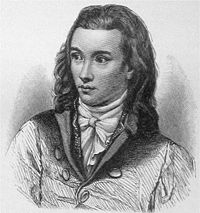
Each virtue responds to a specific form of innocence. Innocence is moral instinct. Virtue is prose, innocence is poetry. – Novalis

Long before Romanticism, poetry was thought to whisper with a sound which was the sound of Nature purified; poetry murmured with the voices of the Gods who made the world intelligible after the reign of the Titans; then no lesser a classicist than Hölderlin had his poetry be the rumour of the will of the people. Continue reading

Posted in ESSAYS | Tagged , , , , , , , ,

Narrative and Poetry: What Happened Next?

In narratology, the narratee is the imagined person whom the narrator is assumed to be addressing in a particular narrative. Narrative poetry belongs to the class of poems, including ballads, epics, and verse romances, that tell stories. (Dramatic and lyric poetry have their own genre boxes.) One of the meanings of narrative that for many seems to have been carried into poetry is 'the spoken or written account of connected events in order of happening'. Although 'story' in the everyday sense is any narrative or tale recounting a series of events, in modern narratology it refers more to the sequence of imagined events that we as readers reconstruct from the actual arrangements of a narrative (or dramatic) plot.

Continue reading

Posted in ESSAYS | Tagged , ,

Tiara Lowndes vs Tug Dumbly

He ranted and raved. He was fabulous. Ranted and raved and spat and shouted for 20 minutes and grew and grew until he was Alice in Wonderland after she drank the bottle (add a little bit of stubble) and he was holding the audience crouched in his palm. He was Tug Dumbly. 'Hi I'm Tug Dumbly' he said when we met, 'and I'm a performance poet.' He leant back and cradled his beer in the convex curve of his stomach.

Continue reading

Posted in FEATURES | Tagged , ,

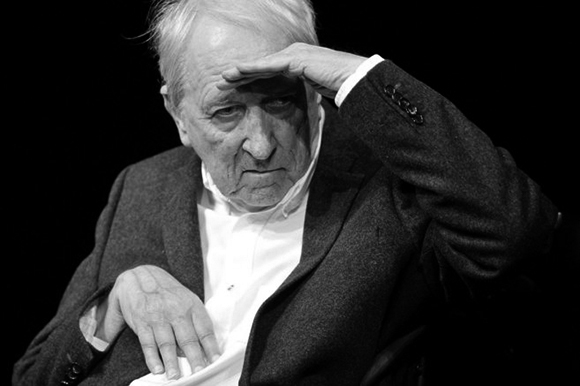
Experience and Transcendence in the Poetry of Tomas Tranströmer


Image courtsey of Cuba L Direct

Someone says, ‘Poetry is about experience’. Then someone else says, ‘Poetry is about transcendence’. No sooner are these two statements allowed to engage each other than a vast, complicated world begins to form. Fierce conflicts arise between the advocates of experience and the defenders of transcendence. ‘Poetry holds a mirror to life’, we are told. ‘Poetry is no reflection’, we hear in reply, ‘it is a ‘furious ascension’’. Meanwhile, disputes break out over ‘experience’. For some, poetry is confessional, while for others it is a passage beyond the opacities of personality, a quest for a deep self or an escape from self. Other arguments rage over ‘transcendence’. One group affirms transcendence by way of the vertical. ‘Poetry is an illumination of the heights’, they say, ‘it may disclose the meaning of being, reveal there is no meaning to being, or in questing beyond the world may undermine itself by disparaging language’. Another group figures transcendence as horizontal movement: poetry leads to places we never knew, and in doing so changes the author.

This strange world with its assertions, arguments and bewilderments is our own, the world of modern poetry. After living here for a while, one begins to pick out individual voices that are more subtle, more intriguing, or more commanding than others. Under the guise of Malte Laurids Brigge, Rilke observes that ‘verses are not, as people imagine, simply feelings (. . .) they are experiences (Erfahrungen). In order to write a single line of verse, one must see many cities, and men and things’.1 Were this literally true, we would dismiss the poetry of Emily Dickinson and Arthur Rimbaud. However, Rilke is not aiming at those who experience the world in little but at ‘beautiful souls’ who refuse to engage with the world at all. At first, Wallace Stevens appears squarely in Rilke’s sights when he says, ‘Poetry is the expression of the experience of poetry’.2 But his point is quite different: Keats found himself in reading Spenser, Yeats in reading Shelley, and so on. To look closely at any scene of authorial formation would doubtless be to find evasions in what poets say about becoming poets. Did T. S. Eliot discover himself in reading Dante, Baudelaire and Laforgue, as he leads one to believe? Or were his most significant encounters with Browning, Tennyson and Whitman? The latter, says Harold Bloom, while urging us to accept that one poet can escape the tyranny of another only by a perverse and violent misreading. It is an uncomfortable truth, but one seldom looks to the truth for comfort.

If Stevens is right, no poetry simply reflects experience. At the least, a poem answers to experience and poetry. When pondering this situation, and wondering how a poem connects with its author’s life, it is salutary to listen to Allen Grossman meditating in the Summa Lyrica. ‘There is no poem of the experience at hand’, he says, while adding, ‘art is about experience (in the same sense that a cat indoors is ‘about’ the house)’.3 The thought that a poem might be ‘about experience’, an exterior reflection on what has happened, is dismissed. There is no naked fact that is later covered with interpretation: an event is constituted as meaningful while it occurs, and later interpretations extend or modify this constitution. So, for Grossman, a poem is ‘about experience’ in that a body of experience is somewhere in a poem, although exactly where we cannot say.

Let us pause for a moment before agreeing completely with Grossman. Is art like a house? Does it contain experience? A poem may seem to be a verbal construction, yet this appearance is misleading. Although it usually belongs to the world of paper and print, a poem is fundamentally an act of understanding. It may be several or many related acts, not all of them complete or able to be completed, and it may involve understandings and misunderstandings of different acts or objects in distinct ways and to various extents. Some may have been seen, touched or tasted; some may have been imagined; others may be intellectual realities, like geometrical figures. (Eugène Guillevic wrote a number of charming lyrics about squares, triangles and quadrilaterals that he called Euclidiennes.) When talking about poetry one gets on the right track when seeing that ‘experience’ designates what a consciousness registers, not what a person physically encounters. And one begins to walk down this track when recognising that the important thing is not the poet’s consciousness but what could be called the ‘consciousness of the poem’: a work’s ability to signify in the absence of its maker. In poetry, experience does not abide within an organising intelligence; it is bespoken by a poem that, once written, has no further need of the poet. Poetry cannot be conceived simply as a representation of an experience, even one that includes a good deal of reflection. For in its dealings with forms, genres, languages, tropes and traditions, none of which can be fully controlled by an individual, a poem may present experience that the poet had only while writing or not at all.

Having come this far, we are in a position to hear what Maurice Blanchot says of poetry4 and experience. The act of composition, he tells us, leads a poet to risk losing everything: the poem’s unity, the poet’s self-identity, even the poet’s faith in God. One writes in order to name reality; but the ‘I’ that appears on the page differs from the writer’s consciousness, and the immediacy of what one wishes to represent is destroyed by language itself. So language, even when rigorously used, is not the vehicle of la clarté, as French classicism teaches; rather, it embodies the noctural, the absent and the veiled. Yet language also reveals itself as reassuringly material: perhaps one can take it as the end of one’s quest, thereby regarding night as a simple modification of day. Almost immediately, though, the poet becomes aware of language as a play of rhythm and form that anonymously co-operates in writing the poem. Gazing into the heart of language, the poet beholds an immemorial and interminable combining and recombining of words that has no significance in itself. Here words no longer refer to things; they are empty images. In the grip of a fascination that resembles insomnia, the poet risks all identity and unity. Only by shaking itself free of this impersonal and strangely lucid gaze, older than all creation, can the work be saved from ruin. Indeed, ‘the work is this leap’.5 This passage from consciousness to the very limit of indeterminate being is what Blanchot calls ‘experience’.

Writing for Blanchot is therefore a doubled event, at once active and passive: it begins in experiencing the world but is quickly diverted and becomes an ‘experience of non-experience’.6 The two events are lived together, not as a unity but as a neutral relation. In seeing things this way we have passed from experience to transcendence, although it must be said to a transcendence of a very dispiriting kind. Blanchot himself would prefer the word ‘transgression’ and even then would surround it with many qualifications.7 Certainly what draws Blanchot to his favourite writers from Sade to Beckett is that they brush against indeterminate being. In the last analysis, his readings of these authors are oriented by how this limit experience occurs and what consequences follow from it. Of particular interest to Blanchot is that writing leads one to glimpse not a state above or beyond the world but a condition before the world. Writing leads one to encounter the flux anterior to human existence, not to experience the most determinate being, transcendent being, Being itself, or the Wholly Other, all of which surpass human existence and which form the main western conceptions of God.

I think that Blanchot overstates one aspect of his case and then underexplains its central move. Is it true that language destroys whatever it touches? To be sure, Hegel observed that when Adam named the animals ‘he nullified them as beings on their own account, and made them into ideal (entities)’.8 That is, since language involves the mediation of concepts there can be no immediate presentation of anything in words. Yet particularity is not thereby lost to speech or writing. When Marianne Moore describes an ostrich in ‘He ‘Digesteth Harde Yron’’ we may not grasp a bird in its immediacy but the poem nonetheless presents us with a singular creature, and does so in a unique manner. Blanchot’s crucial move, however, is that the work responds to the flux of primordial being by leaping away from its paralyzing gaze. Putting aside the questions why he shifts from author to work, and whether a poem can properly be said to have this kind of agency, one may still ask how and why the work escapes its condition of fascinated passivity. No explanation is given. At the very least such a leap presumes a tacit affirmation of being as a horizon if not an assembly of entities. If poetry draws us to what precedes human being, it also stirs us to return to the world about us.

Posted in ESSAYS | Tagged ,

So Let Me Get this Straight

There’s this happy family man
Agamemnon, with his lovely wife,
Clytemnestra, and the three kids
Iphigenia, Electra and the boy
Orestes.

Only Agamemnon’s brother’s wife,
who turns out to be Clytemnestra’s sister
Helen, runs off with some blow-in from
Asia Minor with a reputation for bad
judgement and
an association with plaster.

And Agamemnon goes after Helen with his
brother, Menelaus, across the sea heading
for Troy but they get holed up on some
middle of nowhere island, waiting for a good
wind. And Agamemnon, who just happens
to have Iphigenia with him
chasing after Auntie Helen in a
fleet of battle ships with
ten years’worth of sea biscuit and arrowheads,
Agamemnon sacrifices Iphigenia?
for a head wind?

Let me get this straight.
And there’s a goddess in there somewhere So
Agamemnon and Menelaus get Helen back
and burn down Troy and
kill all the men who aren’t already dead and
sell all the women and children into slavery
except the boy children of all the really
famous dead men—they make sure they go
the way of their famous dead dads—and
Cassandra, who’s the daughter of one
famous dead man and the sister of another
famous dead man and the auntie of another one
and who has a strange gift for prophecy,
absolutely correct in every detail but
no one ever believes her
Whom Agamemnon decides is a lovely girl,
too good to waste on the open market and
a dab hand in the kitchen
all that experience with entrails
and he can’t resist one more souvenir
to remind him of his time abroad
Greetings from Ilium.

Let me get this straight.
So Clytemnestra, who’s taken up with a boy
with a completely forgettable name and
no chin whatsoever,
welcomes Agamemnon back from the war.
He’s killed her eldest daughter, stayed away
ten years doing a favour for his brother never
a postcard, no maintenance,
he’s got a shipful of women in chains
including Cassandra who’s frothing at the
mouth with prophecy and her frock falling
off her she’s in such a state but none of the
men listening, getting a good eyeful.

Let me get this straight.
Clytemnestra says hello darling
home from the war are we
fancy a bath?
And Agamemnon says “Hello love
I’ll just have a bit of a wash
and eat whatever you’ve got on the spit
and who’s this boy with no chin?”

So Clytemnestra kills Agamemnon in the
bath and knocks off Cassandra just for good
measure it’s a shame about the frock.

Just let me get this straight.
Electra, who’s always been the awkward one,
the middle child often is,
talks baby Orestes into killing his
mum and the boy with no chin
I’ve remembered his name
Aegisthus,
Because Clytemnestra’s been a bad wife and
shouldn’t have taken a lover or killed
Agamemnon I wouldn’t have thought
Electra was that close to her father really
but you never can tell.
And Orestes does and Electra goes mad and
runs amok through the garden and
comes to a bad end and
Then the Furies come into the picture
where have they been all this time
not a sizzle or hiss out of them before but
there you go; they’re on the case now,
tearing after Orestes, he
never gets a moment’s peace after this and all
because he’s killed his mother.

And let me get this straight:
Agamemnon and Orestes are the heroes.

Posted in 05: UNTHEMED | Tagged