Paul Mitchell Interviews Richard Watts

Richard Watts, creative director of Express Media's (producer of the youth literary magazine Voiceworks) has stepped down. Paul Mitchell reports on Richard's five years in a job that he describes as the best he's ever had.

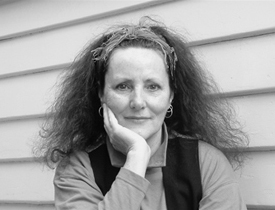
At the end of June, Richard Watts, 3RRR Smartarts presenter and former Pink Magpies president, will resign as Artistic Director of Express Media. His five years with the organisation that produces Voiceworks, a national literary magazine for writers under 25, and the Emerging Writers' Festival, has been a time of positive change.

Submissions to Voiceworks have increased 100 percent in the past five years and now routinely arrive from all over Australia, rather than predominantly Victoria. Subscriptions and sales have increased each year (more than 11% in the past 12 months). And, no small thanks to his media contacts, Richard has been able to also help boost Arts Victoria funding for the organisation from $80,000 to $95,000 annually, and Australia Council funding from $10,000 to $18,000. But that's just the icing on the cake for Richard: the real success has been helping young writers to take themselves seriously.

“It's been enormously rewarding,” Richard says. “It's been the best job I've ever had and it's been fantastic to be able to help spark young writers' careers.”

He cites the example of a young writer who was working on a novel, but after taking it to a publisher and having it rejected he was about to close down his computer screen and stop writing.

“On the building site where he worked, he was copping lots of shit for being a writer,” Richard says. “He got in touch with us and within six months Christos Tsiolkas was mentoring him and helping him polish his manuscript.”

Richard said Voiceworks, due to its age restriction, was a natural target for teenage angst poetry. But he said sometimes works of genius appear ? and staff had to ring relatives to make sure the person is really under 25.

“Simon Cox, a 16-year-old from Perth was one,” Richard remembers. “We were able to get Arts WA funding to fly him to the National Young Writers Festival in Newcastle last year . . . We kept taking him into over-18 only areas and had to remember we couldn't . . . we had to say, You go back to your Mum!”

Watts said it had been exciting to oversee Express Media as it has become a truly national endeavour. He said the most important role the organisation can play is to help develop a sense of community among young writers, many of whom are isolated from each other, whether they're in city or country areas.

The Emerging Writers Festival, Richard's brainchild, is another way he has made a push to develop a national community of young writers. The Festival, which ran for the second time this year and included participants from all over Australia, has run under the banner “The best writers you haven't heard of yet”.

“While the Melbourne Writers Festival supports established writers, we wanted to remind the public that there are lot of great writers out there who are, for one reason or another, not being published.”

His achievements have been invaluable, but Richard decided it was time to move on this year, both to concentrate on his own writing and because he believes an arts organisation always needs a fresh transfusion of ideas.

“Rohini Sharma has been appointed the new Artistic Director,” Richard says, adding, “She has a background in youth theatre in the ACT, she has worked in the Arts Council England's grants department, and she's helped small groups of, often, underprivileged people get arts projects up and going.”

While Rohini will soon be slaving over a now-hot magazine and arts organisation, Richard will be working feverishly on a fourth draft of a novel, a play, a film script and, well, while he's at it, another novel. “I've got files full of ideas and now I'll be able to get to them,” he laughs.

Before all that he's planning a month off. Oh, and he'll dash over to Scotland for a working holiday at the Edinburgh Festival at the end of the August where he hopes to pick up some contacts for the Melbourne Fringe Festival – Richard is the deputy chair of Fringe. “I'll also be doing my DJing and working on my freelance writing – and I also want to sleep!”

For more information about Express Media and Voiceworks magazine go to www.expressmedia.org.au.

Posted in INTERVIEWS | Tagged ,

Steven Farry Reviews Amy King

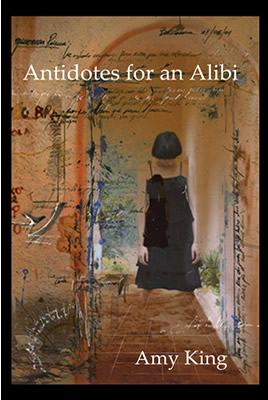
King_Cover.jpgAntidotes for an Alibi by Amy King
BlazeVOX books, 2004

Antidotes for an Alibi is at once intriguing and irritating. The surrealist poems are complex, evocative, and a danger to review: am I overlooking something? Is there an obvious reference I've missed? Am I just an insensitive clod?

Continue reading

Posted in BOOK REVIEWS | Tagged ,

Ali Alizadeh Reviews Geoff Goodfellow

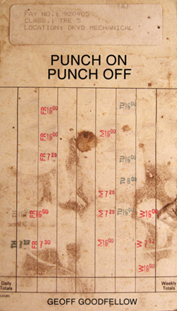
Goodfellow.jpgPunch on punch off by Geoff Goodfellow
Vulgar Press, 2004

The concept of working-class poetry may seem like an oxymoron to the uninitiated. Isn't poetry, after all, as Harold Bloom would have it, “the crown of imaginative literature”; an elitist, royalist member of the family of letters, on par with other 'high art' and upper-class forms and genres such as Classical music, opera and ballet? And isn't the idea of an 'imaginative literature' itself the very opposite of the harsh and gritty realism one often expects from working-class 'realist' narratives such as the novels of Emile Zola or the movies of Ken Loach?

Continue reading

Posted in BOOK REVIEWS | Tagged ,

Andy Jackson Interviews Patricia Sykes

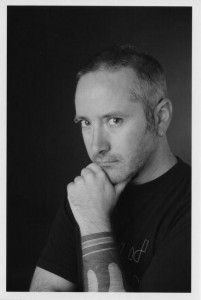
Patricia Sykes has published two collections of poetry, partly with the fuel of New Work grants from the Australia Council and Arts Victoria. Her first, Wire Dancing (Spinifex Press, 1999), was commended in the Anne Elder and the Mary Gilmore awards for 2000. In November 2004, Spinifex Press released her second collection, Modewarre: Home Ground. Most recently, she has written the poetic text for Mother Tongue, a piece for soprano and fifteen instruments, commissioned by the acclaimed young Australian composer, Liza Lim, which will premiere at The Festival d'Automne in Paris in November 2005. In May 2005, Patricia and Andy Jackson talked poetry. He lives in Carlton, she in the Dandenong Ranges. The gap was bridged via email.

To be cliched, first things first – what got you started in poetry? and what's kept you going?

Patricia Sykes: A friend suggested I'd find the answer ?in the swamp'. Of course I laughed. But she's right, I ?got started' because the years were ticking away. It was panic, an anxiety that if I didn't leap into the murk soon it would be too late. I think children possess wise gullibility. I remember knowing when I was about seven or eight that there was something powerful and tricky going on in poetry. It was like entering a cave of multiple magics. The occasional dragons were an added proof. I still believe poetry is a dangerous activity, risky, subversive, even necessarily delusional. In attempting to re-create, re-shape the swamp, poetry disturbs equilibrium, especially that of the status quo. How intoxicating: activism, celebration and sleuthing in the one activity. I keep at it because I'm hungry. Each poem is a kind of failure, a mere inkling of the complexity of the swamp. Perhaps I've grown more gullible, less wise.

What do you think has changed in your writing between 'Wire Dancing' and 'Modewarre: home ground'?

PS: I like to think the poems in the Modewarre collection listened to those in WD to the extent that they became less concerned with explaining themselves, more 'open' to a variety of responses and interpretations. This strategy obviously doesn't appeal to readers who want to know what a poem 'means', but for me poetry is very much about the 'hidden', so to simplify it is also to falsify. It's a difficult tension, at least for those who require justification. I prefer that readers meet me half-way. In writing ?Modewarre?' I was very conscious of wanting to explore various stances, attitudes, voices, apparent in poems such as ” 'dis-locations…a polemic” ', and ” 'a ferret in migrant trousers' “. In one sense these invite debate but also empathy, criticism, even derision. In an age of hyper-language I prefer not to overlook the cross-currents and complications implicit in various modes of speech. Corporate speak and advertising for example have become akin to dialects, as has the language of party politics. I was also wanting to break through the perception of the poet as the prevailing first-person-speaker, to disturb a preference for this. An inverted form of democratisiation? Perhaps.

I have my own ideas about why the duck is such an appropriate motif. What convinced you that she was a rich source of themes?

PS: The modewarre is appropriate because she's 'there', the being beneath and inside the word. 'Inside' because as symbol she inhabits it, and 'beneath' because she has been buried under the selective forgetfulness of colonial history. My family certainly didn't know the meaning of Modewarre when we lived there. I wasn't hunting a motif when I began researching the English translation, the duck turned out to be a gift, an unlooked for presence. I've been fascinated by birdlife since childhood and I relish being in water so to discover a water-bird at the core of what I was wanting to explore made me a little breathless, even wary. It felt both too easy and too daunting. The themes were a given. I've always associated Modewarre with the themes of belonging, identity and loss. It's a small step from the personal to the communal. On the one hand a white child's loss of a mother and the dislocation that followed: loss of home, family, school, friends, an entire mini culture that for her equalled ?the world'. And for the Wathaurong the displacement of themselves, their culture, their connection to the Modewarre land. As I wrote, the ripples kept widening: the duck as endangered species, the fragilities of occupation, the self as witness, as possesser and dis-possesser, succeeding waves of migration into arrival or mis-arrival. And always the modewarre slightly out of reach. An indifferent vortex? At the very least a possibility rather than an answer.

To me there's an interesting interplay between immediate felt emotion and reflective thought in this collection of poems. Are you aiming for either, both or neither?

PS: No, I wasn't conscious of aiming for either of these but it doesn't surprise me if it's there. I think of poetry as a form of speculative discovery so it's not inconsistent that a dialogue between 'immediate felt emotion and reflective thought' may emerge in the poems. I like to imagine they were think-feeling themselves into existence as I wrote. It's often a tenuous business, isn't it, locating the track that veers between certainty and uncertainty? I sometimes find myself wishing for a snail's glinting bodyprint to follow but that would be like begging a key from the invisible.

Are you aware of your place in the Australian poetry scene/community?

PS: No. I don't have any sense of ?poetry identity', of ?belonging' or ?fitting in' anywhere. I think I've always felt, generally, an outsider. Perhaps this has to do with poets being thieves in the night', or perhaps it's because I favour a dis-possessing eye, even if I don't always achieve this. Besides, rupture is as valuable as rapture, at least in creative terms: for example, Keats' notion of himself as a chameleon poet strikes me as a potent way of saying ?how can I be a single identity when I inhabit so many?'.

To me there seems to be a political position or framework beneath the poems in “Modewarre?” – at times it erupts into the text explicitly, but mostly if flows just underneath the surface. In what way do you think your poetry, or contemporary Australian poetry in general, can hope to foster political thought and engagement in the reader or the public in general. And, how is this related to your statement that these poems are “more open to a variety of responses and interpretations”?

PS: As a reader I am ?touched' by the themes and concerns of whatever material I choose to be reading, and I don't consider political nuances (of whatever flavour: gender, environmental, religious, cultural, governmental, relationship, racial, etc.) to be exceptional, a special case. Poetry has always encompassed variety, from the curse to the sonnet, from the lyric to the satiric, from love to death, peace, war, sex, tryanny, dictatorship, ennui, and all manner of hybrid variations.. I think it is only cultures who consider themselves particularly sophisticated (a defensive vulnerability in my view) which cannot deal comfortably with the so-called political in poetry. Fortunately it's there in the work of many Australian poets, maybe not exclusively or to the forefront in each poem but always integral to their poetic energies. I'm thinking of the work of Coral Hull, John Forbes, Gig Ryan, Jennifer Maiden, Les Murray, Lionel Fogarty, Lisa Bellear, and Gillian Hanscombe among others, poetry in which ideas, personal power, systemic power, and exploitation create disturbances, engage with contradictions, and explore resolutions. The fact that Poetry is not as popularised as sport for example is more to do with the way cultural activities are promoted and valorised in Australia. That's the big ?kick'. So when I say that the poems in ?Modewarre?' are open to a variety of responses and interpretations I mean that I'm inviting readers to leave comfort zones and other preferences behind. Not that I'm asking them to do the poet's work but to be aware of the doors in the work, ajar or fully opened, leading sometimes to labyrinths, to cul-de-sacs, or to portals. Language and symbol are shared universes after all and while ?Modewarre?' may have ?political' rivers flowing through it, it is not setting itself up for preselection.

I've noticed when you've read your poetry in public, you've given some background information which isn't in the book itself, to assist the audience. When you're writing poems, how do you decide what to leave in or out? What's the difference between a “poetry reading” and “reading poetry?”?

PS: To answer the second part of your question first: the act of ?reading poetry' is usually a private one of course between reader, the poetry and the invisible poet. The reader can pause over particular images and lines, re-read certain sections, take as much or as little time as desired to engage with a poem or a collection. A public audience doesn't have this prerogative. True, some audience members may know the work being read, may even be reading along as the poet reads, but generally they are listeners without the advantage of the page in front of them, without the option to pause, retrace, re-read. Which is one of the reasons I contextualise my readings. I need such hooks myself, being more visual than auditory in the way I absorb information. Also, I'm interested in having a conversation with listeners about some of the impulses that inform a work, not to explain it or pin it down but to explore and re-engage with the context.

How do I decide what to leave in or out of a poem? I think it was W.B.Yeats who famously said that poetry is an outcome of the quarrel with ourselves. Looked at in this light, poetry is a matter of debate and argument, but I prefer the idea of negotiation, exchange, challenge. Most intriguing are the times when you're inside a poem, listening and groping on a vaguely defined road, the end of it disappearing into haze and peopled with amorphous shapes that shift and reform. Or those instances when I find myself caught on a horizon between sea and sky, tossed between cross currents, a turbulence both exhilarating and frustrating. These are the times I go out and pull up a blackberry shoot or hack at some bamboo and, left alone, the poem finds its way out of the whirlpool. I suppose I'm confirming that it's a matter of negotiation: you initiate, respond, defer, question, withdraw, re-visit, and most importantly, you listen. I used this process as a form in the poem ?proximites', which is in ?House of Water', the second section of the book. I tried entering the poem in various ways but couldn't decide on which beginning was ?right' until it dawned on me that the unformed energy inhabiting the poem actually wanted multiple gateways. So I gave it what it asked for.

What are you writing currently?

PS: I'm more in thinking than writing mode at the moment, to do with the necessary hiatus between books I expect but also the death of my youngest sister in February. The most recent thing I've written is a poetic text which was commissioned by the Australian composer, Liza Lim. The piece, “Mother Tongue” (for soprano and 15 instruments) will have its premiere at The Festival d'Automne in Paris in November this year. It has been an absorbing process and I'm looking forward very much to seeing/hearing the work performed in Paris, and then in Australia next year, where it will be performed by ELISION, The Australian Contemporary Music ensemble, who will premiere the piece as part of their 20th anniversary celebrations.

What have you seen recently that you'd recommend? Feel free to mention other books, art, film, places, experiences, anything.

PS: In fact I haven't seen any films/exhibitions this year. I've been very much in withdrawal mode. I spent a great deal of time with my sister in her last months and am still trying to absorb the loss and recover some emotional energy. Being present during and at her dying has been the most inspiring event of my recent calendar. I am delving into several books though and can unreservedly recommend ‘The Collected Poems' of Stevie Smith (which I'm reading for the third time: her ?voice/voices' seem able to combine the apparent innocence of nursery rhyme with an ascerbic wit), Brian Castro's ‘Looking For Estrellita'(a collection of essays, many of them, in his own words, dealing with “writing, autobiography, identity and hybridity”), Barry Lopez' ‘Arctic Dreams: Imagination and Desire in a Northern Landscape', and especially ‘The Audre Lorde Compendium: Essays, Speeches and Journals'. To quote from her:

for the embattled
there is no place
that cannnot be
home
nor is
(from “School Note” in The Black Unicorn, W.W.Norton, New York, 1978)

Posted in INTERVIEWS | Tagged

Andy Jackson Reviews Patricia Sykes

Sykes_Cover.jpgModewarre: home ground by Patricia Sykes
Spinifex Press, 2004

In spite of poetry's continued insistence on its own marginality, its retreat into abstract stylistic expression or into words that act as anaesthetic or lullaby, there is still the possibility that words can undermine the way things are. The writer 'merely' needs to assume the impossible, to make it possible. In Modewarre: home ground Patricia Sykes displays this hope.

Continue reading

Posted in BOOK REVIEWS | Tagged ,

Magdalena Ball Reviews Mike Ladd

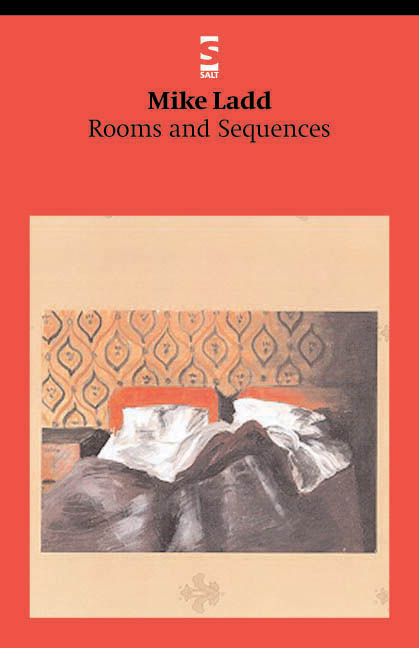
Ladd_Cover.jpgRooms and Sequences by Mike Ladd
Salt Publishing, 2003

Mike Ladd's poetry works best when it traverses the line between prose and poetry, creating meaning in the face of irony. Simultaneously satiric and poignant, Rooms and Sequences takes the reader to a modernised first century AD through the eyes of an anachronistic Roman functionary, a Kerouac inspired look into life via various hotel rooms `on the road', pain and loss distilled through portentous animals, a series of short stories which look into the heart of loneliness, the human side of politics, and a series of self-referential poems about the writing process. While the poetry always retains a light touch, and is self-aware in the most postmodern of ways, these pieces go deeper than they seem to at first glance, and leave a powerful sensation in their wake.

Continue reading

Posted in BOOK REVIEWS | Tagged ,

Ashley Brown Reviews Angela Costi

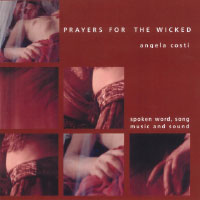
costi-cover.jpgPrayers For The Wicked by Angela Costi
Sunshine and Text Studio, 2005

To begin with, it should be noted that Angela Costi's Prayers For The Wicked – a CD of “spoken word, song, music and sound” – tells a tale of Greek Australians, deals with many traditional topics, and occasionally features Greek dialogue; and I myself am not Greek, and know none of the language. Some would argue hence that I am inappropriate to review this work, but it must be remembered that much of the potential audience of this work – and surely they should be taken into account – will not be of Greek descent, thus not possessing the bilingual luxury that I too lack. In this context, I am as qualified to review this as the next person – after all, the contexts that the language is used in within this work alone speak volumes. Also, Greek is a beautifully melodic language, and, to use a very bad musical analogy, you don't need to know German to bang your head to Rammstein.

Continue reading

Posted in BOOK REVIEWS | Tagged ,

Ela Fornalska Reviews Andy Jackson

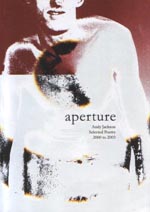
aperture.jpgaperture by Andy Jackson
Self published, 2003

Andy Jackson writes with immense skill. His poetry seems effortless, yet it is haunting, requiring contemplation. That is not to say that it is inaccessible. On first reading of a Jackson poem you experience sensation, but then you feel compelled to think about the poem, and read it again to marvel at the skills employed in writing the piece.

Continue reading

Posted in BOOK REVIEWS | Tagged ,

Domesticated Enemies

Our 21st issue, Domestic Enemy, sees Cordite finally obtain its majority! From our humble beginnings in 1997, it's been a long and dusty road, filled with many pit-stops, refuels, vehicle and driver changes, roadblocks, fake abductions, detours and [insert your own road-related images/metaphors here].
Continue reading

Posted in ESSAYS | Tagged

Paul Mitchell Reviews Pushing Words

Castlemaine State Arts Festival
April 2005

“Pushing Words”, a poetry reading held as part of the Castlemaine State Arts Festival, featured Melbourne poets Dorothy Porter, Ian McBryde, Lauren Williams, Kevin Brophy, Ali Alizadeh, Jennifer Harrison and Myron Lysenko.

Continue reading

Posted in BOOK REVIEWS | Tagged , , , , , , , , ,

Jess Star Reviews Cate Kennedy

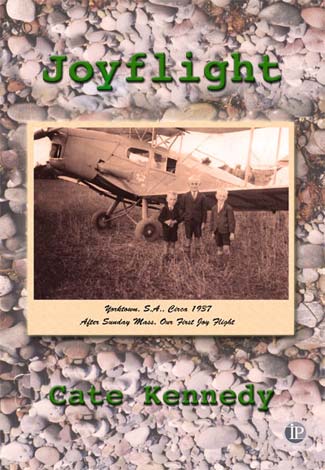
kennedy-cover.jpgJoyflight by Cate Kennedy
Interactive Press, 2004

Cate Kennedy's Joyflight is distilled memory. It is a manifestation of time, place and history, both intensely personal and instantly recognisable. Joyflight is a book divided. It begins with `that pure torn-open moment': A collection of small epiphanies in which the individual is forever altered.

Continue reading

Posted in BOOK REVIEWS | Tagged ,

Tim Wright Reviews D. J. Huppatz and Sebastian Gurciullo

Gurciullo.gifBook of Poem! by D. J. Huppatz
Textbase, 2004

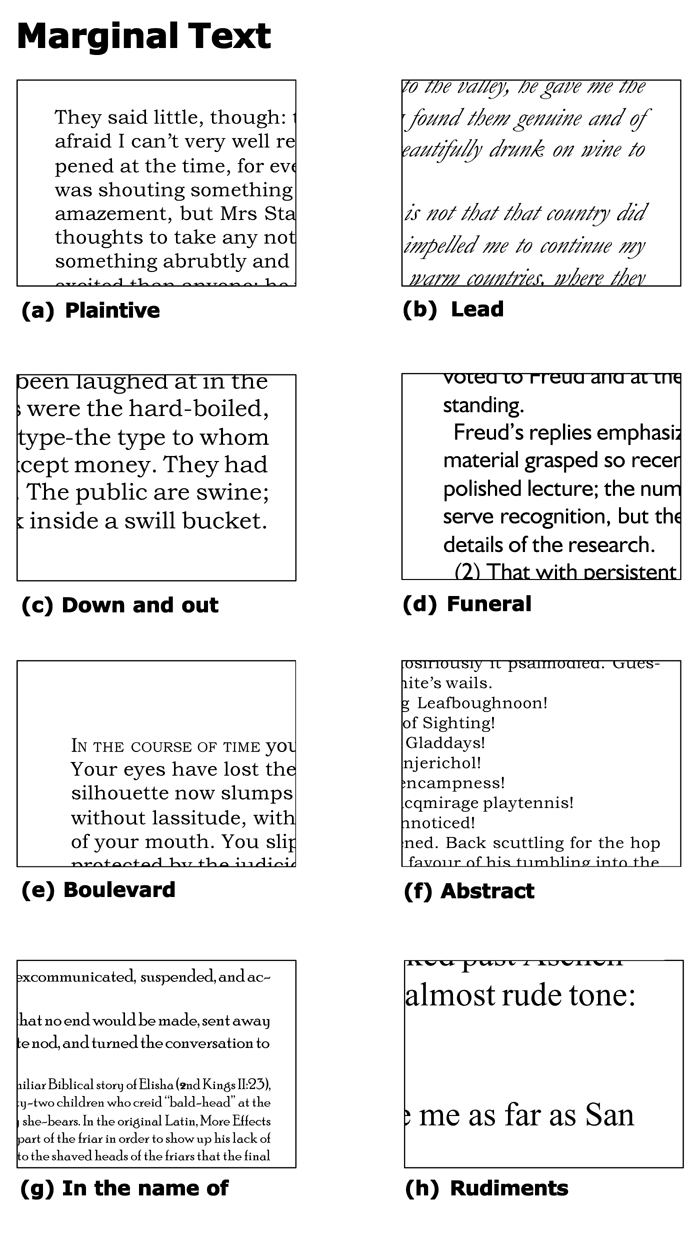
Marginal Text by Sebastian Gurciullo
Textbase, 2004

'Please don't make confused noises while chanting,' a sign in a Kunming monastery read when I visited there a few years ago. Another sign, not far from a thick wad of burning incense sticks, announced 'No conflagration!' D.J. Huppatz's Book of Poem!is written with a sharp sensibility to similar glitches in translation, specifically as they're found in the spiky readymade phrases of Japanese English, or 'Engrish', in the consumer world of packaging, t-shirts and instruction manuals.

Continue reading

Posted in BOOK REVIEWS | Tagged , ,

While Waiting for Denise to Emerge from the "I Dream of Jeannie" Room

Do you believe in the salvation of cling peaches? You don't?
Then what do you believe in exactly?
And why are there mosquitoes on your eyelashes?

Do you want to do the insecticide dance?
Then flap those silly flappers and arrange for two spray shoes
at four thirty-two next afternoon.

Do you collect refrigerators so that you have some place to slap
your magnets? Then take this true or false quiz.
Twenty lucky winners will cruise to Nova Scotia.

Do you require respiration between the casting gin bottles?
Oh don't tell Whistler those white lies,
those hungry atmospheric lies about the black and behind.

Do you save mollusk shells as restaurant souvenirs?
May I suggest you use them as ashtrays for your dolls?
I'm sick of the tiny burn holes in the carpet.

Do you twist your hair into pretzel shapes
and raid first aid kits for kicks? If so, leave your bathing cap
on my car antenna and I will find you.

Written June 14, 2004. Read Ivy Alvarez's interviews with Nick Carbó; and Denise Duhamel.

Posted in 21: DOMESTIC ENEMY | Tagged ,

Q&A with Nick Carbó

Nick Carbó is the author of three books of poetry, El Grupo McDonald's (1995), Secret Asian Man (2000), and Andalusian Dawn (2004), and the editor of three anthologies of Filipino and Filipino-American literature, Returning a Borrowed Tongue (1995), Babaylan (2000), and Pinoy Poetics (2004). This interview by Ivy Alvarez is a companion to an interview with Nick's partner Denise Duhamel.

Continue reading

Posted in GUNCOTTON | Tagged , ,

Q&A with Denise Duhamel

The first time I met Nick Carbó and Denise Duhamel was, by chance, in a setting appropriately domestic: the laundrette. I left them to their spin cycle and drip dry, but not before arranging to interview them (separately) in their temporary digs at Trinity College, Dublin.

Denise Duhamel is a past winner of an National Endowment for the Arts Fellowship, and has been anthologized widely, including four volumes of The Best American Poetry (2000, 1998, 1994, and 1993). She was educated at Emerson College (BFA) and Sarah Lawrence College (MFA). Duhamel teaches creative writing and literature at Florida International University and lives in Hollywood, Florida, with her husband, Nick Carbó Continue reading

Posted in GUNCOTTON | Tagged ,

Michael Aiken Reviews Louis Armand

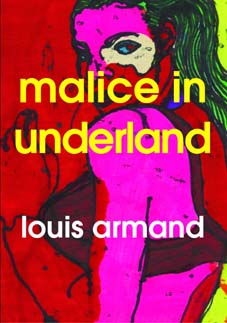
malice_frontcover_web2.jpgmalice in underland  by Louis Armand
Textbase, 2003

The title of this book is an early manifestation of its endless intertextual referencing, as well as one example of the author's restrained penchant for relatively silly puns. It is also an understatement of the viciousness of some of this poetry. And, although the titles of these poems are packed with references to other elements of culture, particularly obscure ones – there are several, such as 'washington crossing the delaware', that derive their title from a painting – the connection between title and piece is connotative rather than denotative.

Continue reading

Posted in BOOK REVIEWS | Tagged ,

Ian MacNeill Reviews John Kinsella

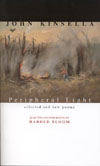
Kinsella.jpgPeripheral Light: Selected and New Poems, Selected and Introduced by Harold Bloom by John Kinsella
Fremantle Arts Centre Press, 2003

With his appearances on ABC TV's 'Critical Mass' program John Kinsella is becoming something of a public intellectual. His severe demeanour and combative stance suggest an aggressive priest, Savaranola maybe. The poems in this collection do not dispel this impression, there is a savagery in them, of tone, image and spirit.

Continue reading

Posted in BOOK REVIEWS | Tagged ,

Ro-not ro-bot

If I could cry
I would short my circuits and rust
I shed imaginary tears
Because you who can feel. Won't.
I long to know the tactile sense of the fragile petal
Feel its texture and sniff it's scent
Go heady wrapped in its perfume.
But the weed you've just stepped on
Will never regain its strength
If my heart beat, I would
Make it beat for someone special every day,
Not spurn or cheat a love, spurn a kiss, a touch
If I could create
Marvels of Wood, Canvas and sound I would initiate.
And my greatest creation and my pride to be of Bone and flesh and soul
My child would never know fear,
Or go hungry while there is life in me
My child would never disregard or hurt another creature
Nor turn away from me
Like you do now

Posted in 22: ROBO | Tagged

The Robot Is

the robot is the robot is upon us the robot is in my head again the robot is facing the robot is famous the robot is named hyperion the robot is well the robot is rugged and well the robot is quadrupedal the robot is unable to be used in the seawater the robot is using air muscles the robot is facing east or not the robot is facing north the robot is very close to the wall the robot is attempting missions the robot is asked to navigate the robot is to employ motion the robot is capable of wandering the robot is trapped in a so the robot is incapable of movement the robot is entirely finished the robot is destroyed while he is inside the pyramid the robot is dead the robot is now rewritten from scratch the robot is written in perl4 the robot is an absurd book the robot is basically controlled the robot is off the robot is on the robot is shown in blue and red the robot is relatively large the robot is to be tethered the robot is permitted to sense lines the robot is constrained by the environment the robot is so adept at handling loops the robot is initially suspended in a safety harness the robot is moving quickly in a hazardous situation the robot is attached directly to plutonium the robot is not on the list

Posted in 22: ROBO | Tagged

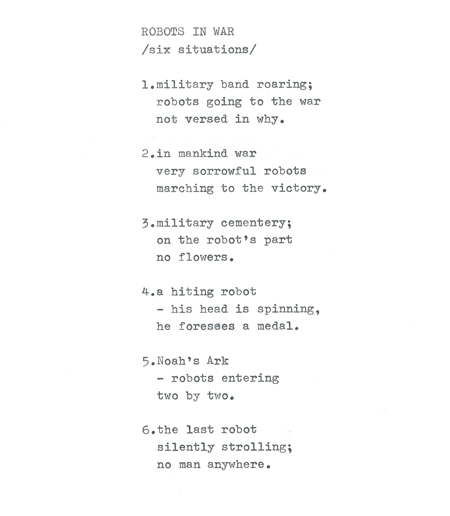
Robots in War

Posted in 22: ROBO | Tagged

Astroboy

Pint-sized robot boy, post-atomic Pinocchio.
My searchlight eyes, laser fingers & machine
Gun bum. Energy cassettes fed me, progeny
Of Tezuka: Jap culture sick of giant things –
Yamato, Hiroshima, Godzilla, Ronin Mishima.
A machine family loved me, management too.
Interstices of human and robot law governed
Who? Being a titanium Telemachus I longed
For father figures but found enemies instead.
Robot Vikings, Bruton, even a bronze-clad twin.
Brother Atlas – his lightning sword & Pegasus
Hurt, but even he found a new heart: albeit tin.
I fought mostly for that mechanical Holy Grail
A soul to make this little robot boy whole again.

Posted in 22: ROBO | Tagged

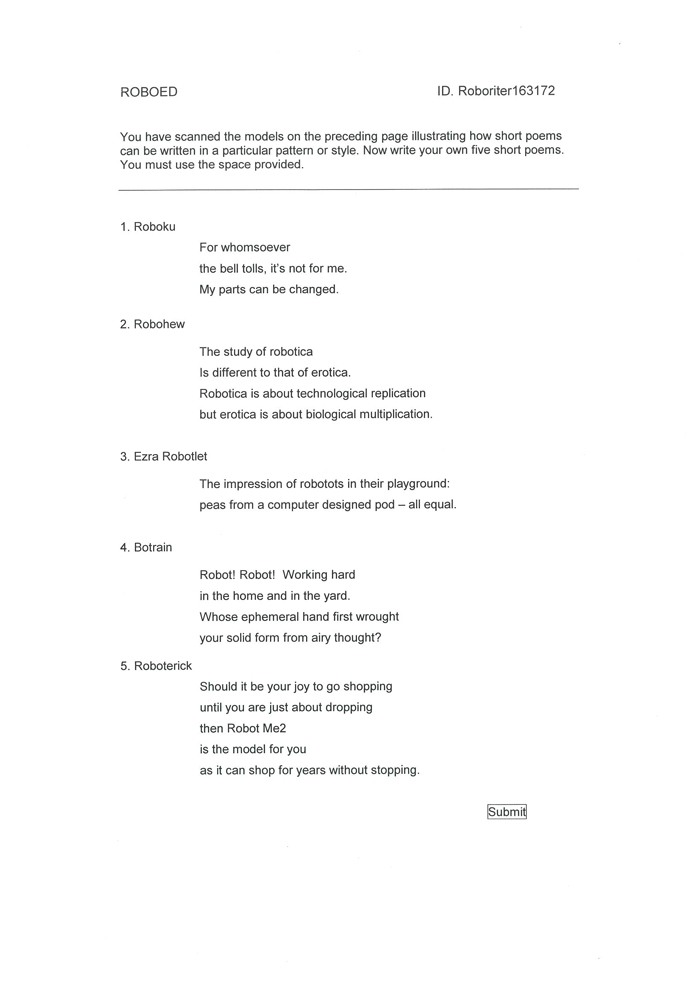
A Page from Roboriter 163172’s Roboetry Compubook

Posted in 22: ROBO | Tagged

Pavlov’s Parasite

EcoBot II primed
with faecal boasts

a hanger of appetite
flies typecast

as Pavlov's parasites
with poor regard

leaving sucrose laden widows
to buzz inconsolable

a misshapen chador.

Posted in 22: ROBO | Tagged

Better than Nature

FAST + STRONG
BETTER THAN NATURE
I SCREW IN 16 SCREWS IN 10 SECONDS
1 SECOND = 1.6 SCREWS
PRECISE + CONCISE
ECONOMIC MOVEMENT SAVES ENERGY AND WEAR
OPTIMIZATION OF TIME AND RESOURCES = MINIMUM FINANCIAL EXPENDATURE
1.6 SCREWS ? 60 SECONDS = 96 SCREWS PER MINUTE
? 60 MINUTES = 5760 SCREWS PER HOUR
? 24 HOURS = 138240 SCREWS PER DAY
? 365 DAYS = 504576000 SCREWS PER YEAR
BETTER THAN NATURE
NEVER BORED
WHEN NOTHING TO DO SWITCH OFF BRAIN

Posted in 22: ROBO | Tagged