
BOOK REVIEWS
Review Short: Rob Walker’s tropeland
South Australian poet Rob Walker’s latest collection, Tropeland, is exceptionally playful. Puns and wry twists in language are balanced with humour and a self-conscious sense of otherness, the speakers always slightly displaced from their subjects. Walker is not pessimistic in this process however; there is a consistently optimistic tone throughout Tropeland, as well as a canny awareness of failings and ironies in life.
Review Short: Luke Beesley’s Jam Sticky Vision
Luke Beesley’s long-term preoccupations with film, visual art, writing and literature, return to the fore in Jam Sticky Vision, with the poet now expanding the scope of his work to include 90’s alt-rock bands, like Silver Jews and Pavement. With allusions to filmmaker David Lynch and lo-fi rock musician Bill Callahan couched unselfconsciously beside poems about James Joyce or Henri Matisse, Beesley’s poems may seem to be drawn from something of an eclectic palette. What links the poems nicely together, though, is a close examination of the here and now. In the epigraph from John Dos Passos’s essay ‘The Writer as Technician’ (1935) this idea is more precisely expressed as ‘a time of confusion and rapid change like the present, when terms are continually turning inside out and the names of things hardly keep their meaning from day to day’.
Review Short: Clive James’s Sentenced to Life: Poems 2011-2014
Clive James’s Sentenced to Life is a poetic autopathography outlining his years living with emphysema and leukemia. While illness biographies ‘present information about diagnosis, treatment and outcome trajectories’, more importantly, they ‘share how the illness has affected the sufferer’s wider life course, social network and views of health care institutions.’, as Rachel Hall-Clifford puts it in her Autopathographies: How ‘Sick Lit’ Shapes Knowledge of the Illness Experience. However, James’s poetry is most often centred on his personal discomfort, regrets and ultimately his quest for reassurance that his writing and memory will survive his death.
Sally Evans Reviews Lisa Samuels x 2
Water, Lisa Samuels asserts in her 2010 manifesto for ‘archipelago poetics’, is ‘the unsettling undefined’: the tactile yet formless flow that both separates and joins groups of islands just as language separates and joins groups of selves. With her finely honed, comprehensive poetic and critical capacities, Samuels is a transcultural LangPo marvel – hiding in plain sight here in the wide wetness of the Pacific Ocean since relocating from the US to New Zealand in 2006.
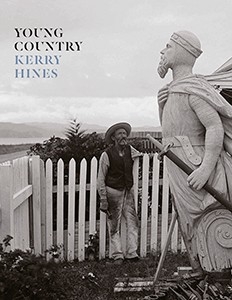
Brigid Magner Reviews Kerry Hines
The relationship between Australia and New Zealand has often been characterised as one of sibling rivalry, between an older and more established nation and a younger and less populous country. As the Honourable MP Phil Goff has commented, it contains ‘the closeness and the rivalries, the expectations and the tensions this implies.’
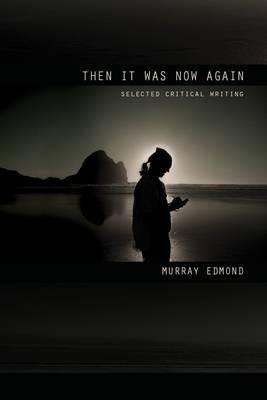
Review Short: Murray Edmond’s Then It Was Now Again: selected critical writing
The essays and reviews in this collection, all previously published, span roughly thirty years of New Zealand literary history, the earliest having been published in 1973 and the most recent from the late 2000s. With one or two exceptions, these pieces tend to focus either on New Zealand poetry or New Zealand theatre, and on the surface this might seem to limit the appeal of this collection to an international audience.
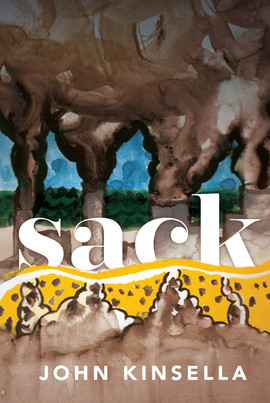
Simon Eales Reviews John Kinsella
In the first rabbit poems by the late J S Harry, her rabbit-character, Peter Henry Lepus, is thrown into a number of desolate or alien environments. Peter is ‘dumped … on the Desert of Sense’, ‘comes to … FORTY-THREE BLENDS / OF DUSTED-OFF & SUNDRIED RATIONALISM’, and ‘gets lost in “Calcutta” / on his way to visit Farmer McGruber’s vegetable patch.’ He is displaced most comprehensively in the middle of Iraq, 2003, a warzone that amplifies his naïve and interlopic perspective. Such meaning-deprived contexts let Harry explore belonging, identity, and the stability of concepts themselves. In the poem, ‘Small & Rural’, for example:
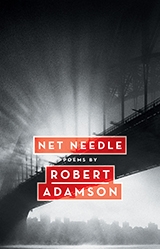
Review Short: Robert Adamson’s Net Needle
Net Needle begins with the thoughtful interlacing of seven poems. The first poem, ‘Listening to Cuckoos’, highlights the bird’s ‘two unchanging notes’ during the start of spring. Then, ‘Summer’, with its ‘pallid cuckoo call’ through the poet’s garden threads into ‘Garden Poem’ and how sunlight spans the course of a day until ‘patches of moonlight’ travel into the next poem, ‘Dorothy Wordsworth’. Here, we find the Romantic poet’s sister ruminating near a window where the moon moves ‘across the star-decked dark’.
Review Short: Ken Canning/Burraga Gutya’s Yimbama
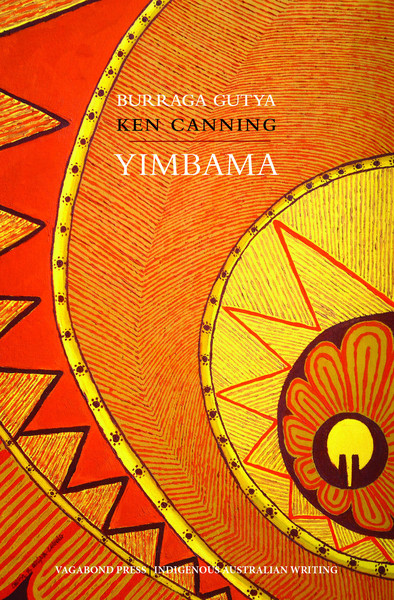
Reading a book by an Indigenous Australian author comes with a certain mythos attached. There is an uncritical expectation of explanation, of being taken by the hand and taught profound lessons that are appropriable, then displayed as trophies to liven up ‘Western’ society. Because indigeneity is often imagined as oppositional to modernity – and because modernity is assumed to belong to the ‘West’ – it’s as if the reader is sneaking off and doing something a little naughty, a little rebellious, by peeking over the fence at the fascinating and magical world of the ‘ethnic’ writer. And there is a reward for this, be it gratitude from the authors for deigning to listen, or kudos from one’s own cohort for being so very brave and ‘open minded’.
Review Short: Ian Gibbins’s and Judy Morris’s Floribunda
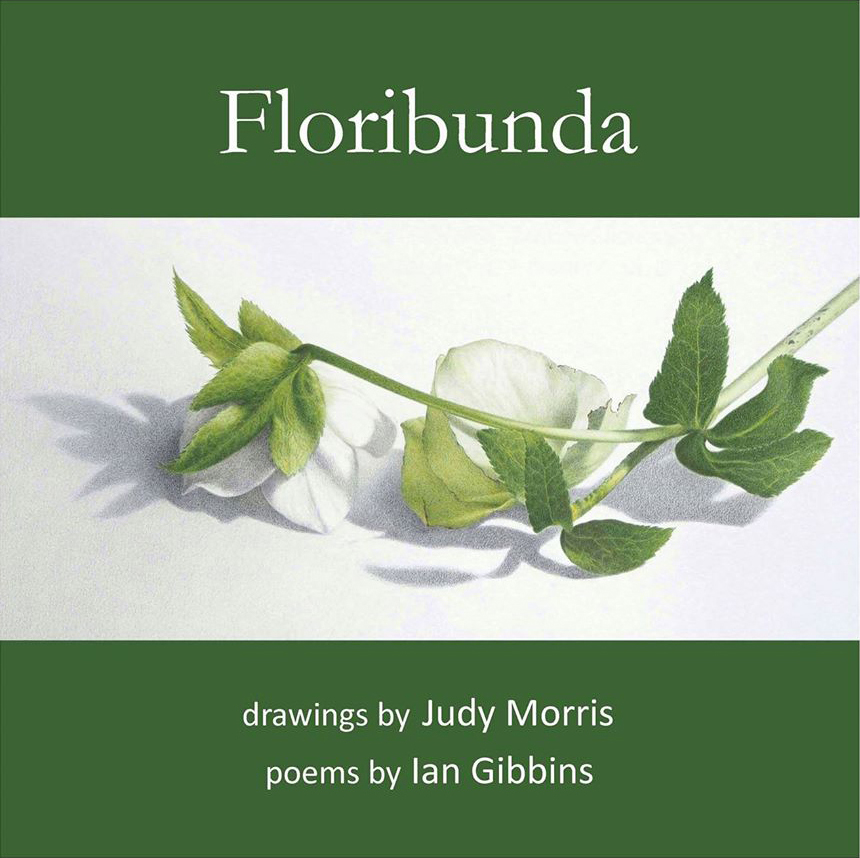
How far we are from the radical days of realism. Prior to Adorno’s dismantling of Lukacs and the Stalinist led state institutionalisation of it, realism may have laid claim to being an innovative aesthetic with agreeably progressive political inclinations.
Shale Preston Reviews Christine Townend
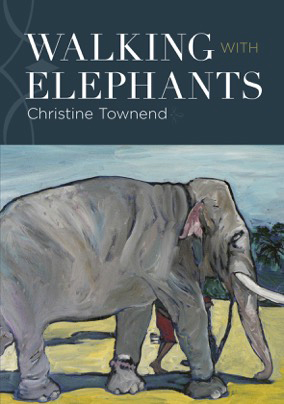
Christine Townend’s debut poetry collection is powerful, important and timely. Indeed, owing to its sustained and compassionate focus on animals, it could well come to be viewed as a watershed in terms of Australian poetry. Townend, founder of Animal Liberation Australia and a number of shelters for street dogs in India, is a woman who has been on the front line in terms of animal rights activism, and has performed some extremely valuable work therein.
Oliver Shaw Reviews Michael Aiken
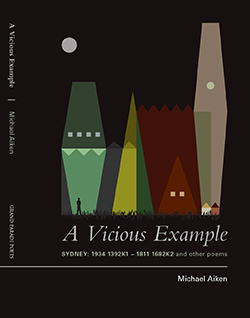
Reading Michael Aiken’s A Vicious Example is like walking out of the pub and wandering city streets at 4 am, half-drunk and in sub-conscious wonder. The strangeness of it all: What year is it again? Where are we? Aiken’s collection is fragmented, forming thought-voices into obscure imagery that settles and unsettles on the mind. Aiken’s voice is lethargic, hopeless. There is only one narrative to this text that I can find, which from the beginning locates us and the poems in the Australian city. In the opening poem Aiken welcomes us to ‘come and see …’ what the rest of the country looks like after colonisation’s ‘Theft by Discovery’.
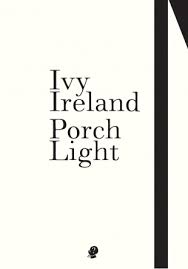
Review Short: Ivy Ireland’s Porch Light
By way of introduction permit me to share that for some reason I keep conflating this poet’s name with the title of her latest book. The result is a hybrid of name and place, forming a vague ‘place-name’ in the utterly made-up signifier ‘Porchland.’ Working back, this topos, to my mind, alluding to a libidinous, transgressive and, above all, fertile ground, is formed out of the name of the talented poet, Ivy Ireland, and the title of her second collection of poetry, Porch Light, whose eponymous poem quotes Tom Waits in the epigraph: ‘How do the angels get to sleep when the Devil leaves the porch light on?’
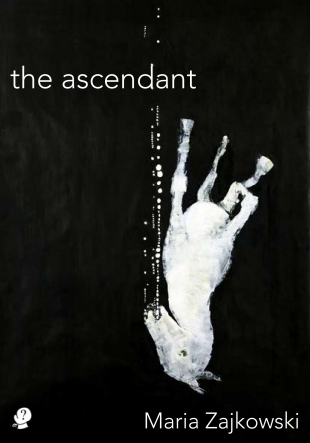
Review Short: Maria Zajkowski’s The Ascendant
The challenge for any author in writing a book about death is to somehow make the subject seem both itself and new at the same time. Death is familiar, but poetry about death should not be. A good poet will give death impact without slipping into easy sentimentalism. Maria Zajkowski – winner of the 2011 and 2012 Josephine Ulrick Poetry Prize – undoubtedly succeeds in this regard with her debut collection The Ascendant, creating a vulnerable portrait of the poet through evocations of possession and loss.
Review Short: Nathanael O’Reilly’s Distance
Nathanael O’Reilly’s Distance is threaded with daily objects and locations pressed carefully against each other for maximum coverage within minimum space. O’Reilly’s poems can travel whole countries in a couple of phrases, or emotional landscapes that dart from comfort to the homesickness we glimpse via the sparse beats charged with its evocation.
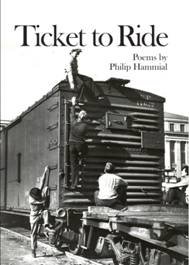
Review Short: Philip Hammial’s Ticket to Ride
Ticket to Ride is a collection of life-moments; a certain ‘true expression’ splash in a muddy world puddle, some shocked morsel of life momentarily caught in the light. They aren’t easy moments, perhaps, but they are strangely beautiful, nonetheless.
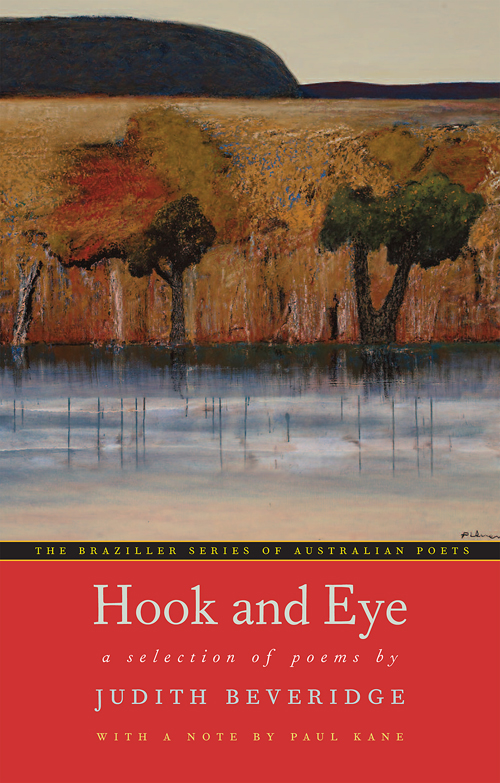
Review Short: Judith Beveridge’s Hook and Eye
Last year I heard Judith Beveridge interviewed by Bronwyn Lea at the 2014 Queensland Poetry Festival. Aside from being left with the enduring impression that Lea should have her own TV show, I was also struck by a number of Beveridge’s revelations regarding her praxis. Beveridge confessed, for instance, that she does not like listening to music. Nevertheless, she described the process of writing poetry in a way that resonated with the classical foundations of lyric verse in music. Beveridge revealed that she begins writing by mobilising rhythm, rhyme, feeling and alliteration to bring forth the words and images of her poetry. She begins, in other words, from an embodied experience of language – as the philosopher Maurice Merleau-Ponty describes it in The Phenomenology of Language – that is essential to us all.
Review Short: Laurie Duggan’s East & Under the Weather
It’s possible to say now, I think, that Laurie Duggan’s massive, monumental and documentarian long poem entitled The Ash Range (collected in 1987) has done for Australian expansive poetics what William Carlos Williams did with Paterson, and Charles Reznikoff with Testimony. Duggan is a practitioner of the serial and modular long poem par excellence. The long poem, in its weighty transfer from the epic, inaugurates a new kind of impure capaciousness, an ability to include modes, styles, citation and quotation, to document change, compromise, the whole mess of culture, all the rich materials that define the modern and contemporary long poem. A recent example of a modular long poem of the kind Duggan has engaged since the 1970s is Kate Middleton’s disjunctive, difficult and sprawling Ephemeral Waters (2013).
Libby Hart Reviews Kate Newmann, Robyn Rowland and Jessica Traynor
Labels are funny things. A lot of the time they can feel unnecessary – especially to an individual being labelled – but there are instances where such an exercise can prove useful. Writing about the Ireland is a good example of this. On one level we must consider Ireland as one entity, but we must also acknowledge that modern Ireland is not made of one but two territories. This statement shouldn’t be interpreted as overly simplistic. The complexities surrounding the Republic of Ireland and Northern Ireland extend beyond politics and are deeply ingrained in the language and identity of people from both sides of the border.
Luke Beesley Reviews Christopher Kelen
For some time I’d been carrying Christopher (Kit) Kelen’s Scavenger’s Season around in my backpack, where it jostled with other books, pencil shavings and an old apple. I happened to finally reach for it and dust it off while in the members’ lounge of the NGV Ian Potter Centre.
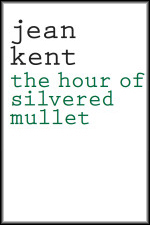
Robert Wood Reviews Duncan Hose, Jean Kent and Alyson Miller
In the library of Australian poetry animals occupy many pages. There are poems on kangaroo, frog, platypus and bandicoot; pig, dog, possum and cow; sheep, fox, dugong and crocodile; and an aviary of birds from budgies and pelicans to magpies and herons.
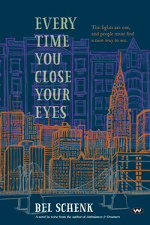
Review Short: Bel Schenk’s Every Time You Close Your Eyes
Bel Schenk’s third poetry collection, Every Time You Close Your Eyes, is sparsely written, yet deeply self-aware. Taking the form of a verse narrative, the book is a series of poems exploring events commonly referred to as the ‘New York City blackouts of 1977 and 2003’, similar in circumstance, yet as Schenk demonstrates, vastly different due to the temporal space between them.
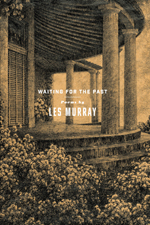
Review Short: Les Murray’s Waiting for the Past
Half a decade on from appearance of the elongated shadow figure that adumbrated Les Murray’s last collection, Taller When Prone, the poet returns with stature intact and a magisterial resounding of strata and reach.
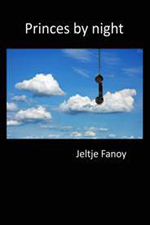
Benjamin Solah Reviews Jeltje Fanoy
Jeltje Fanoy’s Princes by night is part poetry collection and part fragmented family history, peppered with glimpses of the Dutch colonial experience in Indonesia. Her fourth collection, Fanoy has explained that it’s partly influenced by her becoming aware of Australia’s own colonial history, and has been her ambition for many years.







