Pulled Into the Future

u walk down the hallway & into the bedroom
u wake ur mum up & ask her to sign ur permission slip
she screams at u, 冷心的孩子 (u cold hearted child)

u try to force urself back into ur body
but u can only watch urself
walk down the hallway & into the bedroom
& rouse ur mum & get screamed at again

u want to be back in ur body now
but u r pulled back; all the way back this time
past the living room, and the other bedrooms, and the kitchen
and the window. the window in the kitchen
thru which u notice the sun
and wot u think u are morning sounds
and there is sth there; with the sun and the sound
and the melting of ur cold <3

But before u can judge urself for seeing this
or doubt whether it’s real
Adult T appears
and she steps in front of tiny T
who is still just standing there in her school uniform, holding the permission slip
in her tiny lil hands

And after this blip everything goes quiet
Ur adult body is absorbing all of the screaming
Ur not facing toward ur mum; but urself
U have ur arms around small T
Ur hunched over her so no part of her body is exposed
And she just stands there in her school uniform, holding the permission slip
On which words have now appeared

But before u can read them
Or doubt whether they’re real
You start to cry
because u cannot believe that after all this time
You get to save urself


The title of this poem is from 10:04 by Ben Lerner.

Posted in 93: PEACH | Tagged

Nature’s Terror

old spirit woman interoperates the breeze
for the seeds; it only blows from there in

times of distress – let this be a warning.
anxious fauna have commenced migration

to peaks of fortune; oblivious while resting on
heaven’s pillow – light headed, the air is thin.

acute senses provide warning of the turbulent
hysteria approaching; old woman apprehends

the message stick – their skates pierce the ice.
time is a prison, the breeze a catapult but

the walls hold strong; there is no escaping
the invading army – no prisoners, no spoils.

Posted in 93: PEACH | Tagged

Waiting for the Militants

‘And now, what’s going to happen to us without barbarians?
They were, those people, a kind of solution’. — Cavafy

Why have we stopped?
Have we arrived at the village?
Is this the border?

There is a large assembly of people on the road…
I do not know what place this is,
but if it is not the border, it certainly is the fringe.

Why are the people, men, women and children,
gathered in a circle? What are they looking at?

They are looking at fishermen
sitting around a large pool
that has formed on the road.

But why has the entire population turned out?

They are waiting for us to write
about a fish pond that has formed
on a road that is no road;
to write about the villagers
fishing for fishes that do not exist.

What do they hope to achieve?

They have been waiting for the politicians
who never come; they hope the information
will at least bring others from across the border;
but most of all, they are waiting for the militants.

The militants?

They are, these people, a kind of hope.

Shall we return home, then?

We have come here to write about our border villages;
their livelihood and the amenities provided to them…

If we have seen a fish pond that has formed
on a road that is no road
and villagers fishing for fishes that do not exist,
what else do we need to write about?

Posted in 93: PEACH | Tagged

Seeing Eyes

Pretending I can’t find my bi yoo bibioo
simply because she has covered her eyes
gives her as much joy as the silly faces
I sometimes pull. Out of the 43 facial muscles
I should have, I stretch, contract, contort,

conjure shapes that get the desired reaction.

But when she hides she is in control – even
ridicules me for not seeing her: I’m right
here, Daddy,
she screams, then runs to hug me.
Already the time is coming when the trick will be

too old. I know so well how soon our pleasures go.

I recall hiding from my grandma. Her dark eyes
imprisoned behind cataracts, I was always stunned
how easily she found me. She didn’t even move;
she just pointed, and my reaction was always – How?

Some quality of those hours with her is how I see God:

something of her certainty that I had my late father’s
physiognomy just from the sound of my voice; how
she hugged this inherited body, this borrowed
shape and hue, close to her, cradled its shifting
face, seeing and loving a grandchild with no eyes.

Posted in 93: PEACH | Tagged

Circus Poem

a brothel run out of an apartment (high-rise on Eglington
those places were asking to be busted, basically, the neighbours
don’t like it); I only worked there a few shifts, later
I saw it in the paper
but for some other crime thing
it had a fountain with no water, a Grecian sculpture
verdigris bowl and circular driveway
cracked, plants grown over. I want to say

the owner had rabbits. I want to
say that but it may not be true. The room floats
not so much hazy as a blown-out photograph
whisked in front of my face repeatedly as I try to glimpse
a cage on the floor
in front of the window/balcony? Hexagonal wire? A cloud of fur?
And an idea
that there was a baby or babies (human ones
that is), rather than an image of it/them, was this

this apartment, or some other? Trying
to get to the truth
of images like this, it doesn’t
get you anywhere but the itch, once scratched, hard
to leave alone and you think (little addict you)
this time (maybe) you’ll get through…these images
I can no more control when they come as I could
the impulse to take that first drink
a hallway arrives

and a room on the right, a futon, a man
in a checkered jacket, oranges and browns
a gold necklace snaking in a nest of chest chair
acne scars along cheekbones like cordilleras, musta

given him my number because later we’d meet at his donut store
and he’d drive us to his house in Scarborough
(his wife visited her mother on weekends)
pictures of the wife, mermaid-long hair and flawless
almond eyes, why would he cheat on her with me
I thought, and felt embarrassed about
that aspect? (Yeah I know); this man

one of those who liked to tell me how much money he had
pull out hunks of silver and gold, shove watches under my nose
gesture at dining room table candelabras; affix
dollar amounts. His low-roofed house cluttered
as a tchotchke emporium
he never tipped me
and often counted out the last ten in loonies and toonies. You

are the best
he’d tell me…for sex
and with that pause there, every time, I thought maybe
meant to be half a sentence
e.g. You are the best, for sex, BUT
no good for x, y, z…?
But he never added anything so maybe

just mantra/reassurance: that I was money well-allocated
the best product at the best price. I
smiled and laughed (of course). This may have been the extent
of our conversation. He liked
to sit with me in the donut store before we went to his house
wanted his employees to see me
he said, for them to know he had a mistress
(if they thought he was paying me that was fine too
I think, maybe better, not sure), well
they didn’t appear interested in anything their boss was doing

one time I showed up in a leather jacket I’d found at
Kensington Market, totally funky, oversize with square pockets
motley like peeling paint
or desert topographies
he went straight to the car (an SUV, I want to say beige
a flash of beige coffee cup holders; is that real? was that
this SUV?) well
he motioned for me to get in. No mistress of mine

he said, should wear rags like that. I felt red and hot
arrows and pinned to the seat, mumbling apologies
into my lap. I hated
to displease anyone, especially in person. I had fewer

problems with disappearing however, so later I stopped
answering his calls. The whole rigmarole
as I saw it, took a lot of time, and he only ever paid me for an hour

Posted in 93: PEACH | Tagged

Floating point

The first transgressions have always occurred
In vehicles. Voyages emit new laws of the wind
Clothed in stolen gold—the hero beyond tragedy
Stands on the shore having discovered nothing.
Shield islands—plumes of headland nodding nearer
Farther off breaking coastline vanishing patternless
Into the present. Long shadows of oarstrokes never
To strike the horizon which ever smiled the same
Sad smile of the hand that believes it can calculate
Distance in clear intervening space. Pacifist isle
That invented the very idea of geometry—
—the first diagram whose angles haven’t yet
Disentangled violence from sight. Flowering stone.
Fluorescent time.
Take this sea to be equal parts
Wedding march and funeral dirge. On days like this
It can feel as if the island vain in its entirety
Has ripped free in a storm of its moorings—
A postage stamp cut from its envelope to
Commemorate the astral transit from subatomic
Particle to the vast millimetres of microplastic
Oceans. Nothing for it but to drift like an
Anchor planted ceremoniously inland—and yet
What choice in the land where equations
Governing fluids are more fundamental than
Quantum mechanics. When the most critical rate
Limiting factors are the speed and silence at which
you can slip through water—ave maris—.

Must I make the same errors of modern legend—as
Crane took Copernicus to say—simply by sailing
in a new direction you could enlarge the world
.
As though official buildings reserved the right to be
Shot towers from which lead is cast into and
Becomes the abyss. The sun sank its bridge and
Came straight back—the stars lean closer to see
Watershed waterlevels that are enough to set
Driftwood alight. The pain that was my wrists
Deep in Antarctic ice I thought the glass stem
Of gorse rigged into burning twine. And even just
Unfurling my palm—to lay flat my second nature’s
Fist—for five minutes has become a stretch.
You wouldn’t believe what controlling umbrellas
In the wind has done for my strength. In ice floes
Of traffic—my car of the future fitted with a snorkel
Staring up the threads of rain like gun barrels.
All of us in the ocean’s wake pining for the most
Alienating path home as though every lighthouse
A monument to who you were
not there for.

Posted in 93: PEACH | Tagged

A Wound Has No Direction

A flock of dark birds through the trees
emerge at the other side
of where you were.
It’s far back when
you first broke me in.
It’s impossible to
remember it all,

though that was what I’d wanted then,
or so you’d told me. Better off dead
sonorous phrase, a wave in my inner ear,
which will not wane even as it enervates.
The weathervane, or weather-cock,
creaks as it goes round, round
in the wind.

Posted in 93: PEACH | Tagged

After

And yet there are new shoots growing
from the bamboo in the spring sunshine
and the cat is warming himself on the pavers.

The violets are ankle-deep and three snails
have left their silver trails across the path where
they exited the denseness to get to where they were

going. The neighbour’s traps in the back lane
have caught nothing; last month I opened the gate
so a rat could scurry out while the cats watched,

bewildered. A man writes a woman in ecstasy
or terror
and I fling the paper across the room
because he doesn’t know or care either way.

Every place we look a man traverses a country
littered with bodies. I want to plant signs that say
here was April, here was May, here was June

They use the passive and try to erase us. A voice
breaks the silence but they tell us we are all
human, we are flawed, we cannot do anything.
No one

is asking for perfection—just courage. We’ve lit
the fire. Come out of the cave. Listen: believe those
of us who have survived. We have nothing left to lose.

Posted in 93: PEACH | Tagged

Within Two Dreams Distance

That little bird looks just like me!

For him,
The horizons solicit him for his nest
So, he grants, dashing in his recklessness
Forgetting to take his heart
As sustenance for the long journey

As for me,
I initiate seasons with hopes
And travel tickets
Then, I return,
Overwhelmed with crying and defeat

As for him,
He trusts only in his wings when the
cloudlessness deceives him
And the calmness conspires

As for me,
When the hurricanes take me by surprise
The heavens rescue me
With the light of wisdom and clear-sightedness

Him and I are tired, hungry,
Lonely, and frightened.
The winter is just within two dreams distance

Yet, both of us are terribly wet
With grief
And rain.

Posted in 93: PEACH | Tagged

Notes From a Sugar-Curled Messenger

Iris tells me about being a teenager
in apartheid South Africa, 1970;
she feeds me chicken curry and rice
(my first home-cooked meal since arriving in Cape Town),
and her fingers are playing with a tea towel as she talks,
story lines creasing and smoothing,
once-starched, now soft.

The Catholic school she went to broke the law –
taking in students of any colour,
many of the teachers themselves activists
and the science laboratories used for making bombs;
gun powdered fingertips,
soon to clench and form the fists that would be raised
in homes, in streets, in defiance.

And on weekends
the girls would curl their hair and set it with sugar water,
the ringlets stiff and sweet;
and in them would be tucked tiny scraps of paper
carrying tightly-wound messages –
the honey in their beehives –
to be delivered to prisoners on Robben Island
(under the guise of visiting with the priest).

She tells me about the policemen lining them up;
her and all the other coloured children on the street,
the officers whipping the backs of their legs
until they turned the colour of shame,
hot like the beans and chilli her mother would make.
Still, nothing compared to the torture of her older brother,
who remained a political prisoner for ten years
and emerged with a nightfall in his eyes that never turned to dawn.

Suddenly, she is tired.
‘Ah, sweetie-pie’ she says, ‘It’s all history now’.
But as she packs away the dishes
I wind some of my hair in a tight knot around my finger,
until the tip becomes numb and my hair forms a perfect ringlet.
And I tuck our conversation away,
like a sugar-curled message,
because I know history has a habit of repeating itself.

Posted in 93: PEACH | Tagged

Fitting

They said the shoes
don’t fit—
my shoes, too small
for their feet
a size or two too big
I should have
stretched them out
as far as my last pay
could go. Held off
until they could taste salt
only salt for dinner
or better yet, cry
until my tears could coax
their eyes to flow.
Had I suffered
enough, I might have
softened even a boot
and they’d put their feet in
and it would be
a better fit.

Posted in 93: PEACH | Tagged

Those days in the dirt

The sound of a power saw soothes me
It reminds me of home
Of my father’s toughness
His rough protective carpenters’ hands
Those firsts that I knew had been moulded by the jaws of skinheads in the seventies
The safety we felt when he was snoring in the room next door
It reminds me of the long hours working in the blazing Australian sun
Of the travelling
Of coming home broke to save again
Of the sweat
The mud
Of lost loves
And tear-filled WhatsApp phone calls in the car before work
Long distance love
Goodnight and good morning texts as I reached for the barrow
Girls I fucked on benders an hour before digging post holes
My twenties evaporating among concrete slabs and pine frames
Of raspberry lollies in the glovebox
And Bobby secretly handing me Viagra’s on Friday mornings
Of Eddie and AJ
And walking in the rain from Mordialloc station heartbroken
Writing letters to her parents
And Reading books on the train
Listening to red sails in the sunset as I sped home
Sam and I sleeping on the roof in Bourke St
Simmo sitting next to me while my leg pissed blood
The shitty jobs spent dreaming of being able to use my brain for money
It reminds me of transient friendships
Beautiful people I once knew
Bricklayers
Plasterers
Iranians
Turks
Afghanis
Louie and Joe smoking cigarettes and clumsily jiving to
Chuck Berry
Good men with good hearts
Working like dogs to send money home for their families
It reminds me of alcoholics and banter
Of drifters with prison tats and bowie knives in their backpacks
And apprentices with eighty thousand-dollar Hilux’s
They will never repay
Of classic hits on the radio
PBS blaring in the cabin
And of the word ‘cunt’
Thrown around so casually I forgot how ugly it was
Sometimes when I walk past a building site
I smile at the memories of my youth
The honesty of the work we did
Its simplicity
And I respect the harshness of these environments I grew up working in
Tough men
Pirates
Jailbirds
Craftsmen
When I hear the sound of a power saw at 7am
Howling over the sleepy suburban rooftops
Interrupting hundreds of Vegemite breakfasts and weather reports
I roll over and imagine the smell of the saw dust
And of the wooden off cuts gathering on the floor
The measurements scribbled all over the plaster
And the lists of the day’s jobs
Conversations that begin with ascertaining football loyalties
And the endless shit talking
I miss those days
I miss the gruffness of the men
The hard exteriors that protected gentle loving souls
Their intrigue as we strolled onto site booming Indian chants
on the pocket speakers
I miss the comradery of hard manual work
The afternoons I spent counting the hours down on my fake omega watch
I miss the heat in those portaloos
And watching the dirt slowly circle round the drain as it oozed out of my hair in the afternoons
The moments with Matt in the truck
Speeding Gonzo style down beach road listening to Desmond Decker
Two Don Quixote’s high on audacity
Glimpses of something greater
Moments of true serenity
True oneness
I miss the swims at lunch
And the freezing winter mornings where you couldn’t feel your fingers until 9am
Cursing yourself for not getting an easier fucking job
Mostly I miss the romance of it all
The sound of a power saw reminds me that there is a beauty to harshness in life
And a kind of grace among those who’s’ edges seem rough
It reminds me to be grateful for moments as they unfold
And to appreciate the friends we meet in strange places along the journey

Posted in 93: PEACH | Tagged

sweet new-season duds

writs in warrants out. same again. you understand our position by moving your finger in
front of your eyes. you want to be at your desk by 9. you want to put on the bumper sticker
when the dealership’s a mate. & be no regular visitor to these basement rooms,
soundproofed for reflection and questioning

cool grassroots grow through the trashed mandarins on our hearts squat zealous
inspectors that buffeting sound their statistical flubs or they’re bootstrapping
the fledgling human forest to achieve extra liquid stars hum stars die
oh star of silence inextinguishable star oh winter run a bath

give the brain a helping hand give abandon a dreaming arch
in relation to operational matters you move like a cloud between us
& don’t rain

Posted in 93: PEACH | Tagged

Letter to Blair from Home

Brother, when the raven came for me
last night in its black cassock, when my breath
was sweetened with dreaming, I heard you
call to me in that bell-clear treble, Roy,
Roy, and knew there would be no peace, as if
we were still boys swinging in hammocks
against a withering sunset. I reached out
a hand to your voice, hoping to be held & steadied
against the bitter losses, but was stung by the keen
edge of an absence. Forty years since we
laid you down to sleep with the poppies, each
year governed by a distinct shoreline
that the waves’ pale wings, unfolding, have failed
to erase. But the failing is ours, too. It’s what
the living do best. Last Friday, madness tore
like teeth into this country’s history as bullets rained
and erased the warmth of 51 faces all lit with hope
and faith. Why are the prayers of the hopeful
always answered with violence? The media hurried
to explain the blood away—racial tension / unchecked
immigration / mental unsoundness
—but
the blood clung to the prayer mats like a sun
that refuses to set. Brother, I know you’d say to this
with that familiar ironic smile, Nothing will ever truly
wash the dark stain off men’s hearts
, as surely you’d go on
labouring in the streets of Southall, your body
an arrow through every injustice. Here in Napier
all I have is a circle of white pines to sit amongst
as the last light winds down to a wine-dark
bruise over the horizon. When the wind rises
the sand veils the air, each grain etched
with the echo of your name.

Posted in 93: PEACH | Tagged

Awaiting the Death Sentence, Alone in the Pavilion of Lost Swans, the Emperor Plays Mozart’s Piano Concerto no. 20 in D Minor

Extending from sleeves of pure gold
the Emperor’s hands uncurl their fingers
across the piano’s darkly chequered
counters. The earth is suddenly
spinning in fast motion. And the beautiful black
androgynous hair sweeps down his back,
defying age.
How long can he stay there, breathing in
that long glide between despair
and the up-beat’s re-entry,
where grace annuls nothing, that drift
where the script of his life is vanishing —
till his hands will once more be
all energy, no longer blunt fists but
the most instinctive, quietest
acts of giving?

The audience of just himself
holds its breath while the mind’s invisible oboes
carry his questions, these groping finger-strikes
against despair, into the pure
futureless air.

Posted in 93: PEACH | Tagged

For Cops Who Stalk Children on Houso Estates

dear mister cop,

don’t come stand near us or we’ll get a flogging
none of us want you here so please get away
don’t ask who’s in our houses, talking to our parents

‘IT’S NONE OF YA FUCKEN BUSINESS,’ my mum said to say, because

‘WHEN A LAW OF A STATE IS INCONSISTENT WITH A LAW OF HUMANITY 
THE LATTER SHALL PREVAIL, 
AND THE FORMER SHALL, 
TO THE EXTENT OF THE INCONSISTENCY,
BE INVALID’

eeeeyah mum, get out here! this copper’s not leaving us alone!

see?
see?
we told you to get away
mum’s the law round here and she’s been studying your ways

*

I DO NOT WISH TO SPEAK WITH YOU SIR AS YOU ARE A CROOK, 
AN ANIMATED CORPSE
JANGLING ALONG TO THE SONG OF THE STATE

YOU AIN’T A RATIONAL LAWMAN 
NOR JUDGE OR JURY
AND I WANT YOU OFF OUR STREET WE OWN

WE NEVER CEDED THIS LAND
NEVER SIGNED NO TREATY

ALL COURTS ARE NULL AND ALL COUNCILS VOID

I PAY MY TAXES
I PAY FOR YOU
YOU WORK FOR ME MAN
TRUE AS GOD, YES YOU DO

I PAY FOR YOUR UNIFORM AND DONUTS AND GUNS
I OWN YOUR SHINY BADGE, SIR MISTER COP

YOU’RE NOT LAWFUL HERE
NO JURISDICTION

YOU POLICE ARE ILLEGAL, MAKING UP LAWS

NO CONSENT TO YOUR SNIFFING AND PRYING
AROUND OUR SOVEREIGN HOUSING COMMISSION

I WILL FURTHER THIS COMPLAINT TO THE HIGHEST AUTHORITY 
AS YOUR CONDUCT IS UNLAWFUL

THIS IS OUR TRUE LAW THAT SITS OVER YOURS
THEN, NOW, AND FOR ALL-TIMES HENCE

YOURS FAITHFULLY, 
LA DI DA DI DA

(GO SPREAD THE WORD, MY DAUGHTER)

Posted in 93: PEACH | Tagged

Shanker Hotel, New Delhi, 1991

It’s not always the same man knocking
coaxing with kind English or high-pitch
testing the lock with a shoulder, a knife
the knock turns into bang
to Hindi outrage with thrust
the door becomes compromised
shifts towards their effort.
I have the company of four stained walls
Shiva is hanging lopsided
the bed, the floor, the heat say:
this is your room service.
I search for the branch from the Jamun tree
use my shaver to sharpen its tip
stand still as my heart sobs, screams
I am thankful for the bars across the window
I am thankful for no balcony
I beg the door to hold its stance
as I stand, I am statue of myth or legend
holding the branch like the upward sword
held by Maroula of Lemnos
who won the attack
despite the army of men
barging through doors
to rape her island.

Posted in 93: PEACH | Tagged

On Blood and Handprints

We talk about blood –
the way it pools in basins and nails,
turns brown when you leave it to soak too long
and stains.

Tayta has lived in this house forty two years

and learns to repurpose her memories,
shudders while we wait for the fireworks to echo,
says that we build our veins
into the places we choose to stay,
says that they hid bread in the walls
during the war
and Um Jamal died full
next door in the house
with the red water
and heartbreak in the bathtub,
says that the first one passes
and the grief bleeds into all the others,

and what are we in the end
but the children of war,
and what is war
but a mother disciplining her careless children.

But what about the blood on our hands, Tayta?

What about the people who left
and the stories baba doesn’t tell anymore?

Baba’s hands are weathered
from tearing and replanting roots –  
his palms are the geography of every place
we have bled and fled,
his home is built in cherished memories
and forgetting,
says that we were lucky,
we the land of opportunity
doors wide open
future bathed in sunlight children,
but the homeland landscape in his eyes lingers

as he tells me that I could never survive back there
with my loud voice and my Australian English,
says that
it is always political

And what are we
but the children of politics,
and what are politics
but a father disciplining his unjust children. 

But what about the blood on our hands, Baba?
What about the white men
and the people who left

We call living the war, survival

We call remembering it, gratitude

We call refusing to
weakness.

Baba hurts his back at work,
shows us the scars from that one time
he got his arm stuck in the machine
and the blood clots under his nails,
and mama says the sacrifice happens before the bleeding,
says that the fireworks took his hope with their echoes
and now we cannot dream straight anymore,
says that they packed all their things in the dark
and boarded the boat to Cyprus,
says the coastline over Beirut still makes her cry,
says that it isn’t always quite sadness.

And what are we
but the children of sadness,
and what is sadness
but home calling us to come back.

But what about the blood on our hands, Mama?
What about the lives we build
and the ones we don’t?
What about the people who leave?
What about the white men
and the stories baba doesn’t tell anymore?
What name do you put on a mass grave?

Are we still casualties of war
if not the dead
but the pooling in the aftermath?

The post-terrorism,
 lead boot identity children,
I saw myself on the front page of the newspaper
wearing a different face the other week,
and now Jihad is a dirty word and Shakespeare is irrelevant.
What do white men know of tragedies
when they put the blood of our ancestors on our hands?

And who are our younger siblings
but the maskless villains
of a world that they have never known
to not hate them,
and what were you wearing on September 11, 2001?
and why do we all look so different now?

And how long must we stay hidden?

And what are we
but the children of hiding?
And what is hiding
but an orphaned sense of identity
trying to distinguish between the call of home
and the false promise of something better?
But what about the blood on our hands?

They crossed the sea for you
and now all they can taste is the salt in their eyes 

Does guilt pass down through generations?

Some days I just want to know if home will remember my name
or if it ever learnt it

But what about the blood on our hands?

I look at myself in the mirror
and ask the white girl to own her privilege;
it wasn’t my ancestors who built this city
on rattling bones and smallpox,
but what am i
but a benefactor
of the actions of somebody else’s

And what about the blood of my hands?
the way it mixes
and pools,
and who’s blood is it now?


Maybe,
in the end,
we all die of broken hearts

And what is a heart
but a place to hide the blood a while?
Let it know that there are shades of grief
that stain brown when you leave them too long
and those that were brown to begin with

And what about the blood of my hands, Mama?

Which one is it, Mama?
Are we ever going back, Mama?
What about the people who left?

What about death?

What about building graves on black bones and smallpox?

And all these white memories –
the ones with the
loud voices and the
Australian English,
where do I put those?

And what are we
but the children of context?
And what is context but
a map of all the places we have been?

And finally
the blood pools in the arches of my feet
and the borders of my palms

in condolence,
in sorry –
 I will be better,
even when homeland’s call feels foreign,
even when we look like this,
even in opportunistic tongues,

even
n traitor skin.

Posted in 93: PEACH | Tagged

Kōrerorero / the say-so

Named

Streets for writers,
Dickens, Emerson, Shakespeare,
High school for a missionary,
Colenso.
A city,
Napier,
for some old white man, because they always are,
or for some battle where my people were slaughtered by yours,
or for some event, with no relevance to the land, upon which an ill-placed flag whips itself frenzied.
Buildings resurrected, upon the reclaimed.
So numerous now, like oil slicking through the ocean, nothing untouched.
Bluff Hill so full, it comically threatens to topple,
into a gentrified, barely recognisable from its wharfie beginnings, Ahuriri.
This layering,
upon places ancient,
Ahuriri, Heretaunga, Mārewa, Maraenui, Onekawa,Pirimai.
Of peoples ancient,
Ngāti Kahungunu.
Of a sea, so dangerous
we knew, don’t get too close
A class system so structured
private boarding schools thrive
while, kohanga reo don’t
Aertex shirts, moleskins, navy jerseys, fob chains – the uniform
Leathered-up Mongrel Mob patches – the response
Napier, created like so many others in New Zealand,
in the image of a mother, oceans away,
unseen and unknown.
and, where you died, and where I won’t.

We may have been born in the same place, Blair
walked the same streets
perhaps, even known the same people?
It’s unlikely, you shared a beer with Dad at the Pro,
or sorted peas, at Watties with Mum.
Did you know about Te Kooti? and what happened to him at the prison?
Did you trace the profile of Te Mata?

Did you drive Devils Elbow, swim in Tukituki, attend Anzac parades in Clive Square? cycle along
Marine Parade? visit the Aquarium? line up for the pictures at the Odeon, scoff cakes at Brown Owl Bakery?

You’d probably already left for Victoria University, when Marineland opened in 1965. Was it by railcar or bus?

In Wellington, were you shocked by the cold, the taste of the water but excited by all that, possibility?

Decades, separate us
your walking through life as a Pākehā man
my walking through life as wahine Māori
Perhaps, we would have stood side-by-side
fists tight, shoulders taut,
legs tight, face taut
ready to write
ready to right
flight ready
fight ready

Posted in 93: PEACH | Tagged

CURB 2

Mesa Star Chevron Gas Station
Mesa, Arizona

to bend

to edge

to bow

to restrain

to end

tall grasses

brittlebush

camphorweed

pricklyleaf

paperflowers

a knee

a handful

a nod

a sheaf

& sign

give way to yards folded

mulch red some selvage

hang flags then hang him

documented lullaby

here & here & here

On September 15, four days after the attacks on the World Trade Center, Frank Roque told a waiter at Applebee’s: ‘I’m going to go out & shoot some towel heads,’ and ‘We should kill their children, too, because they’ll grow up to be like their parents.’ Roque murdered Balbir Singh Sodhi as he was planting flowers outside his gas station.
Posted in 93: PEACH | Tagged

A Response to Linton Kwesi Johnson’s Call

Ev’ry
person 
scrolls – 
It’s the trend of our day.

Ev’rywhere
I
scroll, 
I read all the trending posts say:

“Who is this extreme right winger?”
“And, why all o’ this xenophobia?”
                                                            God/dexx!
                                                            We can’t let this get no furtherer!
          We can’t let this get no furtherer!”

Isn’t ev’ry one of us just like Blair Peach? 


Blair Peach was an ordinary man.

Blair Peach him took a simple stand

Against the fascists and their wicked plans.

Ev’ry one of us, 
we too haffi make a stand!

                                                            “We can’t let this get no furtherer!
          We can’t let this get no furtherer!”

Ev’ry
person 
scrolls, 
it’s the trend of our day,


Ev’rywhere
I
scroll, 
I read all the trending posts say:

“Who is this extreme right winger?”
“And, why all o’ this xenophobia?”
God/dexx!

                                                            “We can’t let this get no furtherer!
                                                            We can’t let this get no furtherer!”

You and me,
We’re just like Blair Peach.
Blair Peach was an ordinary man.

Blair Peach him took a simple stand

Against the fascists and their wicked plans.
He said we can’t make them get no furtherer,
Then they killed Blair Peach the teacher,
Them killed Blair Peach, the dirty bleeders.
Blair Peach was not an English man,
Him come from New Zealand,
Now they kill him and him dead and gone,
But his memory lingers on.

Oh ye, people.
Is the whole world fast becoming a fascist state?
The answer lies at every border gate, 
Every border gate lies inside every one of us.
So stop scrolling and ask yourself: 
Is my inner-world view a fascist state?
That answer lies at your own gate,

And in your own answer lies our collective fate.
Posted in 93: PEACH | Tagged , ,

If/Shall

(a work in progress)

if either 
if either of the parties 
if any goods
if the commander of a ship of war
if either of the parties 
if either 
if any gun 
if any moor
if any vessel
if any vessel of the united states
if any american vessel
if any vessel of either of the parties
if we 
if any ship of war
if a ship of war
if there shall

merchants shall all goods shall no examination shall unless it shall goods on board shall no other person whatever shall no vessel shall who shall

if any american citizen shall
no will shall the consul shall and if there shall the effects shall the party shall the property shall
if a will shall

the consuls of the united states of america shall they shall they shall if any citizens of the united states shall

the consul shall unless he shall any redress shall

if any difference shall

peace and harmony shall a friendly application shall that application shall no appeal shall no appeal shall and if a war shall nine months shall otherwise shall the citizens of the united states shall the treaty shall it shall

Note

In 2015 I collaborated with the scholar Omar Berrada at the annual Tamaas workshop in Paris, France. We were exploring issues of racism in Morocco, particularly in the wake of sub-Saharan Africans attempting to cross to Europe from Morocco. As part of our exploration Omar brought to my attention The Treaty of Peace and Friendship with Morocco, signed in 1787, between the United States of America and Morocco. ‘If/Shall’ is based on this Treaty. I presented the first draft of this poem at our presentation at the end of the workshop. The treaty has been in existence for 232 years and remains the ‘longest unbroken treaty relationship in United States history’.

Posted in 93: PEACH | Tagged

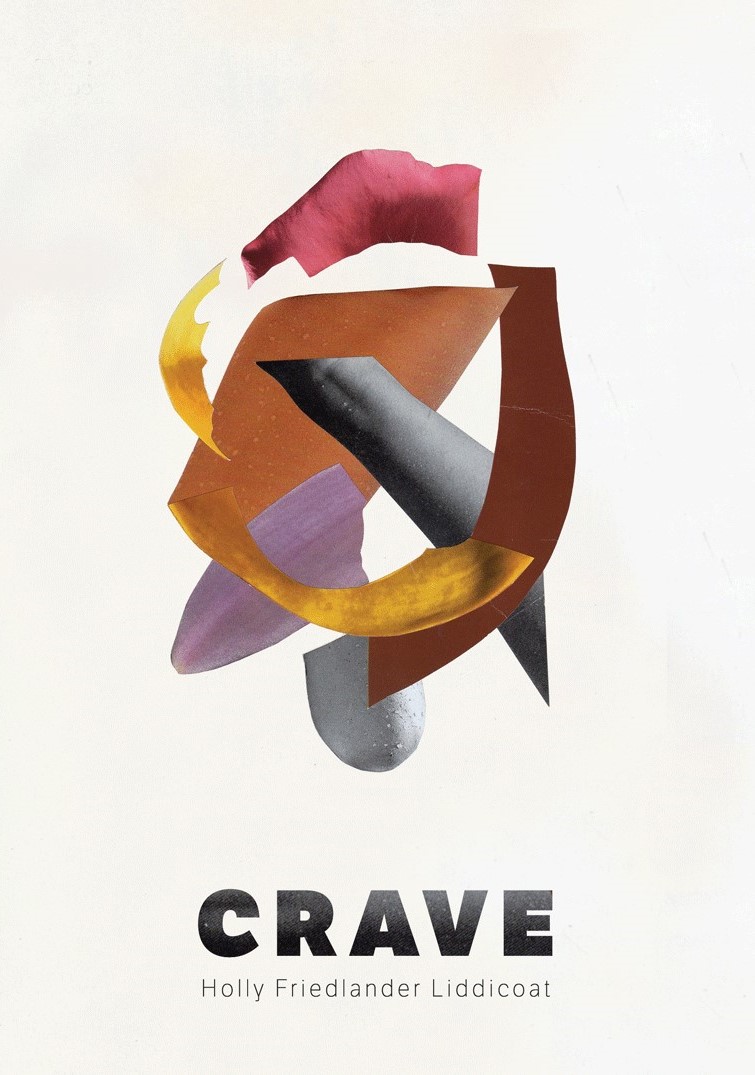
Toby Fitch Reviews Holly Friedlander Liddicoat’s CRAVE

CRAVE by Holly Friedlander Liddicoat
Rabbit Poets Series, 2018

First books are a big occasion for poets. Their publication makes something heretofore unofficial official while announcing the poet as one committed to ‘the art of language’, as Gig Ryan describes poetry. Their publication chronicles and makes tangible the labour of what is often a long time—of feeling out, of experimentation—for writers attempting to find a voice, a language, even as they’ll discover post-publication that finding voice and language is a forever concern. And so, kudos to Rabbit Poetry Journal and its Rabbit Poets Series imprint, which publishes slim first books, often strong selections of poetry by emerging poets who might not otherwise have had such an opportunity in the frankly saturated Australian poetry scene. I’m not saying there are too many poets—if only there was more poetic, lateral thinking in the public sphere—but in terms of a market, it’s a positive sign when first books in particular are given space and attention.

While we’re talking markets, of being subject to commerce, Holly Friedlander Liddicoat’s debut collection CRAVE unabashedly quips, ‘sry if this poetry ruins yr party’ to Sydney’s Inner West as it flips the bird at real estate agents, SUVs and a plenitude of jerk-offs. The poems—‘too damn caffeinated / too damn beat’—self-consciously flaunt their own inability to avoid their complicity in the ever-gentrifying neoliberal capitalism of Sydney with an intoxicated (and intoxicating) nonchalance, if you can forgive the paradox. That kind of paradoxical tone in poetry is interesting to me because it allows poems to do multiple things at once, from critiquing the world around us to subverting and questioning the self that sees fit to write about the world with any authority. It can allow the poet, or the speaker(s) of a poem, to occupy a liminal, othered, space. The frenetic and nonchalant oscillations of Liddicoat’s poems operate in this way. They work to reflect, perhaps, how the contemporary moment is being felt by some: a hyper-simulated, anti-climate change, death-spiral parody of a paradigm, in which the sun is ‘unsetting’ (i.e. stuck) and, as with many bright people, not always welcome in gated communities: ‘the sun is invited to the stairs / but can’t afford admission.’

Poetry by paradox is actually just poetry representing the world. Alongside an intoxicated nonchalance, Liddicoat embodies another paradox: a gentle punk attitude. The poems aren’t simply bratty but self-aware—too metamodern, full of ‘informed naivety’, ‘pragmatic idealism’ (key aspects of post-postmodernism and/or the postdigital paradigm, according to cultural theorists like Timotheus Vermeulen and Robin van den Akker) and self-care, to be simply punk. We can see this attitude in the shifts between poems. For instance, after ‘a woman works in a lick-her store’, a snarling list poem of all the kinds of patronising snippets of speech from male customers to a woman working in a grog shop, we encounter, in the poem ‘in erko + five floors up’, images of retreat, defeat—that sinking feeling brought on by despair and emotional trauma:

a fluke hits the bottom of the sea  
envision throwing myself 
from this balcony            but landing
in a firefighter’s net

In the next poem, the plants come alive with empathy: ‘bottlebrushes fidget in the wind’ and ‘the palm fronds wave to me hello’, which also offers up a kind of cute, even zany, aesthetic (see literary theorist Sianne Ngai for how to read ‘our aesthetic categories’ today—the ‘cute’, the ‘zany’, and the ‘interesting’). There’s a hint of Pam Brown’s poetry in the way Liddicoat chronicles the urban via sketches of all the things that assemble in front of our eyes to create a place and culture (or lack thereof). There’s also a contrast between the two poets, in how their poems are formed. Jotting down the world, performing their own ‘zany’ labour (‘where r those poems now’), Liddicoat’s poems reach for their poem-ness—perhaps anxious to be poems—whereas Brown’s are more relaxed about their own incompleteness, relying more on accumulation, accretion, a surface tension between images and phrasings, and an ‘interesting’ aesthetic. For Brown’s work notes what’s of interest, no matter how uninteresting things might seem, or disinterested we as observers can become, in the face of the many things fighting for our radically altered attention spans in the postdigital age. Both poets, meanwhile, are interested in the ‘cuteness’ of the specific, pointing out what we might easily miss—what might seem too small or inconsequential—in the everyday. Of course, Brown has had years to hone her craft, and it wouldn’t be fair to expect that level from a first collection, and so perhaps Brown’s mastery of style is one direction toward Liddicoat’s poetry could develop.

While these poems travel—to Hamburg, Berlin, Bruges, Oslo, Malaysia, New York, Central Queensland, looking for life less insular yet finding similar ‘anxiety and weird vibes’—they are also keenly observational of the local, in this case Sydney’s Inner West. The poem ‘New Town’ outlays a series of Newtown cafe specifics:

the old chef sits                  tears basil leaves

(bonsoi)                 Mecca            Alchemy 

corrugated iron as windowpanes 
steel and mint as smell as taste 
zinc-sodium-magnesium shake

supple, mental
                              bring us brunch           in jars

and, later, typographically breaks up:

this place dis 
                             int     egrates when it rains

The end line here, with its rupture before the half-word ‘egrates’, allows for an echo of the pejorative ‘ingrates’, as if to sneakily taunt any surrounding scenester-capitalists; and if you’ve experienced walking down the ever-changing shopfronts of King Street when it’s busy and bucketing down, it might hit home how easily a community built on rising rents can feel like it’s falling apart.

Posted in BOOK REVIEWS | Tagged ,

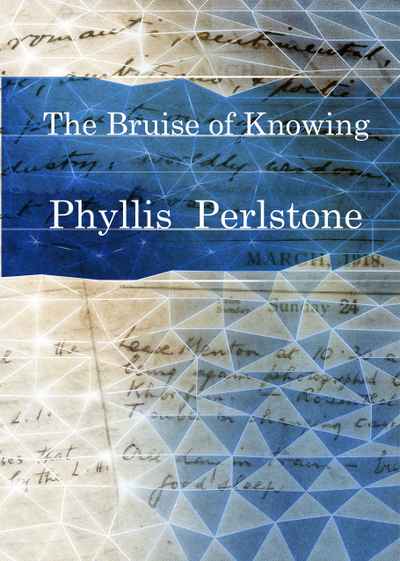
Margaret Bradstock Reviews Phyllis Perlstone’s The Bruise of Knowing

The Bruise of Knowing by Phyllis Perlstone


Puncher & Wattmann, 2019


The Bruise of Knowing is Phyllis Perlstone’s third collection of poetry from Puncher & Wattmann, and arguably her best to date. It tells the story of Sir John Monash, highlighting themes of ambition, power and warfare. A talented engineer and commander, Monash’s progress was conflicted by religious bigotry, the rise of feminism, and a growing awareness within himself of the devastation wrought by war. But this is not just history, although the Australia and Britain of Monash’s lifetime are vividly recreated. Perlstone selects revealing episodes of strength and weakness in her protagonist, interpreted through poetic devices that allow the reader to experience undercurrents well beyond the series of events. At the same time, this anecdote is counterpointed with several parenthetic poems drawing the writer-researcher into the framework and underlining current concerns with the encroachment of the built environment on the natural.

Part 1, shifting back and forth in time, deals mainly with the nineteenth century. The collection begins with the poem ‘Two Incidents as Engineer …’ in 1901. In this poem, the language is deliberately hard-edged and precise in its description:

the bridge twists
concrete bits break off
the water's splash, the crashing pieces
the slow time of gravity's next
is like glass
in an accident 

the traction engine tips
and falls

The impact is heightened by concrete, enjambed lineation and broken syntax, brief lines directing emphasis to where the poet wants us to pause and absorb. In this poem, also, the reader is given early notice of Monash’s ‘greatest regret’ for the needless ‘loss of life’:

stilted, his mind's stall
word's remove him from the moment −
as if he could speak for the pall
of ends in the air, of being stopped
of waiting

By contrast, in poems such as ‘In the new Barangaroo Reserve’, we are offered Perlstone’s perspective on the resultant feats of engineering:

As in Sydney now, walking in the city
that some dreamed we would 
wish for,
the heights and bridges built −
though sometimes we want to descend from these
intersecting frets
strutting steel,
sharp-cut graze of concrete
blocking
the intimacy of trees

She follows this with ‘Barangaroo’, where her evocation of the natural world is uplifting:

In this place that's retrieved today
from industry
at Barangaroo
this recreation of a ruined shore
buoys now sway
again, against the white trailed water
of a ferry's wake

Monash married Victoria Moss in 1891. Three months later, diagnosed with suspected tuberculosis, she was convalescing with her sister in Beechworth, Monash travelling back and forth by train from Melbourne. As Perlstone notes, ‘The Law and its outlaws / mixed in Beechworth’, none the least the infamous Ned Kelly. She describes the settling of power that happened here:

Poor equipment
like Kelly's makeshift headgear −
dark imprisoning iron −
more than masking 
armour − Nolan's later icon.

A disputed mythology has grown up, linking Monash to Ned Kelly, as in Peter FitzSimon’s 2014 biography of the bushranger. Perlstone has eschewed including any such incident but uses the iconography with metaphoric force. She introduces an attested meeting between Kelly and Monash’s father (in Jerilderie) and suggests Monash’s later interest in the Kelly Gang. In an ekphrastic poem ‘The Slip’, based on a well-known painting by Nolan, the horse’s fall from a ‘precipitous’ height is perhaps reminiscent of Monash’s own trajectory.

In this first section of the book, Perlstone begins to show the uneasy relationship existing between Monash and his wife Victoria (or Vic). This, she mostly develops through interpretation of photographs and artworks, with an impressive sensitivity to bodily language and gesture, as in the poem ‘1898’:

Vic's full skirt, jacket and jaunty hat
free-stand on her, almost
and match the double-breasted suit
constricting Monash

The rift appears more strongly in ‘An Early Photo of Monash and Vic’:

looking in separate directions
they have the same

upholding of themselves for the camera
to be seen, yet    between them
their expressions dilate with defiance,
expose opposite views

[…]

And what is inner with Vic is there
by her mouth
her dark hair and dark dress
the high collar around her neck
and head, prevent
any premature
list
or lean into
Monash's plans

The continuing disintegration of their relationship is interwoven with related themes including the growing rise of feminism and husband’s and wife’s opposing responses to it:

He's avoided Vida Goldstein, feminist,
18 years old.
Monash announces she is "all too self-possessed and affected".

[…]

Quarrels start
He should be "the master"
their future should be shaped
so he can succeed.

Once again, the poet’s voice interposes, interpreting and responding to emotional overtones, as in the visually evocative ‘Damp Window in the Rain’:

umbrellas passing under the fig tree leaves
hold the patterns like a slide-show
each walker giving way to another
on the wet black pavement
the tented colours screening shapes
traced like under-lit shadows
without the sun

Abstrusely a sight I turn to
reflecting on Vic
watching the hesitant configurations.
It was her time of not wanting a life rushed through
Hardly one to seize
Posted in BOOK REVIEWS | Tagged ,