They Do Their Best

They do their best–not wanting
To show an ungrateful face,
Not wanting to step out of line,
To show difference

They do their best–crowding out
The shops, being up with the latest
This or that, the most pressing of
Consumer needs.

They do their best–to make
A life, to find things to follow,
Not wanting to have nothing
To hold to.

They do their best–to be part,
To share the hatred that has been
Crafted for them, hate not
In their hearts.

They do their best–at the moments
Of desolation, to pretend there is
Something that connects, some reason
Why they belong to this here
And now–the here and the now
Made of the nothings, of the hate,
Of countless unbelongings.

Posted in 23: EDITORIAL INTERVENTION | Tagged

Man with a Newspaper

It's a metropolitan weekend paper,
As thick as a doormat, in several sections.
He spreads the front page out on his lap
With a satisfied look–he's going to enjoy this.
But about half way down the trouble starts–
His brow furrows, he reads more slowly,
Then breaks off to scan the other stories.

There is nothing new here, no news.

He hurriedly glances across the other pages
Of the first section, and then puts the paper
Down, dissatisfied. From time to time
He glances furtively at it, occasionally picking
Other sections up to thumb through,
But to no avail. At last his flight is called;
He stands up with his case and strides off,
Leaving it behind. Then he turns quickly,
Snatching at it. He holds it awkwardly,
Rumpled, under one arm, as he marches off.

Posted in 23: EDITORIAL INTERVENTION | Tagged

there’s only ever been two

in our eyes' dilatory
dance our irises open
admit missed steps faults it marks
the corona every break
is here dot dot dash your bones'
brittle semaphore tattoo
out how far you fell how much
we have a third between us
a shift a shadow drawing
down the lids in noonday sun
shuttering hush of lashes
we say too much with fragile
instruments supreme geiger
counters tick tick tick burr
the needle swings don't you know
the meaning of it we dance
I lead you follow outside
are common house diamonds
winking out the clouds melting
a mushroom soaks in honey
the room whitens like a bone
exposed and we stand like posts
a thin string nailed between us
our eyes feel the heat shimmer
as something evaporates

Posted in 23: EDITORIAL INTERVENTION | Tagged

That Second Heart

I cannot accept it. How can
one be ready for this gift? My
belly cannot curve to tightness,
my skin cannot hold a drum (that

second heart). I cannot accept
it – limbs bursting buds. I cannot
have the end to blood. I cannot
bear your blood, child, and I think of

you, often.

Posted in 23: EDITORIAL INTERVENTION | Tagged

Asteral

if you come over i'll give to you what I can

i heard you're in L.A. for the protest and the Post-sit-in
i heard you're in L.A., shirt not buttoned at the top

got a yellow flower patch spiting the horizon line
got a yellow shirt     whyn't you here to try it on

got some far-off friends' shirts and shoes and socks
got some far-off friends     they're funny babies very odd

asters in rain     you won't believe how they blow
asters in rain     you won't believe how they move

got a rock collection and photographs of smoke
got a road on my mind     whyn't we walk it slow

that bunch of asters on my windowsill     in bloom
thine bunch of asters callin me     hey pick us soon

asters in rain     you won't believe why they move

Posted in 23: EDITORIAL INTERVENTION | Tagged

Dead Poem Office

I read the last rites over your submission today
& since our procedures have been streamlined
I'm delighted & at the same time proud to say
That we've found a place for your poetry here.

Give us your poems & in several years' time
We'll give you an idea of death's landscapes.
Redundant rhymes, image, metaphor sublime:
Your four line stanzas, our grim burial plots.

Taking a rejection personally is well-advised.
That's why we never say no to anything sent.
Our acceptance procedures have been revised:
Please note in case of future correspondence.

Simultaneous submissions remain unwelcome
As we pride ourselves on our unique position
Within the mortuary canon. Flattery seldom
Impresses as much as genuine humility does.

On behalf of our hard-working gravediggers
Congratulations once again on your success.
In future issues, as our catalogue gets bigger,
May we all transcend our obsessional deaths.

Posted in 23: EDITORIAL INTERVENTION | Tagged

One Line Poems

Closure

The mirror shrugged, the sky blew shut, and you were gone.


Tradition

He laid an egg every year. Every year a poppy in a ditch.


Story

Now look! the plant said, and grew.


Dental anxiety

Tooth, tooth soup. 77 white sharks.


The cactus

Rain in September. Checking if the cactus got wet. Checking again.


Examination

“The crab cut the fish.” Discuss in three pieces.


Secret

Behind the dead tree, I ate honey and grass.

Posted in 23: EDITORIAL INTERVENTION | Tagged

Dunedin and Around

Arrival

The light will let you know
that you are really here.

You will appear,
both to yourself and your companion

as bones, glowing in an x-ray,
or teeth, exposed in a dark mouth.


Acclimatisation

You will shed two dimensions
and unfurl,

like ink in infinite water.

Thoughts may turn to helium,
or the clouds.

Hearts tend to respond by lifting;
so many red balloons.


Accommodation

Proud shapes step in,
control the situation.

Be careful not to cut yourself
on corners.

Sleep comes quick as a knife.


Attractions

Further on, you may notice eels,
being fed blancmange

by an old woman.

Generations of fangs
have known the lightness

of her recipe,
a lesson in antonyms.


Afterwards

Photographs are best
viewed in the negative.

Light still fascinates
at the edges.

Scooped-out versions revolve,
like looted display cases.

Posted in 23: EDITORIAL INTERVENTION | Tagged

Why Trains Crash

stop the trains. a crash appears imminent.
i'm playing with machines that control
whether trains crash into each other.

german trains crash head-on.
and, wow, do those trains crash:
into the water, into buildings,
into mass quantities of fish,
and into each other.

why the carnage?

trains take enormous amounts
of time and space to come to a stop

then, in a thunderous, grinding crash,
the trains collide. the two locomotives
rise up at their meeting and erupt in steam
and smoke; flames billow from the wreckage.
carriages, jammed after impact,
trap many passengers inside.

(speedometer malfunctioned/the morning was overcast
and visibility poor/the procedures were either
misunderstood or poorly designed/human error

has been blamed for the crash.)

the trains were freshly painted. the locomotives hit
with a crash which was followed by a roar as one
of the boilers exploded, sending debris in all directions.

witnesses said the trains were on the same track,
heading towards each other. an investigation into the cause
of the crash – and why the trains were on the same line

is underway.

——–

two trains crash somewhere in russia, one carrying a nuclear payload.
a nuclear explosion follows the crash and the world is on alert.
eventually a train will derail or a truck will crash:

a mobile chernobyl. a nuke train.
the logic of failure: why do trains crash when the signals are working?
why does a nuclear reactor melt down with all operators alert at their posts?

even professionals make mistakes.

——–

please don't let the trains crash.
don't have any more circus trains
crash into passing parades
and spilling over into the zoo.
repair broken music boxes and other toys.
i was always finding ways to crash the train, like gomez addams.
when two trains crash head on with each other, not only do the potential energies
add together, but solving this school algebra (versus calculus) equation shows that
the trains crash when t = 350/60 hours (no need to simplify).

i'm not making excuses. i've loved trains my whole life.

———

so trains crash, the roads are congested
and you don't know if your food is fit to eat.
livestock is diseased and plants are modified genetically.

so trains crash, water can't be drunk and cities lose electricity.
ferries sink, bombs are planted on buses,
automatic teller machines self-destruct.

show me the trains and give us all engines.
yes, this is where we wreck stuff.
my ideas are: let us be able to drive
the trains, lorries, buses, planes, etc.
and crash them if we want:

a collection of some of the wildest crashes
and most outrageous stunts.

you can jump half-pipes,
play chicken with subway trains,
crash through windows and perform realistic tricks;

i will be spending new year's eve standing on top
of the hill at alexandra palace,
waiting to see planes fall out of the sky.

(this will happen only if you mess up)

——–

damn, those trains gonna crash!
the men at the bar suddenly paid attention. what crash?

Posted in 23: EDITORIAL INTERVENTION | Tagged

Burmese Black-lipped Bullfrog

If the West were let in, we'd be the Frank ?´N Furters
Of the amphibian world — black lipstick clad mouths
On the prowl for evolution's democratic buzzword.
Amoral, bi-sexual fraternisation between parties only
Enhances the underground's reputation for risqué.
Burma's a cult classic. But double feature picture shows
Are banned & only documentaries capture us, a species
Under house arrest, we couldn't keep up with the general
Speak. Ecology protection last on the cadres' list of ten
Things to do before they die. We were frogmarched out
Of the final scene, rainforests time warped into rice
Paddies, a Medusa Switch had us on generational hold.
We were often confused with the Chiang Mai flat-footed
Canetoad
; a dictatorial sub-species, more firmly rooted.

Posted in 23: EDITORIAL INTERVENTION | Tagged

On Not Having Encountered Snow, Age 35

(i)

Snow is distant like death. A blond field of
wheat stubble stalk frozen after harvest. Heat
in the eye of the Nankeen kestrel that jump jets
over paddocks & locks onto mouse holes, thermals
raging as Westerlies plug in. Heat, the dust devil
city smothers New Delhi subterfuge in downtown
Melbourne. That peculiar afternoon light which
extracted pedestrians from Brunswick St shops
& fog bound them, though reversed naturally.

(ii)

Heat was between your legs before that race –
wet heat of fear & you didn't win, the frigate bird
chafe flared bright in the puberty reds, heat in the
hands you held, (St Marys) where tennis hill statues
sat unmoving, unkissing under the snowy haired
moon, heat in the lips of ridicule, cat guts tense.
Heat in the dishonour of taste, class food, uneaten.
A Marie Celeste of untouched grub, cheese hidden
In racing car caps, heat in discovery of shame.

(iii)

Heat going out of dinners & heat in the helplessness
of fathers, ransacked emotions spat as boiled water
that snaked down onto the two year old, heat in the
venom of quick atoms bouncing into each other ?±
jump-castle heat of energy in the typeface that printed
your father's agony; heat leaving bodies & going where?
Heat of difference, heat of statistics, cold heat of fluoros,
the heat of engines six storeys down, taxi alligators
prowled bitumen moat of Bowen-Bridge Road.

(iv)

On not having encountered snow, age 35, all that can
be felt is heat. Inuit metaphors meaningless in the heat
of birthplace, dawn heat of children, hot cords of uncut
blood, sapling placenta heat, eucalypt heat, heat of scalpel
& vein & dry creek bed. Howling heat of babies, eruption
of teething heat, your hot soul mate heat when you find it.
Heat of near misses. Collision heat of unconditional love.
Performative heat of this spoken language, I love you.
The kind of heat that kills snow.

Posted in 23: EDITORIAL INTERVENTION | Tagged

Sor Juana

Freely constructed from a letter by Sor Juana de la Cruz

the letters of the good mothers
are drenched in secular eloquence
if all the limbs of my body were tongues
I could not publish such excellence

they do not hasten to condemn
deformities of the human heart
yet ambition may become a woman
muliere in silentio discat

the properties of a hare may briefly
make a woman handsome
but I would rather ungreased hinges
and the study of declensions

osculatur me osculo
oris sui decrees the Song
if lips were letters I could more straitly
be given to wondering

for this pure grammar of kisses
may express a pious verity
that mitigates the condemnations
of lascivious sorority

if a harp can cure a king's sickness
then song may heal my sin
I merely lust to follow studies
that are celebrated in men

Posted in 23: EDITORIAL INTERVENTION | Tagged

Breakages

there are breakages certainly

although bone can withstand more pressure than reinforced concrete

the psyche has its own architectures which pay little heed to gravity

an entire city can be populated on foundations little bigger than an ant

I have often watched these insects crawling across the desolations of tables

in such malarial humidities perception is closed to a perimeter of twenty feet

the night is making jaguar roars to scare away the blue skinned natives

within the circle of sight all objects are pretenaturally large and clear

I sip again the vitreous humours of my companions

and I have detached each lunate from each wrist and woven a palace from each

the dust from the ulysses butterfly is an excellent material for windows

such altitudes are dizzying but easily dispersed in alcohol

later the body will wither and every palace crash to the earth

Posted in 23: EDITORIAL INTERVENTION | Tagged

one sip away from the verse

i.

it's your T-shirt, you shaky shaky, those big suckling chords. you stunner gun, staple diet, long-socked, high spire, much aligned curly swirl. wonder boots. boots to lick. i'd crawl & i'd lick the boots under your boots. i'd walk for those shoes. walk to rock the boots that kick. please. teach me to walk.

[insert wild copper top looped bass riff here]
 
 
ii.

you need the alphabet soldered into your scratch plate. you say E & i'll lunch on a mile for one of your Ps, you X, you Z. poling my poles. you stoic, poetic boy. my mink metaphor. standing in for a word I can't pronounce. many have tried & many have fed you. i eat you, now, carrot by carrot, fringe by fringe. swollen, up against bowled angst.

[the bridge: circling the stomach of cool]
 
 
iii.

you do & you will & you Spike Milligan me right in the right of me. so right. let me play a melody of you, let me create chorus, verse, bridge, back to verse again, let me middle eight you all the way to four & a half minutes. let me staccato your ribcage & rip my A string in song to you. i smoke you, note by note, foot by foot.

[end on fourth beat with a little left to spare …

Posted in 23: EDITORIAL INTERVENTION | Tagged

movements [in music]

All my concerts had no sounds in them;
they were completely silent. People had to make up
their own music in their minds!
                               Yoko Ono

the mathematician's signature
on note shaping: an audiograph

Debussy's canvas chords, Bart?õk's
construction of a swimming cul-de-sac

SchÀÜnberg expressing the mind &
Malipiero with intuition & sanctum
           Who Knows Where The Time Goes?
                    Fairport Convention]

each melody an epiphany, pu shih
provoking excursions in the past
        [96 Tears, ? & the Mysterians]

partnerships: the tempo & metre
an emotional archaeological dig
      [Sin City, Gram Parsons]

the time you slipped on oil
& couldn't walk for weeks
               [Rumble, Link Wray]

when you couldn't find the words
to kiss him & the night was Miro
            [I'll Keep It With Mine, Bob Dylan]

those evenings when you wondered what life
would be if you were something else
           [Let It All Hang Out, The Hombres]

finding out someone was not telling you
everything & somehow you let it slide
                [Over and Over, Neil Young]

that moment when you ended everything
with a painted sign, maroon cherries & a mixed tape
       [So Long Babe, Lee Hazelwood]

soon: when all things = cut sounds of new
& you, you selling your past
lump sum in second-hand stores

Posted in 23: EDITORIAL INTERVENTION | Tagged

Writer in Prison

Your cell is a cavern; the guards
grinding teeth outside your grotto

marginally refined ape-men; you
the last human in the world

of triumphant beasts. Is your pen
the key to emancipation?

No. The lock has no keyhole
and welded beyond breakage,

bolstered by all the energy
invested into orchestrating

your captivity. Such formality
staged for the incarceration

of one soul. The vilification,
the public outrage, the trial

and the theatrical castigation
all to ensure that the curtain

forever falls over your life. What
could a pen possibly do

to alter the absolute plot
of the script of so-called justice?

Zilch. Your freedom is untenable.
Barbarity always possesses

the upper hand. Don't waste
your vital ink by doodling tears.

In your pre- or post- historic cave
you are the insider archaeologist.

Your pen is a shovel, chisel
and brush only for exhuming

the bruised icons, recovering the abject
tales and treasures from beneath

the stone, lava, rubble and sand
of the storms of tyranny. Please

don't get sentimental now.
You, writer in prison,

may yet be our saviour.

Posted in 23: EDITORIAL INTERVENTION | Tagged

Call Me Filth

I am filth. You are right
to hate me. Do not listen

to the mystics' warnings; hatred
will not corrupt your logic. I'm

the source of decadence; see my
thick beard, dark skin and turban.

Do not listen to the learned;
civilisation is a Western value.

Mine is irreversible savagery.
Haven't you received the facts

of my innumerable barbarities
from the mouths of newsreaders,

from the pens of your columnists?
Listen to them. They know

what's best for your morality.
Listen to me: I'm a virus

poised to strike at your healthy body.
Do not underestimate me. My culture

is vampiric. My icons
zombies. Hide your daughters from

my supernatural lust. I'm the very villain
of your gothic horror. The monstrous Muslim

concocted by the Apocalyptic fetish
of your politicians and rabble-rousers.

Listen to them. They know how
to make hatred necessary, user-friendly.

Let their words be mightier than the scimitars
of my legends. Do not spare a thought

for my history. I don't have one.
Yours is the epic of discovery and triumph;

mine an illegible, fading footnote.
Do not worry yourself with

the story of my culture being the Cradle
of Civilisation. You shall rock

my history to the grave
and that's all that counts. You

can afford to be hateful. Your terror
disguised as a ?´hero quest'

for security and democracy. Enjoy
your supremacy. Let me suffer

the consequences of being an archetype
of your hell. Call me evil;

call me filth.

Posted in 23: EDITORIAL INTERVENTION | Tagged

[the open plain, or mesa]

Sometimes, when you're a cowboy gunslinger,
all you're left with is your boots and hat
and lariat, your trick paint horse,

your Colt and your Winchester, your bedroll,
the open plain, or mesa, the tins of beans
and strips of cured beef, your sense of justice

for your murdered kin, scalped by marauding
godless injuns, your self-reliance and steely aim
by the riverbed, your tempered and easy masculinity,

your friend the emancipated slave. You've seen
the iron horse and the telegraph cross the maps
and random states and you've seen the sunrise

on the canyons, the noonday dead on the dusty
streets of Texas, the evening cool of the hacienda
and the saloon brawls in the night. You've known

the love of a good-hearted dancing girl, yet you'll die
alone beneath a ridge. You'll leave no estate,
no child, no forlorn wife, no brethren will weep

by your simple grave. Your bedroll is your shroud,
the open plain your chapel. And all that is left
will be your hat and boots and lariat.

Posted in 23: EDITORIAL INTERVENTION | Tagged

A Climber’s Farewell

Satellites really knock me out,
the way they join the dots,
the way a carpet-trader deep

in the Soud calls his uncle Faisal
at the Moore Park Supa Centa,
the way a called-up beleaguered

Little League coach calls in an air-strike
from the carriers, louche and polished
in the Gulf. And at the end of every call,

what I'm left with is a belief
in the possibilities of language
to truthfully and energetically

communicate experience, thought and feeling,
co-ordinates and intensity,
quality and quantity, fully landed cost

and now my final cheerios to dad and mum ?±
from this lofty New Zealand mountaintop
where I lie broken-legged, hypothermic and elated.

Night is falling and I'm stiffening here
in my alpine-rated bag and I'll call everyone
I know till my batteries run low, till the satellite

Says goodnight.

Posted in 23: EDITORIAL INTERVENTION | Tagged

Editorial Intervention

Usually I despise the practice whereby editors place their own work in an issue of the publication they're editing. Apart from denying a place to someone whose work is probably better, such actions often signal a kind of desperation, a “look at me” attitude or, to put it bluntly, a crude vanity best ignored, if not completely forgotten. All of which does little to explain the placement of one of my poems in the current issue of Cordite.

Continue reading

Posted in ESSAYS | Tagged , ,

Paul Mitchell Interviews Richard Watts

Richard Watts, creative director of Express Media's (producer of the youth literary magazine Voiceworks) has stepped down. Paul Mitchell reports on Richard's five years in a job that he describes as the best he's ever had.

At the end of June, Richard Watts, 3RRR Smartarts presenter and former Pink Magpies president, will resign as Artistic Director of Express Media. His five years with the organisation that produces Voiceworks, a national literary magazine for writers under 25, and the Emerging Writers' Festival, has been a time of positive change.

Submissions to Voiceworks have increased 100 percent in the past five years and now routinely arrive from all over Australia, rather than predominantly Victoria. Subscriptions and sales have increased each year (more than 11% in the past 12 months). And, no small thanks to his media contacts, Richard has been able to also help boost Arts Victoria funding for the organisation from $80,000 to $95,000 annually, and Australia Council funding from $10,000 to $18,000. But that's just the icing on the cake for Richard: the real success has been helping young writers to take themselves seriously.

“It's been enormously rewarding,” Richard says. “It's been the best job I've ever had and it's been fantastic to be able to help spark young writers' careers.”

He cites the example of a young writer who was working on a novel, but after taking it to a publisher and having it rejected he was about to close down his computer screen and stop writing.

“On the building site where he worked, he was copping lots of shit for being a writer,” Richard says. “He got in touch with us and within six months Christos Tsiolkas was mentoring him and helping him polish his manuscript.”

Richard said Voiceworks, due to its age restriction, was a natural target for teenage angst poetry. But he said sometimes works of genius appear ? and staff had to ring relatives to make sure the person is really under 25.

“Simon Cox, a 16-year-old from Perth was one,” Richard remembers. “We were able to get Arts WA funding to fly him to the National Young Writers Festival in Newcastle last year . . . We kept taking him into over-18 only areas and had to remember we couldn't . . . we had to say, You go back to your Mum!”

Watts said it had been exciting to oversee Express Media as it has become a truly national endeavour. He said the most important role the organisation can play is to help develop a sense of community among young writers, many of whom are isolated from each other, whether they're in city or country areas.

The Emerging Writers Festival, Richard's brainchild, is another way he has made a push to develop a national community of young writers. The Festival, which ran for the second time this year and included participants from all over Australia, has run under the banner “The best writers you haven't heard of yet”.

“While the Melbourne Writers Festival supports established writers, we wanted to remind the public that there are lot of great writers out there who are, for one reason or another, not being published.”

His achievements have been invaluable, but Richard decided it was time to move on this year, both to concentrate on his own writing and because he believes an arts organisation always needs a fresh transfusion of ideas.

“Rohini Sharma has been appointed the new Artistic Director,” Richard says, adding, “She has a background in youth theatre in the ACT, she has worked in the Arts Council England's grants department, and she's helped small groups of, often, underprivileged people get arts projects up and going.”

While Rohini will soon be slaving over a now-hot magazine and arts organisation, Richard will be working feverishly on a fourth draft of a novel, a play, a film script and, well, while he's at it, another novel. “I've got files full of ideas and now I'll be able to get to them,” he laughs.

Before all that he's planning a month off. Oh, and he'll dash over to Scotland for a working holiday at the Edinburgh Festival at the end of the August where he hopes to pick up some contacts for the Melbourne Fringe Festival – Richard is the deputy chair of Fringe. “I'll also be doing my DJing and working on my freelance writing – and I also want to sleep!”

For more information about Express Media and Voiceworks magazine go to www.expressmedia.org.au.

Posted in INTERVIEWS | Tagged ,

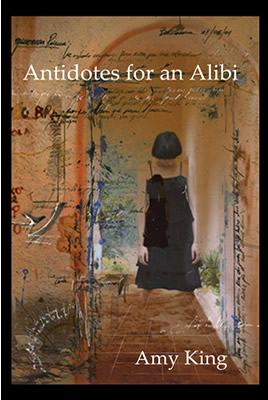
Steven Farry Reviews Amy King

King_Cover.jpgAntidotes for an Alibi by Amy King
BlazeVOX books, 2004

Antidotes for an Alibi is at once intriguing and irritating. The surrealist poems are complex, evocative, and a danger to review: am I overlooking something? Is there an obvious reference I've missed? Am I just an insensitive clod?

Continue reading

Posted in BOOK REVIEWS | Tagged ,

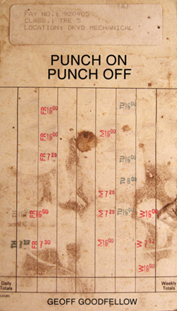
Ali Alizadeh Reviews Geoff Goodfellow

Goodfellow.jpgPunch on punch off by Geoff Goodfellow
Vulgar Press, 2004

The concept of working-class poetry may seem like an oxymoron to the uninitiated. Isn't poetry, after all, as Harold Bloom would have it, “the crown of imaginative literature”; an elitist, royalist member of the family of letters, on par with other 'high art' and upper-class forms and genres such as Classical music, opera and ballet? And isn't the idea of an 'imaginative literature' itself the very opposite of the harsh and gritty realism one often expects from working-class 'realist' narratives such as the novels of Emile Zola or the movies of Ken Loach?

Continue reading

Posted in BOOK REVIEWS | Tagged ,

Andy Jackson Interviews Patricia Sykes

Patricia Sykes has published two collections of poetry, partly with the fuel of New Work grants from the Australia Council and Arts Victoria. Her first, Wire Dancing (Spinifex Press, 1999), was commended in the Anne Elder and the Mary Gilmore awards for 2000. In November 2004, Spinifex Press released her second collection, Modewarre: Home Ground. Most recently, she has written the poetic text for Mother Tongue, a piece for soprano and fifteen instruments, commissioned by the acclaimed young Australian composer, Liza Lim, which will premiere at The Festival d'Automne in Paris in November 2005. In May 2005, Patricia and Andy Jackson talked poetry. He lives in Carlton, she in the Dandenong Ranges. The gap was bridged via email.

To be cliched, first things first – what got you started in poetry? and what's kept you going?

Patricia Sykes: A friend suggested I'd find the answer ?in the swamp'. Of course I laughed. But she's right, I ?got started' because the years were ticking away. It was panic, an anxiety that if I didn't leap into the murk soon it would be too late. I think children possess wise gullibility. I remember knowing when I was about seven or eight that there was something powerful and tricky going on in poetry. It was like entering a cave of multiple magics. The occasional dragons were an added proof. I still believe poetry is a dangerous activity, risky, subversive, even necessarily delusional. In attempting to re-create, re-shape the swamp, poetry disturbs equilibrium, especially that of the status quo. How intoxicating: activism, celebration and sleuthing in the one activity. I keep at it because I'm hungry. Each poem is a kind of failure, a mere inkling of the complexity of the swamp. Perhaps I've grown more gullible, less wise.

What do you think has changed in your writing between 'Wire Dancing' and 'Modewarre: home ground'?

PS: I like to think the poems in the Modewarre collection listened to those in WD to the extent that they became less concerned with explaining themselves, more 'open' to a variety of responses and interpretations. This strategy obviously doesn't appeal to readers who want to know what a poem 'means', but for me poetry is very much about the 'hidden', so to simplify it is also to falsify. It's a difficult tension, at least for those who require justification. I prefer that readers meet me half-way. In writing ?Modewarre?' I was very conscious of wanting to explore various stances, attitudes, voices, apparent in poems such as ” 'dis-locations…a polemic” ', and ” 'a ferret in migrant trousers' “. In one sense these invite debate but also empathy, criticism, even derision. In an age of hyper-language I prefer not to overlook the cross-currents and complications implicit in various modes of speech. Corporate speak and advertising for example have become akin to dialects, as has the language of party politics. I was also wanting to break through the perception of the poet as the prevailing first-person-speaker, to disturb a preference for this. An inverted form of democratisiation? Perhaps.

I have my own ideas about why the duck is such an appropriate motif. What convinced you that she was a rich source of themes?

PS: The modewarre is appropriate because she's 'there', the being beneath and inside the word. 'Inside' because as symbol she inhabits it, and 'beneath' because she has been buried under the selective forgetfulness of colonial history. My family certainly didn't know the meaning of Modewarre when we lived there. I wasn't hunting a motif when I began researching the English translation, the duck turned out to be a gift, an unlooked for presence. I've been fascinated by birdlife since childhood and I relish being in water so to discover a water-bird at the core of what I was wanting to explore made me a little breathless, even wary. It felt both too easy and too daunting. The themes were a given. I've always associated Modewarre with the themes of belonging, identity and loss. It's a small step from the personal to the communal. On the one hand a white child's loss of a mother and the dislocation that followed: loss of home, family, school, friends, an entire mini culture that for her equalled ?the world'. And for the Wathaurong the displacement of themselves, their culture, their connection to the Modewarre land. As I wrote, the ripples kept widening: the duck as endangered species, the fragilities of occupation, the self as witness, as possesser and dis-possesser, succeeding waves of migration into arrival or mis-arrival. And always the modewarre slightly out of reach. An indifferent vortex? At the very least a possibility rather than an answer.

To me there's an interesting interplay between immediate felt emotion and reflective thought in this collection of poems. Are you aiming for either, both or neither?

PS: No, I wasn't conscious of aiming for either of these but it doesn't surprise me if it's there. I think of poetry as a form of speculative discovery so it's not inconsistent that a dialogue between 'immediate felt emotion and reflective thought' may emerge in the poems. I like to imagine they were think-feeling themselves into existence as I wrote. It's often a tenuous business, isn't it, locating the track that veers between certainty and uncertainty? I sometimes find myself wishing for a snail's glinting bodyprint to follow but that would be like begging a key from the invisible.

Are you aware of your place in the Australian poetry scene/community?

PS: No. I don't have any sense of ?poetry identity', of ?belonging' or ?fitting in' anywhere. I think I've always felt, generally, an outsider. Perhaps this has to do with poets being thieves in the night', or perhaps it's because I favour a dis-possessing eye, even if I don't always achieve this. Besides, rupture is as valuable as rapture, at least in creative terms: for example, Keats' notion of himself as a chameleon poet strikes me as a potent way of saying ?how can I be a single identity when I inhabit so many?'.

To me there seems to be a political position or framework beneath the poems in “Modewarre?” – at times it erupts into the text explicitly, but mostly if flows just underneath the surface. In what way do you think your poetry, or contemporary Australian poetry in general, can hope to foster political thought and engagement in the reader or the public in general. And, how is this related to your statement that these poems are “more open to a variety of responses and interpretations”?

PS: As a reader I am ?touched' by the themes and concerns of whatever material I choose to be reading, and I don't consider political nuances (of whatever flavour: gender, environmental, religious, cultural, governmental, relationship, racial, etc.) to be exceptional, a special case. Poetry has always encompassed variety, from the curse to the sonnet, from the lyric to the satiric, from love to death, peace, war, sex, tryanny, dictatorship, ennui, and all manner of hybrid variations.. I think it is only cultures who consider themselves particularly sophisticated (a defensive vulnerability in my view) which cannot deal comfortably with the so-called political in poetry. Fortunately it's there in the work of many Australian poets, maybe not exclusively or to the forefront in each poem but always integral to their poetic energies. I'm thinking of the work of Coral Hull, John Forbes, Gig Ryan, Jennifer Maiden, Les Murray, Lionel Fogarty, Lisa Bellear, and Gillian Hanscombe among others, poetry in which ideas, personal power, systemic power, and exploitation create disturbances, engage with contradictions, and explore resolutions. The fact that Poetry is not as popularised as sport for example is more to do with the way cultural activities are promoted and valorised in Australia. That's the big ?kick'. So when I say that the poems in ?Modewarre?' are open to a variety of responses and interpretations I mean that I'm inviting readers to leave comfort zones and other preferences behind. Not that I'm asking them to do the poet's work but to be aware of the doors in the work, ajar or fully opened, leading sometimes to labyrinths, to cul-de-sacs, or to portals. Language and symbol are shared universes after all and while ?Modewarre?' may have ?political' rivers flowing through it, it is not setting itself up for preselection.

I've noticed when you've read your poetry in public, you've given some background information which isn't in the book itself, to assist the audience. When you're writing poems, how do you decide what to leave in or out? What's the difference between a “poetry reading” and “reading poetry?”?

PS: To answer the second part of your question first: the act of ?reading poetry' is usually a private one of course between reader, the poetry and the invisible poet. The reader can pause over particular images and lines, re-read certain sections, take as much or as little time as desired to engage with a poem or a collection. A public audience doesn't have this prerogative. True, some audience members may know the work being read, may even be reading along as the poet reads, but generally they are listeners without the advantage of the page in front of them, without the option to pause, retrace, re-read. Which is one of the reasons I contextualise my readings. I need such hooks myself, being more visual than auditory in the way I absorb information. Also, I'm interested in having a conversation with listeners about some of the impulses that inform a work, not to explain it or pin it down but to explore and re-engage with the context.

How do I decide what to leave in or out of a poem? I think it was W.B.Yeats who famously said that poetry is an outcome of the quarrel with ourselves. Looked at in this light, poetry is a matter of debate and argument, but I prefer the idea of negotiation, exchange, challenge. Most intriguing are the times when you're inside a poem, listening and groping on a vaguely defined road, the end of it disappearing into haze and peopled with amorphous shapes that shift and reform. Or those instances when I find myself caught on a horizon between sea and sky, tossed between cross currents, a turbulence both exhilarating and frustrating. These are the times I go out and pull up a blackberry shoot or hack at some bamboo and, left alone, the poem finds its way out of the whirlpool. I suppose I'm confirming that it's a matter of negotiation: you initiate, respond, defer, question, withdraw, re-visit, and most importantly, you listen. I used this process as a form in the poem ?proximites', which is in ?House of Water', the second section of the book. I tried entering the poem in various ways but couldn't decide on which beginning was ?right' until it dawned on me that the unformed energy inhabiting the poem actually wanted multiple gateways. So I gave it what it asked for.

What are you writing currently?

PS: I'm more in thinking than writing mode at the moment, to do with the necessary hiatus between books I expect but also the death of my youngest sister in February. The most recent thing I've written is a poetic text which was commissioned by the Australian composer, Liza Lim. The piece, “Mother Tongue” (for soprano and 15 instruments) will have its premiere at The Festival d'Automne in Paris in November this year. It has been an absorbing process and I'm looking forward very much to seeing/hearing the work performed in Paris, and then in Australia next year, where it will be performed by ELISION, The Australian Contemporary Music ensemble, who will premiere the piece as part of their 20th anniversary celebrations.

What have you seen recently that you'd recommend? Feel free to mention other books, art, film, places, experiences, anything.

PS: In fact I haven't seen any films/exhibitions this year. I've been very much in withdrawal mode. I spent a great deal of time with my sister in her last months and am still trying to absorb the loss and recover some emotional energy. Being present during and at her dying has been the most inspiring event of my recent calendar. I am delving into several books though and can unreservedly recommend ‘The Collected Poems' of Stevie Smith (which I'm reading for the third time: her ?voice/voices' seem able to combine the apparent innocence of nursery rhyme with an ascerbic wit), Brian Castro's ‘Looking For Estrellita'(a collection of essays, many of them, in his own words, dealing with “writing, autobiography, identity and hybridity”), Barry Lopez' ‘Arctic Dreams: Imagination and Desire in a Northern Landscape', and especially ‘The Audre Lorde Compendium: Essays, Speeches and Journals'. To quote from her:

for the embattled
there is no place
that cannnot be
home
nor is
(from “School Note” in The Black Unicorn, W.W.Norton, New York, 1978)


Posted in INTERVIEWS | Tagged