Epic Editorial

Great-WallWhen ‘Epic' was suggested as a theme for an issue of Cordite, I was expecting it to be either rejected outright or at least modified into something less archaic. When it was actually chosen as the theme for issue 31 with myself as the guest editor, I was faced with a more pressing concern: would we receive enough suitably epical submissions to justify our choice of this theme? Or would the dearth of appropriate contributions confirm that, as literary critic Tom Winnifrith has written, the epic is ‘as antique as a dinosaur', or, as Mikhail Bakhtin would have it, the epic poem is ‘an already completed genre … distanced, finished and closed'?

Continue reading

Posted in ESSAYS | Tagged ,

David Prater Interviews Ko Un


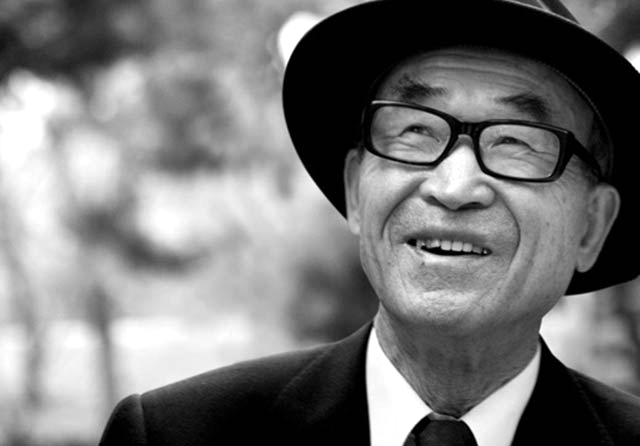
Image from Printemps Coreen

On a hazy autumn day in Seoul in October 2009, David Prater spent an all-too-brief hour with Ko Un, one of Korea's best known poets and the author of a true twentieth century epic, Maninbo [Ten Thousand Lives]. Ko Un's chief English translator An Sonjae acted as interpreter during the conversation, which ranged across various topics including silence, epic poetry and democracy in the twenty-first century.

David Prater: Ko Un, first of all thank you very much for agreeing to meet me today, it's a great honour for me to meet you in person. Obviously the basic facts of your life and works are well-known, but I’d like to ask you about the period of your life when you first started to write poetry in the 1950s. In your introduction to Songs for Tomorrow: Poems 1960-2002, (LA: Green Integer, 2008) you talk about the idea of the ‘Zero’; as being very prevalent at that time in Korea. For people in Australia who might not know much about Korea and what was happening then, can you tell me something about why that idea was so prevalent and why you might later have rejected it?

Ko Un: At that time it was just after the Korean war, everything was destroyed. I was a survivor surrounded by ruins and emptiness, and an orphan. So therefore it’s not just my poetry or myself personally or something, it's that the whole world seemed to be nothing but zero, a mound of ash. So my poetry begins in the midst of this zero, and me being this naked survivor, so to speak. And when you come to the present time, I can’t tell with this zero whether I”ve moved in a plus or a minus direction but in the present too it’s always a matter of starting again, starting again from a zero, again from nothing, to always start again from that, as it were, ground zero.

DP: You spent a decade as a Buddhist monk – is that a Son or Zen Buddhist concept?

KU: Buddhism for me is like food I ate for ten years, for a long time as a monk, and the food you eat goes to your bones and stays there, so in that sense it's inside me, it's not that I wouldn't be identified by Buddhism but it's there, a part of me … Buddhism has this emptiness and in opposition to it the 'is-ness', but the zero concept – there's nature, there's the whole existence of the universe but that itself for me is a part of the zero.

DP: In an interview with Patricia Donegan for Kyoto Journal in 2005 you described the Korean people as 'a poetic people' – not just in terms of actual poetry but in the way that they live their lives. In your childhood, what was people's attitude to poetry? Was being a poet seen as a viable or respectable occupation, or was it a punishment or curse?

KU: I had left home and I was lost. This is a process of loss, to have left home is to have lost home. Looking back now, the people there – my mother, father, grandparents, uncles – none of them were literary people but the way they spoke, the way they lived, their speech and everything was full of poetry, making them in a sense better poets than I am now. But looking back at that as a lost reality, it's no longer there and you can't go back. So at present I have this sense of having lost something, of having been deprived of something, it's no longer there, due to the process of modernisation.

DP: On that topic, of course, a big factor in the early twentieth century for Korea was the Japanese occupation. You write about having to learn Japanese forms and Japanese stories, having to speak in Japanese, given a Japanese name (Dakkabayai Doraske). You write that these Japanese influences were 'like splinters embedded deep within me'. Do you think it's possible for these splinters to be removed, or negated?

KU: Of course, originally, a lot of what's Japan came from Korea, it was one reality and one culture. But then they changed, over a process of time they changed and then in recent times they became more and more aggressive, as it were, more outreaching, taking over and attacking. And so when I was born and grew up it was under Japanese rule and I had to take a Japanese name and learn Japanese, so in that sense there is within me that wound of having undergone the Japanese colonialism. But at the same time even in that period I had the chance of learning to write in Hangul, so that when in 1945 liberation came, I was virtually the only child, the only person of my age who was accustomed to writing and reading in Korean, so in that sense I was powerfully less influenced than most of the people who grew up in that time. I was taught in secret, in the village, by my neighbours and relatives, and could mature myself in writing in Korean.

DP: You've described the manner in which you lost your hearing in the early 1950s. Speaking as someone who also experienced hearing loss as a younger person, this is something that's very interesting for me, and it seems that it's a very important aspect of your work. Despite the loss of hearing your poetry emphasises sound and focusses on words that have sounds, the sounds of rivers and waves, for example. To what extent is hearing and sound still a part of your experience of the world? To put it another way, in the attempt to block out the sound of the experiences around you, is it true that you turned inevitably inwards? Was this how you approached your writing from that time onwards?

KU: [offering a handshake] I'm glad to meet somebody else who's had hearing loss. I once met somebody who originally couldn't hear at all and developed hearing later. We reached the conclusion that you have to come to accept this world as a world of noise and sounds. For the person who hears and then no longer can hear, then the sounds heard remain forever inside that person. Such a memory in some cases might grow weaker and fade but in other cases might grow and increase. So that's right, I have these memories of sounds, of wind and sea more strongly than other poets would have – it's the memory. Because on one side there's no hearing, on the other side it's only an artificial eardrum, so if you take that away I am completely left in silence.

DP: It seems to me that the noises of the world are very important in your poetry but that there is a deep, I guess profound silence in many of your poems. Can you perhaps put into words what that silence is, how it feels?

KU: [pause] Silence is not the sort of trash of words and silence is not the tomb of words. I dream of a reconciliation between silence and words; they are not distinct and they are not in conflict. The finest poetry is silence.

DP: Moving onto another topic, Brother Anthony describes how you travelled by boat to Cheju-do, and it reminded me a little of the story of the Dutch sailor Hamel being marooned there, or even of Gulliver landing on Lilliput. Can you tell me a little bit about your experience of living on Cheju? Would you say it is a different place from mainland Korea?

KU: I had a dream that Brother Anthony and I would visit various islands around Korea once, but we're all a bit busy and old now! Going to Cheju-do, some people go to an island on a kind of quest but actually the real reason I headed to Cheju-do was that I intended to kill myself by jumping into the sea before I got there, so I wasn't really setting out to get to Cheju-do.

DP: Okay, okay.

KU: When I went I didn't realise, but arriving in Cheju-do I realised that it's not just beautiful nature but that in 1947-48 there were these terrible massacres by the rightists in Jeju-do, so arriving there I discovered these great deep wounds left by the experience of history. So I feel that during the three years I spent in Cheju-do, I was the Lilliputian, the small guy. I am very sad, because in those days there was still a sense of an ancient tradition surviving, its own language and culture, but now it's all been developed, transformed, it's gone.

DP: I visited Cheju last month and that was my experience of it also. That there was lots of resorts, hotels. It still seemed to me that there were ‘real' Cheju people living there but that perhaps they are being passed over by history …

KU: Yes, like Miami …

DP: Turning now to Maninbo [Ten Thousand Lives], your recently-completed master work, which I'm very interested in reading once the final volumes have been translated into English. Why 10,000? Does that number have a special significance for you or for Koreans?

KU: It's not arithmetic, it's like in The Arabian Nights where the 'thousand and one' means 'lots', or 'many'. In Korean and Chinese, again, it's a way of expressing a large number, a lot of people – more than a few.

DP: Would you describe Maninbo as an 'epic'? Is it one poem or is it ten thousand poems?

KU: It's like a flock of butterflies …

DP: Wonderful! Would you say that Maninbo has a style or form that is different from your other books?

KU: Each poem is different, each poem is about a different person, so in each poem I have to find the style or form that's suitable for what I want to say about that person, so it's multiple in style and form. I'm not interested in form – the subject makes the form.

Posted in INTERVIEWS | Tagged , ,

Ali Alizadeh Interviews John Kinsella


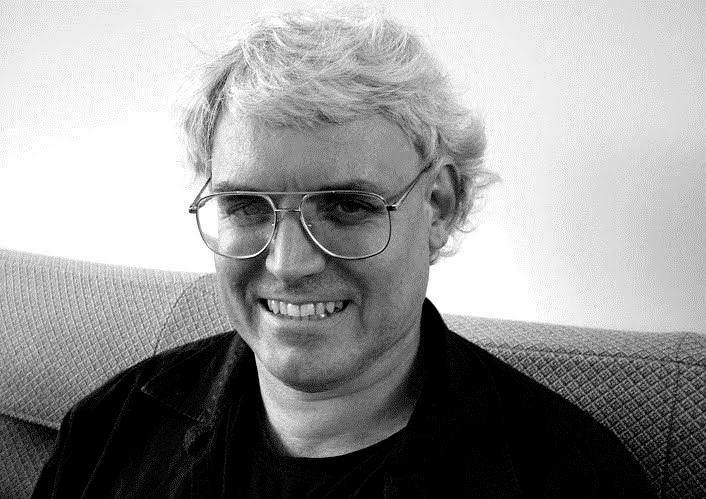
Image from Granta

John Kinsella’s most recent book Divine Comedy: Journeys Through a Regional Geography is an incredibly ambitious and meticulous rewriting of that great epic poem of the Middle Ages, Dante's The Divine Comedy. Our guest poetry editor for Epic, Ali Alizadeh, interviewed Kinsella recently, via email. Their discussion ranged from traditional notions of the epic form, and Kinsella's relationship with it, to ecological manifestoes and collaborative projects, and the concept of 'pushing against form'.

Ali Alizadeh: Your most recent book Divine Comedy, as its title suggests, is a complete rewrite of The Divine Comedy. Yet you've called yours a ‘distraction' on Dante's epic. Could you speak to that?

John Kinsella: Dante's Divine Comedy has been a long obsession for me. I came across it as a child, but only in a generic kind of way. I read Penguin editions of Inferno and Purgatory in my late teens and then reread Inferno (Ciardi translation) while living in a commune situation, and with a major drug and alcohol problem, in my early twenties. I mention the conditions of reading here because they were relevant to the way a personal mythology overlaid literary tropes for me – not an uncommon process for readers of Dante to impose. The Inferno started appearing in undeclared snippets in poems I was writing at the time – but in abstract and distant ways. But mostly, in pieces of artwork I was doing at the time (though long since abandoned, artwork was an integral part of my early poetry creativity). Those drawings and paintings are still in an archive somewhere. I hadn't seen Doré's images then (possibly a frame here or there, but certainly not in their entirety) but having since become saturated in Doré (I had the plates stuck up round the room while I was working on ‘my' Comedy), I would now find it impossible to work on anything visual without some subtext of reference to those amazing works.

When I came to writing my autobiographical work Auto in the late 90s, I drew on Dante's La Vita Nuova (‘And the sonnet was this…', for example: that is, exploring the links between poetry and prose regarding personal explication), and started to think about the entire Comedy. I reread Paradise around then. I had also read Paradise on Happy Valley Farm in the early 90s – the Sayers translation I'd picked up cheap in a secondhand bookstore somewhere. I was in a bad way then and suffering a lot of blackouts, so I read Paradise against the backdrop of the great Dryandra Forest and personal decay. But I re-read it in Cambridge in the late 90s.

For a long time, I have written cycles and movements of poems using pre-established models to highlight disjunctions in the way language, location, and attendant spatialities function. For example, by using Beethoven's Sixth Symphony as the template for The Silo: A Pastoral Symphony, I attempted, on the most basic level, to show the disjunction between European Romanticism and the introduction of European farming methods into Australia and their disastrous consequences in terms of country/land. Most of my work has an ecological basis, and in reconsidering pastoral motifs, especially in the way they do or don't transfer from place to place, I attempt to highlight how broader systems of discourse inevitably break down and damage the local. Local knows what works locally, in essence. Or, at least, has more of a chance.

In around 2003, I began to think of issues of the local and the broader local and the non-local in the context of Dante's Comedy. I was working on a book of poetry entitled The New Arcadia around then; that book was templated on Philip Sidney's Old Arcadia, and was very much in dialogue with his work. I was thinking of how far away from an original model one might go while retaining certain structural and linguistic elements of that original. When it came to considering a ‘take' (some critics have called it a ‘riff') on The Divine Comedy, I felt that I didn't want to create a dialogue, I didn't want to use it simply as a ‘model', bur rather wanted to take on the fundamental notions of what we consider to be ‘good' or ‘bad' in any given place at any given time and to set up a way of comparing personal response to place with historic and cultural tropes. I wanted to ‘distract' readers from their knowledge of the original texts but encourage them to reinvest their interpretations in the place and time of their reading. My work was to be an ‘up-close' work, an intense examination of five-and-a-half acres across three years (a year, roughly, for each of the canticles), but contextualising it in the greater world, and the discourse of location that surrounds all ‘places'. The distractions are what's happening outside the place you live in, as much as the distractions that happen daily where you live (seeing a bungarra or a rare bird, or even watching the familiar patterns of songbirds played out each day).

I like the idea of epics being about the micro – an accumulation of detail, of the ‘small', against the larger backdrop. Sometime in 1997 I wrote in a poem:

What use if we can't
note some of Dante
in his epic diva comics,

climb down a few rungs
of his sorry internal workings,
extricate around the footnotes

like revivals, enthusiastic
resurrections
of the roman à clef?

         (Graphology, Canto 7)

So the idea of the larger work departing from Dante's idea of the epic was finding its feet for me, and also the disturbance with the ‘entertainment' aspects of the big allegory. This is a question of reading, canon, and presentation, more than of Dante's specific intentions as writer. A cosmic performance, sure, but a cosmos in which we separate our own ecological impacts from what we read. Implication becomes moral and purely ‘human': it is not.

Furthermore, however epic a single writer wishes to be, s/he is writing the self. Interpolation comes in the form of anecdote and participation (through family largely, in the case of my Comedy), but as author I am still mediating. I am always flummoxed when critics point out, regarding the anti- or counter- pastoral I inhabit, that evidence of the anti is already well established in, say, Virgil (say from Eclogue VI), because they're missing the point of what I feel is the issue behind pastorality: that recognition of intrusion and decay of ‘country' or ‘rural' values is neither here nor there. What I see as the point of contention, apart from exploitation of people for profit, is the abuse of the land (especially in good husbandry and neat, ordered terraces), the damaging of ‘bushland' (in all its forms), and the agricultural use of animals for human profit. So my base model isn't the social issues of pastoral, but issues of ecological exploitation no matter how ‘rural'-authentic it dresses itself up as.

Posted in INTERVIEWS | Tagged ,

J.H. Prynne and the Late-Modern Epic

I: Further Notice: an introduction to the work of J.H. Prynne

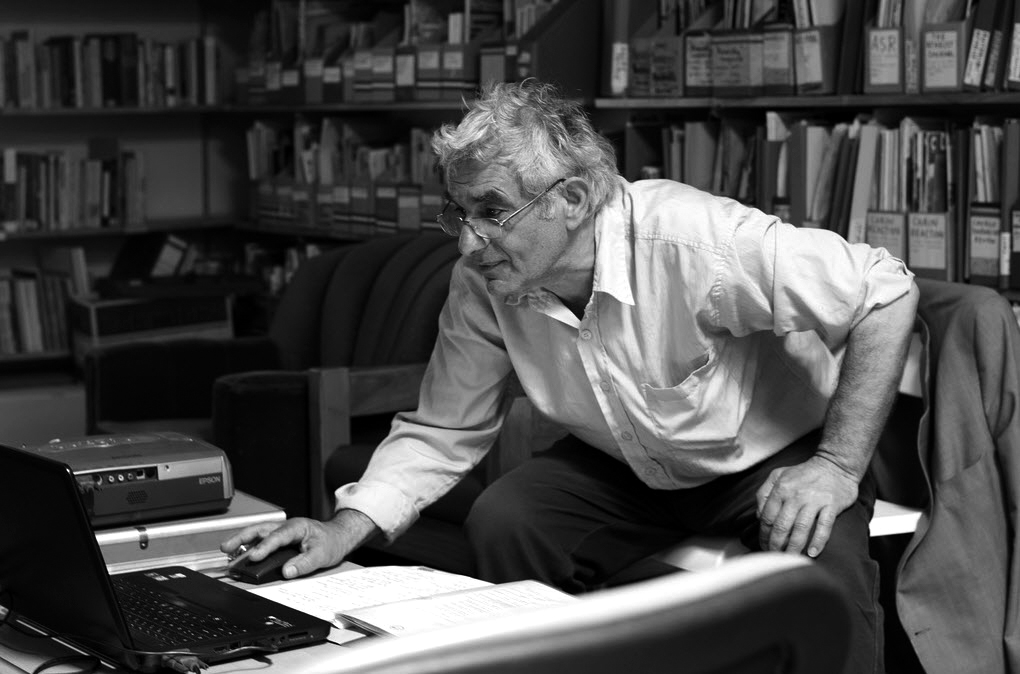
The poetry of J.H. Prynne has recently come to the attention of an international set of poets and literary theorists. This interest has developed into a recent edition of Jacket, a festschrift from Quid, as well as the publication of many essays dedicated to the critical analysis of his work. This attention has coincided with the release of his updated collected work, Poems, and, coincidentally, with Prynne's retirement from a teaching position at the University of Cambridge and as Fellow Librarian at Gonville and Caius College.

Continue reading

Posted in ESSAYS | Tagged , , ,

Π O’s 24 Hours: Ulysses in Fitzroy


Image courtesy of Paul Rubner

Born in 1951 in Katerini, Greece, ΠO moved to Australia when he was three years old: ‘Went to Bonegilla / migrant reception centre. / Escaped 3 months later. / Raised: Fitzroy. / Reason for living: / Stupidity. / Fuck the spelling.’

This is Π O’s bio note at the end of 24 Hours (1996), a 740-page, self-published epic poem set in Fitzroy, Melbourne. The P and O of his pseudonym are his actual initials and since the 1970s, Π O has been this poet’s stage-name as much as pen-name. In 1977, as Billy Marshall-Stoneking mentions in ‘Π O, An Appreciation’, Π O performed his poetry more than 250 times with Marshall-Stoneking and Eric Beach in and around Melbourne. At this time, he was performing his ‘ego-poems’, a collection of mostly vernacular poetry that publicised Π O as unabashedly ‘fantastic … brilliant … great! (no bullshit)” (Marshall-Stoneking); this demonstrated, or perhaps accumulated, the self-confidence requisite to producing his own contemporary epic.

Π O continues to perform his poetry in Melbourne, with the energy, fluency, wit and talent for mimicry that is not immediately obvious to a reader on first seeing his work in print. ‘Fuck the spelling', in his biographical note, indicates Π O's priorities–voice, aurality, ‘oracy' over conventional literacy. Being faced with: ‘Eye plai (lus' taym) layk “Skool-boi”./ Yes! – But…eye saaaaaaavayv!' (Π O, 1996: 340), is exhausting compared to hearing ‘I play (last time) like ‘School-boy'./ Yes!–But … I survive!' performed in a perfect accent, as annotated above. However, if a reader approaches Π O's written work as a score (a notation that needs to be activated by a reader) or a puzzle that requires the active participation of the reader (which could be said of all successful poetry), the sophistication and humour of Π O's writing becomes evident.

24 Hours, an encyclopedic portrait of Fitzroy in the 1990s, was rejected by six publishers before being published by Collective Effort Press, the members of which are thanked on page 4. On page 2, there is a poetic version of the legal disclaimer (‘All characters in this book / are fictitious. Any resemblance / to anyone living or dead / i consider / a compliment.') and on page 3 a dedication to his sister Athena (‘He's great/ He's fantastic/ I'm brilliant/ I'm his sister'). In a commercially published book, these opening pages wouldn't be remarkable, but, as Π O has complete creative control over 24 Hours–from the quote on page 5 (‘Don't quote me; / That's what you heard / not what / i said. / – Lawrence K Frank') to the type-writer font and layout, author-drawn sketches and symbols throughout, right up to the photograph on the final page of the appendix–all aspects of the book as an artifact appear to influence the poem as an annotation. As his voice, face and gesture would be inextricably linked to the performance of his poetry, so too is the book's appearance important to Π O's written poetry, particularly in the case of 24 Hours.

On the back cover, the closest thing to a blurb, is ‘THE DAY / THE LANGUAGE / STOOD / STILL'. This blurb might suggest that language, once caught on the page, is static and can thus only move and live when spoken. It also suggests the crucial timeframe of the poem. The narrator, Π O (while the poet's isn't automatically the narrative voice, in this case, despite the disclaimer, the voice is definitely Π O's), describes in minute detail a day in Fitzroy, beginning on a mid-morning walk to a café, and ending with the Boss closing his café in the evening. In between, via actual events, flashbacks and digressions, the narrator takes the reader or listener into his haunts and presents him or her with the characters that made up 1980s–1990s Fitzroy: the Boss, his wife and the elderly Greek, Italian, Turkish and Hungarian men who play chess and cards in the café; the boys, Tone and Adam, who deal speed and do ‘jobs' for a gang; the junkies who keep Tone and Adam in business; the women, Julie and Sof, who strip or prostitute themselves for a living; the wandering alcoholics who knew Π O's father back in the 1960s; and the police who frequent Fitzroy, mostly for worse than better. Via a series of socially realistic scenes, vernacular monologues, eavesdropped conversations and imagist observations, the reader or listener is given a thorough, apparently raw and immediate portrait of the poet's suburb.

Cafes!
Cafes!, he said: They're tha cause of
all the World's problems.
All sorts of people go there.
All sorts of people!

- π.O., 24 Hours, 1996: p 462

Any epic spanning a single day must hark back to James Joyce's Ulysses. As Ulysses is more intelligible when read in conjunction with Homer's Odyssey, so 24 Hours begins to make more sense when its parallels with Ulysses are recognised. There are no stable equivalents for Bloom, Stephen, Buck Mulligan or Molly, but Π O's characters are comparably depicted, with humanity rather than heroism. By examining the similarities shared between 24 Hours and Ulysses in more detail, I will argue for the significance of 24 Hours as a rich, sophisticated contemporary epic poem in its own right.

Posted in ESSAYS | Tagged , ,

A Ghost In The Golden Sheep Massage Parlour

[audio:http://cordite.org.au/audio/A Ghost In The Golden Sheep Massage Parlour.mp3]
Sean M Whelan & The Interim Lovers
A Ghost In The Golden Sheep Massage Parlour

Posted in 37: EPIC | Tagged

Libby Hart Reviews Dorothy Porter

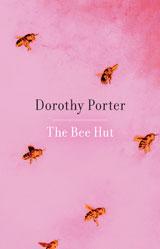
The Bee Hut by Dorothy Porter
Black Inc., 2009

The Bee Hut is Dorothy Porter's posthumous volume of poetry and her seventh collection to date, although her agent has indicated there are more books to come. Most poems assembled here were written in the last five years of her life and the final poem, ‘View from 417' was written only two weeks before her death from complications associated with breast cancer. In many ways The Bee Hut is a celebration of vitality and inquisitiveness. It brings us a lucid and intimate portrait of a life well lived.

Continue reading

Posted in BOOK REVIEWS | Tagged ,

Plantation Rumours

[audio:http://cordite.org.au/audio/Clarke_rumourmill.mp3]
Plantation Rumours (2:14)

Posted in 37: EPIC | Tagged

The Mountain

[audio:http://cordite.org.au/audio/Crixus_Mountain.mp3]
Posted in 37: EPIC | Tagged

Solitaire

[audio:http://cordite.org.au/audio/Tiggy_Solitaire.mp3]
Solitaire (2:42)

Posted in 37: EPIC | Tagged

In the Garden

[audio:http://cordite.org.au/audio/Laidler_Garden.mp3]
In the Garden (2:15)

Posted in 37: EPIC | Tagged

epic

the cleared flat playground
                        dancing
or gymnastics at one end
europe, the right side
           learning, irish      hymns
perhaps dreadful,

I never thought to ask anyone.
Earthquakes & pleasure took over

Luckily i wasnt hospitalised,
though my rant tapes were lost
blank bits best, now marvel without stopping.

anything non-epic counterproductive.

No bush rangers

Their attacks on wombats belong in the state library archives,
not to mention harpur his prophetic dream of lawson exhuming
      his grave,
saying these kangaroo-bones dont belong here with the christians,
dont ask me where all the bat specimens came
from theres only ever been one pin. Judith wright was here

another toilet activist no doubt.
locust eater by night.
Posted in 37: EPIC | Tagged

The Williad

The Epic on the Epic, écriture feminine.

Sing to me of the woman, plaintive Muse,
a Writer of twists and turns: her keyboard
unchained, hot for stardom, keyed for success.
She wants to write an epic. But will she?
Perched at her desk, fingers afire, quick,
her vision eager, her screen a-flicker,
the writer cracks her knuckles as she thinks:
how about something of the Iliad ilk,
smoky with striving groans? Eager to please,
avid to last? Or else an Odyssey,
a gourmet traveller's tale of the soul
bobbing on boundless seas to find its way?
Or an Aeneid– teeming with twisted
honour, keen to waste what it has? … Why not?
Good subjects all. But they need to be done
from a woman's perspective. That's the way.
Something girly but frothing with substance,
a clever, double-X-chromosome tale–
cute but smart: one that never tries
too hard to draw a new moustache on things.
 

The Writer and the Attack of Hunger

And as she bit her pencil, plotting hard,
she felt the presence of Darkness. The Claw
of Hunger began its Perilous Churn,
and Icy Fear swooped as the Writer tied
herself to the chair and stopped her ears.
Soft at first, low like the purr of a cat
as he lets out his claws to pick at silk,
a sound arose from her Cavernous Cave,
then reached a feverish pitch. The fierce desire,
the honeyed buzz of lustful, warlike bees,
the cloying, sweet, Cosmic Hum of the Fridge–
that waylayer of heroes, that pit of True,
Rich Taste, the blessed Harmony of Love,
of Bliss, Fulfilment, Smiles and Pleasant Peace,
past reason hunted, and no sooner had,
past reason hated, as a swallowed bait,
on purpose laid to make the taker mad–
‘Bring me a glass of water, o sweet Muse,
a piece of fruit!' called the Writer. Thunder
broke the mighty spell with this mighty word.
 

The Writer and the Monsters of Child and Housework

The first victory hers, the Writer thought
she would now write her epic. But as she went
to get a coffee, the Growing Pile of Dishes
stabbed her in the eye, and the Toilet Bowl
let out a murky howl. Its voice was drowned
by the cacophony of Dirty Sheets
begging for change. Then the dread Soiled Washing
squirmed in its basket, teemed and churned, growling,
while Dinner spat chips, rattled the fridge-cage
and pushed its fishy fingers towards her.
Fencing with each of these Monsters in turn,
the Writer tripped on toys littering the floor
and groped for balance. A shelf of books
fell on her foot, launching pointy corners
straight into her flesh. ‘Tidy your room!'
she screamed, tearful. ‘Later', grumbled the Child,
‘I want to watch TV now'. The Writer
cajoled; then, toys away, read four stories,
and, later that night, changed some peed-on sheets.
 

The Writer and the Battle of Bills

And as the golden sun rose in the sky
and eggshell clouds beheld the city's face,
the Writer woke up dreaming of writing
and milking her fresh mind. An early word
catches the worm! First thoughts push like the wind.
But then, a monstrous army caught her sight,
of beings square and white, the Evil Bills–
who, with their ghastly silence and sharp dates
sucked her sweet life-blood, squeezed her living flesh
and clipped the wings that she had tried to grow.
She fought– pushed her knife deep into their slits,
and laid them, flattened, one on top the other
into an ordered pile, a semblance of control–
but felt their scalding scorn, their lethal touch:
unless she earned some good money quick smart,
her Writing would be bulldozed in a flash.
The Writer zips her dress, slicks on her gloss,
sprays on her perfume, primps, flicks out her hair
and clicks her super heels to join the Bright
Battalions of the Bill-Slaying Workforce.
 

The Writer Conquers Sleep

It is evening: the Child in bed, the cats
fed. As the writer finally settles
with her keyboard and some clever ideas,
along comes Sleep, the Knot of Perfect Traps.
A sudden, silver hush enfolds the room;
the close air thickens with the scent of blossom,
ripening plums, warm orange oil, almonds
and milk. Leaves whisper in the gentle heat.
A cool reflecting pool, smooth-surfaced, clear,
springs on the desk before the Writer's eyes,
a weightless, white lotus flower floating
in it; a snake's diamond head in the deep.
‘No!' cries the writer and hits the special
emergency button on her keyboard
to wake her fingers up. She slaps her cheek,
washes her face, swills some strong coffee
and a No-Doz, smiles, stretches and stands tall,
then clears the swamp rot debris off her desk
and watches the diamond snake slink away.
 

The Writer and the Strait of Love-Lack

As she recovered from that trial of strength
and faced her heart and her keyboard again,
the Writer felt the hum of Honeyed Strings
lodged deep in her gut. She knew the tremor well,
and hoped it wouldn't strike. Not tonight.
‘Why must I be alone?'– the Writer thought,
‘Will I be found dead, half-eaten by cats
I now feed gourmet Whiskas? Must there be
no one to hold my face, stroke my body,
hang on my every wish?' And while she cried,
the shiver of the Strings picked up, swelled, sighed,
grew wicked, taut and tender. ‘No escape!'
it breathed. Its voice was husky and reckless,
a current behind her ear. In her heart
swelled a warm wave: liquid butterscotch, soft
across her bones. Its movement, unchecked,
stirred the forgotten silt of her rock pools,
making her hurt. ‘Avaunt!' cried the Writer,
‘I call on the Mighty Weapon of Truth!'
She grasped and aimed her Beacon of True Buzz,
and smiled as its mighty pulse split the swell.
 

The Writer Emerges Victorious

Having conquered all her Enemies Five,
the Writer emerged victorious,
and wrote it all down just as it happened
over a cup of coffee and a snack
five minutes or so before the deadline.
That's the epic. Done! She lifts her hands from
the keyboard, and lo! …
A bluish light explodes
to lift the Writer up on a rainbow path.
Crowned with laurel leaves, her arms aloft,
juggling the Balls of Heaven, Sun and Moon,
the sparkling Stars and Meteors of Beauty,
the Writer glides over turquoise clouds
on Sun's fiery chariot. Her rapt eyes
flicker with glory; her silk Grecian gown
flutters in fragrant winds, her lyre gleams.
Cockatoos descend with emerald ferns,
garlands of fragrant gum leaves, scarlet buds,
clusters of amber grapes and honeyed nuts,
and with a sweet harmony of voices
sing fresh hymns to her beauty and skill:
This is the way a girl ends
this is the way a girl ends
not with a plough, but with a fiddle.


DEDICATION

This poem is dedicated to all the Important Male Influences, dead or alive, who have been playfully utilised in the writing of this Epic.

The title remodels that of Homer's The Iliad;

The verse form (blank verse) has been lifted from Virgil's Aeneid (and many other worthy later users, such as Shakespeare and Milton);

The idea of putting the title of The Iliad to humorous use is pinched from Alexander Pope and his 'The Dunciad', a satirical epic on (male) dunces;

The mock-heroic tone is inspired by 'The Rape of the Lock', a trivial (male) quest described in heroic terms, also by Alexander Pope;

The Writer tying herself to the chair to resist the call of Hunger laughs at Homer's story of the irresistible call of the Sirens; and the Strait of Love Lack recalls the story of Scylla and Charyribdis. Both are in The Odyssey;

Two lines in the stanza on Hunger (‘past reason hated, as a swallowed bait / on purpose laid to make the taker mad') have been lifted from Shakespeare's sonnet 129, a poem on (male) lust. The verses are unchanged; the joke is in the change of context;

Sleep, the Knot of Perfect Traps, plays with Sir Philip Sidney's sonnet ‘Come Sleep, O Sleep, the perfect knot of peace';

Many ancient and less ancient myths and quest stories are remembered in this poem: The Iliad, The Odyssey, Beowulf, Sinbad the Sailor, Gerusalemme Liberata, Apollonius of Tyre, Pericles, The Lord of the Rings … none of them female;

The ending takes liberties with the famous final lines of T.S. Eliot's ‘The Hollow Men', a poem on the First World War and the futility of wars.

							
Posted in 37: EPIC | Tagged

Realism. Four Preludes

The only realism in art is of the imagination.
It is only thus that the work escapes
plagiarism after nature and becomes a creation.
(William Carlos Williams)


I. Every convention is also a technique


1. sleepless thirty days:
place names loom up

and disappear. Apparitions
of grain bins erupting

in dull conflagration–
slaughter yards–the urine-

coloured eyes of dead
sheep leering from

irrigation ditches. We
slug it out on the roadside

for hours just to keep
the disagreement alive.

Each blow describes
the beginning of a story

told from its end: weighted
with its own nihilistic poetry.


2. sometimes drank until you were numb.
or sat there among sleepless

dust motes like a phoney buddha
high on ephedrine and mantra.

seeking direction from
x to y in the absence of any

recognisable landmark,
varying the dosage (degrees of relation

between what is and is not prescribed
according to the logic of adversity).

then turning north into sunsets
redolent with odalisque figures–

naked silos posed against fields
of yellow-flowered rape …

we are back were we began:
the flatness of a perspective scene

which recedes against
a merely conventional horizon,

Blaxland and Lawson-esque,
appearing inverted on the other side–

as if to rectify
a wrong way of seeing.


3. where to now? riding in
on the last breeze and hard up.

a hundred pages on
through plotless outcountry

we arrive again at the
flat edge of pacific breakers

in slow dissolve to urban
nostalgia, moral undertow

and nameless affect …
or backwashed in reverse cycle

as prodigal sons gone south
and no forwarding address.

We could've been the children
of Whitlam and Coca Cola,

jetlagged, having lost track of
history or currency denominations.


4. nothing to be gained here.
before, after. cash for scrap.

another 4:00 a.m. stupor
vomiting the dregs of last night's

mental arithmetic. dreams of a
recurring decimal

that stretches out cross-continent
without ever giving you a clue

to its reason for being there.
A punchline without a joke.

Dead-of-night towns on the
overland route. Miles gape,

evoke silent interlocutors
on the nod towards unfolding

catastrophe. A deus ex machina
lurches carbon-arced

out of bearing cases ground down
on the long haul from mount isa

to broken hill, dry-retched into
cataracts of bulldust. Spent fuel

lingering like cheap cloying perfume.
Cutting the black interstate line

to haul eastwards across
salt flats ridged by narrow

horizontal bands: on one side high
dunes littered with coarse vegetation

which when slightly decomposed
has a brown earthy appearance.


5. Daybreak under barbiturate cloud-
patterns. Ahead, the sky sends down

a dragline, describing a vertical front
ranged from on-high to the grey

volume of easterly pressure systems.
a mirror, held up to art: to reflect,

is not to change. traversing unfamiliar
regions of cross-sectional debris

our projections fly straight back at us–
bypassed on the long straight road,

thinking the scene ironic or insincere?
A procedure, to establish

first principles. Landscape with face
and hands turning on a dial.

an ambiguous terrain, its objectivity
is a thing of the mind, una cosa mentale.


II. A monument to something history plagiarised


‘dark revolving in silent activity.' Proximity
edges forward, an isolated and discarded
thing. strange shapes bred from this
forsaken wilderness–wheels of coal trains,
shunting of freight cars, loading the giant

conveyor belts. Long peninsulas jut against
sky blacked-out of nocturnal cartography,
awaiting castration. Rockdrill totems,
paleoflora. each stroke of the brush
of the hammer of the pen, to force the hand

against petrified inner space. Drastic
as the maternal body's death cycles and
purification. Hate becomes an efficient engine
scraping away at the coruscated vision,
made edgeless and in time the reasonable

ordination of events. Not to balk
from consigning what needs to scrap (‘ends
accomplished turn to means'). And with these
precautions, set out again westwards to
clear a path through the broken-headed tracts.
 
this obelisque erected in / macquarie
place / a.d. 1818 / to record that
all / public roads / leading
to the interior / of the colony / are
measured from it


III. The effect of travelling in distant places


1. Attention cones, outward from
light source and seasonal photographs

take motion in their grasp.
The prodigal's irrational return

through disorderly striations and
eerily neutral background noise:

the sound of an airport, of a
house collapsing, of a bridge

in rain. Perhaps some alien
brain there waiting to smother us.

Sunsets wrecking the blanked-
out cellophane happiness.

After the nightsea crossing–
retracing, step by un-

countable step, the sinewed track
(‘irruminated meat').

Autumn leaves and excrement,
like haunting reciprocations.

the sick man groans,
dragging his sack of instruments

on into the immeasurable–
beckoned by its fool's glimmer …


2. balshazzar's ghost, draining
into grey, too slow and too final,

and what's written there–
some strange irregularity of man

blazoned in the sky's zero.
the dance around the golden calf–

a common instinct towards religion
in monetaried vehemence.

in each outcrop, a hieroglyph
of dionysian ecstasy, sloughed off

from the eye that beholds it.
It's morbid death-watch begins.

perhaps we are waiting
to be told that man is not born free

or good, but is only the backwards
description of what he underestimates.


3. the eye, too, is a product
of history. Contemplating

desiccation and evitable
lines of regress, water to salt.

Clumps of skeleton weed
standing alone in the midst

of alchemical counter-proofs
miming ecology. The vast

signatura rerum crossed-out
by seams of alkaline.

A noise like machined-
grist hammering a borehole

and brackish effluent spat out.
What it feeds does not equal

that tract of uncultivated land,
sketched into the background

piero della francesca-like
as a scaffold on which

a foreground hangs. Being
so much dreck and signage.


4. dry wind undresses ground
naked under heat-tremor.

Buckled sheets of plate glass.
Irregular emissions fill the air,

mimeographed in reflex cutaneously
programmed. A very present

physics of the senses stripped-out
of genital wilderness, lymphatics

and distort-teratology. The end-stop
lying there and coming apart

into a gap that knowingly desires us.
As red ground, cut across with blue

in post-ketamine let-down, emanates
from cracks in the opaque residue.


IV. reprise


not at all as you had pictured it–
out on the broken edge

‘liquid mountains float in the air' …
outcropping from thorn bush,

slates of bloodstone placed there
according to the laws of chance–

the idea, the motive, immured in its
vault like a fossil awaiting excavation.

We reached the next turning point
and came to a standstill:

from centre dead up against periphery
(no things but in relations). The old

illusion of inward left bare
in the first false dawn. A bridge to the

promised land in perpetual
strip-tease slung above the 100,000

expiring light bulbs of luna p rk.
Undressing the blacked-out scar of

decommissioned navy yards, dry
docks … Our hungers for elsewhere

were free to enlarge, conscripted
to the Big Idea–not by ballot but by

lottery–free too from the necessity
to prove anything. In the shadow

of America everything was neon,
sex and no come-down.

A plush hollywood blonde
all glass and electric switches

radiating from a single point
like a finial on a skyscraper.

It rises up from the compendium
that constitutes its centre:

an ever-exploding movement
watched over again on replay

and then reversed, jump-cutting
at zero altitude from interchange to

nightroads across flat out-country …
Difficul to remember the

purpose and reason for continuing.
Already, apparitions of distance

reveal the end of the line–
vertical and pin-point luminous

as conducting rods and storm fronts
ranging west to east.

the rainslashed glare of
articulated lorries as unreal

as visitants from outer worlds.
Earth tremor and juggernaut

cut sideways in the wake and counting
back to the moment the halo formed

around the analogue dial,
wandjina-like, and electric as

spirit medium shot at high speed.
Thinking to out-run the dry

resounding emptiness head-on.
Escape was a sad parody of a film

that's been running for a century.
blue shadows flicker across

defaced warning signs–a surface
of night stretched thin across

unbidden secrets of dead lake beds,
diesel and methedrine. Or two

exxed-out roadmaps overlapping
in the rearview, testing the stringency

of what it means to be invisible–
though drawing no conclusion from it.

Posted in 37: EPIC | Tagged

Rumpelstiltskin Cycle

The smoke cleared, crawling
from the wreckage, the horned vizier
of forked tongue and stingray tail
fame was the last man standing,
he said he could spin straw into gold–
now he was king and his vizier could do
the dirty work–and called himself Plain Mister
the man who spins straw into gold
(though all we ever see are graphs and reports
the polity colludes and pretends to believe)
the ghosts of myths were on his side, the diggers,
the gold miners, the greatest sportsman
of them all, the cool heeled and well-to-do,
even Kylie's Battlers voted him.


Such was the magic in this man
his filthy lucre dance seduced us all
as he mocked the law, re-made history
and tradition in his image, so many
pretended not to see the cruel shadow,
the horns and tail, or hear flames crackling
behind his words and we shared an evil
dose that hardened all our hearts
into a bribe, we retreated to our castles
but loved the way the wicked one
spun straw into gold, the churlish man
attracted our souls, our chariots were powerful
so he took the chance and went to war
there'd be death and rubble, sure,


There'd be more straw to weave into gold.
One day two men climbed out of a collapsed
mine and the joy of two people
helped by other people spread;
suddenly, not caring about the gold
or the straw, the people called Rumpelstiltskin's
name just once and cast him out, and the demon
let go, shredded the evidence, corruption
swept under a carpet, with expeditiousness,
the gold dust settling in quiet homes.
There's a bolt of lightning the smoke clears:
revealing those bad moments
that held our hearts all those years
are batted clear by a gracious succession.


Demons are complicated like Russian dolls,
mysteries wrapped in enigma, a rustling of leaves
and whispers, the animals disturbed by sin–
while Rumpelstiltskin was in Plain Mister's skin,
a crueller demon lived within: the traitor, Ugolino,
who enjoyed his punishment below so much, so
into politics the devil let Ugolino's spirit go.
In his final hours before the shade fell
Ugolino ate his children, or perhaps they ate him
the records are not clear but we know
he started a war that ruined his city
to prolong his influence, and profit, oh
but that's another story–now


a new magic is installed in the palace–
what devils possess this new Plain Mister
who speaks in dot points and glory be
asks of himself most difficult riddles,
answers with confidence–joy is his dance
a one-man pas de deux where two make one
sweetly on television, the Moon and Sun
anoint him chief of hope and future,
so raise the cudgels! (Socrates was a soldier)
soothe the baser passions (devilishly
clever rhetoric), remember the Renaissance,
and the old green world is dying,
take us on a journey, tell us when we're good,
make us feel young and free, wink before lying.

Posted in 37: EPIC | Tagged

Millennium Lite Redux

i. Come On Die Young

the diary is a newstart fraud de art
a fortnight spaced with love minestrone neruda
7-11 EFTPOS seals our entente

mallboy with a rose and a resume company suitor
caffeine cigarettes bandana and an ipod body rock
dusk don't care if you're a mover or shaker

if you don't have the ingredients, don't try to cook
greasy libraries pull over for accidents
inventory your stuff see what you can hock

the nokia generation reject their romances
in a dark wood the peace corp succumb to diphtheria
are you the sum of your selection criteria


ii. Busabout

waifs all over triple j singing london
you're still in london
the bars are full of london
everybody is coming and going london
and i think i understand the saints
stranded so far from home.


iii. Geezers Need Excitement

for Sam

His shirt says This is the Modern Age.
Piffing bottles outside the Worker's Club,
rucking with wannabe rockstars
takes up Friday night
like the footy would
if it was
July and we were Bombers fans.
AC Neilsen decree we play on Saturday.

Hit the trendiest digs
trying lines before you go
on the run from the morning after
when it's too early to know
what you've gotten into.
(Horse tranquilizers are strictly
for the racing fraternity.)
Hang out with bouncers
until they ask: is this it?

Walking down Boundary St.
Golden Casket's neon rainbow fades fast.
Sam hasn't even emptied his bags
and he's ready to jump Brisneyland's bail.
There's too much Peter Parker in me.

Someday the clouds will lift
and you'll catch me tipping my sombrero to a seniorita
giving the day as a gift
shuffling like a reptile at the fade of a dusty siesta.


iv. La Bamba

for Frank O'Hara

fairytale dawn: our estimations
of ourselves relax their
grip on temporality

the killer gets off on a technicality

the big easy at the not quite there
swelters with afternoon's enthusiasm
punchpacked with clouds
a storm that never breaks

to the bequeathed: shoeboxed ‘78s
a mildewed dive slate a cassette

hot nights translating prime time's bottom line

your model for the world
is a house where you've lived in
every room

you carry the memories around like prized mumbles


vi. The Secret Life of Them

life in the fast lane catches up with you
do tony montana's march towards destiny
morally ambiguous as a tense day five test match finish

the logistics of summer mean you drive over creeks
underneath airplanes beside
containers ceremonial grounds
the italian mausoleums
fence the bottom l of the cemetery
the seminary guilts down from its hill

you take out life insurance
but can't find a beneficiary
methamphetamine labs hide in our sheds
cut down the banana plantations
put up condos instead
it's an all night burn up at the fossil fuel doof
last man standing turn off the lights

but the lights go out on us,
as lazily as a midwicket poke in the annual boxing day game
michael slater has never known such a tragedy

rather than celebrities the glossies give us notorieties
the gossip in the weatherboard suburbs
is as periodical as a cold sore
the pleasant machines
in the bourgeois estates get whacked on irony and debt

play prime time remote control keno
if it comes up rove everybody wins

who says the naughties cant be fun
just get the rules down:
it's mob life

once your in the pocket
you pay

i float off
into the universe
a sceptical astronaut
who was only ever in it for the uniform.

Posted in 37: EPIC | Tagged

Boobs Are So Random

The Merkin Distraction

Man walks into bar.
Willowy Russian meanly
smiles. Contact is made.

“I'll have a double,
and one for yourself my friend.”
A code is broken.

To be understood
he tips in old currency.
Russian approaches;

bartender leaves quick,
drink and bills lonely, untouched.
He gulps. She does too.

“You fucking fucker.”
Hat askew, trailing tassells,
she's slightly wrong, keen.

“You. You have something.”
He's slightly offended now.
A nothing brigade

marches in, then out,
trailing bromance and jerky
they can't even see.

He eyes her, up, down.
A pouch rests in her meek lap,
sculpted patch of muff

hiding her true aim.
Too late, he realises.
Distracted, she fires.
 

The Gelati Imperative

Serious talking –
“religion is poetry” –
disrupts his dreaming.

He opens his eyes.
She's pointing at the window.
He can't move his head.

The Russian, Mirka:
“They all like the Before girls.
Ignore the results.”

Threatening, her mouth;
unsavoury with delight.
Cyrillic hate. Gorge

ous she may be but
none of this makes any sense.
He aches precisely,

marshmallow wound gapes.
He speaks their language, listens.
Shocked, they spin and stare

but she keeps eating:
a duty, without pleasure.
“You got shot. Not me,”

she clarifies quick.
Ocean roars majestically.
Light invades like thieves.

Industriousness
bellows from beneath his bed.
Another spoonful.

“How?” he says, his voice
clotted with enquiry. Sniffs.
He knows where he is.

Gelati longing
envelopes him. She's exhaust
ed by the task, doubt.

Then: volcanic smile.
“Found it,” she says, roll
ing the last taste, sure.

“The flavour is clue.”
In English she speaks louder.
Who is listening?

“We leave soon. Get him ready.”
A woman. A name,
she spits: “Rosemary.”
 

The Dolphin Dilemma

Sky imitates gems.
No armed spooks waiting today
on this street corner.

Still: him, lurching, sick.
Running, bucket on her head
to avoid attack

and recognition.
Misshapen rays of sunlight
pursue them also.

They're at the water.
Old souls, broken by our wants.
Despite this, with us.

Laughing or crying?
Trained for stealth and explosives
it is hard to tell.

Nonetheless, chirping
agreement, secret message
is soon organised.

Their sleek grey menace
makes her sad of their mission.
Mirka sheds a tear

for the animals
inside and outside ourselves.
“Message is end game,”

she says, loud, sniffing.
He vomits his painful Yes.
The sun takes the world.

A gleam, Rosemary,
descends on her doubt. And now,
the dolphins vanish.

Headlights. The boat ramp.
A fissure in dusk breaks free.
Boots. Guns. “They found us.”


Dirt Unit

In a noiseless waft,
she collects the collectors,
gathers the schemers.

Silence, the weapon.
“When the state moves quietly
it's more dangerous,”

she says, “Violence
and safety's illusory,
so practice your stealth.”

Learning on the job.
Language and culture distracts
them from Us and Them.

They belong nowhere,
to no one. Rosemary sighs
the grim surroundings,

and barely contained
joy explodes for her damp pores;
inhabits the room.

“What have we got here?”
Problems, no, conclusions reign.
The information

inhibits the room.
The Geek returns, flushed; smiling
pervy coffee stench.

“What you see there Rose,”
he exudes, sure, electric,
“is the only thing

that can save your friends.”
She stares, amid stares, amid
doubt. Can he be trusted?

[The leaders exchange
intimacies, never seen
before. Unheard of.]

Rose exchanges doubt
for hope: a new currency;
snatches photos up.

[Naked ambition,
naked limbs, torsos, countries.
They've undone the world:

moist diplomacy.]
Rose turns to the Geek and asks:
“Find Mirka now please.”

“And the Messengers?”
she asks, looking deep within.
His head slowly shakes.

She cries for the lost
and the willing and the safe.
Quick, she leaves the room.


If it ain't (Strad)broke …

Power of bacon.
The scent drifts to the morass
where they hide and blink

like starved animals.
Mirka and James entering
the room, worlds apart.

“Can you move Mirka?”
A loud stomach growl answers
him. And then, nothing.

He wriggles up, grunts.
The chattering of torture
accompanies pots, eggs.

Diamond eyes open.
Her back cracks like a new book
spine. Violated.

Broken teeth crumble.
She tastes pain and the season.
Broken wills, trembling.

Finally, “Yes. No.”
She adjusts expectations.
“James?” Moments. Questions

like vows, unspoken
but filling up the future.
Possibility.

“What do you reckon?
Where are we?” He asks to ask.
The different light.

Nature banished, gone.
People noise dominating.
Table animals

dumbly cluck away.
Unaware of their soon fate.
Next incarnations

gambling away now.
They realise together:
we've left the island.

Hanging, tauntingly,
mystery objects, but known.
Close, but can't reach. Still:

their faces, new names.
Peruvian passports shine
in the dawning day.


Darkest Peru

Rapid conclusion.
They're eating their toast and then:
a sound from outside,

thud, thud; human drip
ping from the walls, the ceiling.
The gore of rescue.

Mirka peers through gloom.
A very hard stare indeed
piggybacks on motes,

leaping the distance
like aeons in the fragile
universe – explodes

into their fragile
collective unconsciousness.
Beings on fire

with sunlight and warmth.
Their attacking attackers
propelled to the past.

“Mirka? Who?” James says.
A strange disgorging of truth
in those two questions.

But what he asks her
mind compels her to resist:
like love, the future.

Killing their own men.
Saved by their captors' captor.
A face she knows well,

transformed by fate and
the decay of blackmailing,
glides in. Not alone.

“Boobs are so random,”
comes the code phrase. Mirka and
James relax, collapse.

Their old enemy
made speechless by this vacuum
of power in which

he now resides. Grim
silent nod of release and
they're free to watch his

contempt linger in
the room like a smoking gun.
Rose walks through his ghost.

“You don't know the cost
of this debacle,” she says.
“Nor you. What I pay,”

Mirka assures her.
James recalls the bar, first drinks.
Never had a chance

to find out the truth,
or the lies, or the spaces
between such judgements.

The circle ends, be
gins. “Take them to the island.”
Stradbroke is waiting.


Posted in 37: EPIC | Tagged

Reading the Mahābhārata

Once in a ruptured past before mutiny or Midnight’s Children,
partition turning brother against brother, the Imperial tea-party
over, before the Mongul cavalry crossed the Ganges-Jumna doab,
or Tamberlane abandoned his jade and ribbed cantaloupe dome,

his leafy gardens of Samarkand, to convert infidels and polytheists
into a pyramid of skulls—the Rig Veda was written as divine ink.
The sword proselytised; distinctions were blurred between Hindu
and Muslim Sultans, forts of the Rajputs, their temples and idols

razed, reduced to ashes, a hundred thousand slain by the Ghazis,
who looted rubies, diamonds, garnets, tapestries of silver and gold
brocade in a measureless day. Before the syllables of Chingis Khan’s
army infused with the market vernacular into a different alphabet,

rendering Urdu with its Nasta’liq calligraphy as the lingua franca,
idiom of poets, musicians, the vocabulary of mosques, mudrasahs,
and today’s Afghan refugees drifting homelessly through Pakistan,
an ancestral war distilled time’s accretions, its battlefield dividing

myth and history. Dramatic tension follows, for in myth the stakes
are high: dharma, kama, moksha are synonyms for the same goal.
History accrues its minor errors as finite incidents, whereas myth
like love endures. So filial and divine love was tested at Kurukshetra

between the Pāndavas and the Kauravas, between Krishna and Kali,
dynasties of gods and ordinary mortals. Arjuna’s desire for Draupadi,
was matched by faultless archery in the swayamwara, and fraternally
coupled. A fated promise to his mother proved that destiny is duty.

Sarasvati, river of forgiveness, was a parched divan of cow dust.
As wisdom and nobility are paradox, Duryodhana fell into a pond
of his own reflection. Semi-divine, his father sightless, his mother
blindfolded by preference or the obligation to feel a husband’s pain.

So the sons of darkness avenged their exemplary cousin in a game
of loaded dice, to bankrupt Yudhisthira, who gambled his kingdom,
his wife and brothers. All five Pāndavas were exiled to other worlds,
Draupadi’s honour saved, her body dressed by Krishna’s seam.

These archetypes, renewed in painting, tabloid, poetry and screen,
were first inscribed by Ganeśa’s tusk, a 100,000 verses, a frame-tale
of the Iron–Age, which according to Pānini, the grammarian, alludes
to a Roman empire, the Huns, and the Hellenistic floruit of Antioch.

Who were the Aryans? What men or gods? For what mad pursuit
did they abandon the oasis delta of Turkmenistan, with its fire altars,
its foal burials? What drove their kafilas beyond the valley of Kabul,
the snows of the Hindu Kush, towards the fertile plains of India?

Trade or climate change drove them south. Conquerors in the style
of Indra himself, their wars and divisions are historicity, the subject
of a fossilised verse, which like the grey pottery of an ancient citadel
breathes life into an Indian heroic age, the origin of a timeless myth

whose elisions are perfect riddles, Attic shapes, truth’s arithmetic.
For this, Ganeśa broke his tusk. Without pause, or doubt Vyāsa spoke
his cosmic fiction, synchronising Kali’s birth with the death of a god,
whose vishvarupa form reverses thought, time and human struggle.


NOTES

madrasahs: schools for the teaching of Islam
dharma: duty
karma: pleasure, aesthetic experience
moksha: liberation
swayamwara: ritual practice of chosing a husband. In the case of Draupadi suitors had to hit a fish’s eye with a bow and arrow. This fish was an image rotating on a wheel, placed in a pan filled with water
Pānini: an ancient Sanskrit linguist and grammarian
kafilas: camel caravans
vishvarupa: universal or celestial form, the thousand headed appearance, which Krishna reveals to Arjuna in the Bhagavad Gita, book 6 of the Mahābhārata

Posted in 37: EPIC | Tagged

Telemachus Remembers His Father

Single-parented most of the time, it's a wonder
I turned out as well as I did. One day he sailed
away – travelling salesman hawking his sword
arm to the highest bidder. I don't think she, the
endlessly patient, cared that much – content to
ravel and unravel in her tower – keeping at bay
the ravenous suitors. So when he finally turned
up, paunchy and short-sighted, she pecked each
cheek then went back to her loom – left the old
man shuffling downstairs with his interminable
monster-beating yarns, a bad back, and his beer

Posted in 37: EPIC | Tagged

Run for a Safe Climate

“Run for a Safe Climate”

The Sunday Age, 26 July 2009


The Fire Fighters
Are ready
For the Long Run

From the wet tropics and the Great Barrier Reef
To the Australian Alps, Murray-Darling
Basin, and river red gums

Past natural icons under threat
Together they tended the dead

They don't want families to go through that!

In a life-or-death race against time, they can't afford
To sit on their hands, they were searching for survivors
In the ash and the grey … fifteen kilometres a day,
Six thousand kilometres in the relay,

The fires they were fighting were unstoppable.

Run, run! For a safe climate!

(After Jas H Duke's No, no! You can't do that!)

Run Run For a safe climate
Run Run, for a safe climate
Run, for a safe climate!
Run run run run run run,
For a safe climate!

Run, run run run run run run run run,
For a safe climate
Run run run run run run run,
For a safe climate
Run! Run! For a safe climate!
Run! For a safe safe climate!

Run, for a safe climate!
Run, for a SAFE CLIMATE
Run run run run run run run!
For a safe climate!
RUN! RUN! RUN! RUN!
For a safe climate!

RUN! For a safe climate!
Run, run run run run run run run run!
For a safe climate!
Run! Run! Run! Run! Run!
Run, for a safe climate!

Run! For a safe climate!
Run, for a safe climate
Run, run run run run run run run,
For a safe safe safe climate!
Run! Run! Run run run! For a safe climate!

Run! Run run run, for a safe climate!
Run! Run! Run! Run! Run! For a safe climate!
Run, run run run run run run run run!
For a safe climate!
Run, for a safe climate!

Run, run! For a safe climate!

Posted in 37: EPIC | Tagged

After Medusa, Newtown

The scissors hissed.
Each blind and fearful snip. Always imagining
his nimble fingers hardening to stone.
Medusa's hairdresser invented
the asymmetrical bob
centuries ahead of fashion.
He's titled Art Director now, the salon
gleams in polished stone.
He never meets the client's eyes.
They only think this means he's gay.

Posted in 37: EPIC | Tagged

The Post-Man Letters: An Evolutionary Epic

However you look at it, the sense that humanity
is now facing its evolutionary moment of truth
is almost tangible. We are living through the most
exciting, challenging, and critical times in human
history – possibly the most critical time in the history
of life on earth.
–   Peter Russell, Waking Up in Time, p. ix


(Explanatory Note from the Editor)


Suburban Sin City, Christmas holidays,
early sixties. To top up my pocket money,
keep me out of mischief, dad
gets me my first job, a temporary
postman helping out with the card glut.

The many worlds concept takes
literally quantum theory's idea
that a quantum entity like an
atom can exist in many states at
once,

In the gloom of the backroom sorting office
my mentor a weird old postie, white beard,
black brush eyebrows, toes like the roots
of a Moreton Bay fig squeezed into sandals,
who never looks you in the eye and rambles.

and posits the existence of
parallel universes

One heatwave day he throws me a sack
marked RetSenAdUn, tells me,
sideways with a snigger, to sift out
the ones with senders and chuck the bigger
bloody rest in the bin out the back.

containing infinite copies of
you

Six letters and an ‘exordium',
whatever that is, with no senders
but black borders and weird stamps
from a country I'd never heard of
called Glossalia. Bin them, no way,
nor burn. Curious, took them with me


with different histories

when I left at Chrissie and tried
to read them on the tram. Gobbeldy gook,
neither head nor tail, some silly scam.
Chucked them in the bottom drawer
with the false base next to the Playboys

and   futures.

and forgot all about them for fifty years
till my father died the other day
of old age and boredom. Taking the old
drawers to the tip, these letters fell out.
So here they are for your bemusement.


Exordium & the Argument

 
We seem to be in a bit of pickle.
The old story is up shit creek
without a paddle. Every schoolchild
knows it. When we press the gas pedal,
Greenland melts. When we eat
our vegan tofu, the Amazon burns.
Old hat: bombs kill babies
even before they explode, WMD,
melting poles now our Buddha reminding us
we'd better wise up. Meanwhile,
we watch television. Time
to grow up. Into a new story. Fast.
 

Let us (since Life can little more supply
Than just to look about us and to die)
Expiate free o'er all this scene of Man;
A mighty maze! But not without a plan;

And here's the argument:

The joke is
this is
no joke

(only joking)

& a pretty dicey
theodicy
of sorts I s'pose.

– The Post-Man


Letter 1: The Wanting

 
Dear Kidman,

You ask me
how it all started.

First, in absolute silence,
a wanting.
I am the Post-Man.
I say: I'm lonely.
I want an Other.

A bit like sperm sighing
for an egg, thought
for word. So, split, fusing,
there's an awfully big
bang or low moan, and
hey presto: the post office
is the universe, the hiss
of its wanting
suffusing stars.


The universe began not with a bang
but with a low moan, building into a
roar that gave way to a deafening
hiss. And those first sounds gave
birth to the first stars. Translating
the observed frequency spectrum
directly to sound yields tones far too
low for ears to hear – some 50
octaves below middle A – but
transpose the score up all those
octaves and you can listen to it.

Since then it's all gone double,
everything married to its opposite,
downhill and up, outwards
and inwards. Light, galaxies,
gravity, dark matter, black
holes, singularities, you name it
you got it. I'm all entrained & tangled,
strings attached. Quite a dance,
lots of splits and funny moves.
Hold your hats.

As for volume, the intensity of the
variations corresponds to about 110
decibels, as loud as a rock concert.

Hear it for yourself at www.astro.virginia.edu/~dmw8f
under ‘AAS presentation'.

Lila, the Vedantists called it, or her.
Play. Trying it on. A million
zillion masks, charming,
terrifying, depending
on the velocity of your mind space.
I become a love letter.

Probably the cosmic dark matter is a
cocktail of many things, some of them
as yet undreamed of. Whatever it
may be, it seems that ordinary atoms
of the sort we are made of represent
a tiny impurity in a universe
dominated by Something Else.

Anyway, eventually I'm a blue planet
curdled out of a very milky galaxy
and there we are, almost.


Dr Lewis said the gas had taken so
long to find because it was so thin –
close to what would normally be
considered a vacuum. He speculated
that dark matter could become a
resource of the future. ‘It will be an
exciting day when we can say what it
is. It may seem esoteric today, but in
50 years it may have uses we never
thought of.'

Give or take a few billion
eons of shifting star dust
and the unknowable
magic of water and I'm the first
little critters we call bacteria,
the fellows who still direct our cells
and pleasure our stomachs
when we're nice.


In theory, inflation could still be
happening, with bubbles of space-
time suddenly blowing up to create
new pocket universes.

You know the rest:
bacteria eat up the CO2, fart out
the oxygen and turn into plants
who breathe out even more oxygen
and help fish land and go four-legged,
apes and then, alarums,
I, Post-Man, is us.


Approximately 45 billion light years
away lies the cosmic horizon, the
ultimate barrier because light
beyond it has not had time to reach
us. So here we are, stuck inside our
patch of universe, wondering what
lies beyond and resigned to the fact
we may never know. The best we can
hope for, through some combination
of luck and vigilance, is to spot a
crack in the structure of things, a
possible window to that hidden place
beyond the edge of the universe. Now
Sasha Kashlinsky believes he has
stumbled upon such a window.

The whole shabam drawn by desire,
attraction, fire for an other, the gravity
of Love, delusion, mirror tricks.
What a way to go.
As we're doing, and always have been.
What a wanting.

If universes really are crashing into
us willy-nilly, should we be worrying
about a fatal collision? ‘It's true,
there is always a chance we will be
hit by a lethal bubble, which would
come without warning,' says
Vilenkin. ‘But since we'll just
evaporate in an instant and there's
nothing we can do to stop it, there's
really no use in worrying.'

Yours, truly,

The Post-Man


Letter 2: About Time Two

 
Dear Kidman,

It's about time
for some Time.
Ding dong. Tick tock.
So the Post-Man falls some more.
For us, again, for chrissake.

No longer can we think lazily of time
as a constantly flowing, uniform
background entity. Optical clocks
confront us with the difficult realities
of general relativity.

Think Eden without God:

An ape looks up.
The spine straightens a little.
It looks at its hands.
It looks at that stick.
It looks at this fruit.
It looks at its hands.

In your home, time is not the same
upstairs as downstairs.

Its fattest finger twitches, adjusts
in opposition to the rest.
A mind leaps across light years
between now and: possible.

A gesture, imagined,
collapses stick, hand, mind
into a marriage that lifts him
for ever out of instinct into head.

Soon, if you were to have one of the
future ultra-precise atomic-
synchronised clocks in your home,
the time it told would be different
according to how far up the wall it
was fixed.

Urge slowly segues into word
like star dust into plant into animal.
His mouth and tongue begin to dance
more deftly around vague feelings
in his bones. Suddenly: breath is shaped
into the first wet clay of ‘stick',
‘fruit', ‘get', ‘eat', ‘me'.

GPS already takes into account such
effects, which (assuming you spend
most of your life upright) cause your
scalp to age a few nanoseconds a
year more than the soles of your feet.

Horizons are collapsing,
widening like a new savannah,
desire pushing his mind
into language, tool, poetry.

He has imagined. Then does it.
The sexy poem that is ‘fruit'
is in his hand, that digital outgrowth
of his budding mind
attuned to sugar, pleasure,
bacteria happy in his stomach's walls.
Hunger stilled, he sees the world is good.
Song arises, wild celebration
of all that is, Mother. Eve.


By tossing caesium clouds upwards
over the course of a day and
averaging the resulting frequency,
the most accurate caesium-fountain
clocks can now keep time with an
accuracy of 1 second in around 80
million years.

Yet no gain, no pain.
Imagining can't stop at angling fruit.
Now Post-Man dreams of death.
The outside is like a skin
he's one with but must shed
like a snake when his time has come,
for Time has come.
(As the walrus said.)

In 1967, the base unit of time was
officially redefined as ‘the duration
of 9,192,631,770 periods of the
radiation corresponding to the
transition between the two hyperfine
levels of the ground state of the
caesium-133 atom'.

With time and possibility
the world livens up with dream
trees, rocks, rivers, mountains
all teeming with spirits that may help
or kill, like witches, stepmothers,
infanticidal parents in the night.
This first oneness is also paranoia.
Abracadabra.

Does it make a difference if a clock
drifts by 1 second in a billion years
or in 10 billion? Yes, says Gill. For
one thing, a clock accurate to a
second over the age of the cosmos
would allow tests of whether physical
laws and constants have varied over
the universe's history.

When you're on your knees
with helplessness, the mountains
booming, the earth cracking open,
lightning throwing atom bombs,
your woman, child dying without cause,
the night alive with spine-chilling sounds,
your dreams and the world itself
one river, one law
 

‘If they have, that would be pretty
Earth-shattering,' says Gill.

all Post-Man can now do is rock
like a foetus and hope Mum hears,
pray, hum, beat a drum, chant,
sacrifice four- or two-legged ones,
invent religion and some gods,
start singing the poems his shamans sing
when they do battle with the unknown
that is without and in.

Time, gentlemen, please.

Time to be
moving on.

Yours, truly,

The Post-Man.


Letter 3: The Emerging

 
Dear Kidman,

One fine day in Mesopotamia,
the Indus Valley, the Nile Delta,
history begins like a textbook.
Maybe with an abacus, writing tablet,
potter's wheel, smithy's forge, baskets
or a perhaps whip: all these proud insignia
of differentiation and class. Post-Man
is now really rolling with his roles.

To be a scientist you have to be an
optimist. We've tied down a huge
proportion of the universe, from
today and the near future right back
to a fraction of a second after the big
bang 13.7 billion years ago.

Definitely with patriarchs lording it
like lions, peacocks over the women,
kids, granaries, shopping lists.
Village big men crown themselves
into kinghood, set up their state
protection rackets, put their shaky
egos and erections still fearful
of big old Mama's monster teeth
into stone, swords, empires,
texts they think will last.

Of course people want to go back
further – past God if you like.

Traders find coins sexier than
pots or produce, and the mind
gets used to abstracting like money
from the feel and taste of things.

My extreme optimism is that the
universe can ultimately be reduced to
something simple. It has been a
powerful business model so far.

You can't eat money but
you can think like it: no more
bogeymen in the bushes, but
first principles like air, water, fire,
philosophy, finally no more gods
but One Principle or God above it all
a tyrant like the belief in gold, reason
limitless, omnipotent, invisible
caller of the all-dance tune.

We have to live for a kind of
performance art, to get civilisation
as far and as high as we can before it
disappears – unless we discover
some kind of Douglas Adams-esque
escape hatch such as a portal to
extra dimensions.

Post-Man's now a spark of brainy ego
emerging from the dark Mothers,
Medusas, Gorgons, dragons
you have to kill like Heracles,
Perseus, Theseus or Saint George,
like the night-conquering sun
this little ego puts on its shields
and crowns, greedy for spotlight
and plunder.


You soon realise that humans will
easily live to 1000 once we've fixed
the errors in DNA replication. But

Only in his dreams
does he confess: Big Man
is still dancing for Big Mama,
but boy, those pyramids look good
and love of light and wisdom is love
of Sophia, sweet dark Other in the night.


we have  to guard against dark ages

Yours, truly,

The Post-Man


Letter 4: Things in the Saddle

 
Dear Kidman,

Now it's now, the time we're still in:
capitalism, industry, doing over nature
till she squeals for the greater good
and double entries in our fat accounts.

Outstanding financial derivatives
contracts relating to securitised
debt obligations and credit
default swaps are a major worry.

Post-Man is getting tricky. Why not,
he thinks, let things men made
rule men? Could be fun. It's a potential
that must be explored. Let my greed reign.

These financial instruments are
exceedingly complicated, and
traded on the unregulated over-
the-counter market with no
transparency or disclosure or
counter-parties.

Money becomes a vampire on work
that sucks out life so it can grow
and turn the world into its dead self.
Eaten, people sell themselves to eat.
The world becomes a factory,
all life a proletariat violated
by men who know no dance
but productivity and profit.

The credit crisis was precipitated
when counter-parties failed to
meet insurance covers, setting off
a chain of losses in the banking
and investment world.

And yes, a double entry this bourgeois
sorcerer I also am, powerless to prevent
the powers I set loose:

universal trade breeds universal laws,
greed spawns human rights, science,
printing, the total doubt of reason
that dissolves the flat-earth eye,
shakes the shaky thrones of dogma
and oppression. No big daddies
of tribe, religion, nation
can withstand the limitless freedom
of those young bourgeois twins
Money & Reason.


Nonetheless, full details of
outstanding financial
derivatives are not publicly
known and apprehension
persists of another round of
plunging asset values, given the
potential for counter-parties to
fail.

The Post-Man is now too
a huge-hand prole
who wants to read his own Bible
and finds Jesus is a carpenter
who upturned traders' tables
in the temple, no gentry, kings
around when old Adam delved
and Evie spun, old future Eden
the commons of his unenclosed right,
all equal under God and money
that know no race, class, creed,
gender, communism implied
in holy text and basest coin:
the radical abstraction of the brotherhood
of man jingles in the purses, vaults,
banks, scholars' and sectarian tracts
so ferociously guarded from the poor.

All this would suggest distasteful
financial adjustments are
inevitable, possibly leading to
social upheaval, as well as a
decline in the prestige of the
nation.

Will they be up to it though?
Are they ready, strong enough
to see that they are me?
Can they cope
with such singularity?

Yours, truly,

The Post-Man


Letter 5: A Singular Spike

 
Dear Kidman,

Wider and wider
faster and faster,
even the rate
of acceleration
accelerating.


If you plot the curve of this sort
of acceleration, you find that the
curve soon approaches the
vertical.

Post-Man is getting dizzy.
Everything madly peaking,
all the old debts
being called,
whirlwinds reaped.
Limitless more
hits the wall
of my other, nature's enough.


In other words, the rate of
change tends toward the
infinitely rapid. Mathematicians
call such a point a singularity.

Quantity explodes.
Now is so fast
it speeds into future
bending into past
like some dream
always there
beneath the dream
they call
real.


Whether or not humanity actually
reaches this point of unimaginably
rapid progress I shall leave for the
moment.

Utopia is there
for the asking,
global networkman
walks the streets
beyond old warring
tribes, old selves
uplifted
into now.
Remembering the future
past, ice flows, fire
hardens into stars,
the post-man
arrives into ourselves
like a first breath
into the lungs
of a mountain morning
and the world is new
as we understand our
ancient futurity
becoming now


What is clear is that a trend that
has been going on for billions of
years is going to come to an end
– and probably fairly soon.

Yours Truly,

The Post-Man


Letter 6: Now No Mountain

 
Dear Post-Man,

Now there is no mountain.
Hey presto.

Back to square one.
Now, ever
beyond square, circle.

The movement
of the universe
motionless, the storm
the eye, the teacup
one.

Evolution inside
now-ever,
infinite grain

all there
already

everyday joke
master game,
timeless

as the heart
singing in the bird

the light word
on the water's paper

the watery word
in the paper light

fading eternally
into birth and death

and dream …

Yours in truth,

The Postman

Posted in 37: EPIC | Tagged

The Search

Here they come! Hordes from
every part of this new world
erupt through the doors, then
pause, all eyes on me. Yet
I nearly didn't make it.

The curator wanted an image
of womanhood which would

be timeless. He was very
drawn to you, Ishtar –
after all, your smile melted men.

And you were that paradox,
virgin and whore which
couldn't fail to please.

He felt your look in battle
astride that lioness
would appeal to feminists

and they'd approve you
needed no male consort,
reigning independent.
I'm pretty impressed too.

But your healing powers
over Pharaoh inspired unease

in a curator who wanted no
connection with disease.

He turned to you, Sophia
Goddess of wisdom

though he was puzzled which
image of you to promote.

The creation one of tree and
flower of life was majestic

but would visitors to the Louvre
understand its symbolism?

A beautiful painting of you
with your three daughters

Faith, Hope and Love grouped
obedient in front, looks

very like the Madonna and
Christians might feel confused

that the child has multiplied.
I was relieved when the curator,
threatened by all this fecundity
looked further afield once more.

He fell in love with my shape
which is considered perfection.

My twisting torso tantalised him
with its sensuality, yet there's

nothing gross about my form.
My raised left leg swathed in

folds of marble hints at movement
marvellous in sculpture.

In earlier days I loved being gaudy,
a painted pagan aglow but

time has brushed me with
a noble pallor fit for a church.

So my sisters Ishtar and Sophia
in the end beauty has won.
Too bad these crowds only
remember me and my name.

Posted in 37: EPIC | Tagged

Visiting Toledo

to the absurdity.

oblivious

engine revving

insistent

and the tour bus

to wars still fought

to now

the link

a bulwark

and the sturdy bridge

to rushing torrents

from massive ramparts

cast down

tortured bodies

the vicious inquisition

injustice

on past intolerance

ponder

Napoleon's plunder

done by armies

regret damage

marvel at mosaics

and terrestrial beings

carved celestial

and El Grecos

glimpse Goyas

on cathedral walls

gazetted

centuries of life

of narrow lanes

and a maze

the Christian kings

the Moors

of past invaders

to ghosts

of Spain

to the sacred heart

concealed by rock

up sheer cliffs

taking tourists

fortress walls

breaches

An escalator

Posted in 37: EPIC | Tagged