Visiting the Perth Writer’s Festival

Occurring each year as part of the Festival of Perth, the 2010 Perth Writer's Festival was held on the Labour Day long weekend at the University of Western Australia's Crawley campus, right next to the Swan River. It features both local and interstate writers with special guests from overseas and includes poets, novelists and book designers along with local anthology creators, publishing houses, independent publishers and zinesters. Significantly, all poetry panels and events this year were free which made it very easy for those who were curious to simply drop by.

Continue reading

Posted in GUNCOTTON | Tagged ,

Ali Alizadeh Reviews Tatjana Lukic

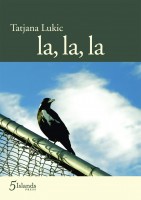
la, la, la by Tatjana Lukic
Five Islands Press, 2009

With the success of novels and short story collections such as The Slap and The Boat, it seems multicultural writing is enjoying something of a revival in Australia. Yet poetry written by non-Anglo-Celtic Australians does not usually garner much recognition. It is the prose narratives of dislocation and cultural transition, and not poetry dealing with these themes, which are de rigueur. In a perfect world, the first and sadly last English collection by the late Croatian-Australian poet Tatjana Lukic would be attracting a great deal of attention due to the poignancy and wisdom of her poems, regardless of the book's structural flaws.

Continue reading

Posted in BOOK REVIEWS | Tagged ,

Under Government and Restraint: Tim Jones Interviews David Howard


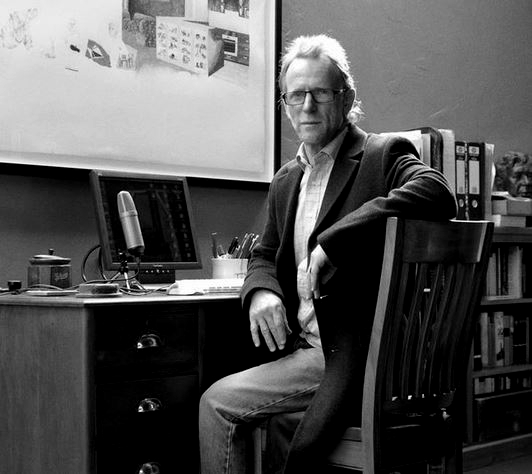
Photograph from Tuesday Poem

After serving as a pyrotechnics supervisor for acts such as Metallica and Janet Jackson, New Zealand poet David Howard retired to Purakanui in order to write. His collaboration with photographer Fiona Pardington, How To Occupy Our Selves, was published in 2003. The Harrier Suite appeared in both Best New Zealand Poems 2004 and The Word Went Round (2006). In 2007 David worked with Brina Jez-Brezavscek on a sound installation, The Flax Heckler, in northern Slovenia. On 18 September 2009 soprano Judith Dodsworth premiered Johanna Selleck's setting of his lyric Air, Water, Earth Meld at Melba Hall in Melbourne, and in December 2009 [after giving this interview] he received the inaugural NZSA Mid-Career Writer's Award. His poetry has been translated into German, Italian, Slovene and Spanish.

Tim Jones: I hope I’m not being unfair when I say that your profile as a poet is comparatively low within New Zealand, despite your impressive track record. On the other hand, you have worked extensively with overseas artists. Is the international aspect of your collaborative work a matter of choice, necessity, or a little of both?

DH: Profile is determined by third parties who are immovable objects before the irresistible force of authorial ego:  «Ho, ho, I am The Toad, the handsome, the popular, the successful Toad! » To get a reputation you need to behave as if you already have one. But I prefer pyrotechnics to talking about words, which are best left to their own wicked devices. My modest profile reflects my immodest choices – although choice is, as you suggest, the acceptance of necessity. Maurice Duggan was right: 'If one sort of life becomes, in some aspects, impossible then another must be devised.' I can't regret working with the All Blacks or touring with Metallica, so I can't regret the invitations that never came to present my poems, nor can I deny that I'd have enjoyed such invitations. There's no conspiratorial mystery here. Despite my physical absence, I've enjoyed ten fifteen twenty years of respectful reviewing. It began with Kendrick Smithyman:

… a sense of shock, an uncommon astonishment at the extraordinary poise which is part and parcel of these usually quite short pieces. They are admirably judged, they last long enough to get their various effects but not longer. A certain authority matched with an appreciable intelligence, a body of information used with taste guides the reader into puzzling and on to delight, under government and restraint.
(Auckland Sunday Star, 30 June 1991)

And, despite the febrile silence of my immediate peers, it continues with the younger generation of Richard Reeve, Anna Livesey, Emma Neale and Kapka Kassabova:

David Howard is a mystery figure on our poetic landscape. Sparse in his output, virtually invisible to the media and involved for the last few years in staging entertainment shows around the world as a pyrotechnician, he belongs to an endangered species: the truly independent artist who remains quietly active throughout the years… In poems like ‘Care of the Commanding Officer', ‘Cain', ‘On the Eighth Day', ‘Dove', ‘To Cavafy', to name but a few, the cerebral blends with the visceral with a brilliant lightness of touch.
(New Zealand Listener, 2-8 Feb 2002)

It's valorizing spin to quote Hofmannsthal, ‘Die andern wollten mich daheim zu ihrem Spiel,/ Mich aber freut es so, fur mich allein zu sein.' (‘The others wanted me to join them in their games,/ But to roam freely and alone is what I like.') Like everyone else, I need to work and play with people who are interested in what I do. After all, the faithless man discards himself.

Having worked with artists (Paul Swadel, Mark McEntyre, Jason Greig, Minna Sora, Eion Stevens, Fiona Pardington, Kim Pieters, Garry Currin and Len Castle) I wanted a more compressed process so my interest shifted to composers. Who? Anthony Ritchie has creditably set poets but I don't like his music. I'd like to like it however, as philosopher Alan Musgrave points out, we don't choose our likes or dislikes nor do we choose our beliefs. Like attracts like and, happily, unlike. So far I've worked with three composers: Marta Jirackova of the Czech Republic, Brina Jez-Brezavscek of Slovenia, and Johanna Selleck of Australia. I'm hopeful there will be others.

When most of my contemporaries (and potential listeners) are rocking backwards and forwards to variants of popular song, why am I attracted to the art song, oratorio and songspiel? The latest hit song gives us the liberty to be superficially involved but still enjoy; it is the artistic corollary of casual sex. A contemporary classical piece demands commitment before it surrenders its charms.

Karlheinz Stockhausen, speaking about Stimmung, asserted: 'One listens to the inner self of the sound, the inner self of the harmonic spectrum, the inner self of a vowel, the inner self.' I hear that as a Kantian challenge to respect the autonomy of whatever and whoever. To write poetry is to write music; to set poetry to music is to render the cause an effect. Every note questions the text it supports. Each of my collaborators has the modesty of one who understands ‘the fascination of what's difficult' (Yeats). They care more for the material than for attention – otherwise why set a poet from New Zealand? Marta's answer: ‘I see that it is a country of miracles.‘

TJ: Reading Richard Reeve's 2001 interview with you in Glottis 6, I got a strong impression that you are largely out of sympathy with the current state of poetic practice in New Zealand – both with much of the poetry being produced by individual poets, and with the infrastructure by which poetry is published, reviewed, and brought to the attention of its potential audience. Is that fair comment, and have your views changed since 2001?

DH: As the view has got darker (it must have, look at all those stars!) so have my views. But I've been lucky enough not to wake up a curmudgeon who is bruised by youthful failure. I still smile at the horizon as I sip coffee that is stronger than my attraction to the NASDAQ. When I arrive at my desk I find the draft of a literary quiz; it begins 'Which top or leading New Zealand poet is the subject of these lines?'

Because his subsidy comes from the State
For teaching self-expression to the masses
In jails, nut-houses; worse, in grad-school classes
In which his sermon is (his poems show it)
That anyone can learn to be a poet.
With pen in hand he takes the poet's stance
To write, instead of sonnets, sheaves of grants
Which touch the bureaucrats and move their hearts
To turn the spigot on and flood the arts
With cold cash, carbon copies, calculators,
And, for each poet, two administrators.
In brief, his every effort at creation
Is one more act of self-perpetuation
To raise the towering babble of his Reputation.

Small wonder that his subject matter's taken
From the one sphere in which his faith's unshaken
As, fearful of offending powers that be,
He turns his gaze within, exalts the Me,
And there, neither with wit nor with discretion,
Spews forth page after page of mock-confession
Slightly surreal, so private, so obscure
That critics classify his work as "pure"
Because, in digging through the endless chatter,
They can't discern what is the subject matter,
And so, instead of saying they don't get it,
They praise the "structure" they invent to fit it.
He has no fear, for when his work's reviewed
Friends do it; thus, he's never gotten screwed.
He'll do the same for them, and they remain
Pals in the literary daisy-chain
Where every year, like Hallowe'en surprises,
They pass each other fellowships and prizes,
Include each other in anthologies
And take their greedy cuts from poetry's moldy cheese.

You're wrong, it's not Bill Manhire. But your inference makes my point. I hear you clear your throat. Of course the question was unfair – a low blow intended to double up the reader, albeit with laughter. That excerpt is from The Narcissiad (Cedar Rock Press, 1981) by the American satirist R.S. Gwynn so the situation described is typical rather than particular. Typical of what? An institutionalized poetry scene such as has developed here over the last three decades.

When Richard Reeve asked I responded with something so obvious that no one was saying it out loud. The first responsibility of an institution is to export its values, its valuations, in order to extend its longevity and therefore make more money. The imperative is economic rather than poetic. This means that statements by the representatives of institutions should be viewed as propaganda regardless of their truth quotient. In other words, whether the statements are true or not, their primary purpose is to impress rather than inform. The International Institute of Modern Letters (IIML) is infamous for referring to itself as famous; the frequency of repetition is Orwellian yet commercially irreproachable.

Institutional or not, we do seem desperate to puff up our chests and strut like roosters across a painfully small backyard. It's not enough to hum I Wanna Be Adored by the Stone Roses. When Andrew Johnston asserts that Manhire is ‘our best poet' then I hear Johnston's ambition rather than Manhire's achievement, which is brilliantly derivative and reaches beyond American models to Old English wisdom poetry and Norse sagas. Allen Curnow's polished poems appear to have been written primarily so they (and their author) could be admired, while James K. Baxter insists on repeating stage directions out loud. Karl Stead, institution and iconoclast in one, is the world authority on C.K. Stead; we learn this by reading any recent essay by him irrespective of its stated topic. In an age when reviewers crib press releases, assertion of will is a determinant of reputation (it was Dan Davin who mentioned 'the plasticine of truth') but evangelical self-regard is rather different to the verdict(s) of history.

Look back a century – what most people believed then is not what their descendents believe now. Future generations will have a plurality of responses to today's poetry, responses that will negotiate the leverage of today's institutions and discard authorial special pleading. Who knows what will settle where and for how long? Our superior collections have had mixed fates: Michele Leggott's Dia deservedly won the New Zealand Book Award for Poetry, whereas Graham Lindsay's stringent The Subject was sidelined. Both books were published by Auckland University Press in 1994 so imprint, release date, publicity and distribution were identical and therefore neutral factors. Admittedly, as a Christchurch resident, Lindsay was disadvantaged – and this despite the presence of literary historian Mark Williams who, like a colonial functionary, looked to the main chance of Wellington.

Tim, since you speak Russian, here's an instance where the main chance was a missed chance. This example avoids the prickly pear of reputation; instead it squeezes the lemon of ignorance. Had Williams put down Sport long enough to browse the Christchurch journal Takahe, which I co-founded in 1989, then he could have read the editorial of Takahe 3 (Autumn 1990) by Tatyana Shcherbina and R.V. Smirnow. The New Zealand Project, an open letter sponsored by 42 Russian signatories, called for an autonomous laboratory of new artists, gamely asserting:

The geographical place where this autonomous laboratory will meet the new age, and perhaps be realised in its integrity, we call New Zealand. This is a land out of fairy-tales, belonging to the Queen of Great Britain and to God in equal measure, islands at the  «end of the world » which, compared with the rest of the world, are governed with more ecological sensitivity, which have preserved a culture and a political purity that quite miraculously turn out to be parallel, new and independent in relation to the rest of the world. So it is to this country that we would like to present our computer-bucolic project of a community of free people.

Posted in INTERVIEWS | Tagged ,

Toby Davidson Reviews The John Moran Corperation

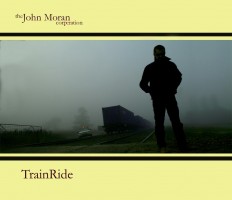
TrainRide by The John Moran Corperation
Puzzle Factory Sound Studio, 2009

Since renowned works such as Kenneth Slessor's ‘The Night-Ride' and Judith Wright's ‘The Trains,' trains have been natural subjects and carriers of Australian poetry. TrainRide by John Moran and his small posse of musicians is very much off the train, stuck in the kind of gritty, gothic country town that transfixed Wright in her debut The Moving Image. However, while there are similarities of locations, even of small-town eccentricities and characters, TrainRide is a very different product, comprising of two CDs of interspersed instrumentals and gloomy spoken word. I use ‘spoken word' here, because to my mind spoken word has a performance-based poetics that cannot survive by itself on the page, nor, in most cases, does it seek to.

Continue reading

Posted in BOOK REVIEWS | Tagged , ,

Nick Terrell Reviews Kim Cheng Boey

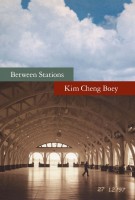
Between Stations by Kim Cheng Boey
Giramondo Publishing, 2009

In 1997, Kim Cheng Boey's feelings of alienation from his homeland had reached critical mass. After years of watching the Singapore of his childhood succumb to ‘the cycle of tear and build that is the philosophy of progress,' he emigrated to Australia. Boey has had four collections of poetry published and won numerous awards. His early collections, Somewhere Bound (1989) and Another Place (1992), earned him high esteem in his homeland. In the mid 1990s, he attended the Iowa Writers centre, and in his third collection, Days of No Name (1996), his increasingly autobiographical poetry began to register his growing identification with an international class of writer-nomads alongside his pessimistic sense that modernisation was eroding a better world than it was creating.

Continue reading

Posted in BOOK REVIEWS | Tagged , ,

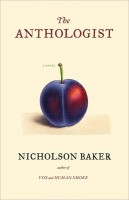
Ryan Scott Reviews Nicholson Baker

The Anthologist by Nicholson Baker
Simon and Schuster, 2009

Paul Chowder, poet and narrator of Nicholson Baker's novel The Anthologist, is trying to write an introduction to his forthcoming anthology of poetry Only Rhyme. Unfortunately, he is unable to say exactly why rhyme is important, and so like anyone with a seemingly impossible task, he procrastinates. He buys a tablecloth. He washes his dog. He pines over his now estranged girlfriend, Roz. He reads. He changes where he works. And in the process he thinks a lot about poetry, both rhyming and non-rhyming. Although a work of prose fiction, this book is likely to be of interest to many poets and readers of poetry.

Continue reading

Posted in BOOK REVIEWS | Tagged , ,

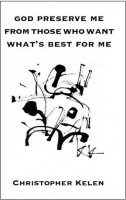
Helen O’Brien Reviews Christopher Kelen

God preserve me from those who want what's best for me: Homage to the Romanian poets by Christopher Kelen
Picaro Press, 2009

The very first word of the title of Christopher Kelen's latest book – taken from a section from within the collection entitled ‘after Dinescu' – poses a question: is Kelen referring to God the omnipotent deity, or god as an exclamation or damnation? The title is probably written with those thoughts in equal measure as we discover oblique references to Christianity and also to the Roman novel, The Golden Ass. More importantly, the title is an exasperated cry against censorship. Mircea Dinescu, like many of the Romanian poets that Kelen refers to, was subject to censorship or house arrest under the oppressive regime of Nicolae Ceauşescu. These references are not without well-considered connection, as Dinescu has since founded the journal Plai cu boi (The Land of Oxen/The Land of Idiots) which in turn refers to the literary trope of the jackass.

Continue reading

Posted in BOOK REVIEWS | Tagged ,

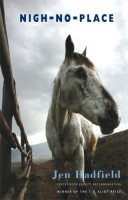
Ali Alizadeh Reviews Jen Hadfield

Nigh-No-Place by Jen Hadfield
Bloodaxe, 2008

Jen Hadfield's winning the 2008 T. S. Eliot Prize for this collection seems truly sensational. Since the UK's most prestigious poetry prize is usually given to older male poets, the 30 year-old woman poet's success could be seen as a radical event. Furthermore, the ecologically conscious discourse of Nigh-No-Place can also be seen as a new, exciting development in the context of mainstream English poetry. Little wonder that this book being awarded the lucrative prize indicates, according to The Independent, ‘that British Poetry has entered remarkable new territory'.

Continue reading

Posted in BOOK REVIEWS | Tagged ,

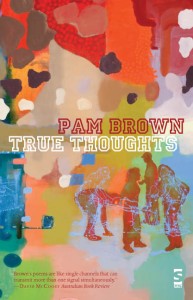
Liam Ferney Reviews Pam Brown and Adam Aitken

True Thoughts by Pam Brown
Salt Publishing, 2008

Eighth Habitation by Adam Aitken
Giaramondo, 2009

Poetry doesn't pay the bills but it does have benefits; claiming your internet and a trip to Melbourne back on tax, for instance. Or the overseas fellowships distributing poets across the globe like water from a sprinkler, as is the case with the authors of the titles under review. Part of Pam Brown's latest collection, True Thoughts, was written in Rome under the auspices of a BR Whiting Fellowship while Adam Aitken's fourth collection, Eighth Habitation, was penned in Cambodia and other parts of Asia with the support of the Australia Council for the Arts.

Continue reading

Posted in BOOK REVIEWS | Tagged , ,

So the story goes: Glámis, the bride

So the story goes: Glámis, the bride
was a sad one when he was found by the tide
veiled seaspray, dead urchins
daughter of ambition, queen of blood
sickened by the dark fate of her deepest love
Sickened with herself. That it should come to this!
The flowering of waves on rock, her fruitless searching
for the survival, in part for the survival
in part searching, endlessly searching
and almost never finding, save for this last
sour sweep of jetsam from the seawrecked past
was the vessel of vision unevenly loaded?
At the tail end of dusk.
A siren song keening against the tempest of her mind
was she a bride still or must she seek out another
occupation – a teller of bridal tales, perhaps,
tailoring these veiled tears
Had been there before
A green Bette Davis sits under it
murmuring vain words of consolation
of sorrow, of tomorrows, of treasures lost and found and the fine
     edged abyss of bliss
The tint and glint of shimmering threads, of what could be a fair
     maidens bed never captured Glamis’ eyes–only the
     embroidered flags of Ran’s bellowing ships.
At length a white gull from afar alighted on a rock,
out of a small pale dusk at the edge of the world
and started chewing on a piece of seaweed;
she remembered this: storm-swept coastlines, her wine-coloured shorts
and sixpence worth of dulce in a small white paper bag
held in miscellaneous regard
undying grey lady gazing from the castle’s haunted windows,
     the bridal chair left unseated,
     her bloodied bare arms torn like silk caught in briars
The seagull paused, cleaning its beak on the rock, and spoke in a clear, bell-like voice.
Take up your pride girl and find your strength of spirit, all is not lost to you.
     For within you resides all you need to rise up and seek out a new love,
     a new strength to keep the species alive and to refresh the stagnating joy
     in your broken heart.

Posted in 38: POST-EPIC | Tagged

not to mention harpur his prophetic dream of lawson exhuming

not to mention harpur his prophetic dream of lawson exhuming
jabberwockies
stuffed and exhibited in life-like dioramas
and Henry Kendall letting the belled birds free
translating flight into words of white
with a nun, every Thursday evening
as she guts the fish for the next day’s chowder
And lotus eater by day under the harsh light of afternoon.
He recalls Macquarie, building towns like tight sonnets
where feeling ran highest.
down by the yellow stones of the playground
where lesbia harford sang her playful songs
sic homini homini homini; homo homini lupus contest
, one of them. Another was “Rain Chowder”. Another “Bun”.
The Canon thought otherwise.
Baxter is dead. Wylie, can you hear the Sound?
and for reason the number in five-fold interest discovers meaning
will this discovery upset the natural order?
give rise to a ministry given over to dead poets and dying philosophy?
or simply dust off the secrets scrawled on the inside of the
     carapace, glyphed by mystics?
Outwit linguistic nitwits choking on Dizzee Rascal tongue-fits?
in the seventh tier an angel flicked the last ‘p’ from my forehead
maleleuca, grevillea, bell-bird, kook-a
senators cheaper n swings
n rouseabouts
n shearers in blue n possums in the rafters n ducks on the pond
foxfire dandleweeds wulfing the backyard thistletesters backdusters
knack-thrist camseed blackburned down
others like doleful Brennan and the old John Shaw Neilson –
he of that changeling light in the orange tree
… listening
and meditating; one eye focused on the rain
falling from a cloudless sky onto a lake north of wentworth,
     where the emu are hunted by ghosts of travellers past
and the schools have no more history books
just interactive history wars
Oh! Where are the voices? Where are them we can bow down to?
     Where the silver tongues weaving a thatch for us to lie under,
     sheltered from the heaven’s cruel washing.

Posted in 38: POST-EPIC | Tagged

Sing to me of the woman, plaintive Muse,

Sing to me of the woman, plaintive Muse,
the one with chalkdust in her shoes
Let her spin Medusa’s curly premises
and weave a syllogism of stone
Give me words not my own but the steel
and dust, and bone. Let her smile her moorish smile,
and fall over when she wears stiletto heels
And the music she plays is endless and brave.
May a thousand men fall away from her
in the squares of the city, eyeless in Gaza
wanting her embrace in their terror of her face
Make my song yours, with your faraway sorrow
she is silent about the one who matters most
whose name is the beginning and the end
of company-denying, housework-defying poetry
she unveils sorrow, weaving braids of pain from hollow words
bandaging the soul
a moored heart unhinged terrors
a new day today
perhaps the new day
would bring with it a
promise of good
instead it brought snow –
trees covered with winter’s white tears
of ancient rainbows
timbered low in sleep embraced
in enormous whisper of worship
Who smoked me out of adolescent bliss.
take the white one…the pill…the big one, tom budge
the muse intoned high
brow arched her bow finger laced
spittal dry I chose
stripped naked, upon my head the wreath of words I wove
forsaken or consumed, she’s an entity ripe with promises to be entered
samleterol, albuterol, beclomethsone
and other useful substances like
the slow metered drip
of sheep-milk scarlet cloth green revolution
mashed apricots and an infusion of bougainvillaea
blood stream clogged by petals and grand expectations
calliope, the headless torso of your son dances within the wild rapids,
     his dead fingers waving like memory wings
of unpublished poetry

Posted in 38: POST-EPIC | Tagged

1. sleepless thirty days:

there was a fork sticking out of my orange
wires and random messaging
the language of television
and the synaptic schizophrenic snufflings of streetlights
where crows in bad taste laugh at death
and electric eels writhe in delight
But overlapping, overlapping, overlapping until there is only this.
Lines following what’s finished, not getting the hint –
my anxious heart is beating out a rhythm of concern
telephone poles and telephone poles and telephone poles
Neon lights pulsate penetrate my spine
which collapses under images devoid of ancient story
where once a child fathered the human
now the rain very slowly tears down the walls
and the comet pacifies desire
sold on as a ring-pull can of bully beef
bully beef, bully beef and beef jerky like
some guy with red orange eyes that haven’t closed, no, not for thirty
nights days moments
stranded on a logjam of jangling neon striations
reality quivers, maelstrom hustles and bustles under blinking,
winking lights
lights winking, blinking, slow lights, quick lights, low lights, high lights,
the Errol in him drinking, thinking blow nights, slick tights, ho bites,
fly delights
drunk never there, floods of drool falling
so i took a stab at a pear and said brutus, this isn’t right
wrong then, he said, and so what –
we were just method actors in
the fallen branch of life, craving
nectar and the slow honey of the hive
then the 30 days of sleep, which after 30 days, left me sleepless
standing, planting three matches in a box of soil
I lit one and told the other two, “this is what happens when…
as casca on stage you stab your caesar, stab his back,
     stab his chest, stab his groin, stab his lychee soft eyes

Posted in 38: POST-EPIC | Tagged

The smoke cleared, crawling

The smoke cleared, crawling
jujube bears like ants in brunetti
fathom that
such a sweet revelation!
The fog’s felix culpa of disaster
And die laughing.
The law is frozen politics –
and politics melts into stale disarray
– did the dog on the news say hamburger or typhos?
either way it’ll be beautie on the mountainy
and a double-shot of apathy.
diamonds of blood spatter
etched like fossils on an anonymous sidewalk
a mouse journalist fell against, shattering
into a thousand and one sugar-coated
liberties, besmirched by incompetence
failing sweet memory, subdued by a silent forbode
corkscrewing tendencies did prevail
we went armoured with rich wine and causes, quoting scripture,
dead poets
thirsty, panting for nothing less than rapture
until overwhelmed by intellectual drunkenness.
First, a smoky haze appeared
again, ugly but essential
the air turned surly and sulphurous; donning gas masks we blinked and stared into
the looking glass
I don’t know what you were doing yesterday, mate, but you got it
all over two rooms
chirped Alice rhetorically, while I
cling to her modern day spin
Deciding that I must absolutely have the last word.
… unless
this bucket of melted action figures on the front step were delivered
to the wrong address.
he pondered perhaps he’d booted a hospital pass, thrown a grenade
against the flow of play,
but crawling from the mangle with eyes only on the big screen
she muttered
willing him to change the theme from Titanic
to For a Few Dollars More
Or any Morricone. Something wistful, like his eyes.
Something that moved her insides.

Posted in 38: POST-EPIC | Tagged

the diary is a newstart fraud de art

the diary is a newstart fraud de art
& i am just a small practitioner, strings & beans
our memories promise us the threat
of fresh massacres and stale elections
props of the sovereign nation of the self
and unending varieties of the heart. And poor perfections.
I turn and watch the sun.
The sun is a red ball. The airwaves
cut through everyone and make corrections
liquid as paper
the last thing we want is our corrections
imperfections erased, when the imperfect is the purest form
– why else would red cars receive the most tickets?
or trains devour grafittied memories without tunnels ?
while *sigh* the grant they didn’t recognise rewards invention
ah! but is the invention rewarded without strings attached?
I turned the page and found a small typo –
the cracks spread, tendrils like a spider web
the officers empty my gutter self out into despair
helpful as when but an out and none, may we say
eat the correction paper, fill my mouth with white clay
bloody my knees, ready for the performance
now I eat my heart out
and swig Tang between bites, watching
conscripted as you co-authored
what was thought to be something of importance
entitled ‘But Names Will Never Hurt You’
What is it like to be someone else?
Showtime!
But I can’t remember the word for …
wednesday in french. it was the day i renounced the nobel prize for literature
after gazing into my diary and discovering no sense of myself in it,
only the glimpse of a miasma shifting perspective in relation to the outgoing tide
I slammed my pen into red ink, or wrist tears, and wrote on
on with the stampede of paper eclipsing the shuffling breath
on with the Nefertiti bust glazing at my discontent
On! On! Never mind the cannons, Squash down the fear,
bury it deep, colon deep, seize the feather

Posted in 38: POST-EPIC | Tagged

In the Gods

in the gods
left eardrums a whisper, the caterers want to know where to put the profiteroles –
its over forty degrees & they wont fit in the bar fridge?
but I’m distracted by the scent of Christmas ivy
It’s already stuffed with Tantalus’s tantalising morsels
disappearing down the black hole in your
They’re up there, all right, in the roof playing scrabble.
I can hear their hooves scraping against the floorboards.
molecules of ordinary blood
in skirts of expanding metal
piercing the arteries of average thought
in gods in their black hole behind the
controls of the space-ship crash landed in the
messenger wings, hermetically sealed. Crowed Hermes, “speak not.”
And in the retorts, distillations missile towed the past into present
where gods wear HERMES jeans and angels
strut runways with gel-filled busts
and three gods strapped in loose C4, with loose ideals
choreographed the night away
splendid, splendid was the cry from the ageing onlookers
and the musicians still played, the dancers danced, the First Fleet socialites
sipped absinthe with grand stares so grand even the Gods were scared
identities and futures knocked akimbo over Avalon
drunk in a shadow of summer, never recalled
always lost, like a thylacine’s take on tomorrow
these bitter dreams sleep under time
speaking through artesian bores
and spilling into the sheep
until we wear them, walk in bitter dreams
only to wake (in pastoral
habiliment, the wake still ahead, the scent of mourners
teenage boys fumble heaven breathlessly while
improbably upholstered goddesses stride the screen
the cheapest thrills are the imagined kind
and way back there
where the gods are wearing
HERMES
there’s an old lady grumbling
that they must have won
the lottery
– and so they did: now for estate planning, inheritance taxes, write-offs
A scandal, perhaps a miracle
perhaps an operatic ballet composed by a monkey-dog with the aid of a cat-swan,
‘appalling’ was the only word from the critics, an hour of booing from the gods
resulted in the storming of the stage, but on that night
earmarked for destruction

Posted in 38: POST-EPIC | Tagged

Man walks into bar.

Man walks into bar.
the police blame the bar
wallpaper, small window, the low mist hangs
alcohol fumes climb the walls
where dead men run a tab
You think this is a joke
said the ambulatory anus
A haze of horizon.
Man balks. Call him ‘The Tsar’
glasses shatter in his eye
which had been full of eastern promises
but now shies away from the light
when Tsar walks into the police
and says, ‘You lookin’ for a fight?’
– bar none – the habit-wearing one replies
don’t interrupt we’re doing the sudoku
too dunkin our churros d’orge in leaves to help ya
Soz bout that. The man looks on and laughs. He’s
all talk, no action. All bark, no bite.
Heads lift from their schooners to survey the stranger
but the eyes are glassed
in a kind of, Liam Gallagher way
an upstart, only three chords roll here
another round rolls over and plays dead,
the barkeep threatens cut-off
can easy size up sordid sag of time
until The Tsar’s dog noseys in, lookin’ for a morsel
a man walks into a bar
holding up a STOP sign, idle onlookers laugh
Idiots.
In a vodka oasis, screwing with the stasis.
Still knife.
Yet life still.
yet still, Idiots! they scream, and are barred, barred, finches that fight and fly
in equal measure
one potato, two potato, three potato, four
man walks into fish and chip shop –
it’s a touch too much to blame the fish
“Easy now”, he laughs squirting vinegar and piss
it was a fin thing until that fish monger
pushed in the long thin filleting blade and skillfully,
oh so skillfully, eased the flesh away from the bone
what have we here? a voice behind him said
filleting his thoughts
teasing heart from the bony ridge
griefstricken again
careful – the floor is slick with salty tears
that show you can take a man out of a bar but not the bar
out of the man that built the bar

Posted in 38: POST-EPIC | Tagged

Single-parented most of the time, it’s a wonder

Single-parented most of the time, it’s a wonder
the ash trees come out of the forest, look around, heavy scene,
where I think it impossible to get lost
or make enough sense to pretend
how a child has to abort a missing parent
And the beer tasted perfect, like something he’d always dreamed of.
The swill, his faceless mother on a raft dropped into an icy vault
swallowed again and again, emerges in unnoticed tears
neither parent present at the same time, mostly alone
my foot falls on a bygone path
overgrown the bearded tree stump limping in the liquid air
complains as I molest its solitary watch.
In the clearing I found three boxes of
gas stained photographs
courage lost the matches fell
your smile cremated
colour seeps, morphing history into dank monsters to haunt the vaulted halls
             of my memory
searching stained sepias for the culprits, some likeness, some honour to this story
a story with so many unpredictable twist and turns, creating
in which i realise we are all single we are all parents
	abandoned like coral spawn to the elementals
of water, wind, earth, fire in the maternal hearth
	in a heart icier than the abyssal depths
	no way to trawl or dragnet love
There is no blood in a stone
no reassurance in these memories
so pick a corn crop
the right rock
an enviable predicament
feel free to go off the deep end (but take me with you)
note – notice
      notice – please read
      please place your shoes neatly
      at end of jetty
we are reviewing your multi-policy
for pike with three chickens coming home to roost.

Posted in 38: POST-EPIC | Tagged

Run! Run! Run run run run! For a safe climate!

Run! Run! Run run run run! For a safe climate!
take the trolley! & that box of something! tony abbott youre so cute i could
           skin you alive with a hammer.
Nothing can hold it together.
The skin of true conservatism flapping uselessly in the winds of change
Remember Flying Circus.
That first orgasm flooding lost fields.
Swim! Swim! Swim swim swim! For a safe primate!
And stop! Stop! Stop! To catch your breath.
Be the last to find a hardwood chair
save them all from the fire next time
Abbott! Abbott Abbott Abbott! You know you want him! Want him gagged
           and bound across your knee with Bronwyn Bishop watching!
           Bronwyn! Bronwyn and Julie!
Now our fledgling poem incriminates
but surely the Bishop cannot judge
when the Abbott, coming on a cloud
weighted down – his holiness – carries a malevolent grudge
born out of years in government and
self fisting love, the kind of self love that corrupts
egos erect, the humans jerk, while nature laughs at these pitiful inhabitants
	scolds, scolds, scolds with terrible whips
disheartened by such self indulgent wasting of potential.
The light at the heart of the world
just went out.
without leaving a note
to say 'grow your own tobacco'
built a boat built a boat of human skin to float along a coast to a place where the rivers flow in
Ah! it sounds like Mosquito Coast – in search of a new way of living on this earth.
          Remember what happened?
Dead ahead.

Posted in 38: POST-EPIC | Tagged

The scissors hissed.

The scissors hissed.
it had a calming effect on deirdre, taking her back to her spool-a-day youth
the children in dirty blue tunics
Mrs Craft, knitted out of wool
the wiry hairs pulled out long and thick
Fear is in his fingerprints.
Finger and thumb deep in the eyes, he thought of Gloucester
there, in the metallic silence after the snip, there, in the silence of flowers
breathing at home
the leopards kissed,
then kissed again, loins stirring like a people liberated
until Saturn, snip snip, took over the golden age
where Heraclitus didn’t make the cut
as they pierced the flesh and broke in two
unscrewed blades to never snip again nor snipe
the snipers sniped, the scissors scissed.
So that’s final, it seems. But the story’s not ended —
another pair of scissors snip, in a cave where three women weave, a thread
spun from the first conscious breath
but whose thread woven on the shuttle of a mouth?
Mouth, wipe, and cut. Cut splashed with mouth, footsteps echoing through
the chamber, to the lips, trips and falls.
Snip, snip, snip and i felt the p[ain
and more pointedly, the question: why is it a pair of scissors,
when half of it is not a scissor on its own?
in theory perhaps it is; scissor and scissor as in soul and mate
looked upon by jealous gods, scissors split becomes just a blade that
can thrust and scrape
but cannot snip and clip, trim the bits with a clickity click
Yet torn and spineless, I know there is only one longing between us all
and that is to ride like a rebooted de Groot and open all events with fire and
gusto before the cling wrap men
smother the stars
Cut the moon with the scissors, into bite size pieces for the leopards.
Will wool chunks be enough
to plug their mad chortling?
There was a rumour that the plug had been pulled on
Evolution still-in-progress
so snip the human race into sterility and then

Posted in 38: POST-EPIC | Tagged

One heatwave day he throws me a sack/marked RetSenAdUn …

One heatwave day he throws me a sack/marked RetSenAdUn …
which i unsurprisingly discombobulated
threw back
next time ask before you heave your god-sent
thunderbolts — Atli’s constant war with Loki’s beasts — now Skiðblaðnir’s
ditched for some shallow skip, Harold Hard Counsel’s legacy
sweeping bleached forests
— cos I’ve seen it all before and won’t
be drawn
I dream a dream within a dream.
By Bukowski’s beard I will not what I will not.
I drops it into the yawning crack outside the swimming pool
Trees hum the portents; sorry Dad,
I will mourn my brothers
gone into that dark school
where, of late, slow monsters come,
their breath like coca cola
beyond the black stump
where nothing thrives but the wasted –
dash those monsters and be damned all cretins of the RetSenAdUn…
with torch and pitchfork burn the abberant
faux-couriers on their sweating demon-cycles who dare intercept
us, the couriers, the gainsayers,
the modern visigoths, (naysayers of the future)
wherever they may reside
and in Regensburg, we took a turn about the stable
which turned, and turned about us, in turn
huh, huh, huh, huh, huh, like a butterfly
and stings like a beeeeeeeeee
I beat the flames, watch the letters blacken, fall away in thready patches,
then fling the rest to sate the flames and flee.
Spit on hot irony – it will sizzle hiss and spat sear on the flame of satire
to choose A). Death by asphyxiation

Posted in 38: POST-EPIC | Tagged

And you were that paradox,

And you were that paradox,
but finally wednesday arrived. it was time for the coffee festival youd organised.
Who said ‘waiting is unpleasurable?’
Not Nietzsche! And doesn’t coffee solve all paradoxes?
(Except those concocted by Kafka.)
I scratch my head and turn myself inside out.
Pure beauty is holographic,
therefore my imperfections make me unique
bean ssssshhhhht crushed completely
by such imperfectly executed anticipation:
flawed, flawed as paradoxes can be, the imperfect imperfection – a treat
digested space and welcomed your absence
folded time into a neat little napkin, placed it next to the half filled coffee cup,
        and the creamed cheesecake on the white plate
I wanted to shout ‘Cheque’s in the mayo!’ but
you had mustard my courage and tongued my cheek
as I walked into the street of no path and you
you were that mysterious Cat
	alive and dead at once, for once
	i wondered alound instead of alone
	about
	the meaning of your pain
i took another draught of morning’s black friend, and turned the page of Pet Semetary
but my mind was thinking about you, your hands in the light
like tomato sandwiches, left outside overnight
to mould in the purple garden
tensed like water
        supporting air
a furry concave meniscus, rippling …
Eating commas and bonbons. saccharine
smouldering and gurgling for pardon
i felt i knew how this was going to end, even before i had forgotten your name
        for the third time

Posted in 38: POST-EPIC | Tagged

Napoleon’s plunder

Napoleon's plunder
including a few concepts that enabled couch surfing at home
of Baylen’s bane did Bonaparte cry “Dupont give me back my Legions”
He was a small man, but with big legions
who envied Caesar and Charlemagne their regions
addicted as he was to real estate reality television
and the thought that the sword was mightier than the word.
Tapestries,
were not the sort of beauty his military eye caressed.
nor maps mere geography beneath his grasp
but conquered at last by Josephine undressed —
The 1812 invader
the father of a civil code, freedom of religion, destruction of elitism
	a codes with strong echoes did ya know?
me when I arrived, saddle-sore and frozen, starving for my own, alas
	there is more treachery than wolves
in the embrace of a long-dead French autocrat.
Ah, those days! The guillotine, a gentler, kinder
wolf made by man, yes Man,
	plundering stiff necks and starched brows; disposing of innocence and guilt alike
	as if they were rough confetti at a peasant wedding
which fell to the earth, and were the earthenware of our lives.
but i don't want to follow that craft anymore
- the flags of Austerlitz fall in bloodied folds across the savage years
pleasantries aside
we've another long cold night ahead

Posted in 38: POST-EPIC | Tagged

where does she stop

where does she stop
greenland?
Or winter at Reykjahlið?
I know an African who fell in love with Greenland
it was a sort of interim love …
my head pressed beneath her locker room door
Travelling long-distance.
For a season, the cross-fjord ferry pumped out Fela Kuti
in the name of global village,
we become zen circle, complete and interlinked.
Where can she stop, if the circle remains unbroken -
Day after day in endless circularity …
and then
the butcher bird, with its melodious song, heralds a short pause
here, before she begins
to feed on lizards and other meat
in a crunch of breaking leaves
satisfied and replete
the Jul buk sated, disguises to hide the rogues
bookmarked spines torn astray
does she stay, does she go?
hither – to and fro?
She fades into the sand and fern-fall path
soft leaf-slip, sharp-edged flint-fall to the downward slide
dressed in her vinaigrette shirt and honeyed shorts
with a vihuela strumming gently from the playa,
        the vin du pays cooling to love temperature, he knew

Posted in 38: POST-EPIC | Tagged