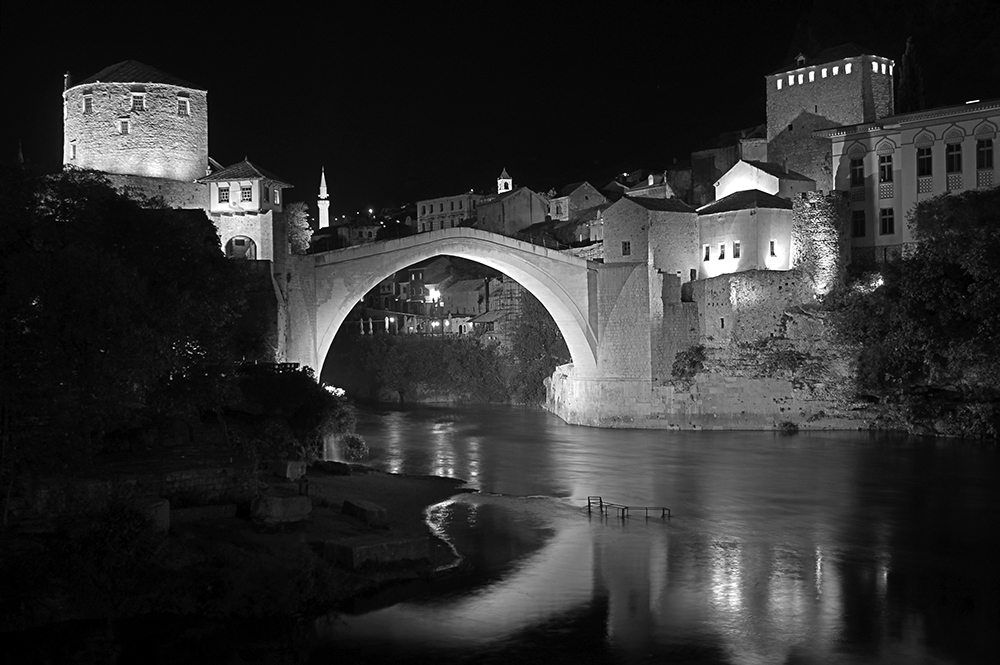
Point of Departure, Sanlúcar de Barrameda, September, 1519, the Eve of an Ocean Voyage

The sails have a belly-full of siroccos,
Raging to fly if only the hawsers are not tied
To the catheads on the starboard.
The pulleys are creaking mad
And banging themselves to destruction
Against the masts but the boom
Is holding and will not be constrained
To do the wind’s bidding.
If we could give meaning to nature,
The wind wants us to fly to those beacons
On the horizon. Yet be still, my caravel,
Be still, even if the wind cannot,
For we will sail way past those fires
And their alluring shores, past where no sailor
Has been, where no pirate has dreamed.
We will sail not for the doubloon
–that’s for ordinary men to hunger for–,
But to satisfy this Odysssian longing to know
–the spice is only an excuse–
Strange shores and habits and tongues and arms,
Again not for glory–that’s for kings and princes
Whose hands are too soft to rig a mast.
Where is that Moluccan apprentice
Who will sweeten my tongue to the native people
At the end of the round earth?
So I don’t have to use steel in order to persuade
some recalcitrant minds.
You, there, at the crow’s nest,
Do you see Enrique coming?
Here at the mouth of the Guadalquivir river,
The bowsprit is pointing straight
Toward the autumn sky, where the galactic clouds
Are visible, a mirage even to the bravest helmsman.
Let’s first go around the globe itself, Enrique,
For it is round in spite of the priests—
I have seen its shadow on the moon–
Then you can come back to the ample bosom
Of your Moorish paramour.

Posted in 85: PHILIPPINES | Tagged

Codex

1.

And our eyes opened like wounds.
And our wounds declared their solemn hurts,
and the stars reflected the beeswax of history,
the chipped ivories, the runaway ghosts
making fire in the blinding wild.
Arms like branches and hair like leaves,
at night we mistook them
for the blackest of trees.

2.

No melody but gong-beat
No blade but stone
No memory but rain

No code but ritual
split into dreamscape and amber

Hungry conquistador
we offer you alms
we offer you carabao butter and clams

We offer you minor drone
helpless shoreline

Coral like benthic saints
hardwood that took a tribe to fell
they crushed us and cut us

and buttressed their churches
with our bones

We had a god once
we suckled from her breasts the sea

Fractals split from sand
No torrent because dam

3.

The locusts came for our paddies.
We came for the locusts in return.

When were we slaves?
We pined for wages.
Hauled our souls from the forest.

Look at our backs
sore from wishing for wine,
our ports trafficking in despair.

We chased the pirates down the coastline.
Caught up to them by the bay
then prayed as we rinsed
their blood from the planks.

Sad Magwayan, we offer our arms as oars
as you ferry them to Sulad.

Forgive us our fury. Suffer us our ribcages.
Deliver us from the sun
that pries open our rage.

4.

Brother: That we are alive
means that no one deemed our fathers
worthy of killing.

5.

When the mother
felt her throat constrict
into the first Salidumay

When the first godseed
was planted on the shaman’s forehead

When the first fowl
was slain over Apo’s grave

When the first sailor
saw the startled forager
unlock the secret of grass

He must have thought

Home
I must tell everyone about this

Posted in 85: PHILIPPINES | Tagged

An EJK Nursery Rhyme, or Children at Play on the Street at Dusk

Mama, mama, look at me!
Bang bang! Bang bang! Hee hee hee!
Mama, mama, peys da wall,
tangina, I kill dem all!

Papa, addict, pusher, dad!
Bang bang! Bang bang! Beri bad!
Papa, papa, nanlaban,
shoot him, shoot him, grab da son!

Mama, mama, look at me!
When I grow up will I be,
Bato-Digong-Big Hitman-
Addict-Pusher, bang bang bang!


This poem first appeared in Bloodlust. Philippine Protest Poetry (from Marcos to Duterte), edited by Alfred Yuson and Gemino Abad (Reyes Publishing, 2017).

Posted in 85: PHILIPPINES | Tagged

Reclamation

My childhood looks like. My girlhood looks unlikely. I, girl, told to work hard. I didn’t sell peanuts on the street. I was mostly well-liked, sang Whitney on cue. I liked singing on the day bed. It was unlikely for a girl like me to sell peanuts on the street. Instead I sang and I will always love you. Girlhood looks unlikely. I got away with most. Sternest instruction was to do whatever it took to not end up—tedium of likeability. Tedium of remembering. Recall being liked, singing to a Tita with much bravura. A girl gets what she deserves: ice cream from the pharmacy next door. I liked singing in the car. A drive to the mall was likely on a weekend. I play-sang, liked malls and shoestring potatoes sold in cans. Were other girls told to work hard, too? Not sell peanuts on the street. Not be the girl without the shoe.

Posted in 85: PHILIPPINES | Tagged

Absence

Her handprints are all over
this part of a wet life. 
Coffee mug of unique design.
Red chair, where the cat 
now likes to nap in afternoons,
beside an OKC Thunder basketball. 
My bedroom curtains in beige, 
which I draw and peer through 
when a car parks outside,
alarming the noisy dogs.
Do I half-hope for a driver 
long unseen? Or do I deny 
any prospect of visitation? 
Just hush the canines 
so I can crawl back to bed 
that was last shared weeks 
ago, before hands and arms
that privileged with hugs
for oxytocin thence caffeine
withdrew a last time. 
And left images that 
resound all over the house 
now subject only to hard rain,
cats and dogs plummeting 
till I fall asleep to thuds, and
enter a dry world of dreams.

Posted in 85: PHILIPPINES | Tagged

Farol de Combate

for Marc

This is how, while darkness
drew my profile with its little finger

I have learned to see past as Montale saw it,
The obscure thoughts of God descending

among a child’s drum beats,
over you, over me, over the lemon trees.

-Ilya Kaminsky, Praise

I.

The rain falls lighter now and I gaze
At the dark descended onto our town.

From this mountain shelter I saw
The old mango tree struck down

By fierce lightning from the east,
Thunder rumbling in the heart

Of the guardian of the land, who thrills
To the meeting of the drought’s last sigh

And rush of rain brought by the northerlies
This 9th month of my return to my language.

II.

I will go home to my folks, bringing fruits
From hills I had planted to marvelous trees

I had met in my travels in other lands
On this revolving earth: fragrant pears,

Their fresh flushed cheeks, bright lemons,
Yellow and thirst-quenching in hot season.

I will traverse the town’s old cemetery
Where ancestors sleep in edgeless night.

I will not wake them in their supreme repose,
Transient like them, I’m simply passing through.

III.

I trust that beside the well which had been dug
By my elders, a storm lamp had been placed,

Lighting up the path towards home, the lamp-
Lighter minding the first law of neighborliness:

To help one another as best as one can in daily
acts of living, for if the lamp were put out, unlit,

Someone passing by might stumble or slide,
Fall into the neighborhood well and die.

I will stop, draw and drink the living water,
Thank the neighbor for this abiding light.


Translated from Binisayà by Marjorie Evasco.

Posted in 85: PHILIPPINES | Tagged

The Messy Living Room

There were times when I arrived in the house
With the living room in disarray, magazines
Notebooks and books as if in a wrestling match,
Chairs facing the floor,
pieces of paper scattered everywhere,
dusty, and at the stairs,
Slippers in a conference,
Ay, I would get angry; I’d swear to the heavens!
I would wake up my children,
How they were good at sleeping,
I’d go to their room, as messy as the living room!
I’d shake them awake.
I’d tell them to clean up—and how true,
How gloomy were their faces.
Were their dreams interrupted
Were they running and playing in the hills
Frolicking with friends
Eating out at Jollibee

But now, when I arrive in the house
With the living room in disarray, magazines
Notebooks and books as if in a wrestling match,
Chairs facing the floor,
I rejoice for I know my children are home;
Later on, they would rush out of their rooms,
Even if they’re still sleepy, they’d raise my hand to
their foreheads in respect, then we’d tease and
laugh at each other afterwards.

For today, in the firstborn’s room
How clean and orderly, how tidy
I say: I’d rather it was messy,
Papers scattered under his bed
As before, when he was here
Waiting for me.


Translation by Ria Rebolledo.

Posted in 85: PHILIPPINES | Tagged

Aftermath

Driving from the airport through a tent city,
we read desperation: Lot for sale. Please contact…

Walls vandalized with our lack: We need food.
SOS. We need drinking water.

Signs speak of dangers: Curfew hours: 8:00 AM to 5:00 PM.
No trespassing. Shoot to kill
. Gunshots at two in the morning.

In crude handwriting, we confess our loss: Bless us, oh Lord, from this thy shit.
Trisha, mahulat kami
. We will wait for you. They’re still waiting.

Further within the city, notes of gratitude: Thank you
to those who helped us. We will never forget you
.

And of grace: We will not give up. We will continue this fight.
A sketch of Pacquiao’s game face before a match.

Isuzu and Nissan repeat the same thing: Here to stay. Soon to Re-open.
Their buildings still lie in ruins.

Assurances of normalcy: Welcome back to school. Among tarps of the Red Cross,
Childfund, United Nations,
the whole damn world in our backyard.

T-shirts scream: I survive. I survive. Worn by people from Cebu, Manila,
Davao, after that great flight away from the stench of the dead.

Billboards cry: Tindog Tacloban. Gi-os. Stand up, Tacloban. Get on your feet.
Move your highly urbanized ass.

And this unfinished sentence in Sagkahan: We hope… O and e
blurred by rain. Whatever it was they hoped for, whatever it was…

Posted in 85: PHILIPPINES | Tagged

That Space of Writing

And when I write, I want the largest space,
Of such breadth, of such length as this world
Never had of forests nor virgin paper,
Where the words never were, their script accursed,
but only now
Descending to cry, Freedom!

Then my hands should never feel there were walls
That grow their ominous lichen between my fingers,
Nor my elbows graze the wild beards of rocks
That cathedral my tribe wailing for their god,
but only now
Descending without speech!

The words that never were create anew my race,
Their mornings stand clear where ancient skies cascade
Down the singing gorges of the wind. My hands
Draw again the map that alien voyages had wrecked,
O long ago
Descending with Cross and Krag!

My elbows swing where rooms void their space,
And I laugh to see the weird syllables of speech
Open their abyss, and stride across the heartland
Of my people’s silences where their eyes pour
like sunlight
Descending to claim the earth!

O when I write again, the words of any tongue
Shall find no tillage in our blood, nor my hands
Scruple to choke their weed, for first must they bleed
Their scripture in our solitude and yield to our
scythe’s will
Descending to carve our heart.

Posted in 85: PHILIPPINES | Tagged

Fireball

It is unclear how many people died on the ground.
-Agence France Presse, July 01, 2015


We have heard of such news before:
a 51-year-old Hercules crashing after take-off,
from a Sumatra air force base into a massage parlor.
The plane had burst into a fireball in free fall
and crushed buildings in Medan, flames surging up
several stories, smoke sealing off fire escapes.
Out of the wreckage jutted the plane’s gnarled tail.
Fire trucks wailed, wailed for burning bodies.
Water gushed through the chaos of ambulance sirens.
On board the plane were military personnel,
their families, and (is it true?) civilians
who had paid a million rupiah each for a seat.
About a hundred forty perished, including a schoolboy.
Perhaps the boy’s teacher, mulling his absence,
would picture him in his uniform as she faced
the whiteboard, erasing the day’s lesson
while the school let the bell tear the air
at dismissal time; and his classmates,
saying his nickname over and over, would recount
to their parents what he had been like
and where his chair was in the classroom. Was it
by the window with a bird’s eye view of neighboring islands?
Before all these happened a tired client in the parlor
might have slumped on a bed that would soon catch fire,
his trousers hanging on a nail, his reversible belt
clinking its buckle against the wall from time to time
as fan blades overhead circled counter-clockwise with a drone.
Baby oil lavished on his back could have lulled the man to sleep
so soundly he did not hear the explosions or, stunned by blasts,
could have turned deaf, lost in thought: was there
anything that could be done or undone?
This was a future we already knew: we had seen it
like a blind masseur before this Hercules became a ball of fire,
who, having plotted the day ahead, would think
he could grasp the next hours in his head
as he fingered the hands of his watch.

Posted in 85: PHILIPPINES | Tagged

Style

My mother smoked a cigarette with the lighted end
inside her mouth. I would watch her as she sat
on a stool doing the day’s wash. She blew
a constant stream of smoke from the left side of her lips,
while her hands made soap suds billow and burst.
In our village not known for unusual things, it was
short of a miracle, the ember not dying
in her mouth and her palate not getting burned.
Style is the perfection of design, a habit
of usage that strives after elegance,

by which a language is renewed to bridge
desire and idiom, not to singe the text that pushes
into the air but to clarify the warm edges.
Fine rhythm, no spittle adrift or, if a landscape,
no embellishments to spoil the perspective.
Nature rendered into a convincing craft makes
tension bloom from puffs and billows as in
a night song rain drips from branches over a lagoon.
It’s not survival that is the leitmotif, but a solitude

in working out a peace of mind or a pattern
of units above the dense imagery, so that
to suffer is to suffer wherever the place,
to love always has an ending. What is forever
but a chance encounter with the sublime
while the here and now, immersed in soapy water,
is erasable, therefore improvable.
Mother did not have to choose. To be where one suffers
is to suffer everywhere, so to get somewhere
you must construct a fable of pain to soothe the ache.

Mother would spit the cigarette on the grass and start
a new one. The art is in getting used to it,
its essentials and fringes, its common moves
toward meaning that unclutters the mind,
fire’s danger considered. When the breathing normalized
there might be a tune in her head or a frenzy
in her hands, every squeeze on clothes a validation
of her history, the ragtag ghost army of it,
the soap that stings the eyes and washes away the tears
of cold neglect. Style is not about freedom.


The poem first appeared in Things Happen. Poems 2012
(University of Santo Tomas Publishing, 2014).

Posted in 85: PHILIPPINES | Tagged

Agua de Viuda

I forgive you
for teasing me I smell good—
fragrant like a viuda.
But I have not buried my husband,
nor do I want to.

The only viuda I knew was my grandmother,
who spent her days playing cards
with the neighbors, and died
two years later of heart failure
on grandfather’s birth anniversary.
A sweet ending, some might say.
But not for me.

This scent you detect, is it
the musk of a woman wasted
on aloneness? Or the sandalwood
of a chest of secrets opened?
Or is it the essence of almonds trailing
after a promise unfulfilled?
Perhaps it is the burst
of jasmine on a night
spent dwelling on a mistake;
the spray of freesias on a day
drained wishing for something back;
the nip and sting of orange peels
while pondering revenge.

I would have you know
the old meaning of “widow”
in Sanskrit is “vidhwa,” solitary,
and elsewhere “separated”
eating only boiled rice
but not bereft,
and no bereavement,
treading on grief like the wife of Bath
wearing red silk stockings
on a pilgrimage.
In this manner it could be true
I am a widow
seeking to be shriven of my foolishness
yet holding fast to the hope of another
chance, a life flaming anew
with the fragrance of sanggumay,
those wild orchids that bloom
only when all its leaves have fallen.


This poem first appeared in Dagmay Literary Folio, Sun.Star Davao. June 26, 2016

Posted in 85: PHILIPPINES | Tagged

The Day of the Three Thousand Flowers

And though it is a twelfth of a teaspoon,

the sum of all honey she gathers

in her lifetime of a few weeks—

collecting pollen or nectar 
from her solitary votaries, 
legion of immobile virgins

yielding to her tongue, relinquishing 
the bloom of their desires

to her who has wings

(among the vulgar flowers, not a one 
could touch each other or themselves!)
—
it is abundant. She soars over

the scent of longing, buzzing to a rhythm 
she set for herself, choreographer

of round or waggle dance.

For her sisters, she charts the path

with the sextant of her thorax,

telling others of the fervid spring.

Posted in 85: PHILIPPINES | Tagged

My Mother in America Emails Instructions to the Artist for a Portrait of Her Mother, Now 85 and with Alzheimers

What I remember,

what I want her to remember
…
 what you can work with

are these:

youth, a lakeside town, routine mornings,

slick footpaths, the open lips

of a lake and muddy banks red

as fish gills, and stones

strangely shaped like …

like turtle heads, and a slow fog

feathering like threadbare scarves

around her hair. This young mother, mine,

has laundry angled on her hip,

has a toddling daughter – me
– 
who’s ahead of her, not very far, but far enough,

like now …

The girl should skip and sway

holding a palo-palo – she promised to be helpful
– 
and a little pail of kittens

for drowning …

For color, don’t hold back

on the green-blue of the lake …

is all I see clearly now really,

but maybe not too clearly now

that I’m old too … If anything,

you can wash it all a blue-grey

since I am only working from fading

clarity … and I understand, your style

is realistic.


Note: a palo-palo is a paddle used for squeezing water out of laundry.

This poem first appeared in Misfit Magazine, 18, 2016

Posted in 85: PHILIPPINES | Tagged

A Record Year for Rainfall

Sometimes we need ambiguity to make things work.
In the early 1700s, an astronomer in Sweden developed
a scale where water boils at a degree of 0 and freezes
at 100. Eventually this representation will be reversed,
an uncertainty referring both to a finite point

and the interval between temperatures. In 1985,
the BBC would start using degree Celsius in its forecasts.
I almost caught a bird sleeping on top of the wall.
That was around the same time in the 1980s.
I still feel its heart in my hand.

Certain words make us fall silent
because they hearken back to an older conscience,
a raw awe. Like the word fire.
In a recent story, a man converts to the Celsius
and stands in the streets pointing to a confusion

before starting an argument and a conflagration.
No thing off in the distance that cannot
flare into presence, someone said once.
We must somersault into it then,
that presence. Live in it.

Everywhere is water or what smashes
into water. We have to be kind,
buoyant, a house made
of wood. Also, all points
must be rounded off.

Posted in 85: PHILIPPINES | Tagged

An Oral History Project

(A tribute to martial law victims in Samar)

Transitions are tricky to handle.
If only a few days after were merely a habit
in storytelling to render the plot more credible.
So that what came first could be understood
as requisite for another to occur. As such, horrifying
stories are easier to make sense of. As when you’re told
by a midlife woman of her story, who at nine
witnessed her parents’ ordeal from a tight sack
into which she was sealed, an inch of the straw weave
she holed out to see how bodies she had known
her young life could die grotesquely, slowly,
apart from the real life she lived in, while suspended
from a tree she had climbed, more times than she could count,
its canopy the flourish of her childhood, her mother
assured of the growing strength in her legs.
Who could tell how days were to be different?
As that day that began with the usual early sunrise
for the meal that brought them around a table
soon to be the site to their torment. The nearing
raucous of men in search of those who sympathize
with ideas sturdier than their guns filled the house
and hours after, cluttered the implements of home.

By midday, stripped naked of her clothes, her mother
had walked around in a circle of madness, forced
to confess to a treason that in their daily hunger
she barely understood, not an inch of her skin
left unscathed. Her abdomen ripped open
when they could no longer take hold of her flesh.
Her blood streaming into unyielding fields.
Her father fainted after hours of beating, a toe severed
from too much pounding of a rifle butt. In between
the wailing were bodies crossing a threshold.

The sun rose with her still in the air, a fruit too heavy
of its own sap, a knowing she would have exchanged
for anything to go back to those days when the hours
faded without fear. When she didn’t have to say
a few days after to tell the story of her life,
when fleeting forgetfulness could be the only reprieve
of years ahead. But such was to be the plot of her story
as with those others she has soon come to learn,
who had hung from a tree, impaled, or maimed.

Of too much pain, one survives
by taking it in parts. So a few days after is easier
on the tongue as it is on the mind. For how
lives could be told as they unfold, ravaged
before our eyes. They are the kindest words
to stall what could pass off as history,
chronicled now behind this lens to discern
how darkness unhinges, in between the sun
setting and rising, in between breathing,
in the flesh ripping apart, in the minds losing
what it could hold, numbed into
what it could wake up to
a few days after

Posted in 85: PHILIPPINES | Tagged

Review Short: Ken Bolton’s Lonnie’s Lament: Towards a History of the Vanishing Present

Lonnie’s Lament: Towards a History of the Vanishing Present by ken Bolton
Wakefield Publishing, 2017


Ken Bolton’s most recent collection expresses an intense sociability, co-mingling personal and communal memory to create poetry that draws on moments of apparent ordinariness, and ever so subtly transforms them into lines of understated enchantment. The poems are typically written for and about people close to and loved by the poet, reflecting a sense of togetherness tinged with an anxiety over the aspects of everyday life that separate as well as connect. Shifting between recognition and anonymity, conscious of finitude and erasure, they comprise a form of metis, or art of working things out that previous generations (indeed, ages) once had, and whose humour mass society seems to have lost.

Lonnie’s Lament opens with a long poem dedicated to the memory of Philip Whalen, referencing the San Francisco Renaissance and Zen Buddhist poet from ’67, crossing the dateline with its concomitant ambiguities regarding time and imagination. The poem creates and negotiates a thicket of names and years, working things out, with preoccupations and divagations cut short, looping back, seemingly in search of, yet evading an ending. As it circles with near repeats and recurrences, the poem creates an awareness regarding history and the ambiguity as to where it starts and who it includes: the folly of trying to pin down what demands to be lived: ‘Dreaming?) / My body turning, in some future’. Throughout the volume Bolton questions the dates he gives, just as he consistently reaffirms the names of his friends, bringing them closer, contrasting their reality and immanence with the unreliability of time. This process of questioning and reaffirming juxtaposes intimate and historical memories with dates and figures open to doubt: ‘A century / of interesting Times. More. Beginning when? / 1871? 1789?’ Revolutions consigned to the uncertainties of the disappeared past leave traces that are discernible in the seemingly unrelated present, through what Whalen’s contemporary, Charles Olson, referred to as a ‘syntax of apposition’. Bolton’s stream of thought continues with: ‘Anna, Lila // Sal // “Omaha” – the tugs – // now that name always makes me think / of the beach landing at Normandy.’ These cryptic yet clearly placed connections present space and time as the elusive elements that comprise the overall tapestry of interlinked lives, the cast of the overall shadow play.

The proverbial interesting times are not immediately apparent in some of the calmer stretches and sensibilities evident. For instance, in the poem ‘Train Tripping’: ‘thinking // of Pam & Jane & Cath & / Pam’s question – as to what Cath // does alone on Bruny & my / explanation: fishing and hiking around, // dinner with Lorraine & Ian / & friends up in town // & Pam and Jane’s life in Blackheath: / what they do’. This mustering comes without melodrama or self-importance: naming is creating, or more to the point reaffirming the existence of who and what one loves. The familiar comes with its attendant angst, and with his need to pull these human strands together, perhaps the poet is telling us that domesticity takes place just so slightly out of one’s comfort zone, or at least the immediately known environment. ‘I play some Dave Holland / move around the house / / doing things, picking up, / tidying, straightening – / / inside, outside – time / like an element around me’. Hints of the proverbial noonday demon are offset by a gentle irony, just outside recognisable surrounds, ‘including the street / where I almost fancy / I can see the restaurant / I ate in for years / where they threw me out once / asleep before / my raznichi’. Bolton adds with a touch of mischief : ‘I was aghast. / How could they?’

Further out, literally overseas, at apparently random meeting points, the sense of estrangement amplifies and demands more solidity in response from places experienced. Given that a cup of coffee can become ‘something different / in Adelaide: / the price of an air ticket. A / view of the blue thru pines’, the narrator of the travel sketches that fill out the middle of the book states: ‘I never go to Asia. / It is not a firm enough idea.’ Direct or disingenuous? Possibly both. Considering the extremes of terrestrial limitation gives rise to some semantic wordplay on furniture and geological fissures along with a gentle mockery of human delusion of control: ‘can large aesthetic / continental shelves co-exist, / in detente? They / can if I say so.’ Make things work or leave them to their own devices: the results are likely to be equally inconsequential. An essential and delightful part of this book is that it converses and jokes and refuses to take itself too seriously: its underlying melancholia is moderated if not by outright mirth then a tone midway between levity and the titular lament. As with Whalen, whose self-effacement and humour Bolton shares, this is poetry which can be found in everyday life, and literally everywhere.

Through these understated operations, Bolton recreates existence in the close company of friends, fellow poets and self-objects. Like Whalen, whose self-portraits ‘from another direction’, find elements of affinity here, Bolton puts forward a series of vignettes, not entirely settled and at times almost intentionally unsure and displaced, yet which indicate an essentially optimistic, nuanced and multi-faceted outlook on this uncertain age. Lonnie’s Lament decries enclosure and conformity, while celebrating the quiet joy of close and loving connections, adding another impressive and humanistic work to its maker’s extensive and generous oeuvre.

Posted in BOOK REVIEWS | Tagged ,

Review Short: Kate Middleton’s Passage

Passage by Kate Middleton
Giramondo Publishing, 2017


In the prefatory poem titled ‘Lyric’, Kate Middleton writes of ‘Voices torn, / pieced, re-sewn’, a phrase that neatly captures the allusive texture and patchwork procedures of her third collection Passage. The volume is replete with centos and erasures, that is to say, modes of vicarious composition that sing ‘by song’s own mesh of I/ of we’. Its keynote is perhaps provided by that innocuous preposition ‘after’ which occurs in the subtitle to so many of the poems (‘Lyric’ is itself ‘after Dan Beachy-Quick’ and begins with a quotation from his 2008 essay collection, A Whaler’s Dictionary). For Middleton is above all a poet of second sight, of the revisionary afterimage; a connoisseur of the residual intimacies that survive in photographs and paintings, the recesses of the body, and the ruins of a landscape.

Like Middleton’s last effort Ephemeral Waters (2013), a book-length paean to the Colorado River, Passage is primarily concerned with questions of travel and proceeds by juxtaposing human scales of movement and growth with animal or ecological ones. In the title poem, bowhead whales from the Pacific and the Atlantic are imagined reuniting in the Northwest Passage, a fabled sea-route through the Canadian Arctic Archipelago now being thawed out by global warming as well as the site of a fatal expedition led by Sir John Franklin in 1845. Middleton establishes an arresting parallelism between the ‘century-old grazes’ sustained by the whales at the hands of nineteenth-century whalers – ’the jade, the slate, the ivory/ sharps/ lodged in blubber’ – and the ‘starvation; hypothermia; lead/ poisoning;/ scurvy; dread consumption’ suffered by the explorers who ate food from lead-soldered cans and possibly each other in their last days. But the poem’s pathos derives less from the record of an historic failure than the lapsing of a legend of human hubris. It seems to ask delicately: what will become of stories like the Franklin expedition (or even the Titanic) once the polar ice caps have melted away?

Voyages have afterlives; as stories of survival, they themselves live on in strange and unexpected places, picking up what Middleton had called in an early poem a ‘mythological second-wind’ (‘What is in this bird?-’ from 2009’s Fire Season). ‘The Queen’s Ocean’ reminds us of the solace that the Journals of Captain James Cook provided Marie Antoinette as she awaited execution:

her imagination roved beyond
the cell, beyond the Conciergerie, tiptoed
slipshod up to the waves

she could not quite picture—at Calais,
at Le Havre, at Brest, at Point-de-Grave—
and finally beyond. (10)

The lines dramatise the appeal of travel writing for the sequestered monarch – an appeal that depends both on the romance of naming and an encounter with the unnameable (like ‘after,’ ‘beyond’ is another preposition that attains nominal force). In such poems, Middleton shows an instinct for the representative moment, the wider world-historical shift writ small, and just as ‘Passage’ deals with global warming without making heavy weather of it, ‘The Queen’s Ocean’ delivers an elegy to the Enlightenment in which the nominalization of the world through imperial voyages of discovery is counterpointed by the de-nominalisation of the ancien regime nobles (‘The Queen’ become ‘the Widow Capet’ become ‘Prisoner 250’).

Names, of course, proliferate throughout a volume in which Middleton summons up a whole host of tutelary spirits whose words she has fused into unforeseen eloquence: from contemporaries such as Luke Carman, Siri Hustvedt, and Eliot Weinberger, to golden oldies such as William Tyndale and Sir John Mandeville, to the lost-and-founds such as Isabelle Eberhardt (an early twentieth-century Swiss explorer and diarist who converted to Islam) and S P B Mais (once dubbed ‘the Modern Columbus’ by the BBC, though probably more accurately thought of as the Robert Macfarlane of the interwar period). Mais is the most conspicuous presence as Middleton ‘gleans’ (as she puts it in the helpful ‘Notes’ section) a series of erasure poems from his 1932 radio broadcasts titled This Unknown Island. Not much of the cosy self-recognition that Mais conjured up for his audience is left after Middleton’s alchemy of omission:

Think of home. The home of your ancestors. Of sun
and a child’s alphabet. A Lilliput of words and meadows.
               Blast it with dynamite. (20)

When placed alongside the centos, certain patterns emerge: Middleton’s telegraphic compressions have a tendency to turn matter-of-fact indicatives or coaxing interrogatives into bracing imperatives; the physical strenuousness of Wanderlust often gets transmuted into the moral strenuousness of spiritual allegory. But these compositions retain the joy of chancing upon something half-invented and half-discovered that seems to have animated Mais’s travelogues in the first place (the England he sets out to find having already been prepared for him by Emily Brontë or Thomas Hardy or Arthurian legend).

On the whole, however, Passage is distinguished less by its continual textual gambits than by its absorbing appreciation for all that is singular. What Middleton has assembled here is nothing short of a cabinet of curiosities: a piece of gravel from Plovdiv, the oldest living land animal, the Chimera of Arezzo, a gynandromorph butterfly, the regenerative heart of a day-old mouse, the verb ‘guddle’. One comes away from this collection charmed and grateful to have been able to read and ‘reread the riotous colour of grace’.

Posted in BOOK REVIEWS | Tagged ,

Alan Wearne Reviews Ross Gibson

The Criminal Re-Register by Ross Gibson
UWA Publishing, 2017


Ladies and gentlemen, the story you are about to see is true.
The names have been changed to protect the innocent. – Dragnet


(i)

This is a volume of (mainly) prose poems, derived by its compiler/adaptor/author Ross Gibson, from a large dossier of New South Wales Police records. If these can be described as ‘found’ poems (even if they have been edited) it would be as likely to refer to them as ‘accidental’. Certainly, these portraits and narratives may be challenging and at times infuriating, but when fully firing they are art, very entertaining and most instructive. Centred on criminals and missing persons, the cache Gibson has discovered seems to have been made for poets to find, they being much too important for writers of contemporary Australian prose fiction. One could of course imagine plenty of such material appearing in an historical Selected Documents anthology, in particular the prologue section ‘Notes for Detectives and Men in Plain Clothes.’

Why, though, poetry as the destination? Because so much of The Criminal Re-Register is propelled by language, a strange police dossier lingo from Sydney in 1957. Did the police involved realise they were concocting something fairly akin to poetry? I doubt it. Rather, it’s as if they had been instructed: ‘Whatever you do don’t write poetry …’ and little realising, they did it. Poetry for them may have had been connected with big rhetorical sweeps, and these were the domain of barristers, weren’t they?

(ii)

Allied to the fodder for imagination, certain authors and their traditions came to mind reading the book: Edgar Lee Masters’s Spoon River Anthology of 1915, that wonderful sequence of brief monologues and a verse novel ahead of its time; the biographical portraits and the ‘Newsreel’ and ‘Camera Eye’ sections of John Dos Passos’s USA trilogy; and Pi O’s epics, 24 Hours and Fitzroy the Biography, wherein he forges an incomparable bond between the documentary and the demotic. Though 1957 was too early to see much connection with television cop drama (that medium only arrived in late 1956), the stark style of the reports adapted by Gibson brings to mind the Los Angeles-based series, Dragnet. Quite often the folk Gibson portrays read like they are in some twenty-five minute Sydney-based episode in miniature.

(iii)

Are these found / accidental / documentary poems to be judged by the rules of more conventional verse? When required, maybe; though for The Criminal Re-Register I’ll give an example as to where I stand vis-à-vis found poetry, giving my benchmark for such a genre. In the late 1970s I possessed a newspaper advertisement promoting an exclusive housing development out of Brisbane. This took the form of a letter from a very excited young property developer to his mate in wintry old Melbourne extolling Karana Downs, its country club and golf course. Far smoother than mere ocker it was more ‘young man in the know’ to fellow ‘young man in the know’, saying so much about those times, probably without being aware of it. I loved this piece of Australiana so much that I had to spread the word and would be found reading ‘Karana Downs’ aloud at dinners and parties. Soon folk were clamouring for it, near chanting for a recitation. That most were quite stoned doubtless added to the clamour. Was this ad a ‘found’ poem, was it indeed poetry? Well, it was a damn sight more performable than plenty of performance poetry I’d heard, and much more poetry than plenty of contemporary Australian verse I’d read. It had wit, it had vigour, it used the language imaginatively and it was a hit. Who cared about the ‘White Shoe’ values it expressed when the product and its promoter sounded great? Indeed, one wonders if its hyperbole was concocted by the agency to have some kind of laugh at the client’s expense … surely not!

(iv)

Given the choice between a dull poem and a lively less-than-poem it’s obvious where I’m heading with The Criminal Re-Register. For one of the book’s delights, its major fuel, is that very formal, official cop-speak used in the reports, which hardly goes with the Police Force’s walloper reputation. Thus (and notice the amount of sheer observation and speculation):

Last seen at Central Railway Station carrying a green canvas sack cinched with red twine. Maybe at large in Bathurst or parts further west, or may have suffered a misadventure instigated by any one of the myriad reprobates he has antagonised in recent years.

Or try this:

Offender is of quiet disposition, sober habits, a dapper dresser and keeps no known criminal associates. A neophyte thief, perhaps in thrall to a newly risen mania that cannot be tempered by his will.

And once you are accustomed to such straight-faced seriousness, try imagining:

Fair go mate, just name us some myriad reprobates you’ve antagonized

or

Admit it, sonny, you’re nothing but a neophyte thief […] now tell us of your newly risen mania, we’ll understand.

And then there are those beautiful sentences telling enough with just so much being hinted at: ‘Ten minutes alone in a dim cell primes him ready to talk’; and ‘May have jumped a rattler to Casino’; and ‘Suffers from lumbago and irritable spirits.’ Or look at these from ‘Assorted Malefactor Quirks’ for which police should be on the lookout:

Skiting of unusual prowess: E.G. as a crooner, a songwriter, a fondler and copulatory, a horse or dog trainer, a floral arranger, a dancer, a bushman, a comforter of the sick, a hospital troubadour, a guardian angel to children.

Posted in BOOK REVIEWS | Tagged ,

Introduction to Helen Lambert’s Echoland


Cover design by Zoë Sadokierski

BUY YOUR COPY HERE

Helen Lambert’s work is as new to me as it will be to others – she has been operating away from Australian poetry for some time, with long periods in Ireland and, lately, Russia. One approaches a new poet warily. Yet the inventive and capable intelligence behind the poems here is immediately apparent. It is wonderful to be able to drop one’s guard, to forget it – and to enter a wonderful world. From the opening sequence Echoland is imaginatively and aesthetically gripping.

Lambert marshals sharply realised images, and scenes, and atmospheres – and strongly put positions, or logic of argument and implication. The worlds conjured often seem like paintings – hard, firm, immobile – or like stills from films, and a little wintry, perhaps because so often they are the fir and birch forests of northern Europe. Furthermore, these scenes can seem miniaturised. The result – desired, we are sure – a tilt towards the Gothic, the folk tale and fairytale and, sometimes, horror. It brings a degree of distance, if not exactly detachment, of artifice: this is not the casual eye of the subject-viewer giving description, but an authoritative, narrating inventor’s overview. Do we tend to look down from above in these poems? Myths, tales, are made over, re-told. ‘Echo and Narcissus’, for one.

‘Roger, Roger, Roger, Roger, Roger’ is the Kafkaesque presentation of the boy – dead? missing? – replaced in his family, replaced at the family table, by the dog. The dog, we figure, has been given the speaker’s name, ‘Roger’. We know this from his brother’s regular complaint – ‘you called him Roger’. Nor, of course, can the aghast but more or less invisible speaker, who recalls – though the poem’s demotic is Angela Carter’s – Kafka’s Gregor Samsa.

But I should not compress Lambert’s range: these tendencies are neither uniformly present nor in equal strengths throughout. The poet does not – or not ostensibly – speak in her own voice but through personas, or via ‘voices’, that are believable, but which exist for us to try on, to live through. The writing is clear-eyed, and yet, in some instances feel as a dared dream or imagining – a testing of likely outcomes: what will happen to me, will this happen to me? Fraught envisionings. But there is more going on, more to be said.

Verbally, the poems impress: there is frequent formal patterning and much intricate sonic repetition. Tellingly though, these effects do not restrict the visual and incident-filled load of the poetry. Sound is complex but not at the expense of event. In fact, the poems teem with incident. Events, details, are held, fixed: the distancing, the artifice and control of the poet as narrator and picture-maker. The reader does not have to like pictures – Vivienne Shark LeWitt, Elizabeth Peyton, Tarkovsky, Brueghel – to like these poems. It would pay to like poetry.

In the mix are Beckett and Irish speech patterns – spiralling, reiterative loops – and the Baudelaire of the prose-poem vignettes, the Frenchman’s eye for detail that presages a coming modernity and foreshadows change in values and behaviour, though Lambert’s vision is contemporary. A moralist then? Not essentially so, but prepared on our behalf to inhabit that space as we eye our troubling, looming future.

The collection closes with a parodic pastoral dialogue featuring, as the male swain, Donald Trump – has any statesperson’s speech proposed the magical the way Trump’s does? The argot is teen girl, camp, and with an admixture of male, bar-room finality for closure. In ‘Trump’s Bone’ Lambert plays his enchanted world view off against a Russian female agent’s language of real-politik. Lambert’s feel for his idiom – and her sensitivity to its naivety, its ludicrous lead-with-the-chin vulnerability to attack, vulnerability to fact – creates a theatre for sexual politics, for the drama of ideological assumption and ideological parry and thrust. The reader is holding an important book in his or her hands, always a nice feeling.

Posted in INTRODUCTIONS | Tagged , , ,

Introduction to Siobhan Hodge’s Justice for Romeo


Cover design by Zoë Sadokierski

BUY YOUR COPY HERE

Justice for Romeo, as a title, will seem both accurate and misleading for most readers; this is a book decidedly concerned with justice, and Siobhan Hodge’s sense of ethical responsibility pervades the poems. Hodge’s book includes as epigraph the exchange between Romeo and a servant in Act I, Scene ii of the most famous love story of all time; the servant asks, ‘I pray, can you read any thing you see?’, to which Romeo replies, ‘Ay, if I know the letters and the language.’ This epigraph has significance for the whole poetry collection, since Shakespeare’s play is as much about blind hatred as it is about love; Romeo’s reading the letter immediately after this exchange begins the tragedy.

However, we are misreading when we rush to identify Hodge’s title with Shakespeare’s character. For Hodge’s Romeo is, or was, a horse, and this collection is the first Australian book of poetry entirely given to horses and human interactions with them. Horses have been domesticated since 4000 BCE and the book is centrally concerned with the way that domestication occurs and is maintained.

The opening epigraph instructs, ‘The rider should know his horse physically as well as mentally … to understand his feelings and anticipate his reactions’. Hodge’s searching and heartfelt meditations show that this is true but glib; she does attempt empathy in the poems, but recognises that sympathy is as far as she, or any human, can go. Horses feel, think, see and react differently to us, and Justice for Romeo is an appeal to respect their independence and right to being. The second epigraph says, ‘It is best to let the horse go his way, and pretend it is yours’. We live in a period when the human capacity for empathy and sympathy with the other, not only with animals but immigrants, refugees and the planet itself, seems in short supply; this only serves to emphasise the importance of what these poems are attempting.

While Hodge’s writing is spare and dispassionate in tone, the poems leave us no doubt about her view of the injustices done to horses: for money through racing, for work and their treatment as machines, for war, ‘teeth … poised / for battle’, and sometimes even for art. Hodge’s own stance contrasts with a history of human arrogance but she is a skilful enough writer that her judgements are embedded in the poems.

Poetry, with its power of sensory evocation, is a fine vehicle for conveying such thought and experience, and Hodge’s poetic forms range from Shakespearean sonnet to prose poem. When riding, she and the horse are very much part of nature but when, for example in the poem ‘In the Pines’, she and the horse fall or approach a poisonous dugite snake, nature is not sentimentalised. These are poems which show not just knowledge and admiration for extraordinary creatures – that is, horses, not people – but a mature acceptance of the world as it is. Even Hodge’s accidents with horses recounted in ‘Bone Binds’ are evoked without bitterness as ‘aerial / lift’ with ‘Air kinder / than ground’.

Hodge’s poems give the horses’ ‘throttled tongues’ some voice, eradicating a ‘curriculum of silence’ but in our letters and language, so that the poems tell us about human imagination, fear, wish for power and concern with beauty. She has a greater variety of rhythms than The Man from Snowy River, so ride along with her: ‘in this mess we’re together’.

Posted in INTRODUCTIONS | Tagged , , ,

Introduction to Lindsay Tuggle’s Calenture


Cover design by Zoë Sadokierski

BUY YOUR COPY HERE

Lindsay Tuggle’s poetry is uncomfortable to read: the discomforts one feels in reading her work are the very thing that make it memorable. At once immensely personal, ornate, and unapologetically embedded in female experience, it is a style unconcerned with irony or terseness. It is a verse informed by the still-alive alternative histories of the American South and haunted by the Southern Gothic literature that these histories inform. It is also informed by the Gothic that comes to us from north of the Mason-Dixon Line: a world of autopsies, of madhouses, the weird souvenirs of books bound in human skin.

Tuggle’s is a poetry that emerges from a state of being between. She writes her American experience from Australia: a psychic distance that allows her to look at her subject with a clear eye. As an American, Tuggle observes that Australia is not immune from revisionist histories, and the sense that many among us live in an alternative present. She shows us how to traverse this ground.

The title of this collection refers to a misapprehension of one’s surrounds: the sailor feverishly believes the open sea that surrounds him is solid ground. He jumps overboard, only then learning the truth. The sailor’s experience of calenture is, like Tuggle’s verse, an overlay of an alternative present on immediate terrain. The green land the sailor sees on the surface of the ocean is the mind’s deadly trick in dealing with a no-longer sustainable present moment. Her verse uses elegy as a form of resurrection: that resurrection is a way to more truly unveil what is unsustainable.

Tuggle’s work proposes that we need a poetry of women’s bodies: not solely the female body as object of desire, or the female body as motherly (a vessel already frequently found in poetry both old and new) – but also a poetry of the misuses of the female body, and what occurs between states. Tuggle writes, ‘she’s prettier now / in coffined silhouette’. She writes, ‘The explosion that is my face / always was political’. She writes, ‘We are all flesh / toying architecturally with bone’. Her poetic autopsies go beyond the prettiness of a dead girl’s face, the living girl’s face, and gets into architectures physical, psychic, personal and cultural.

These poems are animated by the dead. The most notable presence is that of the poet’s sister: the permanent scar of her loss is the glowing wound at the heart of this collection. The poems that result from such a wound reflect a state in which the keening necessitated by this loss may never end.

In ‘Asylum, Pagaentry’, the asylum of history disallows the ‘florid stutter’ of the female sufferer, the keener. In contrast, Tuggle’s poetry demands this stutter. ‘Florid’ is a word that is often used to undermine the value of language: like Horace’s ‘purple prose’, florid language frequently denotes language that readers feel is overblown, not commensurate with its subjects. It is a hothouse verse.

Tuggle again and again overturns this notion. The hothouse is her milieu, and she writes at a fever pitch. Remember: fever is a precondition of calenture. Her over-brilliance is necessary, and it is her virtue.

Posted in INTRODUCTIONS | Tagged , , ,

Introduction to Pascalle Burton’s About the Author Is Dead


Cover design by Zoë Sadokierski

BUY YOUR COPY HERE

Pascalle Burton’s About the Author is Dead refers to, and opens with an epigraph from, Roland Barthes’s seminal essay, ‘The Death of the Author’. Inside the collection, we find not one author but many: David Byrne and Grace Jones, Miranda July and Jacques Derrida; authors who are filmmakers, authors who are poets, philosophers and musicians. In the company of the contemporary and the dead, Burton raises questions about authorship and originality, authenticity and truth – questions that remain central to creative practice. Well into the second decade of the twenty-first century, the old temptation – in poetry perhaps more than other genres of writing – is not only to conflate the speaking ‘I’ with the authorial ‘I’, but also the authorial ‘I’ with the figure in the garret, monolithic and secluded.

To conceive of a text as ‘a tissue of citations’ (to quote Burton’s epigraph from Barthes) is to acknowledge that all texts are in some sense collaborative endeavours, joined by genealogies – though the lines of succession are neither linear nor clear. It is also to recognise, as Burton does, that biography consists of more than just births, marriages and deaths: ‘I’ is, in the end, also of text; is composed, in fact, of many texts together. About the Author is Dead is another kind of ‘I’, a ‘space of many dimensions’ opened out by its varied contents. The title – a portmanteau of the two part titles within – shows how a seemingly singular entity can deceive, can undergo fission and reveal itself as multiple.

In the tradition of the cut-up or the found, Burton cites, erases and appropriates (sources range from the novels of H  G Wells to the Facebook page of Kenneth Goldsmith), and her approach is polyglot: the languages of internet code and critical theory, popular culture and mathematics, intersect, interrogate and inhabit each other. The lexicon of cinema is particularly prominent: references to films and filmmaking recur throughout. ‘on waking weeping’, for instance, opens with ‘a high-angle close-up’ and proceeds by way of a tightly paced series of stills, while in ‘the gravestones’ the speaker observes of childhood: ‘mine was a b-grade science-fiction film / yours was sprawling and raw / an off-Broadway-one-man-show / a Jarman flick’. Elsewhere, a latent cinematic sensibility persists. Take ‘the cleveland line’, where the suburban surreal of a David Lynch movie, or a Gregory Crewdson photograph, stitches itself into the fabric of the scene:

on nights like these it drags me from near sleep
when I start to dream
about insects, amphibians –
latching alien mouths onto my skin
– and parents, of course

Such thematic and stylistic allusions to film hint at the multidisciplinary nature of Burton’s work: her creative practice incorporates video, performance, visual art, music and animation. An appreciation of About the Author is Dead does not depend upon familiarity with this larger body of work. Yet, awareness of the fluency with which Burton moves between screen and page, stage and keyboard, gives a sense of how this particular author approaches the act of authorship: as experiment, as play and, most importantly, as the cultivation of an open field into which multiple voices, sources and texts may float – and fuse to become new substances.

Posted in INTRODUCTIONS | Tagged , , ,

SUBURBIA Editorial

Suburbia

We begin with two recent voices in Cordite Poetry Review.

‘There is an assumption that real art only comes from the city,’ writes Winnie Siulolovao Dunn in her 2017 essay, ‘FOB: Fresh off the Books’. Dunn is writing about the stigma of hailing from both Mt Druitt and Tonga. For the young Dunn, the ethnically diverse Western Suburbs of Sydney seem far removed from any cultural centre. Indeed, as Dunn recounts, it took her twenty-one years to write and own ‘the literature of being a Fob in Mounty County.’

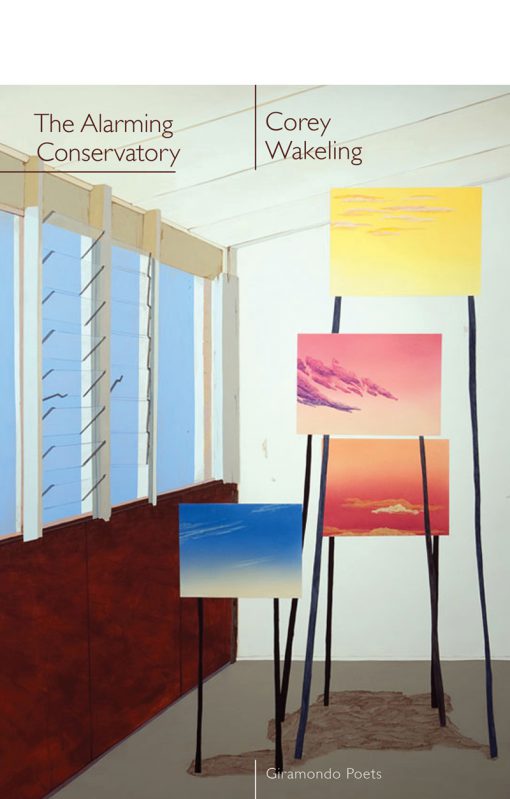
The second voice is Corey Wakeling’s, and it comes from his brilliantly provocative review of Puncher & Wattmann’s Contemporary Australian Poetry. Here, Wakeling argues that ‘the suburban is a preeminent register of the Australian contemporary’ and that ‘much Australian poetry already seems embedded in the suburban condition.’ For Wakeling, the huge CAP volume is a testament to the various ways that contemporary poetry is implicated in or grappling with notions and legacies of suburbia.

Suburbia is often perceived to be artistically peripheral and yet it is also entrenched as the focal point of Australian cultural hegemony. After all, Australia has been the most suburban nation on earth since the late nineteenth century. This is part of the reason that works like Courtney Barnett’s song ‘Depreston’ or Luke Carman’s novel An Elegant Young Man possess such resonance, for both works map edges and centres. And both are aware of those tectonic cultural forces that pull in competing directions. Yet the valency of suburbia also lies in the paradoxes of its own definition (the OED defines suburbia as ‘just beyond or just within’ the boundaries of a city) as well as in those contradictory reasons for which suburbs are criticised (e.g. they are too safe / dangerous, homogenous / diverse, materialistic / poor, conformist / law-breaking, mainstream / marginal, boring / chaotic).

When all of the above meets the charged, volatile nature of poetic expression (language which is itself also mysteriously ‘beyond or within’ the polis), we end up with Cordite 84: SUBURBIA. As Brigid Rooney has pointed out, ‘the lived experience, spatial contours and cultural demographics of contemporary suburbia are in flux.’ And it seems to us that poetry is uniquely placed to engage with those constantly changing modes of everyday existence. Indeed, if Andrew McCann is right, and anxieties about suburbia aren’t just anxieties about everyday life, but they are ‘anxieties about the “everyday” itself as an experiential category,’ then poetry is a remarkably apt way to register this heightened awareness. For instance, we see it in the colloquial saturation of specific Annandale spaces in Robin Eames’s ‘curb cut cartography,’ or the exquisite claustrophobia of Ella Jeffreys’s ‘Crescent Road.’ We hear it in the disrupted voice of the mother in Kerry Shying’s ‘Neonate,’ or the apocalyptic postcolonial breathing of Scott Patrick Mitchell’s ‘birak.’

The various types of suburb also orient us toward notions of form and shape, with their planning and sprawl, their pockets of fastidiousness and zones of neglect, their onramps and arterials, backstreets, boulevards, laneways and cul-de-sacs. And, like suburbia, contemporary poetry is marked by encounters between formal inventiveness and certain inherited arrangements. In this issue, Philip Thiel’s ‘Chadstone Sonnet’ offers the proprietary intensity of store names within the frame of the Elizabethan Sonnet. Tess Pearson’s ‘Household Ripening’ uses the pantoum form to explore ‘the dance of avoidance’ provoked by interminable housework. Elsewhere, there are erasure poems made from Christina Stead’s The Man Who Loved Children (Michele Seminara), poems in the shape of car-yard bunting (Mike Ladd), and even acrostics incorporating lines from the Petshop Boys (Stuart Barnes).

The poems in this issue are grounded in a variety of suburban experiences and locations in suburbs around Australia, as well as in North America, Asia and Europe, engaging with a range of themes, ideas and emotions. Brendan Ryan’s ‘View of the New Estates’ tackles the tension that has existed between suburbia and nature ever since the first bulldozer cleared the ground for the first subdivision. Mindy Gill’s poem celebrates suburban tranquillity, Lyn McCredden delivers a tale of intra-suburban prejudices, Anne Casey sings a wry and joyful hymn to a domestic suburban weekend, and Andrew Burke pays tribute to the iconic Hills Hoist.

It is our hope that this collection of poems represents a diverse and compelling cross-section of Australian and international suburban writing. Throughout the selection process, we were delighted, humbled, excited and slightly overwhelmed by the sheer volume of excellent pieces we received (the number of poems submitted approached two thousand). The massive response to our request for poems on the theme of suburbia testifies to the importance and ubiquity of suburbia in contemporary writing. The poetic responses to suburbia ranged from celebratory to disparaging, revealing both the pervasive influence of the anti-suburban tradition in Anglophone (especially Australian) literature and the desire and ability of many contemporary writers to abandon, dismantle, sidestep, reconfigure or ignore reductive stereotypes of suburbia. However, perhaps this kind of (poetic) population growth and sprawl is appropriate and expected for an issue on contemporary suburbia …

Posted in ESSAYS | Tagged ,