Memory Again

And I want so bad
to walk beside you;
— Bubble, Red House Painters

for Jane Kelly

Quiet, lost yet striving to be,
gazing from this clean student window
Grey sky, Dusseldorf,
feeling the timidity of not knowing the language
I’m thinking of you, wondering if this
might turn into some sort of mild trial
to discover how much I like you.
Where you’ve been won’t shock me
and there are few clues so far
to tell how I’ve acted, what I’ve tried.
The film was harrowing though we expected it;
your shoulder remains cool and secure.
We talked of embracing the moment, stowing
those gallons of memory on a remoter hill.
From here, in the middle of this unambitious
jetlagged afternoon, it feels again
like the eight years of not knowing you,
that you’re equally distant and close —
like memory, memory again.

Posted in 06: NEW POETRY | Tagged

Black Box

If the black box is the only thing that survives a plane
crash then why don’t they make the whole plane out
of it, I asked. It’s made of lead, you said, a lead plane
is too heavy to fly. And that was that.

There are benefits to being a pilot’s wife, you know. You understand
what torque is and why San Francisco is always so cold for California.
But it makes you pray. Takes away your capacity for disaster films.
Makes you recite the oxygen mask instructions like yoga chants. (If
traveling with a small child, put your mask on first)

Parachute jumpers say that the more you jump, the more your risk increases. You
don’t get any ‘better’ as a jumper, your number simply comes up one day. The more
you jump the faster it comes. I thought about that every time you left and kissed us
all goodbye in the same order as if it was a lucky charm: dog, daughter, wife.

When I was called on Sunday night, it didn’t feel like I thought it would. Didn’t feel like
     being hit
or having something drag heavily on me. It felt like someone came to take my bones away
and pulled them out one by one. Impossible to stand, impossible to sit, I rolled and pitched
uncontrollably like a ship on death waves.

I was at the crash site when they recovered the black box. I saw them put it in
the truck. I saw them close the door. I saw them walk away. I saw them talk
to women in trench coats with microphones. I saw them turn away from me.

The damn things are heavy. Well of course they are. They’re
lead. You can wrap it in a coat. You can carry it like a baby.
You can run to your car and drive panting, heart beating
too loudly in your ears to hear sirens as you disappear.

We slept
with love
now I sleep
with lead.

I wrap my white arms around the
black box where you live now and
listen to you talk to me all night.

Posted in 06: NEW POETRY | Tagged

The Weather Glass

evening – we cross a deserted city – it's
raining

the whole infinite milieu!

you tell me the story of democritus
in the garden of abdera – it's pitch dark

i try to remember details
a telephone number date of birth

(in order to make sense of what has
gone before?)

it doesn't matter you say – only to see
obscurely
average situations

Posted in 06: NEW POETRY | Tagged

Three Sonnets

‘The East is a career.' – Benjamin Disraeli


1. The Maharaja from Maroubra

My jumbo landed its one wheel of faith.
The runway of the heart was dark.
Our import was a virus that flooded their cells
then decimated the host who often
loved the moonlit dark. What really happened
in the temple not for our seeing.
From a corner in baggage claim
a dictator spoke, so je-ne-se-quoi
his torture chamber speech kept the mob at bay, squashed noses
on the custom hall's smeared plateglass.
Dollar's kriol would assist their nation.
I drove down town with surfboard and guitar
feeling bad, oh so bad.
I felt a discount coming on. Such was much ration.


2. The Expat Painter Turns Away From War

What you eat and what you are – fried rice doused
in black molasses, gristle and goat, green sea turtle.
Seven years renews the cells, but what the locals see
in a grass hut gazebo, waited on and waiting
Old Master Devil swimming in a hole of sweet stewed wine!
Delicate mosquitoes blister the tanned dancers;
how flexible they are! Disco New Order
was jerry-built with lies, but can't distract as he paints on
waited on by budding servant-boys.
Green revolutions sprout uniforms,
his brush turns hunger into dance, then ecstacy
of humans lounging on a padi field.
See what lovely men can do: his palette made pure.
Oh yes, what you eat is what you are.


3. Omen

The Milky Way, spangled cartwheel, red light district
that overcharged. Dark puddles catch starlight
on the highway to my hut, all sand.
I live an hourglass life. Black holes swallows cars,
but can't crush love. The earth lives on when natives sin,
gargoyle's children groan & bring the harvest in.
Shack of moss lined bricks the rats call home.
Coral reef blown to bits crunching underfoot.
Holy offerings colour-coded, fresh snacks for a tired ghost.
They beckon & adorn the five star lobby –
gods or demons, AC/DC, ionising swamps, mucking up reception.
Tread lightly I was told past the haunted coconut grove.
They found a pig's head in his bed,
madness in his mind. From then he did as they had said.

Posted in 06: NEW POETRY | Tagged

Between Virtue and Innocence: In Defence of Prose Poetry

Each virtue responds to a specific form of innocence. Innocence is moral instinct. Virtue is prose, innocence is poetry. – Novalis

Long before Romanticism, poetry was thought to whisper with a sound which was the sound of Nature purified; poetry murmured with the voices of the Gods who made the world intelligible after the reign of the Titans; then no lesser a classicist than Hölderlin had his poetry be the rumour of the will of the people. Continue reading

Posted in ESSAYS | Tagged , , , , , , , ,

Narrative and Poetry: What Happened Next?

In narratology, the narratee is the imagined person whom the narrator is assumed to be addressing in a particular narrative. Narrative poetry belongs to the class of poems, including ballads, epics, and verse romances, that tell stories. (Dramatic and lyric poetry have their own genre boxes.) One of the meanings of narrative that for many seems to have been carried into poetry is 'the spoken or written account of connected events in order of happening'. Although 'story' in the everyday sense is any narrative or tale recounting a series of events, in modern narratology it refers more to the sequence of imagined events that we as readers reconstruct from the actual arrangements of a narrative (or dramatic) plot.

Continue reading

Posted in ESSAYS | Tagged , ,

Tiara Lowndes vs Tug Dumbly

He ranted and raved. He was fabulous. Ranted and raved and spat and shouted for 20 minutes and grew and grew until he was Alice in Wonderland after she drank the bottle (add a little bit of stubble) and he was holding the audience crouched in his palm. He was Tug Dumbly. 'Hi I'm Tug Dumbly' he said when we met, 'and I'm a performance poet.' He leant back and cradled his beer in the convex curve of his stomach.

Continue reading

Posted in FEATURES | Tagged , ,

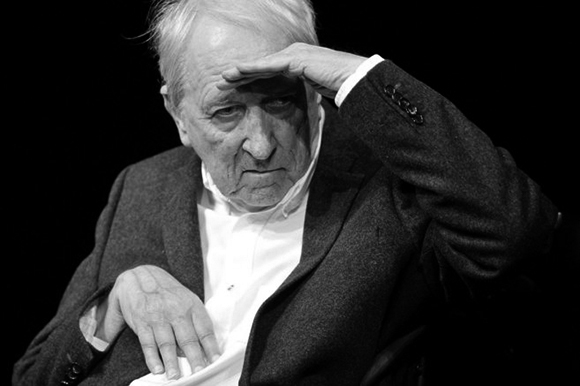
Experience and Transcendence in the Poetry of Tomas Tranströmer


Image courtsey of Cuba L Direct

Someone says, ‘Poetry is about experience’. Then someone else says, ‘Poetry is about transcendence’. No sooner are these two statements allowed to engage each other than a vast, complicated world begins to form. Fierce conflicts arise between the advocates of experience and the defenders of transcendence. ‘Poetry holds a mirror to life’, we are told. ‘Poetry is no reflection’, we hear in reply, ‘it is a ‘furious ascension’’. Meanwhile, disputes break out over ‘experience’. For some, poetry is confessional, while for others it is a passage beyond the opacities of personality, a quest for a deep self or an escape from self. Other arguments rage over ‘transcendence’. One group affirms transcendence by way of the vertical. ‘Poetry is an illumination of the heights’, they say, ‘it may disclose the meaning of being, reveal there is no meaning to being, or in questing beyond the world may undermine itself by disparaging language’. Another group figures transcendence as horizontal movement: poetry leads to places we never knew, and in doing so changes the author.

This strange world with its assertions, arguments and bewilderments is our own, the world of modern poetry. After living here for a while, one begins to pick out individual voices that are more subtle, more intriguing, or more commanding than others. Under the guise of Malte Laurids Brigge, Rilke observes that ‘verses are not, as people imagine, simply feelings (. . .) they are experiences (Erfahrungen). In order to write a single line of verse, one must see many cities, and men and things’.1 Were this literally true, we would dismiss the poetry of Emily Dickinson and Arthur Rimbaud. However, Rilke is not aiming at those who experience the world in little but at ‘beautiful souls’ who refuse to engage with the world at all. At first, Wallace Stevens appears squarely in Rilke’s sights when he says, ‘Poetry is the expression of the experience of poetry’.2 But his point is quite different: Keats found himself in reading Spenser, Yeats in reading Shelley, and so on. To look closely at any scene of authorial formation would doubtless be to find evasions in what poets say about becoming poets. Did T. S. Eliot discover himself in reading Dante, Baudelaire and Laforgue, as he leads one to believe? Or were his most significant encounters with Browning, Tennyson and Whitman? The latter, says Harold Bloom, while urging us to accept that one poet can escape the tyranny of another only by a perverse and violent misreading. It is an uncomfortable truth, but one seldom looks to the truth for comfort.

If Stevens is right, no poetry simply reflects experience. At the least, a poem answers to experience and poetry. When pondering this situation, and wondering how a poem connects with its author’s life, it is salutary to listen to Allen Grossman meditating in the Summa Lyrica. ‘There is no poem of the experience at hand’, he says, while adding, ‘art is about experience (in the same sense that a cat indoors is ‘about’ the house)’.3 The thought that a poem might be ‘about experience’, an exterior reflection on what has happened, is dismissed. There is no naked fact that is later covered with interpretation: an event is constituted as meaningful while it occurs, and later interpretations extend or modify this constitution. So, for Grossman, a poem is ‘about experience’ in that a body of experience is somewhere in a poem, although exactly where we cannot say.

Let us pause for a moment before agreeing completely with Grossman. Is art like a house? Does it contain experience? A poem may seem to be a verbal construction, yet this appearance is misleading. Although it usually belongs to the world of paper and print, a poem is fundamentally an act of understanding. It may be several or many related acts, not all of them complete or able to be completed, and it may involve understandings and misunderstandings of different acts or objects in distinct ways and to various extents. Some may have been seen, touched or tasted; some may have been imagined; others may be intellectual realities, like geometrical figures. (Eugène Guillevic wrote a number of charming lyrics about squares, triangles and quadrilaterals that he called Euclidiennes.) When talking about poetry one gets on the right track when seeing that ‘experience’ designates what a consciousness registers, not what a person physically encounters. And one begins to walk down this track when recognising that the important thing is not the poet’s consciousness but what could be called the ‘consciousness of the poem’: a work’s ability to signify in the absence of its maker. In poetry, experience does not abide within an organising intelligence; it is bespoken by a poem that, once written, has no further need of the poet. Poetry cannot be conceived simply as a representation of an experience, even one that includes a good deal of reflection. For in its dealings with forms, genres, languages, tropes and traditions, none of which can be fully controlled by an individual, a poem may present experience that the poet had only while writing or not at all.

Having come this far, we are in a position to hear what Maurice Blanchot says of poetry4 and experience. The act of composition, he tells us, leads a poet to risk losing everything: the poem’s unity, the poet’s self-identity, even the poet’s faith in God. One writes in order to name reality; but the ‘I’ that appears on the page differs from the writer’s consciousness, and the immediacy of what one wishes to represent is destroyed by language itself. So language, even when rigorously used, is not the vehicle of la clarté, as French classicism teaches; rather, it embodies the noctural, the absent and the veiled. Yet language also reveals itself as reassuringly material: perhaps one can take it as the end of one’s quest, thereby regarding night as a simple modification of day. Almost immediately, though, the poet becomes aware of language as a play of rhythm and form that anonymously co-operates in writing the poem. Gazing into the heart of language, the poet beholds an immemorial and interminable combining and recombining of words that has no significance in itself. Here words no longer refer to things; they are empty images. In the grip of a fascination that resembles insomnia, the poet risks all identity and unity. Only by shaking itself free of this impersonal and strangely lucid gaze, older than all creation, can the work be saved from ruin. Indeed, ‘the work is this leap’.5 This passage from consciousness to the very limit of indeterminate being is what Blanchot calls ‘experience’.

Writing for Blanchot is therefore a doubled event, at once active and passive: it begins in experiencing the world but is quickly diverted and becomes an ‘experience of non-experience’.6 The two events are lived together, not as a unity but as a neutral relation. In seeing things this way we have passed from experience to transcendence, although it must be said to a transcendence of a very dispiriting kind. Blanchot himself would prefer the word ‘transgression’ and even then would surround it with many qualifications.7 Certainly what draws Blanchot to his favourite writers from Sade to Beckett is that they brush against indeterminate being. In the last analysis, his readings of these authors are oriented by how this limit experience occurs and what consequences follow from it. Of particular interest to Blanchot is that writing leads one to glimpse not a state above or beyond the world but a condition before the world. Writing leads one to encounter the flux anterior to human existence, not to experience the most determinate being, transcendent being, Being itself, or the Wholly Other, all of which surpass human existence and which form the main western conceptions of God.

I think that Blanchot overstates one aspect of his case and then underexplains its central move. Is it true that language destroys whatever it touches? To be sure, Hegel observed that when Adam named the animals ‘he nullified them as beings on their own account, and made them into ideal (entities)’.8 That is, since language involves the mediation of concepts there can be no immediate presentation of anything in words. Yet particularity is not thereby lost to speech or writing. When Marianne Moore describes an ostrich in ‘He ‘Digesteth Harde Yron’’ we may not grasp a bird in its immediacy but the poem nonetheless presents us with a singular creature, and does so in a unique manner. Blanchot’s crucial move, however, is that the work responds to the flux of primordial being by leaping away from its paralyzing gaze. Putting aside the questions why he shifts from author to work, and whether a poem can properly be said to have this kind of agency, one may still ask how and why the work escapes its condition of fascinated passivity. No explanation is given. At the very least such a leap presumes a tacit affirmation of being as a horizon if not an assembly of entities. If poetry draws us to what precedes human being, it also stirs us to return to the world about us.

Posted in ESSAYS | Tagged ,

So Let Me Get this Straight

There’s this happy family man
Agamemnon, with his lovely wife,
Clytemnestra, and the three kids
Iphigenia, Electra and the boy
Orestes.

Only Agamemnon’s brother’s wife,
who turns out to be Clytemnestra’s sister
Helen, runs off with some blow-in from
Asia Minor with a reputation for bad
judgement and
an association with plaster.

And Agamemnon goes after Helen with his
brother, Menelaus, across the sea heading
for Troy but they get holed up on some
middle of nowhere island, waiting for a good
wind. And Agamemnon, who just happens
to have Iphigenia with him
chasing after Auntie Helen in a
fleet of battle ships with
ten years’worth of sea biscuit and arrowheads,
Agamemnon sacrifices Iphigenia?
for a head wind?

Let me get this straight.
And there’s a goddess in there somewhere So
Agamemnon and Menelaus get Helen back
and burn down Troy and
kill all the men who aren’t already dead and
sell all the women and children into slavery
except the boy children of all the really
famous dead men—they make sure they go
the way of their famous dead dads—and
Cassandra, who’s the daughter of one
famous dead man and the sister of another
famous dead man and the auntie of another one
and who has a strange gift for prophecy,
absolutely correct in every detail but
no one ever believes her
Whom Agamemnon decides is a lovely girl,
too good to waste on the open market and
a dab hand in the kitchen
all that experience with entrails
and he can’t resist one more souvenir
to remind him of his time abroad
Greetings from Ilium.

Let me get this straight.
So Clytemnestra, who’s taken up with a boy
with a completely forgettable name and
no chin whatsoever,
welcomes Agamemnon back from the war.
He’s killed her eldest daughter, stayed away
ten years doing a favour for his brother never
a postcard, no maintenance,
he’s got a shipful of women in chains
including Cassandra who’s frothing at the
mouth with prophecy and her frock falling
off her she’s in such a state but none of the
men listening, getting a good eyeful.

Let me get this straight.
Clytemnestra says hello darling
home from the war are we
fancy a bath?
And Agamemnon says “Hello love
I’ll just have a bit of a wash
and eat whatever you’ve got on the spit
and who’s this boy with no chin?”

So Clytemnestra kills Agamemnon in the
bath and knocks off Cassandra just for good
measure it’s a shame about the frock.

Just let me get this straight.
Electra, who’s always been the awkward one,
the middle child often is,
talks baby Orestes into killing his
mum and the boy with no chin
I’ve remembered his name
Aegisthus,
Because Clytemnestra’s been a bad wife and
shouldn’t have taken a lover or killed
Agamemnon I wouldn’t have thought
Electra was that close to her father really
but you never can tell.
And Orestes does and Electra goes mad and
runs amok through the garden and
comes to a bad end and
Then the Furies come into the picture
where have they been all this time
not a sizzle or hiss out of them before but
there you go; they’re on the case now,
tearing after Orestes, he
never gets a moment’s peace after this and all
because he’s killed his mother.

And let me get this straight:
Agamemnon and Orestes are the heroes.

Posted in 05: UNTHEMED | Tagged

The Verb Mourir

I die
thou diest
il meurt
elle
nous
vous
etc.
you know
the order
and
how things
go!
I want
Mozart
Dylan
the warbling
magpies
all in concert.
A greater
symphony
I’ll never
hear.
Neither
will
Monsieur
Hulot!

Posted in 05: UNTHEMED | Tagged

Everything Poem, part 4

There are
455 active volcanoes in the World
and blood completes
a circuit of the body
every 23 seconds,
but you weigh
40 times as much as your brain
and it’s impossible
to describe a spiral-staircase [without using
a finger]
so watch with one eye
and listen with the other, i’m about to attempt
a handstand
using one finger!

In 1665
Robert Hooke
drew a picture of a [*] snowflake, hung it Up
on a wall
and marvelled on the workings [and
the Glory]
of God:—
“There are 36 letters
in the Russian alphabet
and rhubarb
originated in Tibet, but Miles Davis was
a diabetic
and an oral culture
has no
Text!”
/

[Now]
I may
or “may-Not” know what i’m
saying [cos
4/5ths of everything living on this planet
is under the sea, and baritones resonate
better in the bathroom]
but if you
stick an elephant in a refrigerator, it’ll explode
an’ there’ll be nothing but
smoke
pickle
and spinach
so don’t try and understand all this
in English:
“Sleep
is an alert process
designed to prevent the brain from going into
a coma”
/

Picture this:—
You’re in the middle of an argument
so you get-Up
to get yourself a Brandy
but the Thermometer BURSTS (like
a pimple!) (cos it’s thirsty!)
you turn round to “laugh”
but it’s … disappointing
you Wake-Up
and wonder Why
you’re swimming
/
never trust anyone
who sez:“I’m from the Government and
i’ve come to help” [the vertical-groove
in the middle-portion of the upper-lip
is called a philtrum
and Pandemonium, is the Capital
of Hell]

Consider this
[if you like]:—
Karl Marx was a journalist
Asparagus was mentioned by the Egyptians
Shakespeare signed his name 4 different ways
and a face-lift takes
41/2 hours
/

[Now]
i don’t know
what kind of problem Shakespeare [or
anyone else] had
but it takes 20 seconds for a solution of
oil + vinegar [in a glass
of water] to separate
and IBM’s motto is THINK [so
THINK!] make it Up!
according to
the Copenhagen Interpretation:
“Something’s there
if something’s there to say it’s there [even if
it isn’t]!”
/

what i’m
trying to get at is this: This is This
That is That
and This’n’That is . That
not ——————> That!
so don’t suffer the “cause”
according to the manual
it’ll take you another 12 hours to clean a 1,000
bricks [by
hand] and 3 days
to learn how to use
an artificial-leg
/
so you
may want to keep this in mind
a “raindrop”
travelling at 25mph is about
a 5th of an inch wide
and the last thing
a Pilot does
before the plane goes down
is
“whistle”

!
but if you
insist [and persist]
on being a BAD EGG
and on
getting yourself “exiled” [to an Arab country
… like
Ireland]
just remember:————
Paper
is always strongest at the perforations
and
any Fool
can start a sentence.


——————
If you’re
listening to this
the only thing you’ll need to know is
some people
“do”
play the piano better
with their
elbows
——————

Posted in 05: UNTHEMED | Tagged

At the Ian Burn Show

MCA 1997

at the Ian Burn show
there’s a badly recorded
b&w video of Ian Burn
& colleagues performing
anti-authoritarian art spiels—
drumkit, keyboards, guitar, voice—
it’s the ‘Art & Language’ days,
the mid-seventies—recorded
most likely, on a Sony portapak
(I set one up—a tripod
in the lounge room
of our communal house
& let it run full twenty-minute
brackets to film quotidian comings
& goings).
ah—here’s Terry Smith
with plenty of hair—a stringy beard
&, possibly, an Afro—singing along
in the refrain—
“…ee…gal–it–tar–i–an…ism…!”
gustily.
I’m chuckling now—this is
amazingly cheering—I feel
it’s my culture—or was—&, easily
could become
karaoke!
as it contains, for me,
equivalent nostalgia.
ingenuous, idealistic
and schismatic!
direct-action practising populist artists
(anti-institutional-intellectual-academy)
vs
theoretical conceptual post-object artists
(yet not always nor certainly pro-academic)
it was my schism too, our exegesis,
“artists think”? well, maybe—
they did, for a decade
all under the same
tin roof

Posted in 05: UNTHEMED | Tagged

Happy Accidents

D.U.I. in the 1970s

for Gary Oliver

Are you, perhaps, a
‘Reader of Books’ ?
—John Jenkins

I had been reading some poets before,
who were supposed to be good

And I suppose they were
but it was on

first reading John Forbes’
‘To The Bobbydazzlers’

my eyes opened.
There did I breathe John’s

‘intense inane’ & the way
you felt for them

I felt for you, John: as though
I sat, saluting—

& stonkered—

facing an horizon
—blue sky,
blue sea—

empty
of all but admiration,

cheered, in-touch
at last,

silent, on a kitchen chair,
in Glebe,

upon a beach, in my imagination.

#

Another time I was sitting
On a firm kitchen chair. The poems
Were Laurie Duggan’s. Then did I breathe in
A speck of muesli I was having—
But did I choke? I didn’t—these poems
Gave much to live for,
In particular a sort of infinite ‘Quiet Moment’
In which things were ‘in their place’,
‘Attended to’… Etcetera. I cleared my throat, vowing
To continue in this knowledge.

#

I think I stood up. It seemed too odd
To be sitting, the poem was so great—
Yet, a short one, it was over. I moved
From the brown, cracked, wood table I was reading at

& walked to the door, Pam Brown’s poems
Still in my hand—& stood awhile,
Reading them in the doorway,
Breathing in, breathing out, looking

At the view, that you saw—if you
Stood straight—just above the tin.
The cat used to hang about me when I stood there
—Pots of mint & things, at my feet—

On the step, looking over the fence—the Iron Bridge,
And the city with its back to you

#

One of the first poems that did it for me
Was ‘Tricks For Danko’. By Robyn Ravlich.
Graceful, & clear, and actual.
Another was O’Hara’s ‘For Grace,
After A Party’. And there were Berrigan’s THE SONNETS,

the poem where “Terry’s spit
Narrowly missed the Prime Minister,” leaving a mark
On the TV. (A poem of Laurie’s.) Later
a poem I loved was Anna Couani’s
‘The Bomb Plot’. John was writing poems

That pretended to be advertising. A different
John. Who became a best friend.

Remember Rae—reading ‘The Deadshits’?

The way we used to shout various lines
From various poets, over & over, for being
Too ridiculously full of portent? “Head first
Into the beautiful accident!” “White horses.
White horses.”

#

Things we said: “Ah, Bin 33!” “Je suis
Mr Tarzan!” This is the life. Crash or crash thru.
“Grandmother divided by monkey
…(equals ‘Outer Space’!)” Is that
a baby or a shirt factory—(No one can tell
In this weather). One false moof and I die you!
There’s no accounting for taste. I em,
a sophiss-ticated
Euro-Pean! (slight Austrian accent) This is the life.
Head first into the beautiful accident. Ah, Bin 33! Another
Bin 33?
Then we said them all again.

No one said It’s a great life if you don’t
weaken or Get this into you, though we must’ve urged
something similar. I can remember the songs we danced to—
but that is life, which is the important thing—
but not important here.

#

I first saw Alan Wearne coming down
the banister at a party singing a methodist hymn
wearing a little conical hat or something suggesting deshabille.
I met him first actually at the Adelaide Festival
in ‘76—he told me something weird about another poet.
Carol Novack had big eyes & beautiful hair & when
she played pool her hands shook almost mesmerizingly.
Sometimes the balls went in. Anna’s pool was better—
& her writing, for a kind of intelligent mobility.
Carol took up Law. The party I saw Alan at
was for Brandon Cavalier, a person I have never heard of
or seen since. His shirt had full sleeves
like a pirate’s. (He was a poet.)

#

“Poetry—it’ll be bigger than tennis,”
was a line already part of poetry folklore
when I joined the team. I never saw or met the man
who uttered it. (Similarly, when I came to Adelaide,
I was introduced to Ian de Gruchy—& well after
I’d heard his “The ambience is all around us”—as either
forewarning, or characterization. He was an
artist, not a poet.) At some level, I think, young poets know
what they let themselves in for—an economic &
social reality they allude to with crossed fingers &
humour. Some of course get real jobs or train properly
for something. My friend John lucked his way into journalism
hardly expecting his charade to work. The profession
took him to its bosom, suffocatingly, tho not too suffocatingly. None I knew
became doctors. Laurie’s made a late well-timed run
at academia. Most of us have shit jobs. “Headfirst
into the beautiful accident.” (Tranter must have
come in to some money. The line works differently for him.)

#

Kris Hemensley’s poems—’Rocky Mountains & Tired Indians’
& one about some biscuits—I liked a lot, though
I couldn’t emulate them. Their domesticity reminded me
of a happy little band of Melbourne poets whom I
assumed mirrored ours in Glebe, Newtown & Balmain—the
Westgarth/Merri Creek/Brunswick gang: Kris, Robert,
Walter, Retta. Letters from them were cheering & I
wrote back on happenings here—one, in which Adders
attacked everybody at a reading, casting aspersions on the Soul,
Potency, Alcoholism of his major rival (also on the bill), who did
his own equivalent of the same, while a performance artist friend
tried to stage her nervous breakdown (over her husband’s
infidelity)—& which intuited the interest
& coming intervention
of David Bowie into her life. She made a lot of repeated noise—
to the puzzlement of the audience,
who did not realize its import,
and anyway had the poets’ dark mutterings to work on.
We took her away, sedated or placated her (I
can’t remember). John & Laurie read, finally,
attacking no one just reading great poems: it was a total
fucking gas, Terry’s spit narrowly missing the Prime Minister
etcetera

#

I wrote some poems just by going through my
note books circling all the good bits still
unused—from poems, letters, notes & quotations—
& typing them up in the order they came
adding new stuff wherever I felt like it. I still
do these occasionally. People don’t understand them
but I feel exhilarated. Laurie’s poems
had introduced me to Philip Whalen’s (& these
I liked). Philip Hammial introduced me to the poems
of Tony Towle—whom I knew & liked
only by one or two things
in anthologies. AUTOBIOGRAPHY & OTHER POEMS
was a great book.
Years later
my inexpert emulation of it
enabled me to write NOTES FOR POEMS—a book
critics at the time ignored, or disliked.
As they do still, for all I know.
I remember the early Alan Wearne poem I liked
had Jesus Christ or John the Baptist running up
some stairs.

#

That’s how it was when I started.
Earlier I’d read Creeley & Olson &
earlier still Larkin & Davie. But really
what I found exciting were the ideas I entertained
about Johns & Rauschenberg & the aesthetic
jockeying for ideological position
of Greenberg, Fried, Stella & the Minimalists,
the ideas of Kuhn, the dreaminess of Marguerite Duras
& the steel & irony of Robbe-Grillet, the look
of ‘key works’ by Rivers (‘key works’?) & the erased
de Kooning,
the nerviness of Gorky; Tony Tuckson; Joan Mitchell.
‘Bean Spasms’, when I read it, & ‘Tambourine Life’,
fell on fertile ground. Apart from the R n B
I played mostly, I also played John Coltrane—
all of this a cliche or at any rate ‘of its time’.
The sober brain of Donald Brook, internalized
in mine—where it nowhere resembled very closely
Brook’s big brain—looked on. The English Department
was dull. Anna introduced me to my own mind as
‘Curious Stranger’—(to be ‘analysed’). It has grown
curiouser & curiouser, & I have learned to watch it
closely. Watch it, watch it! A favourite phrase—
spoken as by a removalist backing up a piano
or something large. I was never a removalist like
other poets. I became a poet when a flatmate
kept showing me his poems, for evaluation, &
any demurral of mine met with Well,
you wouldn’t know—as you’re not a poet.

I could do better, I thought, & so I began—doing
better, if not doing actually ‘well’, till around
1976, the point at which this tale began.

#

When I first met Johnny J his grant
had run out. He used describe himself as a
grifter—which word he enjoyed for its hokey, 1930s
arcane quality. If it was a specific job description
it might have been John’s: for example, Colin, another friend,
claimed the shoes John wore were his. John
had had them for a year but, caught out, handed them over
(fairly cheerfully). Colin shook his head. I loaned John my thongs
& he walked home. Those days I was on a higher degree scholarship,
though I did nothing but read & write poetry—
more intensely than anyone ever did an M.A. Laurie for a time
wrote movies, though he did not earn a lot by it.
He used don his dark glasses & say emphatically
Think ‘Mogul’. Mostly he did the dole—as we were
all about to do—or worked in the library
setting out to prove, I think, just how many sick days
could be achieved before redundancy. Pam worked
screenprinting for an American hippie employer
who turned gradually straight capitalist exploiter. Pam
had once been a nurse. Now she did the dole, taught film.
And works now in a library—taking probably the maximum number
of sick days (that ‘envelope’ first tested by Laurie).
John Forbes worked in a tinsel factory, &, one time, I was
surprised to see him in a lottery ticket-&-snacks type booth,
like a large Punch & Judy, outside Museum railway station;
then he went in for removing, which built him up
considerably. Big, but never boofy. Most of the poets I knew in the late 70s
worked briefly sorting mail—at Redfern Mail Exchange,
constituting a militant facet of its productivity problem:
Steve took a large supply of dope that he & others smoked
on the roof at lunchtime & on numerous breaks after
& before. In toilets, wash rooms, stairwells & broom cupboards.
Anna worked with him, & Alan Jefferies. (‘Good-o Goodooga!’)
Steve became a public servant eventualy & wrote
speeches for Keating, but took so much time off
he returned at last from the U.S. to find himself
in charge of the photocopy paper, with a lone desk
—alone—in the storeroom. He resigned.
His great book then was TO THE HEART OF THE WORLD’S ELECTRICITY
which I loved: intemperate—exasperated—lush.
Sal, with whom I lived in Redfern,
would catch the bus down Chalmers Street,
past the exchange, to the station—
a book rep, a job she was good at but hated.
Anna & Rae became teachers. (In fact Rae became mayor
of a difficult inner city council.) Nigel, also a teacher. Denis Gallagher
a captain of industry. Did he ever sort mail?
I don’t remember.

#

‘The European Shoe’ by Michael Benedikt I liked a lot
though not so much his other poems & I wrote a poem,
‘The Mysteries’, because of it, with other influences in there too: quotations, bits ‘in the manner of’ & ‘reminiscent of’. (Of
whom? O’Hara, Ashbery, Robbe-Grillet.) Kenneth Koch
I read a lot then. (‘The Circus’, ‘The Departure From Hydra’,
‘The Railway Stationery’, ‘Fresh Air’, & later
THE ART OF LOVE & OTHER POEMS). Alan Wearne early recommended to me
Schuyler’s poem about a man mowing the lawn, in which,
I think, Hugo Winterhalter & other composers & conductors
are in the sky. Or are those two poems? It was very good
but I did not begin reading Schuyler as a fan until later—
& it was his later poems, too. John Tranter’s ‘Rimbaud
& the Pursuit of the Modernist Heresy’ in an early form I liked
though it puzzled me, but I liked its sense of a determined ambition—
a major work, like an Historical Painting. Ron Padgett’s poem,
in which God “runs off giggling” I liked, for the graceful mystery
of its perfection—’Some Things For Anne’, was it called?
‘Ruth Etting’s Tears’ I liked but that was later—
there were other Schjeldahl poems I liked then—his version
of ‘Life Studies’, & ‘Hullo America’—the attack on Robert Lowell &
Bob Dylan. There were fabulous poems in STRANGE DAYS AHEAD,
too. John liked Kenward Elmslie as I remember.
Anne Waldman’s first book, GIANT NIGHT, I liked. I also liked
GREAT BALLS OF FIRE, I REMEMBER, Edwin Denby … &
Lewis Warsh I found curiously comforting. (LONG DISTANCE, & one
that was a diary.) Pam liked Tom Clark & various Frenchmen
and Patti Smith. Others liked Duncan—but I couldn’t see it.
Some German poets I liked—Bisinger et al—but
I have not kept up, & then it was the 80s
& another poem.

Posted in 05: UNTHEMED | Tagged

Day Stay

Whether you’re there
for an hour
or the whole day
it’s always like returning home—

to that room in Immunology
where you’ve spent
so much of the past year.

With its two beds
and three armchairs,TV
and handbasin
it brings to mind
images of domesticity
that somehow one’s spirit needs—

the comforting
and familiar, the secure:
what’s easy to touch
and understand.

Tony, the duty nurse
welcomes us
with his happy, boyish smile.
“Darling, how are you today?”
“Fine,” you reply.
“Wonderful! Now let’s get you settled.”
And he does—
in what’s become known
as Kate’s bed.

I settle down
beside you, sit and read TALKABOUT
or the SYDNEY STAR OBSERVER:
learn how hard
it is for people to be accepted,
to be themselves,
and how easily discrimination
rears its proverbial
“ugly head.”

In the meantime
they prepare you for another
bone marrow biopsy
to test the presence
or otherwise
of further leukaemic cells—
and I cringe to think
how a corkscrew needle
will shortly puncture your flesh;

and how you, too,
will have to learn to adjust
to the world outside
this friendly little room—
whether the result
is good or bad.

Posted in 05: UNTHEMED | Tagged

In Ultimo in ‘98

I maximise my traipsing
round the district—

at the end of Bay Street
Bert Flugelman’s silver shish-kebab
lies abandoned
in the Sydney City Council yard
behind the garbage trucks garage
(“Living City
say the
t-shirts)

Posted in 05: UNTHEMED | Tagged

Xanana’s Dog

You can call me Xanana’s dog but
You can’t run from my lapping tongue; please
Say a prayer for Xanana’s dog but
Don’t you dare tell them where I am.

They can’t find Xanana Gusmao, though
They search the church for him, crying:
“Where did he go, where is Xanana?” So
They arrest me, because I’m Xanana’s little dog.

Set me free! Asleep at night forget,
In the day remember, asleep at night forget me but
In the day remember that I am Xanana’s dog.
Free Xanana!

They chain me up, but I’m Xanana’s little dog;
They set me on fire, but I’m Xanana’s little dog;
They call me names, but I’m Xanana’s little dog;
They beat me and try to make me speak but I am only a little dog.

Set me free! Asleep at night forget,
In the day remember, asleep at night forget and
In the day remember.

Trouble comes for Xanana’s little dog;
Java comes for Xanana’s little dog;
East Timor says goodbye to Xanana’s little dog—
“Goodbye, Xanana’s little dog!”

Xanana, Xanana, Xanana Gusmao!
Please help me, I am only a little dog!

Posted in 05: UNTHEMED | Tagged

When the Weather Changes to Warm, the Boys Drive Shirtless

Their cigarettes wasting to nought.
Bodies locked to a mirror, an eye. An impetuous shutter.
Look. Here.At me. The skin a mere pelt, a hide, a peel.
What is this theatricality, this amorous vanity?

A line from the chin will elongate the nose.
Black will brighten the whites of the eyes.
Shaving the hairline will heighten the brow.
Charm me. Render me impervious to injury.

Make me invisible at night.
Skin like water, teeth like milk, the sapling back.
Make me invisible at night. The body as transit, coinage.
Consequence. Clean repetition of I am. Here. Look. At me.

Stopped in front of a mirror, self locking self
into place. Stopped at the side of a lake,
ledge of a window. Stopped, the impetuous shuttering.
We are in transit, no thought but the next,

vanity etching the surface.
The boys are shirtless: ornament and pronoun
poised just inches away from disorder
and trembling, death and the endless expanse.

Posted in 05: UNTHEMED | Tagged

Dreamocracy

The most terrifying sound—
an ice cream truck
in the middle of the night.

I’m perfectly flat
feeling my fingerprints.
It occurs to me that
the answer to our childhood questions is:
we’re being tortured.

When I’m with my thoughts finally
I’m someone else, I am
driving an ice cream truck though the night
with no lights, pulling on the string that rings the bell.
I am the unwholesome whippoorwill trilling in the moonlight.
I am awake late defending the campsite against elves.
I am tortured in a sandbox at the army base.
I am throwing sand in a little boy’s eyes.
I am getting very sleepy.

Posted in 05: UNTHEMED | Tagged

I’ll Leave a Poem or Two

in memory of Primo Levi, an Auschwitz survivor

I’ll leave you nebbich poems like these
Made to be read by five or six readers.
—Primo Levi


I’ll leave a poem or two some teeth for no-one’s
mouth old books newspapers and cufflinks
a broken bust of Beethoven a silver wedding ring
fashioned into honesty-leaves. I was true.
I’ll not leave a cellar full of vintage wines dusty
bottles lying on their sides stocks and shares
and their dividends. I strived for something more.
Not to be shouted over roof-tops not to be crammed
into letter-boxes. This poem make to be read
by five or six readers.

Posted in 05: UNTHEMED | Tagged

In Surry Hills

faintly scribbled in sky-blue pencil
on the front wall of my house
in Surry Hills in 1971—
“is this the hostel where the lazy & fun-loving
start up the mountain”

I don’t think anyone entering the house
had hear of F. O’Hara,
their T-Rex records under their arms,
sauntering
out to the kitchen to lean against
the fur-lined door I’d made
to honour Meret Oppenheim
& for a sensual lean
as well

Posted in 05: UNTHEMED | Tagged

The Lodger

outgrown the body simply
drags what it can’t carry

mouth slack as a stroke
but eyes the colour of bees

we are at the centre
of all that flowers in the lodger

and when he shows himself
we must take his useless hand

kiss him on the mouth
until he weeps like a woman

and admits he can’t pay his way
causing trouble where ever he stays

but if we let him he’ll learn
how to love us for his keep
all he asks is time
to prepare us for his death

Posted in 05: UNTHEMED | Tagged

The Man in a Poem

There’s a man in a poem
bathed in moonlight.
You know him
you’ve seen him before.
He’s bending over
tipping his dreams
into a bin
with fish-heads and bottles
and yesterday’s paper.
Nobody wants them.
He raises his head
to look at the moon
through a fork in a tree.
You know the moon
you’ve seen the tree.
Can you write him
another life?
You want to don’t you
but where could you find
such a magical pen?
He’s the man in a poem
every night
tipping his dreams
raising his head.

Posted in 05: UNTHEMED | Tagged

Enter

You will find the house with a bee for a heart,
a sprinkle of stars on the leaves,my bees, a confetti
of light that swarms the hot honeycomb on the picket fence,
the stems of purple dahlias strewn with damp hay.

Pull the dusk after you, leave your clouds behind.

Chase away the crimson dark, the cold, the alone with fire.
Split gum tree stacked along the mossy wall, inside
logs tumble from the stove, ash and flame
dancing the Tibetan prayer-flags that hang
over the cracked mantle, scorching the bricks with black chalk.

Blue buckets, charred with smoke,waxy buttons
mapping the wooden table, the history of darkness
draining hot like rain to the floor.

The room is yellow. It has to be.

Three candles and you can write. Barely.
Four candles to read. One candle to illuminate
a fraction of what you need to see, to live by.

Clutches of old trees in your hair.
The possums send them through the roof with their scratching.
Pools of lemon-scented gum leaves are their beds above you,
all night their teeth chew at your dreams, the dust
washing over the tepee of your silk bed the dog gets tangled in.

When it storms, the old house cracks its bones
beneath you.You know you would not live
if they broke, but that does not stop you from living there,
in the butter-light, in the tea-dust, in the cosmos blood, in the blue
flame under the teapot, the soap by the sink
pink and edge-laced with teeth. Some nights the mice
manage to carry it away altogether, nights when the rooms shudder
with all the restless life you cannot see.

Wake up touched by rain.
Travel back the way you came, by puddle, by ladder,
you almost fell once, boot slipping through the rung
the fast wax like sticky tape wound around your hand.
Peel it off. It is like skin.

You do the same when you come in, and when you go.

My house of honey.
For a bead of this I would guard the entrance,
I would mend the light.

Posted in 05: UNTHEMED | Tagged

Someone Named Gutierrez: A Dream, A Western

Outside the cantina
with you in the backseat of a ruined DeSoto,
torn upholstery, vinyl mange
and the big old radio’s static frying
what could only be a Dixie Cups tune.
Things had gone terribly bad,
and Slim, who drove us the whole long way
through the chaparral and dust,
was in there now, with them,
asking for the money he had no right to,
had no right to even ten years back
when the fire was, or so he says.
They nearly killed him then,
the fool, the braggart, the Suicide Kid,
just itching after a good old-timey
late afternoon cowboy send-off,
blood and gold and glinting side arms,

with us stuck back there yet, hove-to
in the back seat like two kids
waiting for Dad.
When you touched me,
the lightest of touches, the most unforeseen,
carelessly along the wrist.
I nearly came unglued.
I mean, I knew about Ramone,
that lovely boy—and for so long,
the two of you. I cherish that photo still,
your white tam-o’-shanter, his red TransAm.
Then I became water.
Then, from what had once been my chest,
a plant made of light effloresced.
Thus, our adventure began, our slow-motion
free-fall through the vapours and oils.
I stammered at your white flesh.
And that,
that’s when the shooting began.

Posted in 05: UNTHEMED | Tagged