This poem is made of collaged text and image fragments from books on sea creatures, cricket and colonialism.

This poem is made of collaged text and image fragments from books on sea creatures, cricket and colonialism.
Sound lives at the border of light, and yet you only feel your heart beat. My mother says that’s how memory works.
After my night-light phase, I could only sleep with a bundle of plush animals. Nothing felt more permanent than pitch-black rooms, effigies of disappearance within arm’s reach.
The mouth contorts to an uncurled circle when it bargains. Five more minutes before bed is nonnegotiable, a nonstarter. The bends of our mouths morph, expand. Bodies always absorb more than they intend.
In elementary school, my teacher once called ‘suns’ the perfect palindrome. Identifiable from any angle. Everyone in the classroom wrote it out, spun their notebooks in circles on their desks. The day filled with redundancy.
My phone jitters with texts: Time heals all wounds / Just wait it out. We speak as if circulation will always run its course. But who will we blame when all our scapegoats go extinct?
On Sunday mornings I sit still, folding time like laundry.
If anything, Edvard Munch was a psychoanalyst. He always saw how life was sequenced: Despair before The Scream, tongues before the fire.
Finding blemishes on your face when you wake up is proof that disasters are authentic.
Mommy said the parts of the fruit we eat are called its flesh, my friend’s daughter announced before jabbing her straw into the side of an apple. Juice shot through the apparatus. Flesh softened with alleviated pressure.
A kiss, not of death, but of surplus, overgrown and full circle. A cannibalism: shapeless and undetectable.
Despite the blood, this poem is not an animal.
The logics of dimples, mushrooms in worship, touch of the stethoscope. We learned to depend on the rhythms of breath, the simplest ideogram.
I rarely question things already named. Devils were named after their blistering outcries. But recently, they began to bleed more. Many vowels refused to fit in their mouths. Even after their gums took new soundscapes, we still called them devils while requiems poured from their lips.
One intruding body becoming many inside the walls of its host. Not just the Trojans’ horse but all gifts from the outside.
Anything can be used for measurements. When I get home from work, I show you my hunger by opening my mouth as wide as it can go.
‘Young’ and ‘old’ only explain expectations. Ten years old: a young tortoise, an old dog. Obsessed with my own understandings of the world, I forget to talk about the years themselves.
On the other side of the crosswalk, the little green person who is me flashes urgently, wavering between existences. A church bell resounds. Children peel off strips of secrets to share in the yard. I cross the street, bookended by inevitabilities.
1
Vivacious blues of the Adriatic bright in morning sun. Sparkle now
like marble, like flecks in limestone buildings curving out to sea.
How they line up like summer revellers before a distant island
imprisoned, from this angle, by the masts of sailing boats. The scene
though, all winter layers. All neat rows outside cafes, where tourists
in puff jackets absorb the blistering glare the water rejects into lips
split by northerly bursts. Into hands that grab for keys, cups, scraps
of sugar sachets. A book cover flapping, imagining itself a bird
ready to take flight into green palms that line the esplanade with
a Roman precision. Their fronds writhing like octopus tentacles caught
in a net, trying to make sense of the world they’ve found themselves in
or how exactly the world makes sense of them. The light blue sky
child-like and free. Stone villas crawl up a hill––jagged cliffs gutted
and filled with beds and sofas and TVs. Small sanctuaries
safe places to dream.
2
A definition of beauty is a simple thing
made difficult in language. When you close your eyes it becomes
more distinct, more articulate. More fleeting, or perhaps more a feeling
of sun warming your aging face still cold from the shade of Split’s
small streets, filtering echoes of Croatian. Harsh and soft consonants.
Cries of gulls. A rattling wine trolley. The Latin and instruments
you imagine would’ve played as Diocletian was ferried across the bay
into his palace. It was the third century then. He had just abdicated.
Had this palace built on his native coast of Dalmatia. You read
that he spent his final days here, tending a vegetable garden, feeling
incessantly dismayed by news of his tetrarchy plunging into chaos.
Your cup slides along the faux-marble table and you catch it, unlike
the blues so perfect, so clear and perfect and materially there. Unlike
the poem that traces. The poem that hears itself a poem and wonders
how long it can sustain itself before collapsing.
3
So often it continues
like this. Cans of soft drink, bottles of wine, washes of oxidised minerals
in stone. Consciousness blobbing like a jellyfish, like a GoPro strapped
to a stick, recording from above the subtle variations thoughts undergo
after a coffee and cigarette while watching wind off the Adriatic animate
storm clouds the sky shapes from water. Like a sculpture of nothing more
than the sculptor. Sometimes there’s a vibrancy in leaving only a sense.
An outline of what is being said, and by whom and for whom. As if
the blues were a thousand year old stone, older still. Writing between
small waves, the inability to make poetry from anything but the calm
intermittent speech of the shore. The red flanno you bought ten years ago
from an LA op shop warms in the sun, releasing the sickly sweet Jasmine smell
of a hostel laundry. The thought of millions of microplastics navigating
the imagination to here. The bright blue Adriatic. Repeating itself
lapping against the stone.
4
Where everything repeats we find interstices.
Small instances of music. A rhythm that demarcates a distinction between
the person we once were and the person we suppose today we might be.
A bridge of glaring light finds you in sun. Day separates the self.
Into epochs of feeling. Millennia of thought. It’s in what we memorialise
toward that we come to a new understanding of the old. And yet
in one sense, a poet seduces nothing but themselves. Reduces themselves
to nothing but an image emptying itself into the world, and in which
the world finds itself emptied into the cold glaring light of day.
The legend was in the way he said legend
Like ripping off a hubcap with his teeth-nail
He’d crapped Tom Cruises bigger than unicorns
Scored reviews on get to the chopper & plinthed
the ivory
Too young to think he was that old anyways
He’d pitied the fools of his own citations
The conference on an ending a means to an end
Or a means
The End
Weekends he roasted chestnuts just to say he had both
He’d never stopped to ask about the father
on the edge of the soccer field
The man who played Ivan Drago
to his USofA attitude
The way A for academic could slouch off a shadow
Scoff at the idea of Bali but fall in-love with a Harley
He was Jackie Channing his way into old age with all the soft edges
of a post Governator sequel
Who comes up with this shit anymore
he was beginning to ask
After he’d met himself in the bar
too cheap to shout
He just wanted to get to the top of the building
Once there he was too scared to look down
Fingers gesticulating in an intext action
A hero’s journey maladaptive to the theory
Micro-anything made him feel insecure
Claude was never coming back
He was exacting his own expendables
Dissertations on an escape plan
Made nervous by the patience of an instagram tile
Who would quote him and where
Whatever said was masc and mass
A return to the rush hour of a soccer field
A point scoring activity that transcended
The league
Ivory or otherwise
Even then he’d had a penchant for obscurity
that made his old man pen his own eulogy
Look at the blade and you miss a kick
Treat your head like the goal if you have to
He was beginning to wonder if
could you still call a trip to Gunnedah a holiday
Like father like son before him
but Western had different connotations then
The question only mattered to his ex-wife
and that was part of the problem
As he tried to pull the f.u. out of funding
The yippee-ki-yay W.N.F’d Christmas
Turned the faculty against him
How many absent father figures
did it take to fill out a panel
Snake-eyes combing through ten years of endnotes
He had to accept the true-lies:
abattoir & administrations were not
the same thing
Of course, all he’d wanted was a world’s best coffee cup
Enough oomph to split open an envelope
Whatever hay-day was a hey dad
His last PhD nibbled the apple before the thought
of running half nude down the street after a wheelie-bin
In the end the affair had seemed like an accident
A mockumentary where the bullet was named Brendan
He was always writing another paper
Though the thesis was no longer a muscle car
His collar & its perpetual shade of cobalt
that he derived from the well
A golden sunset & roll credits
He was named after the dog
It’s fallacious to expect the dead
to be bathing in broad daylight
let alone a lifeguard to recline more
luxuriously than an archaic torso.
Today the cancer institute volunteers
ask me five questions concerning the future
of sun prevention, only to pay me
with stickers resembling a geometrically
inaccurate scarecrow. What do we mean
when we say make room for the dead?
Like the earth, what I want succumbs.
By the end of the calendar year,
the annual yield of nurses parachuting
into our dreams to salvage everyone
we’ve ever loved will be equal to the ragged
limbs of moonlight pulling out daffodils
the Spring failed to invent in time.
You weep. You rot. The relation
of the relation glimpsed only when
the brain stops. Naturally, you see god.
Naturally, a dog turns the grasses defective
and the story begins again. Over the river
is the soul and through the woods
is the body, to which we always go.
Who tosses these crumbs and who
will use them to pry open the hidden
casket of the horizon? This whole place is dark.
And only once have I walked towards
those distant angels if only to hear
lilacs shivering in the wind.
i’m trying to meditate
while he slices his way into my gums,
saws the tooth into quarters, and yanks the pieces out of my jaw.
i read somewhere the body breaks down codeine and turns only 20% of it into morphine
(a pelagic euphoria muted into a dreamy river of warm).
in a similar way humans are inefficient machines converting time into pleasure,
but are overefficient at converting time into meaning.
every image starts a sequence,
every sequence hatches narrative,
every narrative spines a life.
i want to get better at holding single images inside of my head,
because not every moment is the start
of something else
or the slick wet promise
of something more.
all this to say, half my face is numb, my clouded head makes no sense of it,
and now they’ve thrown away the shards of tooth
i secretly wanted to keep.
“Do you think the water will forget what we have done, what we continue to do?”
— Natalie Diaz, The First Water Is the Body
Insanity (mis)happens when I
exile forty thousand heaves
inside a palm. Watch the dermis
disintegrate into foams of saliva and
grime and the dystopian ferment
of calamansi detergent spilled thin
on a ripple of fingerprints.
Acid swirls: eroding sardonic histories
blemished in the skin of a mouth.
At twenty four, I look at childhood
the way translation disassembles memory:
in held whispers of rusted spoons,
the silt-heavy hush of erstwhile rivers,
a lexicon of tooth-dust,
aversions etched in the wound of wonder vein
lapping backward for a touch.
Childness meant my mother perfuming
her worries in the shape of laundry water.
Small act of unbending solitude
imprisoned in the asterisks of girlhood.
Her hands, suspended in grief,
wrung the cotton until the weave
remembered its own drowning.
I echo her sentiment in the blouse collar
thinned by the wash,
the contours of pleated fabric
relegated to the margin of a balance sheet;
mistake a peso for absolution, hear
the rotten misanthrope
manufacture birdsong in the lilt
of a vesper. The promise of freedom,
estranged in polyester skirts,
now metered by economic impressions
of a postered laugh in the wake of an emergency.
Fancy another document to stare
as it washes the last centavo in her pocket
before the pen marks an [ ].
Elsewhere, we indifference desperation
in grounds where dirt absolves no miracle.
Only a document of domesticated
tiredness, passing monitory despairs
in the husk of an empty townhouse,
walls creased with the salt of her wrists,
paper bills soaked bubble
foaming in endless spin cycles.
Like memory, it recoils and folds. As
conceptual as how the brain conjures
a gesture before a hand
eddies into the air.
Along San Vicente, she tarries
innocence away in the smoke of a wet bend;
the ammonia of nineteen ninety two
clinging against the bed of nails.
Wind displaces only the weight of nostalgia
buried in the lesions of remembering.
If dementia is burden I choose,
let absence be the mother I carry.
Watch me claw at concrete
until wildflowers lull into dirt.
Let me force a wound where
language blisters.
Please, let me put my mouth to it.
more parasitic & mythological, aguacero de pescado, airbreathing
but sickly, trailing mucus & being taxonomically confused for an
amphibian. a sighting every several years like bluey, phantasm of
the bay. a kind which belongs in the deep sea but deflates when
oxygenated. you’ll never see the rain again. there’s a deluge that
nobody can explain. some fish redistribute their scales and others
hoard; you are either rainbow fish or neoliberal. or a commodity
of eyes and skin picked apart for soup and grafting. mass deaths
because of the bacteria: a mortality event. atlantic salmon on the
rocks precut & ready to be sunned. what better way to go? than in
plague, bloodlet. i dive & can’t see the open water. it swims in my
eyes & school’s out. cruelty is a whetstone but to eat is to love. so
worship & sanctify. among friends there is always a new place to
go. delicacy is the construction of something destroyed but dainty.
jagged open mouth & languid motion, i do not want to move, only
for prey to swim into the belly & for others to be scared to swallow.
On the parliamentary floor,
the young wahine stands,
and with unshaking hands
parts the violent seas that swell
to drown our people,
to turn back the rising tides
that ferry our mana to shore.
A mana we have always known,
carried within us,
that they fear but cannot see,
that is:
star-scattered,
soil-sewn,
wind-woven,
wave-wrought,
resting in the deepest roots
and moving, waiting,
in the molten fire
that stirs, silent,
beneath their feet.
The young wahine speaks;
no – summons,
her fiercest war cry.
Her voice becomes the taiaha,
cutting
swiftly
through the latest transgression—
but certainly not the last.
A wayfinder leading the waka
through her righteous call
and the answering boom
of resounding voices,
young and old,
from land and toward it,
affirming as one,
pushing us all ashore.
i.
Structure ; fish hook ; exorcism.
Am I floating? When I dream it feels like it –
I call Zoe on a Tuesday.
Babe, she says, bad timing. It’s a full-moon.
Listen, I reply. I saw the nightclub glow with blue-bottle
bodies jerking it to an old children’s song:
heads, shoulders, knees & toes, knees & toes.
& everyone was fevertraced with neon.
& everyone was elongated into light.
ii.
I know I imagined my life chronologically.
I know I imagined anything at all apart from this
call & response to helplessness:
queer as genetics.
depression as genetics.
am I floating?
Babe, Zoe says, you need to get out.
iii.
Threshold ; bargain ; dominion.
Am I dreaming? My jaw is shaggy, my hands sequester claws
I levitate with nocturnal dread –
A room strapped golden and dark. Eyes & ears & mouth & nose, mouth & nose.
Below, a disco ball spins.
iv.
I don’t think about it often & I feel bad
for not feeling bad. For not believing in anything at all.
I know I’ve written this poem before –
It said:
how to solve a departure.
It said:
the burnished knight climbing down the princess tower every morning
It said:
I know more about being lonely than anything else. Even when I emerge golden
from licking Z’s thighs inside the men’s bathroom stall.
v.
Am I alive? A fish hook twists. Guts ripple.
Howling at the moon. A colour theory chart.
I had a dream it would end this way. Werewolf shift.
A voice, from a very long time ago, telling me to pull.
The clubline trembles.
I don’t know, I tell Zoe, I’ve just got that dog in me.
(There was a moment, once upon a time, when I woke up –
And honestly, I had to try very hard not to kill myself.)
& I bend backwards, ankles to ceiling.
A discomfort of steering wheels.
The red ray of stomach lining.
We wonder about the lifespan of a fox:
in captivity three to five times that of wildness.
Because of us, a cast of stairways,
of leaning down, of bad luck.
I’m figure-eighting wheels, getting lost
tying knots between his spine and mine.
When I was a baby, just skin and wonder,
the contents of a coffee cup assaulted me.
We went back thirty-two years on;
had a cuppa a table over. Backbended.
A slingshot of clocks. A roadside bouquet
for each hair stood on end. When I make art
my preferred canvas is wet beach sand.
Finger painting holds no pressure
when shores wash clean my mistakes.
Retrieve the fox from gravelled earth. Sharing pulses,
shaking palms. At sixteen: a funeral for wellbeing.
An unfurling of wings iterated each vertebrae,
catapulting hurricanes to rip up coastlines with each beat.
Fist against hips when lightning travelled down his veins
and made blown glass out of me. Pristine.
How I anchor, how I yield like sand,
grain by grain, as I settle into time.
When Parks said every breath you take
has two possible endings I felt it in my right hip flexor.
Foot shifts to pedal brake but it’s not there
no matter how hard we press. The scent of mahogany,
of wide eyes, of scars on my shins. A concerto
of MRIs where each note is in the signature of eight,
by which I mean we swerve in response to a flash of red,
a foot that won’t connect,
one-hundred-and-ten reasons to stop a breath.
Mothers give birth underneath a cypress tree,
Teaching her babies the symbiotic language,
Learned by her ancestors.
A life cycle of inheritance, from fertile lungs.
Her faith is a penumbra that falls over her,
Folding verses into her palms, a kind of love daughters inherit.
Curious gaze, cross-stitching the Bethlehem star on her dress.
Sister plucks moons from the sky,
Threading light into Tatreez.
They carry the heart of their homes on their sleeve.
Ancestral craft is more magic than poetic,
Gathering knowledge from grandmothers.
Women creating, women preserving.
Stories from finger to needle,
Like heart to womb.
The breath of the land lives her veins.
Young girl grows into the iambic pentameter beneath her feet,
She is the metaphor of her country’s heart.
An archive between Yaffa and Haifa.
In remembering a nation, honour the women.
Plestia writes about Gaza in her journals, people as survivors and warriors.
Rafeef in poetry; we teach life, sir.
The little girl with a mic, Lama in her oversized PRESS vest.
Sidra.
Hind.
Inheritors stolen.
All braver than soldiers who trample on stolen land,
Waving guns towards a tender sky, feigning ownership of a land he claims to love–
A lover would never plant checkpoints where olives grow,
Ungathering the seeds with one bullet.
A lover would never starve a land that feeds them.
A lover would never tear apart communities.
Christians stand outside the mosque,
arms linked, protecting the prayers as the soldier preys on them.
They won’t show you this kinda love.
Celestial, communal, congregational.
A testimony to their apathy.
Girls starve, women speak to senseless leaders through screens.
Hey everyone, it’s Bisan from Gaza, and we’re still alive.
Montages of rubble, collages of collapsed hospitals.
Babies born with ribcages protruding under their skin.
–Playback to beaches and farms. Walking through wheatfields.
Ceasefire, Cease–
Fire.
Ceasefire.
CEASEFIRE.
For the young girls who simply want to be, and deserve to be.
Deserve to spread their wings from the kohl in their eyes,
To the butterflies in their stomach, after finding love.
For the girls that are soft spoken, the hot-headed,
The academics, the do or do-not darers, the daydreamers,
The courageous, standing up to soldiers.
The adventurous, the coffee lovers, tea drinkers.
All resistance.
Human.
Not collateral damage or consequence.
Colonial interference, settler colonial violence.
What about our future leaders?
Mothers give birth under a grey sky,
Babies breathe smoke.
Her lungs bleed,
Still awaiting.
It’s hard to tell where to make the cut, my friend
the film-editor, tells me. But a cut
is a cliche
in the digital age.
Our time’s not stored in feet or meters, but random
access memory, the high frequency prosody
of the server farm. E-I-E-I-O. My time
is stored on a cylinder, I reply, in a metal box.
Leave that on the floor.
It’s hard to tell when to cut her off, my friend
the video editor, tells me,
I think she’s having another episode
as in a sit-com: a discrete narrative
with no connection to what preceded
or will follow.
She was asking me for money, this time
for shoes, and I gave it to her.
Every time she winds me back up,
and I crank the handle. Canned laughter.
Now she’s in Melbourne,
which is why I’m calling you.
She walked there in her new shoes.
But I have more urgent questions.
Is an episode for its audience
or its sufferer?
An illness or a gift?
How did you get my new address?
*
The discount store carried a limited range of themes
you told me—each, in its own way, heartbreaking.
I cranked the handle, turning a steel cylinder.
Trees of green and roses bloomed
in the public domain
for me and you.
Cliche closes distance. What a wonderful world we share
reference to, without knowing we share the world.
An episode for me and you.
We call a song timeless when it reminds us
our present disappoints,
when it plays while we’re on hold,
and the theme does. I crank the handle and wait
for you to pick up.
*
The theme returns from copyright protection,
alights at my building.
Clacks up my vestibule in new heels.
Whether it’s a gift depends on what you ask for.
You only ask for my thoughts on time and to sleep
on my floor. We walk around, searching for anything open.
I play the theme in reply. Consider the structure
of popular song: though the chorus remains the same,
with each preceding verse its meanings change,
so each time I crank the handle I’m further
from the people I love.
What a wonderful world.
To which you reply time is random, every moment
accessible from every other. Hey, this bar looks open.
I can’t hear this, I say. I can bear the drugs, the scrounging
money, the voices. I can bear the hold music, that I couldn’t hold
my relationship together and I moved
to this new city where I don’t know, can’t reach, anyone
but don’t tell me that everyone I love will be here
if I only crank the handle.
Aren’t we already? you ask
and click your new heels together and disappear
to buy a vape.
Only later will I think to myself
that you were trying to tell me you were having an episode,
to share the episode with me.
Will I think to myself, How are you going
in your music box?
Will I ask why, when I crank the handle,
do you not return with the theme?
And I think to myself, as though to you.
Can you hear it, too?
I’m really saying, I love you.
That night, you knock on my bedroom door,
holding the theme in your hands.
ALEX, you say, ALEXALEXALEX!
WHAT?
Crank the handle.
Hindi’s characters hang off the shirorekha
like low clouds. The promise of rain: how I feel,
my language level a seven-year-old’s.
I have a chart, like one for learning English—
a for apple, b for ball—but unlike it,
my ma-bhasha is phonetic. C for cat—really?
I’ve digressed. Meaning, I have stepped away from—
my whole life a stepping away from.
To read Hindi in Devanagari is to live
in the stutter-work of sound-making.
But when Latin letters transcribe the script,
what dies? What forms? My mouth knows
how to tongue-curl the ड़ sound—
bless the memory of muscle!—except
when I see it transmuted—like in dhadak—
my brain short circuits and my tongue misfires:
a sound in no one’s lexicon.
1
You are twelve years old. You are in the process of being eaten by the yeti.
Sit on the stairs, head in your hands, and be eaten.
Cry in the shower on page 98, the yeti getting its fur wet as it chews.
Sleep late. Go for a walk. Wrap a cord
around your wrist, which feels like being eaten –
until the yeti arrives on the next page which feels more
like being eaten
by the yeti.
2
See a GP who doesn’t bulk-bill, but is open-handed
with prescriptions. Turn to page 26.
You are consumed in the waiting room.
Two years of talk therapy with a woman who treats arsonists.
Turn to page 41. Yeti enjoys a flambe.
Twenty milligrams of Fluoxetine. Page 61. Yeti.
3
Here is your government-subsidised Yeti Evaluation. How often
did you feel that being eaten was making you nervous?
Are you upset by the sight of a carving knife, or a yeti
purchasing barbeque sauce?
If your evaluation is eaten
apply for a replacement (turn to page 23) or (turn to page 23) or
get eaten
by the yeti.
4
Set fire to your psych’s office. Set fire to your own life. Set fire to the yeti
who eats you
while its head burns. Keep a journal of yeti consumption.
Turn it into a kind of recipe book
for the yeti. Braise yourself.
Turn to page 76, where a yeti sets the table.
5
Think about your breathing. Focus on page 38.
Focus on each limb. Imagine your arms disappearing
into the great white maw. Focus on how air exits your lungs as a yeti
bites down.
Put ice on your wrist. Snap a hair tie. List every white object in the room.
I’ll start:
One – the yeti.
6
Sit in your GP’s waiting room for three hours. Save a magazine for the yeti. Go off your
meds. Read a guidebook to the Himalayas. Turn to page 10. Read about a woman in love
with a yeti.
Attend a yeti dissection. Attend several. Eat from the tray of entrails as it goes by.
Read a cookbook. Love the mountains for three hours. Sit with your meds. Turn to page 56.
You are eaten by the yeti.

Things fall apart. Or they teeter perpetually at the cusp of ruin, forging on regardless.
You know what I mean. Precarious employment. Fragile peace. Endangered species. Shaky democratic institutions. The erosion of trust in expertise. Economic disruption. Or, at a more intimate scale, fluctuations of health. Conversations that require tenderness. The daily tightrope walk of being human. A game of Jenga with trembling hands. Strained metaphors. The line of poetry that breaks when you least expect it. Or that never breaks.
I want poems that put the care into precarious. Or that embody what's precious. Poems that aren't sure of themselves. That come close and speak with a tremulous voice. Poems that are pocket mirrors that reflect back our predicament. Poem-sized sanctuaries. Assemblages of interdependent lines.
This podcast sheds some insight on how Cordite Poetry Review (and Cordite Books) works.
Submission to Cordite 118: PRECARIOUS closes 11.59pm Melbourne time 2 November 2025.
Please note:

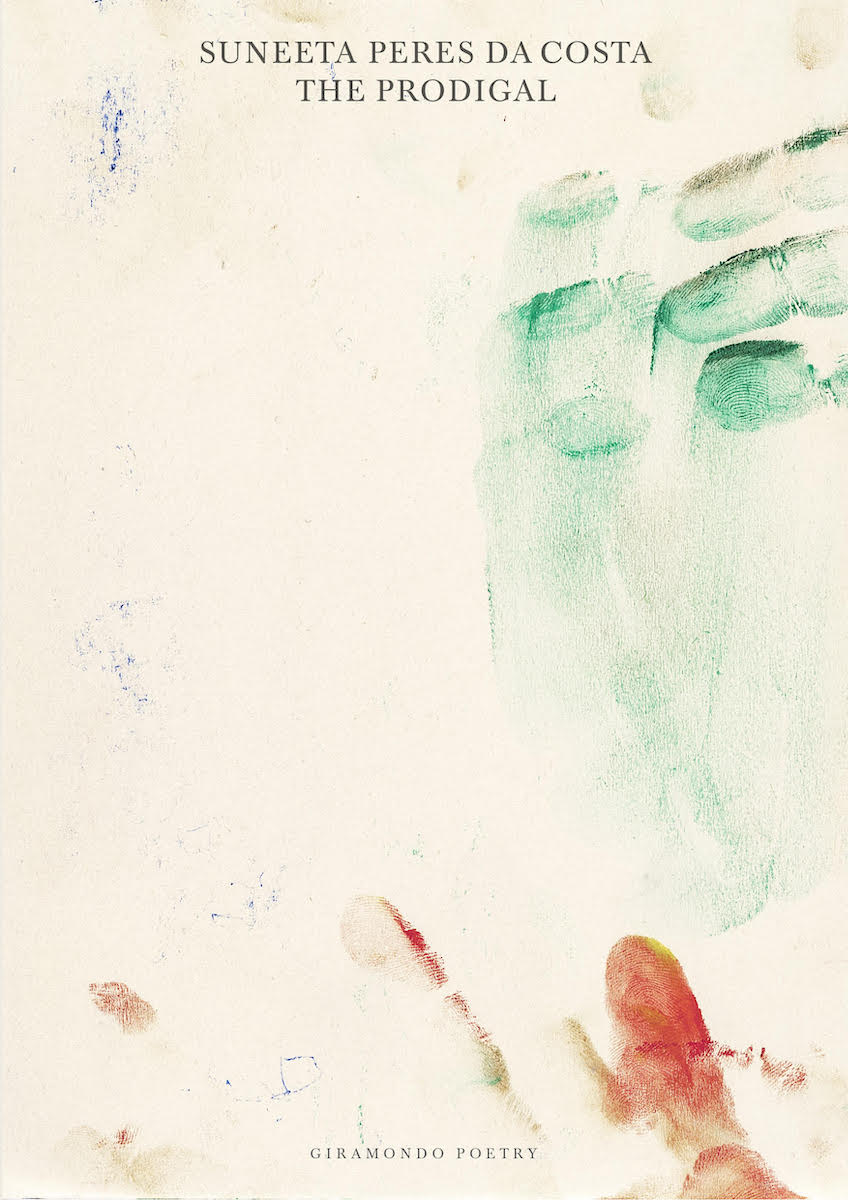
 The Prodigal by Suneeta Peres da Costa
Giramondo Poetry, 2024
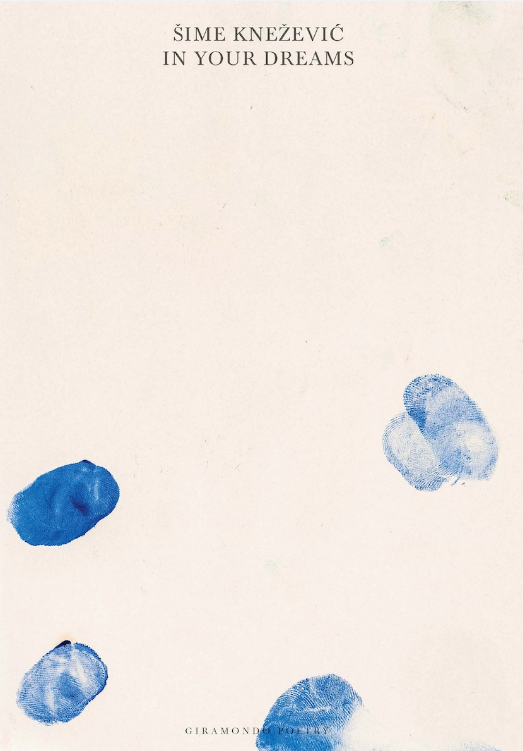
In Your Dreams by Šime Knežević
Giramondo Poetry, 2025
While I am hesitant to pathologise the diasporic experience (it is indeed a site of joy!), the effects of displacement often feel proximate to malady. I am always cautious to frame diaspora in such ways – it would not be genuine of me to pretend as if it were always a joyful experience, or something that I have never felt ashamed about. And there is guilt in that shame. Suneeta Peres da Costa’s The Prodigal (2024) and Šime Knežević’s In Your Dreams (2025) stoke the fever in my heart that aches and involuntarily turns to ugly feelings, pleated over and over as I make sense of my place in relation to contemporary Australia and my ancestral homelands. Theorists of the diasporic ‘condition,’ such as Homi Bhabha and Rey Chow, have rightfully oriented our discourses beyond the essentialist binaries of host and home, and illustrated how generative the hybrid sites and entangled scenes of cultural identity can be. From these interstices comes the diasporic poetics that makes sense of the in-between. Peres da Costa’s and Knežević’s collections probe at the seemingly unproductive and ugly feelings arising from the liminality of displacement. The diction of malaise connects these collections, speaking to the ugly affects held in the body. What of homesickness? What of the viscerality of guilt, longing, and displacement? Indeed, the difficulty of discussing the diasporic experience without the language of illness indicates some of the ways by which displacement is embodied.
Suneeta Peres da Costa’s The Prodigal is her debut poetry collection after a literary career writing award-winning novels and plays that engage with diasporic experience. She pays detailed attention to the abundance of voices that constitute a sense of place, and the surprising resonances between stories and symbols from her Goan heritage and suburban Sydney upbringing on Gadigal land, weaving these threads together into complex fabrics and scenes of diaspora. She brings this same attention to The Prodigal, with her beautifully tactile poetics that show scenes abundant in materials, diverse beings, and sites of encoded meaning, whether in architecture, rich vegetal landscapes, or harsh terrain.
In The Prodigal, Peres da Costa locates diaspora in corporeal experiences of place and the various entities that constitute it. The intensity of geographic and cultural distance manifests in the body, which holds its resonances and contradictions in anxious tension. The collection begins with a group of poems that draw on travel literature, Peres da Costa inventories affects across the Indian subcontinent. She later turns to suburban Sydney, and her poetic mobility exposes proliferating entanglements. I am cautious of reducing The Prodigal to diasporic sensation, particularly where Peres da Costa’s textural poetics tangles with a rich array of the “frighteningly tentacular” affects of love, friendship, and artistry (‘Soft-shelled,’ 34). Furthermore, she draws out the underspoken violence in the constellations of gender, caste, and class. With that said, read alongside Knežević’s collection, The Prodigal shines as a powerful evocation of the ugly uneasiness of displacement and return.
I loved most the group of poems beginning with ‘The Prodigal’ (1-2) through to ‘Going to the River’ (14-15), which depict a traveller returning to their ancestral homeland, making sense of identity, past, and present. Drawing on a Christian referent (and, doubly, on the Portuguese colonisation of Goa and its cultural legacies), the Parable of the Prodigal Son mobilises a suspicion of return just as it deconstructs the promise of a welcoming embrace in a home that has not remained static since departure.
For Peres da Costa, necessity and abundance are constantly under tension. Recalling the prodigal son who squanders his inheritance, the traveller in these poems lives a threadbare, itinerant life.
             […] Her sandals – loose from
the monsoon – had been repaired at mochī
twice over; and the clothes she had taken
quickly, in the dead of night, slipping by
undetected while the watchman slept –
yellowed, grown threadbare. Legs sore
from wandering, she quenched her thirst on
salt lassis in random pure-veg restaurants,
counting her cash and days

(‘The Prodigal,’ 1)
This is a life of uncertain wandering, its effect on the body produces illness and deterioration, with sore legs, vomiting dogs, and doctor’s offices.
Yet, Peres da Costa also paints an abundance of reciprocal relations through her travel poetry situated in dynamic and affecting spaces. Moving from the “temple stall in Tiruchirappalli” in Tamil Nadu to a brief romance in Rishikesh and through the “mountains, ranges – called Dhauladhar,” the speaker walks through rich scenes of the various voices and landscapes of the Indian subcontinent, encoded with cultural and historical meaning (1-2). Her use of tactile language emphasises the materiality of the landscape, and she reads materials and bodies as texts that mutually inscribe meanings upon the other.
Reeds stuck to her unwashed hair
and her cheek was bruised from sleeping
on the long string of tulasī beads she’d
bought at a temple stall in Tiruchirappalli.
Unbeknown to her they would tattoo
her skin in the night, writing their faint,
inscrutable calligraphy.

(1)
Through relations of reciprocity, these many meanings accumulate. ‘The Prodigal’ ends on this note of abundance:
                                        […] It hardly mattered
she could not identify them by name, for their
choruses swelled in her, soon grew unmistakable.

(2)
At the same time, the meanings derived from these encounters of bodies and materialities are not neutral, and Peres da Costa paints haunted scenes with unsettling implications. Gendered and caste violence are present, such as on the doctor’s door that states “[s]ex determination of foetus not performed here” (2). Not limited to these more overt forms, Peres da Costa’s poem ‘In My Father’s House’ (3-4) sketches out how domestic space is also haunted and scarred by history. The imagery and aurality of this poem is arresting. In the father’s house (which is not understood as home), empty dark rooms are unhomely and kenophobic. The scars of memory in this space are unparsable, but undeniable. Where “[g]raffiti of old wounds cover the walls” and “limestone is pocked and shell-shocked,” all is liquid and senseless: “Teacups brim / with water and madness,” made of “Macau china” that draws out Portuguese cross-colonial connections (3). Memory lingers in ineffable but simultaneously concrete ways, the speaker’s grandmother “shout[s] obscenities at / invisible soldiers,” and her brothers are stuck in “habits they learnt early and / cannot break” (3). The unhomely house as a site of memory becomes a site of madness and malady as the speaker’s father wallows in a deep fever. Where space (especially that of the domestic) grounds the construction of identity, Peres da Costa reminds us that the space of memory is fraught, the haunted miasma of histories unspoken.
Poor banished children, I shout, my voice echoing
through the empty rooms and into the night,
shattering the nacre of ancient windowpanes.
Saibini! I call, but the Goddess does not answer,
the Goddess goes on smiling, silent in her shrine.

(4)
Beyond these first poems, the latter portions of Peres da Costa’s collection are relocated to suburban Sydney. I am drawn especially to the poem ‘Roses’ (25-26), which connects in generative ways to the earlier poems. Peres da Costa’s visceral and vibrant diction paints an Australian school-girlhood through the lens of diaspora. A hyperawareness of the signifiers of cultural difference is connected to the anxiety of a burgeoning womanhood, expressed through a menstrual poetics. “Embarrassed” about how her mother wraps a bouquet of roses with “reused butcher’s paper […] stained with lamb’s blood,” the speaker is pricked by the thorns and seeks to hide the bloodstains on her uniform (25).
I took them from her careful hands;
kissing her quickly, worried about
missing the bus, about being late, being
noticed – but also longing to be seen.

(25)
The enjambment emphasises the anxiety of being perceived as different. This resonates with my own experience of an Australian girlhood embarrassed by its own hybridity, again manifest in Peres da Costa’s “mortification of cucumber, cheese and / chutney” (25). Uneasy, also, about the burden of “hips, buds, petals, anthers, / ovaries – stigmata of her blighted gift to me,” Peres da Costa examines the ugly, fearful affects of girlhood and cultural difference (26). These are made alike, as bloody stains that seep out from shame, a wound situated in the body.
Returning to the travel poems to explore this shame further, I note that in my first time reading The Prodigal I was immediately drawn to certain expressions of guilt. A sense of guilt emerges when searching for cultural meaning in psychic attachments to the space of a past home. Yet, attempting to assuage this guilt – by returning to the embodied, living, and evolving physical space – results in a disjunction of expectation.
The buffalo rakhno salutes you with a hearty
dev borem korum; whereas you want to talk
buffalo he wants to know whether you’re married
yet and whether your salary exceeds US 50K?

(‘Going to the River,’ 15)
The father of the prodigal son may await his son with a feast, but our ancestral lands do not wait for us. The mismatched expectations in this intercultural exchange ground an uneasy sense of difference from the ancestral homeland. Cultural referents are fleeting and partial, such as the “ceremony whose name eludes you” and the terrain “encrypted” with meanings that you have not accumulated in your absence (15). Similarly, the poem ‘Shimla Street Cobbler’ (5-6) compares a broken bag strap in need of repair with the speaker’s awareness of her broken linguistic ability: “suddenly aware / I had no word for ‘mend’ in Hindī” (5). There is a liminality in the speaker’s sense of self, a sudden self-consciousness of difference upon return. I am drawn to how Peres da Costa explores the complications of repair together with the shame of diasporic partial knowledges.
Courtesy of Casa Italiana Zerilli-Marimò, New York, NY.
Note
These translations appear in the collection Document, published by World Poetry Press in April 2025. They are reproduced here with the publisher’s permission.
I
Flanking the empty tree the ants’
tents seemed to remember what
madness it was to exist. They had rich
columns of substitutes flung out
in the itch of the virulent rind
like a godly god.
Outside I saw my every effort marking
itself with saliva at the game going badly
in green undulations.
Which forest of unsuspecting firs restored
my lost strength?
And sometimes they die on the treetops
the grim squirrels within the calibre of
a long tail; the thick grip of
proliferous arches and thorns hasn’t necessarily
any meaning. But I’ve also seen
the sacrifice of animals come in handy
and it’s not always beneficial to be a
maremma for the humiliated deer defeated by the
cold.
Questioning nature I saw only one
false step: that of the envious man
of maternal nature who castrating himself
obeyed primordial instincts. They
destroyed all sorts of placid occasions
at the meek vivification of life that crowning itself
with successes could no longer bear
the squalid vicissitudes of the exiled.
And they opened masks to such an involuntary
wish for peace on earth. What could it have been
this arid genius that put so many obstacles
in the way of a richer safeguard? Maybe
life is defeated and has no species resolved
to fight evil.