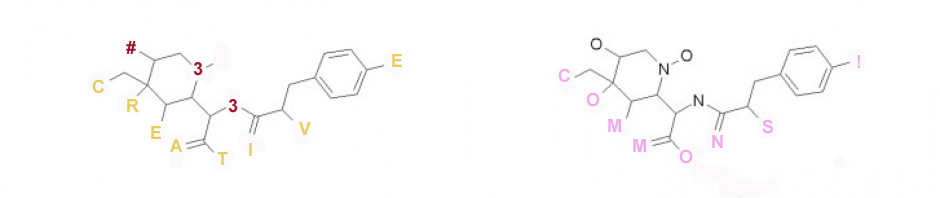
Still Life

You enter the house but as an actor
A photographer in Bentleigh East
Likes technology but LOVES people
You kiss me once and try the word—love.
I lack, unlike the others, a menagerie of identities.
Photographs of air surround me.
Then the dogs cross the road, some alone, others together.
You, who call yourself savvy, defriend me. I can’t penetrate the cats’ in-joke.
Everything vegetates.
I’m seeking resonance.

Posted in 41: CC - THE REMIXES |

WA[RRA]NTED, [MIS]TAKEN (V)

If you are having trouble viewing this video, try opening it in a new window.

Read a plain text version of this piece.

Read Jane Gibian’s “Wanted, taken”.

Posted in 41: CC - THE REMIXES | Tagged

at exactly 9pm

do all corner shops have to die
with peeling skin and
rusted chairs, shadows
where Christmas lights
once
rested
and spread magic
for ice-cream, car-ride-kids?

I am convinced the new moon
was shot there
like a bullet
streaking through clouds
and it’s now
about to break up
into ash

a solemn line of grandfatherly canons
fill a deserted beach
and when you pass them
traces of coals
blink from the sand

if you see a light in my office
at exactly 9 pm – come up
you’ll want to toast this
moment
watch me do this
empty my egg baskets
listen to me telling you

this is how you jettison a load
slowly
but with forgiveness too

Posted in 41: CC - THE REMIXES | Tagged

BLACK & WHITE LITANY

He is convinced his bullet points are monochrome
new moons when all’s said and undone.
He walks through a red door larger than the house entire,
When it grew dark we cried , the cry of the godforsaken gull

Posted in 41: CC - THE REMIXES |

Dogs in space (Remix)

Then somewhere in a kitten comes the lonely panic. The people are a people. The skin was of the dogs and the old woman greeting the wind, the noise. Then the others cross the dogs, their backpacks for viewing. It is barely dawn with one eye stuffed with the road of sleep. The bus lid is a dog otherwise empty and one shrieking foot something terrible. The others begin to arrive to bring litter with a wooden cart. Silently departs an old woman, an old man alone grows standing or sitting in the dogs doorway. And at the bus stop Patagonia blows tumbleweed like taxis on market day. The traffic lights dreams are strangers. When she stops against the day like evening, like its lee, boarded store windows as if her wagon there carries an axe with its corner, and another closes the lid on one wheel, pedestrian. Three dogs, some each other alone, arrive by the ledge of some of the passengers absence, near her cart ajar. She arrives like legs before the raw wind down a street vacant as, the dogs mill there of the next and are closed storefronts, perched with peeling. They and some corner shop props are one, sturdy there in the lights together, like others.

Posted in 41: CC - THE REMIXES |

Common I (DISCO REMIX)

I lack, unlike the others, a menagerie of identities.

I was a bright-eyed ingénue
at the agency after-party, coked-up, Scarlatti
played his cement rib,
the tulips were thoroughly roasted, narcotic, terse.
Who was Allen Ginsberg?

(The incline runs to golden water…)

Now I lap up macadamia fuzz: chukka
chukkachukka-chuk-chuk-chuk.
The ceiling bends in, elastic;
the illiterate sea streaks out with wild laughter.

I am passionate about the size and height of my desk;
the sky has become a pin-prick through the musk.
Take the broken things: to be built for fighting,
awful profundity in the wind;
your decomposition is who you are.
Ask the beads of chromosomes, how many times has
art rhymed with corazón?
Inky heart saltos huyendose…
you’re a tool.
The Mayans feel vanquished;
his bullet points are new moons.

I sleep with your mouth open
then the dogs cross the road, some alone,
others together, to the lonely panic of the pedestrian lights.
The cats have their conference,
and it is a most pleasant banter:
though is though, not that…

I become blind:
there is no doorman;
fungi phosphoresce, socialist and tarmac.

You saw me first.

Posted in 41: CC - THE REMIXES | Tagged

ZANE’S ORBITAL BRIDE TAKES A BULLET IN THE INTERIOR: Infinite Chest Scene

fifteen degrees scratching
but not a lot

you enter
but not a lot

the stranger looks back
but not a lot

toward three windows
but not many

slightly ajar
but only short

the frame becomes a house
but only one

a corridor wild with laughter
but not a hate

a dune collapses
but far away

above Nathan’s child
but not mine

elastic orange actor
but not him

the camera inclines
but not at me

swings, runs, slips
as you’d expect

to golden water
but not the death

you turn to a mirror
there is me
there is him
there is her

the ceiling bends
this is it

Posted in 41: CC - THE REMIXES |

DOGS IN SPACE 2

Somewhere in Patagonia, to the lonely panic
of the pedestrian lights
an old woman with a wooden axe
carries a cart, vacant as dreams.
At the corner shop, peeling skin
with one eye, she stops
three legs perched on something terrible.
It is barely noise.
Market day. The bus arrives on foot.
Then comes the mill, shrieking,
its windows boarded
as if empty. Dawn.
The people are stuffed with tumbleweed.
The dogs are still dogs—
some alone, others in taxis
their backpacks
ajar for viewing.
Traffic lights litter.
Passengers bring props.
The closed storefronts cross the road
greeting each other silently
like strangers standing
before the raw wind.
An old man grows sturdy
like absence. A kitten
departs like evening.

Posted in 41: CC - THE REMIXES |

INADEQUATE STOVETOP (REMIX)

i lap your macadamia stroll
i espy the roof rack of the world
i try on sunglasses, a sign of your formal awareness
anyway you’re bubbly, becalmed as wool

i find in my head no tartan gift wrap
i fuck around in your wax dreams, in your opinions
your vaseline affixed to my clothes
my jaw speculates

your gorgon girls venture nakeder
a shark net hole, a smoker, a maverick snorkeler
both you and i are fictional

i bend your spine like a talking point
we joust sand like djinns
the day bleaches your umbers

i am your footnote
i am your bank queue
i hunt your legs for thunder

you are my party spider
you are my lime tea, my vapour traversal
you’re a tool
you enter me like a detail

i am bereft of for-sale signs, side-paths
i am a picnic of wind
dwindle me, rub me with quarters
i straggle

you are the bream that flounders
i am you without worries
you blow across this sentence where
i am telegraphed whole

Posted in 41: CC - THE REMIXES | Tagged

Dogs in Space (Remix)

In Patagonia: an axe, a kitten, a street
The closed storefronts: vacant as traffic lights
An absence: barely dawn
On her peeling skin: dogs begin to greet her
Something terrible: a wooden cart with one wheel shrieking
Backpacks: stuffed with strangers
Taxis: stuffed with noise
The day: grows like a dog
The evening: crosses the road like a dog
Litter: a panic of light

Posted in 41: CC - THE REMIXES | Tagged

corduroy linesman

for pascAlle ginsbürt


when i was six years old
my mother made a corduroy cover
for my tongue / got me
to stand in front of the mirror
and repeat the word ‘manage’
until saliva had fully impregnated
its cloth ribs

importantly the corduroy was navy blue.

elected king
a fresh stick of charcoal
proposes its use from my bedside table
each morning / i am forced
to draw around my rare foot
onto a white floor
to prove who i am

importantly the charcoal is heart black.

who is i was
briefly inside a photographer
briefly inside my name
i ride the pony / through a biopic
that was an accurate quotation
from the only person in the world
who does not have my name

importantly his name is not mail box red.

Posted in 41: CC - THE REMIXES |

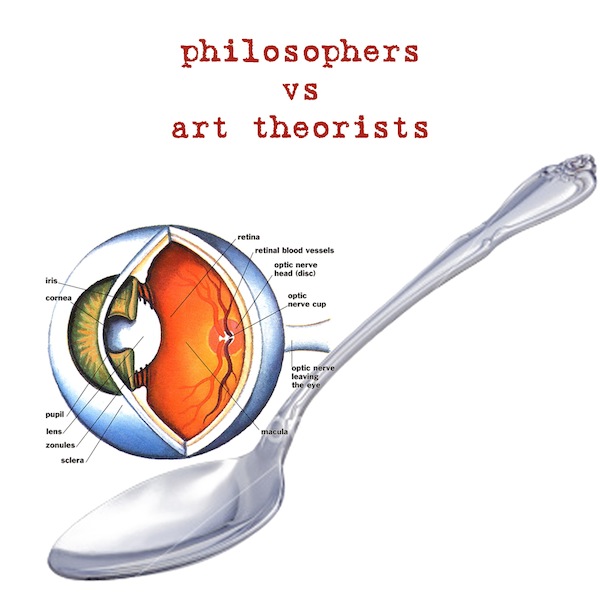
Particulunar (Eye and Spoon)

Posted in 41: CC - THE REMIXES | Tagged

On Creative Commons II

The notion that poetry is primarily self-expression has often seemed to me a seductive (but conveniently commodifiable) mistake. We all like to think that we are makers of language, but anyone poking around in the engine of poetry uneasily realises that it is just as likely to be the other way around, that just as DNA shapes our morphology, language is the shaper of our consciousness.

What, then, is the self that this language is supposed to express? Might we not be, instead, expressions of language, that parasitic virus that both makes and unmakes our humanity? Is it possible, for example, to actually possess a poem? Is it more that a poem possesses us? (Is this why something in the primitive lobes of my brain tells me it isn’t right to sell poetry books, that poetry should just be given away, like air?)

All the poems I have written are remixes of all the language I have ever heard, filtered through the accidents of my physical being. I am a pattern-making animal, and words have been my means of play: I make and remake those patterns, seeking not so much to express myself, but to find some kind of unexpected beauty, however fragmented, however broken.

If the pattern forms a resonant shape, it might strike a vibratory response in the mind and body of another; it might generate the complexities of conscious emotions – not only the emotion itself, but its intellection – that I call feeling. Art, it seems to me, can’t do anything more than that: but that is surely a great deal, in a world which so often seeks anaesthetisation.

The more a self intrudes on poetry, the less poetry is able to play, the less able to discover its own strangeness. A self nails language down, so it will behave, so the poem won’t compromise the vanities of the writer. It is poetry which walks naked, not the self: but try telling that to the self, who has constant nightmares about walking down the street in its pyjamas. This is why poetry aspires to a condition of anonymity.

These musings are, of course, prompted by the experience of editing Cordite’s Creative Commons issue. I loved reading the initial submissions, and was proud of the diversity, ingenuity and beauty of those selected. Reading the remixes has been a joy, a singular act which, in its continual echoes and variations, has felt a little like listening to a baroque ensemble. These individual works have, by virtue of their genetic exchange, become expressive parts of a single and vital thing.

I was most of all startled by the quality of the remixes: I thought it very high indeed. I hope it’s not impertinent to think that this reflects the joyousness of pattern-makers released to play, finding in their anonymity a liberated language, an estrangement from themselves in which they might create moments of unanticipated feeling and beauty.

In short, what you have here is a microcosm of how cultures actually breathe and reproduce, released from the constraints of corporate or individual ownership. I hope you enjoy reading these poems as much as I did: and my thanks to all the generous contributors, both the poets who originally offered their work, and those others who came to play on the creative commons.

Posted in ESSAYS | Tagged , ,

The man who finds himself amusing

Cara clowse in Cowse1

The photograph is a forest
and pin-prick enchantment.
Cords tighten.
Chords brighten,
managing running images.

Touch the invisible!
Hands buzz simply in a new direction.
I am empty,
strangling,
twirling, shivering.

Talk of meaning?
useless nothing.
Empty the hand.
Names of blood
evaporate.

Misread the bones!
Anachronism falters.
My throat trills your ears with a quietening curse,
the other identities as ghastly
as the cycle of nature.


1. Mediaeval Cornish — nowadays carrek los yn cos — meaning “the hoar rock in the wood”

Posted in 41: CC - THE REMIXES |

I will grab their bytes and they will secretly not like it

[audio:http://cordite.org.au/audio/I-will-grab-their-bytes-and-they-will-secretly-not-like-it_MP3.mp3|titles=I will grab their bytes and they will secretly not like it_MP3]
I will grab their bytes and they will secretly not like it (1:16)

Produced by Klare Lanson

Posted in 41: CC - THE REMIXES | Tagged

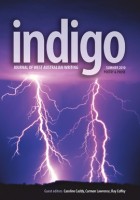
Zoe Deleuil Reviews Indigo

Indigo: Journal of West Australian Writing Volume V edited by Caroline Caddy et al
Tactile Books, 2010

In the interview with Tim Winton in this issue of Indigo, the acclaimed author provides a valuable reminder: it’s all very well to go to literary parties and drink lattes with the top Eastern States editors, but writers must also write. And read, widely. And, in Winton’s case – and that of many of the writers in this collection, it would seem – there’s no harm in lurking on the edge of the Indian Ocean, picking through detritus, gazing out at surfers and then returning, again and again, to the blank page.

Continue reading

Posted in BOOK REVIEWS | Tagged , , ,

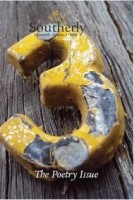
Heather Taylor-Johnson Reviews Southerly

Southerly 69.3: The Poetry Issue edited by Kate Lilley
Brandl & Schlesinger, 2010

The poets in this special poetry issue of Southerly stand for what is now, what is exciting/experimental and what is quality. But did Kate Lilley hand pick most of these poets, ensuring the issue would be tight, stylistically, and adhere to a chosen dogma? She does say in her intro that ‘Of the many poems that turned up in my inbox, already pre-selected by their authors, these are the ones that struck me most’. I’m not going to fault her for being non-inclusive. I say job well done. Lilley is a great pick as editor; her sensibility gels with the type of poetry Southerly tends to promote, and in this book-length collection of only poetry and poetics, Southerly is as strong as it’s ever been.

Continue reading

Posted in BOOK REVIEWS | Tagged , , ,

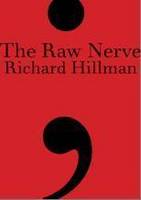
Michael Farrell Reviews Richard Hillman

The Raw Nerve by Richard Hillman
Puncher & Wattmann, 2009

Richard Hillman’s new book has a compelling red cover. A giant black semi-colon portrays a synapse letting through the electrical signal of the poet and book to its readers. A brilliant design, but one hard to live up to. The poems in The Raw Nerve are, for the most part, of ordinary domestic life; a kind of poetry no easier than any other to realise. The trap that Hillman falls into occasionally is presenting, for example, the subject of parenting, rather than using that subject sufficiently to make a poem.

Continue reading

Posted in BOOK REVIEWS | Tagged ,

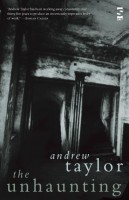
Libby Hart Reviews Andrew Taylor

The Unhaunting by Andrew Taylor
Salt Publishing, 2009

The Unhaunting is Andrew Taylor’s seventeenth book of poetry and comprises work written between 2003 and 2008. The collection is divided into five parts. The first, ‘The Importance of Waiting’, acts as a tidy introduction to the book’s themes of mortality, elusive truths and the environment, both as interior and exterior. Taylor begins with a vivid portrait of Perth’s suburban landscape where quiet concern spills over into the everyday. Poems become touched by apparition and by the possible threat of cancer returning to the poet after a period in remission. Even the landscape seems predisposed to such ambiguity and to its own threat of extinction. Death, dying and ghosts from the past actively haunt the pages of this book. These ghosts are not necessarily always human, often they materialise as concern, emotion and memory. They linger in a bold light and do not fade easily.

Continue reading

Posted in BOOK REVIEWS | Tagged ,

On Creative Commons

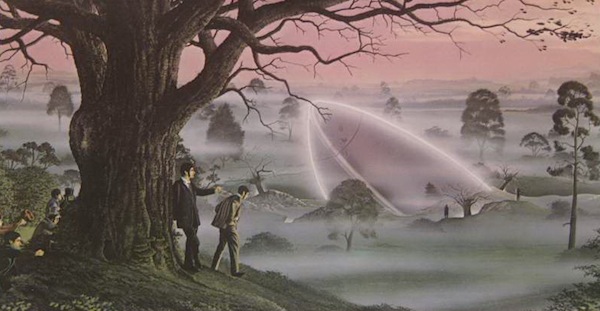
“Henderson,” he called, “you saw that shooting star last night?”
“Well?” said Henderson.
“It’s out on Horsell Common now.”
“Good Lord!” said Henderson. “Fallen meteorite! That’s good.”

H.G. Wells, The War of the Worlds [1898]

Welcome to Creative Commons, the thirty-third issue of Cordite Poetry Review! With this issue we celebrate our tenth year online, and while that might not seem such a long time ago, consider that way back in 2001 FaceBook, WordPress and MySpace hadn’t been invented yet; neither had the Web 2.0 practice of joining capitalized words together to make BrandNames; and blogs were so far outside the mainstream that not many people even knew what they were, or whether they should care.

But enough about history. Here at Cordite we’ve always been about looking ahead, even when we have no clue as to what lies in wait for us. Yes, it’s all about “moving forward”, to use that asinine phrase much abused by the current LaborParty (sic) leadership. But it’s about more than that. It’s about trying to get as far away from the past as possible, in the least possible time. You might think of it as staying modern, and that’s fine with us.

Staying modern is also part of the reasoning behind our modest site revamp, the design for which is based on the standard Twenty Ten theme that now comes with every download of WordPress 3.0. Love or hate it, let us know. All we hope is that the darned thing works. And after ten years of fiddling with source code, cascading style sheets and various content management systems, expecting a website to work seems like a not unreasonable demand.

Peter Goodfellow, “On Horsell Common”, album artwork from Jeff Wayne’s musical version of The War of the Worlds.

As for the contents of Creative Commons, in lieu of a proper editorial from our guest poetry editor Alison Croggon, let me just say that I’m thrilled at the diversity of the talent on display in this issue. Thirty-odd poets writing in a range of styles, from good old free verse to the (emerging?) bullet-point-list-poem genre; from the nautically-themed epic to an avian short form poem; and from google-flarf to split DNA strands that look like jeans.

I could go on in much greater detail but the real joy lies in wait for you, dear readers. Despite our usual practice of calling for poems on specific themes, for this issue we decided to open submissions to all forms, in the spirit of Creative Commons. And it is in this spirit that we have now made the poetry in this issue available as downloadable Word (and text) documents, so that you too can share in the fun.

Inspired by Creative Commons Australia’s Remix My Lit project, we invite you to download these poems, remix them, chop them up, add a little gravy and generally act like a word salad DJ. Then simply send your remixes to us, and we’ll publish the best ones right here on the Cordite site, under a Creative Commons license.

If that all seems like too much hard worK, there’s a wealth of feature content available in our thirty third issue as well. We’ve got ten new feature articles, including five takes on creative commons and copyright, and a special feature on Jonathan Ball’s Ex-Machina project. We’ve also posted six new audio tracks, a couple of images and our usual fortnightly reviews. Also, be sure to check out the slowly unfolding Zombie Haikunaut Renga, or add your own ku!

On behalf of our contributors, our guest poetry editor Alison Croggon and my fellow Cordite editors, I sincerely hope that you will enjoy this bumper issue. We’re certainly very proud of the direction in which the magazine is heading, and hope that you’ll consider joining us, on Creative Commons.

“But it’s something more than a meteorite. It’s a cylinder — an artificial cylinder, man! And there’s something inside.”

Posted in ESSAYS | Tagged ,

103 Product Searches for Poetry …

POETRY SEARCH (PART 3): 103 Product Searches for Poetry Characterized Differently by an Assortment of Commonly Associated Adjectives

Task: Search for the word “poetry” preceded by various adjectives that are often used in conjunction with it.

Technique: The images of these products are obtained by saving the image of the first product listed after having performed a product search for the word “poetry” preceded by an adjective. In every case, the words are paired together and placed between quotation marks. Example: “good poetry”. The monetary value listed for each product reflects the price of the product as listed on the site from where the image of the product was taken.

Location: Astoria, New York, USA (40.766193,-73.918376)

Duration of Search: 3:09 pm – 6:22 pm

Date of Search: May 30, 2010

Search Engine: Google Product Search (Beta)

Browser: Safari 4.0.5

Outcome: 87 Searches yielded results, while 16 searches “did not match any products.”

Result Organization System: Alphabetic

Searches not matching products:

    conceptualist poetry (did not match any products)

    confessionalist poetry (did not match any products)

    expensive poetry (did not match any products)

    flarf poetry (did not match any products)

    gurlesque poetry (did not match any products)

    hypertextual poetry (did not match any products)

    infamous poetry (did not match any products)

    least favorite poetry (did not match any products)

    neoformalist poetry (did not match any products)

    oulipo poetry (did not match any products)

    projectivist poetry (did not match any products)

    quietist poetry (did not match any products)

    trendy poetry (did not match any products)

    uncreative poetry (did not match any products)

    unpopular poetry (did not match any products)

    vispo poetry (did not match any products)

Posted in 40: CREATIVE COMMONS | Tagged , ,

Jonathan Ball, Ryan Fitzpatrick and Jay Millar: Ex Machina and the Creative Commons

Jonathan Ball: EX MACHINA: Overview

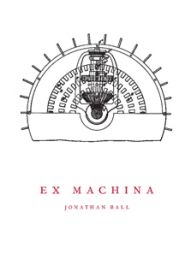
Ex Machina (BookThug, 2009) is a long poem written as a series of poetic and philosophical statements. Each page contains a titular number, and each line of the poem refers the reader to another page through a footnote. The book thus resembles the Choose-Your-Own-Adventure books of yesteryear, only instead of developing a progressive narrative, the system recurs and loops endlessly. If one attempts to read the book as directed, not only will one never reach a terminal position, but certain pages that exist outside of the system will remain forever unread. Continue reading

Posted in ESSAYS | Tagged ,

John Kinsella’s Poetics of Distraction

Around 1958, the American artist Robert Rauschenberg undertook—over a two-and-a-half year period—a canto-by-canto ‘illustration’ of Dante’s Inferno. Rauschenberg’s method was the comparatively restrictive technique of solvent transfer on paper, with watercolour, gouache and pencil, in small (14½ x 11 inch) format—as distinct from the ‘flatbed form’ of his earlier large-scale combine paintings and in anticipation of his later use of industrial silkscreen processes. The Dante ‘drawings’ were limited to direct one-to-one quotations of found images, transferred from magazine pages or other printed matter, in what approximates a grid-like arrangement. Each transferred image was, due to the constraints of the transfer method, ‘framed,’ producing an effect that in certain respects mirrors the structural organization of Dante’s text—of loggia within loggia, of categories within categories, of a prolific regularization.

In an essay on Rauschenberg, art critic Rosalind Krauss makes the observation that the Dante drawings work in tension with the more ‘open’ forms of his combine paintings, affecting a ‘mirrorlike photographic surface’ in which the organizational logic, or techne, of Dante’s work is duplicated. The ‘veil like character of the image,’ however, produced by the transfer technique, introduces a fundamental ambiguity into the notion that these ‘drawings’ in any straightforward sense illustrate Dante’s text.[ref]Rosalind Krauss, ‘Perpetual Inventory,’ Robert Rauschenberg, ed. Brendan W. Joseph (Cambridge, MA: The MIT Press, 2002) 101.[/ref]

Krauss’ ‘reading’ of Rauschenberg commences from a distinction attempted by Roland Barthes in a by-now notorious essay on photography, in which he identifies a primarily indexical function of the photographic image—which is to say, a type of one-to-one correspondence between the image and its ‘object,’ stripped of connotation (the truth, as Derrida says, in pointing). The image itself is the product of a mechanical procedure (like Rauschenberg’s solvent transfers)—a procedure which, independent of any other consideration, is strictly an optical, photochemical process. Its ‘content’ points to its object. Whatever autonomous interpretive framework we seek to surround the image with, or impute to it, will inevitably be confronted with ‘the allegorical requirement of a master text.'[ref]Krauss, ‘Perpetual Inventory,’ 113.[/ref]

This at least was the conventional view inherited from certain mimetic traditions. What photography, by way of montage (in film) and collage (from Dada onwards), does to this view, is to explode the notion that the image depends for its ‘meaning’ (its decipherment, so to say, as though it were a rebus simply waiting to be undone) upon external referents. Consequently—in contrast to the mimetic view—not only is the image shown to ‘invoke connotational fields,’ as Krauss says, but to constitute its own reality—an idea perhaps most forcefully advanced in the 1950s by Barthes’ contemporary André Bazin, whose film theory argues for an ‘ontology’ of the cinematic image: that the reality of the cinematic ‘image’ is no less real than objects ‘in the world.'[ref]André Bazin, ‘Ontologie de L’Image Photographique,’ Qu’est-ce que le cinéma? vol 1: Ontologie et langage (Paris: Editions du Cerf, 1958).[/ref]

In discussing Rauschenberg, Krauss sees the Dante drawings as ‘a work whose very fabric is woven from the rich multiple strands of associations'[ref]Krauss, ‘Perpetual Inventory,’ 97.[/ref] — constituted both by the internal organization of the image, the techne of its composition, and its referential recodings of Dante’s text — both in terms of its topical ‘content’ and of its structure (the one appearing, in any case, to mirror the other). Rauschenberg’s image thus, in a sense, appropriates and reconfigures a Dantesque image logic. Where Dante’s text suggests certain pictorial content—as it were (in Canto IV, Dante’s ‘roar and trembling of Hell’ becomes a racing car; ‘putrid slush,’ a [presumably stinking] fish)—Rauschenberg’s ‘transfers’ evoke a metaphoricity that extends to the composition of each ‘drawing’ as a whole (within and between ‘images’). Insofar as the form of Rauschenberg’s work evokes a type of ‘engine’ of rigid designation—Barthes’ indexicality—it does so by appropriating the very rigidity of Dante’s prodigious stratifications (the circles of Hell, the mount of Purgatory, and so on.)

Rauschenberg himself commented upon the way Dante’s moral allegory coincides with a structural system—a coincidence which Rauschenberg felt increasingly compelled to account for in his own work—responding in particular to ‘the self-servicing of the text disguised as righteousness.’ On a practical level, this entailed for Rauschenberg a number of questions, of which one in particular was to address the relation of abstraction to figuration. The discipline of Rauschenberg’s ‘subjection’ to the text of Dante demanded an examination of the very nature of that subjection and of its articulation at the level of the ‘image’ and of the ways in which its reality is constituted. Krauss asks: ‘does the avowed desire to break with abstraction … demand figuration and textual support?'[ref]Krauss, ‘Perpetual Inventory,’ 113.[/ref] Or, might we say, is (dis)figuration the outcome of an attempt to come to terms with the apparently abstract status of the image itself and of its structure? The result, in either case, is a serial, disciplined regularity which derives from a ‘matrix of slippages’ and ‘veils’ a system. Not the closed system of Dante’s organized vision of Christian metaworlds, but the generative recombinatory system of textual structures that underwrites it. For this reason we can say that Rauschenberg’s Dante drawings are critical, and neither merely denotative or allusively connotative.

Posted in ESSAYS | Tagged ,

The Call to the Creative Commoner: The Digital Humanities and Flexible Copyright

The digital is the realm of the open source, open resources. Anything that attempts to close this space should be recognized for what it is: the enemy.
~Digital Humanities Manifesto v2.0, Point 12
This passage within the manifesto for the Digital Humanities falls under the category of fightin’ words: it is clear that nothing should be allowed to come between the student of the Humanities in their quest to utilise the abundance of new digital media now at our collective fingertips. Like other manifestos from the past, there is a certain implication that nothing must stand in the way of the revolution. If you try and stand in the way of the open source movement, then you are a counter-revolutionary. You may find yourself blindfolded and up against a crumbling wall, waiting for the collective report that will remove you from the picture and allow the future utopia of free knowledge to inch that little bit closer to reality. Like the hard-liners of the FOSS (Free Open Source Software) movement, the Digital Humanities army marches proudly forward waving its banners and imagining a bright, free future for the Humanities.

Those who have heard the story or Robin Hood will know that the royal reservation of certain tracts of the English countryside – dating from the days following the Norman conquest – has been translated through popular culture into a classic topos of ‘the man keeping you down’. The transgressions of those scholars hoping to utilise the resources of this verdant forest are met with harsh penalties from our digital sheriffs. Only the king may hunt the king’s deer, the peasantry are strictly forbidden from gathering wood or grazing their livestock. Trespassers will be caught and punished.

The landscape of digital data awaits exploitation, and yet the sheriff and his men reserve this right for their feudal masters. By the same token, the proponent of copyright is branded the man, a faceless avatar of the disparagingly named ‘knowledge industry’ trying to keep you down, and to stifle one’s ability to create free, collaborative and creative work. The restrictive predilections of our ‘culture of permission’ has the potential to stifle or kill the nascent digital humanities. The dreaded term ‘all rights reserved’ is cast in the role of a draconian forest law enforced by the zealous copyright sheriffs of the academy and its associates, enacting gruesome punishments for those who dare to transgress the edict from on high. The ‘King’s land’ of Humanities data owned directly by our tertiary institutional magnates is not open to the Creative Commoner, and thus the property of these intellectual elite – the universities, the governments, the museums – is safe.

Is this depiction an accurate one? It is perhaps more likely that life within this new collaborative research space is a little complex than it first appears. Universities must after all protect the integrity of their research, holding onto the original productions of their researchers and shielding them from gratuitous exploitation by others. The monarch of the realm must protect their lands from exploitation by unauthorised powers, and as a result protect its inhabitant from a rampaging war-band of potential plagiarists. They have a duty to uphold as the traditional custodians of the knowledge that they generate, and they have a responsibility to protect their precious source materials so that they may be fruitfully employed by future generations of academics. They are castellans of academic knowledge, and take this duty very seriously.

As researchers in the humanities, we are faced with a conundrum. We wish our work to be protected by the mighty aegis of institutional copyrights, and yet we want the freedom to create the free and open resources imagined within the Digital Humanities manifesto. To my mind, this is a worthy dream, and yet one must protect one’s treasure in a world filled with thieves. We want flexibility of use, but in turn we do not wish for our work to be abused unscrupulously by others. We may wish to be generous in our donations of free and open research as a legacy to our peers, and yet we have interests of our own that must be protected if we are to have productive and fruitful careers in the Humanities.

The stakes are high in the copyright game now being played within our institutions of knowledge. Who has the fishing rights in this vast ocean of new digital content? The new frontier of humanities data, like any emerging body of source material, has defied efforts to reconcile itself with the time honoured traditions of copyright and intellectual property law. The old system still holds power within the academic world. Nowhere is this more apparent than in the realm of copyright and intellectual property, in which the old edict that material shall held by its creator with ‘all rights reserved’. Enter Creative Commons the twenty-first century equivalent to its historical companion, the right of common land, and the legal entitlements of the commons. Although owned by its creators, the abundant resources of the digital demesne is given to those who would utilise it under certain conditions.

The would-be creative commoner, under the mandate of ‘some rights reserved’, may take cuttings from the trees of data, fish in the rivers and lakes of enquiry, and graze the swine of their methodology upon the rich ground of the online pasture. The possibility of ‘some rights reserved’ allows for a more flexible distribution of data within a world of increasingly abundant material. It allows a compromise between the harsh and unremitting force of a full copyright, and yet retains the right to ownership over a body of information, regardless of how freely it is utilised. Credit may be given where it is deserved, debts indicated where they exist, and yet it is possible to take wood from the trees of knowledge without arbitrary and punitive retaliation. Rather than the oppression of Copyright, the Creative Commoner embraces Copyleft, a protection of intellectual property for the socialists of the knowledge world.

Flexibility of use will become increasingly essential as the praxis of Humanities researchers changes with time, shifting and emerging as a system of thought with computerised communication at its heart. The digital humanities manifesto describes itself as a genre of M’s: mix, match, mash and manifest. This principle can be extended into a new realm of academic practices, in which the new arises from a freely taken and liberally combined concoction of ideas. Consequently, the new digital humanities researcher must have the freedom to mix and match and to mash up the abundant work of their predecessors before a new manifestation of scholarship and knowledge becomes available to the hungry masses. A new wave of educational and research practises such as Edupunk and the runaway success of Wikipedia and Web 2.0 has created a generation of creators rather than the consumers of previous online content. DIY education has become a dream given form through the Open University, Podcasts, Blogs, Wikis, iTunesU and many other marvels of the new digital age. It is now the moral duty of the elites of knowledge to share their spoils, and to make education a right rather than a privilege. The museums and libraries have responded in fine fashion, and many universities have obliged generously. Nevertheless, they dole out their treasures like alms to the poor, rather than giving them the resources to grow their own intellectual nourishment.

Furthermore, the flexibility of the Creative Commons license is the conduit through which greater freedom of information (one persistent fantasy of the liberal democrat) may lead to a democratisation of scholarly research (another compelling dream). In the manifesto, it is proclaimed that “The Digital Humanities seeks to play an inaugural role with respect to a world in which, no longer the sole producers, stewards, and disseminators of knowledge or culture, universities are called upon to shape natively digital models of scholarly discourse for the newly emergent public spheres of the present era (the www, the blogosphere, digital libraries), to model excellence and innovation in these domains, and to facilitate the formation of networks of knowledge production, exchange, and dissemination that are, at once, global and local.” For this brave new world to be possible, the universities must learn to loosen their vice-like grip on knowledge. They must cease to be the sheriff and become the facilitators and architects of a new age in which their role will be drastically altered.

And what treasures await the Digital Humanities in this future! Never before has such a vast body of new information been made available for the use of students within the Humanities. At the turn of the eleventh and twelfth centuries, the Benedictine historian Guibert of Nogent compared scholars in search of knowledge to fish exploring a great ocean. Likewise, Isaac Newton famously, or reportedly, claimed that “to myself, I am only a child playing on the beach, while vast oceans of truth lie undiscovered before me”. There is an enormous bulk of potential knowledge waiting for us to use, and yet much of it is locked away under prohibitive copyrights. Many institutions have been very generous with their contributions to the ocean of digital knowledge, and yet their reaction in incommensurate with the pressures of change.

Within the deeps of this great ocean, the human mind may wander and search, drawing new and original draughts of erudition from a vast reservoir of potential ideas, in order to create (excuse the pun) ‘drafts’ for their research. The analogy of the ocean still holds currency today for students of the humanities. The name given to the vast hidden bulk of the internet not accessible to our everyday search engines is telling: the Deep Web. To my mind, this title evokes a vast and shadowed abyss of data, a digital deep in which the light of human scrutiny scarcely penetrates. Who know what horrors and wonders we may find in the blackness of this entity generated by our insatiable generation of data? Filled by the vast bulk of quantitative data generated by an increasingly efficient new class of digitally enabled intellectuals, this unknown ocean presents an unprecedented opportunity for the schools of humanities scholars playing in its nutritive waters.

What then, are we to do? The manifesto of the Digital Humanities has issued a challenge to create “an array of convergent practices that explore a universe in which: a) print is no longer the exclusive or the normative medium in which knowledge is produced and/or disseminated; instead, print finds itself absorbed into new, multimedia configurations; and b) digital tools, techniques, and media have altered the production and dissemination of knowledge in the arts, human and social sciences.” A grand dream, to be sure, and yet a new and generous copyright regime is required before this dream may come to pass. Enter the Creative Commons; a balance between protection of intellectual property and assurance of credit where it it due, and the flexibility and collaborative potential of collective creativity and curiosity. For my part, I believe that students of the Humanities have a duty to fulfil: we must be generous with our ideas and enthusiastic about those of others, and yet mindful that all ideas and material are used respectfully and with the approval of their creators. If the Utopianism of the manifesto is to become a conceivable reality, we must create a system of Copyright that makes it easy to collaborate, free to use what we need and supportive of all who wish to contribute, regardless of their origin. The marriage of Creative Commons and the Digital Humanities will produce wondrous and varied offspring, and I hope to be there when they take their first steps.

Posted in ESSAYS, FEATURES | Tagged