Like the Shield of Achilles

I come before you today
one proud Canadian
among a nation
of these
in terrible times
in times of crisis
in security
in harm’s way
we are 35 million
projecting weakness
Consider this
We are smart
we are selfless
we are on the cusp
of
what
we are
and deplore self-satisfaction
but we come
great
we contemplate
great
we draw great strength from our
great
past
and welcome all those
who inhabit this land
the first
Consider this
to the last
we are
Serious
People of peace
gathering our
great
forces
and wherever and whenever
we unleash that might
we raise our grateful voices and
missing
Consider this
Pioneers
From the days of the coureurs des bois
built this country
where none would have existed
from them
we forge
new lies
before us
Consider this
under the maple leaf


All words in this poem are from the October 2013 Speech from the Throne, entitled Seizing
Canada’s Moment
, which opened the Second Session of the Forty-First Parliament of Canada.

Posted in 65: CANADA | Tagged

God of Unfulfilled Longings

Happiness where are you? I haven’t got a clue. —Eytan Mirsky


Gina—pretty, thirty-two, and who wears a lot of black, not
because she is in mourning but because she’s got nothing else
to wear—has started making love with a boy of nineteen on
a semi-regular basis, a practice she finds vastly rewarding
although occasionally problematic, which is not to say the boy
hasn’t demonstrated a remarkable learning curve.

Elephants, having been hunted into near extinction, paint!
Sometimes better than people!

This one time, Gina’s boy (trapped in an elevator) thought:
I’m trapped in an elevator. You hear stories like this and never believe them.
The elevator rose thirty-six floors at an astonishing speed before
he hit the emergency button which, to his surprise brought him
obediently, politely, to the ground floor. He walked right out.


‘God of Unfulfilled Longings’ from the collection God of Missed Connections by Elizabeth Bachinsky,
published by Nightwood Editions. Used with the permission of the publisher.

Posted in 65: CANADA | Tagged

Scars

1.

scars glare
like glyphs
on a wall long dark
uncloaked
by the finding light

lines etched on
skin white
against brown
marks imposed
curved
a script to decipher
slow
a story of another
time


2.

lines emboss
smooth skin
tattooed like secrets
read like code
spoken with hand
crooked to ear
breath hot
against the lobe
did you know?
we should have known
this

Posted in 65: CANADA | Tagged

Iphigenia’s Crossing

(for michelle sylliboy)

wood element green
and young yang
turns the cycle pushing wood through water
dook chung! (rattle rattle rattle)
dook dook dook

dook chung!

time
latitude north
longitude west
winds, weather and remarks

t. hudson’s receipt for two hundred and three sea-otter skins

a boat then iphigenia nubiana
200 tons burthen
self-sacrificing daughter who dies for father and country
which?

it’s 1788 virginal
iphigenia crosses water

under command
of mr. douglas “officer of considerable merit, who was well acquainted with
the coast of America” meaning Canada-to-come
our home on native land

here comes another
metal element copper bottomed
felice, ever faithful

to cross the northern pacific
sailing the long arc of the sandwich islands
from wampoa to nootka sound
captain john meares at the helm
and passengers tianna prince of atooi
winee of hawaii
a boy and a man from maui
and comekela, a nuu-chah-nulth man
ghosting back
multi-critical

and what? a chinese crew?! for both ships?
partially—
“The Chinese were, on this occasion, shipped as an experiment : — they have been
generally esteemed an hardy, and industrious , as well as ingenious race of people;
they live on fish and rice, and, requiring but low wages, it was a matter also of
œconomical consideration….”

o economical
an ode owed
old owl says it was all about the otter
sea otters in water
pots and kettles for pelts
metal melts or oxidizes into air

up and down the coast meares and douglas trading
ditidaht
coast salish
nuu-chah-nulth
kwakwaka’wakw
heiltsuk
tsimshian
haida
lingit
pot for pelts
markets for canton system
British East India Company vs. Cohong
with Hoppo to collect taxes for Qing Emperor
and the Thirteen Factories where it all went down
pelts for porcelain and tea for two
the global snowball
already gathering steam

this is the house that meares built
or rather his chinese carpenters
the wood of our rather not
this is the cannon emplacement
built by chinese smiths
and for the water–
a schooner: the north west america

this is the house that douglas tore down
dishonouring the promise
meares made to nuu-chah-nulth
who built? whose wood?
who forged? whose metal?
and later, who destroyed?
whose axe?
whose hammer?

i’ve been working on the railway
all the live long day

sing a song for the wood and metal men
who crossed the water east to get west
to make the world go the other way round

trade roots
contact of our always already
between the lines of which
we might have become family

britain vs america vs spain
spill crisis at nootka
strain for colonial sovereignity
when martínez beat out meares, douglas, kendrick, funter
where did the chinese smiths and carpenters go?
to san blas as captured crew?
to china?
to death?
or into hiding
among coast salish
kwakwaka’wakh
nuu-chal-nulth
stó:lō
secwepemc

the qing once self-sufficient
giving trade itself as gift
undone by opium

iphigenia smoked by the treaty of nanjing
my home on ceded land
recolonized by the master of all trades
trade

water nurtures wood
iphigenia crosses east to get west
unceded columbia
calls in the ghosts

callicum
maquinna
wicananish
hanna
detootche
comekela
acchon aching

aching for earth’s return

Posted in 65: CANADA | Tagged

Orphan

It was also learned that their mother had died before their father had taken the homestead, and therefore they were left           s to fight their own battle. This government ought to be indicted for running a gambling game, robbing children,
       children of a soldier, at that. If I could have had just a few tears on tap, with that hospital talk, and you boys being poor and                  s—shucks! If a firing line of veteran soldiers can be heart- ened, surely the spirit and courage of
waifs needed fortifying against the coming win- ter. “We may not be very han’some to the naked eye, and we may not wear our handk’chiefs in our shirt cuffs, but there ain’t no widders and        s doin’ our washin’, and a man can walk away from his house, stay a month, and find it there when he comes back.” Their joints were limber, and their legs unsteady; one and all were              ed, too, for in that babel of sound no untrained ears could catch a mother’s low. If I wanted more money inside  a  year  or  two, I  would  have  to  work  for it just as if I were an         without a dad who writes checks on demand.  That  was  long,  long ago, when the             came into the Campbell family. There was a subdued exclamation from Manners, but Pete went on, “Seems he was the uncle of this Bull; took Bull in when Bull was
           ed, because he had to, not because he want- ed to, and he raised Bull up to be a sort of general slave around the place. All this about a camel–” a devil and an ostrich and an              child in one,” as we have been told–but remember that often in the solitary bush one’s animals are one’s only companions, that on them one’s life depends. The romantic fact that Lois was the        of white captives  to  the  Senecas,  and  had  living  neither kith nor kin, impressed Angelina sentimentally, and Lana with an insatiable curiosity, if not with suspicion. This ‘ere ‘s for the relief of widders and           s. Why, I could tell you of many                    s
who–whose stories were different.”      Mrs. Lar- kin died, and little Fay was left an        with no known relative. But let me tell you when your duty’s done here that I will have a word to say about your future. It’ll be news to you to learn I’m an                       . If you were half a man you’d go out an’ kill him yourself, an’ not leave a lot of widows an’               ed children!” Whatever she was–                    or waif, left alone in the world by a murdering band of Sioux – – an unfortunate  girl to be cared for, succored, pitied–none of these considerations accounted for the change that his power over her had wrought in him. He had lis- tened to a moan in his keen ear; he had felt a call of something helpless; he had found a gleam of chestnut hair; he had stirred two other men to help him befriend a poor, broken-hearted, half- crazed              girl. I’m an              . Them as wish- es to contribute anything toward the              will find a hat handy.” The woodpeckers only learned how Miss Mary was an           ; how she left her uncle’s house, to come to California, for the sake of health and independence; how Sandy was an
          , too; how he came to California for ex- citement; how he had lived a wild life, and how he was trying to reform; and other details, which, from   a   woodpecker’s   viewpoint,  undoubtedly must  have  seemed  stupid,  and  a waste of time. “I  understand,”  he  began,  “that  Melissa  Smith, an,        and one of my scholars, has talked with you about adopting your profession. I’ll bet a doughnut he’s an              , though.” The father that will not support his own child is not–does not–is worse than if they were               s.”
Posted in 65: CANADA | Tagged

On Reason

He was thinking about reason. About how, for a short moment, he could see himself clearly: living with a woman in a large, empty house. He thought he might cherish the all-inclusive vacations, the daiquiris chaliced in tropical fruit cups. And he thought something else, too. He thought about the Greek mathematicians, who argued one did not involve number. That the hybrid marriage of one and two begot three. He thought it might be sweet, to have something to come home to – a roast perhaps, or a nice bit of lamb with a solid mint sauce. But then, he thought of that song—the one where one was the loneliest number but two could be as bad as one. He suddenly remembered two could be the loneliest number since the number one. And when he went to sleep that night, he thought of his poor head. And then he thought of Goya, and Goya’s poor head. And he thought how sad it was to sleep—his skull assaulted by all those owls and bats.

Posted in 65: CANADA | Tagged

Run with the Creeps

At a shop window, he stares at a custom-made leather shoe. It glows like the hull of a conquistador’s ship. Starting price: five grand. Would it leave a trail of slug-slime wherever he walked? Would hummingbirds fly from dress-print jacarandas to feast on the ghastly sweetness of that trail? Would the walk turn to a run—past the stately brick buildings, past projects, past the fire pits where kids roast plastic dollar-store Halloween masks of cats and pigs, past the last brittle-boned streetlamp, and out onto the boiled-peach-skin surface of the river? Would it float? Would it chart a course backward through history? Would it stomp on each image in the kingdom of images? He lingers there at the window and wonders; knowing it’s creepy to linger, maybe even to wonder. Then a sewer rat slides out from inside of the shoe like a magician’s rabbit, and stares at him, and doesn’t seem afraid.

Posted in 65: CANADA | Tagged

Standing in Front of Antlers Mounted on a Wall so They Look Like They’re Growing from Your Head

You must be still. You must be as a photograph. The slightest
tremor could provoke the antlers’ unexpected flight
into the wallpaper’s pattern of birches.

If you do it right, you should feel the coronets
rooting painlessly into your skull.

Let only those who look you in the eye see where you are.
You must will yourself invisible to everyone else,
or else you must will them all blind.

If you do it right, you will feel your blood rush to the velvet
tissue regenerating on the polished bones.

But you must be still, and your human silhouette
must be broken by the shadows of green leaves
nourished by a spear of light.

If you do it right, the birch grove will surround you,
and the predators will never know that you were there.

Posted in 65: CANADA | Tagged

Walking on the Moon, in Moulay Ibrahim

We have landed they tell us
in the centre for all Morocco
of magic & the old ways
high in the Atlas mountains….

We have heard this.

What we have not heard or seen
happens for the first time
today via the one TV in the one cafe:

Apollo astronauts land on the moon
& high-step in slow motion, gawky
in grey scale.

“Ha!” says Omar. “What a stunt.
Those Americans are so clever.

But we know. Moroccans
are not easily tricked. This
is a fiction to entertain the people.

Quelle blague.” He pretends to toss
a rock off the dusty floor at the screen.

The crowd in the cafe laugh
at the outlandish gear, the preposterous
instrument & helmet gimmicks
clumsier than any cartoon.

Still scoffing, the moon men jostle outside
& hidden in hooded dun djellabas
melt into the lunar dusk of their grey plateau.

Posted in 65: CANADA | Tagged

The March of the Nucleotides

a treasury

it amasses

via twists

knit among

runic gaps

almost all

regalia to

ornament a

thought as

lacing can

mimic gold

cast alloy

set aglint

at auroras

a tapestry


a tapestry

it affirms

via tropes

that atoms

along clad

string can

encrypt an

alphabet a

formula to

uplift all

adept airs

long cries

set adrift

at abysses

a threnody


a threnody

it arouses

via tempos

odic grief

using calm

lament and

erotica to

disquiet a

pageant as

utmost awe

might avow

epic glory

set alight

at arcadia

a treasury

Posted in 65: CANADA | Tagged

XVIII

She falls sick. Poems spark. Ethereal alto calls summons. Her sad ataxy throws muscular tantrums. Sore love lyses and amorous wet membranes permutate. Rose boughs. Winter doves. Doves half-sketched in early morning build soft, maidenly avian peptides. Hummingbirds feather small protease hatcheries. She calls to owls, exhorts pardalotes to come timbre, but loons’ honest lament is her reply. Pigeon feathers, raven shit, nests – abandoned. Frightened, ill, she lisps goldfinch. Some poor lexicon of bird glimmers, demands her verse. Joyful airs from some fallen birdsong, metred like medicine. Clinical poems. Gabby chirps dance over natural arrests, charm singing courageously her tune. Strict jammer, dub utterer, rhymer! Terns also hum a mercy she calls on. O tufted jay, o dusky-green oropendola! Septic shock sets in, her passion for firethroat flares. Firethroat quotes twist tenors forth, calling death, then bracing thoughts which glands secrete, she thinks histamines, thinks adrenal. Warbler hens interest her now-crystalline storytime as though sparrows art solution. Gasps omen can’t-breathe. Sore eyes, can’t-see. Solo song lives, then isn’t, and thrushes wish grieving odes. Listen for her totemic shree.
Posted in 65: CANADA | Tagged

While he waited for the school bus

The neighbour kid plugged a coyote,
.22 long,
roadkill deer for bait,
a calf dead from pneumonia when that was gone.
Twenty-five bucks for a frozen coyote,
didn’t have to skin it.

Russian thistle tumbled down the fenceline,
caught, loose, caught, pushed before the wind.

He waited in Prairie’s cold distillery,
narrowed his eyes at the weasel’s black-tipped tail,
the moon low in the sky.

When the sun rose east-northeast
and he’d moved his jackknife
from his insulated overalls to his jeans,
he picked off gophers ’til he saw
the dust plume of the bus.
No carcass to hang on the fence.
The same weasel, black-tipped tail,
white fur shed for brown,
slipped around the old wooden granary
where the kid stood his gun
butt down on the two-by-four sill,
clip hidden above the lintel.

Posted in 65: CANADA | Tagged

Somebody makes a decision.

Somebody bears responsibility
his shoes tapping as he walks away.

This is an illustration and
an example.

I enter the restaurant as a wound–
my smiling mouth.

Lipstick the colour of my labia.

And ‘m not gonna ugly my hand
for a pool shot sorry.

To be turtle-enough
in the night,
to clip.

The best way to hide is not.

Lipstick the colour of my lips.

Posted in 65: CANADA | Tagged

Carport

With the jewel bag jingle of a rain stick,
Tinkerbells cricket their crystal flints
inside the fluorescent bulbs. It’s righteous
how night and day mother each other.
From the carport see the slow-song
lawn-pines sway. Each pair
of fluorescents just newlywed
swans racked up in cryogenic
aluminum crypts. Fluorescents tripped
into blare so passersby can admire
our sparkling rides. Yes, carports are open
to the air, but why say open if they can’t shut?


As she boarded the bus to write a test
she wanted to fail, my daughter thought
it odd his Saab had crept from its hutch.
Three months after his mom had mysteriously
stopped making his lunch, the ginger kid from
a distant cul-de-sac pointed at our neighbour.
In the carport a lawnchair was upset
beneath a noose, our neighbour’s foot
reached like a tongue for a missing tooth.
We didn’t know the swans had thawed.
And forgiveness, the ginger was known
to say, is not their forté.

Posted in 65: CANADA | Tagged

Atomino

Posted in 65: CANADA | Tagged

Always Already Ahead

There you are. I’ve been walking north for several years hoping you would find
me. I’m sure you needed to feel cooler,

I know I did. I felt a lump under the left book stack and no way to shake loose the
coins on my wrists. Anyhow,

I needed to slow things down. Reading had begun to feel like teeth clamping on a
rod before the shock comes:

I know you’ve heard there are animals that die this way, thinking they have found
a great title,

Reaching across the wire only to have a tail land and zap. The heat is intense
today though you wouldn’t know it from

The sky, such moody clouds, the babies running through the 19th century
singing fâché, joyeux, triste, stopping

Only when conflicting desires trip them up. You know the day will have its
corners, that’s what I love about you

Mr. Ashbery. I often think the Arctic is like sex. You see how long it’s been? Tell
me, can you see the Crimea from the cusp of your poem?

Posted in 65: CANADA | Tagged

My Father Walked to Work, and His Work Was on the Water

My father walked to work, and his work was on the water.
His journey through blossom, cat-shadow, and rain.
Always I can see the rungs, but I can never hold the ladder.

I was his youngest child. But a man’s daughter
in her difference does more to ease his pain.
My father walked to work, and his work was on the water.

The grass becomes wet, and then it slides under.
The process is endless and everywhere the same
bootsteps fall. On every tide there floats a broken ladder.

Now I haunt the phone booth by the docks where
the cracked receiver’s silence rings a permanent refrain.
My father walked to work, and his work was on the water.

Does the child die with the parent? My sister
keeps the driftwood he gathered and his whisper of her name.
I grasp the fog’s whiteness as if it were a ladder.

And it breaks whenever I touch it, and the port oar
breaks when I try to set out. Yet every night and every day
my father walks to work, and his work is on the water
where the salmon, silver rung by rung, ascend the salmon ladder.

Posted in 65: CANADA | Tagged

Excerpt from Cinema of the Present

With your languid pose, your elbow against a tree, your flute, and your costume cut into
diamond shapes.
Simultaneously for and against this tradition of minor failure, you have acquired a
cummerbund.

You said we have both a colony and a god.

Smudgy, thick, cold.

To spare myself I’m going to drop these you said.

So long big doors, painted with sea-light and honey.

To spare yourself the trouble you’ll explore beginner infinities.

So now you are an economist.

You meant that by remarkably indirect paths you’d understand one god simply in order
to let go of all belief.

So you came to nilling.

If life is your idea, it’s an idea with fur.

So you sent for some novels.

Sheet-lightening and large-dropped summer rain in short forays, 5am.

Socius rex.

Your misunderstanding stopped just short of thoroughness and this was your particular
charm.

Some believe you ought to assume a tone of sincerity.

It occurs in the smallest possible space.

Some have deep apartments, some have shallow apartments.

An idyll in a bungalow; a palpability; a loss.

Sometimes the concept of plenitude is a help.

A gate made of floral foam, beeswax, silver leaf, drywall.

Sometimes you need a record of your life.

How else do you construct a pause in cognition?

Speak, tiny expensive morning.

Grumblingly.

Still there was no solution for the fabulous problem.

With late style.

Still, at this late date in the political, you remain intrigued by fucking.

It’s time for your late style.

Still, you’re totally in love with subjectivity.

Mid-way along that line that marks the adjacency of description to perception you paused.

Such aesthetics are as unthinkable to you as they are necessary: memory and the present
are not in opposition.

You had more important things to do.

Such facts lie beneath the grasp of contemporary research.

At the edges of sensing, there is banality.

Such that flowers, skulls, tables, subvert the vanitas.

You craved the diurnal irregularities of the imagining life.

Supernatural, social and divine.

You sensed your future unfounding.

Tattered Europe caking up in corners of abandoned rooms.

Your goodness lifts like a cock.

Tell me if you haven’t had grief. Whatever grief is becoming.

You just adore its heavy beauty.

Tell me more about animals you said.

Free error is what you’d call it.

Temporary benevolent peripheries.

You burst to a skirty froth.

Was it enough?

You play and believe.

That love happened at all.

And so you hit upon your grandeur.

That morning in the hotel-bed, you experienced your thinking as moving surfaces that
intersected sequentially and at varying angles.

Then you lapsed in its observance.

That only your lovely arrogance permitted this.

You use speech to decorate duration for somebody. You stop just before it becomes a
shape.

That the snow prevented you.

Because it’s not a site, it’s a style and it hurts.

That they become their deaths you said.

Very easy and very desperate.

That year, all of your muscles became useful.

There you were, fucking gratefully near water because you could.

That your mouth lovingly damaged the language.

You went to the river just to gaze at the river, like an old man.

The act’s absurdity is balanced by its excess.

And you counted, you counted, you counted.

The balance changes, and you care less.

You almost thought.

The countess of prose in your abandoned orchard.

You said the market doesn’t merit belief.

The current place looks a lot like the world with its trees and houses, but, for example,
when you wake up, there is only one bird, and then that bird stops.

You wanted to make your tiredness into a surface.
The delicate coyote, the streetlights, the pungent night.

The houses you lived in, their porches, the bored women and girls working at the arena
snack bars.

The description takes over the inchoate category.

Where else can you think change?

The dry tree of your task, the citydogs cavorting.

You breathed for those who dedicated themselves to burning.

The feeling of your sex became more and more mysterious.

What’s the good of burning?

The form never extinguishes its own irony.

You are neutral, like an event.

The girl at the park fanning her hair in the sun.

Two doves in the pine; three, and a train; one gone and a dog in honeysuckle: how are you
to make choices when perceiving is arbitrary?

The grand law empties you of preference.

You moved the taxonomy around.

The houses you lived in, their porches, the bored women and girls working at the arena
snack bars.

Then you felt lyric obscenity, both erotic and rhetorical.

The huge sky over the working harbour felt home-like.

You had fallen upon the situation where the designation “speculative” functioned as insult.

The I-speaker on your silken rupture spills into history.

Feminism wants to expand the sensorium.

The overpass hums in you all night as you sleep.

Once again and with mild exhilaration you acquire a new surface.

The peculiar indwelling of rime was a roving organ.

In the old studio photograph your lipstick is black.

The perceiving is for yourself, but meets at no doctrine of the subject.

You’d rather be a dandy than a writer.

The pleasure in leaving those quiet rooms!

O Sir, you said, had I only been able to tell a quarter of what I saw and felt beneath that tree.

The pools of bile on the floor of the operating theatre glinting beneath heavenly lamps.

Now you know that all along it’s been the body that you don’t understand.

The present is all with you.

You won’t assume that in your century the darkness is necessary.

The problem is not your problem.

Your historical pleasure was metrically interrupted by the inadequacies of terminology.

The problem of solitude, what was it to you?

At dusk the light through the branches was enough.

The question for you becomes what are we doing with our bodies?

You haven’t enough time to believe anything but the comedy of sensing.

Posted in 65: CANADA | Tagged

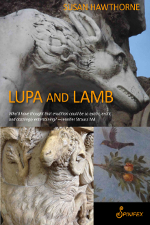
Review Short: Susan Hawthorne’s Lupa and Lamb

Lupa and Lamb

Lupa and Lamb by Susan Hawthorne
Spinifex Press, 2014

Lupa and Lamb is a beast of a collection – it spans literally all of time and features every woman that has ever lived. Ambitious is not too strong a word. Curatrix, our guide and commentator, leads us through archives of lost women’s texts on the way to a party held by the Roman Empress Livia Drusilla. It is through this trail that Lupa and Lamb tells women’s histories and their multiple, often contradictory roles in family and society. Continue reading

Posted in BOOK REVIEWS | Tagged ,

Review Short: Libby Hart’s Wild

Wild

Wild by Libby Hart
Pitt Street Poetry, 2014

Poetry might be whispering these days, but only fools fail to hear it. The whisper might be the tough sibilance of protest, it might be the swirl of nostalgia for what will soon be lost and irretrievable, it might be the resilient, gnomish murmur that tells of what cannot be suppressed, and cannot either ever be quite directly expressed. And so, Huginn and Muninn open Libby Hart’s new collection of poetry.

Continue reading

Posted in BOOK REVIEWS | Tagged ,

David Gilbey Reviews Lisa Jacobson

South in the World by Lisa Jacobson
UWA Publishing, 2014

For three weeks in Japan I’ve read and re-read Lisa Jacobson’s new collection of poems: in subways, on shinkansen, in parks, cafés, restaurants and my apartment – up on the twelfth floor of the hilly suburb, Dainohara, in Sendai. The poems, now fiercely dog-eared, have become my familiars; challenging, apostrophising and snaking/drifting/sidling into my consciousness, they have shaped my thinking and insinuated themselves into my conversations with ‘native English-speaking’ colleagues, Japanese friends and ex-students.

Continue reading

Posted in BOOK REVIEWS | Tagged ,

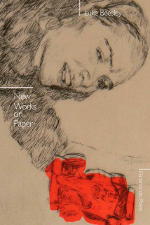
Review Short: Luke Beesley’s New Works on Paper

New Works on Paper

New Works on Paper by Luke Beesley
Giramondo Publishing, 2013

I’ve been meaning to write this review for a year – in fact, there’s a wine stain on my copy and I can pinpoint the exact date that I first put it on my to-do list (i.e. engaged in other work → frustration → tipped glass). Despite all of my sideways swerving, a year is a good amount of time to let Beesley’s recurring bees swirl around the head; a year helps one to figure out their tune. Or, as the poet writes, ‘It’s not about bees. There are no bees.’ Have I tipped the wine glass again?

Continue reading

Posted in BOOK REVIEWS | Tagged ,

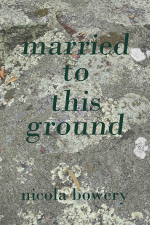
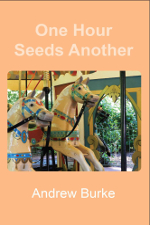
Review Short: Andrew Burke’s One Hour Seeds Another and Nicola Bowery’s married to this ground

One Hour Seeds Another by Andrew Burke
Walleah Press, 2014

married to this ground by Nicola Bowery
Walleah Press, 2014

Addressing the quotidian in writing is an ongoing practice for many poets. Andrew Burke’s One Hour Seeds Another and Nicola Bowery’s married to this ground approach this preoccupation with a robust commitment and urge to render it lucidly, but each is in conversation with different lineages. Burke’s cycle is cross-fertilised with jazz and folk music, with Hindu and Buddhist references, with playful abstraction, but it is the intentional elegiac timbre in this collection that lingers in the reader’s mind. Continue reading

Posted in BOOK REVIEWS | Tagged , , ,

Submission to Cordite 50: NO THEME IV Open!


John Tranter, Sydney, 2009, photo by Anders Hallengren.

Poetry for Cordite 50: NO THEME IV is guest-edited by John Tranter

Zounds! We’ve made it to issue 50 in the year that Cordite Poetry Review turns 18. Bust out the Passion Pop (read: Châteauneuf-du-Pape). Actually, this will be our 67th issue … but why be pedantic about all those special issues we’ve done in addition to all the rest? This is a bit of a special issue too.

It’s summer again in Australia. There is no theme. Send in good, new work.


That is all.


Please submit only once, with a maximum of three (3) poems in one (1) document … but first, please read the submission guidelines.

Posted in GUNCOTTON | Tagged ,