Wanton Boys

In the park on a sunny day while we're waiting
for my mother to get a word in edgeways with Mrs Jones
my brother and I are frying ants with a magnifying glass
And calling it scientific.

I am secretly pretending they are Mrs Collins' cats
because she hates me,I don't know why,
and I hate her for picking on me in class, but not the cats
Only it's the best way I can think of to make her cry.

Once I spent three hours on a beanbag just thinking,
I timed it, no TV or nothing, but my family never leaves me alone.
My mother's always shouting, Edmund, clean your room.
But she doesn't live in it, so why.

I've got a crush
on my friend's sister who sits in her living room
pretending to be a mushroom, because in my house
imagination has pretty much been banned,

but let's get back to the ants.
something about this is making me vaguely uneasy,
Yet the thrill of the science and the sizzle,
my hand on the throttle of destiny, is very clear indeed.

When I grow up, I want to be God or close to him
but I'm keeping it a secret.
Since my brother still wants to be an astronaut
And if he keeps beating me at monopoly,
When we both know he is cheating
I'll be sending an asteroid to blow him up.

Sometimes, being the younger one sucks.

Posted in 28: INNOCENCE | Tagged

Caracol (Snail)

menacing Persons, left behind
the shadow
of their passive insensitivity

[crushed housing]

Regards, city-siders
we accept
your delirious ovation,
and neatly recite
     leatherbound policy
on behalf of
those greased morsels
who never owned a voice
to publicise the anguish
of patented choice; glazed
will and self-raising skin

domestic squeals
permeated by human erotica

[de-beaked] performance
making quiet outcry-
splitting hairs
in barbed cages,
but ne'er on heartless heads

God gave them half
a chance to speak,
until world
made them swallow
such lethal doses
of cosmetic flaws;
 spirits,
drowning in accessories

lined stomachs
are spilling dignity;

I know you're green:
      it's those
vegetables
went down the wrong way,
carnivorous lust in reflux

– I'm rambling
to protect my swollen testament

gather my thoughts,
before you squash them carelessly

So haven't we all
recoiled
from the covert stench
of superior dialogue, cut and
pasted in social gridlock

Though we meant not
to gauge a relished reaction,
merely to mirror
the deafening mannerisms
that were hushing up pink faces

[Too late] now that
rigor mortis
got us
tongue-tied
under the table, blissfully
  Drinking a toast
  to
pretty conversational pieces
that would never
disturb the ecology,
(assuming we all politely agreed)

Here's a good pinch

of snickering laxatives, yet
to be administered by watering-can

lucky lady sat on a
 cat with sixty-nine lives

The humble bee,
  he sits on his own sting
steaming weapons too easily
evaporating his focus;

And didn't you know-
by avoiding death,
you were graciously killing people.

Posted in 28: INNOCENCE | Tagged

life in the miniature steam-train village

some of us do stay here      i have a room under

the miniature tunnel the door is a drain-cover

a secret i open only when the tourists have gone

some of the overalled men have wives & they are civil

in fact they smile more than us 'residents'

they often drink from thermoses

they tinker with the engines they collect tickets

       but then they go home

some wives are dead & so we move in here

there are various parts of the community vacant

one hair-pin down near the petunia bed & estuary in particular

that corner has a bad feel to it: the site of a derailing

       back in the 70s it's our equivalent of cheap-real-estate

train-enthusiasts are superstitious       with good reason

on purple nights when we all gather to drink beer & spin

monologues around the tiny turnpike       then perfectly-scaled spirits walk

the village comes alive with their spectral whispers

some seem to catch in my beard       a mixture of human cries

(the justly dead span generations:       the boy gurgling in the water not

yet talking –        the heart-attack veterans out for one last reminisce)       but

also the fairies we created ourselves giggle

the dwarves cease their mining & gather to connive

there is a swarthy & strange life in this place it

is pungent at times       i run the trains by day

       by night      under the tunnel      i write

Posted in 28: INNOCENCE | Tagged

feelings

brianna pushed steve no-one could've expected that

the taxi-rank still flourishing sometime near the early

hours removed him from place like superfluous words

edited falling into victoria park he yells an effort lost to

engines & road & sirens once reading levertov her use of

          plucking i read as fucking steve was dyslexic too

    never bothered us though his removal by brianna the

bit of blood & his sure clique ejection might've cured him only

ghosts there though listening to some obscure lines he takes away

fragments of syntax muttered at a desk-sergeant & the night

Posted in 28: INNOCENCE | Tagged

one

drinking seven beers standing up

but then it's yesterday's kid's party

(light plays over a cake it's an eight it's

shaped like a race-track (the standing

the thing to remember & also there are

people looking like characters from macbeth

they are in various stages of decay (makes you

smile (there is probably haiku sentiment

on the wind outside (where cricket

was discarded (a while back

the bat stands there

Posted in 28: INNOCENCE | Tagged

Painting Rain

For Yuko Matsuzawa


silence
in splash
deft
brush
fine
deepening
the rib of light

in the language of touch
silk
spins
wet
her loop of mind
classical
she is
painting rain

Posted in 28: INNOCENCE | Tagged

Test Walk

In Atlanta a man takes a prosthetic leg
for a test walk and does not come back.

When I am six I find my Great Uncle Sid's
tin leg alone in the hall. He is asleep in the next room.

In Afghanistan a girl touches the wing of a green
parrot and her hand flies off.

Sid's leg is the fleshy pink of tinned salmon.

Centres in Baghdad, Basra and Najef supported by the International
Committee of the Red Cross fit 11,956 prostheses.

Watching boys play handball, a mother in Mosman remarks
that library fines for overdue books cost an arm and a leg.

Posted in 28: INNOCENCE | Tagged

Trade-ins: Small Arms

And then there is the soft innocence of small arms,
the round oval of the wrist/stock, the clarity of skin/metal,
the single crease inside the elbow/trigger that tells it.

What happens to the rest of the body
when they've sold the arms?
– at eight, he asks,
after listening to us talk.

In Colombia the militia might slit the skin
of his forehead or pectoral to pack in brown-brown
– raw amphetamine – and top up this charge
with booze and ganja, so fear cannot be found
in any of the atoms left in his eight-year old head.
He'd be given orders, a machete, an M16 –
a light child-sized innocent sort of small arm,
– -ex-US Excess Defense. He would find
the answer is, once the arm is severed at the shoulder
or wrist, -short or long-sleeve as they say –
a man, a woman or a child, will live or bleed to death.

Posted in 28: INNOCENCE | Tagged

The Sum

for Tess
 
 
Already the world
is waiting for you.

Loaves,
discs of sun,

moth wings drifting
through an ancient night.

The sum
of all imaginings

rests in you,
seeds glowing

in the warm dark,
a deep music

circling your heart.
There's a song

to sing you forth
into this screaming light;

forgive us as we sing it.

Posted in 28: INNOCENCE | Tagged

Listerine™ on skinned knees

Your whale tethered to a pier is
symbol of the difference between
our generations, this process of
being that fosters experience,
this treacle dimension in which
the unknown discovers itself.

It's gotten thinner this syrup,
since you ran for your brother
showing the discovery, the dead
docked mammal knocking its skull
on the pylons. You didn't mention
it but I could imagine the shrieking

of children, the squeak of swings,
the fact that you could back then
still see lobsters in the rock ponds,
an octopus in the shadows of the jetty.

Where are we going now my friend?
All of us I mean, billions on a
pebble soaring through a void,
circling one another as gulls
around a jellyfish on the sand;
why do you now cower in the shadow

of the other, under the tongue of
the mirror self, soft as the incest
of wings, the summer when you first
loved? I remember as though yesterday
pouring Listerine‚™ on my sister's
skinned knees and the way they

continued to bleed through her
stockings at church. She screamed so
the neighbour looked over our fence,
yet the world turns on, none-the-less.

Posted in 28: INNOCENCE | Tagged

What I Did On My Holidays

Soft parts of my floor and
Soft parts of my cup of coffy.
Sun bloats across the wall,
Softening things into one day of many.
Pixelated holiday. All the interesting bits
Are hard to see.

When you have smudged me, brushed and pummeled me
I will mumble something about having nothing to say.

Except: check out these spurty oranges.
We eat them in car,
Become those kids you didn't want to play with.
Sticky fingered pigs.
Dust to slash dry creases on my knuckles.
I end up bleeding in the heat.

Turn off the wave-machine.
The Mediterranean is stagnant hot.
The stones are round and good for chucking.
I can learn the birds. Learn the language.
Check the auguries.
Calm down.

Posted in 28: INNOCENCE | Tagged

Shrapnel

The day she decided to wear an explosive belt
equipped with a detonator and a thumb-press button,
and closer to her heart she wore the companion vest
with quilt-size pockets, packed with nails, screws, bolts
and lead balls (smaller than marbles but made like cannons),
was the day I was given the results of my scans
and shown my body as a border of bone and organ
where the fields were infiltrated with cluster bombs,
they spied at least eleven, designed to break the nerves.

This was the day she walked the streets of her world
with reverence for trees, houses, shadows and the day
I walked the streets of my suburb with reverence for trees,
houses, shadows and, as in a dream, we passed each other,
she as my stranger, me as hers, each of us bathing the other
with a familiar salute.

Later that day, we each walked into a popular cafe,
pretended interest in the menu, were pleased to find
the waiter efficiently trained to avert our gaze,
we sucked in the chatter, the gossip, the shoptalk,
the boredom, the romance, the stalker, the loner,
but when she opened her overcoat, I wished
I were there to have zipped it back up, taken her arm,
led her away, back to her suburb, house, room-
where she allows me to take off her coat,
the belt with its canisters, the vest with its cannons,
I help her into her pink nightdress, kiss her forehead,
switch on her lamp then slip back into my night,
wrapping my coat firmly around my body –
if only I could swaddle myself like a baby
to keep me from self-harm.

Posted in 28: INNOCENCE | Tagged

The Rabbit Soprano

Fear has a voice I had not expected, even from the mute.
For terror it was worse.
When I arrived she was wild-eyed, wet from their mouths,
moon-colored, feet hapless.
I heard it once long before the Irish opera using child sopranos
as woodland animals
or the Andover arts frameworks for teaching children to sing
on pitch with appropriate dynamics
the song 'Mr. McGregor,' or one Terese Rabbit, soprano,
now performing in Georgia,
my white Flemish Giant slipped through the pickets
without my knowing and was found by dogs
Such human terrifying notes no known soprano hits,
mortal shrieks no composer uses,
piercing walls, urgency passing through masonry and time.

Posted in 28: INNOCENCE | Tagged

Homology

My hand reaches into a batwing,
delicate pectoral maneuvering a fish,
the oar in plesiosaur,
even the sound cupping an ear.
Some form is revealing, some obscure.
Without experience, what could be predicted
from the huge black piano, one wing open.
Where would the necessary hands be waiting.
What I have read and forgotten has fallen back
into the books Frances is dusting
and rearranging by subject: all clouds together,
animals touching, a mythical shelf.
Outside, a beetle opens itself to read about flying.
Hard covers, then pages of wings, then stories
we can see through, then lifts off.
What I have read and remember, form into form,
should be written down before I lose it:
milkweed, which is straw into silver,
sperm in a kayak, harvestmen built like a star,
and all of those mandibles chattering
what they know, that flock of hands
asleep in the trees, my hand feeling its way
backwards through the raucous, jostling, bones.

Posted in 28: INNOCENCE | Tagged

Innocence

Remember the sundowner,
those bullet point recipes
for WW2 American cocktails?
Those poolside romps with
vacationing English teachers,
sunburnished Nova Scotian girls?
Remember the Dubai go-between?
Before you went for the sainthood?

Remember the days of caramel brandy
and Bali Hai, beer of shabby Princes?
Your cocktail windscreen wipers
and the spin-dry fluorescence
of a disco's ultra violet.
Your driver parked by Heaven,
where make-shift futures men talked and stalked,
and chatted up the girls, the boys,
and the in-betweens.
Remember the little guy
on Nowhere Corner
texting HQ on SMS?

Remember the secret code for laughter?
Remember laughter?

Posted in 28: INNOCENCE | Tagged

Heather Taylor-Johnson Reviews Luis Gonzalez Serrano and Ali Alizadeh

eyesintimesofwar.jpgCities with Moveable Parts by Luis Gonzalez Serrano
Poets Union Inc., 2005

Eyes in Times of War by Ali Alizadeh
Salt Publishing, 2006

If Australian poetry is meant to reflect the lives and times of the people who inhabit this red and green land and its blue surf turf, then it is essential that the diminutive canon embrace the émigrés. They are the voices of a multi-culturally inclusive (or exclusive, as sometimes the case may be) society and what is truly unique is that they have a certain amount of inherent distance from the Australian culture which enables them to go where others have not the means to consider. For the most part, these poets' choice of Australia, and their desire to write in and about Australia, usually entails writing of the antithesis: the poet's native home. What these poets have to say is not always pro-Australian and rarely is it pro-motherland, but that's sometimes what makes it so important.

Continue reading

Posted in BOOK REVIEWS | Tagged , ,

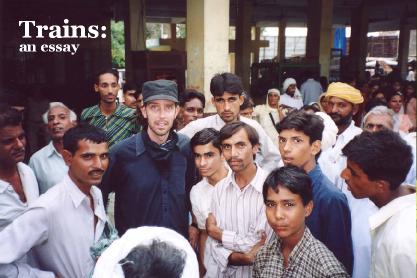
Trains (an Essay)

new-delhi-station.jpg

A man might spend his life in trains and restaurants
and know nothing of humanity at the end.
Aldous Huxley, Along the Road: Notes and Essays of a Tourist

The world is medium-sized.
Michel Houellebecq, Lanzarote

Romania (Part 1)

We've been on Romanian trains before and so know to expect the palinka-quaffing mid-morning travellers pluming smoke in every carriage. Our train – a compartment-style rattler with torn and sunken, broken-springed seats – is long and packed, dragged by an ancient resilient-blue Soviet engine. Not long into our journey and golden-toothed Romany begin to stroll the corridors, be-hatted and wizened with their accordions and violins and shining smiles.

Scythers on their way to uncut fields sit open-vested, full of drink and the train's lurch. The jagged mountains disappear sometimes; we burrow into the pitch of tunnels and emerge onto valley floors where combed farms with wildflowers bloom and wooden villages, each with a shingled church spire prodding its orthodoxy at the sky, are cut and crafted from the surrounding evergreens. Folk in the fields here build their haystacks pencil-thin; horses pull the work of days atop carts through muddy town squares.

An elderly woman with her hair wrapped in a scarf sells beer and chocolate and apple palinka, walking the train's length with a steel esky on her arm. This train, skirting the edge of the Ukraine, is taking forever to reach our destination. Not for a second do we mind.

Train of Thought

How do we remain so unlost travelling through the everyday? What places will trains travel in ten – a hundred? A thousand? – years from now?

Manhattan

The coldest weather in a hundred years ices Manhattan. The Statue of Liberty – closed for renovations – seems a tiny off-white stalagmite on the grey and eddying harbour. Cold weather warnings are everywhere. This temperature is dangerous. The duckponds in Central Park steam and Ground Zero is a cold big hole with gathered street pedlars. So Ho is brittle, bourgeois, empty. There are no public toilets in Times Square so I piss in an alley and then go to watch ceramic animals being auctioned at Christies. Where do homeless folk go in weather like this? At McDonalds the seats slope uncomfortably forwards.

At least the trains are heated. We rattle underground below Manhattan and ascend to cross the icy Hudson. Our train is old and scuffed and shunts on its elevated tracks through the broken-glassed industrial burroughs; we peer into the barred windows of 3rd storey apartments. The beachfront at the end of the line, Coney Island (or Little Odessa, as some locals prefer) is frozen silver. Michelle and I agree: we need bearskin hats like every second émigré, as well as big servings of their hot borsch and sauerkraut, fried meat with pickled everything.

Women in jumpsuits, mink, and piled beehives rush in the streets. Neon signage flashes in Cyrillic while American cops twiddle their sirens in mounting, slowed traffic. In the dead of winter the theme parks are shut. We get on another train and exhale cloud, rubbing our hands at the thought of Chinatown's dumplings. The burroughs, late afternoon, are a shaded and darkening dystopia. In the distance, Manhattan has begun to fill with light.

Auschwitz-Birkenau

The sharp retort of the unspeakable. Tourists are gathered inside the chamber at Auschwitz where tens of thousands of people were gassed and incinerated by the Nazis, and take photographs. Birkenau lies three kilometres away. There, where the rail tracks end inside the boundaries of the death camp, I am left wondering how many of the disembarked looked back, to see the gates and guard towers that I can see and

when they looked forward, what

Train of Thought #2

In David Nye's American Technological Sublime, John Stilgoe notes that trains 'and particularly the fast express, struck few observers as a monstrous machine soiling a virginal garden. Instead it seemed a powerful romantic creature inhabiting an environment created especially for it.'

India
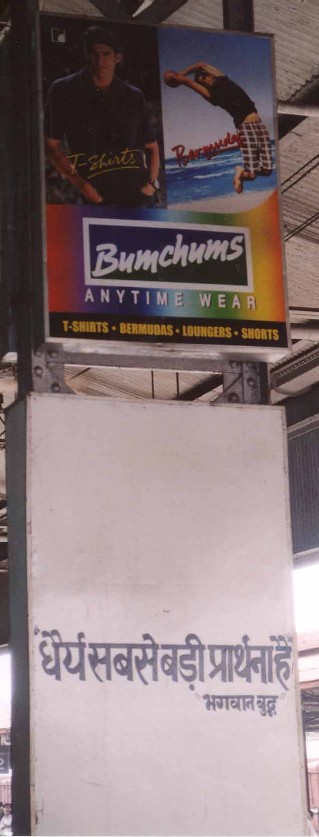
varanasi-train-station-india.jpgOne

The noise of advertising crescendos through the station's intercom above blaring radios attached to dozens of samosa carts wheeled over toes and past mobile newspaper stands whose owners are yelling in Hindi while beggars peddle strange miscellanies from wobbling trolleys. Trains everywhere hiss squeal roar clang whistle idle fire – almost anything but wait silently. A mass of Delhians seethes from one platform to the next in a trample of shouting commuterdom. Holy cows loe on some platforms. Touts sharpen the din. Outside, a cacophony of rickshaws and taxis and busses wait; the buzz of these and their shrill drivers offset by some deeper mechanical grind, a sonic chaos that belies the psychic dissonance of this encrazening megalopolis. In the station's tourist lounge (strictly foreign passports only!) travellers glance wide-eyed, and sweat.

Two

120 kilometres in just over four hours; train delayed by five; I am hallucinating chatty myna birds discussing metaphysics after a bad prawn in forgettable Goa (where hash and pills and powder are de rigeur). This journey, my tripping is involuntary: the entire time I heave bodily over the smeared pit toilet at carriage end and wish to India's uncounted gods for this rolling sub-30kph hell to go quickly.

Three

Our train stops at a station somewhere between Varanasi and the Bodhi Tree. Near-naked children mill on the platform, push their hands through the steel-grilled windows as the train slows, rubbing their distended bellies. Travellers in India echo among themselves 'don't give money' because 'it encourages begging': we hear how, in parts of India, Dalit ('untouchable') children are still maimed to increase their begging prospects. We hand food and coin through the windows and wonder what we're perpetuating. These children (hungry, here, now) have been born in a place where organised charities don't exist. More children arrive. We also hear myths whispered in Delhi of begging children controlled by Fagin-esque overlords who take everything from their enslaved minions. People choose what they believe. Our train begins to shunt forward toward the next station, where the same thing will probably happen. It is impossible to do enough. It is impossible to think about any of this clearly.

Four

'Teacoffee? Chai chai chai chai? Teacoffee?' India rolls past. Verdant paddies and water buffalo and thatched huts and rocky mountain temples and red-arsed temple monkeys and terrifyingly ramshackle cityscapes and rivers moving slow and full of the dead and, no matter where and when I look out, endlessly, people.

Five

Every time the trains stop and we alight, we are surrounded by young Indians intrigued to know 'what is your good name?' and 'from which country you are?' Those with cameras cram friends into shot around us; Michelle is frequently handed a newborn. The married women hide grins behind raised saris while the men wiggle their heads and beam. I'm always asked 'love marriage?' and, when I nod, the response is somewhere between bashfulness, awe, lusty disbelief, and bewilderment (though, as we come to understand, this is An Almost Universal Response To Almost Anything At All We Say during our time in India).

Etymologies

'Train' derives from the Latin tragere 'to pull' or 'draw' and, though there were streetlights in the columned promenades of ancient Rome, there never were any trains.

'Locomotive' is from the Latin in loco moveri: 'to move by change of position in space' – but it seems more the world's spatiality (medium-sized now) that's altered. Trains? Are as if early model proto-leviathans venturing into the unknown –

Train of Thought #3

Jean Baudrillard, in his epilogue to Luc Delahoye's L'Autre (a book comprised of covertly-photographed commuters on the Paris metro), states 'there is no bringing of these people into psychological focus'. On trains all over the world we feel enclosed, uncomfortably close to the local humanity; even in the un-densely populated Melbourne, peak-hour trains can seem impossible without sunglasses and novel. What is it about the proximity of strangers? Why do these vast groupings (unassimilable and otherly, though only a salutation away) create such disequilibrium? How many times do our eyes lock – accidentally, fleetingly – with those of fellow commuters? What is it about this gap of centimetres that stifles any possibility of interaction to its zeropoint?

The Reign in Spain

At 1pm the streets of the town we've just arrived in are deserted; Vigo is mid-siesta. We grind our molars and argue over anything – nothing – after a second sleepless night on a bus speeding out of Portugal and toward Bilbao's Guggenheim. Our packs and the company of the two Canadians accompanying us are heavier than usual. We stumble over cobblestones and watch folk in bars watching television. There's something in the air today – or maybe I'm just projecting my exhaustion into the alleyways; they're full of strangeness.

We arrive at a bar and agree to churros and coffee. On the TV a twisted black carriage spills a bloody nightmare out its side. Another shot shows another ruined train. The commentator speaks rapido and in raised tones. It takes seconds to assimilate, process: what are we being shown? We find someone who tells us 'maybe 500 dead in Madrid's trains' before asking if we're Americans. My mind fills with Al Qaida and ETA as if 'who? who's done it?' is a way of gathering comprehension. Jose Maria Anzar, Spain's conservative-party prime minister, denounces the terrorism a week out from a national election and states assuredly it is the work of Basque separatists.

That night we travel sleepless aboard another bus toward the unofficial Basque capital. The cadences of weirdness are even stronger in Bilbao; at the Guggenheim, the permanently exhibited 'Snake' – two pieces of long warped steel which viewers are encouraged to walk between – is haplessly resonant. In the evening Michelle and I are trapped and pushed along by the terrible flow of one million protesters in Bilbao's rainy streets. Almost every protester has an umbrella; the march is slow, silent, surreal. It emerges later that the terrorists are North African extremists, and that the government knew this all along. Anzar, days later, is thrown out of government.

We pause for a minute, and think about the Tampa, the Australian detention centres, the lies of a government that refuses to apologise and, right then, wish we could all vote as decisively as the Spanish.

An Echo Reverberating Inside the Privatized Trains of Melbourne

'Just take yer feet off the seat there and show us yer tiggit please.'

'I don't have a ticket. Sorry.'

'Roight and is there anyreasonadall whyya nodcarryinavalidtiggit today?'

'Umm-'

Romania (part two)
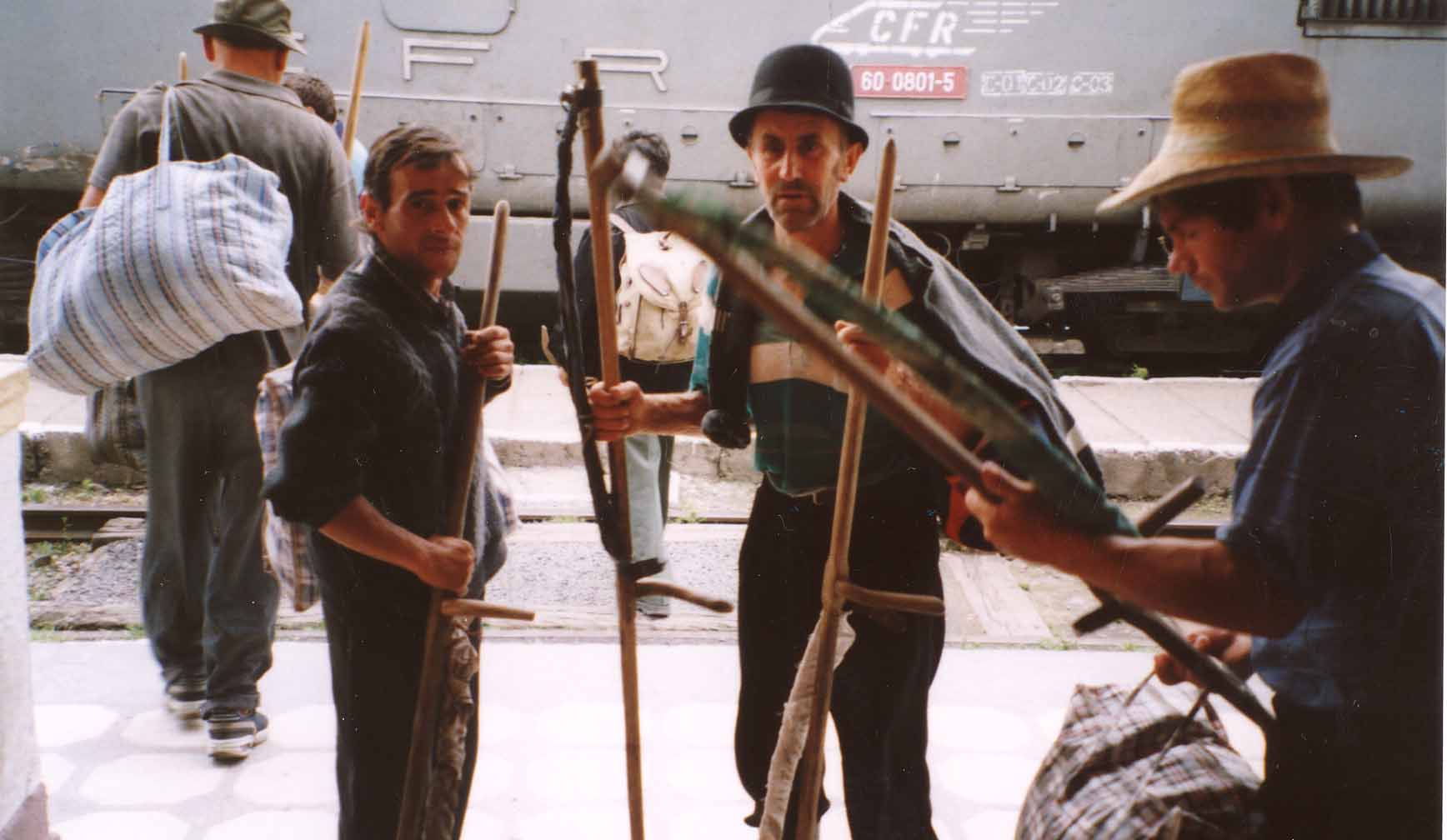
bucharest-train-station-romania.jpg

We are warned by zealous transit officials not to place our backpacks on the seats of Bucharest's new Canadian trains as they burrow away from the city centre where once there was a venerable old town full of music and beerhalls but now there is Ceausescu's unfinished thousand-roomed People's Palace, looming atop an artificial hill. The former tyrant, while demolishing his city's heart in a scheme to build an empire, created a diaspora of inner-city inhabitants, whom he housed in socialist-style apartment blocks. The inhabitants' dogs didn't fit inside their new apartments and so were left behind: their feral descendants rove the streets of central Bucharest in packs. These are strictly forbidden inside the new metro but sit and scratch at the entrances where it's warm and the company plentiful. There is something wounded about this city with its vast polluted boulevards and obvious poverty, its empty shopfronts and glaring thugs cruising in shining imported cars. But at least the new trains are there – deep below and pulsing, pristine in the metro's arteries.

Modernist v Postmodernist

'You are not the same people who left the station/ Or who will arrive at any terminus,/ While the narrowing rails slide together behind you.'

TS Eliot Four Quartets.

'-those raiders and predators who plunder customs and cultures, faces and landscapes that are really none of their concern. Having nothing to do with them, they don't even really see them.'

Jean Baudrillard L'Autre.

The Vast Hungarian Flatlands

It's easy to become forgetful in the old-style compartment carriage rocketing west over the Great Plains of Hungary: unremarkable, flat, with a big lake in the middle. The railway sleepers thrum in iambic pentameter, hypnotic; before long I'm deep inside a private conversation with a dream. 4.30am, and I feel someone's hand in my trouser pocket and rouse myself to see a droopy-moustached chap with dead eyes smiling crack-toothed with his hand on my wallet saying in bad English with matching breath 'Oh. We. Need. Light. You. Smoke?' and while my mind is Houdini-ing out its disturbed sleep I smile back and mumble 'No, sorry, I do not' to him and the man behind him who's got his chin almost on his friend's shoulder.

They leave I go back to sleep I wake up and fumble the compartment door then lurch out to the corridor into which these my newest acquaintances have quickly vanished. Feels like I've been anaesthetized but my wallet is still with me and Michelle is sprawled, on the seat and unmolested, so: back in our compartment and settled, I reach up and (nodding 'yes yes' to my recently awoken inner-world-champion at the game of 'what if') snib the handle on the compartment door.

A Non-Exhaustive History of Roller Coasters

One

Prototype roller coasters were invented in the frosty climes of St Petersburg in the seventeenth century when gentry and peasants alike sat upon specially cut blocks of ice placed on specially constructed slopes of ice-whereupon gravity took control. This fashion spread to France where the weather was not cold enough and so a waxed wooden slope plus sleighs with rollers was contrived. In 1850 the French took things to the next level with the Centrifuge Railway – able to perform loops-the-loop. This was a contraption authorities banned almost immediately.

Two

In the mid-nineteenth century miners deep in the Pennsylvanian mountains had the need to transport coal down from their mountaintop mine to portside. And so a 40 mile long railway was constructed. The miners, filling the rail cars, shoved. When the cars arrived at port they were offloaded before mules dragged them back. Due to a gathering surplus of mules atop the mountain a carriage was soon invented to transport them down again, unmanned, trailing the coal cars, and at a speed occasionally exceeding 100 miles per hour. Before too long folk from everywhere were queuing behind the mules.

Three

At the turn of the nineteenth century, companies built amusement parks at the end of train lines to attract weekend visitors who would alight, pay cash, and then ride on stranger versions of the trains they'd just got off: scenic railways, gut-heaving coasters on wooden hills, dioramic rides with automata and brakemen. In Melbourne, St Kilda's Luna Park was opened in 1912, engineered by the same folk who built Coney Island's park decades earlier. Survey maps from the 1860s show the St. Kilda area covered by a small lagoon – 40 years later, this was supplanted by a Big Dipper lit up at night by 80 000 lightbulbs.

Emu Plains to Katoomba

The hot and prefab-dusted Australian badlands scan past like eucalypt suburbs in the shadow of utopia. The Blue Mountains rise in crags in the oncoming distance. There is something chthonic, dark, mystical about the looming landscape – something we descendants of terra nullius colonists aboard our snaking trains will maybe never understand.

Romania (part three)

The slow Romanian State Railway (CFR) stops regularly at obscure, unpeopled Transylvanian stations. In the socialist era, factory workers used trains to get to work – long abandoned now, the trains still stop at these inert steel factories and quarries, dormant on their scarred hills. It's eerie to sit beside these broken machines, waiting, while nothing happens, except the breeze, which lifts and then replaces, lifts and then lets fall again the loose flaps of corrugated iron in an unnatural kind of a Sisyphean motion.

The Empty Spirit in Vacant Space

What sort of distances have we travelled aboard trains? Ralph Waldo Emerson wrote 'fear haunts the building railroad, but it will be American power and beauty, when it is done.' Wallace Stevens wrote in 'The American Sublime' how 'One grows used to the weather,/ The landscape and that;/ And the sublime comes down/ To the spirit itself,/ The spirit and space,/ The empty spirit in vacant space.' I wonder: do trains indicate how far we have come in our mechanised, human universe? Are trains full of empty spirits, moving through hyper-real space? Are they a measure of the ontological distances we've come thus far?

Bibliography

Robert K. Barnhart (ed.) 1988 The Barnhart Dictionary of Etymology (New York: The H.W. Wilson Company).
Jean Baudrillard's epilogue (trans. Chris Turner) in Luc Delahoye1999 L'Autre (London: Phaidon Press).
T.S. Eliot 1969 The Complete Poems and Plays (London: Faber and Faber).
Ralph Waldo Emerson 1960 Selections from Ralph Waldo Emerson, ed. Stephen E. Whicher (Boston: Houghton Miffin Co).
James Marston Finch 'In Defense of the City' in Proceedings of the Academy of Political Science, Vol.27, No.1 (May 1960), pp2-11.
David E. Nye 1994 American Technological Sublime (Cambridge, Mass: The MIT Press).
C.T. Onions (ed.) 1992 The Shorter Oxford English Dictionary (Oxford: Clarendon Press).
Wallace Stevens 1955 The Collected Poems of Wallace Stevens (New York: Alfred A. Knopf).
www.brittanica.com/coasters/, www.lunapark.com.au/pdf/LP%20History.pdf
www.ultimaterollercoaster.com

Posted in ESSAYS | Tagged

Bev Braune Reviews Peter Minter and Nathan Shepherdson

blue grass by Peter Minter
Salt Publishing, 2006

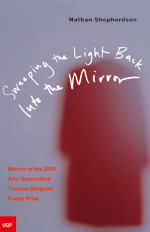
Sweeping the Light Back into the Mirror by Nathan Shepherdson
University of Queensland Press, 2006

Peter Minter's latest book blue grass and Nathan Shepherdson's début collection Sweeping the Light Back into the Mirror work with extraordinary images to convey the demands made on memory for accuracy in its language. Both poets set out, deliberately, to interrogate such a language and its subsets – naming, recognition, and the calculation and politics of categories. For while as writers and readers, we have limitations on the material claims we can make to increase emotional satisfaction in our lives, we have an unlimited capacity to request answers from what appears to be immaterial – the memory of words spoken by both loved ones in absentia and barely remembered friends. We not only demand these words, but also try to challenge their immateriality with concrete language.

Continue reading

Posted in BOOK REVIEWS | Tagged , ,

Heather Taylor-Johnson Reviews The Best Australian Poems 2006

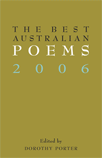
poems2006.gifThe Best Australian Poems 2006 edited by Dorothy Porter
Black Inc., 2006

I've long been a fan of Dorothy Porter, the poet, and I can now say loudly and proudly that I am a fan of Dorothy Porter, the editor. Skimming through the index, I am immediately impressed by the range of texts drawn upon to assemble the collection. The poems were not all plucked from the 'best of the best', and this, I am confident, attributes to the range in voice. Porter has collected her own written Babel, amalgamating the generations and integrating the time-tested contemplations with full-blown shock waves.

Continue reading

Posted in BOOK REVIEWS | Tagged , ,

Nicholas Manning Reviews Claire Potter and Esther Ottaway

ottaway_cover-small.jpgIn Front of a Comma by Claire Potter
Poets Union Inc., 2006

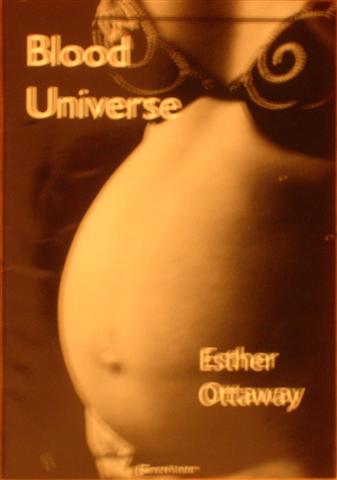
Blood Universe by Esther Ottaway
Poets Union Inc., 2006

It's difficult not to detect an implicit whiff of politics in Poets Union's choice of two rather different poets for their 2006 Young Poets Fellowships. The coupling of Claire Potter and Esther Ottaway seems to incarnate a certain intriguing editorial magnanimity, a technique that might be termed that of 'covering all bases'. On the one hand, Poets Union can in no way be accused of neglecting an open, communicative and fundamentally accessible poetic, because they have Ottaway; but nor can they be accused of neglecting a more 'experimental' tradition, because they have Potter.

Continue reading

Posted in BOOK REVIEWS | Tagged , , ,

jeltje Reviews The Moosehead Anthology X

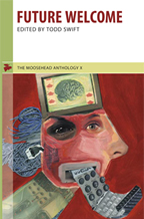
moosehead.pngFuture Welcome: The Moosehead Anthology X edited by Todd Swift

DC Books, 2005

For the 2005 (and tenth) issue of the Canadian Moosehead Anthology guest editor Todd Swift has added an X ('the X-Files aspect') to the publication's title. Although retrofitted with fifties B-grade movie genre characteristics and preoccupations, it claims to deal with 'exceptionally pressing contemporary issues, images and invasions'; and the editor muses on the possibilities of a new 'B-grade' genre of poetry and prose which, like the fifties sci-fi and horror movies, would manage to break through the surface 'to speak of the hopes and fears of the time'.

Continue reading

Posted in BOOK REVIEWS | Tagged , , ,

Ali Alizadeh Reviews Anthony Joseph

african-ufo.jpgThe African Origins of UFOs by Anthony Joseph
Salt Publishing, 2006

One of the great challenges facing artists from post-colonial and/or ethnic minority backgrounds is meeting the demands of two potentially conflicting ideals. As surrogate – and often unwilling – cultural ambassadors, such artists are required to be 'responsible' and represent the reality of their communities/ethnicities for a mainstream Western audience; but as artists they need to be adequately 'irresponsible' in order to produce provocative new works that do not merely replicate but (as Russian Formalists would have it) violate reality. In the new book by Trinidadian-born English poet Anthony Joseph, however, these seemingly contradictory forces have been reconciled and combined to produce stunning results.

Continue reading

Posted in BOOK REVIEWS | Tagged , , , ,

Tim Wright Reviews Luke Beesley and B. R. Dionysius

books_luke_cover.jpgLemon Shark by Luke Beesley
papertiger media, 2006

Universal Andalusia by B. R. Dionysius
papertiger media, 2006

'The shape of sunlight cutting up your arm'. This was the line that first drew me to Luke Beesley's work. Around the same time I read a biographical note that mentioned how Beesley had written many of the poems in a light-filled studio in the middle of Brisbane. There was the suggestion that light had entered the poems in some way, and I liked the idea that poetry could do that. Light is the first word I think of when I try to think of words to describe Beesley's latest collection, Lemon Shark, along with other 'L' words: leisurely, languorous, leaning.

Continue reading

Posted in BOOK REVIEWS | Tagged , ,

Adam Ford Reviews Michael Farrell

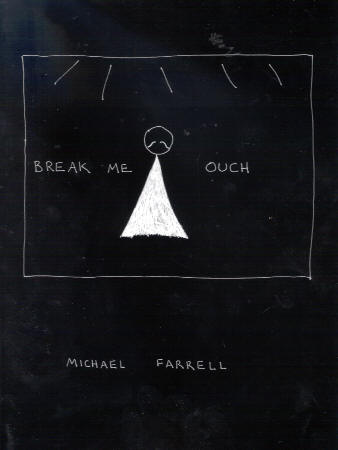
breakmeouch.jpgBreak Me Ouch by Michael Farrell
3deep Publishing, 2006

I've been puzzled by Michael Farrell's poetry for a long time. Sometimes I think I get it; but his writing is mercurial, and for every one of his poems that I've understood or enjoyed, there's another that leaves me cold or just confuses me. It's impossible to decide whether Farrell is doing something incredibly formal and intellectual that I'm not smart enough to understand, or whether he's tricking his reader into thinking that there's something deeper taking place when he's in fact only mucking around and playing crazy games with language.

Continue reading

Posted in BOOK REVIEWS | Tagged , ,