In December 2007 Canberra-based poet John Leonard wrapped up his innings as poetry editor of Overland, the Melbourne-based journal whose motto is Temper democratic, bias Australian. We thought it might be a good idea to find out a bit more about this John Leonard (as opposed to the other one(s)) and so Cordite editor David Prater went head to head with Mr. Leonard in a series of email queries and responses. This is the result.
What impact, if any, did your school teachers have on your appreciation of poetry? Can you remember the first poems you studied or read?
Rather than the teachers it was the British 'O' and 'A' level curricula that determined what 'set-texts' we were going to study. This meant, in the late 1970s (I don't know what the situation is now), lots of Chaucer in the original, and Shakespeare. And this was a thoroughly good thing in my opinion because it gave me the experience of vigorous Middle and early Modern English before English went mannered and patterned in the C18, and rhetorical and polysyllabic in the C19 and later.
In other parts of the English course we studied we looked at various poems for critical comment, and it was here we came across the shorter poems. I remember Keats, Wordsworth, Clare, then Hardy, Larkins and Heaney. At that stage I thought it was all great, I couldn't get enough, and supplemented it with the Oxford Book of English Verse. The more emotional and rhetorical the better, I thought at that stage. However I do remember reacting once to something a teacher said. He said, in best Leavisite mode, 'it's not what the poem says, but how it says it,' which I remember thinking at the time was a monstrous furphy, because it just means that the most rhetorical poem is the best poem, no matter what it says. And gradually I moved away from my early fascination with purple poetry. The first poets I read that helped me in this way were Edward Thomas (so sad and so restrained), and Robert Graves (as I was reading the Collected Poems 1959 from the school library, it was the 1930s Graves of Augustan wit and disdainful satire, rather than the 1960s free-love Graves.
Now I have come to think about the question of what makes a good poem in almost sociological terms: obviously a good style and manner helps, but basically the question you're asking, as you do in any social interaction, is 'is this a reasonable thing to be saying?' The only difference poetry entails is that in reading older poetry you have to ask 'was this a reasonable thing to say, and is it still?'
So when did you write your first poem? What was it about? Was/is your philosophy about reading poetry any different from your reason for writing poetry?
I was fiddling around with writing poetry from about the age of 15, but the first poem I wrote that I still keep was written as late as the age of 21. What I remember is that I used to write a lot of poetry which I was happy with, but then I'd go back to it later and think 'oh dear'. Then as I wrote more, the time it took me to become dissatisfied grew longer and longer, until finally, writing a poem one day, I had a clear insight that once I'd finished the drafting, this was going to be a permanent poem. That intuition has remained valid, and applies to all the poems in my first collection, Unlove, published when I was 24. I still read this collection with pleasure, and although I wouldn't write any of the poems in that way now, there is a sense that I could not now recapture the simplicity and purity of some of those poems.
This 'first poem' was called 'Birch Seeds' and it's about someone being reminded, by birch seeds falling out of a book, of an earlier period when they had sat by a window trying unsuccessfully to write to the addressee of the poem (by implication, expressing their feelings), and how this inarticulate failure was mocked by the easy fecundity of birch seeds falling through the window on to the page. Everything just came together with this, especially the idea of nature serving as the point of reference for our actions and feelings.
My reason for writing poetry is the same as my philosophy for reading poetry. In reading poetry I aim to search for those poems and poets who most successfully serve 'great creative nature', in writing I aim to channel poetry that does the same thing. My beginning to write poetry in the first place was partly due to a natural young person's desire to be creative, but it was also partly due to my perception of a lack of contemporary poetry in Britain that served the purposes that I felt poetry should serve. This perception has strengthened throughout my life, and although I think that contemporary Australian poets are better placed to write poetry that will last into the future, I still don't see a great abundance of 'real' poetry being produced. This is the reason, I believe, that poetry continues to come to me; if there were a more flourishing culture of poetry I should not feel I had a responsibility to write poetry, and poems would probably not come to me.
Do you mean that “somebody has to do it, it might as well be me?” If you stopped writing poetry tomorrow, in whose hands would you feel safe to leave it?
That's not exactly how I'd put it, I'd say that poetry is an innate human faculty, and poetry will always be composed and, in literate cultures, written down. In what the Chinese call 'interesting times' there is perhaps more psychological pressure on those who consider they have something to contribute in poetry to do so.
Which leads to your next question. I am always reluctant to name names in contemporary poetry because I fear that if I do people will think that I am part of clique or poetic group, and because I am conscious that publication is no longer a guide to quality in poetry and so I could easily have missed many worthy contemporary poets. (I am less reluctant to name names with older poetry, as my poem 'Among the Poets' in Cordite 26 shows.
But there is another reason: I think we are on the cusp of an enormous social and cultural change. We write and try to guess what the future will be, by criticising those aspects of the past and present which seem wrong, and celebrating those parts which seem to be valuable. In a way we are in a similar situation to those poets at the turn of the C18, Coleridge, Wordsworth &c who entered into romanticism. 'Bliss was it in that dawn to be alive' as Wordsworth said of the French Revolution, and yet with hindsight we can see that the French Revolution led only to a bloodbath and then to Napoleon's Empire, which caused an even larger bloodbath. And Romanticism itself was just the handmaiden of capitalism, twin of consumerism, which, two centuries later, has pretty well screwed the planet for us. In many ways John Clare was a better example of a poet for that age in transition, because he looked both forwards and back.
So at the moment we write and try to guess what the future will be, but we have no idea, and what eventually emerges will probably be quite alien and repugnant to present sensibilities. I have no idea how our present unsustainable demands on the environment are going to be modified quickly enough to prevent catastrophic environmental changes, for example, but I have a few unpleasant inklings. In the cultural sphere, in poetry, it's difficult to say what from our age will survive and be valued in the future, and who the poets of this time that the future will pay attention to will be.
What role do you think poets' use of new media technologies will play in the future? Do you think internet technologies are revolutionary? What kinds of dystopia might new technologies produce/inspire?
I don't want to be an old fuddy-duddy but I'm not sure that online technologies are that revolutionary. Obviously there are pluses – Cordite for example can be produced and disseminated much more cheaply than a traditional poetry journal, and it may be easier to attract a greater readership. Word-processing and email makes it easier to write out poetry and send it around, but I'm not sure it means it's read more frequently. A poet who was interested in multi-media could write poetry, compose music and maybe artwork and combine them into an on-line performance, but the limiting factor is the 17 inch or 24 inch monitor it is viewed on (as opposed to the possibilities of a traditional performance space), and all the other multimedia stuff that's there online that it has to compete with.
I think poets will make use of the opportunities that are there, but I don't see new technologies leading to a future that is more poetic than the past.
I think it's almost certain that online technologies will be used more and more to control people. I think the wonder is that the internet has been relatively unregulated for so long. But again, I don't think that online technologies necessarily have any direction towards good or evil, it's simply that they will be used for nefarious purposes, because we are ruled by nefarious people.
What do you see as being the future(s) for print journals – such as Overland (but not necessarily limited to that one, obviously)? How effective do you think Overland is at getting its political messages out there in print? And what's been your impression of the way the poetry fits in with the rest of the journal's contents?
I'm not sure about the future of print versus internet. I suspect that they will continue to co-exist for some time, just as manuscripts continued to be copied for many decades after printing was introduced. I certainly find it easier to read things in printed format rather than off the screen, and certainly for something like poetry, which is supposed to have a lasting value, I think there would be a tendency for people to consider print its natural medium (for example I never read a physical newspaper any more, but almost all the poetry I read is in print format; if I source poetry on the internet I often print it out to read it.) I get almost all the poetry submissions for Overland as hard copy too.
I think Overland is very fortunate to be Melbourne publication (and I say this as a non-Melbourne resident); there is a sense in which Melbourne cultural institutions, including Overland are valued by a much wider circle of people than your would expect, to a greater extent than happens certainly in Sydney or Canberra. I don't mean that Overland is on everyone's lips and I don't expect new issues are eagerly discussed on the tram, but certainly the publication has a greater prominence than you'd expect. I think that journals like Overland have an important effect; in constantly championing political causes way to the left of what the Labor Party is prepared to endorse, these journals keep these ideas alive, and gradually, in parallel to work undertaken by academics, by the Trade Unions and NGOs, and by the civil liberties lobby, they enter popular consciousness. What this 'loony left' sector does is point out consistently that populist right-wing figures like Howard (and like Thatcher, Reagan and Bush senior before him) have no kind of credibility at all at times in their careers. Popular opinion grants these kinds of creatures great credit to begin with, and then gradually (and far too slowly) their true colours emerge. Received opinion has it that Howard's current unpopularity [this was written in August 2007] is due to interest rate rises and people's economic dissatisfaction. I'd like to think that some of it, at least, is down to the work of the left sector of political analysis, which in the end permeates even the mainstream media. And if Labor is elected later this year, then the sector will have to go to work again, working for the long-term, eroding the credibility of another right-wing populist.
I like the way in which poetry is presented alongside political and cultural commentary and prose fiction in Overland. I think I get a better sense of doing a worthwhile job being poetry editor of journal like Overland, where poetry is intermingled with other writing, than I would of a journal that was purely poetry. And I think that it's not just a case of the poetry being illuminated by the prose, but that the opposite effect also happens.
How did you come to be poetry editor of Overland?
Well, I don't know how other poetry editors come to be poetry editors, I don't know whether there's a postgraduate diploma in poetry editing yet. This is my career, anyhow.
I came to Australia in 1991 and did a PhD at the University of Queensland. My partner and I moved to Canberra in 1994, and I was a 'freelance writer' and home parent for a bit. I had my second collection, 100 Elegies for Modernity, published in 1996 by Hale and Iremonger and was publishing some poetry, in Overland, and elsewhere. After the children started going to school I went to work in an office, and shortly after this I contacted Overland, and asked whether they needed a poetry editor. As it happened they did (and someone connected with the journal had known me at UQ). So there you are, correct timing and social networking.
Why are you leaving? Are you satisfied with what you've achieved during your stint as poetry ed.? Any advice for future poetry editor(s)?
I guess that after nearly five years as Overland poetry editor I have decided that someone else should have a go.
I think that I have selected poetry that complemented the themes of the issues and the concerns around which Overland structures itself. Because I am selecting a few pages of poetry for each issue, which are completely outnumbered by the pages of prose-articles, fiction and reviews-then I don't feel that my work is as creative as the work of a poetry editor of a purely poetry journal would be. Although I have solicited poetry from poets, and have corresponded with various poets who have sent me work, the majority of the poems published have come from the submissions that are sent in to the office. I think I have struck a good balance between these two sources, and amongst the submissions that are sent to the office, between younger and older poets, male and female poets, and poets from different backgrounds and communities. My one regret is not printing more poetry by Aboriginal poets, but I haven't had sufficiently good contacts and networks to procure this, seemingly.
I think with any poetry editor position, you have to think about the nature of the journal. If you created it, and it's purely a poetry journal, then it's yours to mold. But otherwise you have fit in with the established character of the journal and then perhaps influence it. I hope that people have enjoyed reading the poetry in Overland over the past five years, and if they have noticed that I have tried to exclude any poetry that was written for effect, rather than from conviction, then I will be even more happy.
Can you expand on that last point with respect to poetry written 'for effect, rather than from conviction' – are the two really mutually exclusive?
On one level almost all poems that are written are written to have the effect of being read and remembered by the reader. But what I mean here is similar to how I anthropomorphised poems before. Then I said you judge a poem by whether it is 'saying something sensible'. A poem written for effect, in this method of assessment, would be one which, if it were a person, would be talking down to you, trying to impress or harangue you. Any editor can be expected to be able to filter out the bad poems, the nonsense ones, but I think the art of editing is from amongst the 'publishable' poems to be able to select the human ones, the ones that are trying to communicate honestly
In terms of your own work, you've got a new collection coming out through Salt next year, but you've also recently self-published a book of your poetry. Can you tell us a bit about this?
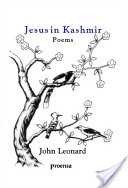
The Salt publication is quite exciting, it's a New and Selected Poems, so it feels like I've arrived! In fact I have had three collections: the first was self-published in the UK, the second, 100 Elegies for Modernity, was published by Hale and Iremonger in 1996, and the third, Jesus in Kashmir, I published myself in 2003. I think that there isn't the volume of poetry publishing in the English-speaking world for publication to be a guide to quality. I note that even the best-known poets have to hop around from little press to little press to put out their successive works, instead of continuing to publish with one mainstream publisher as poets used to up to the 1970s and 80s. So, when you get a collection together that you think is worth publishing, and you can't find a publisher, then I believe you have to put your wallet where your pretensions are and publish yourself. The part after publication is pretty much the same, i.e. going around doing readings, sending review copies off, generally promoting yourself. I find the bit before publication more satisfying with self-publication though, because you have more control over the selection of poems, the ordering of them, the prefatory material, the style and art-work. When I lived in Brisbane in the early 1990s I worked on Social Alternatives and learned how to use a typesetting program, so with Jesus in Kashmir I was able to typeset the whole publication and send it to the printer electronically.
I also commissioned a cover illustration from my friend Peter Marsack, who is one of Australia's leading bird-artists. The title-poem of the collection deals with various details of the legend that Jesus, having survived his crucifixion, travelled as a preacher and holy man until he ended up in Kashmir. One of these details is Jesus preaching a sermon about birds sitting in the branches of a tree, a metaphor for souls waiting to receive spiritual comfort, and so the illustration is of various Indian birds sitting in a symbolic tree.
I think another thing you can do to promote your poetry and any self-publications is to set up a website. I have a little one which showcases my works, provides a bit of a rationale for them and so forth.
Do you think there is a difference between attitudes towards self-publishing here and in the UK?
I haven't lived in the UK since 1991, and know very little about the poetry publishing scene there, so I really couldn't say.
But back then … what were the attitudes towards self-publishing – how did people respond to your first self-published book, the one published in England?
Looking back I think people were quite supportive. I did similar things back in 1990 to what I did in 2003 in Australia with my self-published Jesus in Kashmir. It's just that I only had about ten months more in the UK, before coming to Australia, so I wasn't able to begin that process of long-term promotion which I have done in Australia.
Has there ever been a time when you've given up writing poetry? Or found it to be useless?
No, I've never found it to be useless. I've always read poetry, though the intensity of my poetry reading has always depended on who I discovered next, whether they lead on to other poets, &c. As to writing poetry, I believe that poetry has to come by inspiration. So I don't regard my activity as 'writing poetry', instead I simply write poems that occur to me; this means that I get a few lines, or sentences, or even just one word, and this is the given centre of the poem. The rest of the poem is what I come up with subsequently to fill in what I believe is the context for those lines. I may be wrong of course. When I read other people's poetry I am always looking for that core, and what I often find is there is no core at all, or there is one, but the context supplied is unconvincing.
I have analysed how and when poetry 'comes to me' quite thoroughly, and I can find no pattern at all. Sometimes when I am emotionally stressed I write much poetry, sometimes none, great events in the world or in my life sometimes bring forth poetry, but mostly do not. There is no seasonal pattern either. The only pattern I have been able to distinguish is that sometimes the rate of my writing poetry increases for a few years, at the end of which time I publish a collection, and then in the years following this publication the rate slackens for a few years. I don't worry when no poetry comes to me, because I regard its coming as a gift, and I know that at a certain point it will cease to come, that's fine, I don't want to be one of these over-prolific poets.
Any advice for younger or new poets?
Well, following on from my previous answers, and earlier ones: think long and hard about the qualities that attract you to the poetry you admire and try to imitate them and don't assume your mission is the industrial production of poetry, but think of it as the writing of poems that are given to you.
Remember that thousands of people are writing poetry and trying to get it published. If your poetry is any good it will be published in the end, but that requires quite a degree of persistence. Don't despair, I have found that with poetry, and with other activities, the help, inspiration, information and opportunities you need often come unexpectedly and unasked, just at the moment you think that they never will.
And finally, though this may not sound like much consolation, it gets much easier to publish poetry when the people in charge of editing and publishing poetry are of the same generation as you. I had very little publication success until my mid 30s; after this, I surmise, the editors I was sending poems to were more likely to be of my age and outlook, and share my generational influences and preoccupations, so my poems started to be published more.
And finally, have you ever met the other John Leonard?
No I haven't. He and I were aware of each other's existence from the mid 1990s, but the first I heard from him was in 2003 when I criticised Les Murray's Collected Poems, and he wanted to make it clear this wasn't him. Now he has gone and founded the John Leonard Press, which I'm not very happy about, as now there is the risk that his taste in poets will be confused with mine (and since when did the proprietor of a small press name it after himself?). There is also a Miltonic Scholar from Canada called John Leonard, and a New York journalist, and a golf pro in Florida …

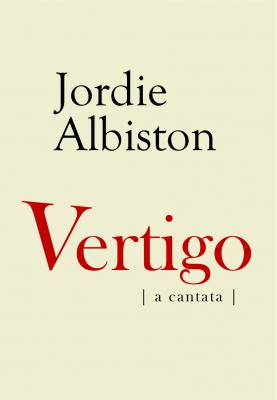 Vertigo: a cantata by Jordie Albiston
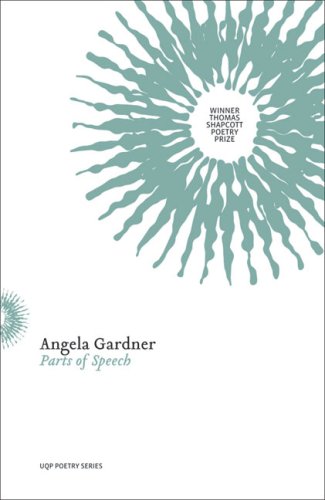 Parts of Speech by Angela Gardner