
ESSAYS
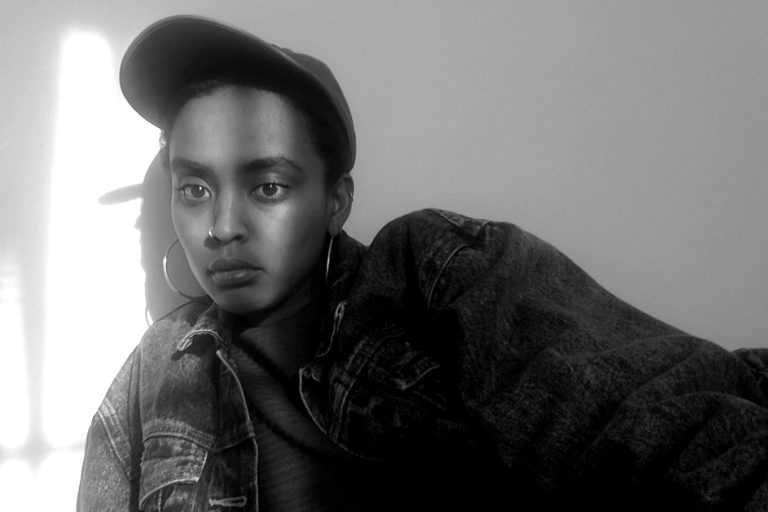
Editorial to AFRO AUSTRALIAN
I can’t think I am living large if the home we live in is a mess while my own room is spotless. I want a beautiful mansion for all of us. Yes, I realise this is not a seamless nor an especially artful allegory.

To Outlive a Home: Poetics of a Crumbling Domestic
While these pre-federation tropes of settler colonial Australia’s multifaceted and at times contradictory pastoral modes seem to recognise something of their incompatibility with Aboriginal land, they seek their resolution from burial, rather than reciprocal encounter with Aboriginal presence.
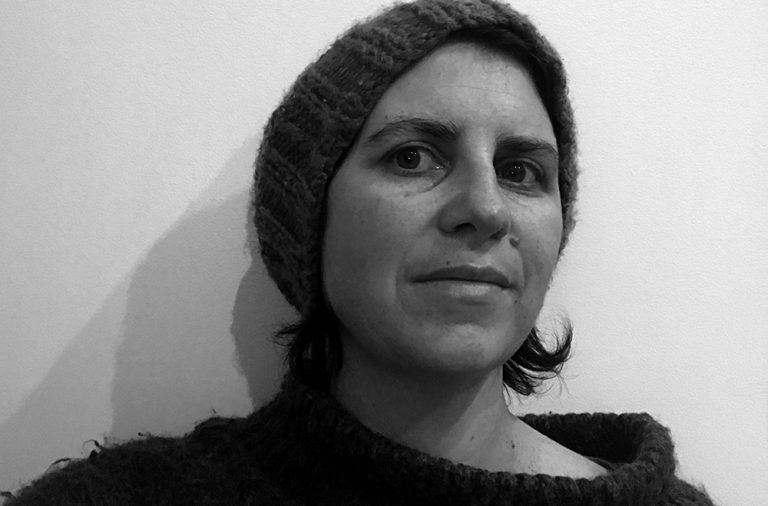
DOMESTIC Editorial
I invited you to lean into this DOMESTIC sphere in all its homely undoing; to rupture the masquerading shape of cosy bliss; to plant seeds and haunt with your words; to unsettle and shape what survival looks and feels like – and you did.
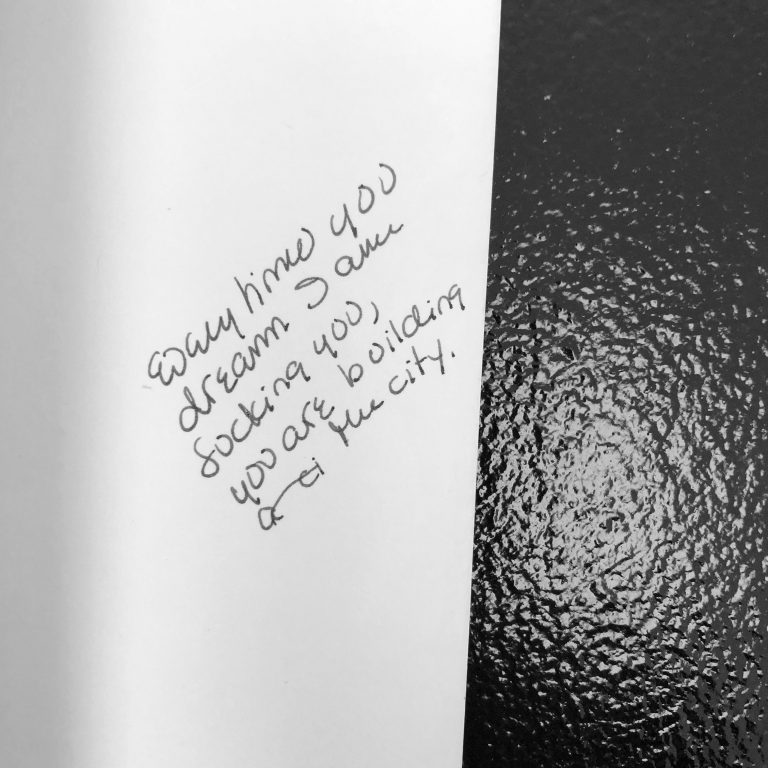
Kathy Acker and The Viewing Room
The last time I saw Kathy Acker was in London, in July 1997. I wasn’t sure how she felt about me at that point. I had failed to drop everything to be with her in San Francisco the year before, and I had failed to make a job materialise that would have brought her to Sydney, as she wanted.

The Wild Workshop: The Ghost of a Brontëan Childhood in the Life of Dorothy Hewett
An indelible part of the Brontë mythology is their symbiotic development as young artists in an isolated environment.
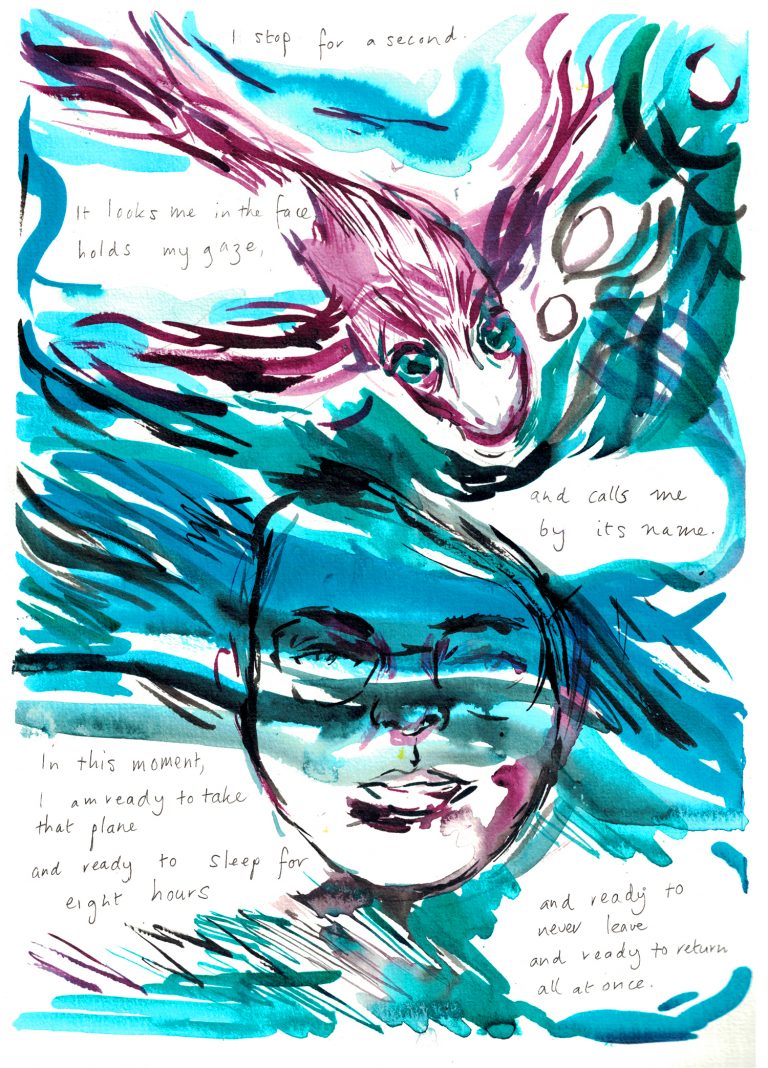
To Live There: on ‘Dispatch from the Future Fish’
Dispatch from the Future Fish is a visual poem that is deliberately referential, opening up conversations and foregrounding the notion of writing into certain traditions: those that are given to us and those that we choose.
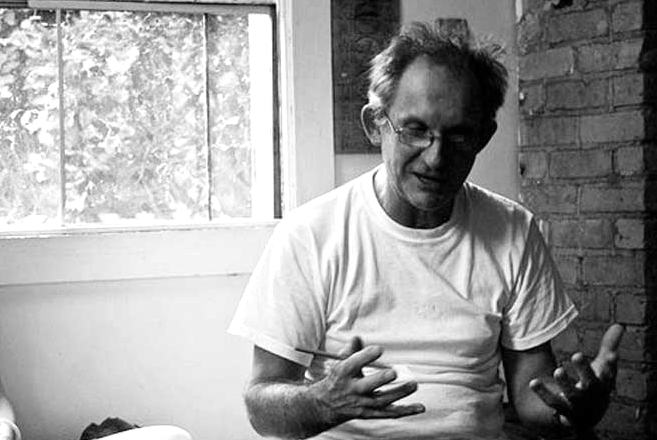
Externalising the Symptom: Radicalised Youth and The Membrane
I was radicalised in my youth. I came back from a year in Paris in ’68-69 with my parents, and went to Monash University, a ‘radical’ campus when it was new. I was not a leader; I was still too young for that, but being radical was a trend.
On Deep Breaths and Friends Forever: Im/materiality and Mis/communication in Happy Angels Revisited
Taking cues from the Call and Response, an interactive polyvocal model used in antiphonal music traditions such as gospels, hymns, and sea shanties, where audiences respond to the ‘call(s)’ of a speaker, Happy Angels Revisited pursues a modality of swaying.
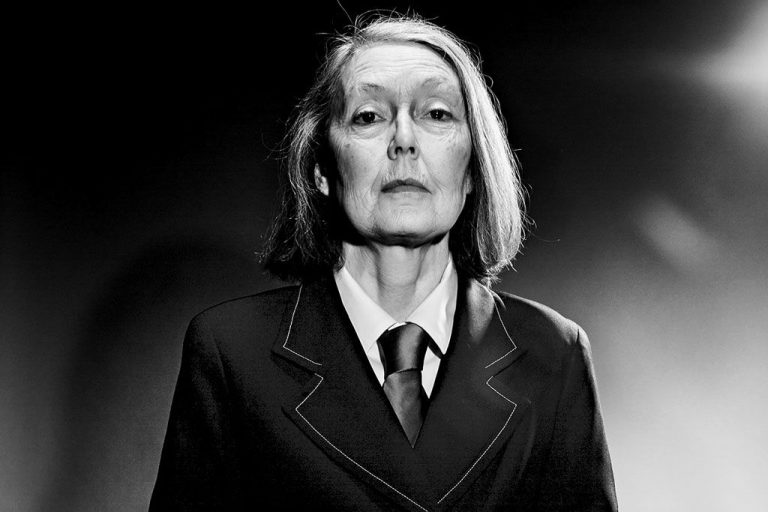
Letter to Anne Carson: Work of Remembrance and Mourning
‘I came to think of translating,’ you write in Nox ‘… as a room, not exactly an unknown room, where one gropes for the light switch.’ I read your words and imagine you standing in a dark room, your hand thrust forward for a handshake with Catullus’s Poem 101.
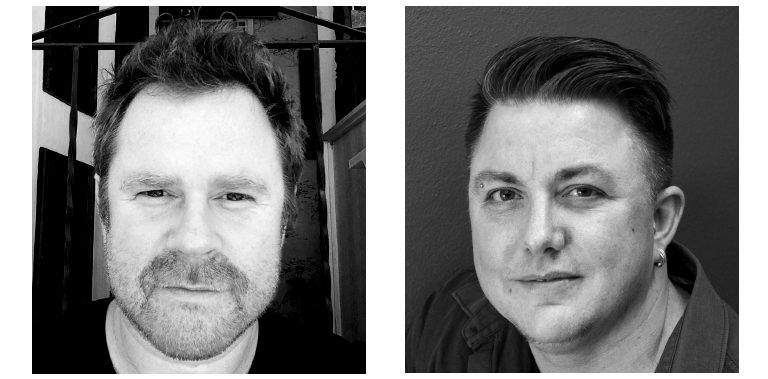
TRANSQUEER Editorial
When we put out the call for TRANSQUEER we asked poets ‘to explore trans identities not as positions to defend but as modes of becoming and thus ways of being human’ (Joy Ladin, Trans Studies Quarterly, 2016: 640) and ‘to believe that the world is QUEER, or that oneself is, or both, [and that this] is a window of doubt through which all creative possibility comes into being’ (Mark Doty, The Art of Description: World into Word).
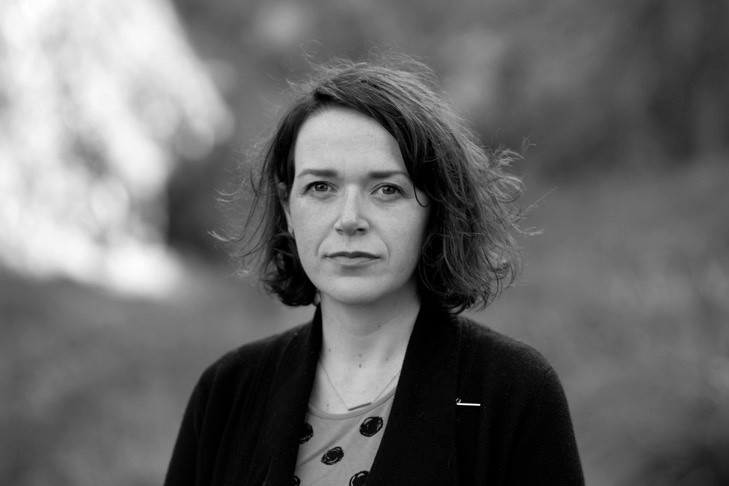
The Kindness of Strangers: On New Zealand’s Literary Journals
If I had to pick one word to describe the current landscape of New Zealand literary journals, it would be ‘wild’. Practitioners are free to form their own outlets where they see gaps they would like to be filled and this makes for an exciting, vibrant time.
DIFFICULT Editorial
When people say ‘difficult’ and ‘poetry’ in the same sentence they are usually referring to the experience of reading a certain type of poem.
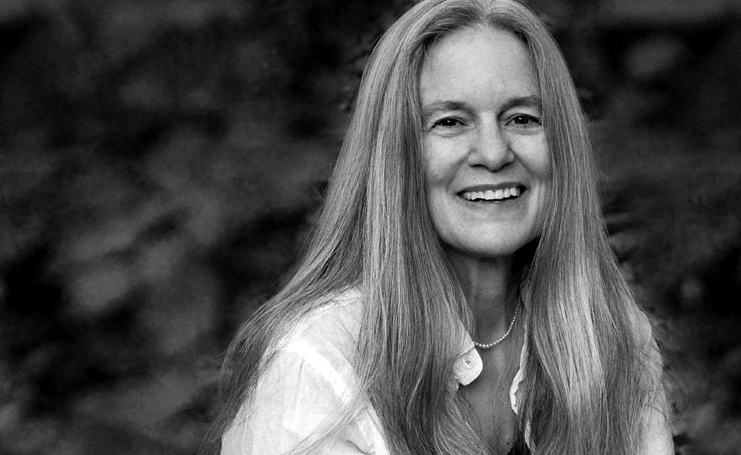
Why Reading Sharon Olds Makes You a Better Person
Yet, as literary theory in the intervening decades has shown, no individual can speak for the collective per se, bound as they are by the confines of their culture, gender, race, class, as well as the inherently constructed nature of that self that defines lyric poetry (which, as Maria Takolander has recently argued, is in turn bound by the technology that writes it).
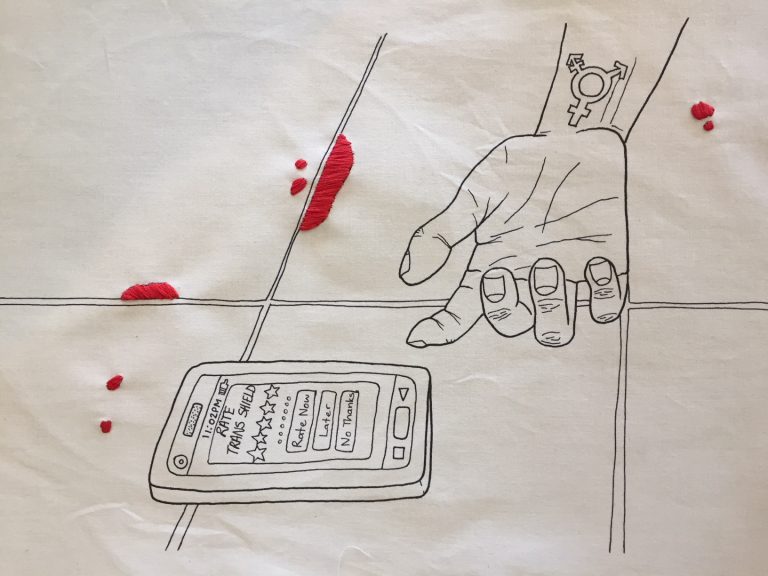
The Unaugmented Reality of Transgender Discrimination: ‘Do more, do better’
‘Do more, do better’ is a poem in four parts that explores transgender discrimination through a hypothetical augmented reality (AR) mobile app. The accompanying inked and embroidered art pieces reiterate key themes within the poem using a medium that could be considered an analogue to tech culture’s digital: craftivism.

Experimental Confessionalism: The Personal Turn in American Post-conceptual Poetry
Language poetry and conceptual poetry have both been enormously important movements in the development of contemporary experimental American poetry. They continue to be influential, however they are now both historical moments. This has led to some contemporary poets positioning themselves as post-language or post-conceptual.

Punk Calligraphy: A Primer on Asemic Writing and Scribbles
Growing up in Australia, I learned to associate the word ‘calligraphy’ with what is beautiful, perfect, virtuosic handwriting. However, there are other ways to interpret calli – the beauty – of handwriting. Punk calligraphy is my term for unhindered explorations of handwriting.
What the Repetitions of Poetry Might Help Us Remember about Home, Belonging and the Self
It’s mid January in Edinburgh. Patches of yesterday’s snow make florescent patterns on the future flowerbeds of the new old folks home across the road. It’s a home specifically for people with dementia.

Sonic Twin? A Poetics of Poetic Radio
When I reflect on the last decade of my engagement with poetry, I hear a presence shadowing many of my encounters. ‘Hear’ is an apt verb, because this presence is aural.
NO THEME VII Editorial
Four years ago, writing an essay on David Malouf, I learned that Hawthorn Library held a copy of his first poetry collection, Bicycle and Other Poems (1970). I borrowed it, and, sadly, I returned it, too. Today, I rang the library to find the book.
Bone Shame: Grief, Te Ao Māori and the Liminal Space where Translation Fails
Wherever there is a need for translation there is discomfort – a chasm that must be scaffolded, or connected by branch, bond or bridge. There is almost a desperation in the need to both enlighten and to be understood.
Re-imagining Place: A Psychogeographic Reading of Carmine Frascarelli’s Sydney Road Poems
What can the original concepts underpinning psychogeography lend to a discussion of the relation between poetry and place in contemporary Australian poetics?
‘Geelong checks its modernist warranty’
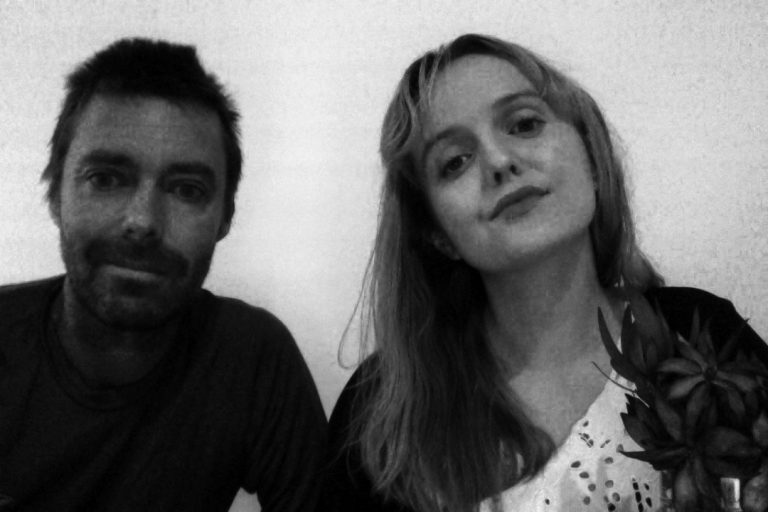
In 1890, an American aeronaut named Millie Viola departs the Geelong showgrounds in a hot air balloon, in order to give an assembled crowd of onlookers a parachute jump display.
John Ashbery’s Humane Abstractions
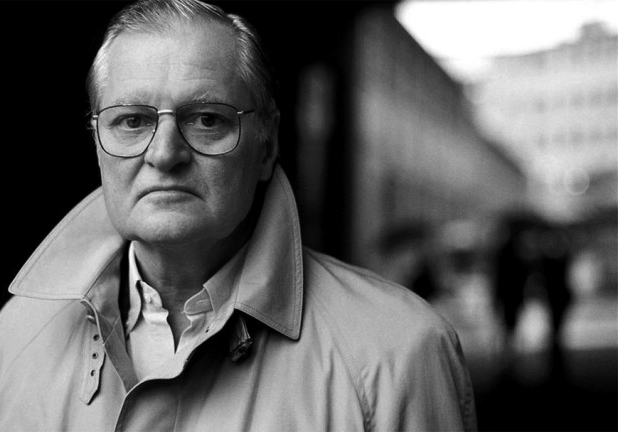
In the context of John Ashbery’s long career it is possible to a claim a particular significance for that book. Published in 1970, it was the first volume he wrote after re-settling in the United States in 1965, having lived in Paris for the best part of a decade. It was also the book in which he arrived at a kind of poem – ‘Soonest Mended’ is an example, but so are several others, ‘Evening in the Country’, say, or ‘The Bungalows’ – that established a way of configuring voice, narrative trajectory, human relations and cultural reference that would become recognisable as characteristically Ashberyan.

PHILIPPINES Editorial
To enter the mind of Philippine literature in English, it is important to note the evolution of English in the Philippines. We were colonised by Spain in 1521 and sold to America in 1898. According to eminent Filipino poet and scholar, Gémino Abad, Philippine poetry in English only took flight in the 1920s – it is a considerably young poetry, being less than a hundred years old.