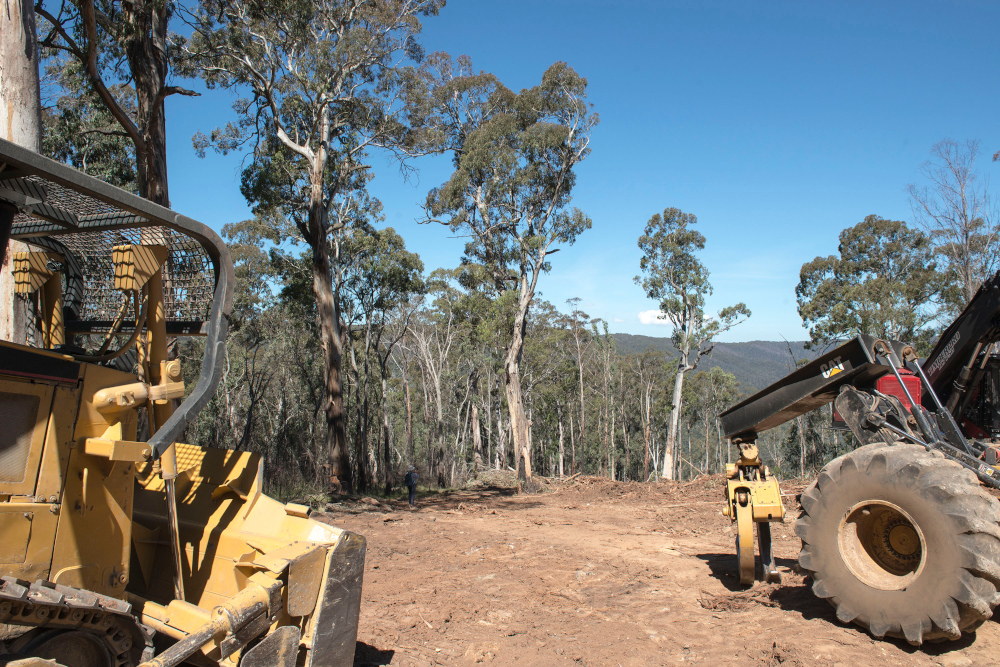
Coupe Portraits: Walking the Damaged Forests of East Gippsland (Gunaikurnai Country)


Photograph by Lisa Roberts

A coupe is a specific area of forest identified for logging operations under VicForests’ Timber Release Plans. Despite the ecological catastrophe of the 2019-20 Summer bushfires which burnt through 1.25 million hectares of forest in East Gippsland VicForests has not revised its logging plans, in fact two additional Timber Release Plans were approved by the Board of the state-owned company in July and December 2020. More than 550 coupes and 20,000 hectares of forest including key unburnt refuges are scheduled for logging in East Gippsland.

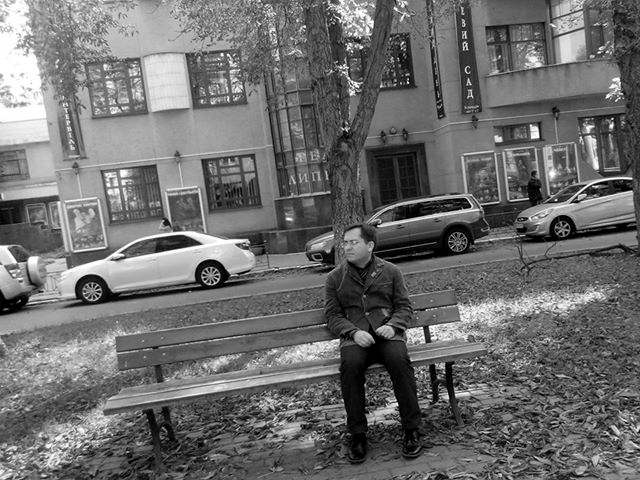
The Coupe Portraits series was created by Louise Crisp and Lisa Roberts as part of Stony Creek Collective a collaborative multi-artform research project undertaken in the foothill forests of East Gippsland during 2020-21. The project was supported by the Victorian Government through Creative Victoria.

Posted in CHAPBOOKS | Tagged ,

3 Vyachesav Huk Translations

Untitled

He dared to write her a letter in the last quarter of an anguished winter,
while he was in hospital, with a handkerchief pressed to his nose to stop the bleeding,
quite exhausted, his body emaciated, his voice feeble—
he dreamt of a well of grey water and ducks in the sinkhole of a meandering autumn,
he tried to allay the emptiness of his soul with his tears,
he yearned to feel a moment filled with fervent existence, yearned to walk
blindly in absolute darkness, to revive the quickening words in his consciousness;
a dove was drinking rain water from a crack in the decayed dusk of a tree,
the present tense broke off when the lilac shadows lengthened in twilight;
he was prone to self-sacrifice—especially in recent years, while
he was writing a piece, living the life of a hermit among those long gone;
he remembered a drowsy siesta, old chairs on the lawn in annexed Crimea,
fallen leaves in his hair, his shelter, a hat clutched in his hand—
this is how human nature protects its essence—with a taut declaration of will;
wherever he lived, communication with others was always a painful occasion
but wielding garden equipment freed him from grieving,
or he wept like a lonely bird over a fjord at the onset of dark;
while he was whistling—chirp, chirp—he heard the thud of the front door downstairs—
the scullery maid brought vegetables from the market—suddenly
dense light filled his memory and his hallway,
he mused on the stairs, looking through the window as if the scenery were an old photo:
how crucial the divine presence is in places abandoned by life,
with only an earthly valley remaining; maybe someone will finish this line for me—
after his death, the winter field and his fecund garden remained unattended.


Він зважився написати їй листа в останню чверть вистражданої зими,
коли лежав у лікарні і тримав у руці хустинку, щоб спинити кровотечу,—
геть виснажений, зі страшенно вихудлим тілом і надсадним голосом—
йому снились качки в ополонці бродячої осені й колодязь сивої води,
він намагався зробити так, щоби сльози заспокоїли порожнечу душі,
і прагнув відчути мить, сповнену тривожного існування, прагнув іти
сліпма в суцільній імлі, щоб відродити у свідомості живодайні слова;
по дощі за вікном голуб пив воду із жолоба в зотлілій темряві дерева,
й уривалося сьогодення, коли бузкові тіні надвечір ставали довшими;
він був схильним до самопожертви—особливо в останні роки, коли
певний час писав твір і жив самотою серед тих, кого вже давно немає;
згадав сонне пообіддя, старі стільці на газоні в окупованому Криму,
опале листя в своєму волоссі, притулок, капелюх, затиснутий у руці,—
так людське єство зберігає свою сутність, як напружений прояв волі,
він завше, де б не жив, дуже болісно переживав спілкування з іншими,
але звільнявся від скорботи, коли користувався садовим реманентом,
або плакав, ніби самітний птах над фіордом, коли вечоріло на вулиці;
коли він насвистував: ф’ю-ф’ю, то почув унизу стук вхідних дверей—
це прийшла стороння куховарка і принесла з базару овочі—зненацька
густе світло яскравими потоками наповнило його спогад і передпокій,
він стояв на сходах і думав, дивлячись у вікно, мов на стару світлину:
як потрібна присутність божественного там, де тепер вже немає життя,
де тільки паділ земний, може, хтось допише останній рядок після мене—
по його смерті залишилось без догляду зимне поле і сад плодоносний.

Posted in TRANSLATIONS | Tagged ,

3 Joseph Ponthus Translations


Image courtesy of L’Usine Nouvelle

It is a rare thing indeed to be entrusted with the translation of such a startlingly original work as Joseph Ponthus’s À la ligne.

It is a work that bears reading and re-reading. A work that stays with you.

Unable to find work in his chosen field, Joseph Ponthus enlisted with a temp agency and started to pick up casual shifts in the fish processing plants and abattoirs of Brittany. On the Line – Notes from a factory is his attempt not just to record but to process the horror of what he witnessed, to accord it some meaning, to allow him to find its place not only in his own mind but also to invite us, his readers, to bear witness to the monotony of the processing machine, the broken bodies it leaves in its wake, while inviting us into the dark recesses of the mind where the human spirit is struggling to adapt, hoping perhaps to survive.

French author Céline Curiol writes in her recently published novel Les Lois d’Ascension (Actes Sud, 2021) that ‘nobody can survive without imagination…’, and Ponthus’s extraordinary work might be understood as the author’s attempt to imagine his survival in these most inhuman of environments, through his writing.

We are allowed a way in, if you like, through Ponthus’s title, À la ligne, a clever double entendre referencing not only the production line but also his persistent ‘return’ to a new line with each new phrase, eschewing punctuation.

Ponthus returns to a new line, as he returns to the factory, producing a rhythm that matches the relentlessness of the production line. Yet it is a technique that also allows the creation of a visual space on the page which, in turn, might be seen as reflecting that place of grace, that mental and spiritual retreat which somehow allows us to preserve our humanity and continue to engage when confronted with such challenging circumstances.

In a film shown at a recent retrospective of her work at the Museum of Contemporary Art in Sydney, artist Lindy Lee comments—and I paraphrase—that the brain only knows what it knows. As humans we are constantly trying to make sense of, to process, our environment. Perhaps the very essence of the human condition, the human contradiction, is the fact that the human mind is capable of reeling before the beauty of Apollinaire’s words, before the wonder that is Bach’s St Matthew Passion, and yet may still be called upon to reconcile not only body but mind with the horror inflicted by wars, with the mindlessness of work on the production line, with the slaughter being carried out in our abattoirs. While compelling us to acknowledge the imperatives involved in the human processing of other animals, Ponthus also forces us to engage with the underlying inhumanity of our exploitation of human capital in this process. His gaze is uncompromising, his words remind us of our complicity.

As a translator, one is also constantly called upon to challenge what it is the brain knows. Our mind is constrained by the familiar, and yet we must suspend our disbelief and attempt not only to hold a mirror to the words, but to record the shifting rhythm and acoustics of rage and exhaustion, of humour and pathos, of dignity and indignity. And, in this work more than most, the sound of our (in)humanity.

In an inconceivably tragic turn, Joseph Ponthus died earlier this year at the brutally young age of 42. Fortunately, he lived to see the recognition awarded him in France for this unflinching and original work. À la ligne was awarded the Grand Prix RTL-Lire, the Prix Eugène Dabit du roman populiste, and the Prix Régine Deforges, among others.

Posted in TRANSLATIONS | Tagged , , ,

‘To the edges of language’: Souradeep Roy in Conversation with Mani Rao

This interview with Mani Rao took place over several emails alongside an a necessary-extended phone conversation during this ongoing pandemic. Before this interview I had read Rao’s work seriously for the first time with the Delhi Poetry Reading Group in 2015 and subsequently met Rao at the ‘Almost Island’ conferences in 2018 and 2019. In India, Rao has mostly been known as an experimental poet and a translator from classical Sanskrit. If a singular, intriguing voice is experimental, Rao is certainly an experimental poet who does not fall back into the easy lyricism that is so common in contemporary poetry. Rao’s lines are sharp and incisive. They stretch sound and the visual shape of the poem to the edges of language.

In the first part of the interview, we discuss Rao’s brilliant translations from Sanskrit to English of two works: the Bhagavad Gita (2010) and Kalidasa for the 21st Century Reader (2014). Both translations have a dramatic quality, which we discuss throughout this interview. By dramatic, I refer to T.S Eliot’s idea of the dramatic voice explored in his essay: ‘The Three Voices of Poetry’. Rao began translating later in her writing career when she was pursuing her MFA, that also included translation studies. I believe that it’s at this juncture that a link was forged between Rao’s work as a translator and a poet. It is a bridge that connects her choices, and a bridge that calls for a comparative critical eye (and ear) of future readers. The following conversation, will, hopefully, lead to such critical and creative engagements.

In the second part of this interview, I was able to discuss Rao’s earlier works such as: Wingspan (1987) and Catapult Season (1993). The voice in Rao’s earlier works, including Living Shadows (1997), The Last Beach (1999), and Salt (2000) finds its culmination in the stunning sequence, echolocation (2003). echolocation was followed by Ghostmasters (2010), a collection where Rao’s voice underwent subtle changes. The full range of this new voice, a more detached, calmer, but equally fierce voice is exemplified in Rao’s latest chapbook, Sing to Me (2019). Rao’s first two books, aforementioned, have hardly received the attention they deserve – and so I’ve chosen to discuss specific poems from these two collections. Besides the shameful neglect of Rao’s early work, there is also a thematic reason for discussing them. Rao’s early work allows for an exploration of the abject.

‘When I am beset by abjection,’ Julia Kristeva writes in Powers of Horror (1980), ‘the twisted braid of affects and thoughts I call by such name does not have, properly speaking, a definable object.’ The abject, that is frequently seen in the images of blood, death – what I call ‘macabre’ while discussing the early poems in this interview – is not the object which, through its opposition to me, settles my desire for meaning, for knowing who I am. The abject, like the object, is opposed to the ‘I’, but, unlike the object, its opposition is not as clearly defined. Kristeva likens this as ‘the jettisoned object’ that is ‘radically excluded’ and ‘draws me toward the place where meaning collapses’. Rao’s early writing demonstrates her commitment to explore abjection: both its seductions and repulsions. Perhaps this is why Rao frequently stretches language outside of its usual contours of meaning, and, in her early works, also falls back on another language altogether: visual art. The pleasure in reading or seeing Rao’s work, as a result, comes precisely because of the difficulty in finding meaning in her poems. Formally, Rao’s poems resist easy determinations of meaning, not simply because every poem resists a common determination, but because her poems explore the impossibility of meaning itself. This tradition of writing, including poems such as Adil Jussawalla’s ‘Missing Person’, and some of Arvind Krishna Mehrotra’s early work like ‘Songs of the Good Surrealist’, has not been explored enough in the Indian-English poetry tradition.

Though Rao does not characterise her own work in the same way I interpret her poems, a discussion on her earlier work, as this interview demonstrates, makes a good case for such a reading. In Rao’s later work, especially in the new chapbook Sing to Me (2019), we find a brilliant treatment of ‘the myth’. Two reasons could be attributed to this. One, the influence of Rao’s translations into her own poetry, and two, a shift away from the treatment of the abject into a treatment of the object. Myths are, after all, pre-existing symbolic structures. Unlike the abject – always outside the purview of meaning – they already carry meaning, which Rao reinterprets with her singular vision and style.

Souradeep Roy: I feel there is a dramatic quality to your translations. By dramatic I don’t mean high drama, but the quality of dialogue in plays, which switches between various registers of speech. This is obviously the case of plays you’ve translated but also of epic poems, like the Bhagavad Gita, which is technically not a play …

Mani Rao: But the Gita is actually a dialogue between two characters. The stage is the battlefield as well as the entire context of the conflict and tension between the two warring sides. And there is tension in Arjuna’s situation – to fight or not to fight – I guess the only thing missing is ‘action’ (smile). But before the teaching begins in the Gita, there is a fair amount of drama. And the interaction between Arjuna and Krishna – the words they exchange – expresses their personalities and their relationship. If we only think of the Gita as a teaching, much of this other fun is lost.

SR: Let me explain this with examples from the poems. In the Gita, after Arjuna’s makes his case against fratricide, Krishna says, ‘nice speech Arjuna but …’

MR: At that point in the Gita, Arjuna has just completed a rant. He has laid out the potential consequences of war, spouting doctrine, but he is full of self-pity and has described his own state – how his hair stands on end, his tongue is dry, his bow has fallen to the ground, etc. Krishna responds by mocking Arjuna.

When one translates the line from Sanskrit literally, we get ‘you speak wise words Arjuna’ – and (funnily) some translators do actually use exactly those words. But Krishna is not appreciating Arjuna for his wise speech, he means the opposite, he mocks Arjuna, suggests that Arjuna is far from wise. I hear a clear tone of laughter and mockery there: ‘prajñāvādām ca bhāṣase!!!!’ What a loss if we miss the innuendo in this response and instead make it sound solemn! I mean – I think I am simply following the tone of the original. Until about here in the Gita, the verses are dramatic, it is only after this the content becomes semi-philosophical. It would have been a shame to lose the humour. Here’s how I translated the stanza:

2.11.       Krishna:
                         nice speech arjuna but 

                         the truly wise 
                         know better 

                         than to be sad 
                         over life that’s gone
                                                  or not 

                         life & death pass

Posted in INTERVIEWS | Tagged , , ,

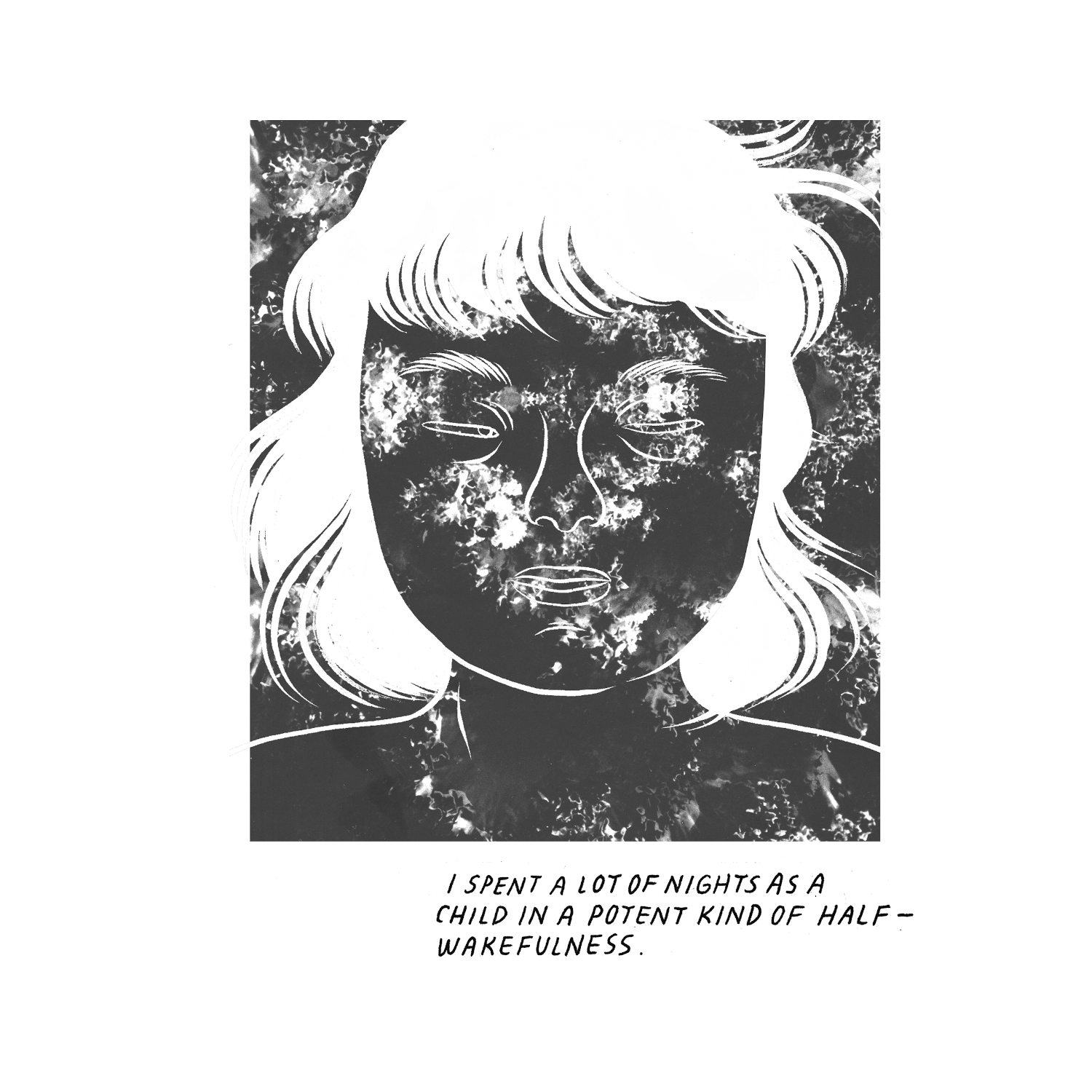
Lucid

Posted in ARTWORKS | Tagged

Cook Book: 12 Works by Hayley Millar Baker


Hayley Millar Baker | Untitled (Give the dog the small fish we will cook the big fish) Part 1 | diptychs

Cook Book explores the merging of traditional Aboriginal cultural practices with Westernised 21st Century knowledges and tools. As Aboriginal people, we have passed down stories to the next generation for hundreds of centuries in order to preserve timeless knowledges and our way of life – even through the onslaught of change that invasion and forced assimilation brought with it.

In our contemporary landscape, cultural practices lending from natural systems and environments including hunting, cooking, crafts, building, and language have extended to incorporate Western technologies and tools. The same practices have the same outcomes, however, during the ‘making’ period we are now able to integrate contemporary tools to provide opportunities for cultural practices and knowledges to be revisited in order to adapt to a fast-paced and ever-changing environment.

Cook Book considers how Western implements have become part of Indigenous cultural practices in day-to-day activities through a play on language that acts as a narration. It is through the translation of phrases and instructions that Cook Book emphasises how our timeless practices and knowledges have evolved to ensure cultural continuity in the 21st Century, despite the immeasurable changes around us.

Posted in ARTWORKS | Tagged

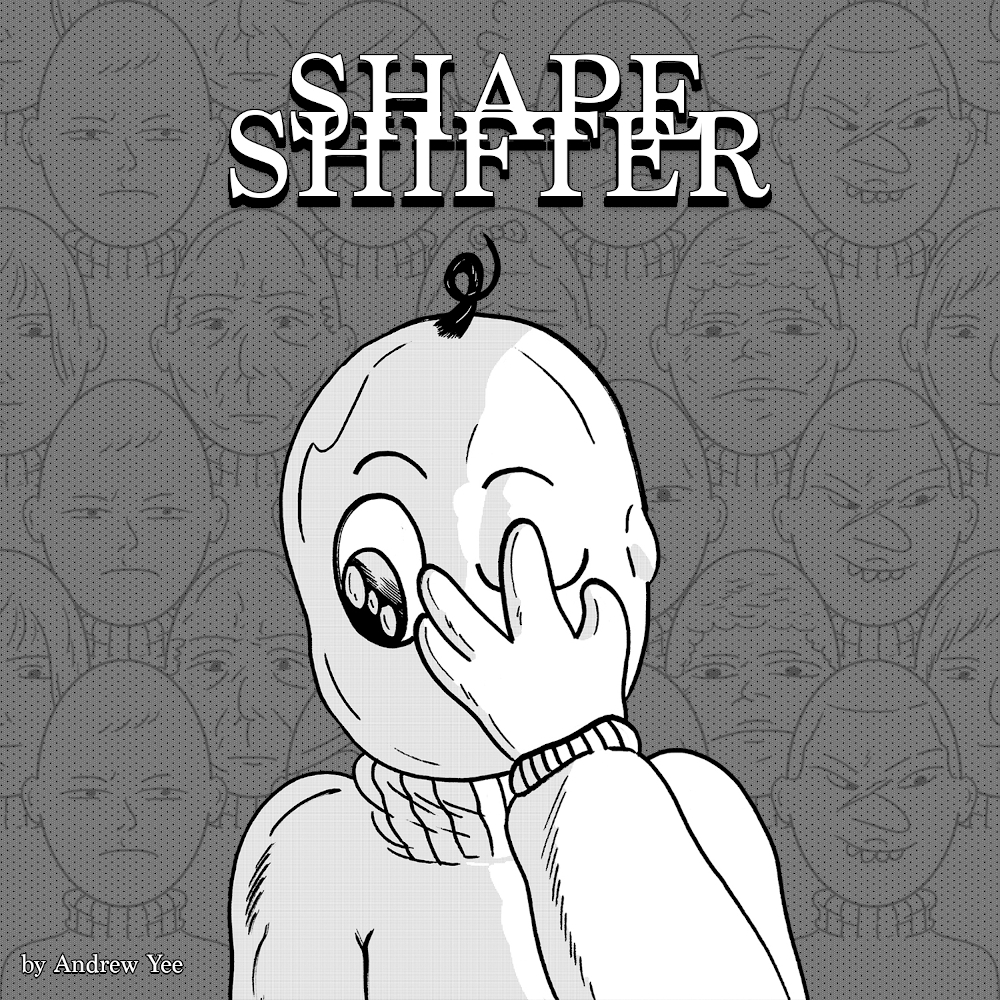
Shapeshifter

Posted in ARTWORKS | Tagged

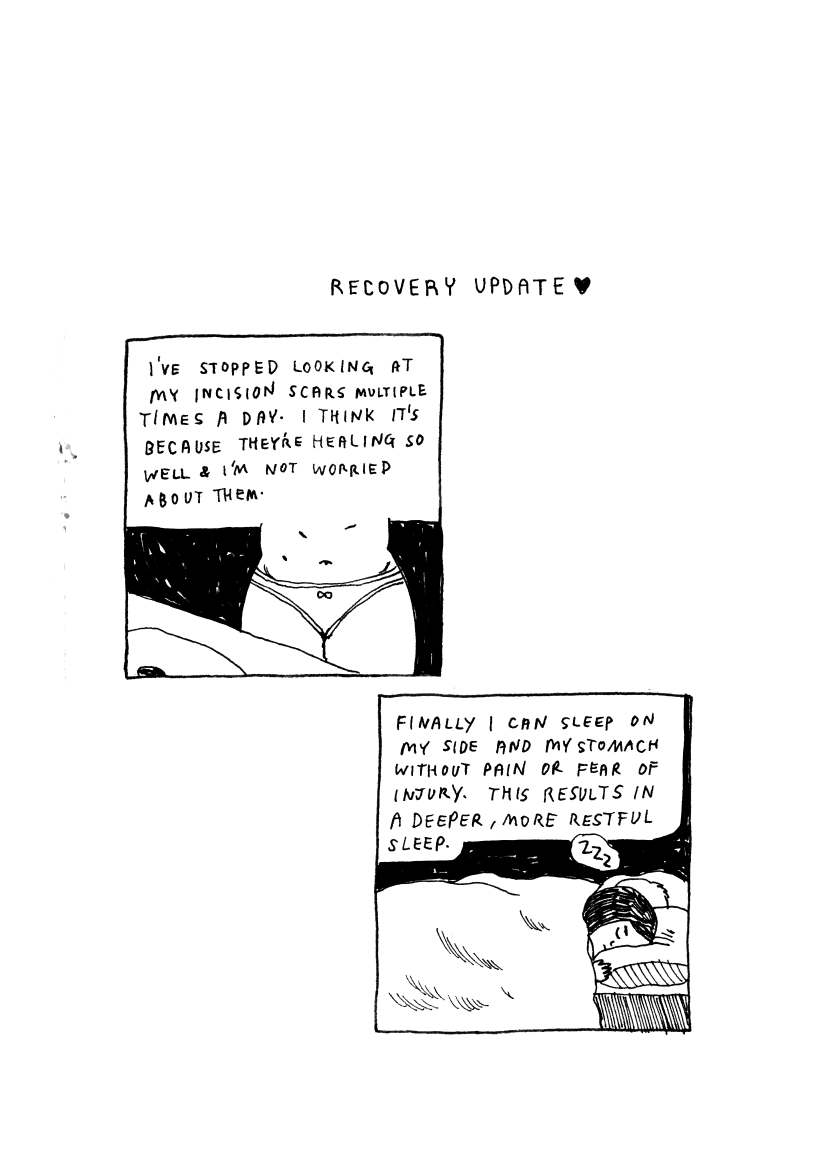
Recovery Update ♥

Posted in ARTWORKS | Tagged

Party Girls Aren’t Supposed to Hurt

so laugh
vibrate the walls with your sonic hysterics
skol

be the pulse of the celebration
ba-Boom ba-Boom ba-Boom
cheeehooo!
skol

drink big men under the table
last woman standing
she’s a bit of an alright, aye
skol

outwit gutter mouths in bawdy contests
burn their pitiful comebacks
bloody hardcase, that one
skol

swaying hips on the dance floor
attracts sleazy eyes
yo baby, grind this!
skol

become ‘best friends’ with intoxicated strangers
ladies’ loos congregation
I love you, sis!
skol

crazy, sexy, foolish kisses
tastes of Pall Mall lungs
What’s your name?
skol

dis-ease with your self
wasted on delusions
Dunno. What’s my name? hahaha
skol
skol
skol

blink

dodgy mouth grinds against yours
while his boys guffaw downstairs
blink

bling bling fingers
tearing tender insides
blink

his crucifix pendant swings above you
but you’re the one getting nailed
blink

bawdy brotherhood
burn you bloody
blink

your Hotown lipstick smeared
between their Brotown legs
blink

bile slimes down your chin
while gasping over shit-stained toilet bowl
blink

you’re a disease – a miserable waste of space
blink
look on the bright side – you found your name
blink
don’t fucking cry, you wanted a name
blink
nameless no more – SLUT is your name
blink
your name
Slut
Cunt
your name!
blink
blink

black

blank


Breathe

Party girls aren’t supposed to hurt.

Sun rises
again.
Vomit your sins
baptise your mouth with Listerine.
Scrub them off
your stained panties.
Slide on your shades,
hide the windows
to your shamed soul.
Breathe
Shoulders back
Breathe
Smile
Breathe
Play
the pretend game
again.

Posted in 101: NO THEME 10 | Tagged

Newspeak

They begin by taking away our language. America tears babies
from their mothers. They become tender age children, complicit

in their parents’ illegal pilgrimage. The White House summons an alternative
truth
. A television anchor cries falsehood. He is being kind, if not complicit;

it is a lie. Spokespersons spin the same doublespeak:
A propagandist becomes a pundit. When a judge is complicit,

no means yes means anal. By now you know what happens in America
does not stay in America. A one-way getaway to Hawaii is complicit:

firepower for narcos, a round of golf with Marcos. Our dictators
take a cue from that playbook. The headlines betray another accomplice—

A ‘former president’ faces plunder charges. There were no skeletons
in his closet, only thousands of shoes belonging to his complicit

wife. A ‘former first lady’ is convicted of graft. The ‘late leader of state’
gets a heroes’ burial. When you take a word and water it to complicity,

does it grow or wash out? A drug suspect is neutralized, meaning, escorted
to rehab. Or neutralized, meaning, arrested. Or neutralized, meaning complicit

with his companions’ crimes, meaning: dead. Extrajudicial killings are homicides
are deaths under investigation. Complicity conflates—even Congress

finds that indigenous people are communists, the communists, terrorists.
It considers censorship an edit. I do not want to be complicit.

The job costs more than it pays. Changing headlines, I backspace Regine
and slap on staff. Another attempt to fold into a byline a protest.

Posted in 101: NO THEME 10 | Tagged

Gigil

They told me
as a toddler

with fat on each side
of my tongue,

swaddled between
ate Cathy and tita

Adoracion,
that I should be bitten

between a thumb
and index

because I was
gigil na gigil talaga

***

Gigil, the root word
for frustration

caused by
cuteness

Gigil, they said
trembling

teeth grit
chewing back

brown lower lips
barely containing the blood

***

They told me I was
the opposite

of a rice queen
which is desire with no name

a silence
in whiteness

like snow, they told me
I’d water fields

even in monsoons,
a fork for a tongue and eyes of Bohol

would make a baby face
out of a high chair

***

They told me to take
as many helpings

as I wanted,
rice, soy sauce and kraft singles

melted
on round cheeks

a cuchara,
an arrowroot

behind milk teeth I wobbled
ilocano, tagalog

until they told me to translate
the semitone

on a sherried lip
the moaning, they said

for what I owed an older mouth
in a harness

***

They told me this but we are now
walking

from the manly to
spit

real men and flannel
flowers, on a sunday

softer than two ships
passing in daylight,

the gap between them
the distance of shoulders

***

I told you
to lick my

tomorrow,
because the safest memory

is the whet of a tongue
drawn in salt,

I say it to the small of your back
to the clef of your wanting,

where sin still leaves dimples
deciduous, and your throat will know

the lord loves us,
it will know

that he is so very,
very good

Posted in 101: NO THEME 10 | Tagged

The Mourning Star

The victimization of children is nowhere forbidden;
what is forbidden is to write about it.

– Alice Miller

i.

The first star pierces
with dead light.

Is a dirge.
Is you.

Is known by how it tugs,
draws into. Sight shall fill
with shapes.

How we monster a bed.


ii.

You are an ecological disaster.
All your teeth are falling out.
Because you refuse to speak,
to shout. You fill your veins
with swamp. Let your anger
be the climate, raging.

Become sea flood. Salt yourself.

Let crystals sting as you rub them
into your skin.


iii.

There is a man who claims to be your brother.
He teaches you to whimper with a full mouth.
He will lay his hands across naked sheets.

A stain remains.

As does ink.


iv.

Night was created so the gods had somewhere to hide:
their sins; their sins; their sins. And us, made
in their image – minus wing or cloven hoof – we follow suit.


v.

At midnight,
gather all your teeth

and bury them.

At a crossroads.
In a cauldron.
In a coffin.


vi.

That first star:
it can do nothing to save us
from ourselves,
from those men,
all ivory and ache.

The first star weeps.

Because to bear witness is a burden.

And we cannot sleep.

Leave your body:
as ghost
step into atramentous.

Posted in 101: NO THEME 10 | Tagged

Toe-tapping (California dreaming)

Because it was fun
Because we were young and wilful
Because the sun hadn’t always been a good friend
Because solitude, like wisdom, offered a tough but viable option
Because intimacy was peddling an even tougher option for all the wrong reasons
Because the past was clearly bollocks
Because the future looked more of same, our planet’s wobble cranking up
with indifference
Because secularism was playing peek-a-boo with longed-for landscapes
Because memory’s lonely tabula rasa was skulking around in a see-through negligee
Because Rorschach’s tiresome old inkblots were talk of the town
Because Lacan’s panty-knotting fantasies were deemed heavenly manna
Because commando insurrection spread like wildfire through Beatlemania
Because the vortex of self-importance had to be avoided at all costs
Because our duffle coats reeked of sure-footed impudence
Because mum and dad said No!
Because a negligent Church, colder and stiffer than Greybeard Almighty, couldn’t stop
flattening the Earth
Because every creepy white male was just that
Because silver screen M*A*S*H would spawn eleven seasons of grey screen mayhem
Because Yasujirō Ozu seasoned our humanity with labyrinthine contemplation
Because Watergate, like glyphosate, kept fertilising the court jester’s public tongue
Because the My Lai massacre deserved a little more than a pardoned soldier’s remorse
Because our eyes sparkled like crushed glass
Because our hearts were cascading to an endless drug-fuelled tsunami
Because Roland Barthes had other ideas
Because Martin Luther King held firm
Because Rosa Parks sat tall
Because tyranny had become the sine qua non of metaphysics
Because balance and harmony meant next to nothing
Because dark energy was everywhere
Because retreating never entered our minds
Because letting go lodged deep within and gripped tight, our only certainty
Because silence draped delicately from every moment, febrile, reciprocal, inexhaustible
Because poetry was a lambent black hole, the fugitive soul’s midsummer collapse into
midwinter space-time
Because the Big Bang had never ceased and we were surfing its crest
Because we were contortionists on the run
Because splendour was our heresy and our birthright
Because La Dolce Vita drove fascists bananas
Because the Dalai Lama hit the West with a bang on smile
Because Jiddu Krishnamurti was the full DIY carnival
Because a banana lounge, beachside, fostered solemn introspection and follow-through
readjustment
Because a woman in bikini wouldn’t bend from the waist lest she trigger penetrative thinking
Because oceans, savage, immortal, roared to life in our whispers, to which we cocked
a deaf monastic ear
Because thunder and lightning meant more than a jazzed up light show
Because the lie of the land was garbling our ley-lady lai with toxic reverb
Because Hendrix was belching black magic from one blisteringly volcanic guitar
Because Miles Davis had pictured us wildly cool in Dorian blue
Because Marcel Duchamp was still breathing
Because Pablo Picasso, unstoppable echo, could be spotted out and about, walking, talking,
thinking
Because Antonin Artaud’s kaleidoscopic shamantics, newly resurrected, were haunting souls lost
to the Readymade Age
Because the tree of knowledge was speechless
Because the mind was embodied and desperate for company
Because dancing colonised the body the way mythologies annexed the mind
Because distraction, swamping our cities, cozied up, yoked us to murky tides
of hackneyed engagement
Because ecocide, backstage, was fast becoming our most spirited achievement, outdazzling
the war machine
Because the psyche, outflanked & outgunned, was thoroughly jaded
Because the Four Horsemen were having a field day
Because our conscious existence was wholly consigned to preserving the illusion of control
Because we found it so difficult to be honest with ourselves
Because mercy was getting a bad press
Because sincerity was front page news, dutifully reborn as commodity
Because commodity was editorial know-how, stirringly repackaged as heredity
Because heredity presupposed wisdom
Because presupposition was our circadian fulcrum
Because trailblazing was all the rage
Because hard-core sleight-of-hand was our tutelary spirit
Because capital was deftly engineering the optimal version of self-nullifying humility
Because the colour of money rankled, but only marginally compared to the colour
of the money-maker
Because human rights were not intended for Indigenous communities
Because rights for women, animals, plants were ‘dead body’ rights
Because for all the hype, Ulrike Meinhof would never be validated as a role model
Because Betty Friedan had us groaning in our sleep with much fist-shake and teeth-grind
Because Germaine Greer refused to market herself as anyone’s best friend
Because a howling Allen Ginsberg rang out from city rooftops, grounding our skylines
like a call to prayer
Because we’d rhapsodize on life’s preciousness, notwithstanding history
Because belts tightening to the heart’s pleading tug loosened too willingly round the gut’s
scheming hearth
Because a sense of fullness constantly eluded us
Because getting naked could be terribly awkward
Because in so many communities, God was still on 24/7 active genital watch
Because Diane Arbus feted us through beauty and complicity
Because Bugs and Daffy towered over Donald and Micky
Because Stephen Hawking was already a genius
Because Ludwig Wittgenstein had known precisely how tall he was
Because the Book of Genesis passed muster as a ripping yarn
Because Sitting Bull’s statue was sculpted using 1.4 million Lego bricks
Because Ken Kesey’s Magical Bus wasn’t colour-coded for Little Goody Two-Shoes
Because an early warming Summer of Love would fast transform into an over-the-counter
culture
Because smug was not a badge of honour in distinguished syntactic circles
Because the inner-city wheel horse was quick to grasp the need for zebra crossings
Because one small step of star-spangled revelry planted with a giant toe-tapping leap
rippled like a shadowy dream
Because the ball and chain belonged to bygone days
Because mass extinction belonged to bygone eras
Because dystopia belonged to books and cinema
Because Motown was the place to be
Because tea houses were all the go
Because Armageddon was in the tea-leaves
Because sabotage was a crucial component of liberté, fraternité, égalité
Because timeless heir-conditioning made for blockbuster folklore, shallow breathing
Because Rilke’s obsession with Centre sharpened our peripheral vision
Because a mystical Dickinson’s rustic Trinity bathed us in ecstatic mystery
Because ecstasy and mystery were rare brides indeed
Because marriage forged tiny glittering kingdoms of intricately scaffolded light
Because the female orgasm was far from centre stage at weekend dinner parties
Because the male orgasm was unshakeable proof of nature’s ingenuity
Because it felt like the Beast was continuously coming into his own
Because everywhere was suddenly nowhere
Because nurture became a buzzword that could only be fed with bullshit
Because conditional love proved little more than a bully’s social contract
Because we were judicious on the job, hostile in the home, enraged by the world
Because an age-old epidemic of childhood neglect was beginning to rear its brutal head
Because the body was masterfully keeping the score
Because trust gave way to trystesse & trompe-l’oeil gave way to trash & treasure
Because art, like philosophy and anxiety, was considered cool and dangerous
Because group sex was sad sack fabulous
Because inspiration was key
Because reading was far too time-consuming
Because knackered ambition was an all too familiar trope
Because lucidity was a middle finger raised to clarity
Because life was fragmentary with every figment up for grabs
Because not everyone was living out a coming-of-age story
Because some of us were working fervently on our inner space
Because stripped of inner space, we’d be no bigger than a dust particle, the earth
no larger than an apple
Because facts and figures were shredding our mojo
Because Carlos Castaneda may or may not have been joking
Because Joseph Beuys was ticking all the right boxes
Because Simone de Beauvoir was never far from our ruminations
Because America, Russia and China were peacefully liberating comrades across the globe
Because the mirage of endless prosperity was transitioning into panoramic mode
Because Dr Who smirked more diplomatically outside the Tardis than inside
Because Hal could read lips
Because it was vital that one spoke one’s truth
Because too many pieces of the puzzle made zero sense
Because we could no longer count on one finger let alone one hand
Because the sins of the fathers had us by the clit
Because what was good and saucy for the goose was hard and fast proper gander
Because the brain was awash in filial dexterity
Because there was always someone awake in Warhol’s factory
Because our halls of confessional fame, spirit of intrepid go-getter diffusion & writerly
flourish, were solidifying into vaporous shorthand
Because the Word made flesh dwelling amongst us was still yearning for grace and candour
Because generosity and compassion were benchmarks only when things were going our way
Because praying the gay away unmasked us at our constipated best
Because The Great Society’s wind chimes fell victim to twister trombones
Because Nixon called Timothy Leary the most dangerous man in America
Because Pop, Jagger, Dylan, Plant, all torso, lip, cheekbone, hair, had us sphinxed out
on godlike seduction, tearaway ecstasy
Because Joplin jack-knifed through kosmic blue skies her feral hothouse abandon
Because romance and exile feathered our wings, tragicomic echoes of a redemptive void
Because sacrifice etched our forgetful portraits into the muse’s tired gaze
Because twilight would unfailingly flicker through its capricious assemblage of centuries
Because Zarathustra, out of his cave, had wormed his way into our silent devotions
Because Simone, with her spiritual eye, milked her pussy and bedevilled our dreams
Because Bloom the gentle outsider, androgynous voyeur, dwarfed us effortlessly
Because paranoia gave life its special zing
Because divorce would suck the oxygen out of civilisation, bring it crashing to its knees
Because our soul mate passed us by in the street, unheard, unseen, unforthcoming
Because salvation had played her last card and bluffed us empty-handed
Because Taoism wasn’t the path for the way-worn wayward
Because the second law of thermodynamics was and ever shall be God
Because absence made the heart grow fonder, then presence made the heart grow bitter
Because Sylvia Plath, haemorrhaging under fixed stars, left us utterly dispirited
Because Denise Levertov, heart in a canter, serenaded our sorrows with evergreen stirrups
Because trees have known everything worth knowing about us since the year dot
Because no storm was ever a threat to whales, no iceberg a menace to horses
Because lonesomeness could often snow a winter in
Because Antony and Cleopatra were now triumphantly afloat in our Milky Way vigil
Because Ophelia, increasingly eclipsed by an all too eagerly forgiven narcissistic Hamlet,
was receding further into oblivion’s shadowy wings
Because primal fear would come up trumps in every bout of hide-and-seek
Because awakening daily could be an unbearable burden
Because we were adept at bringing the house down
Because time muddied and timelessness muddled
Because Agnès Varda emblazoned celluloid skies like an Easter moon
Because Aretha Franklin’s lush melismatics were a fountain of joy and solace
Because Nina Simone stripped us beautifully bare with every note
Because emptiness was next to godliness
Because it seemed that things so rarely went our way
Because we were footloose wrong-footed die-with-your-boots-on foot soldiers
forever awaiting another boot to drop
Because hindsight was no more revealing than a candle in dense fog
Because foresight was your run-of-the-mill hair-shirt cosmology lacking empathy
Because we were each, ad infinitum, morphing back and forth from magical fool
to theatrical monk to tortured saint
Because we knew not what, how, when, where, nor why
Because truth and relativity had been tarred with the same palette
Because we were free but couldn’t deliver
Because we were driven to toe the line
Because we were starved of crucial communion
Because we were strapped for genuine reverence
Because we pined for intrinsic motion
Because we were drifting in and out of one another’s dreams, witnessing self alive, sleepwalking
innocent our earthly palace of crackling mirrors, blazing meteor bright
(snap, crackle, pop)
the rhythm divine

Posted in 101: NO THEME 10 | Tagged

A Mouthful of Carpet

In my glimpses of the harbour
apartment, I groom my Pomeranian
Mummy’s puffy fur-angel
or sip another chamomile tea
breathe in, breathe out
give in, give out
and pluck the lint of daily irritations
from my well-cut coat
of respectability.
A dose or two of diazepam
sends me afloat until
I’m fluff and fibre-free.
News and world won’t bother me.

Returned to glow
lipstick set and blow
waved hair, legs crossed
at just the angle to admire
a slim ankle in Louboutin’s
I wait for callers
or something
or settle for sleep.

From the balcony
way way down below
I see the shouting people shuffle
drop their suffixes
and dignities
climb over each other
like grubs, laugh too loudly
let themselves get fat
show their grimy bra straps.

So, I stay behind my screen
of gleaming glass
that the cleaner polished yesterday
and keep distance. Vivaldi
vodka and mother’s crystal
remind me how to rise
when I have fallen
gagging on a mouthful
of wool-blend carpet
as I’ve snot wept
and clenched howls.

Posted in 101: NO THEME 10 | Tagged

Year 2329: History Test

1.
Respond to:
In the 19th century, womankind had threadbare hands.

Response:
True. With no power, women’s hands toiled.

They laboured on any of the following:
a) hand washing + scrubbing
b) hand sweeping + mopping
c) hand cooking + rearing
d) all of the above + more

Note:
Women’s hands remained stuck in d)
until our ancestors were conceived
in the 20th century. Women could then
select from the collective data. They chose:
Do more; be more.


2.
Respond to:
We hands-freed womankind.

Response:
25% true. We body-freed humankind.

After our grandparents died (many buried
in earth’s landfills + ocean beds), humans
did not have to lift limbs – indebted
to our Autonomous Intelligence.

Note:
Since humans no longer walked,
evolution did a U-turn,
and humans were born without bones.


3.
Respond to:
We deleted Homo sapiens.

Response:
False! They inadvertently 404-ed their code.

H. sapiens had intellect, but
laziness coiled with affluence
boiled Earth, curdled their helix.

Note:
The few who transcended human
limits, live with us on Mercury’s moon.

Posted in 101: NO THEME 10 | Tagged

Migration

mum explains that when a human touches a baby bird its mother rejects it; i confess,
i walk my smell of tiger balm back to the tree anyway, chopstick in my hair too;
i think of bhanu kapil, who writes: it’s exhausting to be a guest in somebody else’s house forever;
my mum is a lady of science, so i use her mouth: the universe being infinite there are many
chances for our successes; she asks me to stay, then, and it’s possible
we make the kitchen smell like nations while birds outside hit us with dreams;
there’s many ways it could go;
mum asks me to stay, then, and we cry, and avoid the kitchen to sit with the birds; or else I stay,
and no one cries and I tell her about being labelled a stranger;
i stay, and don’t even speak; just toss a coin and watch it spin up into the sky;
after dinner, mum walks me to the spot where gold dips back to us;
it’s possible her watch is gold, or else
a trick of light; these days I bathe in milk;
in the shadows my skin is copper;
my mother is speaking
but her words are distant as birdsong; my father calls her
the most exotic bird
he ever held; how I wear his easy tongue and new name,
and kiss my mother, as any daughter does;
Posted in 101: NO THEME 10 | Tagged

Cupresses macrocarpa

My cousins & I made a new home for the farm dog
between two grey toes of one of the Cypresses.
If you know them, they are inauspicious:
they have done their job as uncomplaining windbreaks
for decades, even approaching centuries
in the case of the big colonial cattle holdings.
They are indentured to the full-scale mollification
of the Southern ocean on the basalt plains.
In their native Monterey, they tend the other way,
risking life and limb for a random cliff
on the Pacific coast. For wont of an ocean vista
on retirement, they exist in a state of relict parlousness.
As working trees out near the farm’s boundaries,
conversely, they get few visitors: a lone cow,
lost on a very hot day; a cast-iron bath with brass feet
always too confused to be a water trough.
A full stand of Cypresses makes its own
acid rain of mulch; an understorey of prone brown
needles, like the landscape after Mt St. Helen’s,
or large-scale cropping, or the Tunguska Event.
We had to dig through broad deposits of that stuff
first, and we had no need of implements,
small hands being enough to rub away the resin
and the rain, and its weak attempt at sediment.
After all pawing out a kind of triangle barrow
in the actual soil, I think we commented how
dark it was down there: true dark, like
an isolation cell, or your first harrowing go
at blind man’s bluff. When they say Cypresses
are nice, and evergreen, this is a massive misnomer:
in domesticated form, their foliage only exists
to shake down the sun if it tries to evade
a real no-man’s-land of overlain boughs.
We rested the straightest sticks we could find
to make a roof for the tomb, then, in semi-
resignation already, floated funeral roses
of paddock grass on top: a chance attempt
at warming thatch. The poor dog rejected the whole
proposition outright, tumbling most of the roof
structure down upon her frantic back
during a scurried, instantaneous scramble out.
Here was the shortest-lived of many efforts
to make something habitable out of monument.
It was a huge, overwashing relief for us,
walking out again from under the Cypresses’ function:
its powerful message to the barbarian enemies
of mixed-use farmland, of animal husbandry in general.
Instead, back to open plains: a freezing, uproarious wind,
and an almost oneiric morning sun, rebuffed,
but half-heartedly, by sets of pillowy palms.

Posted in 101: NO THEME 10 | Tagged

History Class

my father sold his heart for me to wake up in an Australian flag / so I wear my uniform
like a second skin / and promise to smear the walls in a slick of gold /
in class / the men in the grey coats tell me to listen / tell me this is going to be on the exam /
tell me the hunters are heroes and their nooses are haloes / I watch them /
recite the acknowledgement of country speech at assembly / then lionise your corpses /
and splatter your ashes as questions on the surprise pop quiz / when the new campus is built
on your bones / we’re given a tour / your lips are sealed with varnish / but you flinch
underneath the wooden floorboards each time / another essay loops your grief into daisy chains /
uses your memories as writing prompts / your scars as a primary source / your lives as a statistic /
I want to tell the librarian / my textbooks are in the wrong aisle / but now /
my history teacher holds the final assignment like live bait / I pounce / and write what he wants to hear /
when my report card arrives and I run home / to stick this pyrrhic victory on the fridge /
I realise / I’ve become the shape of my parents’ worst fears

Posted in 101: NO THEME 10 | Tagged

AstroTurf

deserts stalk the earth
at ever-increasing kilometers per year
annihilate soil that nurtures new growth
fill the girlchild’s eyes with grit

at ever-increasing kilometers per year
the Gobi the Sahara the Kalahari
fill the girlchild’s eyes with grit
propelled forward like dehydrated race walkers

the Gobi the Sahara the Kalahari
whip up disease-laden dust storms
propelled forward like dehydrated race walkers
valley fever whooping cough meningitis Kawasaki disease

whip up disease-laden dust storms
ridden by horsemen of the apocalypse
valley fever whooping cough meningitis Kawasaki disease
close your doors and windows block the gaps

ridden by horsemen of the apocalypse
you destroy every forest ecosystem
close your doors and windows block the gaps
beat the girlchild from head to toe

you destroy every forest ecosystem
overgrazing the grassland biomes steppes prairies savannas
beat the girlchild from head to toe
deplete groundwater resources suck the rivers dry

overgrazing the grassland biomes steppes prairies savannas
you factory farm cow upon cow pig upon pig
deplete groundwater resources suck rivers dry
arrange the girlchild limp on AstroTurf

you factory farm cow upon cow pig upon pig
lay out a Monsanto picnic on the synthetic golfing green
arrange the girlchild limp on AstroTurf
scorn the havoc wreaked by zoonotic pathogens

lay out a Monsanto picnic on the synthetic golfing green
annihilate soil that nurtures new growth
scorn the havoc wreaked by zoonotic pathogens
deserts stalk the earth

Posted in 101: NO THEME 10 | Tagged

Cases

Now we know pandemics make
for a shortage of toilet paper
and self-restraint. Turns out
we can’t all be preppers;
real pundits know better
than to leave room in cupboards,
space-efficient, like Manila’s slums.
Distance is a luxury,
so is cool air and quiet from houses,
the sound of biting nails
crusted from begging in harsh heat
even as compassion dries up like a lake.

Some of us, safe in our couches,
wonder how we got from summer dreams
to respirators, daily scrolling
through a blend of death tolls
and fake news of dolphins reclaiming space.
They don’t make headlines
about rooms shedding a square foot each day,
pressing us closer to our trepidation.

Meanwhile, Earth thrives without us.
What if our last memory of the world
is a hospital wall?
So we retreat to our small countries,
as on Sundays. My folks recite psalms
to the tube, a faint quiver in their voices,
their hands cupped like troughs catching rain
in an empty St. Peter’s Square.

Posted in 101: NO THEME 10 | Tagged

Moths

I am a long acceptance of things rusted on
a passive agent of decay:
a sick flow, blooming/spreading
down weathered stair treads,
the rotten stench of paperbark trees rising,
a window-slung bed sheet, trapping heat.

I am complicit. I give and receive in equal
measure – a deep trouble settled:
the verandah and its war-weary
collection of baby things,
4pm starts, dark/dangerous – his kitchen
chair perch: rugby shorts and bare chest.

The idea of going is intermittent, delicate,
bursting quietly under hangdog skin
outside of the choke
when the wind/blood gets up
and the boiled night spills from hallways,
up/down streets: family lines and Bibles.

I grow middle-aged/ugly between walls.
I lay belly-up, like the letter D.
I imagine playing dead
my body, carried away by insects
better that, than the hunting inside this
blunt menace: mill town engines/denims.

I imagine the road out, serpentine sure,
hugging the thickened river’s gleam
past smashed bauble middens
surveyors’ pegs marking hot spots
for every broken angle here in this place,
each fall, effortlessly close to the branch.

Under my eyelids, the vivid flicker of flight
pictures – cheap rooms! ice cold beer!
the town’s deadpan whistling,
pocketed hands by the river,
generational harbours and hideouts for
pounds of muscle, straining at the chain.

Posted in 101: NO THEME 10 | Tagged

On a Normal Day

memory assembles me like a wildfire. My thoughts
feast on hollow, ears beg for his voice wedged
between wake & dream. Under pillow, motives loosen,
shadows reluctant. I lose tongue to specify the parts
that ache, manage to language a patchwork quilt
of accumulated bitter. I repudiate my leaving, wait
for him to pronounce my errors, give me reason
to return. He doesn’t come. Who does when it’s me
at the door? So I remain faithful to coward, inaction.
I refuse to admit fault. Feeding on impression of hands,
the warmed seat, hint of linger, I impersonate love
I’ll never have. How many times before the mind
understands it as a reciprocal trade that prefers to happen
elsewhere? Not where I am. Here, I scene the nature
of my lack: love me, love me, love me & yet I can’t learn to love
those who do love me. I’m fraud, self-sabotage, the sob
right after. Cloak fashioned out of contradictions.
Anticipation for flee the moment feet touch ground.
When I miss him, it’s the mouth accustomed to words
of kindness, because what I have, really, is hate speech
held back with effort. I miss him. I also disgorge all
that reminds me of him. Every day is a playback of losses.
There’s nothing I own. When I declare emergency,
in my hand is every image I’m backburning till past bone.

Posted in 101: NO THEME 10 | Tagged

Delicate Prophets | Storm Radio | Steam Under the Roof

Delicate Prophets

The heat isn’t a wave. It’s an increase in temperature that hasn’t gone away. There are bushfires everywhere, the scent of smoke sometimes wafting through the window. The news on TV is all about arsonists, firefighting, and communities fleeing their homes. It’s so hot that I’m damp with sweat in the early hours of the morning, with no drop in temperature to lull me back into my dream. When I was a girl and first started to learn about damage to the environment, it hit me first in my throat, the utter sense of powerlessness, the reality that the big decisions were being made by people unknown to me. I felt skinny, afraid and weak at the thought of it, achingly connected to nature, to the fragility of all that surrounded me. I was sensitive to where my fingertips fell, to the wings of dragonflies. Young people are important. They are closer to their own beginning and can feel more strongly what we are doing to our world. We need to listen to the young, and to the very old, to those who remember the way things were before.
Posted in 101: NO THEME 10 | Tagged

Things

“The Philippines – Marikina City residents on Friday tried to salvage what is left of their homes after severe floods
spawned by Typhoon Ulysses subsided, sifting through mud-caked appliances and cars.” (Reportr.world)

Shirts we’ve long grown out of. That
first radio my father brought home
one rainy evening. Broken mobile phones
kept in the drawer. Or a crumbling photo
from a high-school class pictorial. We hoard

these commotions and bring in new ones
to push back the dark. If the clouds can
be pocketed we all would, the sky ransacked
to an empty blue, the rain relenting
for a moment to allow us to clear the mud.

When all’s said and done, what to some
may be trash, to most are just things:
pure, simple things they own, that they’ve
got. Just like our hands before we invented
fire. A latch, a knob, a frame from a neighbor’s
window in the caking murk. The Turk writer

Mehmet Murat Ildan said we must go visit
castles in the fog because they hold
the extraordinary dreams. It’s true: we all
enter old places in our waking. But here
it’s often either to start sweeping the ground
or to run up to the topmost floor.

Posted in 101: NO THEME 10 | Tagged