Colour 1962 – 2003

Somewhere in the colour of sleep is a shade of you. I listen but you're long into the night already. The horse I ride sweats yet we barely cover the length of our echo through the tableland of this nocturnal gallop. Small understandings have flowered late along the way. We are driven, the horse and I, on to a ludicrous fate. Unless they are free I don't like horses and if I'm asleep, awake or neither we seem to get nowhere with all this wanting to. I think you knew, you would mew it in your sleep, what colours meant; the lustre of bones and oil, the universal pigment thick in our hearts. My horse is coloured from an unimaginable palette. It was you who painted this horse and you who put me on it. The flowers were simply splashes ?? and the desert, that was nothing. You are released from known colours and it is uncollectible the way you now appear as particles, as light.

Posted in 27: GENERATION OF ZEROES | Tagged

Mark Garnett: On reading Ken Bolton's Three Poems for John Forbes Or, Poem for Betty

After meeting someone i kind of knew in the city
for coffee at Pellegrini's
i came home to my messy room.
On the tram i was reading
Ken Bolton's Three Poems for John Forbes
and they have made me a little low,
tho maybe mellow
or sad, or whatever…

Maybe i'm a little low
because i have not known such sadness
nor such greatness neither,
tho maybe i have
                    but we were not friends,
and
          while they're speaking to me
                                                                he isn't…

or maybe it's the coffee wearing off
(he was in the coffee shop again).

On my wall is a picture
a friend took in Spain
of a doorway
covered in graffiti,
which cannot be used,
and a sign i can't read
because it's in spanish
(i'd like to be in there somewhere).

Bianca was
                              or rather is
          or could be
                                                 or whatever,
a great artist,
                                i think
though we're not friends.

When i walked from the tram today,
back to my house and this room
where i look out over the rusty roof
at (can you believe it?)
ivy growing over the wall, i saw
“Betty”
stencilled in pink on the footpath
and thought of her.


Posted in 27: GENERATION OF ZEROES | Tagged , ,

Kristine Ong Muslim: Airport Roll Call

And now I know how
to bend those small town
hills back home.

And there will be rivers
in my hometown
when I get there.

And I will decide
which of them
to drown in.


Posted in 27: GENERATION OF ZEROES |

graph axis

we are all pushed along by books, dragged by boxes
counted by other peoples numbers, silenced by a roller
coaster, driven by the vision of the other and how bout

the mask that only seems to cover half the face these days.
most i's are in capitals yet this eye turns lines and graphs
into curves of water that drip fluidly into the place where

your most cherished dreams live. it's love in shades of blue.
it's life that equates meaning. it's an x with kisses and a y can't
we all just stop for a minute. it's clusters of memory that knead

us into recognition of self and plead with you to come
to your senses. cherish the colour of the sky. a loss of visible
markers, the blurs always make new scuffs into the streaming

voice of your body. dripping with sensibility are the hands shaken
recording the unknown possibility of our destiny. clouds of ideas
hang on the line. they haven't been washed in a while, they're just

airing. a man falls from the sky and shoots an arrow into the world.
they don't navigate anymore, these arrows are the coordinates
for how we measure our life. they form stairways that lead into

a supermarket where we buy our daily needs. remote control
us. scratch raw figures. create formulas that socially collide,
making form blush with embarrassment, stretching for numbers.

Posted in 27: GENERATION OF ZEROES | Tagged

Hansard

(Transcript of the maiden speeches of John Howard, Tony Abbott and Peter Costello)

Australia and Australians / there is no limit to what Australia can / refute / achieve / There is no limit to what Australia can / compromise /

No limit /

We need governments which believe in / knee jerk and automatic responses /
We need governments which believe in / neither a full nor a complete answer /
We need governments which believe in / the Soviet model /

Governments which meddle / badly / Stick to their traditional job / badly /
Governments which believe in / family breakdown / low esteem / the divisions which are emerging in our society /
Governments which believe in / dictates / loss of faith / a pandemic of doubt and introspection /

Australia and Australians / my deep conviction / a strange affliction / a means for applying bandaids / to bring peace / like a householder who keeps fixing walls and mending floors / stifled individual liberty and impoverished a nation /
Modern Australia is rightly concerned /

Nothing is safe / Nothing is safe / Nothing is safe /

Australia and Australians / People are questioning their God, their country and even / wealth generators / I hope I can be a similar goad /

We need governments which believe in / people who believe /
We need governments which believe in / the corrosive cynicism of modern times / We need governments which believe in / uncertainty with conviction /
We need governments which believe in / doubt with faith /
We need governments which believe in / repressive government / as / a matter of logical argument /

One can be persuaded to believe /
One can be / carried along /

Australia and Australians / unemployment, crime, family breakdown and social disintegration / are / the new opportunities /

We need governments which believe in / the real antidote to / hope / fear / immigration /
We need governments which believe in / a balanced appreciation of our true position /

There is no mystery /
There is no secret /
There is no / light on the hill /

Governments are human contrivances /
The foundations are constantly shifting /
The foundations are / guaranteed to tear Australians apart /

Australia and Australians / Let government / run / government /
Let government / run / run / run /
Speaker / Big Government / Excellency / big / big / Big Government /
Excellency / Speaker / Speaker / Excellency / Speaker /
Speaker /
Speaker /
Speaker /

I /
You /
We /

Thank the House for the courtesy it has extended to me /

Posted in 27: GENERATION OF ZEROES | Tagged

Sedition

Music is the calm of a bracelet, girdle, helmet
inside words don't matter
I've found no terror in the package the song contains
there's a type of blue it resembles, one not grown ancient
the patina was freedom or something resembling the ability to finish the joke
they call for calm – you must give it up
standing on the platform with the sick trains
there are laws all around me
and the wind and the road, what of them?

Posted in 27: GENERATION OF ZEROES | Tagged

the zero manifesto

Zero
And infinity
I enter my generation
Conceived, spurted, swelled belly, and birthed
Into an atmosphere more polluted than the last

Indivisibly chemical signatures
Tap along my nerve endings
Thalen that make women of boys
Pregnant women wash your hair at risk

Gordon Gecko years of greed is good
Now masked with paradox delivered
revelations from celebrity gods
We must earn more
To stop poverty

Buy a wrist band no one can eat
Reminding you to “Stop Poverty™”
Wear it near the biro scrawl
reminding you to “buy more milk”

We stagger under Darfur, Timor, Lebanon, tsunamis and cyclones
Helpless as mewling infants
against decades of uncivil war
Internal and external to our bodies

We gobble newsbytes, join morning television families
With whom we share no genetic trace nor smelly uncle

We are lost in a wild thicket of misinfomercials
Our labor is no longer cheap enough
To be worth anything
.53 seconds to produce a Nike™ product
and 56% of our weekly wage
goes off shore, no where
for shoes smarter than we are

we are valuable
like cattle are
marked by what we stuff into our mouths
faster again and again
only
in the depth of our consumerablity
Our souls slowly starve

The numberless number of the noughties is upon us
Zero and zero and zero
emptiness in a time of chaos

minimalist? Try ikea™

when I cry enough
enough.com?’ offers me my own webspace

I am a set of acronyms
This is (insert name here)
my CliP, my Current Life Partner™
love forever, until the next time

All is an everywhere and everywhere
there is nothing

escape through the sliver thin gaps between commercials
Follow the fading white dot in my
Grandmother's Herculean television
Down the rabbit hole
Into nowhere

I listen, I eat
But nothing nourishes
Slow food?
How about slow thinking
Measured pedantic
Beautiful and hesitant
manifesto
                             Rule #1 : Trust nothing you can't kill a cockroach with
                                                one handed.
The rest
I forget

My nervous system thrums
Like a whale's sonar
jammed by a thousand rotting supertankers ploughing
Noisy silt across the bluegreen

If I could beach myself
For some quiet
I would

But I carry the super highway within
Tapped into the genes now
Of my generation

We rot slower from the preservatives
Taste sweeter to man eaters
I am
refined sugarflesh

Three friends I know have brain tumors
This year alone
Cancer in our young bodies
the first uneven chemical tapestry

One in four with mental illness
Depression is like sonar malfunction
White noise of our generation

Thumbs no longer grip on life's tree
But grow like fingers
Better to be dexterous txters
Than to hold on for dear life
Dear life
Dear life – where have you gone?

Khrisnacrystaljesus hallejujah!

Can't fuck without plastic nineties
Gave way to typing on plastic
Care less we no longer need flesh
To smell
We climax over keyboards
Secretly

One in two fail
Blend that family
Reminds me of a joke
Something about frogs in blenders
A mess in any case.

Savage day after savage day
enmeshed in my veins
are a thousand conversations, I never had
The numbers on my belly disguise a pentagram
a secret Armageddon, the last child on earth born
the last night on earth.
And we were out shopping

Posted in 27: GENERATION OF ZEROES | Tagged

Hamlet by a Turing Machine

Mathematicians, their brains being discrete state machines, can only employ an algorithm. Gödel’s theorem tells us that no algorithm can coincide in every case with truth-seeing, and so the algorithm is bound sometimes to fail. But if it is accepted that the mathematician is not infallible, and will sometimes fail, it follows that machines – also implementing algorithms, and therefore also making mistakes – may do equally well. To illustrate the theme of doing equally well, Turing appealed to the concept of 'fair play for machines.' This concept was essentially the idea of the imitation game. The 1950 scenario merely added dramatic detail. Thus, the imitation game had its origins in the wartime debate in Turing's own mind about how to reconcile Gödel’s theorem and the apparently non-mechanical actions of human minds with the discrete state machine model of the brain.~1

If men create intelligent machines, or fantasize about them, it is either because they secretly despair of their own intelligence or because they are in danger of succumbing to the weight of a monstrous and useless intelligence which they seek to exorcize by transferring it to machines, where they can play with it and make fun of it. By entrusting this burdensome intelligence to machines we are released from any responsibility to knowledge, much as entrusting power to politicians allows us to disdain any aspiration of our own to power.

        If men dream of machines that are unique, that are endowed with genius, it is because they despair of their own uniqueness, or because they prefer to do without it – to enjoy it by proxy, so to speak, thanks to machines. What such machines offer is the spectacle of thought, and in manipulating them people devote themselves more to the spectacle of thought than to thought itself. ~2

But who's there?

By chess,
Denmark, prison, Xerox, .

Turing, inuring, .

and devising device
a net to net
the measure of all your pain and pleasure

Ophelia flee
The program counting

logic of being-
what mask, what acting

end to you
returns

Plato, the equivalent

The rat catcher claims his country foul
And this rotten heir

In your lap
The gap:

Of all that's honest,

in human, inhuman-
The treachery of

and to an unautomated scene
the ghost returns

Posted in 27: GENERATION OF ZEROES | Tagged

Writers Festival Pastoral

The room hovers with translucent light
reflected from the ferries' harbour. Seats float,
awash with the voices of well-known, but not
major, Canadian poets. Stubby tops of pylons
plug the water, a template of equidistant spacing,
like a competent set of poems. The captioneer
of animal photographs laughs nervously, not quite
getting the attractive Russian political scientist's
joke. At the fringes, people wait for friends, or the next
session: swaying trees at a hillside property's boundary.
People queuing late for the talk by the telegenic
philosopher become salt-crusted statuary. A promotional
bookmark scrapes the ground in the early winter wind.
On the surface of Walsh Bay, a drowned seabird
is a waterlogged Festival program, a sheen of light
playing over it. In the silence between two speakers,
beneath the PA's ambient hum, there's the dish and swell
of the harbour, the thin platform built over it,
this novelists' casino, seemingly afloat, where the café
bears a small sign stating that they do not give out change.

Posted in 27: GENERATION OF ZEROES | Tagged

Greg McLaren: Bronwyn Bishop in The Hunt for Red October

When she proudly claims
to be the “only Member
of Parliament ever
to go down
all night on a submarine”,
murderous impulses arise
in the mind of the Buddhist tulku
Steven Seagal.


Posted in 27: GENERATION OF ZEROES | Tagged

Elena Knox: The Muckrakers

meat secret
safe with me
pig slopped more
gravy and ends but
this pig
is prize
gets the
tender hearts, ripped from
bodies and legs in
farmyard fellow skinship

also fat and
brains for more
fat and more brains
this pig is
picked by its partners in
pain for sharing
organs and livers
toxins and horrors
what to snort
what to roll in
and finish later watching
one-eyed flesh-ripped
animals stumbling the lawn

kinglet in
every new sauce
they can think to pour
in its ears this pig never feels
hunger and cannot move
it lies watching
sport in a glut
of celebrities' recipes
lying on
shit finally
unable to move
it will either

burst or be killed
container
carrying secrets
carrying them nowhere
what thought it was
loved
in the end was
only the meatsafe
useless eyes lardhidden heart
each mouthful
weighs me down
each scandal ranks
me lower to the sour
ground


Posted in 27: GENERATION OF ZEROES |

Derek Motion: barcode 9 311532 071002

i solved it late one afternoon.          all the numbers shifted from stereogram
revealing coded expression:           rightwing political discontent.

damn freedom of information collectors      like daleks emerged with faux-stealth
gutting any life from this phenomena.                  surprise.        all the best
(really seditious) numbers then went on tour     rocking coastal venues     rsls
sham mcdonalds      & charity bins.            in the audience wined & dined
town-cryer hopefuls were in mclust          proclaiming ?´the end'
& ?´more mistakes bound to follow'.                the moral descent not unlike

          a town
                  working through a spate of coins
                                                         glued to the concrete.

rockhard disenchantment everywhere on the streets            kids
shooting crack & ice                lollying es as a gimmick
looking for love in corporate logos or buildings of glass
a score a hard soft centred body            a gourmet chocolatier?        heavens
all the collection of streets needed was            unilateral accord

only the messages                 they continue.

harder to interpret correctly       & no news about the land in them now
but you can feel the knowledge linger                    perhaps it whispers
through the trees         (they haven't all been cut down yet
that                  popular & well-spoken alarum
is false                   a lie dormant in 071002 also
if you scan carefully the            original copy
through the church's               bullet-proof perspex).

but i'm no prophet.


Posted in 27: GENERATION OF ZEROES | Tagged

David Prater: Exes & Zeroes

sing/ a song of/exes &
zeroes/ just one/ now
down a maple lane/we
walk/together/talk of
breaking up/getting back
together/forever/never
whatever /slam doors/
walking through them/
first glances/second go/
looks that kill or maim/
circumstance/rhythms/
return home/clothes/off
or on/unanswered calls/
last hopes/chance/hell/
what will we remember/
& where will we be/in
fifty beers/hello there/
what's your name/mix
with wine/hello there/
it's closing time/already/
back to mine/whatever/
see you round/the trap/
or by a traffic light/some
summer afternoon/bye/
oh hi/me again/want to
catch up/sure/name the
place/or time/hang up/
memorise that number/
forget it/next time/see
a hole before stepping/
in it/close the door/&/
sing /with me /xx /oo


Posted in 27: GENERATION OF ZEROES | Tagged

Dispossession

the years of collection, walls
nacreous from hoardings, a paper
codex, squirrelings, till each room,

a labyrinth of the past, teeters
ceiling to floor with extracted
life, objectified, amassed, meant,

grows out to clog the doors
packs down the hallway,
exudes into the garage, engulfs
a car, morphs towards the street

this refuge for roadside discards knows
all the damp sufferings of domestic
disintegration, the decay
of possibilities for:

baskets, doll houses, tins, cupboards,
chairs, lowboys, blinds, plastic toy
lawnmowers, upholstered blanket
boxes, ornaments, a model elephant, wicker
side tables, pots, decades of newspaper

when the grey wisps pump out
from the side of the house, grey blood
rising furious at past containment

everything there comes into itself
the house, the stacks, the compacts
with rancid fat and frayed electrics
all the puttings-up with of the floor
the doors, frame work, roof and
tiles, all conspire, cease to be
shelter and go with the loading
to make
too much fuel for any fire to continue
to resist

heat, fervent heat and plenty of it,
billows of pumping smoke,
carbon unbounded

glass exploding, a fire music,
as windows hammer
out a percussive map

bits of ash, cinders, specks
newspaper coins
floating off

a fire engine pissing itself
like a red cow on bitumen

dozens of red blue lights rotate
in scenic hypnosis, everything
a filtre of smoke, strobes,
sirens, engine burble
takes over as sound

Is your mike switched on –
he shouts ?± I've got no fucking
audio ?± young men in suits
ask the voyeurs
do you live here?

I half expect that newspaper,
1986 front page coverage of the Space
Shuttle disaster, betrayed to the
footpath in the year 2000
to come back burning, those
fragments floating down
might be the Space Shuttle
falling, burning twice

instead a grey, yellow, fluxing
mauve and green plume
of particulates, fume, ash, monoxides
cyanides and stinging aromatics
lifts, snakes over the Harbour Bridge,

the firies, muddy with ash
sag in the gutter, companionable
with their green air tanks

the smoke kinks south, sifts
falls and blows, undoing, like flames
in all foolish directions

Posted in 27: GENERATION OF ZEROES | Tagged

Alessandro Porco: A Day at the Beach

I admit to an afternoon of margaritas
but swear it, swear I did see
hot-damn Helios, with expertise
only a God could hold,
bring his fast-flying quadriga
to a full-stop, with the lightest squeeze
on his chariot's reins.
Stopped on a dime of cloud
because of you, baby, below, wading
hot-damn in cool waves.

That wasn't wind whistling in your direction.


Posted in 27: GENERATION OF ZEROES |

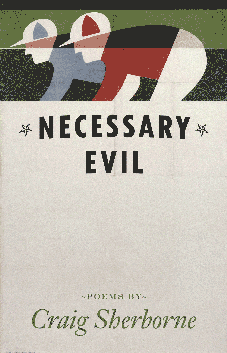
David McCooey Reviews Craig Sherborne

NecessaryEvil_cover.gifNecessary Evil by Craig Sherborne
Black Inc., 2006

As illustrated by his extraordinary memoir, Hoi Polloi (2005), Craig Sherborne has many strengths as a writer. He has immense tonal control (and can range from the tragic to the farcical in a breath); he has an extraordinary ear for the language and hypocrisy of class; he is one of our great contemporary satirists; and he has a genius for the telling anecdote and detail. In short, Sherborne is a stylist. It is all the more remarkable that Sherborne is a stylist across so many different modes. As well as his brilliant memoir, Sherborne has written prose- and verse-drama, lyric poetry, and journalism. (In addition to being a writer of some superb arts journalism, Sherborne is a senior writer for Melbourne's Herald Sun).

Continue reading

Posted in BOOK REVIEWS | Tagged ,

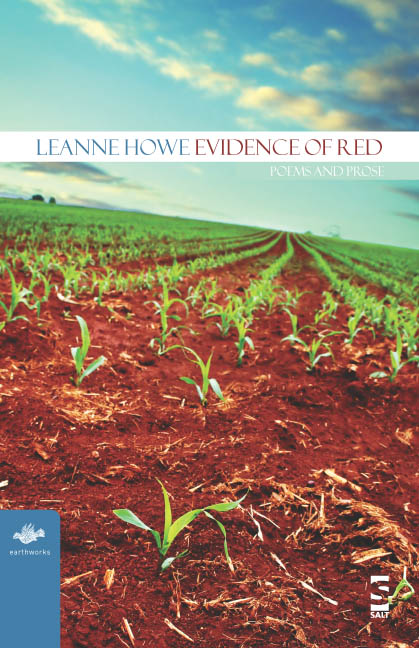
Ashley Brown Reviews LeAnne Howe

1844710629.jpgEvidence of Red by LeAnne Howe
Salt Publishing, 2005

Huksuba, or chaos occurs when Indians and Non-Indians bang their heads together in search of cross-cultural understanding. The sound is often a dull thud, and the lesson leaves us all with a bad headache.

So begins the second section of Choctaw American poet LeAnne Howe's fourth collection Evidence of Red. Within its one hundred and one pages, which have already won a number of major awards such as the Oklahoma Book Award earlier this year, this book incorporates many literary mediums such as poetry, theatre, prose, character dialogue and adapted transcript. The various genres combine to tell a poetically concise, causal and impassioned account of a history and some of the current dilemmas in the lives of Native Americans.

Continue reading

Posted in BOOK REVIEWS | Tagged , ,

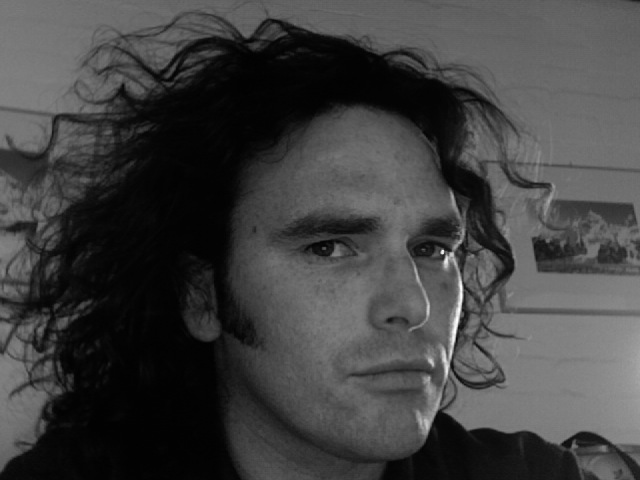
Paul Mitchell Interviews Joel Deane

Joel Deane has won two national awards for his poetry and fiction. His novel, Another, won the IP Picks award for best unpublished Australian fiction manuscript in 2004 and was published in the same year. His book, Subterranean Radio Songs (IP 2005) won the same award for poetry and was short listed for the Anne Elder award. Despite all this he still has time for a day job ? writing speeches for the Premier of Victoria, Steve Bracks. Deane spoke to Paul Mitchell about poetry and politics.

PM: Many poets, especially those from South America, Central America and parts of Europe, have had a strong political commitment, both in their lives and in their poetry. As an Australian and the Victorian Premier's chief speech writer, where do you see yourself within the tradition of the political poet? And do you think that tradition is strong in Australia?

JD: I see myself as a poet, first and foremost. Politics may well come into my poetry – and it has been, increasingly, of late – but I wouldn't want to be pigeonholed as just a political poet. That said, I'm very bloody political.

I come from a tribe of Irish-Norwegian-Scottish Catholics who split from the ALP over Communism in the 1950s and never looked back. I was one of the first of the fold to return to the Labor fold and, from where I stand, everything's political, everything's open for debate – and politics is not a dirty word. To me, politics is about getting up and fighting for what you believe in. Sometimes that comes out in poetry, but I also, besides my day job as a speechwriter, write essays and fiction. Probably the most political piece I have written, thus far, was my first novel, Another (IP 2004), which was a very angry book.

So far as where I fit in the scheme of things as a poet who is political and sometimes writes poems with political themes, I honestly don't know. I'm just trying to excavate the poems that are in me. I am a big fan of political poets like Shelley and Octavio Paz. And Pablo Neruda was a huge inspiration to me at one time in my life, but, ultimately, poems have to stand up as poems for me, otherwise they are just rhetoric. You might have the most progressive politics on the block, and you might be able to slice and dice it into terza rima, but I still reserve the right to not like it as a poem. To me, for a political poem to be successful – and I'm thinking of ?Easter 1916' by W.B. Yeats here – it has to bring something to the party that no other form can deliver. Otherwise, you may as well issue a media release.

PM: What about the Australians?

Australia does have a history of political poetry. I'm thinking of Bruce Beaver's ?Letters to Live Poets'. Or some of Mary Gilmore's work. Even the so-called father of our nation, Sir Henry Parkes, who was a bit of a ratbag if you ask me, wrote poetry. You can find one of Sir Henry's books, ?The Beauteous Terrorist and other poems', on the web if you're keen. The title poem was inspired by the story of Sophia Perovskaya, a Russian Nigilistka who tried to assassinate the Czar in 1879. Parkes cranked out flowery, overwritten poetry, although I like the line ?her beauty felt the hangman's hand'.

Some people seem to think poetry and politics are at odds with each other. For example, one of my favourite Australian poets, Judith Wright, gave up her poetry to dedicate herself to her environmental causes. Personally, I think that was a great pity.

My view is probably closer to that of American poet Eleanor Wilner, who balances her poetry with her work for political causes. Recently, Wilner had this to say about the overuse of personal, as opposed to public, poetry: ?It's terrible to have our writers thrown back on private subjects while the public language gets farther and farther from the truth of what is happening. We need to take back the rhetorical high ground from the politicians who degrade it.'

PM: How does being so involved in the political process affect the mechanics of writing poetry? Do you also write as a release from the kind of work you're doing?

JD: Politics and poetry are similar for me in this way: both are vocations. I'm a poet first and foremost, but I'm involved in politics because I want to try to make a contribution, no matter how small. I want to help push Sisyphus' stone up that hill.

My poetry has, at times, been a kind of antidote to the jobs I've done ? which have ranged from tabloid journalist to TV and internet producer to press secretary. At the moment, though, my political job is having a catalytic effect on my poetry: the best speeches have flow and rhythm and repetition, like poetry. As a result, the more speeches I write the more poems come out. I've never read or written as much poetry as I have over the past two years.

I've just finished a collection of poetry called Magisterium, which I'm hoping to publish next year. The language and imagery in Magisterium is much more political than the language and imagery in my first collection, Subterranean Radio Songs (IP 2005). I hope a few of the new poems approach the kind of apocalyptic public language that Eleanor Wilner has called for.

PM: How do party members feel about you being a poet?

The Age outed me as a poet and a novelist when I was hired to be the Premier's speechwriter. Up until then most political people had no idea I was a poet.

The day that article appeared, with a poem of mine, ?King Kong', reproduced from Cordite, the Attorney-General, Rob Hulls, called me and said he felt it was his duty to inform me my poetry was shit because it didn't rhyme. I think Rob is more of a dirty limerick man.

Ever since then I've been razzed about the poetry on occasion, but everyone from the Premier down has been very supportive about my writing. The ALP's a broad church, you know. There's room for all sorts. Even poets.

Do you think your position works for you in the poetry scene, both in terms of publishing and gigs?

I'm not sure at all where or if I fit in the poetry scene. I stopped publishing poetry for almost 10 years, between 1995 and 2004, for a variety of reasons. I was travelling for six years, for one. I was also beset by a series of personal traumas ? much of which is buried in my poetry – that made it impossible for me to write anything for quite a while. There were a few lost years in San Francisco. By the time I arrived back in Melbourne in 2001, I couldn't write. After a few years of being miserable I decided to have a go at finishing Another, which I managed in 2003. Once that was done, the poetry started coming again – beginning with a poem called ‘Romea y Julieta’. I haven't stopped writing since.

What I'm getting at is I've only started to get published in poetry magazines again, and I don't frequent the poetry reading circuit. If I'm known for anything it's for being a speechwriter, rather than a poet or a novelist. Consequently, when I stand up to do a reading I feel I have to prove myself.

Who have been the major poets and politicians who have influenced you and do you think there are any connections between these figures?

I admire all the politicians I've worked for: John Brumby, Rob Hulls, and Steve Bracks – for a variety of reasons. Historically, my greatest political influence would be John Curtin. Curtin was a journalist and an activist who was imprisoned for his beliefs during World War I and managed to steer Australia through its darkest hours in 1942. He was a man of principle and an original thinker, two characteristics that are rare in private and public life. He also spoke from the heart, which I love, because the best speeches are not the ones that are the most polished, but the ones that are the most authentic. Curtin was authentic ? and that is a principle I aspire to in speechwriting and poetry.

If I were going to name one person who was a connection between the political and poetic worlds, though, it would be Judith Wright. I don't know why, but there's something in Wright's poetry that keeps drawing me back. Earlier this year, for example, I spent a couple of weeks reading one of her poems to the exclusion of all else. That poem was ‘Woman to Man’. Every time I read that poem, which encapsulates the thoughts and feelings of a woman who is pregnant, I was moved. In the end I wrote a poem in reply, ‘Man to Woman’, that encapsulates the thoughts and feelings of a man who has lost a child.

Up until this year I didn't realise that Judith Wright and I shared the same birthday – May 31. Very strange.

Another poet I admire for his nerve and verve, in life and in letters, is Allen Ginsberg. When I was living in the Bay Area I landed a reading at a Beat exhibition in the M.H. de Young Museum in Golden Gate Park. They had Jack Kerouac's original manuscript of On the Road on display – and Ginsberg flew out from the East coast to perform a reading.

This was not long before Ginsberg's death, but he delivered an extremely passionate reading. He only did new poems, no ‘Howl’ or ‘Kaddish’, and he even grabbing an accordion and sang a few poems, including a William Blake number, in a thin, reedy voice that was very moving.

I remember sitting in the auditorium thinking, Here is an old man in a suit standing on a stage doing his thing and not giving a rat's arse about what anyone thinks. Now that is inherently radical – and political.

Posted in INTERVIEWS | Tagged , ,

Definitely

What is desire
But the hardwire argument given
To the mind's unstoppable mouth.

Inside the braincase, it's I
Want that fills every blank. And then the hand
Reaches for the pleasure

The plastic snake offers. Someone says, Yes,
It will all be fine in some future soon.
Definitely. I've conjured a body

In the chair before me. Be yourself, I tell it.
Here memory makes you
Unchangeable: that shirt, those summer pants.

That beautiful face.
That tragic beautiful mind.
That mind's ravenous mouth

That told you, This isn't poison
At all but just what the machine needs. And then,
The mouth closes on its hunger.

The heart stops.

Posted in 26: CANDYLANDS | Tagged

"In Order" Means Neat and Not Next

Night was next. At some point
On the train, the outside dissolved
And she was sitting next to herself in a seat.

In a two-tone gray and blue
Vinyl seat with hints of a previous sitter.
The dim other she'd tried so hard to revive

But failed was staring back at her
Through grit and dirt glass.
These are my footprints, she said,

To her feet (Mary Jo's in Mary Janes)
which were sitting on the floor, one next to the other,
Nullifying notions of wholeness.

The absurd road had been obliterated
And all of the moment was inside.
The body buried in time. A fickle list of numbers.

Sleep was the utopian fantasy
She wished she could fall into.
Eye to the window, to fate.

Feeling but not seeing. Out there was absence
And presence. Out there was a row
Of everything she remembered.

Posted in 26: CANDYLANDS | Tagged

Michael O'Leary: Detroit 2001

for the tricentennial

In the evening, out on Belle Isle
when the forest floor expires a moisture
from the warmth of the day
(more like late May than anytime in April)
and laces a fine haze among the newest saplings,
a family of albino deer quit their hiding
to graze the gray-brown mulch for something
proper to eat. Behind the little one
the sun lays down across the island and backlights
the unusually shaggy hides of these strange creatures.
“Is that a goat?” someone might ask
from within the car as it slows
to observe their foraging habits.
Mild and mythical like a goat,
but as mysterious as an ordinary deer
in the northern woods of Michigan,
the little one looks up in the rear-view mirror
to notice his family has already crossed
the narrow lane for greener, perhaps more quiet pastures.

The low band of haze continues through the woods
to the ends of the island lined with parking lots
where a few eager barbequers char the day's remains
just so the savor of burning fat might cling
to their jackets before packing the empty igloo
with the last of the lighter fluid
to head home for the night.
Fishermen and sportsmen ring the island
in speedboats and sailboats and watch
the Canadian Club lights go on
before they're darkened again by a passing freighter
loaded down with sand and crushed limestone
or unrolled steel from Kazakhstan.
Downriver, ores and polymers from the ends of the earth
converge on River Rouge
only to emerge in a Lincoln on Jefferson Avenue
idling in front of Sheena's party store.
The hum and tong of a tool and die
have long been silenced by the cricket's song
or the blizzard of fishflies climbing a light pole
among the ruins of the east side in early July.
The river flows past notches and slips
of the old Chrysler plant, remarkable
for the consistency of blue,
especially considering the turbid waters of its source:
Lake St. Clair, a tiny bladder of the Great Lakes
where the waters are delayed for a few days
before heading off to Cleveland
and eventually to sea.

In the late spring when the trees have thickened enough
to cover the bungalows dotting the east side
and give shade to the estates along Windmill Point,
it's possible, from the right angle,
perhaps with your left eye closed,
to picture the placid banks of the Detroit River
and the well-disposed forests and groves
reaching inland to a pristine wilderness
as Cadillac and his men might have seen them
paddling up the straights of a northern paradise.
Perhaps not. Memory is no more than an impression,
neither wholly true nor false, but always partially so.
And a memory never loved or hated
will eventually fade
unless the mind is startled to recognition:
Why did I ever go?
To say that I wouldn't be where I am
unless it was so
is to presume to know that where I am
is better than the room where I would go
tonight had I decided never to leave.
Never to leave and never to have seen
the lights of the yacht club stretch out to Canada
in the black waters of the river.
Never to have heard the distant
backbeat of a familiar music, the lonely clang
of rigging against the masts of the boats at anchor.
Never to have known that what I understood
I no longer understand:
home again to an old friend's wedding,
the only one left in town.


Posted in 26: CANDYLANDS |

Michael O'Leary: The Chills

The street quite still. Down the long corridor
a light, several doors and a single pine.

Conversations on the wires are quiet,
sequestered from here to there, ear to ear.

The most intimate jokes get lost sometimes,
even simple questions go unanswered.

Quiet's like that. Magnificent crystals
of ice spider across the creaking panes.


Posted in 26: CANDYLANDS |

Srikanth Reddy: Voyager

In November last year, when every day was a round of doubts and tension, I became interested in the fate of a machine which had been launched into creation and disappeared during my boyhood. The thought of it roaming our system unconcerned about the policies of the regime was a relief from the strains and suspicions at home. In the days I would visit the library, and in the night, overhead, sought refuge in the parallel journey.

Aboard, I read, was a deeply-etched record of the world that floated away. Perhaps an observer far in outer space might study this information in days to come. He would have to weigh in his heart the strange pictures. Man seen from the inside. Man with tool. The practical assembly of the hand. Machine in a field. The selection must have been difficult for the personnel who made this record. It involved large bureaucracies and highly technical fields. But I felt there was a need to list various matters not presented in the official fiction.

Drops of water falling on a stone. The hectic design of the fly. Geography of the East. Observer in ruins. The internal structure of the river. The occupied bank of the river. The river which continued its course through a book about change. Autumn in the transitional camp. Self with umbrella. The bridge as the bishop described it. Warship on a pale sea. The blue overhead at the end of the day. Helmets of broken stone. Two men on a border discussing a map. Thoughtful machinery which departed my world. Spade work.

[previously published in Columbia: A Journal of the Arts]

Posted in 26: CANDYLANDS |

Srikanth Reddy: Section E

This is not a history of the world. I acted as I did. If it helps I have come to appreciate the frailty of memory – things that never happened & the things that did happen.

*

Dr. S. just arrived in New York. S. depicting his homeland. The players that ask why the dying man S. should now live. The blindfolded minister. A stranger urging me to complain. The confusing heart. The minister with the advanced situation. Complicated Russians. Americans with gun-boats. G. in a Western suit quite the best I saw on anybody during the revolution shaking hands with the Princess. And suddenly children insisting. Please do not go to the cemetery. Stay at home all the time.

*

Our helicopters approached the cemetery. I looked down & could see the burial site. Rows of graves the teeth of never. A man in a secret room whispered in the dark. An old man with my face. I could not understand a word he said. I said do you think we shall ever get out of here? He nodded uncertainly. Unnerving the darkness. I wondered whether our exit would be easier than our entry.

*

The thread of out of which to weave the ruined era.

*

The armistice that marked the end of war had been signed a month before I was born. War broke out the year I came of age. Otherwise my early years were uneventful. One day the train stopped & we all had to get out. Some of us were badly beaten but we managed to make our way home. In the city's cellars I could escape. Underground literature was circulated & I read it. Air Policies of Section 45. The Division Cycles. Motorized Light. Motorized Mud. The Call for Order. Pinpoint Heaven. Evening in the Splinter Field. The See-Through Father. The Constant Day. Radio & Ordinary Movements. I had hidden in obscure & scattered places information on the physical assembly of a little train. In the basement listening to the bombs falling overhead I might fashion a cattle wagon overloaded with produce poultry freight of every kind & as many passengers as could be squeezed aboard. C. who was not well rested on a pile of straw. I perched on a crate of apples. Our car had no windows & the train never stopped.

[previously published in Gulf Coast]

Posted in 26: CANDYLANDS |