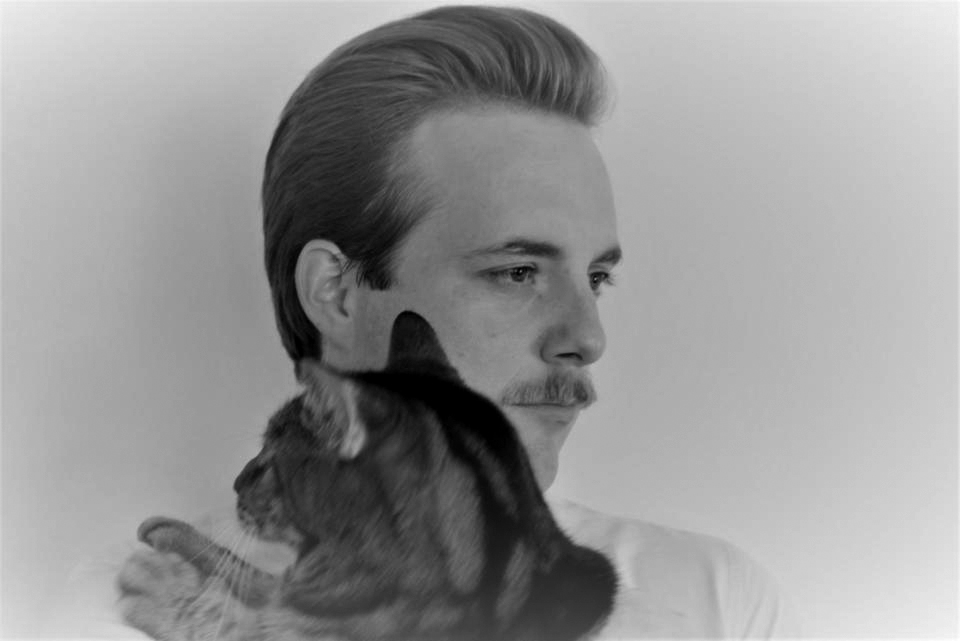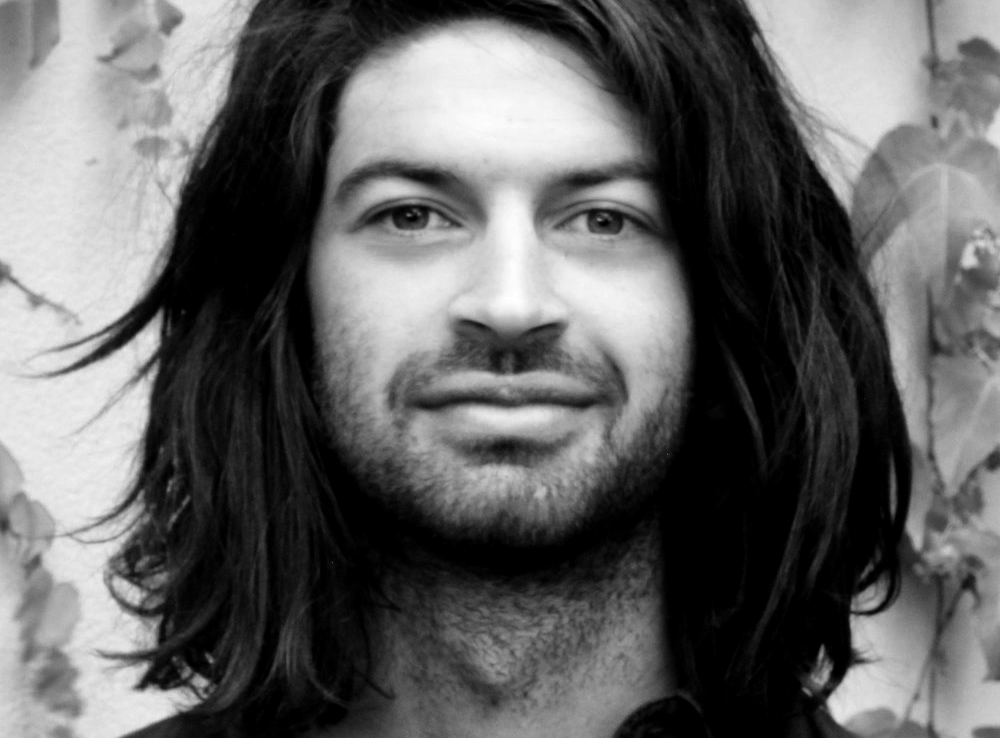
To commemorate the 50th Anniversary of the Newcastle Region Art Gallery (NRAG) in 2007, Lisa Slade and Peter Minter co-curated the exhibition Poets Paint Words. The two curators commissioned some of Australia’s best poets to write poems in response to a selection of paintings held in the NRAG archive. Gallery director Nick Mitzevich was optimistic about the potential of a mixed-media celebration of the NRAG anniversary, saying, ‘This exhibition will attract audiences of all ages, art lovers will be turned on to poetry and likewise poetry lovers will become lovers of painting.’
Historically, ekphrastic practice and theory has considered the poem subordinate to the painting, and yet – between 24 March and 17 June of that year at the NRAG – poems were placed beside the related paintings. Here the poems were presented at the ‘same level’, enhancing their literal and metaphoric equality (Kaplan 7).1
Slade’s and Minter’s curatorial decisions allowed for poets and audiences to experience ekphrastic poetry in what I contend to be ideal. Moreover, the caliber of poets from around the country who were asked to participate in this mode make Poets Paint Words a significant moment in the history of Australian ekphrasis. By exploring the conditions that made Poets Paint Words possible and how contemporary ekphrastic poetry can understood in a new way because of this Event, I offer a framework for conceptualising ekphrasis as a performance.
Here, I want to examine the concept of ‘Event’ on the public and private level. Adapting this terminology from Alain Badiou, I want to explore the effect of how the poets were able to view, compose and exhibit their work within a specific time and place. In Badiou’s terms, I am interested in how the exhibition transformed into an event via the set of conditions that encourage ‘chance once the moment is ripe for intervention’ (187). Focusing on process within an artefact invokes a poetics of performance that allows work to produce rather than represent reality (Bolt 89). This production clarifies the active role of the ekphrastic poet. Herein, I address theories of narrative, lived experience and Methexis, adapted from Australian art-theorist Barbara Bolt, using the poems contained in Poets Paint Words 1 & 2 to sketch a poetics of performance based Australian ekphrasis.
Beginning by listing the poets who contributed the exhibition – this reads like the dust cover of a Best Australian Poetry: Adamson, Fagan, Harrison, Jones, Kinsella, Minter, Murray, Porter, Tranter. Similarly, the list of Australian artists surveyed by the poets is no less significant: Cossington Smith, Dobell, Olley, Olsen, Tillers, Tucker and Whiteley. Rather than an exploration of a theme or an epoch, what is apparent from this incongruous array of painters is that this exhibition sought to be a site-specific sampling of the collection. There could be no pre-arranged outcomes from conditions like this. Instead of a utopic or hermetically congruous exhibition, the event of Poets Paint Words was, by nature, an occasion where proximity necessitated opposing forces to combine, or what Brian Castro has called ‘heterotopias’ (Castro 117). The spatial and temporal proximity of Poets Paint Words afforded these points of collision where new texts were able to be created.
This provides a spatiotemporal dimension to the public event; what Daniel Bensaïd, elaborating on Badiou’s ‘Event’, describes as the ‘propitious ripeness of the opportune moment’ (Bensaïd 96). As a test case, the controlled conditions of the exhibition give us the best examples of what an Australian approach to ekphrasis might be: Australian poets presenting at the ‘propitious’ event of Poets Paint Words.
Contributors to Poets Paint Words were selected on their reputation, not specifically as ekphrastic poets.2 Intuitive though it may seem for some, it would have been fair for any of the poets in the exhibition to first ask themselves: What is the role of poet in an ekphrastic engagement? The long history of ekphrasis suggests a straightforward answer: describing the artwork is paramount. Tradition suggests creating a rhetorical mimesis, attempting to replicate and re-present the visual effect of the artwork in language.
Yet given that the exhibition took place in this century, it is worth noting that the field of writing creatively about a work of visual art has expanded beyond this representational framework. As Genevieve Kaplan notes,
Ekphrastic writing may easily include elements of interpretation, meditation, interrogation, comparison, criticism, and praise as well as the more traditional description and narrative. (Kaplan 2)
For this there are two clear reasons: the improved access of works of art to the public and consecutive movements in Modern Art during this period that have explored Art beyond representation. Most ancient ekphrastic poetry was written about imagined artworks; a ‘notional’ rather than ‘actual’ ekphrasis (Benton 367). Poets Paint Words and the study of gallery commissioned contemporary ekphrasis is concerned with actual ekphrasis. Surveying the contemporary use of actual ekphrasis, Pardlo writes, ‘The initial rise in popularity of ekphrastic poetry corresponds with the evolution of museums as public state institutions’ (594). For an audience, being able to view or have knowledge of the artwork that the poet is referring to changes the ekphrastic equation; as the simultaneous presentation of poem and artwork represents a significant development in contemporary ekphrasis. Thus, an exhibition in the mode of Poets Paint Words allows the audience to cross-reference text and image. However, the temporal restrictions of the exhibition meant this lasted only while the paintings and poems were hanging.3 At present there are no permanent records of the exhibitions available to the public in print or online.4
The significance of Poets Paint Words 1 & 2 as public events is that the exhibitions captured the simultaneous and temporally specific nature of contemporary actual ekphrasis by creating a space for the poem to exist alongside the painting for continual cross-referencing by the reader / viewer, in the same line of sight. This curatorial decision determines how poets responded to paintings that were non-representational.
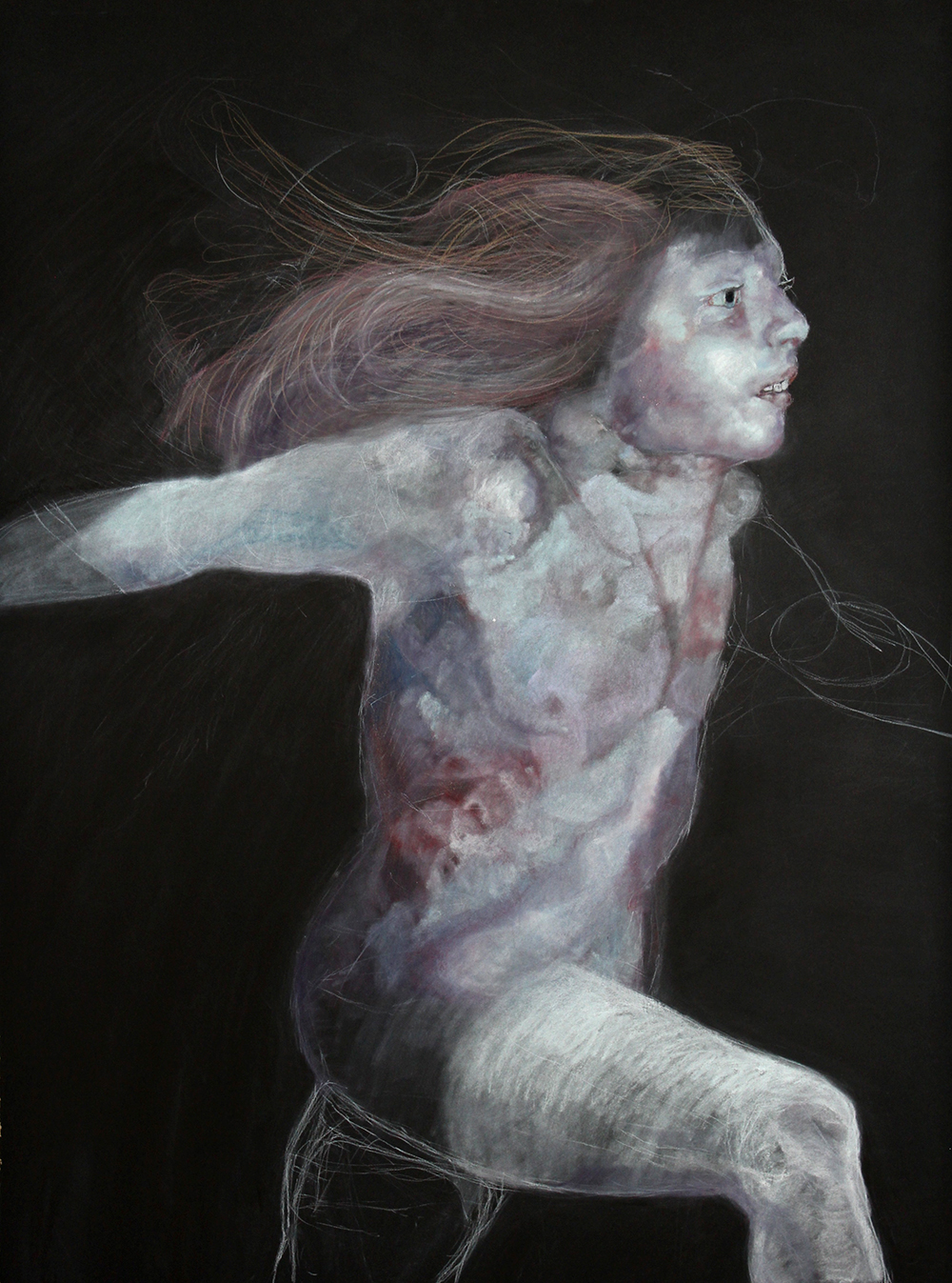
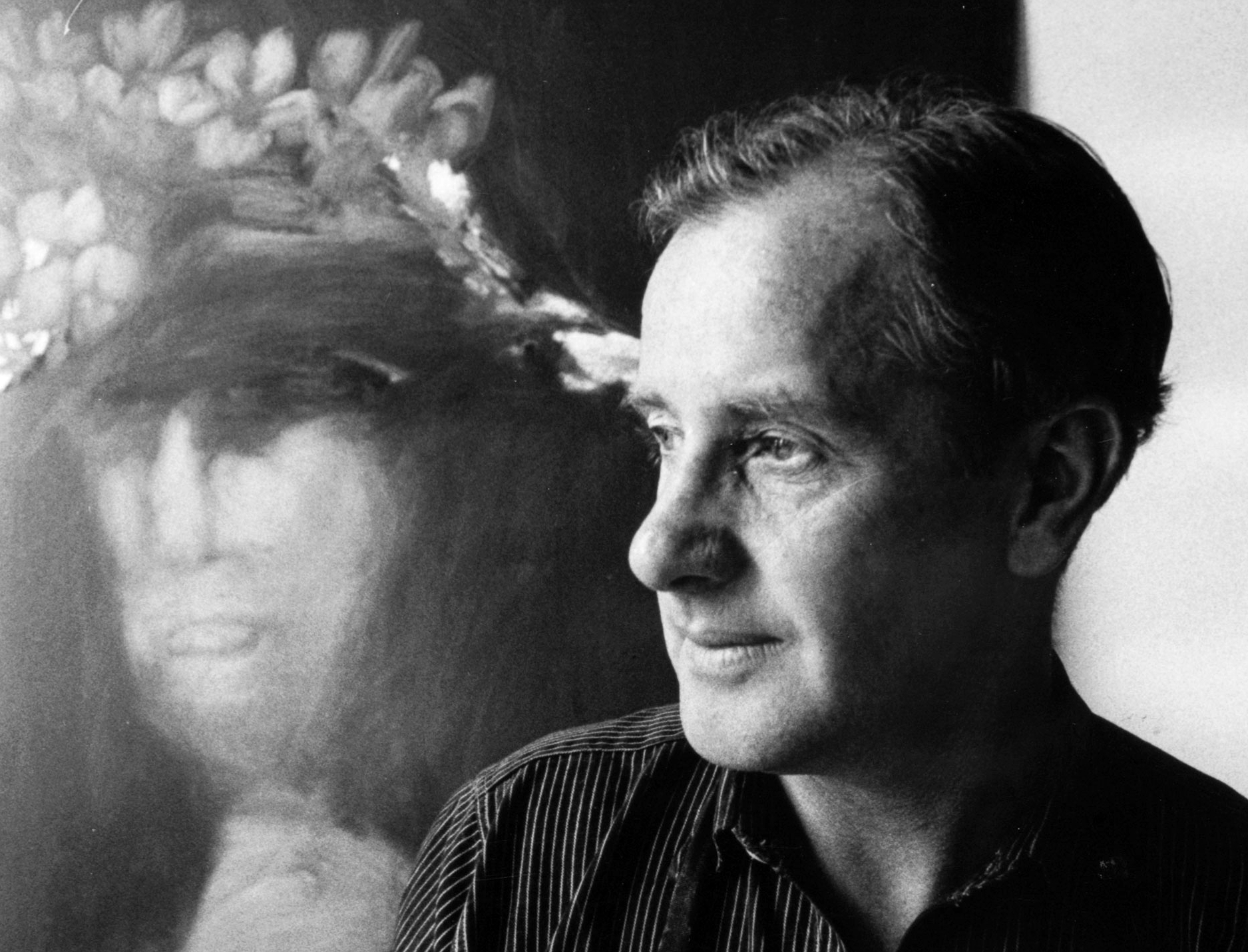 Image courtesy of Art Gallery NSW