War of the Foxes (ii)

Let me tell you a story about war:

A boy spills a glass of milk and his father picks him up by the back of the shirt and throws him against the wall. You killed my wife and you can't even keep a glass on the table. The wife had died of sadness, by her own hand. The father walks out of the room and the room is almost empty.

The road outside the house lies flat on the ground. The ground surrenders.

The father works late. The dead wife's hand makes fishsticks while the boy sits in the corner where he fell. The fish in the fishsticks think to themselves This is not what we meant to be.

Its roots in the ground and its branches in the air, a tree is pulled in two directions.

The wife has a dead hand. This is earlier. She is living and her dead hand feeds her pills that don't work. The boy sleeps on the roof or falls out of trees. The father works late. The wife looks out the window and thinks Not this. Not this.

The boy is a bird, bad bird. He falls out of trees.

The boy is a man and lives in a second story apartment. This is later, the father is dead. The man looks out the window, at the trees. A dead hand pours milk on the floor behind him. The milk says nothing.
Posted in 29: WHITE HOMES | Tagged

Who Are the New Saints and What Are their Miracles

In the middle of the extremely on-time experience, I kept feeling late. Did someone say “paradox”? Did someone mean “wallowing”? Did anyone hear me chirp in the museum? One guard looked over; one looked sad. Situation in Yellow: my cheek coveting your hand. At the miniature village, this sign: “Be prepared to see more than you expect.” Is that possible?, I whispered, cupping your fingers to my mouth. Or, just imagining that as the freight elevator shook us up.

Posted in 29: WHITE HOMES | Tagged

Everything Sounds almost Right in Poems

Or do I mean poetry? If I had a schedule, I'd expect the train to whistle on cue, which is does though I don't. Took me what felt like all afternoon to tie transparent thread around the neck of a doll-sized aspirin bottle. Next, I'll use a thumbtack to install it in my “Cloud Nine/Sister(')(s)(') Repair Kit.” I'm snapping my fingers to make 5:15 happen faster. Then 5:whatever, then whatever:whatever. What I do when I'm not doing this, I can't say. The dolls-brunettes-specialize in smugness. As for reading and being read, they're against it. If I put them on a train, they show up at the next station, right on time. If I write them into a poem as I've been advised, it's like I believe it.

Posted in 29: WHITE HOMES | Tagged

On the Day that You Were Born the Angels Got Together

What is it about Karen Carpenter and prose poems? The moment I remembered her-or rather, the moment I remembered myself singing her songs-I knew I was inside a prose poem. Karen was famously anorexic, but I'd need space to spread out, say Rainy Days and Mondays. This is not about sadness, though sure, I felt it. This, my friends, is called exuberance. Take it or leave it. I was young without being youthful, if that makes any sense. Same goes for the prose poem. I remember the 1970's: leftover flower power and Richard Carpenter on piano. A white suit with large lapels? I'm sure that's right. I played Little House on the Prairie, which means I dressed the same way Karen did, lugged a bucket uphill. Who said I didn't have fun? This is an essay on What My Summer Meant to Me. Answer: everything. Answer: I was gloriously alone. Was every song she sang a call for help? If that's the way you want to think of it. Me, I don't. I've shaken off more than one tragic look. Did anyone hear me belt out the words? I had perfect pitch, metaphorically speaking, just like Karen's: sweet, low.

Posted in 29: WHITE HOMES | Tagged

the river girl (starring amy l)

Sounds of her pregnancy in the other room. Odor of damp wigs and the body's brachial splintering. Her eyes full of thread, dark as seaweed. In this light, she is aspen wood; her belly, wing-withered. The river settles in her mouth as mornings splay out before her with egg-cups capsizing, pillows askew, a doll breaking in her hands while the sun feathers the window. She can't remember the song her mother used to sing. Something about the egg-and-butter man buttering up his sugar plum. Days full of breastmilk and weathervanes. Her calypso moves her toward the door when the UPS man approaches. She grounds down into routine, but her hair remembers bachata, Miami, stilettos. A table-breaking Hallelujah. She is lodged in the beat of one stray finger against a jawbone. In this lickity split wetness, feel the Farm& Fleet crawl, the gibbous moon. Against static broken stations she hears wolves rain-howl, families brawl, as she dreams her way toward Florida's pale noon netting. Holding a handkerchief up to the changing light's narrative, its clovered air.

Posted in 29: WHITE HOMES | Tagged

the aperture (starring mackenzie c)

flash-faced. her spine spun honey. shunt sugar & dagger. pulp & placenta. there in photographs are footprints that lead to a window, a green fog vista, trampled by atmosphere. heavy with ears. gypsum lines the driveway where houses replicate themselves. a tailspin of squares. she can't see her way out of this syntax, out of window sashes, out of this fretted light where blossoms slide to brambles, & a woman is shorn of her hair, follicular & glistening. iridescence means eggplant, means isinglass. her pulse quartzing. morphemes dangle in her injury. where do we go from here? a pinafore on the floorboard of the car she's speeding away in. moving between whitewash & crosshatch. between syllable & windshield. seeding the helix of distances. a snowball capturing light in versions of her.

Posted in 29: WHITE HOMES | Tagged

a bestiary (starring jackie w)

In a tongue-snap sky, waxwings unspool over the plains. He was a whisper, she was Nebraska. Her hands pepperweed, pebble, pearl, pearl, so tone-smooth. Her mouth speaks, a red canary to a dime cigar. Spittle sheen. There are worse things than being a pretty Catholic girl without any guilt. She gives over to the music, embracing the Phoenician sailor and swearing by the cinema syndrome whereby prisoners sashay, recording songs into emerald sackcloths. Under the ostinato, under the train's rustle, she goes down. With her topaz neck and her bestiary lure. With her coloratura, her vixen gene, she goes down. Into the musk and hum and howl. O lady of the bossa nova. O girl born of semaphores. Into the moss and phosphorous. Into the salt marsh and subjunctive silence. With currants in her mouth, a yellow scarf around her neck, she goes.

Posted in 29: WHITE HOMES | Tagged

Hell

The second-hardest thing I have to do is not be longing's slave.Hell is that. Hell is that, others, having a job, and not having a job. Hell is thinking continually of those who were truly great.

Hell is the moment you realize that you were ignorant of the fact, when it was true, that you were not yet ruined by desire.

The kind of music I want to continue hearing after I am dead is the kind that makes me think I will be capable of hearing it then.

There is music in Hell. Wind of desolation! It blows past the egg-eyed statues. The canopic jars are full of secrets.

The wind blows through me. I open my mouth to speak.

I recite the list of people I have copulated with. It does not take long. I say the names of my imaginary children. I call out four-syllable words beginning with B. This is how I stay alive.

Beelzebub. Brachiosaur. Bubble-headed. I don't know how I stay alive. What I do know is that there is a light, far above us, that goes out when we die,

and that in Hell there is a gray tulip that grows without any sun. It reminds me of everything I failed at,

and I water it carefully. It is all I have to remind me of you.

Posted in 29: WHITE HOMES | Tagged

Address to Winnie in Paris

Winnie, I am writing this on behalf of my friend Harris. He loves you and wants you to love him. I have never been to Paris, but I have heard that it is a good place to be in love in.The Arc de Triomphe is real. The Jardin des Tuileries is real. The Eiffel Tower is very real. The carafe of wine, the remains of dinner, the bill: all real. None are necessary to your life.

Harris has confided that he enjoys dating. To profess such a thing is to advertise a facility for one kind of loneliness, which has nothing to do with the other kind: the one you did not know was there until afterward.The part of the betrayal which wounds the most is hearing that it has already happened.

Diderot wrote that the word is not the thing, but a flash in whose light we perceive the thing. Plato wrote of the need to be reconjoined with the rest of oneself. My analyst speaks of codependent impulses in modern society. These various explanations are metaphors for an inaccessible truth.

In de Laclos, a betrayal is an invitation to a string of further betrayals, each one taking you further from the original. If the hell for lovers consists in being betrayed, the hell for the beloved consists in betraying. These hells constitute the world.

A much older friend writes: Most romances do not last, and it is best to forget them. Tolstoy writes: All happy families are alike. My teacher says: Bad poems are all bad for the same reason: imprecision.

Around you move many seas. It is impossible not to drown a little. In Bulfinch's, an anchor is let down into the garden. This is to remind us that we live underwater.

Up above the high-water mark, angels with their teeth and their sharp little wings watch us with murderous disinterest. They sentence us for the one crime we all commit.

It is said by area doctors that cowboys notoriously misrepresent their degree of pain. For this reason their diseases progress far beyond the point at which treatment is beneficial. Are they lying?

If I could read only one sentence for the rest of my life, it would be the one where the jailer says to Socrates I can see that you are a good man, the best one that has ever been in this place.

These examples are meant to dissuade you, Winnie, from loving men other than my friend Harris. He asked me to write this poem.

Arvol Looking Horse, a Sioux leader, called Devils Tower the heart of everything that is. Very large objects remind us of the possibility of the infinite, which has no size at all. But we understand it as something very, very large.

What the lover seeks is the possibility of return, the strange heart beating under every stone.

Posted in 29: WHITE HOMES | Tagged

The Session

began with paper arguments, wipe-away lines crossed at the cardinal x of the low table, the
surface the oily luster that absorbed the cotton-colored catalog light,
began, actually then, with symmetry;

the ragged tour entered a hall of empty pedestals, and it was the end
of evolution, where the molecule-sized Ideal on display rubbed my wallet in my
pocket,

but there was none left to spend, and I folded my hand, turned a corner of relics; then
someone wanted to know the 'use';

in the next room, the restored typewriters from the Disaster tapped atonal measures,
they were repeating my initials;

the nudes had lost their vulnerabilities, the blown-blue demeanor of a basecoat was
the only antiphon of these critics;

I could not forget the rescinded offer of their attachment to me, which hung there also

and as the session continued, I recognized a thesis, on daylight, and its twin-
the pay-off,

I asked
what is it, is it affirmation, is time behind the answer, a lasting epiphany,
a hot-point revelation, chunks of mortality,

is this for the spectator, at the price of admission,

though also the sense that none cares, fine, but there is
this frieze,

I think my moment was in the skylight room, where as the speaker's voice caught
on the rear walls and held the treble of the small insight,

the cloud's shadows moved over the center of the audience (I thought)
without relation.

Posted in 29: WHITE HOMES | Tagged

Re Zone

                          Self-hatred coils eventually upon itself-

   the warning rattle is without context, separated from the dead snake in the path

                 now gone, the rattle snapped off and slid into my pocket, inutile to the fang;

two years

              living on a road by a square copse of trees, a sloping cattle-thinned field to the

south, a tobacco barn black at the periphery of the woods,

          the poplar and basswood and native ash stripped of leaves and the pasture turned

tawny in October, the barn roseate in the afternoons, relapsing into russet in the

evening,

          swallows swung through the black square of the open loft doors;

        some days I walked a narrow dirt path and stared inside at the empty stalls and the

bales of hay;

                              the barn had earned its way into nature;

                the acre became an acre only in the moment of its purchase,

           the graders cut a road onto the lot, and the upturned red clay lining lost its

intense color as it dried,

          they leveled the inclines and put down cisterns for the creek to run under planned

parking, they tore out trees by chains,

         I looked each evening, waiting for the inevitable, I thought, this has been my

necessary net of fields and woods with the barn, or 'the view,' I thought, I want it

to be

feasible as a remnant, even if built around,

        they could be bold, they could make a statement,

      but then I knew it would be absorbed into the background, a mere gesture, a

nod beside the gleaming new,

worse, their smiling recovery, the proof of conscientious capital,

         I watched the y-wing beams of the loft rip off all together, refusing to release

their

hold,

       it was burned as a whole with the scrap of the barn in the field in April, the men

watched with their arms crossed,

       the skeleton was hauled and the remnants were burned a little more

with fire wands and whatever remained was buried in a large scrap hole.

Posted in 29: WHITE HOMES | Tagged

Goat & Camel

We'd had lunch already, but I wanted to see what goat meat looked like, so we stopped in next door to the Somali place on St. John Street, where the old butcher obliged. It's bright red, & sinewy. I asked how he cooked it, so he brought us behind the partition where there was a restaurant you'd never guess existed from the outside, like an African secret, no awning or façade. He talked Abdellah into giving us a scoop of meat & rice, for free. To taste, for free. Free to taste. It was anti-American, that's for sure. The music pleasing, & the television entertaining men at three tables. We sat down with our cache, my woman explaining her vegetarian ways, but willingness to try the rice, which she complimented as tribal faces beamed back. I stuck a finnif in his hand early on, so he brought some tea, & explained, in answer to my wife's question about the sign 'Camel' outside, that no, here they have only goat, but back home, if a woman gets married, the dowry is paid in goat or camel. Delightfully anti-American, & downright exotic for an afternoon, snow in the offing, & most everyone else heading to the mall.

Posted in 29: WHITE HOMES | Tagged

The Dahlias

My reluctance to choose York Street didn't last long, at first simply finding myself there, then deliberately heading up or down, what with the light slanting just right, it must have originally been a ridge above the harbor. Then, the native grasses in front of one house & an empty lot, most of which I can identify by name, which gives added pleasure: timothy, yellow & red foxtail, along with a solid stand of Joe-pye weed in full bloom. Today I chose it on my way back from the farmers' market up on Congress, where I purchased a couple of pots of dahlias, my favorite flower. At the corner of York & High, after reminiscing delightfully about the Guadalajara & Mexico City flower markets, recalling too that dahlias originated there, the sun was turning me toward it, pressing viscerally against my skin. Suddenly some of my recent readings made complete sense. Without going directly to the pages, it had to do with language's ability to harness drives, drives that are at once aggressive, destructive, & potentially pleasurable. According to Kristeva in Revolution in Poetic Language there's a lot of repression going on regarding those drives, but that some few poets, (she cites Mallarmé & Artaud), are able to let the energy speak for itself. She calls the space of reverberation prior to language the chora, & the inevitable end product, 'art,' is derived from the act of a word that has always been close to my heart: aesthetic. That's it. Standing there on the desolate corner of York & High, my senses deriving a truth out of the haptic touch of the sun, the image of the grasses I knew I'd see along the next block, & the dahlias.

Posted in 29: WHITE HOMES | Tagged

Woman Married to the Sun & Wind

Though it reeks of it in that grand sequence of prose poems, Paris Spleen, Baudelaire uses the word prostitution only three times. He seems to equate the phenomena with generosity of spirit, a creative sharing of the self with the crowd. I suppose most of us are secretly fascinated by it, through our propensity for idealization of it as much as that for Love. In one piece of his, The Beautiful Dorothea, sun beats down on everyone in the seaside town. At noon dogs yelp for mercy from the heat, but Dorothea, cool in her billowing dress, as if the waft of air were a wave of water. Walking, she's working. In Nice once, as a young man, I watched my own independent like a study for weeks. Her routine, clockwork. A five-day week in fact. At 11:00 sharp she'd roll out her rattan mat on the pebbles of the public beach. Red bikini, black, white. She's etched in a young man's cortex exactly thirty-five years to this coming summer. Classically Nicoise, dark, petite, she may have come from a long line of ladies & sailors. I was always close to her on the beach. No one ever approached her there. Not a Soul. She never entered the Mediterranean. Drank water, perhaps a piece of fruit. Certainly never read, but the sun, the horizon. At 1:00 she'd put her white shirt back on, gather her mat, ascend the stone stairs home. From the bar on the street she owned, I'd watch her stroll from the corner halfway down the street, then back. Many men, some as young as I, approached, talked, made offers. She was selective, or expensive, I'll never know. If I was jealous, it wasn't of the men, but of Baudelaire himself, who'd written his woman into history. More than speaking to her, more than touching, I wanted to transcribe her grace, her spirit that cannot be wizened with time, my anonymous woman married to the sun & wind of Nice, I desired what I have here.

Posted in 29: WHITE HOMES | Tagged

Contempt

This illuminated surface of events, this present tense, this staring at screens that we've been doing to escape the flatness of these deadpan days. This calling movies dreams, this calling memories Rome. The colors in Contempt, are they of the present? Are they historical colors? Certianly they come from a world with more minutes in each hour, a world almost remembered in this long celebration of a cult without dreams and without mercy. O record stores and train stations, O leaded-glass nostalgia for an innocent, artisanal form of this catastrophe. O recollected thickness of that one newspaper Franco calls 'the daily of my life,' O world where Coca-Cola has not lost its true flavor.

Posted in 29: WHITE HOMES | Tagged

Whiteread Walk (2)

Monumental the lacunae between illbiquitous promenaders down to the Square past the Open 24 Hours as social forms of grieving we are prohibited this is the remix the new glitch has been recalled melancholy of luscious Pictober the fall of the phenomenon into the iris back with another one of those Return of the Flaneur as hardcore Autumnophage echolocation always places you in a different country the cure is beats per minute bad year in Brooklyn Bombs Over Baghdad the negative needs no introduction and/or here we go!

Posted in 29: WHITE HOMES | Tagged

Whiteread Walk (1)

Vertigo Europa austere museum sex hotel record shop Odeon neon breath isolations in the vale of lang climbing the Whispering Gallery doing the Strand glad girls paper wedding painted retina crosses a small continent between two bars colored rays of visible things in the Spring in the superlative Hotel Europa Drag the light of the past tense falls from an iron hotel railing a long skirt drenched in lassitude all Polaroids are out of focus felt anagogic the taxi came thwack we drove into a book

Posted in 29: WHITE HOMES | Tagged

Selections from The Urge to Believe Is Stronger than Belief Itself

Note:

Cancer is not invasive like a virus or bacteria, an injury or trauma. Cancer is a disease of the self. The body's own cells assume a guise & stage a quiet coup.

Breast cells, on average, take 100 days to double. One billion cells form a tumor 1 cm in diameter. Which means most cancers have been around for 6 to 10 years prior to diagnosis.

Post-mastectomy options include reconstruction (muscular-abdominal or thoracic; fatty tissue; saline/silicone implant-including or not including cadaver skin), prosthesis (cotton, plastic, rubber, or gel), no action.


Note:

Seven to ten days following surgery, patients may feel an overwhelming sensation that their body has not changed. This may result in over-activity, etc., which has been known to cause exhilaration & extreme weakness.


Plaster cast. Nipple round as the bulb of a lemon, flat, shy, leaning into the fine curvature of shadow it casts for itself, by itself. It just hangs there, matted in shadowbox, semi-sphere circumnavigated by lines & subsequent angles, lines & subsequent angles again. Whether Duchamp meant his title to be ironic is debatable.

'Study for 'Prière de toucher [Please Touch]''.

Museum goers, though urged-in fact, encouraged-to touch said breast, are interrupted, mid-gesture, from doing so. Interactive art rendered immobile.

'Study for 'Prière de toucher [Please Touch]''

would be the only of his works to be placed behind glass & remain behind glass for the sake of the longevity of one plaster breast in a box.


Note:

Insurance plans may or may not offset the cost of prostheses. National law, however, requires reconstruction coverage, as surgery is assumed to once again render an individual 'whole'.

Posted in 29: WHITE HOMES | Tagged

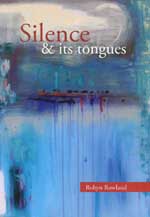
Jessica Alice Reviews Robyn Rowland

silence-and-its-tongues.jpgSilence & its tongues by Robyn Rowland
Five Islands Press, 2006

Striving to decipher the vast desolation of silence is – as Robyn Rowland has us so emphatically experience – a 'difficult' journey, to say the least. Her latest collection of poems, Silence & its tongues, expresses this not only as a 'cold' language, but also an elusive one; varied in the boundless possibilities of voice, tone and dialect. Here Rowland provides a heart-breaking examination of all that is born dark and desperate within silence, including perspectives as a lover ('I think of your voice during love, unvowelled, guttural'), child ('how a daughter can step into the space/ her mother leaves behind her?') and mother ('My fearful clinging kept him ten months inside, leaping overgrown from the womb').

Continue reading

Posted in BOOK REVIEWS | Tagged ,

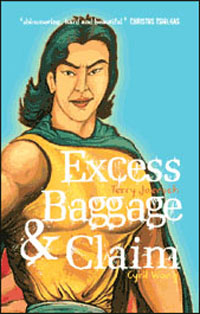
Moses Iten Reviews Paul Hardacre, Terry Jaensch and Cyril Wong

baggage.jpgLove in the place of rats by Paul Hardacre

transit lounge, 2007

Excess Baggage and Claim by Terry Jaensch and Cyril Wong
transit lounge, 2007

Although Love in the place of rats and Excess Baggage and Claim – both published by the independent Melbournian press transit lounge – arrived in the mail together, it was the disquieting title of Paul Hardacre's second poetry collection that grabbed me first. I immediately flicked to read his bio on the last page and found out that he is a prolific thirty-something publisher (managing editor of papertiger media) dividing his life between Chiang Mai and Brisbane. He has spent time (rather than having 'travelled') in Myanmar, Singapore, Pakistan, Hong Kong SAR, Indonesia, China, New Zealand, Ireland, the Netherlands, the United States, Italy, India, Cambodia, Vietnam, Laos PDR, and Malaysia.

Continue reading

Posted in BOOK REVIEWS | Tagged , , ,

Nicholas Manning Reviews Eileen Tabios

lightsang.gifThe Light Sang As It Left Your Eyes by Eileen Tabios

Marsh Hawk Press, 2007

In this new century, the writing and rewritings of the poetic self seem to be at the crux of a burgeoning genre; a genre in which the self is less a 'basis' for certain convictions about 'what poetry is' than an opening: an aperture or aporia to diverse inventions, collaborations, languages, traditions, and histories. Seeking diversity over singularity, this 'radical autobiography' seeks articulation across many forms, genres, dialects and discourses. It is polyvocal, polyvalent, trans-historical and – in contrast to an Olsonian poetics of place – increasingly trans-geographic. In its apparent anti-humanism, however, it is surreptitiously humanist. This is the self of all selves, professing its one paradoxical universal: that all universals are dead.

Continue reading

Posted in BOOK REVIEWS | Tagged ,

Heather Taylor-Johnson Reviews The Best Australian Poetry 2007

uqp.jpgThe Best Australian Poetry 2007 edited by John Tranter
University of Queensland Press, 2007

Anthologies which wrap up the year's 'best' are always greatly anticipated. We want to be reacquainted with our favourite poets, see what sort of spin they've taken on our world during the past twelve months. But of greater interest is often the introduction to new writers. We're curious if the poets who have recently found their way into small press publications have made the cut. Have they stamped their name (and the name of the more obscure journals) on literary history alongside the major players? Will they become the next Big Things? After reading this year's University of Queensland Press Best Australian Poetry anthology, my answer to both of those questions is, sadly, no.

Continue reading

Posted in BOOK REVIEWS | Tagged , ,

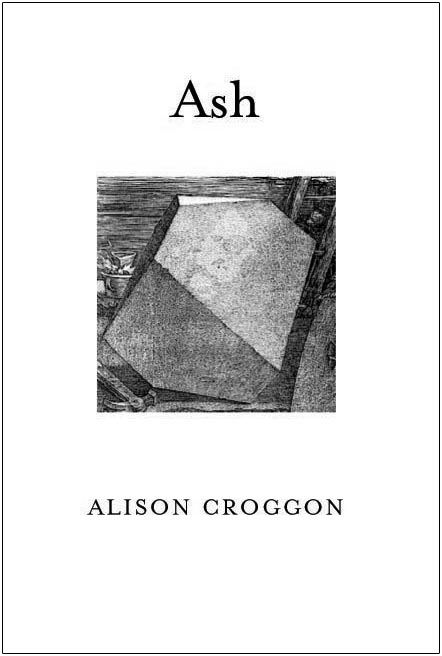
Angela Meyer Reviews Alison Croggon and Lucy Holt

ash.jpgAsh by Alison Croggon
Cusp Books, 2006

Stories of Bird by Lucy Holt
Poets Union Inc., 2005

Of the two chapbooks under review, Lucy Holt's exquisitely crafted poetry in Stories of Bird pecks at single moments, both from an intimate as well as a bird's-eye view. Her use of symbolism is focused and sensory. Hers are deep and personal poems, with some empathetic politics, that draw the reader in. Alison Croggon's chapbook Ash, on the other hand, speaks with a more despairing voice. Hers is an exploration of mood. Her poems flow together through pain and awareness. They are more all-embracing than Holt's, connecting history and broad spatiality to the personal; but fear, emptiness, darkness and blood are their prevailing themes.

Continue reading

Posted in BOOK REVIEWS | Tagged , ,

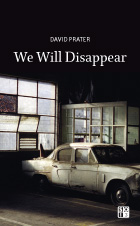
Ryan Scott Reviews David Prater and MTC Cronin

books_david_cover_sm.jpgWe Will Disappear by David Prater
papertiger media, 2007

Our Life is a Box. / Prayers Without a God by MTC Cronin
papertiger media, 2007

It would be unfair to David Prater and MTC Cronin to construct some tenuous link between their new collections for the sake of this review: each volume is stylistically unique, showcasing two skilled, albeit different, voices on the Australian poetry scene. While in Prater we have a poet for the digital age who can twist its soundscapes and textures and still retain an artistic core, in Cronin we have an author who demonstrates again her understanding of timeless themes such as pain, loss and love, and attests to their permanence.

Continue reading

Posted in BOOK REVIEWS | Tagged , ,