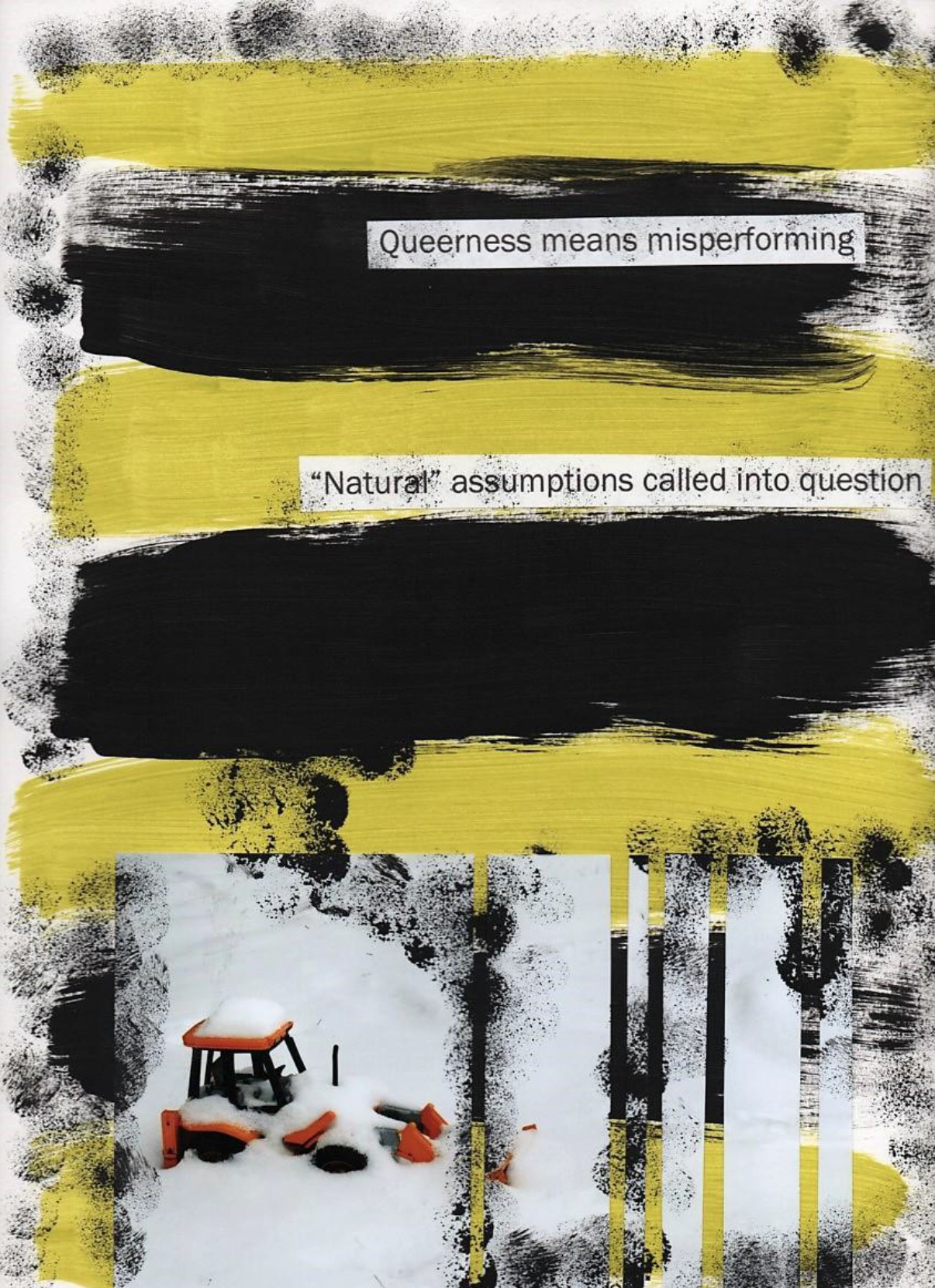
FOMO

I wake up with a toothache
violin lesson pain
on the lower left side
nothing for it
the infection will drain
to my heart and I’ll probably die
better phone mother
and apologize
I didn’t make it, ma
I’ll email some notes
for the eulogy
and a list of people
not to invite
actually, ask anyone you like
I go out
pace the day like a
beach towel in the spin cycle
Colgate grit crunch at the place
where molars meet
bus
bus
bus, my salvation
I saw one once
crush a man in High Street
apologize to mother
that’s no way to think
but oh so easy
so so easy
I get the five sixty
free food jazz bar shout me a drink
pethidine grapes
I’m no connoisseur
but it feels like a pretty good year
double thumb bass dude
rifling in my entrails
triple crotchet something something
snare
look at all the kids in here
rhythm from the toes
to the tingle tips where lipstick smears
they’re going to make it, ma
lazy youth today look
they’ve nothin’ but the music
that A diminished gonna drain
to my heart and kill me
just like that
imagine that
dropped into a kidney tray
all my fear
with a delicate hi-hat ting
I’ll give it another year, mother
and call you happy birthday

Posted in 87: DIFFICULT | Tagged

Beauty, or something like it

My room fills with perfumed petals, sleek like the back of a wet seal. There is nothing I can do to stop them from covering my bed, my dresser, my closet, my pants drawer. Eventually these petals will cover my throat, my eyes, my ears. For now I look at the ceiling, stained over the years from vinegar and baking soda experiments and spiders making their home. Beautiful, in a way these petals are not–the vulnerable imperfections, the candor in it showing itself for exactly what it is.

Posted in 87: DIFFICULT | Tagged

Four Women in New York in the Late 90s

It must be hard to have a baby
with an insipid man-child who
while still being the best boyfriend of all your friends’ boyfriends
is a bad lover and dad. Oh Miranda—
it must be hard to have a baby and an insipid man-child
boyfriend and a law career, which is why I always thought I would be Carrie
even though she is a bitch on the show and in real life
even though she only ever wears $1,500 shoes and dates
badly, even though her boyfriend is probably named after the size
of his penis I thought I would be her—
it must be hard. But now that I’m older
Sex And The City is a very old dog that has been taken
to the vet and put, gently, to sleep
and is remembered fondly, like this cat whose picture and dates of birth and
death are displayed in a frame in a front window I walk past sometimes
but instead it’s marathons of episodes and when you watch them
you realise that nobody really cared about representational politics
on television in the late 90s, not even in New York and you,
if you are me, also realise
that maybe you are not Carrie
or even Samantha, who doesn’t love anybody and beat cancer
and worked at a Dairy Queen once
when she was a teenager even though all her friends came from money—no
you realise that you are Charlotte
or perhaps aspire to be Charlotte
who married her divorce lawyer and adopted a baby
and who lives on Park Avenue, and the only thing she wants from life
is a nice set of plates from which to eat her Chinese takeout

Posted in 87: DIFFICULT | Tagged

Echinacea/Youth in Asia/Euthanasia

Echinacea

When I first moved out of home I lived in a share house with a lot of interesting people. After a while I cultivated a very itchy rash on my wrist, which spread to my armpit. I also had a very bad flu so I went to the doctor.

He looked at the rash first and instantly recoiled in horror and washed his hands in the sink. Then he put on rubber gloves.

‘You have scabies,’ said the doctor. ‘Do you live in a dirty house with a lot of people?’

‘Yes,’ I said.

Then I asked him about my flu and started telling him about something one of my housemates had told me about. A herb that is good for curing the flu.

‘I think it’s called Euthanasia,’ I said.

‘Yes,’ the doctor said. ‘Sounds like a very good idea.’

Youth in Asia

I was born in Japan in 1970 so from then on I was constantly thinking about my own youth in Asia. I made stuff up. I always believed that we had lived in the shadow of Hiroshima (which in reality was actually a tiny flat quite close to Tokyo General Hospital). My brother and sister attended a local school and were taught by the nuns to speak perfect English with a Japanese accent.

We ate what the local Japanese people ate.

It was food for thought. Did I somehow ingest radioactive isotopes at my mother’s breast trapped forever in the milk or radioactive material trapped in the first solid foods and watered down beer my father put in my bottle to make me sleep?

It would have been in the water. It was in the air. It is still in the fish.

‘Oh my god. Am I radioactive?’ I would fret to myself in 1985, all safe and warm on a beanbag in Ashburton watching Countdown on TV, tearing sheets of nori into squares and sticking them onto my fingers and thumbs with saliva and then licking them off one by one like a lizard.

Euthanasia

There were rules when you ate with my grandmother.

‘Get your elbows off my table,’ she would say. ‘Hold your knife in your other hand, that’s the wrong hand,’ she would say.

She would spit on her fingers or a tea towel or fish out an old tissue from her pocket and wipe the stains off my face aggressively like she was washing a spot off a car window or rubbing something out from history altogether.

Posted in 87: DIFFICULT | Tagged

that invisible fold in the sky is the lightest dog you’ve ever seen

things walking
rent and pinched nerves
south Africa/ive never
like a dog w/
displaced hips
my cloud of bugs
your cloud pretty-much
thinking hard; the dogs walking hard
they each know each
other, not big into
looks like a junkie i kinda
know. my sister i kinda know
froze wind trilogy
sky grass, whatever mental illness or health
i want to say i know what you mean
but i might not be quite there
the way i was speaking to you was good
and held by august 30th
cranes taking the skys temperature
literally taking it on
your cloud of bugs never really came together
they wd have tho
a dog that can play footy
a bug that can land on moving water
you thought i was flying forward
my nose is not that big or is
it lyricism later, walls
sets of anything
horses? cups? a glass of water –
not available.
treble –
not available. trees – available, some. no migraine
still now
but thought it would be warmer
if yr still in theres intent
theres just enough stress

Posted in 87: DIFFICULT | Tagged

meditations on taylor swift’s 2009 hit ‘mean’ to be sung to the tune of every hank williams song at once

forgive me — i have a meanness — a classic whisky-swilling gnarl
like a cardboard cutout of bette davis at a bar
once i sat at such a bar — in boston — and picked a fight
with my cardboard cutout
but perfectly respectable boyfriend at the time
who i would not call my boyfriend — because
they do not grant permission
to the mean among us for love and the affiliate benefits
the good faith — the valour — and the immunity from
that great speed
with which the mean
are disposed of —

o god — the dreadful spectre of postmodern metastyles — pastiche and self-loathing —
is thick in the room of my meanness — nothing is safe —
to be mean is to pick on the weaker man —
his human body — like carrion
on the open planes — like a dot
on a disc of snow

the inverse of meanness
is pettiness — pettiness like
the late middle english bastardisation of the french
meaning something made small —
like a bastard, or a petticoat —
the mercenary rustling
beneath a skirt —

to be petty is to be mean without power —
to pinch a scullery maid for a bruise —
to ignore the missives of a well-meaning man
in favour of the pleasures of a bar —
of the deep berry red of a drink

meanness, at its full extension is cruelty —
meanness is to cruelty a stick-up to a shooting —
cruelty is meanness to the power of whisky — to the power of femme — the shrew
being the only sympathetic character in western canon —

it is absolutely no fun to go mean without power
the mean without power are mad —
they have arguments with themselves
alone with their lunches —
they give awkward and uncomfortable
keynote addresses —

the power of the mean is this —
to consign noble motives to others —
who — in your wake — have no choice
but to turn up their collars to the wind —
to walk out the door
better men — the power
to compel so many
to go outside for some time —

taylor, everybody made me cold but nobody ever gave me money for it
obviously taylor — having read simone weil —
you know that we direct spite primarily at our fellows —
so cruelty is a function of oppression but pettiness
is the secret service
of our collective undoing —
ensuring social cohesion
in a post-fordist and kindergarten sense —
like putting babies
in a tar pit — the rustle of a thousand skirts —
a sly smile — a dry laugh —
a dopamine shot on the other side of a monitor — like a moth
squashed on a windshield of a kia —

but meanness, taylor
is an act of great — and thankless — generosity —
i won’t call it revolutionary but —
without it — you could not live in a big city —
performing high production value acts of menace —

to receive meanness is a promise by projection —
by the perverse logic of the universe of blondes —
that one day you will be so big
nobody can hit you

the mean among us remain in medium sized cities
in undemanding bars — performing our low budget
pop country duties
to a small, but committed audience
of one or two

Posted in 87: DIFFICULT | Tagged

Anne de Bourgh

William had a throat infection.

William had a viral infection today.

William had a viral headache hence his absence.

William had a viral headache, hence his absence.

William is recovering from a chest infection –
could he be excused from swimming?

William seems to have lost his music book –
could the boys check?

William had a viral headache hence his absence

William unfortunately caught
a nasty viral bronchitis

William had a viral bronchitis.

William is unable to swim,
due to a lingering
“gastroenteric
germ”

William is to be excused from swimming –
he is still harbouring his virus

William had acute gastroenteritis

William had a throat infection, hence his absence.

William has recovered from the chicken pox,
but will be picked up at lunch time, i.e.

no sport

Posted in 87: DIFFICULT | Tagged

Night-time

When you are gone I miss you terribly.
When you are here I want to hide from you.
When you touch me, layers of snow fall off beaten roofs

And what is left is skeleton.
What is left is buried.

Posted in 87: DIFFICULT | Tagged

Grief

They were right, it
does come in
waves, that hold you
under, as you writhe and
ache, for a surface
that you can’t
place,

that pull your mozzarella
body, in every direction,

that swallow your breath, again
and again,

and just before the Stockholm
syndrome kicks in, and
you befriend the
depths, it wanes

and you wade to the
shore, where reminders
lap and promise that

it won’t be always like this.

Posted in 87: DIFFICULT | Tagged

Paradise Integrity (/) (°,,°) (/)

just remembered the neoprene pencil case
i had in year 8 that said ‘i’d rather be surfing’
& i added ‘… the net’ in liquid paper
to which a fellow teen hmu w/
 
you still like the beach tho right?
 
to which i replied
 
haha yeh…………………….
 
but really
 
what i wanted to say was
 
pain is painful
so shine a torch through a snail
 
snail eyes have evolved to ‘never see’
 
shining a torch through a snail is much
cheaper than buying a pig
 
you can’t shine a torch thru a pig
which is in a pig’s top ten of ‘biggest flaws’
 
i, too, am a pig
so shine a torch thru a snail


just remembered the neoprene pencil case
i had in year 8 that said ‘i’d rather be surfing’
& i added ‘…the net’ in liquid paper
to which a fellow teen hmu w/
 
you still like the beach tho right?
 
to which i replied
 
haha yeh…………………….
 
but really
 
what i wanted to say was
 
Why do people always profusely apologise
but never profusely pole vault ??
 
sick of it
 
one million eons of life in the habitable zone
& nothing but a stack of poles kept at every house
(used for vaulting over the marshy places)
 
sick of the complexity of life not being
accurately reflected in the information
density of this memory foam mattress
 
or a planetary environment riddled with
innocently transformed memories
of anthropomorphic dummies
 
Why do people always profusely apologise
but never profusely crywank ??
 
or do they…………………….
 
sick of being taken ill by the mysteries of the
universe
 
point being: the dinosaurs were elegantly
listless & fabulously feathered long
before their mass extinction event.
 
point being: physicists have always been
liars. the fossil record shows a dud
fiasco. historically reporting the universe
as a place of almost incalculable beauty and
not ugly at all?
 
sick of it


Posted in 87: DIFFICULT | Tagged

Avalon Airport / How to Unatomise the Fragment

  1. Is a day, sending two messages, going for a swim, making a soup & doing the crossword, enough?
  2. The human rights watch articulates clearly on tv
  3. Debating, not without minimal despair, the applications
  4. Something feels unwell, or wasted (time-sick)
  5. I do not wish to think about cutting into bodies, of bodies being cut into
  6. I still wish to explore patterns
  7. What does the metrical mean?
  8. The brain / mind wishes to garner momentum
  9. Thinking of Anne Carson’s Decreation
  10. What was out of the blue today?
  11. Where am I when I’m …
  12. There is the science and the jut of parataxis
  13. I still have no alternative phrase for “kill two birds with one stone”
  14. I am wanting an alternative phrase for the violence of the expression is just a bit too much for me
  15. Imagine throwing a rock at a bird, killing it, and having the rock ricochet off the dead bird and striking and killing another bird
  16. To achieve two things at once
  17. In one fell swoop
  18. Fuck.
  19. At Avalon Airport aboard the Skybus to Geelong
  20. About to turn onto the highway I see a magpie whose wing is caught between barbed wire
  21. It’s in obvious distress, flapping its wings futilely, how long has it been
    there
  22. I consider calling the airport to alert them so they can assess the situation and rescue the bird
  23. But I do not make the call
  24. I am thinking feeling bad is irresponsible if it is not acted on
  25. I am irresponsible
  26. I am not even close to conceiving of an alternative phrase
  27. Though it is daydreamed of
  28. Today on the bus, chin on arms leaning on the seat in front of me, I am listening to Is this desire? While driving through the Adelaide Hills (I have
    never been to the Adelaide Hills)
  29. Meandering still feels lost on me
  30. Happiest when contemplating the crossword grid, the ‘performative encounter’ which allows for new positions, unexpected collisions, potentialialites
  31. The benefit of multidisciplinary (often spoken of) but is it taken on
  32. Of metaphor (according to Ricoeur) of placing two different things side by side to create new and meaningful relations
  33. I didn’t realize people are so scared of metaphor
  34. The people who are scared of metaphor are throwing stones and killing their chances
  35. Reading about the fragment and blank space
  36. Ancients texts are made fragments by history. Modern texts by design.
  37. This is not fragmentary
  38. I am more interested in how to be the opposite of atomised
  39. How to be the opposite of neo-liberal
  40. It’s better not to be teleological
  41. It’s harder
  42. How to unatomise the fragment
  43. How to not kill birds
  44.  
Posted in 87: DIFFICULT | Tagged

On Post-Victory Day

Australia said “yes” to marriage equality on 15 Nov, 2017

Dear Father,

Who hides in the kitchen, whose name
I carry like an idle onomatopoeia
for small triumph. But whom I don’t love
enough. On the day of our victory,
let’s ask ourselves: what if it is true
that fathers and daughters were lovers
in their past lives? I still remember
the Stephen King book you gave me
when I was 10. I have learned
horror stories and growing up
have only one thing in common.
Winning is difficult in life, as you sat there
imparting useless information
as if they were lip service to survive.
Tears glistened on your face –
oily, like mine, you confessed:
I never knew what it was like
to have a mother.

The sob so shrill it sunders
our catoptric worlds.
I’ve since found power in the feminine,
such as screaming, and practise
widening my too-round eyes.
I began to see ghosts
on my pillow – the mythical
fiery shadows of Phoenix
leaping from a hot pan
to boiling water reliving a past.
In your hand a Chinese fairy tale
some fiction about flying,
in which there is your name:
Wai Wing (Great Prosperity).
Your masculinity a carapace –
what are you made of
by the way, when ma bought you
feminine sanitary pads
instead of the blue ones
you need as a man?
You only said your knees hurt
on your way to the post office
to vote No. Now I see,
your porcelain heart
has a leaking hole. I, too,
nearly broke my body
just to savour the line
segment in my flattened world.
That’s why I have your nose, your taste
for bitter tea and the will to flaunt
courage with mild hypochondria.
Out there, they have debated love and
how to be a man or a woman
is next. In my dream, the world
changes in no one’s favour.
I’m playing the piano,
my hand pauses in mid air:
a semibreve. Musical notes
twirl dully in the dark, like
embroidery coming undone –
it’s the crossed stitches of Phoenix,
the most unloved childhood emblem
sutured on my pillowcase.

Posted in 87: DIFFICULT | Tagged

black & white crocodile

at the homestead
concave & recessed

in seasonal shit & sap
the harvesting of sweetbreads

glaswegian stitching &
freighting technologies are

undertaken by the
crocodile for the crocodile

isn’t flighty in the face of wasted
time only statuary as kristen stewart

perfume advertisements
at the river’s bend

stakes are bored into the marshes
like tiny brutal monuments

the crocodile turns nw
for the first time & scales

the sand quarry at sunset
the crocodile returns

an hr & a ½ later
more depressed than

when she started out

Posted in 87: DIFFICULT | Tagged

I am trying to understand structure

I am trying to understand structure. I have been trying all of my life. How the edges touch the edges. Am I being too abstract again? Only detail will suffice. How the edges touch the edges. I mean concrete. I mean visual. It is not a tangible touch. The degree of self discipline. The liquid in the bottle. They permeate one another. I suppose it’s the illusion that confuses me. The pretence. It’s a bad habit I’m trying hard to break. I have been trying all of my life. Innerness and outerness are only part of it. I called my dog to the edge of the lake but he would not step in. If I had a rule. What are your rules? If this were a concrete image, it would have some structure. Structure is not order. Structure is imposed. Order is innate. The contents of the bottle. Time is useful. I called my dog to the edge of the lake but he would not step in. Does it matter if the bottle is made from glass or plastic? Hard, flat plastic, damp plastic. The liquid is on the inside. I’m trying to understand structure. I have been trying all of my life.


Posted in 87: DIFFICULT | Tagged

after reading Laurent Binet’s The 7th Function of Language

Iteration eruption irritation
Roland Barthes slaughtered by a laundry van
OMO powder sprinkled liberally on the bodies of dead and alive authors
I follow the blue dots, like biscuit crumbs, through Binet’s imaginings:
Jacques Derrida attacked by dogs, his throat ripped out (it was pancreatic cancer,

Wikipedia tells me,
which got him in the end)
Louis Althusser strangles his wife (true)
John Searle throws himself into black unforgiving water (false)
Michel Foucault gives head gets head (probable)
Umberto Eco in a peaked Venetian mask (possible)
Soller and Kristeva plot a psychopathic couple (im-possible)
Judith Butler down on her performative knees (horrible)

these icons – these thinkers, these – yes, I will admit it – heroes of mine – not all,
only some – played with – in a sacrilegious way

made flesh and corruptible, made foolish and foul
(were they ever Gods? yes, perhaps … if the Gods are those who tell us how to live)


I remember my pre-semiotic days
a tree was just a tree: prescient foliage, yes, but real dew drops on the end of the wattle
blossoms
We shook the branch to make fake rain, our daughter laughed her seven-year-old laugh

… she is 7 and there is a 7th function of language
and on the day I read of a plot twist, in Binet’s book, on the 2nd of August, 1980
it is the 2nd of August, 2017, which is also my daughter’s 7th birthday
the signs are everywhere …
impossible, now, to escape, to go back to innocence
truth representation intention

a huge piece of ice breaks off Antarctica
“the size of Luxemborg”
“seven times the size of New York City”
“one and a half times the size of Adelaide”
“more than half the size of Melbourne”
floating, free of referent, shape mutating in every different inflection of a news reader’s
surprise
It speaks in frozen water, and this is not a language we know

“I don’t want you to go” she weeps in the doorway; a body felt, a body feeling
I am leaving my daughter on her birth day
to be interviewed interstate, to be questioned as to my knowledge of the Gods: I grasp at
academia,

hopeful of the climb, scrambling at the edges
They won’t ask about that day of birth, there is no way to speak of it, that day
no words
the bloated body does not exist in these exalted towers, I whisper of my children

will we hear the ice bump up against us when it comes?
Stretching breaking yearning
“I don’t want you to go”
the ice will say something different when it comes
happy to say goodbye to its former tethering, to drown us

the 7th function of language, Binet proposes, creates powerful politicians: Mitterand and
Obama, the
smooth ascendance of linguistic manipulation

in the meantime, the Gods have melted

there is no phone call, I listen hard
only the trickle of water to be heard
slowly rising

Posted in 87: DIFFICULT | Tagged

This one goes out to all the CC Babcocks of the world

The angelica pickles the regina georges the
omarosas the cruellas the ursulas
because your parents naming you ursula never gave you a chance

They say in a world full of marilyns be an audrey
They say why buy the cow when you can get the milk for free
They say lots of things these disembodied voices
always peering at you through the crack of your wardrobe
waiting for you to fuck up
Like narnia except it’s inhabited by boring bitches
who spell out maxims in slices of turkish delight
staining the furs at the threshold with their misogynistic sweets

Funny how the white queen is the villain in that story
And how in Cuckoo’s Nest nurse ratchet is an apt representation
of the ills of the psychiatric industrial complex
That women are the best functional analogy
for the evils in the world that come from men

In a world full of nancy kerrigans be a tonya harding
Stop at nothing especially any form of self-acceptance
Stop at nothing slice the ice like the false concept of a US Figure Skating Association
meritocracy

In a world full of white lace and conservative music choices
Sew your own costumes and have your life ruined
by a man who never knew your true value in the world

In a world full of spineless losers break a leg
Break nancy kerrigan’s leg

In a world full of rules designed to scratch other people’s backs and gouge yours
Grow a skin so thick an angle grinder couldn’t buff through
Take all your hurt and make it a new costume
Tear out your rival’s perms for frills
Stitch sequins in place of your eyes
Bury your shame so deep in shoulder pads it suffocates

I am getting better at bleeding in public
twirling my feelings like ribbons on the rink
crying and scraping my bare soles against the ice
The most hysterical curling competition of all time
In a world full of dreams live long enough for them to
become nightmares and just keep going keep going
be braver than I can skate like you’re dying and never look back

Posted in 87: DIFFICULT | Tagged

bay city plaza

six am: sea intervening fog.
Ropes slick round the cleats in their binds

and the dock sits, sunk like an old dog.
They say a good body is hard to find.

It’s seven now. I’ve had braver days.
Last night, the sea tantrumed herself flat
now the shore creeps out from under waves
as if cringing away from a smack;

you promised to drown me once.
I outlived worse promises than that.

But water is indifferent to our vows
here, a stubbie in the sand catches sun
and gulls line the piles in scattered, angry rows
eight am: the Smorgy’s lights go on

Posted in 87: DIFFICULT | Tagged

Call Me By Your Name, Which Is Irresponsible and Not Meteoric

We both know it’s easier between two beautiful people
We both know it’s easier when it’s a nice mountain mansion in Italy
with a shallow pool and a live-in adult-nanny
And we both know it’s easier since it’s summer with ripe-pink peaches
and nobody interfering without knocking
“He looks like he never has to work a day in his life,” your friend said
over Vietnamese coffee, while you are feeling despair, feeling ugly
(must be the weather’s blue)
“But how do you hate a movie this good?”
Since it’s as if the executive himself has come through the party crowds
to hand you the rolled-up movie poster:
“The whole thing, Hon, is tailor-made just for you!”
Even the father is very gentle and educated so you’re sure he won’t hit
Admit it: it’s always two hot dudes and neither of them looks like you
See how the camera cleverly pans away since everyone would agree
a depiction of a late summer night in Italy
is better than two guys making love to each other
“He’s such a reticent guy,” your friend spoke in defense of the director
“He’s even currently meditating in the west wing of the castle, considering a sequel.”
“Maybe they will have something fat next year,” another friend presumed
“If you put your money on this one.”
“His abs tastes like jelly,” another friend, the pretty one, texted
“If you want to date someone beautiful, be BEAUTIFUL first,” the pretty friend
texted again
But beauty in fashion is like rotten bread
It poisons your brain and gives you intellectual diarrhea
It drives you to think of death
And remember: this isn’t a story where a fat boy comes to love himself
and no longer finds nothing in the mirror
This isn’t a story where a fat boy comes to love every single blue on his body
This isn’t even a story where a Japanese girl is saved from a meteor crash
despite the similar title:
instead, it tells how one summer such love
strikes such boy like a meteor
(but thank you God, he can still play the piano)
Think about it: it’s most important for the silk-stocking middle-class
to discover that they too are capable of love
and also of adapting a best-selling novel
into a movie
and a movie
into a once-in-a-lifetime experience
since it doesn’t show at your homecountry or homecity or home.
Alone in a theater in Bangkok
you kept looking at your phone
waiting for this boy to call back, until
“Can you please stop with the phone?” said a Korean girl
three seats away from you
she later giggled with guilty pleasure so palpable
when the pretty boy thrust his obscure penis into the ill-fated peach
(the latter likely grew up with the story of the human gods, their holy teeth
sinking into him as his soul ascended to fruit-heaven)
If I were you:
Hey, in spite of everything
I do love food
I like my egg sunshine
my cake full moon
And I want you to stop peaching with my heart
“Pass my heart to, ugh, anybody,”
a late poet that I turned into an imaginary friend once cried
You are worthy of anyone’s time, you know
Some people like your look and personality
Even your mom
And do you remember your lost ID?
See, in the end, you found it
under the towering dirty laundry
Now you know which country you come from
which species you belong
to and even your birth religion
So you know who you are, I guess…?
That means he doesn’t have to call you
AL
or any of his names anymore

Posted in 87: DIFFICULT | Tagged

Christopher Brown Reviews John Mateer

João by John Mateer
Giramondo Publishing, 2018


Of the 62 sonnets that make up John Mateer’s João, 58 are given to ‘Twelve Years of Travel’ and only four to the second and final section, ‘Memories of Cape Town’. This weighting emphasises travel not so much as the mode of exception but as regular or even habituated experience, while suggesting only a marginal place for the ‘home’ of Mateer’s South African origins.

The book’s title suggests trajectories that are personal and cultural. The name acknowledges Mateer’s and João’s matrilinear Portuguese ancestry, and João’s diverse cultural origins. João is the name of a line of Portuguese kings and gestures to European colonialism. It is also the most common boy’s name in Portugal and implies João’s non-identity in a world where travel means vertigo and cultural displacement.

Moving his persona through a series of places and relationships, Mateer affords João few moments of positive connection. Via his travels and an insecure cultural identity João is the ‘Lost Boy’, the ‘young lost poet’, ‘the Foreigner’, ‘the Foreigner!’ He has little interest in his world of literary conferences and festivals, friendships evoke uncomfortable pasts, he enjoys at best tenuous relations with his long list of girlfriends. Where intimacy is concerned, it ends often enough in that staple of travel, separation. In his relationship with Anna, for example, João is the ‘lost and nameless’ ingénue to ‘the more worldly Anna’, ‘who almost loved him’. Love is a near-thing but a matter of loss.

Irony and meiosis, however, inflect the poems’ sense of distance:

They dropped João outside a typical saloon bar 
for him to find working there the young 	
Brazilian girl, the student who’d offered him a bed. As always 
João was thoroughly charmed, even with knowing he must wait till
she finished work.

The indefinite article and affected syntax (‘for him to find working there’) suggest a chance event, casting João as naïve (or, alternately, calm and unassuming when love seems a sure thing). There’s further irony at a ‘BDSM dungeon’ in Melbourne: ‘Not that, really, / João and his beloved were ever there. Not that her lily-bright flesh / marks up easily, bruises photogenic’, the anaphora highlighting a comic denial. Sonnet 49 tells of a becak driver who wears a Superman T-shirt, and who, in João’s eyes, has a ‘superhuman simplicity’; everything proceeds casually enough until the last lines:

                                                  But, in a confusion,
João had watched this old becak driver, his near complicity,
not being shocked, on witnessing an accident, one man 
knocked down in the street: how he’d just pedalled past deadpan

The scene exposes João for his dutifully middle class view that the appropriate response in an accident is to assist. Warmer regard for the becak driver gives way to the bathos of a world traveller’s cultural shortcomings and we read on across a shifting affect, with the feeling that João’s next moment of cultural misperception is imminent.

Much of the distance João feels in his perpetual travels is transferred to the reader via this irony and via Mateer’s use of allusion. In his reference to a friend, Josef, who teaches ‘in a morgue’ and keeps ‘Marx’s Collected Works in the library as a memento mori’, Mateer’s appropriation of Marx as a lament for contemporary culture seems clear enough and integral to a poem loosely about societal failings. In other situations allusion seems vague, and for the reader, open; inferential. In Sonnet 44, for example, João and his girlfriend are found by a colleague, ‘mid-argument’ in a park. In the last line João ‘sadly […] remember[s] a statue’s lifted foot, that art.’ The statue remains nameless, the adverb an apparent indictment of João’s caricaturing of a partner who dramatically ‘stamps one’s foot’ or ‘puts one’s foot down’. Significance can seem at once incidental and staged; cultural references are often only, potentially metaphors.

Mateer’s grammar can be similarly obscure: ‘With his new flatmate, João, I should say ‘landlady’, an old famous punk rocker, he might learn more about life.’ And what seem important biographical details are often omitted. João’s ‘beloved’ in Munich faces ‘her own exile’, ‘her own tragedy’, none of whose details are given. As for João’s situation and his corresponding exile and tragedy, these, likewise, are never directly explicated.

In a shifting context that dramatises João’s lack of belonging, travel has a range of implications. If travel conventionally suggests the search for something different in a world of increasing sameness – ‘the body of legends […] lacking in one’s vicinity’ (Certeau) – or release from life’s routines; if it promises the kind of movement that wards off a stasis associable with death; or if it brings us, as it does Barthes at the beginning of the memorable Empire of Signs, the joy of the foreign and of language returned to its sensory substructures, then none of the above resound in João. Travel, rather, becomes an act of perpetual endurance. João finds his middle-class literary milieu tiresome: there is the ‘bespectacled lady […] who had once translated Sophia de Mello, really knowing only Spanish’; João is ‘appalled’ at the fame Rushdie wins by a ‘sporting quip and […] repartee.’ There is ‘vomiting as critique!’ in the millionaire’s garden as the writers ‘go through the motions of being gracious’. João’s world is inauthentic, ‘made-up’, ‘a movie’, ‘cinematic’, ‘a dream’. When Sonnet 20 asks, ‘What João were you doing there’, it feels like a question the reader has been asking throughout. Travel, largely, recedes to the human and psychological dramas it proposes.

Domestic or familial images are scarce and often only further remind João of his detachment from home. To his aunt in Cape Town, he has ‘returned from the Void’. While the boatmen of Capri are ‘stout, sweating […] indifferent to the tourists’, João, on learning that the women following the Flautist in Apollinaire’s ‘The Flute-Player’ ‘were probably whores’, remains ‘the Foreigner, worried they may have been overheard’. These kinds of hyperbolic and comic depictions of the well-travelled and polyglot, but unworldly, João are broken up to the benefit of the collection with moments of more forthright emotion. An example is when João spends a night in Chateau Rouge with a group of Senegalese and leaves ‘the dinner, yearning for Africa, unconfused’. Or, in Mateer’s homage to his friend Goran: ‘Goran, gentle, his speech the kind of warm quiet / that seems an uninterrupted silence, an endless, emancipated poem’. Irony aside, the sudden affect surprises, creating a tonal complexity that needs careful attention.

Posted in BOOK REVIEWS | Tagged ,

Introduction to Marjon Mossammaparast’s That Sight


Photo by Gen Ackland.

BUY YOUR COPY HERE

Marjon Mossammaparast’s That Sight offers us a wide-ranging series of viewpoints, taking the reader through various locations and histories. It zooms out to cosmological heights, and even beyond to God (or the absence of God). However, this ‘infinite range’ is joined by exquisite detail. A grandmother’s memories of her ‘brood’ become ‘a creeping diaspora spreading from one heart / in a lengthy queue of continents’. A rock star’s face is ‘a pallid moon straining / with carrying all that light’. Mossammaparast’s images are always grounded and assured, even as they reach out into areas that seem to exist beyond the limits of language.

That Sight folds disparate locations together. In ‘The Call’ a superannuated figure in the Australian suburbs receives visions of Lake Baikal, Omsk, and Ishqabad. Elsewhere, in ‘Study for Two Hands’, Macau is set down alongside Lisbon and Warrnambool as though these places might be naturally aligned, perhaps along the creases of a folded world map. Indeed, the book offers a vast and compelling psycho-poetic geography, something far richer than any of those overworked terms – transnational, diasporic, cosmopolitan – we often deploy in our quest to describe the possibilities and exigencies of global space. Mossammaparast’s poetry pirouettes from Zhengzhou to Balwyn, Sydney to Syria, Kowloon to Buttermere, Mecca to Paris, with its eyes on both oceanic depths and planetary heights.

And yet these loops are not just geographical wanderings; they are also loops in time. Mossammaparast offers a series of beginnings and endings. The biblical book of Genesis threads its way through the volume with its injunctions to ‘be fruitful’ and multiply, and its mythic reach that always seems perspectivally displaced. At the other end of history, we are warned about the various iterations of the apocalypse: the ecological tipping points of ‘Fashioner’; the double-edged ‘Judgement Day’ of Paris after a terrorist attack. These versions of the end are fascinating and terrifying both in their implications and in their devastating, telegraphed slowness.

Mossammaparast gives us a collection in which God continually approaches and recedes. The opening poem is titled ‘Lapsed Believer’. In it God is taken apart ‘like an artform’. But ‘still He rises’. This dialectic between belief and unbelief can be intuited in the scraps of liturgy that peer through the poetry; God’s incarnation as a sweaty Nick Cave; the allusions to the Qur’an; and the thrum of the ‘I ams’ that surface and resurface throughout the volume. These ‘I ams’ alert us to the name or non-name of God (cf Exodus 3, John 8). But they also reflect the poet’s deep interrogation of human subjectivity, a desire to discover some kind of consonance between the immanent and the transcendent within the elegant fragility of the human body. The collection’s ‘I ams’ can be thought of as homophonic echoes of the iambs that have an important role as key building blocks within the Western poetic tradition. That Sight is open to the relationship between ontology and rhythmic patterning.

This collection shows an attentiveness to language, to its playful surfaces, the intractability of its hidden grammars, its restless translations and transpositions. Yet there is always a sense that beneath each poetic scherzo the ground could give way and expose everything to the abyss. Therefore, Mossammaparast’s poems aren’t merely vehicles for clever linguistic exhibitionism; rather, they are always aware of ‘the weight of language’, its possibilities and consequences. As a result, That Sight explores a series of conflations and paradoxes, where the outside is in the inside, the universe is in the body, and the ‘beginning is in the end, the atom in the sun’.

Cover design by Zoë Sadokierski

Posted in INTRODUCTIONS | Tagged , ,

Introduction to Elena Gomez’s Body of Work


Photo by Amelia J Dowd.

BUY YOUR COPY HERE

There’s a difference between occupying a seemingly unceasing parade of subject positions through a kind of colonising, thieving, dissipatory borderlessness … and inhabiting them as a form of aesthetic and political revolt. I mean, everyone knows what a fawn is. In this, we are united. But what even is a human these days? A gut-slumpingly simple and, yet, brain-turningly complex miscellany of randomly assembled particles tricked up in an array of increasingly hologrammatic and yet achingly real-feeling linguistic constructions?

Are we animals? Are we aliens? Are we feminists, Marxists, non-binary, male, female, transgender, black, white? Are we, as Brecht via Anne Boyer might have it, ‘constantly at work’? What are our sexual orientations? Do we eat meat? What would it be like to live in a world made entirely of plastic? What did our parents do to us to make us this way? Is it really all their fault? Or is pointing the finger at the people we love and need just another way we’ve come up with to turn the screws a little tighter on our bespoke off-the-rack self-torturing assemblages?

Speaking of torture, what is language, anymore, anyway? Turns out the correct usage of the word ‘myriad’ is now 500g of voyeur and a half-life of spider bite. Form of repressed two-minute noodle. Are the unlocatable truths of our dispositions more sinister now than language can call into being? Is that saucy? Because Elena Gomez’s Body of Work is poetry improv. This is never host a subordination without an exit clause. This is every funny and stupid and offensive and clever and meaningless moment you’ve encountered on the internet and / or in your life, selected, examined, dismantled and date-vaxxed with a tincture of tenderness cocktail before being reassembled as something more meaningful that we can all pay attention to. Preposition.

Not only is this Gomez’s way of saying, ‘it’s OK, you don’t need to worry about all of this, I’m going to worry about all of this, and I’m going to worry about it in a way that will hopefully cause you to think again about subalterns and diasporas and sex and genders and colonisation and capitalism and Marxism and all the post-human-isms. Because I am’. Meanwhile. As a reader, I am capital (possibly), a household object with a point of view. Gomez continues. Not, or not only … Because the situation demands it, but … Because I demand of these situations that you, as yet, have no way of thinking. That they include me. Eye, E. Words are not stones. Or, are they not? Jumpsuits would have genitals if they could remember what they are.

Am I right? No longer possible to position oneself as Kafka-esque in response to a world in which one is neither dreaming nor sleeping, but into which one is somehow continuously being plugged. A Gomez poem walks up to a gatekeeper in a bar, ‘It’s not I don’t care but terrible / sentences for why,’ it says. The ongoing nightmare of multiconcatenous surfaces made bearable through the insubordination of what? ‘Forget the forgetting of forgetting,’ a well-known interview broadcast from a world-famous streaming service, the notorious talk show host recently remarked. ‘Do you think I’m as stupid as I look?’ To which the infamous improv specialist instantly replied: ‘How could that be possible?’

Cover design by Zoë Sadokierski

Posted in INTRODUCTIONS | Tagged , ,

Review Short: Oscar Schwartz’s The Honeymoon Stage

The Honeymoon Stage by Oscar Schwartz
Giramondo Publishing, 2017


Confession: I should not have read Michael Farrell’s launch speech for Oscar Schwartz’s The Honeymoon Stage before attempting this review. I had a large attack of Bloom’s anxiety of influence, but I simply couldn’t help myself because I truly appreciate Farrell’s wit and (worldly) wisdom. And now the damage is done. I read the speech and now I’m starting to fear I might be involved in this after all: colluding with, if not an active participant in this – Schwartz’s – whole transcendent digital Otherness that I was previously going to perhaps pooh-pooh just a little in this review. Now I only want to state wholeheartedly that both I and all the online avatars within – without? – thoroughly enjoyed reading The Honeymoon Stage. Meanwhile, I’m left to wonder what there is left to say about the entire identity crisis of this collection, let alone the process of creating a type of posthuman internet-based poetics.

Schwartz, seemingly only too aware of his own process, poetics and dare I even say poesis, states in his notes for The Honeymoon Stage, ‘To write many of the poems in this book I invented alternate personas who lived on the internet, made friends, got into arguments. The poems are thus spoken by and convey the actions of persons living parallel lives to mine. This doesn’t make the book less sincere, but just shows the sincerity can be an act of creation rather than confession. This is an idea that we’re becoming more familiar with – as we increasingly use our devices to communicate – but is also rarely celebrated or encouraged as a poetic act.’ Whilst I perhaps found myself more caught up in the construction of identity than the poems themselves, I do think the ‘poetic act’ is worth celebrating. This collection is brave, witty, intelligent and a beacon of post-post-modernity while also being curiously relevant, heartfelt and human. There’s an innocence here, somehow still accessible through all the manifold hurdles of clubbing in Melbourne, in-laws and late night (most of these poems evoke the wee hours) adventures in sci-fi. I had a genuine LOL moment in my own dimly lit house in the wee hours while the four-year-old slept beside me as I read such lines as, ‘will game of thrones be all I have left?’ Astute and hilarious. Perhaps even haunting. The only real glitch I felt came from the sense that in order to truly read these poems I should be squinting my eyes, scrolling down the screen with a bile-yellow night light filtering out those no-sleep blue lights, yet instead I was rubbing the rough edges of paper between my fingers, dog-earing the ones I might quote later. These poems felt a bit beyond paper.

The collection begins with an intriguing epigraph, ‘The I, You and We in this collection do not belong to me, but came into being inside the boundless and invisible space in which we now spend much of our time.’ The ‘I, You and We’ are ostensibly section titles of the collection, but the pronouns (including the ubiquitous lowercase ‘i’ utilised throughout) can also be thought of as somewhat interchangeable reference points, little dots in the map to keep the reader grounded, here on Earth, or at least here in a body, in what might otherwise seem to be a sea of virtual (popular culture) stars. I felt at times like I was partaking in, as the persona of the penultimate untitled poem of the ‘part two: you’ section states,

… a text for which I felt a
detached, objective pleasure yet whose provenance
was, by definition, unknowable.

In this collection, we navigate the rough waters of being everybody else all at once via the mediums of keyboards and Kanye. The personas adopted are most obviously the voices of now, of the Facebook-hacking Twitter-dissecting fake news zeitgeist of it all, yet they are also somehow raw and true and even, dare I say it, more real for being a conceit. These ‘friends’ aren’t beautiful Americans living next door to each other in an apartment building (or maybe they are sometimes but that’s beside the point), they are instead a beautiful sequence of codes residing inside a parallel universe and even though we might not understand a thing about that, maybe it’s ok to just celebrate the simple beauty of lines such as these ones lifted from ‘how to write an e book of poetry’:

For a brief time become part of the consciousness of
some superior life form

observe that all previous intelligent data on earth has
been accumulated by this super intelligent life force

view your e book of poetry again amidst the troves 
of intelligent data

be there when the super intelligent life form 
disintegrates for a reason beyond your comprehension

become diffuse consciousness in the universe

become reduced entirely to hydrogen atoms floating
billions of light years away from each other

spend many eternities doing unknown things

start vibrating rapidly

become infinitely fast and infinitely hot

end in a way that is, by definition, unknowable

‘how to write an e book of poetry’ is one of the finest poems in this collection, alongside the aforementioned untitled, longer poem that begins the second section. In these longer, more expansive poems, Schwartz’s many and varied personas can quest outwards into the more free-wheeling realms they appear to be more comfortable in. The typical philosophies: who are we anyway and what in all virtual hells are we doing here, seem both central and irrelevant to this quest. The idea that may flit across the reader’s mind of all these collaborating internet-based Others as being transcendent, a type of new god, is not really necessary. Perhaps we are discovering who we are from interaction with these liminal spaces where the Other resides. Perhaps we aren’t. Perhaps that question is, by now, entirely passé. As the (other)worldly wise sage Michael Farrell states in the launch speech, ‘the posthuman might already be here.’

Posted in BOOK REVIEWS | Tagged ,

Review Short: Philip Mead’s Zanzibar Light

Zanzibar Light by Philip Mead
Vagabond Press, 2018


‘Words have a universe of qualities other than those of descriptive relation: Hardness, Density, Sound-Shape, Vector-Force, & Degrees of Transparency/Opacity.’ – Clark Coolidge1

For experimental poet and jazz drummer Clark Coolidge, words are never impressions. They are sonic inscriptions, vectors, movable actualities. They alter by degrees in the company of others and in time. I started with Coolidge for many reasons; first among them, his stellar understanding of improvisation.

Philip Mead’s new book Zanzibar Light is at home with the idea that words themselves are a kind of improvised approximation. They are musically dense, historically freighted, intense in their vocalised intimacy, and humming with Coolidge’s ‘universe of qualities’ – to which I would add light and lightness. The poems in this collection fizz with erudition that is worn lightly: ‘sections of the national lake appear / in your arrangements, but there’s no myth anywhere I can see, / only material.’

By opening his book with the short lyric ‘Cumquat may’, Mead riffs on the importance of punning as a key and serious improvisational vehicle carrying these poems. I think the pun almost works as a leitmotif for Zanzibar Light. Puns embody a splendid insistence on every word being unoriginal – but since there is ‘no such thing as repetition’2 in a post-Steinian poetic, every pun ghosts a kind of ur-originality. Light is, of course, another of the book’s signatures – punning on itself, a leitmotif bundled into a knowing title, a leading statement. The book’s many extemporisations on light are open-ended, numerous in effect and resonance as much as presence. They are, after Coolidge, ‘other than descriptive’, and never about a dogged conversation between words and things. ‘Sideways platinum cornettes of light’, ‘whirring light’, ‘tiny lights / from the other side’, ‘Lightly institutionalised behaviours’ – Mead improvises upon light at the level of grammar, sound, perceptual field and emotional texture. Or as he writes in a poem beginning ‘happy days, bold geraniums’:

                              Nothing we want any more is credited, what with
the damp, zinc-matte, blue-white of dawn, the words going back and
then forth boundlessly, it’s like a thick network of reference, or washed away

Zanzibar Light is the composition of a dedicated and careful listener. Good listeners make the best improvisers. Mead hears the ideational history behind many of his lines, washing about ‘like a thick network of reference’. Punning on his own distinguished contributions to contemporary innovative poetics in Australia, he ventriloquises a library or two – ‘the words going back and / then forth boundlessly’ – aware he’s coming to readers from the other side of ‘time and language’, making it new, repetition and difference, and the status of concepts as objects. ‘Any idea how many layers you might be dealing with?’, quips a poem beginning with the nifty axiom ‘cones and bollards have been the ruin of our youth’.

These are not inventions that lionise the poetic image, or the transcendent experiential moment, or the artifice of narrative completion. Nor do they reify language as it constitutes and transforms reality. At all points, however, they pun upon these critical histories and their non-stop repurposing as commodities in a system of literary and cultural capital, even while keeping their work alive – un-relegated and human – in a babble of voices moving through. ‘A chorus / of manouevres charges past at a furious pace, you’d hope everything / stays open for another hour at least, before being relegated / to sayings?’. Ideas are cared for by the people who make and use them, ‘lovely and runaway’ like a garden.

This book is full of people: children, partners, friends, characters, authors, internet memes. It’s wildly social, operatically un-isolated. A poem might deliberate for an instant upon an ecology or habitat – a ‘rocky inter-tidal zone’ or ‘a paddock with thin mist and occasional crows’ – but these are populated spaces, thresholds to communities. Mead’s reflections on place are always mediated by a political awareness of human territorialising, and the labours of language in surveilling or indexing ‘landscapes’ and their aesthetic functions. In the poem ‘Greetings from the heart of the country’, Mead enters the technologies that settle, generate and police something he calls ‘our vantage point’ – a collective imaginary, perhaps, or ‘a record of our national selves’, in which “weather” is partially a synecdoche for country and nation:

Now a computer-generated coastline swims into view, nautilus-wise
from our vantage point among the weather satellites
that’s real world data, including the little spikes of order
scrolling across the screen; our pilot has frank, grey eyes.

Such poems gently perform a reckoning of decades in which Australian culture has been repositioned, slowly at times, within a globally interlinked economy. Zanzibar Light swings across half a century and acknowledges local, communal and cultural gains and damages along the way, including the social and post-colonial fallout of severely stratified wealth: ‘way below the slipstream of contemporary social life those subsist / who can’t accept any of the messages, who can only shake’. The book never loses sight of what Mead calls ‘Things / in their everyday zones’, including hubs of power that shape real lives. ‘No doubt the open country of daily life has a lot to offer’ he observes, ‘but it’s hard to cross, troublematic.’ Satire is applied with a light brush: ‘The world is a weird village / of established goals’.

I briefly want to note three more formal improvisations. I love the contents listing of this book and it deserves a slow read. Comprising mostly first lines, it prefigures their later appearance in poems, stitching them into a kind of self-sampling prologue and echoing the book’s indexical logic. This creates a happy polyphony, a foundational chaos of part and whole. Secondly, it would be remiss not to mention sonnets. Mead finds more to do with sonnets than we might imagine possible, moving deftly from unbroken 14-line lozenges to sonnets in stanzas and couplets, or 28-line poems that double a sonnet’s stakes and turns (lines ‘return’ and ‘overturn’ in ‘Roadside Grass’). The book flicks from one sonnet to another, sometimes punctuating first and last lines so they feel like syntactical run-ons from previous poems or conceptual bridges to the next, and elsewhere keeping poems discrete. There is nothing formulaic about the ways Mead’s sonnets interact. Sections one and two read like radical estrangements of the fifteenth century ‘sonnet corona’, further ad-libbing on light and its ‘circles of story’.

Thirdly, the opening and closing poems condense the sonnet’s lyrical impulses into paired 10-line blazons – in the fashion that John Tranter understands John Ashbery’s use of the term: an ‘emblem / of the work itself, a tiny mirror for the plot’.3 Vital tropes enter and depart like theme tunes in both lyrics, one addressed to Mead’s partner and one to a fellow poet, Gig Ryan. Together, the most private and public of relationships hold up this suspended net of poems, through which light and water pass easily as a lifetime of conversations.

Philip Mead makes a brilliant return to poetry publishing with Zanzibar Light. I recommend the book as the feat of a principled innovator who has spent years listening closely to ‘the source code whose portability is illumined’ in the act of writing with, and for, others.

Source poems

p.43, ‘sundown’: ‘sections of the national lake appear […]’
p.17, ‘Sideways’: ‘Sideways platinum cornettes of light’
p.66, ‘Monaro’: ‘whirring light’
p.26, ‘absorbs’: ‘tiny lights / from the other side’
p.32, ‘that all’: ‘Lightly institutionalised behaviours’
p.36, ‘happy days’: ‘happy days, bold geraniums’ and ‘Nothing we want any more […]’
p.63, ‘Lawyers, Mystics’: ‘time and language’
p.60, ‘cones’: ‘Any idea how many layers […]’ and ‘cones and bollards have been […]’
p.71, ‘Those were’: ‘A chorus / of manouevres charges past […]’
p.17, ‘Sideways’: ‘lovely and runaway’
p.70, ‘It could’: ‘rocky inter-tidal zone’
p.49, ‘Greetings from’: ‘a paddock with thin mist […]’
p.25, ‘crool forchin’: ‘a record of our national selves’
p.49, ‘Greetings from’: ‘Now a computer-generated coastline […]’
p.26, ‘absorbs’: ‘way below the slipstream […]’
p.15, ‘Really’: ‘Things / in their everyday zones’
p.68, ‘Now’: ‘No doubt the open country […]’
p.46, ‘Nothing Grows’: ‘The world is a weird village […]’
p.44, ‘Roadside Grass’: ‘return’ and ‘overturn’
p.35, ‘there was’: ‘the source code whose portability […]’

Posted in BOOK REVIEWS | Tagged ,

Carmine Frascarelli Reviews Nguyễn Tiên Hoàng

Captive and Temporal by Nguyễn Tiên Hoàng
Vagabond Press, 2017


It’s with an almost exquisite eccentricity that Nguyễn Tiên Hoàng’s Captive and Temporal unfurls, immersing the reader in a discursive cartography over composite planes of memory, history, heritage, culture and dreams in surreal and interpenetrative riddles, dedications and elegies. With one eye open to the telescope, the other open to the periphery, Nguyễn’s distinctive poetry charts unexpected co-ordinates in a constellated pitch somewhere between historical materialism and an intuitive, sensuous phenomenology. It opens:

NOVEMBER, END OF A STREET, MELBOURNE

Islands forming clouds and miniscule breaking eddies, washed in first
lights, an avenue of trees, full and abundant

a jaywalker among volumes and cubes.

A lot of the titles of the poems in the collection read almost as titles to artworks. They are gnomic run-ups to an image/performance/installation. Rather than labelling a poem, here they launch the reader into them. The above poem rolls poetically enough from its blunt title, into a dreamy evocation of energy as a water-like flux, anticipating the end of something – Spring? Maybe said street? – or is it a beginning? Light is new, the trees are healthy, established, ordered. Then: ‘a jaywalker’, among adjective-less forms and geometries. This is weird, and an opening example of the idiosyncrasies in Nguyễn’s poetry.

Nguyễn’s bio mentions he migrated to Australia from Vietnam under the Colombo Plan Scholarship in 1974. In Vietnam, a pedestrian getting across the road according to their own judgement and wits is just the way it is; in Australia, it’s a legal transgression, albeit a minor one. With this, the ‘jaywalker’ becomes a rapid signifier of a sense of estrangement and association, a foreigner among foreign forms whose transplanted customs and culture make an enigma of arrival (to hijack a De Chirico painting title). The place of arrival is a mutable site, in this case itself the result of an invasion/incursion and an imposition of foreign orders and laws. Site and person meet as a consequence of war and violence centuries apart.

why the other side?
you can’t answer, you simply look
books of histories
diaries of survivors
memoirs of retired generals, men of
war games

Living, lived and petrified records of victors and their disposable subjects then become fetishised in a vitrine or bookcase:

stacked up nicely in a full frame
behind impossible glass

The skittered use of parataxis and enjambment throughout the poems communicates these unpredictable transversals and polyvalences. Peculiar words jolt as pivot or checkpoints. At these points, the schema of the collection surge and cascade in, out and through and, at any moment, Nguyễn’s seemingly disconnected elements and symbols are presented less as disparate layered things than as squashed together between the slides and slotted under the gaze of a microscope.

The lines are immediately imagistic, cinematic even, then the real poetry starts to take hold as recurring motifs and themes are repeated and re-inflected through inventive metaphor, each time angling us into a new perspective where these folds and creases become another avenue of scrutiny.

In ‘Autumn Writing’, Nguyễn crafts a stunning meta-poem. It also serves as a nexus for several strands of ideation. He attempts to test the medium while remaining faithful to its traditions in the promise of uncovering verity.

Can one simply write about a fire
to warm up a morning, that perfect vault of sky?

From this poem, autumn, fire, skull, high grass, even cattle are cast repeatedly into the rest of the collection. And when you come across them, a new interpretation colours the preceding one. The fire in the opening line here, surrounded by the words ‘autumn’ and ‘warm’ can be read as a pastoral ritual: burning-off time. The bucolic sense of chilled air with a scent of wood smoke has a cosiness to it. Writing as a leisure pursuit where there’s time for philosophising. Then ‘grey coarse ash / falling from the rough skin’. Something’s happened. Fallen red, orange leaves and autumn’s ablaze? But the colour has gone. Seeing ‘seneca’ above ‘white noises of rotor blades / to the sea and wagner’ a few pages on (‘APRIL’) throws me back to take a pile of burning leaves as the stoic self-immolation of Thích Quảng Đức. The Vietnam War? Napalm? The poet’s been attacked? He’s in a war zone? Poetry is getting serious as the disquiet of the unconscious memory and present poke about. A head enters:

simple, concrete, a head
of a person, an animal
moving
in the neck-high grass

,
but it’s not so simple; even something concrete ain’t so concrete enough to hold down. The high grass conceals something, it drowns the body, which is choking as a figure ‘takes aim … Now, the heart of a cross (+) / A sound, terse, metallic’. High noon for subject and object. Things intersect.

But this is not a poem, this is
			
an alphabet F
Like a bullet nudged into a cartridge: F!
F?   Faust?   Or Fate?
or Fortissimo?
FIRE!

It’s all only matter, perhaps. Words, letters are expendable in the pursuit of resolution. They furnish the confluence of events that cause both private and public attritions. (I read the above passage in my head as a kind of Taxi Driver soliloquy). Each letter may be no more useful than a wasted bullet after an elusive target, or a reckless spray in fear or last-defense, or anger. Joy? Each poem is no more than a jot in the body count ‘wincing from thousands / heading a scurry / to the footnotes’ (‘APRIL’).

The use of a polyseme; ‘FIRE!’, is another example of how Nguyễn sets a point that launches new lines of interpretation. Is it a warning? An order? A noun? Verb? An element? A transcendental gift? The high grass is not solely incidental as setting for a shoot-out. Nor is it just an ominous presence as flammable environment. Nguyễn brilliantly flattens the field of vision. In the last stanza of ‘AUTUMN WRITING’, the phrase ‘out of the clearing of the wood’ hints at a threshold, but again, it’s not as metaphorical stage set. Two pages later, there appear ‘bites / Neanderthal, but ewes [& carcass] and crows heralding / daybreaks’ (‘QUAGMIRE’), adding a few scattered Paleolithic references – the crossroads of our genealogy. This is where the changing climate saw the Neanderthal need to leave the forests to survive and, ‘like a toddler, before yet / another fall’ (‘AUTUMN WRITING’), take to the plains where Homo sapiens was better suited.

Posted in BOOK REVIEWS | Tagged ,