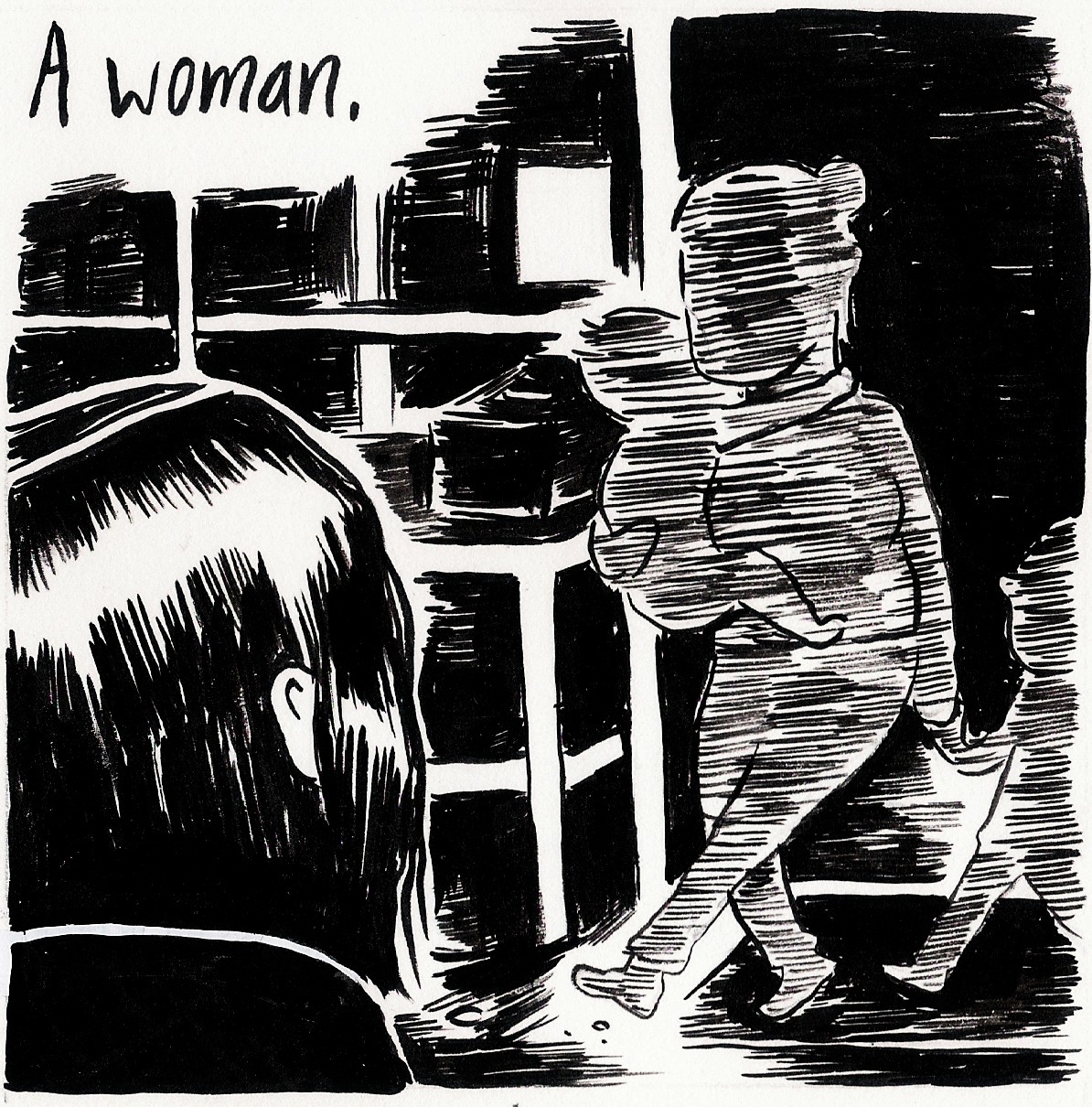
Holy Water / Heart Vapours

It is tears, often, that prove a mystic to be a saint. It is tears, too, that prove a girl a heretic, too Catholic, too Pagan, simultaneously overwhelming and refusing her audience.

~

Michel de Certeau, in The Mystic Fable, writes that Christian mystics begin their texts, ritualistically, with volo. I look up the phrase in a Latin dictionary. I will; I want; I wish. The mystics are always wanting, establishing themselves in this way. This is a statement with a supernatural agency, an incantation: to want is to will.

It is a loss of self that begins with I, repeats it, forms a chorus.

The mystics want without an object, without a sense of time or place. Volo, linked to nothing, is at once itself and its opposite. It is a zest for infinity, in all its permutations. I want (everything, nothing, God), offers de Certeau, in an attempt at translating the void. The mystic demands something that can’t be satisfied.

It is performative repetition, repetition as a means of marking a threshold, repetition as beginning, becoming. It is repetition that creates a frenzy, an altered state; repetition is a ritual that allows us to grasp, to cling, to believe what we need to believe.

From ‘the start’, writes de Certeau, ‘the ‘I’ has the formal structure of ecstasy’.

~

I come to mysticism at an oblique angle, after a bad breakup, having thrown myself into the study of tarot cards, allowing the imagery on the cards to lead me, to train my emotions and reorder my associations. I purchase a copy of the Waite-Smith deck, largely responsible for popularising tarot in the English-speaking world, designed by Pixie Colman-Smith in 1909, under the direction of Arthur Edward Waite. I choose this set because more has been written on their iconography, I believe, than that of any other deck.

I am a mess, at this point, but I am determined to contain it, to process it, to remain with my sadness, alone, rather than running away, falling into a new relationship, distracting myself. I want my misery to be more than decadence, other than failure. I am told, by the tarot cards and their many interpretative guides, that sometimes surrendering to tears is a stage within a process, that sometimes it is necessary or inevitable. I will my misery to be more than decadence.

I trace the origins of my tears. I don’t know how to be loved, having grown up without a mother, always at a distance from my peers. The motherless girl, I theorise, is often excluded from the collective. She doesn’t have the experience so often presented as universal, is an inadequate mirror. She is animated, explained, by this core absence, and others look away.

I want to disappear into the third person, but I will myself to stay.

I want, write the mystics, repeating, forming a choir of solitary voices, overlapping.

I will that altered state.

~

In the Waite-Smith tarot, the Ace of Cups is a golden chalice, with water overflowing, running in rivulets to a pond beneath, lilies blossoming on the surface. There are, alongside the steady rivulets, 26 smaller drops, like tears, scattering through the air. The chalice, into which a dove dips a communion wafer, is held steady by a disembodied hand, clouds curling around the wrist as if forming an elaborate sleeve.

A.E. Waite saw this card as offering the key to the whole Minor Arcana, as hinting at the possibility of communion with the Divine. He did not offer many other clues, noting that ‘the field of divinatory possibilities is inexhaustible’, and the Ace of Cups isn’t a card that’s easy to reduce to a simple or singular meaning. It is, like all Aces, the beginning of a progression stretching through the suit. Cups, in tarot, are the suit of creativity, of love and other emotions, and sit closest to water, which often represents the unconscious. In Jungian interpretations, cups represent feeling, as distinct from intuiting, sensing, thinking.

A. E. Waite was a devout Christian, and saw the chalice of the Ace of Cups as the Holy Grail. ‘Once, through legend and through high romance, the Secret Church sent out the Holy Grail’, he wrote, explaining the image and its links to chivalric romances, to the tarot as a knightly quest.

~

‘Imagine’, writes Mary K. Greer …

that you are the Chalice and, perhaps, the liquid in the chalice. You may be a font of water that wells up from a deep source. Become aware of the wounds gathered through your earthly experience. The water within you could begin to spill over, rising up and falling out in a continuous stream. Can you let yourself go, surrender to the movement, and then to gravity so that you fall into the pool beneath? What happens when you spill into that pond? Where do you go?

~

When I draw the Ace of Cups, I follow Greer’s exercise, imagining the water within me spilling over. I try, using it, to accept my emotions, to surrender to their movement. I close my eyes and imagine falling into the pond below, surrounded by waterlilies.

~

I cry because I love too much or do not feel loved enough, because I feel lost or lonely. I cry because it takes so much work to achieve even a small measure of confidence. I cry because I am confused by my body, because there are so many illnesses and so many symptoms, because doctors don’t always have answers. I cry because I cannot fix the problems of the world, because I have seen pictures and read descriptions of so many types of pain. I cry because I will never understand what it is like to have a mother, to feel secure, to believe in good things when they happen. I cry because I am an imposition on my friends. I cry because I cannot stay mortality, because I do not have a dog, because of mistakes that I made in conversations years ago. I cry because I don’t think I’ll ever learn not to need anything. I cry, occasionally, over spilt milk. I cry because I am an overflowing chalice, but I do not think I am in communion with the Divine.

~

Mystics fascinate me because they have learnt how to escape reason, have been celebrated for it. It’s true, of course, that they lived in a different time, that even then they were often viewed as heretics, rarely trusted, decreed saints only posthumously. The mystics of medieval Europe generally viewed the official institutions of the church as corrupt, choosing instead to cry in isolation.

It is crying, E.M. Cioran wrote, in 1937, that leads modern citizens to care about saints, lifting these figures into an aesthetic category, making religious devotion sparkle with a secular sublime. ‘Tears are music in material form’, he wrote.

I am one of these modern citizens, drawn to saints for the ways in which they speak to my own desires.

I read that tears, in the Catholic worldview, are brought about by intense personal experiences of God, that tears are the overflow of transcendent experience. There are three categories for holy tears; they are purifying, following fear and regret; devotional, shed due to an excess of love or grace; or compassionate, wept for Christ’s suffering. St Francis of Assisi, according to his doctors, went blind from an overflow of tears, offering evidence of piety. St Augustine cried privately, as a form of prayer, in order to ensure his tears went directly to God. St Ephraim, in the desert, cried tears enough to form a river.

~

In 1549, in England, the Act of Uniformity forbade excessive funeral tears. Catholicism was seen as Pagan, and tears, along with Christmas, New Year, passion plays and the cult of the Virgin Mary, were supposed to be eradicated.

Tears have always been allied with esotericism, with alchemy and magic. In late antiquity, forty days of penance was demanded of those who wept for the dead. It was Pagan to lament. ‘Christians when they come in’, Caesarius of Arles wrote, referring to women at a funeral, ‘heathens when they leave.’1

~

In most cases, I read, tears come about as the Holy Spirit enters a person.

The Holy Spirit is represented on the Ace of Cups as the hand emerging from the cloud.
Posted in ESSAYS | Tagged , , , , , ,

What Blooms Beneath a Blood-Red Sky: A Year in Aotearoa Poetry


Image by Ebony Lamb

Poetry is booming in Aotearoa, and nobody can quite say why. What’s stirring our blood in the plague years / this sixth mass extinction / our deteriorating climate of political and literal atmospheres? We can’t all be doing it for the karaoke after the poetry readings. But poetry is so hot right now, the bright young rhapsodists proclaim (if largely to a devoted audience of each other). Are we just saying, we’re hot now, evidencing the glow-up since high school, the already-anxiety of what it will mean for our newness to fade when we’ve truly emerged and the first-book fetish fades? Nah. Let the record hear: we will always be babes.

Anyways. As Joan Fleming reflected in Cordite Poetry Review’s last summation of letters across the ditch, the times have been utterly cooked, and remain so. We can no longer pretend to any resumption of stability, if such a thing really existed pre-pandemic. We have all either become terminally online or logged off entirely. To write in this time of intensifying ecological, economic and social chaos can feel like the This Is Fine Meme Dog jotting down limericks in a burning house. Yet as many of Aotearoa’s finest writers will remind you, the house Jack built has been burning for a while… In a time of crisis exhaustion, the poems that scorched through me in 2022 are urgent, awe-full, impulsive. They drip mammalian desire from their jaws, stare out at the gloaming from dilated eyes, or purr unprecedented tenderness.

The year was personally colossal for me as a writer and editor, seeing years of work bear fruit in print. I’ve unleashed my own bloodthirsty first book (Meat Lovers, via Auckland University Press) in her sickly baby-shower palette of raw-pork pinks and eggshell blues. 2022 also saw us finally launch the anthology of climate poetry for Aotearoa and our Pacific cousins (No Other Place to Stand, co-edited with Essa Ranapiri, Jordan Hamel and Erik Kennedy, also AUP) – a project initiated three years prior under eerie ruby skies, as Australian bushfire smoke wafted over Aotearoa. That at least makes two texts you don’t have to hear me harp on about further here, though they have their place as embers in the conflagration.

Aside from assured vitality of voice, little characterises the cornucopia of poets published in 2022 into a singular movement. Browsing my new accumulation of books from the glut, in the poems I found myself seeing again and again the skies run red – heralding new dawns and shepherd’s warnings, sunsets settling on gory epochs or invoking the many delights of twilight. Initially, gathering my wits for this piece, I thought it’d be cute to collage quotes for this essay – but so many snippets dissected from the fullness of their poems lost their atmospheric effect. Perhaps I may as well have said ‘hmm, couple of poems about the moon this year!’ But in the red sky there’s some pent-up pyromania – and the books which move me to wax lyric have an undeniable hot-bloodedness.

For some semblance of brevity, the following reflections focus on book-length works of poetry published in 2022. Still there are necessarily exclusions from this survey. Even I, a hog-wild simp for verse, simply haven’t yet been able to read every book printed in the calendar year. Nor could I offer every book the attention it deserves, wanton with the wordcount though I’ve been! It is a luxury problem to see so much worthy work published that the gothic castle of poetry with its ever-expanding rooms could take more than any one lifetime to explore. That said, let me now take my candelabra in hand to guide you through some choice chambers. My burning torch alone can’t illuminate every aspect of the year’s poetic offerings, but hopefully this brief tour encourages you to travel deeper into Aotearoa letters yourself.

🔥 🔥 🔥

Firstly, from Te Herenga Waka University Press (onomatopoeically THWUP; previously VUP), Essa Ranapiri’s Echidna is a masterwork of intertextuality, queer embodiment, and sheer eroticism. The ‘Greek Mother of Monsters and messy takatāpui wahine’ Echidna transplants her scaly mythology to Aotearoa to mix with atua and taniwha, Christian archangels and guillotine-able billionaires (‘when not if’ being sworn to Bezos in lieu of a bio in the Dramatis Personae).

All Classical myth is essentially fanfic, so it feels right to witness Echidna go through their Emo phase, pleading a poster of Gerard Way to wait for her – damn, girl, same. As many characters from pop-culture and pūrākau intertwine, a highlight is the steamy subplot of tricksters Māui-Pōtiki and Prometheus through flirtation, tragedy and white-hot embrace. When Prometheus is chained to Mount Elbrus for stealing fire from the Gods, Māui comes upon him in hawk form for ‘all amount of swallowing’:

Māui holds back the sun       to make the night
last longer and longer       he places the hook
in Prometheus’ mouth      feels solid and melting
tips riddled with flame      they tuha together
make the rock hot               with fluids
crowning Elbrus with waitātea

In Echidna’s paean for outsiderness and belonging, the mythic collides with scenes of the New Zealand mundane. Supernatural powers and shapeshifting bodies meet with bog-standard prejudice at family Christmas. Echidna digs painted fingernails into the discomforts of colonialism and indigeneity, of takatāpui and transgender identity, and of class (Echidna ‘white-washed by the classics’, can’t afford a name change to Hinenākahirua after ‘WINZ cut her payments when they found out / about her moonlighting at the meatworks’).

Breaking the chains of othered monstrosity, there is a profound community woven through Ranapiri’s Echidna. The poems narrate encounters with elders, allies and fellow sufferers, lusts and loves of all shades; takeaways shared on a park bench to fucking in the back of car. There are many moments of startling warmth – like when Narcissus shows Echidna how to see their own beauty in the tattered mirror of a river:

do i look like a question mark / to u they ask sitting with a clock between their legs /  echidna thinks what a thing to be
the punctuation that throws / everything into wonder

A young Echidna selling fundraising chocolate knocks on the door of Hine-nui-te-pō, where she has a shivery recognition of another door opening, to the future – the kind of unsayable thrill I remember as a kid meeting queer adults. Poems are abundantly dedicated to IRL writers from Harry Josephine Hiles to Michelle Rahurahu, often in the guise of legends – the sublime Hineraukatauri & Her Lover portrays fellow writer, taonga puoro practitioner and music therapist Ruby Solly as the moth-winged atua of song.

Posted in ESSAYS | Tagged , , , , , , , , , , , , ,

Essential Gossip: Allen Ginsberg, Robert Duncan and U.S.-Australian Poetics

Very distressing to the anthropologist would be the aftermath of a chat between Allen Ginsberg and an Aboriginal poet.
–Robert Duncan, ‘Warp and Woof’, 1976

I have metrical visions of Sydney in which the regular thump of the iambic is broken only by the engine-noise from the planes bringing another American visiting poet.
–Martin Harrison to Robert Adamson, 1981

In 1985, when the bulky anthology Technicians of the Sacred: A Range of Poetries from Africa, America, Asia, Europe and Oceania (first published in 1968) was printed in a new edition, it was advertised with the curious dust jacket recommendation: ‘hailed by the Los Angeles Times Book Review as one of the hundred most recommended American books of the last thirty-five years’. The volume’s inclusion on this list is remarkable, for, as an anthology of world poetry, it is not in any simple or traditional sense an ‘American book.’ Its opening sequence, titled ‘Origins and Namings,’ includes selections drawn from Central Australian Arrernte song cycles, passages of the Chinese I Ching and text from a shrine to Tutankhamun, all carefully organised to mirror the narrative and themes of the Biblical genesis myth (5-45). But for the Los Angeles Times Book Review, the anthology’s status as an ‘American book’ rests on the credentials of collection’s poet-editor, Jerome Rothenberg, who not only selected and arranged these foreign texts, but appended each with his own copious annotations and explanatory notes. Indeed, as Rothenberg contends in a Foreword to the collection, it is from his position as an anthologist that he rescues various religious or anthropological works, claiming them for genre of poetry. His insight, as one reviewer puts it, was twofold: that ‘poetry could be drawn from ritualistic experiences, chants, incantations, and shamanic visions that originated in Africa, Asia, Oceania, or within Native American groups’ and that ‘cutting-edge (American) avant-garde poetic advances (find) unexpected resonances in these ancient texts’ (Marmer). John Vernon concurs, describing Rothenberg’s anthology as having ‘all the earmarks (…) of a search for land, that is, a search for America, for an American tradition’ (825). For Rothenberg, contemporary American poetry must act as a creative archaeology of geography and origins: U.S. poets, he suggested, were not only reckoning with their present or future, but also re-staging their relation to the history of world poetry.

Not coincidentally, the grand récit presented in Technicians of the Sacred coincides with a significant reorientation in the petite histoire of Australian poetry. At a moment when America declared itself at the delta through which world history flows, so too Australian poets began to view the United States as both progenitor and arbiter of global culture. ‘American poets!’, writes John Forbes in ‘To the Bobbydazzlers’ (1972), a widely anthologised paean of the period, ‘you have saved / America from / its reputation / if not its fate’. The poem describes a private epiphany, Forbes’ recounting the moment ‘when I first / breathed freely / in Ted Berrigan’s / Sonnets’ and ‘escap(ed) / the talented earache of Modern Poetry’ (68). Taken as a synecdoche for a larger cultural shift, this lyric autobiography fits the narrative ascribed by numerous academic studies, such as Joan Kirby’s edited collection The American Model: Influence & Independence in Australian Poetry (1982) and Livio Dobrez’s Parnassus Mad Ward: Michael Dransfield and the New Australian Poetry (1990), as well as essays by J.M. Coetzee, Philip Mead and Kevin Hart. Critical consensus is that, from the late-1960s, and with increasing momentum into the 1970s, a younger cohort of Australian poets (who came to be known collectively as the ‘Generation of 68’) grew dissatisfied with ‘enfeebled English models’ (105). This dissatisfaction precipitated an eruption of new poetic energy, inspired and enabled by the importation of models from contemporary America.

Donald Allen’s The New American Poetry (1960) is almost universally cited as the catalyst for this poetic break (See: Coetzee, 2011, 243-4; Mead, 2003, 171-3). ‘I bought a copy of Allen’s anthology in Sydney in 1968’, recalls Sydney poet Robert Adamson: ‘These poetics were like nothing I’d ever come across: (it) gave me an incredible sense of liberation’ (Adamson, 2012). Initially banned by Australian censors, The New American Poetry belatedly introduced local readers to a new and richly heterogeneous American scene, populated by such luminaries as Charles Olson, Jack Kerouac, Frank O’Hara, Barbara Guest, John Ashbery and Ed Dorn. Yet the history of how the bobbydazzlers came to dazzle Australian poetry is not only a story about the packaging and dissemination of poetic exports (Allen’s anthology being a prime example). It is a story of the assimilation of poetic imports (as with the global accumulation present in Rothenberg’s American anthology), world poetry repackaged and repurposed as the foundations of contemporary American writing.

Posted in ESSAYS, SCHOLARLY | Tagged , , , , , , , , ,

Choke by Mandy Ord

Posted in ARTWORKS, CHAPBOOKS | Tagged

15 Artworks by Jane Fan


Strange attractors | 2019

Various strange attractor equations were used to drive particle motion to reveal their beautiful mathematical forms.

Posted in ARTWORKS | Tagged

as we are


the colonial state curates a fiction
of brutal modernity

insistent settlers

entrap

place-time

is
rich

with vast storying
an act of being
a gesture

that

bonds

the mythscape alive and breathing

storytellers

break
grow
plait


Note: This is a found poem based on the essay, As We Are: A Call Across The Islands, written by Jeanine Leane, published in ‘Sydney Review
of Books’, 29 November 2021, which reviews the book Shapes of Native Nonfiction: Collected Essays by Contemporary Writers, by Elissa
Washuta and Teresa Warburton (editors).

Posted in 108: DEDICATION | Tagged

Broken (interaction)

It happened in the sand dunes, so I’m told. I don’t remember.
But it’s said I came back claiming I’d converted to a broken-
nosed God I didn’t know the name of, from a museum long ago.
I don’t know why he stuck, like childhood, tiny events the family
turn into stories, told round the table until you’re pretending
they’re your memories, laughter, in your cowboy hat, photos
of the art critics who hovered round, quite forgotten, who asked
if you wanted to draw horses, and the cold dust of the pews,
no divinity there, but too young to read the prayer book. I woke
sober the next morning, bruised knees, sand-filled shoes, but
she had seen him, so I asked her if he had tattoos. He didn’t. Now
my revelation’s secondhand, reported back in whispers, unreliable,
and the question of what next, discipleship perhaps, standing
in the market square alone, handing out self-printed tracts, rain.
I asked her if anyone else got spiked, as I assumed I had, she said
no. I checked my medication leaflet, maybe I’d had an interaction,
but I hadn’t consumed anything unusual, no grapefruit, no Chianti,
no pills you had to take the dealer’s word for, and I asked her: like
a boxer? thinking of the nose, and she said no, not really, thinner,
then her sister called, she left. I stared at the ceiling, wondered
if I should pray, but to whom, for the grace I’d lost, repeated.

Posted in 108: DEDICATION | Tagged

The Library of Babel

Brake pads squeak and a tram’s bell ring
I’m thinking about closed and open totalities
And phrases like: transcendental homelessness
To really get to the bottom of the Whitmanic subject.
You can’t help but feel that theory is just allegory.
SUCK MY DICK is scratched into this desk
A man sits at a computer tapping the screen
The image does not zoom in he taps harder
And still the pornographic image gets no closer
All he wants is to get a better view of the woman’s
Nipple. I send a message to my girlfriend explaining
The situation. I tell them that this is the purest use
Of the Internet I’ve seen in ages. I love how he
Desires the real woman that in the picture
Not the picture itself. The strawberry blonde
In the hot cowboy costume should be in the room
With us if the world was just. Oh, if God was good.
This innocence it’s like he has desire outside of
Desire itself. The attempts to bring her closer
Make me think of how I used to be
Certain of what I want
Banh Mi for lunch
Jittery from fourth coffee
Are they waiting for the tram?
I want my 3DS back
I miss puberty
When I vandalise public
Property I can never come up
With anything fun to write
I just write my initials.
I want to it take back
What I said to my Dad that
One time. His struggle relatable
Tapping away the screen constantly
He is just searching for a decent
Purpose like everyone else.
Why didn’t I just go to the coast?
And what should I cook for dinner?
There’s sardines in the pantry
I never had sardines before
And I’m never ever even
Certain of what I want

Posted in 108: DEDICATION | Tagged

A Bird Does Not Sing Because It Has An Answer, It Sings Because It Has A Song

(after the Chinese Proverb)
My grandfather I called him Agung came here on a boat that was crowded and smelly I was born here with a certificate he had enough money to start a business from working as a chef in Hong Kong where people liked his cooking when he came to Australia he lived in a share house with another Chinese family they had to go to the toilet outside in the dead of winter while their neighbours watched them from picket fences my grandfather cooked in restaurants where people didn’t like his food and I slept in the kitchen while he looked after me because my mum was at work he made oyster sauce and ginger vegetables and fried fish and crunchy roast pork and cooked until his fingers were bleeding and burnt he saved up enough money to go back to Hong Kong before his mother died and her ashes were scattered across a mountain but I was too young to remember so I just closed my eyes while he sang a song that I didn’t know the words to

**

When Agung came here he memorised Advance Australia Fair and forgot the old songs he became a citizen and they renamed him Phillip like the Prince because his Chinese name was too foreign sounding when he answered the phone he taught my mum and her sister and her brother how to drive around Adelaide in a Holden Commodore that he bought for five hundred dollars from the newspaper when he had learned to drive the instructor initially refused because he didn’t think Chinese people were educated enough to drive so my grandfather had to take the bus to his various jobs until his feet bled through his leather shoes and then he would wake up and do it again until they granted him a licence because they needed more taxi drivers I was born here and he was the first person I saw he called me Fa like the flowers that bloomed in his garden

***

He liked looking out the window and hearing the cockatoos sing and tried to copy them but his whistles got lost in the afternoon breeze in Hong Kong the seagulls squawked at sailors in Causeway Bay his father had taken him on a boat once and a seagull stole his wristwatch so he hated them there were heaps in Adelaide and when he would buy me a Paddlepop at Glenelg beach he would make sure that they wouldn’t swarm our umbrella and he threw rice around his garden so that they wouldn’t peck at his watercress he loved me even though I couldn’t speak Cantonese and he always said that I was his Fa and bought me a yellow bird in a shoebox at the pet shop in the Central Market when it flew away I cried for days and he told me that it would be okay and said that it would one day come back to me if I prayed enough

***

He bowed all the time and made sure that his knees sunk into the ground when he begged his ancestors for our family to be safe and strong when he got Parkinson’s he was afraid that he would die and leave us in this place alone he went to the hospital and they spoke to him in English about life insurance and funeral plans and he just wanted to go home so he did and he was placed in Tung Wah which looked out at the bay and it was hot and he sweat in his bed until they changed his linen and missed the sweet flowers outside his window we prayed from him and brought persimmon and honey dew melon to an altar at the temple in Adelaide with the giant Buddha statue my grandfather fell on her knees and asked for her to be taken instead because she couldn’t bear to be here with the Gweilo’s who looked at her funny when she asked for bread at Coles we flew to him and Agung looked at me and he pursed his lips together and tried to whistle like the cockatoos but he didn’t have enough lung capacity so we just sat together until he shut his eyes we scattered his ashes because there was no room for his body at the cemetery and I walked barefoot on the overgrown grass and prayed that that he would be safe we gave him offerings like smoked duck and Baijiu to go forth safely I took a shot and it burnt my throat

***

In Australia and we sold the house because my grandmother no longer wanted to live with the ghosts of fifty years and we packed his clothes away so that they didn’t haunt her before we left I heard the cockatoos singing their afternoon hymn and a yellow bird was sitting with them on the powerline.

***

A bird does not sing because it has an answer, it sings because it has a song.
Posted in 108: DEDICATION | Tagged

Farmers Protests and Floods

I watch the blaring tv,
the sound of some news reporter showing dead people across the road.
Words like ‘justice’ and ‘freedom’ scribed on posters toppled over them.

My Dad and I are in the garden,
It’s a typical Sunday morning – bright and sunny
in the tepid wintry sun planting the winter harvest.

Beside us, a flock of birds swoop at the ground where we sprawled seeds and grains for them to eat.

‘When we are given food, we should always thank three things’ Pappa always said.
one – the Creator; the one light
two – kudrat (nature); hence, feed the birds
three – kisaan (farmers), we don’t get any food without them bearing it all for us

droughts, bushfires, bad crops, income, urbanisation
everything.


We sow the mustard, spinach, carrots and beet.
I monitor the crops every week.
Week 1 – nothing
Week 2 – a little green shrub
…rain, rain, rain…

I watch the blaring tv,
the sound of some news reporter showing flooded expanses of land in the state,
words like ‘climate change’ scribed on posters everywhere.

After twelve weeks, the crops have grown, rot and decomposed in the same soil
in our little 200 square metres of land
it’s nothing.
But I know it – we’ve failed our proud ancestor farmers.
In the boggy soil, I saw the rich umber tones turn into ochre and khaki
The same khaki of my Dadda ji’s uniform – he knew the fate of the farmers
My Dad left his homeland, sold his land
Now I can’t even manage to grow a few crops in our backyard.

Now I know why we left.

I watch the blaring tv,

378 days and the protest has finally ended.
Water wells in my eyes as I yell in fury and hurt
the tv blares images of elderly people screaming excitedly; going home to resume their endless cycle of
farming and fighting

I watch the blaring tv,
people’s belongings and homes destroyed
water wells in my eyes as I yell in fury and hurt
the tv blares images of sunlight, the worst of the flood has ended and we all go back to resume this endless cycle of
climate change
cultural identity

and confusion.

Posted in 108: DEDICATION | Tagged

best australian poem 2023!

this was the year i changed my bio from writer to poet
this could be our year we said
id won a prize and youd come into form
so we submitted two poems each to the anthology
best australian poems 2022
there had been an open call
three poems each was the limit but we were being humble
we waited to hear back
we were chill about it
the top 100 poems in the land
a big deal
but no big deal
we are just upstarts
we really want to get in tho
someone said theyd received 5000 submissions
thank u editors for your labour
5000! G-WHIZ
either poetry is back! again
or a malicious state-based actor launched a cyber attack
on australianpoetrys servers
laugh all you want BUT
some regimes, those with long memories, know that
poetry is a weapon
know that the revolution is linguistic
know that poetry fractures regimes
plato knew
and the despots know too
i often think of
turkeys national poet nazim hikmet
a communist in a nato country
he died in soviet exile
turkey used him up for the secular revolution then jailed him and jailed him and drove him away
revoked his citizenship then restored it after hed died
fifty years later
i sat and wrote in a cultural centre named in his honour made of stone and timber
there was a drama school
a tea garden under tall trees
they sold books in turkish, russian and spanish
people were always writing there, studying, pondering, speaking and listening with their whole
bodies, wielding big ideas everyday
they talk now of journalists in jail
but no one mentions the poets anymore
remember Lorca, Neruda and others
somewhere poets still go to jail, get killed
here they send poets to university
poets as tinkerers and bureaucrats
poetry as pathology, as ornate junk, poetry not seen at all
since settler capitalism, in its plunder
could not be bothered to take it, to absorb it
to list it on the exchange
and so WE pick it up, use it, our weaponry
poets as guerillas
waiting for our acceptance emails
i can attest
that the mobilisation is linguistic
riffs poems chants graffiti are the oxygen of revolt
solidarity is sung and punned into minds and lands
it happens at home, in schools, in work, in publics, tea gardens, mountains
i was there in istanbul at the siege of gezi park
in the crowd that resisted then seized bulldozers
dodged water canons and withstood tear gas
we sung of revolution, we practiced it
a newfangled oneness
that disastered the legitimacy of the government
and opened a horizon of possibility
that ten years later becomes the end of not only a tyrant
but the tyrannical mode
all ours liberations are bound up in one another
when we are not killing we might be healing
believe me when i tell you that i found my voice then
a mass movement refusing the authorities that govern everyday life
saying we can do it ourselves
by the people for the people we the people
i think that
best australian poems 2021 was a bumper year
cos it had that energy
we love that edition
you bought it for my birthday but i already had it
we sung its praises to all
at the bookshop i sold dozens
wrote a shelf-talker saying
‘to everyone who reads or wants to read poetry
this is the place to start
100 poems from all walks of the continent
theres radical stuff going on’
i say this now because i felt proud for poetry!
for us
strange to say it but honest
no document i can imagine would speak to the state of this troubled nation better
and so when you were in melb housesitting my place
and i was at the salvos in alice springs
i lit up when i found 2009 and 2013 for two bucks each
leni shilton written in blue ink on the first page
i read them right away, loved them
thought of leni, thank u leni
ill buy your book too
there was something special about encountering 2021
dedicated to my friend and teacher the great Ania Walwicz
the editors did an excellent job
the poets of course did too
and maybe it came at the right time for me, morale was high
or maybe poetry is the technology that generates joys and agonies most freely and directly now
the marginalised poet can storm the top 100
difference in the charts
in a way that the sculptor, the film director, the musician
might not
we feel like were in permanent crisis
its post-truth and plato changed his mind
called us back
the social body exhausted
the earth in arrears
poetry is needed
a jolt straight in the vein
poetry, my friend
poetry

Posted in 108: DEDICATION | Tagged

Shipping News

My father calls me late one night. He’s
building a boat, gathering sticks of balsa
wood and grainy plans printed off the internet.
Expecting rain? I ask and he laughs
agreeably: a dazzling Bengal light
over the 5,163 nautical miles
of Indian Ocean.

He tells me then that we have mariner
blood, that his great-great-grandfather spent
his days on the fractious waves of Durban Bay –
in a careful choreography of ships seeking
safe harbour. He’ll test the boat in my
brother’s swimming pool; he’s not quite
sure if it will carry one person or two.

It’s physically the most complex of
the three oceans. I feel I should warn him
before he sets sail, it’s a perilous swathe
of water between us. He’ll have to schedule
his voyage meticulously, aligned with the
trade winds and monsoon rhythms that
could make or break him, because

I’m not picturing my father bobbing
in his balsa wood boat in my brother’s
suburban pool. He’s crossing the ocean instead,
eyes on the horizon, cap pulled low, he’s
Larry Taylor’s Birdseye. And he’s bearing
tea chests and lanterns, lifebuoys and blankets –
he’ll whisk me from these waves.

And maybe I say it all out loud because
he’s silent, and then he says
gently: does it always have to go
like this.
And when he sighs, it’s a kindly
sound, a rustling ebb and flow of his breath
over the 5,163 nautical miles
of Indian Ocean.

Posted in 108: DEDICATION | Tagged

Bunya

I see you and think Australia,
Bunya Pine. You’re less Christmassy
than the Norfolk—they get all the
gifts, praise and beachfront real estate.
Yet you provide timber floors for
Queenslander homes and pine soundboards
for fine guitars. You stand tall, your

wiry, fishbone frame, laddered. Straight
branches—paralleled—skeleton
brocade on a trooper’s breast. Like
plantation regiments; your bursts
of evergreen gunfire right at
the end. You’re dropping deadly bombs
without warning—ten-kilo seed

cones falling on unsuspecting
walkers. But you’re food for thought. You
fed the dinosaurs, too—wise old,
ancient you. And just ask those who
know their bush tucker, they’ll tell ya:
“Fella, no tree coulda outdone
ya.” Yeah, you’re a good stick, Bunya.

Posted in 108: DEDICATION | Tagged

auto mate me

I

don’t worry kid, i used to want
to be like shane warne too. bit left
out now i’m off spin and on the bottle
hunt. one night my boss caught me searching
his yellow bin for return-and-earns. the next
day at work he’d bought me a headlamp to make it
easier to look through his garbage. my Human R.
colleagues passed along pamphlets all day
about how it isn’t too late for me
to book a spot in the next office well
being seminar on how to delete my
mental health to focus on my productivity
performance. the only productive thing ive done
today is be a troll posting poop on pig’s
balls to bring down free speech
sites in retaliation for my school bullies
knowing i was queer before i did. this, de
spite me supposedly being the ‘gifted’ kid. my
new headlamp makes me lit like a cigarette
butt in your mouth. i do the grind and
work 80 hour weeks so
i need all the “me time” i can get. either
i collect bottles for 10 sense each
or i screen shoot your NFT’s. up to you, boss.


II

my last grindr date invited me to a party but it turned
out to be the Communist Party. at the meeting
the tankies kept saying to me, “I want
you to know that I personally have no
problem with you being here tonight.” my
neurodivergence melted down with the
change of plans so i left early and cleaned my room even
tho nobody was coming over for sex. i’d liked
my previous crush a lot but they had dreams of
being a Land Lord. time for a break, time for a
seroquel induced dopamine rush from switching
between three apps to stop the bad thoughts.


III

when alone in my sharehouse (i usually live with
17 other 20 somethings
who also have a drinking problem they think is totally
normal) i imagine i am no longer piloting a skeleton
wrapped in a meat suit, but am a shipping container
in the suez canal. stuck on purpose. nothing can move
if they don’t dance to my groove. like the Parisian streets
of May ‘68, i too am a collage. a barricade against
the society of cringe rotating through 70’s, 80’s &
90’s nostalgia, delivered as a regionally curated
monthly subscription box of artisinal apocalypses. why does
my generation want to die? it’s a neo-Dad joke, sure, but
also a very real feeling. when i’m a boat in the suez canal
all that is productivity melts into my new headlamp.
I’m a bright ‘gifted’ expression
of powerlessness and dread, letting rip
a world turning leg break.

Posted in 108: DEDICATION | Tagged

Submittable

Thank you for your submission
We look forward to reading it

Thank you for your interest
We cannot survive without it

Your work has been received
Your work is in-progress

We will get back to you, if we can
To let you know how busy we have been

How many manuscripts we have seen
Like delirious skies drowning in rivers

We are grateful for the opportunity
To have waded through the slush pile

And plucked you from obscurity
For a moment we paused to ponder your style

But really, and don’t take this personally
It’s just not for us, it’s not quite right

It’s not that we think your work is shite
It’s just that we know what we like

And we would like to wish you the very best
Yes, the very best, in placing this elsewhere.

Posted in 108: DEDICATION | Tagged

Ribbon

What kind of things
can go inside a poem
then? well
draperies and
fine cut marble
dressed with flowers and
the ribbon
from your hair

No one wears ribbons
anymore, no one
Not even you
I made up the ribbon
because it seemed
like the poem
was asking for it

They said later
he was asking for it
after the accident that
cut up his face
A disfiguration
seems to suggest that
the language used
to describe something has
failed
It couldn’t be figured
as in to draw a figure
or to draw blood
Aren’t we all just
asking for it
But there was no accident
and no one’s
face was
cut
up
I made it up
Why, I wonder, is this poem
asking these things
Posing them here
a ribbon, your hair
a thin ribbon of blood
from a face I can’t see
and you can’t see
None of this is real
There must be something
I’m getting at
otherwise why
write at all

What I’m asking is for
some neat summation
or turn of phrase
to save me here
To rescue me from this poem
A couplet that gives you
a flutter like something has
come alive inside you
I want to be alive inside you
but I can’t, because
you
are not real, you wear
ribbons and the accident
was on purpose

A thin ribbon of blood
on old stone
If you rub your hand
on the stone
you can still feel the ridges
where the chisel cut
It hasn’t been smoothed out
The stone is red marble
your hand rests on an edge
You think this is your body
old stone, old words
cut out of you
I wanted to figure you
out
But I can’t

Posted in 108: DEDICATION | Tagged

After image

for K.S.

did I ever tell you, that a sense of history is ingested like dust, feverishly? or that the memory of a poem is no longer the same poem? we’ve long held this pause in text, but where language bears its marks there’s debt. the words made flesh. each debt recalls the others, it’s always been like this. first, the cold skin of a horizon cut open by Kā Tiritiri o te Moana, reluctantly, like an unripe fruit. I remember how lucie brock broido’s overtones came rustling out from under the car stereo, only to evaporate in that morning’s gloaming. it was a sound too hallowed for this world, that dulcet crackle, it was the sound of listening & yearning. it was the sound of metal railings rattling along the endless stretch between Rawene and Kohukohu. you were searching for something, in that place without instruments for time. look, you said, see how the ground cracks open at the touch of roadside flowers? the rose turns to me in extremis, then memoriam. I try to describe this loss with only the objects at hand: sunset, trees, telephone wires, an oil drum. a horizon is both the opening and the limit that defines a period of waiting. a horizon is that lost boat my father found straying along the canal, it’s the light that bursts across Aotea square like two hands drawn together by their years intervening. I know this much, it’s possible to be in two places at once. in your country, a woman has unleashed a great swarm of bees on the police, as if she were brandishing existence. this small and defiant act gives me pause. it took me several years to ask, what happens when the letter supplants everything? the reply, that this is the truth of a life.


Sources:

Hak Kyung Cha, Theresa, Dictee, Berkeley, CA: University of California Press, 2022, 18.

Derrida, Jacques, ‘Force of Law: The “Mythical Foundation of Authority,”’ in Cornell, Drucilla, Rosenfeld, Michel and Carlson, David, Deconstruction and the Possibility of Justice, New York: Routledge, 1992, 26.

Posted in 108: DEDICATION | Tagged

Continental Bodies

i think that: this love is continental
some historic mainland narrative
open fields and svelte ravines of fresh water
but also, politics, and confrontation, and
the occasional warring city-state
differences of opinion about desire, jealousy,
the colour when buying new window shades

and togetherness, as a collective organism
coaxed from the gummy pools of a cambrian
explosion – an antediluvian fondness for violence
dirty sex whistled into the picture
hair pulling and slackened jaws
and unlike all my other loves
this eye contact – moored planets
gravitating moons anchored down
never flinching, in even the gaudiest light
unperturbed by my ugliness, my despair
by this cargo taxed with bitterness.

shall i call this: ignorance or just
plaster my criticism in the papers
wait for the unrivalled knife
keep my chest unprotected for slaughter

or does this earthly love come without
a death date? no mayan calendar to abide
and when the earth splits and cracks
i’ll just look at you, at those cosmic giants for eyes
the comfort of a satellite gaze unwilling to look away.

Posted in 108: DEDICATION | Tagged

roughly

1400 words give or sell / i opened a fruit stand
just to squeeze these blue cherries between the sunlight
& my splintered thumb. behind the fruit stand: bendigo or
something like it / catholics in tracksuits / dusty bookshops
tearful pergolas / real estate agents chatting to jane
on a night out
in ballarat & dodging the swollen footpaths at 2 am
we took the mild party back to the airbnb / that was
another night you weren’t around / you were closer
to yass & mild hills caressed by the tractors / lined up
like lovers in the 70s / before drones. next to babbling
creeks. tv was more straightforward then
sometimes you were on it
rattling up old anglican ladies like bags of plain
salt chips. i can imagine standing there too but i wasn’t
we were more watching it from a lecture theatre / unimelb 2009
how many hearts are seared on the grill. how many eyes
are closed in the heat. in newcastle
your white shirt catches
a coal tan & you decline the benevolent scholarship
the thing is we don’t understand institutions / they’re as
populated as buildings / just as susceptible to dry winds
wicked storms. i’m a pile of essays punctured with
wine marks & staples & you’re the
master of grills. later on
springsteen spends 21 mins
dancing with rosalita & we’re the nicest people there
no / just a bit high / just a small dream in the clouds crowding
ngannelong / just a little unfinished museum business in the
far-off drought-struck carpark / that’s an ancient creek bed
no wait it’s just a ditch & laugh at the blue jeans
falling over in the dark. on tuesday
djokovic’s camped out at fed square
clare land orders gyoza / johnno shane me & the
constabulary & you float neatly above the shaken-out
semi-tragic cult-status street / it’s called swanston
actually / called every parrot down to the
front pews / jimmy watson’s
to break nuts pizzas spritzers straws on the table cracking up
under the weight 14 laughs & 28 hands thumping it in a
sunny friday-night wind. we take some snaps
wild cars coarse by

Posted in 108: DEDICATION | Tagged

Firebringer

The process of decay is at the same time a process of crystallisation…
Arendt


I’m reading about the man under the ash
whose brain was made black glass by Vesuvius.
Not from his hot stinking breath
but the sudden change as he galloped away:
flank greasy and foamed, heat-mane unfurled,
streaming behind him like an insignia.

Am I meant to draw comfort that the man
died instantly while asleep?
That his skin boiled, fat steamed, nerves dissolved
to sound with one final shout?

Did he dream the heat or its lack?
Feel its wet kiss or cool alien untouch?
Maybe he’s still asleep, still falling
with the ash. Maybe he goes through
the ash: peeking, feeling, then begging entry
into the starred rips in the Universe’s cloak
until the whole body, mind, slips
and is falling and fell and fallen all at once.

Posted in 108: DEDICATION | Tagged

the thinning

that day my dad
does not have rope.
that day we try and
do it with a hose.

rubber lasso
stretched thin
as three bodies.
borderline. net.

that day we
walk the hose
across the field.


the herd, yellow grass
slogging in slack jaws.
mean sun, regurgitated
egg. cockies watching.

dad out far as line
of hakeas. shadow
of man. mum’s ham
in the sandwich.

i’m first baseman.
each step, door slam,
crunching limbs.


that day, billy goat’s
staring, got air in his
belly. hair pricks is
filthy erections. herd

backs behind him.
teeth, bad westerns.
gums dribbling. all
eyes swimming.

kid cowering
in cage of
nanny’s limbs.


air thick. dad’s barking
instructions. cockies
spewing from ghost
gums. leaves hurling.

billy’s kicking earth,
nostrils flaring. throat
open, no screaming.
no one’s taking his

woman. nanny’s
licking shit
from kid’s bum.


that day my dad
charges forward.
yanks nozzle. ‘keep
it taut,’ he’s gulping.

mum hissing, holds
back. holds line. left
leg, oesophagus. drags
wake. breathless.

‘fucking hell
jane! can’t ya
fucking keep up?!’


then. mad dash
is mallee of limbs.
dislocating wings.
dust jumps. necks spin.

sick bleating. tongues,
birds flailing. ears
ringing. sun softening.
throat’s thinning.

billy goat coming
at me. like a dad with
a belt or a baseball.


that day billy
fakes a lefty. goes
right past me. dad
sees an opening.

‘go balls and all!’
screams dad,
yanking hose
like throat.

we’ve got the
nanny on the ropes.
eyes discharging.


but my mum’s down
for the count. the
line is fractured. the
hose, a broken lip.

the nanny’s got
a slip. she’s taken
it. muscle thick as
porcelain, always

covered in shit. then kid
tottles over, oblivious.
gives me a little lick.


that day i shoo that kid
away. my dad there trying
to tie a hose into a lasso.
a neck. a nucleic noose.

‘you two are fucking useless,’
he says, fixing a knot crook
as gut. spaghetti spew cowboy.
‘you some sorta poofta son?’

mum on ground, hissing,
heaving, grieving with
laughter. stops sudden.


‘you’re a mean old thing,
don,’ says mum, in an act
braver than any man. yet
there’ll be no trophies, no

cover stories, just eulogies.
she helps herself up with my
hand. and dusts herself off,
never reaching for guns.

just stands there staring
with the grace of a bird
that’ll never take flight.


‘son,’ says dad, dropping the
knot that’s a hose, sweeping
his arm out as if for a moment
he’s holding open the cage. this

world an exponential baseball
that never comes home. and footy
two men spilling into love. and the
guns corroded are lowered. the

dust almost settled. the billy off
gnawing on grass. then. his smile
thickens. ‘be a man—get that goat.’


and i can’t explain it. it’s a
metabolism. it’s that urge to
shove things into my body.
that need to gag because i

deserve to be empty. a danoz
direct ad where i buy the lie of
hard abs because every day is a
lie, from birth to inception, that

thins and thickens. a toilet bowl
clogging. a bruise on a throat.
a hose that we use like a rope.


so i go like greg inglis 1. like
duke on the frontier. like a
baseball with the velocity
of a machine gun. i’m

flying. goddamn rambo.
topgun. that guy making
a woman choke on her own
vomit while he throat fucks

her on the internet. i did not have
sexual relations
… a nuclear code.
a hard-on with a mind of its own.

before. we take photos.
the kid thin legs thin face.
lured by carrot tops and
outstretched hands.

snap a few shots then
dad locks them up.
big corroded bird cage.
safe from night fox.

mum calls this happy
families. her photo-op
crouch, birdsong teeth.


‘what about snakes?’
i say, going balls
deep in fireweed
and feeling frigid.

‘the only snake here,’
says dad, grinning,
‘is the one in me
trousers.’

mum leans close.
whispers, ‘it’s more
like a centipede.’


before. i follow dad.
headed for field. our old
overgrown diamond. first
pitches, first swings of the

howdy peasants. if only
duke could see my dad.
out on the range in his
finest camo pyjamas.

old man always said,
‘i need wide open
spaces to thrive.’


‘we’ll never do it
with that,’ says mum
waiting at gate, hands wed.
‘don’t you have rope?’

‘what would you
know, jane?’ says
dad, giving me the
tap. ‘you’re a woman.’

mum looks at me,
at dirt. silent. scream
of gate is split womb.


before. dad says,
‘the kid is easy.
but the mum, she’s
bloody feral.’

he looks through
shed, capillary of
bird cages. comes
up empty.

in eggshell house
mum once said,
‘keeping birds is evil’


mum peels yellow
gloves from fingers.
holds limp like birds
with broken necks.

‘tim,’ mum says, ‘are
you alright? there’s
sick round the sink. did
you throw up last night?

‘no,’ i say. swallow back
battery. ‘i’m fine… what are
those marks on your neck?


before. after breakfast.
dad’s eyes out window.
counting magpie’s
stock exchange.

‘you know,’ he says,
‘this’ll all be yours
one day. when i’m
gone, you’ll be rich.’

eyes thicken. ‘reckon
you’ll miss your dear
old dad? i know i did.’


‘if we don’t get
the nanny for her
milk,’ says mum,
thumbs thick with suds,

‘foxes will eat that kid
alive.’ steam rising. scour
her silver pistol. in control,
like a season washed out.

‘it’s only right.
we’ve got to convince
your father to help him.’


before. last night. get away,
host catriona rowntree, the
entrée. screaming’s friday
night footy. mum’s allowed

leave, but i’m expected to stay.
dad tells me how good his father
was at nrl. robbed of a legacy.
all cause of money. couldn’t make

trip across city. but i know better:
this ten-gallon western! gramps.
the myopic visage of heaven.


outside, looking up at stars,
those watery diamonds.
like the one where a dad
threw a baseball, his tender

uppercut. because i’d seen
field of dreams like dad could
recite every line from true grit.
and me being his favourite, dad

bought me a glove. ran four hoses
across a field. so every arvo was
breathless, leather beaks clapping.


before. don’t want to look
back. suck on plastic throat
outback. hand thickens, choking
life from smoke. not nightingale’s

song. but gurgle, eagle’s snoring.
hot bubble. did you know teeth can
sail like baseballs, land in the hands
of sons? forget origin? these teeth

being gold from the bellies of caves.
and then the bellies sit dormant.
waiting. years sometimes.


the only real truth is a throat.
how it opens. how it closes.
examine the fabric of a body.
a liquid fist refracted. teach

it. learn it up. built like a brick
shithouse. a fair go mate so
sick with faith he’s tactically
chucking. see this belly, it thins

like wings but swings like gramp’s
thick fists. ending an nrl career.
gran told me: shipped him off navy.


it’s porcelain’s reprieve, wisdom’s false
exit. when the gurgling scream. the hose
between mum and me. her jumping behind
bedroom door. dad’s arvo vulture lurk.

eggshells shattered on the floor. please
no
, never quite wingless. i’m cramming
fingers into the feathers. multicoloured
grated gag hole. porcelain thick lips. still.

memory of mother’s spaghetti. but it’s me
clogging like ten generations of shit. hear
them. knowing, what that man is doing.


1 In 2009 Greg Inglis, Captain of the South Sydney Rabbitos, was charged with assaulting his now wife, Sally Robinson.
By 2015, Inglis was the front page of Courier-Mail, standing bold as apple pie under the headline ‘RESPECT’.

Posted in 108: DEDICATION | Tagged

Contemplation for beautiful things

There’s no sighing our way out of this — the mundanity of a flat liveable city,
long drives late at night to swing legs over the concrete aqueduct and listen
to the freeway sing. A slow breath blooms on the mirror. One thing’s certain:
mirrors are no substitute for desire. In dreams I eat the silverware, my pupils
turn into dinner plates, rivers stream down my bare arms into an overflowing
percolator. A great many changes keep occurring and I’m surprised to find
I can tolerate them all. A cloud is also other things: rain droplets, ice crystals,
a sheep; an old photograph that stares and stares at itself. Someday, I will know
what it’s like to love a beautiful thing for itself first, rather than for what my
looking transforms it into. I rise at first light and pluck a fresh roll of film from
the nightstand. My eyes are twin bulbs already flashing, becoming and becoming
and becoming. Here I go, sockless, into the garden again.

Posted in 108: DEDICATION | Tagged

Bird bingo

It’s bird bingo, he said, looking at the sheet.
I tried not to beat the ten-year-olds who were also keen.

You had to really listen.
And there they were.

Tūi, playing chase, fighting rivals:
blue-black, green glossy, white.

Puffed up to double his size to impress a mate
who flapped off over trees.

Puffed up to fight the kākā for sugar water,
but the kākā, all curved beak and red underwing, held his perch.

A saddleback’s flash of chestnut:
akin to the huia, flashes swerving through trees.

At the top of the dam and over the suspension bridge,
we have the eye of God.

Walking under canopies, I see a kākā soar high, ka-aa.
Beneath mamaku: the feather of wings and the feather of ferns.

If you’re over fifty you can’t hear the rifleman, he said.
Even the noise of the stream sounds like chatter.

A clear call; less a bell, more
the note of singer with perfect pitch.

I’d nearly cried seeing the film of the death of huia.
Then again, I nearly cried when I saw it –

steadily eating grass, as if
the most natural thing in the world.

Takahē, back from the dead:
royal blue, peacock blue, green;

a sharp red beak –
like watching a miracle.

I have five, I said.
I have four. Oh, I forgot the tūi.

But I counted the duck.
I found birds that were not on the sheet.

There are too few of those to include, he said.
But we saw them anyway.

Posted in 108: DEDICATION | Tagged

Sabbath Brides

after Bron Bateman


1. Our circadian rhythms–
your texts shadow my fingers
day and night, doorpost and gates.

2. On Saturday mornings
as Miles finishes “Blue in Green”
the cadence of your kisses
chants a prayer of renewal
down my stomach and thighs
and I stand on the crown of my toes
calling kadosh, holy, holy
to the ceiling

3. You tell fables of unhappy desire
populated by beast & sweat,
moon & thicket & blood,
beautiful thunder,
humming light.

In your dreams,
I worked the fields
seven years & seven more
just to see your flesh,
& you gleaned the sheaves
& vowed to follow me home
fierce as death

4. As a baby they called you boy,
hoping & wishing it be so
but you named yourself
queen of my heart,
scrubbing yourself clean
to emerge fresh from the water
like a newborn into the hands of a midwife

5. Our bed is a re-dedicated temple,
a weekly unavowable altar where
I drink your wine & dip your bread in salt
& when you kiss me
& tell me “remember this,”
I laugh & call you kohen gadol,
& this our holy of holies

The sweet bitterness of quenched thirst,
a midrash of longing,
a sabbath table of flesh & feeling
naked, delicious,

A taste of the world to come amen v’amen.

Posted in 108: DEDICATION | Tagged